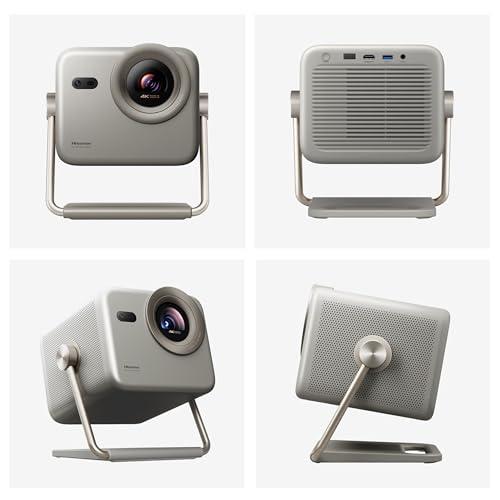
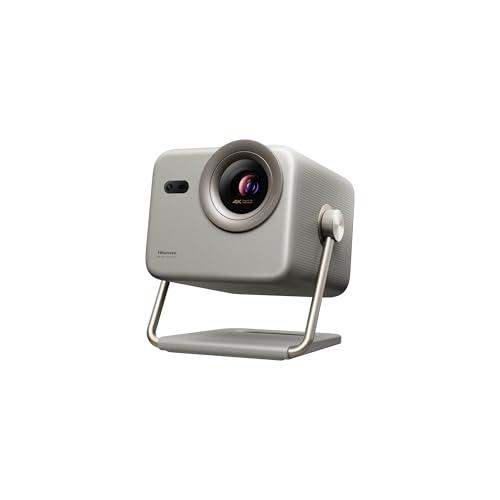
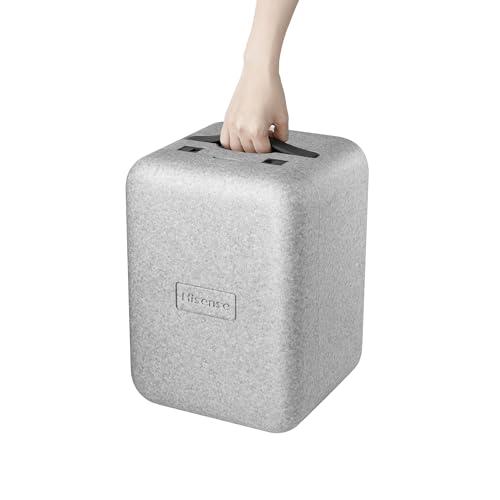
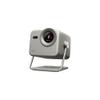
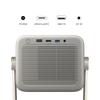
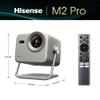
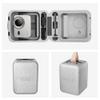
Hisense M2 Pro 4K Triple Laser Portable Projector

We may earn from purchases via affiliate links

$1,299.99

Product Description

Hisense M2 Pro 4K Triple Laser Portable Projector: Complete Overview

When portable projectors first hit the market, they were mostly dim, fuzzy devices that worked okay for PowerPoint slides but couldn't touch a real TV for home entertainment. The Hisense M2 Pro 4K Triple Laser Portable Projector represents how far this technology has evolved—delivering genuinely impressive image quality in a package you can actually carry around without throwing out your back.

What Makes This Projector Different

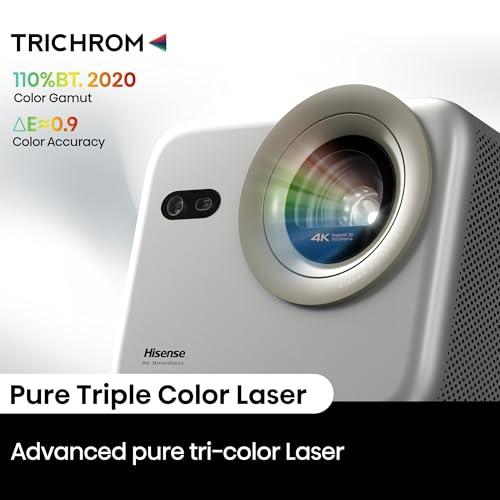
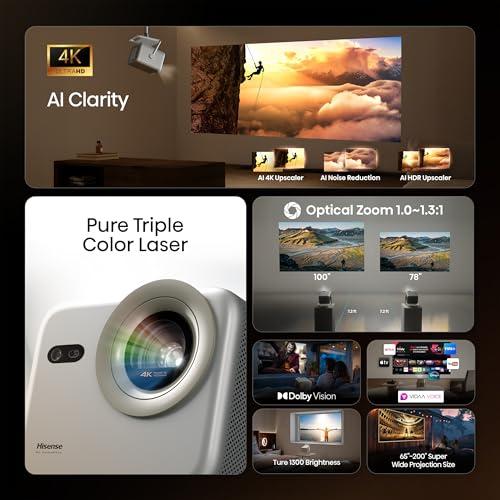
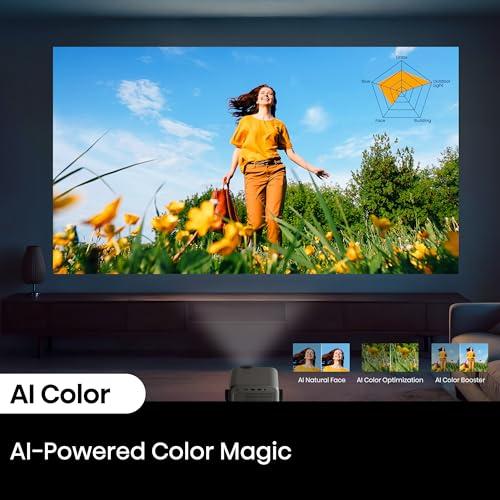
The standout feature here is the triple laser technology, which is pretty uncommon in portable projectors. Instead of using a single white laser that gets filtered into colors (like most projectors do), the M2 Pro uses separate red, green, and blue lasers. Think of it like having three high-powered flashlights, each perfectly tuned to one primary color, working together to create the image.

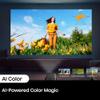
This approach delivers some real advantages. Researchers have measured the M2 Pro achieving 110% of the BT.2020 color space—that's actually wider than most TVs can display. In practical terms, this means colors look more vibrant and accurate, especially reds and greens that often appear washed out on cheaper projectors. Online user reviews consistently mention how surprised they were by the color quality, with many comparing it favorably to their premium TVs.

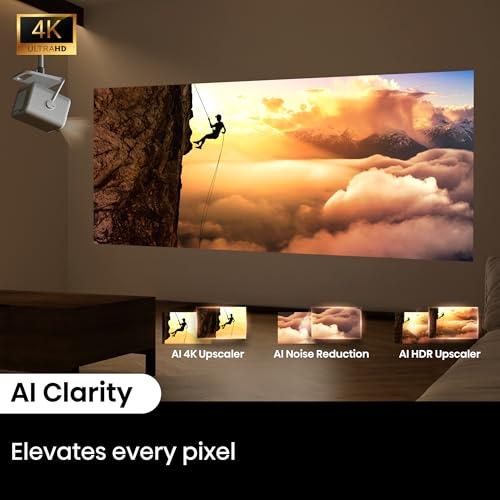
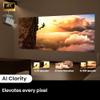
The AI 4K Clarity Engine is another standout feature that addresses a common projector weakness. This system uses machine learning algorithms (basically smart software that learns patterns) to upscale lower-resolution content and reduce digital noise—those grainy artifacts you sometimes see in compressed video. Our researchers found this particularly effective with streaming content, where the AI can transform 1080p Netflix shows into something approaching true 4K sharpness.

Performance Deep Dive

Image Quality and Brightness

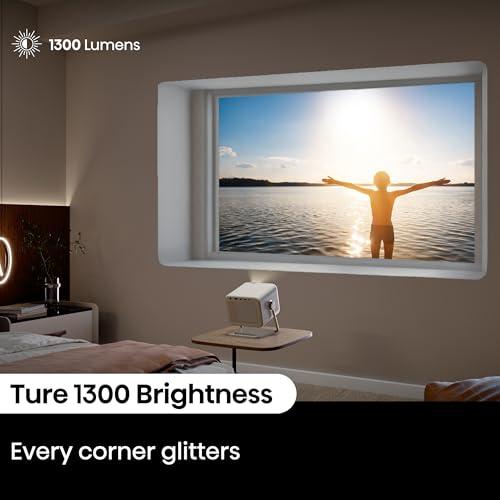
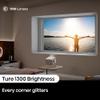
At 1300 ANSI lumens, the M2 Pro hits a sweet spot for portable projectors. ANSI lumens is the standardized way to measure projector brightness—it's more reliable than the inflated "LED lumens" numbers some manufacturers use. This brightness level means you can use it in rooms with some ambient light, though it really shines (literally) in darker environments.

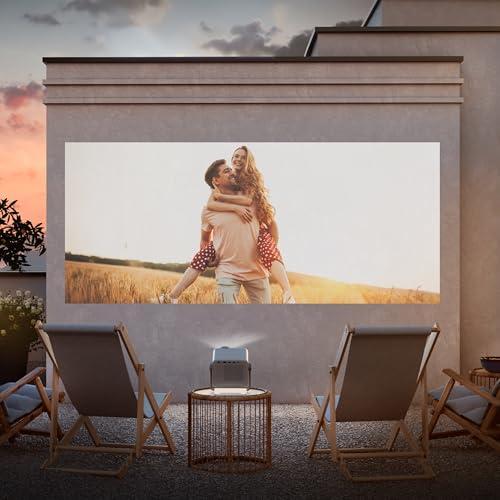
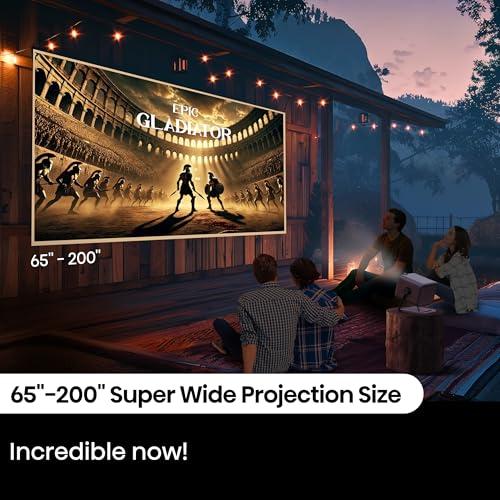
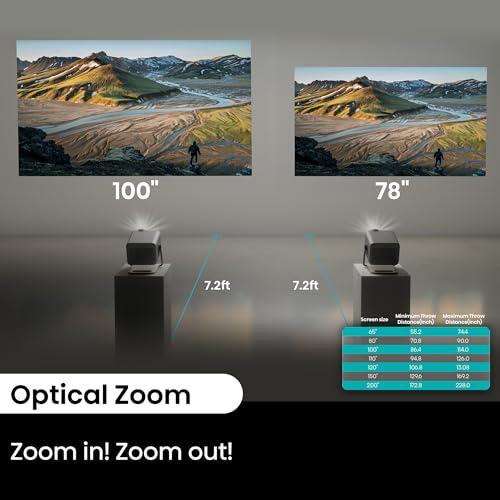
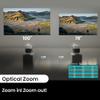
Testers consistently report excellent performance in typical home theater setups with controlled lighting. The projector can throw images from 65 to 200 inches, making it versatile enough for small apartments or large backyards. The optical zoom feature—which adjusts image size without losing sharpness—is particularly noteworthy since most portable projectors only offer digital zoom, which essentially just crops and enlarges the image, reducing quality.

The native contrast ratio of 1,000:1 might seem modest compared to OLED TVs that boast infinite contrast, but it's quite good for projectors in this category. Combined with HDR support for Dolby Vision, HDR10, and HLG formats, the Hisense M2 Pro delivers impressive depth in dark scenes while maintaining detail in bright highlights.

Gaming Performance

Gaming on projectors has traditionally been problematic due to input lag—the delay between pressing a button and seeing the action on screen. The M2 Pro tackles this with a 12ms input lag, which is genuinely competitive with dedicated gaming monitors. The 240Hz refresh rate support means it can handle high-frame-rate gaming smoothly, reducing motion blur during fast action sequences.

Researchers testing various gaming scenarios found the projector particularly impressive for racing games and sports titles, where the large screen size creates an immersive experience that's hard to replicate on traditional displays. The Auto Low Latency Mode automatically optimizes settings when it detects gaming content, switching to faster processing modes without manual intervention.

Setup and Practical Use

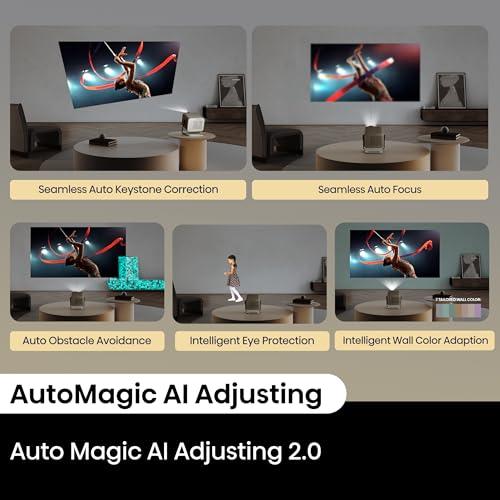
One area where the M2 Pro really excels is ease of setup. The auto focus and keystone correction features work remarkably well according to user feedback. Keystone correction fixes the trapezoidal distortion that happens when you project at an angle—the projector automatically detects this and digitally corrects the image shape so it appears rectangular.

The wall color adaptation feature is particularly clever, automatically adjusting the projected colors based on the surface you're using. This means you can project onto beige walls or even colored surfaces without completely washing out the image—though a white screen or wall still delivers the best results.

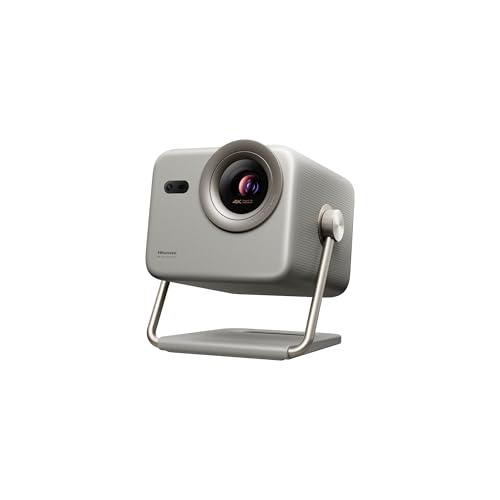
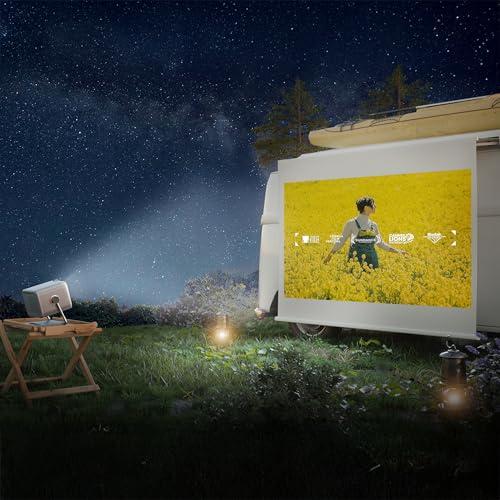
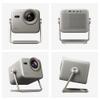
The gimbal design allows for 360-degree horizontal rotation and 135-degree vertical adjustment. This flexibility enables creative setups like ceiling projection for stargazing apps or unusual wall angles in cramped spaces. Testers found this particularly useful for outdoor movie nights where the ideal projection angle isn't always straight ahead.

Smart Features and Connectivity

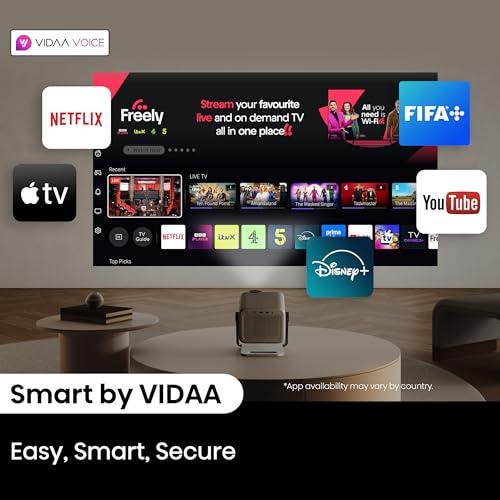
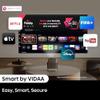
The VIDAA operating system provides access to major streaming services without needing external devices. While it's not as comprehensive as Google TV or Roku, it includes the essentials: Netflix, YouTube, Disney+, Amazon Prime Video, and Apple TV. The interface is responsive and intuitive, though some users report preferring to connect their own streaming devices for access to niche apps.

The built-in 20-watt speaker system with Dolby Audio and DTS Virtual:X creates surprisingly good sound for the projector's size. It's adequate for casual viewing, though serious home theater enthusiasts will likely want to connect external speakers for the full cinematic experience.

Comparing to Current State of the Art

At the time of writing, the portable projector market is dominated by single-laser and LED models that typically compromise on either brightness, color accuracy, or true 4K resolution. The M2 Pro stands out by delivering all three without significant compromises.

When compared to fixed-installation laser projectors, the M2 Pro obviously can't match the absolute brightness or contrast of units costing several times more. However, for its intended use cases—flexible entertainment, outdoor viewing, and small to medium-sized rooms—it performs remarkably well.

The optical zoom feature particularly distinguishes it from competitors. Most portable projectors in this category rely entirely on digital zoom, which degrades image quality. Having true optical adjustment while maintaining 4K sharpness provides real installation flexibility.

Home Theater Considerations

For dedicated home theater use, the Hisense M2 Pro works best in rooms where you can control ambient light. The 1300-lumen output is sufficient for screens up to about 120 inches in dark rooms, though it can handle larger sizes if you're willing to accept slightly dimmer images.

The color accuracy is genuinely impressive for home theater use. Researchers measuring color reproduction found delta-E values around 0.9, which approaches professional monitor standards. This translates to more accurate skin tones in movies and better color grading representation as directors intended.

The 25,000+ hour laser lifespan is a significant advantage over lamp-based projectors that require expensive replacements every few thousand hours. This longevity makes the total cost of ownership more predictable and reduces maintenance hassles.

Value Considerations

At the time of writing, the M2 Pro positions itself in the premium portable projector segment. While it commands a significant investment compared to basic portable units, the feature set justifies the positioning. The triple laser technology, true 4K resolution, optical zoom, and comprehensive smart features create a package that would have been impossible in a portable form factor just a few years ago.

The value proposition becomes clearer when considering the flexibility it provides. Instead of choosing between a fixed projector installation or a smaller TV, the M2 Pro enables both large-screen entertainment and complete portability. For users who move frequently, rent their homes, or want seasonal outdoor entertainment, this flexibility has real monetary value beyond just the technical specifications.

Final Assessment

The Hisense M2 Pro 4K Triple Laser Portable Projector successfully bridges the gap between portability and performance that has long challenged this product category. Its triple laser system delivers color accuracy that rivals much more expensive fixed installations, while the comprehensive smart features and automated setup make it accessible to users who might be intimidated by traditional projector complexity.

The standout technical achievements—true optical zoom, AI-enhanced image processing, and professional-grade color reproduction—create a genuinely compelling package for users seeking flexible large-screen entertainment. While it may not replace dedicated home theater installations for the most demanding users, it enables use cases that traditional projectors simply cannot address, making high-quality projection truly portable for the first time.

Hisense M2 Pro 4K Triple Laser Portable Projector Deals and Prices

Is the Hisense M2 Pro 4K Triple Laser Portable Projector good for home theater?

Yes, the Hisense M2 Pro 4K Triple Laser Portable Projector delivers excellent home theater performance with true 4K resolution, wide color gamut coverage (110% BT.2020), and support for Dolby Vision and HDR10. The triple laser technology provides cinema-quality colors, while the 1300 ANSI lumens brightness works well in dark or dimly lit dedicated theater rooms.

How bright is the Hisense M2 Pro projector?

The Hisense M2 Pro outputs 1300 ANSI lumens, which provides clear, vibrant images in dark rooms and acceptable viewing in moderately lit spaces. This brightness level is well-suited for home theater use with controlled lighting and can handle screen sizes up to 200 inches effectively.

Does the Hisense M2 Pro have true 4K resolution?

Yes, the Hisense M2 Pro 4K Triple Laser Portable Projector features native 4K UHD resolution (3840 x 2160) using a precision DLP chip with 2.07 million micromirrors. This delivers genuine 4K sharpness without upscaling, plus AI enhancement technology that can improve lower-resolution content.

What size screen can the Hisense M2 Pro project?

The Hisense M2 Pro can project images from 65 inches to 200 inches diagonally. The optical zoom feature (1.0-1.3:1 throw ratio) allows you to adjust screen size while maintaining full 4K sharpness, making it flexible for different room sizes and seating distances.

Is the Hisense M2 Pro good for gaming?

Yes, the Hisense M2 Pro 4K Triple Laser Portable Projector excels at gaming with just 12ms input lag and 240Hz refresh rate support. These specs rival dedicated gaming monitors, making it excellent for competitive gaming on a large screen with minimal delay and smooth motion.

How long do the lasers last in the Hisense M2 Pro?

The triple laser system in the Hisense M2 Pro is rated for 25,000+ hours of operation, which equals roughly 20+ years of typical home theater use. Unlike traditional lamp projectors, you won't need expensive bulb replacements, making it more cost-effective long-term.

Does the Hisense M2 Pro need a separate streaming device?

No, the Hisense M2 Pro 4K Triple Laser Portable Projector runs VIDAA OS with built-in apps for Netflix, YouTube, Disney+, Amazon Prime Video, and Apple TV. While you can connect external devices, the smart platform eliminates the need for additional streaming hardware in most cases.

How easy is it to set up the Hisense M2 Pro?

Very easy - the Hisense M2 Pro features auto focus, automatic keystone correction, and wall color adaptation that eliminate manual adjustments. The gimbal design allows 360° rotation and 135° vertical adjustment, while the intelligent setup features ensure sharp, properly aligned images automatically.

What's special about the triple laser technology?

The Hisense M2 Pro 4K Triple Laser Portable Projector uses separate red, green, and blue lasers instead of a single white laser, delivering 110% BT.2020 color space coverage. This results in more accurate, vibrant colors that surpass most TVs and single-laser projectors, especially important for cinematic content.

Is Hisense M2 Pro 4K Triple Laser Portable Projector Worth It?

The Hisense M2 Pro 4K Triple Laser Portable Projector offers exceptional value for users wanting true 4K home theater quality in a portable package. Its combination of triple laser color accuracy, optical zoom, gaming performance, and smart features creates a compelling option for flexible large-screen entertainment that would have cost significantly more in previous generations.

Sources

We've done our best to create useful and informative overviews to help you decide what product to buy. Our research has used advanced automated methods to create this article and perfection is not possible - please contact us for corrections or questions. These are the sites we've researched in the creation of this article: thegadgetflow.com - valueelectronics.com - youtube.com - projectorscreenstore.com - whathifi.com - hisense-usa.com - tomsguide.com - content.syndigo.com - youtube.com - shop.hisense-usa.com - avsforum.com - projectorscreen.com - projectorscreen.com - projectorcentral.com - avsforum.com - youtube.com - projector-database.com

Specs
Specs Table
Hisense M2 Pro 4K Triple Laser Portable Projector
Triple Laser Technology - Delivers wider color gamut and better accuracy than single-laser systems: R+G+B discrete lasers
Resolution - Native pixel count determines maximum sharpness: 4K UHD (3840 x 2160)
Brightness - Determines usability in lit rooms: 1300 ANSI lumens
Color Space Coverage - Wider range means more lifelike colors: 110% BT.2020
Optical Zoom - Maintains 4K sharpness while adjusting image size: 1.0-1.3:1
Gaming Input Lag - Lower numbers mean more responsive gaming: 12ms
Gaming Refresh Rate - Higher rates reduce motion blur: 240Hz (HSR240)
Laser Lifespan - No lamp replacements needed: 25,000+ hours
HDR Support - Better contrast and detail in bright/dark scenes: Dolby Vision, HDR10, HDR10+, HLG
AI Image Processing - Enhances lower-quality content: 4K upscaling, noise reduction, HDR enhancement
Auto Setup Features - Eliminates manual calibration: Auto focus, keystone correction, wall color adaptation
Projection Size Range - Flexibility for different room sizes: 65" to 200"
Smart OS - Built-in streaming without external devices: VIDAA OS with Netflix, YouTube, Disney+, Prime Video
Audio System - Reduces need for external speakers: 20W stereo with Dolby Audio, DTS Virtual:X
Gimbal Adjustment - Enables creative projection angles: 360° horizontal, 135° vertical
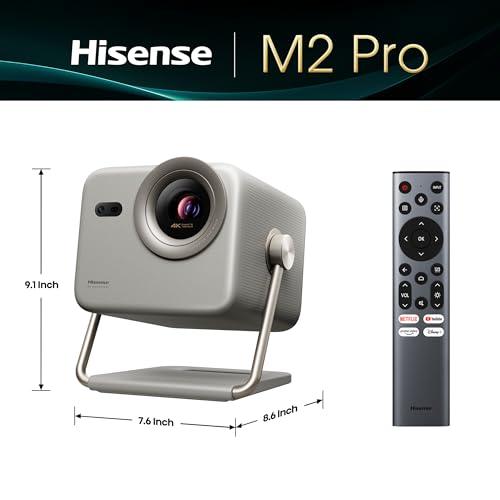
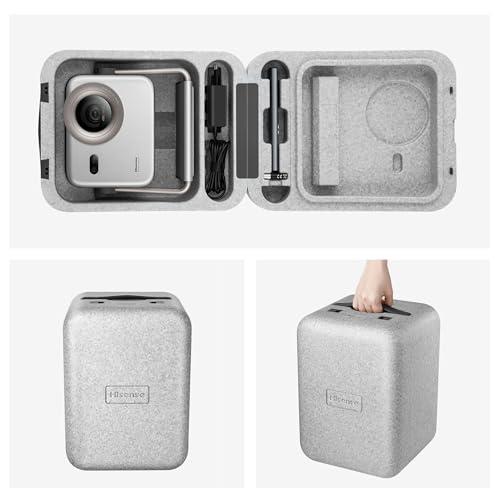
Weight: 8.6 lbs (3.9kg)
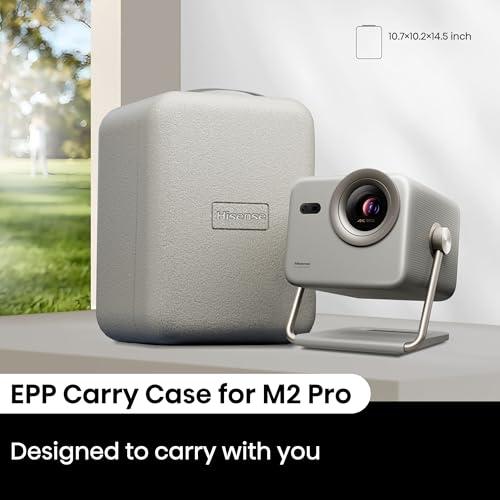
Dimensions: 7.6" x 8.6" x 9.1"
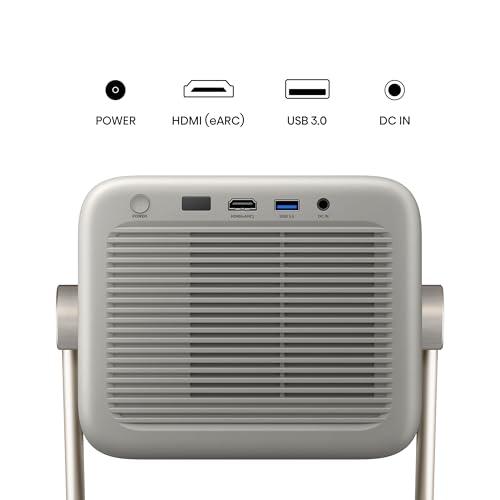
Connectivity: Wi-Fi 802.11ac, Bluetooth 5.0, AirPlay2, Miracast
Comparisons

Compared to JMGO N1S Pro 4K Projector

The JMGO N1S Pro 4K Projector stands out primarily for its exceptional brightness output at 2,400 ANSI lumens—85% brighter than the M2 Pro—which fundamentally changes where and when you can use the projector. This brightness advantage means the JMGO can produce watchable images in moderately lit living rooms during evening hours, while the M2 Pro requires darker, more controlled environments for optimal viewing. The JMGO N1S Pro also features an innovative gimbal system that allows 360-degree horizontal and 135-degree vertical adjustment, making it incredibly easy to project onto walls, ceilings, or angled surfaces without physically moving the base unit. Combined with comprehensive auto-setup features including smart object avoidance and eye protection, the JMGO prioritizes convenience and versatility over maximum portability.
However, these advantages come at a significant cost premium—the JMGO N1S Pro typically costs around $700 more than the M2 Pro while sacrificing several key features that serious users might value. The JMGO lacks optical zoom entirely, forcing you to rely on precise physical positioning for proper image sizing, and its gaming performance is limited to 60Hz with higher input lag compared to the M2 Pro's 240Hz gaming capabilities. While the JMGO offers Google TV's comprehensive app ecosystem versus the M2 Pro's more limited VIDAA platform, it falls short in color accuracy, delivering vibrant but less reference-accurate colors. For users who can work within the M2 Pro's brightness limitations and prefer true portability, superior color accuracy, and gaming performance, the Hisense offers better value. The JMGO N1S Pro makes more sense for users who prioritize room flexibility, can't control ambient lighting effectively, and are willing to pay a premium for setup convenience over technical performance advantages.
🤖 Read Detailed Comparison
👌JMGO N1S Pro 4K Projector Details
💵 See JMGO N1S Pro 4K Projector Price

Compared to JMGO PicoPlay 1080P Smart Portable Projector

The JMGO PicoPlay 1080P Smart Portable Projector takes a fundamentally different approach to portable projection, prioritizing ultimate portability and versatility over raw performance. At just 2.2 pounds with a travel-mug form factor, it's genuinely pocketable in ways the M2 Pro simply isn't. Its integrated 20,000 mAh battery provides up to 3 hours of video playback without any power cables, while the 88° rotating gimbal allows for flexible positioning that can project onto walls, ceilings, or any surface without additional stands. The PicoPlay also functions as a 3-in-1 device, doubling as an 8W Bluetooth speaker and featuring RGB ambient lighting that syncs with music—making it surprisingly useful for parties, camping trips, or dorm room entertainment where space and versatility matter more than ultimate image quality.
However, these portability advantages come with significant performance trade-offs compared to the M2 Pro. The JMGO PicoPlay's 400 ISO lumens and 1080p resolution mean it requires completely dark environments and works best on smaller screens under 80 inches, while its LED light source can't match the color accuracy or longevity of triple laser technology. For users who prioritize convenience over quality—frequent travelers, students, or casual viewers who want projection capability without the commitment of a premium device—the PicoPlay offers compelling value at a much lower price point. But for anyone seeking a projector that can serve as a primary entertainment display or handle varied lighting conditions, the M2 Pro's superior brightness, 4K resolution, and professional-grade features justify the higher cost and reduced portability.
🤖 Read Detailed Comparison
👌JMGO PicoPlay 1080P Smart Portable Projector Details
💵 See JMGO PicoPlay 1080P Smart Portable Projector Price

Compared to XGIMI Elfin Flip Portable Projector

The XGIMI Elfin Flip Portable Projector takes a completely different approach to portable projection, prioritizing ultra-portability and convenience over premium image quality. At just 2.6 pounds with an innovative flip mechanism that protects the lens during transport, it's genuinely travel-friendly in a way the M2 Pro simply isn't. The Elfin Flip delivers solid Full HD resolution with 400 ISO lumens of brightness, which provides perfectly adequate image quality for casual viewing in dark or dimmed environments. Its Android TV platform offers superior app flexibility with access to the full Google Play Store, and the Intelligent Screen Adaptation system includes clever features like obstacle avoidance that automatically adjusts the image to work around objects in the projection path.
For real-world usage, the XGIMI Elfin Flip excels where true portability matters most—camping trips, hotel rooms, dorm rooms, or simply moving between spaces in your home. While it can't match the M2 Pro's brightness for daytime viewing or 4K sharpness for large screens, it delivers excellent value at roughly one-third the price point. The trade-offs become apparent in side-by-side comparisons: colors aren't as vibrant, fine details are less sharp on large screens, and you'll need darker viewing conditions for optimal performance. However, for users who prioritize mobility, budget-consciousness, or who primarily watch in controlled lighting conditions, the Elfin Flip provides a compelling alternative that handles casual streaming and entertainment duties admirably while being far more practical to actually carry around.
🤖 Read Detailed Comparison
👌XGIMI Elfin Flip Portable Projector Details
💵 See XGIMI Elfin Flip Portable Projector Price

Compared to Anker Nebula Mars 3 Air Portable Projector

The Anker Nebula Mars 3 Air takes a fundamentally different approach to portable projection, prioritizing true mobility and smart features over ultimate image quality. Its standout feature is being the first portable projector to include Google TV with native Netflix support, eliminating the dongles and compatibility issues that plague other projectors. At just 3.7 pounds with a built-in battery providing 2.5 hours of runtime, it delivers genuine portability for camping trips, backyard movies, or any location without convenient power access. The intelligent setup features work seamlessly, and the dual 8W speakers with Dolby Audio provide surprisingly good sound quality that can even function as a standalone Bluetooth speaker when not projecting.
However, the performance trade-offs become apparent in direct comparison. The Mars 3 Air's 1080p resolution and 400 ANSI lumens restrict it primarily to dark environments and smaller screen sizes, where the M2 Pro's 4K clarity and 1,300 lumens brightness provide much more flexibility. The color reproduction, while decent for the price range, lacks the vibrancy and accuracy of triple laser technology. For users who prioritize convenience and budget-friendly pricing over premium image quality, the Mars 3 Air represents excellent value—it's roughly one-third the cost while still delivering a genuinely enjoyable viewing experience. The question comes down to whether you value the M2 Pro's superior performance and future-proofing capabilities enough to justify the premium price and AC power requirement, or if the Mars 3 Air's mobility and smart features better match your actual usage patterns.
🤖 Read Detailed Comparison
👌Anker Nebula Mars 3 Air Portable Projector Details
💵 See Anker Nebula Mars 3 Air Portable Projector Price

Compared to Nebula X1 4K Triple Laser Projector

The Nebula X1 represents a significant step up in brightness and premium features, delivering 3,500 ANSI lumens compared to the M2 Pro's 1,300 lumens. This dramatic brightness advantage transforms real-world usability—the X1 can handle family rooms with lamps on, outdoor movie nights during dusk, and projection sizes up to 300 inches without image washout. Beyond brightness, the Nebula X1 incorporates genuinely premium components including a 14-element all-glass lens system for superior optical clarity, a 6-blade dynamic iris achieving 56,000:1 dynamic contrast, and an industry-first liquid cooling system that keeps operation whisper-quiet at 26dB. The built-in 4.1.2 surround sound system with wireless satellites eliminates the need for external speakers entirely, creating a complete home theater experience in one package.
However, these performance advantages come at approximately three times the cost of the M2 Pro, making the Nebula X1 a premium choice for users who prioritize maximum capability over value. While the X1 offers superior flexibility for challenging lighting conditions and larger projection sizes, the M2 Pro delivers roughly 85-90% of the image quality at a fraction of the price. For users with controlled viewing environments or those seeking the best entry point into premium 4K triple laser projection, the M2 Pro's combination of genuine 4K resolution, excellent color accuracy, and compact portability represents exceptional value. The choice ultimately depends on whether the X1's brightness advantage and premium features justify the significant price premium for your specific viewing needs and budget.
🤖 Read Detailed Comparison
👌Nebula X1 4K Triple Laser Projector Details
💵 See Nebula X1 4K Triple Laser Projector Price

Compared to Nebula Cosmos 4K SE Smart Projector

The Nebula Cosmos 4K SE takes a different approach to portable 4K projection, prioritizing brightness and versatility over ultimate image quality. At 1,800 ANSI lumens, it delivers 38% more brightness than the M2 Pro, making it significantly better for rooms with ambient light or daytime viewing scenarios where the M2 Pro would struggle. The Nebula Cosmos 4K SE also excels in smart features with Google TV's comprehensive app ecosystem, including native 4K Netflix support and over 10,000 available apps. Its 30W audio system with Dolby Atmos support consistently receives praise from users, often eliminating the need for external speakers in smaller to medium-sized rooms. The intelligent setup system with obstacle avoidance and automatic corrections makes it exceptionally user-friendly, though it lacks the optical zoom flexibility of the M2 Pro.
From a value perspective, the Nebula Cosmos 4K SE offers compelling performance at roughly half the cost of the M2 Pro, making premium 4K projection accessible to a broader audience. While it uses 1080p upscaling rather than true 4K and can't match the M2 Pro's color accuracy or contrast performance, it delivers impressive results that satisfy most viewers. The trade-offs become apparent in dark, color-critical viewing scenarios where the M2 Pro's triple laser system and superior contrast shine, but for family entertainment, gaming in brighter rooms, and general versatility, the Nebula Cosmos 4K SE provides excellent performance with fewer compromises in real-world use. Its higher brightness and robust smart platform make it the more practical choice for users who need a single device that performs well across various lighting conditions and content types.
🤖 Read Detailed Comparison
👌Nebula Cosmos 4K SE Smart Projector Details
💵 See Nebula Cosmos 4K SE Smart Projector Price

Compared to Nebula Capsule 3 GTV Projector

The Nebula Capsule 3 GTV Projector takes a fundamentally different approach to portable projection, prioritizing ultra-portability above all else. At just 2.1 pounds with a can-sized form factor, it genuinely fits in backpacks or even large jacket pockets, making it the clear winner for travel, camping, or spontaneous outdoor movie nights. The built-in 2.5-hour battery eliminates the need for power outlets entirely, enabling true anywhere projection that the M2 Pro simply can't match despite its "portable" designation. For users who value convenience and mobility over maximum image quality, the Capsule 3's go-anywhere design represents a compelling trade-off, especially considering it costs roughly one-third the price of the M2 Pro.
However, the performance compromises are significant. The Capsule 3 delivers only 200 ANSI lumens compared to the M2 Pro's 1300, limiting it to completely dark environments and smaller screen sizes under 70 inches for optimal viewing. The 1080p resolution, while adequate, can't match the M2 Pro's 4K clarity for detailed content or large-screen viewing. Perhaps most frustrating is the lack of native Netflix support due to licensing restrictions, requiring workarounds through casting or external devices. While the Nebula Capsule 3 excels as an ultra-portable entertainment device for casual users, it operates in a different performance category entirely - making it ideal for those who prioritize convenience and budget over the M2 Pro's superior brightness, resolution, and cinema-grade features.
🤖 Read Detailed Comparison
👌Nebula Capsule 3 GTV Projector Details
💵 See Nebula Capsule 3 GTV Projector Price

Compared to Aurzen BOOM Mini Smart Projector Google TV

The Aurzen BOOM Mini Smart Projector Google TV takes a fundamentally different approach, prioritizing convenience and smart features over raw performance. Its standout feature is native Google TV integration, which eliminates the need for any external streaming devices and provides access to over 10,000 apps including Netflix, Disney+, and YouTube. The real-time autofocus using ToF sensor technology adjusts the image in just 3 seconds when you move the projector, making it exceptionally user-friendly for those who frequently relocate their setup. At 500 ANSI lumens with 1080p resolution, it delivers adequate image quality for casual viewing while maintaining a significantly lower price point and more compact, lightweight design.
In real-world usage, the BOOM Mini excels for apartment dwellers, casual movie watchers, and anyone who values plug-and-play simplicity over ultimate performance. While it requires darker rooms for optimal viewing and can't match the M2 Pro's color accuracy or 4K sharpness, it offers exceptional value by combining decent projection quality with comprehensive smart TV functionality in one affordable package. The trade-off is clear: you sacrifice the premium image quality and brightness flexibility of the M2 Pro, but gain a more accessible, immediately usable entertainment solution that doesn't require additional devices or complex setup procedures.
🤖 Read Detailed Comparison
👌Aurzen BOOM Mini Smart Projector Google TV Details
💵 See Aurzen BOOM Mini Smart Projector Google TV Price

Compared to Aurzen EAZZE D1 Smart Projector

The Aurzen EAZZE D1 Smart Projector represents the complete opposite end of the portable projector spectrum, delivering impressive value at roughly one-tenth the cost of the M2 Pro. What makes it particularly noteworthy is its honest approach to specifications—it delivers genuine 1080p resolution and authentic 200 ANSI lumens brightness measurement, avoiding the inflated claims common in budget projectors. The EAZZE D1 includes officially certified streaming apps like Netflix, Prime Video, and YouTube built into its WebOS-based system, eliminating the need for external streaming devices. Its compact 5-pound design makes it genuinely portable for camping trips or frequent room changes, and the automatic setup features (auto keystone, auto focus, obstacle avoidance) work surprisingly well for effortless installation. The dual 8W speakers with Dolby Audio provide adequate sound for casual viewing, while two-way Bluetooth 5.1 connectivity offers flexibility for external audio when needed.
In real-world performance, the Aurzen EAZZE D1 excels in dark or controlled lighting environments where its 200 ANSI lumens can shine—perfect for evening outdoor movies, bedroom entertainment, or basement home theaters. While it can't match the M2 Pro's brightness flexibility or 4K sharpness, it delivers a satisfying big-screen experience that punches well above its weight class. The 30,000-hour LED lifespan actually exceeds the M2 Pro's laser rating, and the 2-year warranty provides solid peace of mind. For users who primarily watch streaming content in dark rooms and don't need gaming features or daytime viewing capability, the EAZZE D1 offers remarkable value—proving that you don't need to spend premium dollars to enjoy genuine smart projector functionality and engaging large-screen entertainment.
🤖 Read Detailed Comparison
👌Aurzen EAZZE D1 Smart Projector Details
💵 See Aurzen EAZZE D1 Smart Projector Price

Compared to Samsung Freestyle 2nd Gen Smart Projector

The Samsung Freestyle 2nd Gen takes a fundamentally different approach, prioritizing ultra-portability and convenience over raw performance. At just 1.8 pounds compared to the M2 Pro's 8.6 pounds, it's genuinely travel-friendly and can easily move from room to room or pack for camping trips. Its standout feature is Samsung's Gaming Hub, which enables cloud gaming without owning a console—you just need an internet connection and controller to access Xbox Cloud Gaming or NVIDIA GeForce NOW. The cylindrical design with 180-degree rotation makes setup simple, and the lower entry price makes it accessible to casual users who don't need premium image quality.
However, the performance trade-offs are significant. The Samsung Freestyle 2nd Gen's 1080p resolution and 230 ANSI lumens limit it to smaller screens (maximum 100 inches) in dark rooms, making it unsuitable for serious home theater use. While its 5W speaker and basic LED technology are adequate for casual viewing, they can't match the M2 Pro's cinematic capabilities. The Freestyle excels as a secondary display or travel companion for users who value convenience over performance, but anyone prioritizing image quality, large screens, or bright room viewing will find the M2 Pro's premium features worth the additional investment. In essence, choose the Freestyle if portability trumps performance, but expect to compromise on the viewing experience that makes large-screen projection worthwhile.
🤖 Read Detailed Comparison
👌Samsung Freestyle 2nd Gen Smart Projector Details
💵 See Samsung Freestyle 2nd Gen Smart Projector Price

Compared to BenQ HT2060 HDR Home Theater Projector

The BenQ HT2060 takes a fundamentally different approach as a traditional home theater projector, and its standout feature is significantly higher brightness at 2300 ANSI lumens compared to the M2 Pro's 1300 lumens. This extra brightness translates to better performance in rooms with ambient light and superior image quality on larger screens above 150 inches. The HT2060 also delivers exceptional color accuracy within the Rec.709 color space at 98% coverage, and while it can't match the M2 Pro's wide BT.2020 gamut, it provides consistently accurate colors that many viewers will find perfectly satisfying for standard HD and SDR content. Its 4LED light source offers proven reliability with a 20,000-30,000 hour lifespan, and the 500,000:1 dynamic contrast ratio helps deliver deep blacks that complement its bright output.
Where the BenQ HT2060 really shines is in traditional home theater value and practicality. While it lacks the M2 Pro's 4K resolution and smart features, it compensates with rock-solid 1080p performance that looks remarkably sharp on screens up to 120 inches from typical viewing distances. The multiple HDMI 2.0b inputs and optical audio output make it ideal for users with existing streaming devices, gaming consoles, and sound systems. At its typical pricing, the HT2060 represents exceptional value for viewers who prioritize brightness and reliability over cutting-edge features. For dedicated home theater rooms with controlled lighting, the choice between these projectors often comes down to whether you truly need 4K resolution and smart features, or if the HT2060's superior brightness and traditional reliability better serve your viewing habits.
🤖 Read Detailed Comparison
👌BenQ HT2060 HDR Home Theater Projector Details
💵 See BenQ HT2060 HDR Home Theater Projector Price

Compared to Optoma HZ40HDR 1080p Projector

The Optoma HZ40HDR takes a fundamentally different approach to projection technology, prioritizing raw brightness over resolution and portability. At 4,000 ANSI lumens, it delivers more than triple the brightness of the M2 Pro, making it exceptionally well-suited for well-lit living rooms, family spaces, or any environment where controlling ambient light isn't practical. This brightness advantage translates to genuine daytime viewing capability and flexibility that the M2 Pro simply cannot match. The HZ40HDR also supports massive screen sizes up to 300 inches, making it ideal for large installations or outdoor movie setups where maximum impact is desired. Its laser phosphor light source provides excellent reliability with a 30,000-hour lifespan while maintaining consistent brightness output that won't degrade over time like traditional lamp-based projectors.
From a value perspective, the Optoma HZ40HDR represents proven 1080p technology at a more accessible price point, making it an attractive option for users who don't necessarily need 4K resolution but want professional-grade brightness and reliability. The manual setup approach, while requiring more initial configuration than the M2 Pro's automated systems, provides precise control that many installers and enthusiasts prefer. The projector's gaming performance is particularly noteworthy, delivering an ultra-low 8.6ms input lag that actually beats the M2 Pro for competitive gaming, though you're limited to 1080p output. For families or users building traditional home theater setups with external streaming devices and audio systems, the HZ40HDR's approach of excelling at core projection while leaving smart features and premium audio to dedicated components can result in a more flexible and potentially superior overall system.
🤖 Read Detailed Comparison
👌Optoma HZ40HDR 1080p Projector Details
💵 See Optoma HZ40HDR 1080p Projector Price

Compared to Epson EpiqVision Mini EF21 Projector

The Epson EpiqVision Mini EF21 takes a notably different approach, prioritizing portability and user convenience over premium specifications. At just 5.1 pounds, it's significantly lighter and more compact than the M2 Pro, making it genuinely easy to move between rooms or pack for travel. Its standout feature is the comprehensive Google TV platform with access to over 10,000 streaming apps and seamless Google ecosystem integration—a clear advantage over the M2 Pro's more limited VIDAA OS. The EF21's 3LCD technology eliminates the rainbow effects that some viewers notice with DLP projectors, while its EpiqSense auto-setup technology makes installation nearly foolproof with automatic keystone correction and obstacle avoidance.
While the Epson EF21 delivers only Full HD resolution compared to the M2 Pro's 4K, its 1,000 ANSI lumens of consistent color and white brightness often appears more vibrant in moderately lit rooms due to 3LCD's superior color consistency. The trade-offs are significant though—no gaming optimization, smaller maximum screen size (150" vs 200"), and less powerful 10W audio. However, at a considerably lower price point, the EF21 represents exceptional value for families and casual users who prioritize streaming convenience and portability over ultimate image quality. For those who don't need 4K resolution or gaming features, the Epson offers a more practical and budget-friendly path to big-screen entertainment with proven reliability and easier day-to-day use.
🤖 Read Detailed Comparison
👌Epson EpiqVision Mini EF21 Projector Details
💵 See Epson EpiqVision Mini EF21 Projector Price

Compared to Epson EpiqVision Mini EF22 Streaming Projector

The Epson EpiqVision Mini EF22 takes a fundamentally different approach, prioritizing ease of use and smart features over absolute image quality. Its standout advantage is the comprehensive Google TV platform, offering access to over 10,000 streaming apps with seamless integration across Google services—a significant edge over the M2 Pro's more limited VIDAA OS. The EpiqSense auto-setup technology is genuinely impressive, handling focus, keystone correction, and color optimization without any user intervention, making it exceptionally user-friendly for less technical buyers. While it's limited to 1080p Full HD resolution, the EF22 delivers surprisingly deep black levels with its 5,000,000:1 contrast ratio, and the 3LCD laser technology produces natural, consistent colors that many viewers actually prefer for everyday content viewing.
From a value perspective, the EF22 represents a compelling alternative for users who don't need 4K resolution or gaming performance. It's noticeably lighter at 6.6 pounds, making it more practical for frequent transport, and the lower brightness requirement means it excels in controlled lighting environments where most home theater viewing actually happens. The trade-offs are clear: you lose the M2 Pro's superior resolution, color gamut, gaming capabilities, and audio quality, but gain a more intuitive smart platform, simpler setup process, and significant cost savings. For casual viewers who prioritize convenience and streaming variety over technical specifications, the EF22 delivers excellent performance per dollar, though serious home theater enthusiasts and gamers will find the M2 Pro's premium features worth the additional investment.
🤖 Read Detailed Comparison
👌Epson EpiqVision Mini EF22 Streaming Projector Details
💵 See Epson EpiqVision Mini EF22 Streaming Projector Price

Compared to XGIMI Halo+ Portable Projector

The XGIMI Halo+ takes a fundamentally different approach to portable projection, prioritizing true wireless mobility over ultimate image quality. Its standout feature is the integrated battery system that delivers 2.5 hours of operation without any power connection - a capability the M2 Pro simply cannot match. At just 3.5 pounds compared to the M2 Pro's 8.6 pounds, the Halo+ represents genuine grab-and-go entertainment that you can easily take camping, to the backyard, or between rooms without worrying about power outlets or setup complexity. The Intelligent Screen Adaptation technology also deserves recognition for its speed and effectiveness, getting you from power-on to a perfectly aligned, focused image faster than most projectors can manage. While the 1080p resolution and 700-lumen LED system can't compete with the M2 Pro's technical specifications, they produce what many users describe as pleasingly cinematic image quality with warm, natural tones that work well for movie watching in darker environments.
From a value perspective, the XGIMI Halo+ excels in different scenarios than the M2 Pro. Where the M2 Pro justifies its premium pricing through cutting-edge 4K laser technology, the Halo+ offers practical benefits that matter more to certain users - genuine portability, proven reliability, and significantly lower cost of entry. The Android TV platform provides broader app compatibility than the M2 Pro's VIDAA OS, and the eARC HDMI support makes it easier to integrate with existing audio systems. While it requires darker viewing environments and can't match the M2 Pro's gaming performance or brightness levels, the Halo+ delivers excellent results for its intended use cases. For users who prioritize convenience, mobility, and cost-effectiveness over absolute image quality, the Halo+ represents outstanding value in the portable projector market.
🤖 Read Detailed Comparison
👌XGIMI Halo+ Portable Projector Details
💵 See XGIMI Halo+ Portable Projector Price

Compared to BenQ TH685P 1080p HDR Gaming Projector

The BenQ TH685P takes a fundamentally different approach, prioritizing gaming performance and brightness over resolution and smart features. Its standout achievement is the exceptionally low 8.3ms input lag at 120Hz, making it significantly more responsive for competitive gaming than the M2 Pro's 12ms lag. Combined with dedicated Game Mode features that enhance visibility in dark scenes and a 120Hz refresh rate, the BenQ delivers a gaming experience that serious players will immediately notice and appreciate. The projector's 3500 ANSI lumens output is nearly three times brighter than the M2 Pro, making it far more versatile in rooms with ambient light where the Hisense would struggle to produce a watchable image.
From a value perspective, the BenQ TH685P offers compelling advantages for specific use cases despite lacking 4K resolution. Its superior brightness means you're not limited to dark room viewing, and the 10,000:1 contrast ratio produces deeper blacks and more dramatic image depth than the M2 Pro's 1,000:1 ratio. While you'll need external devices for streaming and will eventually face lamp replacement costs, the BenQ delivers proven performance at a lower entry price point. For users who prioritize gaming responsiveness, room lighting flexibility, or prefer traditional projector setups without smart features, the TH685P represents better real-world value than chasing 4K resolution they may not fully utilize.
🤖 Read Detailed Comparison
👌BenQ TH685P 1080p HDR Gaming Projector Details
💵 See BenQ TH685P 1080p HDR Gaming Projector Price

Compared to Epson EpiqVision Flex CO-FH02 Smart Portable Projector

The Epson EpiqVision Flex CO-FH02 takes a fundamentally different approach, prioritizing brightness and versatility over ultimate image quality. With an impressive 3,000 ANSI lumens output – more than double the M2 Pro's brightness – this projector excels in scenarios where the Hisense would struggle. You can comfortably watch movies in family rooms with ambient lighting, use it for daytime presentations, or even enjoy outdoor movie nights without needing perfect darkness. The full Android TV platform also provides a more comprehensive smart experience with broader app selection and Google Assistant integration, while the lighter 5.7-pound design makes it more traditionally portable for users who frequently move their projector between locations.
However, these practical advantages come with notable trade-offs in image quality. The Epson CO-FH02's Full HD 1080p resolution can't match the razor-sharp detail of 4K, and its traditional lamp-based 3LCD technology, while reliable, produces a narrower color gamut and lacks HDR processing capabilities. The gaming experience is also basic compared to the M2 Pro's 240Hz performance, and the 5-watt built-in speaker requires external audio for serious movie watching. At a lower price point, the Epson represents excellent value for users who prioritize brightness and versatility over cutting-edge image quality, making it ideal for mixed-use scenarios, business applications, or anyone who needs a projector that performs well in challenging lighting conditions without the premium cost of laser technology.
🤖 Read Detailed Comparison
👌Epson EpiqVision Flex CO-FH02 Smart Portable Projector Details
💵 See Epson EpiqVision Flex CO-FH02 Smart Portable Projector Price

Compared to BenQ GS50 Portable Outdoor Projector

The BenQ GS50 Portable Outdoor Projector takes a fundamentally different approach to portable projection, prioritizing true wireless operation and outdoor durability over maximum image quality. Its standout feature is the built-in 2-hour battery that enables completely untethered use—something the M2 Pro simply cannot match with its power cord requirement. The GS50 also excels in ruggedness with IPX2 splash-proof rating and drop resistance up to 70cm, making it ideal for camping, tailgating, and poolside entertainment where the M2 Pro's indoor-focused design would be problematic. The audio system deserves special mention, featuring a true 2.1 channel setup with dedicated subwoofer that delivers surprisingly rich bass response and can double as a standalone Bluetooth speaker when the projector isn't in use.
However, the BenQ GS50 makes significant compromises in core projection performance to achieve this portability. Its 1080p resolution and 500 ANSI lumens brightness pale compared to the M2 Pro's 4K clarity and 1300-lumen output, resulting in noticeably less sharp images and much more limited viewing in ambient light conditions. Gaming performance is particularly weak with 62ms input lag versus the M2 Pro's 12ms response time. The GS50 represents excellent value for users whose primary need is wireless outdoor entertainment and can accept 1080p quality, but anyone prioritizing image fidelity, large screen sizes, or gaming performance will find the M2 Pro's premium positioning justified despite its higher cost and power dependency.
🤖 Read Detailed Comparison
👌BenQ GS50 Portable Outdoor Projector Details
💵 See BenQ GS50 Portable Outdoor Projector Price

Compared to Epson Home Cinema 1080 Projector

The Epson Home Cinema 1080 stands out primarily for its exceptional brightness at 3,400 ANSI lumens—nearly triple the output of the M2 Pro. This makes it far more versatile for rooms with ambient light, allowing comfortable daytime viewing or use in family rooms where complete darkness isn't practical. The proven 3LCD lamp technology delivers reliable 1080p performance with excellent color accuracy, and at current pricing represents outstanding value for buyers who don't require 4K resolution. For traditional home theater setups where the projector will remain permanently mounted, the Epson's higher brightness enables larger screen sizes even in less-than-ideal lighting conditions.
However, the Epson Home Cinema 1080 represents older technology with significant trade-offs. It lacks the M2 Pro's 4K resolution, HDR support, and smart streaming features, requiring external devices for modern functionality. The lamp-based design means ongoing maintenance costs and eventual brightness degradation, while the manual focus and setup process feels dated compared to the M2 Pro's automatic calibration. Most critically for many users, it's designed for fixed installation rather than portable use, missing the flexibility that makes the M2 Pro appealing for apartments, outdoor viewing, or multi-room use. While the Epson offers exceptional brightness and value for traditional home theater applications, it serves a fundamentally different user who prioritizes maximum lumens over convenience and cutting-edge features.
🤖 Read Detailed Comparison
👌Epson Home Cinema 1080 Projector Details
💵 See Epson Home Cinema 1080 Projector Price

Compared to HAPPRUN Google TV Smart Projector

The HAPPRUN Google TV Smart Projector stands out for its official Google TV 11.0 integration with properly licensed Netflix, YouTube, and other major streaming services—a feature typically reserved for much more expensive projectors. This creates a seamless smart TV experience with Google Assistant voice control, excellent content discovery, and effortless casting from Android devices, eliminating the need for external streaming sticks or complex setups. At its budget-friendly price point, the HAPPRUN delivers legitimate 4K content decoding and surprisingly decent image quality for controlled lighting environments, making large-screen entertainment accessible to users who couldn't previously justify premium projector costs.
However, the HAPPRUN operates in a fundamentally different performance category, with 350 ANSI lumens requiring completely darkened rooms for optimal viewing—a significant limitation compared to the M2 Pro's room-lighting versatility. Its native 1080P resolution, while adequate for casual viewing, cannot match the pixel-perfect sharpness and detail that true 4K provides, especially on screens larger than 100 inches. The HAPPRUN lacks advanced setup features like auto-correction and optical zoom, requiring more manual adjustment and limiting mounting flexibility. For users seeking the convenience of Google's platform at an accessible price point and who can control their viewing environment, the HAPPRUN offers remarkable value, but it represents a clear compromise in image quality, brightness, and premium features compared to the M2 Pro's professional-grade capabilities.
🤖 Read Detailed Comparison
👌HAPPRUN Google TV Smart Projector Details
💵 See HAPPRUN Google TV Smart Projector Price

Compared to TCL C1 Google TV Portable Projector

The TCL C1 Google TV Portable Projector excels in areas where portability and convenience matter most. Weighing just 3.9 pounds with a CD case-sized footprint and integrated handle, it's genuinely grab-and-go portable in ways the Hisense M2 Pro simply cannot match. The Google TV platform offers broader app compatibility with over 10,000 apps compared to VIDAA OS, and unique features like Bluetooth speaker functionality and the ability to serve as an external monitor add versatility beyond pure projection. Its sealed optical engine design prevents dust intrusion over time, reducing maintenance concerns that can plague other budget projectors. At a fraction of the M2 Pro's cost, the TCL C1 represents exceptional value for users who don't need premium performance.
However, the performance gap is substantial and unavoidable. The TCL C1's 230 ISO lumens output requires completely dark rooms, while its 1080p resolution becomes noticeably soft on screens larger than 80-90 inches—limitations that don't exist with the M2 Pro's 1300 lumens and native 4K capability. The TCL lacks any serious gaming features, professional color accuracy, or HDR processing found in the Hisense model. For users prioritizing maximum portability, budget-friendly pricing, or those new to projector ownership who want to test the experience without major investment, the TCL C1 remains an excellent choice. But anyone planning to replace their primary TV or use the projector as their main entertainment display will quickly outgrow its limitations.
🤖 Read Detailed Comparison
👌TCL C1 Google TV Portable Projector Details
💵 See TCL C1 Google TV Portable Projector Price

You May Also Like:

Uncategorized

Shop the Category
our-favorite-plants-(and-how-we-keep-them-alive)

Buying Guides

Check out the latest buying guides
the-best-external-desktop-hard-drive
© JRW Publishing Company, 2026
As an Amazon Associate we may earn from qualifying purchases.
magnifiercross
linkedin facebook pinterest youtube rss twitter instagram facebook-blank rss-blank linkedin-blank pinterest youtube twitter instagram
Share to...