$399.99
The portable projector market has been quietly revolutionizing how we think about large-screen entertainment and presentations. While traditional projectors remain bulky beasts requiring dedicated spaces and complex setups, a new generation of ultra-portable devices is making big-screen experiences accessible anywhere. The Aurzen ZIP Tri-Fold Portable Mini Projector represents perhaps the most ambitious leap forward in this space, introducing a genuinely pocket-sized design that challenges everything we thought we knew about portable projection.
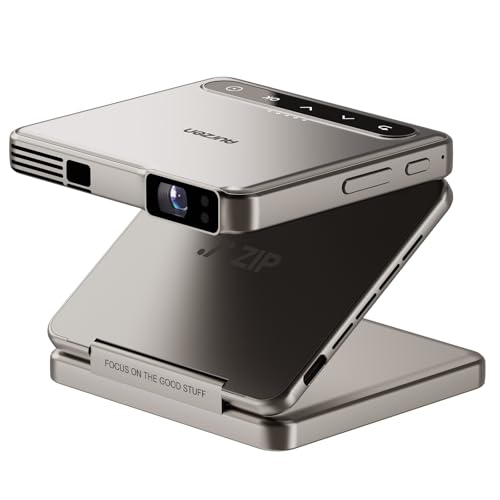
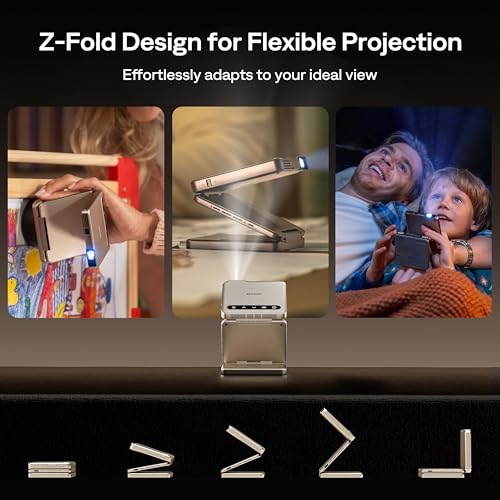
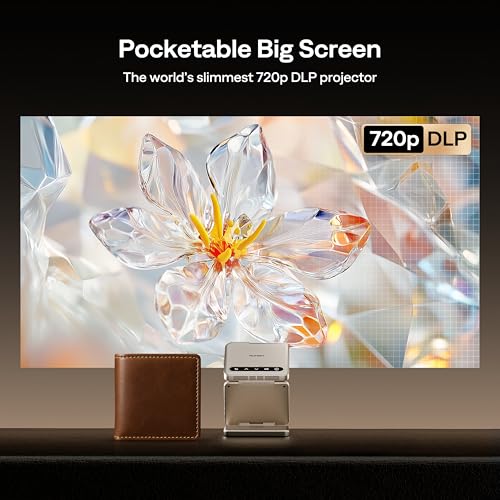
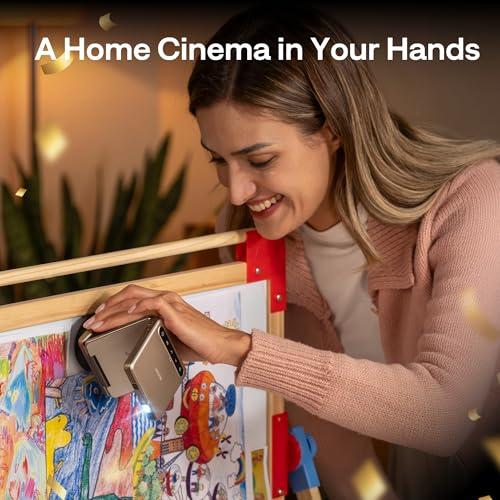
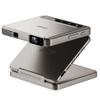
What immediately sets the Aurzen ZIP Tri-Fold apart is its Z-shaped folding mechanism—a tri-fold design that transforms the device from a wallet-sized rectangle into a fully functional projector with an integrated stand system. At just 84 x 78 x 26mm when folded and weighing only 280 grams, it's genuinely smaller than most smartphones and lighter than a typical paperback book.
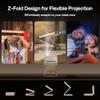
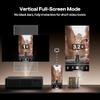
This isn't just about achieving smaller dimensions for the sake of portability. The folding design serves multiple functional purposes that become apparent once you start using it. When unfolded, the device creates its own dual-hinge gimbal stand system, providing 180 degrees of adjustment flexibility without requiring separate tripods or positioning accessories. Our testers found this particularly valuable when projecting onto unusual surfaces—bedroom ceilings, tent walls during camping trips, or even floors for overhead viewing.
The engineering achievement here is significant. Traditional portable projectors face a fundamental trade-off between size and stability. Smaller devices often lack proper mounting options, while larger ones defeat the purpose of portability. The ZIP's integrated approach eliminates this compromise entirely.
At the heart of the Aurzen ZIP Tri-Fold lies Texas Instruments' second-generation 0.16-inch DMD (Digital Micromirror Device) chip—the smallest DMD ever implemented in a consumer projector. To understand why this matters, it's helpful to know how DLP (Digital Light Processing) technology works.
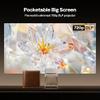
DLP projectors use millions of tiny mirrors arranged on a chip, with each mirror representing a pixel. These mirrors tilt thousands of times per second to reflect light either toward the lens (creating a bright pixel) or away from it (creating a dark pixel). The ZIP's DMD chip uses XPR (pixel-shifting) technology, which physically shifts the image slightly between frames to create the appearance of higher resolution—achieving 720p output from a smaller native array.
The breakthrough here is in the optical architecture. Texas Instruments redesigned the entire light path using side-illumination, reducing the optical block size by over 80% compared to previous generations. This makes the ZIP's ultra-compact form factor possible while maintaining acceptable image quality. The 2-channel LED system (using green and red LEDs with blended blue) provides the 100 ANSI lumens of brightness while maintaining the 20,000-hour lifespan typical of LED light sources.
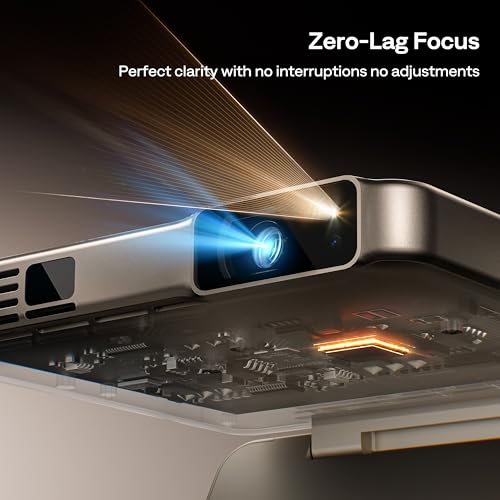
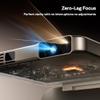
One of the most frustrating aspects of portable projectors has traditionally been setup complexity—adjusting focus, correcting keystone distortion (the trapezoidal shape that occurs when projecting at an angle), and positioning the device properly. The ZIP addresses this with ToF (Time-of-Flight) auto-focus technology borrowed from aerospace and robotics applications.
The ToF sensor measures distance by sending out infrared light pulses and measuring how long they take to return, performing these calculations 30 times per second. This enables zero-lag autofocus and automatic vertical keystone correction, making setup genuinely instantaneous. Our testers consistently reported that the projector delivers a sharp, properly aligned image within seconds of being turned on, regardless of projection angle or distance.
This technology represents a significant advancement over traditional portable projectors, which typically require manual focus rings and menu-driven keystone adjustments that can take several minutes to get right.
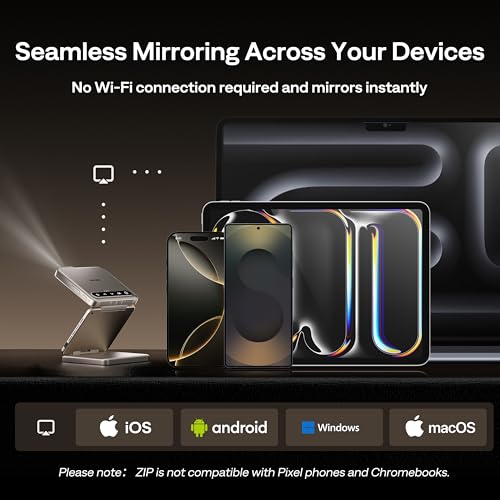
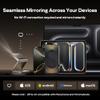
Perhaps the ZIP's most user-friendly feature is AirLink—a proprietary wireless screen mirroring system that works across iOS, Android, macOS, and Windows devices without requiring Wi-Fi networks or Bluetooth pairing. Unlike standard wireless display protocols like Miracast or AirPlay, which often require network configuration and can be unreliable, AirLink creates a direct device-to-device connection.
The process is remarkably simple: users select the ZIP from their device's casting menu, and mirroring begins immediately. Researchers testing the system found it as reliable as connecting wireless earbuds, with minimal latency and stable connections even in environments with heavy wireless interference.
This Wi-Fi-free operation provides a significant advantage for travel and outdoor use, where internet access might be unavailable or unreliable. However, there's an important limitation: the projector cannot directly stream DRM (Digital Rights Management) protected content from services like Netflix, Disney+, or Amazon Prime Video due to HDCP (High-bandwidth Digital Content Protection) compliance requirements. The optional CastPlay Wireless HDMI Dongle provides a workaround by creating a wireless HDMI connection, though this adds complexity to the otherwise seamless experience.
With 100 ANSI lumens of brightness, the Aurzen ZIP Tri-Fold falls into the "dark environment" category of portable projectors. ANSI lumens represent standardized brightness measurements, and to put this in context, a typical smartphone screen outputs roughly 400-800 nits (a different but related brightness measurement), while home theater projectors typically range from 1,000 to 4,000+ ANSI lumens.
Our testers found the 720p resolution produces surprisingly crisp images when used within the recommended 40-60 inch screen size range. The 300:1 contrast ratio, while modest compared to high-end projectors, proves adequate for most content in properly darkened environments. Image quality remains sharp across the projection range thanks to the ToF auto-focus system, which continuously maintains optimal focus even when the projector or screen is moved.
However, the brightness limitation is real. During daylight testing, even with blackout curtains, the image appeared washed out on screen sizes larger than 40 inches. The projector truly shines (pun intended) in very dark environments—think bedroom movie nights, camping trips, or hotel room entertainment rather than living room use with ambient lighting.
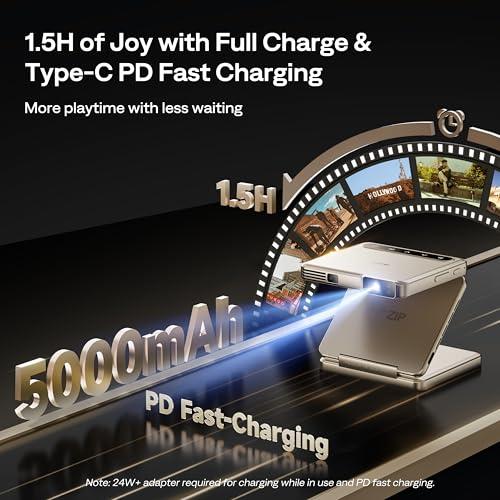
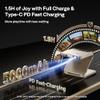
The 5,000mAh lithium battery provides approximately 90 minutes of continuous operation—sufficient for most feature films but limiting for extended presentations or binge-watching sessions. The USB-C charging system supports 22W fast charging and allows operation while plugged in, which partially addresses the runtime limitation.
Researchers noted that battery life varies significantly based on content brightness and wireless usage. Dark movies or presentations extend runtime, while bright, colorful content reduces it. The ability to operate while charging means users can extend sessions indefinitely with access to power sources or portable battery banks.
The optional PowerPlay magnetic stand doubles as a 10,000mAh power bank, extending runtime to approximately 3 hours while adding mounting flexibility. This accessory transforms the projector into a more versatile device for longer viewing sessions.
The ZIP includes dual 1W stereo speakers that, while surprisingly loud for the device's size, lack the audio fidelity most users expect from modern devices. Online user reviews consistently mention that the speakers sound thin compared to smartphone audio, with limited bass response and occasional distortion at higher volumes.
Fortunately, the Bluetooth 5.4 connectivity allows pairing with external speakers or headphones, which significantly improves the overall experience. Testers found the wireless audio connection stable and with minimal latency, making it practical for both headphone use and connection to portable Bluetooth speakers.
At the time of writing, the portable projector market offers several categories of devices. Traditional "pico projectors" like those from AAXA or Philips typically offer higher brightness (200-300 ANSI lumens) but in significantly larger, cube-shaped form factors that require carrying cases.
Mid-range portable projectors from brands like XGIMI or Nebula provide 1080p resolution and 500+ ANSI lumens but weigh 2-3 pounds and require setup time. At the premium end, laser-based portable projectors can deliver 1000+ ANSI lumens with 4K resolution, but these devices cost several times more and weigh 5+ pounds.
The Aurzen ZIP Tri-Fold occupies a unique position in this landscape. While it sacrifices brightness and battery life compared to larger competitors, it offers unprecedented portability and setup convenience. No other projector in the current market matches its combination of pocket-sized form factor and instant-setup capability.
For home theater use, the ZIP serves a specific niche rather than replacing dedicated home projection systems. Its ultra-portability makes it ideal for bedroom ceiling projection—a use case where traditional projectors are impractical due to mounting requirements and setup complexity. Testers particularly appreciated the ability to easily project movies onto bedroom ceilings for comfortable viewing while lying in bed.
However, for primary home theater use, the brightness and battery limitations become significant factors. Living rooms typically have more ambient light than bedrooms, making the 100 ANSI lumens insufficient for comfortable viewing on larger screens. The 90-minute battery life also falls short of most feature films without external power.
The projector excels in secondary home theater applications: guest room entertainment, patio movie nights after sunset, or children's bedrooms where permanent installation isn't desired.
At the time of writing, the ZIP's value proposition centers on solving specific use cases that traditional portable projectors handle poorly or not at all. The extreme portability enables applications like hotel room entertainment, camping trip movie nights, emergency presentation backup, and spontaneous content sharing that simply weren't practical with larger devices.
The engineering trade-offs are clear and intentional: brightness and battery life are sacrificed for portability and convenience. This makes the device unsuitable for bright environments or extended standalone use, but these limitations are acceptable given the target applications.
Compared to smartphone screens, the ZIP offers dramatically larger viewing areas. Compared to tablets, it provides even larger screens with wireless connectivity from any device. Compared to traditional portable projectors, it offers unmatched convenience and true pocket portability.
The overall value equation depends heavily on individual use cases. For users prioritizing ultimate portability and instant setup over maximum image quality or brightness, the ZIP offers compelling advantages that justify its position in the current market.
The Aurzen ZIP Tri-Fold succeeds by creating an entirely new category of truly pocketable projection devices that prioritize user experience and practicality over raw specifications—making large-screen entertainment accessible in situations where it was previously impossible.
The Aurzen ZIP Tri-Fold Portable Mini Projector produces 100 ANSI lumens, which is best suited for dark environments like bedrooms or basement home theaters. It's not bright enough for living rooms with ambient light or daytime viewing, but works well for nighttime movie sessions in darkened spaces with screen sizes up to 60 inches.
The Aurzen ZIP Tri-Fold battery provides approximately 90 minutes of continuous viewing time, which covers most standard movies but falls short of longer films. You can extend runtime by connecting to a power bank or wall outlet, as the projector operates while charging.
The Aurzen ZIP Tri-Fold Portable Mini Projector performs optimally with 40-60 inch screen sizes in dark rooms. While it can project up to 80 inches, image brightness decreases significantly at larger sizes, making smaller screens preferable for home theater viewing.
The Aurzen ZIP Tri-Fold cannot directly stream Netflix, Disney+, or Amazon Prime Video due to DRM content protection requirements. However, you can watch these services by purchasing the optional CastPlay Wireless HDMI Dongle, which enables wireless casting from compatible streaming devices.
Unlike traditional home theater projectors that require permanent mounting and complex setup, the Aurzen ZIP Tri-Fold Portable Mini Projector offers instant setup and extreme portability. However, it sacrifices brightness (100 vs 2000+ ANSI lumens) and resolution (720p vs 1080p/4K), making it better suited for secondary viewing spaces or portable use rather than primary home theater applications.
The Aurzen ZIP Tri-Fold can project onto any light-colored wall or surface, though a dedicated projector screen will provide better image quality. White or light gray walls work well, while darker surfaces will significantly reduce image brightness and contrast.
The Aurzen ZIP Tri-Fold Portable Mini Projector excels at ceiling projection thanks to its dual-hinge design and automatic focus/keystone correction. Simply unfold the device, point it at your ceiling, and the ToF sensor automatically focuses and aligns the image within seconds—perfect for bedroom movie nights.
The Aurzen ZIP Tri-Fold supports wireless screen mirroring from iPhones, iPads, Android devices, Windows laptops, and Macs using its AirLink technology. Notable exceptions include Google Pixel phones and Chromebooks, which use incompatible casting protocols.
The Aurzen ZIP Tri-Fold Portable Mini Projector features dual 1W speakers that are surprisingly loud for the size but lack the audio quality most users expect for home theater viewing. For better sound, connect Bluetooth headphones or external speakers via the Bluetooth 5.4 connection.
The Aurzen ZIP Tri-Fold Portable Mini Projector is worth it for users who prioritize extreme portability and instant setup over maximum brightness and battery life. It's ideal for bedroom ceiling projection, hotel entertainment, camping trips, and secondary home theater spaces where traditional projectors are impractical. However, those seeking a primary home theater projector should consider brighter, higher-resolution alternatives.
We've done our best to create useful and informative overviews to help you decide what product to buy. Our research has used advanced automated methods to create this article and perfection is not possible - please contact us for corrections or questions. These are the sites we've researched in the creation of this article: aurzen.com - youtube.com - tomsguide.com - aurzen.com - aurzen.com - projectorcentral.com - appleinsider.com - youtube.com - aurzen.com - aurzen.com - aurzen.com - aurzen.com
| Aurzen ZIP Tri-Fold Portable Mini Projector |
|---|
| Brightness - Determines usability in lit environments: 100 ANSI lumens |
| Folded Size - True pocketability: 84 x 78 x 26mm (3.3 x 3.1 x 1 inches) |
| Weight: 280g (9.88 oz) |
| Resolution - Image sharpness: 720p (1280 x 720) native with XPR enhancement |
| Battery Life - Viewing session duration: 90 minutes typical |
| Auto-Focus - Eliminates manual adjustments: ToF zero-lag sensor with 30Hz measurement |
| Screen Size Range - Optimal viewing area: 40-60 inches recommended (up to 80" possible) |
| Wireless Mirroring - Setup simplicity: AirLink Wi-Fi-free casting for iOS/Android/Windows/Mac |
| Projection Angles - Mounting flexibility: 180° total adjustment via dual-hinge gimbal |
| Light Source Lifespan: 20,000 hours LED |
| Contrast Ratio: 300:1 |
| Audio: Dual 1W stereo speakers + Bluetooth 5.4 |
| Charging: USB-C with 22W fast charging support |
| DRM Content Support - Streaming compatibility: Requires optional CastPlay dongle for Netflix/Disney+/Prime |
The XGIMI MoGo 4 Portable Projector 2025 takes a fundamentally different approach to portable projection, prioritizing performance over ultra-miniaturization. Where the ZIP focuses on unprecedented portability, the MoGo 4 delivers substantially better real-world viewing with 1080p Full HD resolution and 450 ISO lumens of brightness—roughly 4-5 times brighter than the ZIP's output. This translates to dramatically sharper images with visible detail even on larger 120-inch screens, plus the ability to project in dimly lit rooms rather than requiring complete darkness. The dual 6W Harman Kardon speakers are in a completely different league from the ZIP's 1W drivers, producing room-filling audio that eliminates the need for external speakers in most scenarios. With 2.5 hours of battery life (expandable to 5 hours with the PowerBase Stand), the XGIMI MoGo 4 provides nearly three times the runtime, making it practical for full-length movies without power interruption.
From a value perspective, the XGIMI MoGo 4 offers a more complete entertainment package with native Google TV integration, providing licensed Netflix, Disney+, and thousands of other apps without the mirroring limitations and DRM restrictions that affect the ZIP. While it's significantly larger—about coffee thermos-sized at 1.31kg versus the ZIP's pocket-friendly 280g—it remains genuinely portable while delivering performance that approaches traditional home theater projectors. For users who can accommodate the size difference, the MoGo 4 provides superior image quality, audio, battery life, and content access, making it the better choice for regular entertainment use, group viewing, or scenarios where projection quality matters more than absolute miniaturization. The ZIP's unique tri-fold design and extreme portability still serve specific niches like business travel or van life, but for most portable projection needs, the XGIMI MoGo 4 offers better overall value despite its larger footprint.
🤖 Read Detailed Comparison
👌XGIMI MoGo 4 Portable Projector 2025 Details
💵 See XGIMI MoGo 4 Portable Projector 2025 Price
The Nebula Cosmos 4K SE Smart Projector takes a fundamentally different approach, prioritizing image quality and features over ultimate portability. Where the ZIP delivers 100 ANSI lumens and 720p resolution, the Cosmos produces a massive 1,800 ANSI lumens with true 4K UHD resolution—differences that transform the viewing experience. The Cosmos can fill a 200-inch screen with sharp, detailed images even in moderately lit rooms, while its Dolby Vision HDR support and 95% DCI-P3 color coverage deliver genuinely cinematic visuals. The built-in Google TV OS provides direct access to Netflix 4K and thousands of other apps without the mirroring limitations that affect the ZIP, and the 30W Dolby Audio system eliminates the need for external speakers in most situations.
However, this performance comes at the cost of true portability—the Cosmos 4K SE weighs 9.9 pounds, requires wall power, and costs significantly more than the ZIP. While it includes a carrying handle for room-to-room transport, it's clearly designed as a TV replacement rather than a travel companion. For users who primarily need projection in fixed locations with power access, the Cosmos delivers dramatically better image quality, brightness, and features that justify its premium positioning. But if your priority is genuine anywhere-anytime portability with acceptable image quality, the ZIP's revolutionary tri-fold design and battery operation provide capabilities the larger Cosmos simply cannot match.
🤖 Read Detailed Comparison
👌Nebula Cosmos 4K SE Smart Projector Details
💵 See Nebula Cosmos 4K SE Smart Projector Price
The Nebula Capsule 3 GTV Projector takes a fundamentally different approach, prioritizing image quality and smart features over ultra-portability. With native 1080p resolution and 200-300 ANSI lumens of brightness, it delivers significantly sharper images and can handle dimly lit rooms where the ZIP requires complete darkness. The built-in Google TV platform with official Netflix licensing provides a complete entertainment experience without needing to mirror from external devices, while the 8W speaker produces room-filling audio that actually works for movie watching. At 2.5 hours of battery life, the Nebula Capsule 3 handles full-length films comfortably and offers a more traditional projector experience in a portable package.
For buyers weighing these options, the choice comes down to revolutionary portability versus proven performance. The Nebula Capsule 3 costs similarly but delivers substantially better image quality, longer battery life, and integrated streaming that makes it more suitable as a primary entertainment device or home theater supplement. While it weighs seven times more than the ZIP and requires deliberate packing, it still qualifies as genuinely portable and provides a more complete viewing experience. If your priority is having the best possible image quality and smart features in a portable projector, rather than fitting one in your pocket, the Nebula Capsule 3 offers superior value for regular entertainment use.
🤖 Read Detailed Comparison
👌Nebula Capsule 3 GTV Projector Details
💵 See Nebula Capsule 3 GTV Projector Price
The Aurzen BOOM 3 Smart Projector takes a fundamentally different approach, prioritizing performance over portability with impressive results. Where the ZIP delivers 100 ANSI lumens and 720p resolution, the BOOM 3 produces five times the brightness at 500 ANSI lumens with native 1080p resolution, enabling genuinely sharp images on screens up to 100 inches even in moderately lit rooms. The audio difference is even more dramatic - the BOOM 3's 36-watt 2.2-channel system with Dolby Audio creates an immersive soundscape that rivals dedicated soundbars, compared to the ZIP's basic 2-watt speakers that really need external audio for quality listening. The built-in Smart TV platform with official Netflix, Prime Video, and YouTube apps eliminates the connectivity complexities that come with the ZIP's mirroring-dependent approach.
However, this performance comes with clear trade-offs that make these projectors complementary rather than competing products. The BOOM 3 weighs 5.5 pounds and requires AC power, transforming it from a pocket-sized travel companion into a room-to-room portable home theater solution. While you can move it between locations, you can't slip it into a backpack for spontaneous movie nights or project onto hotel room ceilings like the ZIP enables. For users who prioritize image quality and don't need battery operation, the BOOM 3 delivers significantly better value in terms of performance per dollar. But if ultimate portability and the unique flexibility of the tri-fold design matter more than brightness and resolution, the ZIP's innovative engineering justifies its premium positioning in an entirely different market segment.
🤖 Read Detailed Comparison
👌Aurzen BOOM 3 Smart Projector Details
💵 See Aurzen BOOM 3 Smart Projector Price
The Aurzen EAZZE D1 Smart Projector takes a completely different approach, prioritizing image quality and smart features over extreme portability. With native 1080p resolution and 200 ANSI lumens of brightness, it delivers genuinely sharper images that are twice as bright as the ZIP's output. The built-in smart TV operating system with certified Netflix, Prime Video, and YouTube apps eliminates the need for external devices or workarounds for streaming content. Most notably, the dual 8W speakers with Dolby Audio processing provide room-filling sound that's dramatically superior to the ZIP's 1W speakers - making it actually suitable for group viewing without external audio equipment.
From a value perspective, the EAZZE D1 costs significantly less while delivering superior technical specifications across nearly every category except portability. It's the clear winner for anyone prioritizing home theater use, offering better brightness for semi-lit rooms, native resolution for crisp text and details, and comprehensive smart features that make it a true TV replacement. However, it requires AC power and measures over 9 inches wide, making it a traditional portable projector rather than the pocket-sized marvel that is the ZIP. If you can live with carrying a small bag instead of fitting everything in your pocket, the EAZZE D1 provides dramatically better performance per dollar - but it can't match the ZIP's revolutionary form factor that enables projection in situations where no other projector would be practical.
🤖 Read Detailed Comparison
👌Aurzen EAZZE D1 Smart Projector Details
💵 See Aurzen EAZZE D1 Smart Projector Price
The BenQ GV50 takes a fundamentally different approach to portable projection, prioritizing performance over ultimate portability. Where the ZIP excels in pocket-sized convenience, the GV50 delivers significantly superior image quality with Full HD 1920×1080 resolution and 500 ANSI lumens of brightness - five times brighter than the ZIP's 100 lumens. This brightness difference translates to real-world benefits: the GV50 can handle larger screen sizes up to 120 inches effectively and remains watchable in rooms with some ambient light, while the ZIP requires completely dark environments for optimal viewing. The GV50 also includes comprehensive smart TV functionality through Google TV, providing direct access to Netflix, Prime Video, and other streaming services without needing external devices, plus an impressive 18W 2.1-channel speaker system with a dedicated subwoofer that eliminates the need for external audio equipment.
However, these performance advantages come with trade-offs in portability and cost. At 4.4 pounds, the BenQ GV50 is designed more for moving between rooms in your home rather than true travel portability - it's roughly 18 times heavier than the ZIP's 9.88-ounce form factor. The GV50's specialized 135-degree vertical adjustment and ceiling projection optimization make it excellent for bedroom entertainment setups, but this focus on home use means it can't match the ZIP's versatility for spontaneous presentations, travel, or outdoor adventures. While the GV50 offers better value for users seeking a primary home entertainment projector with legitimate performance capabilities, the ZIP remains unmatched for scenarios where ultimate portability and instant setup convenience are the primary requirements.
🤖 Read Detailed Comparison
👌BenQ GV50 Full HD Smart Ceiling Projector Details
💵 See BenQ GV50 Full HD Smart Ceiling Projector Price
The XGIMI Halo+ Portable Projector takes a fundamentally different approach to portable projection, prioritizing performance over ultra-miniaturization. Its standout feature is genuine 1080p Full HD resolution paired with 700 ISO lumens of brightness—roughly 5-7 times brighter than the ZIP's output. This combination enables the Halo+ to work effectively in dimly lit rooms and maintain sharp image quality on screens up to 120 inches, where the ZIP's 720p resolution would start showing visible pixels. The built-in Android TV platform with native Netflix, Disney+, and streaming app support eliminates the need for external devices, while dual 5W Harman/Kardon speakers provide room-filling audio that actually complements the visual experience rather than requiring external speakers or headphones.
In real-world usage, the XGIMI Halo+ delivers what most people expect from a "portable projector"—genuine home theater performance that happens to be moveable rather than truly pocket-sized convenience. At 1.6kg, it requires dedicated bag space and planning but rewards users with 2.5-hour battery life, universal device compatibility, and the ability to serve as a legitimate TV replacement. The trade-off is clear: while the ZIP revolutionizes where you can bring projection, the Halo+ focuses on making projection worthwhile once you get there. For users who prioritize image quality, versatile lighting conditions, and comprehensive smart features over revolutionary portability, the XGIMI Halo+ represents the mature, refined approach to portable projection that delivers consistent satisfaction across diverse viewing scenarios.
🤖 Read Detailed Comparison
👌XGIMI Halo+ Portable Projector Details
💵 See XGIMI Halo+ Portable Projector Price
The Epson EpiqVision Mini EF11 Laser Projector represents a completely different philosophy in portable projection, prioritizing image quality and brightness over ultra-portability. With 1,000 ANSI lumens—ten times brighter than the ZIP—it can actually function in rooms with ambient lighting and deliver crisp Full HD 1920x1080 resolution that makes text and fine details genuinely sharp. The 3LCD technology with laser phosphor illumination produces a remarkable 200,000:1 contrast ratio, creating deep blacks and vibrant colors that rival dedicated home theater projectors. While it requires AC power and weighs 1.2kg compared to the ZIP's battery operation and 280g weight, the EF11 can project images up to 150 inches with consistent quality throughout that range.
From a value perspective, the Epson EF11 costs significantly more but delivers traditional projector performance in a relatively compact package. It's the choice for users who need reliable brightness for presentations, family movie nights, or any scenario where image quality cannot be compromised. The trade-off is clear: you sacrifice the ZIP's revolutionary pocketability and battery operation for professional-grade performance that works in real-world lighting conditions. If your primary need is a projector that can replace a TV for regular viewing sessions rather than occasional portable entertainment, the EF11's superior brightness, resolution, and color accuracy justify the size and price premium over ultra-portable alternatives.
🤖 Read Detailed Comparison
👌Epson EpiqVision Mini EF11 Laser Projector Details
💵 See Epson EpiqVision Mini EF11 Laser Projector Price
The BenQ TH685P represents the opposite approach to projection, prioritizing performance over portability. At 3,500 ANSI lumens, it's 35 times brighter than the ZIP, allowing comfortable viewing in rooms with ambient lighting—something impossible with ultra-portable projectors. The native 1080p resolution delivers genuinely sharp images that make the ZIP's pixel-shifted 720p look soft by comparison, especially noticeable when displaying text or detailed game interfaces. For gaming specifically, the TH685P excels with its exceptional 8.3ms input lag at 120Hz, HDR10 support, and dedicated Game Mode that enhances shadow detail for competitive advantage. These specifications put it among the best gaming projectors available, delivering performance that serious gamers will appreciate on screens up to 300 inches.
However, this performance comes with significant trade-offs in convenience and flexibility. The BenQ TH685P weighs 6.2 pounds, requires mains power, and needs traditional HDMI connections—eliminating the spontaneous, anywhere-projection experience that makes the ZIP special. While it offers superior image quality and gaming performance, it can't match the ZIP's unique ceiling projection capability, instant wireless setup, or pocket-sized portability. The choice ultimately depends on your priorities: if you value maximum image quality and gaming performance in a dedicated space, the TH685P justifies its higher cost. But if you're drawn to the freedom of projecting anywhere with zero setup hassle, the ZIP's innovative design and convenience features create experiences that no traditional projector can replicate, even at much higher brightness levels.
🤖 Read Detailed Comparison
👌BenQ TH685P 1080p HDR Gaming Projector Details
💵 See BenQ TH685P 1080p HDR Gaming Projector Price
The Epson EpiqVision Flex CO-FH02 takes a fundamentally different approach to portable projection, prioritizing performance over ultra-portability. With its 3,000 lumens of brightness and Full HD 1080p resolution, it delivers 30 times more brightness and four times higher resolution than the ZIP. This translates to dramatically different real-world capabilities: while the ZIP requires dark rooms and smaller screens, the Epson can project crisp 300-inch images in rooms with ambient light, making it suitable for daytime viewing and bright conference rooms. The built-in Android TV eliminates the DRM streaming limitations that plague ultra-portable projectors, providing direct access to Netflix, Disney+, and Prime Video without additional dongles or workarounds.
However, this performance comes with significant trade-offs in portability and convenience. At 5.7 pounds versus the ZIP's sub-10-ounce weight, the Epson EpiqVision Flex requires a backpack rather than fitting in your pocket, and its AC-only power eliminates the battery-powered flexibility that makes the ZIP truly mobile. The traditional lamp-based design also means eventual replacement costs, while the ZIP's LED system is maintenance-free for its 20,000-hour lifespan. For users who prioritize image quality and don't need the ZIP's revolutionary portability, the Epson offers significantly better value in terms of pure projection performance—but it represents a return to conventional projector limitations rather than the ZIP's category-defining innovation in form factor and ease of use.
🤖 Read Detailed Comparison
👌Epson EpiqVision Flex CO-FH02 Smart Portable Projector Details
💵 See Epson EpiqVision Flex CO-FH02 Smart Portable Projector Price
The BenQ TH575 Gaming Projector represents the polar opposite approach to projection with its focus on maximum performance over portability. At 3,800 ANSI lumens—38 times brighter than the ZIP—it delivers genuine home theater experiences in moderately lit rooms and can project crisp 1080p images up to 300 inches. The ultra-low 16.7ms input lag makes it a serious gaming projector that rivals dedicated gaming monitors, while the 15,000:1 contrast ratio creates dramatically deeper blacks and more cinematic visuals. Where the ZIP requires careful darkness and positioning, the TH575 powers through ambient light and delivers consistently sharp images that look genuinely impressive to anyone used to television viewing.
However, this performance comes with significant trade-offs that highlight why the ZIP's approach has merit. The BenQ TH575 weighs 2.5kg, requires permanent AC power at 280 watts, and needs dedicated setup space—making it completely unsuitable for travel, temporary setups, or flexible viewing scenarios. The lamp-based technology means eventual replacement costs and fan noise during operation, while the lack of wireless connectivity requires HDMI cables for every device. If you have a dedicated home theater space and prioritize image quality above all else, the TH575 offers substantially better performance for a similar price point. But if you value the freedom to project anywhere, anytime, the ZIP's unique portability and convenience features justify its performance limitations for users who prioritize flexibility over peak image quality.
🤖 Read Detailed Comparison
👌BenQ TH575 1080p Gaming Projector Details
💵 See BenQ TH575 1080p Gaming Projector Price
The BenQ GS50 Portable Outdoor Projector represents a completely different approach to portable projection, prioritizing performance over ultra-compact design. Where the ZIP excels in revolutionary portability, the GS50 delivers significantly superior core projection specs: Full HD 1080p resolution (versus 720p), 500 ANSI lumens brightness (5x brighter than the ZIP's 100 lumens), and a remarkable 100,000:1 contrast ratio that produces deeper blacks and more vibrant colors. The audio experience is dramatically different as well, with the GS50's 2.1-channel system featuring dual 5W tweeters and a 10W woofer delivering room-filling 20W output – eliminating the need for external speakers that you'd likely want with the ZIP's basic 2W audio system. The GS50 also runs full Android TV with native streaming apps, removing the DRM content limitations that require an additional dongle purchase with the ZIP.
In real-world usage, the BenQ GS50 shines in scenarios where the ZIP struggles: moderately lit rooms, larger screen sizes above 60 inches, group viewing situations, and outdoor use during golden hour. The 2.5-hour battery life provides a full movie experience without power anxiety, and the IPX2 splash resistance makes it genuinely suitable for backyard movie nights or camping trips. While significantly larger at nearly 4 pounds versus the ZIP's 10-ounce weight, the GS50 delivers performance that can legitimately serve as a home theater solution rather than just a portable convenience device. The trade-off is clear: you sacrifice the ZIP's revolutionary pocket-sized portability and unique projection angles for dramatically better image quality, audio performance, and environmental versatility that justifies the higher investment for users prioritizing viewing experience over ultimate portability.
🤖 Read Detailed Comparison
👌BenQ GS50 Portable Outdoor Projector Details
💵 See BenQ GS50 Portable Outdoor Projector Price
The Epson Home Cinema 1080 Projector represents a fundamentally different approach to projection, prioritizing image quality and brightness over portability. With 3,400 lumens of brightness—34 times more than the ZIP—this traditional home theater projector can fill rooms with ambient light and project massive screens up to 300 inches diagonal. Its native 1080p resolution and 3LCD technology deliver genuinely cinematic image quality with accurate colors and a 16,000:1 dynamic contrast ratio that creates deep blacks and vibrant scenes. While it weighs 2.8kg and requires wall power, the Epson Home Cinema 1080 transforms dedicated viewing spaces into true home theaters, supporting everything from 120-inch movie nights to immersive gaming sessions that simply aren't possible with ultra-portable projectors.
From a value perspective, the Epson Home Cinema 1080 offers exceptional performance per dollar in the traditional projector category, competing with models costing significantly more when it launched in 2020. Its multiple HDMI ports, comprehensive streaming compatibility, and ability to handle bright rooms make it ideal for family entertainment where image quality matters most. However, this performance comes with trade-offs the ZIP eliminates entirely—complex setup, permanent installation requirements, and complete dependence on wall power. The choice between these projectors ultimately depends on whether you prioritize the ZIP's revolutionary portability and instant setup, or the Epson Home Cinema 1080's superior image quality and traditional home theater capabilities.
🤖 Read Detailed Comparison
👌Epson Home Cinema 1080 Projector Details
💵 See Epson Home Cinema 1080 Projector Price
The JMGO N1S Ultimate 4K Laser Projector represents the premium end of portable projection, delivering flagship home theater performance that the ZIP simply cannot match. Its triple RGB laser system produces an impressive 3,500 ANSI lumens—35 times brighter than the ZIP—enabling comfortable viewing on 80-120 inch screens even with ambient lighting present. The true 4K UHD resolution with 110% BT.2020 color coverage delivers cinema-quality visuals with reference-grade color accuracy, while the integrated 20W subwoofer and dual 10W speakers provide genuine home theater audio that eliminates the need for external sound systems. The AI-powered gimbal design offers 360°/135° rotation with automatic focus and keystone correction, making it remarkably versatile for projecting onto walls, ceilings, or floors throughout your home.
However, the JMGO N1S Ultimate sacrifices the ZIP's revolutionary portability for this premium performance. At 14.3 pounds and requiring constant AC power, it's portable only in the sense of moving between rooms or occasional transport, not the true pocket-sized convenience that defines the ZIP experience. The significantly higher price point reflects its professional-grade laser technology and smart TV functionality, including full Google TV with certified Netflix access. While the JMGO excels as a TV replacement for dedicated home theater setups and can handle bright environments where the ZIP fails completely, it can't match the ZIP's ability to provide instant projection anywhere with battery power. The choice ultimately depends on whether you need flagship image quality for home entertainment or prioritize the unique convenience of truly portable projection for travel and outdoor use.
🤖 Read Detailed Comparison
👌JMGO N1S Ultimate 4K Laser Projector Details
💵 See JMGO N1S Ultimate 4K Laser Projector Price
The JMGO PicoPlay represents the traditional approach to portable projection, emphasizing performance and features within a moderately portable package. Its native 1080p Full HD resolution delivers significantly sharper images than the ZIP's upscaled 720p, making text crisp and details clear on screens up to 60+ inches. With 400 ISO lumens brightness, it handles dim room conditions that would completely wash out the ZIP's 100-lumen output, allowing for movie nights in hotel rooms or living spaces with some ambient lighting. The integrated Google TV platform provides direct access to Netflix, YouTube, and other streaming services without relying on device mirroring, while the 8W Dolby Audio speaker produces room-filling sound that eliminates the need for external speakers in most scenarios. Its 20,000mAh battery delivers genuine 3-hour movie sessions, and the 88° rotating gimbal offers flexible projection angles for wall or ceiling mounting.
While the PicoPlay weighs considerably more at 2.2 pounds and requires a carrying case rather than pocket storage, it delivers substantially better traditional projector performance across every key metric. The image quality difference becomes particularly noticeable during detailed content or larger screen sizes, where the ZIP's brightness and resolution limitations become apparent. For users prioritizing viewing experience over ultimate portability, the JMGO PicoPlay offers better value in terms of performance per dollar, providing cinema-quality features like HDR10 support, superior color accuracy covering 124% of Rec.709, and the convenience of a complete smart TV platform. Choose the PicoPlay if you can accommodate its larger size in exchange for significantly better image quality, longer battery life, and audio performance that makes it suitable as a primary entertainment device rather than just a convenience accessory.
🤖 Read Detailed Comparison
👌JMGO PicoPlay 1080P Smart Portable Projector Details
💵 See JMGO PicoPlay 1080P Smart Portable Projector Price
The Aurzen BOOM Mini Smart Projector Google TV takes a fundamentally different approach, prioritizing maximum performance and convenience over extreme portability. Its standout feature is the built-in Google TV platform that provides direct access to Netflix, Disney+, YouTube, and over 10,000 other apps without requiring any external devices or complex mirroring setups. At 500 ANSI lumens, the BOOM Mini delivers five times the brightness of the ZIP, making it genuinely usable in moderately lit rooms and enabling much larger screen sizes up to 200 inches. The native 1080p LCD resolution ensures crisp, detailed images that remain sharp even when projecting large, and its dual 10W speakers with Dolby Audio (20W total) provide room-filling sound that eliminates the need for external speakers in most situations.
While the BOOM Mini sacrifices the ZIP's revolutionary portability with its traditional 9.1" × 7" × 7.6" cube design, it delivers significantly better value for home entertainment scenarios. The AC-powered operation means unlimited runtime without battery anxiety, and the comprehensive smart features justify the larger footprint for anyone using the projector primarily in fixed locations. For those prioritizing image quality, brightness flexibility, and streaming convenience over pocket-sized portability, the BOOM Mini offers dramatically more performance per dollar. However, it requires dedicated bag space for transport and access to power outlets, making it less suitable for the ultra-mobile use cases where the ZIP's tri-fold design truly shines.
🤖 Read Detailed Comparison
👌Aurzen BOOM Mini Smart Projector Google TV Details
💵 See Aurzen BOOM Mini Smart Projector Google TV Price
The JMGO N1S Pro 4K Projector delivers legitimate home theater performance that puts it in a completely different league from ultra-portable projectors. Its MALC 2.0 triple RGB laser system produces 2,400 ANSI lumens of brightness with true 4K resolution, enabling clear viewing in rooms with ambient light and supporting massive screen sizes up to 180 inches. The advanced laser technology covers 110% of the BT.2020 color gamut, delivering cinema-quality colors and contrast that make movies, gaming, and streaming content genuinely impressive. Built-in dual 10W speakers with Dolby Digital Plus provide rich audio that eliminates the need for external speakers in most setups, while comprehensive connectivity including dual HDMI 2.1 ports supports everything from gaming consoles to soundbar integration via eARC.
Where the Aurzen ZIP excels at creating unique portable viewing experiences, the JMGO N1S Pro 4K serves as a legitimate TV replacement or primary entertainment system. Its gimbal design still offers excellent placement flexibility, but the AC power requirement and larger form factor position it as a semi-portable solution rather than a truly mobile device. At roughly four times the price point, it targets users who prioritize image quality and brightness over ultimate portability—delivering performance that rivals dedicated home theater projectors costing significantly more. For viewers who want the big screen experience without compromising on resolution, color accuracy, or brightness, the performance gap justifies the size and cost premium, making it ideal for dedicated viewing spaces where the ZIP's portability advantages aren't necessary.
🤖 Read Detailed Comparison
👌JMGO N1S Pro 4K Projector Details
💵 See JMGO N1S Pro 4K Projector Price
The Hisense M2 Pro 4K Triple Laser Portable Projector delivers professional-grade performance that completely outclasses the ZIP in image quality and brightness. With its triple laser technology producing 1,300 ANSI lumens and true 4K resolution, the M2 Pro creates cinema-quality images that remain vibrant even in moderately lit rooms—a capability the ZIP simply cannot match with its 100 lumens output. The M2 Pro's optical zoom, massive 65-200 inch projection range, and 110% BT.2020 color space coverage make it suitable for serious home theater setups, outdoor movie nights, and professional presentations where image quality matters most. Its built-in VIDAA smart platform eliminates the need for external streaming devices, while superior 20-watt Dolby Audio speakers provide room-filling sound that the ZIP's tiny speakers cannot approach.
The trade-offs for this performance are significant, however. At 8.6 pounds and requiring external power, the M2 Pro demands much more planning and setup compared to the ZIP's grab-and-go simplicity. While the M2 Pro justifies its premium pricing through professional-grade components and features, it costs substantially more than the ZIP and lacks the revolutionary portability that makes the ZIP so appealing for spontaneous use. The M2 Pro excels when image quality and brightness are priorities—transforming backyards into outdoor theaters or creating impressive large-screen gaming experiences—but it cannot match the ZIP's convenience for travel, camping, or casual bedroom viewing. For users who value the best possible projection performance and don't mind the size and power requirements, the M2 Pro represents a significant upgrade in capabilities, though the ZIP's unique ultra-portable form factor serves entirely different use cases that the larger projector simply cannot address.
🤖 Read Detailed Comparison
👌Hisense M2 Pro 4K Triple Laser Portable Projector Details
💵 See Hisense M2 Pro 4K Triple Laser Portable Projector Price
The HAPPRUN Google TV Smart Projector represents the traditional home theater approach with significantly superior optical performance and smart features. Its 350 ANSI lumens of brightness - 3.5 times brighter than the ZIP - enables viewing in moderately lit rooms where the ZIP requires complete darkness. The native 1080p Full HD resolution with 4K decoding and HDR10+ support delivers noticeably sharper, more detailed images with better contrast and color accuracy, especially important for larger screen sizes above 100 inches. The built-in Google TV 11.0 system provides direct access to Netflix, Disney+, YouTube, and other major streaming services without requiring external devices or dongles, while the 8W Dolby-certified speaker system offers room-filling audio that's substantially better than the ZIP's personal-viewing speakers.
However, the HAPPRUN sacrifices all portability for this performance advantage. It requires AC power and proper positioning, making it unsuitable for travel or spontaneous use cases where the ZIP excels. Setup involves traditional focus and keystone adjustments rather than the ZIP's instant auto-configuration. Most significantly for value-conscious buyers, the HAPPRUN delivers this superior performance at a substantially lower price point, making it exceptional value for traditional home theater applications. While the ZIP commands a premium for its innovative portability, the HAPPRUN proves you don't need to spend a fortune for legitimate 1080p home theater performance with comprehensive smart features. For users with a consistent viewing location who prioritize image quality and built-in streaming capabilities over mobility, the HAPPRUN offers far better performance per dollar.
🤖 Read Detailed Comparison
👌HAPPRUN Google TV Smart Projector Details
💵 See HAPPRUN Google TV Smart Projector Price
The TCL C1 Google TV Portable Projector prioritizes performance over extreme portability, delivering significantly superior image quality with native 1080p resolution and 230 ISO lumens of brightness—more than double the ZIP's output. Its standout feature is the complete Google TV integration with certified Netflix, YouTube, and Prime Video apps built-in, eliminating the need for external streaming devices entirely. The TCL C1 also includes an 8W Dolby Audio speaker that's genuinely adequate for small to medium rooms, plus advanced features like omni-directional auto keystone correction and obstacle avoidance that create a truly hands-off setup experience.
While the TCL C1 weighs nearly 4 pounds and requires AC power—making it less travel-friendly than the ZIP—it excels as a semi-portable home entertainment system that can replace TVs in bedrooms or create impressive outdoor movie experiences. The brightness advantage means it works in moderately lit environments where the ZIP would struggle, and the 1080p resolution delivers noticeably sharper text and detail for presentations or detailed content. Most importantly, the TCL C1 typically costs significantly less while offering substantially better performance metrics across brightness, resolution, audio quality, and smart features, making it exceptional value for users who don't need pocket-sized portability.
🤖 Read Detailed Comparison
👌TCL C1 Google TV Portable Projector Details
💵 See TCL C1 Google TV Portable Projector Price
Original price was: $1,799.99.$1,299.99Current price is: $1,299.99.
Original price was: $499.99.$369.99Current price is: $369.99.
Original price was: $579.99.$318.99Current price is: $318.99.

Privacy Policy
Terms and Conditions - Affiliate Policy
Home Security
© Copyright 2008-2026.
11816 Inwood Rd #1211, Dallas, TX 75244