

The smartwatch market has evolved dramatically over the past few years, with manufacturers pushing boundaries in both technology and design. Two standout devices represent completely different philosophies in premium wearables: the Apple Watch Ultra 3 and the Google Pixel Watch 3. While both are undeniably premium smartwatches, they target distinctly different users and use cases.
Released in 2024, the Google Pixel Watch 3 marked Google's continued push into the wearable space with significant improvements over previous generations. The Apple Watch Ultra 3, launching in 2025, represents Apple's most ambitious wearable yet, introducing groundbreaking satellite communication technology alongside familiar rugged design elements.
Understanding which device suits your needs requires looking beyond surface-level comparisons. These watches embody fundamentally different approaches to what a premium smartwatch should be and do.
The premium smartwatch category isn't just about expensive materials—it's about delivering capabilities that justify higher prices through superior performance, materials, and features. At the time of writing, premium smartwatches typically command prices well above entry-level fitness trackers, with the Apple Watch Ultra 3 positioned at the highest end of the market while the Google Pixel Watch 3 offers premium features at a more accessible price point.
When evaluating premium smartwatches, several key factors determine real-world value. Ecosystem compatibility remains crucial—your choice of smartphone platform heavily influences which watch will work best. Build quality and durability separate premium devices from budget alternatives, particularly for users who demand reliability in challenging conditions.
Battery life has become increasingly important as smartwatches add more features. The difference between a watch that lasts one day versus three days fundamentally changes how you use the device. Display quality matters enormously for outdoor visibility and general usability, while health and fitness tracking accuracy can literally impact your wellbeing.
The most critical consideration, however, is understanding your actual use case. A watch designed for extreme outdoor adventures will feel overkill for office workers, while a fashion-forward device might fail someone who needs rugged reliability.
The Apple Watch Ultra 3 and Google Pixel Watch 3 represent radically different approaches to premium wearables. Apple designed the Ultra 3 with an "extreme-first" philosophy—building for the most demanding use cases, then scaling features down for general users. This approach delivers maximum capability but at premium pricing.
Google took a "mainstream-plus" approach with the Pixel Watch 3, prioritizing broad appeal with thoughtful premium touches. Rather than targeting extreme users, Google focused on delivering excellent everyday functionality with standout features that justify the premium positioning.
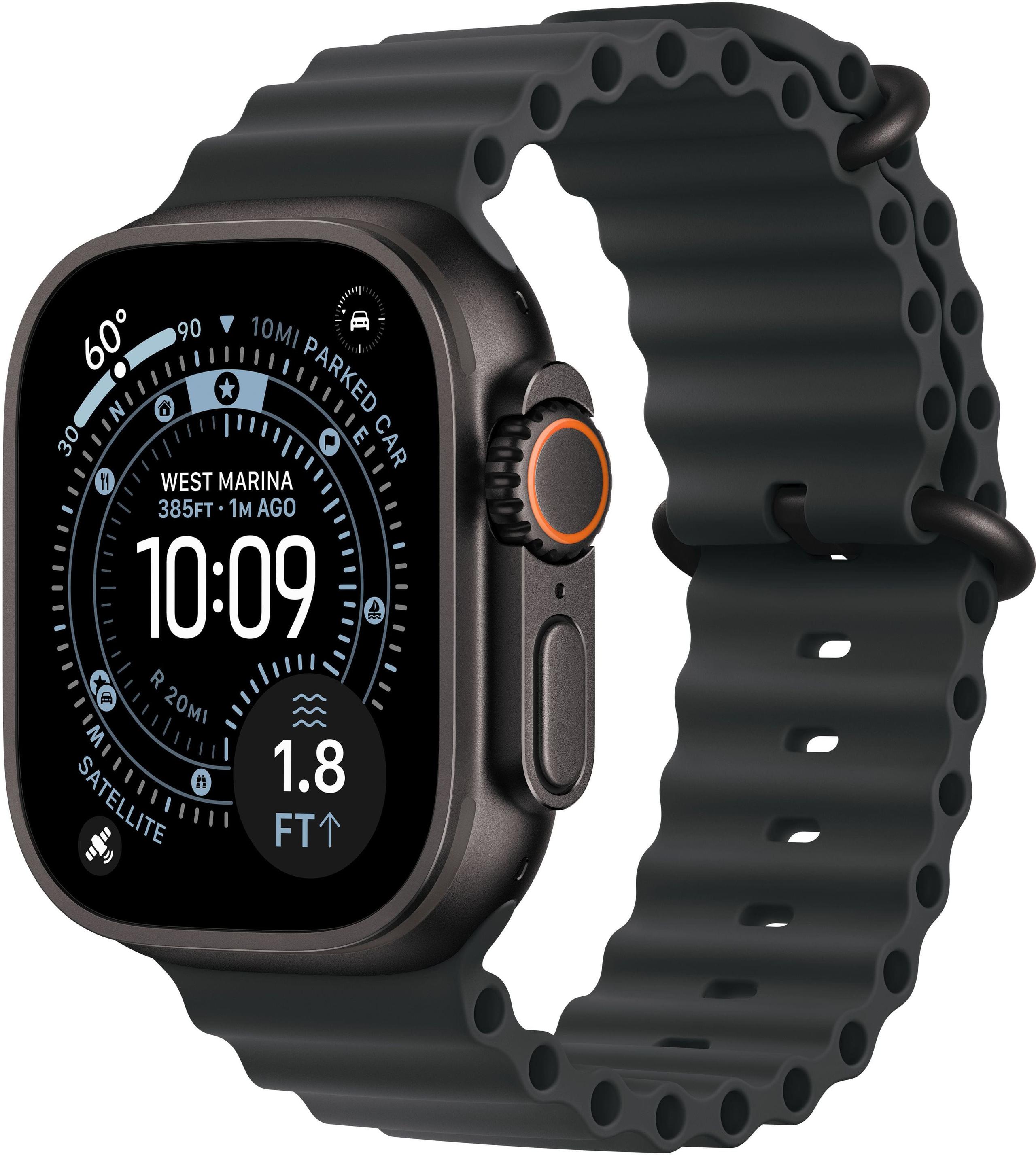
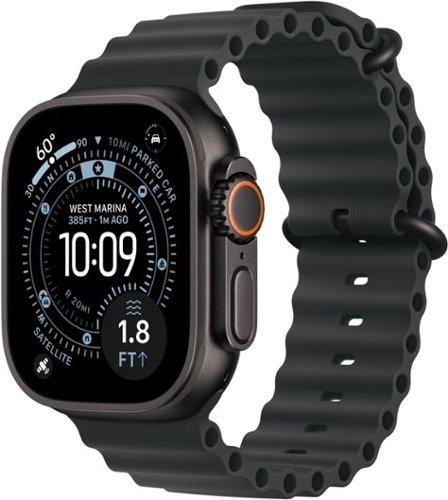
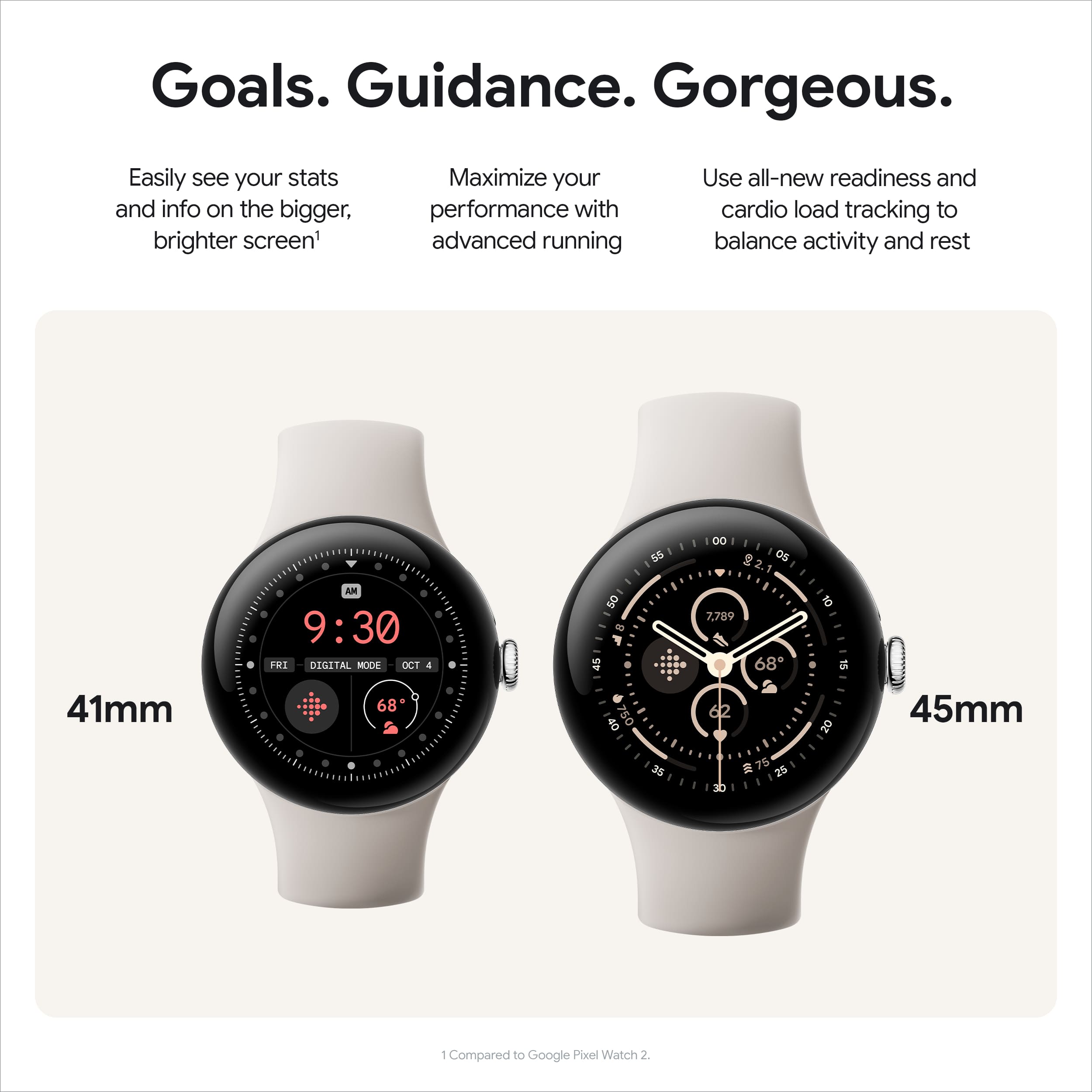
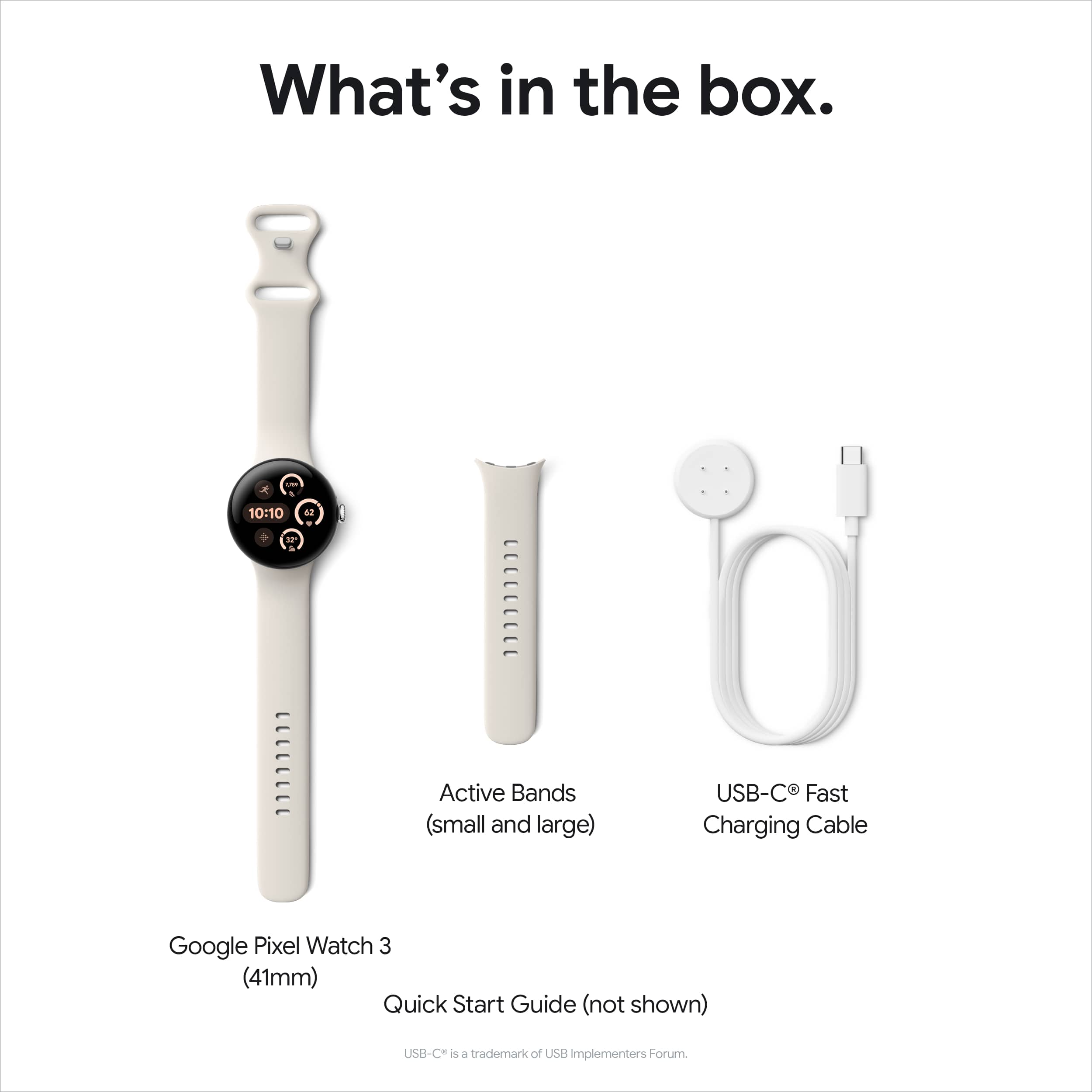
These philosophical differences show up everywhere, from physical design to software features. The Apple Watch Ultra 3 comes in a single, large 49mm size that makes a statement on your wrist. The Google Pixel Watch 3 offers both 41mm and 45mm options, acknowledging that not everyone wants or needs a massive watch.
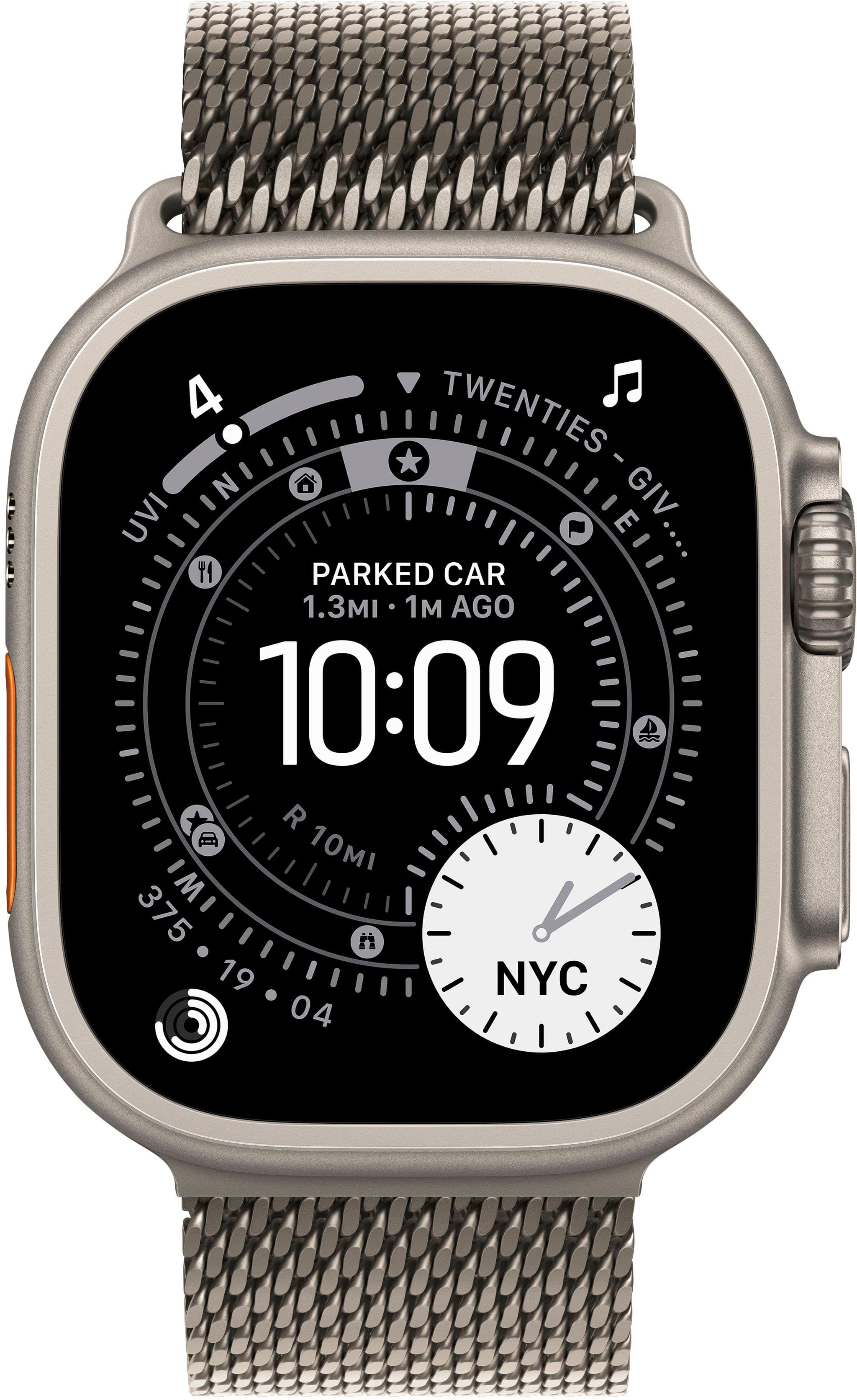
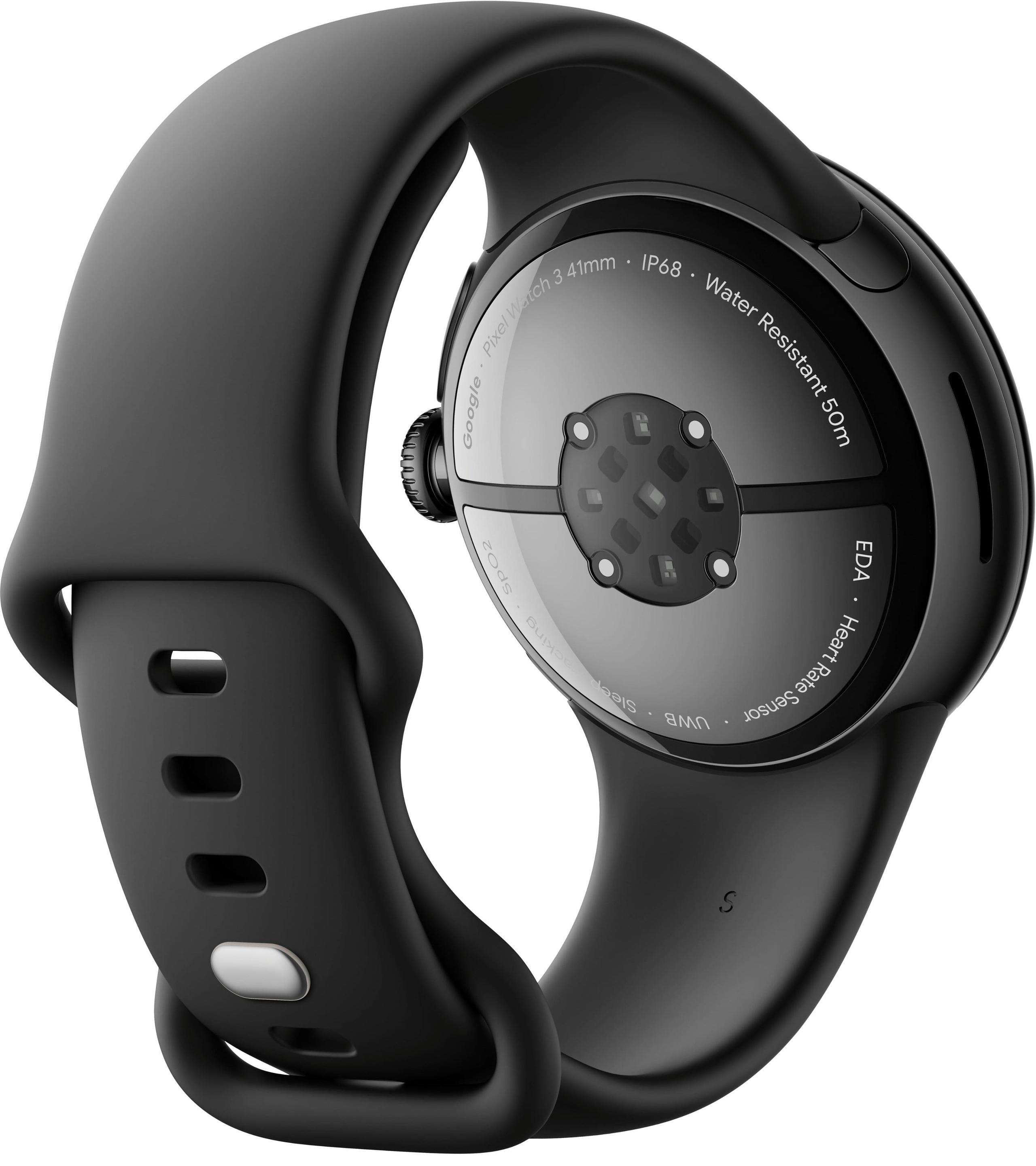
Build materials tell the same story. Apple chose aerospace-grade titanium construction—the same material used in aircraft and spacecraft—for maximum durability. Google opted for recycled aluminum that's lighter, more affordable, and environmentally conscious while still delivering premium feel and adequate durability for most users.
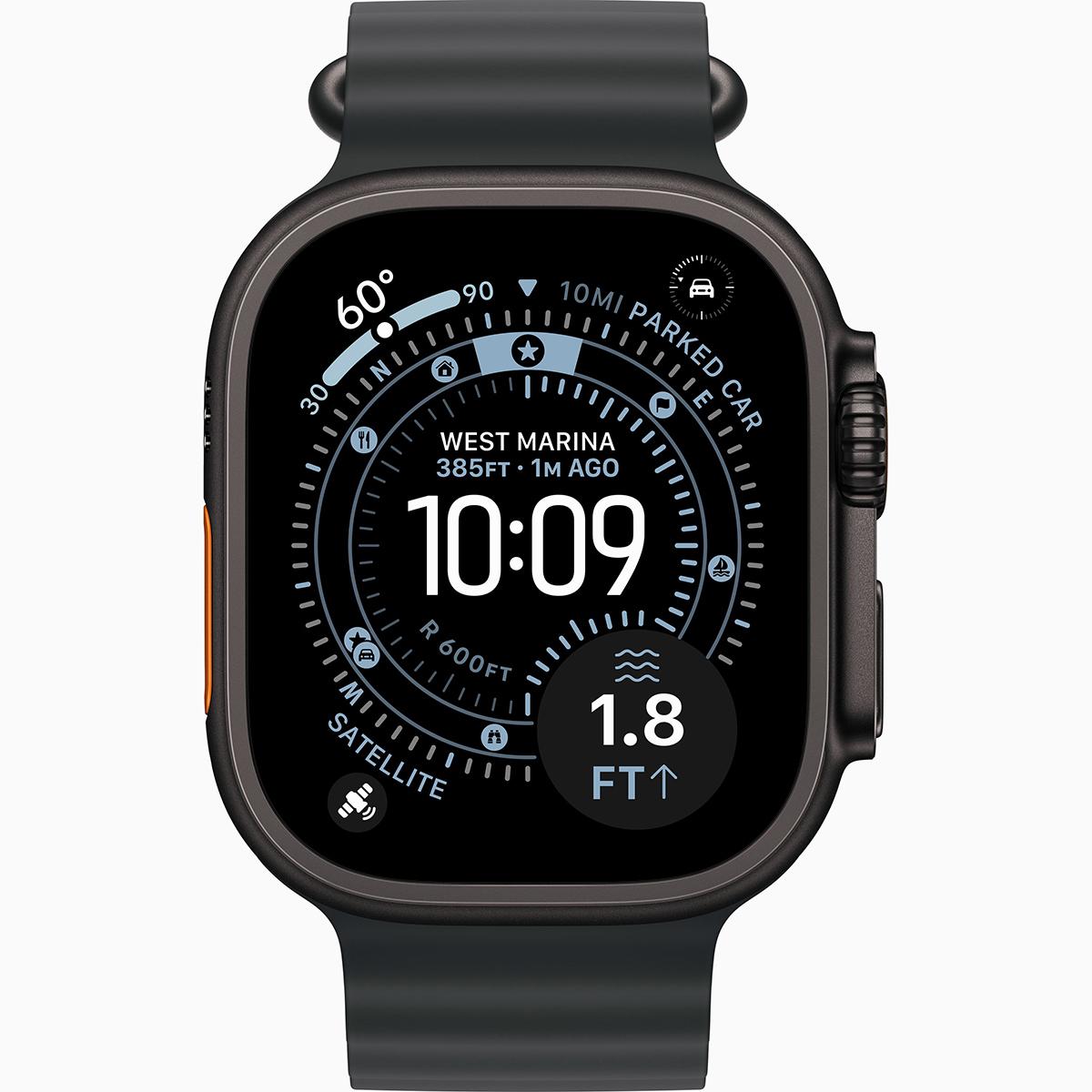
The display represents one of the most noticeable differences between these watches. The Apple Watch Ultra 3 features a massive 49mm flat sapphire crystal display that's impossible to ignore. With 3000 nits peak brightness, it remains clearly visible even in direct desert sunlight. This brightness level rivals some outdoor digital signs—it's genuinely impressive when you experience it firsthand.
The display uses LTPO3 (Low Temperature Polycrystalline Oxide) technology, which allows the refresh rate to drop as low as 1Hz when showing static content. This means the always-on display can show a live seconds hand ticking in real-time without destroying battery life—a technical achievement that seems simple but required sophisticated engineering.
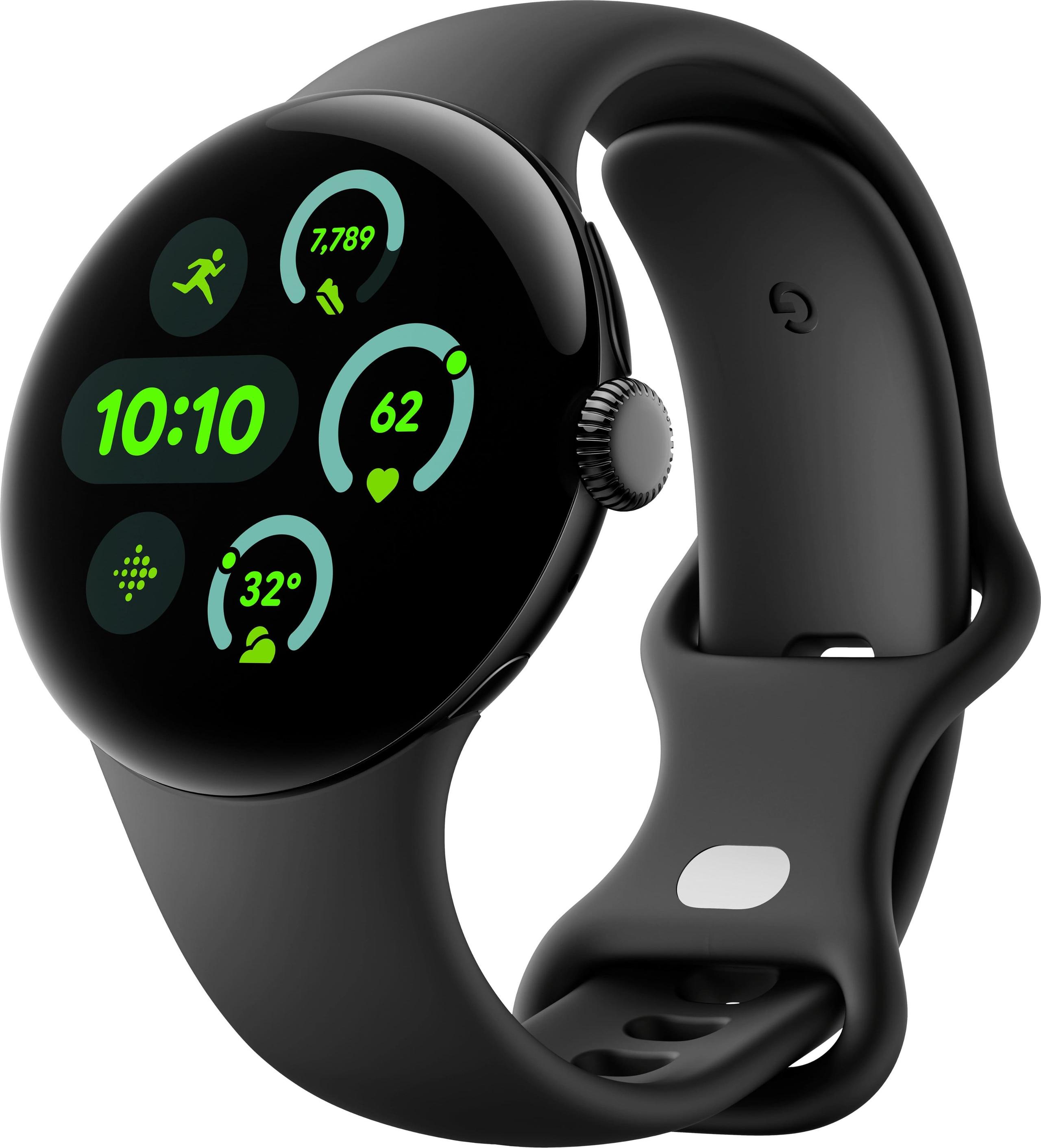
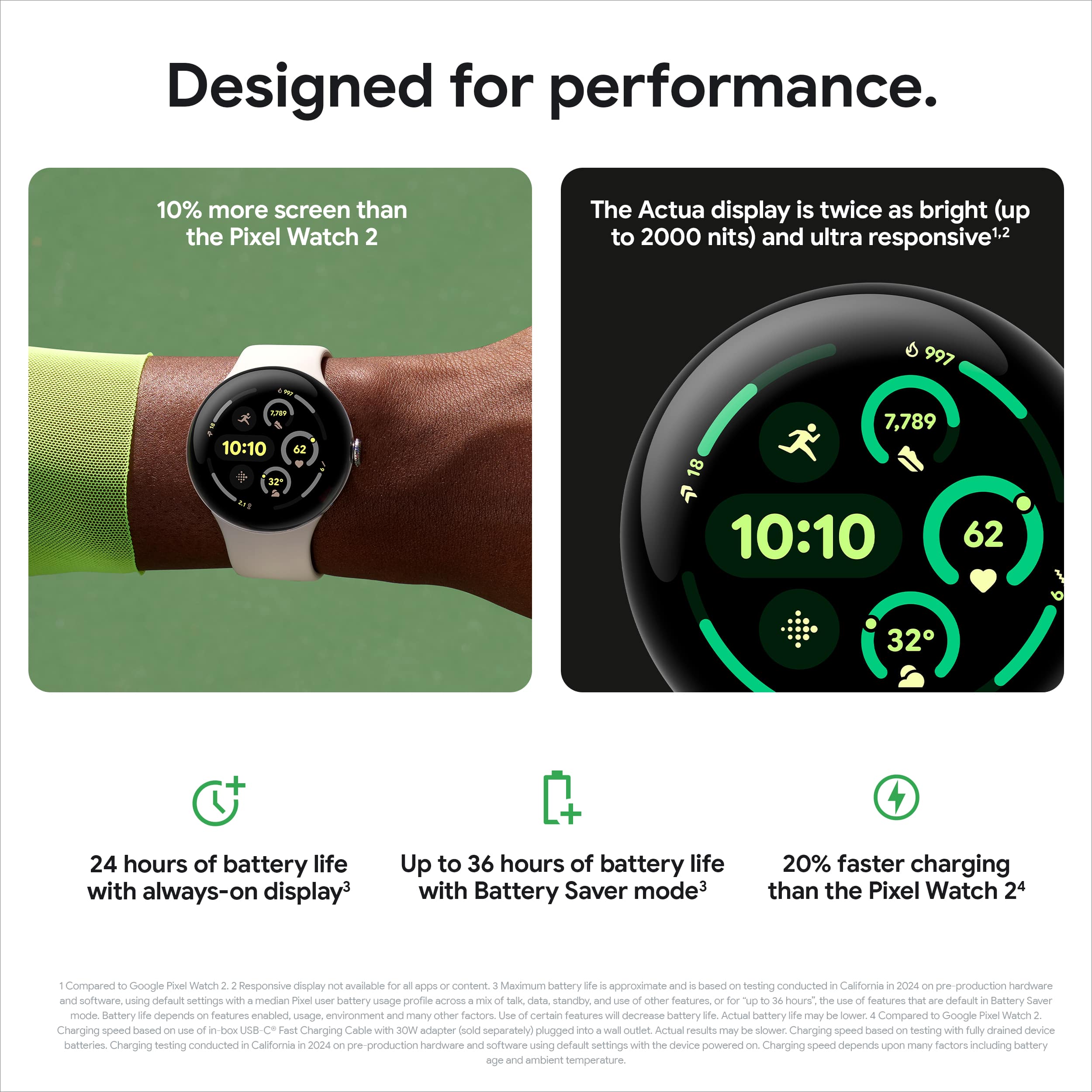
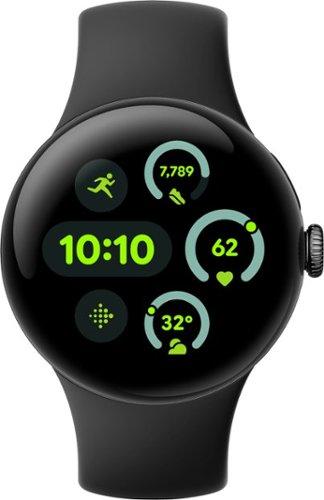
The Google Pixel Watch 3 takes a different approach with its circular AMOLED display. At 2000 nits peak brightness, it's still plenty bright for most conditions, though not quite matching the Ultra 3's extreme visibility. The circular design offers a more traditional watch aesthetic that many users prefer, and the 320 pixels-per-inch density creates sharp, crisp text and graphics.
What's particularly interesting is the refresh rate difference. While the Apple Watch Ultra 3 prioritizes power efficiency with its variable refresh rate, the Google Pixel Watch 3 can hit 60Hz for smoother scrolling and animations. In practice, both approaches work well, but you'll notice the Pixel Watch 3 feels more responsive during navigation while the Ultra 3 excels in always-on display efficiency.
The choice between square and circular designs goes beyond aesthetics. Square displays maximize screen real estate for text and app interfaces, which is why most smartphones use rectangular screens. Circular displays look more like traditional watches but can waste space when displaying text or rectangular content.
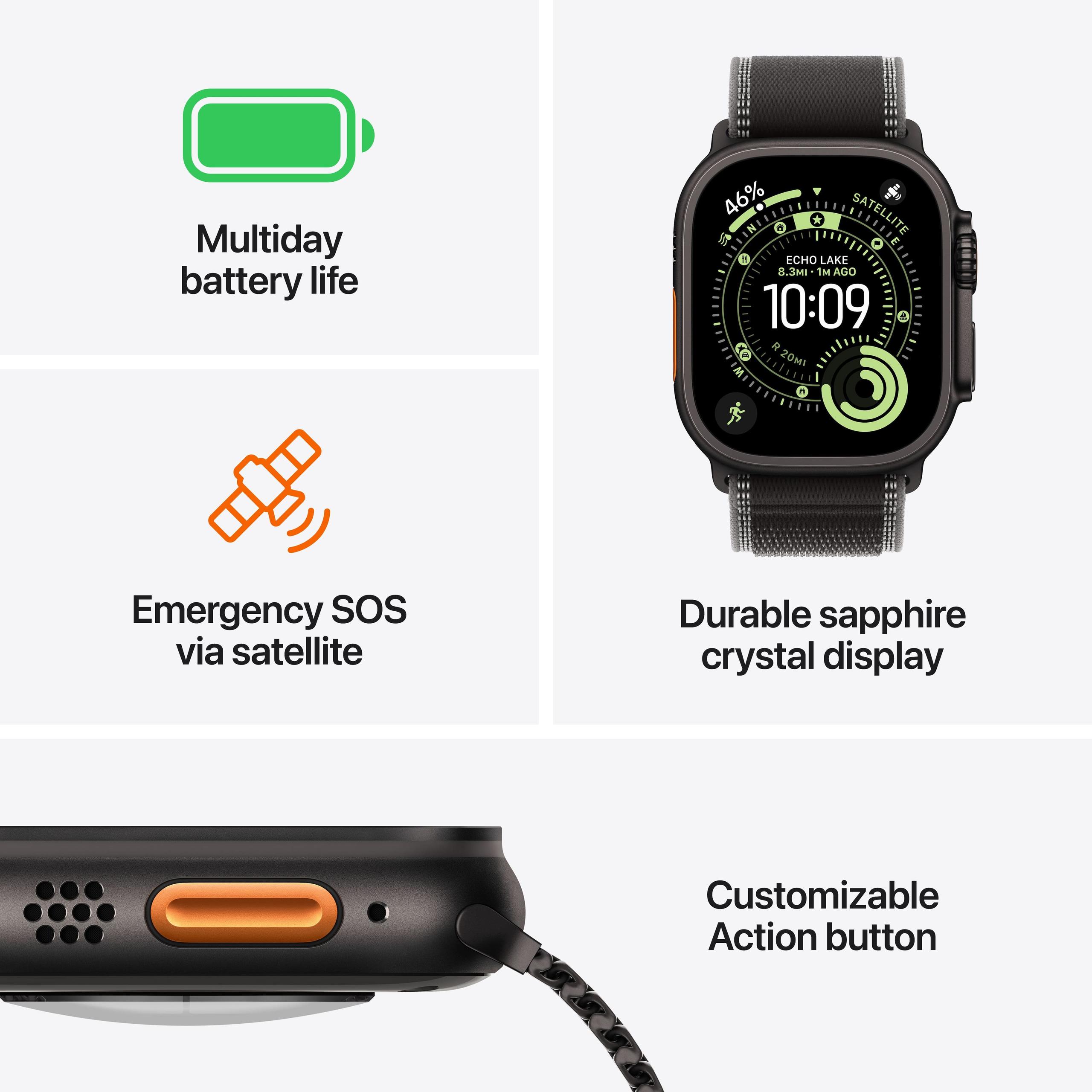
Battery life represents the most significant practical difference between these devices. The Apple Watch Ultra 3 delivers genuinely impressive endurance with up to 42 hours of normal use and an extraordinary 72 hours in Low Power Mode. For outdoor enthusiasts, this means multi-day hiking trips without worrying about charging.
The battery technology behind this performance involves a larger physical battery (the 49mm case provides more internal volume) and aggressive power management. The watch can intelligently reduce background activity, limit display brightness, and disable non-essential features to extend runtime dramatically.
In contrast, the Google Pixel Watch 3 in the 41mm size we're examining offers more typical smartwatch battery life—about 24 hours with normal use or 36 hours in Battery Saver mode. While this isn't bad, it means daily charging becomes part of your routine.
However, charging speed tells a different story. The Pixel Watch 3 reaches 80% charge in about 35 minutes, while the Apple Watch Ultra 3 takes 45 minutes for the same level. For users who forget to charge overnight, those extra 10 minutes matter.
The real question is whether longer battery life or faster charging better fits your lifestyle. If you travel frequently, work long hours, or enjoy multi-day outdoor activities, the Ultra 3's endurance becomes invaluable. If you have consistent daily routines and don't mind nightly charging, the Pixel Watch 3's approach works fine.
Both watches offer comprehensive health tracking, but with different strengths that reflect their target audiences. The Apple Watch Ultra 3 introduces several medical-grade features including hypertension notifications—the ability to detect chronic high blood pressure patterns over time. This isn't just measuring blood pressure once; it's analyzing long-term trends that could indicate serious health issues.
The watch also includes sleep apnea detection, using accelerometer and blood oxygen sensors to identify breathing interruptions during sleep. Sleep apnea affects millions of people who don't realize they have it, making this a potentially life-changing feature for some users.
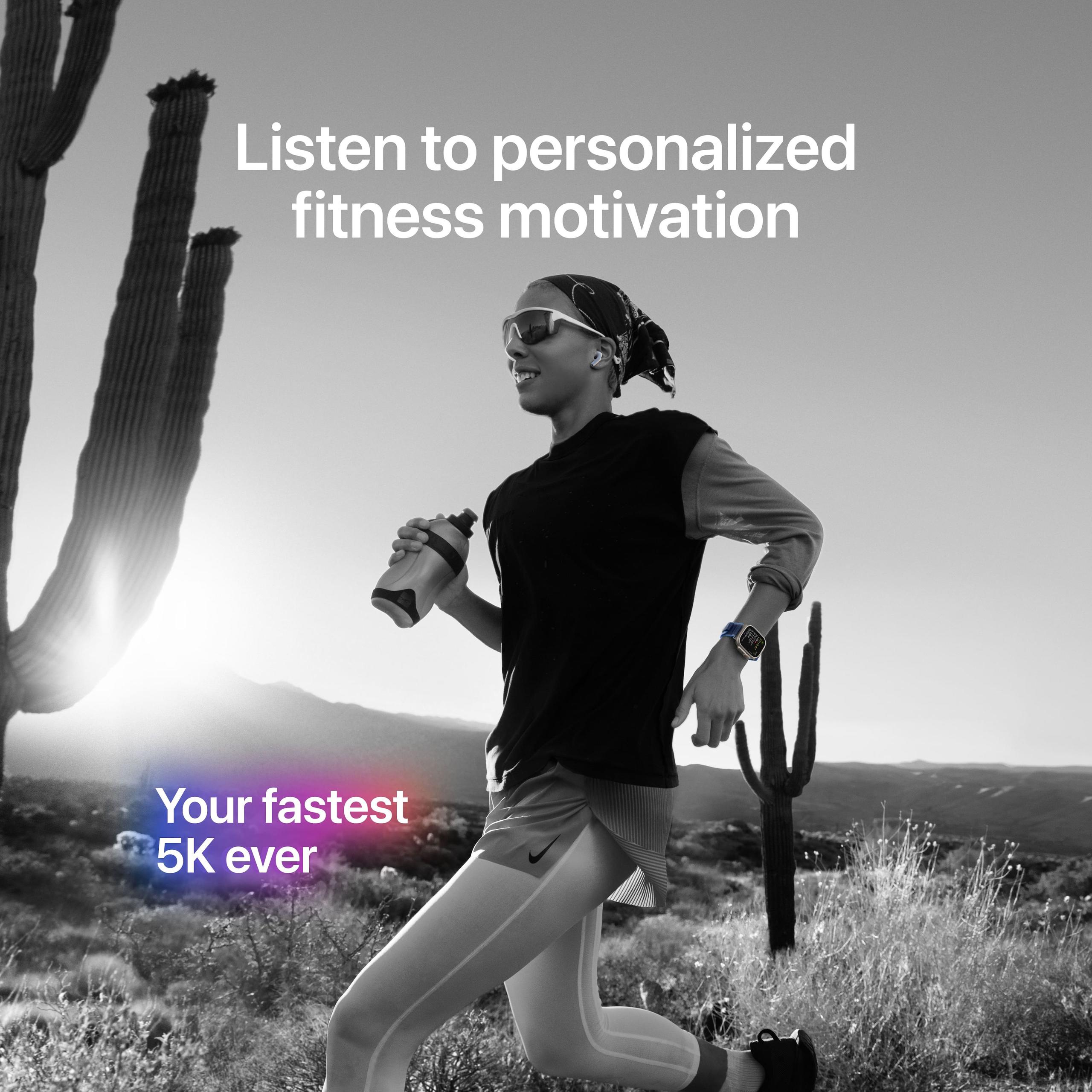
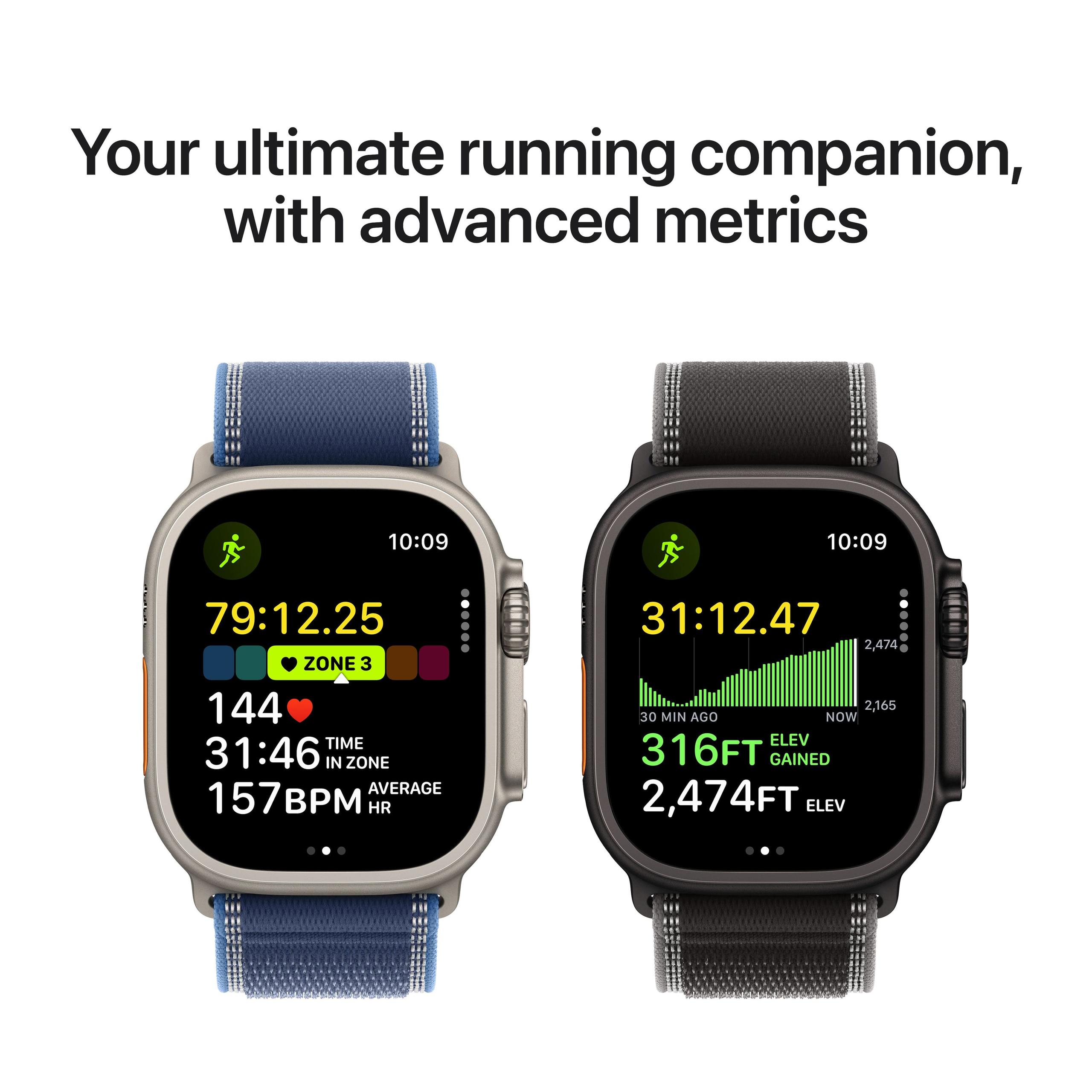
For fitness tracking, the Apple Watch Ultra 3 excels in precision. It uses dual-frequency GPS (both L1 and L5 satellite signals) for location accuracy that rivals dedicated GPS devices. This precision matters enormously for runners, hikers, and cyclists who need accurate distance and pace measurements.
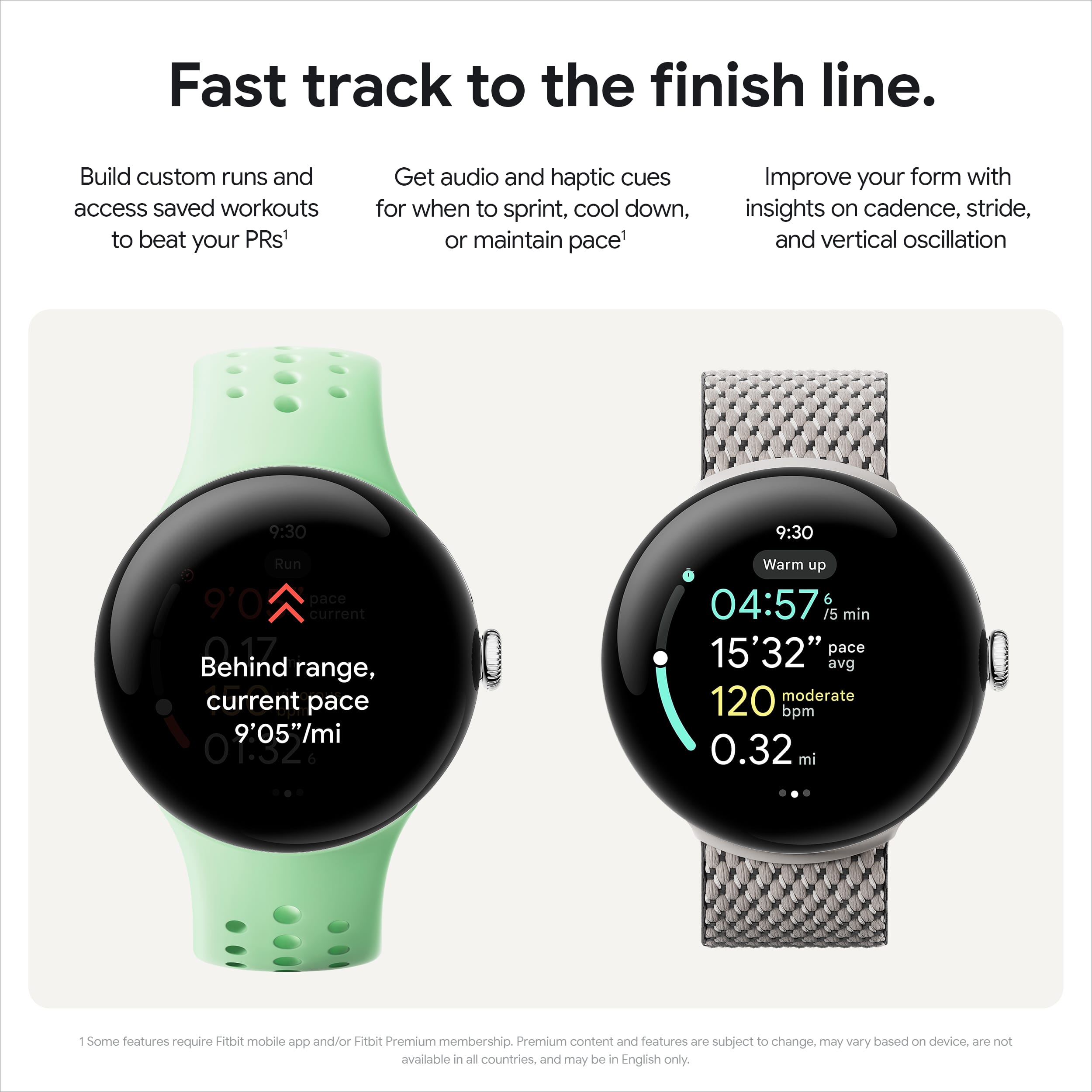
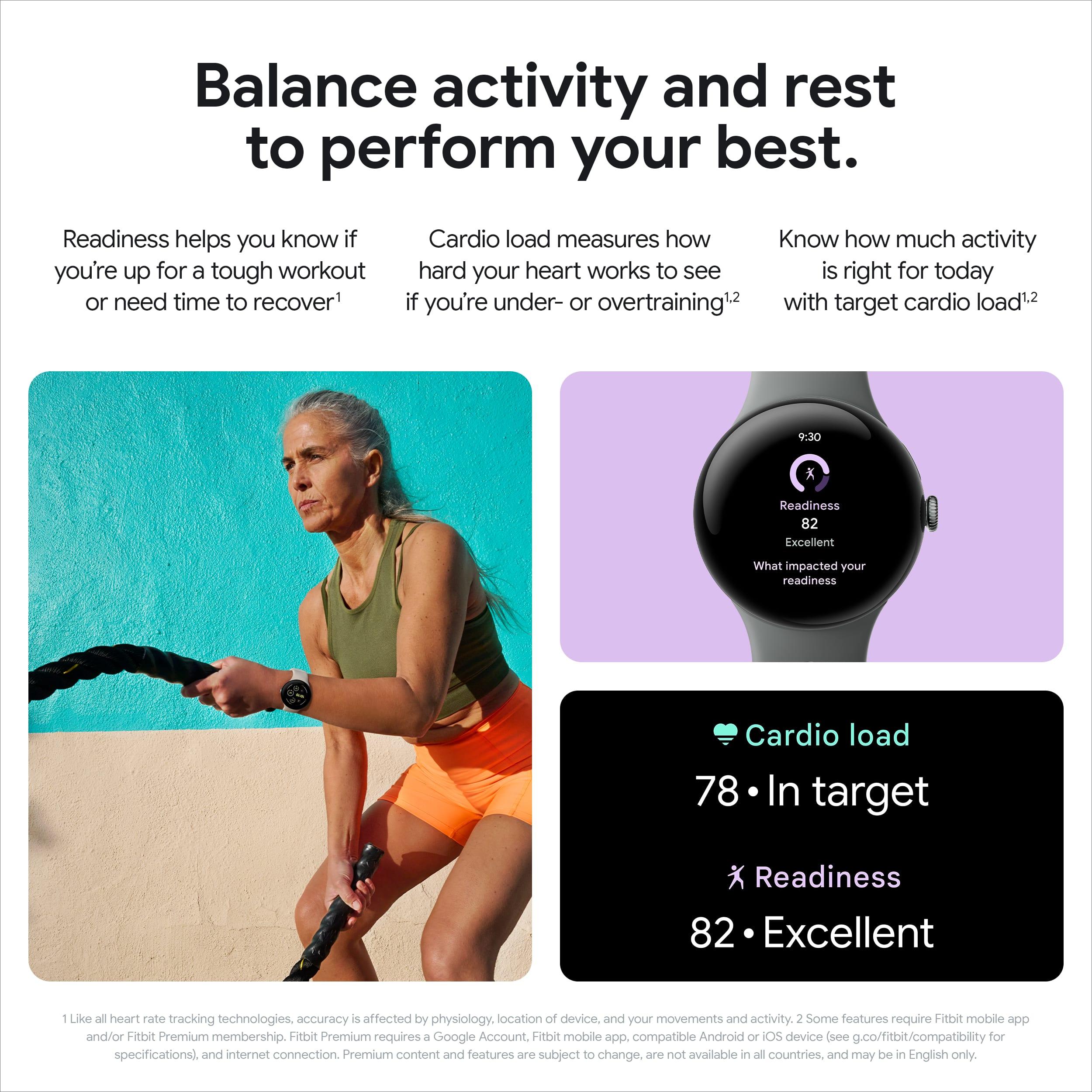
The Google Pixel Watch 3 takes a broader approach with over 40 different exercise modes and comprehensive sensor integration. It includes cEDA (continuous electrodermal activity) sensors that measure stress responses through skin conductance—essentially detecting when your body shows physiological signs of stress before you might consciously notice.
Based on user testing and reviews we've analyzed, the Apple Watch Ultra 3 consistently delivers more accurate heart rate monitoring and GPS tracking. In controlled comparisons, it typically shows smaller margins of error for step counting, distance measurement, and heart rate accuracy during exercise.
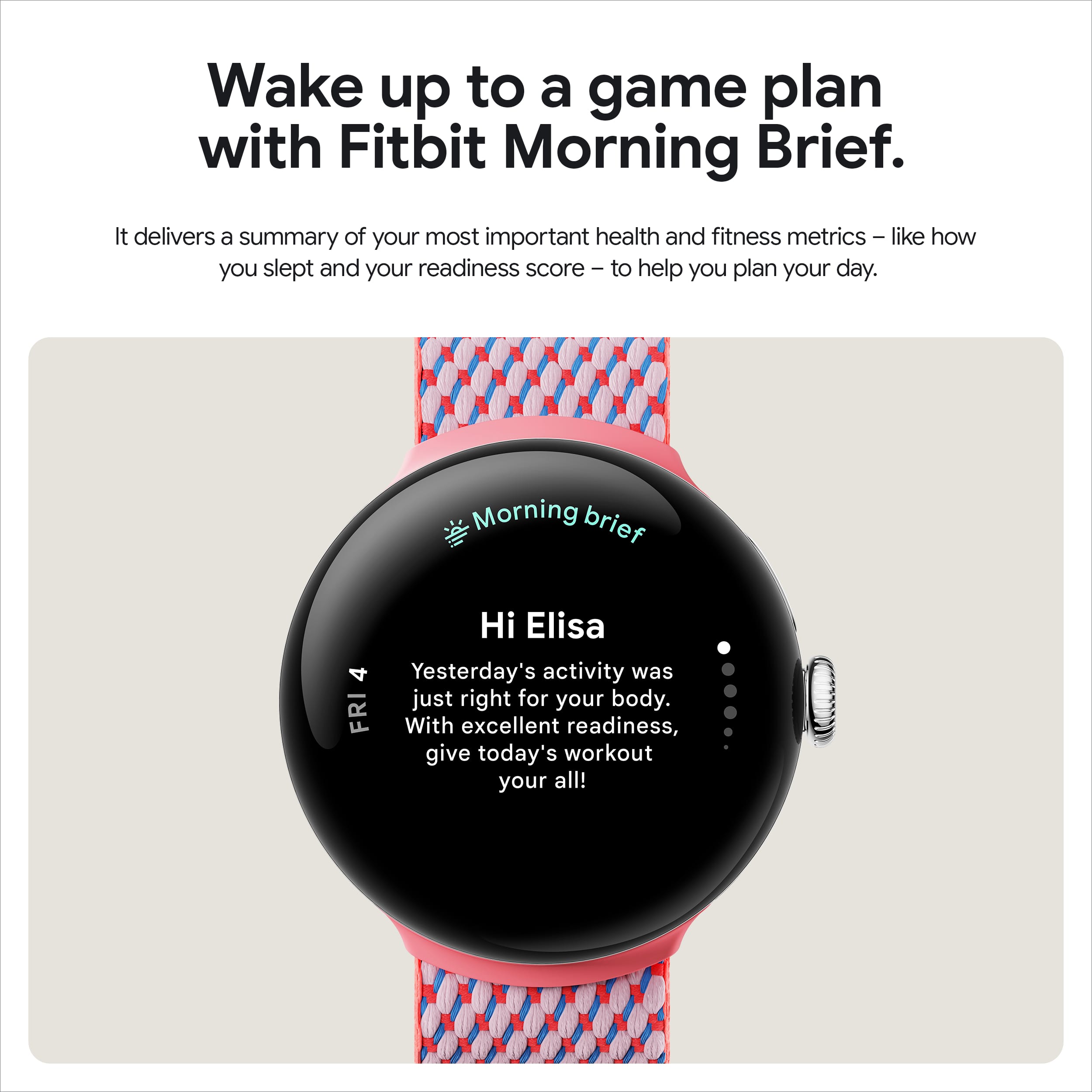
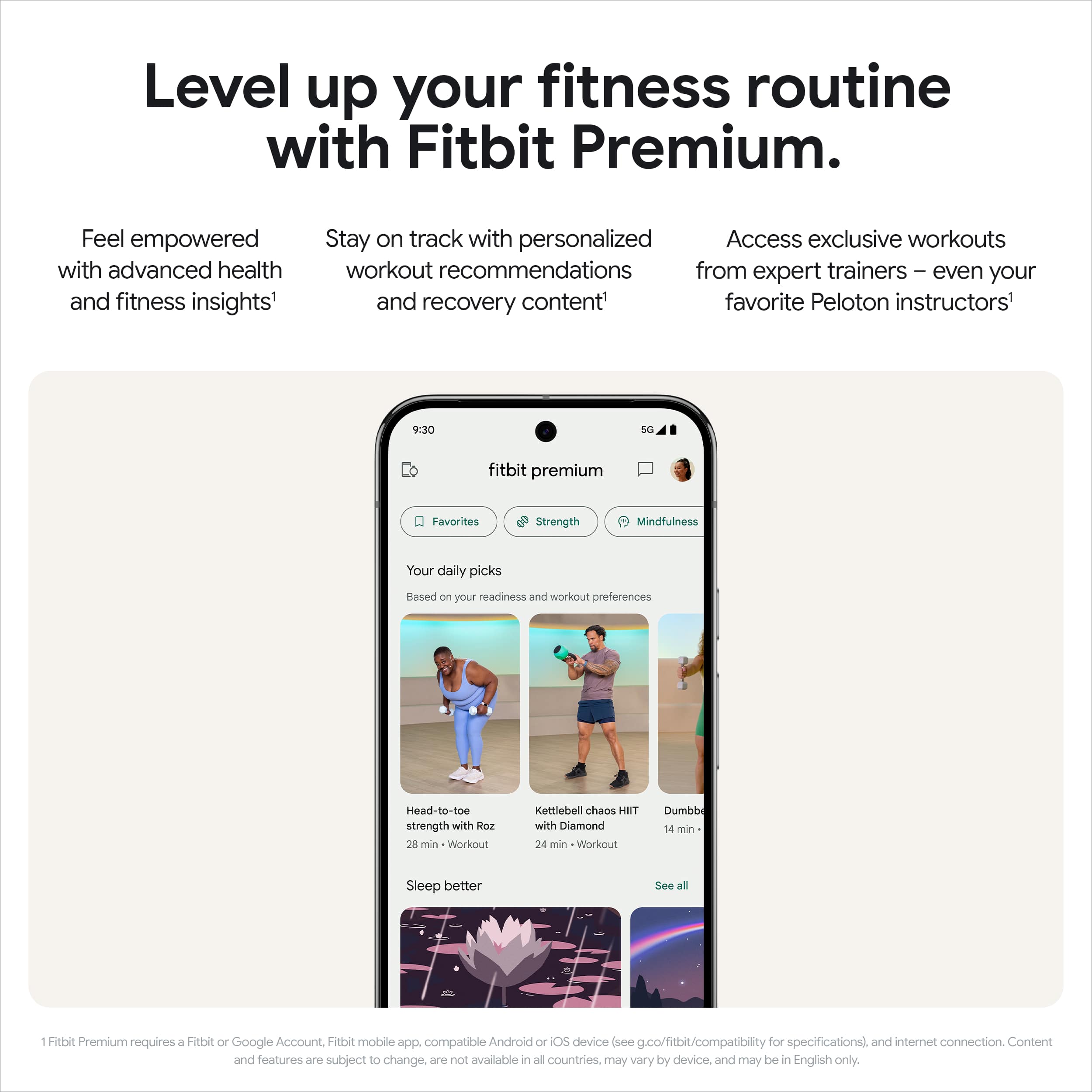
The Google Pixel Watch 3 compensates with variety and integration. Its connection to the Fitbit ecosystem provides excellent trend analysis and community features. However, some advanced insights require a Fitbit Premium subscription, which adds ongoing costs.
For serious athletes and outdoor enthusiasts, accuracy trumps variety. For general fitness tracking and health awareness, the Pixel Watch 3's broader approach might be more engaging and sustainable.
The construction differences between these watches are immediately apparent when you handle them. The Apple Watch Ultra 3 uses aerospace-grade titanium throughout its 49mm case. This isn't marketing hyperbole—titanium offers an exceptional strength-to-weight ratio and superior corrosion resistance compared to stainless steel or aluminum.
The watch meets MIL-STD-810H military specifications, meaning it's tested for shock, vibration, temperature extremes, humidity, and other harsh conditions. It's also water resistant to 100 meters with diving certification—you can actually use this watch for recreational scuba diving.
The flat sapphire crystal display adds another layer of durability. Sapphire is the second-hardest natural substance after diamond, making the screen incredibly scratch-resistant. After months of outdoor use, the display should look nearly perfect.
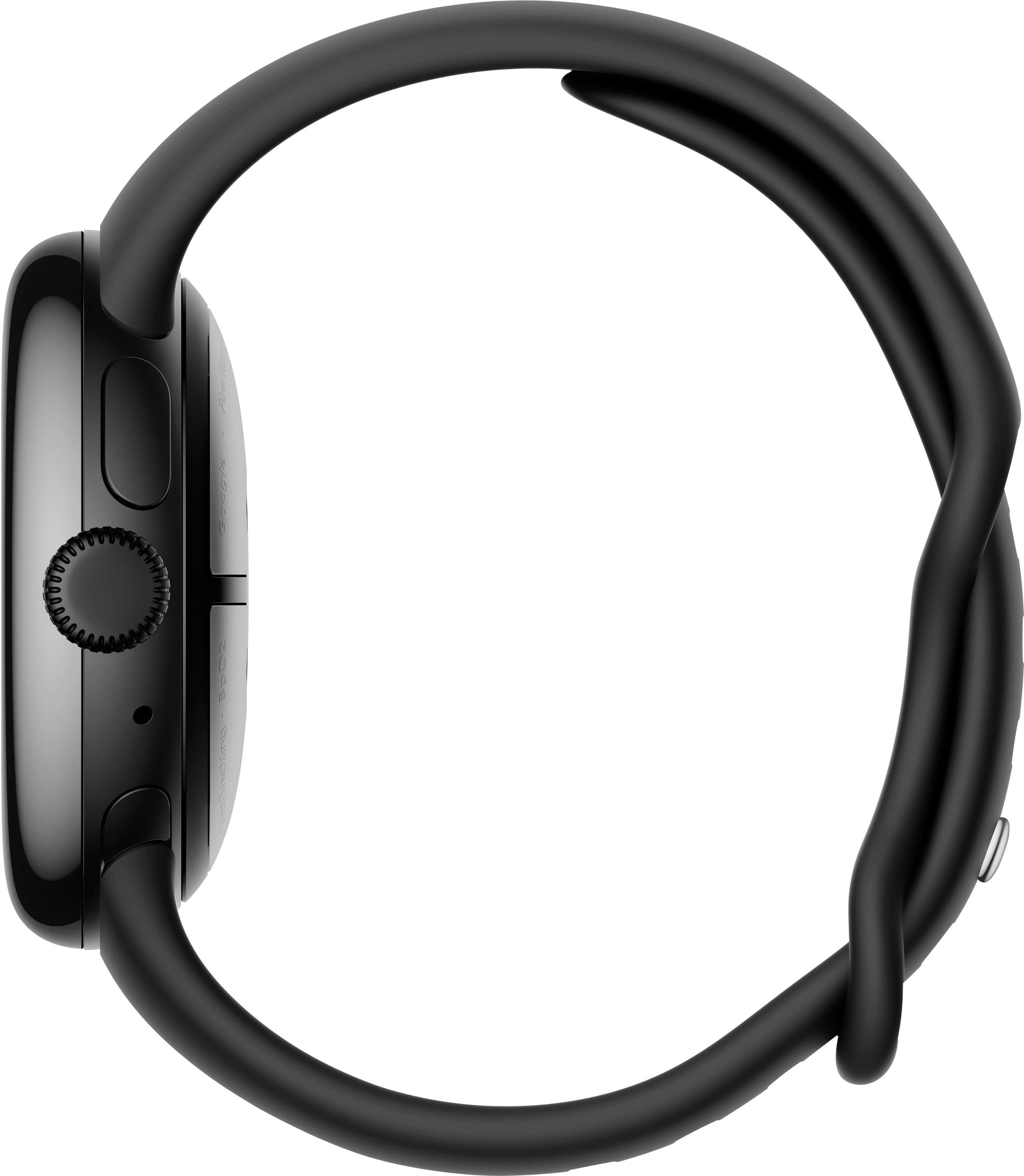
The Google Pixel Watch 3 uses a different approach with its recycled aluminum construction. While not as inherently tough as titanium, aluminum offers excellent durability for everyday use while remaining significantly lighter. The watch includes IP68 water resistance rating and 5ATM pressure resistance, making it suitable for swimming but not diving.
The Corning Gorilla Glass 5 display protection is impressive for a smartwatch, though not quite matching sapphire's scratch resistance. In practical terms, both screens should survive normal use without issues, but the Ultra 3 can handle more extreme situations.
Weight becomes important for all-day comfort. The Google Pixel Watch 3 41mm model weighs just 31 grams without the band, making it barely noticeable during wear. The Apple Watch Ultra 3 weighs about 62 grams, which isn't heavy but definitely has more presence on your wrist.
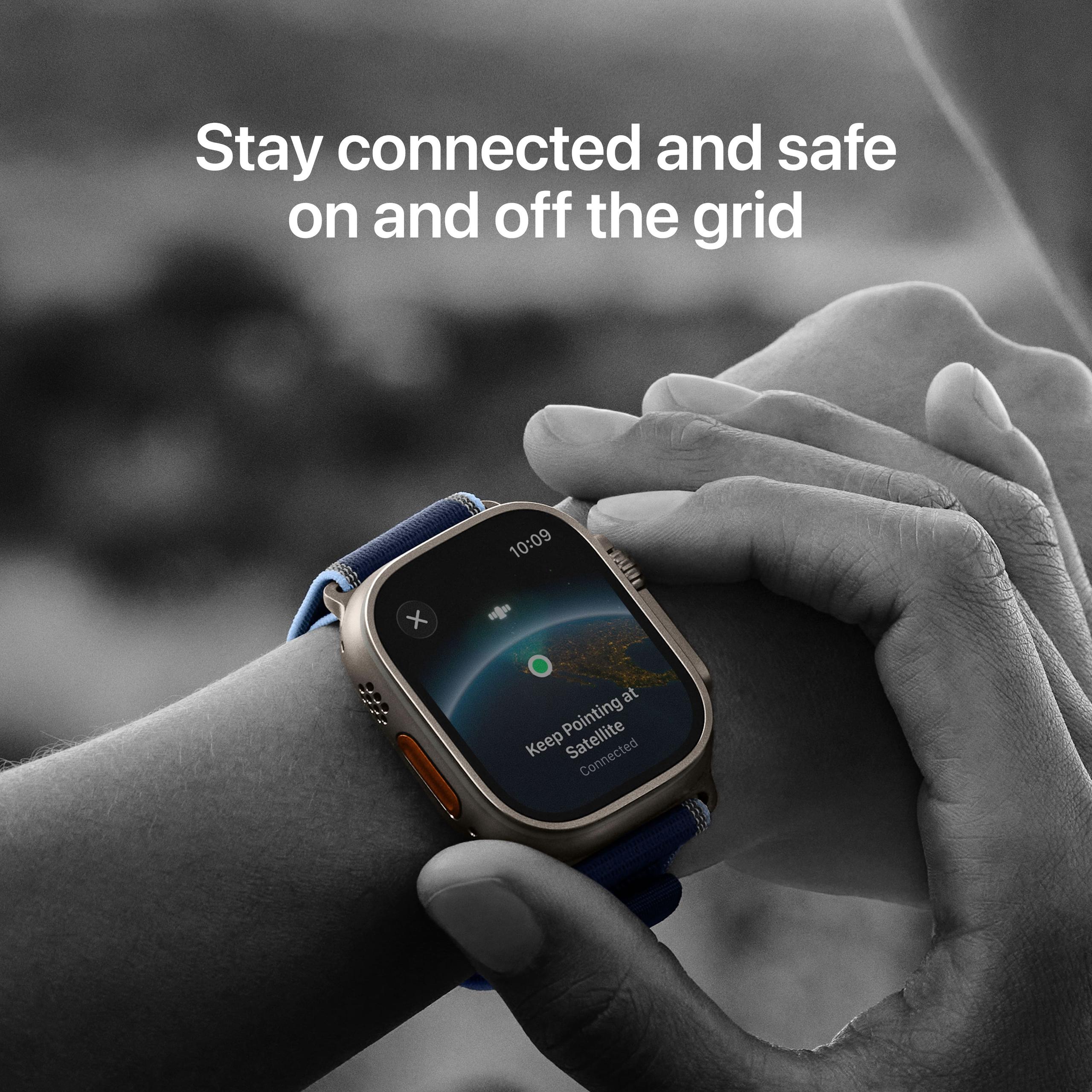
The Apple Watch Ultra 3 introduces satellite communication technology that's genuinely revolutionary for a consumer smartwatch. This isn't just emergency SOS (though it includes that)—it's actual two-way satellite messaging and location sharing when you're completely outside cellular coverage.
For hikers, mountaineers, sailors, or anyone who ventures into remote areas, this feature provides unprecedented peace of mind. You can send text messages, share your location, and communicate with emergency services even in the middle of nowhere. The technology required to fit satellite communication into a watch-sized device represents a significant engineering achievement.
The watch also supports 5G cellular connectivity with RedCap (Reduced Capability) technology—a new standard designed specifically for IoT devices and wearables. This provides faster data speeds and more efficient battery usage compared to traditional 4G connections.
The Google Pixel Watch 3 focuses on practical connectivity features that most users will actually use regularly. It includes Ultra-Wideband (UWB) technology, which enables precise device location and features like Watch Unlock for compatible Android phones. UWB uses short-range radio waves to determine location with centimeter-level accuracy.
The watch supports standard 4G LTE connectivity, which works reliably for calls, texts, and app usage when away from your phone. While not as advanced as the Ultra 3's 5G implementation, it covers the essential use cases for most users.
Both watches include NFC for contactless payments, but integration differs. Apple Pay works seamlessly with the Apple Watch Ultra 3, while Google Pay on the Pixel Watch 3 offers broader merchant acceptance in some regions.
Your choice of smartphone heavily influences which watch makes sense. The Apple Watch Ultra 3 works exclusively with iPhones, but this limitation enables incredibly deep integration. Features like Handoff (starting a task on your watch and finishing on your phone), Universal Clipboard, and seamless Siri interaction only work within Apple's ecosystem.
The watch can unlock your iPhone, Mac, and other Apple devices automatically when you're wearing it. Third-party apps often work better on Apple Watch because developers have more consistent hardware and software targets.
The Google Pixel Watch 3 works with most Android phones but offers the best experience with Pixel devices. Google's approach provides more flexibility—you're not locked into a single phone manufacturer—but the integration isn't quite as seamless as Apple's approach.
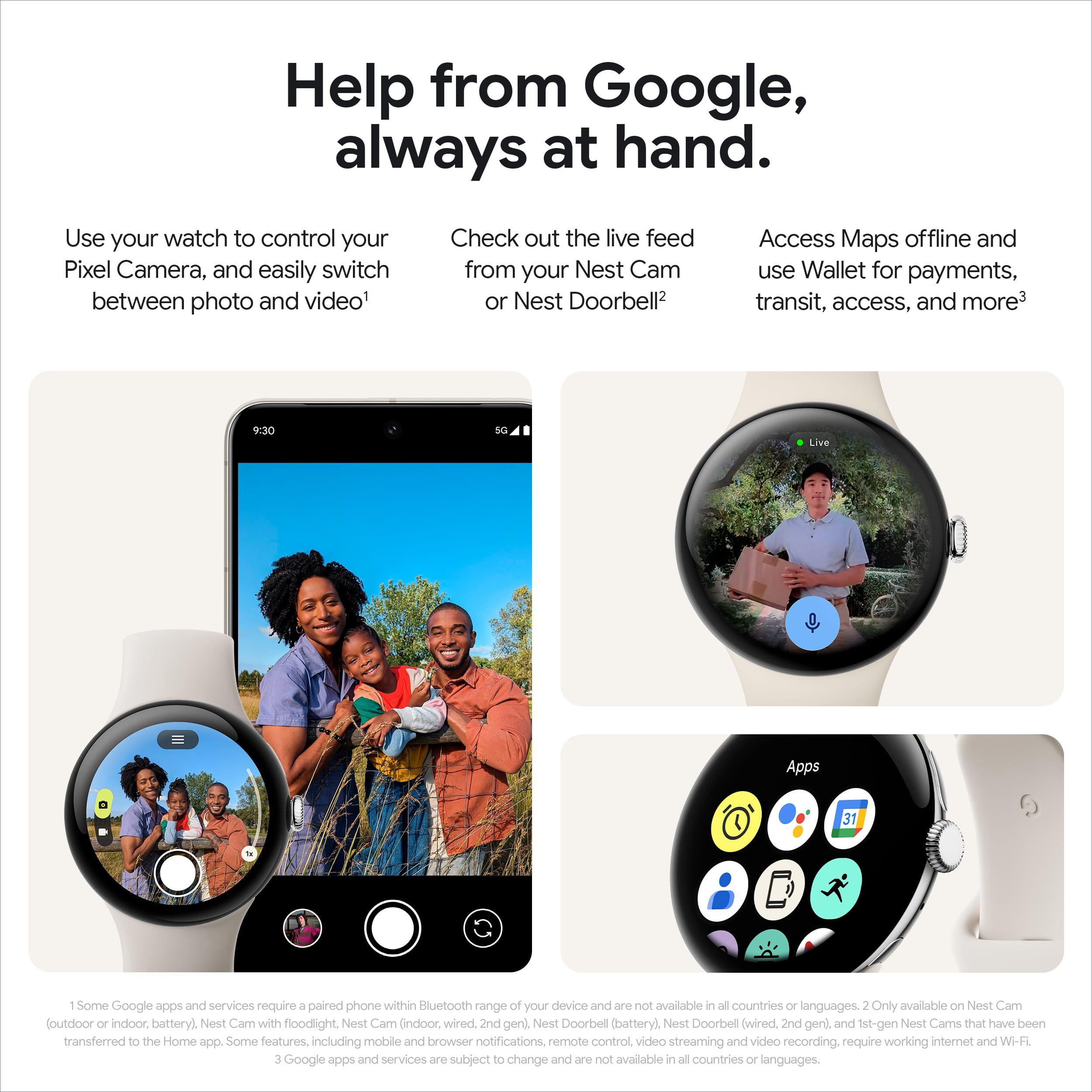
However, Google's services often work better across different platforms. Gmail, Google Maps, Google Assistant, and other services integrate well regardless of your phone choice, while Apple's services are more limited outside the Apple ecosystem.
For outdoor activities, the Apple Watch Ultra 3 clearly leads with its precision GPS, satellite communications, and extreme durability. The 100-meter water resistance opens up activities like snorkeling and recreational diving that aren't possible with the Google Pixel Watch 3.
The Ultra 3's longer battery life becomes crucial during extended outdoor activities. A three-day backpacking trip becomes feasible without bringing charging equipment, while the Pixel Watch 3 would need daily charging.
For general fitness and health tracking, both watches excel but in different ways. The Apple Watch Ultra 3 provides more accurate metrics and advanced health features, while the Google Pixel Watch 3 offers broader exercise mode support and better trend analysis through Fitbit integration.
In professional settings, the Google Pixel Watch 3 might actually have advantages. Its circular design and multiple size options look more traditionally professional, and the lighter weight makes it more comfortable for all-day office wear.
Neither watch particularly excels for home theater use, though both can control smart TV apps and media playback. The Apple Watch Ultra 3 works well with Apple TV and HomeKit devices, while the Google Pixel Watch 3 integrates better with Chromecast and Google Home ecosystems.
The Apple Watch Ultra 3 makes sense for iPhone users who need maximum capability and don't mind paying premium prices for it. If you regularly engage in outdoor activities, need satellite communication for safety, or simply want the most durable and longest-lasting smartwatch available, the Ultra 3 justifies its high cost.
Adventure travelers, professional guides, serious athletes, and anyone who pushes their gear to the limits will appreciate the Ultra 3's extreme capabilities. The satellite communication alone could justify the purchase for users who venture into remote areas.
The Google Pixel Watch 3 appeals to Android users seeking excellent smartwatch functionality without extreme positioning or pricing. If you want comprehensive health tracking, elegant design, multiple size options, and good value for money, the Pixel Watch 3 delivers.
General fitness enthusiasts, office workers, and users who prioritize style alongside functionality will find the Pixel Watch 3 more appropriate for their needs. The faster charging and lighter weight make it more convenient for daily use.
Ultimately, these watches serve different segments of the premium smartwatch market. The Apple Watch Ultra 3 pushes boundaries and commands premium pricing, while the Google Pixel Watch 3 delivers premium features with broader appeal. Your choice should align with your actual use cases, ecosystem preferences, and budget priorities rather than pure specifications.
Both represent excellent examples of their respective approaches to premium smartwatches. The key is understanding which philosophy better matches your needs and lifestyle.
| Apple Watch Ultra 3 49mm Titanium GPS Cellular | Google Pixel Watch 3 41mm LTE Smartwatch |
|---|---|
| Display Size & Design - Impacts readability and comfort | |
| 49mm square titanium case with 1245 sq mm display area | 41mm circular aluminum case with smaller display area |
| Display Brightness - Critical for outdoor visibility | |
| 3,000 nits peak brightness (exceptional in direct sunlight) | 2,000 nits peak brightness (good for most conditions) |
| Display Protection - Determines scratch resistance | |
| Flat sapphire crystal (nearly scratchproof) | Corning Gorilla Glass 5 (good scratch resistance) |
| Battery Life - Most important for daily usability | |
| Up to 42 hours normal use, 72 hours Low Power Mode | Up to 24 hours normal use, 36 hours Battery Saver |
| Charging Speed - Convenience when battery runs low | |
| 80% charge in 45 minutes | 80% charge in 35 minutes (faster top-ups) |
| Build Material - Affects durability and weight | |
| Aerospace-grade titanium (61.6g, extreme durability) | 100% recycled aluminum (31g, lightweight comfort) |
| Water Resistance - Determines water activity limits | |
| 100m with diving certification (scuba diving capable) | 5ATM/50m (swimming and surface water sports) |
| GPS Accuracy - Critical for outdoor activities and fitness | |
| Precision dual-frequency GPS (L1 + L5, surveyor-grade accuracy) | Standard GPS with multiple satellite systems |
| Cellular Connectivity - Determines standalone performance | |
| 5G RedCap technology (faster speeds, better efficiency) | 4G LTE and UMTS (reliable standard connectivity) |
| Unique Features - Differentiating capabilities | |
| Satellite messaging, hypertension detection, MIL-STD-810H certification | Ultra-Wideband, cEDA stress monitoring, 40+ exercise modes |
| Storage Capacity - Affects music and app storage | |
| 64GB (extensive offline content storage) | 32GB (adequate for most users) |
| Ecosystem Compatibility - Determines which phones work | |
| iPhone only (deep iOS integration) | Android 10.0+ (broader phone compatibility) |
| Size Options - Important for wrist fit and comfort | |
| Single 49mm size (fits 130-210mm wrists) | 41mm and 45mm options (better fit flexibility) |
| Health Sensors - Determines monitoring capabilities | |
| Blood oxygen, ECG, temperature, sleep apnea detection | Blood oxygen, ECG, temperature, skin conductance (cEDA) |
The Apple Watch Ultra 3 significantly outperforms the Google Pixel Watch 3 in battery life, offering up to 42 hours of normal use compared to 24 hours. The Apple Watch Ultra 3 can extend to 72 hours in Low Power Mode, while the Google Pixel Watch 3 reaches 36 hours in Battery Saver mode. For users who need multi-day usage without charging, the Apple Watch Ultra 3 is the clear winner.
The Apple Watch Ultra 3 is built for extreme conditions with aerospace-grade titanium construction, 100-meter water resistance, and MIL-STD-810H military certification. The Google Pixel Watch 3 uses aluminum construction with 5ATM water resistance suitable for swimming. For serious outdoor adventures, diving, or extreme sports, the Apple Watch Ultra 3 offers superior durability.
The Google Pixel Watch 3 is designed specifically for Android devices running Android 10.0 or newer, offering seamless integration with Google services. The Apple Watch Ultra 3 only works with iPhones and requires iOS compatibility. Android users should choose the Google Pixel Watch 3 for full functionality.
The Apple Watch Ultra 3 features a superior display for outdoor visibility with 3,000 nits peak brightness and sapphire crystal protection. The Google Pixel Watch 3 offers 2,000 nits brightness with Gorilla Glass protection. For activities in direct sunlight or extreme conditions, the Apple Watch Ultra 3 provides better visibility and scratch resistance.
The Google Pixel Watch 3 charges faster, reaching 80% in about 35 minutes compared to 45 minutes for the Apple Watch Ultra 3. However, the Apple Watch Ultra 3 needs charging less frequently due to its longer battery life. For quick daily top-ups, the Google Pixel Watch 3 is more convenient.
Both watches offer excellent fitness tracking, but with different strengths. The Apple Watch Ultra 3 provides more accurate GPS tracking with dual-frequency precision and advanced health features like hypertension detection. The Google Pixel Watch 3 offers over 40 exercise modes and stress monitoring through cEDA sensors. Serious athletes may prefer the Apple Watch Ultra 3 for accuracy, while casual fitness users might appreciate the Google Pixel Watch 3's variety.
The Google Pixel Watch 3 is significantly lighter at 31 grams compared to the Apple Watch Ultra 3's 62 grams. The Google Pixel Watch 3 also offers size options (41mm and 45mm) for better wrist fit, while the Apple Watch Ultra 3 only comes in 49mm. For all-day comfort and smaller wrists, the Google Pixel Watch 3 is more suitable.
The Apple Watch Ultra 3 includes advanced medical-grade features like hypertension notifications, sleep apnea detection, and FDA-cleared ECG monitoring. The Google Pixel Watch 3 offers comprehensive health tracking including stress monitoring via skin conductance and integration with Fitbit's health platform. Both provide excellent health monitoring, but the Apple Watch Ultra 3 offers more clinically-focused features.
The Google Pixel Watch 3 provides better value for most users, offering premium features at a more accessible price point with multiple size options. The Apple Watch Ultra 3 commands premium pricing but justifies it with titanium construction, satellite communication, and extreme durability. Value depends on whether you need the Apple Watch Ultra 3's specialized features or prefer the Google Pixel Watch 3's broader appeal.
The Apple Watch Ultra 3 includes 64GB of storage compared to 32GB in the Google Pixel Watch 3. This extra storage allows for more music, apps, and offline content on the Apple Watch Ultra 3. For users who want extensive offline music libraries or many apps, the Apple Watch Ultra 3 provides more flexibility.
The Apple Watch Ultra 3 offers exclusive satellite communication for emergency messaging and location sharing in areas without cellular coverage. The Google Pixel Watch 3 includes Ultra-Wideband technology for precise device location and watch unlocking features. The Apple Watch Ultra 3's satellite capability is more groundbreaking for safety, while the Google Pixel Watch 3's UWB offers convenient daily-use features.
iPhone users should strongly consider the Apple Watch Ultra 3 for seamless ecosystem integration, including features like Handoff, Universal Clipboard, and automatic device unlocking. While the Google Pixel Watch 3 can work with iPhones for basic functions, it's primarily designed for Android devices and won't offer the same level of integration. The Apple Watch Ultra 3 provides the best iPhone experience with exclusive features and deeper system integration.
We've done our best to create useful and informative comparisons to help you decide what product to buy. Our research uses advanced automated methods to create this comparison and perfection is not possible - please contact us for corrections or questions. These are the sites we've researched in the creation of this article: youtube.com - dcrainmaker.com - youtube.com - phonearena.com - tomsguide.com - applevis.com - apple.com - apple.com - apple.com - apple.com - bestbuy.com - apple.com - macobserver.com - costco.com - apple.com - apple.com - youtube.com - t-mobile.com - verizon.com - att.com - tomsguide.com - androidcentral.com - androidcentral.com - wareable.com - versus.com - hothardware.com - thedisconnekt.com - tomsguide.com - store.google.com - youtube.com - wareable.com - support.google.com - dcrainmaker.com - phonearena.com - fi.google.com - 9to5google.com - wareable.com - youtube.com - support.google.com - t-mobile.com - support.google.com - att.com - gsmarena.com - store.google.com - bestbuy.com - youtube.com - pre-www.att.com - androidcentral.com - phonearena.com

Privacy Policy
Terms and Conditions - Affiliate Policy
Home Security
© Copyright 2008-2026.
11816 Inwood Rd #1211, Dallas, TX 75244