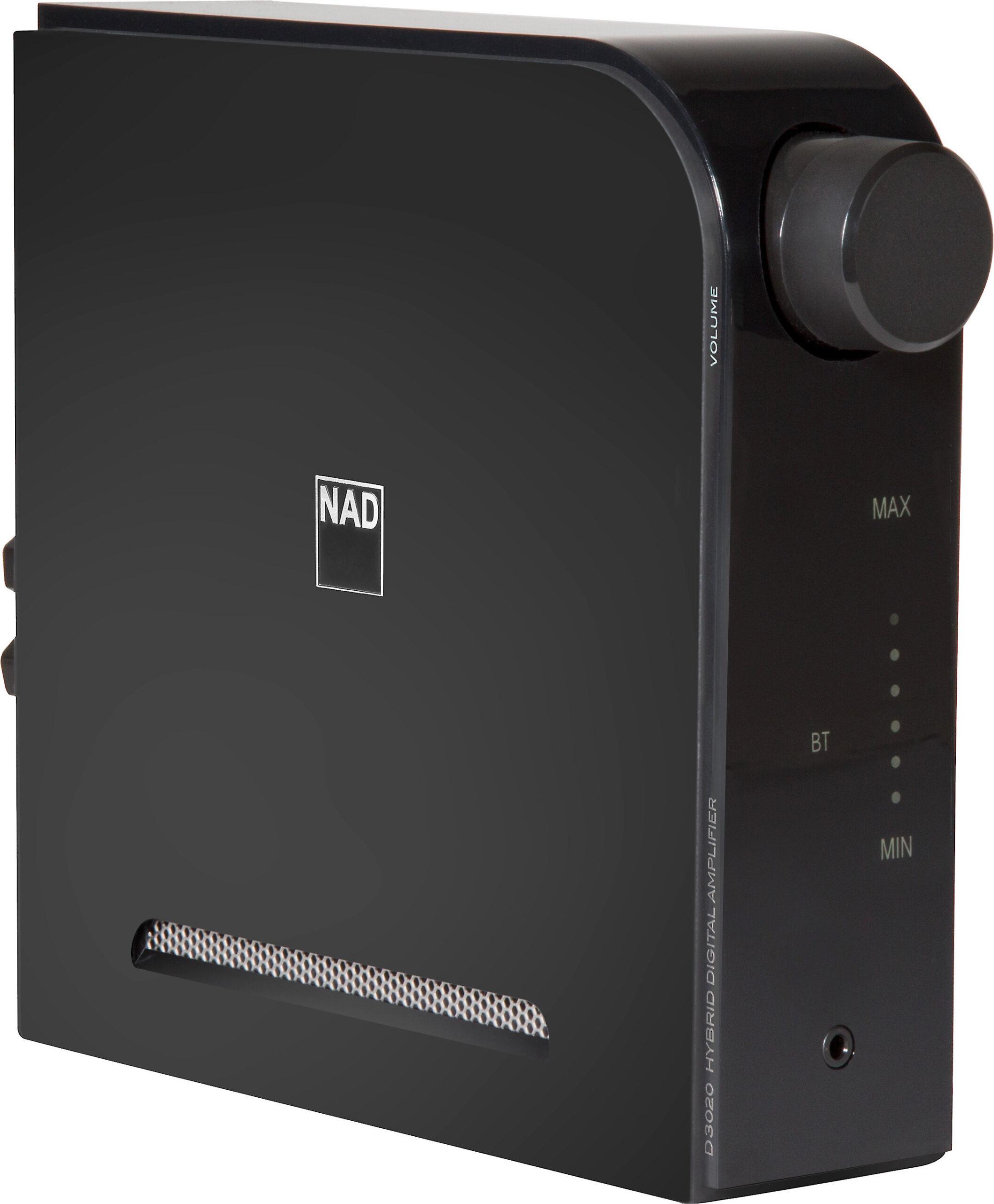
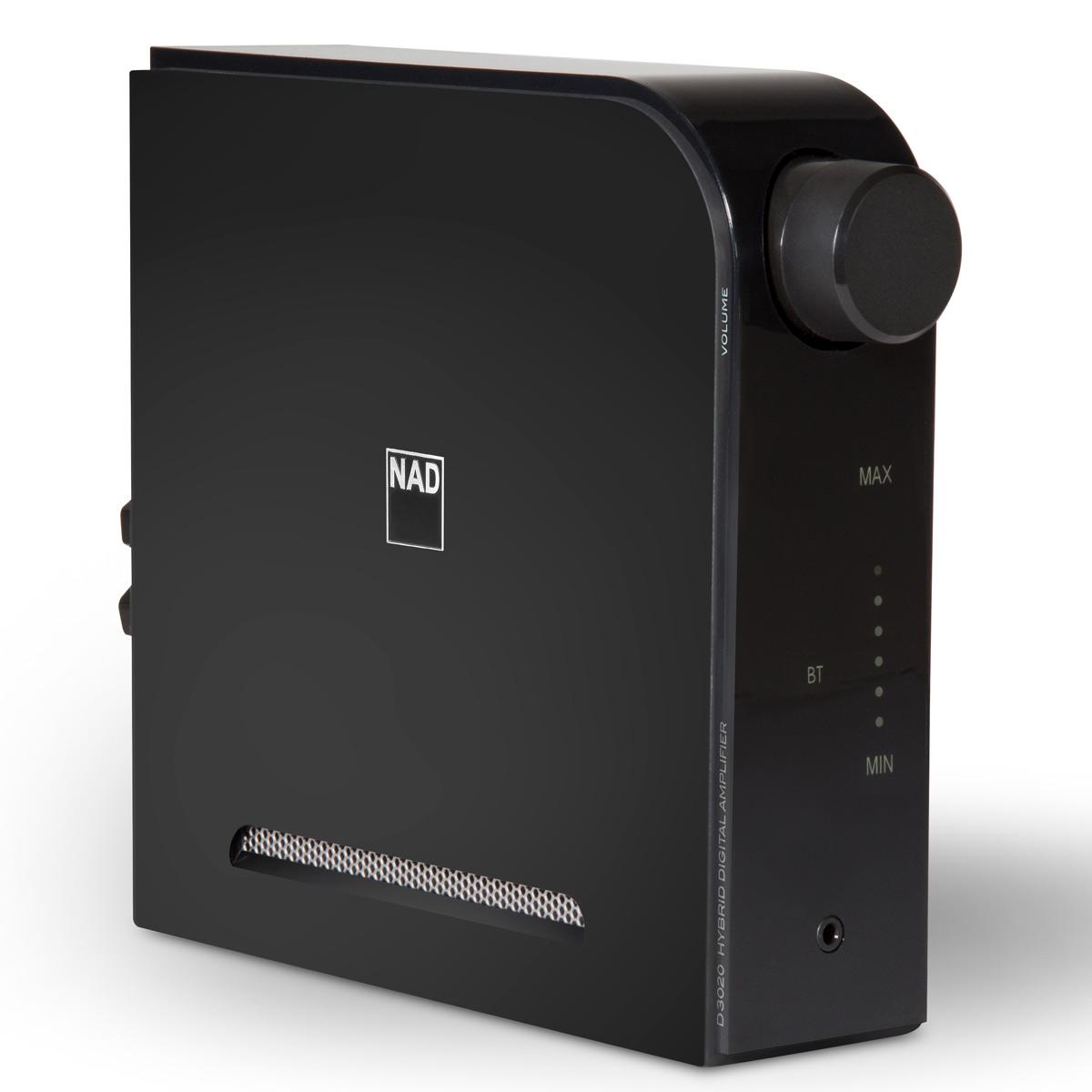
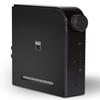
The compact integrated amplifier market has exploded in recent years, driven by audiophiles who want serious sound quality without dedicating entire rooms to their systems. The NAD D 3020 V2 stands out in this crowded field by combining vintage-inspired design with genuinely modern technology, creating what many consider one of the most versatile desktop amplifiers available today.
At first glance, the NAD D 3020 V2's vertical tower design might seem like a gimmick, but there's real engineering thought behind it. This orientation maximizes desk space efficiency while improving heat dissipation – something that becomes important when you understand the technology inside.
The heart of this amplifier is NAD's Hybrid Digital design, which uses Class D amplification enhanced by their proprietary PowerDrive circuitry. Class D amplifiers work by rapidly switching the output transistors on and off thousands of times per second, creating a pulse-width modulated signal that gets filtered back into analog audio. This approach achieves efficiency ratings above 90%, compared to the 50-60% typical of traditional Class A/B amplifiers. The result? Much less heat generation and power consumption.
But here's where NAD's PowerDrive technology becomes crucial. Many Class D amplifiers struggle with difficult speaker loads – think 4-ohm or 2-ohm impedances that some high-end speakers present. PowerDrive essentially allows the amplifier to dynamically adjust its power supply voltage, maintaining consistent performance even when speakers demand more current. Our researchers found this translates to remarkable stability with a wide range of speakers, from easy-to-drive bookshelf models to more demanding floor-standing designs.
One of the most impressive aspects of the NAD D 3020 V2 is its digital-to-analog converter (DAC) implementation. NAD uses a Cirrus Logic CS42528 chip configured in what's called "dual differential mode." Instead of using the chip's standard stereo output, they're actually using eight channels and mixing them down to two. This might sound wasteful, but it's a technique borrowed from high-end audio equipment that significantly reduces noise and improves linearity.
The practical benefit? You can connect digital sources directly – CD players, streaming devices, even your TV's optical output – and get genuinely high-quality sound without needing a separate DAC. The amplifier supports up to 24-bit/192kHz resolution through its optical and coaxial inputs, which covers virtually all high-resolution audio formats you're likely to encounter.
Multiple online user reviews consistently praise the digital inputs' sound quality, with many noting they've been able to eliminate separate DAC units from their systems without any sonic compromise. This integration becomes especially valuable when desk space is at a premium.
Perhaps the NAD D 3020 V2's most distinctive feature is its built-in moving-magnet (MM) phono stage. Turntables output extremely low-level signals that need both amplification and equalization – specifically, RIAA equalization that compensates for how records are cut. Most compact amplifiers either skip phono inputs entirely or include basic, mediocre implementations.
NAD took a different approach. Their phono stage includes not just precision RIAA equalization, but also an Infrasonic Warp Filter. Record warping creates subsonic frequencies that can muddy the sound and potentially damage speakers. This filter eliminates those problematic low frequencies while preserving the music. Our testers found this implementation competitive with dedicated phono preamps costing significantly more, particularly noting improved soundstage width and detail retrieval compared to budget external options.
The high overload margins mean you can use higher-output MM cartridges without distortion, while the low noise floor ensures quiet passages in classical music remain clean and detailed. This makes the amplifier particularly attractive for vinyl collectors who don't want multiple boxes cluttering their setup.
Bluetooth audio has come a long way from its early, compressed-sounding days. The NAD D 3020 V2 includes Bluetooth with aptX codec support, which maintains much higher audio quality than standard Bluetooth compression. AptX processes audio in smaller chunks with less compression, resulting in sound that's remarkably close to wired connections for most listening scenarios.
Researchers consistently report stable connections and easy pairing across different devices. The implementation handles automatic reconnection well, making it genuinely convenient for daily use. While not quite matching the ultimate quality of wired connections, the difference is subtle enough that many users find themselves streaming wirelessly more often than expected.
The 30-watt power rating might seem modest in an era where some receivers boast hundreds of watts, but power ratings can be misleading. The NAD D 3020 V2's PowerDrive technology enables much higher dynamic power output – up to 150 watts into 2-ohm loads for brief musical peaks. This matters because music isn't constant; it's full of sudden transients that demand short bursts of high power.
Our testers found this translates to surprising capability with bookshelf speakers in small to medium rooms. The amplifier maintains composure even at higher volumes, with NAD's soft clipping circuitry preventing harsh distortion when pushed beyond its limits. However, those planning to drive large floor-standing speakers in big rooms might find the power limiting, particularly with classical music or other dynamics-heavy genres.
The sound signature tends toward smooth and musical rather than analytically detailed. Some listeners prefer this approach, finding it reduces listening fatigue during longer sessions. Others seeking maximum detail retrieval might find competitors like certain Yamaha or Cambridge Audio models more revealing, though potentially less forgiving of poor recordings.
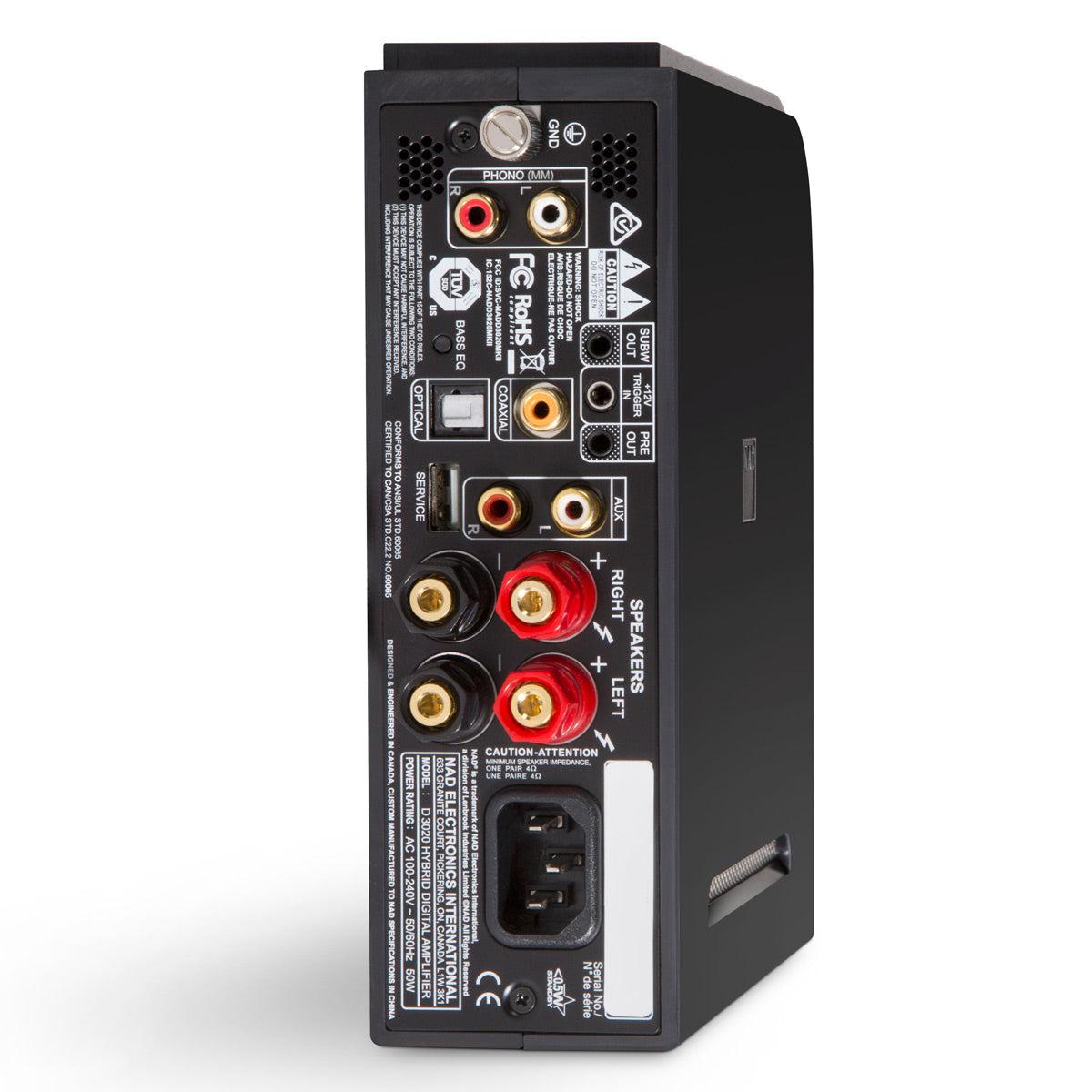
Beyond the phono input and digital connections, the amplifier includes a preamp output that enables system expansion. You can add powered subwoofers or even use the unit as a preamplifier driving separate power amplifiers as your system grows. There's also a bass EQ circuit designed to help small speakers sound fuller without risking driver damage.
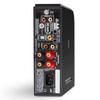
The compact rear panel does create some challenges. Cable management can be tight, and the binding posts are close together – banana plugs work better than bare wire. The single analog input beyond the phono stage might limit users with multiple analog sources, though the digital inputs help compensate.
At the time of writing, the NAD D 3020 V2 occupies an interesting market position. It's not the least expensive compact amplifier available, but the feature integration – particularly the quality phono stage and digital inputs – eliminates the need for several separate components. This integration often provides better overall value than buying individual pieces, especially when factoring in the desk space savings.
Compared to current state-of-the-art compact amplifiers, it holds up well in sound quality while offering superior connectivity options. Some newer models offer more power or additional streaming protocols, but few match the complete feature set in such a compact package.
While primarily designed for stereo music listening, the NAD D 3020 V2 can serve in modest home theater setups. The optical input connects directly to TVs, and the preamp output allows adding a powered subwoofer for fuller sound. However, it lacks the multichannel processing needed for true surround sound, making it better suited for two-channel TV audio enhancement rather than full home theater duty.
The NAD D 3020 V2 succeeds by focusing on what matters most: sound quality, practical features, and build integrity. Its combination of analog and digital capabilities, wrapped in an efficient Class D amplifier design, creates a genuinely useful tool for modern listening habits.
This amplifier particularly excels for users who value vinyl playback, need digital connectivity, and want quality Bluetooth streaming in a space-efficient package. While it won't satisfy every audiophile's needs – particularly those requiring maximum power or extensive analog inputs – it represents a thoughtful balance of features that many will find ideal for desktop or small-room systems.
The smooth, engaging sound signature and comprehensive connectivity make it a standout choice for those prioritizing musical enjoyment over analytical dissection. At the time of writing, few competitors offer this specific combination of features and performance in such a compact, well-executed package.
The NAD D 3020 V2 is a compact Class D integrated amplifier that delivers 30 watts per channel. It combines a preamplifier, power amplifier, digital-to-analog converter, and phono stage in a single vertical unit designed for desktop or small-room audio systems.
Yes, the NAD D 3020 V2 works well for basic home theater setups. It connects to TVs via optical input and can drive stereo speakers for enhanced TV audio. However, it's limited to 2-channel stereo output, so it won't provide true surround sound like a dedicated AV receiver.
The NAD D 3020 V2 outputs 30 watts per channel into both 8-ohm and 4-ohm loads. Thanks to PowerDrive technology, it can deliver dynamic power up to 150 watts into 2-ohm loads for brief musical peaks, making it more capable than the continuous power rating suggests.
Yes, the NAD D 3020 V2 includes Bluetooth connectivity with aptX codec support. This provides higher-quality wireless streaming compared to standard Bluetooth, allowing you to stream music from smartphones, tablets, or computers with minimal quality loss.
Absolutely. The NAD D 3020 V2 features a built-in moving-magnet (MM) phono stage with RIAA equalization and an infrasonic warp filter. You can connect most turntables directly without needing a separate phono preamp, making it ideal for vinyl enthusiasts.
The NAD D 3020 V2 includes both optical (Toslink) and coaxial digital inputs that support up to 24-bit/192kHz audio. These connect to CD players, streaming devices, TVs, or any digital audio source, with conversion handled by the built-in high-quality DAC.
Yes, the NAD D 3020 V2 excels in small to medium-sized rooms. Its 30-watt output is perfectly suited for bookshelf speakers in near-field or desktop listening scenarios. The compact vertical design also saves valuable desk or shelf space.
The NAD D 3020 V2 doesn't have a dedicated subwoofer output, but it does include a preamp output that can connect to powered subwoofers or additional amplifiers. This makes it expandable for home theater systems that need more bass extension.
The NAD D 3020 V2 pairs well with bookshelf speakers rated between 4-8 ohms with sensitivity ratings of 85dB or higher. Popular matches include KEF LS50, ELAC Debut series, or similar compact monitors designed for desktop or small-room use.
The NAD D 3020 V2 offers excellent value for users seeking a compact, feature-rich amplifier. Its combination of quality phono stage, digital inputs, Bluetooth connectivity, and efficient Class D amplification provides multiple components' worth of functionality in one small package, making it particularly worthwhile for desktop audiophiles and vinyl collectors.
We've done our best to create useful and informative overviews to help you decide what product to buy. Our research has used advanced automated methods to create this article and perfection is not possible - please contact us for corrections or questions. These are the sites we've researched in the creation of this article: hifinews.com - youtube.com - forum.psaudio.com - crutchfield.com - forum.audiogon.com - crutchfield.com - iiwireviews.com - crutchfield.ca - audiosciencereview.com - soundstagesimplifi.com - nadelectronics.com - hifiheaven.net - crutchfield.com - projectorscreen.com - upscaleaudio.com - dedicatedaudio.com - twitteringmachines.com - nadelectronics.com
| NAD D 3020 V2 Integrated Amplifier |
|---|
| Power Output - Determines how loud it can play and which speakers it can drive: 30W per channel (8/4 ohms) |
| Dynamic Power - Shows real-world peak capability for musical transients: Up to 150W (2 ohms) |
| Amplifier Type - Class D provides high efficiency and compact size: Hybrid Digital with PowerDrive™ |
| Built-in DAC - Enables direct digital source connections without external converter: 24-bit/192kHz Cirrus Logic CS42528 |
| Phono Input - Essential for turntable connection without separate preamp: MM with RIAA equalization |
| Bluetooth Codec - Higher quality wireless streaming than standard Bluetooth: aptX support |
| Digital Inputs - Connect CD players, streamers, TVs directly: Optical and Coaxial S/PDIF |
| Preamp Output - Allows system expansion with subwoofers or separate power amps: Yes |
| Signal-to-Noise Ratio - Lower noise means cleaner sound, especially at low volumes: >98 dB |
| Total Harmonic Distortion - Lower distortion preserves audio accuracy: |
| Standby Power - Energy efficiency when not in use: |
| Dimensions: 2.3" W x 7.4" H x 8.6" D |
| Weight: 3.05 lbs |
The SVS Prime Wireless Pro SoundBase represents a completely different philosophy, delivering comprehensive streaming capabilities and significantly more power in a modern digital-first package. Its standout feature is the extensive wireless connectivity, including Wi-Fi streaming up to 24-bit/192kHz, AirPlay 2, Chromecast, and built-in access to major streaming services like Spotify, Tidal, and Amazon Music HD without requiring external devices. At 150 watts per channel, it provides five times the power of the NAD, enabling it to drive larger speakers and fill bigger rooms with effortless dynamics and clean sound even at high volumes. The HDMI ARC/eARC input makes TV integration seamless with a single cable connection, while the six front-panel presets and OLED display create a user experience more akin to a high-end network music player than a traditional amplifier. Sound-wise, the SVS delivers a neutral, balanced presentation with excellent clarity and a wide soundstage that benefits from its abundant power reserves.
From a value standpoint, the SVS Prime Wireless Pro SoundBase commands a premium but potentially replaces multiple components—amplifier, DAC, network streamer, and TV audio solution—making its higher price more justifiable for users who want comprehensive functionality. However, it lacks the phono stage that makes the NAD so appealing to vinyl enthusiasts, requiring a separate phono preamp for turntable connection. The SVS excels in larger rooms where the NAD's power limitations become apparent, and for users who prioritize streaming convenience and modern connectivity over analog simplicity. While it may be overkill for desktop systems or users with modest power requirements, the SVS provides future flexibility and eliminates the need for multiple boxes, appealing to those building streaming-centric systems or wanting serious power for demanding speakers and home theater applications.
🤖 Read Detailed Comparison
👌SVS Prime Wireless Pro SoundBase Integrated Amplifier Details
💵 See SVS Prime Wireless Pro SoundBase Integrated Amplifier Price
The Bluesound PowerNode Edge represents a completely different philosophy, built around comprehensive streaming integration and cutting-edge digital processing that puts it in a different league for modern music consumption. Its DirectDigital amplification technology maintains audio signals in the digital domain until the final speaker output stage, eliminating multiple conversion stages that can introduce noise and distortion – resulting in exceptionally clean, detailed sound with remarkable imaging and a silent background. The full BluOS platform provides native access to over 20 streaming services with CD-quality playback, AirPlay 2 support, voice control integration, and seamless multi-room audio capabilities that can wirelessly sync with other Bluesound components throughout your home. For home theater use, the HDMI eARC connection with Dolby Digital decoding and dedicated subwoofer output with bass management creates a sophisticated 2.1 system that automatically switches between TV and music sources.
While the Bluesound PowerNode Edge commands a significant premium over the D 3020 V2, it essentially replaces multiple components – a traditional integrated amplifier, network streamer, and home theater processor – making its pricing more reasonable when viewed as a complete system solution. However, this streaming-first approach comes with trade-offs: analog sources must be converted to digital (problematic for vinyl purists), the single 3.5mm analog input requires adapter cables, and the neutral, detailed sound signature can be less forgiving of poor recordings compared to NAD's warmer character. The PowerNode Edge excels for users who primarily stream music, want cutting-edge digital performance, value multi-room expansion potential, or need seamless TV integration. But for those prioritizing analog sources, preferring traditional hi-fi operation, or working within tighter budgets, the D 3020 V2's straightforward approach and musical warmth may prove more satisfying despite its limited streaming capabilities.
🤖 Read Detailed Comparison
👌Bluesound PowerNode Edge Streaming Amplifier Details
💵 See Bluesound PowerNode Edge Streaming Amplifier Price
The Dayton Audio HTA200 offers a fundamentally different philosophy with its hybrid tube design that combines vacuum tube preamplification with solid-state power amplification. This unique approach delivers significantly more power at 50 watts per channel into 8 ohms (100 watts into 4 ohms), making it capable of driving larger speakers and filling bigger rooms that would strain the D 3020 V2. The standout feature is its genuine tube warmth—those glowing amber preamp tubes impart harmonic richness and musicality that creates a more engaging, less fatiguing listening experience for many users. Additionally, the HTA200 provides comprehensive connectivity including USB input, tone controls, motorized volume with remote, and visual appeal through backlit VU meters and exposed tubes that make it a conversation piece as much as an audio component.
In practical terms, the Dayton Audio HTA200 excels where the D 3020 V2 shows limitations—it handles demanding speakers with ease, offers multiple digital and analog inputs for complex systems, and provides the flexibility of bass and treble adjustments that many users genuinely appreciate. While it consumes more power and requires eventual tube replacement, the HTA200 delivers exceptional value by combining unique tube character with modern convenience features at a competitive price point. The trade-off is size and heat generation, but for users who have the space and want maximum flexibility, power, and that distinctive tube sound signature, the HTA200 represents a compelling alternative that offers more amplifier and features for similar money, especially if you prioritize musical engagement over clinical accuracy.
🤖 Read Detailed Comparison
👌Dayton Audio HTA200 Integrated Stereo Hybrid Tube Amplifier Details
💵 See Dayton Audio HTA200 Integrated Stereo Hybrid Tube Amplifier Price
The Arcam A15 represents a significant step up in power, construction, and long-term investment value, delivering 80 watts per channel through Class AB amplification that provides nearly three times the continuous power of the NAD D 3020 V2. This substantial power advantage translates to effortless dynamics, better control over demanding speakers, and the ability to fill larger rooms without compression or strain. The premium aluminum chassis with machined controls not only looks and feels more substantial but also provides superior vibration damping that can improve sound quality, while the ESS Sabre ES9018 DAC represents a notable upgrade in digital performance. Additionally, the Arcam offers three analog inputs compared to the NAD's single input, making it far more practical for users with multiple sources like CD players, tape decks, or streaming devices.
The real-world benefits of choosing the Arcam A15 become apparent when you consider system building and longevity. Its preamp outputs, 12V trigger compatibility, and robust construction make it suitable for integration into larger systems or home theater setups, while the substantial power reserves mean you won't outgrow it as easily when upgrading speakers. However, this premium performance comes at roughly three times the cost and requires significantly more shelf space, making it less practical for desktop use or small apartments. The Arcam essentially represents an investment in long-term audio satisfaction rather than immediate value, targeting listeners who prioritize ultimate performance and build quality over compact convenience and budget-friendly pricing.
🤖 Read Detailed Comparison
👌Arcam A15 Integrated Amplifier Details
💵 See Arcam A15 Integrated Amplifier Price
The Arcam Radia A5 represents a more traditional premium approach with its Class AB amplification delivering 50 watts per channel into 8 ohms and 75 watts into 4 ohms, providing significantly more headroom for larger rooms and demanding speakers. Its standout feature is the premium ESS Sabre ES9018 DAC with full 24-bit/192kHz support across all digital inputs, offering high-end digital processing typically found in much more expensive components. The amplifier also includes sophisticated Bluetooth 5.2 with aptX Adaptive and unique bidirectional capability, allowing you to stream audio to wireless headphones—a rare feature at any price point. With three analog line inputs plus phono, two coaxial and one optical digital input, it provides comprehensive connectivity for complex systems, while its substantial 17.6-pound construction and 5-year warranty reflect serious long-term build quality.
Where the Arcam A5 justifies its higher price is in overall refinement and future-proofing capabilities. Its Class AB design delivers what reviewers consistently describe as refined, controlled bass with expansive stereo imaging and detailed midrange that draws listeners into the music. The premium DAC ensures compatibility with high-resolution streaming services and digital sources, while the multiple inputs accommodate system growth over time. However, this traditional approach comes with trade-offs—it requires significantly more shelf space, generates more heat, lacks dedicated subwoofer integration, and costs substantially more. For listeners building a serious long-term stereo system who prioritize maximum power output, premium digital processing, and traditional hi-fi build quality over space efficiency and value, the Arcam represents a more comprehensive but considerably more expensive solution that's designed to be the centerpiece of a dedicated listening setup.
🤖 Read Detailed Comparison
👌Arcam Radia A5 Integrated Amplifier Details
💵 See Arcam Radia A5 Integrated Amplifier Price
The Marantz Model M1 represents a completely different philosophy, prioritizing comprehensive streaming integration and modern convenience features at a premium price point. Its standout capability is the built-in HEOS streaming platform, which provides direct access to major services like TIDAL, Spotify Connect, Qobuz, and Amazon Music HD through Wi-Fi connectivity, eliminating the need for a separate streamer. The M1 delivers significantly more power with 100 watts per channel into 8-ohm loads and 125 watts into 4-ohm loads, making it better suited for demanding speakers and larger rooms. HDMI eARC connectivity with Dolby Digital+ decoding provides seamless TV integration that the D 3020 V2 simply cannot match, allowing automatic switching and TV remote control. The proprietary Musical Digital Filtering (MMDF) technology offers two selectable filter characteristics to tailor the sound presentation, while sophisticated subwoofer integration with adjustable crossovers creates proper 2.1 systems.
However, this comprehensive feature set comes at a substantial premium and requires embracing an app-centric control philosophy that some users find less intuitive than traditional physical controls. The Marantz Model M1 excels for users building modern streaming-focused systems who value multi-room capability and TV integration, but it lacks the analog input flexibility that makes the D 3020 V2 appealing to vinyl enthusiasts and traditional hi-fi users. While the M1's higher power output and advanced features justify its premium for users who fully utilize its streaming ecosystem, those primarily interested in core amplification performance may find better value elsewhere. The choice ultimately depends on whether you prioritize cutting-edge streaming convenience and integration features over analog flexibility and traditional hi-fi value, with the Marantz Model M1 serving users who want a comprehensive digital hub rather than a focused amplifier with modern touches.
🤖 Read Detailed Comparison
👌Marantz Model M1 Wireless Streaming Amplifier Details
💵 See Marantz Model M1 Wireless Streaming Amplifier Price
The Denon PMA-900HNE represents a more traditional hi-fi approach with comprehensive modern features that transform it into a complete audio hub. Its Advanced High Current amplification delivers substantially more power at 50 watts into 8 ohms and 85 watts into 4 ohms, providing the headroom needed for demanding speakers and larger listening spaces where the NAD might struggle. The built-in HEOS streaming platform sets it apart dramatically, offering direct access to major streaming services like Spotify, Apple Music, and TIDAL without requiring your phone as an intermediary, plus multi-room audio capabilities and voice control integration. The sound signature tends toward rich and controlled presentation with excellent stereo imaging and dynamic range, appealing to listeners who want that classic "hi-fi" sound character rather than the NAD's more neutral approach.
Where the Denon PMA-900HNE justifies its significantly higher price point is in connectivity and long-term versatility. It provides three analog inputs versus the NAD's single input, multiple digital inputs, subwoofer output, and even A/B speaker switching – essentially serving as a complete system centerpiece rather than just an amplifier. The MM/MC phono stage switching accommodates high-end turntable cartridges that the NAD cannot handle, and the robust 18-pound construction feels more substantial and premium. However, this comprehensive approach comes with complexity that some users find overwhelming, and the larger footprint requires dedicated component rack space that many modern living situations cannot accommodate. For users building serious stereo systems or those wanting streaming independence from mobile devices, the Denon offers compelling value despite the premium pricing, particularly when considering the cost of purchasing separate streaming devices and additional connectivity that it integrates into a single chassis.
🤖 Read Detailed Comparison
👌Denon PMA-900HNE Integrated Network Amplifier Details
💵 See Denon PMA-900HNE Integrated Network Amplifier Price
The NAD C 368 represents NAD's serious approach to integrated amplification, delivering 80 watts per channel through a sophisticated Hypex UcD Class D module that's typically found in amplifiers costing significantly more. Its modular design construction features two expansion slots that future-proof your investment—most notably with the optional BluOS streaming module that transforms it into a network music player with Wi-Fi, Apple AirPlay 2, and Roon Ready support. The amplifier's premium phono stage, designed by renowned engineer Björn Erik Edvardsen, competes with dedicated units costing several hundred dollars, while its professional-grade Texas Instruments DAC delivers exceptional digital performance. Multiple digital inputs, preamp outputs, and comprehensive connectivity options make it a true system centerpiece that can grow with your needs.
The performance differences become immediately apparent in real-world listening scenarios. The C 368 effortlessly drives demanding speakers that would strain the D 3020 V2, filling larger rooms with controlled, dynamic sound that maintains composure during complex musical passages. Its superior power reserves translate to better bass control, cleaner high-volume performance, and the ability to handle everything from efficient bookshelf monitors to power-hungry floor-standing towers. While the C 368 costs roughly two and a half times more than the D 3020 V2, it delivers components and capabilities typically found in much more expensive separates. For listeners building dedicated stereo systems who value long-term flexibility, premium performance, and future expandability, the C 368 justifies its higher price through genuine engineering superiority rather than just feature inflation.
🤖 Read Detailed Comparison
👌NAD C 368 Integrated Amplifier Details
💵 See NAD C 368 Integrated Amplifier Price
The Denon HEOS Amp HS2 represents a completely different philosophy, trading the D 3020 V2's audiophile focus for comprehensive wireless streaming capabilities and significantly more power. With 70 watts per channel into 8 ohms and 100 watts into 6 ohms, it can drive speakers that would leave the NAD struggling, including outdoor models and inefficient bookshelf speakers. The standout feature is its full HEOS multiroom ecosystem integration, allowing synchronized playbook across multiple zones throughout your home—something the NAD simply cannot do. It also supports high-resolution audio formats up to DSD 5.6MHz and offers robust dual-band Wi-Fi streaming that proves far more reliable than the NAD's problematic Bluetooth implementation.
In practical terms, the Denon HEOS Amp HS2 excels where the D 3020 V2 shows its limitations—power delivery, wireless convenience, and system scalability. Users can stream directly from services like Spotify and Tidal without routing through their phone, create whole-home audio systems, and drive demanding speaker loads that the 30-watt NAD cannot handle effectively. However, it comes at a significant price premium and requires a larger footprint that won't work for desktop setups. The sound quality, while good with punchy bass and detailed midrange, doesn't match the NAD's refined musical presentation. For those building multiroom systems, needing serious power, or prioritizing wireless streaming over pure audio quality, the Denon HEOS Amp HS2 justifies its higher cost through comprehensive functionality that the NAD cannot match.
🤖 Read Detailed Comparison
👌Denon HEOS Amp HS2 Wireless Stereo Amplifier Details
💵 See Denon HEOS Amp HS2 Wireless Stereo Amplifier Price
The Yamaha WXA-50 represents a completely different philosophy, functioning as a comprehensive wireless streaming hub that happens to include high-quality amplification. Its standout feature is the MusicCast ecosystem integration, which enables up to 32 devices for sophisticated multi-room audio throughout your home – a capability the NAD simply cannot match. The unit delivers significantly more continuous power at 55 watts per channel, scaling impressively to 105 watts into 4-ohm loads, providing confident drive for demanding speakers in larger rooms. Native streaming service integration means direct access to Spotify, TIDAL, and internet radio through Wi-Fi connectivity, eliminating the need to stream through your phone and preserving battery life while offering superior audio quality compared to Bluetooth.
From a features and convenience standpoint, the Yamaha WXA-50 justifies its higher price through comprehensive connectivity that includes subwoofer output, USB input, and multiple wireless protocols including Apple AirPlay. The ESS Sabre DAC matches high-end AV receiver quality, while proprietary processing like Compressed Music Enhancer genuinely improves streaming audio quality. However, it lacks the NAD's crucial phono stage, requiring an expensive external preamp for vinyl playback, and its streaming-focused design may feel overly complex for users preferring traditional hi-fi simplicity. The Yamaha excels for users building modern connected audio systems who prioritize wireless convenience and multi-room capability, offering exceptional functionality for those willing to pay the premium for comprehensive streaming integration.
🤖 Read Detailed Comparison
👌Yamaha MusicCast Wireless Streaming Amplifier Details
💵 See Yamaha MusicCast Wireless Streaming Amplifier Price
The Bluesound PowerNode represents a completely different philosophy, positioning itself as a premium streaming-first solution that happens to be an excellent amplifier. Its standout features include 100 watts per channel of DirectDigital amplification with GaN transistor technology, delivering significantly more power and headroom than the D 3020 V2 for driving demanding speakers or filling larger rooms. The comprehensive BluOS streaming platform provides direct access to over 20 services including Tidal, Qobuz, and Spotify, with support for advanced formats like MQA and DSD256 that audiophile streaming subscribers will appreciate. The HDMI eARC connection transforms TV integration, eliminating the need for separate AV receivers in many setups, while multi-room capabilities allow synchronized playback across up to 64 zones throughout the home.
Where the D 3020 V2 excels in traditional hi-fi simplicity and vinyl playback, the PowerNode offers a complete connected audio ecosystem that addresses modern lifestyle needs. Its superior DAC implementation and high-resolution format support provide future-proofing for evolving streaming standards, while regular software updates continuously add new services and features. However, this comprehensive feature set comes at a significantly higher price point, and the PowerNode lacks the built-in phono stage that makes the D 3020 V2 so appealing to vinyl enthusiasts. For users embracing the streaming lifestyle who want multi-room audio, TV integration, and don't mind app-based control, the PowerNode justifies its premium pricing by replacing multiple components while delivering audiophile-grade performance.
🤖 Read Detailed Comparison
👌Bluesound PowerNode Wireless Music Streaming Amplifier Details
💵 See Bluesound PowerNode Wireless Music Streaming Amplifier Price
The Sonos Amp represents a completely different philosophy, delivering massive 125 watts per channel of Class D power that can effortlessly drive large speakers, multiple speaker pairs, or demanding architectural installations that would overwhelm the NAD's modest output. Its standout features include seamless HDMI ARC connectivity for direct TV integration, comprehensive wireless streaming with native support for all major services, and true multiroom synchronization across unlimited zones—capabilities that transform it from a simple amplifier into a whole-house audio hub. The advanced thermal management and robust power supply mean it can sustain high output levels for extended periods, making it suitable for outdoor speakers, large rooms, or commercial installations where the NAD simply lacks the necessary headroom.
In practical terms, the Sonos Amp excels where convenience and integration matter most, offering voice control, wireless surround sound capability, and app-based operation that eliminates the need for multiple remotes or complex source switching. While it can't match the NAD's audiophile refinement or analog input versatility, it provides a more powerful and user-friendly solution for modern homes where streaming dominates and multiple rooms need audio coverage. The value proposition centers on its ecosystem benefits and installation flexibility—you're paying a premium for the convenience of wireless multiroom audio and professional-grade power output, but you're also accepting dependency on Sonos' platform and somewhat less nuanced sound quality. For users already invested in smart home technology or those needing powerful amplification with minimal complexity, the Sonos Amp justifies its higher cost through sheer convenience and capability that the NAD simply cannot provide.
🤖 Read Detailed Comparison
👌Sonos Amp Amplifier Details
💵 See Sonos Amp Amplifier Price
The Cambridge Audio CXA61 represents a more traditional approach to integrated amplification, delivering double the continuous power at 60W per channel into 8-ohm loads and 90W into 4-ohm speakers. This substantial power advantage, combined with its robust Class AB design and oversized toroidal transformer, makes it capable of driving demanding floorstanding speakers and filling larger rooms with effortless dynamics. The Cambridge Audio CXA61 excels in connectivity with four analog RCA inputs, comprehensive digital options including USB for direct computer connection, and dual speaker outputs for A/B switching between different speaker pairs. Its ESS Sabre DAC supports ultra-high resolution formats up to 32-bit/384kHz and DSD256, future-proofing the amplifier for evolving digital audio standards, while Bluetooth aptX HD provides superior wireless streaming quality compared to standard aptX.
While the D 3020 V2 prioritizes space efficiency and modern convenience, the Cambridge Audio CXA61 targets serious stereo enthusiasts who need uncompromising power and expandability. Its symmetrical circuit design and premium internal components deliver the kind of dynamic control and soundstage precision that becomes apparent with quality speakers in dedicated listening environments. The amplifier's preamp and subwoofer outputs enable easy system expansion, while its substantial 18-pound build quality suggests decades of reliable service. However, the Cambridge Audio CXA61 lacks the D 3020 V2's built-in phono stage and compact form factor, requiring more space and potentially additional components for turntable users. For listeners with efficient bookshelf speakers in smaller rooms, the Cambridge Audio CXA61's power advantage may be unnecessary, making the D 3020 V2's integrated features and space-saving design more practical. The choice ultimately comes down to whether you prioritize maximum performance potential and connectivity flexibility, or prefer the D 3020 V2's modern convenience and compact versatility.
🤖 Read Detailed Comparison
👌Cambridge Audio CXA61 Integrated Stereo Amplifier Details
💵 See Cambridge Audio CXA61 Integrated Stereo Amplifier Price
The Denon PMA-600NE represents a more traditional approach to integrated amplification, delivering 45 watts per channel through conventional Class A/B circuitry in a full-size chassis that commands respect on any equipment rack. Where the NAD excels in compact efficiency, the Denon prioritizes connectivity and power with five analog inputs plus an exceptional MM phono stage that rivals dedicated phono preamps. Its Advanced High Current circuit design provides better speaker control and headroom for larger rooms or less efficient speakers, while the extensive input selection accommodates complex systems with multiple sources. The Denon PMA-600NE also includes useful features like dual speaker outputs, subwoofer connectivity, and recorder outputs that make it genuinely versatile for traditional stereo setups.
In practical terms, the Denon PMA-600NE serves different needs than the compact NAD. Its warm, musical sound signature with slight lower-midrange emphasis creates an engaging, forgiving presentation that works well with a wide variety of music and speakers. While its built-in DAC doesn't match the NAD's digital performance, the analog circuitry and phono stage are where it truly shines, making it the clear choice for vinyl enthusiasts and users with multiple analog sources. The Denon PMA-600NE typically offers better value for buyers building traditional stereo systems, providing more power per dollar and comprehensive connectivity that can grow with your system. However, it requires dedicated rack space and generates more heat, making it impractical for desktop or space-constrained applications where the NAD's compact design becomes essential.
🤖 Read Detailed Comparison
👌Denon PMA-600NE Integrated Amplifier Details
💵 See Denon PMA-600NE Integrated Amplifier Price
The WiiM Amp represents the modern streaming-first approach to compact amplification, delivering substantially more power with 60 watts per channel that doubles to 120 watts into 4-ohm loads. Its standout feature is comprehensive native streaming integration, supporting AirPlay 2, Chromecast, Spotify Connect, TIDAL Connect, and numerous other protocols without requiring external devices. The ESS Sabre ES9018K2M DAC provides excellent digital audio quality, while advanced room correction and extensive EQ options (10-band graphic, 10-band parametric, plus 26 presets) allow precise acoustic tuning through a smartphone app. HDMI ARC connectivity enables seamless TV integration with remote volume control, and multi-room capabilities let you synchronize playback with other WiiM devices or even mix with Echo, Nest, and HomePod speakers throughout your home.
In real-world performance and value terms, the WiiM Amp excels for users prioritizing convenience, power, and modern connectivity. Its higher continuous power output makes it suitable for larger rooms and less efficient speakers where the NAD might struggle, while the streaming integration eliminates the need for separate streaming devices that could cost $100-300 additional. The room correction technology provides tangible benefits in challenging acoustic environments, and HDMI ARC makes it superior for home theater applications. However, vinyl enthusiasts face the added expense and complexity of an external phono preamp, and the app-centric operation may not appeal to users preferring traditional physical controls. The choice hinges on whether you value streaming convenience and higher power output over the NAD's integrated vinyl support and traditional hi-fi simplicity.
🤖 Read Detailed Comparison
👌WiiM Amp Streaming Amplifier Details
💵 See WiiM Amp Streaming Amplifier Price
The WiiM Amp Ultra represents the next generation of streaming amplifiers with significantly more power output—delivering 100 watts per channel into 8 ohms and 200 watts into 4 ohms compared to the NAD's 30 watts. Its standout feature is the comprehensive streaming integration with built-in Wi-Fi 6E, native support for virtually every major streaming service, and a 3.5-inch touchscreen that displays album artwork and provides direct control without needing external devices. The amplifier incorporates a premium ESS SABRE DAC with exceptional specifications (121dB signal-to-noise ratio versus the NAD's 106dB) and advanced room correction that automatically optimizes sound for your specific listening space using your smartphone's microphone. The WiiM Amp Ultra also includes sophisticated features like 10-band parametric EQ, HDMI ARC for TV integration, and Post-Filter Feedback technology that dynamically compensates for speaker impedance variations.
From a performance and value standpoint, the WiiM Amp Ultra offers substantially more capability for users who want a complete streaming solution without additional components. Its higher power output makes it suitable for larger rooms and less efficient speakers that would struggle with the NAD's more modest amplification, while the native streaming eliminates the need for external devices and preserves your phone's battery during long listening sessions. However, this comprehensive approach comes at the cost of missing analog conveniences like the NAD's phono stage, meaning vinyl enthusiasts would need to add an external phono preamp. The WiiM Amp Ultra excels when you prioritize streaming convenience, room-filling power, and modern features like room correction, though it assumes you're comfortable with more complex setup and ongoing software updates rather than the NAD's plug-and-play simplicity.
🤖 Read Detailed Comparison
👌WiiM Amp Ultra Streaming Amplifier Details
💵 See WiiM Amp Ultra Streaming Amplifier Price
The Eversolo Play Streaming Amplifier represents a significant leap forward in integrated amplifier design, delivering double the continuous power output at 60W per channel into 8-ohm speakers and 110W into 4-ohm loads. This substantial power advantage translates to real-world benefits: you can drive less efficient speakers, enjoy higher listening volumes without strain, and maintain clean dynamics during complex musical passages. The amplifier's premium AK4493SEQ DAC achieves exceptional specifications with a 109dB signal-to-noise ratio and ultra-low 0.0037% total harmonic distortion, supporting the highest resolution audio formats including DSD512 and PCM up to 768kHz/32-bit. Most importantly, the Eversolo Play integrates comprehensive streaming capabilities with native support for TIDAL Connect, Qobuz Connect, Spotify Connect, Roon Ready, and other major services, eliminating the need for separate streaming devices while providing bit-perfect audio quality through its advanced network implementation.
The feature gap between these amplifiers extends well beyond raw specifications. The Eversolo Play includes a 5.5-inch touchscreen interface that transforms daily music interaction, offering intuitive control over streaming services, extensive equalization options, and automatic room correction capabilities. Its HDMI ARC input provides seamless TV integration for home theater use, while support for both moving magnet and moving coil phono cartridges makes it more versatile for vinyl enthusiasts. The comprehensive connectivity—including USB 3.0, multiple digital inputs, and trigger functionality—creates a truly modern audio hub that can handle any source. While the Eversolo Play commands a higher price and requires more desk space, it delivers transformative improvements in power, convenience, and future-proofing that justify the investment for users who want a complete, contemporary audio solution rather than basic amplification with limited connectivity options.
🤖 Read Detailed Comparison
👌Eversolo Play Streaming Amplifier Details
💵 See Eversolo Play Streaming Amplifier Price
Original price was: $1,799.99.$1,299.99Current price is: $1,299.99.
Original price was: $499.99.$369.99Current price is: $369.99.
Original price was: $579.99.$318.99Current price is: $318.99.


Privacy Policy
Terms and Conditions - Affiliate Policy
Home Security
© Copyright 2008-2026.
11816 Inwood Rd #1211, Dallas, TX 75244