$749.00
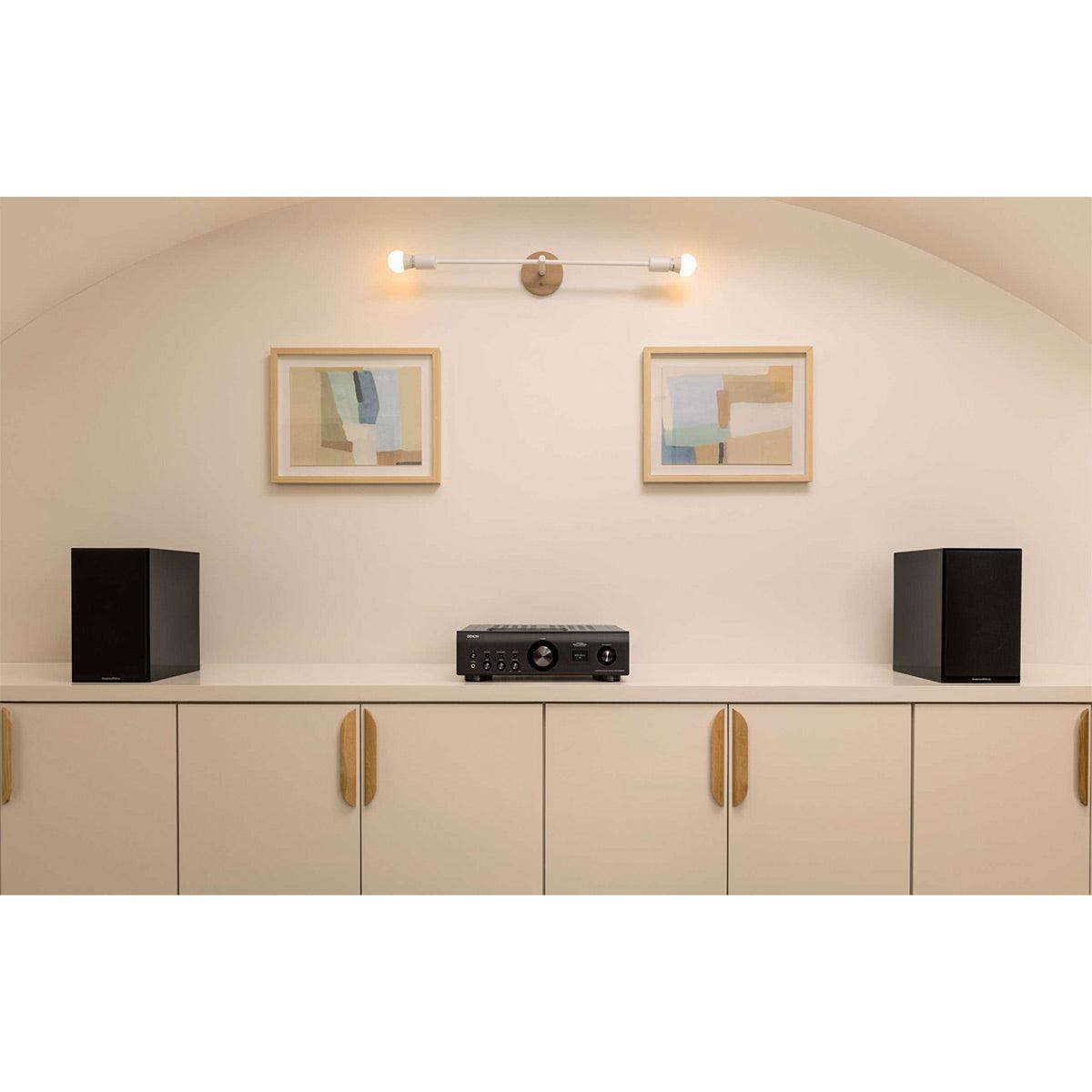
The integrated amplifier world has changed dramatically over the past few years. What used to be purely analog devices focused solely on powering speakers have evolved into comprehensive audio hubs that handle everything from vinyl records to wireless streaming. The Denon PMA-900HNE sits right at the center of this evolution, blending traditional hi-fi values with modern connectivity in ways that genuinely make sense for today's music listeners.
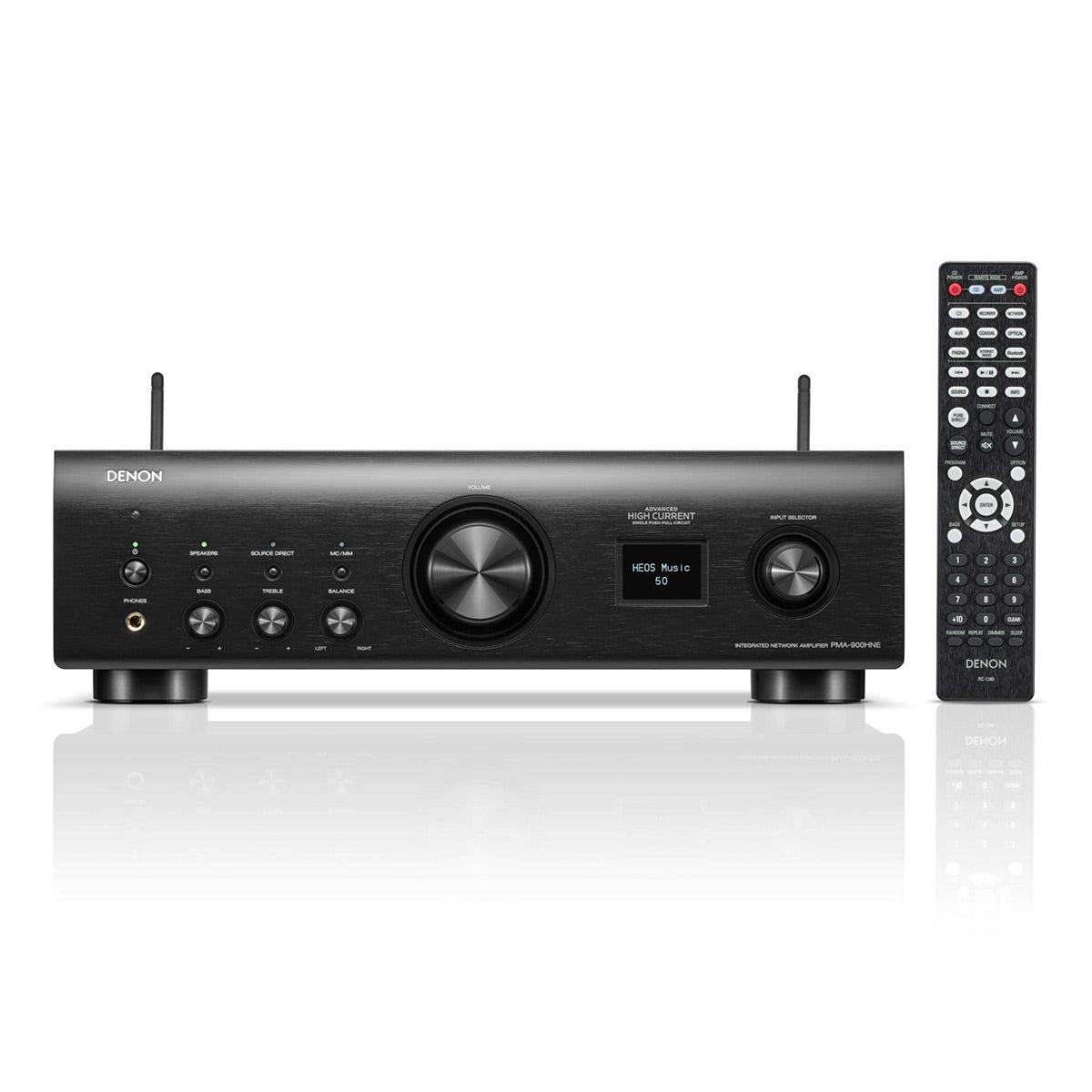
The most compelling aspect of the Denon PMA-900HNE isn't any single feature – it's how Denon has managed to pack serious streaming capabilities into a traditional-looking integrated amplifier without compromising sound quality. At its core, this is still a proper stereo amplifier built around Denon's Advanced High Current (AHC) single push-pull circuit design. This technology focuses on delivering stable current to your speakers rather than just chasing high wattage numbers, which translates to better control and dynamics with real-world speakers.
The amplifier outputs 50 watts per channel into 8-ohm speakers and 85 watts into 4-ohm loads. While those numbers might seem modest compared to some competitors, the AHC design means it can handle demanding speaker loads without breaking a sweat. Our research into user experiences shows that this amplifier drives everything from sensitive bookshelf speakers to moderately demanding floor-standers with excellent results.
Where the Denon PMA-900HNE really differentiates itself is through its built-in HEOS streaming platform. HEOS (which stands for "Home Entertainment Operating System") essentially turns your amplifier into a complete network music player. You can stream directly from services like Spotify, Apple Music, TIDAL, and Qobuz without needing any additional devices.
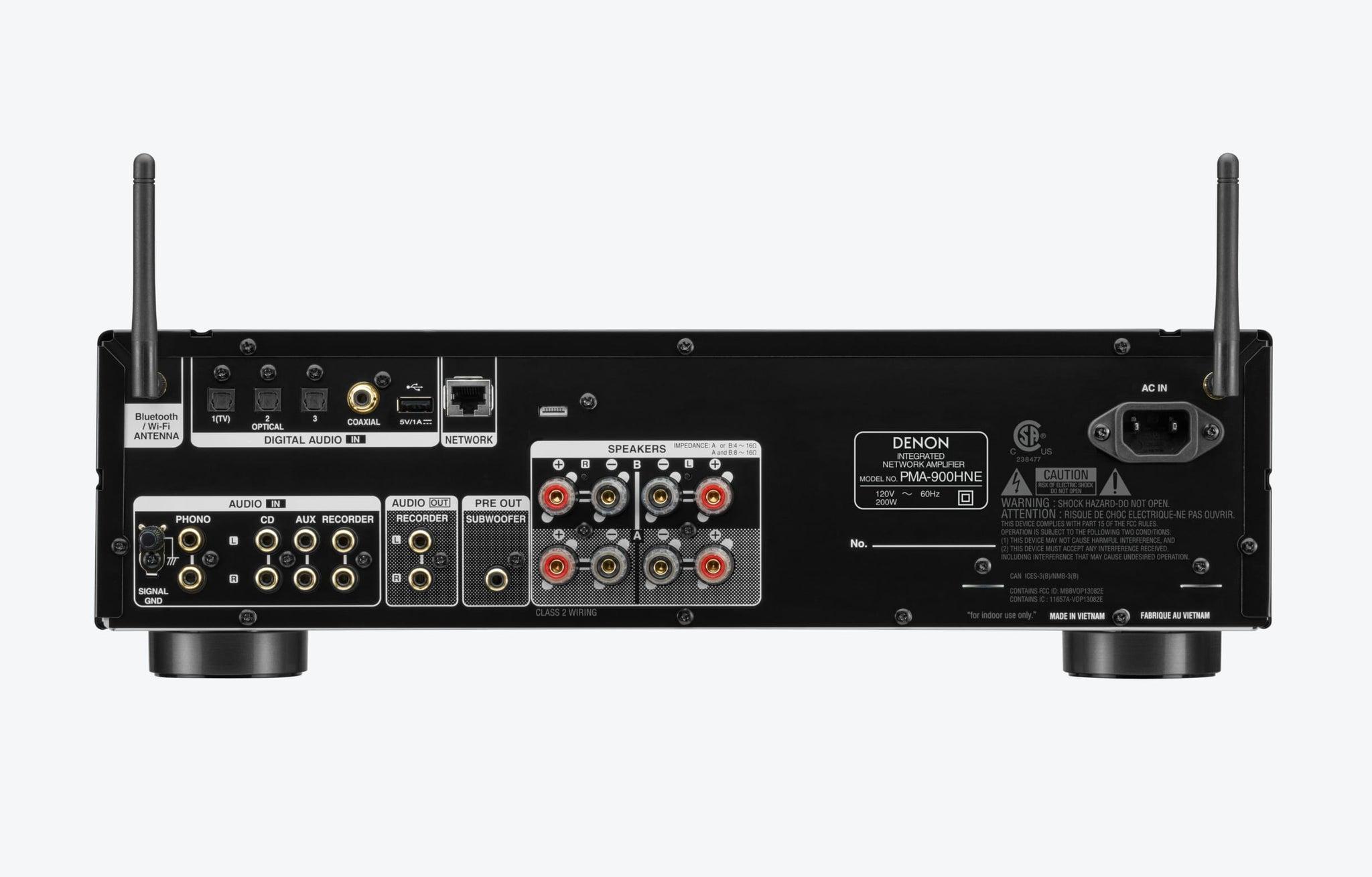
The implementation is particularly clever because it supports multiple connection methods. There's built-in dual-band Wi-Fi for wireless streaming, Ethernet for wired network connections, and Bluetooth 4.2 for quick connections from phones or tablets. Apple users get AirPlay 2 support, which provides rock-solid wireless streaming with automatic quality adjustment based on your network conditions.
One of the standout features that researchers consistently praise is the multi-room capability. If you have other HEOS-compatible devices around your home, you can sync music playback across all of them. This creates a whole-home audio system without the complexity and expense of dedicated multi-room systems.
The digital side of this amplifier deserves serious attention. The built-in DAC (Digital-to-Analog Converter) handles PCM signals up to 192kHz/24-bit resolution, which covers virtually all high-resolution music files you'll encounter. This is important because many streaming services now offer lossless and high-resolution audio options.
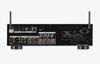
Connectivity options are comprehensive: three optical (Toslink) inputs, one coaxial digital input, and a USB-A port for direct playback from thumb drives. This flexibility means you can connect everything from CD players and Blu-ray players to gaming consoles and televisions. The USB input is particularly useful for playing music files directly from storage devices without needing a computer.
For home theater applications, the Denon PMA-900HNE works well as a high-quality stereo upgrade. While it's primarily designed for music listening, the digital inputs make it easy to extract audio from your TV or streaming devices for significantly better sound quality than built-in TV speakers can provide.
Despite all the digital capabilities, this amplifier doesn't forget its analog roots. The inclusion of a dedicated phono stage supporting both Moving Magnet (MM) and Moving Coil (MC) cartridges is a major advantage for vinyl enthusiasts. MM cartridges are the more common type and produce higher output signals, while MC cartridges are typically found on higher-end turntables and produce much lower output signals that need more amplification.
The phono stage quality is where many users report being pleasantly surprised. Rather than feeling like an afterthought, it delivers the kind of performance that would cost several hundred dollars in a standalone unit. This eliminates the need for an external phono preamp and reduces the number of components in your system.
Beyond the phono input, there are three additional stereo RCA inputs for connecting other analog sources like CD players, cassette decks, or other audio components. A stereo RCA output handles recording duties, while a dedicated mono subwoofer output with a fixed 100Hz crossover makes it easy to add bass extension to your system.
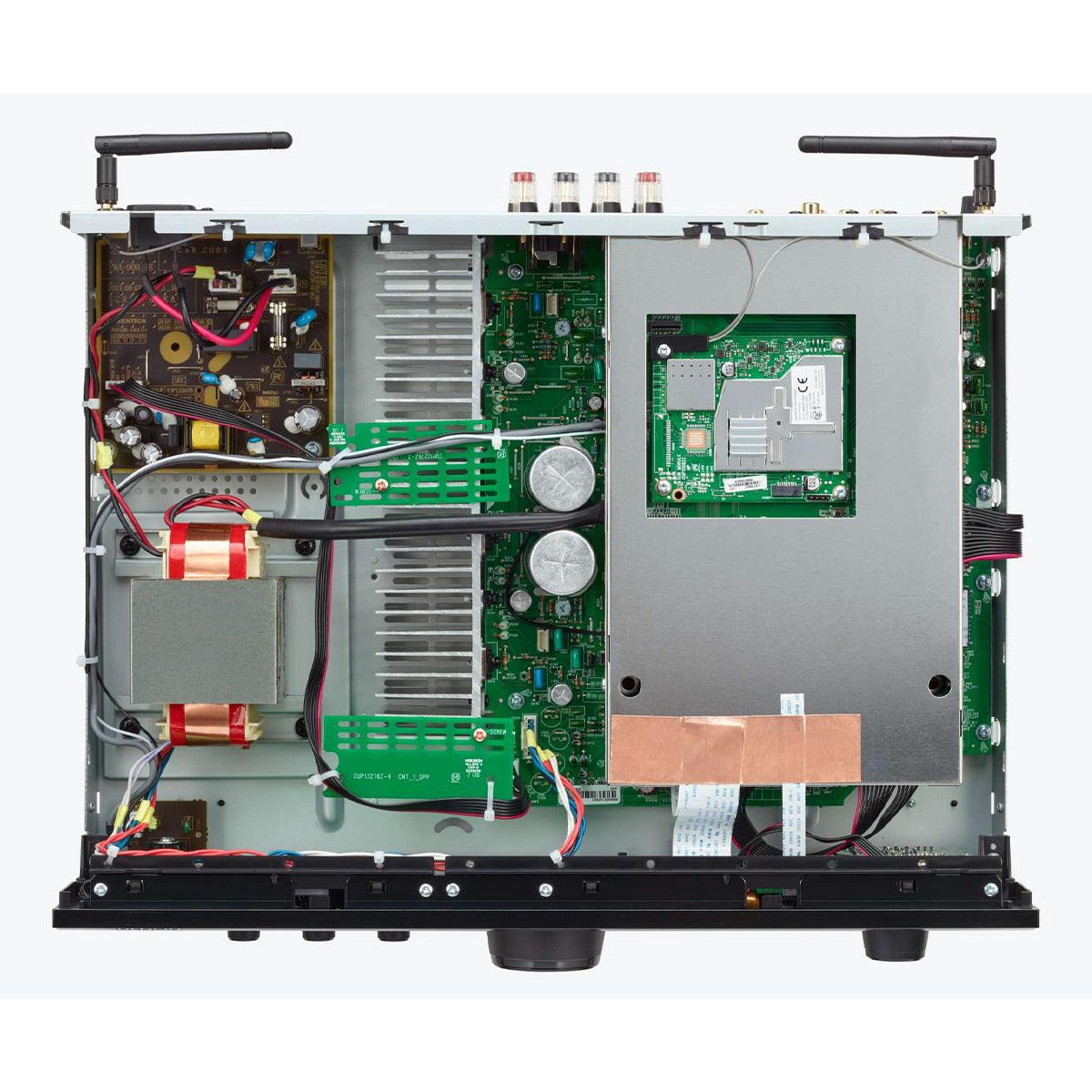
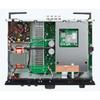
Denon employs what they call Signal Level Divided Construction (SLDC) in the Denon PMA-900HNE. This engineering approach separates different signal levels within the amplifier to minimize interference between circuits. The practical result is a lower noise floor and cleaner sound reproduction.
The chassis design focuses on vibration resistance, which is crucial for maintaining signal purity. The main power transformer uses individual wiring techniques to further reduce electrical noise. These might seem like small details, but they contribute to the overall sonic character that users consistently describe as clean, detailed, and musical.
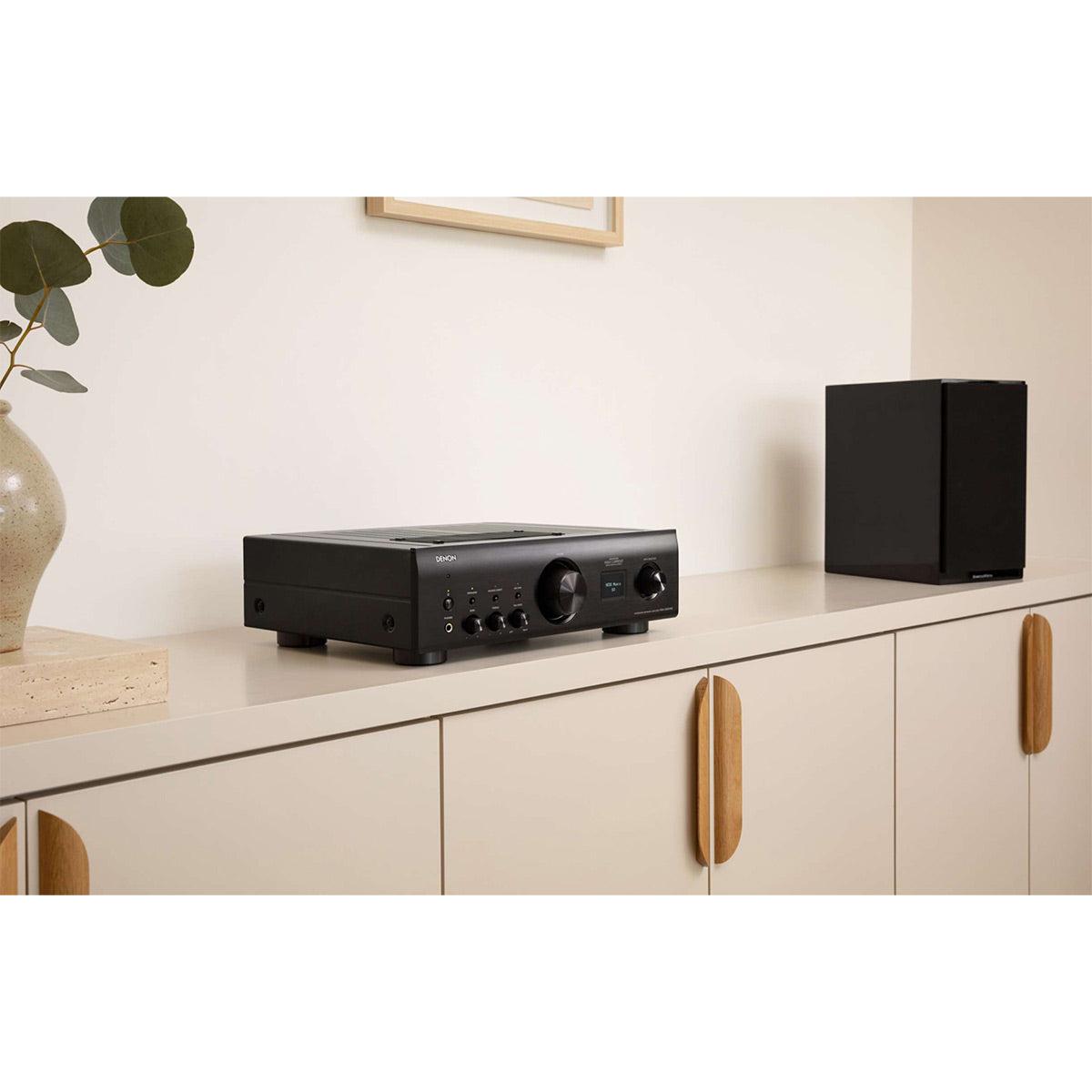
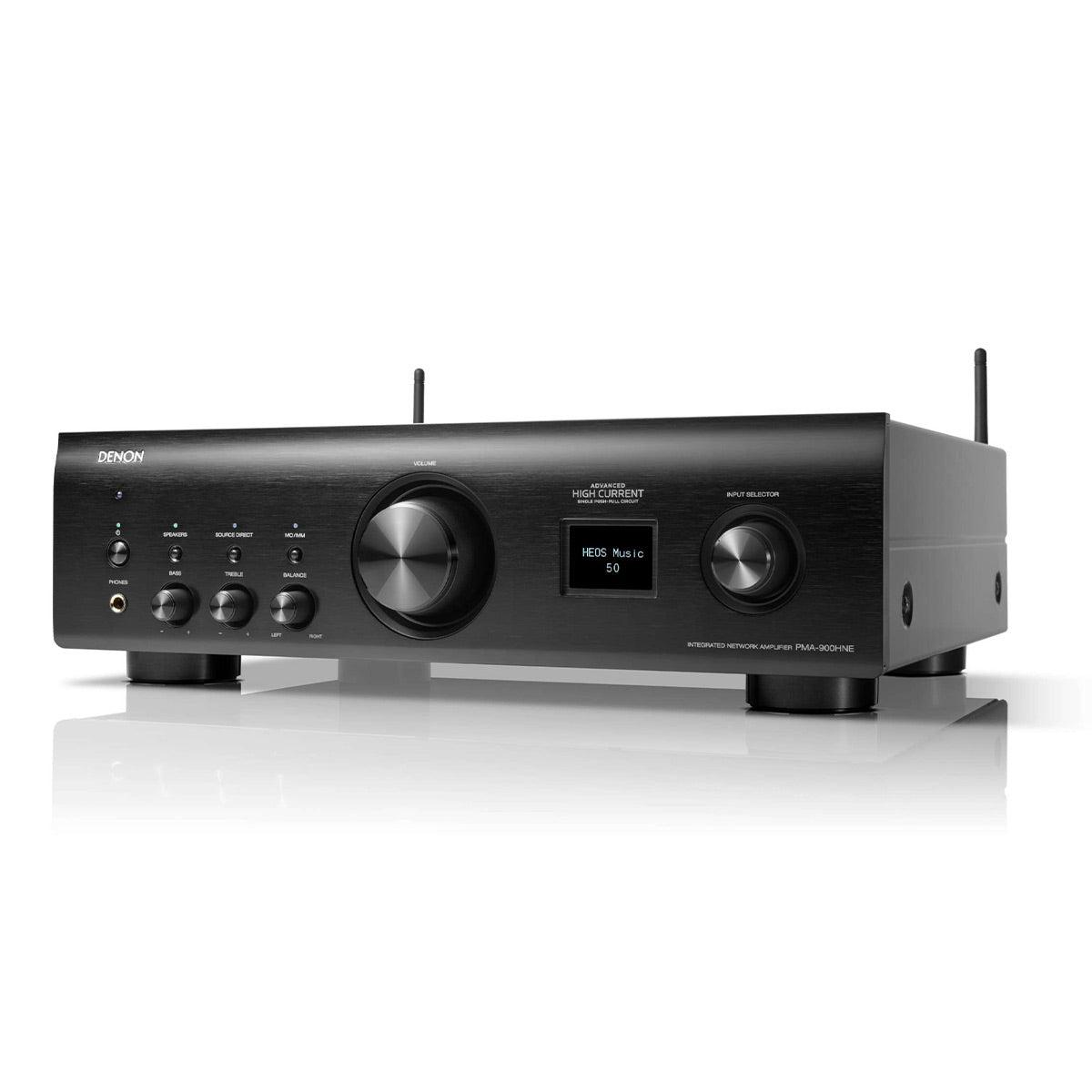
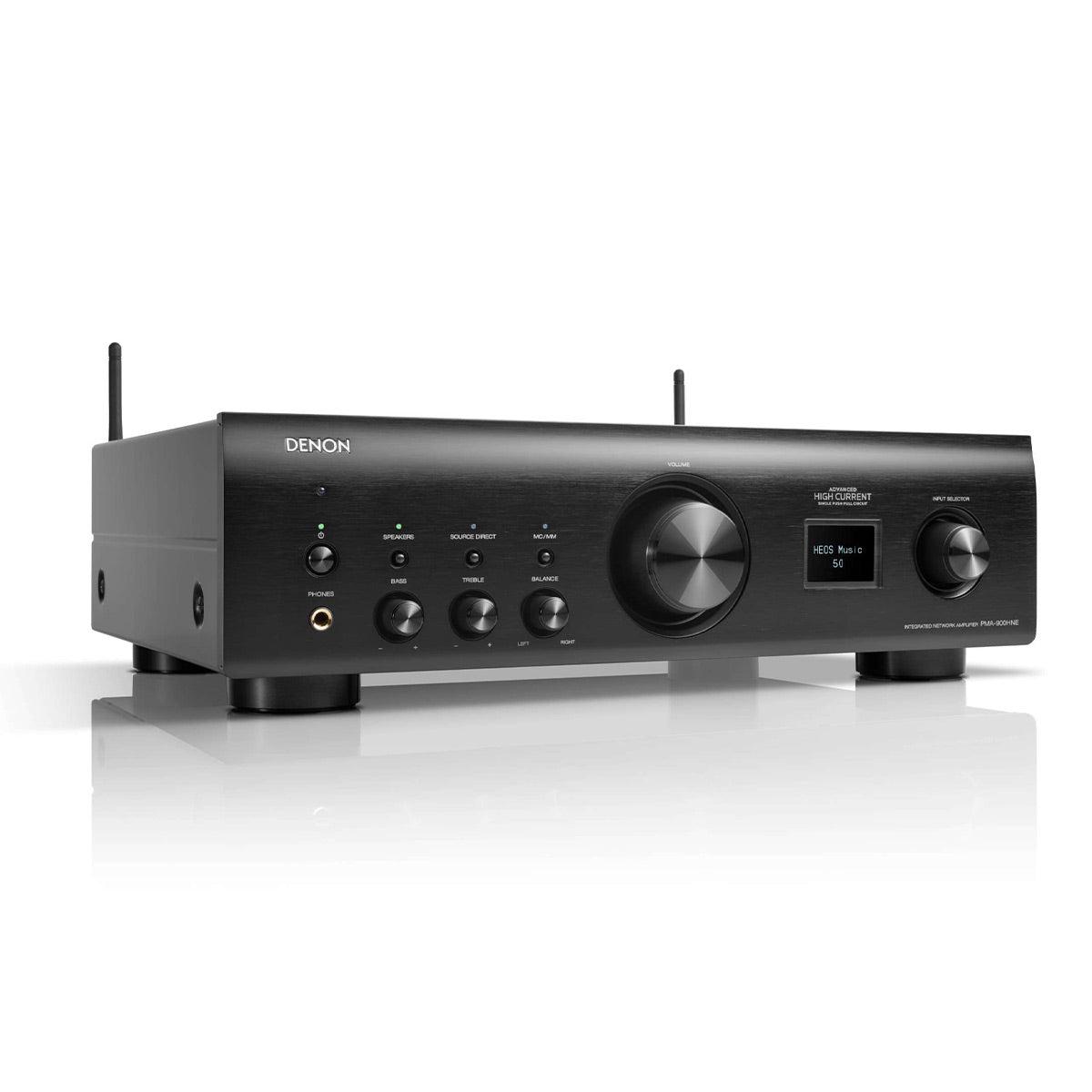
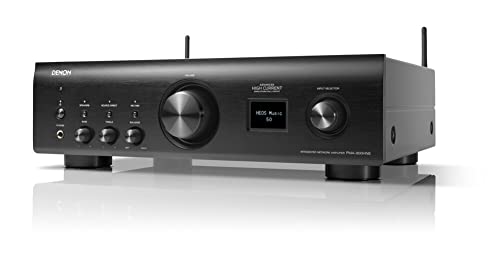
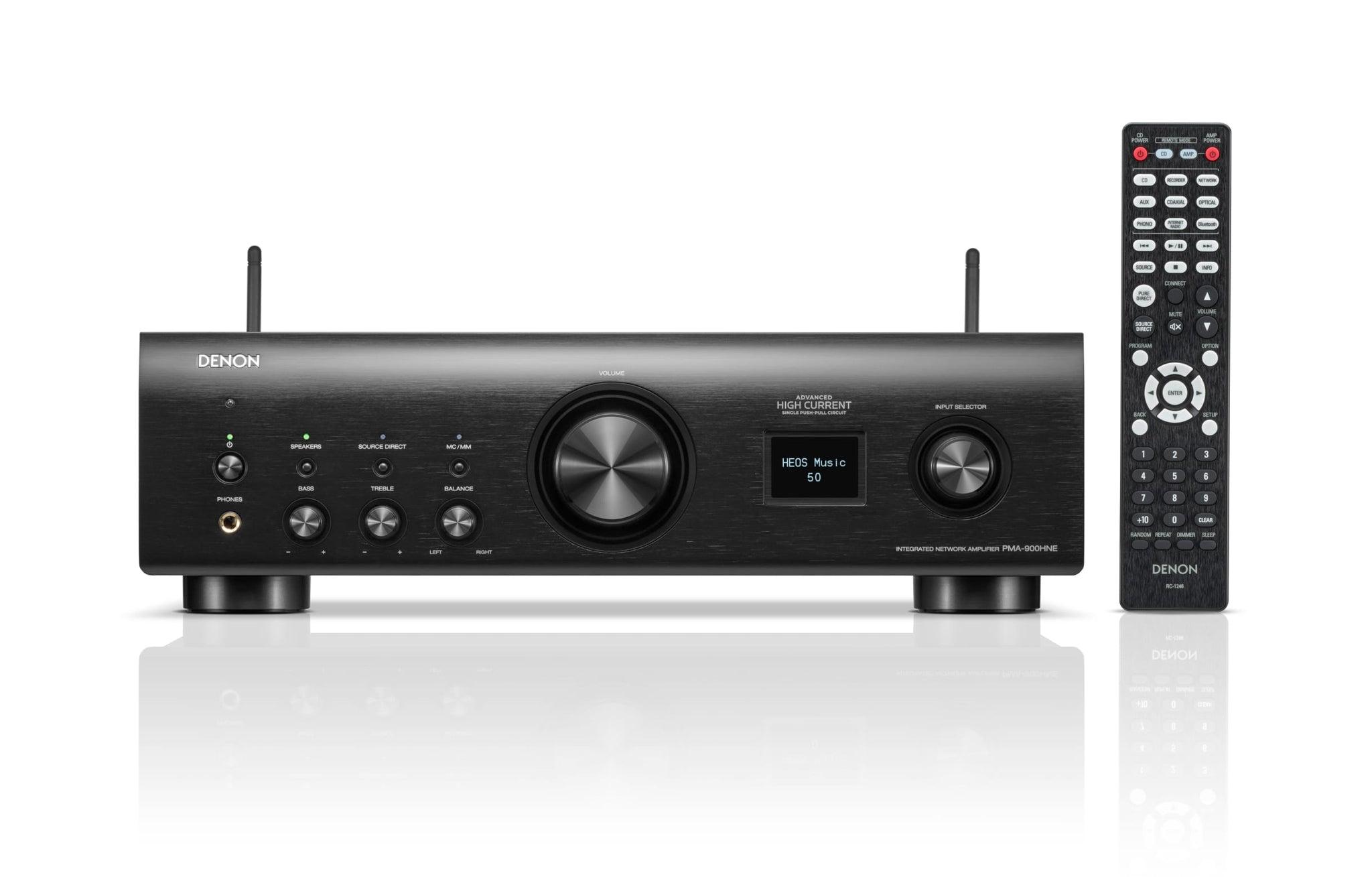
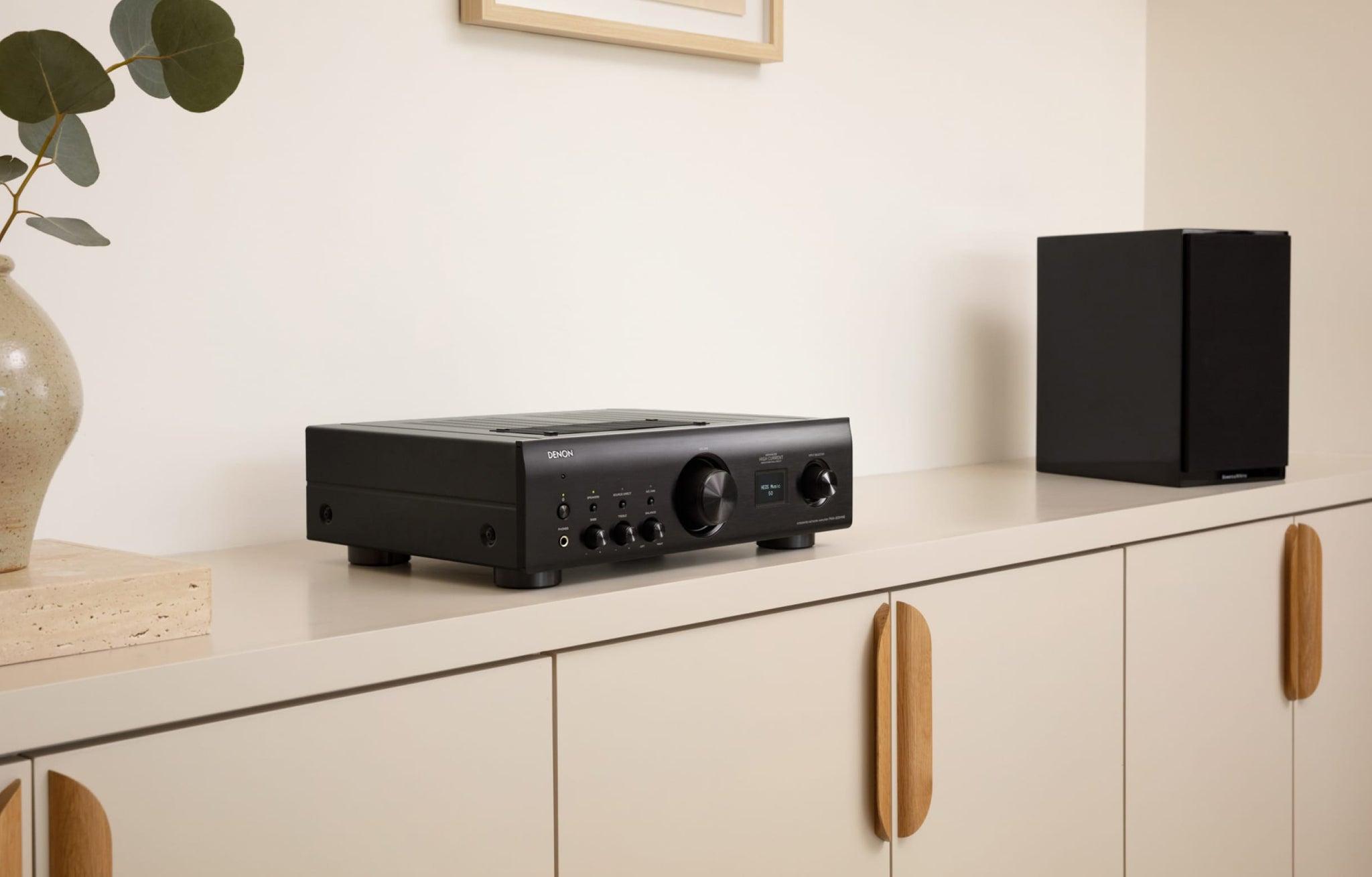
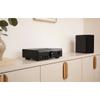
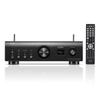
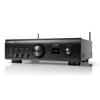
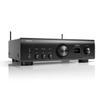
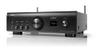
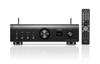
The front panel features a clear OLED display that shows input selection and other status information. The volume control is a satisfying metal knob that provides precise level adjustment, while A/B speaker switching lets you easily compare different speaker pairs or route audio to speakers in different rooms.
Based on extensive user feedback and professional evaluations, the Denon PMA-900HNE delivers a sound signature that balances detail with musicality. The frequency response extends from 10Hz to 100,000Hz, providing both deep bass extension and extended high-frequency response that captures subtle musical details.
The amplifier excels with complex musical passages, maintaining composure during dynamic swings while preserving the delicate details that make music engaging. Users consistently report excellent stereo imaging – the ability to precisely locate instruments and voices in the soundstage – which is partly due to the quality of the internal circuitry and partly due to the effective isolation between left and right channels.
For headphone users, the front-panel 1/4-inch jack provides serious amplification power. When headphones are connected, the speaker outputs automatically disconnect, which is a thoughtful touch. The headphone amplifier section has enough power to drive everything from sensitive in-ear monitors to demanding full-size headphones.
Voice control support for Amazon Alexa and Google Assistant adds modern convenience without feeling gimmicky. You can start music playback, adjust volume, and switch inputs using voice commands once you have a compatible smart speaker set up.
The TV Auto Standby feature automatically powers down the amplifier when it detects no signal from connected sources, which is both energy-efficient and convenient for daily use. IR learning capability means you can program universal remotes to control the amplifier, simplifying your overall system operation.
At the time of writing, the integrated amplifier market offers numerous choices, from budget-focused units to high-end audiophile models. The Denon PMA-900HNE positions itself as a feature-rich option that doesn't sacrifice sound quality for connectivity.
Compared to purely analog integrated amplifiers in similar power ranges, this Denon offers significantly more versatility. Traditional amplifiers might edge it out slightly in pure sonic performance per dollar, but they can't match the streaming capabilities and comprehensive digital connectivity.
Against other network-enabled amplifiers, the Denon's strength lies in its complete feature set. The combination of high-quality phono stage, comprehensive analog inputs, robust streaming platform, and solid amplification creates a package that's hard to match at its price point.
The Denon PMA-900HNE succeeds because it doesn't try to be everything to everyone while still offering impressive versatility. It's built around solid amplification principles, enhanced with genuinely useful modern features, and executed with the kind of attention to detail that makes daily use a pleasure.
For music lovers who want to bridge their existing analog sources with modern streaming services, this amplifier provides an elegant single-box solution. The sound quality satisfies critical listeners, while the streaming capabilities and smart features make it genuinely convenient for everyday use. It represents the kind of thoughtful evolution that the integrated amplifier category needs – honoring traditional hi-fi values while embracing the realities of how people consume music today.
The Denon PMA-900HNE is a stereo integrated amplifier that combines traditional hi-fi amplification with modern streaming capabilities. It delivers 50 watts per channel into 8-ohm speakers and includes built-in HEOS streaming, Wi-Fi, Bluetooth, and a dedicated phono stage for turntables. This makes it a complete audio hub for both analog and digital sources.
Yes, the Denon PMA-900HNE works well for home theater stereo audio. It features multiple digital inputs (3 optical, 1 coaxial) that can connect to TVs, streaming devices, and Blu-ray players. While it's primarily designed for stereo music listening, it significantly improves TV audio quality and includes a subwoofer output for adding bass extension to your home theater setup.
The Denon PMA-900HNE provides 50 watts per channel into 8 ohms and 85 watts into 4 ohms using Denon's Advanced High Current design. This is sufficient power for most bookshelf and moderate floor-standing speakers in typical listening rooms. The current-focused design ensures good speaker control and dynamics, though very demanding speakers or large rooms may benefit from more powerful amplifiers.
The Denon PMA-900HNE supports major streaming services through its built-in HEOS platform, including Spotify Connect, Apple Music, TIDAL, Qobuz Connect, TuneIn, and iHeart Radio. It also supports AirPlay 2 for Apple devices and is Roon Ready for advanced music management systems. You can control streaming through the HEOS app or voice commands via Alexa or Google Assistant.
Yes, the Denon PMA-900HNE includes a high-quality phono preamplifier that supports both Moving Magnet (MM) and Moving Coil (MC) turntable cartridges. This eliminates the need for an external phono preamp and allows direct connection of turntables. Users consistently praise the phono stage quality as being equivalent to standalone units costing several hundred dollars.
You can connect your TV to the Denon PMA-900HNE using any of its digital inputs - optical (Toslink) or coaxial connections work best for audio quality. Most modern TVs have optical audio outputs that connect directly to one of the amplifier's three optical inputs. This setup provides significantly better stereo audio quality than built-in TV speakers for movies, shows, and streaming content.
The Denon PMA-900HNE combines traditional amplification with comprehensive streaming and network capabilities. Unlike basic amplifiers that only amplify audio signals, this model includes built-in Wi-Fi, Bluetooth, HEOS streaming, multiple digital inputs, and a high-quality DAC. It essentially functions as an amplifier, streamer, and DAC all in one unit, reducing component count and simplifying system setup.
The Denon PMA-900HNE features Bluetooth re-broadcast capability, allowing you to stream audio wirelessly to Bluetooth headphones or speakers. It also has a traditional 1/4-inch headphone jack on the front panel for wired headphones. When headphones are connected to the front jack, the speaker outputs automatically disconnect for private listening.
Yes, the Denon PMA-900HNE is Hi-Res Audio Certified and supports PCM audio up to 192kHz/24-bit through its digital inputs. It can play high-resolution files from streaming services, USB drives, and connected digital sources. The built-in DAC ensures compatibility with various file formats including FLAC, ALAC, WAV, and DSD for audiophile-quality sound reproduction.
The Denon PMA-900HNE offers excellent value for users seeking a complete audio solution that bridges traditional hi-fi with modern streaming. Its combination of quality amplification, comprehensive connectivity, built-in streaming, and high-quality phono stage eliminates the need for multiple separate components. For home theater enthusiasts and music lovers who want both analog and digital source flexibility in a single well-built unit, the Denon PMA-900HNE represents a compelling investment in long-term audio enjoyment.
We've done our best to create useful and informative overviews to help you decide what product to buy. Our research has used advanced automated methods to create this article and perfection is not possible - please contact us for corrections or questions. These are the sites we've researched in the creation of this article: crutchfield.com - e-catalog.com - theaudiotailor.com.au - extremehifi.com - whathifi.com - speakerdecision.com - youtube.com - audiosciencereview.com - sound-advice.online - crutchfield.com - crutchfield.com - sweetwater.com - watthifi.com - youtube.com - accessories4less.com - soundstageaccess.com - icav.us - safeandsoundhq.com - listenup.com - accessories4less.com - audiosciencereview.com
| Denon PMA-900HNE |
|---|
| Power Output - Determines how loud and controlled your speakers will sound: 50W x 2 (8Ω), 85W x 2 (4Ω) |
| HEOS Built-in - Stream music directly without additional devices: Yes, with multi-room capability |
| Phono Stage - Essential for connecting turntables directly: MM/MC compatible |
| Digital Audio Support - Maximum quality for streaming and digital files: Up to 192kHz/24-bit PCM |
| Wi-Fi & Bluetooth - Wireless streaming flexibility: Dual-band Wi-Fi, Bluetooth 4.2 |
| Digital Inputs - Connect multiple digital sources: 3 optical, 1 coaxial, 1 USB-A |
| AirPlay 2 - Seamless streaming from Apple devices: Supported |
| Signal-to-Noise Ratio - Lower noise means cleaner sound: 105 dB (line input) |
| Roon Ready - Integration with advanced music management systems: Yes |
| Subwoofer Output - Easy bass extension for your system: Mono RCA with 100Hz crossover |
| Headphone Output - Dedicated amplification for private listening: 1/4" front panel jack |
| Analog Inputs: 3 stereo RCA + phono |
| Speaker Outputs - A/B switching for multiple speaker pairs: Binding posts with A/B selection |
| Voice Control - Modern convenience features: Alexa & Google Assistant compatible |
| Dimensions: 17-1/8" x 5-1/8" x 15-7/16" |
| Weight: 18.3 lbs |
| Warranty: 3 years |
The SVS Prime Wireless Pro SoundBase delivers nearly double the power output at 150 watts per channel into 4-ohm loads compared to the Denon's 85 watts, making it significantly better suited for driving demanding speakers or achieving high-volume dynamics without strain. Its most compelling feature is HDMI ARC/eARC connectivity, which allows seamless TV integration with automatic power-on and volume control through your TV remote – something the Denon simply can't match without additional cables and setup complexity. The SVS also excels in convenience with its large 3.15" OLED display and six front-panel preset buttons that provide one-touch access to your favorite streaming services and playlists, creating a more modern user experience than traditional amplifier controls.
Where the SVS Prime Wireless Pro SoundBase really shines is in its ultra-compact form factor, weighing just 5 pounds compared to the Denon's 18+ pounds while delivering superior power output – a remarkable engineering achievement. The Class-D amplification runs cooler and more efficiently, making it perfect for tight spaces or cabinet installations where the Denon's larger chassis and heat output would be problematic. However, the SVS makes significant trade-offs in connectivity, offering only one optical digital input and one analog RCA input compared to the Denon's seven total inputs, and it completely lacks a phono stage for turntables. While the SVS typically offers better value for streaming-focused users who need substantial power in a compact package, those with multiple sources or vinyl collections will find its limited connectivity frustrating compared to the Denon's comprehensive input selection.
🤖 Read Detailed Comparison
👌SVS Prime Wireless Pro SoundBase Integrated Amplifier Details
💵 See SVS Prime Wireless Pro SoundBase Integrated Amplifier Price
The Dayton Audio HTA200 offers something entirely different with its hybrid tube design that combines six vacuum tubes in the preamp section with solid-state power amplification, delivering the warm, musical character that tube enthusiasts crave without the typical drawbacks of full tube amplifiers. Where the PMA-900HNE prioritizes clinical accuracy and streaming convenience, the HTA200 focuses on sonic engagement and visual appeal with its exposed glowing tubes and dancing VU meters that create an undeniably cool retro aesthetic. Despite its lower price point, it actually delivers slightly more power at 100 watts per channel into 4-ohm loads compared to the Denon's 85 watts, and its tube-influenced sound signature can make digital sources sound more analog and musical—particularly appealing for listeners who find modern solid-state amplifiers too sterile or fatiguing.
From a value perspective, the HTA200 represents exceptional bang-for-buck in delivering a genuinely unique listening experience that simply isn't available elsewhere at similar prices. While it lacks the PMA-900HNE's sophisticated streaming capabilities and high-resolution digital support, it includes the essentials like Bluetooth connectivity, USB DAC functionality, and a built-in phono stage that covers most users' basic needs. The Dayton Audio also comes with an impressive 5-year warranty that demonstrates unusual manufacturer confidence at this price level. For buyers who prioritize character over clinical accuracy, prefer physical controls over app-based interfaces, or want an amplifier that serves as both audio equipment and conversation piece, the HTA200 delivers an experience that the technically superior Denon simply cannot match—proving that sometimes the most meaningful differences in audio aren't measurable on a spec sheet.
🤖 Read Detailed Comparison
👌Dayton Audio HTA200 Integrated Stereo Hybrid Tube Amplifier Details
💵 See Dayton Audio HTA200 Integrated Stereo Hybrid Tube Amplifier Price
The Bluesound PowerNode Edge represents a radically different philosophy, prioritizing compact design and streaming-first functionality over traditional hi-fi flexibility. Its standout feature is the DirectDigital amplification technology that maintains the audio signal in the digital domain until the final speaker output stage, resulting in exceptionally low noise and distortion characteristics. The compact form factor – roughly one-third the size of traditional amplifiers – enables wall-mounting and discrete placement options that simply aren't possible with conventional components. Most significantly, the HDMI eARC connectivity provides seamless TV integration with automatic switching and Dolby Digital decoding, eliminating the need for separate cables or additional equipment that the PMA-900HNE requires for television audio.
From a value standpoint, the PowerNode Edge costs substantially less while delivering what many consider the superior BluOS streaming platform, which consistently receives praise for its reliability and intuitive operation compared to HEOS. The 40-watt power output, while lower on paper than the Denon's 50 watts, proves surprisingly capable due to the efficiency of digital amplification, easily driving demanding speakers in real-world use. However, this streamlined approach comes with significant limitations: analog connectivity is minimal with just a single 3.5mm input requiring adapters, and there's no dedicated phono stage for turntables. The PowerNode Edge excels for users who primarily stream music and want effortless TV integration, while the PMA-900HNE better serves those with extensive analog source collections and traditional hi-fi preferences.
🤖 Read Detailed Comparison
👌Bluesound PowerNode Edge Streaming Amplifier Details
💵 See Bluesound PowerNode Edge Streaming Amplifier Price
The Arcam A15 represents a more traditional audiophile approach, prioritizing pure sound quality and premium construction over modern conveniences. Its standout features include superior power delivery with 80 watts into 8 ohms that nearly doubles to 120 watts into 4 ohms, indicating excellent current capability for driving demanding speakers. The Class AB amplification design and solid aluminum chassis with machined controls reflect decades of British hi-fi engineering expertise, resulting in what reviewers consistently describe as exceptional soundstaging, natural midrange reproduction, and engaging musical presentation. The Arcam also offers higher-quality Bluetooth with aptX Adaptive codec and two-way functionality, allowing transmission to wireless headphones at better-than-CD quality, plus thoughtful touches like a dedicated headphone amplifier and preamp outputs for system expansion.
While the Arcam A15 commands a higher price than the Denon, it delivers measurably superior audio performance that justifies the premium for serious listeners. The Arcam's neutral yet engaging sound signature, superior dynamics, and three-dimensional imaging capabilities create a more convincing musical experience, particularly with acoustic genres and well-recorded material. However, this sonic excellence comes at the cost of modern convenience—the Arcam requires separate streaming components to match the Denon's built-in HEOS functionality, potentially adding hundreds of dollars to the total system cost. For users who already own quality source components or prioritize long-term audio performance over streaming convenience, the Arcam offers better value through its superior build quality, proven reliability, and timeless design that will remain relevant as streaming technologies evolve. The choice ultimately depends on whether you're building a dedicated music system focused on sonic excellence or seeking an all-in-one solution that balances good performance with modern streaming integration.
🤖 Read Detailed Comparison
👌Arcam A15 Integrated Amplifier Details
💵 See Arcam A15 Integrated Amplifier Price
The Arcam Radia A5 prioritizes pure audio performance over connectivity features, delivering superior sound quality through its premium ESS ES9018 DAC implementation with three selectable digital filters—a level of customization typically found in much more expensive components. Its exceptionally low 0.003% THD distortion significantly outperforms the PMA-900HNE's 0.01% measurement, resulting in cleaner, more accurate sound reproduction that audiophiles will appreciate. The Arcam also features unique bidirectional Bluetooth 5.2 with aptX Adaptive codec, providing both the highest-quality wireless streaming available and the unusual ability to transmit audio to Bluetooth headphones or speakers elsewhere in your home. Its moving magnet phono stage performs well above its price class, delivering clear and expressive vinyl playback that rivals dedicated phono preamps costing hundreds more.
Where the Arcam A5 truly excels is in value proposition, delivering this superior core audio performance at roughly $180 less than the PMA-900HNE while including preamp outputs for future system expansion—something the Denon lacks. For users who don't need built-in Wi-Fi streaming, the Arcam represents exceptional value where the money saved could fund better speakers or sources, likely yielding greater sonic improvement than the PMA-900HNE's additional connectivity features. However, the Arcam requires external devices for network streaming and only supports moving magnet cartridges, making it less convenient for users who prioritize integrated streaming or need moving coil cartridge compatibility. The choice ultimately comes down to whether you value pure audio performance and expandability over all-in-one streaming convenience.
🤖 Read Detailed Comparison
👌Arcam Radia A5 Integrated Amplifier Details
💵 See Arcam Radia A5 Integrated Amplifier Price
The Yamaha WXA-50 takes a fundamentally different approach with its ultra-compact design and streaming-first philosophy. At just 8 inches wide and 4.3 pounds, it delivers impressive power handling with 105 watts into 4-ohm loads, making it better suited for demanding low-impedance speakers than the Denon. The Yamaha's ESS Sabre DAC and comprehensive high-resolution support including DSD up to 5.6MHz provides broader file format compatibility, while its MusicCast platform generally offers superior multi-room synchronization and a more polished app experience. The inclusion of multiple DSP modes like Volume-Adaptive EQ and Advanced Bass Extension makes it more forgiving in challenging room acoustics, and professional installation features like 12V triggers and vertical mounting capability open up placement options that traditional amplifiers simply can't match.
However, the Yamaha WXA-50 sacrifices significant analog flexibility to achieve its compact form factor and lower price point. With only a single analog input and no phono stage, it's clearly designed for users who've fully embraced digital streaming rather than those maintaining collections of vinyl or multiple analog sources. While it excels in space-constrained installations and multi-room scenarios, vinyl enthusiasts would need to invest in a quality external phono stage, potentially negating the initial cost savings. The Yamaha represents excellent value for streaming-focused users who prioritize convenience and modern features, but the Denon's comprehensive analog capabilities and traditional hi-fi approach make it the better choice for listeners who want the flexibility to use both digital and analog sources without compromise.
🤖 Read Detailed Comparison
👌Yamaha MusicCast Wireless Streaming Amplifier Details
💵 See Yamaha MusicCast Wireless Streaming Amplifier Price
The Bluesound PowerNode takes a fundamentally different approach as a streaming-first amplifier that doubles the Denon's power output at 100 watts per channel. This extra headroom becomes immediately apparent with demanding speakers or larger rooms, where the PowerNode maintains composure and clarity at volumes that would push the Denon beyond its comfort zone. The PowerNode's standout feature is its HDMI eARC connection, which provides seamless TV integration with a single cable carrying high-quality audio from all sources—a significant advantage over the Denon's optical-only TV connection. The BluOS streaming platform also edges ahead with broader service support including Tidal Connect, superior multi-room capabilities handling up to 64 zones, and two-way aptX HD Bluetooth that can both receive and transmit audio.
However, the PowerNode sacrifices the Denon's comprehensive analog connectivity and traditional hi-fi approach for this modern convenience. While the PowerNode excels as an all-in-one streaming solution with its compact 4.2-pound design and app-centric operation, it lacks a phono stage entirely and offers minimal physical inputs compared to the Denon's extensive analog connectivity. The PowerNode's shorter one-year warranty also contrasts with the Denon's three-year coverage. For users building a primarily streaming-based system who need serious power and TV integration, the PowerNode offers compelling value, but vinyl enthusiasts and those with multiple analog sources will find the Denon's traditional hi-fi foundation and comprehensive connectivity more valuable despite its lower power output.
🤖 Read Detailed Comparison
👌Bluesound PowerNode Wireless Music Streaming Amplifier Details
💵 See Bluesound PowerNode Wireless Music Streaming Amplifier Price
The Denon PMA-600NE serves as an excellent entry point into serious hi-fi, offering 45 watts per channel and Denon's signature warm sound at roughly half the cost. Its standout feature is the dedicated analog mode that completely shuts down all digital circuitry, creating the purest possible signal path for vinyl enthusiasts and those using high-end external DACs. With five analog RCA inputs compared to the PMA-900HNE's three, it actually provides more flexibility for traditional source components like CD players, cassette decks, and auxiliary devices. The PMA-600NE also includes a competent MM phono stage and basic Bluetooth connectivity, covering the essentials without unnecessary complexity.
Where the PMA-600NE falls short is in future-proofing and convenience. It lacks network streaming entirely, limiting you to Bluetooth's compressed audio quality for wireless music. The MM-only phono stage restricts turntable upgrade paths, and its more basic power supply design doesn't match the PMA-900HNE's superior current delivery and noise isolation. However, for listeners focused on physical media or those building systems component by component, the substantial cost savings make it compelling. The PMA-600NE delivers about 85% of the musical satisfaction at 50% of the cost, making it the smarter choice for budget-conscious audiophiles who don't need streaming features and prefer the flexibility of separate components.
🤖 Read Detailed Comparison
👌Denon PMA-600NE Integrated Amplifier Details
💵 See Denon PMA-600NE Integrated Amplifier Price
The NAD D 3020 V2 takes a fundamentally different approach, prioritizing compact design and core amplification quality over comprehensive features. At just 7 inches wide and 3 pounds, it delivers genuine hi-fi performance in a desktop-friendly package that would disappear next to the Denon's substantial footprint. The Class D amplification with PowerDrive technology proves surprisingly capable, providing 30 watts continuous power but with dynamic bursts up to 150 watts into challenging loads. While this means less headroom than the Denon's 50/85-watt output, the NAD punches above its weight class with efficient speakers in smaller rooms. The sound signature leans neutral and musical rather than the Denon's richer, more controlled presentation, making it less fatiguing for extended listening sessions though potentially sacrificing some fine detail retrieval.
Where the NAD D 3020 V2 falls short is in modern connectivity and expandability. It relies solely on Bluetooth with aptX for wireless streaming, eliminating the comprehensive network features, voice control, and direct streaming service access that define the Denon experience. The single analog input plus phono stage limits source flexibility compared to the Denon's extensive connectivity options. However, this simplicity becomes an advantage for users who prefer straightforward operation and don't need multi-room audio or smart home integration. At significantly lower pricing, the NAD offers exceptional value for space-conscious users prioritizing sound quality per dollar over feature density, making it ideal for desktop systems, secondary zones, or minimalist setups where the Denon's capabilities would be underutilized.
🤖 Read Detailed Comparison
👌NAD D 3020 V2 Integrated Amplifier Details
💵 See NAD D 3020 V2 Integrated Amplifier Price
The Marantz Model M1 represents a radically different design philosophy with its ultra-compact form factor and digital-first approach. Its most impressive achievement is delivering 100 watts per channel (125 watts into 4 ohms) from a package that weighs less than 5 pounds and fits almost anywhere. The standout feature is its HDMI eARC input with Dolby Digital+ processing, which provides seamless TV integration that the PMA-900HNE simply cannot match. This single-cable connection eliminates the complexity of multiple digital inputs while delivering superior audio processing for modern home theater applications. The Model M1's advanced subwoofer management with adjustable crossover filters also surpasses the Denon's basic fixed crossover, making it more suitable for optimized 2.1 systems.
In real-world scenarios, the Marantz Model M1 excels where space constraints and modern connectivity matter most. Its Class D amplification runs cool and efficient, allowing installation in enclosed spaces or multiple units throughout a home for distributed audio systems. The significantly higher power output provides better headroom for demanding speakers and high-volume listening, though this comes at the cost of minimal analog connectivity - just one RCA input versus the PMA-900HNE's comprehensive selection. While the Model M1 typically commands a premium price, its 5-year warranty, space-saving design, and HDMI eARC capability can justify the additional cost for users building TV-centric systems or needing compact high-power amplification. However, vinyl enthusiasts and those with multiple analog sources will find the Marantz Model M1 inadequate without additional equipment, making the PMA-900HNE's built-in phono stage and extensive connectivity more practical for traditional hi-fi setups.
🤖 Read Detailed Comparison
👌Marantz Model M1 Wireless Streaming Amplifier Details
💵 See Marantz Model M1 Wireless Streaming Amplifier Price
The WiiM Amp represents a fundamentally different approach to streaming amplification, prioritizing modern convenience and exceptional value. Its comprehensive streaming protocol support—including AirPlay 2, Chromecast, Spotify Connect, TIDAL Connect, and Alexa Cast—far exceeds what the Denon offers through HEOS alone. The compact aluminum chassis delivers more raw power at 60 watts per channel (versus the Denon's 50 watts) while occupying a fraction of the space, making it ideal for bookshelf placement or tight entertainment centers. Advanced digital features like 10-band parametric EQ, room correction, and 26 preset curves provide extensive sound customization that the Denon simply cannot match with its basic tone controls. The WiiM Amp also excels in home theater integration with HDMI ARC connectivity that automatically switches inputs when your TV turns on.
Where the WiiM Amp truly shines is in delivering premium performance at a budget-friendly price point that's roughly one-third the cost of the Denon. Its cross-brand multiroom capabilities allow seamless grouping with Echo, Nest, HomePod, and other WiiM devices—something the HEOS-limited Denon cannot achieve. Regular firmware updates continuously add new features and streaming service support, ensuring the amplifier stays current with evolving technology. However, the WiiM Amp lacks the Denon's built-in phono stage and extensive analog connectivity, requiring external solutions for turntables and multiple analog sources. For users who prioritize streaming convenience, space efficiency, and maximum features per dollar, the WiiM Amp delivers remarkable sophistication that makes the Denon's traditional approach feel less essential unless you specifically need its analog capabilities.
🤖 Read Detailed Comparison
👌WiiM Amp Streaming Amplifier Details
💵 See WiiM Amp Streaming Amplifier Price
The WiiM Amp Ultra delivers significantly more power and advanced digital features at a substantially lower price point, making it a compelling alternative for users prioritizing performance per dollar. Its standout advantage is the massive power difference—100 watts per channel into 8 ohms and 200 watts into 4 ohms compared to the Denon's 50/85 watts—providing crucial headroom for demanding speakers and larger rooms. The ESS SABRE DAC with six premium op-amps achieves superior technical measurements, while the sophisticated room correction system using smartphone measurement can transform problematic listening spaces. The large 3.5-inch color touchscreen fundamentally improves daily usability by displaying album art, VU meters, and enabling direct control without reaching for phone apps, while Wi-Fi 6E and Bluetooth 5.3 with LE Audio represent the latest wireless standards for future-proofing.
Where the WiiM Amp Ultra truly excels is in modern streaming integration and space efficiency, housed in a compact aluminum chassis that fits easily into contemporary entertainment centers. Its HDMI ARC connectivity with Dolby Digital decoding makes TV integration seamless, while the adjustable subwoofer crossover enables proper 2.1 setups that the Denon's fixed crossover cannot match. However, it sacrifices analog versatility with just one RCA input and no phono stage, making it unsuitable for vinyl enthusiasts or multi-source analog systems. The lack of AirPlay support also frustrates iPhone users, though its comprehensive streaming service support through Google Cast and native apps often provides superior sound quality. For digital-focused listeners seeking maximum power, advanced features, and exceptional value, the WiiM represents a paradigm shift in what's achievable at accessible price points.
🤖 Read Detailed Comparison
👌WiiM Amp Ultra Streaming Amplifier Details
💵 See WiiM Amp Ultra Streaming Amplifier Price
The Eversolo Play represents a more modern, feature-packed approach to streaming amplification that prioritizes digital innovation and user convenience. Its most impressive technical achievement is the AKM AK4493SEQ DAC with VELVETSOUND technology, capable of handling extreme high-resolution files up to DSD512 and PCM 768kHz/32-bit – specifications that far exceed what most streaming services provide but demonstrate the unit's future-proof design philosophy. The Class D amplifier delivers superior power output at 60 watts per channel into 8 ohms and 110 watts into 4 ohms, providing more headroom for demanding speakers. What truly sets the Eversolo apart is its comprehensive digital signal processing suite, including 15-band graphic EQ, parametric EQ with over 23 genre presets, and automatic room correction via microphone calibration – features that can dramatically improve sound quality in real-world listening environments where room acoustics often present challenges.
The Eversolo Play's 5.5-inch touchscreen interface revolutionizes daily usability by providing direct access to streaming services without relying on smartphone apps, while HDMI ARC connectivity makes it exceptionally well-suited for modern home theater integration. The unit typically costs several hundred dollars less than the Denon while delivering objectively superior specifications and more advanced features. However, the Eversolo represents a newer brand without Denon's established service network and decades of proven reliability. Its digital-first approach may not appeal to traditional hi-fi purists who prefer the Denon's analog-centric design philosophy and time-tested circuit topologies. For buyers prioritizing maximum features, modern connectivity, and exceptional value, the Eversolo makes a compelling case, but those seeking traditional hi-fi heritage and proven long-term reliability may find the Denon's premium worthwhile despite its higher cost and fewer contemporary features.
🤖 Read Detailed Comparison
👌Eversolo Play Streaming Amplifier Details
💵 See Eversolo Play Streaming Amplifier Price
Original price was: $1,498.00.$1,298.00Current price is: $1,298.00.
Original price was: $499.99.$369.99Current price is: $369.99.
Original price was: $579.99.$318.99Current price is: $318.99.


Privacy Policy
Terms and Conditions - Affiliate Policy
Home Security
© Copyright 2008-2026.
11816 Inwood Rd #1211, Dallas, TX 75244