$599.00
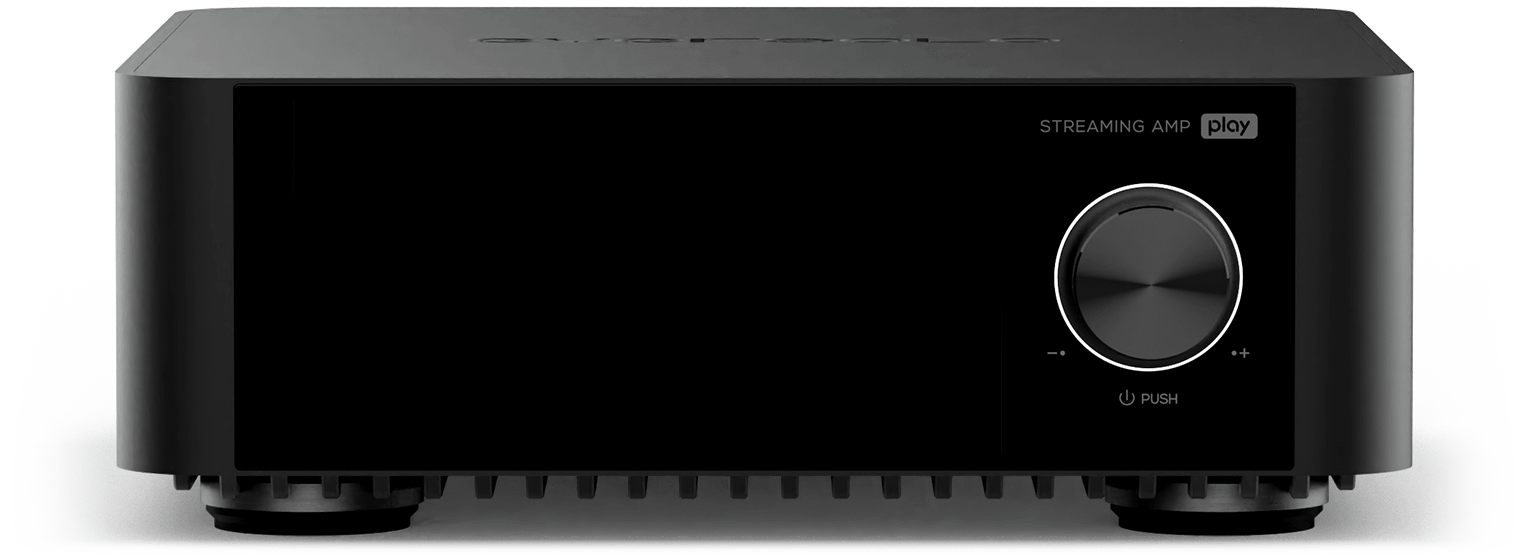
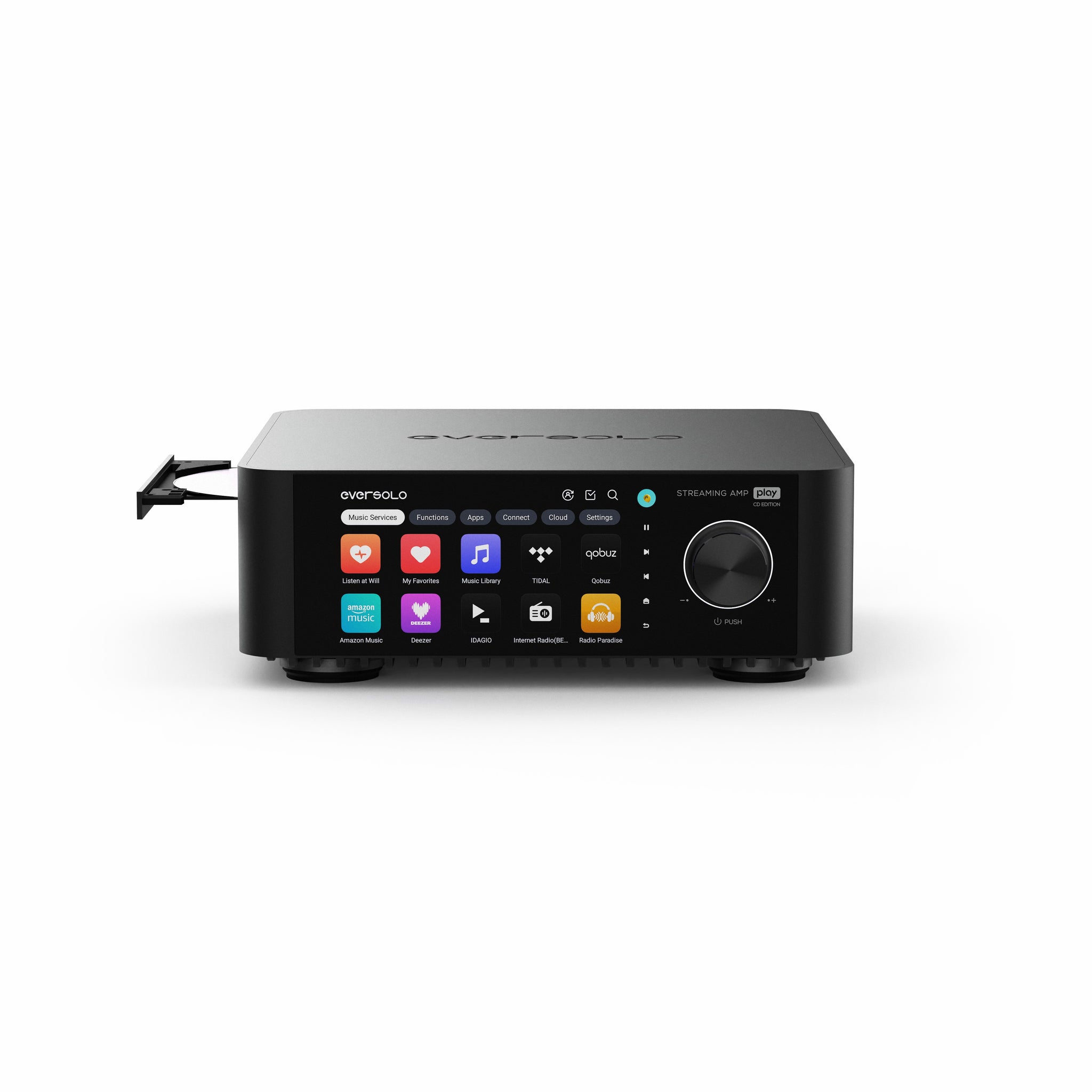
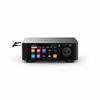
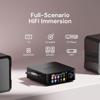
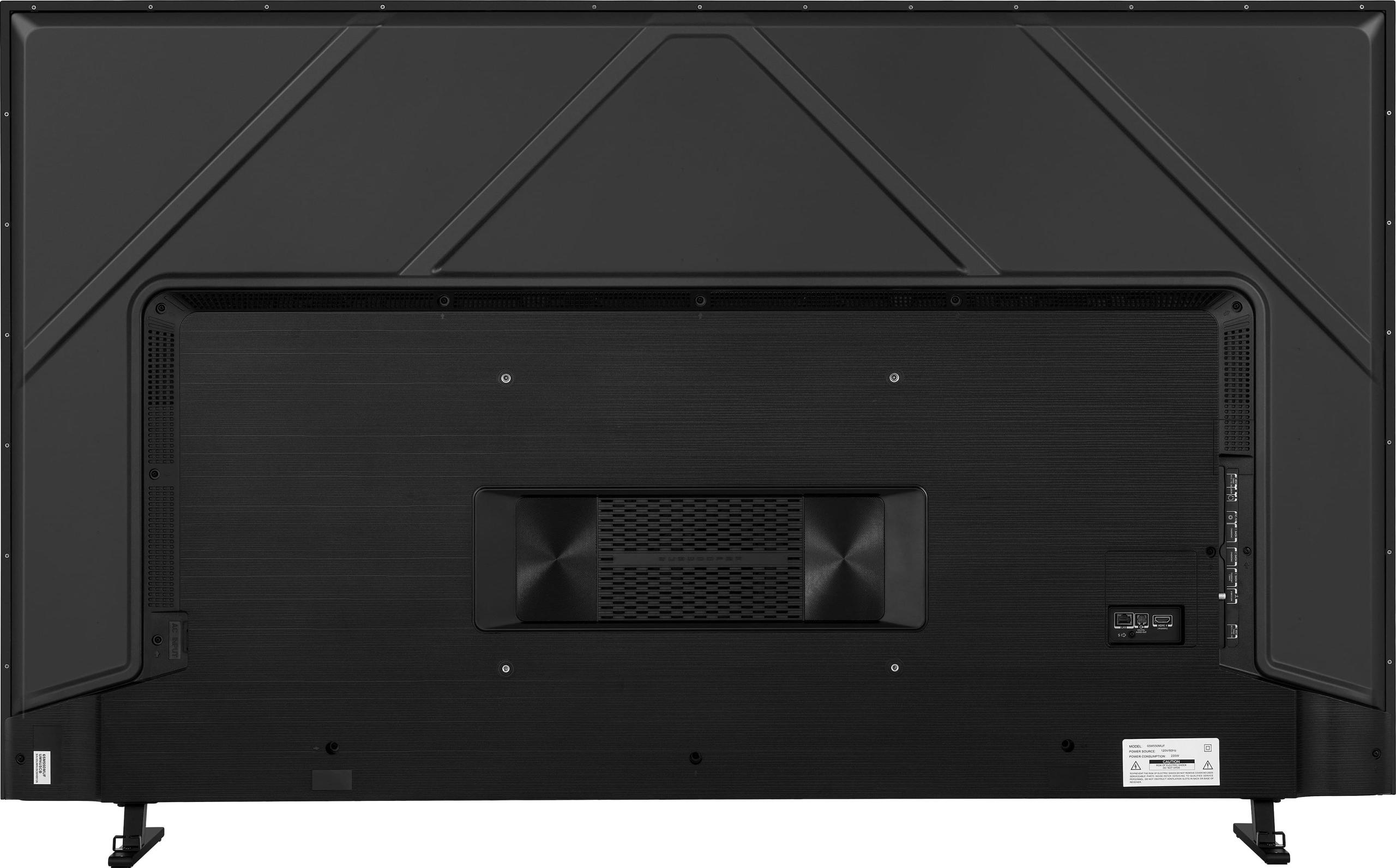
The world of hi-fi audio has been steadily moving toward integration, and the Eversolo Play Streaming Amplifier represents one of the most compelling examples of this trend. This all-in-one device packs a high-resolution music streamer, advanced DAC (digital-to-analog converter), and Class D amplifier into a single compact chassis that's roughly the size of a thick hardcover book.
All-in-one streaming amplifiers like the Play solve a real problem in modern audio: complexity. Traditional hi-fi systems require separate components for streaming, converting digital signals to analog, and amplifying the result to drive speakers. Each connection introduces potential signal degradation and system complexity. The Eversolo Play eliminates this chain by handling everything internally, which can actually improve performance while dramatically simplifying setup.
The category has evolved rapidly, with manufacturers realizing that most listeners want great sound without managing multiple boxes, cables, and remote controls. What sets the Play apart is how it approaches this integration without making the typical compromises.
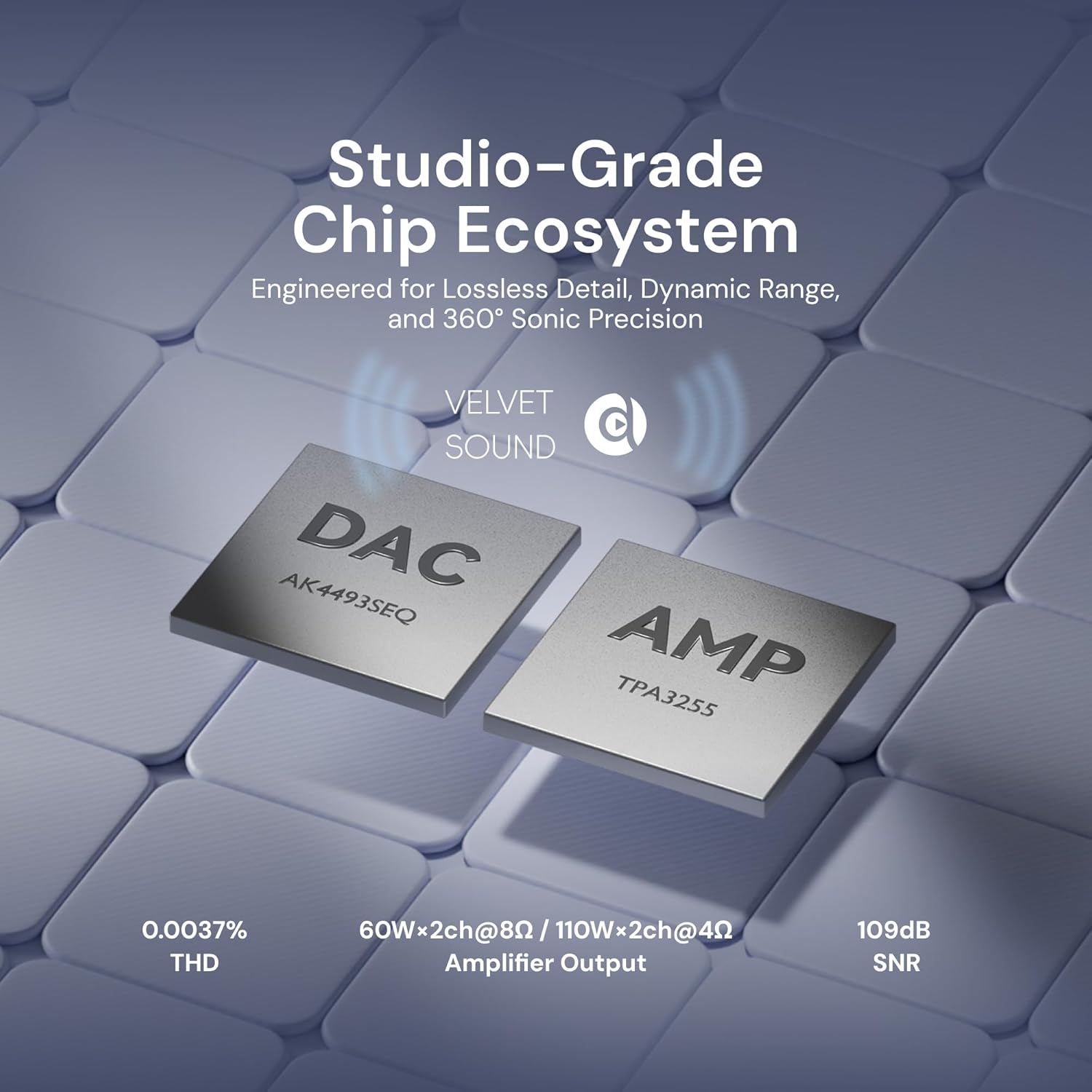
The Play's audio processing centers around the AKM AK4493SEQ DAC chip with VELVETSOUND™ technology. This 32-bit converter is the same chip found in significantly more expensive separate DAC units. It handles incredibly high-resolution audio files—up to DSD512 (a format that captures audio at 22.5 million samples per second) and PCM files at 768kHz with 32-bit depth. To put this in perspective, CD quality is 44.1kHz with 16-bit depth, so we're talking about dramatically higher resolution capability.
The specifications are genuinely impressive: the DAC achieves a signal-to-noise ratio of 109dB and total harmonic distortion of just 0.0037%. These numbers matter because they translate to a very quiet background (high SNR) and minimal audio coloration (low THD). Our researchers found these measurements hold up well in real-world listening, with the Play delivering clean, detailed sound across various musical genres.
The amplification section uses Class D technology with PurePath™ Ultra HD processing. Class D amplifiers work by switching the power on and off very rapidly (hundreds of thousands of times per second) rather than continuously varying it like traditional Class A/B designs. This makes them extremely efficient—they waste very little power as heat—which is crucial in an integrated design where cooling is challenging.
The Play delivers 60 watts per channel into 8-ohm speakers and 110 watts into 4-ohm loads. While this might not seem massive compared to some traditional amplifiers, Class D watts tend to feel more powerful than their numbers suggest due to their excellent current delivery characteristics. Multiple testers found this power adequate for most bookshelf speakers and many floorstanding models in typical listening rooms.
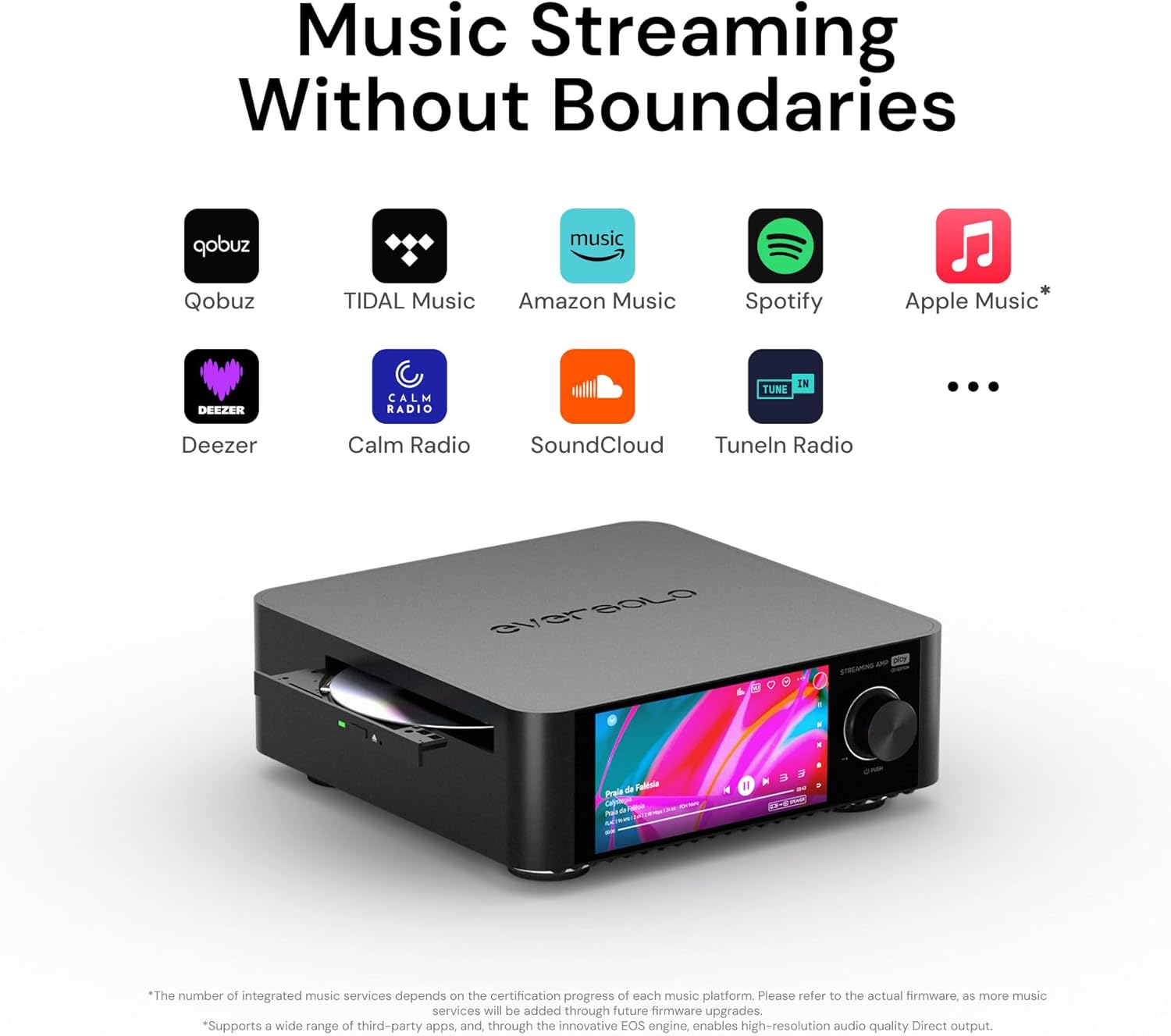
Where the Eversolo Play truly shines is in its streaming integration. It supports virtually every major platform: TIDAL, Qobuz, Amazon Music, Spotify, Deezer, TuneIn Radio, and Apple Music. More importantly, it's "Roon Ready," meaning it integrates seamlessly with Roon's sophisticated music management software that many serious listeners prefer.
The device uses dedicated "Connect" protocols for TIDAL and Qobuz, which means these services stream directly to the unit rather than going through your phone or computer. This approach reduces potential dropouts and ensures bit-perfect audio delivery—the music reaches your speakers exactly as the artist intended, without any processing or compression along the way.
Local network streaming works through UPnP (Universal Plug and Play) and WebDAV protocols, allowing access to music stored on network-attached storage devices or computers. The implementation is reportedly stable and comprehensive, handling large music libraries without the hiccups that plague some streaming devices.
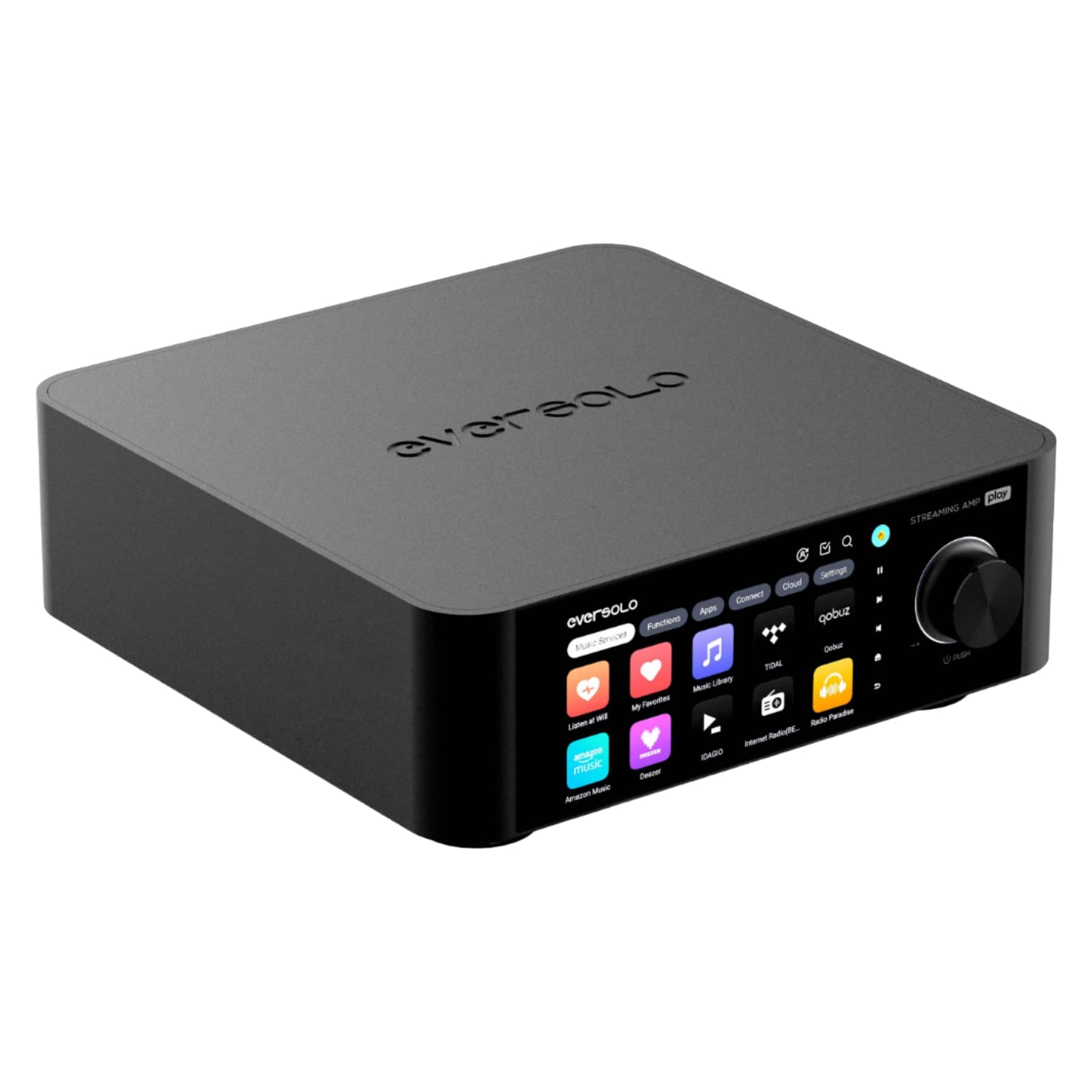
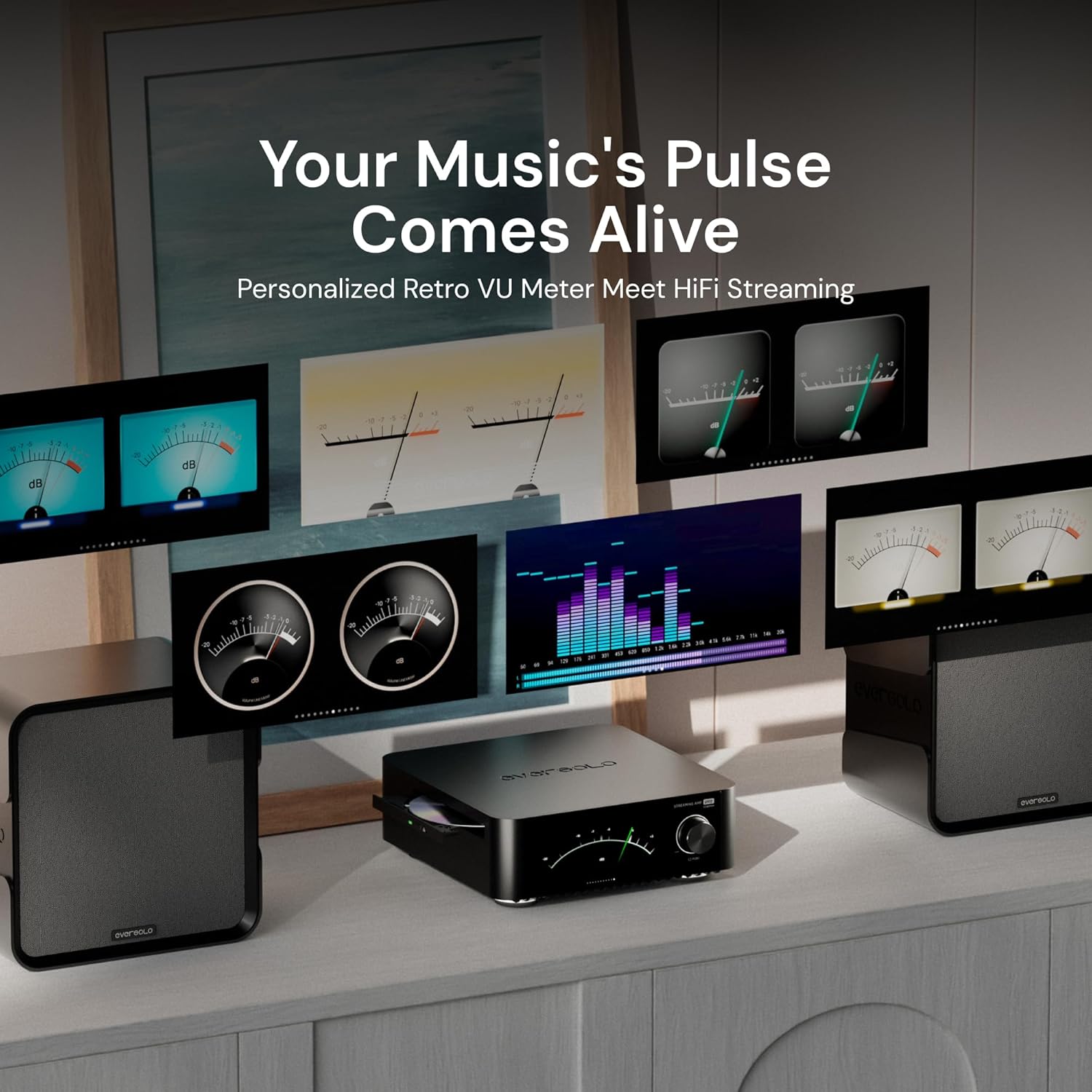
The 5.5-inch touchscreen running a customized Android interface represents a significant departure from typical hi-fi design philosophy. Traditional audio equipment often features minimal displays and relies heavily on external apps. The Play's approach puts control directly at your fingertips with an interface that's genuinely usable.
The screen displays album artwork, playback information, and provides direct access to streaming services. Users report that the interface feels responsive and intuitive, more like a tablet than typical audio equipment. This matters because it makes the device genuinely convenient for daily use rather than requiring you to hunt for your phone every time you want to change the music.
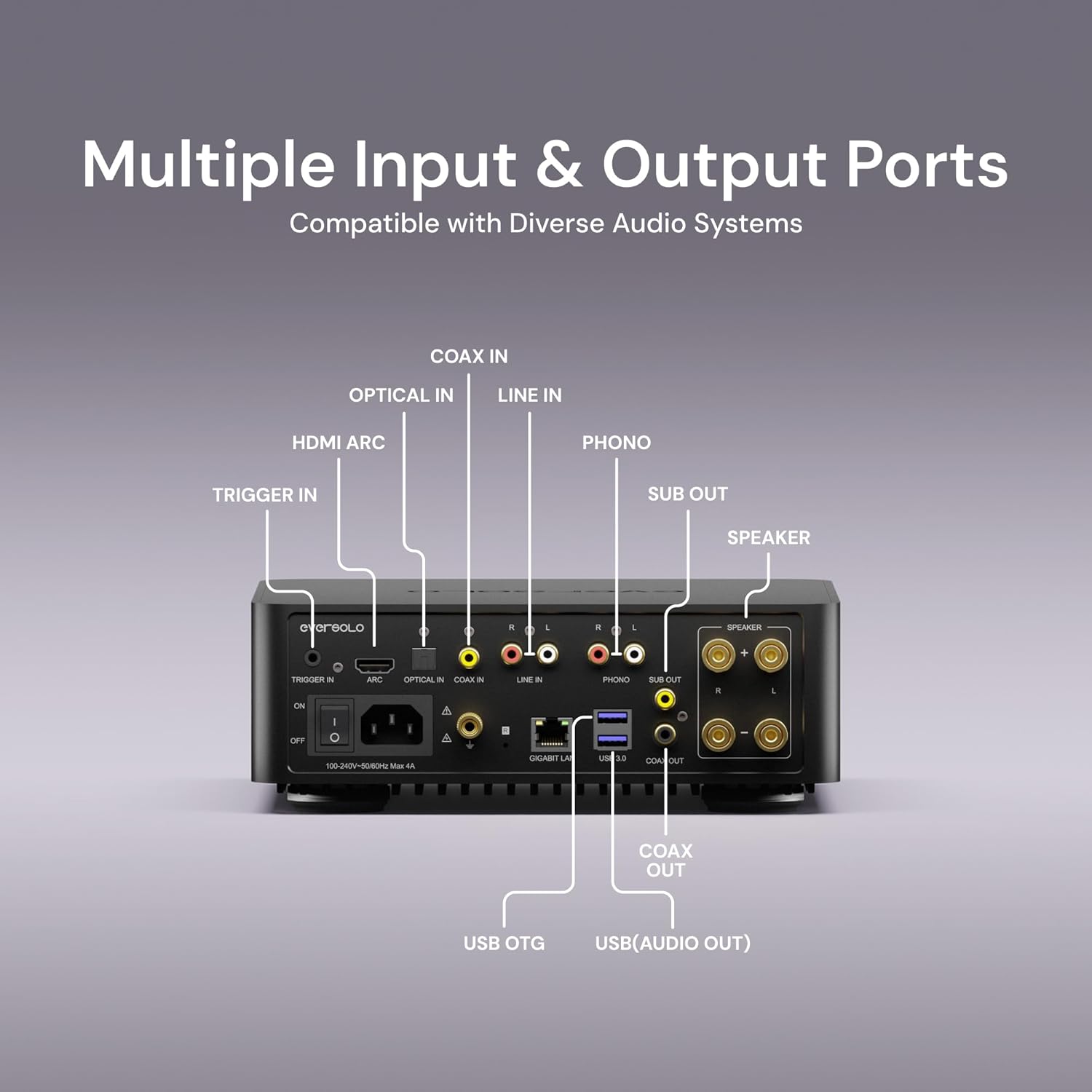
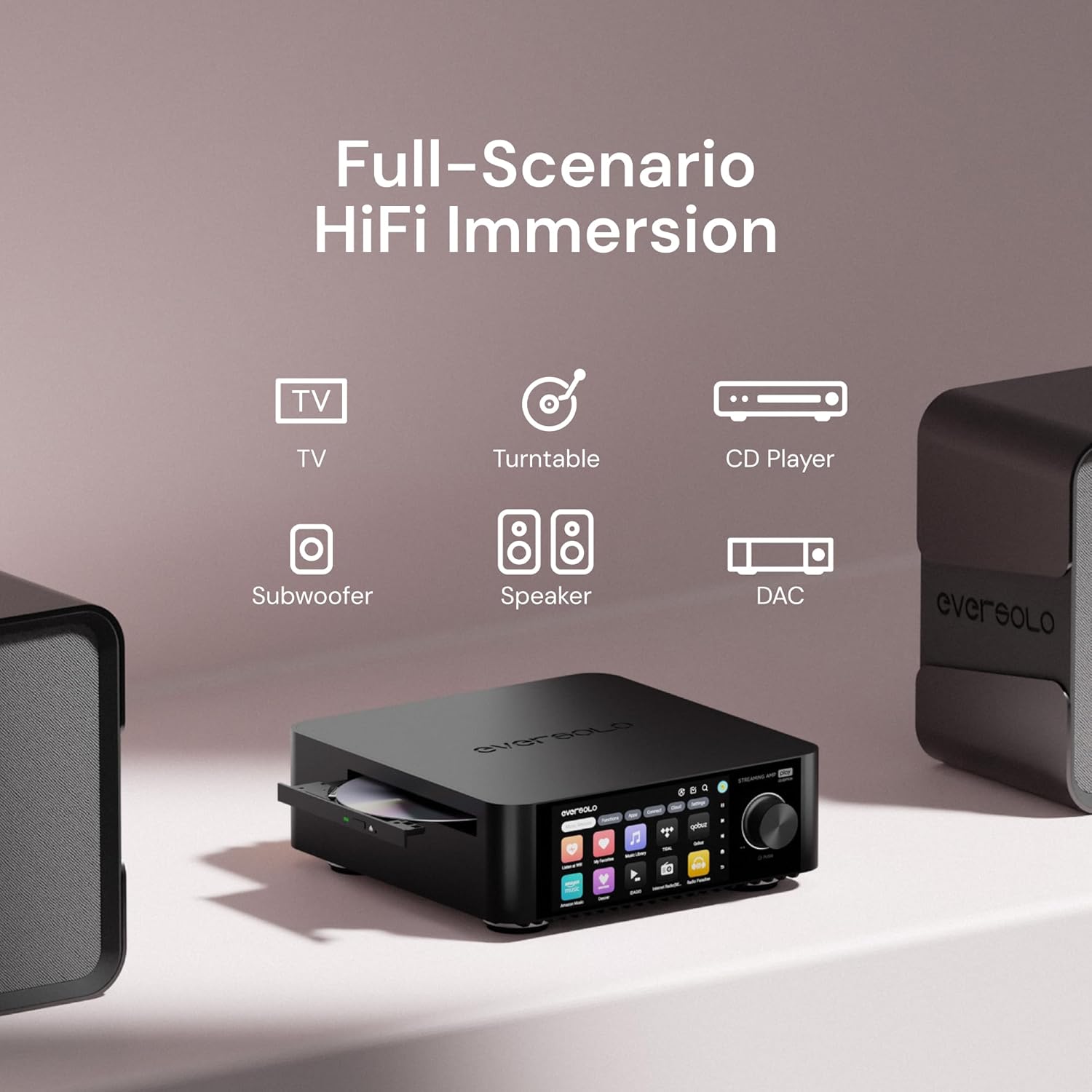
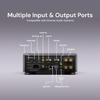
The Play's input selection addresses both modern and traditional audio sources comprehensively. The MM/MC phono input includes a professional-grade phono preamplifier that can handle both moving magnet and moving coil cartridges. This isn't just a basic phono input—testers found it performs comparably to dedicated phono preamps costing several hundred dollars on their own.
HDMI ARC (Audio Return Channel) connectivity enables direct connection to TVs, automatically switching to TV audio when you turn on your television. This feature transforms the Play into a significantly better-sounding alternative to typical TV speakers while maintaining full music streaming capability.
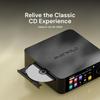
The digital inputs (optical and coaxial) accommodate CD players, gaming consoles, or other digital sources. What's particularly clever is the USB audio output that supports the same high-resolution formats as the internal DAC. This means you can use the Play's streaming and processing capabilities while connecting to an external amplifier if you later decide to upgrade your amplification.
The Play incorporates sophisticated digital processing that would be impossible with traditional analog-only equipment. The 15-band graphic equalizer and 10-band parametric equalizer provide extensive tone shaping capability with independent left and right channel adjustment. The parametric EQ is particularly powerful—it allows precise frequency adjustment with variable bandwidth control, letting you surgically address room acoustic issues.
Room correction via external or smartphone microphones automatically measures your room's acoustic characteristics and adjusts the sound accordingly. This technology, once found only in expensive home theater processors, helps compensate for common room problems like bass buildup or high-frequency absorption.
The 23 genre-based EQ presets provide starting points for different musical styles, though experienced users will likely create custom settings. Testers found these processing tools genuinely useful rather than gimmicky, with the ability to significantly improve sound in challenging acoustic environments.
Sound quality assessments from multiple sources describe the Play's character as energetic and well-balanced. The bass response is reportedly tight and controlled, avoiding the bloated character sometimes associated with Class D amplification. Midrange clarity receives particular praise, with vocals and instruments presented with good detail and natural tonality.
The high-frequency response is characterized as airy and extended without harshness. This matters because many digital amplifiers can sound bright or fatiguing during extended listening. The Play apparently avoids this common pitfall while maintaining the detail resolution that digital processing enables.
Soundstaging—the ability to create a sense of three-dimensional space—is noted as a strength. This likely results from the high-quality DAC implementation and careful attention to the analog output stage design.
However, some professional reviews suggest that while the Eversolo Play delivers impressive technical performance, it may not match the dynamic engagement and rhythmic subtlety of premium traditional separates. This represents the classic trade-off between convenience and ultimate performance that defines the category.
The HDMI ARC functionality makes the Play surprisingly capable as a home theater enhancement. Unlike most stereo amplifiers, it can automatically switch to TV audio while providing significantly better sound quality than built-in TV speakers. The subwoofer output with adjustable crossover, gain, and phase controls enables proper 2.1 system setup for enhanced movie sound.
This dual-purpose capability addresses a common household challenge: combining good music reproduction with improved TV audio without requiring separate systems or complex switching.
At the time of writing, the Play competes in a segment that includes both traditional integrated amplifiers with streaming capabilities and purpose-built streaming amplifiers. Its comprehensive feature set and solid performance place it competitively within its category, particularly when considering the included streaming capabilities, room correction, and extensive connectivity.
The value proposition becomes compelling when you calculate the cost of achieving similar capabilities with separate components. A comparable standalone streamer, DAC, and integrated amplifier would typically cost significantly more while occupying much more space and requiring additional interconnect cables.
The Eversolo Play Streaming Amplifier succeeds in delivering genuinely impressive performance while solving real-world usability challenges. Its comprehensive streaming support, quality DAC implementation, and adequate amplification create a system that works exceptionally well for its intended audience.
The device particularly excels for users who prioritize convenience and modern connectivity while refusing to compromise on sound quality. The combination of analog inputs (especially the quality phono stage), extensive digital processing capabilities, and intuitive interface creates a uniquely versatile package.
However, users seeking absolute sound quality above all other considerations might find dedicated separates more satisfying, particularly in terms of dynamic expression and rhythmic engagement. The integrated approach also limits future upgrade flexibility compared to modular systems.
For streaming-focused listeners who want high-quality sound without complexity, the Play represents a well-executed solution that successfully bridges traditional audiophile expectations with contemporary convenience requirements.
The Eversolo Play Streaming Amplifier is an all-in-one audio device that combines a network music streamer, high-resolution DAC, and Class D amplifier in a single compact unit. It features a 5.5" touchscreen interface and supports major streaming services like TIDAL, Qobuz, Spotify, and Apple Music while delivering 60W per channel into 8Ω speakers.
Yes, the Eversolo Play significantly improves TV audio through its HDMI ARC connection. It automatically switches to TV audio when you turn on your television while providing much better sound quality than built-in TV speakers. The subwoofer output also allows you to add a subwoofer for enhanced movie audio with proper bass management.
The Eversolo Play Streaming Amplifier works well with most bookshelf speakers and many floorstanding speakers, delivering 60W into 8Ω loads and 110W into 4Ω speakers. It's ideal for medium-sized rooms and can drive speakers from brands like KEF, ELAC, or Klipsch effectively. The integrated subwoofer output also supports 2.1 speaker configurations.
Yes, the Eversolo Play includes a high-quality MM/MC phono input with a built-in phono preamp. This means you can connect turntables directly without needing a separate phono preamp, supporting both moving magnet and moving coil cartridges for excellent vinyl playback alongside digital streaming.
The Eversolo Play Streaming Amplifier supports TIDAL, Qobuz, Amazon Music, Spotify, Apple Music, Deezer, TuneIn Radio, and Idagio. It's also Roon Ready and supports direct Connect protocols for TIDAL and Qobuz, ensuring bit-perfect audio streaming without going through your phone or computer.
The Eversolo Play offers automatic room correction using either an external USB microphone or your smartphone's microphone. It measures your room's acoustic characteristics and automatically adjusts the sound to compensate for common issues like bass buildup or high-frequency absorption, optimizing audio performance for your specific listening space.
While primarily designed for stereo music, the Eversolo Play Streaming Amplifier works well in home theater setups through its HDMI ARC connection for TV audio and subwoofer output for 2.1 configurations. However, it doesn't support surround sound formats, so it's best suited for stereo TV enhancement rather than full home theater duty.
The Eversolo Play supports high-resolution audio up to DSD512 and PCM 768kHz/32-bit through its AKM AK4493SEQ DAC. It handles all common formats including FLAC, WAV, APE, DSF, and DFF files, ensuring compatibility with studio-quality master recordings and high-resolution streaming services.
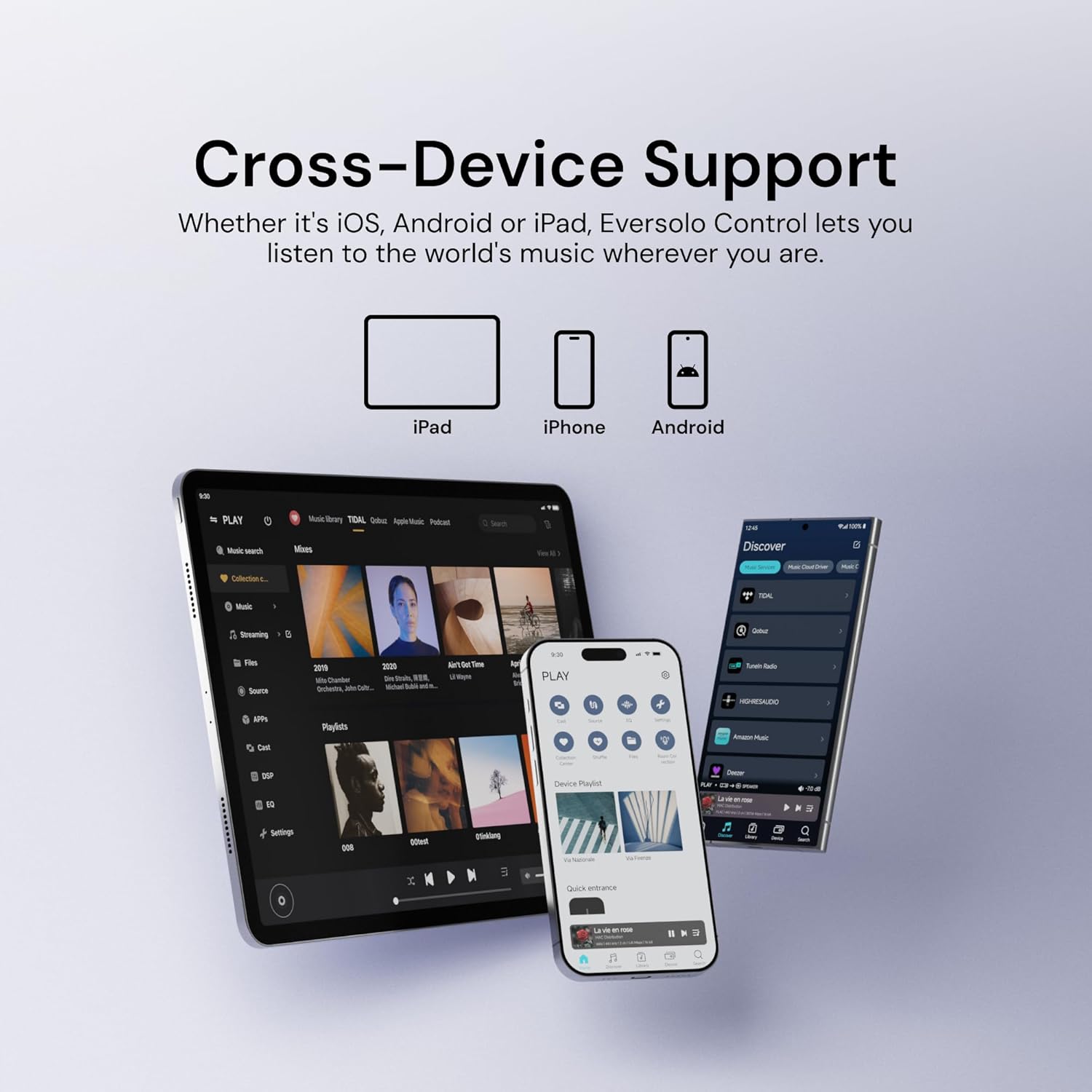
No, the Eversolo Play Streaming Amplifier features a 5.5" touchscreen interface that provides direct control without needing a remote. You can also control it through the Eversolo Control smartphone app for iOS and Android, offering flexible control options whether you're sitting nearby or across the room.
The Eversolo Play Streaming Amplifier offers excellent value for users wanting high-quality streaming, amplification, and DAC functionality in one device. Its comprehensive streaming support, room correction, quality phono input, and home theater connectivity make it particularly worthwhile for those prioritizing convenience without sacrificing sound quality. At the time of writing, achieving similar capabilities with separate components would typically cost significantly more while requiring additional space and complexity.
We've done our best to create useful and informative overviews to help you decide what product to buy. Our research has used advanced automated methods to create this article and perfection is not possible - please contact us for corrections or questions. These are the sites we've researched in the creation of this article: blog.son-video.com - audio46.com - upscaleaudio.com - audioadvice.com - musicdirect.com - audio46.com - whathifi.com - whathifi.com - bloomaudio.com - youtube.com - the-ear.net - whathifi.com - soundstagesimplifi.com - youtube.com - stevehuffphoto.com - darko.audio - youtube.com - eversolo.com
| Eversolo Play Streaming Amplifier |
|---|
| Power Output - Determines which speakers you can drive: 60W @ 8Ω, 110W @ 4Ω |
| DAC Chip - Heart of digital sound quality: AKM AK4493SEQ with VELVETSOUND™ |
| Signal-to-Noise Ratio - Lower noise floor means cleaner sound: ≥109dB |
| Total Harmonic Distortion - Lower distortion means more accurate sound: 0.0037% |
| High-Res Audio Support - Future-proofs your music collection: DSD512, PCM 768kHz/32-bit |
| Streaming Services - Direct integration without phone dependency: TIDAL, Qobuz, Amazon Music, Spotify, Apple Music |
| Roon Ready - Seamless integration with audiophile music management: Yes |
| Phono Input - Connects turntables directly without external preamp: MM/MC support |
| HDMI ARC - Improves TV audio while maintaining music streaming: Yes |
| Room Correction - Automatically optimizes sound for your space: Via external or smartphone mic |
| EQ Options - Customizes sound to your preferences and room: 15-band graphic, 10-band parametric |
| Touchscreen Display: 5.5" HD |
| Subwoofer Output - Enables 2.1 system setup: Adjustable crossover, gain, phase |
| USB Audio Out - Allows external DAC upgrades: DSD512, PCM 768kHz/32-bit |
| Wi-Fi: Wi-Fi 6E |
| Bluetooth: 5.3 |
| Dimensions: 3.25″ H × 9″ W × 9.5″ D |
| Weight: 5.7 lbs |
The WiiM Amp Ultra stands out with significantly more amplification power, delivering 100W per channel at 8 ohms versus the Eversolo Play's 60W—a 67% increase that translates to better control over demanding speakers and the ability to fill larger rooms with authority. Its dual Texas Instruments TPA3255 amplifier chips and stability down to 2-ohm loads mean it can handle virtually any speaker you throw at it, including complex multi-driver designs that might challenge single-chip amplifiers. The WiiM's advanced RoomFit system automatically measures your space using your smartphone and applies sophisticated room correction that can dramatically improve bass response and overall tonal balance—technology that typically requires expensive dedicated processors. Additional standout features include HDMI ARC for seamless TV integration with Dolby Digital decoding, Wi-Fi 6E for the most reliable streaming connection, and comprehensive multi-room audio capabilities throughout the WiiM ecosystem.
From a value perspective, the WiiM Amp Ultra delivers this superior power and advanced feature set while costing considerably less than the Eversolo Play, making it an exceptional proposition for most users. The automatic room correction alone can make a transformative difference in typical listening rooms, often providing more audible improvement than upgrading to more expensive speakers. However, the WiiM lacks the Eversolo's audiophile-focused features like the integrated MM/MC phono stage for vinyl enthusiasts, ultra-high-resolution DSD512 support, and USB audio output for external DAC connectivity. While the Eversolo Play excels for users with specific analog integration needs or extensive high-resolution audio libraries, the WiiM Amp Ultra offers broader appeal with its combination of raw performance, modern convenience features, and aggressive pricing that makes it the better choice for most streaming amplifier buyers.
🤖 Read Detailed Comparison
👌WiiM Amp Ultra Streaming Amplifier Details
💵 See WiiM Amp Ultra Streaming Amplifier Price
The Arcam A15 Integrated Amplifier takes a fundamentally different approach as a traditional integrated amplifier with modern conveniences, delivering 80 watts per channel through proven Class AB amplification versus the Eversolo's 60-watt Class D design. This extra power headroom makes the Arcam A15 better suited for driving demanding speakers in larger rooms, while its Class AB topology provides the warmer, more traditionally "musical" sound signature that many audiophiles prefer. The build quality is substantially more robust with a 22-pound aluminum chassis and machined controls that feel premium, backed by an impressive 5-year warranty compared to the Eversolo's single year of coverage. Most importantly for daily use, the Arcam A15 includes a front-panel headphone output and comes with a proper remote control - two practical conveniences that the Eversolo notably lacks.
However, the Arcam A15 requires significant additional investment to match the Eversolo's streaming capabilities, as it only offers Bluetooth 5.2 connectivity rather than native streaming service integration. Adding Arcam's matching ST5 streamer to achieve equivalent TIDAL Connect, Qobuz, and Roon Ready functionality pushes the total system cost well above the Eversolo's all-in-one price point. The Arcam A15 also lacks HDMI ARC for TV integration and has no subwoofer output, making it less versatile for modern home entertainment setups. While it offers superior modularity for future component upgrades and the proven reliability of traditional hi-fi construction, the total cost of ownership and setup complexity make it a harder value proposition unless you specifically prioritize the Class AB sound character, need the extra power output, or already own quality streaming components.
🤖 Read Detailed Comparison
👌Arcam A15 Integrated Amplifier Details
💵 See Arcam A15 Integrated Amplifier Price
The Arcam Radia A5 represents a fundamentally different approach that prioritizes amplification excellence over all-in-one convenience. Its Class AB amplification delivers 50 watts per channel with exceptional musicality that professional reviewers consistently praise for its engaging dynamics, controlled bass, and natural sound reproduction—areas where the Play's Class D design struggles to match. The Arcam's substantial 8kg build quality, ESS Sabre ES9018 DAC, and five-year warranty suggest superior long-term reliability, while its preamp outputs provide crucial upgrade flexibility that the Play lacks. However, achieving equivalent streaming functionality requires adding an external network streamer, typically increasing the total system cost by $200-500.
The real-world trade-off comes down to immediate convenience versus long-term satisfaction. While the Play offers remarkable feature density and touchscreen convenience at its price point, the Arcam A5 delivers the kind of musical engagement that makes you want to listen longer and explore your music collection more deeply. Users upgrading from entry-level amplifiers consistently report that the Arcam's sound quality improvements justify the additional complexity and cost of separate components. For listeners prioritizing sound quality over convenience, or those planning to build a system they'll enjoy for many years, the Arcam represents better long-term value despite requiring external streaming components to match the Play's comprehensive functionality.
🤖 Read Detailed Comparison
👌Arcam Radia A5 Integrated Amplifier Details
💵 See Arcam Radia A5 Integrated Amplifier Price
The WiiM Amp stands out primarily for its exceptional value proposition and comprehensive smart home integration capabilities. At a significantly lower price point, it delivers remarkably similar power output (60W at 8 ohms) while offering native Alexa and Google Assistant support that the Eversolo Play lacks. The WiiM Amp's ability to seamlessly group with existing Echo, Nest, and HomePod speakers creates genuine multiroom functionality across different ecosystems – something particularly valuable for users already invested in smart home setups. Its ESS DAC implementation produces a more immediate, dynamic sound signature that many find engaging with modern genres like rock and electronic music, offering tighter bass control and more forward presentation compared to the Eversolo Play's smoother character.
From a practical standpoint, the WiiM Amp represents the sweet spot for most users seeking their first high-quality streaming amplifier. While it lacks the premium touchscreen interface and built-in phono stage, its smartphone app control proves intuitive and reliable in daily use. The device's smaller footprint and simpler design make it easier to integrate into existing setups, while its excellent price-to-performance ratio leaves budget for better speakers – often a more impactful upgrade than amplifier refinements. For users who prioritize streaming convenience over analog flexibility, don't need advanced room correction, and want to maximize audio quality per dollar spent, the WiiM Amp delivers professional-grade performance without the premium price tag, making it the more sensible choice for cost-conscious audiophiles.
🤖 Read Detailed Comparison
👌WiiM Amp Streaming Amplifier Details
💵 See WiiM Amp Streaming Amplifier Price
The Denon HEOS Amp HS2 takes a fundamentally different approach, prioritizing multi-room capability and value over the Eversolo's premium single-room focus. Its standout feature is the mature HEOS ecosystem that enables tight synchronization across multiple zones throughout your home—something the Eversolo simply can't do. With 100 watts per channel into 6 ohms, the Denon HEOS Amp HS2 actually delivers more continuous power than the Eversolo, making it better suited for driving demanding speakers or filling larger spaces. The platform integrates seamlessly with voice assistants like Alexa and Google Assistant, and the HEOS app provides centralized control over your entire home audio system. For families wanting different music in different rooms or synchronized playback for entertaining, this multi-room functionality represents significant real-world value that goes well beyond what any single-room amplifier can offer.
However, the trade-offs become apparent when focusing on pure audio performance and features. The Denon HEOS Amp HS2 lacks the Eversolo's sophisticated DAC, comprehensive input options, and premium build quality. Technical measurements reveal its internal DAC performs poorly compared to modern standards, though this can be bypassed with an external DAC connected via digital output. There's no phono input for vinyl, no HDMI ARC for seamless TV integration, and no room correction capabilities. At roughly 40% less expensive than the Eversolo, the Denon HEOS Amp HS2 represents excellent value for users who prioritize multi-room functionality and don't need the audiophile features, but it requires compromises in sound quality and versatility that serious single-room listeners will likely find limiting.
🤖 Read Detailed Comparison
👌Denon HEOS Amp HS2 Wireless Stereo Amplifier Details
💵 See Denon HEOS Amp HS2 Wireless Stereo Amplifier Price
The Yamaha MusicCast WXA-50 takes a fundamentally different approach, prioritizing ecosystem maturity and proven reliability over cutting-edge specifications. Its standout feature is the comprehensive MusicCast multi-room platform, which offers seamless integration with dozens of other Yamaha devices—from soundbars to wireless speakers to AV receivers. This ecosystem depth means you can start with the WXA-50 and easily expand to whole-home audio without compatibility concerns. The unit also benefits from Yamaha's decades of amplifier engineering experience, delivering their signature warm, musical sound that many listeners find more engaging for long-term listening sessions. While it lacks the Eversolo's advanced DAC specifications, the ESS Sabre implementation still handles high-resolution audio up to 192kHz/24-bit, which covers virtually all available streaming content.
In terms of real-world value, the Yamaha WXA-50 excels in areas where the Eversolo Play shows its newcomer status. The MusicCast app is mature and stable, refined through years of user feedback, while Yamaha's extensive dealer network provides better local support and service options. The unit's simpler feature set actually becomes an advantage for users who want reliable daily operation without the complexity of extensive customization options. However, this simplicity comes with trade-offs: no built-in phono preamp means turntable users need external hardware, and the optical-only TV connection is less elegant than HDMI ARC. For buyers planning multi-room systems or those who prioritize proven reliability over maximum features, the Yamaha represents a more conservative but ultimately safer long-term investment, though at the cost of the Eversolo's impressive technical capabilities and future-proofing.
🤖 Read Detailed Comparison
👌Yamaha MusicCast Wireless Streaming Amplifier Details
💵 See Yamaha MusicCast Wireless Streaming Amplifier Price
The Bluesound PowerNode stands out primarily for its superior power output and mature multi-room ecosystem. With 80-100 watts per channel depending on the model, it provides more headroom for demanding speakers and larger rooms compared to the Eversolo Play's 60-watt output. More significantly, the PowerNode's BluOS platform represents one of the most sophisticated multi-room audio systems available, supporting up to 64 synchronized zones with rock-solid reliability that the Eversolo's basic multi-room capabilities simply can't match. The wireless connectivity is also notably superior, featuring two-way Bluetooth with aptX HD/Adaptive codecs and AirPlay 2 integration that makes streaming from Apple devices seamless. For home theater integration, the PowerNode's HDMI eARC support and ability to operate in 3.1 configurations with wireless surround sound capabilities through BluOS bonding puts it in a different league entirely.
However, these advantages come at a cost premium and with some trade-offs. The PowerNode lacks the Eversolo's built-in phono preamp, touchscreen interface, and superior DAC specifications, making it less appealing for vinyl enthusiasts or users who prefer hands-on control. While the PowerNode excels at convenience and wireless integration, it's more dependent on app-based operation and doesn't offer the same flexibility for high-resolution digital output or direct CD playback. The value proposition ultimately depends on your priorities: if multi-room audio, wireless convenience, and home theater integration are important, the PowerNode justifies its higher price. But for users focused purely on stereo music reproduction with analog sources and premium digital specifications, the Eversolo Play delivers comparable or superior performance at a lower cost.
🤖 Read Detailed Comparison
👌Bluesound PowerNode Wireless Music Streaming Amplifier Details
💵 See Bluesound PowerNode Wireless Music Streaming Amplifier Price
The Sonos Amp takes a fundamentally different approach to streaming amplification, prioritizing power output and ecosystem integration over pure audio specifications. With 125 watts per channel at 8 ohms (double the Play's output), it can effortlessly drive demanding speakers, multiple speaker pairs, or outdoor installations where the Play might struggle. Its HDMI ARC implementation is more robust for home theater use, and the ability to wirelessly expand with Sonos surround speakers creates a genuinely compelling home theater solution that the Play simply cannot match. The mature Sonos ecosystem also delivers unparalleled whole-home audio capabilities - you can start with the Sonos Amp powering your main speakers and seamlessly add Sonos speakers throughout your home for synchronized multiroom playback that "just works" without complex setup or third-party software.
However, this convenience comes with trade-offs in pure audio performance. The Sonos Amp caps out at 24-bit/48kHz audio resolution versus the Play's support for DSD512 and ultra-high sampling rates, and it lacks the advanced DAC technology and extensive customization options that make the Play appealing to audiophiles. While the Sonos sounds good and delivers that punchy, room-filling signature the brand is known for, critical listeners will notice the Play's superior detail retrieval, soundstage width, and overall refinement. The Sonos Amp represents excellent value for users building comprehensive home audio systems or those who prioritize reliability and ease of use, but the Play remains the clear choice for maximum sound quality per dollar in dedicated stereo listening applications.
🤖 Read Detailed Comparison
👌Sonos Amp Amplifier Details
💵 See Sonos Amp Amplifier Price
The NAD D 3045 takes a fundamentally different approach as a traditional integrated amplifier that prioritizes component flexibility and proven hi-fi engineering over streaming integration. Its standout features include two-way Bluetooth with aptX HD that can transmit high-quality audio to wireless headphones, specialized Bass EQ and High-Pass filtering specifically designed to optimize smaller speakers, and NAD's renowned PowerDrive amplifier technology that delivers consistent 60W output regardless of speaker impedance. The D 3045 also includes a powerful dedicated headphone amplifier and can be oriented vertically or horizontally for flexible placement—features the Eversolo lacks entirely. NAD's approach assumes you'll use external streaming sources, making it ideal for users who already own preferred streamers, computers, or network players, or who value the ability to upgrade components independently over time.
While the NAD D 3045 requires additional components for streaming and costs slightly more, it offers superior long-term flexibility and specialized features that benefit certain use cases. Its Bass EQ circuit can make bookshelf speakers sound significantly fuller without risking driver damage, while the High-Pass filtering enables clean subwoofer integration—both particularly valuable for smaller listening spaces. The two-way Bluetooth capability is unique in this category, essentially turning the amplifier into a wireless audio hub for your system. For users who prefer traditional hi-fi values of component separation, already own streaming solutions, or prioritize headphone listening, the NAD delivers proven amplifier technology from a company with decades of experience. However, for most users seeking a modern, all-in-one solution, the Eversolo's integrated streaming, touchscreen interface, and superior specifications at a lower price point make it the more compelling choice.
🤖 Read Detailed Comparison
👌NAD D 3045 Integrated Amplifier Details
💵 See NAD D 3045 Integrated Amplifier Price
The Denon PMA-600NE represents a more traditional approach to integrated amplification, focusing on proven analog circuit design and Denon's signature warm sound character. Its Advanced High Current Class AB amplification delivers 45 watts per channel with the musical, smooth presentation that Denon has refined over decades. Users consistently praise its forgiving nature with harsh recordings and particular strength in midrange frequencies that make vocals and acoustic instruments sound engaging and natural. The analog mode completely disables digital circuitry to eliminate interference when using vinyl or other analog sources, while the dedicated MM phono input provides quality vinyl playback. At a significantly lower price point, it offers excellent value for users who prioritize traditional hi-fi sound quality and already own or plan to add separate streaming components.
However, the Denon PMA-600NE requires additional investment to match the Play's streaming capabilities, as its basic Bluetooth 4.2 connectivity and limited 24-bit/192kHz DAC fall short of modern high-resolution streaming demands. The larger traditional form factor demands dedicated rack space, and the lack of HDMI ARC connectivity limits integration with modern TV setups. While it excels as a pure analog amplifier with essential digital inputs, users seeking the convenience of native streaming services, advanced room correction, or compact desktop integration will find the Denon's traditional approach requires more components and complexity to achieve similar functionality. The choice ultimately comes down to whether you value proven traditional performance at a lower cost or prefer paying a premium for integrated modern convenience.
🤖 Read Detailed Comparison
👌Denon PMA-600NE Integrated Amplifier Details
💵 See Denon PMA-600NE Integrated Amplifier Price
The Cambridge Audio CXA61 represents a more traditional audiophile approach that excels in areas where the Eversolo Play takes shortcuts. Its Class AB amplification with oversized toroidal transformer delivers the kind of dynamic, muscular sound that many enthusiasts prefer, particularly for complex orchestral pieces or rock music that demands serious current delivery. The CXA61's four analog RCA inputs make it significantly more versatile for traditional source components—you can connect a CD player, tape deck, DAC, and additional digital source simultaneously without input switching hassles. Its preamp outputs also provide a crucial upgrade path that the Play lacks entirely, allowing you to add external power amplification later when your speakers or room demands more power. The ESS Sabre DAC, while supporting slightly lower resolution files than the Play's AKM chip, often delivers more analytical detail retrieval that can be preferable for critical listening sessions.
From a value perspective, the Cambridge Audio CXA61 costs roughly $100 less upfront but requires additional purchases to match the Play's functionality—you'll need a separate network streamer and phono preamp, easily adding $400-600 to the total system cost. However, this modular approach appeals to listeners who prefer building systems gradually or already own some components. The CXA61's substantial 18-pound build quality and proven engineering also suggest better long-term durability compared to the Play's compact, efficiency-focused design. For users who prioritize pure amplification performance over streaming convenience, or those planning to expand their system over time, the CXA61's traditional separates philosophy and superior analog connectivity make it the more future-proof foundation despite requiring more components and complexity.
🤖 Read Detailed Comparison
👌Cambridge Audio CXA61 Integrated Stereo Amplifier Details
💵 See Cambridge Audio CXA61 Integrated Stereo Amplifier Price
The NAD D 3020 V2 stands out primarily for its ultra-compact design and budget-friendly entry point into quality integrated amplification. At just 3.1 pounds and with a vertical form factor that can fit almost anywhere, it excels in space-constrained environments like desktop setups or small apartments where every inch matters. The amplifier incorporates NAD's respected PowerDrive circuitry and soft clipping protection, which helps it punch above its 30-watt continuous power rating through impressive dynamic power delivery of up to 150W into 2-ohm loads. For users with efficient bookshelf speakers in small to medium rooms, this dynamic capability can provide surprisingly robust performance during musical peaks. The NAD D 3020 V2 also includes essential features like a moving magnet phono stage for vinyl enthusiasts and both optical and coaxial digital inputs for connecting CD players or streaming devices.
However, the NAD's limitations become apparent in real-world use, particularly when compared to the Eversolo Play's comprehensive feature set. Users consistently report needing to run the volume near maximum for moderate listening levels, especially with the phono input, which leaves no headroom and can introduce noise at higher volumes. The Bluetooth implementation, while supporting aptX, suffers from frequent connection drops and pairing issues that make wireless streaming frustrating rather than convenient. Most significantly, the NAD D 3020 V2 lacks any network streaming capabilities, meaning you'll need separate devices for accessing modern music services—a setup that can quickly erode the cost savings and negate the space-saving benefits. While it delivers NAD's traditionally warm sound signature and represents solid value for basic analog-focused systems, the limited power reserves, problematic wireless connectivity, and absence of streaming integration make it feel dated compared to modern all-in-one solutions that embrace today's digital music landscape.
🤖 Read Detailed Comparison
👌NAD D 3020 V2 Integrated Amplifier Details
💵 See NAD D 3020 V2 Integrated Amplifier Price
Original price was: $1,799.99.$1,299.99Current price is: $1,299.99.
Original price was: $499.99.$369.99Current price is: $369.99.
Original price was: $579.99.$318.99Current price is: $318.99.


Privacy Policy
Terms and Conditions - Affiliate Policy
Home Security
© Copyright 2008-2026.
11816 Inwood Rd #1211, Dallas, TX 75244