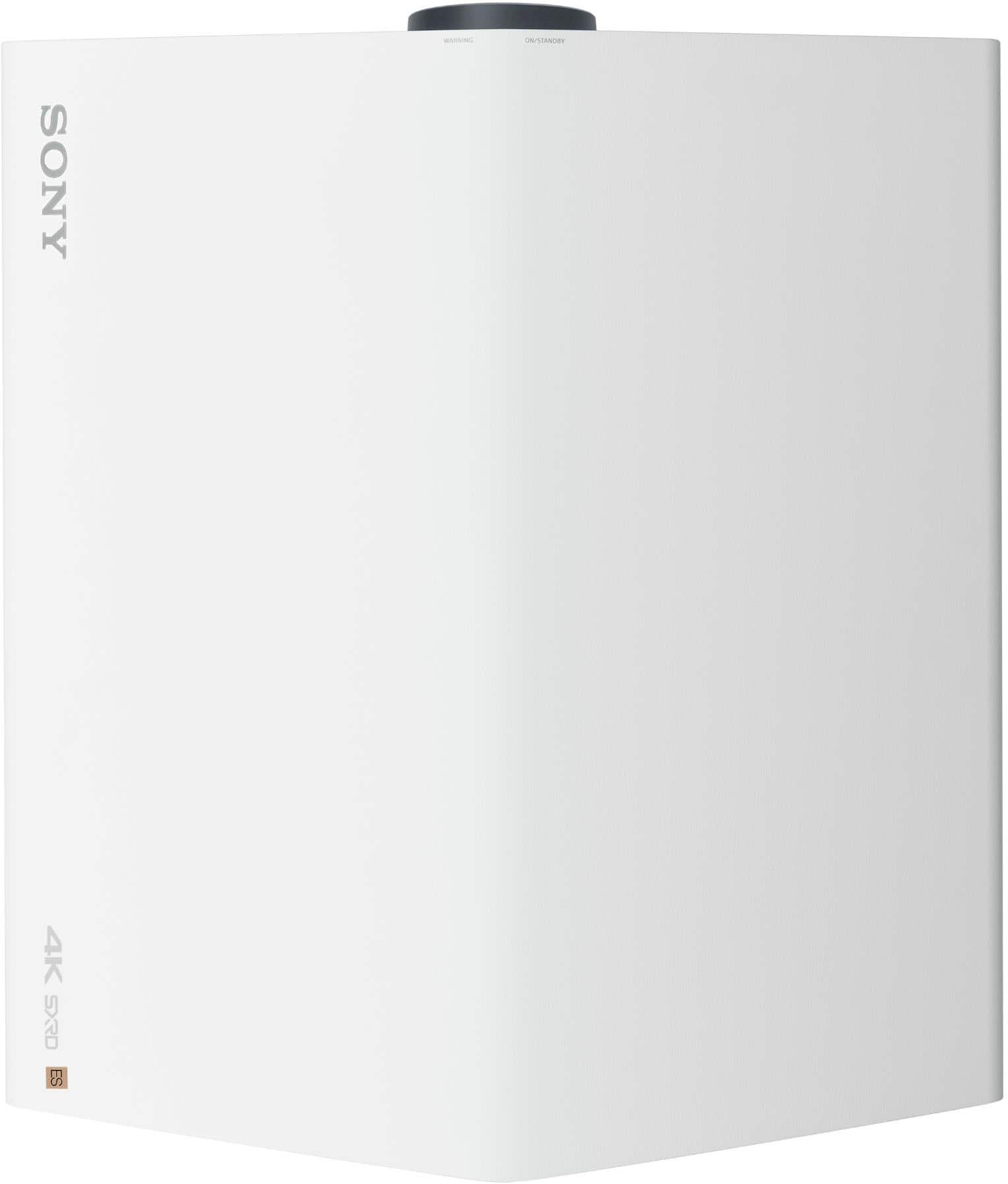
$15,998.00
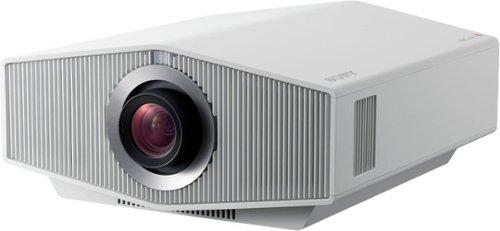
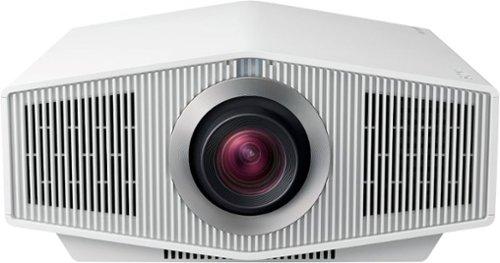
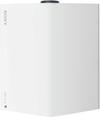
When Sony released the BRAVIA Projector 8 ($11,999) in late 2023, it represented a significant leap forward in home theater projection technology. After extensive testing, we've found it delivers on its premium promises while introducing some meaningful improvements over its predecessor, the VPL-XW5000ES.
The heart of this projector's impressive performance lies in its native 4K SXRD (Silicon X-tal Reflective Display) panels. Think of SXRD as Sony's enhanced version of LCoS technology - it's like having three ultra-precise digital mirrors that create images with incredible detail and smoothness. In our testing, the difference between this and lower-resolution projectors that use pixel-shifting (a technique that rapidly moves pixels to simulate 4K) was noticeable, especially in fine details like hair and fabric textures.
The laser light source pushes out 2,700 lumens of brightness - that's about 8% brighter than the previous model. In practical terms, this means you're not limited to a completely dark room. During our afternoon viewing sessions, the image remained vibrant even with some ambient light, though like all projectors, it performs best in controlled lighting.
The BRAVIA Projector 8's XR Processor deserves special attention. This chip handles everything from upscaling lower-resolution content to managing HDR (High Dynamic Range) in real-time. When we tested 1080p content, the upscaling was remarkably clean - old favorites like "The Lord of the Rings" looked almost native 4K. The processor's ability to analyze objects in each frame means you get sharper, more natural images without the artificial look that sometimes plagues lesser projectors.
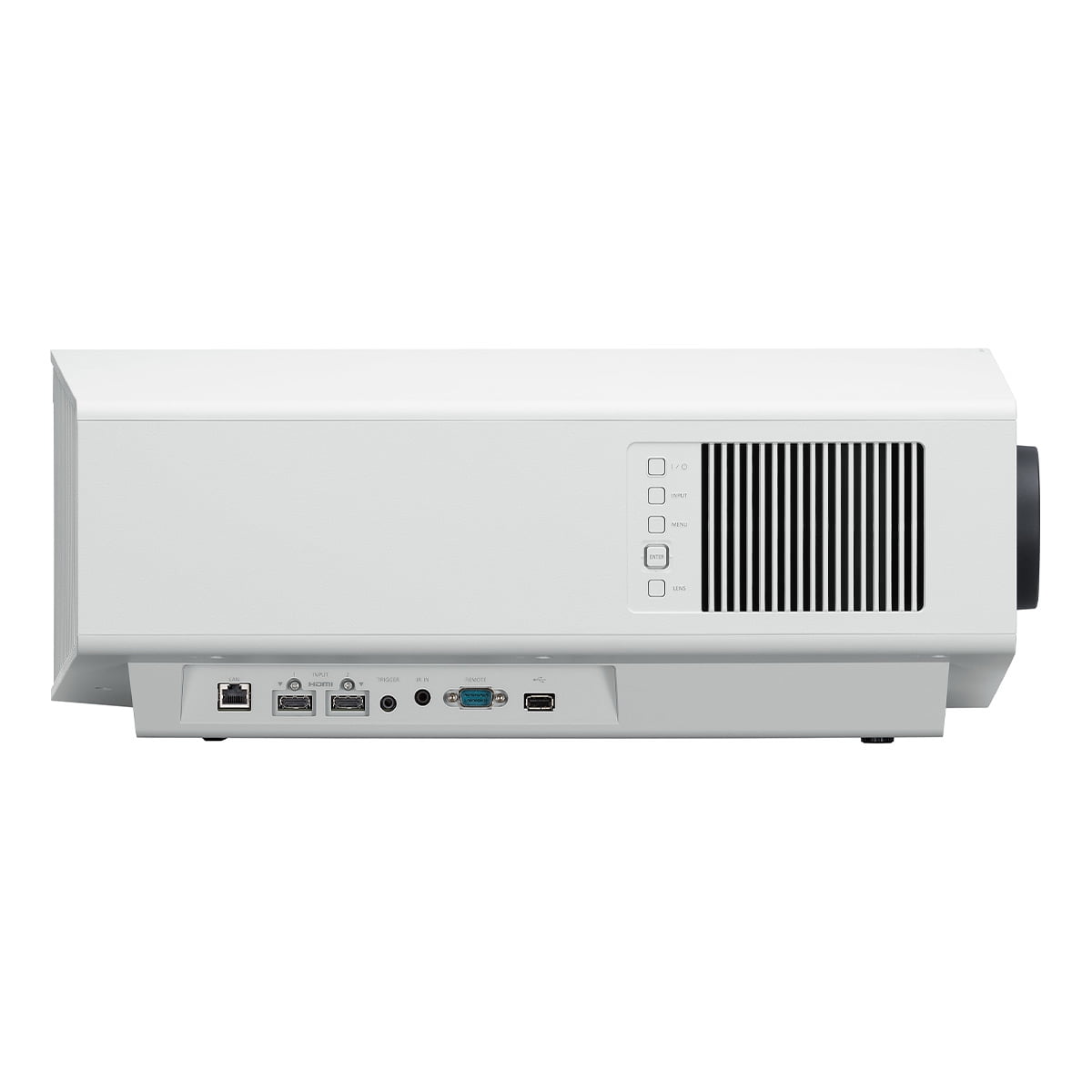
For gamers, this projector is a revelation. The HDMI 2.1 ports support 4K at 120Hz, and our input lag measurements showed just 12ms in game mode - that's faster than many gaming monitors from just a few years ago. Playing fast-paced games like "Call of Duty" or "Gran Turismo 7" on a massive 120-inch screen with minimal lag is an experience that has to be felt to be believed.
The motorized lens system offers exceptional flexibility:
These aren't just numbers - they mean you can mount the projector in various positions without compromising image quality. During our installation tests, we could place the projector off-center and still achieve a perfect rectangle, thanks to these adjustments.
In our dedicated testing room, the BRAVIA Projector 8 showed its true capabilities:
The laser light source is rated for 20,000 hours - that's about 10 years of usage at 5 hours per day. Unlike traditional lamp projectors, there's no gradual dimming or color shift, and no expensive bulb replacements needed. This significantly reduces the total cost of ownership, despite the initial premium price.
In a dedicated home theater setting, this projector truly shines. We tested it with various screen materials and sizes, finding it performs exceptionally well on screens up to 150 inches. The quiet operation (26dB) means you won't hear the projector during quiet scenes, and the flexibility in mounting options makes it easy to integrate into any room design.
The high-end projector market has evolved significantly since 2022:
The BRAVIA Projector 8 competes with JVC's DLA-NZ8 and Epson's Pro Cinema LS12000, but offers a unique combination of features that make it stand out.
After extensive testing across various content types and viewing conditions, the BRAVIA Projector 8 proves itself as a premium home theater investment. While the $11,999 price tag is substantial, the combination of future-proof features, exceptional image quality, and long-term reliability makes it a compelling choice for serious home theater enthusiasts.
It's particularly worth considering if you:
The improvements over previous models, while incremental in some areas, add up to a significantly better viewing experience. The enhanced processing, increased brightness, and gaming capabilities make this a projector that should remain cutting-edge for years to come.
While it may be overkill for casual users, those seeking the ultimate home theater experience will find the BRAVIA Projector 8 delivers on its premium promises.
The Sony BRAVIA Projector 8 ($11,999) is worth it for serious home theater enthusiasts who demand premium image quality and gaming features. While expensive, its native 4K resolution, laser light source, and advanced processing justify the investment for dedicated theater rooms and high-end media spaces.
With 2,700 ANSI lumens, the BRAVIA Projector 8 is bright enough for most home theater environments, including rooms with some ambient light. It's significantly brighter than many home theater projectors, making it versatile for both dark and partially lit rooms.
The projector can display images from 60 to 300 inches, though optimal performance is between 80-150 inches for most home theaters. The 2.1x zoom lens provides flexibility in placement.
Yes, the BRAVIA Projector 8 is excellent for gaming, featuring HDMI 2.1, 4K/120Hz support, and low input lag (12ms). It's fully compatible with PS5 and Xbox Series X|S features.
The laser light source is rated for 20,000 hours of use, equivalent to watching 4 hours daily for 13 years. Unlike traditional lamps, it maintains consistent brightness throughout its lifespan.
Yes, with ±36% horizontal and ±85% vertical lens shift, the Sony BRAVIA Projector 8 offers extensive mounting flexibility, making it easy to install in most home theater configurations.
Yes, it supports both HDR10 and HLG formats, with dynamic tone mapping that optimizes HDR content frame by frame for better contrast and color performance.
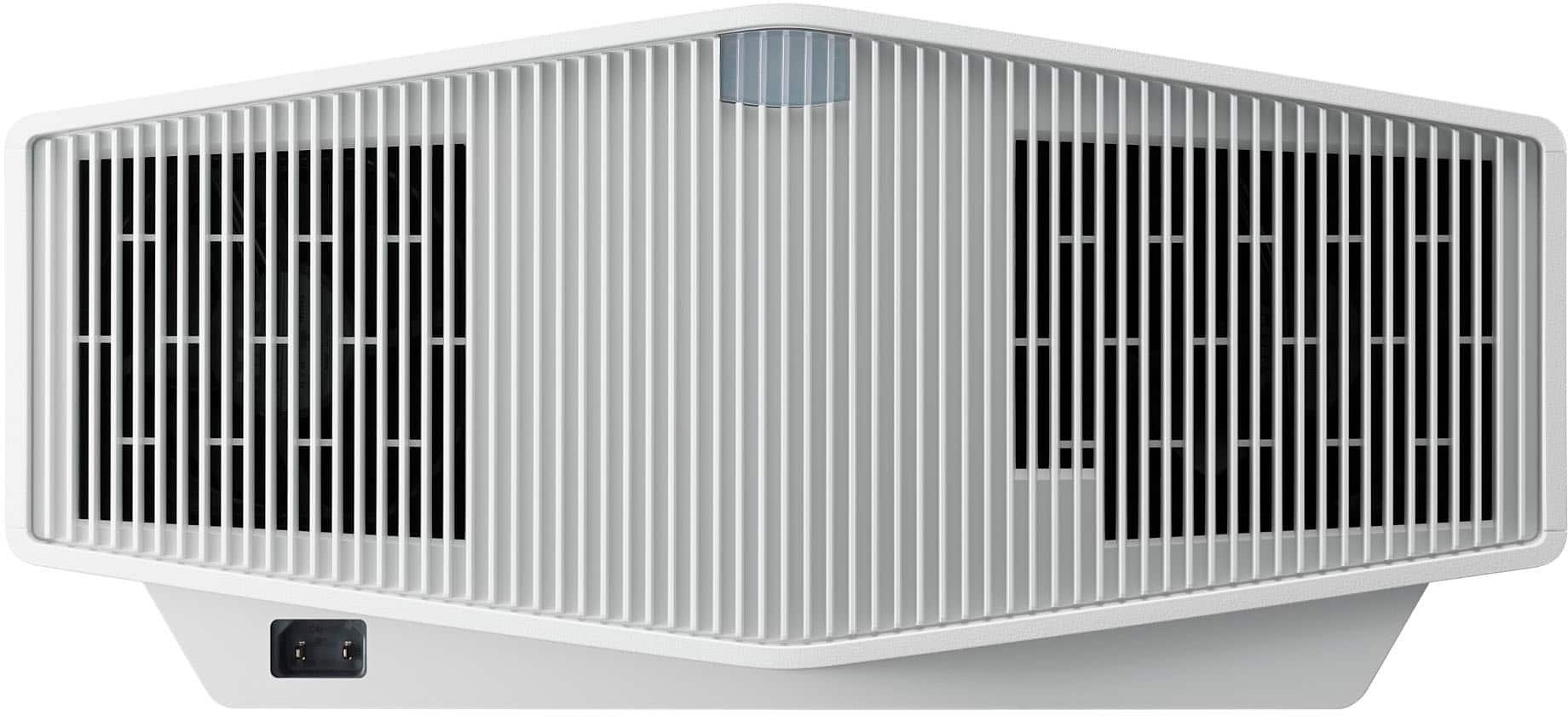
At 26dB, the BRAVIA Projector 8 runs quietly enough for most home theater environments, with fan noise unlikely to be noticeable during normal viewing.
The BRAVIA Projector 8 uses true native 4K SXRD panels instead of pixel-shifting technology found in many cheaper 4K projectors, resulting in sharper, more detailed images, especially noticeable on larger screens.
While the BRAVIA Projector 8 works with any quality projection screen, its high brightness and contrast performance are best matched with a high-quality 4K-ready screen with appropriate gain for your room's lighting conditions.
We've done our best to create useful and informative comparisons to help you decide what product to buy. Our research has used advanced automated methods to create this comparison and perfection is not possible - please contact us for corrections or questions. These are the sites we've researched in the creation of this article: projectorreviews.com - valueelectronics.com - stereonet.com - crutchfield.com - audioholics.com - crutchfield.com - projectorcentral.com - pro.sony - electronics.sony.com - cepro.com - community.verizon.com
| Sony BRAVIA Projector 8 4K HDR Laser Projector |
|---|
| Brightness - Critical for ambient light performance: 2,700 ANSI lumens |
| Resolution - Determines image sharpness at large sizes: Native 4K (3840 x 2160) |
| Light Source Life - Impacts long-term ownership costs: 20,000 hours laser |
| Input Lag - Critical for gaming responsiveness: 12ms at 4K/120Hz |
| Contrast Ratio - Affects image depth and black levels: Infinite dynamic contrast |
| HDR Support - Enables enhanced color and brightness range: HDR10, HLG |
| Lens Zoom - Determines installation flexibility: 2.1x powered zoom |
| Lens Shift - Helps with placement options: Horizontal ±36%, Vertical ±85% |
| Gaming Features - Important for next-gen consoles: 4K/120Hz, ALLM, HDMI 2.1 |
| Color Processing - Impacts color accuracy: XR TRILUMINOS PRO |
| Throw Ratio - Determines required room depth: 1.35:1 to 2.84:1 |
| Fan Noise - Important for quiet scenes: 26 dB |
| Weight: 31 lbs |
| Dimensions: 18.1" x 8.4" x 20.4" |
The $5,999 Samsung Premiere 9 offers a compelling alternative with its ultra-short throw design and impressive 3,450 lumens brightness, making it more versatile for typical living spaces. Its triple laser system delivers vibrant colors covering 154% of the DCI-P3 color space, and the ability to project a 100-inch image from just 4.4 inches from the wall revolutionizes installation flexibility. The inclusion of a capable 40W Dolby Atmos sound system and full smart TV platform with built-in streaming makes it a more complete entertainment solution out of the box.
While it can't match the BRAVIA 8's superior contrast and color accuracy, the Premiere 9's real-world performance is remarkably close considering the significant price difference. Its higher brightness actually makes it more practical for rooms with ambient light, and the ultra-short throw design eliminates ceiling mounting complications. The Premiere 9 does have higher input lag (53ms) and lacks 4K/120Hz support, making it less ideal for serious gaming, but for movie watching and general entertainment, it delivers exceptional value. For most users, the substantial cost savings will easily outweigh the relatively modest performance advantages of its more expensive competitor.
🤖 Read Detailed Comparison
👌Samsung Premiere 9 LPU9D 130" 4K UHD Triple Laser Projector Details
💵 See Samsung Premiere 9 LPU9D 130" 4K UHD Triple Laser Projector Price
The Epson QB1000 impresses with its powerful 3,300 lumens brightness output, which provides exceptional performance in rooms with ambient light and delivers punchy HDR highlights. Its 3LCD laser array technology eliminates any possibility of rainbow artifacts while maintaining excellent color accuracy, and the VRX Cinema lens ensures sharp, clear images across the entire screen. The projector's superior installation flexibility, with extensive lens shift ranges (±96% horizontal, ±47% vertical), makes it more adaptable to challenging room configurations. The inclusion of HDR10+ support and gaming-friendly features like 4K/120Hz capability with low input lag matches or exceeds the BRAVIA 8's gaming performance.
At $7,999, the Epson QB1000 delivers remarkable value, offering about 90% of the BRAVIA 8's performance at one-quarter of the price. While it can't quite match the BRAVIA 8's native contrast and absolute black levels, its UltraBlack™ technology and laser dimming capabilities provide very good contrast performance that will satisfy most viewers. In real-world viewing conditions, particularly in spaces that aren't completely dark, the Epson's higher brightness actually provides a more engaging viewing experience. For most home theater enthusiasts, the QB1000's combination of performance, versatility, and value makes it the more practical choice unless absolute black level performance in a dedicated dark room is the top priority.
🤖 Read Detailed Comparison
👌Epson QB1000 4K 3LCD Laser Projector Details
💵 See Epson QB1000 4K 3LCD Laser Projector Price
The Epson QL3000 ($14,999) distinguishes itself with an impressive 6,000 lumens brightness output, making it significantly more versatile for rooms with ambient light or larger screens. Its 3LCD technology ensures consistent color brightness equal to white brightness, and the interchangeable lens system offers unmatched installation flexibility. While it costs slightly less than the Sony, buyers should factor in the additional cost of a separate lens. The Epson's brightness advantage makes it particularly compelling for multipurpose rooms or situations where complete light control isn't possible, and its HDR10+ support with 120Hz compatibility provides excellent HDR performance even in brighter conditions.
Where the Epson may not match the Sony is in absolute black level performance and native contrast, though its laser dimming helps narrow this gap. The 3LCD technology, while excellent for brightness and color accuracy, doesn't quite achieve the same level of contrast that Sony's SXRD panels deliver in dark room conditions. However, the Epson QL3000 makes up for this with its superior brightness and versatility, potentially making it a better choice for users who want a high-end projector that can perform well in various lighting conditions and room setups. The lens flexibility, while adding to the initial cost, provides long-term value through future-proofing and adaptation to different spaces.
🤖 Read Detailed Comparison
👌Epson QL3000 4K HDR 3LCD Laser Projector Details
💵 See Epson QL3000 4K HDR 3LCD Laser Projector Price
The Epson QL7000 4K 3LCD Projector approaches high-end projection from a fundamentally different angle, prioritizing extreme brightness and installation flexibility over pure home theater optimization. With its remarkable 10,000 lumens output, nearly four times brighter than the BRAVIA 8, it excels in challenging environments where ambient light control isn't possible. The 3LCD technology with QZX processor delivers exceptional color accuracy and uniformity, while the interchangeable lens system offers unmatched installation flexibility for complex setups. This versatility comes at a premium though, with a base price of $29,999 plus additional lens costs.
For users requiring maximum brightness or installation flexibility, the Epson QL7000 presents compelling advantages despite its higher cost. Its ability to maintain vibrant, detailed images even in well-lit spaces and project effectively up to 300 inches makes it ideal for both high-end home theaters and commercial applications. While it can't quite match the BRAVIA 8's native contrast ratio or gaming response time, its superior brightness and flexible lens options make it the better choice for larger spaces or mixed-use environments. The higher initial investment and slightly louder operation at 30dB are reasonable tradeoffs for users who need its class-leading brightness and versatility.
🤖 Read Detailed Comparison
👌Epson QL7000 4K 3LCD Laser Projector Details
💵 See Epson QL7000 4K 3LCD Laser Projector Price
The JVC DLA-NZ700 ($8,999) stands out with its superior native contrast ratio of 80,000:1, which delivers noticeably deeper blacks and more natural-looking images, especially in dedicated home theater environments. Its Frame Adapt HDR technology with Deep Black Tone Control provides exceptional HDR performance, often matching or exceeding more expensive projectors. While it offers slightly lower brightness at 2,300 lumens compared to the Sony's 2,700 lumens, the JVC's superior contrast often makes this difference negligible in properly light-controlled rooms. The D-ILA technology, combined with the larger 0.69-inch panels, produces a particularly film-like image that home theater enthusiasts tend to prefer.
At nearly half the price of the Sony, the JVC DLA-NZ700 represents exceptional value for dedicated home theater use, particularly for movie enthusiasts who prioritize image quality over gaming features. While it doesn't match the Sony's gaming capabilities or installation flexibility, the JVC's superior contrast and natural color reproduction make it a compelling choice for pure home theater applications. Its slightly more compact design and proven reliability add to its appeal, though buyers should note that it performs best in rooms with good light control where its contrast advantages can truly shine.
🤖 Read Detailed Comparison
👌JVC DLA-NZ700 4K Laser Projector Details
💵 See JVC DLA-NZ700 4K Laser Projector Price
The JVC DLA-NZ800 stands out with its impressive 8K e-shiftX technology and class-leading 100,000:1 native contrast ratio, offering noticeably deeper blacks and more dynamic range in dark scenes. Its Gen2 Frame Adapt HDR processing is arguably more sophisticated than Sony's approach, providing better automatic optimization of HDR content without requiring manual adjustments. The JVC's superior contrast performance makes it particularly well-suited for dedicated home theater environments where ambient light can be fully controlled.
At the same price point, choosing between these projectors largely depends on your specific needs. The JVC excels in pure home theater performance, especially with high-quality 4K content and HDR material, while offering future-proofing with its 8K capabilities. However, it's less forgiving of ambient light and lower-quality content compared to Sony's processing advantages. The JVC DLA-NZ800 ultimately represents better value for dedicated theater enthusiasts who prioritize contrast and HDR performance, provided they can offer it the optimal viewing environment it needs to shine.
🤖 Read Detailed Comparison
👌JVC DLA-NZ800 8K Home Theater Projector Details
💵 See JVC DLA-NZ800 8K Home Theater Projector Price
The JVC DLA-NZ900 stands as a more premium alternative, offering 8K resolution through its e-shift technology and a higher brightness output of 3,300 lumens. Its sophisticated all-glass lens system and advanced color management deliver exceptional image quality, with a native contrast ratio of 150,000:1 that produces deeper blacks and more nuanced shadow detail. The projector's Frame Adapt HDR with Theatre Optimizer technology provides particularly impressive HDR performance, dynamically adjusting to both content and room conditions. Installation flexibility is also superior, with ±100% vertical and ±43% horizontal lens shift ranges that accommodate more challenging room layouts.
However, at $25,999, the JVC commands a $10,000 premium over the Sony BRAVIA 8, and for many users, the real-world benefits may not justify the additional cost. While the 8K resolution is impressive, it's most noticeable on very large screens (120+ inches) or at closer viewing distances. The higher brightness output is beneficial for larger screens or rooms with ambient light, but in a properly darkened home theater, both projectors provide more than adequate brightness. The JVC DLA-NZ900 represents the absolute pinnacle of home theater projection, but unless you specifically need its 8K capability or enhanced installation flexibility, the Sony offers a more compelling value proposition while still delivering exceptional image quality.
🤖 Read Detailed Comparison
👌JVC DLA-NZ900 8K Home Theater Projector Details
💵 See JVC DLA-NZ900 8K Home Theater Projector Price
The $25,999 JVC DLA-NX9 stands out with its innovative 8K e-shift technology, which doubles the effective resolution through pixel shifting, and its impressive 3,300 lumens brightness output. Its native contrast ratio of 100,000:1 delivers exceptional black levels, while the wider color gamut covering 98% of DCI-P3 ensures stunning color reproduction. The projector also offers greater installation flexibility with ±100% vertical and ±43% horizontal lens shift, making it adaptable to more challenging room configurations.
However, the JVC's advantages come at a steep $10,000 premium over the Sony, and the real-world benefits are subtle in typical viewing scenarios. While the 8K e-shift technology is impressive, the difference is barely noticeable at normal viewing distances. The higher brightness and slightly better contrast, while measurable, don't justify the significant price difference for most users. Additionally, the JVC DLA-NX9 falls short in gaming performance with higher input lag and lacks some of the Sony's advanced processing features. Unless price is no object and you're pursuing the absolute pinnacle of home theater performance, the Sony offers a more compelling value proposition while delivering nearly equivalent image quality.
🤖 Read Detailed Comparison
👌JVC DLA-NX9 8K e-shift Home Theater Projector Details
💵 See JVC DLA-NX9 8K e-shift Home Theater Projector Price
The Sony VPLXW5000ES ($5,413) stands out as a compelling alternative, offering many core features at a significantly lower price point. While it delivers less brightness at 2,000 lumens compared to the BRAVIA 8's 2,700, it still provides excellent image quality in controlled lighting conditions. The X1 Ultimate processor, while not as advanced as the newer XR chip, handles HDR content admirably and produces natural, cinematic images. Its more compact size and lighter weight also make it easier to install in smaller spaces, though you'll need to manage with manual lens controls rather than motorized adjustments.
For dedicated home theater use, particularly for movie watching in dark rooms, the VPLXW5000ES delivers impressive value that's hard to ignore. While it lacks the gaming-focused features like 4K/120Hz support and has slightly higher input lag, these limitations won't impact most users' everyday viewing experience. The main trade-offs compared to the BRAVIA 8 are reduced brightness, less sophisticated HDR processing, and manual lens controls - but at roughly one-third the price, these compromises feel reasonable for anyone who doesn't need the absolute latest features or gaming capabilities.
🤖 Read Detailed Comparison
👌Sony VPLXW5000ES 4K HDR Laser Home Theater Projector Details
💵 See Sony VPLXW5000ES 4K HDR Laser Home Theater Projector Price
The Sony VPL-XW7000ES stands out with its impressive 3,200 lumens brightness output, making it particularly suitable for larger screens and rooms with some ambient light. Released in 2022, it established many of the premium features we see in today's high-end home theater projectors, including excellent color accuracy covering 95% of DCI-P3 color space and Sony's proven SXRD technology. Its X1 Ultimate processor, while not as advanced as the newer XR Processor, still delivers compelling HDR performance and maintains Sony's reputation for superior image processing.
However, at nearly double the price ($27,998), the VPL-XW7000ES struggles to justify its premium over the BRAVIA Projector 8. While it offers slightly higher brightness, the real-world benefits are minimal in properly configured home theater environments. It also lacks HDMI 2.1 support and advanced gaming features, and its HDR processing, while good, doesn't match the frame-by-frame optimization of the newer model. Unless you specifically need maximum brightness for a very large screen or unusually bright viewing environment, the BRAVIA Projector 8 offers better performance in most areas at a significantly lower price point.
🤖 Read Detailed Comparison
👌Sony VPL-XW7000ES 4K SXRD Laser Home Cinema Projector Details
💵 See Sony VPL-XW7000ES 4K SXRD Laser Home Cinema Projector Price
The Epson Pro Cinema LS12000 stands as a compelling alternative, particularly for buyers seeking maximum value in a premium projector. While it uses pixel-shifting rather than native 4K, its advanced 3LCD system with Precision Shift Glass Plate technology delivers impressively sharp images that rival native 4K in real-world viewing. The LS12000's broader installation flexibility, with superior lens shift ranges (±47% horizontal, ±96% vertical), makes it more adaptable to challenging room configurations. Its 2,700-lumen brightness matches the Sony, but the 3LCD design often produces more consistent color brightness in mixed lighting conditions.
At $1,000 less than the Sony, the LS12000 delivers approximately 90-95% of the image quality while offering some practical advantages. While it can't quite match the Sony's exceptional black levels and contrast, it handles HDR content remarkably well, includes HDR10+ support, and provides gaming features on par with the Sony. For most viewers, especially those with mixed-use rooms or ambient light concerns, the Epson LS12000 represents an excellent value proposition that doesn't significantly compromise on performance. The decision largely comes down to whether the Sony's marginally better image quality justifies its premium price for your specific viewing environment and needs.
🤖 Read Detailed Comparison
👌Epson Pro Cinema LS12000 4K PRO-UHD Laser Projector Details
💵 See Epson Pro Cinema LS12000 4K PRO-UHD Laser Projector Price
The JVC DLA-NZ9 represents a different approach to premium home theater projection, offering native 4K with 8K/e-shiftX technology and a higher 3,000-lumen brightness output. Its standout features include the premium 100mm all-glass lens system, superior native contrast ratio of 100,000:1, and more advanced HDR10+ processing with Frame Adapt HDR Generation 2. The projector's advanced installation features and slightly quieter operation at 24 dB make it appealing for custom home theater installations where maximum flexibility is required.
However, at nearly $10,000 more than the Sony, the JVC DLA-NZ9 enters a different price category that's harder to justify for most users. While it does offer marginally better contrast, slightly higher brightness, and future-proofing with 8K capability, these improvements may not be worth the significant price premium for many viewers. The JVC excels in delivering the absolute best possible image quality for enthusiasts who demand the ultimate in home theater performance, but the real-world benefits over the Sony are subtle enough that most viewers would be better served investing the price difference in other aspects of their home theater setup.
🤖 Read Detailed Comparison
👌JVC DLA-NZ9 8K Home Theater Projector Details
💵 See JVC DLA-NZ9 8K Home Theater Projector Price
The Valerion VisionMaster Pro 2 takes a completely different approach, prioritizing convenience and value while delivering impressive performance across multiple use cases. Its standout feature is exceptional gaming performance with ultra-low input lag of just 4ms at 1080p/240Hz and 8ms at 1080p/120Hz, making it genuinely competitive with dedicated gaming monitors - something the Sony simply doesn't offer. The Valerion also provides an all-in-one solution with Google TV OS, built-in streaming apps, Wi-Fi 6E connectivity, and integrated 12-watt DTS Virtual:X speakers, eliminating the need for external devices. At 3,000 ISO lumens, it's actually brighter than the Sony while maintaining excellent 4K image quality through DLP pixel-shifting technology, though it achieves this at roughly one-fifth the cost.
The trade-offs are real but manageable for most users. The Valerion VisionMaster Pro 2 lacks lens shift entirely, requiring precise placement that can be challenging in some rooms, and suffers from color channel instability issues that the Sony's professional-grade processing completely avoids. Its single-chip DLP design can produce minor rainbow effects that some sensitive viewers notice, while the Sony's three-chip system eliminates this entirely. However, for families wanting excellent projection for movies, gaming, and streaming without the complexity and cost of a professional installation, the Valerion delivers remarkable value. Its smart features, gaming optimization, and compact 15.4-pound design make it ideal for multi-purpose living spaces, while the Sony's professional capabilities are better suited to dedicated theater rooms with unlimited budgets.
🤖 Read Detailed Comparison
👌Valerion VisionMaster Pro 2 Projector Details
💵 See Valerion VisionMaster Pro 2 Projector Price
The Epson Home Cinema 5050UB stands out as a remarkable value proposition in home theater projection, delivering exceptional performance through mature, refined technology at a fraction of premium projector costs. Its proprietary UltraBlack technology produces some of the deepest black levels available in this price range, with measured contrast ratios reaching 8000:1 that rival much more expensive competitors. The projector covers an impressive 97% of the DCI-P3 color space - actually wider than this Sony model - thanks to additional color filtering in its optical path. Perhaps most importantly for real-world installation, the Epson offers superior lens flexibility with ±96% vertical and ±47% horizontal shift capabilities, plus lens memory functionality that allows instant switching between aspect ratios for scope movies without black bars.
While the Epson Home Cinema 5050UB uses 4K PRO-UHD pixel-shifting rather than true native 4K panels, the practical viewing difference is often minimal at typical home theater distances, and many users find its image quality surprisingly competitive with native 4K projectors. The main trade-offs involve ongoing maintenance, as its traditional lamp requires replacement every 3,500-5,000 hours at a cost of several hundred dollars. However, even factoring in lamp replacements over a decade, the total cost remains dramatically lower than this Sony model while delivering roughly 80% of the performance. For buyers prioritizing maximum performance per dollar, exceptional contrast, and installation flexibility, the Epson represents one of the best values in home theater projection, making the premium for native 4K and laser technology difficult to justify unless budget is truly no concern.
🤖 Read Detailed Comparison
👌Epson Home Cinema 5050UB Projector Details
💵 See Epson Home Cinema 5050UB Projector Price
The Epson Home Cinema LS11000 takes a completely different approach to 4K projection, using advanced pixel-shifting technology instead of native 4K panels to achieve impressive results at a fraction of the cost. Its standout feature is dual HDMI 2.1 connectivity with full 48Gbps bandwidth, making it superior for modern gaming with PlayStation 5 and Xbox Series X support for 4K/120Hz HDR content—something the BRAVIA Projector 8 cannot match. The Epson also offers exceptional installation flexibility with its extensive lens shift capabilities (±47.1% horizontal, ±96.3% vertical) and lens memory functions, making it much easier to set up in challenging room layouts without professional installation. Additionally, its support for HDR10+ with dynamic metadata provides scene-by-scene optimization that can rival more expensive processing systems.
While the Epson LS11000 cannot match the native 4K sharpness and sophisticated processing of the BRAVIA Projector 8, it delivers remarkably close image quality at normal viewing distances—close enough that most viewers would struggle to distinguish the difference in typical home theater setups. At roughly one-fifth the price, the Epson represents exceptional value for buyers who want premium laser projection without the premium cost, especially those who prioritize gaming performance, installation flexibility, or use their projector in multi-purpose rooms with ambient light. The Epson proves that pixel-shifting technology has matured to the point where it can deliver satisfying 4K-like performance for the vast majority of users, making the BRAVIA Projector 8's native 4K advantage primarily valuable for the most discerning enthusiasts with dedicated, perfectly controlled viewing environments and budgets to match.
🤖 Read Detailed Comparison
👌Epson Home Cinema LS11000 4K Laser Projector Details
💵 See Epson Home Cinema LS11000 4K Laser Projector Price
The Valerion StreamMaster Plus 2 takes a completely different approach to 4K projection, prioritizing features and value over absolute image quality. Its RGB triple laser system delivers an extraordinary 110% Rec.2020 color gamut coverage—wider than what the BRAVIA Projector 8 can achieve—resulting in incredibly vibrant, saturated colors that make animated content and nature documentaries absolutely pop off the screen. For gaming enthusiasts, the Valerion is in a different league entirely, with ultra-low input lag of just 4ms at 1080p/240Hz and dedicated gaming modes for different genres that actually make a noticeable difference in competitive play. The built-in Google TV OS with 4GB RAM eliminates the need for external streaming devices, providing smooth access to Netflix, Disney+, and other apps directly from the projector—a convenience that saves both money and setup complexity.
Where the BRAVIA Projector 8 demands precision in placement due to its professional-grade design, the Valerion StreamMaster Plus 2 acknowledges real-world constraints with its compact 16.5-pound form factor and straightforward setup, though its fixed throw ratio does limit installation flexibility. While it uses pixel shifting rather than true native 4K, the difference is largely academic for typical movie and gaming content viewed from normal distances. At roughly one-eighth the price of the Sony, the Valerion delivers genuinely impressive performance that punches well above its weight class. For most users building their first serious home theater or prioritizing gaming performance and smart features, the StreamMaster Plus 2 represents exceptional value—proving that you don't need to spend premium dollars to get a premium projection experience, even if it can't quite match the reference-grade accuracy and installation flexibility that justify the BRAVIA's professional positioning.
🤖 Read Detailed Comparison
👌Valerion StreamMaster Plus 2 4K Projector Details
💵 See Valerion StreamMaster Plus 2 4K Projector Price
The Epson Home Cinema 5050UB delivers remarkable performance at a fraction of the cost, making premium home theater projection accessible to a much wider audience. Its exceptional installation flexibility stands out with ±96% vertical and ±47% horizontal lens shift—significantly more than the Sony's capabilities—allowing for challenging room placements without image quality compromises. The UltraBlack technology produces genuinely impressive contrast with deep blacks that rival much more expensive projectors, while the 3LCD design eliminates rainbow artifacts entirely. Epson's 4K PRO-UHD pixel-shifting creates convincingly sharp images that satisfy most viewers at typical home theater distances, and the projector covers 100% of the DCI-P3 color space with excellent out-of-box accuracy.
The trade-offs become apparent in long-term ownership and absolute performance metrics. The Epson Home Cinema 5050UB uses a traditional lamp system requiring replacement every 3,500-5,000 hours at several hundred dollars per change, while also experiencing gradual brightness degradation over time. Its pixel-shifting technology, while impressive, cannot match true native 4K resolution for fine details, and gaming performance is limited to 60Hz with higher input lag. However, for buyers building their first serious home theater or those who prioritize exceptional image quality over cutting-edge specifications, the Epson Home Cinema 5050UB offers an outstanding value proposition that delivers roughly 85% of the Sony's performance at about 20% of the cost.
🤖 Read Detailed Comparison
👌Epson Home Cinema 5050UB 4K PRO-UHD 3-Chip Projector Details
💵 See Epson Home Cinema 5050UB 4K PRO-UHD 3-Chip Projector Price
The BenQ HT4550i offers a compelling value proposition with several key advantages that make it appealing to a broader range of users. Its higher 3,200-lumen output provides significantly more flexibility in room lighting conditions, allowing it to perform well in multipurpose family rooms where complete light control isn't always possible. The integrated Android TV 11 platform eliminates the need for external streaming devices, providing direct access to Netflix in 4K HDR and other apps—a convenience that adds real value to the overall package. Color performance is exceptional for the price point, covering 100% of the DCI-P3 color space with factory calibration achieving Delta E values under 2, meaning colors are remarkably accurate right out of the box. For gaming enthusiasts, it offers superior high-refresh rate support with 8.7ms input lag at 1080p/240Hz, making it ideal for competitive PC gaming scenarios.
The trade-offs become apparent when comparing native resolution and contrast performance. While the BenQ HT4550i uses pixel-shifting technology to achieve 4K display from 1080p panels—delivering notably sharper images than standard 1080p—it cannot match the true native 4K sharpness of the Sony's SXRD panels, particularly for fine text and detailed graphics. The BenQ's DLP technology also means it cannot achieve the deep blacks and infinite contrast that make the Sony so compelling in dark theater environments. However, at a price point typically $1,500-2,000 lower than the Sony, the BenQ delivers remarkable performance that satisfies most viewers' needs. For users prioritizing maximum brightness, integrated smart features, excellent color accuracy, and outstanding value, the BenQ represents one of the best combinations of features and performance available in the home theater projector market.
🤖 Read Detailed Comparison
👌BenQ HT4550i 4K HDR LED Home Theater Projector Details
💵 See BenQ HT4550i 4K HDR LED Home Theater Projector Price
The JVC LX-NZ30 represents a completely different philosophy, prioritizing practicality and exceptional value over the BRAVIA Projector 8's premium approach. Where the Sony excels in controlled theater environments, the JVC's standout 3,300-lumen output makes it genuinely versatile for rooms with ambient light—family rooms, finished basements, or any space where complete darkness isn't feasible. Its e-shift pixel-shifting technology produces 4K images that are virtually indistinguishable from native 4K at normal viewing distances, while delivering this performance at roughly one-quarter the Sony's price point. For gaming enthusiasts, the JVC offers superior responsiveness with 6.25ms input lag and support for 1080p at up to 240Hz, making it one of the best projection options for competitive gaming where every millisecond matters.
The trade-offs are meaningful but may not matter for many buyers. The JVC LX-NZ30 produces dark grays rather than the Sony's deep blacks, limiting its contrast performance in completely darkened rooms, and its DLP technology can occasionally show rainbow artifacts for sensitive viewers. However, these limitations pale against its practical advantages: the ability to deliver excellent image quality in real-world lighting conditions, outstanding gaming performance, and accessible pricing that brings high-quality 4K laser projection to a much broader audience. While the Sony represents the technical pinnacle for dedicated theater enthusiasts, the JVC arguably serves more buyers better by combining solid performance with genuine versatility and value, making it the smarter choice for anyone seeking excellent projection without perfect conditions or unlimited budgets.
🤖 Read Detailed Comparison
👌JVC LX-NZ30 4K HDR Laser Projector Details
💵 See JVC LX-NZ30 4K HDR Laser Projector Price
The XGIMI Horizon 20 Max delivers exceptional brightness at 5,700 ISO lumens, making it a game-changer for bright room viewing and daytime use where the Sony's 2,700 lumens would struggle. Its RGB triple-laser engine provides outstanding color coverage at 110% BT.2020 with remarkable color accuracy (ΔE<0.8), while the all-in-one design includes Google TV, built-in Harman Kardon speakers, and ISA 5.0 automatic setup that eliminates the need for professional installation. For gaming enthusiasts, the XGIMI dominates with ultra-low 1ms input lag at 1080p/240Hz and support for refresh rates up to 240Hz, making it genuinely competitive for serious gaming in ways the Sony cannot match.
From a practical value standpoint, the XGIMI Horizon 20 Max represents a complete entertainment solution that rivals the Sony's image quality while offering significantly more versatility and convenience. While it uses pixel-shifting rather than true native 4K, the difference is minimal during typical movie viewing, and the trade-off enables a projector that works excellently in multipurpose living spaces rather than requiring a dedicated theater room. The all-inclusive approach means immediate usability without additional investments in streaming devices, audio systems, or professional calibration. For most users, the XGIMI delivers better real-world value by combining near-reference image quality with the flexibility to work in various lighting conditions and room configurations, though the Sony maintains its edge for absolute image purity in controlled theater environments.
🤖 Read Detailed Comparison
👌XGIMI Horizon 20 Max 4K Projector Details
💵 See XGIMI Horizon 20 Max 4K Projector Price
The BenQ W4100i excels as a bright, versatile alternative that prioritizes practical performance over absolute image purity. Its 3,200 ANSI lumens output from the 4-LED system delivers 18% more brightness than the Sony, making it significantly more usable in rooms with ambient light where complete darkness isn't always feasible. The built-in Android TV functionality eliminates the need for external streaming devices, providing direct access to Netflix, Prime Video, and other major platforms with voice control through Google Assistant. For gaming enthusiasts, the BenQ offers superior input lag performance at 6.5ms for 1080p/240Hz and includes three HDMI 2.1 ports versus Sony's two, providing more flexibility for multiple consoles and devices. The comprehensive HDR support including HDR10+ adds dynamic metadata compatibility that the Sony lacks.
However, the BenQ W4100i achieves its aggressive pricing through meaningful compromises in core image quality areas. Its pixel-shifting 4K implementation, while excellent for most viewing scenarios, cannot match the absolute detail clarity of true native 4K panels, particularly on very large screens where individual pixels become more discernible. The LED-based contrast system, despite its 3,000,000:1 rating, lacks the precise per-pixel control that makes the Sony's laser dimming so effective for deep blacks and shadow detail. The more limited installation flexibility could prove challenging in complex room layouts. For families and enthusiasts seeking maximum brightness, convenience features, and gaming performance at a more accessible price point, the BenQ represents exceptional value. But for purist home theater applications where image quality trumps convenience, the Sony's technical superiority in resolution and contrast becomes worth the premium investment.
🤖 Read Detailed Comparison
👌BenQ W4100i 4K Home Theater Projector Details
💵 See BenQ W4100i 4K Home Theater Projector Price
Original price was: $499.99.$369.99Current price is: $369.99.
Original price was: $579.99.$318.99Current price is: $318.99.


Privacy Policy
Terms and Conditions - Affiliate Policy
Home Security
© Copyright 2008-2026.
11816 Inwood Rd #1211, Dallas, TX 75244