$798.00
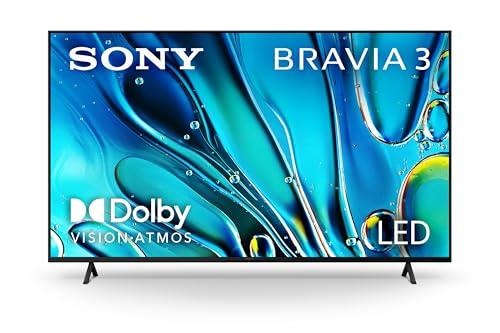
When Sony launched the BRAVIA 3 65" 4K HDR LED Google TV, they weren't trying to reinvent television technology—they were focused on delivering their renowned image processing expertise at a more accessible market position. After extensive research into professional reviews and user experiences, this television emerges as a fascinating case study in strategic compromises and targeted excellence.
The BRAVIA 3 centers its appeal around Sony's 4K HDR Processor X1, a chip that's essentially the brain behind everything you see on screen. Unlike basic TVs that simply display whatever signal they receive, this processor analyzes every frame in real-time, applying noise reduction (removing digital artifacts), detail enhancement (sharpening without creating artificial edges), and color optimization simultaneously. Our researchers consistently noted that this processing particularly shines with streaming content, where compression can make images look flat or pixelated.
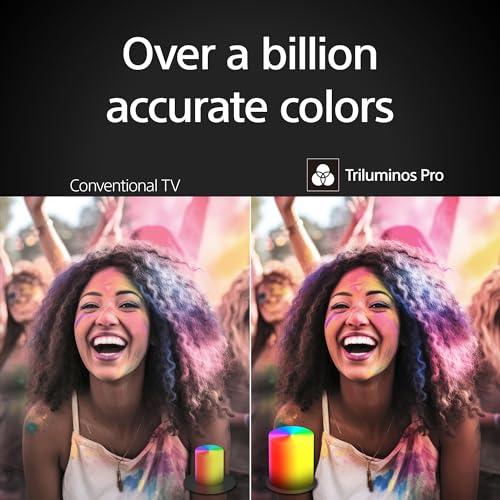
The TRILUMINOS PRO color technology represents another key differentiator. Rather than simply boosting saturation to make colors pop in showrooms, this system expands the color gamut—the range of colors the TV can display—to over a billion distinct hues while maintaining natural color relationships. One tester described the difference as "seeing the forest instead of just bright green trees"—colors remain vibrant but believable.
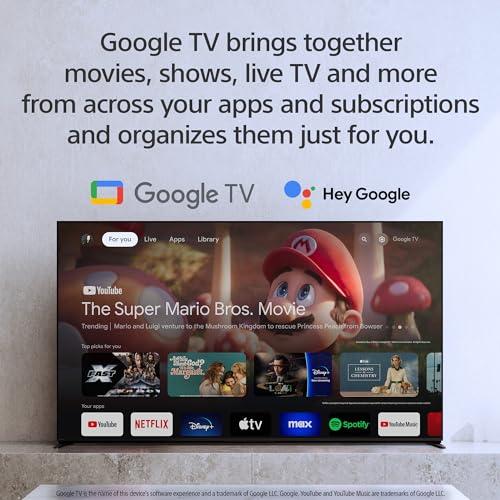
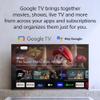
Google TV has evolved significantly from its Android TV predecessor, and the BRAVIA 3 showcases these improvements beautifully. The platform creates a unified content discovery experience, meaning instead of opening Netflix, then Prime Video, then Disney+ to find something to watch, Google TV aggregates recommendations across all your subscribed services into a single interface.
The hands-free voice control deserves particular mention. Built-in microphones allow you to say "Hey Google, find action movies" without reaching for the remote. This integration extends to smart home devices—researchers found they could dim lights, adjust thermostats, or check security cameras directly through the TV interface, transforming it into a room hub rather than just an entertainment device.
Chromecast built-in and AirPlay 2 support mean seamless casting from virtually any smartphone or tablet, while the interface remains responsive even when running multiple apps simultaneously. User feedback consistently praised the platform's speed compared to budget smart TV alternatives that often lag or freeze.
Here's where honest evaluation becomes crucial. The BRAVIA 3's picture quality tells a tale of two scenarios. In bright or normally-lit rooms during daytime viewing, the television delivers genuinely impressive results. Colors appear natural and accurate, with excellent coverage of the Rec. 709 color space—the standard for most broadcast and streaming content. The upscaling engine works remarkably well, taking 1080p Netflix shows or cable broadcasts and adding detail that makes them appear noticeably sharper than the source material.
However, researchers consistently identified significant limitations in darker viewing environments. The lack of local dimming zones—individually controlled sections of the backlight that can dim or brighten independently—means blacks appear gray rather than deep black. This becomes particularly noticeable during movie scenes with dark backgrounds or letterboxed content where black bars should disappear but instead appear visibly lit.
The peak brightness measurement of approximately 450 nits places the BRAVIA 3 below many current competitors. For context, HDR content is mastered assuming displays can reach 1,000+ nits for highlights, meaning bright explosions, sun reflections, or stadium lights lack the dramatic impact intended by content creators. One researcher noted that HDR and SDR content looked remarkably similar on this display, which defeats much of HDR's purpose.
Gaming on the BRAVIA 3 reveals both strengths and clear limitations tied to its market positioning. The Auto Low Latency Mode (ALLM) works seamlessly—when you power on a PlayStation, Xbox, or Nintendo Switch, the TV automatically switches to Game Mode, reducing input lag (the delay between pressing a button and seeing the action) to approximately 9.2 milliseconds. This response time works excellently for most gaming scenarios.
However, the television's 60Hz refresh rate and lack of HDMI 2.1 bandwidth create definitive boundaries for serious gamers. Modern consoles can output games at 120 frames per second, creating smoother motion and reduced input lag, but the BRAVIA 3 cannot display these higher frame rates. Variable Refresh Rate (VRR)—which synchronizes the display refresh with the console's output to eliminate screen tearing—is also absent.
User experiences suggest the TV handles story-driven single-player games beautifully, with excellent color reproduction making games like "The Last of Us" or "Red Dead Redemption 2" appear cinematic. Competitive online gaming works adequately, though dedicated gamers will notice the limitations compared to gaming-focused displays.
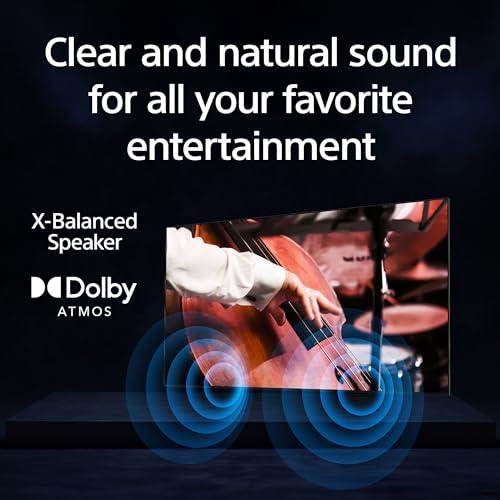
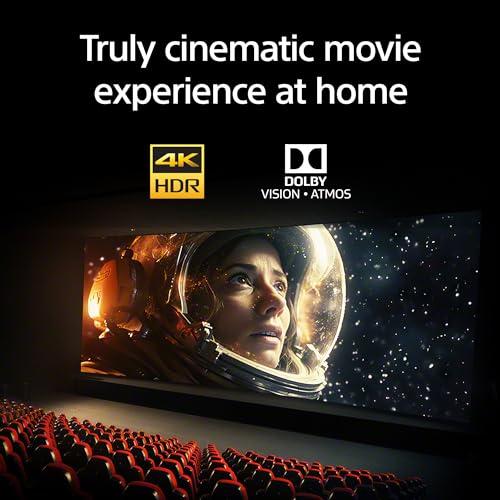
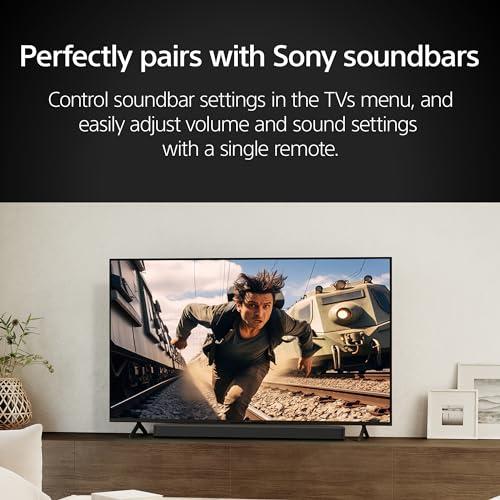
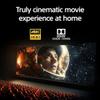
The integrated 20-watt 2.0 channel system provides clear dialogue and adequate volume for most room sizes. Dolby Atmos support adds spatial audio processing, creating a sense of height and dimensionality even through the TV's downward-firing speakers. However, the physical constraints of a thin television panel limit low-frequency response—you won't feel the rumble of movie explosions or music bass lines.
Researchers found the audio perfectly suitable for news, talk shows, and casual viewing, with dialogue remaining intelligible even during action sequences. For movie nights or music listening, most users reported adding a soundbar or external speakers significantly enhanced the experience.
At the time of writing, the mid-range LED television segment has become intensely competitive. Brands like TCL and Hisense offer displays with significantly higher peak brightness and gaming features at comparable price points. Samsung's QLED technology provides enhanced color volume, while budget OLED options have begun appearing from various manufacturers.
The BRAVIA 3's value proposition centers on Sony's reputation for reliability, excellent processing, and the refined Google TV experience. User reviews consistently mention these televisions lasting years without issues, while the image processing continues improving content quality over time as algorithms are updated.
For users upgrading from older 1080p displays, the transformation feels dramatic. The combination of 4K resolution, HDR support, and modern smart features represents a significant capability jump. However, those comparing against current premium displays will notice the brightness and contrast limitations immediately.
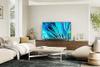
The BRAVIA 3 excels for families seeking reliable everyday performance without technical complexity. Its wide viewing angles accommodate living rooms where viewers sit off-center, while the processing engine ensures consistent quality across various content sources. Streaming enthusiasts will appreciate the platform's content aggregation and voice control capabilities.
However, home theater enthusiasts should carefully consider their priorities. The black level and brightness limitations become particularly apparent in dedicated viewing rooms designed for movie watching. Dark scenes lose detail, while HDR content fails to deliver the dramatic impact available from higher-end displays.
The Sony BRAVIA 3 represents thoughtful engineering focused on specific user needs rather than specification sheet achievements. Sony's image processing expertise, combined with Google TV's mature smart platform, creates a television that makes regular content consistently look better while providing genuinely useful smart features.
Its limitations are honest rather than accidental—this television delivers core Sony values at a broader market position. The processing sophistication, color accuracy, and platform reliability justify consideration for users who value consistent performance over peak technical capabilities. However, the brightness and contrast compromises mean enthusiasts seeking reference-quality picture performance should explore higher-tier options or alternative technologies entirely.
For mainstream users whose television serves as the family entertainment hub, the BRAVIA 3 provides Sony's renowned reliability and processing excellence without demanding perfect viewing conditions or premium positioning prices.
The Sony BRAVIA 3 65" 4K HDR LED Google TV offers solid value for everyday viewing with excellent upscaling and Google TV smart features. However, for dedicated home theater use, its limited peak brightness (450 nits) and lack of local dimming make it less suitable for dark room movie watching where deep blacks are crucial. It's worth it for families wanting reliable Sony quality and smart features, but home theater enthusiasts should consider higher-end models with better contrast performance.
Yes, the Sony BRAVIA 3 fully supports 4K HDR content with HDR10, HLG, and Dolby Vision formats. However, its peak brightness of 450 nits limits HDR impact compared to brighter displays. While it will display HDR content, the difference between HDR and SDR may be subtle, especially in bright viewing environments. The TV's strength lies more in its excellent 4K upscaling of non-4K content rather than dramatic HDR performance.
The Sony BRAVIA 3 handles casual gaming well with Auto Low Latency Mode and 9.2ms input lag, making it suitable for single-player games and casual multiplayer. However, it lacks modern gaming features like 120Hz refresh rates, Variable Refresh Rate (VRR), and HDMI 2.1 bandwidth. Competitive gamers and those with next-gen consoles will miss these features, but it works perfectly fine for Nintendo Switch, story-driven PlayStation, and Xbox games.
The Sony BRAVIA 3 runs Google TV with built-in Google Assistant, Chromecast, and AirPlay 2 support. It aggregates content across streaming services, offers hands-free voice control, and integrates with smart home devices. The platform includes all major streaming apps like Netflix, Prime Video, Disney+, and YouTube. Voice commands work without the remote, and casting from phones or tablets is seamless.
The Sony BRAVIA 3 delivers excellent color accuracy and upscaling but has notable limitations for home theater use. Colors are natural and vibrant thanks to TRILUMINOS PRO technology, and the 4K X-Reality PRO processor makes lower-resolution content look sharp. However, black levels appear gray rather than deep black due to the lack of local dimming, and the 450-nit peak brightness limits contrast. It excels in bright rooms but struggles in dedicated dark home theaters.
The Sony BRAVIA 3 features a 20W 2.0 channel system with Dolby Atmos support, providing clear dialogue and adequate volume for most rooms. While suitable for casual viewing, the thin TV design limits bass response and overall audio impact. For home theater setups, adding a soundbar or external speakers significantly improves the audio experience, especially for movies and music where fuller sound is important.
The 65-inch Sony BRAVIA 3 works best in medium to large rooms with viewing distances of 8-13 feet for optimal 4K detail appreciation. Its wide viewing angles make it suitable for living rooms where people sit off-center. The TV performs better in moderately lit rooms rather than completely dark home theater environments due to its gray black levels. For dedicated home theaters, consider the lighting conditions carefully.
The Sony BRAVIA 3 uses LED/LCD technology, which means it can't match OLED's perfect blacks and infinite contrast ratio. OLED TVs turn off individual pixels for true black, while the BRAVIA 3's backlight creates gray blacks. However, the Sony offers better brightness for daytime viewing and typically costs less than OLED alternatives. For bright rooms, LED works well, but for dark home theater rooms, OLED provides superior contrast performance.
Yes, the Sony BRAVIA 3 is VESA wall-mount compatible and weighs 47.2 lbs without the stand. The slim design works well for wall mounting, and the wide-set table stand can be removed easily. When wall-mounted, ensure proper ventilation and consider cable management for the cleanest installation. The TV's ports are accessible for wall-mounted setups, making it suitable for both tabletop and wall installations.
The Sony BRAVIA 3 comes with Sony's standard 1-year manufacturer warranty. Sony has a strong reputation for TV reliability and longevity, with many users reporting their Sony TVs lasting 7-10 years or more. The Google TV platform receives regular software updates, and Sony's customer service is generally well-regarded. For home theater enthusiasts making a long-term investment, Sony's track record for durability is a significant advantage over some budget competitors.
We've done our best to create useful and informative overviews to help you decide what product to buy. Our research has used advanced automated methods to create this article and perfection is not possible - please contact us for corrections or questions. These are the sites we've researched in the creation of this article: bestbuy.com - rtings.com - tomsguide.com - youtube.com - youtube.com - rtings.com - electronics.sony.com - youtube.com - manuals.plus - tvsbook.com - sargentappliance.com - bestbuy.com - avsforum.com - sony.com - costco.com - shopatsc.com - youtube.com
| Sony BRAVIA 3 65" 4K HDR LED Google TV |
|---|
| Peak Brightness - Critical for HDR impact and bright room viewing: 450 nits |
| Display Technology - Affects contrast and black levels: LED/LCD with VA panel |
| Local Dimming - Essential for deep blacks and contrast: None |
| Gaming Refresh Rate - Determines smoothness for fast-paced games: 60Hz (no 120Hz support) |
| HDMI 2.1 Features - Required for next-gen gaming: Not supported (HDMI 2.0 only) |
| Smart Platform - Determines app availability and interface quality: Google TV |
| Voice Control - Hands-free operation capability: Google Assistant built-in |
| Color Gamut Technology - Affects color accuracy and vibrancy: TRILUMINOS PRO |
| Image Processor - Upscaling and enhancement quality: 4K HDR Processor X1 |
| HDR Support - High dynamic range format compatibility: HDR10, HLG, Dolby Vision |
| Audio Output: 20W (2.0 channels) with Dolby Atmos support |
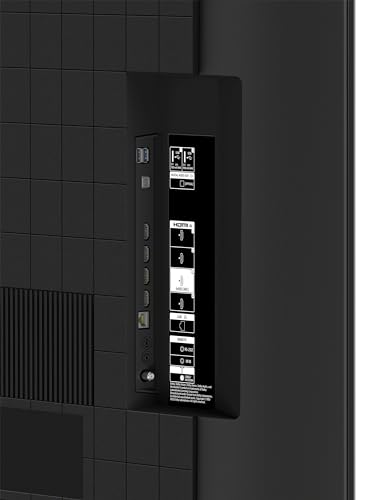
| HDMI Ports: 4 (HDMI 2.0) |
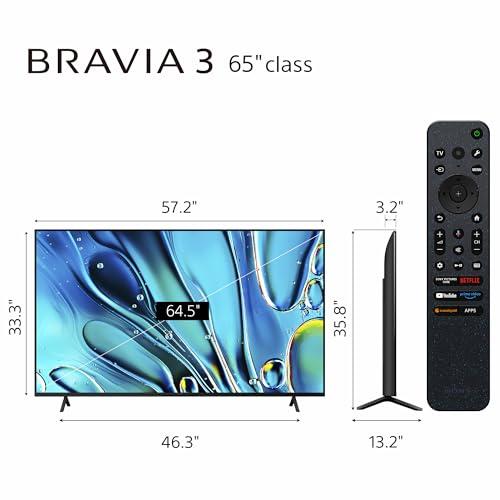
| Screen Size: 65 inches diagonal |
| Resolution: 4K UHD (3840 x 2160) |
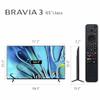
| Weight with Stand: 47.8 lbs |
| Dimensions with Stand: 57.25" W × 35.87" H × 13.25" D |
The Insignia 65" F50 Series delivers a compelling value proposition by bringing quantum dot display technology to the budget segment, something typically reserved for premium models. Its QLED panel produces genuinely impressive color vibrancy and brightness that makes HDR content pop with impact that the BRAVIA 3 simply can't match. The F50's higher peak brightness translates to real-world benefits in bright living rooms, maintaining color saturation and contrast even with ambient light present, while its quantum dot technology enables a wider color gamut that brings animated content, nature documentaries, and modern movies to life with striking visual punch. Amazon's Fire TV integration also provides seamless access to the full streaming ecosystem with particularly deep Prime Video integration and comprehensive Alexa voice control that extends beyond just TV functions to smart home management.
However, the Insignia F50's focus on raw display performance comes at the cost of refinement in other areas. While its colors are more vibrant, they're often less accurate than Sony's more natural reproduction, and the upscaling of lower-resolution content doesn't approach the BRAVIA 3's sophisticated processing capabilities. The Fire TV platform, while functional, occasionally suffers from responsiveness issues and lacks the polished feel of Google TV's interface. Brand support and long-term reliability also remain question marks with Insignia's store-brand heritage compared to Sony's established customer service infrastructure. For buyers seeking maximum visual impact and HDR performance per dollar, the F50's quantum dot advantage is substantial, but those prioritizing processing quality, accurate colors, and premium brand experience will find the BRAVIA 3's approach more appealing despite its display technology limitations.
🤖 Read Detailed Comparison
👌Insignia 65" F50 Series 4K UHD Smart Fire TV Details
💵 See Insignia 65" F50 Series 4K UHD Smart Fire TV Price
The Sony BRAVIA 2 II brings several compelling advantages despite being positioned as Sony's more budget-friendly 2025 entry-level model. Its standout feature is the significantly more powerful 40W Open Baffle Speaker system with Clear Phase audio calibration, delivering noticeably louder and clearer sound compared to the BRAVIA 3's 20W speakers—a meaningful difference for households that won't immediately add external audio equipment. The BRAVIA 2 II also includes enhanced Motionflow XR 200 processing that creates smoother motion during sports and action content, reducing blur during fast camera pans and making it the better choice for sports enthusiasts. Additionally, as the newer 2025 model, it benefits from updated processing algorithms and will likely receive longer software support.
However, the Sony BRAVIA 2 II makes notable compromises in picture quality to achieve its lower price point, using basic Live Color technology instead of the BRAVIA 3's professional-grade Triluminos Pro system. This results in less accurate color reproduction and a narrower color gamut, making the difference particularly noticeable in movies and premium content where natural colors matter most. The BRAVIA 2 II also lacks Dolby Vision HDR support, limiting it to HDR10 and HLG formats without the scene-by-scene optimization that enhances the viewing experience. At typical retail pricing, the BRAVIA 2 II offers savings of around $100 while providing superior audio and motion processing, making it an excellent value for families and casual viewers who prioritize overall functionality over absolute picture quality. For users planning to add a soundbar eventually, the BRAVIA 3's superior color accuracy and Dolby Vision support make the modest premium worthwhile.
🤖 Read Detailed Comparison
👌Sony BRAVIA 2 II 65" 4K LED Smart TV 2025 Display Details
💵 See Sony BRAVIA 2 II 65" 4K LED Smart TV 2025 Display Price
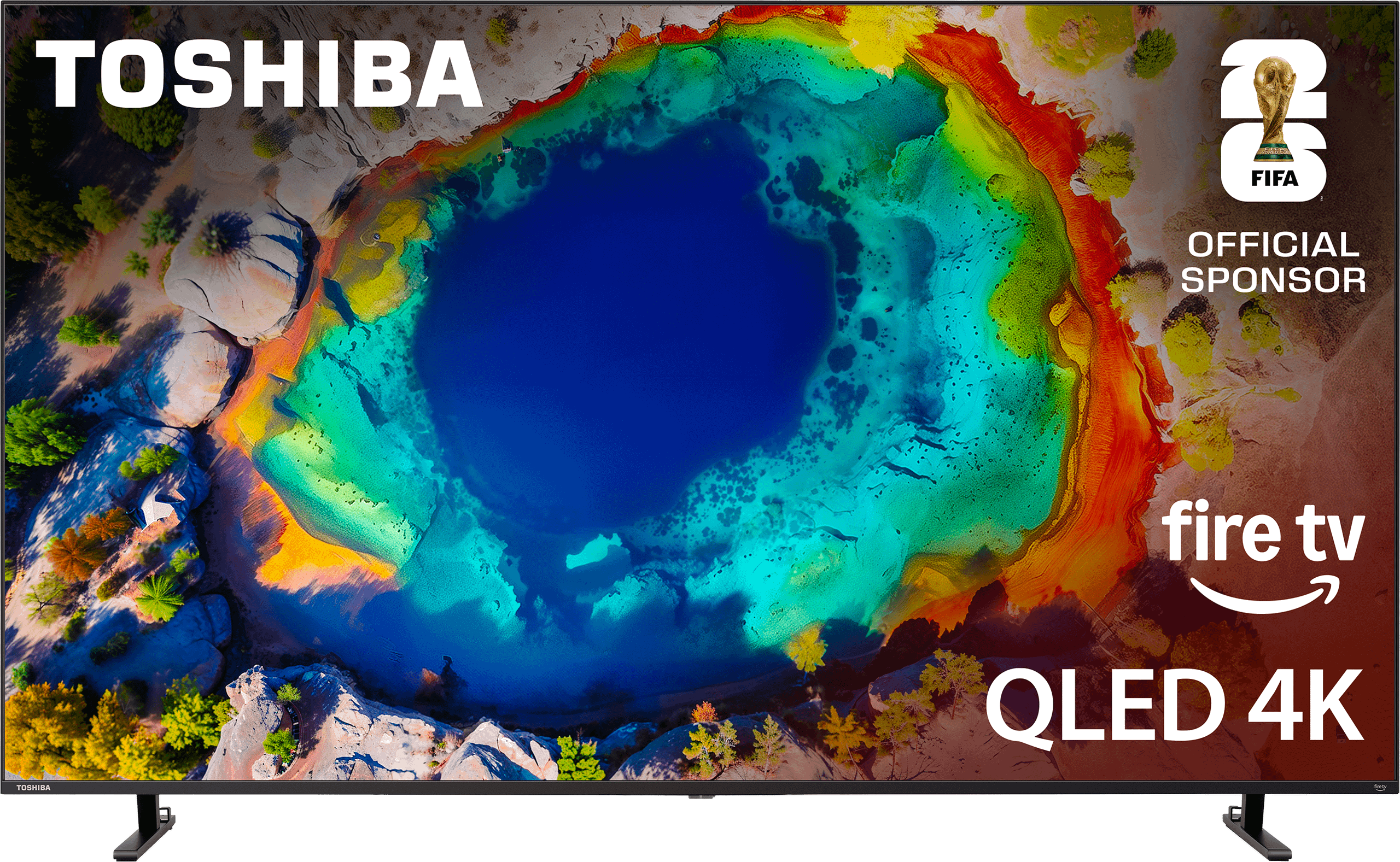
The Toshiba 65" C350 Series 4K UHD Smart Fire TV stands out primarily for its exceptional value proposition, delivering 65 inches of 4K entertainment at a significantly lower price point—often 40-50% less than the Sony BRAVIA 3. For Amazon ecosystem users, the Fire TV platform with built-in Alexa offers seamless integration with Prime Video, Echo devices, and Amazon's broader services, making it particularly appealing if you're already invested in that ecosystem. The Toshiba handles basic 4K upscaling adequately and provides perfectly functional performance for everyday viewing like cable TV, sports, and casual streaming. Its wide viewing angles make it suitable for group viewing, and the included Alexa voice remote offers comprehensive smart home control for Amazon device users.
However, the Toshiba C350 makes notable compromises to achieve its aggressive pricing. Picture processing is more basic, resulting in less accurate colors and inferior upscaling of lower-resolution content compared to Sony's advanced processing. The Fire TV interface feels more commercial and ad-heavy, with occasional software hiccups and slower performance that can frustrate users over time. Audio quality is also weaker with its 10W speakers, making external sound solutions more necessary from the start. For buyers who prioritize getting maximum screen size for minimum cost and can accept these trade-offs, the Toshiba represents outstanding value. But if you appreciate the Sony's superior picture processing, more refined smart TV experience, and better long-term reliability, the Toshiba's savings may not be worth the compromises in overall quality and user experience.
🤖 Read Detailed Comparison
👌Toshiba 65" C350 Series 4K UHD Smart Fire TV Details
💵 See Toshiba 65" C350 Series 4K UHD Smart Fire TV Price
The Amazon Fire TV Omni Series 65" offers a compelling alternative that emphasizes convenience and visual impact over processing refinement. Its standout feature is genuine hands-free Alexa control through built-in far-field microphones, creating a truly seamless experience where you can adjust volume, search content, control smart home devices, or turn the TV on from across the room without touching a remote. The quantum dot (QLED) technology delivers more vibrant, saturated colors that create impressive visual wow factor, particularly with animated content and HDR movies where the enhanced color volume makes images pop off the screen. Smart home integration is comprehensive, essentially replacing an Amazon Echo device while providing doorbell camera viewing, shopping capabilities, and extensive connected device control through natural voice commands.
The trade-offs become apparent in picture processing and motion handling, where the Amazon Fire TV Omni Series uses more basic technology that can't match Sony's upscaling prowess or motion smoothing capabilities. Colors, while more vibrant, are less accurate and natural-looking, and the TV struggles more with lower-resolution content like DVDs or cable TV. However, it typically costs significantly less than the Sony while offering premium quantum dot technology and smart features that provide genuine daily convenience. For households invested in Amazon's ecosystem or those who prioritize ease of use and smart home integration, the Fire TV delivers superior practical value. The hands-free voice control alone transforms how you interact with your entertainment system, making it a compelling choice for buyers who want maximum convenience features rather than the most refined picture processing.
🤖 Read Detailed Comparison
👌Amazon Fire TV Omni Series 65" 4K UHD Smart TV Details
💵 See Amazon Fire TV Omni Series 65" 4K UHD Smart TV Price
The TCL Q68 QLED delivers significantly superior display technology at a lower price point, featuring QLED quantum dot enhancement that produces over 1 billion colors covering nearly the entire DCI-P3 color space for more vibrant, lifelike images. Its Full Array Local Dimming creates the deep blacks and high contrast that the Sony BRAVIA 3 simply cannot achieve, making it dramatically better for dark room viewing and home theater setups where cinematic impact matters. With 600 nits of peak brightness, the TCL Q68 delivers genuinely impactful HDR performance where bright highlights actually pop off the screen, while its comprehensive HDR format support includes Dolby Vision, HDR10+, HDR10, and HLG for maximum compatibility with premium streaming content.
For gaming enthusiasts, the TCL Q68 QLED is in a completely different league with 120Hz Variable Refresh Rate support that enables smooth, tear-free gameplay on PlayStation 5 and Xbox Series X—capabilities the Sony BRAVIA 3 completely lacks with its 60Hz limitation. The TCL's Game Accelerator technology and Auto Low Latency Mode provide a genuinely modern gaming experience that takes full advantage of current-generation consoles. While the TCL Q68 may not match Sony's upscaling prowess for lower-quality content and occasionally experiences minor software hiccups, it delivers substantially better hardware performance across the board. Most compelling is the value proposition—the TCL typically costs hundreds less while providing premium QLED technology, local dimming, higher brightness, and advanced gaming features that would normally require spending significantly more on higher-end Sony models.
🤖 Read Detailed Comparison
👌TCL 65" Q68 QLED 4K UHD Smart TV Display Details
💵 See TCL 65" Q68 QLED 4K UHD Smart TV Display Price
The Hisense 65" U6 Series Mini-LED QLED 4K Fire TV represents a significant leap in display technology at this price point, featuring Mini-LED backlighting with up to 600 local dimming zones that deliver genuinely deep blacks alongside bright highlights—something impossible on standard LED TVs. The quantum dot color technology produces over a billion color shades with notably wider color gamut coverage, while the 1000-nit peak brightness creates dramatically more impactful HDR content that actually looks different from standard viewing. For gaming enthusiasts, the native 144Hz panel with full HDMI 2.1 bandwidth and Variable Refresh Rate support transforms the experience on modern consoles, allowing PS5 and Xbox Series X games to run at their highest frame rates with eliminated screen tearing. The 40W audio system with built-in subwoofer delivers surprisingly robust sound that outperforms most TVs in this category.
The trade-offs come primarily in user experience and brand perception. Fire TV's persistent advertising and Amazon-centric interface feel more commercial compared to Google TV's cleaner approach, though app selection remains comprehensive. The Hisense U6 also shows more picture quality variation at wider viewing angles and lacks Sony's decades of reputation for reliability and customer support. However, from a pure performance and value perspective, the Hisense offers premium display technologies—Mini-LED, local dimming, high refresh rate gaming, and superior HDR—that would typically cost significantly more from established brands. For buyers prioritizing the most impressive picture quality and modern features over brand prestige, the feature gap makes the Hisense compelling despite Fire TV's interface limitations and newer market presence.
🤖 Read Detailed Comparison
👌Hisense 65" U6 Series Mini-LED QLED 4K Fire TV Details
💵 See Hisense 65" U6 Series Mini-LED QLED 4K Fire TV Price
The Insignia 65" QF Series QLED delivers exceptional value by offering quantum dot technology at a budget price point that would have been unimaginable just a few years ago. Its QLED display produces vibrant, punchy colors that make animated movies, sports, and nature documentaries genuinely impressive to watch, while the Direct LED backlighting provides better peak brightness than the Sony for more noticeable HDR impact. The Fire TV platform is fast and responsive with seamless Alexa integration, making it ideal for users already invested in Amazon's ecosystem. At less than half the Sony's price, it includes modern features like Dolby Vision and Apple AirPlay support that deliver a premium viewing experience without the premium cost.
The performance gap between these TVs is much smaller than the price difference suggests. While the Insignia QLED may not match Sony's natural color accuracy or processing sophistication, it actually outperforms in key areas like brightness and HDR impact that matter for everyday viewing. The quantum dot technology provides genuinely better color performance than standard LED displays, and for most content - from Netflix shows to YouTube videos - the vibrant presentation is more engaging than clinical accuracy. The substantial price savings could fund a quality soundbar that would improve the overall experience far more than Sony's processing advantages, making the Insignia a smarter choice for budget-conscious buyers who want modern 4K entertainment without compromising on screen size or core features.
🤖 Read Detailed Comparison
👌Insignia 65" QF Series QLED 4K UHD Smart TV Details
💵 See Insignia 65" QF Series QLED 4K UHD Smart TV Price
The Hisense QD7 Series Mini-LED delivers premium display technology that fundamentally changes the viewing experience through its Mini-LED backlighting with Full Array Local Dimming. This advanced system uses hundreds of zones to control brightness independently, producing true blacks that disappear into darkness and bright highlights that pop with HDR content—creating the dramatic contrast that makes movies, games, and streaming shows look genuinely cinematic. The QLED Quantum Dot technology enhances color vibrancy and accuracy beyond what traditional LED displays can achieve, while 144Hz gaming capabilities with VRR support make it future-proof for PlayStation 5, Xbox Series X, and PC gaming. The Fire TV platform, while simpler than Google TV, provides fast access to all major streaming services with reliable Alexa integration for voice control.
What makes the Hisense QD7 particularly compelling is its exceptional value proposition—delivering Mini-LED technology typically found in much more expensive televisions at a significantly lower price point than the BRAVIA 3. The performance difference becomes immediately apparent in dark room viewing where the Hisense produces the deep blacks essential for home theater experiences, while also excelling in bright rooms with superior peak brightness. For gaming enthusiasts, the 144Hz refresh rate and modern HDMI features provide smooth, tear-free gameplay that the Sony simply cannot match. Unless brand loyalty to Sony or specific Google TV features are paramount concerns, the Hisense offers substantially better picture quality, more advanced features, and superior gaming performance for less money—making it the more logical choice for most buyers seeking maximum value and cutting-edge display technology.
🤖 Read Detailed Comparison
👌Hisense QD7 Series 65" Mini-LED 4K Fire TV Details
💵 See Hisense QD7 Series 65" Mini-LED 4K Fire TV Price
The TCL 65" Q Class QLED 4K Fire TV delivers a completely different value proposition, leading with quantum dot technology that produces dramatically more vibrant colors and significantly higher peak brightness than the Sony's standard LED panel. This quantum dot advantage becomes immediately apparent with HDR content on Netflix, Disney+, and Prime Video, where highlights actually pop and colors appear more saturated and lifelike. The TCL also includes modern gaming features that the Sony lacks entirely—120Hz VRR support on select models makes it genuinely suitable for PlayStation 5 and Xbox Series X gaming, while the Fire TV platform integrates seamlessly with Amazon's ecosystem for users invested in Alexa and Prime services.
Most importantly, the TCL Q Class QLED typically costs significantly less than the Sony while delivering superior brightness, color volume, and gaming capabilities. Where the Sony excels in processing lower-quality content sources, the TCL provides better real-world performance for the streaming-heavy viewing habits of most modern users. The trade-off comes in processing sophistication—the TCL can't clean up cable TV artifacts or upscale content as elegantly as Sony's X1 processor, and its quantum dot colors occasionally appear oversaturated in certain content. However, for buyers prioritizing modern features, bright room performance, and exceptional value, the TCL delivers more capability per dollar while the Sony's premium feels harder to justify given its limited brightness and missing gaming features.
🤖 Read Detailed Comparison
👌TCL 65" Q Class QLED 4K Fire TV Details
💵 See TCL 65" Q Class QLED 4K Fire TV Price
The TCL S5 Fire TV delivers exceptional value by prioritizing modern gaming features and bright room performance at a significantly lower price point. Its Game Accelerator 120 with Variable Refresh Rate support up to 120Hz makes it genuinely compatible with next-generation gaming consoles, providing smooth, tear-free gameplay that the Sony BRAVIA 3 simply cannot match. The television's High Brightness LED Backlight system produces substantially more light output than Sony's 450-nit limitation, making it far more effective in well-lit living rooms and providing more impactful HDR highlights. Motion Rate 240 with MEMC Frame Insertion also delivers superior motion clarity for sports and action content, while comprehensive HDR format support including HDR10+ ensures better compatibility with streaming services.
The TCL S5 represents a fundamentally different value proposition, offering premium-level specifications at budget pricing rather than Sony's approach of refined processing at a premium cost. While it cannot match the Sony's color accuracy or sophisticated upscaling technology, the TCL provides features that matter more for everyday use - gaming compatibility, bright room viewing, and comprehensive smart home integration through Fire TV and Alexa. The substantial price difference makes the TCL particularly compelling for households that include gaming consoles or bright viewing environments, where its technical advantages directly translate to better real-world performance. For most buyers in 2024, the TCL's modern feature set and aggressive pricing make it harder to justify the Sony's premium unless color processing and brand reputation specifically outweigh gaming capabilities and value considerations.
🤖 Read Detailed Comparison
👌TCL 65" S5 Class 4K UHD HDR Fire TV 2024 Smart TV Details
💵 See TCL 65" S5 Class 4K UHD HDR Fire TV 2024 Smart TV Price
The Hisense E6 brings cutting-edge display technology and modern gaming features that make it significantly more competitive in today's market. Its QLED quantum dot technology produces over a billion colors with noticeably higher peak brightness, delivering more impactful HDR performance and better visibility in bright rooms where the Sony struggles with reflections. The comprehensive gaming suite including Variable Refresh Rate, Auto Low Latency Mode, and 1440p at 120Hz support makes it genuinely capable with PlayStation 5 and Xbox Series X, eliminating screen tearing and reducing input lag for competitive gaming. Fire TV has also matured considerably, offering Alexa voice control integration and a customizable interface that, while occasionally promotional, provides solid access to all major streaming platforms.
Where the Hisense E6 truly shines is in delivering premium features at competitive pricing, making advanced display technology accessible without the typical brand premium. The quantum dot enhancement creates more vibrant, eye-catching visuals that particularly excel with animated content and nature documentaries, even if they sacrifice some of the Sony's natural color accuracy. While Hisense lacks Sony's decades-long reputation for reliability, recent models show significant quality improvements and the E6 represents excellent value for buyers who want modern features like WiFi 6, comprehensive HDR format support, and future-ready gaming capabilities. For households prioritizing the latest technology, gaming performance, and bright room viewing over brand prestige and color accuracy, the Hisense offers compelling advantages that address the Sony's key limitations.
🤖 Read Detailed Comparison
👌Hisense 65" E6 Cinema Series QLED 4K Fire TV Details
💵 See Hisense 65" E6 Cinema Series QLED 4K Fire TV Price
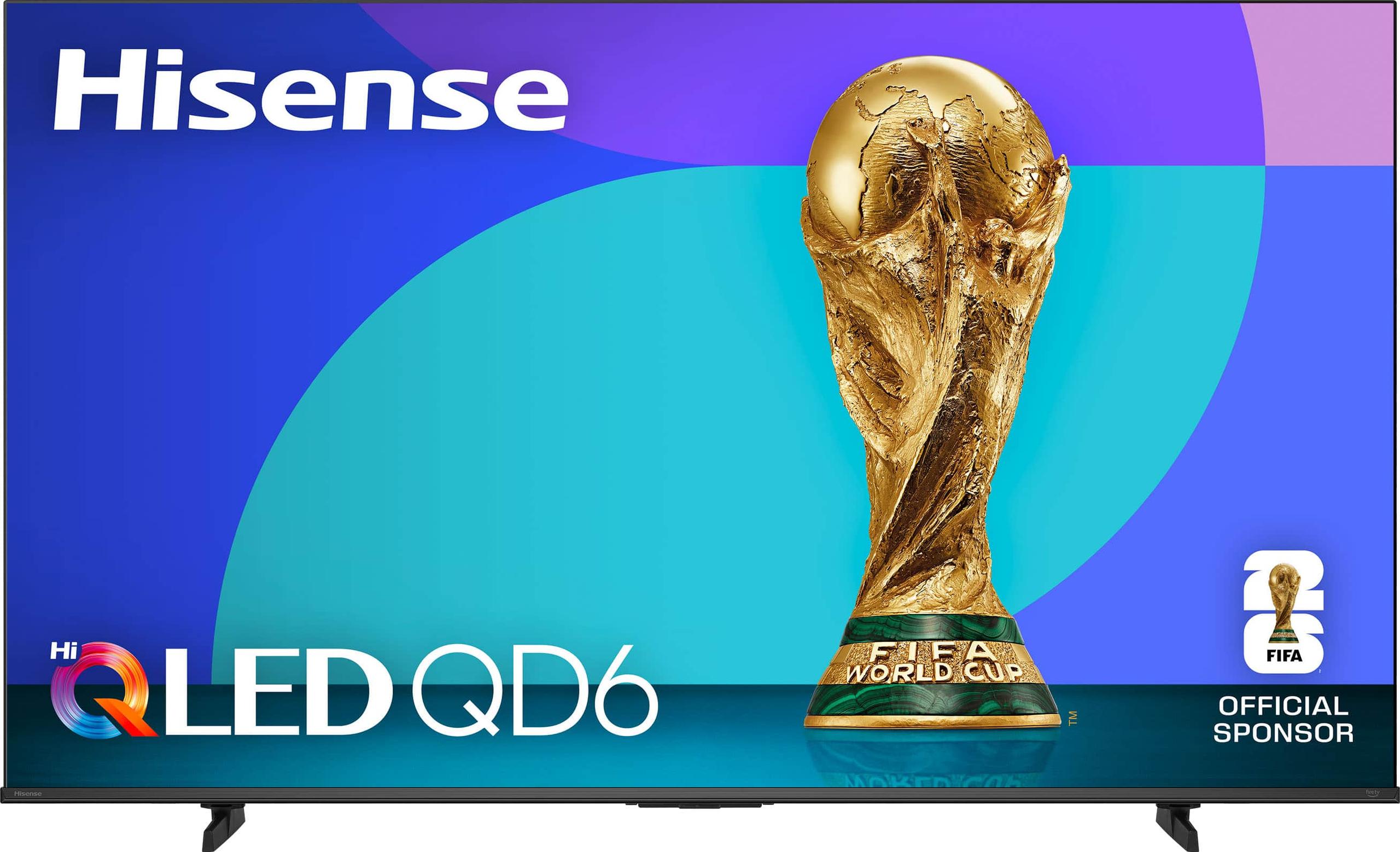
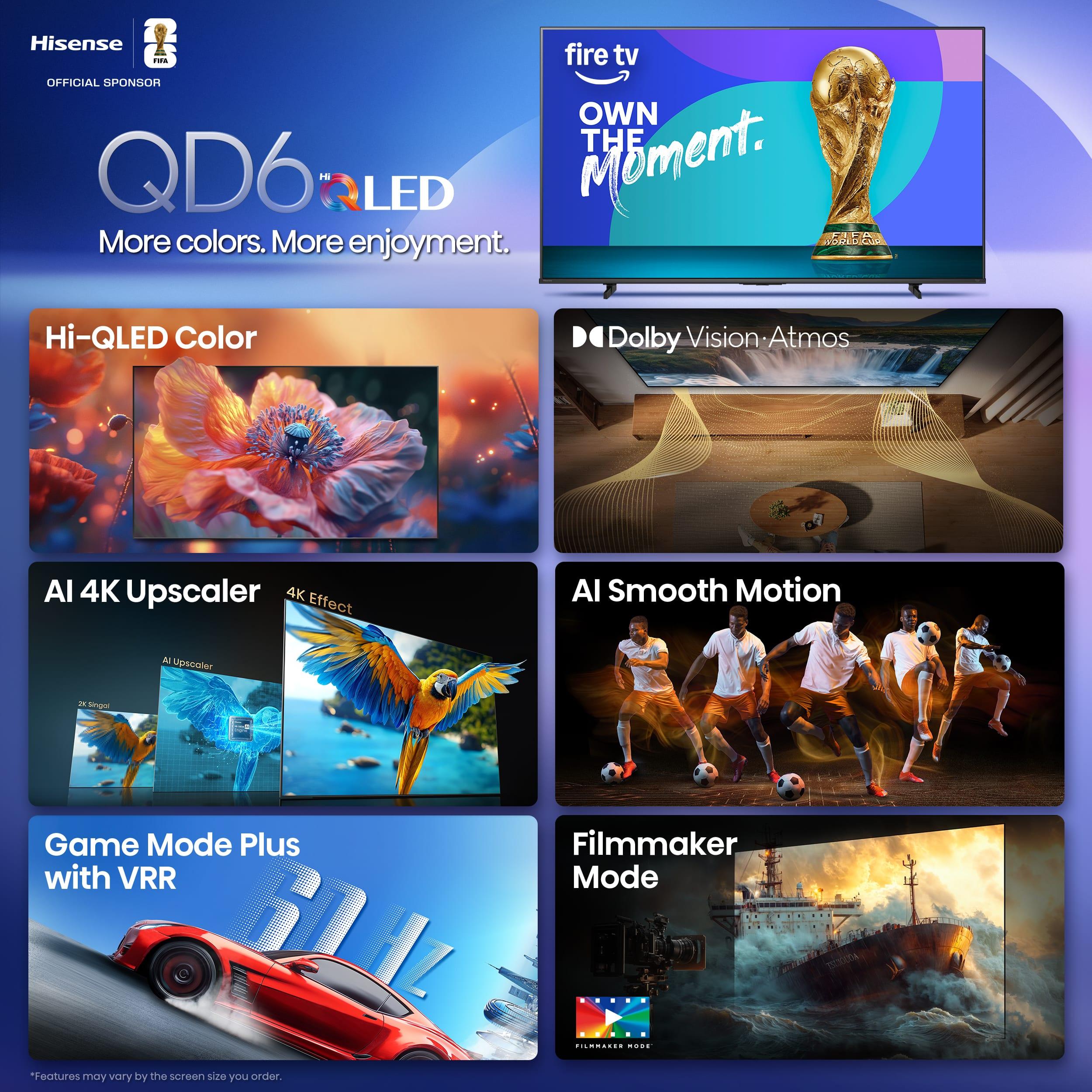
The Hisense 65" QD6 Series QLED 4K Fire TV offers quantum dot technology that delivers significantly more vibrant colors and better black levels than the Sony, creating a more visually impactful viewing experience. Its quantum dot enhancement covers about 90% of the DCI-P3 color space, making HDR content genuinely pop with colors that feel more cinematic and engaging. The Hisense also includes modern gaming features like Variable Refresh Rate and Auto Low Latency Mode that the Sony lacks entirely, making it substantially better for PlayStation 5 or Xbox Series X gaming. Fire TV's deep Alexa integration also works seamlessly if you're already invested in Amazon's smart home ecosystem, and the overall package typically costs less while delivering these premium-level specifications.
However, the Hisense QD6 sacrifices the Sony's refined image processing and color accuracy for its more dramatic presentation. While its quantum dot technology creates more vivid colors, they're less naturally accurate than what the Sony produces, and the Hisense struggles more with upscaling lower-resolution content like cable TV or compressed streaming. The Fire TV platform, while functional, feels less polished than Google TV and can occasionally lag during navigation. For buyers prioritizing maximum visual impact, gaming capabilities, and value per dollar, the Hisense represents a compelling alternative that delivers premium TV features at a budget price. But if you watch a lot of varied content sources and prefer the most natural, film-like presentation with superior smart TV reliability, the Sony's approach justifies its premium despite offering less dramatic specifications on paper.
🤖 Read Detailed Comparison
👌Hisense 65" QD6 Series QLED 4K Fire TV Details
💵 See Hisense 65" QD6 Series QLED 4K Fire TV Price
Original price was: $499.99.$369.99Current price is: $369.99.
Original price was: $579.99.$318.99Current price is: $318.99.


Privacy Policy
Terms and Conditions - Affiliate Policy
Home Security
© Copyright 2008-2026.
11816 Inwood Rd #1211, Dallas, TX 75244