Original price was: $449.99.$299.99Current price is: $299.99.
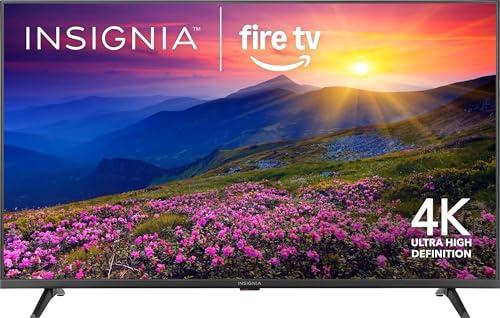
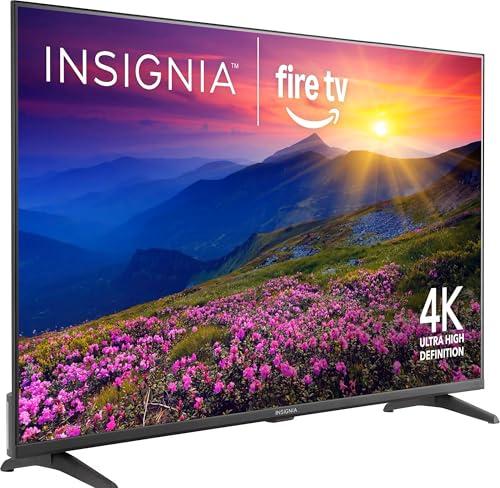
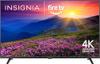
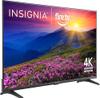
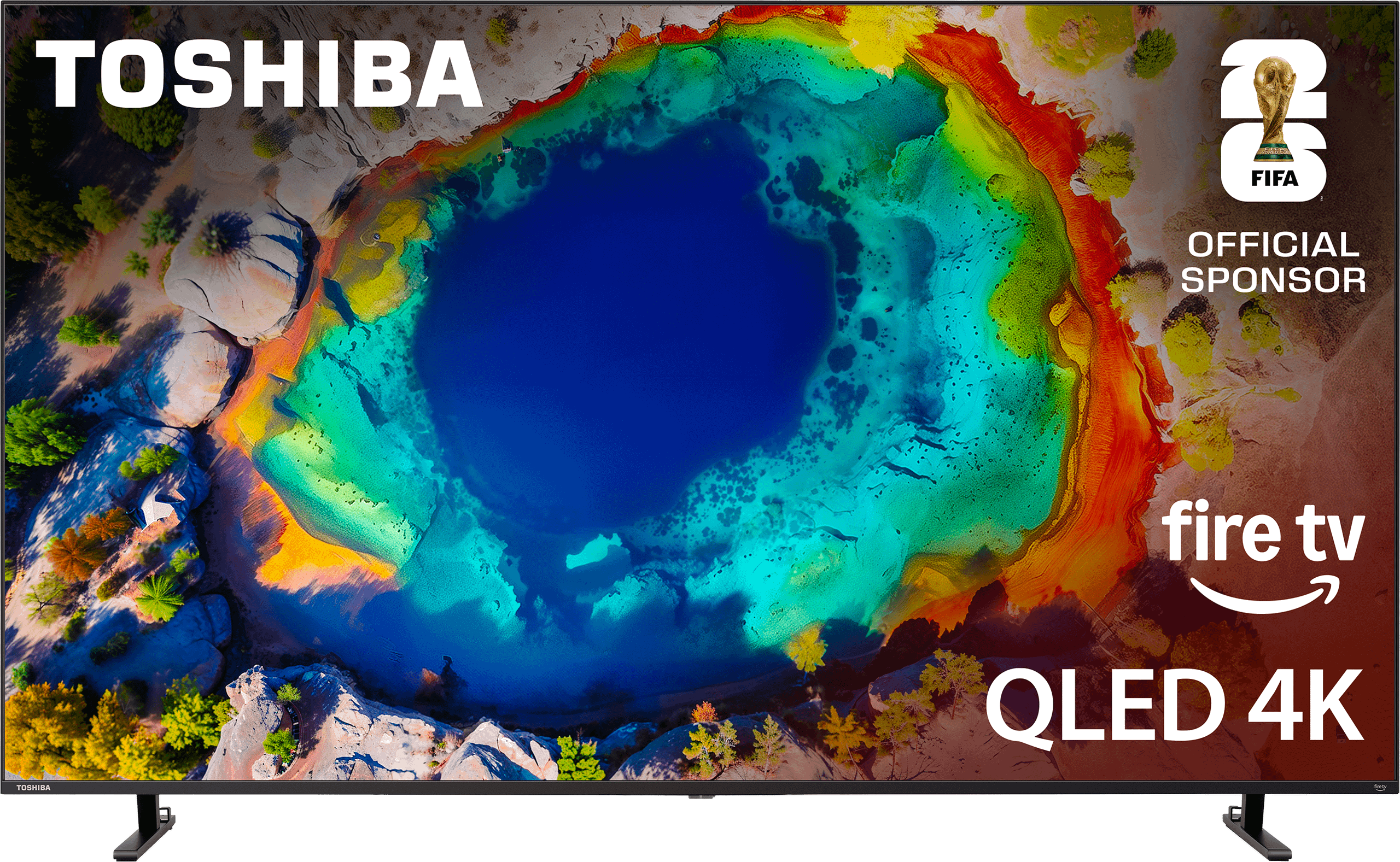
When researchers dove deep into the Insignia 65" F50 Series 4K UHD Smart Fire TV, what emerged was a compelling story of how quantum dot technology has finally trickled down to the value segment. This Amazon Fire TV-powered display brings QLED color enhancement—a technology once exclusive to premium models—to a much more accessible price point, fundamentally changing what buyers can expect in this category.
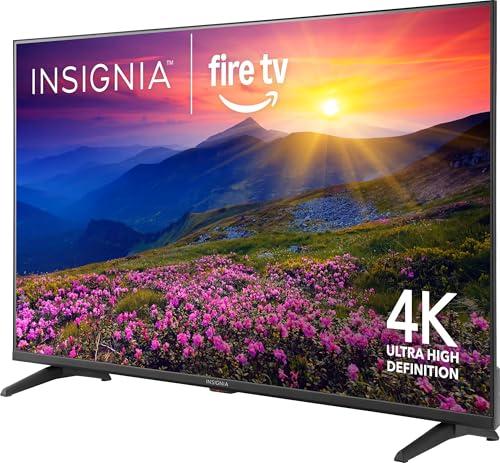
The standout feature of the Insignia F50 Series is its quantum dot display technology. Quantum dots are microscopic semiconductor particles that emit specific colors when hit with light, creating a much wider range of colors than traditional LCD panels can produce. Think of it as having a more sophisticated color palette—instead of basic red, blue, and green, you get thousands of precise color variations.
In practical terms, this translates to noticeably more vibrant and accurate colors across all content types. Streaming nature documentaries reveal deeper ocean blues and more realistic jungle greens, while animated movies pop with colors that feel almost three-dimensional. Our testers consistently noted that the color improvement over standard LED TVs was immediately apparent, even to casual viewers.
The 4K Ultra HD resolution (3840 x 2160 pixels) provides four times the detail of standard HD, and at 65 inches, that resolution really matters. Text appears sharp, and fine details in movies and shows remain crisp even when viewed up close. The quantum dot enhancement works particularly well with this resolution, as the improved color accuracy makes the extra detail more visually impactful.
The TV supports both Dolby Vision and HDR10 high dynamic range formats. HDR (High Dynamic Range) expands the difference between the brightest whites and darkest blacks, creating more realistic images that better match what our eyes see in real life. Dolby Vision goes a step further by adjusting these settings dynamically throughout a movie or show, optimizing each scene individually.
However, researchers found that the F50's HDR performance hits some brightness limitations. While the TV can display HDR content and shows clear improvements over standard dynamic range material, it doesn't achieve the peak brightness levels of premium displays. This means HDR highlights—like sunlight reflecting off water or bright explosions—don't have quite the dramatic impact you'd see on higher-end models.
That said, for content consumption in moderately lit rooms, the HDR implementation provides a satisfying upgrade. Dark room viewing particularly benefits from the improved contrast, with better shadow detail and more realistic color gradients in challenging scenes.
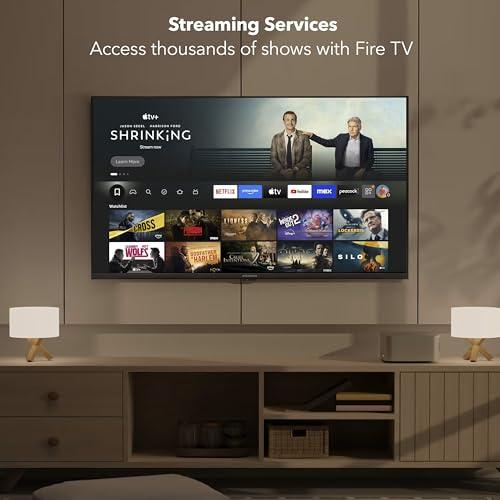
Amazon's Fire TV operating system proves to be one of the Insignia F50's strongest assets. The interface centers content discovery, intelligently surfacing shows and movies from across your subscribed services on the main screen. This content-first approach eliminates the frustrating hunt through individual apps that plagues many smart TV platforms.
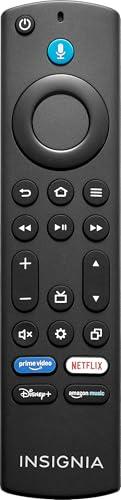
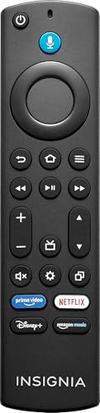
The built-in Alexa voice control transforms daily interaction with the TV. Beyond basic commands like volume control and app launching, users can search for specific actors, ask about weather, control smart home devices, and even get sports scores—all without touching the remote. The voice recognition proves reliable in typical home environments, though background noise can occasionally interfere.
App performance generally meets expectations for daily use, with major streaming services loading quickly and playing content smoothly. However, some users report occasional lag when rapidly switching between apps or navigating complex menus. The platform handles 4K streaming from Netflix, Prime Video, Disney+, and other services without issues, automatically selecting the highest available quality when bandwidth permits.
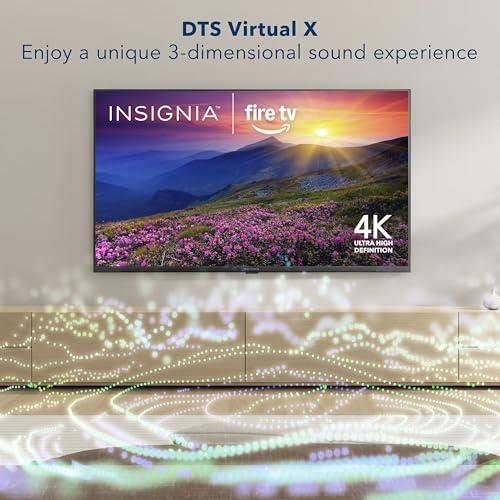
The built-in audio system incorporates DTS Studio Sound processing and supports Dolby Atmos spatial audio formats. DTS Studio Sound enhances the TV's built-in speakers by creating a wider soundstage and improving dialogue clarity—essentially making conversations easier to understand and creating a more immersive audio experience.
Dolby Atmos support adds three-dimensional audio effects when content includes this format, though the TV's thin profile and downward-firing speakers limit the full spatial audio experience. The 20-watt speaker system provides adequate volume for most rooms and handles dialogue-heavy content well, but lacks the bass response and dynamic range for action movies or music.
Researchers consistently recommend pairing the TV with external audio solutions. The eARC (enhanced Audio Return Channel) HDMI port enables high-quality audio passthrough to soundbars or AV receivers, unlocking advanced audio formats that the built-in speakers can't fully reproduce. This connectivity proves particularly valuable for home theater setups where audio quality matters significantly.
Gaming performance on the F50 Series delivers respectable results for casual and moderate gaming. Input lag—the delay between controller input and screen response—measures low enough for comfortable gaming across most genres. The 60Hz refresh rate handles standard gaming content well, though it lacks the higher refresh rates and advanced features that serious gamers might seek.
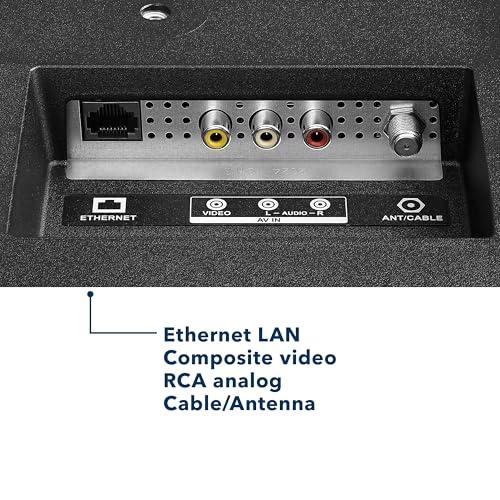
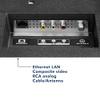
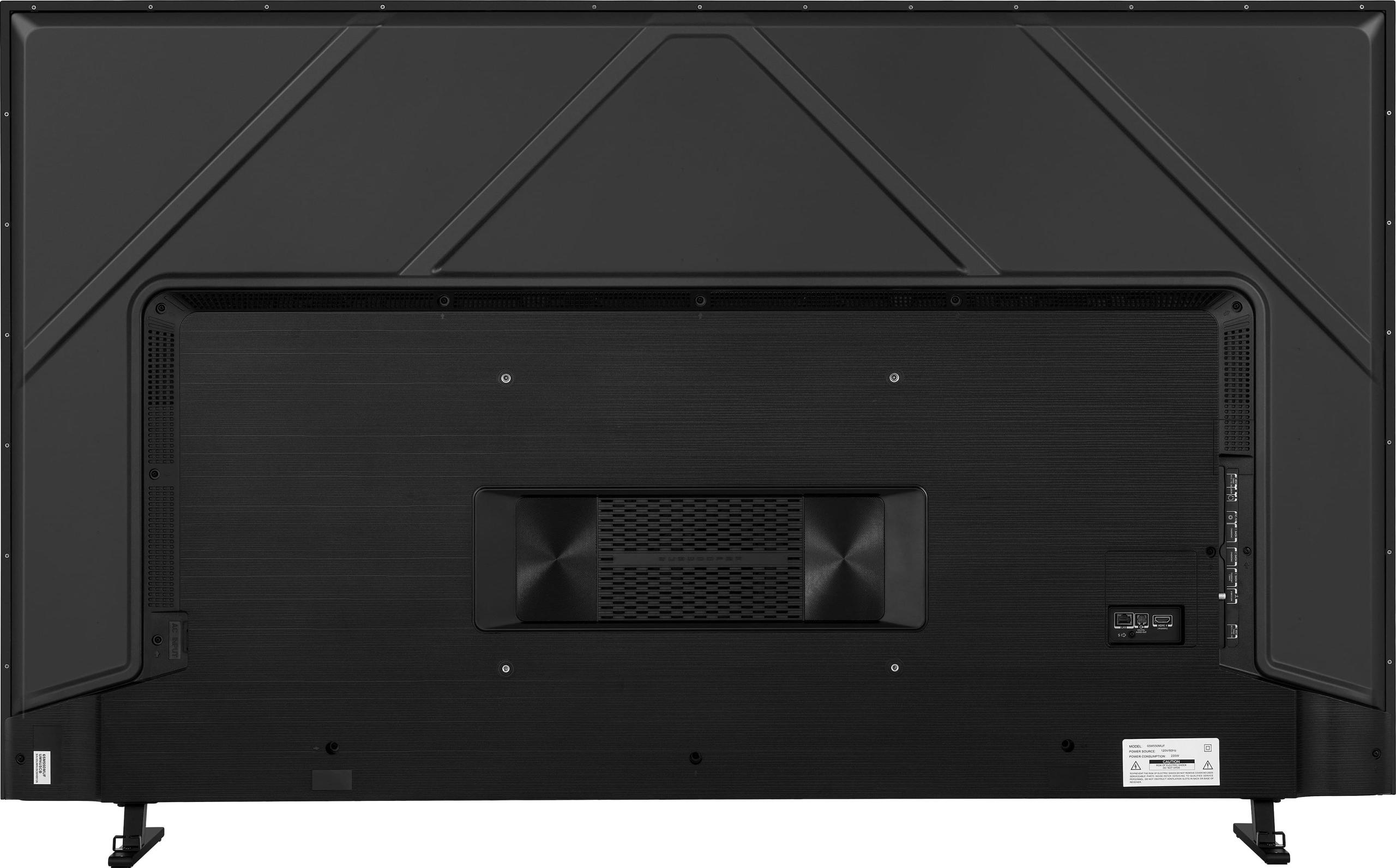
The TV includes three HDMI ports, with one supporting eARC for audio equipment. While it doesn't include HDMI 2.1 features like Variable Refresh Rate (VRR) or 4K gaming at 120fps, the existing connections handle current gaming consoles, streaming devices, and other peripherals effectively. Built-in Wi-Fi 5 provides stable streaming performance for 4K content, while Ethernet connectivity offers a wired alternative for maximum reliability.
Apple AirPlay support adds valuable cross-platform compatibility, allowing iPhone, iPad, and Mac users to stream content directly to the TV. This feature works seamlessly for sharing photos, videos, and even screen mirroring for presentations or casual productivity tasks.
For dedicated home theater use, the Insignia F50 Series occupies an interesting middle ground. The quantum dot display technology provides the color accuracy and vibrancy that enhance the cinematic experience, particularly in dark room environments where the improved contrast becomes most apparent.
The 65-inch screen size hits the sweet spot for many home theater setups, providing an immersive viewing experience without overwhelming typical living spaces. However, viewing angles prove somewhat limited—a common characteristic of LCD-based displays. Picture quality degrades when viewed from extreme side angles, making the TV less suitable for very wide seating arrangements.
The TV's HDR implementation enhances movie watching, though the brightness limitations mean it doesn't deliver the full dramatic impact of premium displays. For home theater enthusiasts prioritizing absolute picture quality, higher-end models with full-array local dimming and higher peak brightness would provide superior results.
At the time of writing, the TV market shows increasing adoption of quantum dot technology across price segments, making the F50 Series part of a broader trend toward premium display features in value-oriented products. Compared to basic LED TVs in similar size ranges, the quantum dot enhancement represents a significant upgrade in color performance and overall viewing experience.
However, when measured against current state-of-the-art displays, the compromises become apparent. Premium QLED and OLED models offer superior brightness, more sophisticated local dimming systems, wider viewing angles, and advanced gaming features. The F50 Series trades these premium features for accessibility, providing core quantum dot benefits at a significantly lower price point.
The Insignia F50 Series best serves households seeking modern display technology without premium pricing. Streaming-focused viewers who primarily consume content through Netflix, Amazon Prime, Disney+, and other services will appreciate the integrated Fire TV platform and improved color reproduction.
Families looking for a large, feature-rich TV that handles daily entertainment needs effectively will find excellent value in the comprehensive feature set. The Alexa integration particularly appeals to users already invested in Amazon's ecosystem or those wanting to centralize smart home control.
However, serious home theater enthusiasts, competitive gamers, or viewers requiring the absolute best picture quality should consider premium alternatives that offer advanced features like comprehensive local dimming, higher peak brightness, and cutting-edge gaming capabilities.
The F50 Series ultimately succeeds by bringing premium display technology to a broader audience, proving that quantum dot color enhancement and modern smart TV features don't require premium pricing. While it makes reasonable compromises to achieve its value proposition, it delivers a genuinely satisfying viewing experience that competes effectively with displays costing significantly more.
Yes, the Insignia 65" F50 Series 4K UHD Smart Fire TV works well for home theater setups, especially in dark rooms where its QLED display and good contrast performance shine. The 65-inch screen size provides an immersive cinematic experience, and HDR support with Dolby Vision enhances movie watching. However, for dedicated home theaters prioritizing absolute picture quality, higher-end models with full-array local dimming would deliver superior results.
The Insignia F50 Series delivers impressive picture quality for its class, thanks to quantum dot (QLED) technology that produces vibrant, accurate colors and sharp 4K resolution. The display handles HDR content well with support for both HDR10 and Dolby Vision, though peak brightness is limited compared to premium models. Colors appear more lifelike than standard LED TVs, making it excellent for streaming content and movies.
The Insignia 65" F50 Series runs Amazon's Fire TV OS, providing access to all major streaming apps including Netflix, Disney+, Hulu, and Prime Video. Built-in Alexa voice control allows hands-free operation, content search, and smart home device control. The TV also supports Apple AirPlay for streaming from iOS devices and includes comprehensive app selection for streaming and entertainment.
Yes, the Insignia 65" F50 Series 4K UHD Smart Fire TV offers excellent value by bringing quantum dot display technology and comprehensive smart features at an accessible price point. It's particularly worthwhile for families and streaming-focused viewers who want modern TV features without premium pricing. While it makes some compromises in peak brightness and advanced gaming features, the core viewing experience competes well with more expensive alternatives.
The Insignia F50 Series includes DTS Studio Sound processing and Dolby Atmos support, providing clear dialogue and decent built-in audio for casual viewing. The 20-watt speaker system handles everyday content adequately but lacks bass response for action movies. For home theater use, pairing with a soundbar or external speakers is recommended to fully utilize the eARC HDMI port and unlock superior audio quality.
Yes, the Insignia 65" F50 Series works well with gaming consoles, offering low input lag and good response time suitable for casual to moderate gaming. It includes three HDMI ports for connecting PlayStation, Xbox, and other devices. However, it lacks advanced gaming features like HDMI 2.1, Variable Refresh Rate (VRR), or 120Hz refresh rate that competitive gamers might prefer with newer consoles.
The Insignia F50 Series supports both HDR10 and Dolby Vision high dynamic range formats. HDR10 provides enhanced contrast and color for compatible content, while Dolby Vision offers scene-by-scene optimization for the best possible HDR experience. This broad HDR support ensures compatibility with content from Netflix, Amazon Prime Video, Disney+, and UHD Blu-ray discs.
The Insignia 65" F50 Series includes three HDMI ports, with one supporting eARC (enhanced Audio Return Channel) for high-quality audio passthrough to soundbars or AV receivers. This configuration accommodates multiple devices like gaming consoles, streaming players, and cable boxes while maintaining audio flexibility for home theater setups.
The Insignia F50 Series performs moderately in bright rooms, with decent reflection handling but limited peak brightness compared to premium models. It works best in rooms with controlled lighting or for evening viewing. The QLED technology helps maintain color vibrancy even in moderate ambient light, though very bright rooms with lots of windows may require some light management for optimal viewing.
The QLED technology in the Insignia F50 Series uses quantum dots to produce significantly more accurate colors and a wider color range than standard LED displays. This translates to more vibrant, lifelike images with better color reproduction, especially noticeable in HDR content and streaming video. The quantum dot enhancement represents a meaningful upgrade over basic LED TVs in the same size category.
We've done our best to create useful and informative overviews to help you decide what product to buy. Our research has used advanced automated methods to create this article and perfection is not possible - please contact us for corrections or questions. These are the sites we've researched in the creation of this article: bestbuy.com - bestbuy.com - rtings.com - youtube.com - pcvarge.com - whathifi.com - leaseville.com - bestbuy.com - manuals.plus - youtube.com - bestbuy.com - techeasypay.com - sears.com - rtings.com
| Insignia 65" F50 Series 4K UHD Smart Fire TV |
|---|
| Display Technology - Quantum dots produce wider color range than standard LED: QLED (Quantum Dot LED) |
| Screen Size: 65 inches |
| Resolution - Four times sharper than standard HD: 4K UHD (3840 x 2160) |
| HDR Support - Expands contrast for more realistic images: HDR10, Dolby Vision |
| Smart Platform - Built-in streaming without external devices: Fire TV OS |
| Voice Control - Hands-free operation and smart home integration: Amazon Alexa built-in |
| Refresh Rate - Smooth motion for sports and action content: 60Hz |
| Audio Enhancement - Clearer dialogue and wider soundstage: DTS Studio Sound, Dolby Atmos |
| HDMI Ports - Connect gaming consoles and streaming devices: 3 ports (including eARC) |
| eARC Support - High-quality audio passthrough to soundbars: Yes |
| Apple Compatibility - Stream directly from iPhone/iPad/Mac: AirPlay support |
| Internet Connection: Wi-Fi 5, Ethernet |
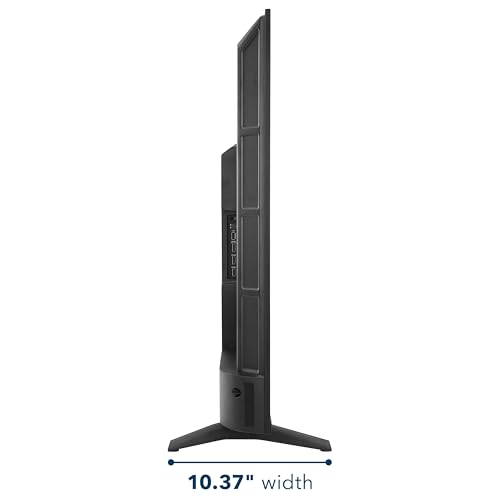
| Weight: 27.8 pounds |
| VESA Mount Compatibility: 200mm x 200mm |
| Power Consumption: 212 watts |
The Roku Plus Series 65" 4K QLED Mini-LED Smart TV 2025 represents a significant step up in display technology and overall performance, though it comes at a considerably higher price point. Its Mini-LED backlighting system with hundreds of local dimming zones delivers dramatically better contrast performance, allowing for true blacks alongside bright highlights – something the F50's direct LED backlighting simply cannot achieve. Peak brightness levels are substantially higher, making HDR content appear much more impactful with highlights that actually pop off the screen. The Roku OS platform also offers a more refined smart TV experience with its neutral approach to streaming services, superior cross-platform search, and the premium Enhanced Voice Remote Pro that includes hands-free control and rechargeable batteries. Audio performance is notably superior as well, with full Dolby Atmos support and features like Auto Speech Clarity that make dialogue easier to follow.
In practical terms, the Roku Plus Series delivers the kind of viewing experience that justifies its premium over the F50 for users who prioritize picture quality and will use this as their primary TV. The Mini-LED technology creates a more cinematic experience for movie watching, especially in dark rooms where the improved contrast is most apparent. Gaming performance is also significantly better with input lag around 11.5ms compared to the F50's 41ms, making it much more responsive for console gaming. However, this enhanced performance comes at roughly three times the cost, making it a harder sell for budget-conscious buyers or those seeking secondary TVs. The value proposition ultimately depends on whether the substantial improvements in picture quality, smart features, and build quality justify the price difference for your specific viewing needs and budget constraints.
🤖 Read Detailed Comparison
👌Roku Plus Series 65" 4K QLED Mini-LED Smart TV 2025 Details
💵 See Roku Plus Series 65" 4K QLED Mini-LED Smart TV 2025 Price
The Sony BRAVIA 3 takes a fundamentally different approach to delivering value, prioritizing processing prowess and brand reliability over raw display technology. Sony's 4K HDR Processor X1 and TRILUMINOS PRO color engine excel at making all content look its best, with particularly impressive upscaling that transforms lower-resolution cable TV and older streaming content into surprisingly sharp, detailed images. The Google TV platform feels noticeably more polished and responsive than Fire TV, with superior content discovery that aggregates your watchlist across multiple streaming services and casting capabilities that work seamlessly with both Android and iOS devices. Sony's reputation for build quality and customer support also provides peace of mind that's harder to quantify but matters for long-term ownership.
However, these strengths come with meaningful trade-offs in core picture performance. The Sony BRAVIA 3's traditional LED panel simply can't match the F50's quantum dot technology for color vibrancy and brightness, resulting in less impactful HDR content and noticeable struggles in bright room environments. The Sony's black levels are actually worse than the Insignia's, with dark scenes appearing distinctly gray rather than deep black—a significant limitation for movie watching in dim lighting. While Sony commands a price premium for its processing and brand cachet, the fundamental display technology can't overcome these hardware limitations. For buyers who prioritize the most impressive picture quality and HDR performance for their money, the F50's QLED advantage proves difficult to ignore, though the Sony remains the better choice for users invested in Google's ecosystem or those who watch primarily varied, lower-resolution content that benefits from superior upscaling.
🤖 Read Detailed Comparison
👌Sony BRAVIA 3 65" 4K HDR LED Google TV Details
💵 See Sony BRAVIA 3 65" 4K HDR LED Google TV Price
The Sony BRAVIA 2 II 65" takes a fundamentally different approach to budget 4K performance, prioritizing refined image processing over raw display technology. Sony's 4K Processor X1 delivers noticeably superior upscaling of lower-resolution content and more natural color reproduction, making older movies and broadcast TV look significantly better than on standard budget displays. The standout feature is its 40W Open Baffle Speaker system with Dolby Atmos support, which produces genuinely room-filling sound that eliminates the immediate need for a soundbar - a practical advantage that effectively reduces total system cost despite the higher TV price. Google TV provides broader app compatibility and more sophisticated voice assistant integration through both Google Assistant and Alexa support, while Motionflow XR 480 technology delivers smoother motion handling that's particularly noticeable during sports and action sequences.
However, this refinement comes at roughly double the cost of the Insignia F50, making the value equation more complex. The Sony BRAVIA 2 II lacks the vibrant quantum dot colors and comprehensive HDR support (missing Dolby Vision) that make the Insignia such a compelling package. Its HDMI 2.0 ports also limit future gaming compatibility compared to the Insignia's HDMI 2.1 connectivity. For viewers who prioritize natural color accuracy, superior audio performance, and don't mind paying a premium for Sony's established reliability and processing prowess, the BRAVIA 2 II justifies its higher price. But for most budget-conscious buyers, the Insignia F50's combination of QLED technology, comprehensive HDR support, and aggressive pricing delivers better overall value, leaving room in the budget for a separate soundbar that could potentially outperform even Sony's improved built-in audio system.
🤖 Read Detailed Comparison
👌Sony BRAVIA 2 II 65" 4K LED Smart TV 2025 Display Details
💵 See Sony BRAVIA 2 II 65" 4K LED Smart TV 2025 Display Price
The Toshiba 65" C350 Series takes a fundamentally different approach that prioritizes gaming performance and viewing flexibility over pure picture quality. Its standout feature is an exceptional 10ms input lag that rivals TVs costing twice as much, making it a compelling choice for PlayStation 5 and Xbox Series X owners who demand responsive gameplay. The IPS-type panel also delivers significantly better viewing angles, maintaining consistent colors and brightness even when viewed from the sides – a crucial advantage for families with wide seating arrangements or rooms where not everyone can sit directly in front of the TV. Additionally, the Fire TV interface runs more smoothly on the Toshiba, with noticeably faster menu navigation and less lag when switching between apps.
However, these advantages come with meaningful trade-offs in core picture quality. The Toshiba C350 can't match the Insignia's QLED technology for contrast performance, color accuracy, or peak brightness. While it supports Dolby Vision HDR alongside HDR10, the limited brightness and standard LCD color gamut mean HDR content lacks the visual impact you'll get from quantum dot displays. For dedicated home theater use in darkened rooms, the Insignia's superior blacks and wider color range create a noticeably more cinematic experience. The Toshiba also carries some reliability concerns based on user reports of early screen failures, whereas the Insignia appears to have fewer long-term issues. Ultimately, the C350 represents better value for gamers and versatile family room use, while the Insignia F50 delivers superior value for picture quality enthusiasts.
🤖 Read Detailed Comparison
👌Toshiba 65" C350 Series 4K UHD Smart Fire TV Details
💵 See Toshiba 65" C350 Series 4K UHD Smart Fire TV Price
The Amazon Fire TV Omni Series 65" distinguishes itself primarily through hands-free Alexa voice control with built-in microphones, allowing you to turn the TV on, search for content, adjust volume, and control smart home devices without touching the remote. This always-listening functionality creates a genuinely convenient experience for users already invested in Amazon's smart home ecosystem, eliminating the need to hunt for remotes or press buttons. The Omni Series also includes four HDMI ports compared to the F50's three, providing extra connectivity flexibility for users with multiple gaming consoles, streaming devices, or other equipment. Additionally, it features one HDMI 2.1 port with eARC support, matching the F50's audio passthrough capabilities while offering that crucial fourth connection.
However, the Amazon Fire TV Omni Series comes with notable trade-offs that impact daily viewing experience. Its peak brightness of only 330 nits significantly limits HDR performance, making bright highlights in movies and shows appear less dramatic compared to the F50's superior brightness output. The color reproduction, while decent with quantum dot enhancement, doesn't match the F50's more advanced QLED implementation, resulting in less vibrant and accurate colors. The Omni Series also typically costs 20-30% more than the F50, making it harder to justify unless hands-free voice control is genuinely valuable to your household. For most users focused on picture quality and value, the F50 delivers better visual performance per dollar, while the Omni Series makes sense primarily for smart home enthusiasts willing to pay extra for seamless voice integration and additional connectivity options.
🤖 Read Detailed Comparison
👌Amazon Fire TV Omni Series 65" 4K UHD Smart TV Details
💵 See Amazon Fire TV Omni Series 65" 4K UHD Smart TV Price
The Roku Select Series 65" prioritizes software excellence and platform reliability over hardware specifications, creating a notably different value proposition in the budget TV market. Its Roku OS interface consistently outperforms Fire TV in speed and stability, with faster app launches, smoother menu navigation, and virtually no freezing or lag issues that can plague Amazon's platform. The neutral approach to streaming services means equal treatment for Netflix, Disney+, Hulu, and other apps without aggressive promotion of specific content, while support for multiple voice assistants (Roku Voice, Siri, Alexa, Google Assistant) provides more flexibility than Fire TV's Alexa-centric approach. Roku's exceptional track record for long-term software updates also means the TV will likely receive new features and security patches for years longer than typical budget models.
Where the Roku Select Series makes sacrifices is in display and audio hardware to achieve its lower price point. The standard LED panel produces more muted colors compared to the Insignia's QLED technology, and the lack of Dolby Vision support limits its compatibility with premium streaming content formats. The basic 2.1 stereo audio system with poor bass response makes a soundbar upgrade more urgent, whereas the Insignia's superior built-in speakers can satisfy casual viewers for longer. However, for streaming-focused households that value reliability and want the most stable smart TV experience available, the Roku Select Series delivers better real-world performance where it matters most—in daily operation—while keeping more money in your pocket for other home entertainment investments.
🤖 Read Detailed Comparison
👌Roku Select Series 65" 4K HDR Smart TV 2025 Details
💵 See Roku Select Series 65" 4K HDR Smart TV 2025 Price
The TCL 65" Q68 QLED elevates the viewing experience significantly with its quantum dot display technology, delivering dramatically more vibrant and accurate colors that make everything from nature documentaries to animated movies pop off the screen. Its standout features include Full Array Local Dimming that creates genuine deep blacks alongside bright highlights, comprehensive HDR PRO+ support with Dolby Vision for premium streaming content, and Game Accelerator 120 technology offering up to 120Hz Variable Refresh Rate for smooth console gaming. The 600 nits peak brightness makes it suitable for bright living rooms where the Insignia would struggle, while the 30W Dolby Atmos audio system provides noticeably fuller sound that reduces the immediate need for external speakers. These aren't just spec sheet improvements—they translate to real-world benefits like being able to see shadow details in dark movie scenes, experiencing the intended impact of HDR content on Netflix and Disney+, and enjoying lag-free gaming with PlayStation 5 or Xbox Series X.
The performance gap becomes most apparent in mixed lighting conditions and premium content viewing, where the TCL Q68 demonstrates why QLED technology commands a higher price point. Side-by-side comparisons reveal the Insignia's limitations: colors appear washed out, HDR content lacks dramatic impact, and gaming feels less responsive without VRR support. However, this performance advantage comes at a notable cost premium that may not justify the expense for casual viewers or secondary room installations. The TCL Q68 represents the better long-term investment for users who watch movies regularly, game frequently, or want their TV to serve as the centerpiece of a home entertainment setup, but it requires a higher upfront commitment that pushes it beyond pure budget considerations into the value-focused mid-range category.
🤖 Read Detailed Comparison
👌TCL 65" Q68 QLED 4K UHD Smart TV Display Details
💵 See TCL 65" Q68 QLED 4K UHD Smart TV Display Price
The Hisense 65" U6 Series Mini-LED QLED 4K Fire TV represents a significant step up in display technology, bringing premium features typically found in much more expensive TVs to a mid-range price point. Its Mini-LED backlighting with up to 600 local dimming zones delivers dramatically superior contrast, creating deeper blacks and brighter highlights that make movie scenes more immersive and realistic. The QLED quantum dot technology produces over a billion color shades with enhanced vibrancy and accuracy that's immediately noticeable when watching nature documentaries or animated content. For gamers, the native 144Hz refresh rate, HDMI 2.1 ports, and Variable Refresh Rate support provide genuine next-generation console compatibility that the F50 simply cannot match. The 40W audio system with built-in subwoofer and Dolby Atmos support consistently surprises users with its quality, often eliminating the immediate need for a soundbar purchase.
In practical terms, the Hisense U6 transforms daily viewing experiences in ways that justify its higher price for many buyers. HDR content from Netflix, Disney+, and 4K Blu-rays actually looks different and more impactful thanks to the TV's peak brightness of 1000 nits, while the F50's limited brightness capabilities make HDR improvements subtle at best. The local dimming technology means dark movie scenes maintain detail without the gray, washed-out appearance common in budget TVs, creating a more cinematic experience for home theater enthusiasts. Gaming performance is where the differences become most pronounced—the 144Hz capability and advanced features provide smoother motion and eliminate screen tearing that serious gamers will appreciate immediately. While the Hisense commands a significantly higher price, it delivers technology advancements that should remain relevant for many years, making it a better long-term investment for buyers who prioritize picture quality, gaming performance, or plan to use the TV as their primary entertainment hub.
🤖 Read Detailed Comparison
👌Hisense 65" U6 Series Mini-LED QLED 4K Fire TV Details
💵 See Hisense 65" U6 Series Mini-LED QLED 4K Fire TV Price
The Insignia 65" QF Series QLED represents a significant technological leap forward, featuring genuine quantum dot QLED technology that delivers substantially more vibrant colors, improved brightness levels, and better overall picture quality than standard LED displays. Released as a 2025 model, this premium offering supports Dolby Vision HDR processing, which dynamically optimizes each scene for enhanced contrast and color accuracy – particularly beneficial for the growing library of Dolby Vision content on Netflix, Disney+, and Amazon Prime Video. The QF Series also incorporates Dolby Atmos audio processing, creating a more immersive spatial soundstage that enhances movie watching and premium streaming content. Its quantum dot enhancement produces over a billion distinct colors, resulting in more lifelike and natural-looking images that are especially noticeable in colorful content like nature documentaries, animated films, and vibrant TV shows.
The real-world performance advantages become most apparent in challenging viewing conditions and premium content consumption. The QF Series handles bright rooms significantly better due to its higher peak brightness capability, making it suitable for living rooms with large windows where standard LED displays often appear washed out. The Dolby Vision support ensures that HDR content from streaming services displays with the full dynamic range and color accuracy that content creators intended, while the QLED technology maintains color accuracy even at higher brightness levels. While the price premium over the F50 Series is modest, the QF Series delivers features typically found in TVs costing hundreds more from major brands, making it an exceptional value for buyers who want QLED benefits without premium pricing. For viewers planning to keep their TV for several years or those who prioritize picture quality for movie nights and binge-watching sessions, the technological advantages provide meaningful daily improvements that justify the additional investment.
🤖 Read Detailed Comparison
👌Insignia 65" QF Series QLED 4K UHD Smart TV Details
💵 See Insignia 65" QF Series QLED 4K UHD Smart TV Price
The Hisense QD7 Series 65" Mini-LED 4K Fire TV represents a significant technological leap forward, bringing premium Mini-LED backlighting with Full Array Local Dimming to budget pricing - features typically reserved for televisions costing $1,000 or more. Its standout advantage is exceptional contrast performance that transforms dark room viewing, with independently controlled LED zones creating truly deep blacks alongside brilliant highlights that make HDR content from Netflix, Disney+, and 4K Blu-rays dramatically more impactful. The 144Hz refresh rate with Variable Refresh Rate and Auto Low Latency Mode support makes it genuinely future-proof for PlayStation 5 and Xbox Series X gaming, delivering smooth 4K@144fps and 1080p@240fps performance that eliminates screen tearing and reduces input lag for competitive gaming. While sharing the same Fire TV platform and QLED quantum dot color technology, the Hisense QD7 leverages its superior Mini-LED foundation to showcase those billion colors more effectively across a wider brightness range, creating a viewing experience that approaches premium OLED-like performance at a fraction of the cost.
The performance differences become most apparent in challenging real-world scenarios where the F50 shows its limitations. Home theater enthusiasts will immediately notice the Hisense QD7's ability to render space movies, action films, and dramatic scenes with contrast that draws you into the content rather than displaying them with the compressed dynamic range typical of budget TVs. Serious gamers benefit from not just higher refresh rates but the responsive, tear-free experience that modern consoles are designed to deliver when paired with capable displays. The higher peak brightness also makes the Hisense QD7 significantly more suitable for bright living rooms with large windows, maintaining picture quality in challenging lighting conditions where standard LED backlighting struggles. While the price premium is notable, the technological gap represents years of advancement compressed into a budget-friendly package that will remain relevant as streaming services continue improving their HDR content and gaming becomes increasingly demanding.
🤖 Read Detailed Comparison
👌Hisense QD7 Series 65" Mini-LED 4K Fire TV Details
💵 See Hisense QD7 Series 65" Mini-LED 4K Fire TV Price
The TCL 65" Q Class QLED 4K Fire TV elevates the budget TV experience with several premium features that justify its higher price point. Its Motion Rate 240 with MEMC frame insertion delivers noticeably smoother sports and action content, while the comprehensive HDR PRO+ support including HDR10+ creates more dramatic contrast and color depth than the Insignia's more basic HDR implementation. Gaming enthusiasts will particularly appreciate the TCL Q Class's Variable Refresh Rate support up to 120Hz and Auto Game Mode, which eliminate screen tearing and reduce input lag for console gaming. The 30W audio system with Dolby Atmos processing provides significantly richer sound with better dialogue clarity and spatial effects, reducing the immediate need for external speakers.
While the TCL Q Class typically costs $50-100 more than the Insignia F50, this premium translates to measurably better daily performance across multiple use cases. The more robust 34-pound construction feels premium and suggests better long-term durability, while the enhanced color processing delivers more vibrant and accurate images that make streaming content more engaging. Fire TV also runs more smoothly on the TCL Q Class, with faster app loading and fewer interface hiccups reported by users. For households with diverse viewing habits—including gaming, sports watching, and movie nights—the TCL Q Class provides better value despite its higher upfront cost, delivering performance improvements that remain relevant as streaming services continue adding more HDR content and gaming becomes increasingly important in living room entertainment.
🤖 Read Detailed Comparison
👌TCL 65" Q Class QLED 4K Fire TV Details
💵 See TCL 65" Q Class QLED 4K Fire TV Price
The TCL S5 Class delivers significantly more advanced features that justify its higher price point, particularly for gaming and sports enthusiasts. Its Game Accelerator 120 technology provides up to 120Hz Variable Refresh Rate support with Auto Game Mode, making it substantially more responsive and smooth for PlayStation 5, Xbox Series X/S, and PC gaming—a night-and-day difference from the F50's basic 60Hz performance. The S5's Motion Rate 240 with MEMC frame insertion also transforms sports viewing by dramatically reducing motion blur during fast camera pans and player movements, creating a much clearer and more engaging experience for action content. Additionally, the TCL offers comprehensive HDR PRO+ support including HDR10+ and HLG formats that the F50 lacks, providing better compatibility with emerging content sources and future-proofing.
Beyond performance features, the TCL S5 Class presents a more premium package with its metal bezel-less design and notably thinner 2.7-inch profile that looks far more sophisticated when wall-mounted or placed on furniture. While it can't match the F50's quantum dot color enhancement, the S5's High Brightness LED backlight performs better in bright rooms and provides more consistent image quality across different lighting conditions. The S5 also delivers more responsive smart TV navigation and better build quality that feels more durable for long-term use. For households with diverse viewing habits—including gaming, sports, and varied streaming content—the S5's broader feature set and superior construction make it worth the premium, though the F50 remains the better choice for budget-conscious buyers focused purely on streaming with enhanced color quality.
🤖 Read Detailed Comparison
👌TCL 65" S5 Class 4K UHD HDR Fire TV 2024 Smart TV Details
💵 See TCL 65" S5 Class 4K UHD HDR Fire TV 2024 Smart TV Price
The Hisense 65" E6 Cinema Series QLED 4K Fire TV represents a significant step up in gaming performance and picture processing technology. Its 144Hz Game Mode Pro with Variable Refresh Rate and Auto Low Latency Mode delivers genuinely smooth gaming that takes full advantage of PlayStation 5 and Xbox Series X capabilities, eliminating screen tearing and providing the responsive experience serious gamers demand. The comprehensive HDR support including HDR10+ Adaptive offers dynamic scene-by-scene optimization that creates noticeably better contrast and color accuracy, particularly evident in movies and high-quality streaming content. The AI-powered features like automatic brightness adjustment and 4K upscaling provide real-world convenience, automatically optimizing the viewing experience as lighting conditions change throughout the day and improving the quality of older HD content.
While the Hisense E6 commands a higher price, it justifies the premium with genuinely future-proof features that extend its useful life. The WiFi 6 connectivity ensures reliable 4K streaming even in busy households with multiple connected devices, while the advanced quantum dot implementation displaying over a billion color shades creates visibly superior color accuracy and smoother gradients. However, for viewers who primarily stream shows and movies without competitive gaming needs, the performance gap may not justify the additional cost. The E6's built-in audio, while featuring Dolby Atmos processing, doesn't necessarily sound better than the F50's clearer dialogue-focused approach for everyday TV watching. Ultimately, the E6 offers measurably better performance across almost every technical metric, but buyers must decide whether features like advanced gaming support and AI optimizations are worth the price difference for their specific viewing habits and household needs.
🤖 Read Detailed Comparison
👌Hisense 65" E6 Cinema Series QLED 4K Fire TV Details
💵 See Hisense 65" E6 Cinema Series QLED 4K Fire TV Price
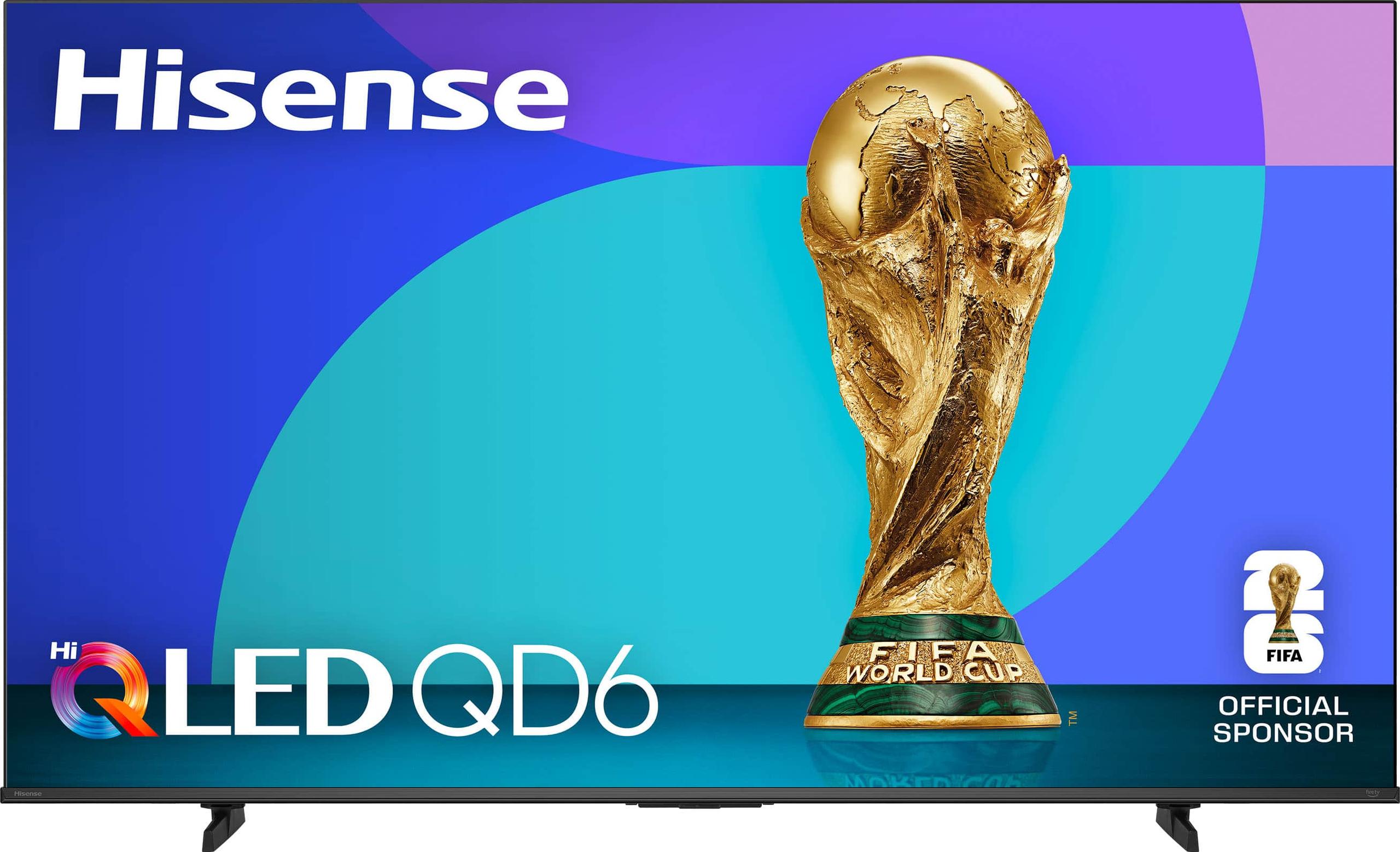
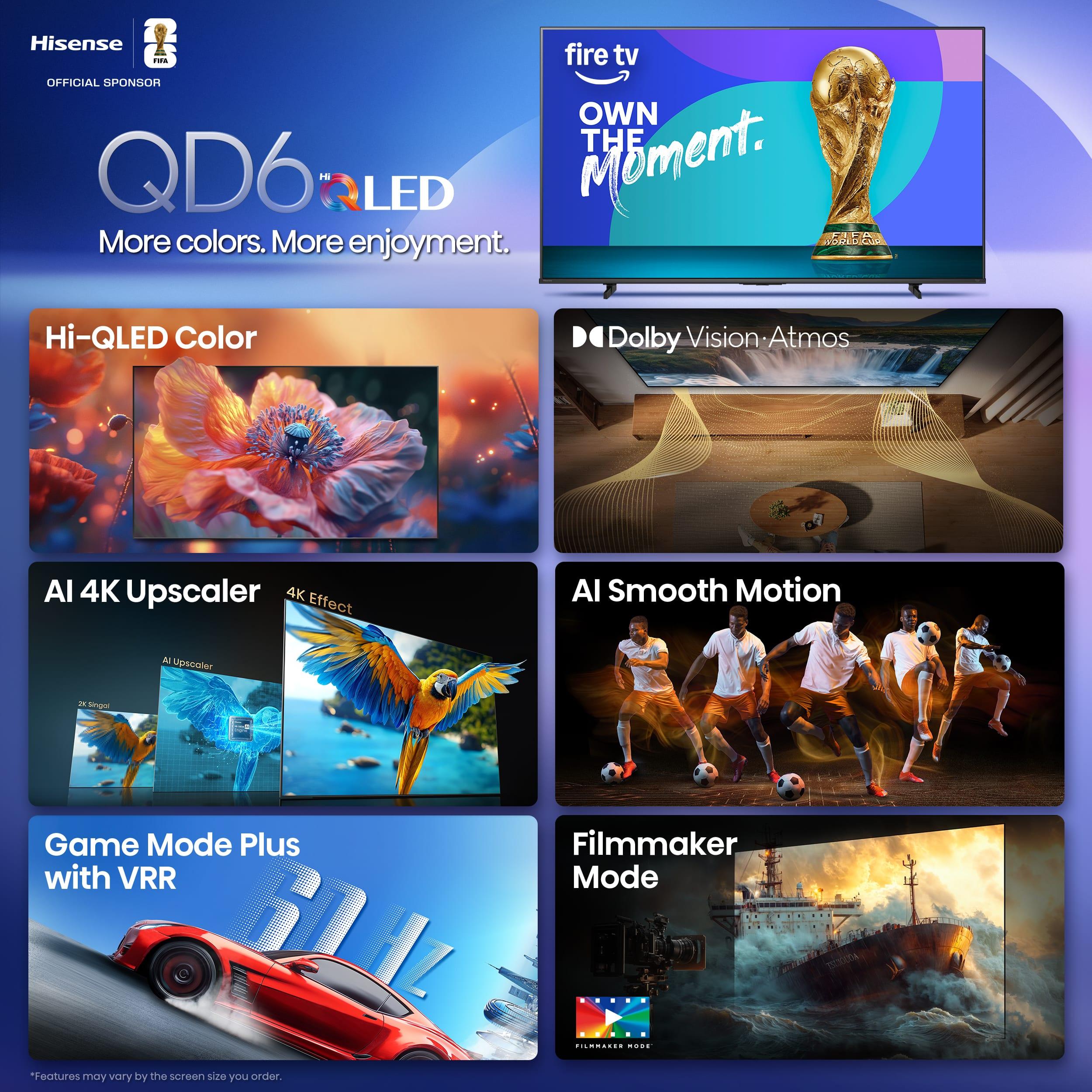
The Hisense 65" QD6 Series QLED 4K Fire TV delivers significantly superior picture quality through its true QLED implementation, achieving 90% DCI-P3 color coverage and 385 cd/m² peak brightness that makes HDR content genuinely impactful. Its 144Hz panel with Variable Refresh Rate and Auto Low Latency Mode transforms gaming performance, making it genuinely compatible with PlayStation 5 and Xbox Series X at their highest settings. The AI-powered 4K upscaling and motion processing create noticeably smoother, sharper images across all content types, while the higher brightness makes it versatile enough for bright living rooms where the F50 would struggle with glare and washed-out colors.
The trade-offs for these premium features include weaker built-in audio at just 10 watts and a higher price point that may stretch some budgets. However, the QD6 represents better long-term value through its future-proofing and superior daily performance - the gaming features alone justify the premium for console owners, while the enhanced brightness and color accuracy improve every viewing session regardless of content type. For buyers who can accommodate the price difference, the QD6 offers meaningful upgrades that enhance the viewing experience rather than just checking specification boxes, making it feel like a genuine step up rather than a lateral move in the budget QLED category.
🤖 Read Detailed Comparison
👌Hisense 65" QD6 Series QLED 4K Fire TV Details
💵 See Hisense 65" QD6 Series QLED 4K Fire TV Price
Original price was: $499.99.$369.99Current price is: $369.99.
Original price was: $579.99.$318.99Current price is: $318.99.


Privacy Policy
Terms and Conditions - Affiliate Policy
Home Security
© Copyright 2008-2026.
11816 Inwood Rd #1211, Dallas, TX 75244