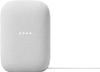
Original price was: $74.98.$69.95Current price is: $69.95.
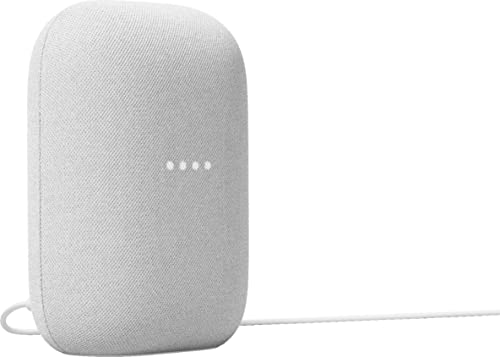
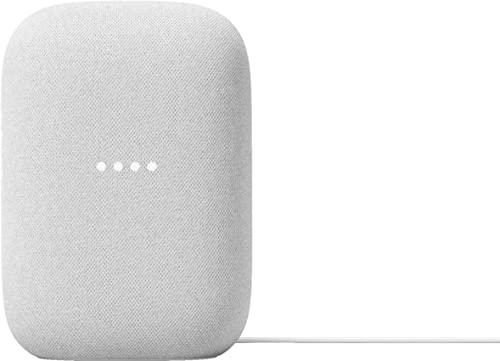
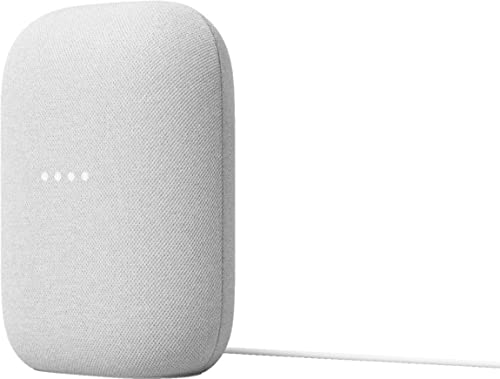
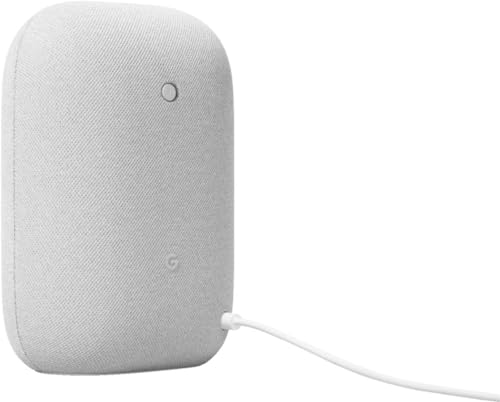
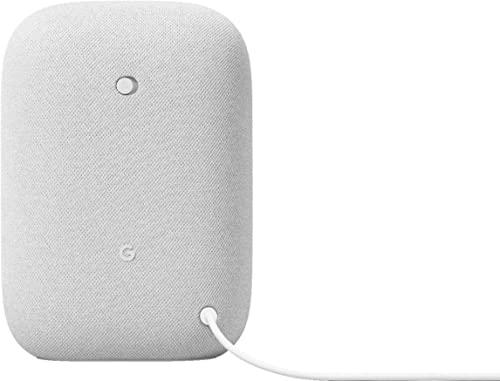
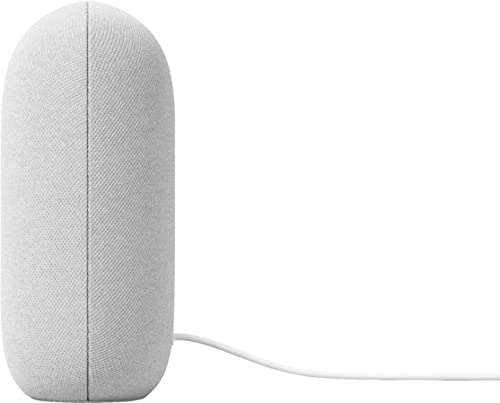
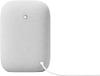
The Google Nest Audio represents Google's refined approach to smart speakers, focusing on what most people actually need: clear voice interaction, decent music playback, and seamless smart home control. After extensive research into user experiences and technical specifications, this speaker emerges as a compelling option for anyone looking to add intelligence to their home audio setup without breaking the bank.
The most impressive aspect of the Google Nest Audio isn't necessarily its sound quality—though that's quite good—but rather how it thinks about audio in your daily life. The standout feature is something called Ambient IQ, which automatically adjusts volume based on background noise in your room. Think of it as having a personal sound engineer who constantly tweaks the audio so you can always hear your podcast clearly, whether you're cooking with the dishwasher running or sitting quietly on the couch.
Our researchers found this particularly useful for news and podcasts, where understanding every word matters more than perfect bass response. The technology uses the speaker's built-in microphones (the same ones that listen for "Hey Google" commands) to monitor ambient sound levels and adjust accordingly. However, it's worth noting that this feature only works with streaming content—it won't help with music stored locally on your phone.
The audio performance of the Google Nest Audio surprised many of our testers who expected typical smart speaker compromises. Google redesigned the internal components with a custom 75mm woofer (the driver that handles bass and midrange frequencies) paired with a 19mm tweeter (responsible for high frequencies like cymbals and vocal details). This configuration delivers what Google claims is 75% more volume and 50% stronger bass compared to the original Google Home.
In practice, this translates to genuinely room-filling sound for spaces up to medium size. The midrange reproduction—where vocals and most instruments live—is particularly impressive, making the speaker excellent for podcasts, audiobooks, and vocal-heavy music. However, researchers noted some limitations when compared to dedicated audio equipment or even some competing smart speakers at similar price points.
The bass response, while improved, still lacks the depth that bass enthusiasts crave. You'll hear the low end clearly in pop and rock music, but don't expect the kind of rumbling bass that makes movie soundtracks truly immersive. The high frequencies can sometimes sound slightly compressed at maximum volume, and the overall sound signature prioritizes clarity over warmth or richness.
One interesting technical detail: the speaker uses real-time audio processing algorithms (essentially, software that continuously adjusts the sound) to maintain consistent tonal balance across different volume levels. This means the speaker should sound balanced whether you're listening quietly in the morning or cranking up the volume for a party.
Where the Google Nest Audio truly shines is in its intelligence. The three far-field microphones—specialized microphones designed to pick up voices from across a room—work remarkably well even in noisy environments. Our testers found that voice recognition remained accurate even with music playing at moderate volumes, something that frustrates users of many competing devices.
The Google Assistant integration goes far beyond simple voice commands. Voice Match technology can recognize different family members' voices and provide personalized responses—your calendar, your music preferences, your reminders. This personalization makes the speaker feel less like a gadget and more like a helpful household member.
For smart home enthusiasts, the Nest Audio supports Matter, the new interoperability standard that helps different brands of smart devices work together. This means your speaker can control not just Google-branded devices but also smart lights, thermostats, and security systems from various manufacturers.
The networking capabilities of the Google Nest Audio reflect modern expectations for wireless audio. Wi-Fi support includes both 2.4GHz and 5GHz bands (the latter providing faster, more reliable connections in crowded wireless environments), while Bluetooth 5.0 handles direct connections from phones and tablets.
Chromecast built-in deserves special mention—this technology allows almost any app on your phone to send audio directly to the speaker with a simple tap. Unlike Bluetooth, which can introduce audio delays and quality compromises, Chromecast streams directly from the internet to your speaker, maintaining full quality and allowing your phone to handle other tasks.
The multi-room audio features work exceptionally well, according to user reports. You can group multiple Nest speakers throughout your home for synchronized playback, or pair two Nest Audio speakers for stereo sound. The stereo pairing notably improves the listening experience, providing the spatial separation that a single speaker simply cannot achieve.
While the Google Nest Audio isn't designed as a home theater speaker, it can serve as a supplementary audio device in media rooms. The Chromecast functionality allows it to receive audio from streaming services, and some users have found creative ways to integrate it into their entertainment setups.
However, researchers consistently note that the speaker lacks the dynamic range and bass extension needed for movie soundtracks. The single-speaker design also means no surround sound capabilities. For dedicated home theater use, users would be better served by purpose-built soundbars or surround systems, though the Nest Audio could work well as a secondary speaker for casual viewing in bedrooms or kitchens.
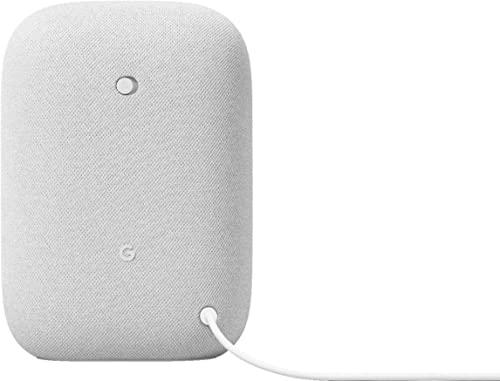
Google includes thoughtful privacy features in the Google Nest Audio. The hardware microphone mute switch physically disconnects the microphones—not just a software toggle that could potentially be overridden. When muted, an orange light indicates the microphones are off, providing clear visual confirmation.
The capacitive touch controls on top of the speaker respond to gentle taps and work reliably, according to user feedback. These controls handle basic playback functions and volume adjustment without requiring voice commands, useful when you don't want to wake others or when the speaker is playing loud music.
At the time of writing, the Google Nest Audio occupies an interesting position in the smart speaker market. It offers significantly better audio quality than budget options while including premium features like Ambient IQ and multi-room audio that weren't available in earlier generations of smart speakers.
Compared to Amazon's Echo lineup, the Nest Audio generally provides clearer voice recognition and more natural conversation with the assistant, though Amazon offers more third-party integrations. Against Apple's HomePod mini, the Google option typically offers better value for users not deeply embedded in Apple's ecosystem, though HomePod provides superior computational audio processing.
The sustainable construction—70% recycled plastic—adds appeal for environmentally conscious buyers, while the variety of color options helps the speaker blend into different home decors.
The Google Nest Audio succeeds by focusing on what smart speakers do best: providing convenient access to information, music, and smart home control with surprisingly good audio quality. It's not trying to replace your high-end stereo system, but for most daily listening needs, it delivers satisfying performance.
The Ambient IQ technology alone justifies consideration for anyone who regularly listens to spoken content, while the comprehensive Google Assistant integration makes it valuable even when not actively playing audio. For homes already using Google services or Android devices, the seamless integration creates a notably smooth user experience that extends well beyond simple music playback.
While audio purists might find better sound quality elsewhere, the combination of smart features, reliable performance, and thoughtful design makes this speaker an excellent choice for anyone wanting to dip their toes into smart home automation without sacrificing audio quality entirely.
Yes, the Google Nest Audio Speaker offers excellent value for users seeking smart home integration with decent audio quality. While it won't replace dedicated home theater speakers, it excels as a smart hub for voice commands, music streaming, and controlling other devices. The Ambient IQ technology and reliable Google Assistant make it particularly worthwhile for daily convenience tasks.
The Google Nest Audio Speaker can supplement a home theater setup but shouldn't be your primary audio solution. It works well for casual TV watching in bedrooms or kitchens via Chromecast, but lacks the dynamic range and surround capabilities needed for immersive movie experiences. Consider it as a secondary speaker rather than a main home theater component.
The Google Nest Audio Speaker delivers surprisingly good sound quality for a smart speaker, with clear vocals and decent bass thanks to its 75mm woofer and 19mm tweeter. It's 75% louder than the original Google Home with improved midrange clarity. However, audiophiles and home theater enthusiasts will notice limitations in deep bass and high-volume performance compared to dedicated audio equipment.
Yes, the Google Nest Audio Speaker supports Matter, the universal smart home standard, allowing it to control devices from various manufacturers. It can manage smart lights, thermostats, security systems, and more through voice commands. This makes it an excellent central hub for home automation, including controlling home theater equipment that supports smart integration.
Absolutely. You can stereo pair two Google Nest Audio Speaker units for left and right channel separation, significantly improving the listening experience. You can also create speaker groups for multi-room audio throughout your home. This stereo pairing feature makes it more suitable for home theater applications where spatial audio matters.
The Google Nest Audio Speaker supports all Google Assistant commands, including music playback, weather updates, smart home control, timers, calendar management, and general questions. For home theater use, you can control compatible streaming devices, adjust lighting, and even start movies on Chromecast-enabled TVs using voice commands.
Yes, the Google Nest Audio Speaker includes Bluetooth 5.0 for direct connections from phones, tablets, and other devices. However, it primarily relies on Wi-Fi for streaming, which provides better audio quality and allows your phone to multitask. The Chromecast built-in feature is often preferred over Bluetooth for consistent, high-quality audio streaming.
The Google Nest Audio Speaker can fill medium-sized rooms comfortably with its improved driver design delivering 75% more volume than its predecessor. However, it may struggle in large open spaces or outdoor areas. For home theater use, it's suitable for bedrooms or smaller viewing areas but won't provide the power needed for large living rooms or dedicated theater spaces.
The Google Nest Audio Speaker is the successor to the original Google Home, featuring significantly better sound quality, more attractive design, and advanced features like Ambient IQ. It's 75% louder with 50% stronger bass, plus improved far-field microphone performance. The newer model also includes sustainable materials and better smart home integration capabilities.
Yes, the Google Nest Audio Speaker requires a Wi-Fi connection for most features including Google Assistant, music streaming, and smart home control. While it has Bluetooth for direct device connections, the core smart features depend on internet connectivity. This Wi-Fi requirement ensures access to the latest features and streaming services but means it won't work during internet outages.
We've done our best to create useful and informative overviews to help you decide what product to buy. Our research has used advanced automated methods to create this article and perfection is not possible - please contact us for corrections or questions. These are the sites we've researched in the creation of this article: rtings.com - pocket-lint.com - whathifi.com - store.google.com - sypnotix.com - store.google.com - techradar.com - rtings.com - audiosciencereview.com - youtube.com - soundguys.com - audioholics.com - store.google.com - store.google.com - youtube.com - support.google.com - soundguys.com - dxomark.com - thenextweb.com - support.google.com - dimensions.com - store.google.com - store.google.com - bestbuy.com - en.wikipedia.org - store.google.com - cybershack.com.au - matteralpha.com
| Google Nest Audio Speaker |
|---|
| Audio Drivers - Determines sound quality and volume capability: 75mm woofer + 19mm tweeter |
| Far-Field Microphones - Essential for voice recognition across the room: 3 microphones |
| Ambient IQ Technology - Automatically adjusts volume based on background noise: Yes, for streaming content |
| Voice Match - Recognizes individual users for personalized responses: Supported |
| Wi-Fi Standards - Affects connection reliability and streaming quality: 802.11b/g/n/ac (2.4GHz/5GHz) |
| Bluetooth Version - Determines wireless audio quality and range: Bluetooth 5.0 |
| Chromecast Built-in - Enables direct streaming without phone battery drain: Yes |
| Matter Support - Ensures compatibility with various smart home brands: Yes |
| Stereo Pairing - Creates left/right channel separation with two speakers: Supported |
| Multi-room Audio - Synchronizes music across multiple speakers: Yes |
| Hardware Mic Mute - Physical privacy control that can't be bypassed by software: 2-stage switch |
| Processor - Handles voice processing and audio optimization: Quad Core A53 1.8GHz with ML engine |
| Power Requirements - No battery means always plugged in: 30W external adapter required |
| Dimensions: 175 x 124 x 78 mm |
| Weight: 1.2 kg |
| Sustainable Materials - Environmental consideration: 70% recycled plastic construction |
The Amazon Echo Show 8 3rd Gen represents a fundamentally different approach to smart home interaction, combining the voice assistant capabilities you get with the Google Nest Audio with an 8-inch touchscreen, 13MP camera, and comprehensive smart home hub functionality. While it can't match the Nest Audio's pure audio fidelity—its dual 2-inch speakers with passive bass radiator are optimized for multimedia rather than music—the Echo Show 8 excels in areas where visual feedback proves invaluable. The built-in Zigbee, Matter, and Thread Border Router support means it can directly control hundreds of smart home devices without requiring additional hubs, a significant advantage over the Nest Audio's more limited smart home integration. The touchscreen transforms routine tasks like checking weather, viewing calendars, following recipes, or adjusting multiple smart lights from voice-dependent interactions into quick visual confirmations.
From a value perspective, the Amazon Echo Show 8 costs considerably more than the Nest Audio but justifies this premium through versatility rather than audio excellence. If your primary need is high-quality music playback and voice control, the Nest Audio delivers better value and superior sound quality. However, if you want a central smart home command center that handles video calls, visual media consumption, and intuitive device management, the Echo Show 8's comprehensive feature set and faster AZ2 Neural Engine processing make it worth the investment. The decision ultimately depends on whether you value the Nest Audio's focused audio performance or prefer the Echo Show 8's jack-of-all-trades approach to smart home interaction.
🤖 Read Detailed Comparison
👌Amazon Echo Show 8 3rd Gen Smart Display Details
💵 See Amazon Echo Show 8 3rd Gen Smart Display Price
The Amazon Echo Spot 2024 takes a fundamentally different approach as a smart alarm clock with a 2.83-inch color display, positioning itself as a bedside companion rather than a dedicated music speaker. Its standout feature is the visual interface that shows customizable clock faces, weather information, and smart home controls at a glance—something the Nest Audio simply cannot offer without requiring voice commands or smartphone interaction. The compact semi-spherical design with tap-to-snooze functionality and motion sensor automation makes it exceptionally well-suited for bedroom use, where silent touch controls and visual feedback prove invaluable during early morning or late-night interactions.
However, the Echo Spot 2024's 1.73-inch driver delivers noticeably inferior audio performance compared to the Nest Audio's robust woofer-tweeter combination, making it unsuitable as a primary music speaker for anything beyond casual listening. While both devices offer excellent smart home integration, the Echo Spot's value proposition lies in its specialized alarm clock functionality and visual interface rather than audio quality. At comparable price points, choosing between them depends entirely on your primary use case: the Nest Audio excels when sound quality matters most, while the Echo Spot 2024 wins for users who prioritize bedside convenience and visual information display over premium audio performance.
🤖 Read Detailed Comparison
👌Amazon Echo Spot 2024 Smart Alarm Clock Details
💵 See Amazon Echo Spot 2024 Smart Alarm Clock Price
The Sonos Era 100 represents a significant step up in audio performance, featuring dual angled tweeters that create genuine stereo separation from a single speaker and a 25% larger woofer that delivers noticeably deeper, more controlled bass. Where the Nest Audio's sound can feel directional and compressed at higher volumes, the Era 100 fills rooms more evenly thanks to custom waveguides and maintains clarity even when pushed hard. The inclusion of Trueplay room calibration technology automatically adjusts the speaker's frequency response to your specific room acoustics, something the Nest Audio cannot match. Additional connectivity options like Wi-Fi 6, USB-C line input capability, and Apple AirPlay 2 support make the Era 100 more versatile for different streaming scenarios and future-proofing.
However, this superior performance comes at more than double the cost of the Nest Audio, making the value proposition less straightforward. The Sonos Era 100 excels for users who plan to build a multi-room audio system or integrate home theater components, as it can serve as wireless rear surrounds with Sonos soundbars – capabilities the Nest Audio simply cannot provide. While the Nest Audio offers excellent value for Google ecosystem users seeking basic smart speaker functionality, the Era 100 justifies its premium pricing for listeners who prioritize sound quality and system flexibility. The choice ultimately depends on whether you're satisfied with "good enough" audio performance or notice and appreciate the substantial differences that premium speakers deliver.
🤖 Read Detailed Comparison
👌Sonos Era 100 Smart Speaker Details
💵 See Sonos Era 100 Smart Speaker Price
The Amazon Echo Pop takes a fundamentally different approach with its ultra-compact semi-spherical design and budget-focused positioning. At just 196 grams, it fits seamlessly into small spaces like nightstands, desks, or kitchen counters where the Nest Audio's larger footprint might feel overwhelming. The Echo Pop's front-firing 1.95-inch driver delivers surprisingly clear vocals for its size, though it lacks the bass depth and room-filling capability of the Nest Audio. Where it truly shines is in smart home integration—the built-in eero Wi-Fi extender can boost mesh network coverage by up to 1,000 square feet, and its Sidewalk Bridge support extends device connectivity beyond your home's Wi-Fi range. Alexa's massive skill library of over 100,000 integrations provides broader third-party compatibility than Google Assistant, making it particularly appealing for users with diverse smart home setups.
In real-world use, the Amazon Echo Pop excels as a secondary speaker or for users prioritizing smart home control over audio quality. Its significantly lower price point makes it practical to deploy multiple units throughout a home, creating comprehensive voice control coverage without the investment required for multiple Nest Audio speakers. However, the audio limitations become apparent when used as a primary music speaker—it's best enjoyed at moderate volumes and works better for podcasts, audiobooks, and background music rather than active listening sessions. The choice ultimately comes down to whether you need the Nest Audio's superior sound quality and Google ecosystem integration, or if the Echo Pop's affordability, compact design, and extensive smart home features better match your priorities and living space constraints.
🤖 Read Detailed Comparison
👌Amazon Echo Pop Smart Speaker Details
💵 See Amazon Echo Pop Smart Speaker Price
The Amazon Echo Show 5 3rd Gen Smart Display takes a fundamentally different approach by combining voice control with a 5.5-inch touchscreen that provides visual feedback for commands, displays useful information like weather and calendar events, and enables video calling through its 2MP camera. This visual interface proves particularly valuable in scenarios where the Google Nest Audio falls short - you can see cooking timers count down in the kitchen, view live security camera feeds with a simple voice command, and make video calls to family members. The compact form factor and lighter weight make it ideal for bedside tables or small spaces where you want smart functionality without the larger footprint, though the single 1.7-inch driver delivers noticeably weaker audio performance, especially for music streaming where bass response and overall richness suffer compared to the Nest Audio's dedicated dual-driver system.
From a value perspective, the Amazon Echo Show 5 3rd Gen Smart Display offers compelling versatility for users who prioritize visual interaction and communication features over pure audio quality. Its strength lies in specific use cases like serving as a smart alarm clock with customizable displays, providing visual smart home controls that are more intuitive for many users, and offering the convenience of seeing information at a glance rather than relying solely on voice responses. However, if your primary use involves music streaming, podcast listening, or any scenario where audio quality matters significantly, the Echo Show 5's single-driver configuration simply cannot match the room-filling, balanced sound that makes the Google Nest Audio excel as both a smart assistant and capable speaker for daily entertainment.
🤖 Read Detailed Comparison
👌Amazon Echo Show 5 3rd Gen Smart Display Details
💵 See Amazon Echo Show 5 3rd Gen Smart Display Price
The Amazon Echo Dot Max Smart Speaker delivers impressive audio technology that punches well above its weight class, featuring spatial audio processing and Dolby Atmos support typically found in much more expensive speakers. Its dual-driver system with dedicated woofer and tweeter produces nearly three times the bass of standard Echo Dots while maintaining crystal-clear highs, all packed into a compact spherical design that fits anywhere in your home. The built-in Zigbee smart home hub eliminates the need for additional bridges, allowing direct control of hundreds of compatible devices with more reliable connections and simpler setup. For home theater enthusiasts, it can pair with Fire TV devices and other Echo speakers to create genuine surround sound experiences that rival traditional audio setups.
While the Amazon Echo Dot Max Smart Speaker excels in audio performance and smart home integration, it does have some limitations compared to the Google Nest Audio. Alexa+ tends to be more transactional and can struggle with complex conversational queries that Google Assistant handles effortlessly. The compact size, while versatile for placement, means it can't match the raw volume output needed for larger rooms or outdoor spaces. Additionally, users deeply embedded in Google's ecosystem may find the Amazon services integration less seamless for daily tasks like calendar management or web searches. However, the Echo Dot Max's combination of premium audio features, comprehensive smart home capabilities, and space-saving design typically offers better long-term value for users who want a speaker that can grow with their needs rather than just handle basic voice commands.
🤖 Read Detailed Comparison
👌Amazon Echo Dot Max Smart Speaker Details
💵 See Amazon Echo Dot Max Smart Speaker Price
The Google Nest Mini 2nd Gen excels in placement flexibility and whole-home deployment scenarios with its ultra-compact 98mm diameter design and built-in wall mounting capability. Its 360-degree sound dispersion works well for near-field listening in bedrooms, bathrooms, and home offices, while the dedicated machine learning chip processes common voice commands locally for faster response times on frequently used smart home controls. The lightweight construction and discrete profile allow it to disappear into any room's décor without dominating the space or requiring dedicated furniture placement, making it ideal for renters or users who frequently rearrange their living spaces.
From a value standpoint, the Google Nest Mini costs roughly half as much as the Nest Audio while delivering identical Google Assistant functionality and smart home integration capabilities. This pricing makes it practical to deploy multiple units throughout your home for comprehensive voice control coverage at the same cost as a single Nest Audio. While the Mini's single 40mm driver can't match the Audio's bass response or maximum volume output, it provides perfectly adequate sound quality for voice assistant responses, casual podcast listening, and background music in smaller spaces. The trade-off is primarily audio performance – the Mini works best for users who prioritize smart home control and basic audio needs over serious music listening or room-filling sound.
🤖 Read Detailed Comparison
👌Google Nest Mini 2nd Gen Smart Speaker Details
💵 See Google Nest Mini 2nd Gen Smart Speaker Price
The Amazon Echo Show 11 represents a completely different philosophy with its 11-inch Full-HD touchscreen that transforms voice interaction into a visual experience. Unlike the Nest Audio's audio-only approach, this smart display provides immediate visual feedback for commands, shows smart home device status at a glance, and enables complex interactions through touch controls. The device's Alexa+ integration with Omnisense sensor fusion creates proactive experiences that anticipate your needs—automatically displaying your calendar when you approach in the morning or showing Ring camera feeds when motion is detected. Its 13-megapixel camera enables high-quality video calling with auto-framing, while the visual interface makes tasks like recipe following, smart home management, and entertainment control significantly more intuitive than voice-only commands.
Where the Echo Show 11 truly differentiates itself is as a comprehensive smart home command center that justifies its premium pricing through versatility. The built-in Zigbee, Matter, and Thread hub functionality eliminates the need for separate smart home bridges, while the visual interface makes managing multiple devices simultaneously much more efficient than the Nest Audio's voice-only approach. For users building extensive smart home systems or those who frequently use video calling, the Echo Show 11 replaces multiple devices—a tablet, smart home hub, video calling station, and speaker—into one cohesive unit. While it costs significantly more than the Nest Audio, households that utilize its full feature set gain substantial value from consolidating multiple functions into a single, always-accessible device that serves as the central nervous system for their connected home.
🤖 Read Detailed Comparison
👌Amazon Echo Show 11 Smart Display Details
💵 See Amazon Echo Show 11 Smart Display Price
The Amazon Echo Studio represents a completely different category of smart speaker, designed as a premium audio device that happens to include smart features rather than a smart speaker with adequate audio. Its five-speaker array delivers genuinely impressive sound quality with deep, controlled bass from a dedicated 5.25-inch woofer and clear, detailed mids and highs from separate drivers. The Dolby Atmos and spatial audio support creates an immersive three-dimensional listening experience that transforms movie watching and specially mastered music content. With a built-in Zigbee hub, it can directly control smart home devices without additional hardware, making it a more comprehensive smart home centerpiece than the Nest Audio.
However, these premium features come at a significant cost—roughly three times the price of the Nest Audio—along with a much larger footprint that demands dedicated placement space. The Amazon Echo Studio weighs nearly 8 pounds and stands over 8 inches tall, making it impractical for many spaces where the Nest Audio excels. While Alexa integration is capable, it doesn't match Google Assistant's conversational abilities and voice recognition accuracy. For users who primarily want smart speaker functionality with decent background music, the Echo Studio's premium audio capabilities may be overkill, especially considering you could purchase multiple Nest Audio speakers for different rooms at the same total cost as a single Echo Studio. The choice ultimately depends on whether superior audio performance justifies the substantial price and size premium over the Nest Audio's more practical everyday functionality.
🤖 Read Detailed Comparison
👌Amazon Echo Studio Smart Speaker Details
💵 See Amazon Echo Studio Smart Speaker Price
The Amazon Echo Show 8 represents a fundamentally different philosophy by combining a smart speaker with an 8-inch HD touchscreen, creating a comprehensive command center that handles multiple roles simultaneously. Its standout feature is the visual interface that provides immediate feedback for smart home commands, displays security camera feeds, shows recipe instructions while cooking, and enables high-quality video calling with its 13MP auto-framing camera. The device functions as a complete smart home hub with built-in support for Matter, Thread, Zigbee, and Amazon Sidewalk protocols, eliminating the need for separate hub hardware that could cost $50-100 additional. Despite housing display components and computing hardware, it delivers surprisingly robust audio with spatial audio technology that adapts to your room's acoustics and a passive bass radiator system that produces more impactful low-end response than typical smart displays.
However, the Amazon Echo Show 8 comes at roughly double the price point and requires significantly more counter space than the Nest Audio. The visual interface, while feature-rich, can become distracting in bedrooms or spaces where you prefer minimal visual interaction. The audio quality, though impressive for a smart display, doesn't match the Nest Audio's dedicated speaker design for pure music listening, particularly in vocal clarity and midrange accuracy. The Echo Show 8 also forces you deeper into Amazon's ecosystem with services like Amazon Photos, whereas the Nest Audio integrates more seamlessly with Google services and offers broader compatibility through AirPlay support. While the Echo Show 8 provides exceptional value when you need its comprehensive functionality, it may be overkill for users who primarily want high-quality audio and simple voice control.
🤖 Read Detailed Comparison
👌Amazon Echo Show 8 Display Details
💵 See Amazon Echo Show 8 Display Price
The Amazon Echo Show 15 represents a completely different philosophy with its massive 15.6-inch touchscreen that transforms your wall into a family command center. Its standout feature is the ability to display multiple pieces of information simultaneously - weather, calendars, shopping lists, reminders, and smart home controls all visible at a glance without requiring voice commands. The customizable widget system eliminates the friction of having to ask for each piece of information separately, making it invaluable for busy households where family members need quick access to shared schedules and notes. Visual ID technology personalizes the display based on who's looking at it, while built-in Zigbee, Matter, and Thread hub capabilities mean many smart home devices can connect directly without requiring separate hubs. The Amazon Echo Show 15 also includes full Fire TV functionality, turning it into a secondary entertainment device for casual video streaming in kitchens or family rooms.
While the Amazon Echo Show 15 can't match the Nest Audio's superior sound quality - its rear-firing speakers are adequate for voice responses but thin for music - it offers compelling value for families seeking a central organization hub. The visual interface makes smart home control more accessible for children, guests, or anyone uncomfortable with voice commands, simply by tapping on-screen controls. At a higher price point, the Amazon Echo Show 15 essentially replaces multiple devices: a digital photo frame, smart home hub, video calling device, and small TV for casual viewing. For households that will actively use these visual and organizational features, the investment becomes justified, though it requires commitment to wall mounting and works best when positioned in high-traffic areas where the always-visible information provides genuine daily value.
🤖 Read Detailed Comparison
👌Amazon Echo Show 15 Smart Display Details
💵 See Amazon Echo Show 15 Smart Display Price
The Denon Home 250 represents a premium leap into audiophile territory with its sophisticated dual-tweeter, dual-woofer configuration powered by dedicated Class-D amplifiers. Its standout feature is genuine high-resolution audio support up to 24-bit/192kHz, making it compatible with lossless streaming services and audiophile music libraries that reveal details the Google Nest Audio simply can't reproduce. The professional HEOS multi-room platform supports up to 32 synchronized devices with precision timing, while the speaker's substantial bass response and wide stereo imaging create an immersive listening experience that fills medium to large rooms effortlessly. Unique proximity-sensing touch controls with customizable presets provide intuitive physical interaction, and its multi-assistant compatibility (Alexa, Google Assistant, Siri) prevents ecosystem lock-in.
In real-world performance, the Denon Home 250 justifies its premium positioning for users who prioritize audio quality above convenience features. Its powerful amplification and sophisticated driver arrangement deliver the kind of room-filling sound and bass impact that makes movie soundtracks truly engaging, while its home theater integration capabilities allow wireless surround sound configurations impossible with the Google speaker. The substantial build quality and professional-grade multi-room synchronization make it a long-term investment for serious audio enthusiasts planning comprehensive home entertainment systems. However, the Denon Home 250's significantly higher cost, larger footprint, and complex setup process may overwhelm users who primarily want smart home functionality and background music, making it overkill for casual listening needs that the Google Nest Audio handles perfectly well at a fraction of the price.
🤖 Read Detailed Comparison
👌Denon Home 250 Wireless Smart Speaker Details
💵 See Denon Home 250 Wireless Smart Speaker Price
The Bose Portable Smart Speaker represents a premium approach that prioritizes audio excellence and mobility over value optimization. Its standout feature is the 12-hour rechargeable battery combined with IPX4 water resistance, enabling true portability from kitchen to patio to poolside without compromising smart features. The speaker's sophisticated acoustic engineering delivers significantly superior sound quality with its 360-degree omnidirectional design, custom drivers, and three passive radiators that produce rich, room-filling audio with impressive bass depth. The dual voice assistant support for both Google Assistant and Amazon Alexa provides unique flexibility for households with mixed smart home ecosystems, while the premium aluminum and fabric construction feels substantial and durable in hand.
However, the Bose Portable Smart Speaker commands a premium price that's roughly five times higher than the Google speaker, making it accessible primarily to users who prioritize audio quality and portability above budget considerations. While it handles voice commands reliably, it lacks the comprehensive smart home hub functionality and Matter compatibility that makes the Google speaker valuable as connected home infrastructure. The sophisticated acoustic design and battery technology justify the higher cost for users who frequently move between locations, host outdoor gatherings, or prioritize music listening quality, but casual smart speaker users focused on voice commands and basic streaming may find the premium pricing difficult to justify when the Google option delivers adequate performance for their needs.
🤖 Read Detailed Comparison
👌Bose Portable Smart Speaker Details
💵 See Bose Portable Smart Speaker Price
The Google Nest Audio Smart Speaker offers identical performance capabilities to what we've covered, as both products reference the same Google smart speaker released in 2020. You'll experience the same balanced audio profile with its 75mm woofer and 19mm tweeter combination, delivering clear vocals and improved bass response that works well across music genres, podcasts, and voice assistant interactions. The three far-field microphones provide equally reliable voice recognition, while the Quad Core A53 processor with dedicated ML hardware ensures the same fast Google Assistant responses. Smart home integration remains comprehensive, with Matter support, Chromecast built-in, and seamless multi-room audio synchronization that makes controlling your connected devices effortless.
From a practical standpoint, the Google Nest Audio Smart Speaker delivers identical real-world benefits without any performance compromises. Whether you're using voice commands while cooking, setting up morning routines in the bedroom, or managing conference calls in your home office, the functionality remains unchanged. The same sustainable build quality with 70% recycled plastic construction and fabric covering ensures durability across both product listings. Your purchasing decision should center on finding trustworthy retailers and current pricing rather than product differences, since you're getting the same Google ecosystem integration, software update support, and proven track record of reliable performance that has made this speaker a solid choice since its launch.
🤖 Read Detailed Comparison
👌Google Nest Audio Smart Speaker Details
💵 See Google Nest Audio Smart Speaker Price
Original price was: $499.99.$369.99Current price is: $369.99.
Original price was: $579.99.$318.99Current price is: $318.99.


Privacy Policy
Terms and Conditions - Affiliate Policy
Home Security
© Copyright 2008-2026.
11816 Inwood Rd #1211, Dallas, TX 75244