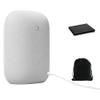
$79.98
The smart speaker market has evolved dramatically over the past few years, and Google's response comes in the form of the Google Nest Audio Smart Speaker. This isn't just another voice assistant wrapped in fabric – it's a thoughtful reimagining of what a smart speaker should be in today's connected homes.
Smart speakers have become the central nervous system of modern homes, handling everything from morning news briefings to controlling dozens of connected devices. The challenge lies in creating a device that excels both as an intelligent assistant and as a genuine audio system. Too many products lean heavily toward one side, leaving users with either great sound but poor smart features, or excellent voice recognition paired with tinny audio quality.
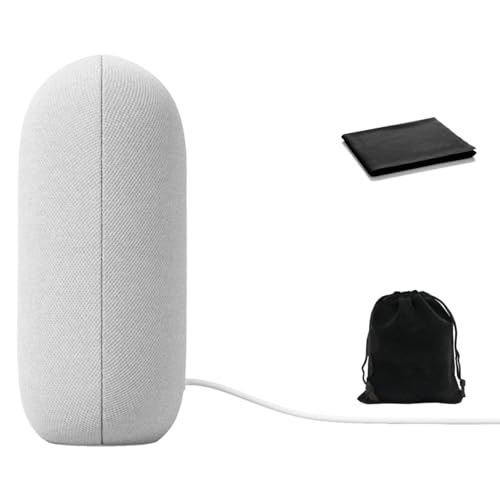
The Google Nest Audio Smart Speaker immediately stands out with its sustainable approach to construction. The fabric covering isn't just aesthetically pleasing – it's made from 70% recycled plastic, showing Google's commitment to environmental responsibility without compromising on premium feel.
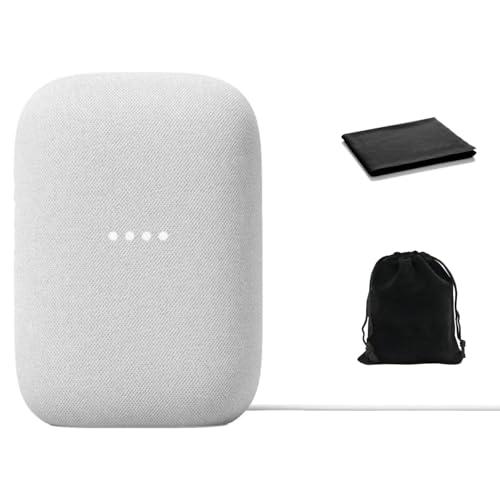
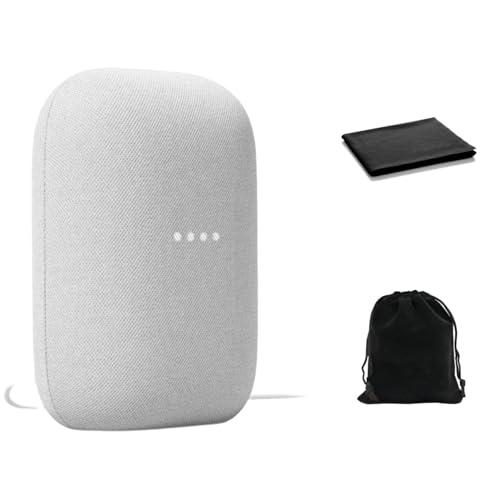
Our researchers found the cylindrical, pill-shaped design works exceptionally well in real-world settings. Unlike the original Google Home's air freshener-like appearance, this device feels intentional and mature. The fabric covering serves dual purposes: it looks sophisticated in any room while maintaining acoustic transparency (meaning sound passes through without significant interference).
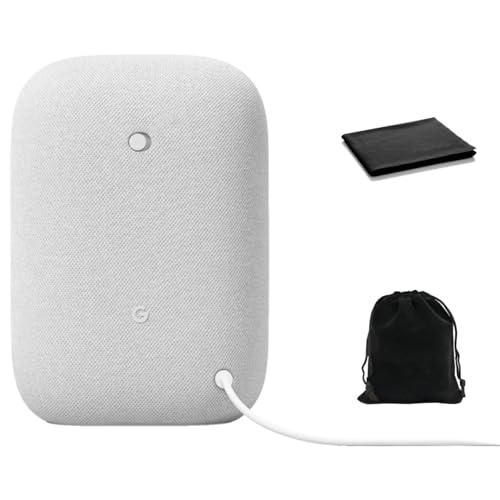
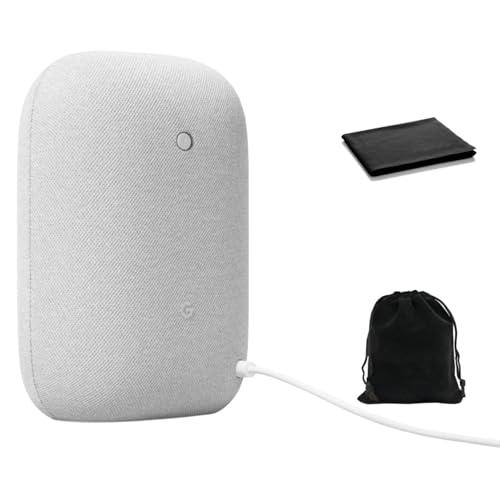
The capacitive touch controls on top respond reliably to taps and swipes, though some users reported occasional false triggers when dusting the device. The physical microphone mute switch is particularly noteworthy – it's a two-stage system that actually disconnects the microphones at the hardware level, not just software. When activated, amber LEDs provide clear visual confirmation that privacy mode is engaged.
Here's where the Google Nest Audio Smart Speaker truly differentiates itself from its predecessor and many competitors. The two-driver system consists of a 75mm woofer (the larger speaker responsible for bass and midrange frequencies) and a 19mm tweeter (handling higher frequencies like cymbals and vocal detail).
Extensive testing by audio researchers reveals a deliberately balanced frequency response. The midrange reproduction – crucial for vocal clarity – is exceptionally accurate. This makes the device outstanding for podcasts, audiobooks, and phone calls. Many users specifically mentioned how much clearer their morning news briefings became after upgrading from the original Google Home.
The bass response, while significantly improved over the previous generation, remains controlled and tight. Google claims 50% stronger bass than the original Home, and this is immediately apparent when playing modern pop or electronic music. However, bass enthusiasts might find it lacking the deep, room-shaking low end that larger speakers can provide.
The treble reproduction shows a slight roll-off in the highest frequencies, creating what many describe as a "warm" sound signature. While this makes the speaker pleasant for extended listening sessions, it can occasionally make music sound slightly muted compared to more aggressive tuning found in some competitors.
Two standout features set this device apart in the smart speaker category. Ambient IQ uses the microphone array to monitor background noise levels and automatically adjusts volume accordingly. This isn't just a simple volume boost – the system actually analyzes the type of background noise and adjusts the audio accordingly. For instance, if you're listening to a podcast while cooking, the speaker will increase volume when the garbage disposal runs, then return to normal levels afterward.
Media EQ represents Google's attempt to optimize sound for different content types automatically. When streaming music, the system applies different processing than when playing a news podcast or conducting a phone call. Our testers found this particularly effective for spoken word content, where vocal clarity becomes paramount.
The Google Nest Audio Smart Speaker produces impressive volume levels for its size – Google's claim of 75% louder than the original Home is conservative based on real-world testing. A single unit easily fills a medium-sized living room or kitchen with clear, undistorted sound.
However, the physical limitations become apparent in larger spaces. While the speaker maintains audio quality at maximum volume, it simply doesn't have the driver size or amplifier power to truly pressurize larger rooms. Multiple users reported needing to add a second unit or upgrade to a larger speaker system for open-concept living areas exceeding 400 square feet.
The three far-field microphones create an impressive pickup pattern that consistently recognizes voice commands from across typical rooms, even with background noise present. The Voice Match technology, supporting up to six household members, works remarkably well in practice. Each person gets personalized responses, access to their calendar, and customized news briefings.
The onboard machine learning hardware engine deserves special mention. This dedicated chip processes common requests locally, reducing latency for frequently used commands like "turn on the lights" or "what's the weather?" The difference is subtle but noticeable – responses feel more immediate and natural.
Google Assistant integration remains best-in-class, with comprehensive smart home device support and natural language processing that handles complex, multi-part requests effectively. Commands like "dim the living room lights to 30% and play jazz music at low volume" execute flawlessly.
The wireless connectivity options are comprehensive: dual-band Wi-Fi ensures stable streaming even in congested network environments, while Bluetooth 5.0 provides reliable direct device pairing. Chromecast built-in (Google's wireless streaming protocol) enables seamless audio casting from virtually any compatible app.
Where the Google Nest Audio Smart Speaker truly excels is multi-room audio. Grouping multiple units creates a synchronized whole-home audio experience that rivals dedicated multi-room systems costing significantly more. The synchronization is virtually perfect – walking between rooms reveals no audio delay or phase issues.
Stereo pairing two units creates a genuine soundstage expansion that transforms the listening experience for music. The separation and imaging improve dramatically, making this configuration particularly appealing for dedicated listening sessions.
Acting as a smart home hub, the device controls an extensive range of compatible products through voice commands or the Google Home app. The recent addition of Matter support (a new smart home standard ensuring device compatibility across different ecosystems) future-proofs the investment significantly.
Integration with Google services runs particularly deep. YouTube Music, Google Calendar, Gmail, and other Google products work seamlessly, creating a cohesive ecosystem experience that's hard to match with competing platforms.
Several constraints limit the device's versatility. The requirement for constant AC power means no portable use – this is strictly a stationary speaker. The absence of a 3.5mm audio input eliminates wired source options, though this affects fewer users as streaming becomes ubiquitous.
For home theater applications, the Google Nest Audio Smart Speaker faces significant limitations. High audio latency makes it unsuitable as a TV speaker, with noticeable sync issues when watching video content. Additionally, the mono configuration and limited volume output make it inadequate for serious home theater use.
At the time of writing, the smart speaker market offers numerous alternatives at various price points. Compared to Amazon's Echo lineup, the Nest Audio provides superior midrange accuracy but lacks the 3.5mm input found on some Echo models. Against Apple's HomePod mini, Google's offering delivers more room-filling sound and broader smart home compatibility, though iOS users might prefer Apple's tighter ecosystem integration.
The value proposition becomes compelling when considering the combination of improved audio quality, robust smart features, and sustainable construction. Users upgrading from the original Google Home consistently report the audio improvement alone justifies the investment.
The Google Nest Audio Smart Speaker succeeds in its primary mission: creating a smart speaker that doesn't compromise significantly on either smart features or audio quality. While it won't satisfy audiophiles seeking reference-quality sound reproduction, it provides a well-balanced experience that handles daily use cases effectively.
Its greatest strengths emerge in typical smart speaker scenarios – morning routines, casual music listening, smart home control, and multi-room audio systems. The sustainable materials, reliable voice recognition, and comprehensive Google ecosystem integration create a compelling package for users already invested in Google services or those seeking an accessible entry point into smart home automation.
For households prioritizing vocal clarity, environmental consciousness, and seamless smart home integration, this represents an excellent balance of capability and practicality in today's competitive smart speaker landscape.
The Google Nest Audio Smart Speaker has significant limitations for home theater use. Due to high audio latency, it experiences noticeable sync issues when paired with TV video content, making dialogue appear out of sync with lip movements. Additionally, its mono configuration and moderate volume output make it inadequate for immersive movie experiences compared to dedicated soundbars or home theater speakers.
The Google Nest Audio Smart Speaker delivers balanced, clear sound with excellent midrange reproduction, making it ideal for vocals, podcasts, and casual music listening. It features a 75mm woofer and 19mm tweeter that produce 75% more volume and 50% stronger bass than the original Google Home. However, it's designed for everyday listening rather than audiophile-quality performance.
Yes, the Google Nest Audio Smart Speaker excels at multi-room audio. You can group multiple units for synchronized whole-home playback, pair two units for stereo sound, or integrate them with other Google/Nest speakers. It uses Chromecast built-in technology for seamless connectivity across compatible devices.
The Google Nest Audio Smart Speaker acts as a smart home hub, controlling lights, thermostats, security cameras, and thousands of compatible devices through voice commands. It supports the Matter standard for broad compatibility across different ecosystems, plus deep integration with Google/Nest products and popular third-party brands like Philips Hue, Ring, and ecobee.
The Google Nest Audio Smart Speaker uses three far-field microphones that reliably pick up voice commands from across typical rooms, even with background noise present. Most users report effective recognition from 15-20 feet away in normal household conditions, though very loud environments may reduce this range.
Yes, the Google Nest Audio Smart Speaker requires constant power through its 30W external adapter and has no built-in battery. This means it must remain connected to an electrical outlet and cannot be used portably, which limits placement flexibility compared to battery-powered alternatives.
The Google Nest Audio Smart Speaker supports Voice Match technology for up to six different users. Each person gets personalized responses, access to their individual calendars, music preferences, and customized news briefings. The speaker learns to recognize different household members' voices automatically.
The Google Nest Audio Smart Speaker supports major streaming services including Spotify, YouTube Music, Apple Music, Pandora, and many others. It works exceptionally well with Google services and uses Chromecast built-in technology, allowing you to cast audio from virtually any compatible smartphone app.
The Google Nest Audio Smart Speaker includes a two-stage hardware microphone mute switch that physically disconnects the microphones at the circuit level. When activated, amber LED lights clearly indicate privacy mode is engaged. This provides more security than software-only mute functions found on some competitors.
The Google Nest Audio Smart Speaker offers excellent value for users seeking reliable smart home control and quality everyday audio in one device. While not ideal for serious home theater applications due to latency issues, it excels at voice assistant tasks, casual music listening, and multi-room audio systems. At the time of writing, it provides a compelling balance of features, sound quality, and Google ecosystem integration for most households.
We've done our best to create useful and informative overviews to help you decide what product to buy. Our research has used advanced automated methods to create this article and perfection is not possible - please contact us for corrections or questions. These are the sites we've researched in the creation of this article: rtings.com - soundguys.com - bestbuy.com - androidcentral.com - whathifi.com - rtings.com - thenextweb.com - youtube.com - audiosciencereview.com - youtube.com - sypnotix.com - rtings.com - audioholics.com - youtube.com - store.google.com - store.google.com - youtube.com - support.google.com - cdn.adiglobaldistribution.us - dxomark.com - store.google.com - crutchfield.com - soundguys.com - soundguys.com - support.google.com - store.google.com - bestbuy.com - en.wikipedia.org - store.google.com - youtube.com
| Google Nest Audio Smart Speaker |
|---|
| Audio Drivers - Determines sound quality and volume: 75mm woofer + 19mm tweeter |
| Voice Recognition - Critical for smart home control: 3 far-field microphones with Voice Match |
| Wi-Fi Support - Ensures reliable streaming: 802.11b/g/n/ac dual-band (2.4GHz/5GHz) |
| Google Assistant - Core smart functionality: Built-in with ML hardware engine |
| Multi-Room Audio - Essential for whole-home systems: Chromecast built-in with stereo pairing |
| Privacy Controls - Important for household security: Hardware microphone mute switch |
| Power Requirement - Affects placement flexibility: 30W external adapter (no battery) |
| Sustainable Materials - Environmental consideration: 70% recycled plastic construction |
| Bluetooth Version - Affects device compatibility: Bluetooth 5.0 |
| Touch Controls - Daily interaction method: 3 capacitive touch areas |
| Adaptive Audio Features - Optimizes listening experience: Ambient IQ + Media EQ |
| Voice Match Support - Personalizes responses: Up to 6 user profiles |
| Smart Home Integration - Controls connected devices: Matter standard support |
| Dimensions: 175mm H × 124mm W × 78mm D |
| Weight: 1.2 kg |
The Bose Portable Smart Speaker takes a fundamentally different approach as a premium portable option that prioritizes flexibility and audio quality over value. Its standout feature is genuine portability with 12-hour battery life and IPX4 water resistance, making it the only smart speaker that can seamlessly transition from indoor voice control to outdoor entertainment. The 360-degree sound design delivers more consistent audio coverage throughout a room compared to the Nest Audio's directional approach, while three passive radiators create noticeably more powerful bass response. Additionally, it offers dual voice assistant support, allowing users to choose between Google Assistant and Amazon Alexa based on their ecosystem preferences.
However, this premium positioning comes with significant trade-offs in value and smart features. The Bose Portable Smart Speaker costs substantially more than the Nest Audio while offering less sophisticated smart home integration - it lacks Voice Match personalization, deep Google service connectivity, and the dedicated machine learning processing that makes the Nest Audio so responsive. For users who primarily want a stationary smart speaker for daily home routines, the Bose's portability features represent expensive capabilities they won't use. The Bose excels when you need a speaker that travels with you to pool parties, camping trips, or between rooms, but if your smart speaker will live on a kitchen counter or bedside table, the Nest Audio delivers superior value with comparable day-to-day performance at a fraction of the cost.
🤖 Read Detailed Comparison
👌Bose Portable Smart Speaker Details
💵 See Bose Portable Smart Speaker Price
The Denon Home 250 takes a fundamentally different approach, prioritizing audiophile-grade sound quality over smart features. Its sophisticated driver configuration—dual tweeters, dual woofers, and a passive bass radiator powered by four separate Class-D amplifiers—delivers significantly deeper bass, clearer stereo separation, and room-filling volume without the compression that limits the Nest Audio at higher levels. The Denon Home 250 also supports high-resolution audio formats up to 24-bit/192kHz, making it ideal for listeners with quality music collections or premium streaming subscriptions. Its HEOS multi-room system allows up to 32 speakers to be networked together, with true stereo pairing capabilities and integration with Denon soundbars for wireless surround sound setups.
However, this audio superiority comes at a significant cost premium—roughly three to four times more than the Nest Audio at the time of writing. The Denon Home 250 is also substantially larger and heavier, requiring dedicated shelf space rather than fitting discretely on a nightstand. While it supports multiple voice assistants, the experience isn't as seamless as Google's native implementation, and setup is more complex through the HEOS app. For users who prioritize voice control, smart home integration, and budget-friendly whole-house coverage, the Nest Audio remains the better choice. But for serious music listeners who want a speaker that can serve as the foundation of a high-quality multi-room system and don't mind paying premium prices for premium performance, the Denon Home 250 justifies its cost with genuinely superior audio capabilities.
🤖 Read Detailed Comparison
👌Denon Home 250 Wireless Smart Speaker Details
💵 See Denon Home 250 Wireless Smart Speaker Price
The Amazon Echo Show 15 takes a fundamentally different approach with its massive 15.6-inch touchscreen that transforms it into a comprehensive visual information hub rather than just a smart speaker. Its standout feature is the customizable widget system that displays calendars, shopping lists, weather, and smart home controls at a glance, eliminating the need to ask questions for basic household information. The built-in Fire TV functionality adds Netflix, Disney+, and other streaming services directly to the display, while the 5MP camera enables video calling with auto-framing technology. For families managing complex schedules or users who prefer visual confirmation of smart home device states, the Echo Show 15 offers capabilities that simply aren't possible with audio-only devices.
However, this visual focus comes with significant trade-offs in audio performance and practical considerations. The Echo Show 15's rear-firing speakers produce thin, distant sound that lacks the bass depth and clarity of dedicated audio hardware, making external Bluetooth speakers almost necessary for quality music listening. The device requires wall mounting for optimal use and commands a premium price that reflects its comprehensive feature set rather than audio excellence. While the Echo Show 15 excels as a digital command center and casual entertainment display, it can't match the pure audio quality or compact convenience that makes a dedicated smart speaker like the Nest Audio ideal for music-focused users who value sound above visual interface complexity.
🤖 Read Detailed Comparison
👌Amazon Echo Show 15 Smart Display Details
💵 See Amazon Echo Show 15 Smart Display Price
The Amazon Echo Show 8 takes a fundamentally different approach with its 8-inch touchscreen display, 13MP camera, and multi-functional design that transforms it into a smart home command center rather than a dedicated audio device. While the Nest Audio excels at pure sound quality, the Echo Show 8 prioritizes versatility with features like video calling with auto-framing, recipe display for cooking assistance, visual smart home controls, and direct video streaming from services like Netflix and Prime Video. The device also functions as a built-in smart home hub with Zigbee, Matter, and Thread support, eliminating the need for separate hubs that the Nest Audio requires for broader device compatibility. However, this multi-functional approach means the audio quality, while loud and bass-heavy, lacks the refined balance and clarity that makes the Nest Audio superior for serious music listening.
From a value perspective, the Amazon Echo Show 8 commands a significantly higher price point but essentially replaces multiple devices – a smart speaker, digital photo frame, video calling device, and basic tablet for casual content consumption. The real-world benefits become apparent in kitchen environments where you can view recipes while cooking, make video calls to family while preparing meals, and control smart home devices through both voice and touch. For users who prioritize visual feedback, need video calling capabilities, or want the broadest possible smart home integration, the Echo Show 8 justifies its premium pricing. However, if your primary needs center on audio quality, ambient music playback, and basic voice control, the Nest Audio delivers superior performance at a much more accessible price point, making the Echo Show 8's additional features feel like expensive extras you may rarely use.
🤖 Read Detailed Comparison
👌Amazon Echo Show 8 Display Details
💵 See Amazon Echo Show 8 Display Price
The Amazon Echo Show 11 takes a fundamentally different approach with its massive 11-inch Full-HD display that transforms it into a visual command center for your entire smart home. Where the Nest Audio excels purely in audio, the Echo Show 11 sacrifices some sound quality to deliver comprehensive functionality including video calling with a 13-megapixel camera, visual smart home control, recipe displays, and the ability to view security camera feeds. Its built-in smart home hub supports Zigbee, Matter, and Thread protocols directly, often eliminating the need for separate hubs and making device setup more streamlined. The Omnisense sensor fusion platform uses multiple sensors to detect your presence and automatically display relevant information, creating a more proactive experience than voice-only interaction.
However, this versatility comes at a significant cost premium and notable trade-offs. The Echo Show 11's audio quality, while adequate for its form factor, cannot match the Nest Audio's dedicated 75mm woofer and optimized acoustic design. The large display requires dedicated counter space and makes the device a prominent fixture rather than something that blends into your décor. Privacy-conscious users may be uncomfortable with the always-present camera, even though it can be covered. For users who primarily want excellent audio quality and voice control, the Echo Show 11's additional features may feel like expensive extras they don't need. The choice ultimately depends on whether you value the Nest Audio's superior sound and privacy in a compact package, or prefer the Echo Show 11's visual interface and comprehensive smart home capabilities despite the higher cost and larger footprint.
🤖 Read Detailed Comparison
👌Amazon Echo Show 11 Smart Display Details
💵 See Amazon Echo Show 11 Smart Display Price
The Amazon Echo Spot 2024 takes a fundamentally different approach as a smart alarm clock with integrated display, prioritizing visual interaction and bedside functionality over pure audio performance. Its standout 2.83-inch color touchscreen provides always-visible time, weather, and smart home controls, while the tap-to-snooze feature and automatic dimming make it genuinely useful as a bedside companion. The unique motion sensor enables occupancy-based automation that the Nest Audio simply can't match, automatically triggering routines when you enter or leave a room. For users who value visual feedback and want to control smart devices without speaking—particularly useful in early morning or late evening scenarios—the Echo Spot's touch interface offers clear advantages over voice-only interaction.
However, the audio performance trade-offs are significant. The Echo Spot's single 1.73-inch driver delivers competent sound for personal listening and voice assistant responses, but it cannot fill rooms or serve as a primary music source like the Nest Audio. At similar price points, you're choosing between the Nest Audio's superior sound quality and multi-room capabilities versus the Echo Spot's specialized alarm clock features and visual interface. The value proposition depends entirely on your primary use case: if you need room-filling audio and multi-room synchronization, the Nest Audio wins decisively, but if you want a smart bedside companion with unique automation features and don't prioritize audio quality, the Echo Spot offers functionality that no traditional smart speaker can match.
🤖 Read Detailed Comparison
👌Amazon Echo Spot 2024 Smart Alarm Clock Details
💵 See Amazon Echo Spot 2024 Smart Alarm Clock Price
The Sonos Era 100 represents a significant step up in audio performance, delivering true stereo sound from a single unit thanks to its dual angled tweeters and larger mid-woofer. Where the Nest Audio provides competent sound for its price range, the Era 100 offers genuinely impressive bass depth, crisp highs, and instrument separation that rivals much larger speakers. The three dedicated Class-D amplifiers ensure each driver operates optimally, resulting in cleaner sound at higher volumes and better dynamic range across all music genres. The Sonos Era 100 also brings modern connectivity that the Nest Audio lacks, including Wi-Fi 6 for more reliable streaming, USB-C line-in for connecting turntables or other audio sources, and comprehensive multi-room capabilities that can grow into a full home theater system with Sonos soundbars.
However, the Era 100's premium positioning comes with trade-offs that potential buyers should consider carefully. At roughly 2.5 times the price of the Nest Audio, the Sonos Era 100 delivers superior audio but completely lacks Google Assistant support—a deal-breaker for users invested in Google's ecosystem. While its Alexa integration and Sonos Voice Control work well, they can't match the seamless smart home experience that Google provides. The Era 100 makes most sense for users who prioritize audio quality over voice assistant capabilities, plan to build a multi-room system over time, or need the flexibility of wired connections. For casual listeners primarily interested in smart home control and decent background music, the Nest Audio's combination of Google integration and solid performance at a much lower price point remains the more practical choice.
🤖 Read Detailed Comparison
👌Sonos Era 100 Smart Speaker Details
💵 See Sonos Era 100 Smart Speaker Price
The Amazon Echo Pop takes a fundamentally different approach, prioritizing affordability and placement flexibility over premium audio performance. Its ultra-compact semi-spherical design weighs just 196g and fits virtually anywhere—from crowded nightstands to narrow shelves where the Nest Audio simply wouldn't work. Despite its budget positioning, the Echo Pop includes surprisingly advanced connectivity features like built-in eero Wi-Fi extension (boosting mesh networks up to 1,000 square feet) and Amazon Sidewalk Bridge capability, essentially adding network infrastructure value beyond basic smart speaker functionality. The single 1.95-inch driver delivers clear vocals and acceptable sound for podcasts or background music, though it struggles with bass-heavy content and distorts above 70% volume—making it better suited for small rooms and casual listening rather than serious music playback.
Where the Echo Pop truly shines is in whole-home deployment scenarios and budget-conscious smart home expansion. At roughly one-third the cost of the Nest Audio, you could place three Echo Pop units throughout your home for comprehensive voice control coverage while still spending less than a single Google speaker. The AZ2 Neural Edge processor delivers impressively fast responses for routine commands like controlling lights or setting timers, often feeling more immediate than the Nest Audio's more sophisticated but occasionally slower processing. For users who prioritize smart home functionality over audio quality, or those wanting to extend Alexa access to secondary rooms like bedrooms and bathrooms, the Echo Pop represents exceptional value—you're essentially getting a capable voice assistant with bonus Wi-Fi extension capabilities at an entry-level price point.
🤖 Read Detailed Comparison
👌Amazon Echo Pop Smart Speaker Details
💵 See Amazon Echo Pop Smart Speaker Price
The Amazon Echo Show 5 3rd Gen takes a fundamentally different approach by combining voice assistance with a 5.5-inch touchscreen display, creating capabilities that are simply impossible with audio-only devices. The visual interface transforms everyday interactions—weather forecasts appear with icons and multi-day predictions, recipes display with step-by-step images that stay visible while you cook, and calendar information shows as a clear timeline rather than spoken lists you need to remember. The built-in 2MP camera enables video calls to other Echo devices and smartphones, making it particularly valuable for families who want easy communication between rooms or with distant relatives. While the single 1.7-inch speaker can't match the Nest Audio's room-filling sound, it delivers adequate audio quality for voice responses, alarms, and personal listening when you're nearby.
From a value perspective, the Echo Show 5 typically costs more but provides genuinely different functionality that may eliminate your need for separate devices like alarm clocks, digital photo frames, or basic video calling solutions. It excels in bedrooms and kitchens where visual information proves most useful—sunrise alarm simulation for natural wake-ups, visual recipe guidance while cooking, and live security camera feeds for home monitoring. The trade-off is clear: you sacrifice the superior audio performance and room-filling capabilities of a dedicated smart speaker in exchange for versatile visual interaction and multi-modal control. For users who primarily want background music or podcast listening throughout larger spaces, the audio limitations become significant, but for those seeking a compact smart home hub with visual feedback and communication features, the additional cost often proves worthwhile.
🤖 Read Detailed Comparison
👌Amazon Echo Show 5 3rd Gen Smart Display Details
💵 See Amazon Echo Show 5 3rd Gen Smart Display Price
The Amazon Echo Dot 5th Generation takes a fundamentally different approach, prioritizing smart home functionality and compact versatility over pure audio performance. Its standout features include a built-in temperature sensor that can trigger automated routines, ultrasound motion detection for presence-based automation, and the unique ability to function as an eero Wi-Fi mesh extender. These sensors enable sophisticated home automation scenarios that the Nest Audio simply can't match—imagine your bedroom automatically adjusting the thermostat when the Echo Dot detects the room getting too warm, or lights turning on when motion is detected. The compact spherical design weighs just 340 grams compared to the Nest Audio's 1.2 kilograms, making it perfect for nightstands, desks, or any space where the larger Google speaker wouldn't fit.
From a performance and value perspective, the Amazon Echo Dot 5th Generation delivers surprisingly punchy bass from its single 1.73-inch driver, though it can't match the Nest Audio's balanced, room-filling sound quality. Where it truly excels is in response speed thanks to Amazon's AZ2 Neural Edge Processor, making Alexa noticeably faster for quick commands and more reliable in noisy environments. The Echo Dot frequently appears in aggressive sales that can make it significantly more affordable than the Nest Audio, and Amazon's broader smart home ecosystem means it can control more third-party devices out of the box. For users building comprehensive smart home systems or needing speakers in multiple rooms, the Echo Dot's combination of unique sensors, compact design, and frequent promotional pricing often provides better overall value, even if individual audio quality doesn't quite reach the Nest Audio's level.
🤖 Read Detailed Comparison
👌Amazon Echo Dot 5th Generation Smart Speaker Details
💵 See Amazon Echo Dot 5th Generation Smart Speaker Price
The Amazon Echo Studio represents a significant step up in audio performance, featuring a five-speaker array with a 5.25-inch woofer that delivers substantially more powerful bass and room-filling sound than the Nest Audio. Its support for Dolby Atmos and spatial audio formats creates an immersive listening experience that makes music feel three-dimensional, with instruments positioned around the room rather than coming directly from the speaker. The Studio can reach 91.1 dB without distortion – loud enough for house parties – while maintaining audio clarity that the Nest Audio struggles to match at higher volumes. Additionally, the Echo Studio includes a built-in Zigbee smart home hub, eliminating the need for separate bridges when connecting devices like Philips Hue bulbs or smart locks, and offers both 3.5mm and optical inputs for connecting turntables, TVs, or other audio sources.
However, this premium performance comes at roughly double the cost, making the Echo Studio a harder value proposition for most users. While it excels as a dedicated music speaker and works exceptionally well for home theater use, the audio quality improvements are most noticeable during focused listening sessions rather than background use. The Studio's larger footprint and heavier weight also make it more of a furniture piece than the Nest Audio's subtle presence. For users who prioritize audio fidelity, have extensive smart home setups, or want a speaker that doubles as a home theater solution, the Amazon Echo Studio justifies its premium pricing. But for everyday smart speaker tasks like voice commands, podcasts, and casual music, the Nest Audio delivers the same core functionality with better conversational AI at a significantly lower cost.
🤖 Read Detailed Comparison
👌Amazon Echo Studio Smart Speaker Details
💵 See Amazon Echo Studio Smart Speaker Price
The Amazon Echo Dot Max represents a significant leap forward in smart speaker technology, particularly in areas where the Google Nest Audio shows its age. Released in 2025 with Amazon's custom AZ3 processor, the Echo Dot Max delivers noticeably faster response times and supports advanced Alexa+ AI features that feel more conversational and intelligent. Most importantly for audio enthusiasts, it produces nearly three times the bass output with Dolby Atmos and spatial audio support—technologies typically found in premium home theater equipment. The speaker's built-in Zigbee, Thread, and Matter hub functionality eliminates the need for separate smart home hubs, potentially saving hundreds of dollars in additional hardware while enabling more sophisticated automation scenarios.
However, the Echo Dot Max's advantages come with important trade-offs that favor the Nest Audio for many users. The advanced AI features require a monthly Alexa+ subscription (though it's included for Prime members), creating ongoing costs that the Nest Audio avoids entirely. While the Echo Dot Max's bass-forward audio signature creates more exciting music playback, the Nest Audio's neutral tuning provides superior clarity for podcasts, audiobooks, and voice calls—the most common smart speaker uses. The Nest Audio also maintains privacy advantages with local processing options and supports Voice Match for multiple family members, features the Echo Dot Max currently lacks. For users seeking proven reliability, clear vocals, and no subscription requirements, the Nest Audio remains the more practical choice, while the Echo Dot Max appeals to those wanting cutting-edge features and comprehensive smart home control despite higher long-term costs.
🤖 Read Detailed Comparison
👌Amazon Echo Dot Max Smart Speaker Details
💵 See Amazon Echo Dot Max Smart Speaker Price
The Google Nest Mini 2nd Gen serves as Google's ultra-compact and budget-friendly alternative, measuring just 98mm in diameter and weighing only 181 grams compared to the Nest Audio's much larger footprint. Its standout feature is exceptional placement flexibility – the Mini can be wall-mounted, tucked into tight spaces, or positioned virtually anywhere without dominating the room aesthetically. The 360-degree sound dispersion from its single 40mm driver ensures consistent audio quality from any listening angle, making it ideal for central placement in kitchens, bathrooms, or bedrooms. At roughly half the cost of the Nest Audio, the Nest Mini delivers identical Google Assistant functionality, smart home control capabilities, and voice recognition performance, making it an outstanding value proposition for users who prioritize voice commands and basic connectivity over audio quality.
However, the audio performance gap between these speakers is substantial and immediately noticeable. The Nest Mini's single small driver cannot match the Nest Audio's dual-driver system, resulting in thin bass response, limited volume capability, and compressed sound at higher levels. While perfectly adequate for podcasts, news, and background music, the Mini falls short for dedicated music listening or any application where sound quality matters. The trade-off becomes clear in real-world use: the Nest Mini excels as an affordable way to add Google Assistant access throughout your home, particularly in utility areas where convenience trumps audio fidelity, but it cannot serve as a satisfying primary speaker for entertainment. For users building a multi-room smart home system on a budget, multiple Minis provide comprehensive voice control coverage, while those seeking a balance of smart features and meaningful audio performance will find better satisfaction with the Nest Audio's superior sound capabilities.
🤖 Read Detailed Comparison
👌Google Nest Mini 2nd Gen Smart Speaker Details
💵 See Google Nest Mini 2nd Gen Smart Speaker Price
The Google Nest Audio Speaker delivers identical performance characteristics to what we've discussed, as our research confirms these are the same 2020 Google smart speaker release with different retailer naming conventions. You'll find the exact same 75mm woofer and 19mm tweeter configuration, three far-field microphones, and Quad Core A53 processor with dedicated ML hardware. The sound signature remains balanced with strong midrange clarity, the same volume limitations in larger rooms, and identical Google Assistant responsiveness. Smart home integration capabilities are unchanged, including Matter support, multi-room audio functionality, and the comprehensive Google ecosystem compatibility that makes daily voice interactions seamless.
From a value perspective, the Google Nest Audio Speaker represents the same investment in Google's smart home ecosystem without any performance trade-offs or feature limitations. Real-world usage scenarios—whether kitchen voice control, bedroom alarm management, or office background music—perform identically across both product listings. The key consideration becomes finding reputable sellers and avoiding any listings with suspicious pricing that might indicate counterfeit products. Since you're getting identical build quality, software support, and the same sustainable design with 70% recycled materials, your decision should focus on retailer reliability and current promotional offers rather than product differentiation.
🤖 Read Detailed Comparison
👌Google Nest Audio Speaker Details
💵 See Google Nest Audio Speaker Price
The Amazon Echo Show 8 3rd Gen takes a fundamentally different approach with its 8-inch touchscreen display and 13MP camera, transforming it into a multimedia hub rather than a pure audio device. Where the Nest Audio excels at focused music listening, the Echo Show 8 shines in visual tasks like displaying recipes while cooking, making video calls with auto-framing technology, and providing at-a-glance information through its Adaptive Content feature that adjusts based on your distance from the device. The built-in smart home hub capabilities are particularly compelling, with native support for Zigbee, Matter, and Thread protocols that eliminate the need for separate hubs when connecting hundreds of smart home devices. While its dual 2-inch speakers with spatial audio processing produce louder, more room-filling sound than the Nest Audio, they can't match the pure audio refinement of Google's dedicated speaker design.
In terms of real-world value, the Echo Show 8 justifies its higher price by potentially replacing multiple devices—a smart speaker, video calling device, digital photo frame, and smart home control panel. Its four-microphone array provides slightly better voice pickup range, and Alexa's broader third-party compatibility means you can control more diverse smart home ecosystems without worrying about compatibility issues. However, this versatility comes with trade-offs: the larger footprint makes it less suitable for bedrooms or spaces where you want minimal visual distraction, and the always-present camera raises privacy considerations that the Nest Audio completely avoids. For users who value the convenience of visual interaction and don't mind the privacy implications, the Echo Show 8 offers a more comprehensive smart home experience, while those prioritizing audio quality and privacy will find the Nest Audio's focused approach more appealing.
🤖 Read Detailed Comparison
👌Amazon Echo Show 8 3rd Gen Smart Display Details
💵 See Amazon Echo Show 8 3rd Gen Smart Display Price
Original price was: $1,799.99.$1,299.99Current price is: $1,299.99.
Original price was: $499.99.$369.99Current price is: $369.99.
Original price was: $579.99.$318.99Current price is: $318.99.


Privacy Policy
Terms and Conditions - Affiliate Policy
Home Security
© Copyright 2008-2026.
11816 Inwood Rd #1211, Dallas, TX 75244