

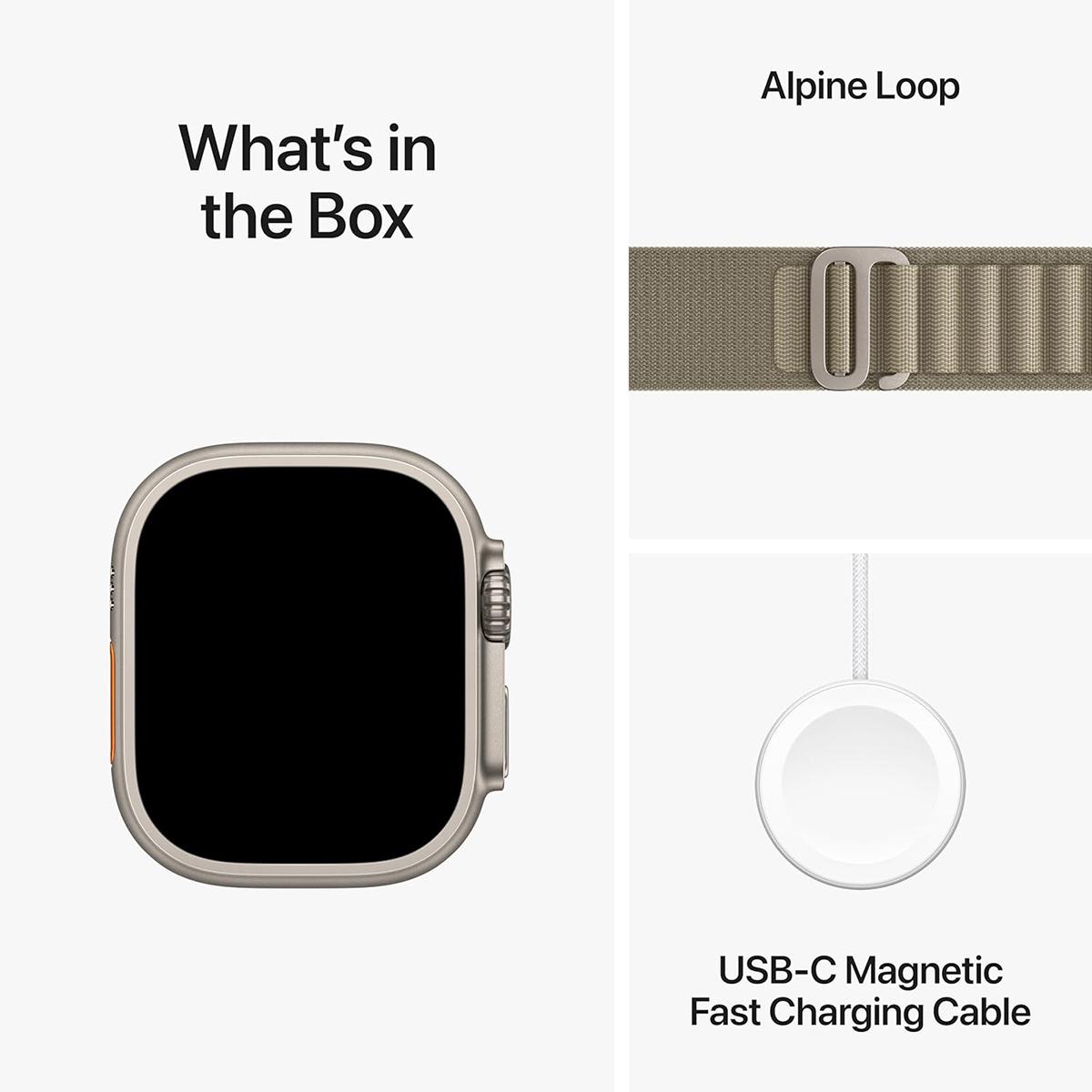
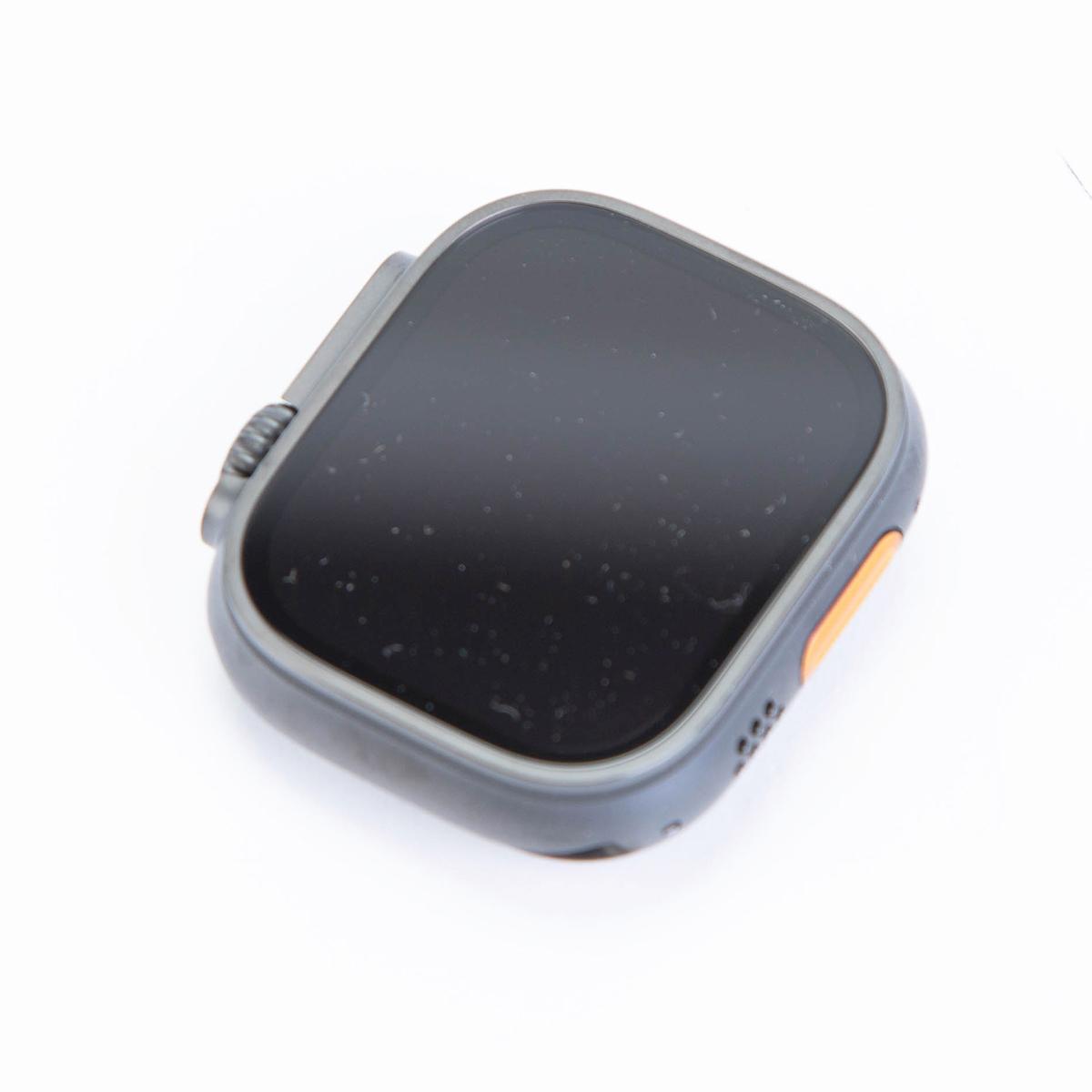
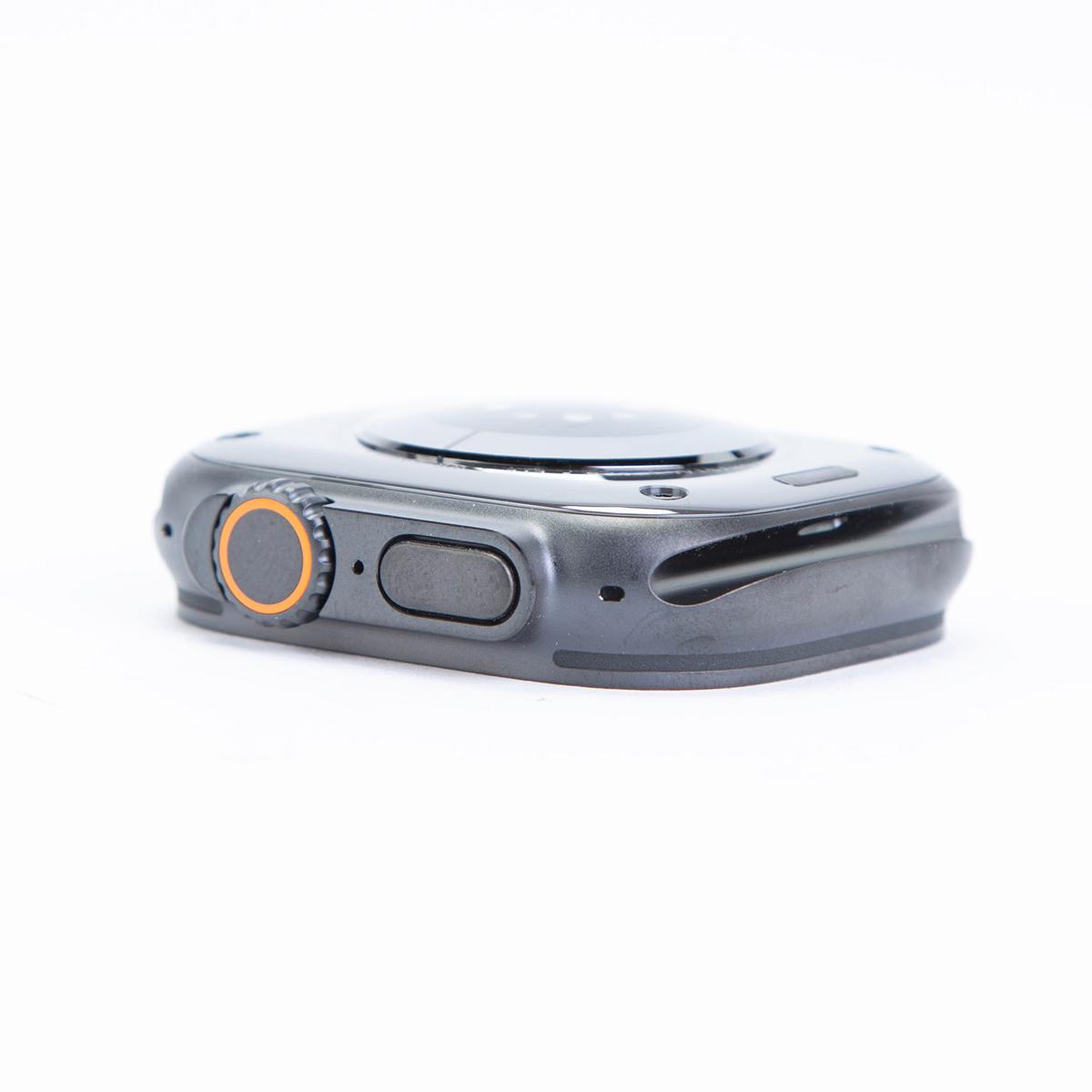

The rugged smartwatch market has reached a fascinating crossroads. Both Samsung and Apple have thrown their best punches with premium offerings that promise to survive your toughest adventures while keeping you connected. The Samsung Galaxy Watch Ultra, released in 2024, takes direct aim at Apple's established champion, the Apple Watch Ultra 2, which has held the crown since 2023.
But here's the thing about rugged smartwatches—they're not just about surviving a beating. These devices need to excel at health tracking, provide stellar battery life, offer crystal-clear displays in bright sunlight, and seamlessly integrate with your digital life. After diving deep into both devices, analyzing user feedback, and examining the technical specifications, clear winners emerge in different categories.
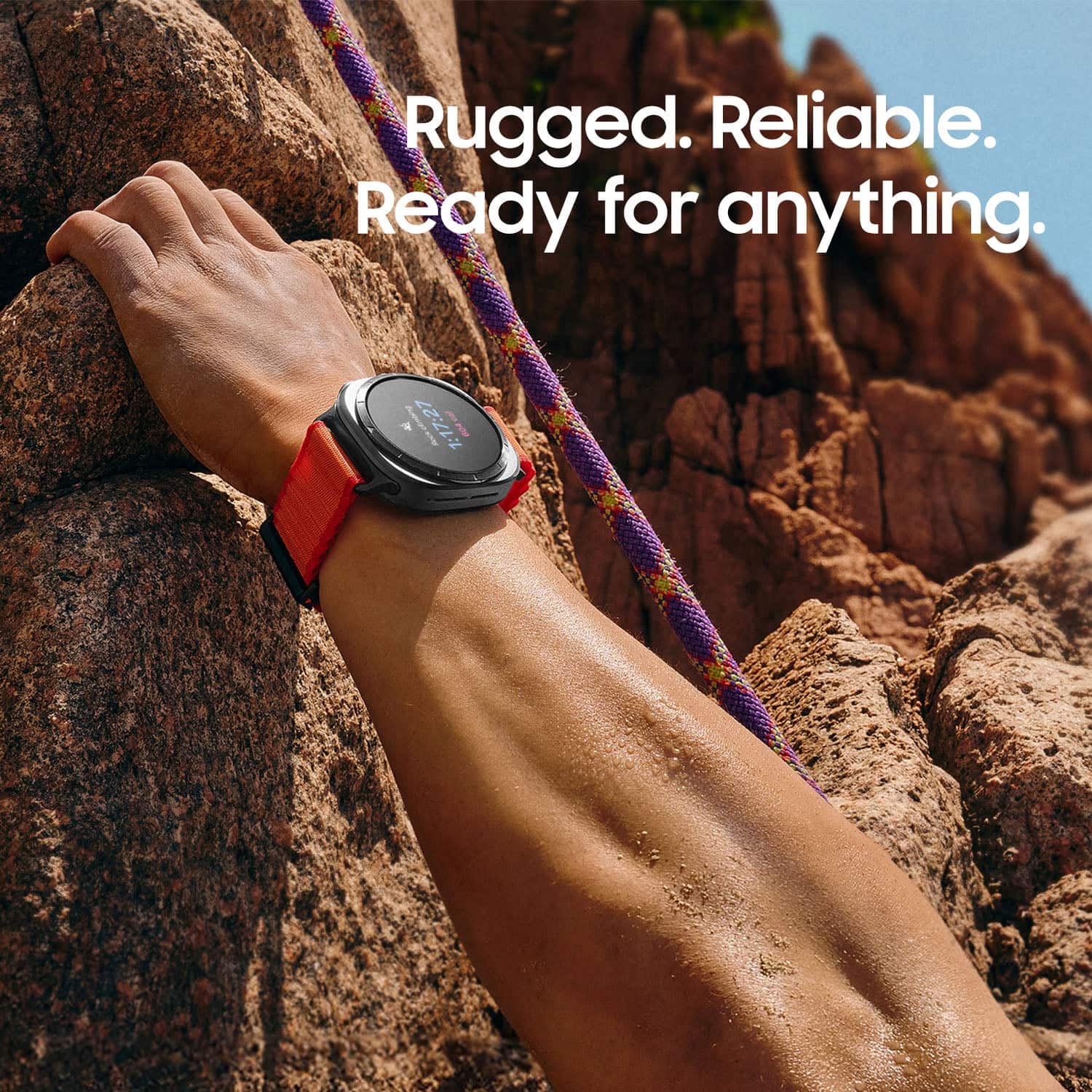
Rugged smartwatches occupy a unique space in the wearable world. Unlike basic fitness trackers that focus solely on step counting, or regular smartwatches that prioritize style over substance, these devices are engineered for extreme conditions. We're talking military-grade durability standards (MIL-STD-810H compliance, which means they can survive extreme temperatures, shocks, and vibrations), water resistance that handles serious swimming and diving, and GPS systems accurate enough for backcountry navigation.
The target audience spans serious athletes, outdoor enthusiasts, military personnel, and professionals working in demanding environments. These users need devices that won't quit when conditions get tough, but they also want the convenience of receiving texts, controlling music, and monitoring their health around the clock.
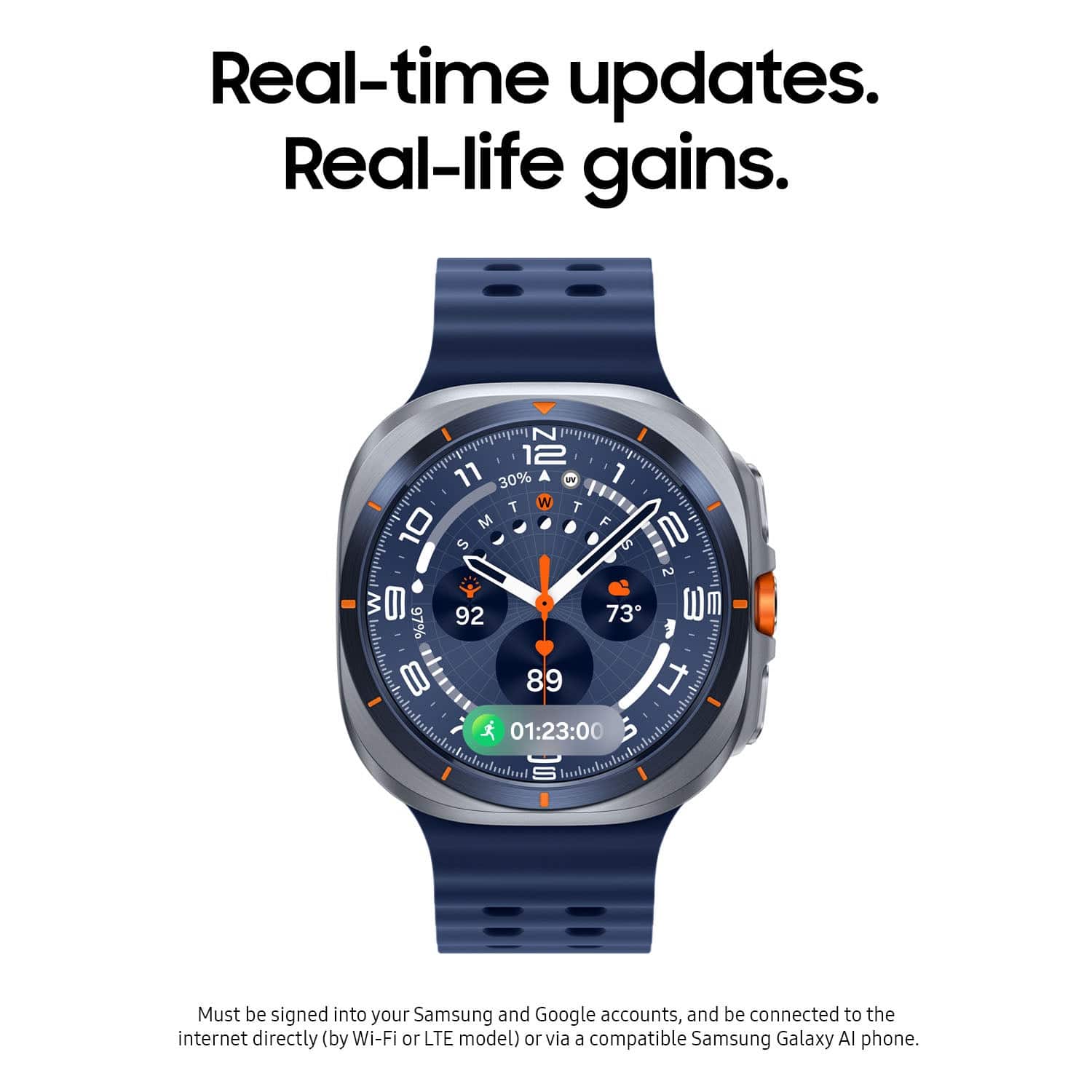
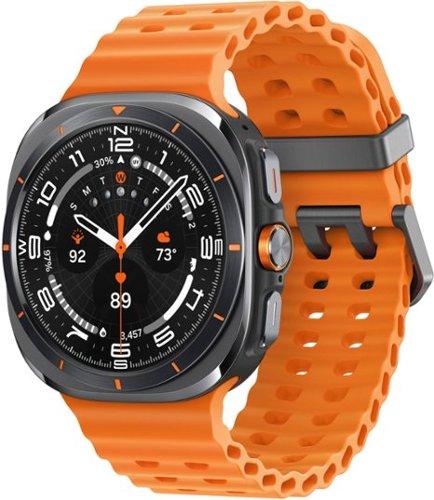
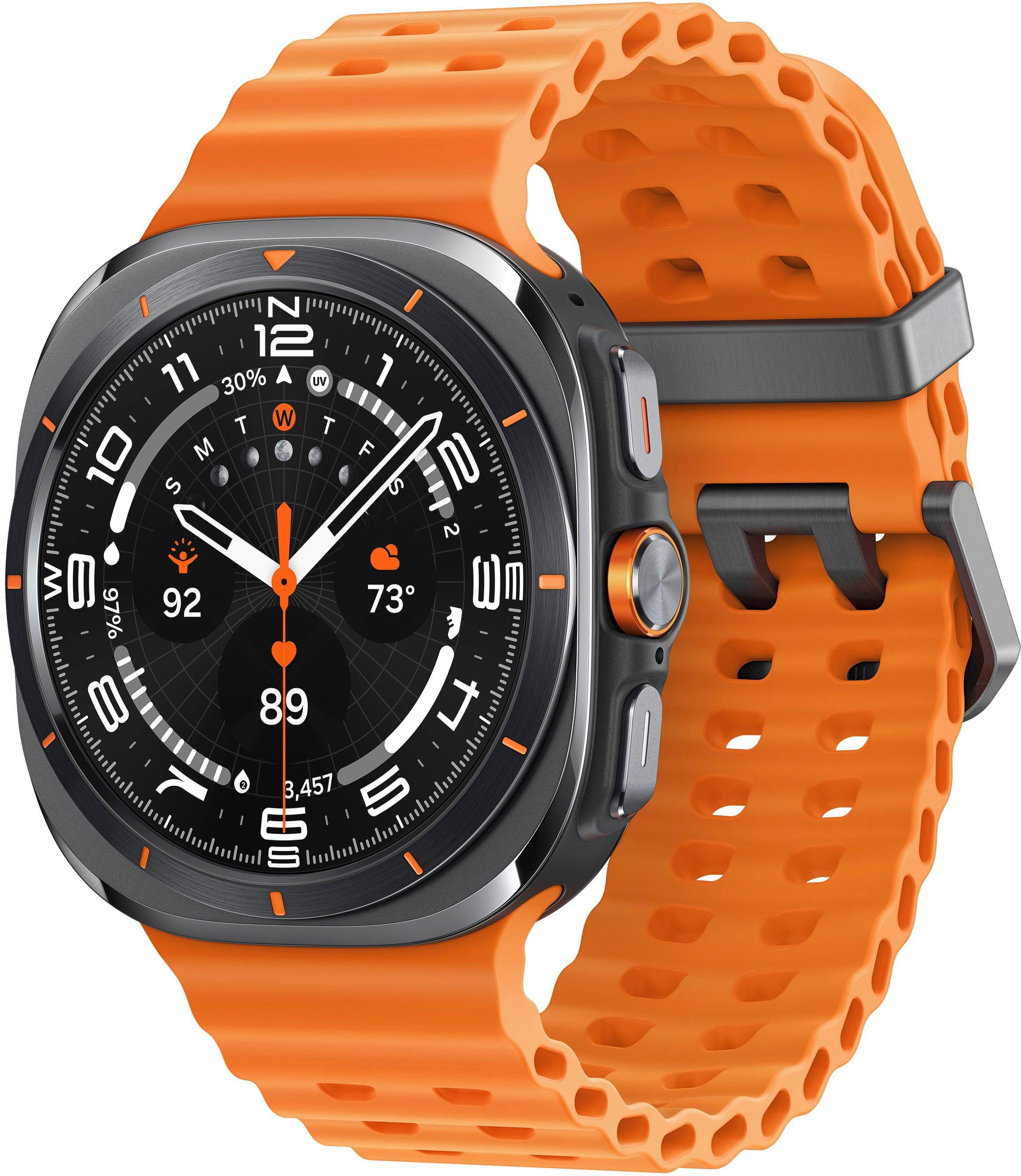
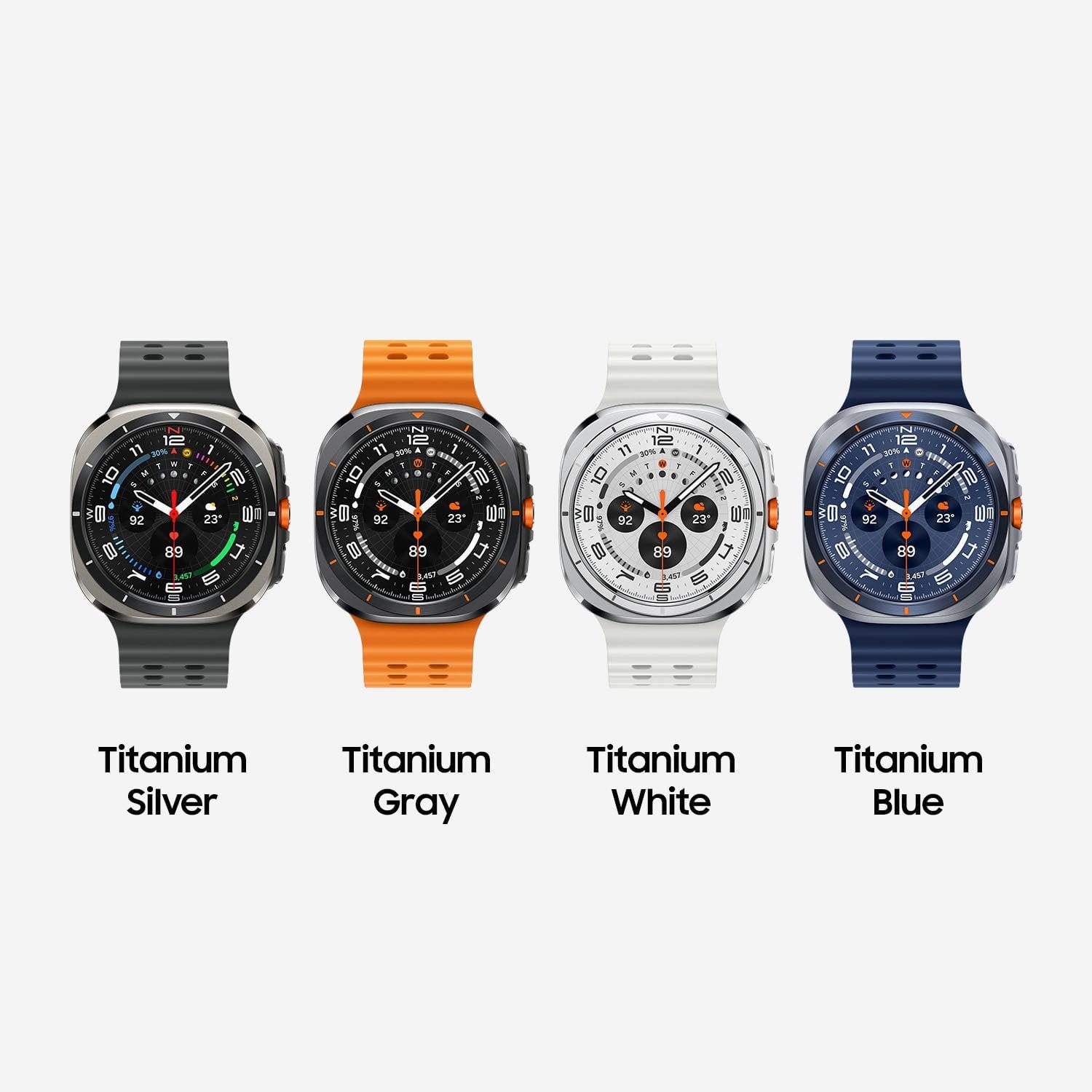
The Samsung Galaxy Watch Ultra maintains Samsung's traditional round watch face, measuring 47.4mm across with a titanium construction that weighs just 60.5 grams. This design choice reflects Samsung's philosophy that a watch should look like a watch. The company uses Grade 4 titanium for the frame, which offers excellent strength-to-weight ratio while resisting corrosion from sweat and saltwater.
However, Samsung made a controversial decision that has divided longtime users: they removed the rotating bezel. Previous Galaxy watches featured this physical, rotating ring around the display that made navigation incredibly intuitive—you could scroll through menus with a satisfying tactile click. The digital replacement feels less precise and lacks that mechanical feedback many users loved.
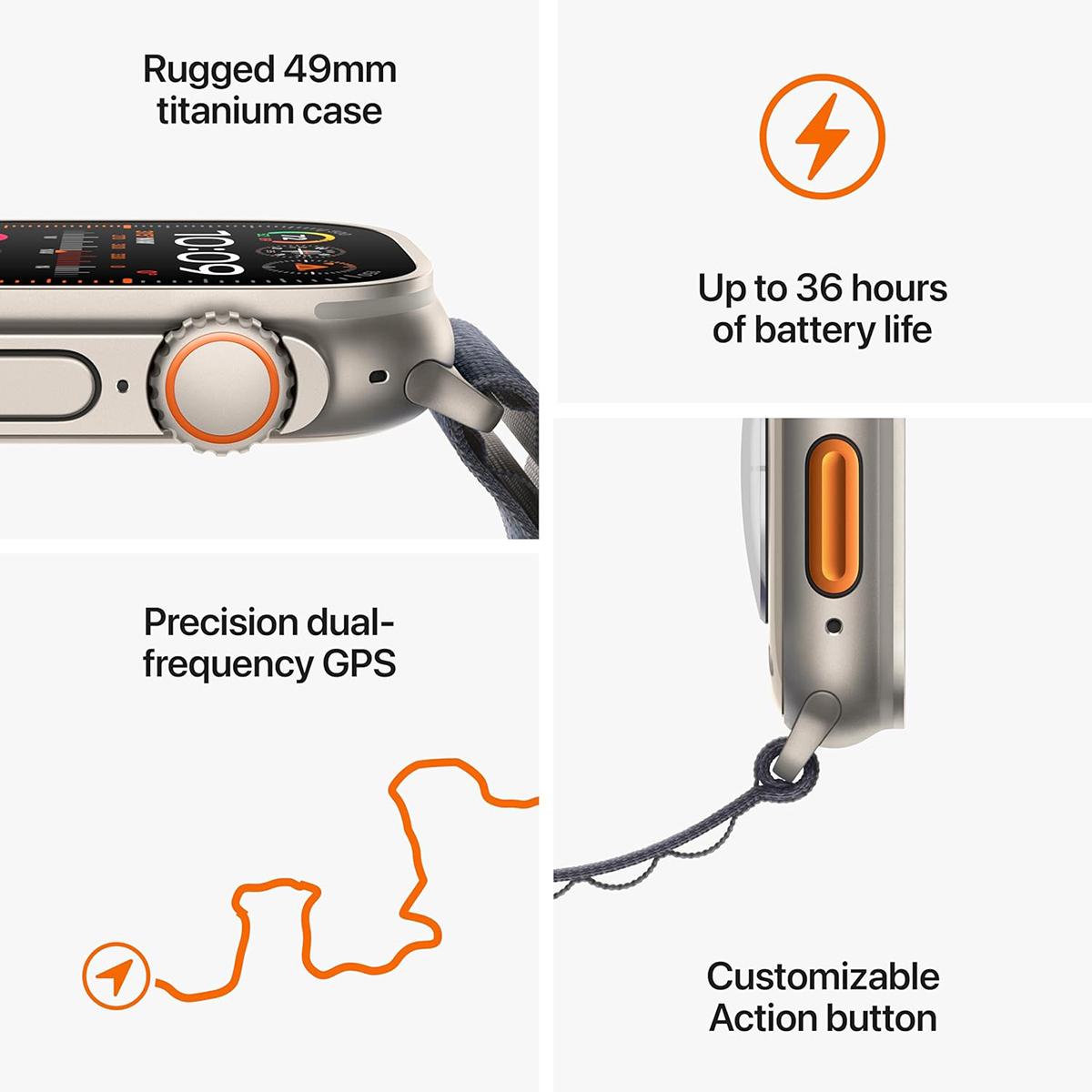
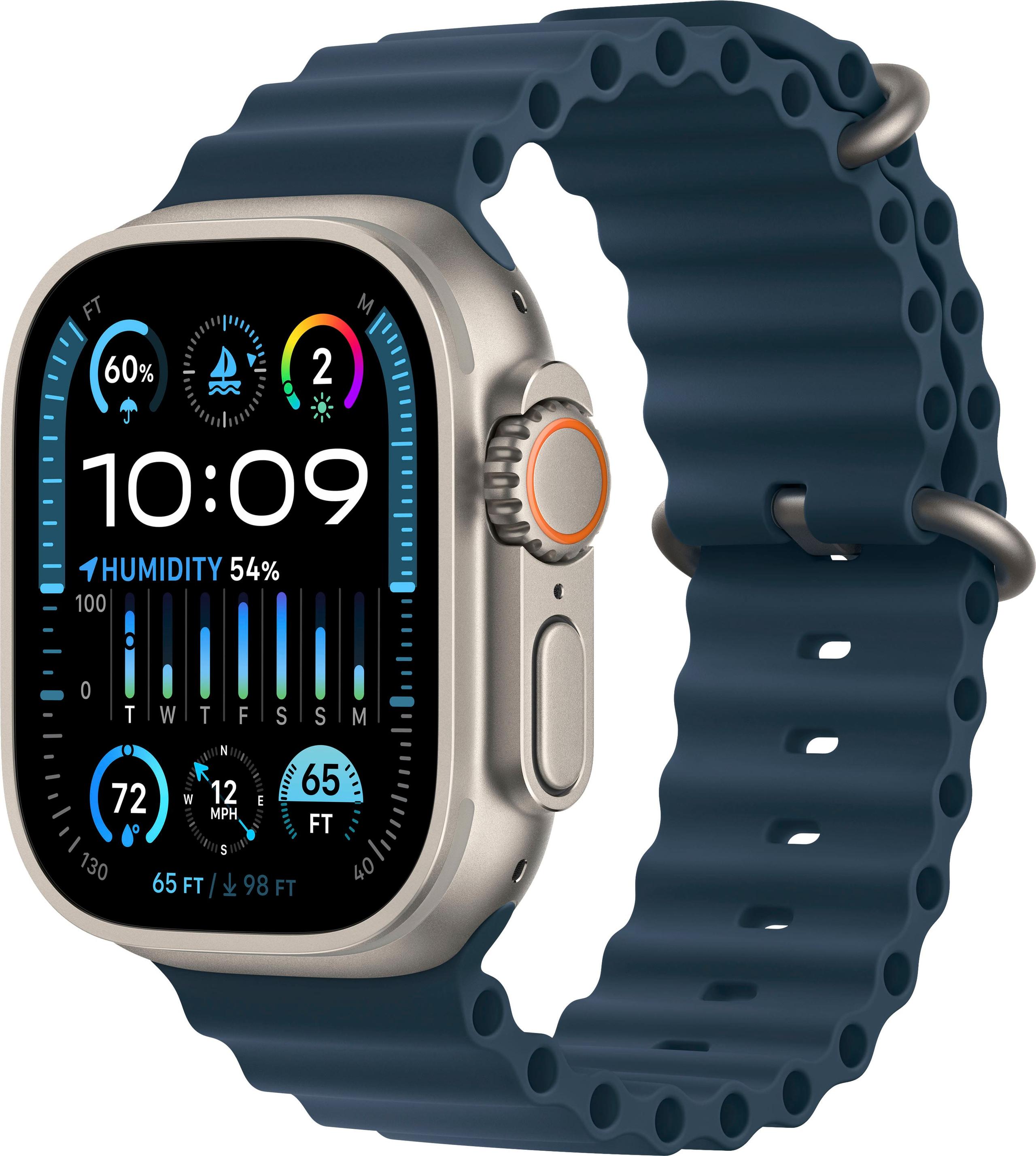
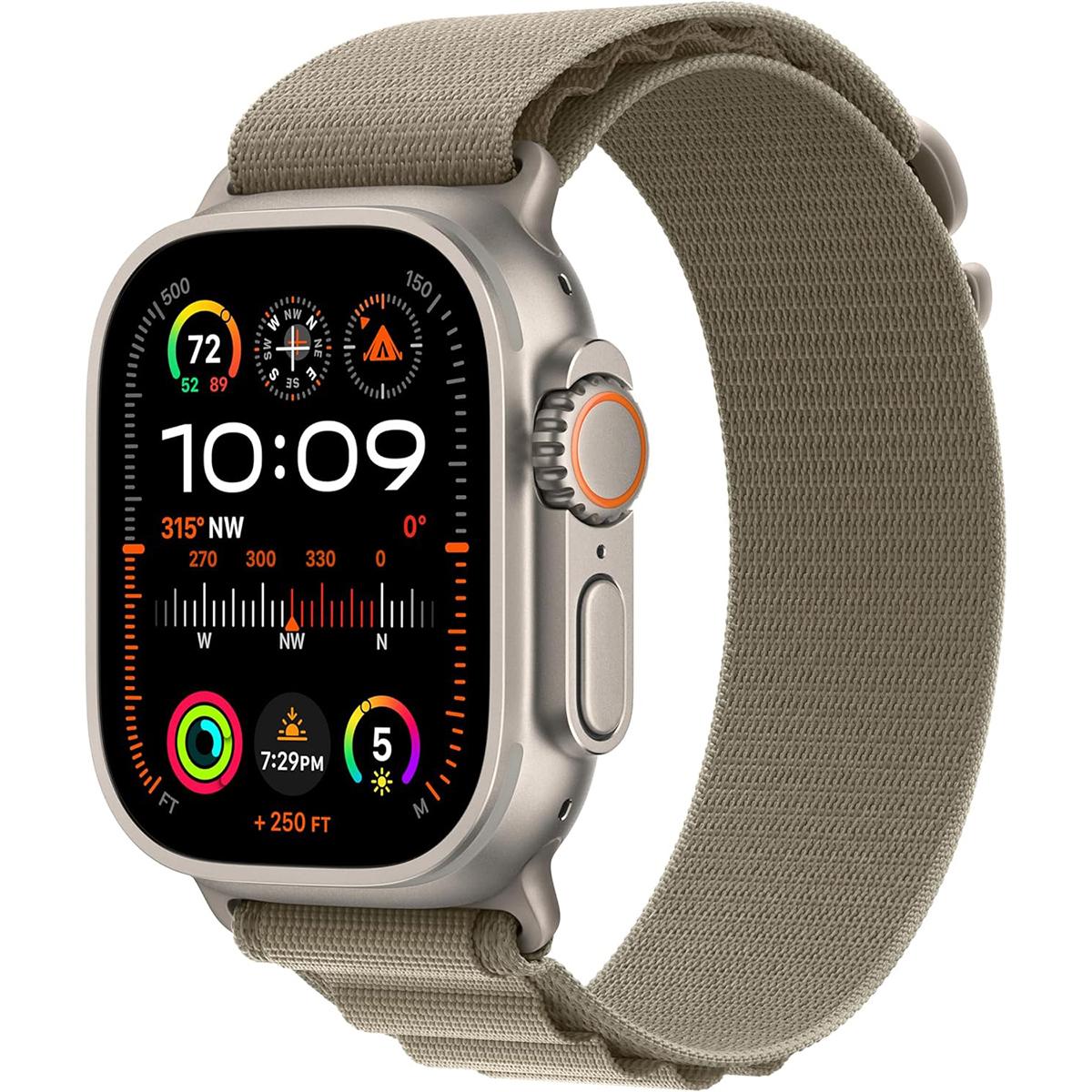
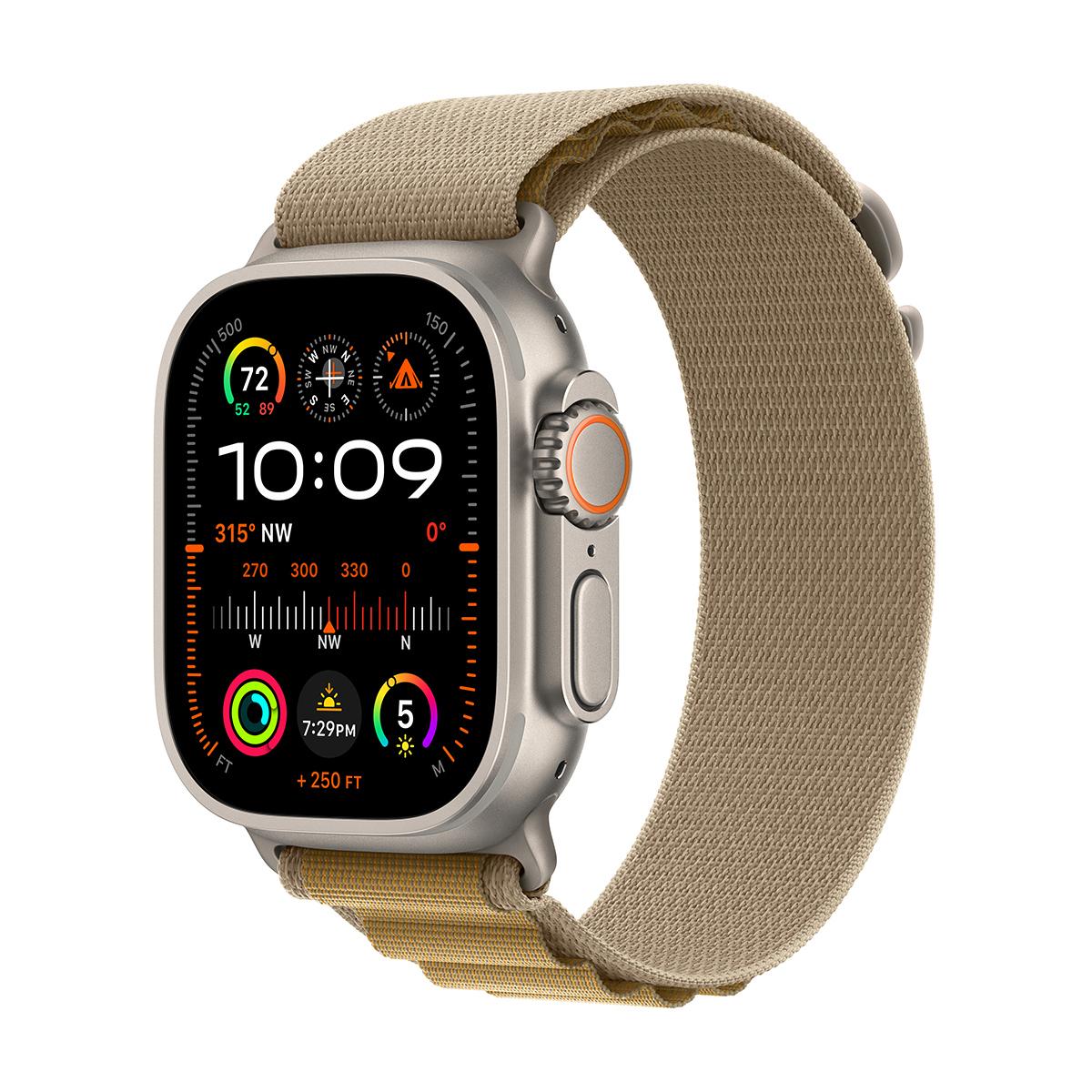
The Apple Watch Ultra 2 takes a different approach entirely. Its rectangular design maximizes screen real estate within a 49mm case, though it's slightly heavier at 61.4 grams. Apple uses Grade 5 titanium, which is harder and more durable than Grade 4, though both materials offer excellent protection. The rectangular form factor provides more usable display area for apps, maps, and complications (those small widgets showing weather, heart rate, etc.).
Apple's design includes a customizable Action button—a physical button you can program for quick access to features like flashlight, stopwatch, or workout modes. This button has proven popular with users who want instant access to frequently-used functions without navigating through menus.
Both watches feature displays capable of reaching 3,000 nits brightness, which is genuinely impressive. To put this in perspective, most smartphone screens peak around 1,000-1,200 nits. This extreme brightness ensures visibility even in direct desert sunlight or while skiing on bright snow.
The Samsung Galaxy Watch Ultra sports a 1.5-inch Super AMOLED display with 480x480 pixel resolution. AMOLED technology means each pixel produces its own light, creating perfect blacks and vibrant colors while consuming less power when displaying dark content. The circular display area totals about 1,767 square millimeters.
The Apple Watch Ultra 2 counters with a 1.92-inch Retina LTPO OLED display. LTPO (Low Temperature Polycrystalline Oxide) technology allows for variable refresh rates—the display can slow down to 1Hz when showing static content like watch faces, dramatically improving battery life. The rectangular shape provides roughly 2,334 square millimeters of usable space, about 32% more than Samsung's round display.
This size difference matters more than you might think. When viewing maps, reading messages, or using apps, that extra screen real estate on the Apple Watch Ultra 2 translates to significantly better usability. Text is larger, maps show more detail, and you can fit more information on screen simultaneously.
Under the hood, the Samsung Galaxy Watch Ultra houses the Exynos W1000 processor, built on a cutting-edge 3-nanometer manufacturing process. This technical detail might sound like marketing jargon, but it has real-world implications. Smaller manufacturing processes allow more transistors to fit in the same space while consuming less power and generating less heat.
The processor features a penta-core CPU (five processing cores) running up to 1.6GHz, paired with a Mali-G68 GPU for graphics handling and 2GB of RAM. This combination provides snappy performance when launching apps, smooth animations, and efficient multitasking between features like music playback and fitness tracking.
Apple's Watch Ultra 2 uses the S9 SiP (System in Package), which integrates the processor, memory, and other components into a single, compact unit. While Apple doesn't publicize the manufacturing process, the S9 includes a 4-core Neural Engine specifically designed for on-device machine learning tasks like Siri processing and health analysis.
In practical terms, both watches feel responsive during normal use. However, the Samsung Galaxy Watch Ultra's newer 3nm processor should provide better long-term performance as apps become more demanding, and it already demonstrates superior power efficiency contributing to its impressive battery life.
This is where the comparison becomes decisive. Battery life often determines whether a rugged smartwatch succeeds or fails in real-world scenarios, and the differences here are substantial.
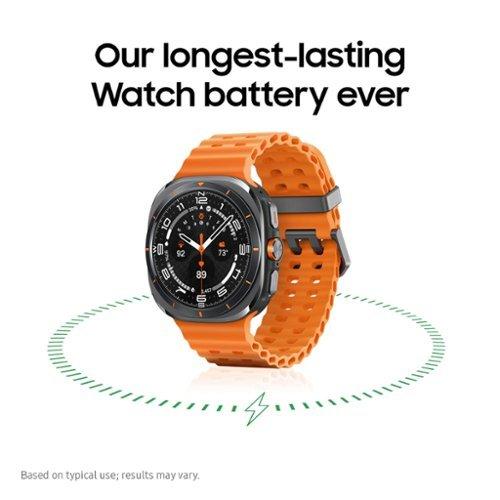
The Samsung Galaxy Watch Ultra packs a 590mAh battery that delivers genuinely impressive endurance. In normal use with the Always-On Display enabled, you'll get about 60 hours—that's two and a half days. Turn off the Always-On Display, and battery life extends to 80 hours. Most impressively, the power-saving mode stretches usage to 100 hours, over four full days.
For GPS-intensive activities like hiking or trail running, the Samsung Galaxy Watch Ultra provides up to 48 hours of continuous tracking. This capability transforms how you can use the device—imagine a multi-day backpacking trip where you can track your entire route without worrying about finding charging opportunities.
The Apple Watch Ultra 2 manages up to 36 hours in normal use, extending to 72 hours in Low Power Mode. While respectable, this represents roughly half the endurance of Samsung's offering. For GPS workouts, Apple provides about 12 hours of continuous tracking—sufficient for most activities but limiting for ultra-endurance events.
These battery differences stem from several factors: the Samsung Galaxy Watch Ultra's larger battery capacity, more efficient 3nm processor, and optimizations in Samsung's power management software. The AMOLED display also contributes, as it can completely turn off pixels to display true black, consuming zero power for those areas.
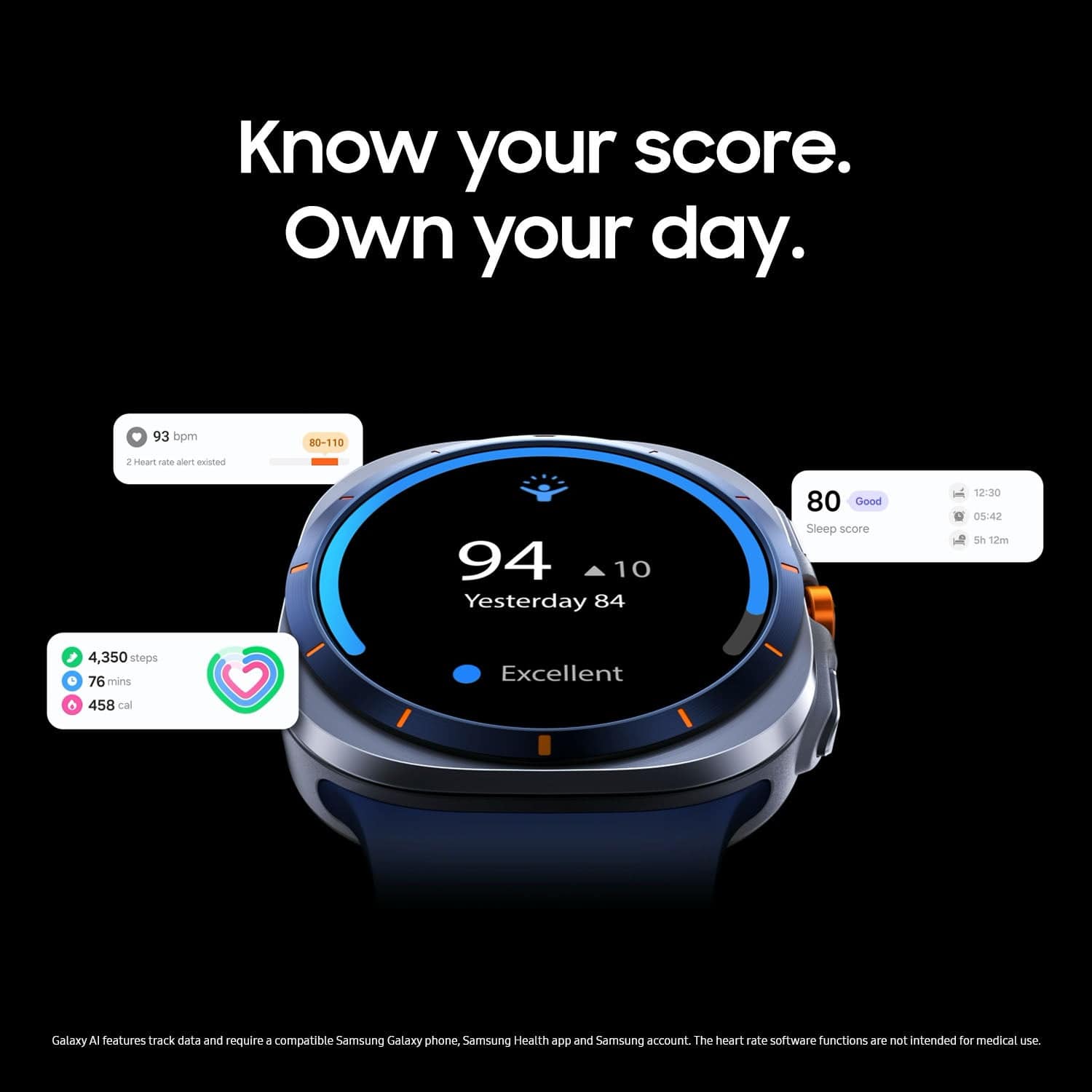
Both watches excel at health monitoring but take slightly different approaches. The Samsung Galaxy Watch Ultra features Samsung's BioActive sensor, which combines multiple monitoring technologies into a single sensor array. This includes optical heart rate monitoring (using light to detect blood flow changes), electrical heart signal detection for ECG readings, and bioelectrical impedance analysis for body composition measurements like muscle mass and body fat percentage.
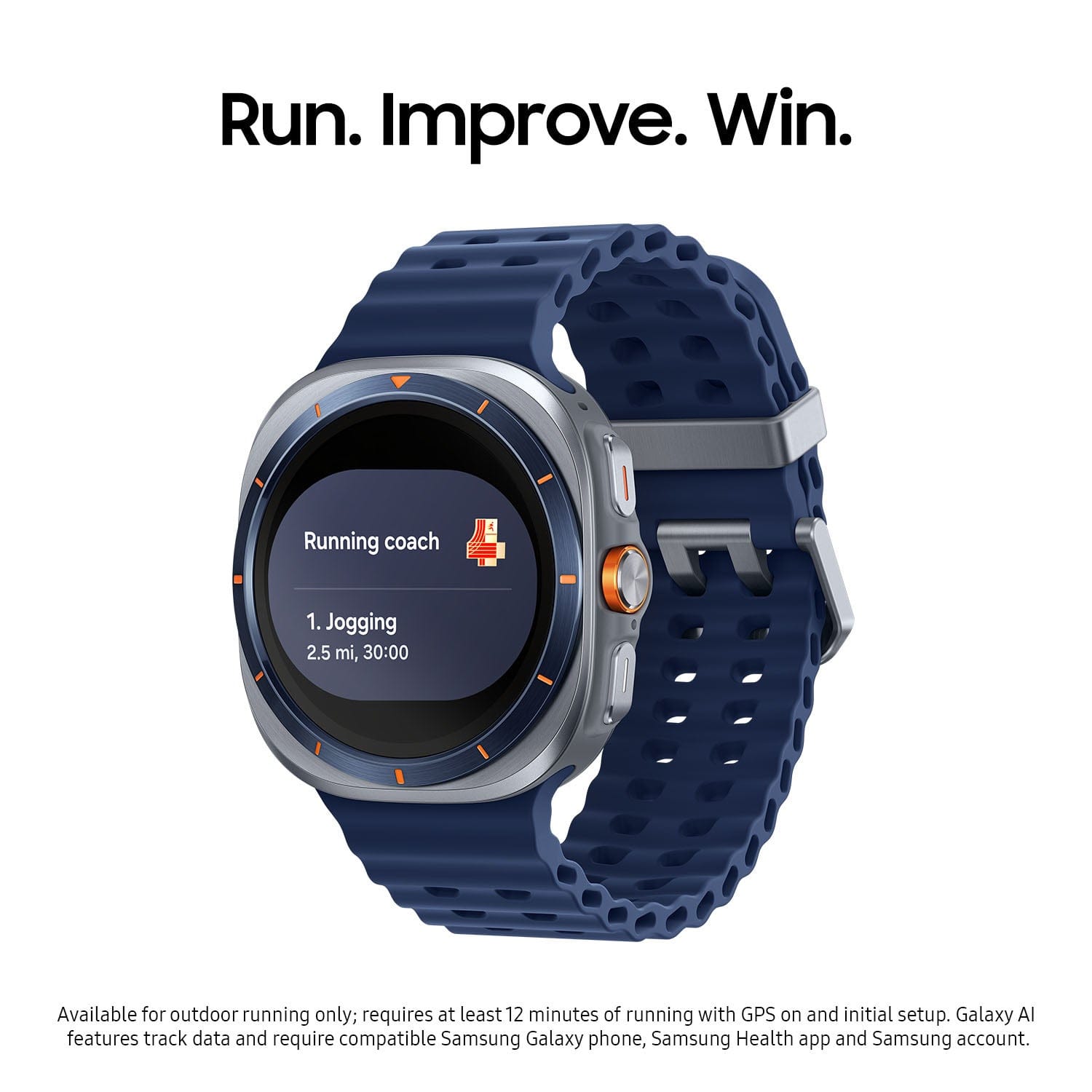
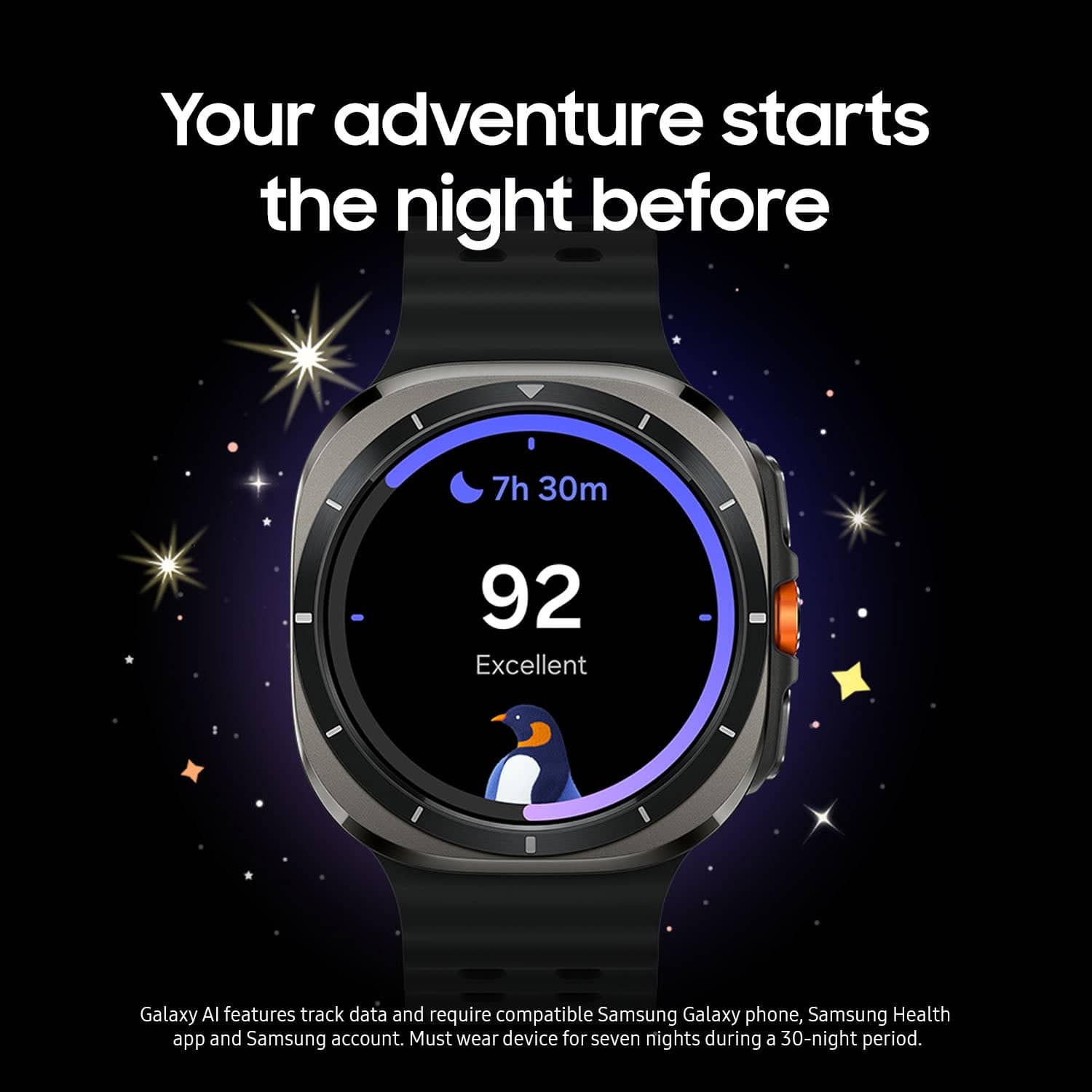
Samsung's implementation also includes infrared temperature monitoring, SpO2 tracking (blood oxygen levels), and advanced sleep analysis powered by Galaxy AI. The system can track sleep stages, detect sleep apnea indicators, and provide personalized coaching recommendations.
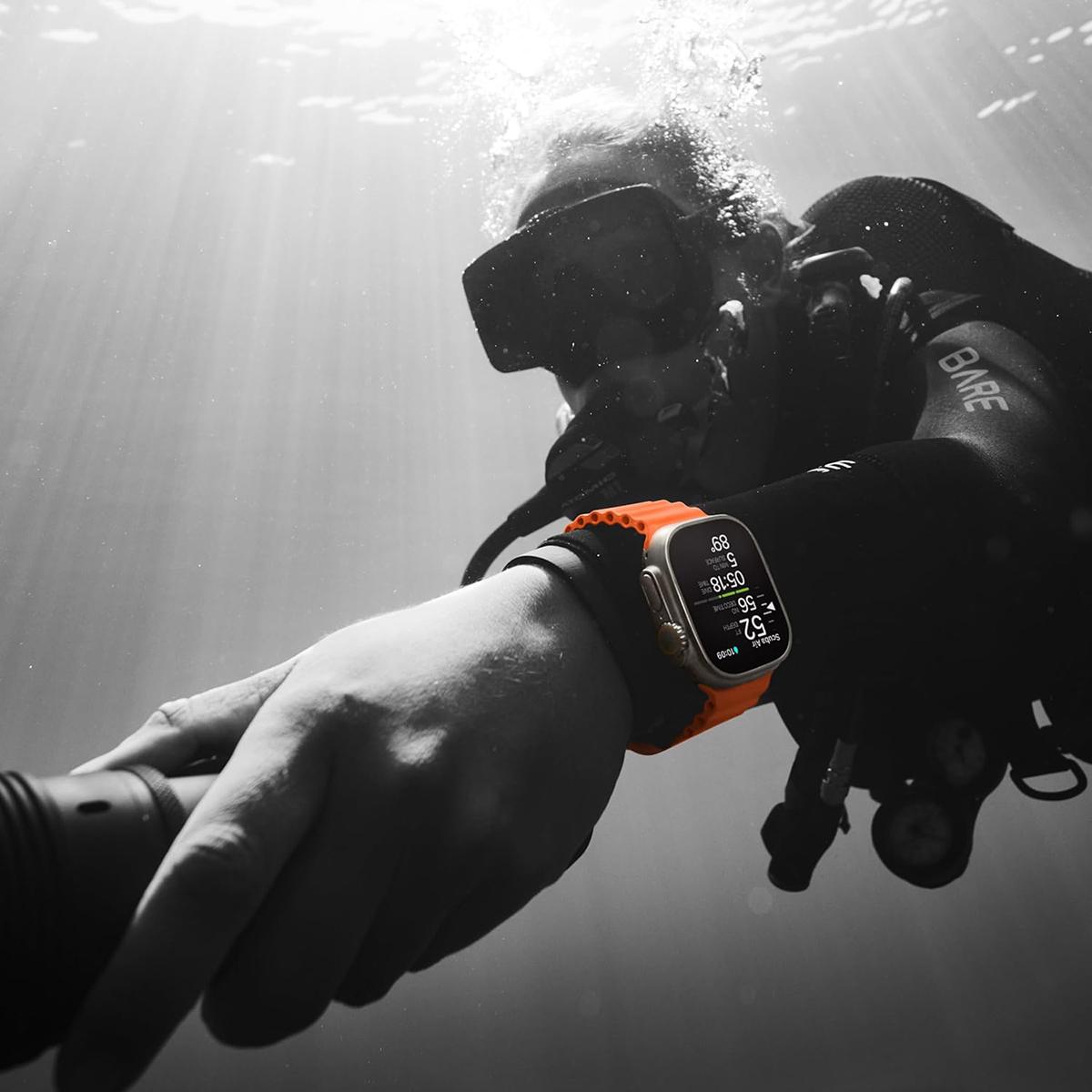
The Apple Watch Ultra 2 offers similar core health features but adds some unique capabilities. The depth gauge provides ±1 meter accuracy for swimming and diving activities, while the water temperature sensor helps divers and swimmers monitor conditions. Apple's health platform integration is mature and comprehensive, with excellent third-party app support.
For GPS accuracy, both devices feature dual-frequency systems that use both L1 and L5 satellite signals. This dual-frequency approach significantly improves accuracy in challenging environments like urban canyons or dense forests, where traditional single-frequency GPS might struggle. Based on user reports and expert testing, both perform excellently for navigation and activity tracking, with minor variations depending on specific conditions.
The software experience often determines long-term satisfaction with any smartwatch. The Samsung Galaxy Watch Ultra runs Wear OS 5 with Samsung's One UI Watch 6 interface. This combination provides access to Google's app ecosystem while maintaining Samsung's design philosophy and unique features.
Wear OS has matured significantly since its early versions. You get access to Google Assistant, Google Pay, Google Maps with offline capability, and thousands of third-party apps. Samsung adds its own features like Samsung Pay (which works with more payment terminals than Google Pay), Samsung Health's comprehensive tracking, and integration with Galaxy AI for personalized insights.
The Apple Watch Ultra 2 runs watchOS, which offers arguably the most polished smartwatch experience available. The interface feels fluid and intuitive, with excellent iPhone integration. You can answer calls directly on the watch, respond to texts with voice dictation or quick replies, and control iPhone features remotely.
Apple's ecosystem advantage becomes apparent in daily use. Photos taken on your iPhone automatically sync to your watch for easy sharing. Calendar events, reminders, and contacts stay perfectly synchronized. The Apple Watch can even unlock your iPhone or Mac when you're wearing it.
However, this tight integration comes with a significant limitation: the Apple Watch Ultra 2 only works with iPhones. Android users are completely locked out, regardless of how appealing the hardware might be.
For outdoor adventures, both watches excel but with different strengths. The Samsung Galaxy Watch Ultra's superior battery life makes it ideal for multi-day hiking, camping, or expedition scenarios where charging isn't possible. The ability to track GPS for 48 continuous hours means you could monitor an entire ultramarathon or multi-day trek without interruption.
The Apple Watch Ultra 2 shines in water-based activities. Its diving capabilities, depth gauge, and water temperature monitoring make it exceptional for swimmers, divers, and water sports enthusiasts. The 100-meter water resistance rating handles serious swimming and recreational diving scenarios.
For everyday fitness tracking, both provide excellent heart rate accuracy and comprehensive workout detection. The Samsung Galaxy Watch Ultra offers more detailed body composition analysis, while the Apple Watch Ultra 2 provides more polished coaching features and better integration with third-party fitness apps.
At the time of writing, the Samsung Galaxy Watch Ultra typically costs about $85-100 less than the Apple Watch Ultra 2, while offering newer processor technology and significantly better battery life. This pricing makes Samsung's offering compelling from a value perspective, especially considering the advanced 3nm processor and superior endurance.
The Apple Watch Ultra 2's higher price reflects its mature ecosystem, premium build quality, and specialized water sports capabilities. For iPhone users who prioritize seamless integration and don't mind the battery limitations, the premium might be justified.
Both watches represent significant investments, typically costing 40-50% more than their manufacturers' standard smartwatch offerings. However, the rugged construction, specialized sensors, and extended capabilities target users who need these specific features for their lifestyle or profession.
Choose the Samsung Galaxy Watch Ultra if you prioritize battery life above all else, use Android devices, want the latest processor technology, or need multi-day independence from charging. It's particularly compelling for hikers, campers, endurance athletes, and anyone whose activities might take them away from power sources for extended periods.
The round design will appeal to users who prefer traditional watch aesthetics, though you'll miss the rotating bezel that made previous Galaxy watches so intuitive. The savings compared to Apple's offering could fund accessories like extra bands or a charging dock.
Choose the Apple Watch Ultra 2 if you're deeply integrated into Apple's ecosystem, participate in water sports requiring depth monitoring, or prefer the larger, more functional rectangular display. iPhone users get features and integration that simply aren't available on other platforms, making the premium worthwhile.
The Apple Watch Ultra 2 also makes sense if you value software maturity and extensive third-party app support. Apple's watchOS has years of development behind it, resulting in a more polished experience overall.
Both watches succeed at their core mission: providing rugged, capable smartwatches for demanding users. Your choice ultimately depends on your smartphone ecosystem, specific activity needs, and whether you prioritize battery endurance or software refinement. Either way, you're getting a genuinely capable adventure companion that won't let you down when conditions get tough.
| Samsung Galaxy Watch Ultra | Apple Watch Ultra 2 |
|---|---|
| Display Size & Type - Affects readability and usability | |
| 1.5" Super AMOLED, 480x480px, round design maintains traditional watch aesthetic | 1.92" Retina LTPO OLED, 502x410px, rectangular provides 32% more usable screen space |
| Battery Life - Critical for multi-day adventures and daily convenience | |
| Up to 100 hours power saving, 48 hours GPS tracking, 60 hours normal use | Up to 72 hours low power mode, 12 hours GPS tracking, 36 hours normal use |
| Processor & Performance - Determines speed and future-proofing | |
| Exynos W1000 (3nm), penta-core 1.6GHz, Mali-G68 GPU, 2GB RAM | S9 SiP dual-core with 4-core Neural Engine, optimized for watchOS |
| Storage Capacity - Space for music, apps, and offline maps | |
| 32GB or 64GB configurations available | 64GB standard across all models |
| Water Resistance - Important for swimming and water sports | |
| 10 ATM (100m), suitable for swimming and water activities | 100m water resistant, diving to 40m with depth gauge and dive computer |
| Build Materials - Durability and weight considerations | |
| Grade 4 titanium, 60.5g, sapphire crystal glass, MIL-STD-810H | Grade 5 titanium, 61.4g, flat sapphire crystal, MIL-STD-810H |
| Operating System - Determines app availability and ecosystem integration | |
| Wear OS 5 with One UI Watch 6, works with Android (primary) and iOS (limited) | watchOS 10, exclusive iPhone compatibility with seamless Apple ecosystem |
| Health Sensors - Comprehensive monitoring capabilities | |
| BioActive sensor with ECG, SpO2, body temperature, body composition analysis, infrared temp | Optical/electrical heart sensors, temperature, depth gauge, water temp, ECG |
| GPS Technology - Navigation accuracy for outdoor activities | |
| Dual-frequency (L1+L5), GLONASS, Galileo, BeiDou support | Dual-frequency GPS with precision location tracking |
| Unique Features - Standout capabilities that differentiate each model | |
| Galaxy AI integration, 3nm processor efficiency, rotating bezel replaced with digital | Action button customization, diving computer, Siri on-device, deeper Apple integration |
| Value Proposition - Cost considerations at time of writing | |
| Lower price point with newer processor tech and superior battery life | Premium pricing for mature ecosystem and specialized water sports features |
The Samsung Galaxy Watch Ultra significantly outperforms the Apple Watch Ultra 2 in battery life. Samsung's watch delivers up to 100 hours in power-saving mode and 60 hours in normal use, while Apple's offers up to 72 hours in low power mode and 36 hours normally. For GPS tracking, the Samsung Galaxy Watch Ultra provides 48 hours compared to just 12 hours on the Apple Watch Ultra 2.
No, compatibility differs significantly. The Samsung Galaxy Watch Ultra works primarily with Android phones but offers limited functionality with iPhones. The Apple Watch Ultra 2 only works with iPhones and has no Android compatibility whatsoever. Your smartphone choice will largely determine which watch you can use effectively.
Both watches offer excellent durability with titanium construction and MIL-STD-810H military standards. The Samsung Galaxy Watch Ultra uses Grade 4 titanium and offers 10 ATM water resistance, while the Apple Watch Ultra 2 features Grade 5 titanium with 100-meter water resistance and specialized diving capabilities up to 40 meters with depth gauge functionality.
The Apple Watch Ultra 2 has a larger 1.92-inch rectangular display compared to the Samsung Galaxy Watch Ultra's 1.5-inch round display. Apple's rectangular design provides about 32% more usable screen space, making it better for reading text, viewing maps, and using apps, while Samsung maintains a traditional circular watch appearance.
Both excel at health tracking with different strengths. The Samsung Galaxy Watch Ultra features comprehensive BioActive sensors for body composition analysis, ECG, SpO2, and temperature monitoring. The Apple Watch Ultra 2 offers similar core health features plus specialized water-related sensors like depth gauge and water temperature monitoring, making it superior for swimming and diving activities.
Both watches feature dual-frequency GPS technology (L1+L5 bands) with multi-satellite system support, providing excellent accuracy for navigation and fitness tracking. The Samsung Galaxy Watch Ultra supports GLONASS, Galileo, and BeiDou systems, while the Apple Watch Ultra 2 offers precision GPS with similar multi-system support. Real-world accuracy is comparable between both devices.
The Apple Watch Ultra 2 is superior for water activities, featuring a depth gauge accurate to ±1 meter, water temperature sensor, and diving computer functionality for recreational diving up to 40 meters. While the Samsung Galaxy Watch Ultra offers excellent 10 ATM water resistance suitable for swimming, it lacks the specialized diving features that make Apple's watch ideal for serious water sports enthusiasts.
The Apple Watch Ultra 2 comes with 64GB of storage standard. The Samsung Galaxy Watch Ultra is available in both 32GB and 64GB configurations, with 2GB of RAM for smooth performance. Both provide ample space for music, apps, and offline maps for extended adventures away from your phone.
The Apple Watch Ultra 2 offers faster charging, reaching 80% battery in about one hour with its optimized charging system. The Samsung Galaxy Watch Ultra uses 10W wireless charging, which is slower but still convenient. However, Samsung's superior battery life means you'll need to charge less frequently, potentially making the slower charging speed less problematic in daily use.
Yes, the Samsung Galaxy Watch Ultra features the newer Exynos W1000 processor built on a cutting-edge 3nm manufacturing process, offering superior power efficiency and performance. The Apple Watch Ultra 2 uses the S9 SiP with a 4-core Neural Engine optimized for watchOS. Samsung's newer processor technology provides better future-proofing and contributes to its exceptional battery life.
The Samsung Galaxy Watch Ultra typically offers better value with a lower price point while providing newer processor technology, superior battery life, and comprehensive health tracking. The Apple Watch Ultra 2 commands a premium for its mature ecosystem, specialized diving features, and seamless iPhone integration. Value depends on your specific needs and smartphone ecosystem.
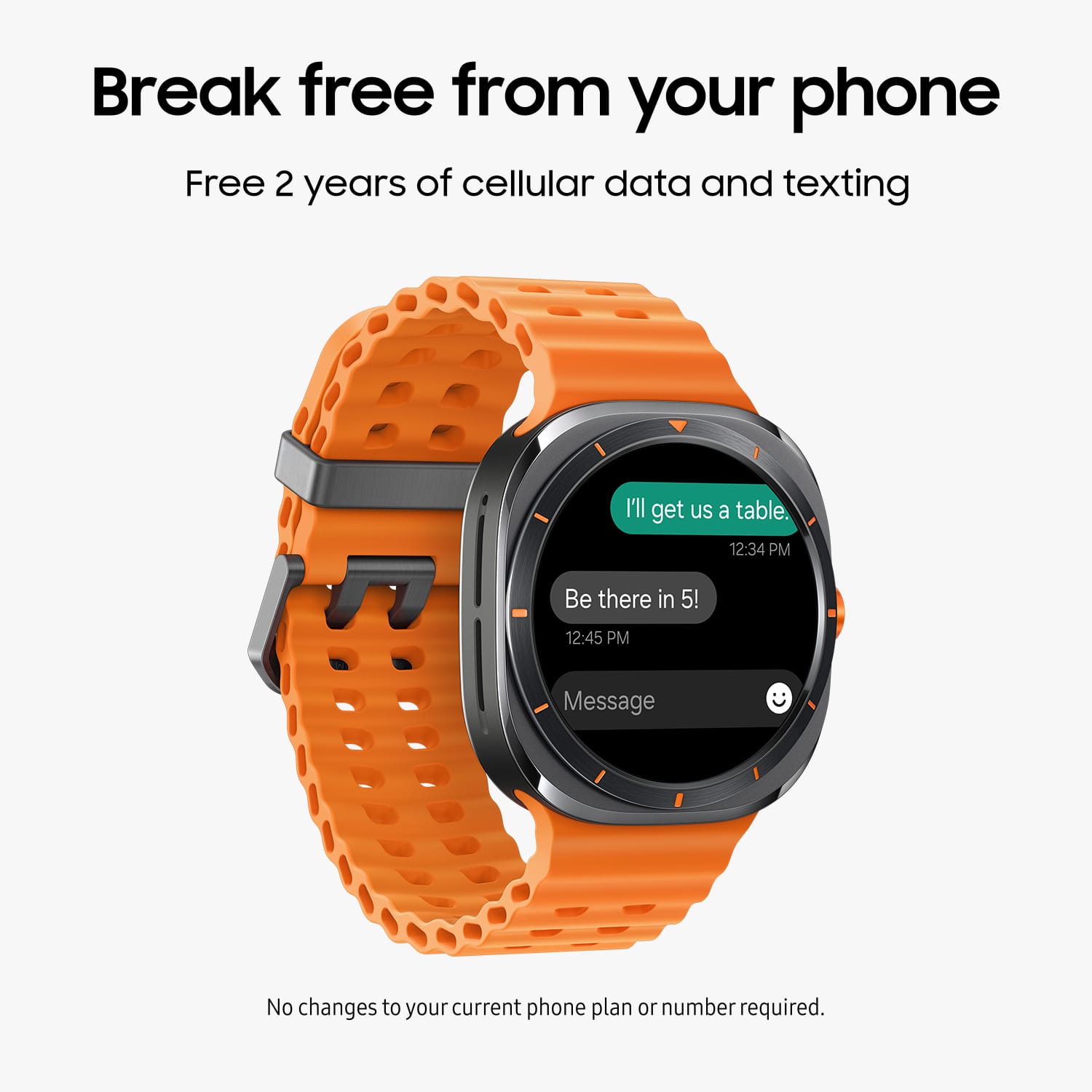
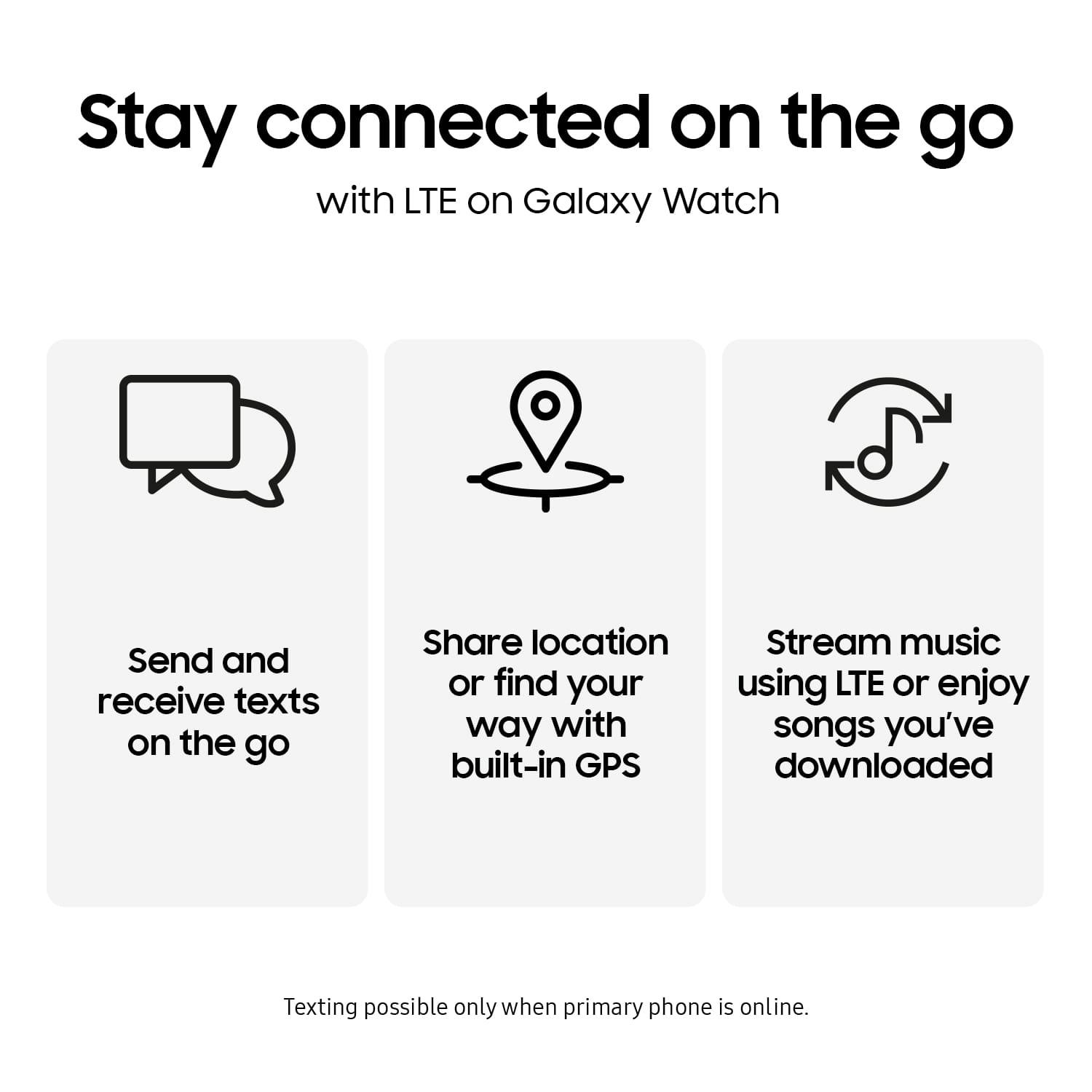
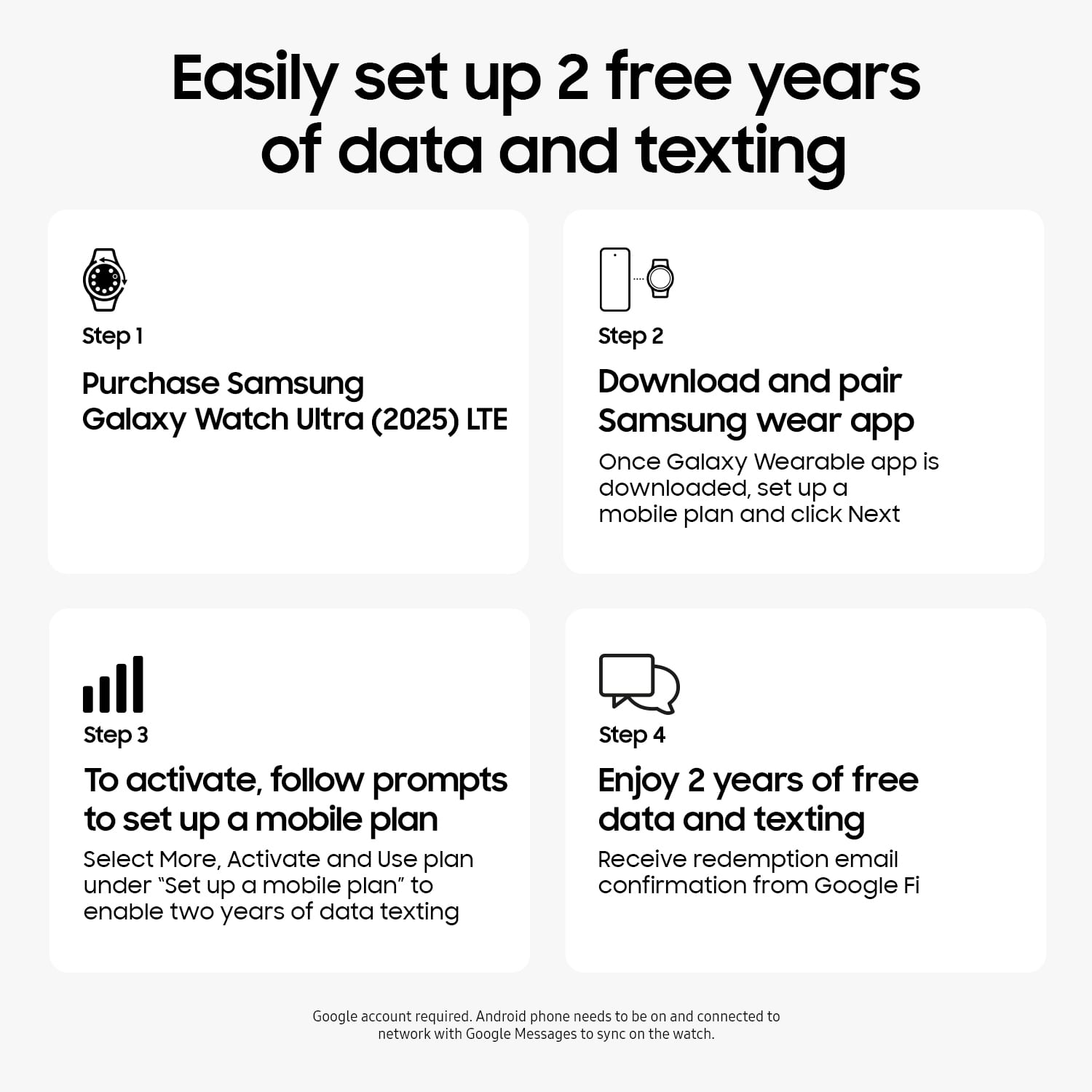
Both watches offer LTE cellular connectivity for independent operation. The Samsung Galaxy Watch Ultra supports numerous 4G LTE bands for global compatibility and can handle calls, texts, and data services independently. The Apple Watch Ultra 2 also provides cellular independence with eSIM technology, allowing standalone functionality for iPhone users when their phone isn't nearby.
We've done our best to create useful and informative comparisons to help you decide what product to buy. Our research uses advanced automated methods to create this comparison and perfection is not possible - please contact us for corrections or questions. These are the sites we've researched in the creation of this article: smartwatch-straps.co.uk - wareable.com - dcrainmaker.com - pocket-lint.com - sypnotix.com - youtube.com - youtube.com - 9to5google.com - us.community.samsung.com - youtube.com - samsung.com - phonearena.com - versus.com - gsmarena.com - samsung.com - samsung.com - phonearena.com - samsung.com - samsung.com - samsung.com - samsung.com - samsung.com - t-mobile.com - att.com - youtube.com - bestbuy.com - verizon.com - youtube.com - bandletic.com - androidcentral.com - samsung.com - samsung.com - samsung.com - samsung.com - bestbuy.com - bartonwatchbands.com - runnersworld.com - 9to5mac.com - jamiebalfour.scot - youtube.com - youtube.com - apple.com - youtube.com - wareable.com - menshealth.com - youtube.com - wareable.com - appleinsider.com - support.apple.com - apple.com - appleinsider.com - apple.com - bestbuy.com - costco.com - everymac.com - apple.com - apple.com - apple.com - gsmarena.com - akastage-www.att.com - youtube.com - apple.com - youtube.com - youtube.com - apple.com - youtube.com - discussions.apple.com - forums.macrumors.com - bestbuy.com - apple.com - macobserver.com

Privacy Policy
Terms and Conditions - Affiliate Policy
Home Security
© Copyright 2008-2026.
11816 Inwood Rd #1211, Dallas, TX 75244