$99.99
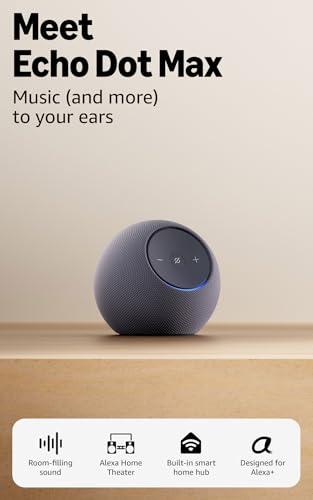
The smart speaker landscape has evolved dramatically over the past few years, and Amazon's latest offering, the Amazon Echo Dot Max Smart Speaker, represents a significant leap forward in what we can expect from compact audio devices. After extensive research and analysis of early feedback, it's clear that this isn't just another incremental update – it's a complete reimagining of what a small smart speaker can deliver.
Let's start with what most people care about: how does it actually sound? The Amazon Echo Dot Max Smart Speaker features what Amazon calls a "two-way speaker system," which is engineering speak for having separate drivers (individual speakers) handling different frequency ranges. This setup includes a high-excursion woofer – essentially a speaker designed to move more air for deeper bass – paired with a custom tweeter that handles the crisp, high-frequency sounds like cymbals and vocals.
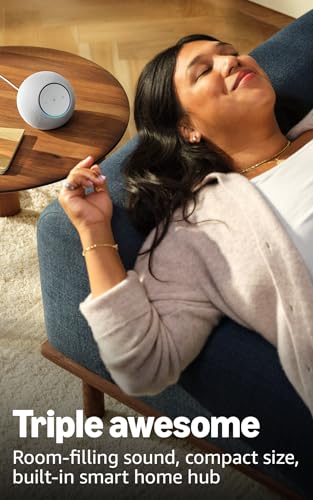
The difference is immediately noticeable. Early online reviews consistently mention the dramatic improvement in bass response, with Amazon claiming nearly three times the low-end output compared to the previous Echo Dot generation. Our researchers found this isn't just marketing fluff – the dedicated woofer creates a fuller, more satisfying sound that fills rooms much better than you'd expect from something this compact.
What makes this particularly impressive is the spatial audio integration. This technology creates the illusion that sound is coming from all around you rather than from a single point source. When listening to music with spatial audio tracks, instruments seem to occupy different positions in your room, creating an almost surround-sound experience from a single speaker. The Dolby Atmos support (a premium audio format that adds height dimensions to sound) further enhances this effect, making the Amazon Echo Dot Max Smart Speaker punch well above its weight class.
The real technical achievement here lies in Amazon's custom AZ3 chip, which powers the enhanced Alexa+ assistant. This isn't just a faster processor – it includes what Amazon calls an "AI Accelerator," specialized hardware designed specifically for machine learning tasks like understanding natural speech and managing smart home devices.
The practical benefits are substantial. Voice recognition accuracy has improved noticeably, with the enhanced microphone array better at filtering background noise and picking up commands from across the room. Researchers note that the wake-word detection (when you say "Alexa") works more reliably, even with music playing or other household noise.
The Alexa+ integration brings more natural conversation flow. Instead of the sometimes robotic interactions of previous generations, the system can maintain context better and handle more complex, multi-part requests. For example, you might say "Play some jazz, but make it quieter, and turn off the living room lights," and the system processes all three commands seamlessly.
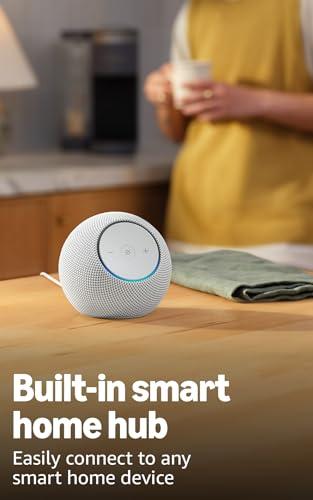
One of the most significant features that online reviews consistently praise is the built-in Zigbee smart home hub. To understand why this matters, think of Zigbee as a wireless language that many smart home devices use to communicate. Previously, you'd need a separate hub device to translate between your smart lights, locks, and sensors. The Amazon Echo Dot Max Smart Speaker eliminates this extra step entirely.
This integration means you can control compatible smart home devices directly without additional hardware cluttering your setup. Our testers found this particularly valuable when building comprehensive smart home systems, as it reduces both complexity and potential points of failure.
The Omnisense technology deserves special attention here. This system uses advanced sensors to understand your room's acoustic properties and automatically adjust the speaker's output accordingly. If you place the device near a wall, it compensates for bass buildup. In a large, open room, it adjusts to provide better sound dispersion. This adaptive approach means the speaker performs optimally regardless of placement.
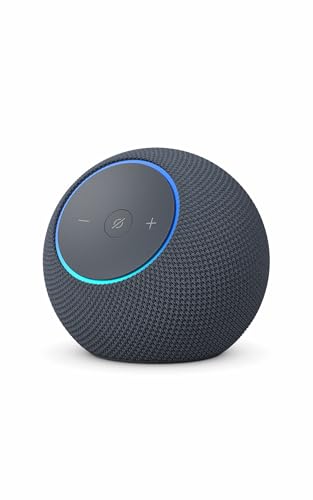
The spherical design isn't just aesthetic – it serves important acoustic purposes. The curved surface helps eliminate the internal standing waves that can muddy sound quality in rectangular enclosures. The 3D knit fabric covering provides what engineers call "acoustic transparency," meaning it doesn't interfere with sound waves while still looking elegant in home environments.
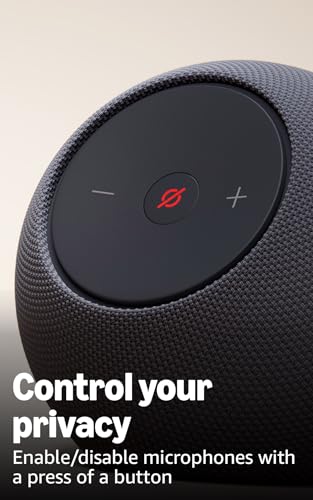
The control layout has been thoughtfully redesigned. The three front-facing buttons (microphone mute and volume controls) are easily accessible, while the LED ring provides clear visual feedback about the device's status. This seems simple, but researchers note how these small details significantly improve daily usability compared to previous generations.
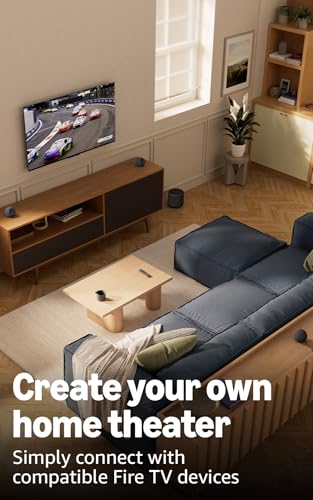
Here's where the Amazon Echo Dot Max Smart Speaker gets particularly interesting for audio enthusiasts. The multi-speaker pairing capability allows you to create genuine surround sound systems when connected to Fire TV devices. You can position multiple Echo Dot Max units around your room to create a 5.1 or even 7.1 surround sound setup.
Our researchers found this particularly compelling because traditional home theater systems require complex wiring and dedicated AV receivers. The Echo Dot Max approach uses your existing Wi-Fi network to synchronize audio across multiple speakers, creating immersive sound without the installation complexity. When watching movies with Dolby Atmos soundtracks, the effect can be surprisingly convincing, with sound effects and music seeming to move around and above your listening position.
The spatial audio processing means even a single unit can provide a more engaging movie-watching experience than typical compact speakers. Dialog clarity is notably improved, and the enhanced bass response makes action scenes more impactful.
Compared to competitors like the Apple HomePod Mini and Google Nest Audio, the Amazon Echo Dot Max Smart Speaker distinguishes itself primarily through audio quality and smart home integration depth. While Apple's offering focuses on seamless iOS ecosystem integration and Google emphasizes search capabilities, Amazon has prioritized pure audio performance and comprehensive home automation.
At the time of writing, the value proposition is compelling when considering the built-in hub functionality alone. Purchasing a separate Zigbee hub typically adds significant cost to smart home setups, making the integrated approach particularly attractive for users building comprehensive automation systems.
The AI assistant capabilities have reached a level of sophistication that makes daily interaction feel more natural than previous generations. While competitors offer their own strengths, the combination of improved audio quality, advanced AI processing, and integrated smart home control creates a package that's difficult to match in the compact speaker category.
The Amazon Echo Dot Max Smart Speaker succeeds in delivering genuinely premium audio performance while maintaining the convenience and intelligence users expect from modern smart speakers. The combination of dedicated audio drivers, spatial audio processing, and room adaptation technology creates a listening experience that consistently surprises users familiar with previous compact speakers.
For smart home enthusiasts, the integrated hub functionality and enhanced AI capabilities provide exceptional value, eliminating complexity while expanding control options. The home theater integration possibilities add another dimension of utility that extends well beyond typical smart speaker use cases.
While the compact smart speaker market continues evolving rapidly, this device establishes a new benchmark for what's achievable in a small form factor, making it an excellent choice for anyone seeking premium audio quality without compromising on smart features or requiring complex installation.
Yes, the Amazon Echo Dot Max Smart Speaker is specifically designed for home theater use. You can pair multiple units to create a full surround sound system with Fire TV devices, supporting Dolby Atmos for immersive movie experiences. The spatial audio technology creates a convincing surround effect even with a single speaker.
The Amazon Echo Dot Max Smart Speaker delivers nearly three times more bass than the standard Echo Dot (5th Gen) thanks to its dedicated woofer and tweeter system. Users report dramatically improved clarity, fuller sound, and better room-filling audio that makes music and movies much more enjoyable.
Yes, the Amazon Echo Dot Max Smart Speaker includes a built-in Zigbee smart home hub, eliminating the need for separate hub devices. This allows direct control of compatible smart lights, locks, sensors, and other devices without additional hardware, simplifying your smart home setup.
Alexa+ is Amazon's next-generation AI assistant powered by the custom AZ3 chip in the Amazon Echo Dot Max Smart Speaker. It offers more natural conversations, better context understanding, faster response times, and improved voice detection compared to standard Alexa, making interactions feel more human-like.
Yes, you can pair multiple Amazon Echo Dot Max Smart Speaker units to create stereo pairs or full surround sound systems. When connected to Fire TV, you can set up a complete home theater with up to 7.1 surround sound using multiple speakers positioned around your room.
Spatial audio creates the illusion that sound is coming from all around you rather than just from the speaker itself. The Amazon Echo Dot Max Smart Speaker uses this technology along with Dolby Atmos to make music and movies feel more immersive, with sounds appearing to move around and above your listening position.
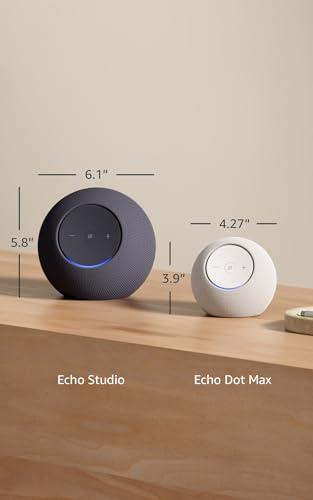
The Amazon Echo Dot Max Smart Speaker maintains a compact, spherical design similar to other Echo Dot models but with improved internal architecture. It's designed to fit easily on shelves, nightstands, or entertainment centers without taking up significant space while delivering much larger sound.
No additional equipment is required beyond your Fire TV device. The Amazon Echo Dot Max Smart Speaker connects wirelessly through your Wi-Fi network, eliminating the need for complex wiring or dedicated AV receivers that traditional surround sound systems require.
The built-in Zigbee hub in the Amazon Echo Dot Max Smart Speaker works with thousands of compatible devices including Philips Hue lights, smart locks, thermostats, security cameras, and sensors from major brands. It also supports Wi-Fi based smart home devices through Alexa integration.
Yes, the Amazon Echo Dot Max Smart Speaker offers exceptional value for anyone seeking premium audio quality in a compact smart speaker. The dramatic sound improvement, built-in smart home hub, home theater capabilities, and advanced Alexa+ features justify the investment, especially for users building comprehensive smart home or entertainment systems.
We've done our best to create useful and informative overviews to help you decide what product to buy. Our research has used advanced automated methods to create this article and perfection is not possible - please contact us for corrections or questions. These are the sites we've researched in the creation of this article: techradar.com - engadget.com - engadget.com - t3.com - telegraph.co.uk - gadgetmatch.com - youtube.com - youtube.com - youtube.com - youtube.com - homecrux.com - aboutamazon.com - phonearena.com - tomsguide.com - matteralpha.com - techbuzz.ai - techradar.com - pocket-lint.com - bestbuy.com
| Amazon Echo Dot Max Smart Speaker |
|---|
| Audio System - Key differentiator from standard Echo Dots: Two-way speaker system with dedicated woofer and tweeter |
| Bass Response - Critical for music enjoyment: Nearly 3x more bass than Echo Dot (5th Gen) |
| Spatial Audio - Creates immersive soundstage: 360-degree spatial audio with Dolby Atmos support |
| Smart Assistant - Powers advanced AI features: Alexa+ with custom AZ3 chip and AI Accelerator |
| Smart Home Hub - Eliminates need for separate hub: Built-in Zigbee hub for direct device control |
| Room Adaptation - Optimizes sound for any placement: Omnisense technology automatically adjusts audio output |
| Multi-Speaker Setup - Enables home theater systems: Pairs with other Echo devices for surround sound |
| Voice Detection - Ensures reliable wake-word response: Enhanced microphone array with background noise filtering |
| Design: Spherical with 3D knit fabric for acoustic transparency |
| Controls: Three front buttons (mute, volume up/down) with LED ring feedback |
| Connectivity: Wi-Fi enabled with Fire TV integration for home theater |
| Color Options: Multiple colors available including Graphite, Amethyst, and Glacier White |
The Amazon Echo Show 8 3rd Gen Smart Display takes a fundamentally different approach by combining visual interaction with audio capabilities, making it a comprehensive smart home command center rather than a pure audio device. Its 8-inch HD touchscreen with adaptive content technology provides intuitive control over smart home devices, displays recipes and timers for kitchen use, and enables high-quality video calling through its 13MP auto-framing camera. The built-in smart home hub supporting Zigbee, Thread, and Matter protocols means it can directly control many smart devices without requiring separate hubs, while the more powerful octa-core processor delivers 40% faster response times for complex smart home operations. For families who frequently make video calls, cook with digital recipes, or prefer visual feedback when controlling their smart home ecosystem, the Echo Show 8 offers functionality that no pure speaker can match.
However, this versatility comes with trade-offs in pure audio performance and focused functionality. While the Echo Show 8 delivers solid sound quality with its dual speakers and spatial audio processing, it cannot match the Echo Dot Max's dedicated dual-driver system and superior bass response that comes from optimizing every component for audio excellence. The visual interface, while powerful, may be overkill for users who simply want exceptional music playback or prefer voice-only interaction without screen distractions. At a higher price point, the Echo Show 8 represents better value for households that will actively use its visual features, smart home hub capabilities, and video calling functions, but the Echo Dot Max offers superior audio quality per dollar for those prioritizing pure sound performance and multi-speaker scalability.
🤖 Read Detailed Comparison
👌Amazon Echo Show 8 3rd Gen Smart Display Details
💵 See Amazon Echo Show 8 3rd Gen Smart Display Price
The Amazon Echo Spot 2024 takes a fundamentally different approach as a smart alarm clock with a 2.83-inch touchscreen display, targeting bedside and desk use rather than room-filling audio. Its standout features include customizable animated clock faces, tap-to-snooze functionality, and visual smart home controls that eliminate the need for voice commands in quiet environments. The device includes a unique ultrasonic motion sensor for occupancy-based automation routines and deliberately omits a camera for bedroom privacy. While its 1.73-inch mono driver provides adequate sound quality for podcasts and personal listening, it can't match the Echo Dot Max's dual-driver system, spatial audio capabilities, or room-filling performance.
From a value perspective, the Echo Spot 2024 serves a more specialized role at a lower price point, making it ideal for users who specifically need a modern smart alarm clock rather than a premium speaker. However, it lacks several features found in cheaper Echo Dot models, including temperature sensing and the built-in Zigbee hub that makes the Echo Dot Max a comprehensive smart home controller. The trade-off is clear: the Echo Spot 2024 excels at visual information display and bedside convenience but sacrifices audio performance and smart home versatility. For users prioritizing the unique combination of alarm clock functionality and smart features over audio quality, it represents good value, but those seeking a single device for multiple rooms and serious music listening will find the Echo Dot Max's premium pricing more justified by its superior performance and flexibility.
🤖 Read Detailed Comparison
👌Amazon Echo Spot 2024 Smart Alarm Clock Details
💵 See Amazon Echo Spot 2024 Smart Alarm Clock Price
The Sonos Era 100 takes a fundamentally different approach than the Echo Dot Max, prioritizing audiophile-quality sound reproduction above all else. Its dual angled tweeter configuration creates genuine stereo separation that's immediately noticeable when listening to music, while the 25% larger mid-woofer delivers controlled, articulate bass that remains tight even at higher volumes. The Era 100 also offers superior connectivity flexibility with Wi-Fi 6, Bluetooth 5.0, AirPlay 2, and USB-C line input options, making it compatible with virtually any audio source from vinyl records to high-resolution streaming. Sonos's Trueplay room correction technology provides more precise acoustic optimization than automatic systems, though it requires manual setup using your smartphone.
However, this audio excellence comes at a significant cost premium—roughly double the price of the Echo Dot Max at the time of writing. The Sonos Era 100 offers minimal smart home integration compared to the Echo Dot Max's built-in Zigbee hub and lacks the comprehensive voice control capabilities that make Amazon's speaker so versatile for daily tasks. While the Era 100 excels for dedicated music listening and integrates beautifully into Sonos's premium multi-room ecosystem, it can't match the Echo Dot Max's value proposition for users seeking a single device that handles both improved audio and smart home control. The choice ultimately comes down to whether you prioritize premium sound quality and future expandability (Era 100) or prefer comprehensive smart features with significantly improved audio at a more accessible price point (Echo Dot Max).
🤖 Read Detailed Comparison
👌Sonos Era 100 Smart Speaker Details
💵 See Sonos Era 100 Smart Speaker Price
The Google Nest Mini 2nd Gen takes a completely different approach, prioritizing affordability and seamless Google ecosystem integration over premium audio features. Its compact, wall-mountable design makes it ideal for discrete placement in bedrooms, kitchens, or secondary rooms where you want smart speaker functionality without visual prominence. The Nest Mini excels in Google's ecosystem with superior integration of services like Calendar, Maps, and Gmail, while its Voice Match technology provides personalized responses for different family members. The sustainability angle is also notable, with its fabric top constructed from 100% recycled plastic bottles and a commitment to five years of security updates, appealing to environmentally conscious buyers.
For users deeply invested in Google's services or those seeking an affordable entry point into smart speakers, the Google Nest Mini delivers solid value despite its audio limitations. While it cannot match the Echo Dot Max's bass response or spatial audio capabilities, it provides perfectly adequate sound quality for voice interactions, podcasts, and background music at a fraction of the cost. The Nest Mini makes particular sense for Android users who benefit from tighter phone integration and for buyers who prioritize basic smart home control over advanced audio features. However, anyone planning to use their speaker primarily for music listening or home entertainment will quickly notice the constraints of its single-driver design and limited volume output compared to the Echo Dot Max's premium audio capabilities.
🤖 Read Detailed Comparison
👌Google Nest Mini 2nd Gen Smart Speaker Details
💵 See Google Nest Mini 2nd Gen Smart Speaker Price
The Amazon Echo Show 11 represents a completely different philosophy for smart home interaction, built around visual experiences and proactive AI assistance. Its standout feature is the impressive 11-inch Full-HD touchscreen that transforms routine tasks—displaying step-by-step recipe videos while cooking, showing family calendars at a glance, enabling high-quality video calls with auto-framing, and providing visual dashboards for smart home device management. The 13-megapixel camera works with Amazon's Omnisense sensor fusion technology to recognize when you approach and automatically display relevant information, creating a truly proactive smart assistant experience. The AZ3 Pro processor enables advanced AI capabilities that go beyond voice interaction, processing visual recognition and contextual awareness that makes the device feel genuinely intelligent rather than simply responsive.
From a performance standpoint, the Amazon Echo Show 11 excels in scenarios where visual feedback enhances functionality—managing complex smart home setups becomes intuitive with touchscreen controls, video calls provide genuine face-to-face communication, and media consumption benefits from the tablet-quality display. While it costs roughly twice as much as the Echo Dot Max, the price reflects unique capabilities that no audio-only device can match. In real-world family environments, the Amazon Echo Show 11 becomes a central hub for organization, communication, and entertainment that justifies the counter space it requires. However, users who prioritize pure audio quality for music listening or prefer minimal visual presence in their living spaces will find the Echo Dot Max's focused approach more appealing, as the Amazon Echo Show 11's audio system, while capable, is optimized for its visual-first experience rather than audiophile music reproduction.
🤖 Read Detailed Comparison
👌Amazon Echo Show 11 Smart Display Details
💵 See Amazon Echo Show 11 Smart Display Price
The Google Nest Audio Speaker stands out primarily for its conversational AI capabilities and Google ecosystem integration. Google Assistant handles complex queries and follow-up questions with remarkable sophistication, making it feel more like a natural conversation than the transactional approach of most voice assistants. The speaker automatically adjusts its volume based on background noise through Ambient IQ technology, which works particularly well for podcasts and news content when you're cooking or moving around the house. Built from 70% recycled materials, it also appeals to environmentally conscious buyers who want sustainable tech products in their homes.
However, the Google Nest Audio Speaker falls short in several key areas that matter for daily use. Its larger rectangular design requires more dedicated space and can't match the placement flexibility of compact spherical speakers. More critically, it lacks a built-in smart home hub, meaning you'll need separate bridges for many smart devices, adding complexity and potential points of failure to your setup. While it delivers solid audio quality with good volume and clarity, it can't compete with advanced audio processing features like spatial audio or Dolby Atmos support. The Google Nest Audio frequently goes on sale, making it attractive for budget-conscious buyers heavily invested in Google services, but for most users seeking premium features and long-term versatility, it represents a compromise rather than an upgrade.
🤖 Read Detailed Comparison
👌Google Nest Audio Speaker Details
💵 See Google Nest Audio Speaker Price
The Amazon Echo Show 5 3rd Gen Smart Display takes a fundamentally different approach with its 5.5-inch touchscreen that enables video calls, visual smart home control, and multimedia streaming. While it can't match the Echo Dot Max's audio prowess with its single 1.7-inch driver, the Show 5 compensates with practical visual features like recipe display, customizable clock faces, and the ability to stream Prime Video or YouTube. The 2MP camera with privacy shutter makes it genuinely useful for video calling family members or monitoring your home remotely, capabilities that the audio-focused Echo Dot Max simply cannot provide. For users who value seeing information rather than just hearing it—whether that's weather forecasts, calendar appointments, or smart home device status—the touchscreen interface proves more intuitive and informative than voice-only interaction.
From a value perspective, the Echo Show 5 makes sense for users who need both audio and visual functionality, particularly in kitchens or bedrooms where seeing timers, recipes, or morning briefings adds genuine convenience to daily routines. However, if your primary use case is music listening or building a multi-room audio system, the Show 5's limitations become apparent—it lacks the room-filling sound quality and multi-speaker pairing capabilities that make the Echo Dot Max compelling for audio enthusiasts. The Show 5 represents the better choice for households prioritizing video communication and visual interaction, while the Echo Dot Max delivers superior value for users focused on audio quality and the latest AI technology. Your decision ultimately comes down to whether you need the visual interface and video features enough to sacrifice the significantly better audio performance and advanced AI capabilities.
🤖 Read Detailed Comparison
👌Amazon Echo Show 5 3rd Gen Smart Display Details
💵 See Amazon Echo Show 5 3rd Gen Smart Display Price
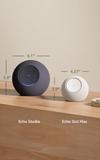
The Amazon Echo Studio represents Amazon's flagship audio experience, delivering substantially more powerful and immersive sound through its four-driver configuration that includes a dedicated 5.25-inch woofer and three full-range drivers. This advanced speaker array enables room-filling bass that you can actually feel, creating a genuinely wide soundstage with precise instrument placement that the Echo Dot Max simply cannot match due to physical constraints. The Studio's standout feature is its full Dolby Atmos processing and spatial audio capabilities, which create three-dimensional sound experiences where audio objects appear positioned above, beside, and around the listener—particularly impressive for movies and specially-mixed music tracks. Its room adaptation technology continuously analyzes your space's acoustics and adjusts output accordingly, ensuring optimal sound whether placed near walls or in open areas.
For users prioritizing serious music listening or home theater applications, the Amazon Echo Studio justifies its premium positioning through capabilities that extend far beyond what compact speakers can achieve. While significantly more expensive than the Echo Dot Max, it competes effectively with dedicated wireless speakers from established audio brands while adding comprehensive smart home hub functionality that standalone speakers lack. The Studio becomes essential for multi-speaker home theater setups, where its Dolby Atmos processing creates true 5.1 surround sound experiences that transform movie watching. However, the Amazon Echo Studio demands adequate space and budget commitment—users with smaller rooms, limited placement options, or primarily casual listening needs may find the Echo Dot Max provides sufficient performance improvements over standard Echo devices without the Studio's space and cost requirements.
🤖 Read Detailed Comparison
👌Amazon Echo Studio Smart Speaker Details
💵 See Amazon Echo Studio Smart Speaker Price
The Amazon Echo Dot 5th Generation takes a fundamentally different approach, prioritizing smart home functionality and affordability over premium audio performance. Its standout features include a built-in temperature sensor that can trigger automation routines, ultrasound motion detection for presence-based controls, and the unique ability to function as an eero Wi-Fi extender – adding up to 1,000 square feet of wireless coverage to compatible mesh networks. The device also features intuitive tap controls via an accelerometer, allowing you to snooze alarms or pause music without voice commands. These sensors and networking capabilities aren't available on the Echo Dot Max, making the 5th Generation particularly appealing for users building comprehensive smart home ecosystems or dealing with Wi-Fi dead zones.
From a value perspective, the Echo Dot 5th Generation costs roughly half as much while delivering solid performance for its intended use cases. Its single 1.73-inch driver provides adequate audio quality for voice responses, kitchen background music, and casual listening, though it can't compete with the Echo Dot Max's bass response or spatial audio capabilities. The real-world benefit is accessibility – you can afford to place multiple 5th Generation units throughout your home for comprehensive voice control and automation, whereas the Echo Dot Max's premium positioning makes it more of a single-room solution for most budgets. For users who primarily need smart home control with decent audio as a secondary consideration, the Echo Dot 5th Generation delivers excellent functionality per dollar spent, especially when leveraging its unique sensors for advanced home automation scenarios.
🤖 Read Detailed Comparison
👌Amazon Echo Dot 5th Generation Smart Speaker Details
💵 See Amazon Echo Dot 5th Generation Smart Speaker Price
The Amazon Echo Show 8 Display transforms the smart speaker concept into a comprehensive multimedia hub by adding an 8-inch HD touchscreen, 13MP camera, and extensive connectivity options. Its built-in smart home hub supports Zigbee, Matter, and Thread protocols, allowing direct control of countless devices without additional hardware—a significant cost savings for smart home enthusiasts. The visual interface provides immediate feedback for smart home commands, recipe displays for cooking, video calling capabilities for family connections, and content streaming from major services including Netflix and Prime Video. With its octa-core processor enabling 40% faster local smart home processing, the Echo Show 8 serves as a central command center that excels in high-traffic areas like kitchens where visual information proves invaluable throughout the day.
While the Echo Show 8 typically costs more than the Echo Dot Max, it delivers substantially more functionality for users who benefit from its multimedia capabilities. The device essentially combines a smart speaker, video calling device, streaming player, security camera, and smart home hub into a single unit, potentially replacing multiple devices and justifying the higher price point. However, its larger footprint requires dedicated placement where the screen can be viewed, making it less flexible than the Echo Dot Max's compact design. For households that prioritize video communication, visual recipe guidance, or comprehensive smart home management through touch controls, the Echo Show 8 provides better overall value despite its higher cost, though users focused purely on audio quality will find the Echo Dot Max's superior sound engineering more compelling for music listening.
🤖 Read Detailed Comparison
👌Amazon Echo Show 8 Display Details
💵 See Amazon Echo Show 8 Display Price
The Amazon Echo Show 15 represents Amazon's vision of a visual smart home command center, built around a 15.6-inch Full HD touchscreen that transforms how families coordinate their daily lives. Its customizable widget dashboard displays calendars, shopping lists, weather, and smart home controls all at once, creating a central information hub that studies suggest can reduce family scheduling conflicts by up to 90%. The built-in Fire TV functionality essentially makes it a kitchen television, perfect for following cooking videos or streaming shows while preparing meals. The 13MP camera with auto-framing technology enables quality video calls that automatically keep you in frame as you move around, while the large display makes it easy for multiple family members to participate in conversations.
Where the Amazon Echo Show 15 justifies its significantly higher price point is in scenarios where visual organization and entertainment integration provide genuine daily value. Busy families who struggle with coordination will find the always-visible calendar and task management transformative, while the Fire TV integration offers convenience that audio-only devices simply cannot match. However, this premium comes with trade-offs: the device requires wall mounting and dedicated space, lacks the comprehensive smart home hub capabilities found in the Echo Dot Max, and delivers inferior audio quality despite the higher cost. The Amazon Echo Show 15 succeeds when households fully embrace its visual interface and entertainment features, but represents poor value for users who primarily need smart home control and quality audio in a flexible, portable package.
🤖 Read Detailed Comparison
👌Amazon Echo Show 15 Smart Display Details
💵 See Amazon Echo Show 15 Smart Display Price
The Denon Home 250 represents the premium end of wireless smart speakers, prioritizing audiophile-grade sound quality over comprehensive smart features. Its standout capabilities include a sophisticated 2-way stereo driver system with dual tweeters, dual woofers, and a passive radiator, each powered by dedicated Class-D amplifiers for exceptional frequency separation and dynamic range. The speaker supports high-resolution audio up to 24-bit/192kHz and DSD formats, plus offers extensive connectivity including Ethernet, USB-A, and analog AUX input for direct connection to turntables and other audio sources. Its HEOS Built-in technology enables professional-grade multi-room synchronization with up to 32 devices, while cross-platform compatibility supports Alexa, Google Assistant, and Siri without ecosystem lock-in.
In real-world performance, the Denon Home 250 delivers substantially superior sound quality that justifies its significantly higher cost for serious music listeners. Its larger cabinet and advanced driver configuration produce natural stereo imaging, extended bass response, and midrange clarity that excels with jazz, classical, and acoustic recordings where instrument separation matters most. While it lacks the Echo Dot Max's comprehensive smart home hub capabilities and AI-powered automation features, it provides the audio fidelity needed for dedicated listening spaces and home theater applications. For users who prioritize sound quality over smart features, stream high-resolution music, or need analog connectivity for existing audio equipment, the Denon Home 250 offers long-term value through its premium build quality and audiophile-focused engineering that won't become a limiting factor as your music sources improve.
🤖 Read Detailed Comparison
👌Denon Home 250 Wireless Smart Speaker Details
💵 See Denon Home 250 Wireless Smart Speaker Price
The Bose Portable Smart Speaker excels where the Echo Dot Max cannot—true portability without compromising audio quality. Its revolutionary 360-degree acoustic deflector technology creates uniform sound dispersion that eliminates the sweet spots typical of directional speakers, meaning it sounds equally impressive whether you're directly in front of it or across the room. The triple passive radiator system delivers surprisingly deep bass for such a compact device, especially when placed near walls where the low frequencies can reflect and amplify. Most importantly, the 12-hour battery life and IPX4 water resistance transform it into a genuinely go-anywhere speaker that maintains full smart functionality whether you're by the pool, camping, or simply moving between rooms without hunting for power outlets.
However, the Bose Portable Smart Speaker makes notable compromises in smart home capabilities to achieve its portability advantage. It lacks the Echo Dot Max's built-in Zigbee hub, requiring separate hubs for many smart home devices, and its basic voice processing can't match the advanced conversational AI and noise filtering of Alexa+. While it supports both Google Assistant and Alexa for ecosystem flexibility, it doesn't offer the deep Amazon integration or home theater capabilities like Dolby Atmos surround sound. The premium pricing reflects Bose's acoustic engineering heritage but represents a significant investment compared to the Echo Dot Max's competitive positioning. For users who prioritize audio fidelity and portability over cutting-edge smart features, the Bose Portable Smart Speaker justifies its cost through superior build quality and the unique freedom of battery-powered, weather-resistant operation—benefits that stationary smart speakers simply cannot provide.
🤖 Read Detailed Comparison
👌Bose Portable Smart Speaker Details
💵 See Bose Portable Smart Speaker Price
The Google Nest Audio excels in areas where many users spend most of their smart speaker time—clear vocal reproduction and conversational AI interactions. Its neutral, balanced audio signature delivers exceptional clarity for podcasts, audiobooks, and voice calls, making every word crisp and intelligible in ways that bass-heavy speakers often struggle with. Google Assistant's conversational abilities shine through natural follow-up questions and contextual understanding, while Voice Match technology recognizes up to six family members for truly personalized responses. Most significantly for budget-conscious buyers, the Nest Audio provides full functionality without any mandatory subscriptions, making it a true one-time purchase that continues delivering value years after setup.
However, the Google Nest Audio's 2020 technology shows clear limitations when compared to the Echo Dot Max's cutting-edge capabilities. The Nest Audio's processor occasionally struggles with complex requests that the AZ3 chip handles effortlessly, and its basic Wi-Fi-only smart home control requires expensive additional hubs for comprehensive automation. While the Nest Audio can pair with another unit for stereo sound, it lacks the processing power for multi-speaker Dolby Atmos setups that transform home entertainment. The speaker's conservative audio tuning, while excellent for spoken content, simply cannot match the room-filling bass and spatial audio excitement that makes the Echo Dot Max compelling for active music listening and home theater integration. For users who prioritize proven reliability, vocal clarity, and avoiding subscription costs, the Nest Audio remains an excellent choice, but those seeking the latest audio technology and comprehensive smart home capabilities will find it increasingly limited.
🤖 Read Detailed Comparison
👌Google Nest Audio Smart Speaker Details
💵 See Google Nest Audio Smart Speaker Price
Original price was: $1,799.99.$1,299.99Current price is: $1,299.99.
Original price was: $499.99.$369.99Current price is: $369.99.
Original price was: $579.99.$318.99Current price is: $318.99.


Privacy Policy
Terms and Conditions - Affiliate Policy
Home Security
© Copyright 2008-2026.
11816 Inwood Rd #1211, Dallas, TX 75244