


The world of premium sports earbuds has evolved dramatically over the past few years. What once was a simple category of sweat-resistant audio gear has transformed into sophisticated fitness tracking devices that deliver both exceptional sound quality and real-time health monitoring. In 2024 and 2025, we've seen manufacturers push the boundaries of what's possible when you combine advanced audio engineering with biometric sensors, creating products that serve as both your personal DJ and fitness coach.
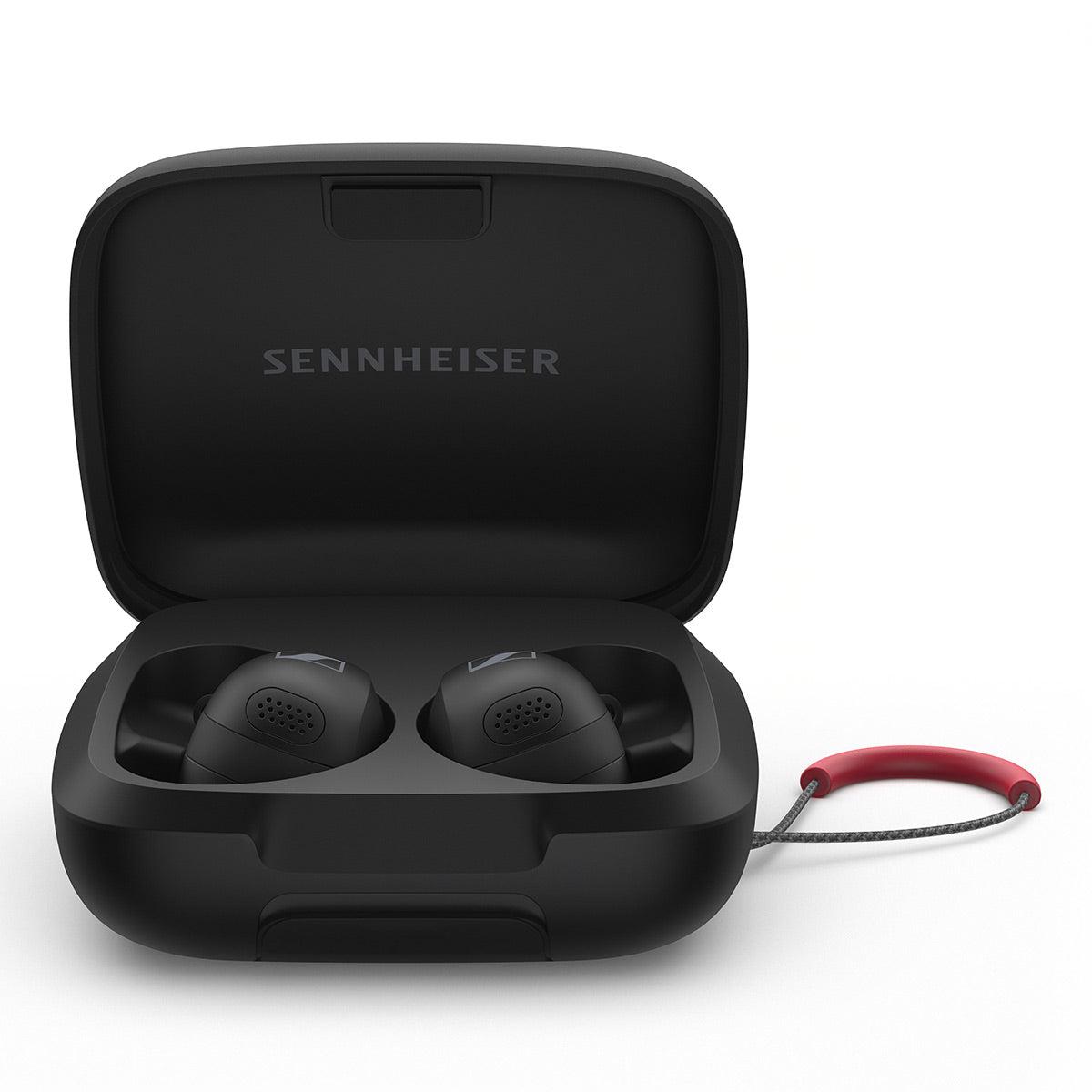
Two standout products exemplify this evolution: the Beats Powerbeats Pro 2 and the Sennheiser Momentum Sport. Both represent the cutting edge of sports audio technology, but they take notably different approaches to solving the same fundamental challenge – how to create earbuds that stay secure during intense workouts while delivering the audio performance and health tracking that modern athletes demand.
Before diving into specifics, it's worth understanding what separates premium sports earbuds from regular wireless earbuds. The key differentiators revolve around five critical areas that matter most to serious fitness enthusiasts.
Secure fit during movement stands as the most fundamental requirement. Unlike regular earbuds that might stay put during a commute, sports earbuds must remain perfectly positioned during jumping, running, weightlifting, and other dynamic activities. This security often comes through specialized designs like ear hooks, fins, or innovative materials that grip without causing discomfort.
Biometric monitoring accuracy has become increasingly important as athletes seek to consolidate their gear. Heart rate monitoring, in particular, needs to be precise enough to replace dedicated chest straps or wrist-based trackers. The optical sensors (called photoplethysmography or PPG sensors) use light to detect blood flow changes, providing real-time heart rate data that can guide workout intensity.
Audio performance tailored for activity differs from what you'd want for casual listening. Sports earbuds need to motivate with powerful bass while maintaining clarity for coaching instructions or safety awareness. The balance between immersion and environmental awareness becomes crucial, especially for outdoor activities.
Extended battery endurance matters more for sports earbuds than regular models because workouts can't pause for charging breaks. Long training sessions, multi-sport events, or full-day outdoor adventures demand batteries that keep pace with ambitious fitness goals.
Environmental resistance goes beyond basic sweat protection. Premium sports earbuds must handle rain, dust, temperature extremes, and the corrosive effects of prolonged salt exposure from perspiration.
The most immediately obvious difference between the Beats Powerbeats Pro 2 and Sennheiser Momentum Sport lies in how they approach the fundamental challenge of staying put during vigorous activity.
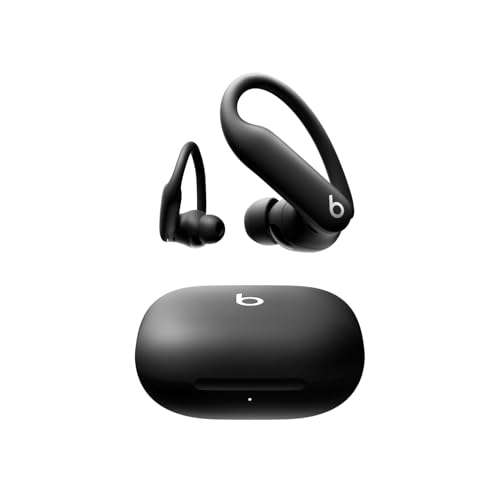
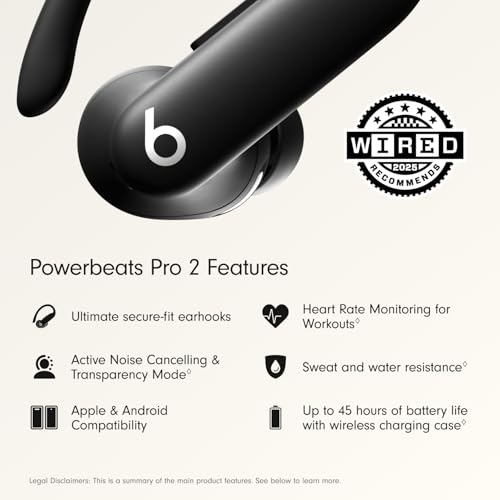
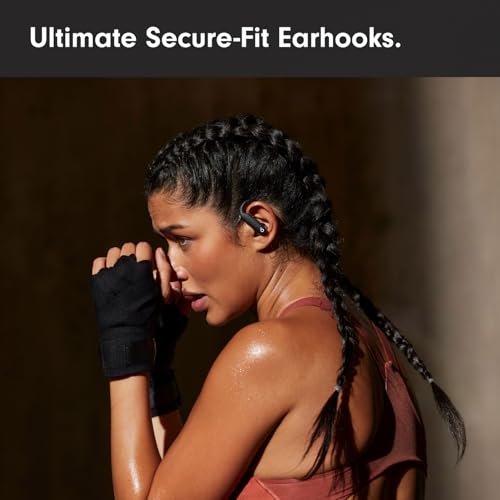
The Beats Powerbeats Pro 2 embrace the traditional ear hook design, but with significant engineering improvements over previous generations. The hooks are made from nickel-titanium alloy – the same "shape memory" material used in high-end eyeglass frames and medical devices. This material can flex dramatically without breaking and returns to its original shape, providing consistent tension without fatigue. The hooks are covered in soft silicone that prevents pressure points, and the entire earbud is 20% lighter than its predecessor while maintaining the same secure grip.
This design philosophy prioritizes absolute security above all else. During high-intensity interval training, sprinting, or any activity involving rapid direction changes, the ear hooks create multiple contact points that distribute pressure evenly around the outer ear. It's nearly impossible for these earbuds to fall out, even during the most aggressive movements.
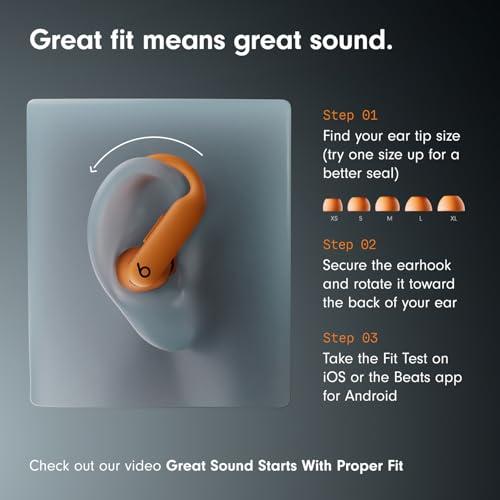
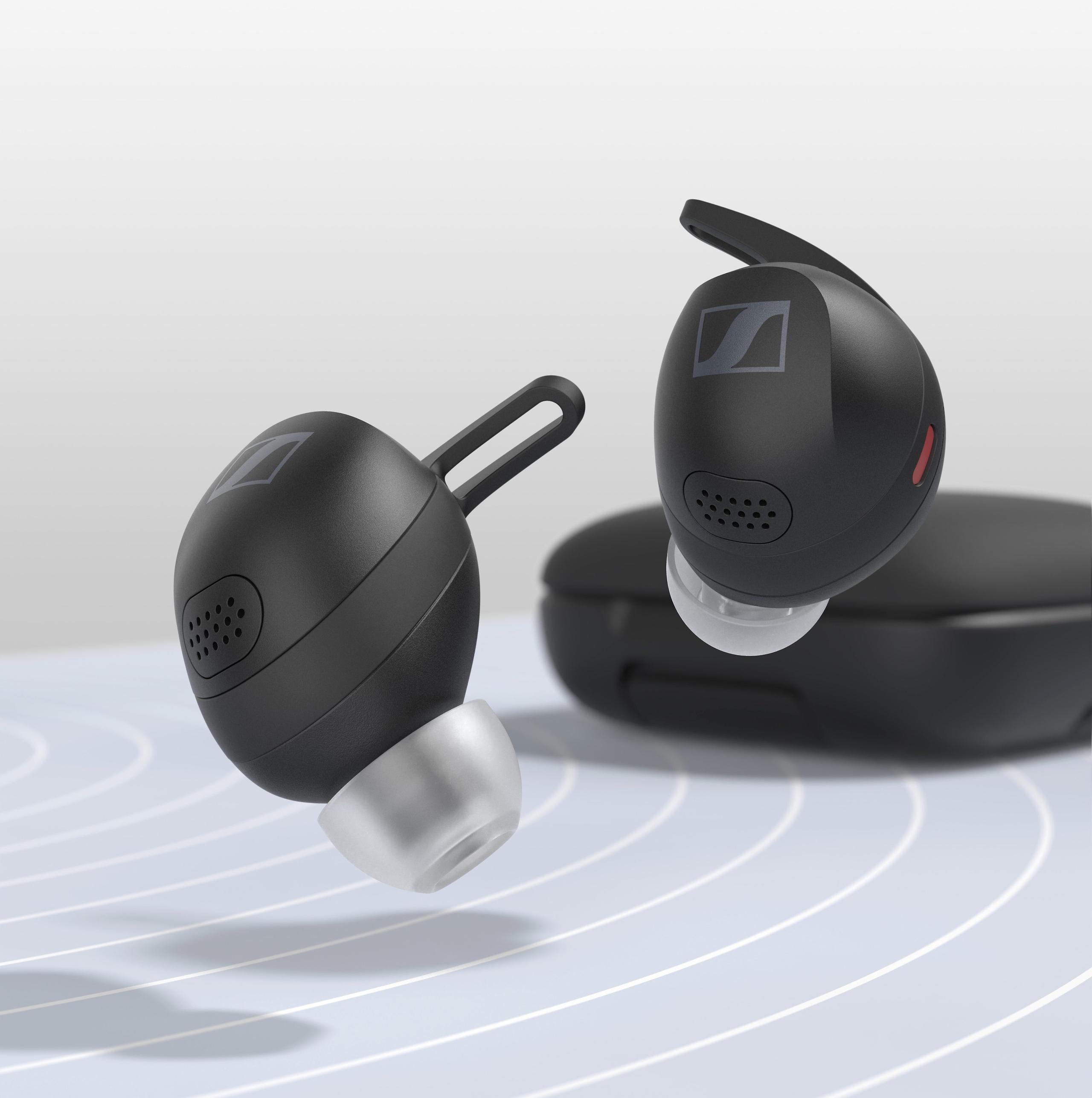
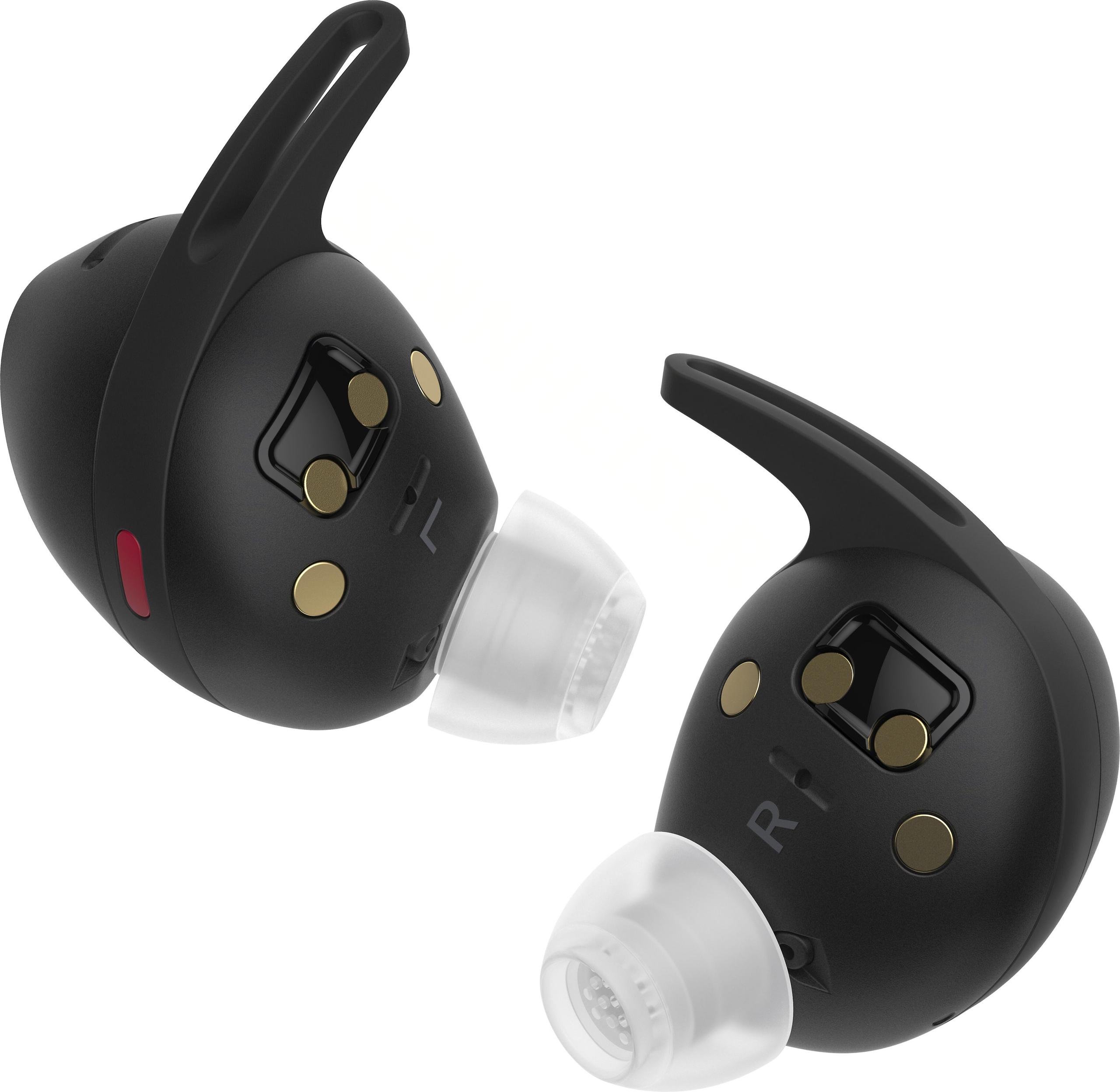
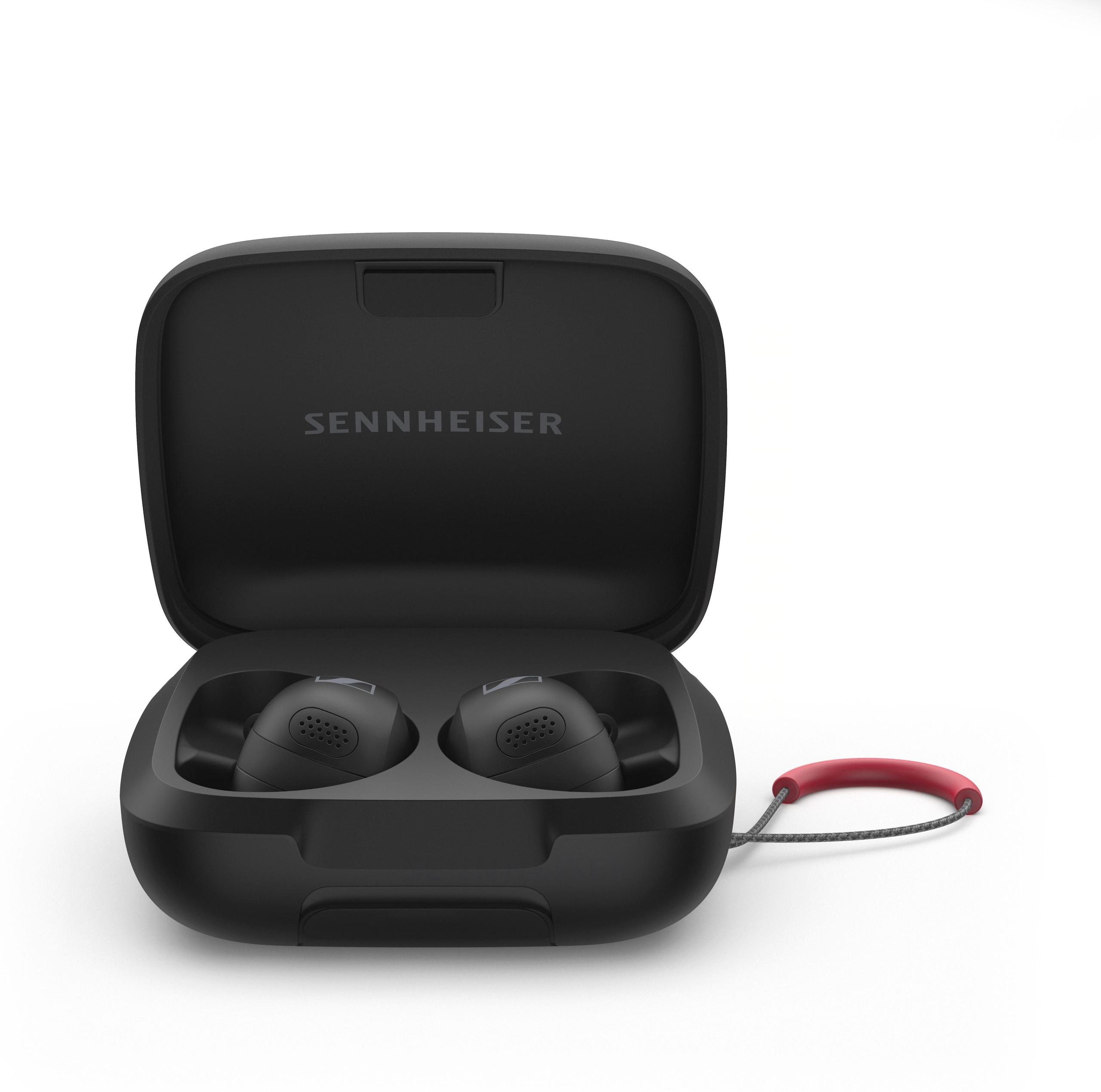
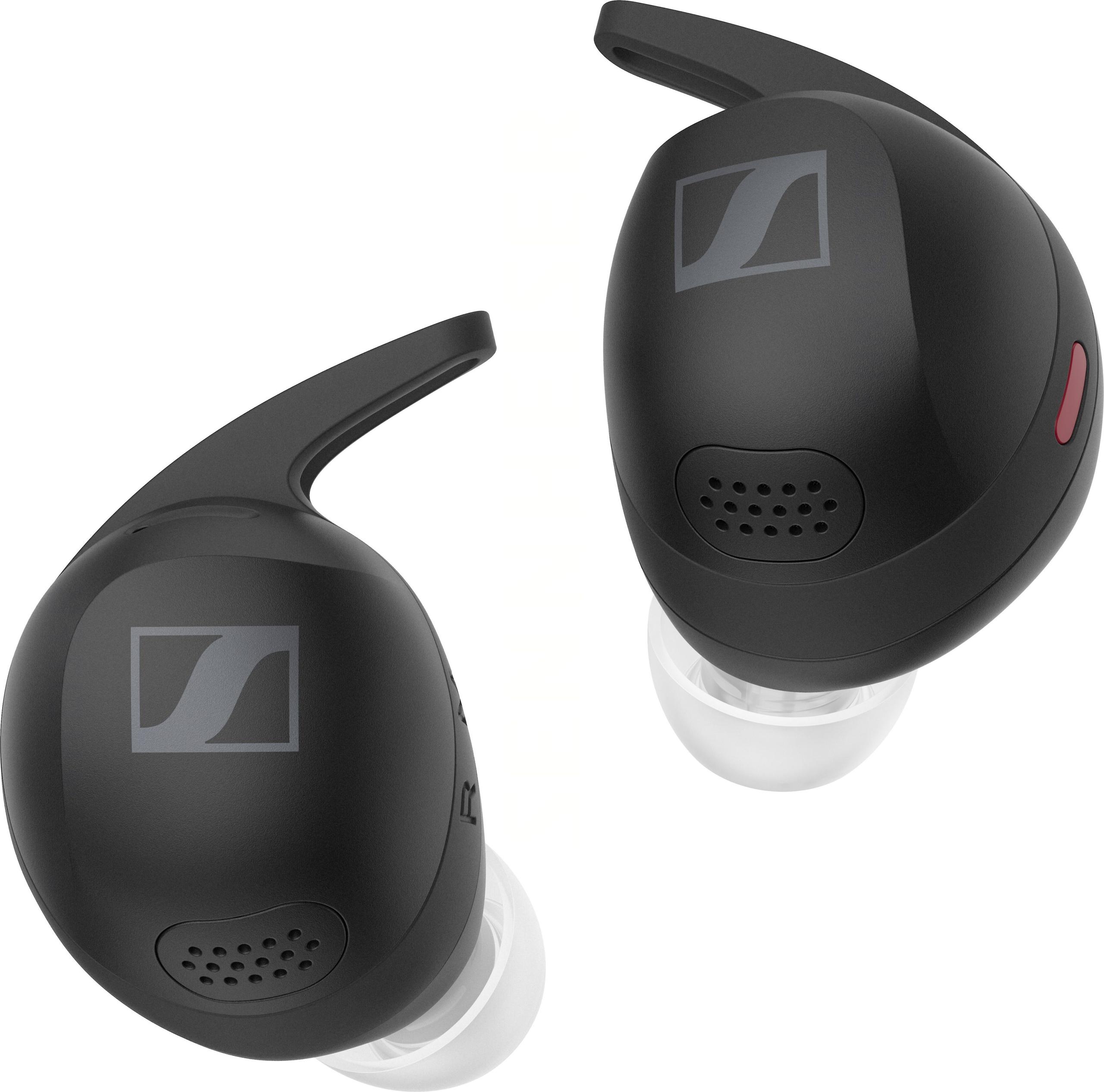
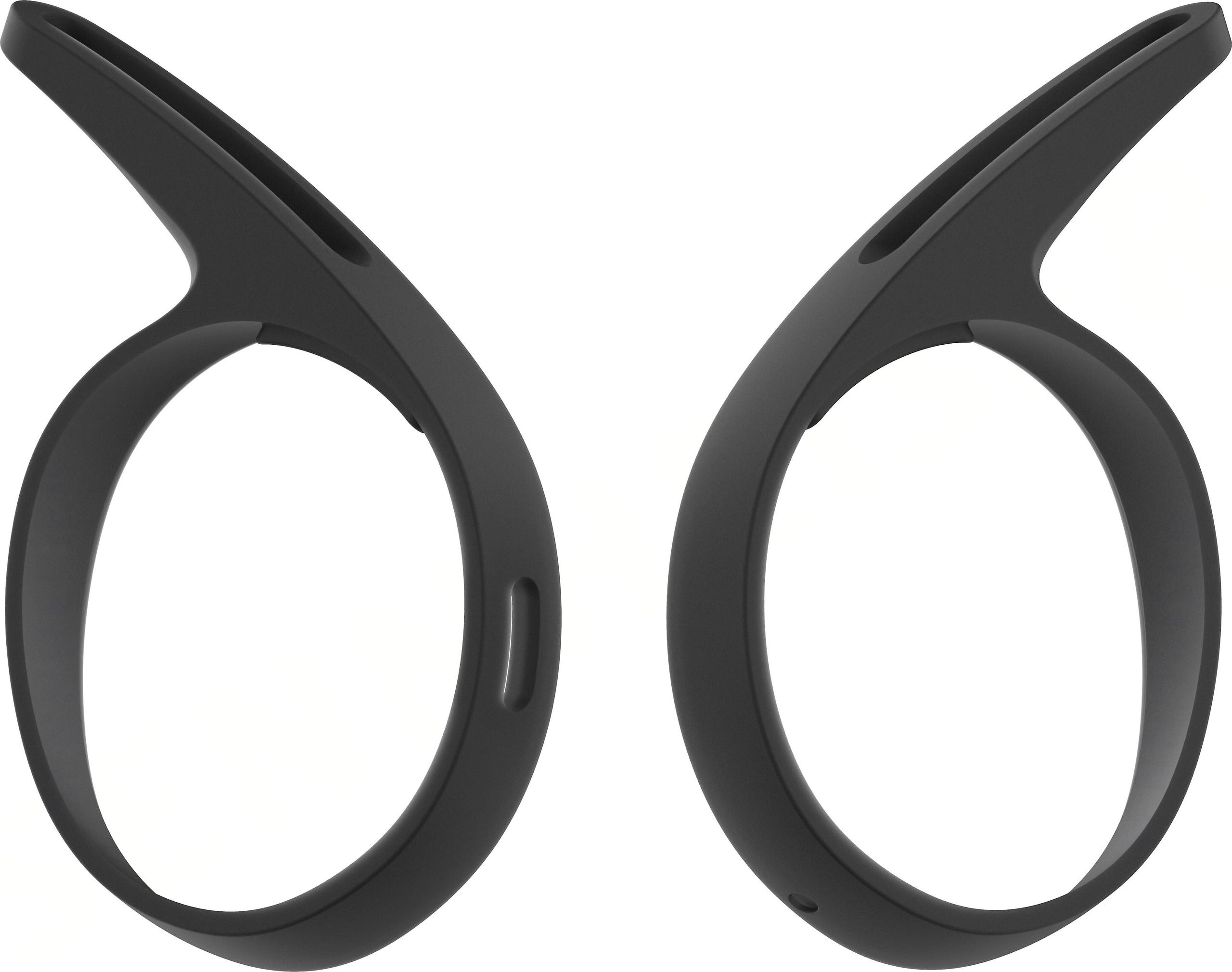
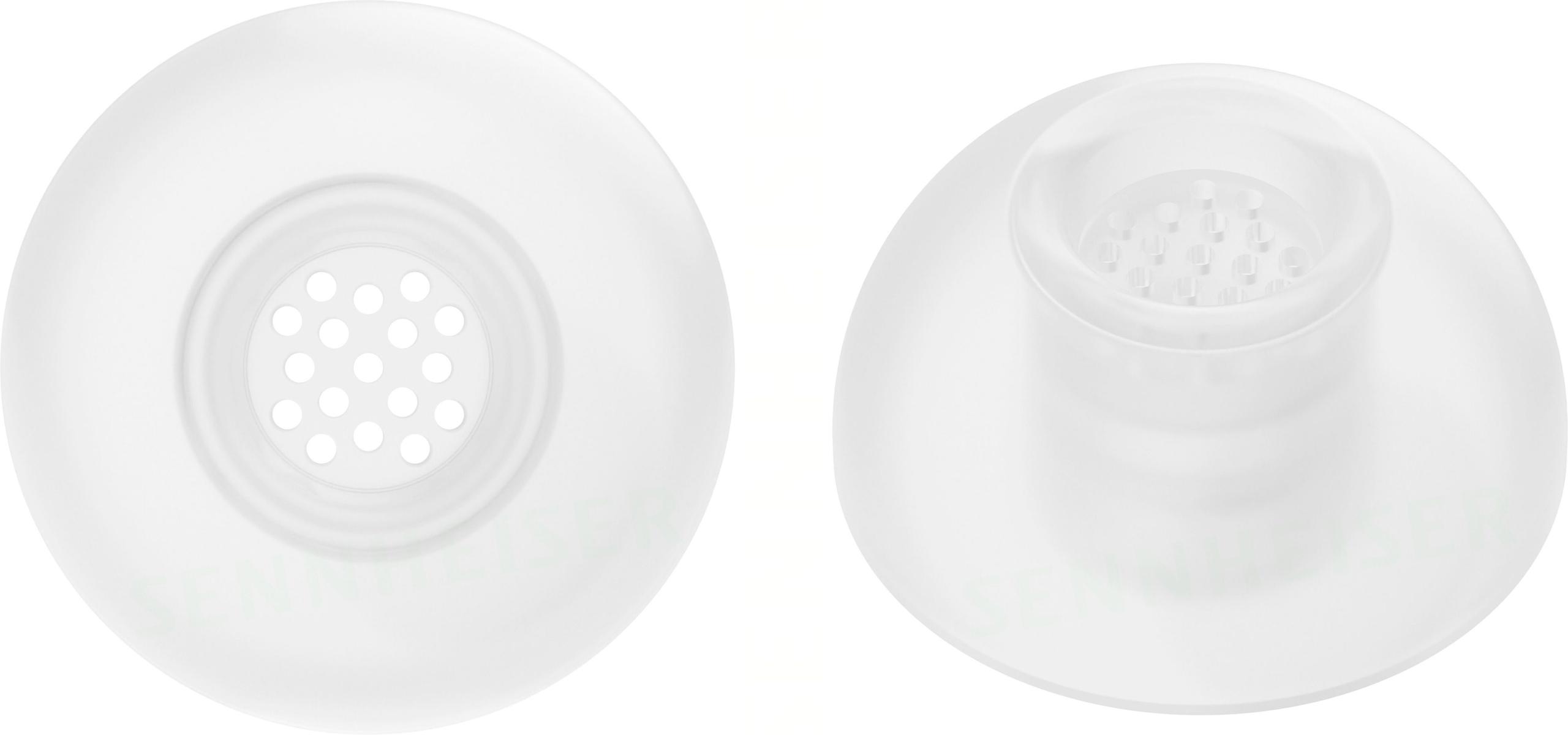
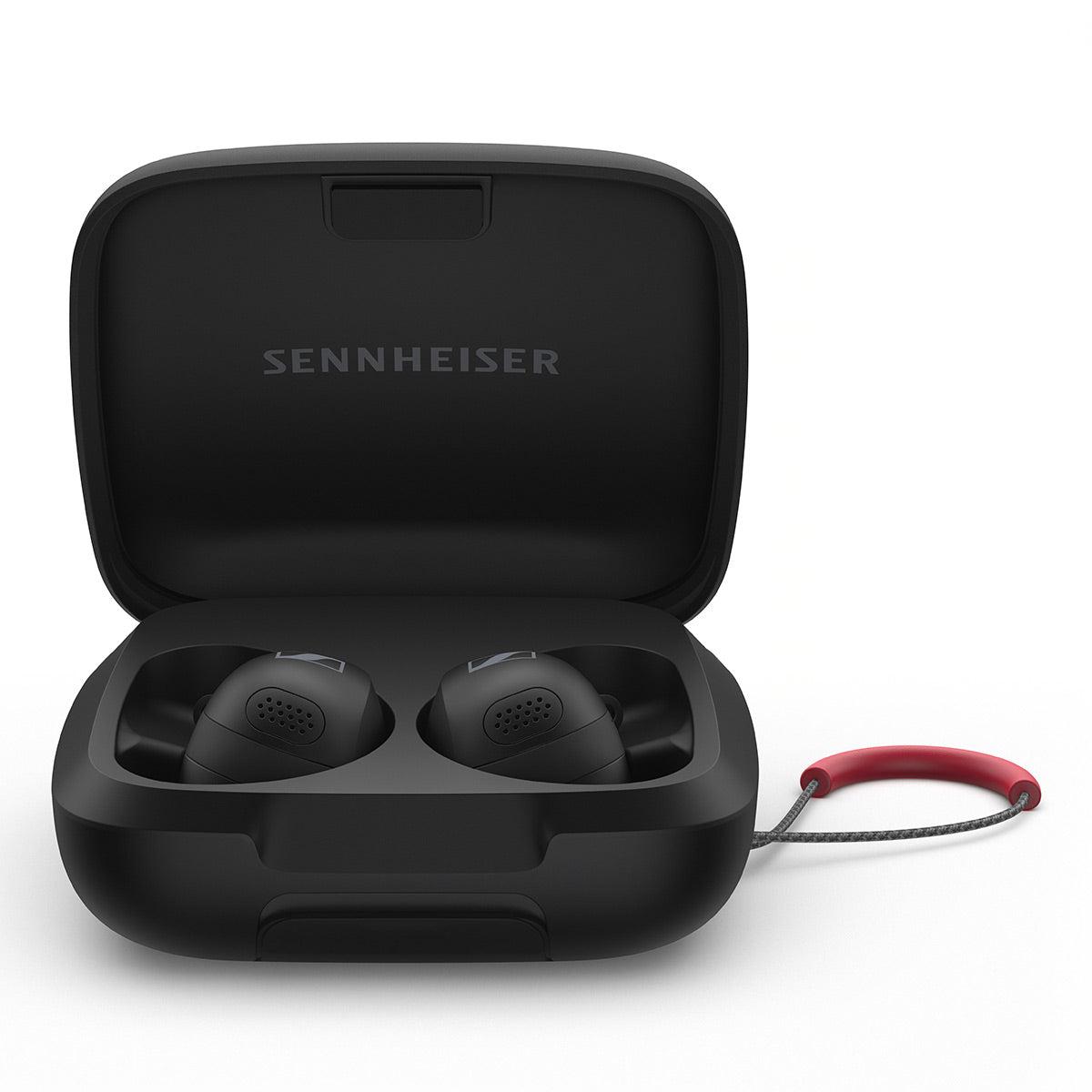
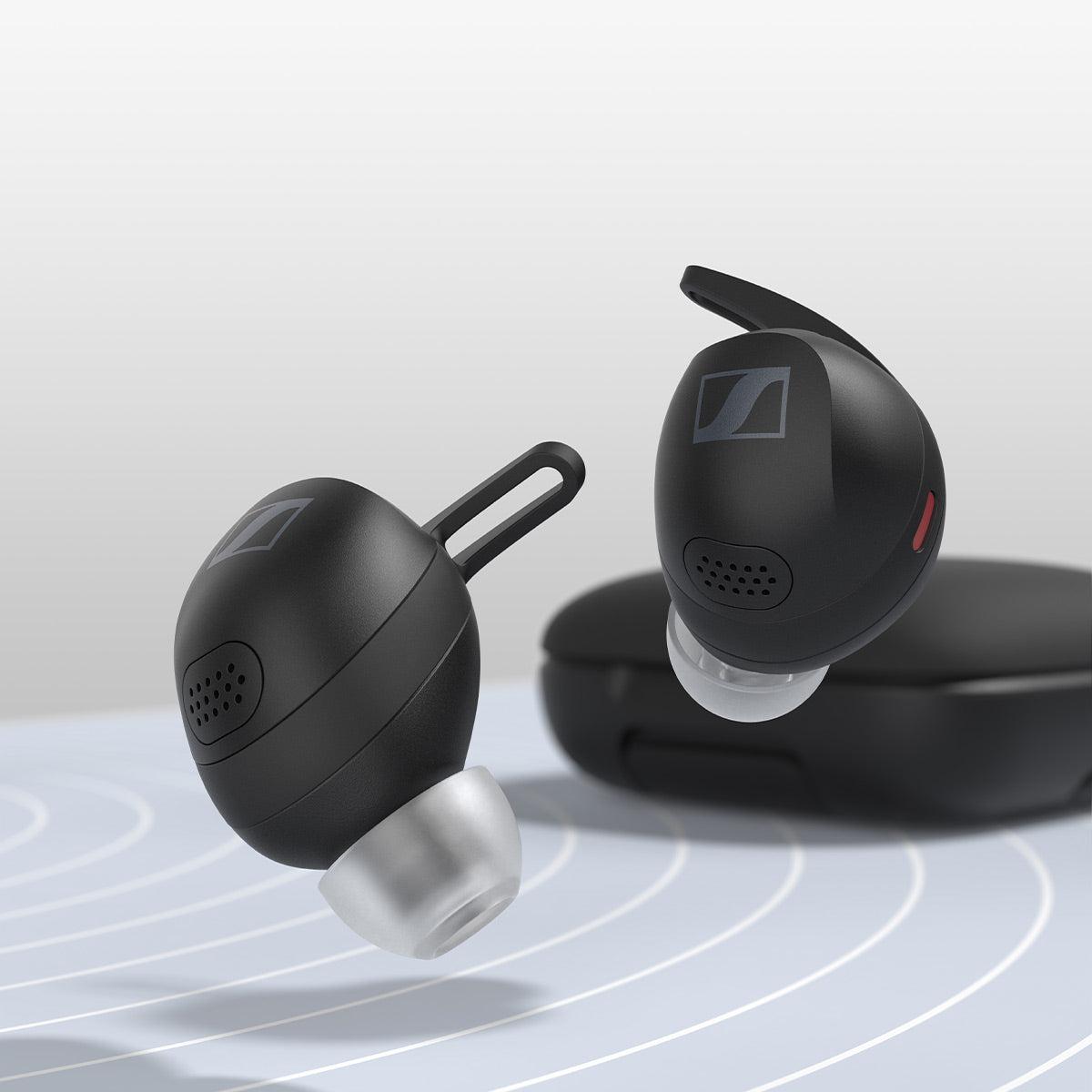
The Sennheiser Momentum Sport, by contrast, takes the conventional approach of using interchangeable ear fins combined with multiple ear tip sizes. This system relies on finding the perfect combination of tip seal and fin placement to create security through proper fit rather than mechanical retention. Sennheiser includes multiple sizes of both components, recognizing that ear anatomy varies significantly between individuals.
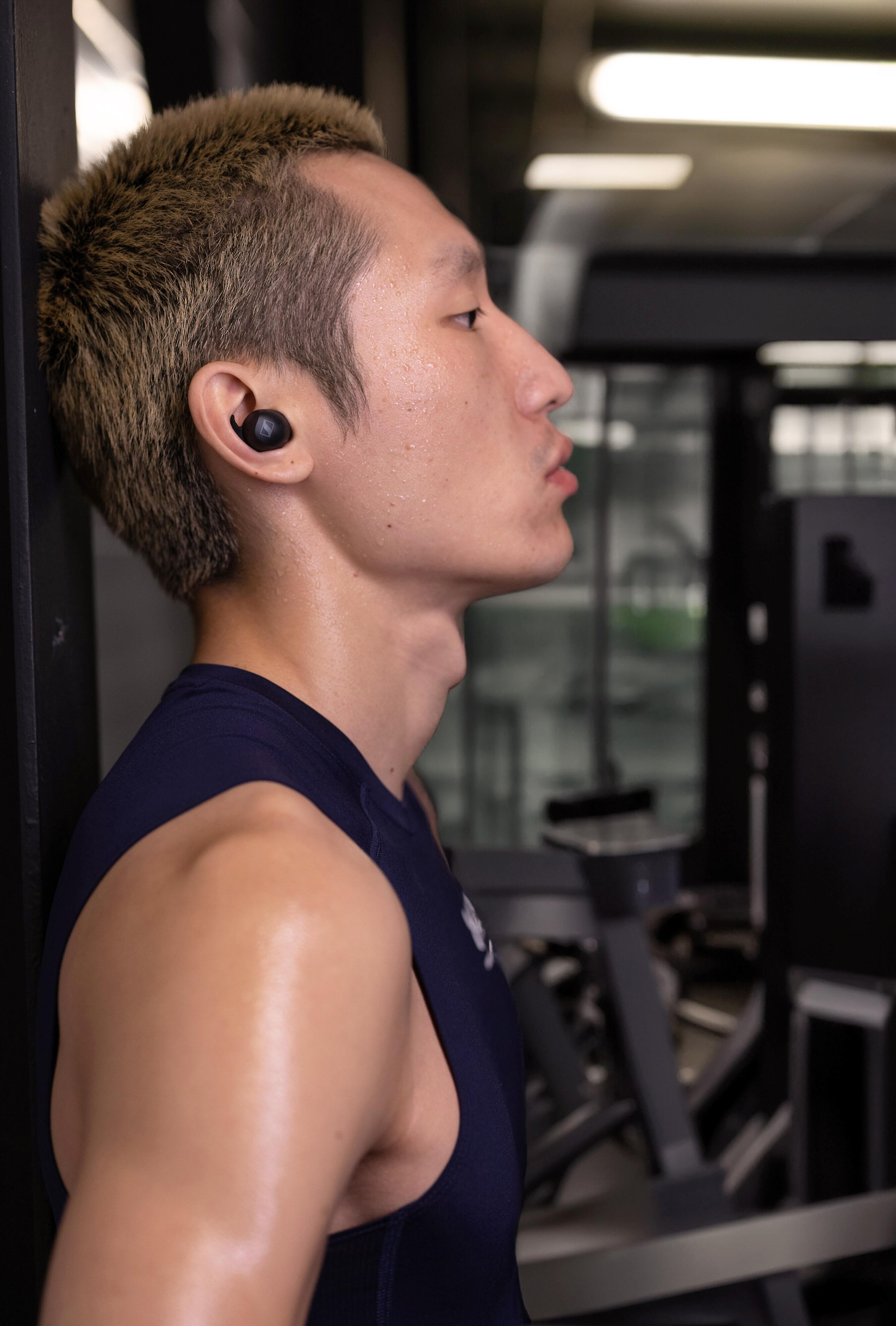
The practical implications of these different approaches become clear during different types of activities. For high-impact sports like CrossFit, running, or competitive cycling, the mechanical security of ear hooks provides confidence that's hard to match. However, for activities like weight lifting or yoga, where you might lie on your side or rest your head against surfaces, the lower profile of the Sennheiser design proves more comfortable.
The audio signatures of these two products reveal fundamentally different approaches to sports audio engineering, each with compelling justifications for their design choices.
The Beats Powerbeats Pro 2 employ custom dual-element dynamic drivers with what Beats calls a "dual-layer" configuration. This involves two different driver elements working together – one optimized for mid-range clarity and another focused on bass response. The result is a brighter, more balanced signature that prioritizes vocal intelligibility and detail retrieval.
This tuning philosophy makes particular sense when you consider how people actually use sports earbuds. During workouts, you're not just listening to music; you might be following along with fitness app instructions, taking phone calls, or listening to podcasts. The Beats Powerbeats Pro 2 excel in these scenarios because voices cut through clearly, even when you're breathing heavily or in noisy gym environments.
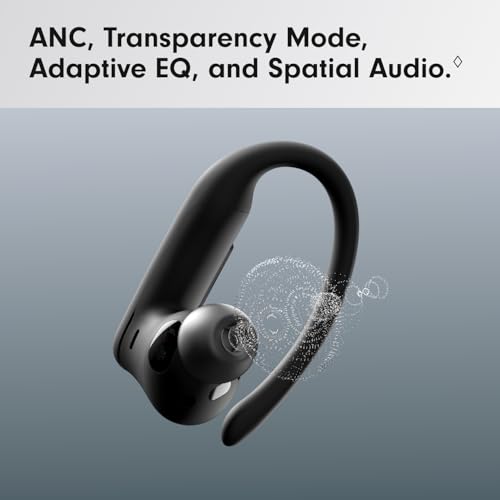
The earbuds also feature Adaptive EQ technology, which uses inward-facing microphones to continuously analyze how sound reaches your eardrums. This system compensates for variations in fit and ear anatomy, adjusting frequency response in real-time to maintain consistent sound quality. Unlike manual EQ settings that you adjust once and forget, Adaptive EQ responds dynamically as your ear tips shift slightly during movement or as seal quality changes due to perspiration.
The Sennheiser Momentum Sport takes a markedly different approach, delivering what reviewers consistently describe as a warmer, more bass-heavy signature. The 10mm drivers are tuned to provide what Sennheiser calls "motivational" sound – deep, rumbling bass that provides the rhythmic foundation many people crave during intense workouts.
However, this bass emphasis comes with trade-offs. The warmer signature tends to make vocals less prominent and can reduce the clarity of high-frequency details. For pure music listening during workouts, many people prefer this approach, but it's less ideal for mixed-use scenarios involving voice content.
Sennheiser compensates for the fixed driver tuning by offering extensive customization through their Smart Control app. The 5-band EQ allows users to adjust the sound signature to their preferences, something the Beats Powerbeats Pro 2 don't offer. This flexibility appeals to users who want to fine-tune their audio experience, though it requires more setup time and technical knowledge.
An interesting technical detail is Sennheiser's semi-open acoustic design, which incorporates deliberate venting to reduce the "occlusion effect" – that hollow, echo-like quality you sometimes experience with sealed earbuds. This design helps minimize the amplification of body-generated sounds like footsteps, breathing, or heartbeat that can be distracting during exercise.
Battery performance represents one of the most significant practical differences between these products, with implications that extend far beyond the specification sheets.
The Beats Powerbeats Pro 2 deliver up to 10 hours of continuous playback per earbud when noise cancellation is disabled, dropping to 8 hours with ANC active. Combined with the charging case, total battery life reaches 45 hours without ANC or 36 hours with noise cancellation enabled. This represents a substantial improvement over the original Powerbeats Pro and puts them among the longest-lasting earbuds in any category.
The practical implications of this battery performance are significant. For athletes training for endurance events, the ability to use the same earbuds for multiple long sessions without worrying about charging becomes invaluable. Ultra-marathon runners, cyclists planning century rides, or anyone participating in multi-day outdoor events can rely on these earbuds without battery anxiety.
The Sennheiser Momentum Sport provides approximately 6 hours per charge with 24 hours total when including the case. While this matches or exceeds many premium earbuds, it falls well short of the Beats Powerbeats Pro 2 performance. For most gym workouts or standard training sessions, this battery life proves adequate, but it requires more frequent charging for heavy users.
Both models support fast charging, but the implementation differs. The Beats Powerbeats Pro 2 offer "Fast Fuel" technology that provides 1.5 hours of playback from just 5 minutes of charging. This feature can be crucial when you realize your earbuds are dead just before heading out for a workout.
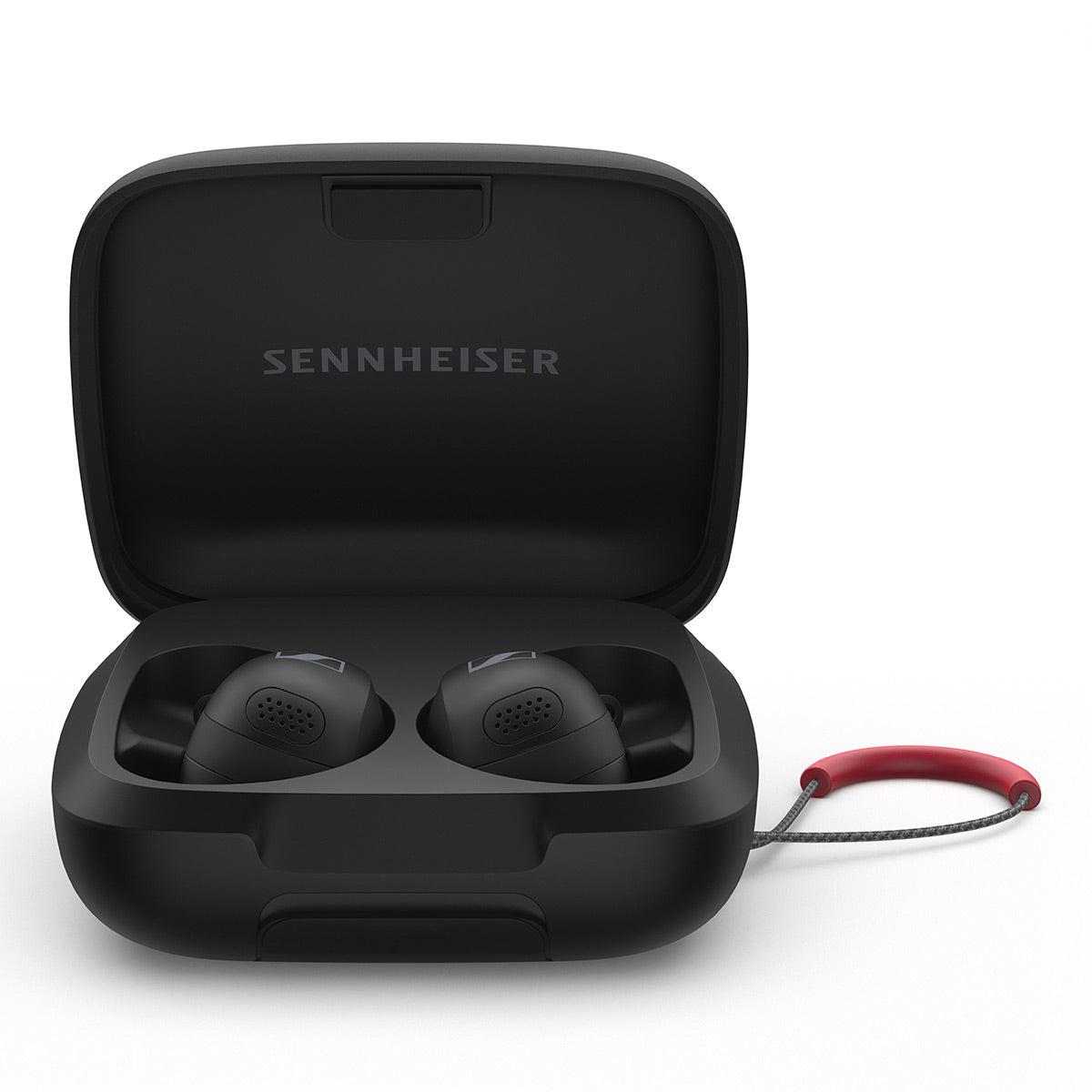
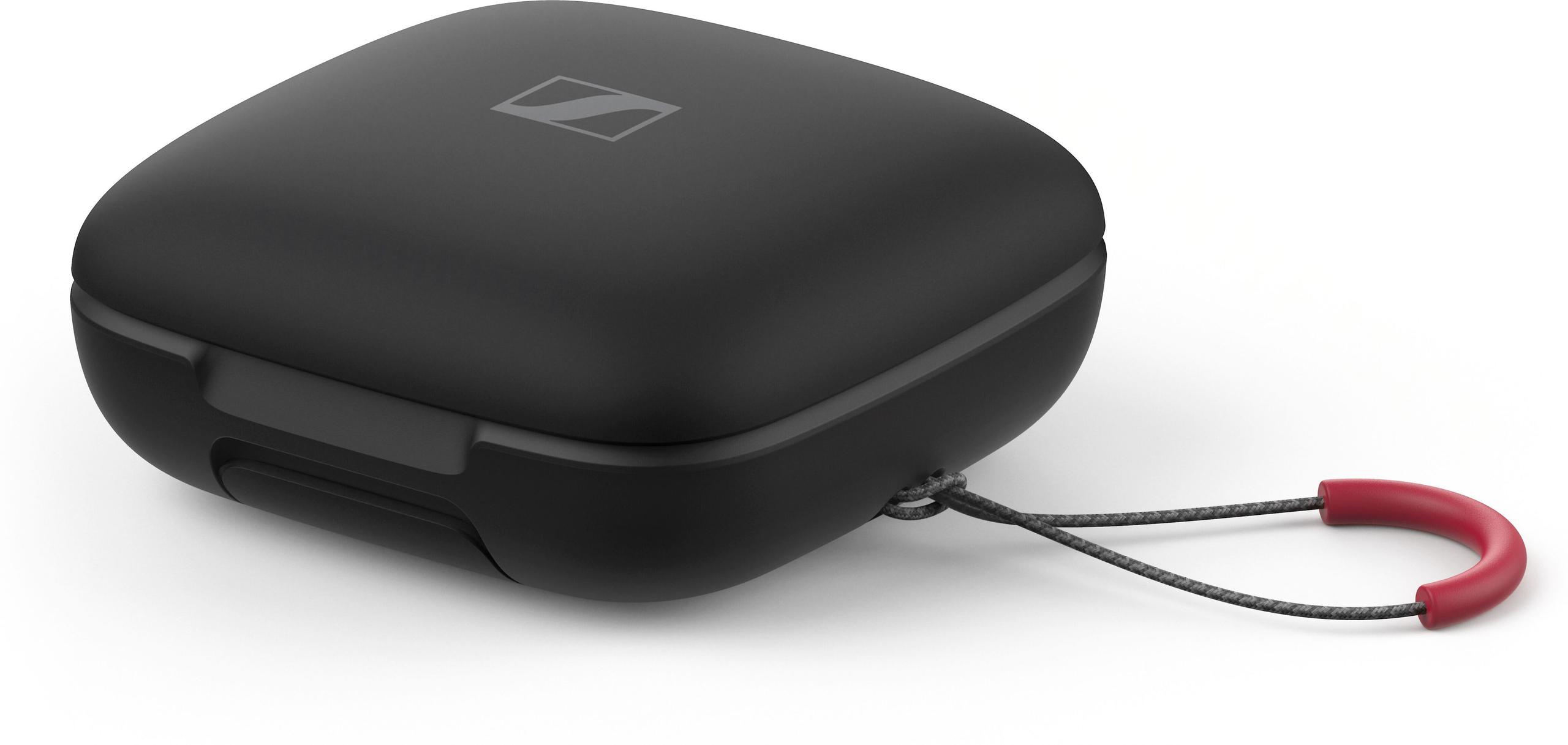
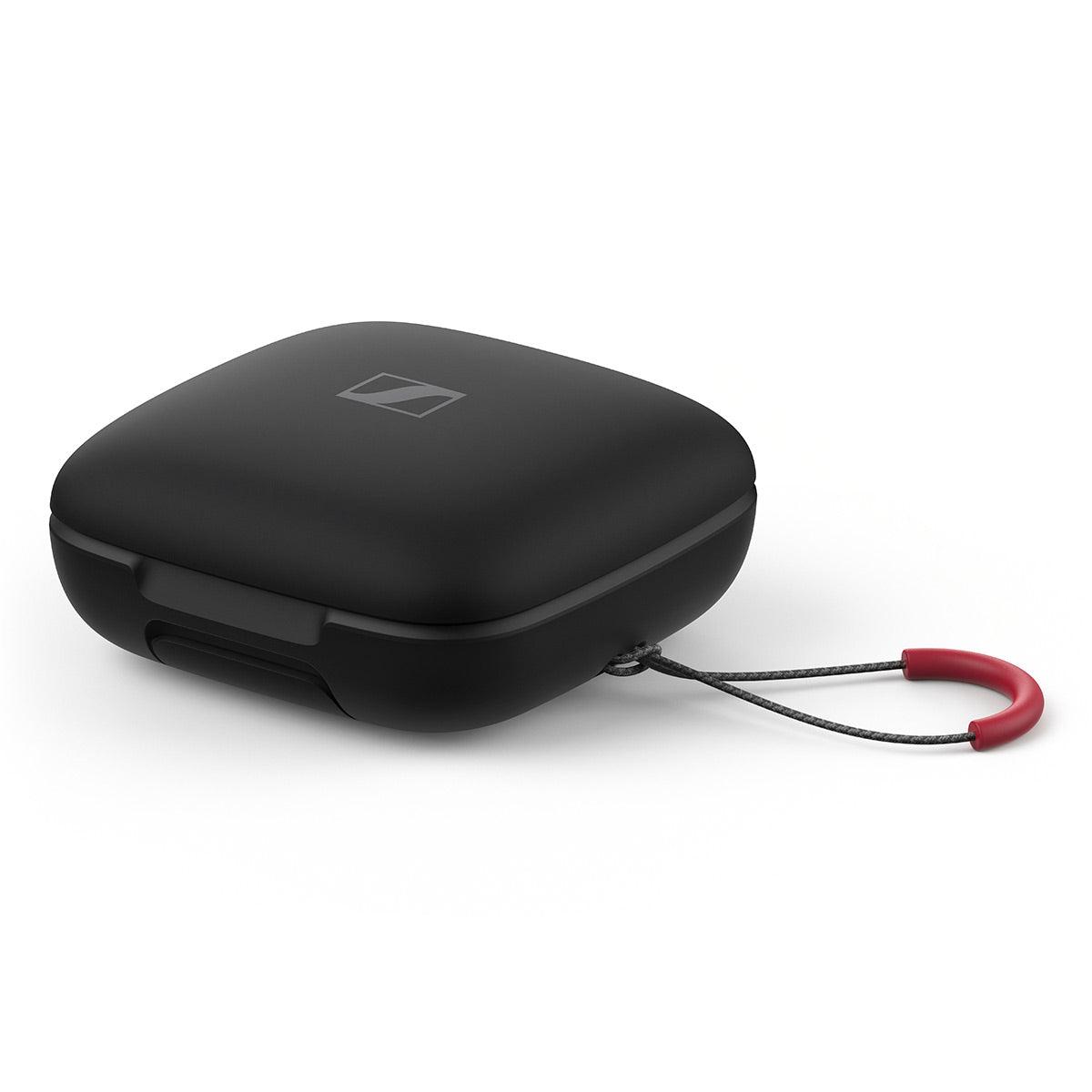
The charging cases themselves reflect different design priorities. The Beats case is 33% smaller than the previous generation while maintaining the longer battery life – an impressive engineering achievement. Both cases support wireless charging, eliminating the need to fumble with cables when your hands are still shaky from a tough workout.
Both products incorporate sophisticated technology that goes far beyond basic audio playback, though they emphasize different capabilities.
The Beats Powerbeats Pro 2 are built around Apple's H2 chip, the same processor found in the AirPods Pro 2. This chip enables a suite of advanced features that work seamlessly within Apple's ecosystem. Spatial Audio with dynamic head tracking creates an immersive listening experience that adjusts as you move your head, while automatic device switching allows the earbuds to seamlessly transition between your iPhone, iPad, and Mac without manual intervention.
The H2 chip also powers the advanced noise cancellation algorithm, which analyzes ambient sound and updates the cancellation profile 200 times per second. This adaptive approach means the earbuds can respond quickly to changing environments – transitioning from quiet spaces to noisy gyms without manual adjustment.
For voice calls and voice assistant interactions, the Beats Powerbeats Pro 2 employ six microphones total (three per earbud) combined with machine learning algorithms for voice isolation. The voice accelerometer detects speech by sensing jaw movement, helping to separate your voice from ambient noise even in challenging acoustic environments.
The Sennheiser Momentum Sport takes a different approach to advanced features, focusing more on fitness integration and user customization. Beyond the standard heart rate monitoring found in both products, Sennheiser includes body temperature sensors that track core temperature changes during exercise. While the practical utility of temperature monitoring remains debatable among fitness experts, it adds another data point for athletes who want comprehensive biometric tracking.
An innovative feature unique to the Sennheiser model is touch-free control recognition. The earbuds can detect taps on your cheekbone in front of your ears, providing an alternative to traditional touch controls. This proves particularly useful when wearing gloves or when your hands are occupied with equipment, though it requires practice to use reliably.
Sennheiser's Sound Zones feature automatically adjusts audio settings based on geographic location. You can program the earbuds to enable noise cancellation when you arrive at your office or boost bass response when you reach your gym. This location-aware functionality appeals to users who want their earbuds to adapt automatically to different environments.
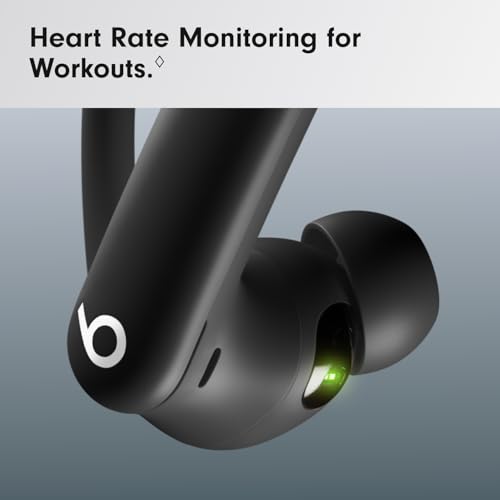
Both products include optical heart rate sensors, making them part of a small but growing category of earbuds that can replace dedicated fitness trackers for many users. The implementation and accuracy of these sensors deserve detailed examination because they represent a significant part of the value proposition.
The heart rate monitoring in both models uses photoplethysmography (PPG) technology, which sounds complex but works on a simple principle. LEDs shine light into your skin, and sensors detect how the light reflection changes as blood pulses through your capillaries. The earbuds analyze these changes to calculate heart rate with impressive accuracy.
In testing by various reviewers, both products have shown heart rate accuracy comparable to dedicated chest strap monitors and wrist-based fitness trackers. This performance makes them viable alternatives for serious athletes who previously needed separate devices for biometric monitoring.
The Beats Powerbeats Pro 2 integrate heart rate data with Apple's Health platform and can share information with third-party fitness apps. The data updates in real-time during workouts, allowing users to stay within target heart rate zones for optimal training benefits.
The Sennheiser Momentum Sport offers broader compatibility with fitness platforms, connecting directly with Polar Flow, Garmin Connect, Strava, and Peloton. This cross-platform approach appeals to users who aren't tied to a specific ecosystem or who use multiple fitness apps.
However, it's important to understand the limitations of earbud-based heart rate monitoring. Unlike wrist-worn devices that can provide continuous 24-hour monitoring, both products only track heart rate during active use. They're designed for workout monitoring rather than all-day health tracking, which may disappoint users expecting smartwatch-like functionality.
Active Noise Cancellation (ANC) technology in sports earbuds serves a different purpose than in typical premium earbuds designed for travel or office use. During workouts, the goal isn't necessarily complete isolation but rather the ability to focus when needed while maintaining safety awareness when appropriate.
The Beats Powerbeats Pro 2 offer what Apple calls its "best noise canceling" technology, adapted from the AirPods Pro 2 but tuned for sports use. The system can be completely disabled to maximize battery life, partially engaged for moderate noise reduction, or fully activated for maximum isolation. This flexibility proves valuable because different activities benefit from different levels of environmental awareness.
The transparency mode deserves special mention for sports applications. Rather than simply turning off noise cancellation, transparency mode actively amplifies external sounds while maintaining audio quality. This allows runners to hear approaching traffic, cyclists to maintain situational awareness, and gym users to hear equipment warnings or spot requests.
The Sennheiser Momentum Sport provides adjustable ANC but cannot completely disable the noise processing, which affects battery life. However, the anti-wind mode specifically targets wind noise reduction – a common problem for outdoor athletes that many ANC systems struggle to address effectively.
The integration capabilities of these earbuds extend far beyond simple Bluetooth connectivity, affecting everything from ease of use to long-term value retention.
The Beats Powerbeats Pro 2 leverage their Apple H2 chip for seamless integration within Apple's ecosystem. iPhone users benefit from instant pairing, automatic device switching, hands-free Siri activation, and Find My support for locating misplaced earbuds. The integration feels almost magical – the earbuds appear to anticipate your needs rather than requiring manual management.
However, this deep Apple integration doesn't exclude Android users. The dedicated Beats app for Android provides access to most features, including battery monitoring, customizable controls, and heart rate tracking. While some Apple-specific features like device switching and Spatial Audio aren't available, Android users still get a premium experience.
The Sennheiser Momentum Sport takes a more platform-agnostic approach, working equally well with iOS and Android devices. The Smart Control app provides extensive customization options regardless of your phone choice, and the fitness platform integrations work across ecosystems.
This difference in approach has practical implications for device upgrade paths. Users heavily invested in Apple's ecosystem may find the Beats Powerbeats Pro 2 integration compelling enough to justify the higher cost, while users who frequently switch between different devices or platforms might prefer Sennheiser's universal compatibility.
Understanding how these earbuds perform in actual use scenarios helps clarify which product suits different needs and preferences.
For high-intensity interval training (HIIT), CrossFit, or competitive sports, the mechanical security of the Beats Powerbeats Pro 2 ear hooks provides confidence that's difficult to quantify but immediately apparent in use. The earbuds stay perfectly positioned through burpees, box jumps, and aggressive movement patterns that might dislodge conventional designs.
The superior battery life becomes particularly relevant for outdoor enthusiasts. Hikers, cyclists, or runners tackling long distances benefit from not having to manage charging schedules around their training. The ability to use the earbuds for multiple sessions without charging reduces cognitive load and eliminates one potential point of failure.
For weight training or yoga, where you might lie on your side or rest your head against surfaces, the lower profile of the Sennheiser Momentum Sport proves more comfortable. The ear hooks of the Beats can create pressure points when pressed against surfaces, though this is primarily an issue during floor exercises rather than standing movements.
The warmer sound signature of the Sennheiser earbuds appeals to users who want music to provide rhythmic drive during workouts. The enhanced bass response can make high-energy music more motivating, though it may mask subtle audio cues from fitness apps or coaching instructions.
At the time of writing, these products occupy different price tiers, with the Sennheiser Momentum Sport positioned significantly below the Beats Powerbeats Pro 2 in most markets. This price difference affects the value equation considerably and influences which product makes sense for different budgets and use cases.
The Beats Powerbeats Pro 2 command a premium price that reflects their advanced chipset, superior battery performance, and comprehensive feature set. For users who will utilize the extended battery life, appreciate the secure fit, and benefit from Apple ecosystem integration, the higher cost can be justified by the enhanced user experience and reduced need for charging management.
The Sennheiser Momentum Sport offers compelling value for users who want biometric monitoring and good audio performance without paying for premium features they may not use. The customizable EQ, innovative controls, and cross-platform compatibility appeal to users who prefer flexibility over seamless integration.
However, value comparisons must consider total cost of ownership. The superior battery life of the Beats Powerbeats Pro 2 reduces charging frequency, potentially extending battery lifespan. The more secure fit may reduce replacement risk due to loss during activities. These factors can affect long-term value beyond the initial purchase price.
Selecting between these products requires honest assessment of your specific needs, use patterns, and priorities.
Choose the Beats Powerbeats Pro 2 if you:
Choose the Sennheiser Momentum Sport if you:
The decision often comes down to your primary use case intensity and ecosystem preferences. Serious athletes who push their limits regularly will likely appreciate the security and endurance advantages of the Beats Powerbeats Pro 2, while fitness enthusiasts looking for good performance at a lower price point will find excellent value in the Sennheiser Momentum Sport.
Consider also your upgrade timeline and device loyalty. If you're committed to Apple's ecosystem for the foreseeable future, the integration benefits of the Beats may provide ongoing value that justifies the initial premium. If you prefer keeping your options open or frequently switch between different devices, the Sennheiser's platform-agnostic approach offers more flexibility.
Ultimately, both products represent the current state-of-the-art in sports earbuds with biometric monitoring. Your choice should align with your specific priorities: maximum performance and integration versus solid performance and value flexibility. Either way, you'll be getting earbuds that can serve as both workout companion and fitness tracker, consolidating gear while enhancing your training experience.
| Beats Powerbeats Pro 2 Wireless Earbuds | Sennheiser Momentum Sport True Wireless Earbuds |
|---|---|
| Securing Mechanism - Critical for workout stability and comfort | |
| Over-ear hooks with nickel-titanium alloy (maximum security for high-intensity activities) | Interchangeable ear fins and tips (more comfortable for extended wear, less secure during vigorous movement) |
| Battery Life Per Charge - Essential for long training sessions | |
| Up to 10 hours (8 with ANC) - industry-leading endurance | Up to 6 hours - adequate for most workouts but requires more frequent charging |
| Total Battery with Case - Important for multi-day use without charging | |
| Up to 45 hours (36 with ANC) - excellent for travel and heavy users | Up to 24 hours - sufficient for regular use patterns |
| Audio Signature - Affects motivation and voice clarity during workouts | |
| Brighter, balanced sound with clear vocals (better for podcasts and calls) | Warmer, bass-heavy signature (more motivating for music workouts) |
| Active Noise Cancellation - Helps focus in noisy gym environments | |
| Adaptive ANC with full on/off control (extends battery when disabled) | Adjustable ANC that cannot be fully disabled (always consumes some battery) |
| Heart Rate Monitoring - Replaces need for separate fitness trackers | |
| Optical PPG sensors with Apple Health integration | Optical PPG sensors plus body temperature monitoring with broader app compatibility |
| Water Resistance - Protection against sweat and weather | |
| IPX4 (adequate for most sports, light rain protection) | IP55 (superior dust and water protection for harsh conditions) |
| Smart Features - Convenience and ecosystem integration | |
| Apple H2 chip with device switching, Spatial Audio, Find My support | Touch-free cheekbone controls, Sound Zones, 5-band customizable EQ |
| Platform Compatibility - Long-term flexibility across devices | |
| Optimized for Apple ecosystem, good Android support via Beats app | Platform-agnostic with equal iOS/Android functionality |
| Weight and Comfort - Affects wearability during long sessions | |
| 8.7g per earbud, secure but may cause pressure points when lying down | Lighter profile, more comfortable for extended wear and floor exercises |
| Charging Options - Convenience for busy lifestyles | |
| Fast Fuel (1.5 hours from 5-minute charge), wireless charging case | Standard fast charging, wireless charging case |
| Price Category - Value positioning affects buying decision | |
| Premium pricing reflecting advanced features and superior battery life | More affordable while maintaining biometric monitoring and good performance |
The Beats Powerbeats Pro 2 Wireless Earbuds are superior for high-intensity workouts due to their over-ear hook design made from flexible nickel-titanium alloy. These hooks provide mechanical security that keeps the earbuds firmly in place during jumping, running, and aggressive movements. The Sennheiser Momentum Sport True Wireless Earbuds use conventional ear fins that rely on proper fit, which may not stay secure during vigorous activities like CrossFit or competitive sports.
The Beats Powerbeats Pro 2 offer significantly longer battery life with up to 10 hours per charge and 45 hours total with the case. The Sennheiser Momentum Sport provides 6 hours per charge and 24 hours total with the case. For long training sessions, multi-day events, or heavy users, the Beats provide nearly double the endurance, reducing charging frequency and battery anxiety.
Both offer excellent sound quality but with different signatures. The Beats Powerbeats Pro 2 deliver a brighter, more balanced sound that's better for podcasts and voice clarity during workouts. The Sennheiser Momentum Sport provides a warmer, bass-heavy signature that many find more motivating for music workouts. The Sennheiser also offers customizable 5-band EQ, while the Beats Powerbeats Pro 2 use automatic Adaptive EQ.
Yes, both the Beats Powerbeats Pro 2 and Sennheiser Momentum Sport feature optical heart rate sensors that provide accurate real-time monitoring during workouts. The Sennheiser also includes body temperature sensors. Both can replace dedicated fitness trackers for most users and integrate with popular fitness apps and platforms.
The Beats Powerbeats Pro 2 work better with iPhones due to their Apple H2 chip, which enables features like automatic device switching, Spatial Audio, hands-free Siri, and Find My support. However, the Sennheiser Momentum Sport still work well with iPhones through standard Bluetooth and offer broader cross-platform compatibility for users who switch between different devices.
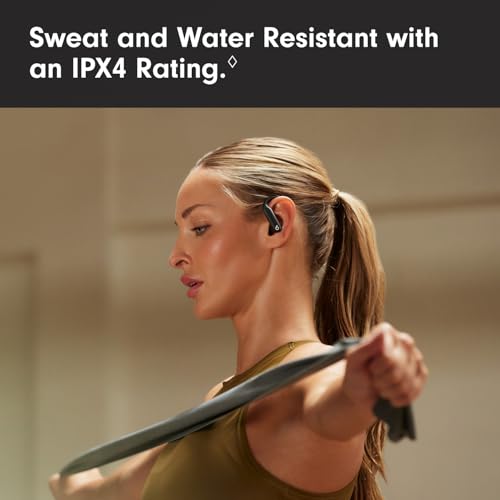
Both models are water resistant, but with different ratings. The Beats Powerbeats Pro 2 have IPX4 rating for sweat and light rain protection. The Sennheiser Momentum Sport offer superior IP55 rating, providing better protection against dust and water for harsh outdoor conditions. Both are suitable for intense workouts and sweaty gym sessions.
Comfort preferences vary by individual and activity type. The Sennheiser Momentum Sport generally offer better comfort for extended wear and floor exercises due to their lower profile design. The Beats Powerbeats Pro 2 ear hooks provide superior security but may create pressure points when lying on your side during yoga or stretching exercises.
Both the Beats Powerbeats Pro 2 and Sennheiser Momentum Sport feature active noise cancellation (ANC). The Beats offer adaptive ANC that can be fully disabled to extend battery life, while the Sennheiser provides adjustable ANC that cannot be completely turned off. Both help you focus in noisy gym environments while maintaining transparency modes for safety awareness.
The Sennheiser Momentum Sport typically offer better value for budget-conscious buyers, providing biometric monitoring and good performance at a lower price point. The Beats Powerbeats Pro 2 command a premium but justify it with superior battery life, more secure fit, and advanced features. The best value depends on whether you need the premium features and extended battery life.
Both earbuds handle phone calls well, but the Beats Powerbeats Pro 2 excel with six microphones and advanced voice isolation technology that separates your voice from gym noise. The Sennheiser Momentum Sport also provide clear call quality with noise suppression. The Beats' brighter sound signature also makes voices clearer if you frequently listen to podcasts during workouts.
For outdoor running, the Beats Powerbeats Pro 2 are generally preferred due to their superior security during high-impact activities and longer battery life for extended runs. However, the Sennheiser Momentum Sport offer better environmental protection with IP55 rating and specialized anti-wind mode for reducing wind noise during outdoor activities.
The Beats Powerbeats Pro 2 use physical buttons and tactile volume controls that work reliably during sweaty workouts without accidental touches. The Sennheiser Momentum Sport offer innovative touch-free cheekbone tap controls alongside traditional touch controls, providing more flexibility but requiring practice to master. Both allow customization through their respective smartphone apps.
We've done our best to create useful and informative comparisons to help you decide what product to buy. Our research uses advanced automated methods to create this comparison and perfection is not possible - please contact us for corrections or questions. These are the sites we've researched in the creation of this article: rtings.com - soundguys.com - soundguys.com - soundguys.com - bestbuy.com - tomsguide.com - techradar.com - youtube.com - slatepad.org - appleinsider.com - cnet.com - techradar.com - apple.com - bestbuy.com - panthertech.fiu.edu - beatsbydre.com - beatsbydre.com - youtube.com - beatsbydre.com - apple.com - gsmarena.com - alexreviewstech.com - rtings.com - shop.prevention.com - youtube.com - techradar.com - sennheiser-hearing.com - youtube.com - dcrainmaker.com - head-fi.org - whathifi.com - youtube.com - youtube.com - head-fi.org - ecoustics.com - soundguys.com - audio46.com - moon-audio.com - newsroom.sennheiser.com - youtube.com - shop.menshealth.com - the5krunner.com - youtube.com - bloomaudio.com - eftm.com - soundguys.com - techradar.com - sennheiser-hearing.com

Privacy Policy
Terms and Conditions - Affiliate Policy
Home Security
© Copyright 2008-2026.
11816 Inwood Rd #1211, Dallas, TX 75244