Original price was: $491.54.$449.98Current price is: $449.98.
The Dayton Audio HTA200 sits at an interesting crossroads in today's amplifier landscape—combining the warmth of vacuum tubes with the reliability of modern solid-state electronics. After extensive research into user experiences and technical specifications, this hybrid integrated amplifier emerges as a compelling option for audiophiles seeking both vintage character and contemporary convenience.
Understanding the HTA200's appeal requires grasping what hybrid amplification actually means. Traditional tube amplifiers use vacuum tubes throughout the entire signal path, creating that warm, musical sound many listeners love—but they run hot, consume significant power, and require regular tube replacements. Pure solid-state amplifiers offer reliability and efficiency but can sound clinical to some ears.
The hybrid approach places tubes only in the preamplification stage (where the small input signal gets initially boosted) while using transistors for the power amplification stage (where the heavy lifting of driving speakers happens). This gives you much of the tube magic without the maintenance headaches or heat issues of full tube designs.
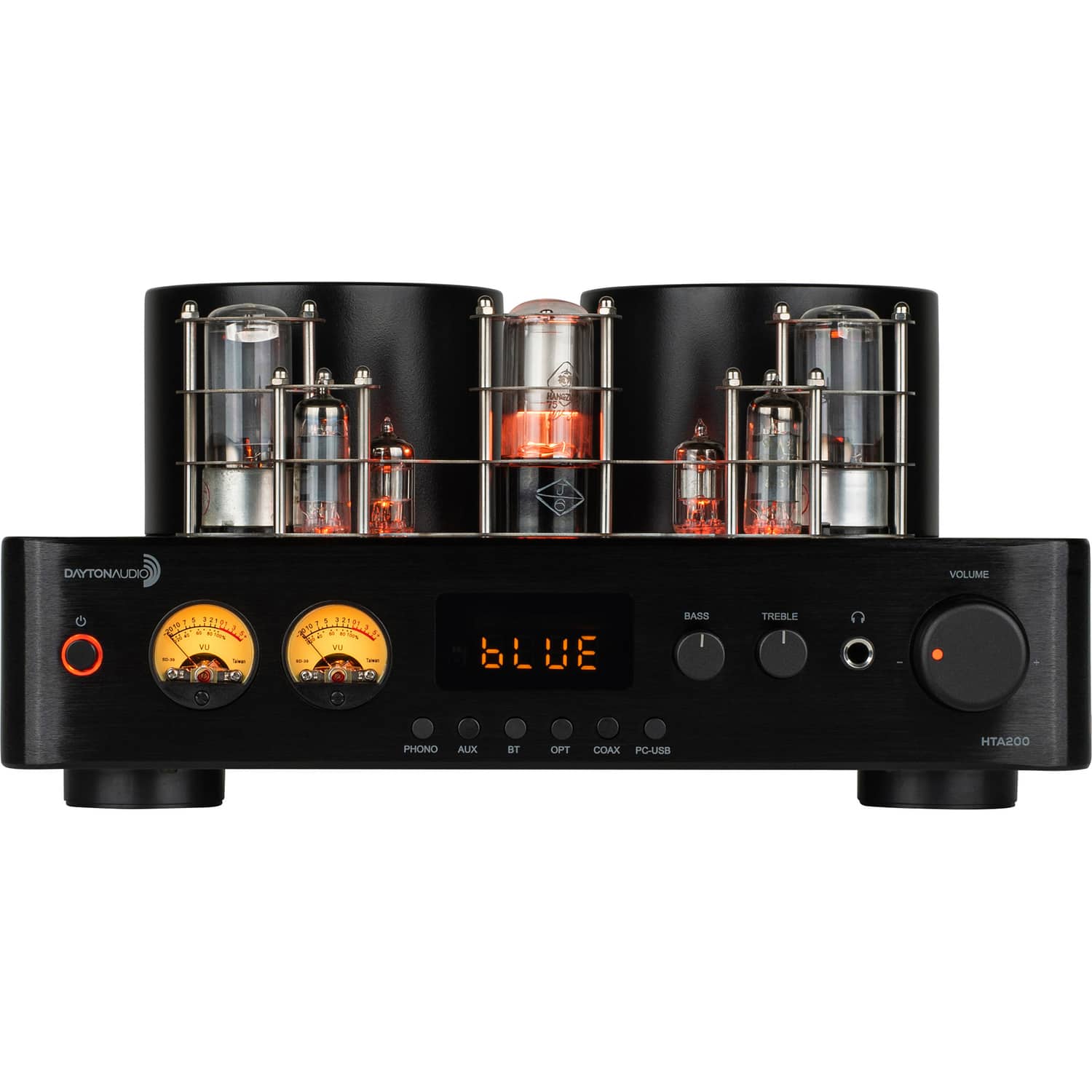
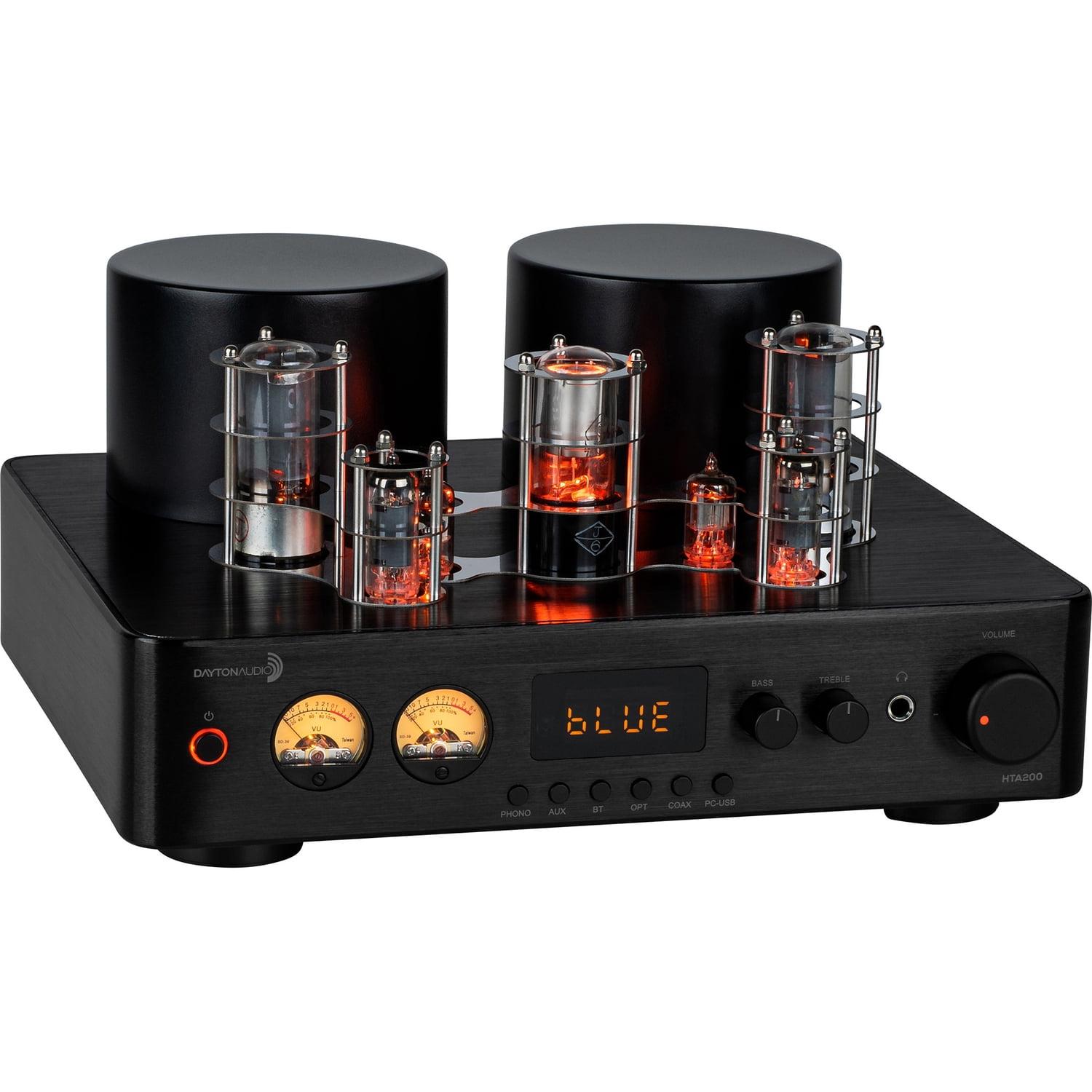
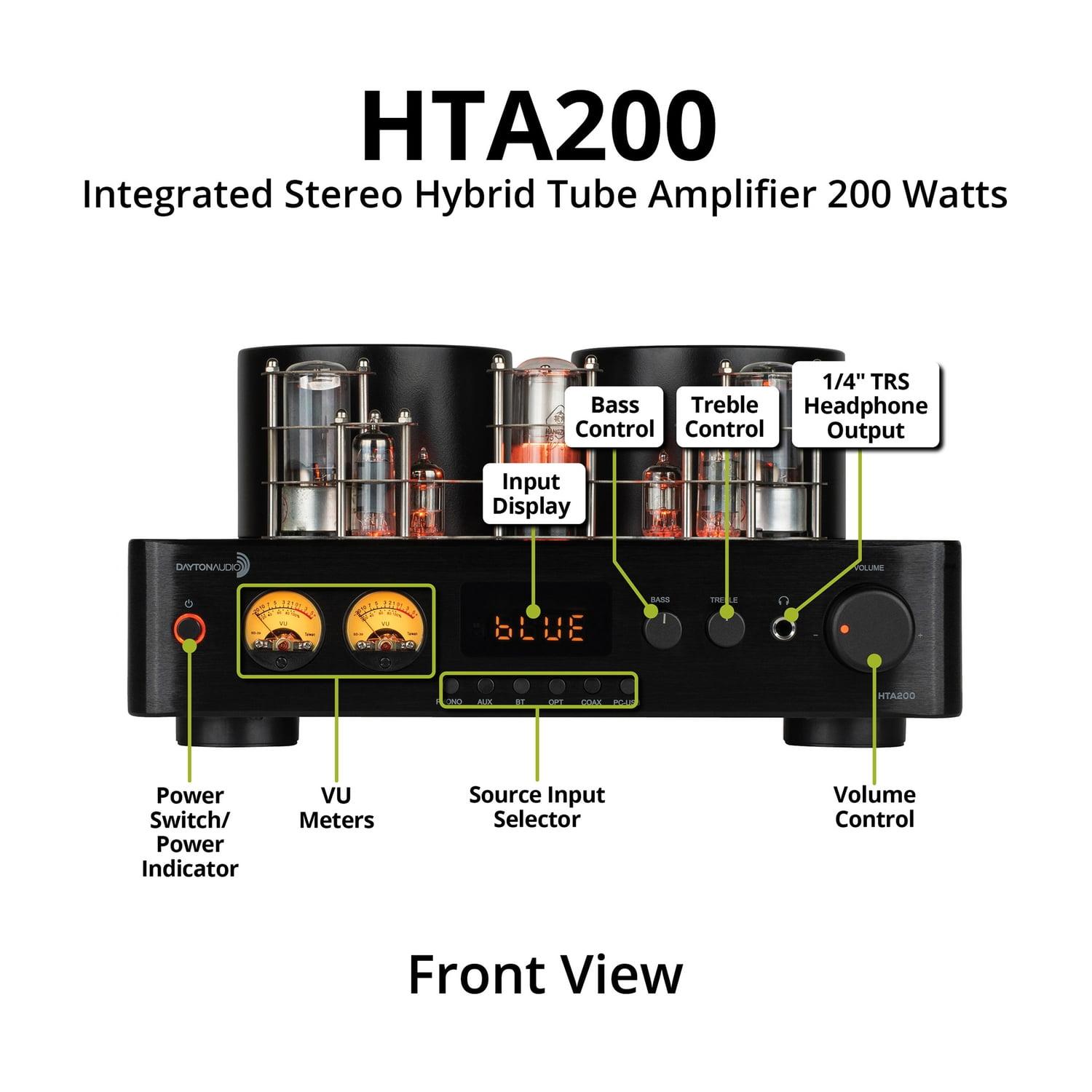
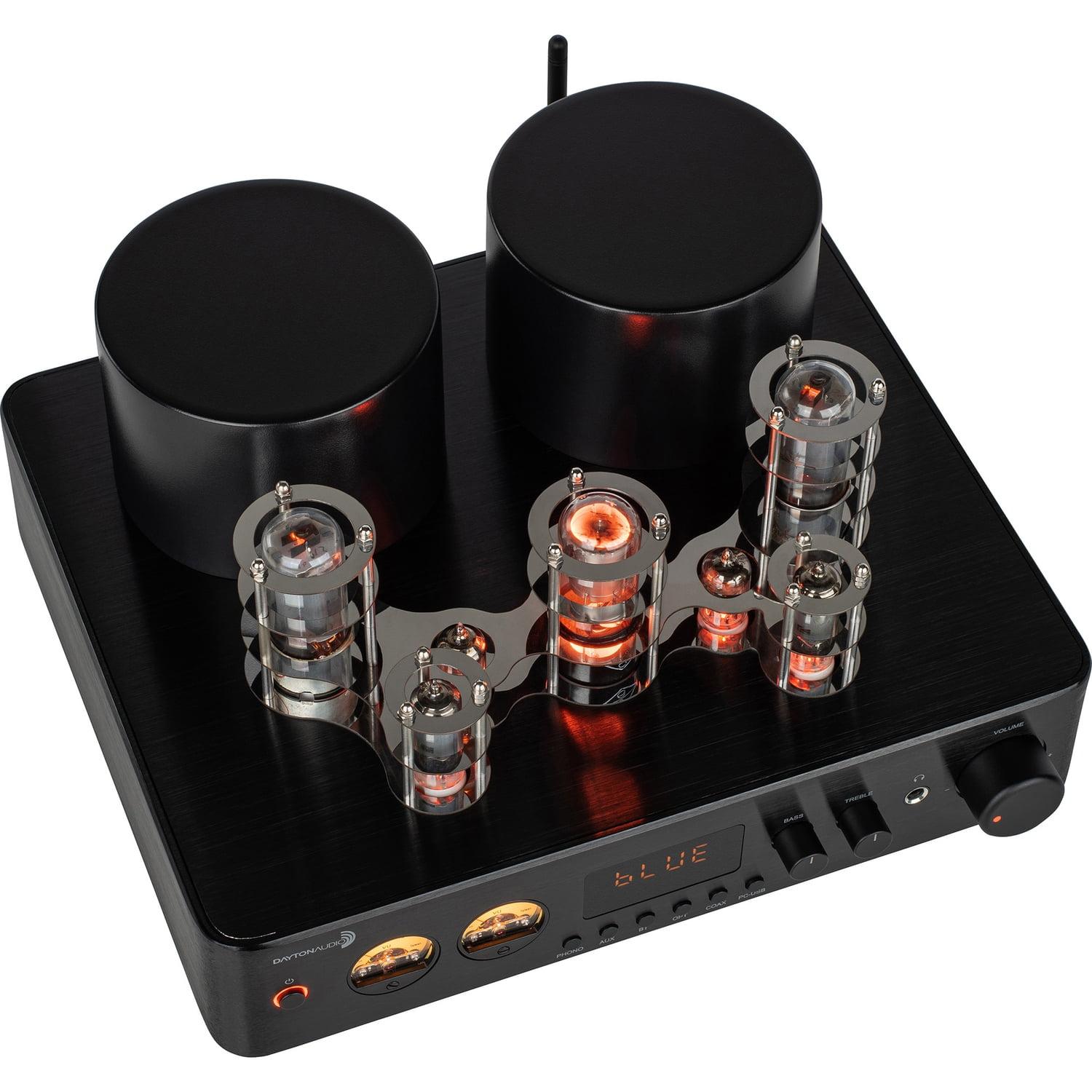
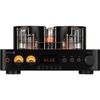
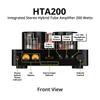
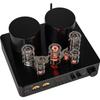
Our research reveals that users consistently praise this compromise. One common sentiment from online reviews suggests the HTA200 delivers about 80% of what you'd expect from a full tube amplifier while eliminating most of the drawbacks. The amber-toned tubes (13P1P, 6H2, 6A2, and WY3P types) glow invitingly through the front panel, providing visual appeal alongside sonic benefits.
The amplifier's power specification tells an important story: 100 watts per channel into 4-ohm speakers, dropping to 50 watts into 8-ohm loads. This follows typical solid-state behavior where power roughly doubles as speaker impedance halves—a good sign that the output stage has adequate current delivery capability.
What's particularly noteworthy is the total harmonic distortion specification of less than 1% at full power. THD measures how much the amplifier adds unwanted harmonics to the original signal—lower numbers mean cleaner sound. While 1% isn't cutting-edge by today's standards (some modern amps achieve 0.01% or better), it's entirely adequate for musical enjoyment and actually aligns with the slightly colored sound signature that tube enthusiasts prefer.
The frequency response spans 15 Hz to 20 kHz with ±1 dB variation, covering the full range of human hearing. The 15 Hz low-end extension is impressive and suggests the amplifier won't roll off bass prematurely—important for genres like electronic music or pipe organ recordings.
Perhaps the HTA200's greatest strength lies in its input versatility. The built-in phono stage accepts moving-magnet cartridges directly, eliminating the need for a separate phono preamp—a significant value addition for vinyl enthusiasts. The phono input includes proper grounding, essential for eliminating hum from turntable setups.
The digital connectivity impresses equally. The USB input transforms the amplifier into a DAC (digital-to-analog converter), accepting up to 16-bit/48kHz signals from computers. While higher-resolution formats like 24-bit/192kHz have become common, 16-bit/48kHz covers CD quality perfectly and handles most streaming service formats.
Bluetooth 5.0 support with AAC and SBC codecs ensures compatibility with modern smartphones and tablets. AAC codec support is particularly valuable for iPhone users, as it provides better audio quality than the basic SBC codec that all Bluetooth devices must support.
The coaxial and optical digital inputs accommodate CD players, streaming devices, or gaming consoles. Having both connection types provides flexibility—coaxial typically handles longer cable runs better, while optical eliminates ground loop potential.
The heart of the HTA200's character lies in its tube preamplifier stage. Unlike power tubes that handle large signals and generate substantial heat, preamp tubes operate at lower voltages and currents, lasting much longer—typically years rather than months.
The tube complement includes voltage amplification stages (13P1P and 6H2 tubes) and buffer stages (6A2 tubes) that condition the signal before sending it to the solid-state power section. The WY3P stabilivolt tube acts as a voltage regulator, ensuring stable operating conditions for the other tubes—a sophisticated touch often found in more expensive designs.
Users consistently report that the tube section adds a subtle warmth and dimensionality to digital sources, making harsh recordings more listenable without obscuring detail. This proves particularly beneficial for streaming services, which often use heavy compression that can sound fatiguing through purely solid-state amplification.
The motorized volume control represents a standout feature, responding to both front-panel adjustment and remote control commands. This isn't just convenience—motorized controls typically offer better channel matching and longevity compared to traditional potentiometers.
The bass and treble controls provide ±6 dB of adjustment, centered around 200 Hz and 4 kHz respectively. While tone controls fell out of favor during the "purist" audio era, they're experiencing a renaissance as users recognize their value for room correction and personal preference adjustment.
The VU meters serve both functional and aesthetic purposes. Unlike LED displays that show peak levels, VU meters display average signal levels, providing a more musical representation of program dynamics. They also add significant visual appeal, with their gentle needle movements creating an engaging watching experience during listening sessions.
The 4-ohm minimum impedance rating makes the HTA200 compatible with most bookshelf and tower speakers. The 100-watt power rating suits speakers with sensitivities from 85-92 dB, covering popular models from brands like KEF, Klipsch, and Polk Audio.
The dedicated subwoofer output provides full-range signal, requiring a powered subwoofer with its own crossover controls. While not as elegant as built-in bass management, this approach works well and maintains signal purity to the main speakers.
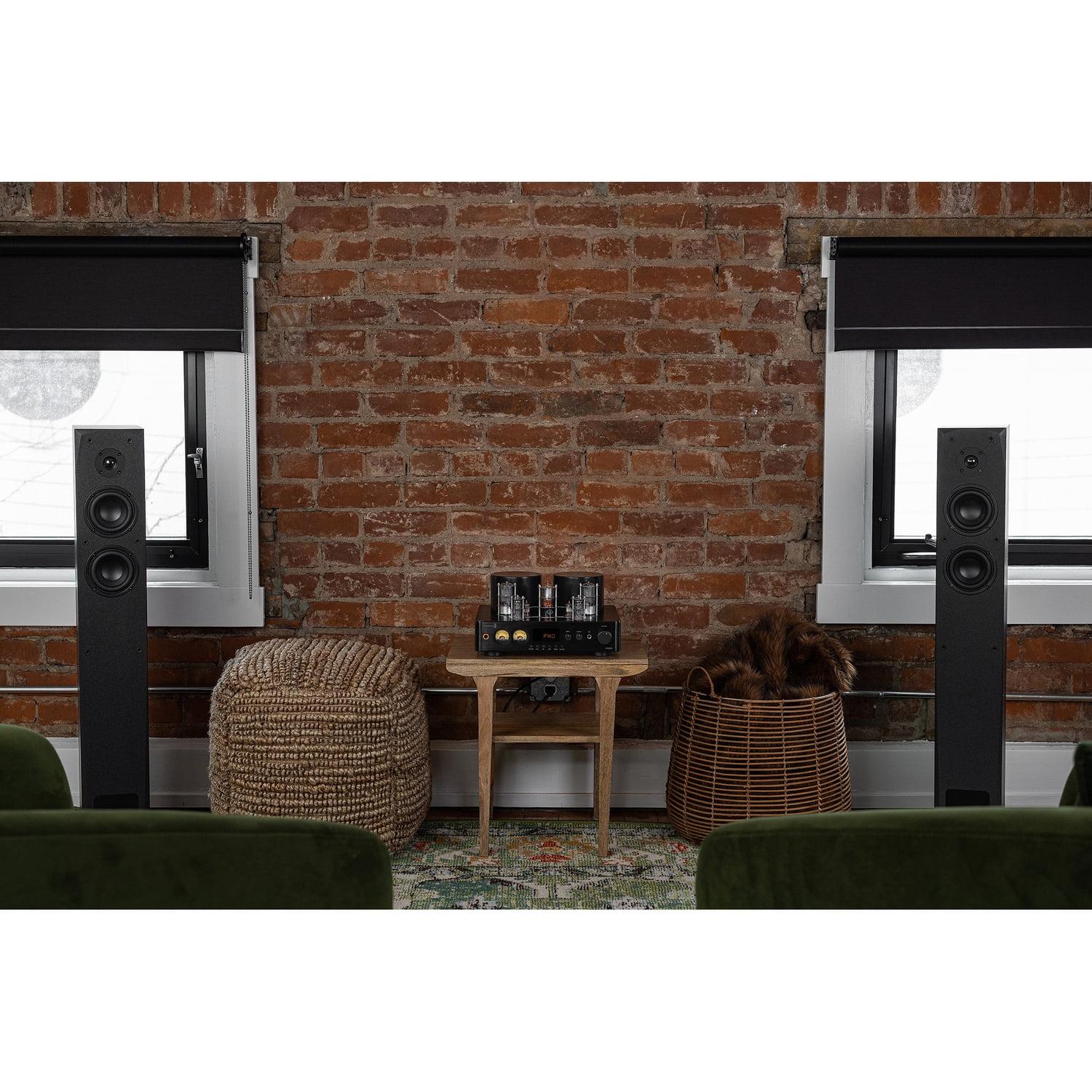
Our research suggests the amplifier performs admirably in medium to large rooms, with several users reporting satisfying performance in spaces up to 400 square feet. The solid-state output section maintains good control over speaker drivers, preventing the loose bass that can plague some tube designs.
While primarily designed for stereo music listening, the HTA200 can serve home theater applications in specific scenarios. The multiple digital inputs accommodate modern sources like streaming devices or gaming consoles, while the subwoofer output enables easy integration with powered subwoofers.
However, users seeking true home theater functionality should note the lack of surround sound processing or multiple zone capabilities. The amplifier works best as a stereo component in a home theater system or as the foundation for a simple two-channel setup in a secondary room.
At the time of writing, the HTA200 occupies a unique market position, offering features typically found in significantly more expensive amplifiers. The combination of tube preamplification, comprehensive digital connectivity, and substantial power output creates a package that researchers find difficult to match elsewhere in its category.
Compared to similarly powered solid-state integrated amplifiers, the tube warmth and visual appeal provide clear differentiation. Against full tube amplifiers, the reliability and power efficiency offer practical advantages that many users find compelling.
The Dayton Audio HTA200 succeeds in bridging the gap between vintage tube character and modern convenience. Its hybrid architecture delivers the best aspects of both technologies while minimizing their respective drawbacks. The extensive connectivity options ensure compatibility with both traditional and contemporary sources, while the substantial power output handles most speakers and rooms effectively.
For users seeking an introduction to tube sound without full tube complexity, or those wanting a single component to serve multiple source types, the HTA200 presents a compelling proposition. The visual appeal of glowing tubes and dancing VU meters adds an engagement factor often missing from purely functional audio components.
While not the last word in technical perfection, the amplifier delivers musical satisfaction and practical versatility that resonates with both casual listeners and developing audiophiles. At the time of writing, it represents exceptional value in the hybrid amplifier category.
The Dayton Audio HTA200 works well for stereo home theater setups or as part of a larger system. It provides 100 watts per channel to drive front speakers powerfully, includes multiple digital inputs for connecting streaming devices and game consoles, and has a dedicated subwoofer output for adding bass. However, it's a stereo amplifier, so it won't process surround sound formats like Dolby Digital or DTS.
A hybrid tube amplifier like the Dayton Audio HTA200 combines vacuum tubes in the preamplifier section with solid-state transistors in the power amplifier section. This design gives you the warm, musical sound characteristic of tubes while maintaining the reliability, efficiency, and power output of modern solid-state electronics. You get tube sound without the heat, high power consumption, and frequent tube replacements of full tube amps.
Yes, the Dayton Audio HTA200 includes a built-in moving-magnet phono preamp with proper grounding. You can connect most turntables directly without needing a separate phono stage. This makes it an excellent choice for vinyl enthusiasts who want a single component to handle both their turntable and digital sources.
The Dayton Audio HTA200 features Bluetooth 5.0 with support for both SBC and AAC codecs. This means you can wirelessly stream music from smartphones, tablets, and computers with good audio quality. AAC codec support is particularly beneficial for iPhone users, providing better sound quality than basic Bluetooth connections.
The Dayton Audio HTA200 delivers 100 watts per channel into 4-ohm speakers and 50 watts per channel into 8-ohm speakers. This power level is sufficient for most bookshelf and tower speakers in medium to large rooms, making it suitable for serious listening sessions and home theater applications.
The Dayton Audio HTA200 includes coaxial digital, optical digital, and USB inputs. The USB connection acts as a DAC (digital-to-analog converter) for computers, supporting up to 16-bit/48kHz audio. The coaxial and optical inputs work with CD players, streaming devices, gaming consoles, and TV audio outputs.
Yes, the Dayton Audio HTA200 includes a dedicated subwoofer output that provides a full-range preamp signal. You'll need a powered subwoofer with its own crossover controls, as the amplifier doesn't include bass management. This setup works well for adding deep bass to your stereo or home theater system.
The preamp tubes in the Dayton Audio HTA200 typically last several years under normal use because they operate at lower voltages and currents than power tubes. The tube types used (13P1P, 6H2, 6A2, and WY3P) are readily available and relatively inexpensive to replace when the time comes, making maintenance costs reasonable.
Yes, the Dayton Audio HTA200 includes a remote control that operates the motorized volume knob, input selection, and other functions. The motorized volume control is particularly convenient for home theater use, allowing you to adjust levels from your seating position without getting up.
The Dayton Audio HTA200 offers exceptional value for users seeking tube warmth with modern convenience. At the time of writing, it provides features typically found in much more expensive amplifiers, including comprehensive digital connectivity, built-in phono preamp, Bluetooth streaming, and substantial power output. For home theater enthusiasts wanting stereo amplification with character, or music lovers seeking an all-in-one solution, the HTA200 represents an excellent investment in both performance and versatility.
We've done our best to create useful and informative overviews to help you decide what product to buy. Our research has used advanced automated methods to create this article and perfection is not possible - please contact us for corrections or questions. These are the sites we've researched in the creation of this article: daytonaudio.com - audiosciencereview.com - daytonaudio.com - audioholics.com - soundstageaccess.com - youtube.com - avsforum.com - solen.ca - daytonaudio.com - soundstagenetwork.com - parts-express.com - homedepot.com - device.report - soundstagenetwork.com - petra.com - manualslib.com - audiophonics.fr - manualshelf.com
| Dayton Audio HTA200 |
|---|
| Power Output - Determines how loud it can drive your speakers: 100W @ 4Ω, 50W @ 8Ω |
| Amplifier Type - Combines tube warmth with solid-state reliability: Hybrid Tube Preamp + Class A/B Power |
| Phono Input - Connects turntables directly without separate preamp: Built-in MM preamp with ground |
| Bluetooth - Wireless streaming from phones and tablets: 5.0 with SBC/AAC codecs |
| USB DAC - Turns your computer into a high-quality source: 16-bit/48kHz support |
| Digital Inputs - Connects CD players and streaming devices: Coaxial + Optical |
| Subwoofer Output - Adds deep bass to your system: Full-range preamp out |
| Total Harmonic Distortion - Lower means cleaner sound: |
| Frequency Response - Covers full hearing range: 15 Hz – 20 kHz (±1 dB) |
| Signal-to-Noise Ratio - Higher means quieter background: >80 dB |
| Minimum Speaker Impedance - Compatibility with most speakers: 4 ohms |
| Tube Complement - Creates the signature warm sound: 13P1P x2, 6H2 x2, 6A2 x2, WY3P |
| Remote Control - Convenient operation from your seat: Motorized volume control |
| Tone Controls - Fine-tune sound to your preference: Bass/Treble ±6 dB |
| Headphone Output: ¼" TRS jack |
| Dimensions: 13.1" W x 6.6" H x 12.5" D |
The Marantz Model M1 takes a fundamentally different approach with its compact Class D digital amplification and comprehensive streaming integration. Where the HTA200 embraces analog warmth through its tube preamp, the M1 delivers precise, neutral sound with exceptional detail retrieval and a remarkable 105 dB signal-to-noise ratio from digital sources. Its built-in HEOS platform eliminates the need for separate streaming devices by directly accessing Spotify, TIDAL, Amazon Music HD, and other services, while supporting high-resolution audio up to 24-bit/192kHz – far exceeding the HTA200's 16-bit/48kHz USB limitation. The M1's HDMI eARC input with Dolby Digital+ decoding provides seamless TV integration that the HTA200 simply cannot match, making it superior for dual music and home theater use.
At roughly double the HTA200's price point, the M1 justifies its premium through convenience and future-proofing rather than raw power or analog connectivity. Its compact, cool-running design enables installation flexibility impossible with the HTA200's tube heat and traditional sizing, while multi-room HEOS capability allows easy expansion into whole-home audio systems. However, the M1 lacks the HTA200's built-in phono preamp and relies heavily on smartphone app control, making it less appealing for users prioritizing turntable integration or traditional physical controls. The choice ultimately depends on whether you value the HTA200's analog-focused approach with tube character and comprehensive connectivity, or prefer the M1's streaming-centric design with modern convenience features and neutral sound signature.
🤖 Read Detailed Comparison
👌Marantz Model M1 Wireless Streaming Amplifier Details
💵 See Marantz Model M1 Wireless Streaming Amplifier Price
The SVS Prime Wireless Pro SoundBase takes a fundamentally different approach with 150 watts of Class-D power and comprehensive wireless streaming capabilities that transform how you interact with your music. Where the HTA200 requires physical media or basic Bluetooth connections, the Prime Wireless Pro delivers high-resolution streaming up to 24-bit/192kHz through Wi-Fi, Apple AirPlay 2, and Chromecast, plus direct access to services like Spotify Connect, Tidal, and Qobuz. Its HDMI ARC/eARC input provides seamless TV integration that the tube amplifier simply cannot match, making it an ideal dual-purpose solution for both stereo music and dramatically improved TV audio. The sound signature prioritizes accuracy over character—you get pristine clarity and neutral reproduction rather than the HTA200's warm tube coloration.
In terms of real-world value, the SVS Prime Wireless Pro justifies its higher price by replacing multiple components: it functions as amplifier, high-quality DAC, network streamer, and TV audio processor in a single compact chassis. While vinyl enthusiasts will miss the HTA200's built-in phono stage, most modern listeners will appreciate the convenience of smartphone app control, voice assistant compatibility, and the ability to instantly access millions of songs without physical media. The 50% power advantage becomes meaningful with demanding speakers or larger rooms, and the modern Class-D efficiency means it runs cool and wastes minimal electricity compared to the tube amplifier's higher idle consumption and heat output.
🤖 Read Detailed Comparison
👌SVS Prime Wireless Pro SoundBase Integrated Amplifier Details
💵 See SVS Prime Wireless Pro SoundBase Integrated Amplifier Price
The Denon PMA-900HNE takes a fundamentally different approach with its comprehensive network streaming capabilities and pure solid-state design. Where the HTA200 offers basic Bluetooth connectivity, the Denon provides a full HEOS streaming platform with Wi-Fi, Apple AirPlay 2, and direct integration with major streaming services like Spotify, TIDAL, and Qobuz. Its advanced DAC supports high-resolution audio up to 24-bit/192kHz compared to the HTA200's 16-bit/48kHz limitation, making it significantly better suited for audiophiles with extensive high-resolution music libraries. The MM/MC phono stage also outclasses the HTA200's MM-only input, accommodating high-end moving coil cartridges that serious vinyl collectors prefer. Technical specifications favor the Denon as well, with a superior 105dB signal-to-noise ratio versus the HTA200's 80dB rating, resulting in a noticeably quieter background during listening.
However, these advantages come at roughly double the cost of the HTA200, and the sonic character differs dramatically. The Denon PMA-900HNE prioritizes accuracy and neutrality over the HTA200's warm tube coloration, which may appeal less to listeners seeking that classic analog sound. While the Denon delivers excellent technical performance and modern convenience, it lacks the visual appeal of glowing tubes and analog VU meters that make the HTA200 such an engaging centerpiece. For users who primarily stream music and value high-resolution audio support, the Denon justifies its premium pricing. But for those seeking tube warmth, vintage aesthetics, and solid performance at a budget-friendly price point, the HTA200 remains the more compelling choice despite its technical limitations.
🤖 Read Detailed Comparison
👌Denon PMA-900HNE Integrated Network Amplifier Details
💵 See Denon PMA-900HNE Integrated Network Amplifier Price
The Bluesound PowerNode Edge represents a fundamentally different approach to integrated amplification, prioritizing streaming convenience and modern connectivity over raw power and analog flexibility. While it delivers only 40 watts per channel compared to the HTA200's 100-watt output, the PowerNode Edge excels in areas where the Dayton falls short: comprehensive streaming service integration through the BluOS platform, multi-room audio synchronization, and seamless TV integration via HDMI eARC with Dolby Digital decoding. Its DirectDigital Class D amplification produces clean, neutral sound that many listeners prefer for detailed music reproduction, though it lacks the tube warmth that defines the HTA200's character. The compact, wall-mountable design and sophisticated app control make it ideal for modern living spaces where discretion and convenience matter more than traditional hi-fi aesthetics.
From a value perspective, the Bluesound PowerNode Edge commands a significant premium over the HTA200, but justifies this cost through features the Dayton simply cannot match. If your music consumption revolves around streaming services, you need multi-room capability, or you want effortless TV audio integration, the PowerNode Edge delivers functionality worth the extra investment. However, if you prioritize power output for demanding speakers, own a turntable collection, or prefer the hands-on control and tube coloration of traditional hi-fi, the HTA200 provides superior value. The choice ultimately depends on whether you're building a modern streaming-centric system or a traditional audiophile setup—both amplifiers excel within their intended domains, but serve distinctly different user priorities and listening philosophies.
🤖 Read Detailed Comparison
👌Bluesound PowerNode Edge Streaming Amplifier Details
💵 See Bluesound PowerNode Edge Streaming Amplifier Price
The NAD C 368 represents a fundamentally different approach to integrated amplification, prioritizing technical precision and future-proofing over the HTA200's tube warmth. Where the Dayton amplifier uses vacuum tubes for sonic coloration, the NAD employs sophisticated Class D amplification with Hypex UcD output stages that deliver exceptionally clean, detailed sound reproduction. Its premium PCM1795 32-bit DAC with advanced jitter reduction significantly outperforms the HTA200's basic USB converter, making it the clear choice for listeners with high-resolution music collections or those who demand maximum detail retrieval from their sources. The NAD's superior current delivery capabilities also give it a decisive advantage when driving demanding speakers with complex impedance loads—something that becomes immediately apparent with planar magnetic or low-sensitivity tower speakers.
The NAD C 368's modular design philosophy sets it apart as a long-term investment rather than just an amplifier purchase. While the HTA200 offers excellent value at its price point, it's essentially a fixed-feature product that may require complete replacement as your needs evolve. The NAD's MDC slots allow you to add capabilities like high-end network streaming, HDMI connectivity for home theater integration, or future technologies that haven't been invented yet—effectively future-proofing your investment. This modularity, combined with NAD's reputation for long-term reliability and superior resale value, makes the C 368 more cost-effective over time despite its significantly higher upfront cost. For listeners who prioritize accuracy over coloration, plan system upgrades, or need professional installation features, the NAD delivers performance and flexibility that justify its premium positioning.
🤖 Read Detailed Comparison
👌NAD C 368 Integrated Amplifier Details
💵 See NAD C 368 Integrated Amplifier Price
The Denon HEOS Amp HS2 takes a fundamentally different approach with its wireless-first design and multi-room capabilities that can transform your entire home into a connected audio ecosystem. While it delivers less raw power at 70 watts per channel, its Class D amplification provides exceptionally clean performance with just 0.05% THD – significantly lower distortion than the HTA200's tube-influenced measurements. The real standout is its comprehensive streaming integration, offering native access to Spotify, Tidal, Amazon Music, and other services with high-resolution audio support up to 24-bit/192kHz. The ability to create up to 64 synchronized or independent zones throughout your home represents a level of convenience and flexibility that traditional amplifiers simply cannot match.
However, this modern approach comes with trade-offs that make the HEOS Amp HS2 less appealing for certain users. Its app-only control system eliminates the immediate tactile feedback of physical knobs, and the lack of a built-in phono preamp means vinyl enthusiasts need additional equipment. While the technical specifications are impressive on paper, some measurements reveal limitations in the internal DAC performance, and several users report protection mode activation at higher volumes despite the 70-watt rating. At a slightly higher price point than the HTA200, the HEOS Amp HS2 represents excellent value for those prioritizing wireless convenience and multi-room expansion, but may feel expensive for users seeking a straightforward stereo amplifier without network dependencies. The choice ultimately comes down to whether you value the immediate, tactile experience of traditional hi-fi with tube warmth, or prefer the seamless integration and future-focused capabilities of a connected streaming ecosystem.
🤖 Read Detailed Comparison
👌Denon HEOS Amp HS2 Wireless Stereo Amplifier Details
💵 See Denon HEOS Amp HS2 Wireless Stereo Amplifier Price
The Yamaha MusicCast WXA-50 takes a fundamentally different approach, prioritizing wireless streaming and multi-room capabilities over the HTA200's traditional hi-fi design. Where the HTA200 excels with its tube warmth and comprehensive analog inputs, the WXA-50 shines with native streaming service integration, supporting direct playback from Spotify, TIDAL, and Pandora without requiring a phone or external device. Its ESS Sabre DAC and support for high-resolution audio up to 192kHz/24-bit also gives it a significant edge in digital audio quality, handling files with much greater resolution than the HTA200's 16-bit/48kHz limitation. The compact form factor and flexible placement options make it ideal for modern homes where space is at a premium, and the MusicCast multi-room system allows seamless music distribution throughout your home—something the single-room HTA200 simply cannot match.
From a performance perspective, the WXA-50 delivers slightly more power at 55 watts per channel into 8 ohms and focuses on clean, analytical sound reproduction rather than the HTA200's musical tube coloration. While some listeners may find this approach less engaging than the HTA200's warm character, it's better suited for revealing details in high-resolution recordings and handling complex electronic music. The smartphone app control and voice assistant integration offer convenience that traditional hi-fi enthusiasts might not appreciate, but for users who primarily stream music and want whole-home audio, the WXA-50 provides exceptional value. However, its minimal analog inputs make it less versatile for users with turntables or multiple source components, highlighting how these two amplifiers serve distinctly different listening preferences and lifestyles.
🤖 Read Detailed Comparison
👌Yamaha MusicCast Wireless Streaming Amplifier Details
💵 See Yamaha MusicCast Wireless Streaming Amplifier Price
The Bluesound PowerNode takes a fundamentally different approach as a wireless streaming amplifier built around convenience and smart home integration. Its standout features include native streaming from over 20 services like Spotify and Tidal, multi-room synchronization across up to 64 zones, HDMI eARC for direct TV connection, and comprehensive smart home compatibility with voice assistants. The quad-core processor and 32-bit/384kHz DAC support high-resolution audio formats including MQA, while the BluOS platform provides seamless control through smartphone apps. For users prioritizing wireless convenience, whole-house audio, and modern AV integration, the PowerNode offers compelling ecosystem benefits that the HTA200 simply cannot match.
However, this convenience comes at a significant cost premium – roughly double the HTA200's price at the time of writing – while delivering measurably inferior amplification performance. Technical reviews reveal concerning issues with the PowerNode's power delivery, distortion levels, and noise floor that fall short of expectations for its price category. Where the HTA200 excels in pure audio quality, comprehensive analog connectivity, and exceptional value per dollar, the PowerNode prioritizes wireless features over fundamental amplification performance. Unless multi-room streaming and smart home integration are essential to your setup, the HTA200's superior measured performance, five-year warranty, and component flexibility make it the more compelling choice for serious listening, especially when you can add dedicated streaming devices for a fraction of the price difference.
🤖 Read Detailed Comparison
👌Bluesound PowerNode Wireless Music Streaming Amplifier Details
💵 See Bluesound PowerNode Wireless Music Streaming Amplifier Price
The Sonos Amp takes a fundamentally different approach, prioritizing streaming convenience and smart home integration over the HTA200's traditional hi-fi experience. Its standout feature is built-in Wi-Fi streaming that connects directly to over 100 music services without requiring your phone to stay connected—once you start a playlist, the music continues even if your phone dies or leaves the house. The Sonos Amp also delivers significantly more power at 125 watts per channel into 8 ohms, making it better suited for demanding speakers or multiple speaker pairs. Its HDMI ARC input provides seamless TV integration with just one cable, supporting Dolby Digital and DTS formats, while the multi-room capabilities let you sync audio throughout your entire home as part of the broader Sonos ecosystem.
From a performance standpoint, the Sonos Amp offers clean, neutral Class D amplification that prioritizes accuracy over character—the opposite of the HTA200's warm tube coloration. While it lacks the built-in phono preamp and comprehensive analog connectivity that make the HTA200 so versatile, the Sonos Amp excels in modern use cases like streaming, home theater, and whole-home audio. The trade-off comes down to philosophy: the HTA200 celebrates the ritual of hi-fi listening with its tube warmth and hands-on controls, while the Sonos Amp makes high-quality audio effortless and ubiquitous throughout your living space. At a higher price point, the Sonos Amp justifies its premium through features the HTA200 simply cannot match—multi-room streaming, smart home integration, and sophisticated TV connectivity that transforms it into a complete modern audio hub rather than just a stereo amplifier.
🤖 Read Detailed Comparison
👌Sonos Amp Amplifier Details
💵 See Sonos Amp Amplifier Price
The NAD D 3045 represents a fundamentally different approach to integrated amplification, prioritizing digital excellence and compact convenience over the HTA200's tube warmth and vintage aesthetics. Where the HTA200 intentionally colors your music with tube harmonics, the D 3045 delivers clinical accuracy through its advanced AKM DAC chipset, supporting high-resolution formats up to 24-bit/384kHz, MQA, and DSD that the HTA200 simply cannot handle. The D 3045's bi-directional aptX HD Bluetooth, HDMI ARC connectivity, and dedicated headphone amplifier make it significantly more versatile for modern digital sources and home theater integration. Its remarkably compact form factor—roughly one-third the size of the HTA200—allows desktop placement or easy integration into entertainment centers where the larger tube amplifier would dominate.
From a performance standpoint, the D 3045 trades the HTA200's raw power advantage (60W vs 100W at 4 ohms) for consistency and control, delivering the same 60 watts into both 4-ohm and 8-ohm loads with exceptional damping factor for tight bass response. While it costs considerably more than the HTA200, the D 3045 justifies its premium through superior digital processing, maintenance-free solid-state reliability, and features like automatic display rotation and energy-efficient operation. The choice ultimately comes down to philosophy: the HTA200 offers more power and musical tube coloration at a lower price, while the D 3045 provides modern convenience, digital sophistication, and space-saving design for users who prioritize accuracy and advanced connectivity over vintage charm.
🤖 Read Detailed Comparison
👌NAD D 3045 Integrated Amplifier Details
💵 See NAD D 3045 Integrated Amplifier Price
The Cambridge Audio CXA61 takes a fundamentally different approach with its pure solid-state design and premium ESS Sabre DAC that handles high-resolution audio up to 32-bit/384kHz and DSD256 formats. Where the HTA200 emphasizes analog warmth and vinyl compatibility, the CXA61 prioritizes digital source excellence with aptX HD Bluetooth, multiple digital inputs, and Roon certification. Its technical specifications are considerably superior, delivering 0.002% THD compared to the HTA200's <1%, along with extended frequency response and symmetrical circuit design for enhanced stereo separation. The CXA61's 60 watts into 8 ohms provides more power for typical home speakers, though it can't match the HTA200's 100-watt 4-ohm capability for demanding loads.
In real-world use, the Cambridge Audio CXA61 excels as a foundation for digital-first systems, revealing details in high-resolution streaming that the HTA200's basic DAC simply cannot reproduce. However, vinyl enthusiasts face the added cost and complexity of a separate phono preamp, while the CXA61's clinical precision may sound less engaging than the HTA200's tube-warmed presentation with acoustic music. The CXA61 typically commands a higher price but justifies this with superior build quality from an established hi-fi brand, better digital capabilities, and future-proof connectivity. Choose the CXA61 if your priority is technical excellence and digital source flexibility; stick with the HTA200 if you value musical warmth, vinyl convenience, and visual appeal at a more accessible price point.
🤖 Read Detailed Comparison
👌Cambridge Audio CXA61 Integrated Stereo Amplifier Details
💵 See Cambridge Audio CXA61 Integrated Stereo Amplifier Price
The Denon PMA-600NE takes a fundamentally different approach with its pure solid-state design and emphasis on accuracy over character. Where the HTA200 adds warmth through its tube preamp, the Denon delivers neutral, uncolored sound reproduction that reveals exactly what's in your recordings. Its superior 24-bit/192kHz DAC significantly outperforms the HTA200's basic 16-bit/48kHz digital processing, making it the clear choice for high-resolution streaming from services like Tidal or Qobuz. The PMA-600NE also offers more analog flexibility with five line inputs compared to the HTA200's single line input, though it only supports moving magnet phono cartridges rather than both MM and MC options. Its Advanced High Current technology and lower 0.02% THD specification demonstrate superior technical performance, even if the power output is more conservative at 45 watts per channel into 8 ohms.
From a value perspective, the Denon PMA-600NE represents a different kind of investment philosophy. While it lacks the visual drama and sonic coloration of the HTA200, it offers set-and-forget reliability with virtually no maintenance requirements and proven long-term durability. The trade-off is clear: you sacrifice the engaging tube warmth and higher power output of the HTA200 for superior digital processing, multiple analog inputs, and bulletproof reliability. For listeners who prioritize accuracy, want excellent high-resolution digital playback, or simply prefer equipment that doesn't impose its own sonic signature, the PMA-600NE delivers exceptional value. It's particularly appealing for those with diverse music collections who want one amplifier that handles everything from jazz to electronic music with equal competence.
🤖 Read Detailed Comparison
👌Denon PMA-600NE Integrated Amplifier Details
💵 See Denon PMA-600NE Integrated Amplifier Price
The NAD D 3020 V2 takes a completely different approach with its Class D digital amplification and ultra-compact form factor. While it produces less continuous power at 30 watts per channel, its PowerDrive technology can deliver impressive dynamic peaks up to 150 watts into 2-ohm loads, making it surprisingly capable with efficient bookshelf speakers. The standout feature is its sophisticated Cirrus Logic DAC configured in dual differential mode, supporting high-resolution audio up to 24-bit/192kHz—a significant advantage over the HTA200's 16-bit/48kHz limitation. The NAD also runs completely cool and consumes less than 0.5 watts in standby mode compared to the HTA200's 45-watt idle consumption, translating to meaningful energy savings over time.
In real-world use, the D 3020 V2 excels in space-constrained setups where the HTA200 simply won't fit, and its neutral, accurate sound reproduction appeals to listeners who prefer hearing their music exactly as recorded rather than enhanced by tube coloration. However, it comes with trade-offs: users report unreliable Bluetooth connectivity, finicky touch controls, and a phono stage that may lack sufficient gain for some cartridges. The NAD represents better value for desktop systems and small rooms with efficient speakers, while the HTA200 offers superior flexibility, power, and that distinctive tube warmth that many find more engaging for extended listening sessions. Choose the NAD if space efficiency and digital accuracy are priorities; stick with the HTA200 if you want more power, features, and musical character.
🤖 Read Detailed Comparison
👌NAD D 3020 V2 Integrated Amplifier Details
💵 See NAD D 3020 V2 Integrated Amplifier Price
The WiiM Amp Streaming Amplifier represents the modern streaming-first approach to home audio with comprehensive wireless connectivity that includes AirPlay 2, Chromecast, Spotify Connect, and TIDAL Connect integration. Its compact aluminum chassis houses a high-performance ESS SABRE DAC capable of processing 24-bit/192kHz audio and a Texas Instruments Class D amplifier that delivers exceptionally clean performance with just 0.0025% THD+N. The HDMI ARC connection provides seamless TV integration with unified remote control, while the sophisticated WiiM Home app offers room correction, multiroom grouping, and regular firmware updates that continuously add new features. At a lower price point than the HTA200, it packs premium digital features typically found in much more expensive streaming amplifiers.
However, the WiiM Amp trades the HTA200's tube warmth and analog versatility for digital convenience and technical accuracy. It completely lacks phono input capability, making it unsuitable for vinyl enthusiasts, and its neutral sound signature may feel clinical or sterile compared to the musical coloration that tubes provide. The app-dependent operation and minimal physical controls also contrast sharply with the tactile, hands-on experience that traditional hi-fi enthusiasts often prefer. While the WiiM Amp excels in modern streaming scenarios and small-space installations, it can't match the HTA200's ability to make long listening sessions more engaging through its natural tube compression and harmonic enhancement, particularly with vocal-heavy music and classic rock recordings.
🤖 Read Detailed Comparison
👌WiiM Amp Streaming Amplifier Details
💵 See WiiM Amp Streaming Amplifier Price
The WiiM Amp Ultra represents a completely different philosophy, prioritizing technical excellence and modern streaming integration over traditional tube warmth. It delivers exceptional power with 100 watts per channel into 8 ohms (200 watts into 4 ohms) while maintaining audiophile-grade performance specs including just 0.005% distortion and a signal-to-noise ratio exceeding 120dB—measurements typically found in amplifiers costing several times more. The comprehensive streaming capabilities set it apart with Wi-Fi 6E connectivity, native support for Spotify, TIDAL, Qobuz, and other major services, plus Roon Ready certification for serious digital music enthusiasts. Its 3.5-inch color touchscreen provides intuitive control, while advanced DSP features include automatic room correction using your smartphone and 10-band parametric EQ with independent settings for each input.
Where the WiiM Amp Ultra truly excels is in real-world versatility and convenience that the Dayton simply cannot match. The HDMI ARC input enables seamless TV integration with Dolby Digital decoding, making it equally suited for music and home theater use. The sophisticated subwoofer integration includes bass management, crossover controls, and delay compensation—features that transform a simple 2.1 setup into a properly optimized system. While it costs significantly more and lacks the vintage aesthetics and built-in phono preamp that make the Dayton appealing to vinyl enthusiasts, the WiiM Amp Ultra delivers far more functionality per dollar when you consider it replaces multiple components: a traditional amplifier, streaming device, room correction processor, and digital hub. For users who primarily stream music or want a single-box solution that handles everything from Spotify to 4K TV audio, it represents exceptional value despite the higher upfront investment.
🤖 Read Detailed Comparison
👌WiiM Amp Ultra Streaming Amplifier Details
💵 See WiiM Amp Ultra Streaming Amplifier Price
The Eversolo Play Streaming Amplifier represents a completely modern approach to integrated amplification, with native streaming integration that eliminates the need for external devices entirely. Its advanced AK4493SEQ DAC supports ultra-high-resolution formats up to DSD512 and PCM 768kHz/32-bit, future-proofing your system against evolving digital audio standards. The measured performance is exceptional, with THD under 0.0037% and signal-to-noise ratio exceeding 109dB – specifications that place it firmly in audiophile territory. Direct integration with TIDAL, Qobuz, Roon Ready, and other major streaming services through its 5.5" touchscreen interface creates a seamless user experience that rivals dedicated high-end streamers, while HDMI ARC connectivity makes it genuinely useful for home theater applications.
While the Play commands a premium price, it justifies the cost by replacing multiple components – a network streamer, high-end DAC, and amplifier – in one compact chassis. Its Class D amplification with PurePath Ultra HD technology delivers clean, detailed sound with remarkable efficiency and minimal heat generation, contrasting sharply with the HTA200's warmer but less precise tube-influenced character. The Play's MM/MC phono preamp accommodates high-end moving-coil cartridges, and its dedicated subwoofer output with adjustable crossover provides professional-level bass management. For users who prioritize technical excellence, streaming convenience, and space efficiency over vintage aesthetics, the Play offers compelling value despite its higher initial investment – particularly considering the ongoing costs and complexity of building equivalent capability from separate components.
🤖 Read Detailed Comparison
👌Eversolo Play Streaming Amplifier Details
💵 See Eversolo Play Streaming Amplifier Price
Original price was: $1,799.99.$1,298.99Current price is: $1,298.99.
Original price was: $499.99.$369.99Current price is: $369.99.
Original price was: $579.99.$318.99Current price is: $318.99.


Privacy Policy
Terms and Conditions - Affiliate Policy
Home Security
© Copyright 2008-2026.
11816 Inwood Rd #1211, Dallas, TX 75244