

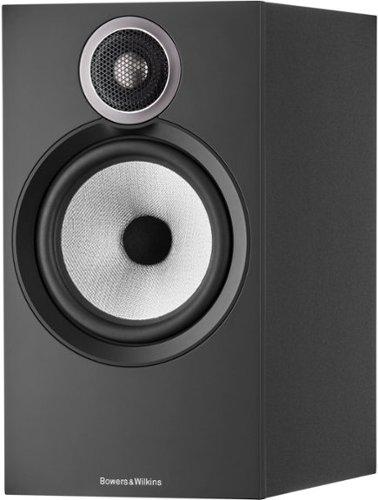
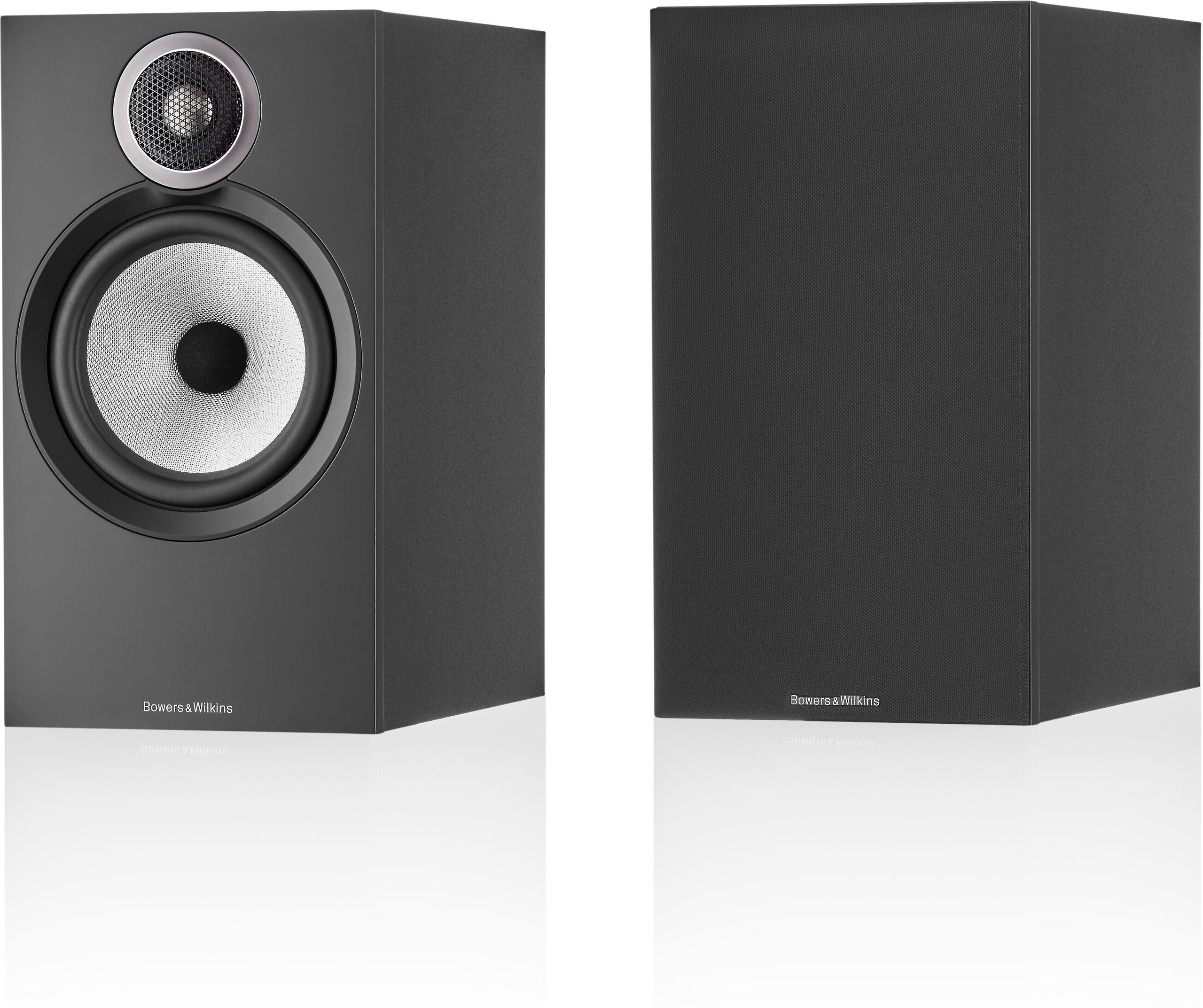
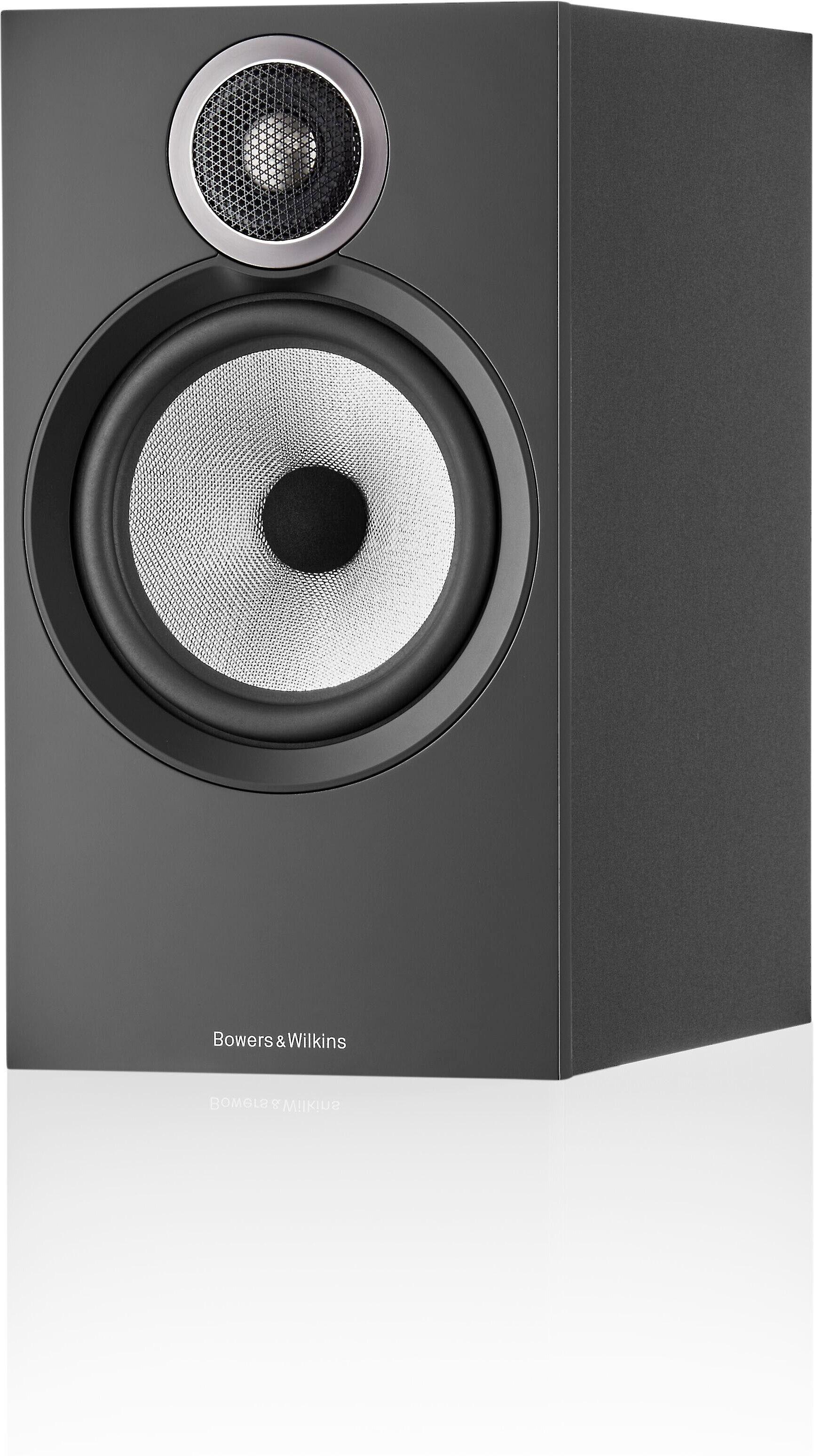
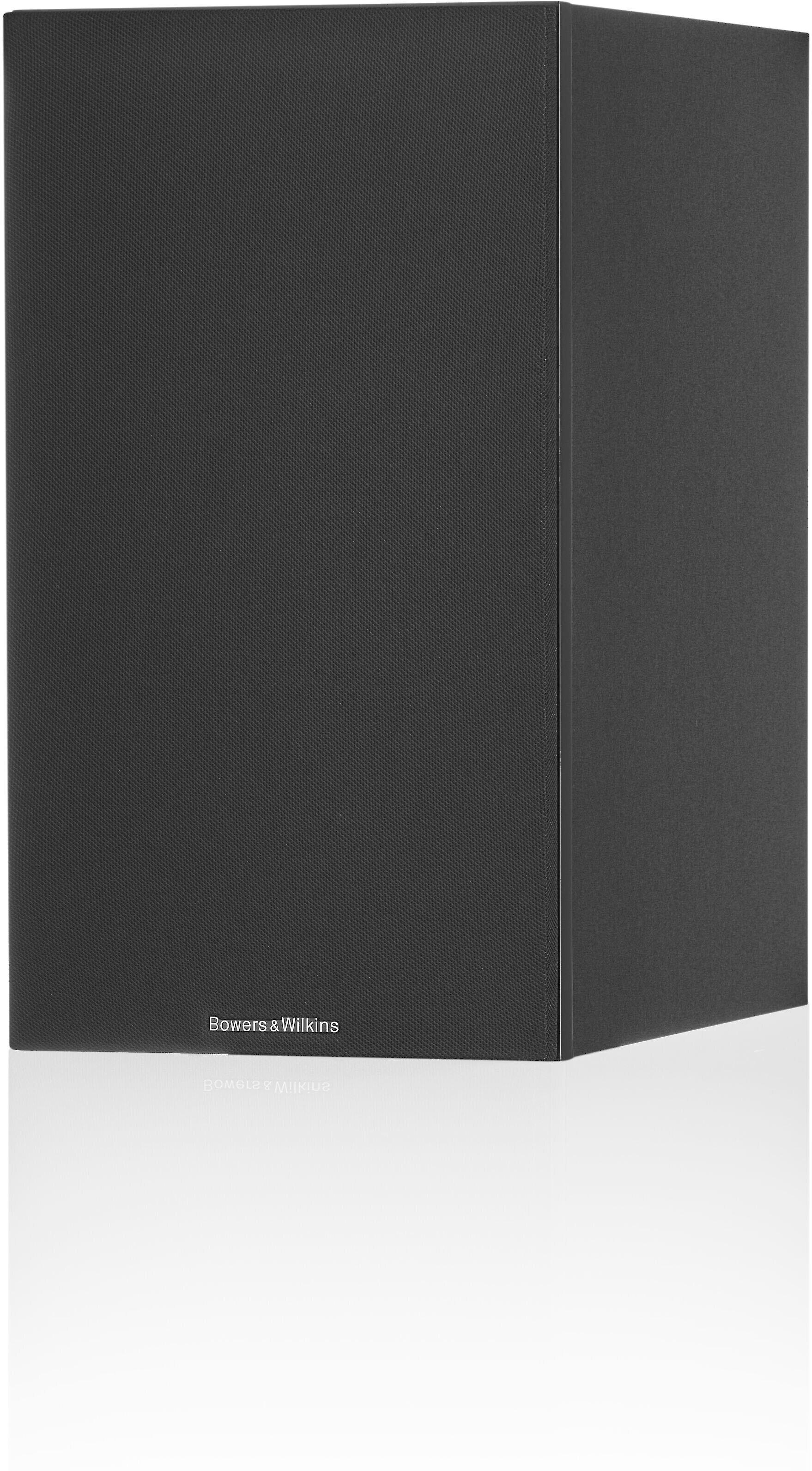
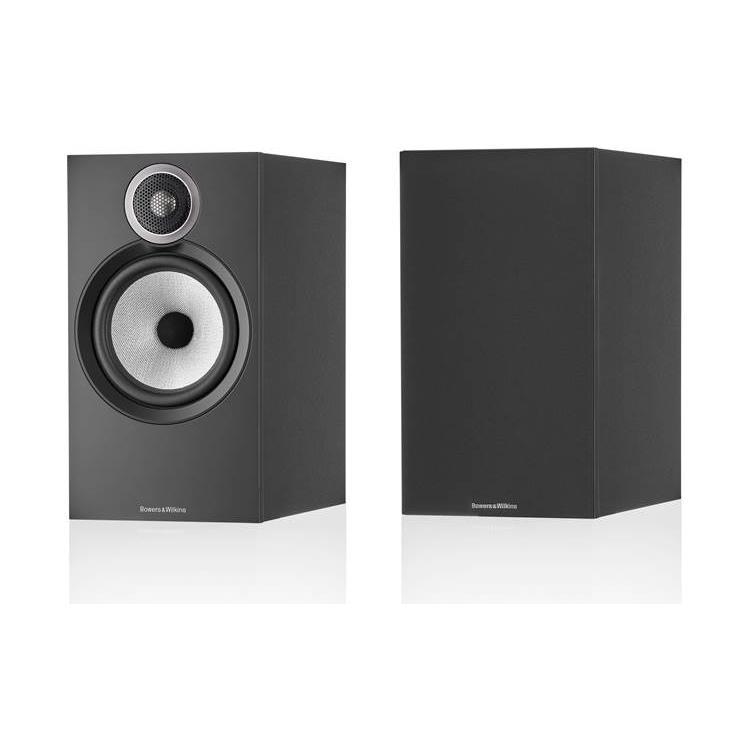
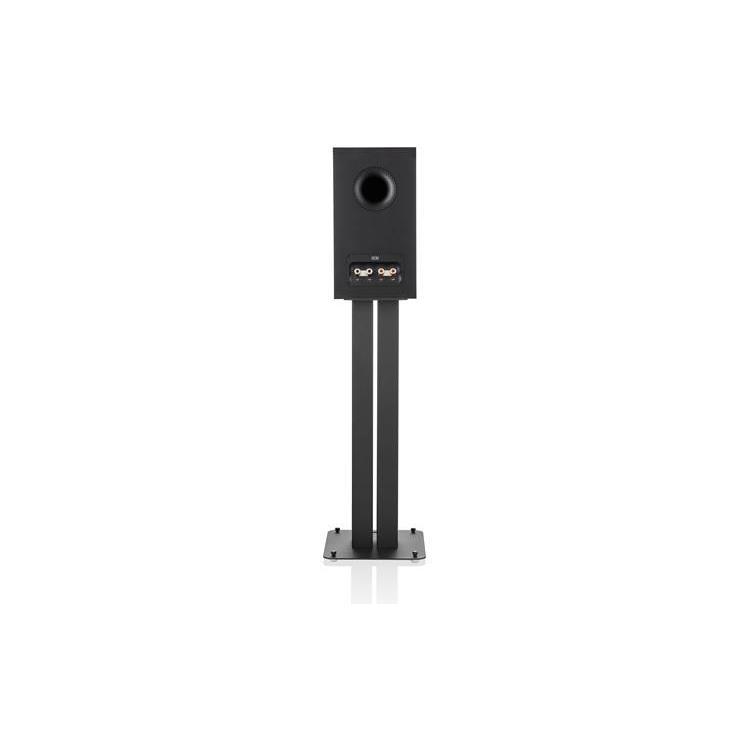
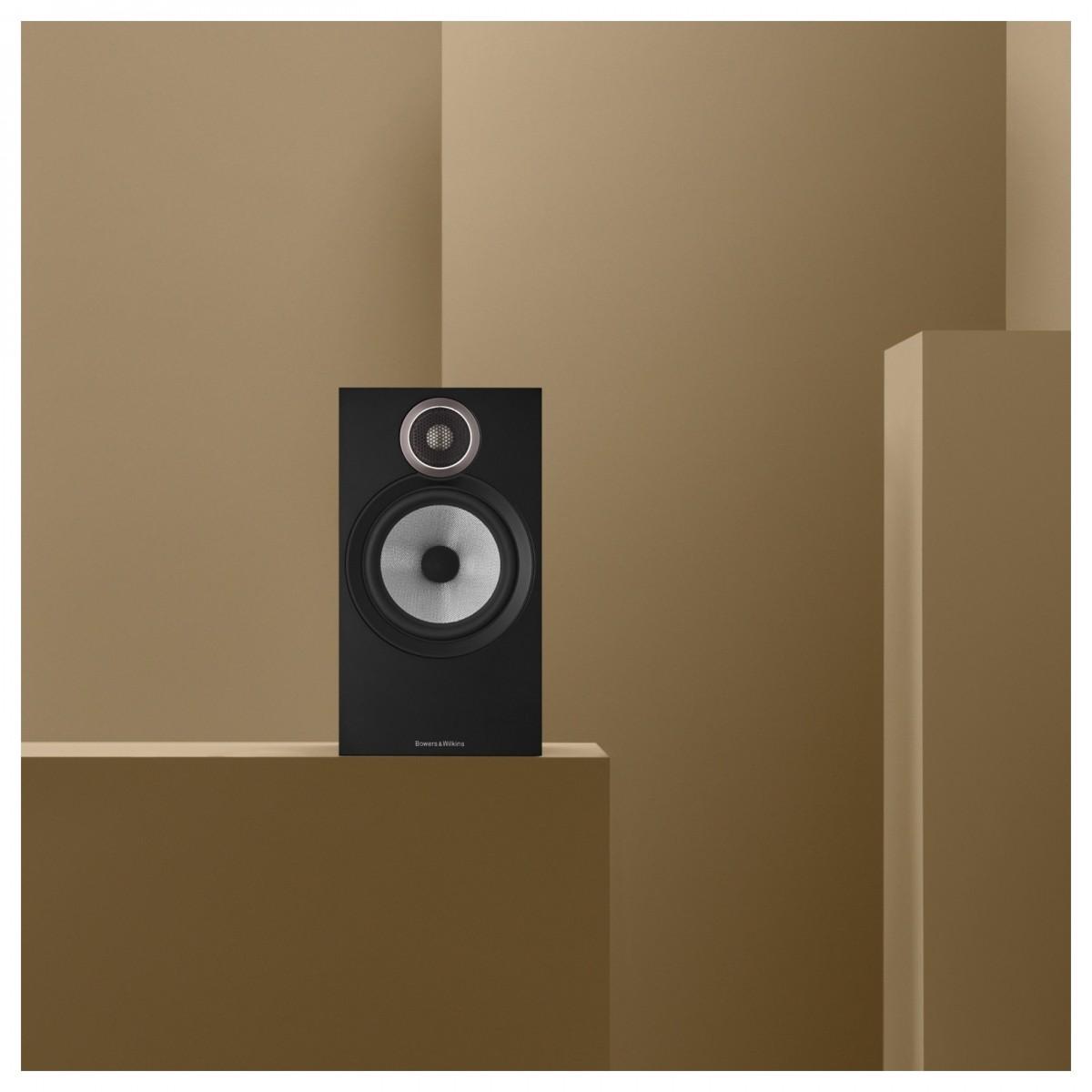
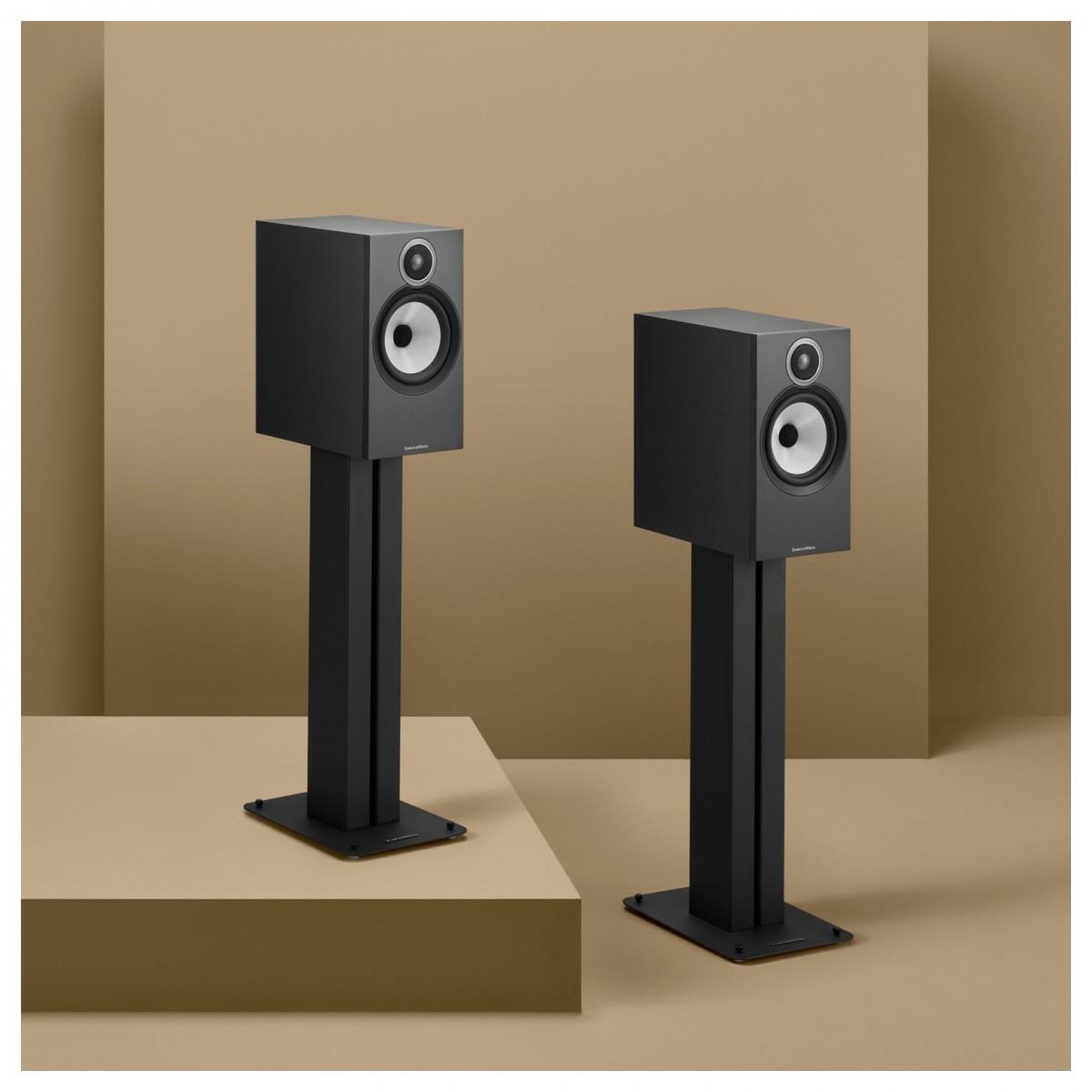
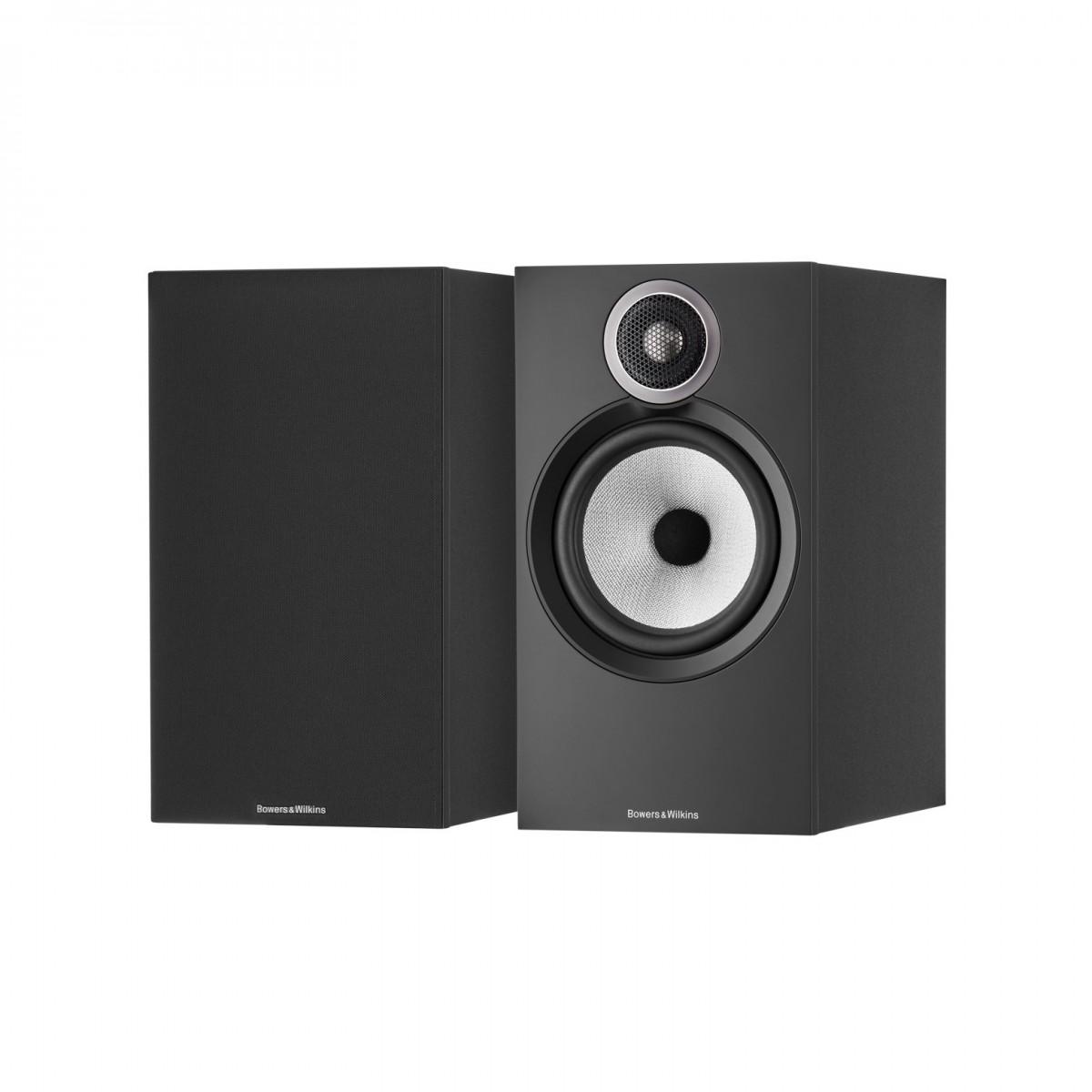
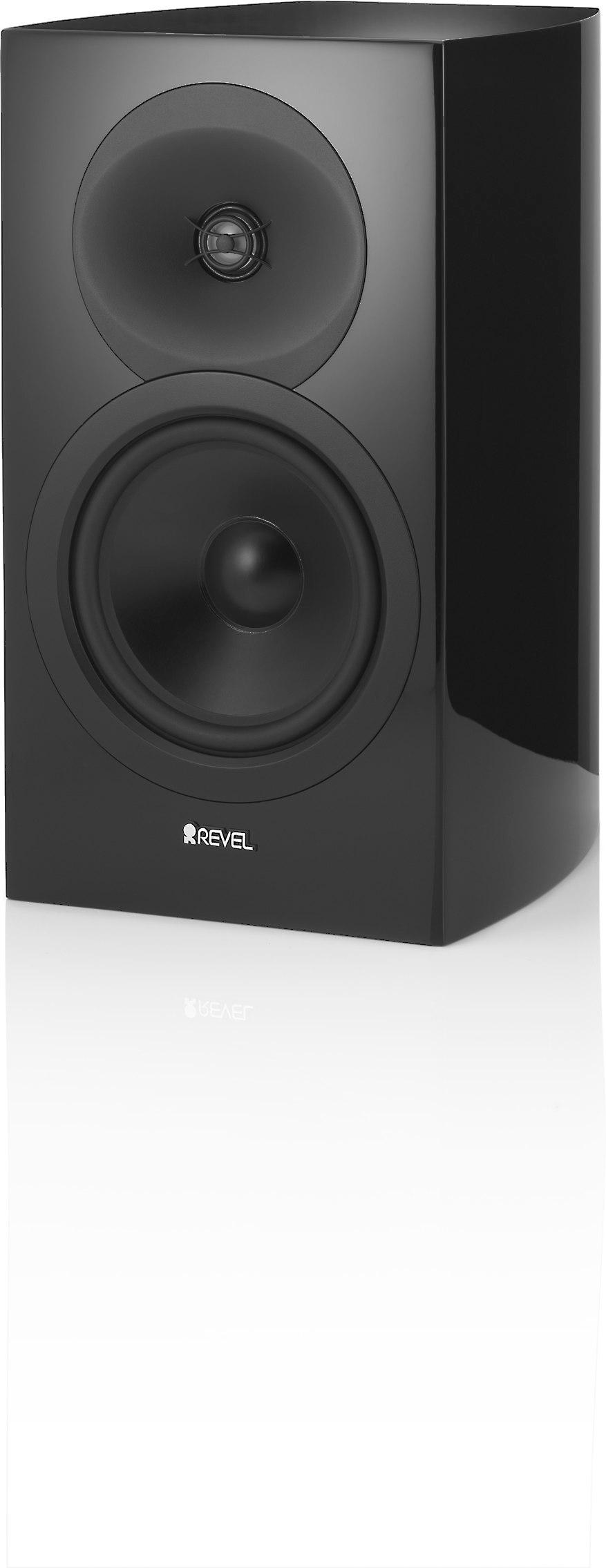
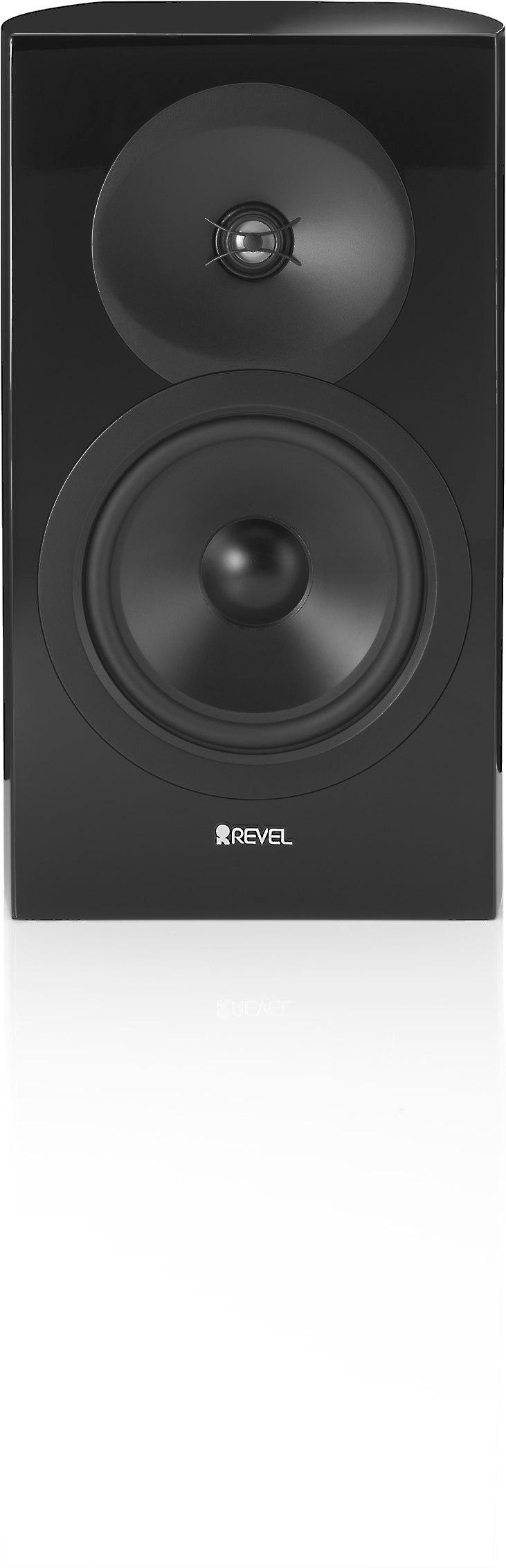

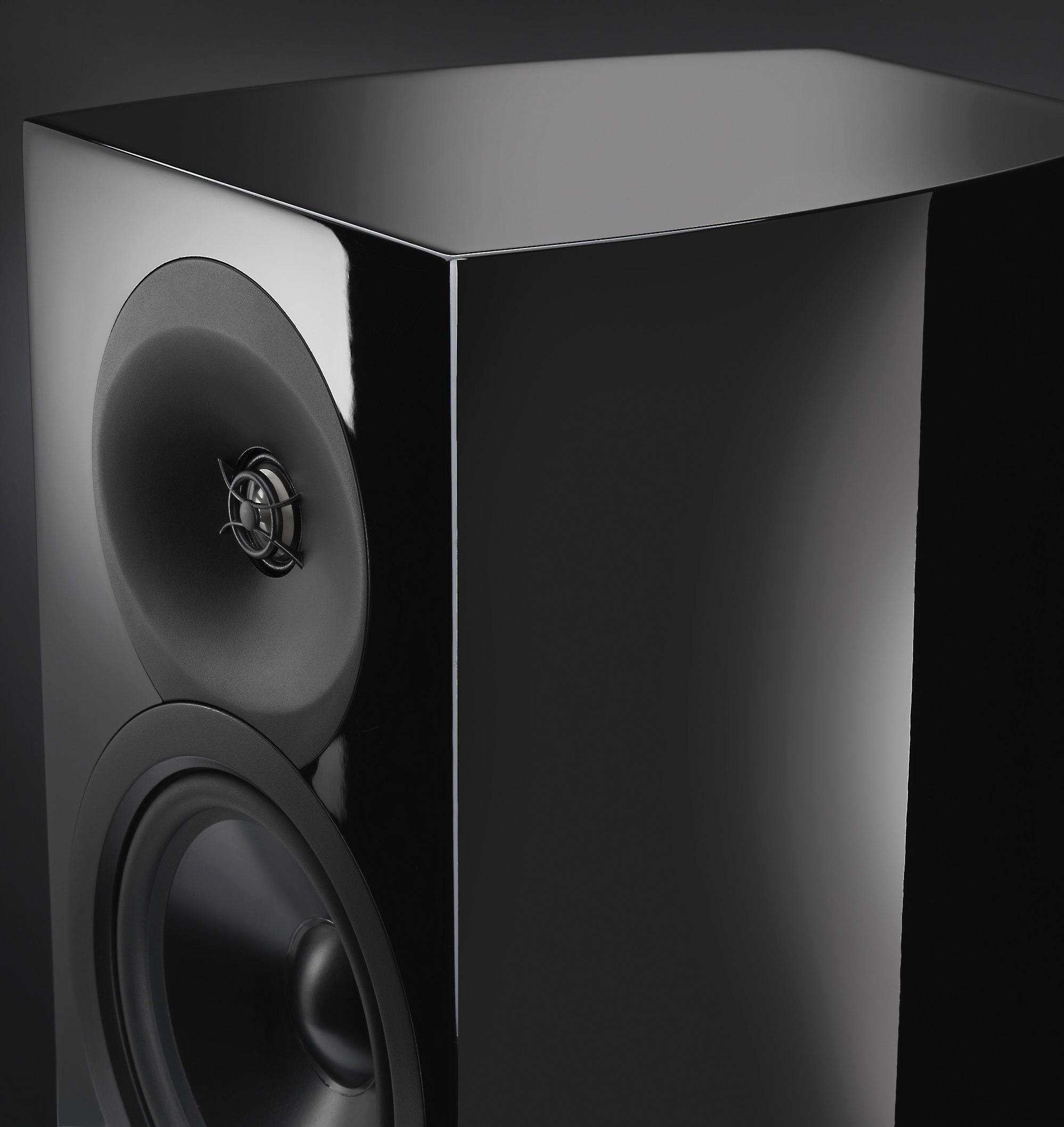
When it comes to high-quality audio, few decisions impact your listening experience more than speaker selection. Today we're comparing two excellent bookshelf speakers: the recently released Bowers & Wilkins 606 S3 ($1,100/pair) and the Revel Concerta2 M16 ($900/pair). Both represent different approaches to creating an engaging listening experience, with distinct advantages for different users.
Bookshelf speakers remain the sweet spot for many audio enthusiasts, offering an excellent balance between performance and practicality. Unlike floor-standing towers, they're easier to position and often deliver better value, while still providing enough output for most rooms under 400 square feet.
Modern bookshelf speakers have evolved significantly in the past decade. Advanced materials, sophisticated computer modeling, and improved manufacturing techniques have pushed performance boundaries. Both speakers in our comparison showcase these advancements, though in different ways.
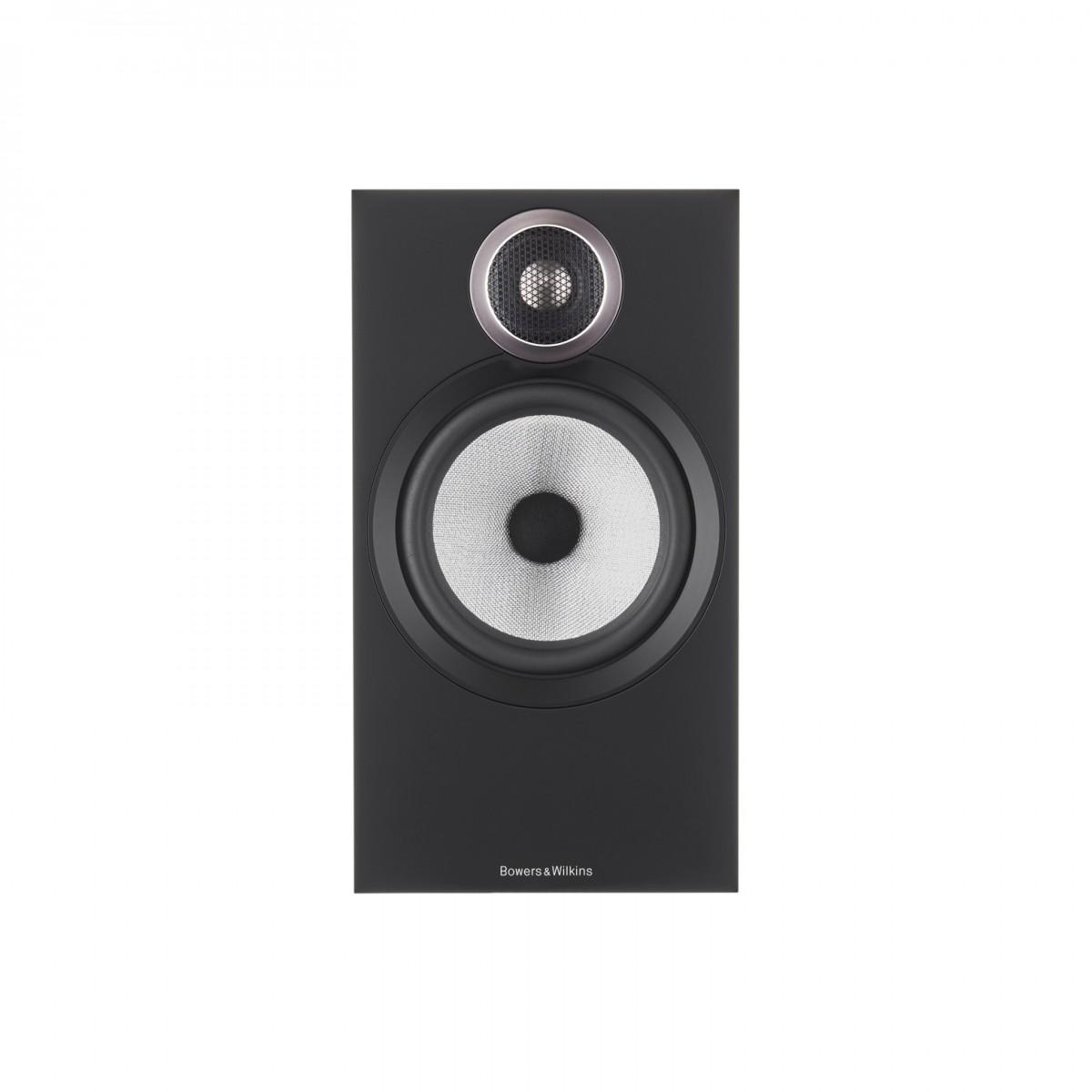
The B&W 606 S3 represents the latest iteration of B&W's famous 600 series, released in early 2024. It introduces several meaningful improvements over its predecessor, including:
The Revel M16, while slightly older, demonstrates Harman's research-driven approach:
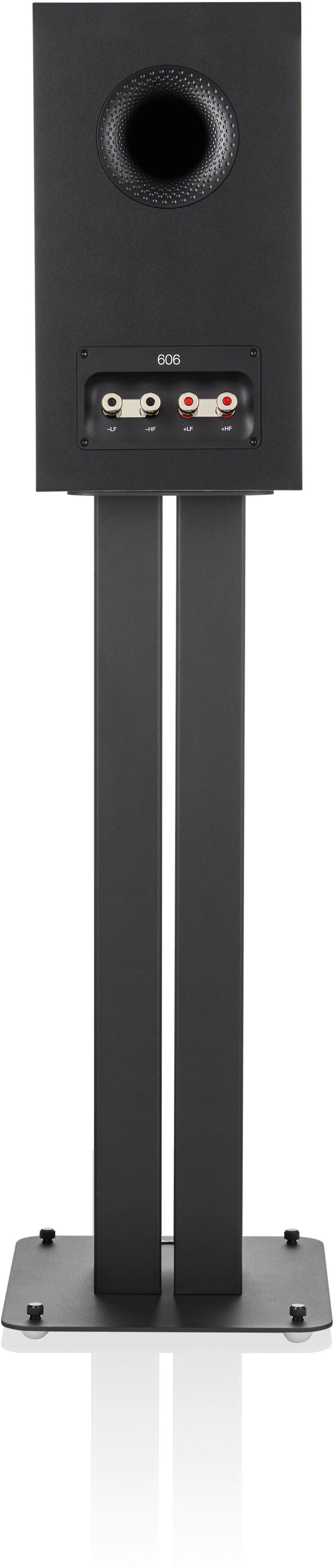
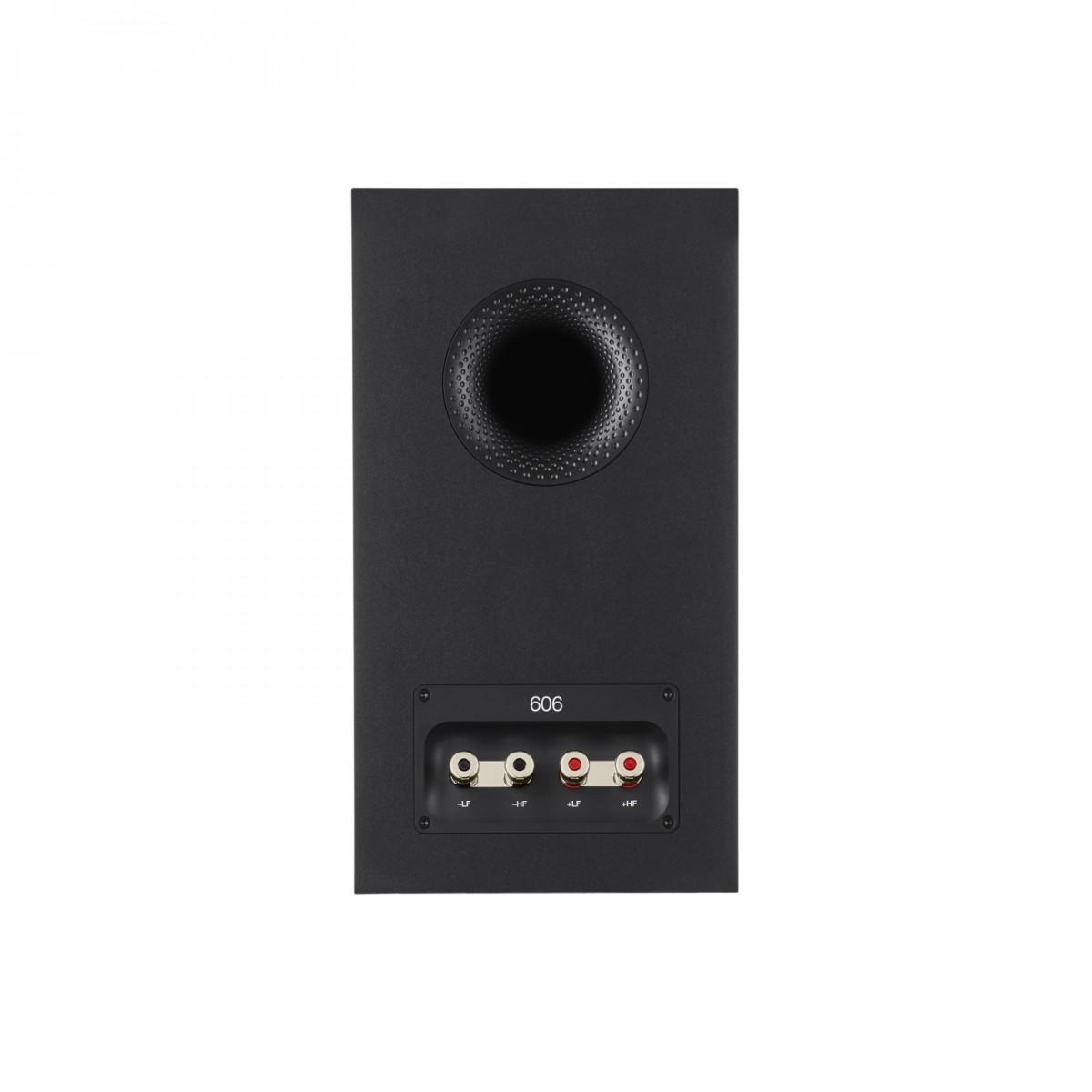
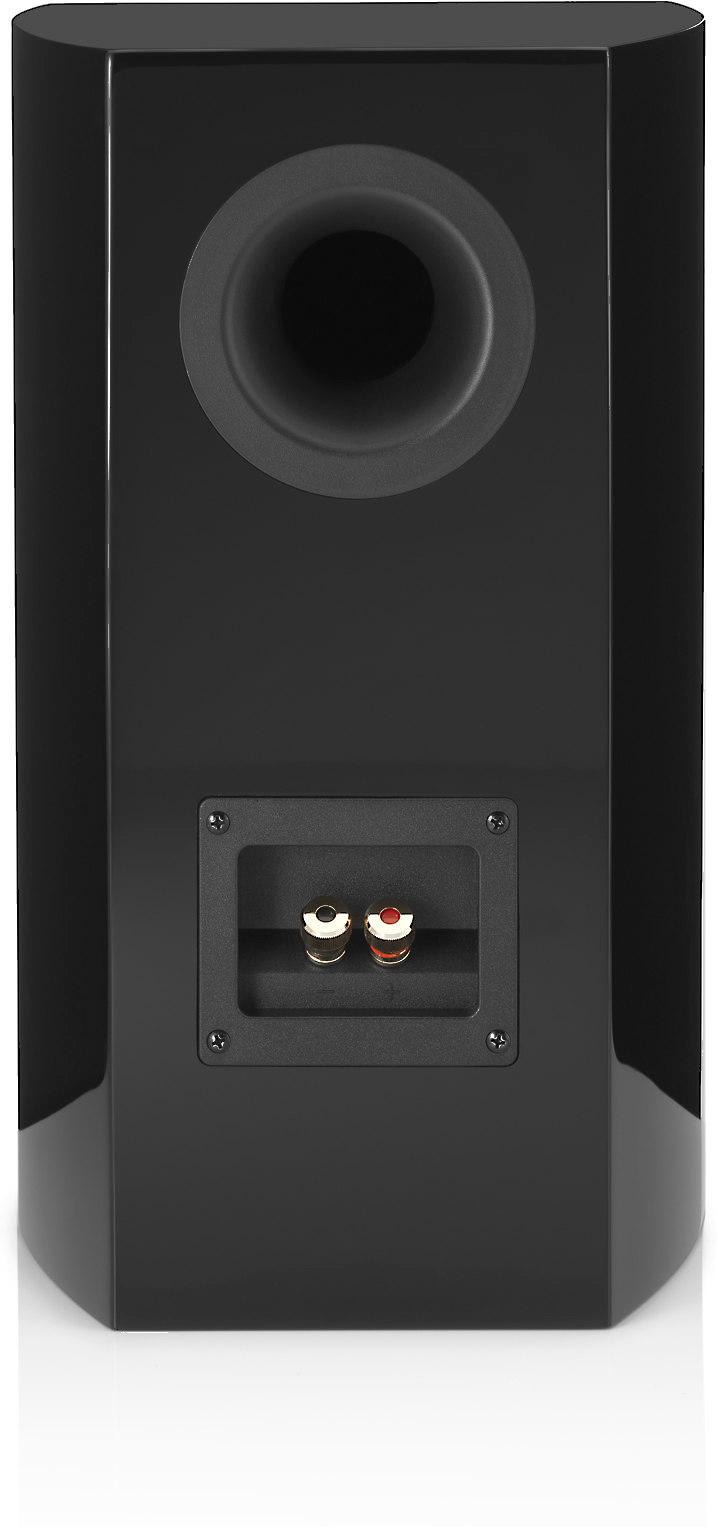
Both speakers handle bass differently, which creates distinct listening experiences. The 606 S3's rear-ported design (which means there's a tube-shaped opening in the back that helps enhance bass) produces more impactful low frequencies, reaching down to 52Hz with authority. This makes kick drums and bass guitars feel more physical and present.
The Revel M16 takes a more measured approach, with bass that extends to 55Hz but focuses on accuracy over impact. Its Constant Pressure Gradient port reduces the "chuffing" sound some ported speakers make during heavy bass passages.
Here's where these speakers show their different philosophies most clearly. The 606 S3's Continuum cone (a special woven material that moves more uniformly than traditional drivers) creates an engaging, slightly forward presentation. Voices and instruments in the middle frequencies feel more immediate and detailed.
The M16 aims for neutrality, with its aluminum cone providing excellent clarity without pushing any particular frequency range forward. This approach often works better for longer listening sessions and diverse music collections.
Both speakers excel here but in different ways. The 606 S3's new Titanium dome tweeter retrieves exceptional detail - you'll hear the subtle breath before a vocalist starts singing or the decay of cymbal hits with striking clarity. However, this revealing nature can also highlight flaws in recordings.
The M16's aluminum dome tweeter with acoustic lens technology (which helps control how the high frequencies spread into the room) provides a more forgiving presentation while maintaining excellent detail. It's particularly good at maintaining this performance even when you're not sitting directly in front of the speakers.
In actual listening, both speakers prove their worth but suit different preferences. The 606 S3 excels with well-recorded acoustic music, jazz, and classical, where its ability to reveal detail and create a precise soundstage (the illusion of instruments occupying specific positions in space) really shines.
The M16 proves more versatile, handling everything from compressed streaming audio to high-resolution files with equal composure. Its more neutral approach means it's less likely to expose the shortcomings of lesser recordings or equipment.
While primarily designed for music, both speakers work well in home theater systems. The 606 S3's dynamic capabilities make it particularly good for movie effects and dialog, though you'll want to pair it with a subwoofer for full-range performance.
The M16's wider dispersion pattern can create a more seamless surround sound field, and its neutral character matches well with different center channel speakers - an important consideration for home theater use.
Price becomes a significant factor when comparing these speakers. The Revel M16 often sells well below its MSRP of $900, sometimes approaching $600 per pair. This makes it an exceptional value, delivering performance that competes with speakers costing significantly more.
The B&W 606 S3, at $1,100, represents a premium price point. While it justifies the cost with superior build quality and slightly better absolute performance, the value equation favors the M16 for most users.
Both speakers benefit from careful placement and quality amplification, but they have different requirements:
Choose the B&W 606 S3 if:
Choose the Revel M16 if:
Both speakers represent excellent choices in their category, but they serve different needs. The Revel M16 offers exceptional value and more forgiving performance, making it the better choice for most users. The B&W 606 S3 pushes the performance envelope further but at a premium price, best suited to dedicated audiophiles with matching equipment.
For most people building a high-quality music or home theater system, the Revel M16's combination of performance, value, and versatility makes it the smarter choice. However, if you're building a premium system and want to extract every last detail from your music, the 606 S3's superior resolution might justify its higher price.
| Bowers & Wilkins 606 S3 | Revel Concerta2 M16 |
|---|---|
| Price - Critical consideration for value | |
| $1,100/pair | $900/pair (often available for ~$600) |
| Sensitivity - Determines how efficiently speakers convert power to volume | |
| 88dB - Easier to drive, works well with lower power amps | 86dB - May need slightly more power for same volume |
| Frequency Response - Indicates bass extension and overall range | |
| 52Hz-28kHz (±3dB) - Slightly deeper bass | 55Hz-20kHz (±3dB) - More typical range |
| Power Handling - Shows amplifier compatibility range | |
| 30-120W - More flexible with lower power amps | 50-120W - Needs at least 50W for optimal performance |
| Impedance - Affects amplifier compatibility | |
| 8 ohms - Easier load for amplifiers | 6 ohms - Slightly more demanding |
| Driver Configuration - Affects sound character | |
| 1" Titanium dome tweeter, 6.5" Continuum cone - Latest tech | 1" Aluminum dome tweeter, 6.5" Aluminum cone - Proven design |
| Cabinet Design - Impacts bass performance and placement flexibility | |
| Rear-ported - Needs space from walls | Rear-ported with Constant Pressure Gradient - More placement flexible |
| Dimensions - Important for shelf/stand placement | |
| 7.5" x 13.7" x 13" - Compact design | 14.8" x 8.6" x 10.8" - Slightly larger |
| Weight - Affects mounting/placement options | |
| 15.5 lbs each - Substantial build | 16 lbs each - Similar robust construction |
| Warranty - Indicates manufacturer confidence | |
| 5 years - Industry standard | 5 years - Industry standard |
The B&W 606 S3 offers more detail and dynamic punch, making it slightly better for critical music listening. However, the Revel M16 provides a more neutral, natural sound that many listeners prefer for long-term enjoyment.
The Revel Concerta2 M16 at $900 (often available for less) offers better value than the B&W 606 S3 at $1,100, delivering comparable performance at a lower price point.
Both speakers excel in home theater applications. The B&W 606 S3 provides more dynamic impact for movies, while the Revel M16 offers better off-axis performance for wider seating arrangements.
The B&W 606 S3 is slightly easier to drive with its 88dB sensitivity and 8-ohm impedance, compared to the Revel M16's 86dB sensitivity and 6-ohm impedance.
The B&W 606 S3 extends slightly lower to 52Hz with more impact, while the Revel M16 reaches 55Hz with a more controlled, linear response.
For music, both speakers can perform well without a subwoofer in smaller rooms. For home theater, adding a subwoofer to either the B&W 606 S3 or Revel M16 is recommended.
The Revel M16 is more forgiving with lower-quality recordings, while the B&W 606 S3 is more revealing of recording flaws.
Both speakers work well in small rooms, but the Revel M16 offers more flexible placement options due to its Constant Pressure Gradient port design.
Yes, both work well with streaming. The Revel M16 is more forgiving of compressed audio, while the B&W 606 S3 performs best with high-quality streams.
Both the B&W 606 S3 and Revel M16 are built to last, with 5-year warranties and robust construction that should provide decades of service with proper care.
Both speakers perform best on proper speaker stands 24-28 inches high. Sturdy stands are essential for either the B&W 606 S3 or Revel M16 to achieve optimal sound.
The B&W 606 S3 provides more detailed, forward vocals, while the Revel M16 offers a more natural, balanced presentation of voices.
We've done our best to create useful and informative comparisons to help you decide what product to buy. Our research uses advanced automated methods to create this comparison and perfection is not possible - please contact us for corrections or questions. These are the sites we've researched in the creation of this article: futureaudiophile.com - headphones.com - therobinsonbrand.com - higherhz.com - audioadvisor.com - crutchfield.com - bowerswilkins.com - crutchfield.com - vinylrevival.com.au - audioadvisor.com - worldwidestereo.com - audioholics.com - upscaleaudio.com - crutchfield.com - audiosciencereview.com - musicdirect.com - audiolab.com - crutchfield.com - crutchfield.com - avstore.in - speakerdata2034.blogspot.com - spacehifi.com.au

Privacy Policy
Terms and Conditions - Affiliate Policy
Home Security
© Copyright 2008-2026.
11816 Inwood Rd #1211, Dallas, TX 75244