





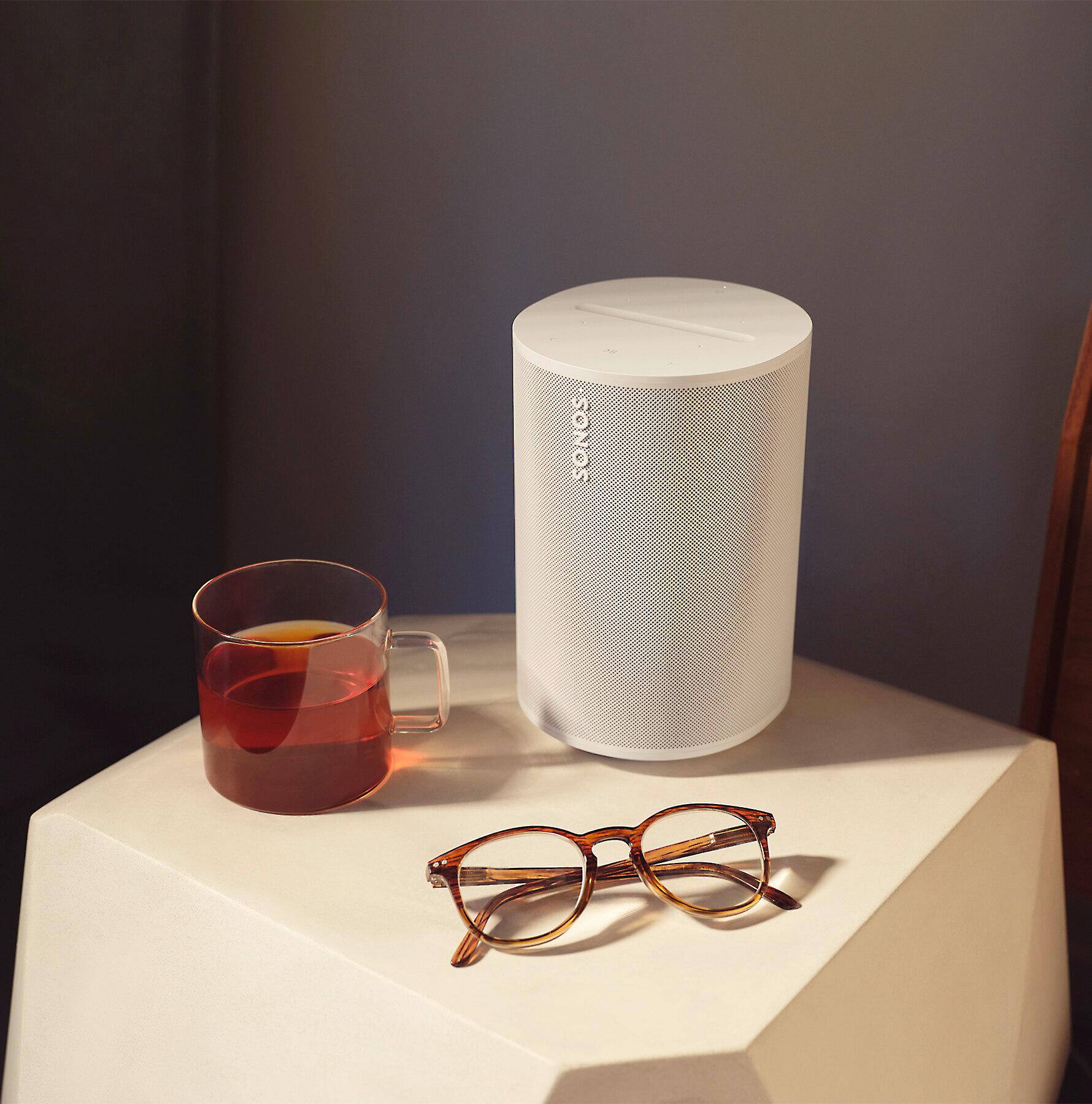
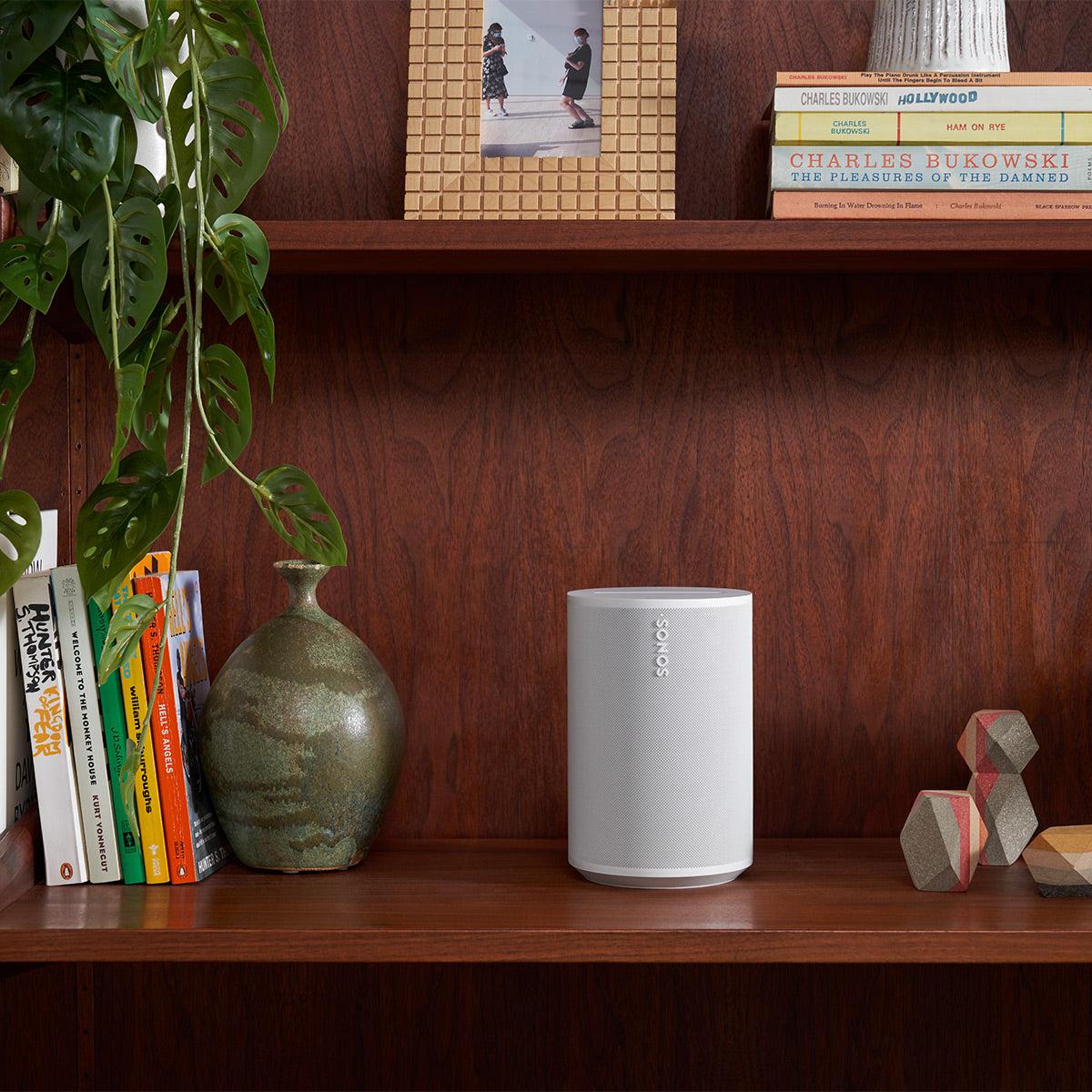

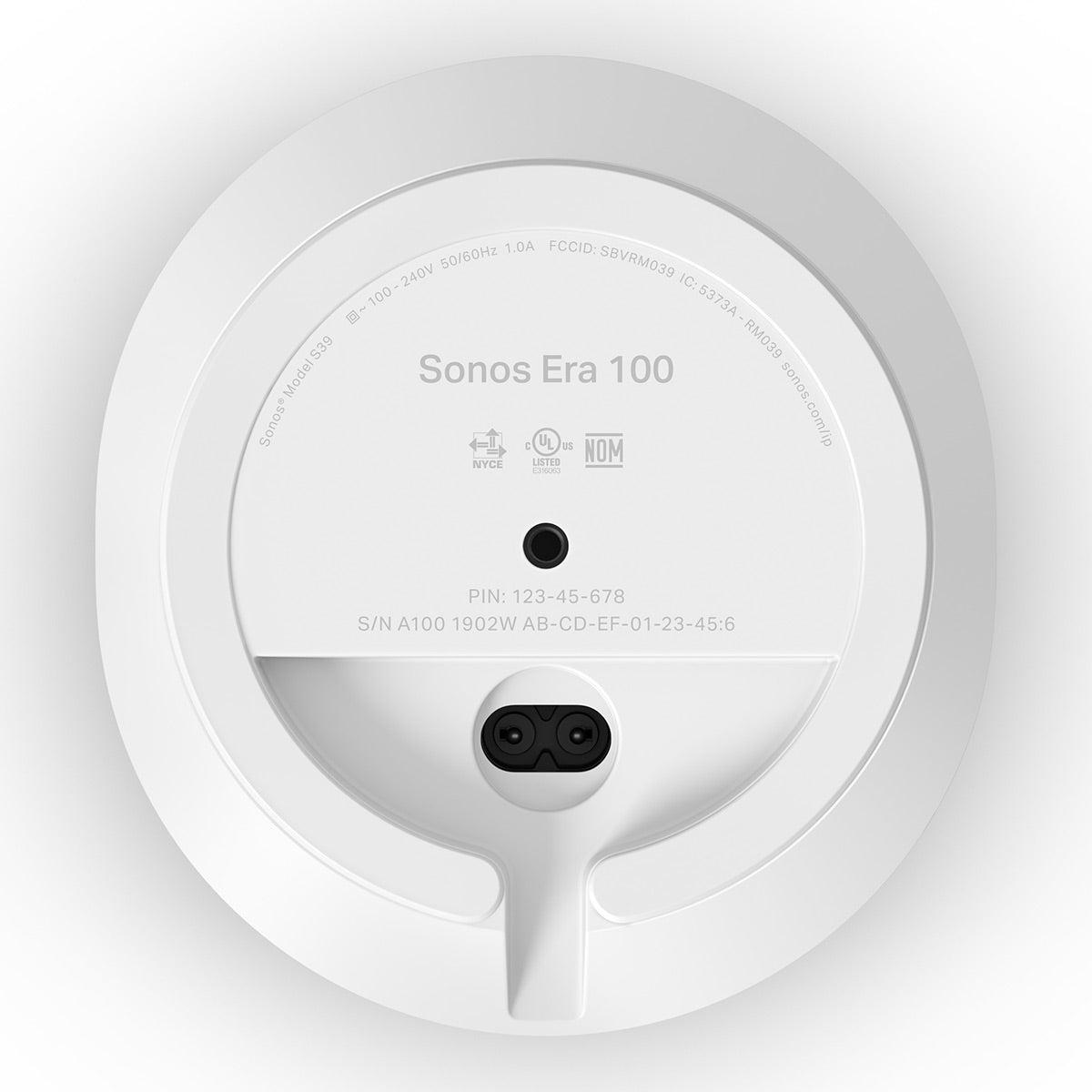
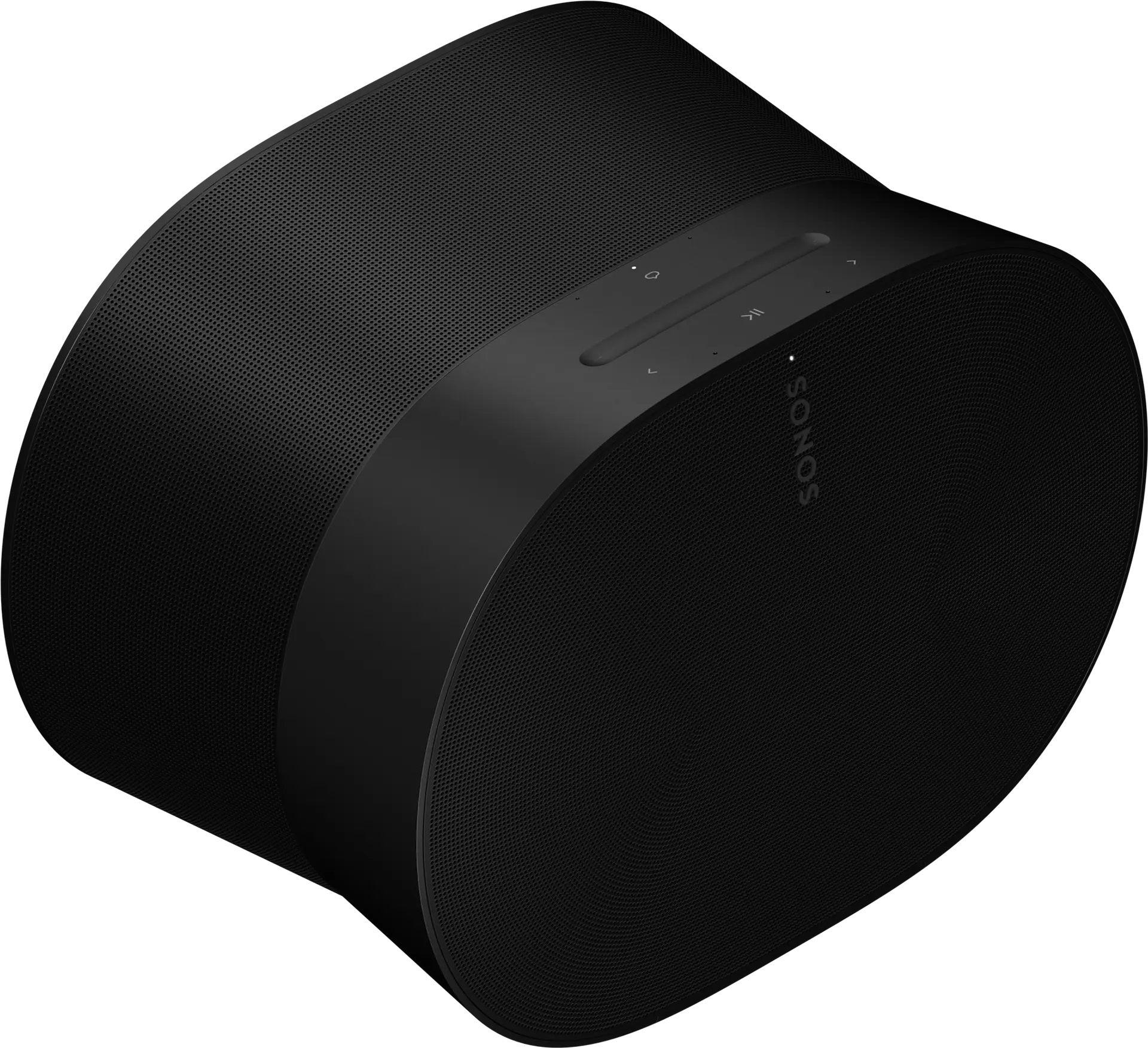


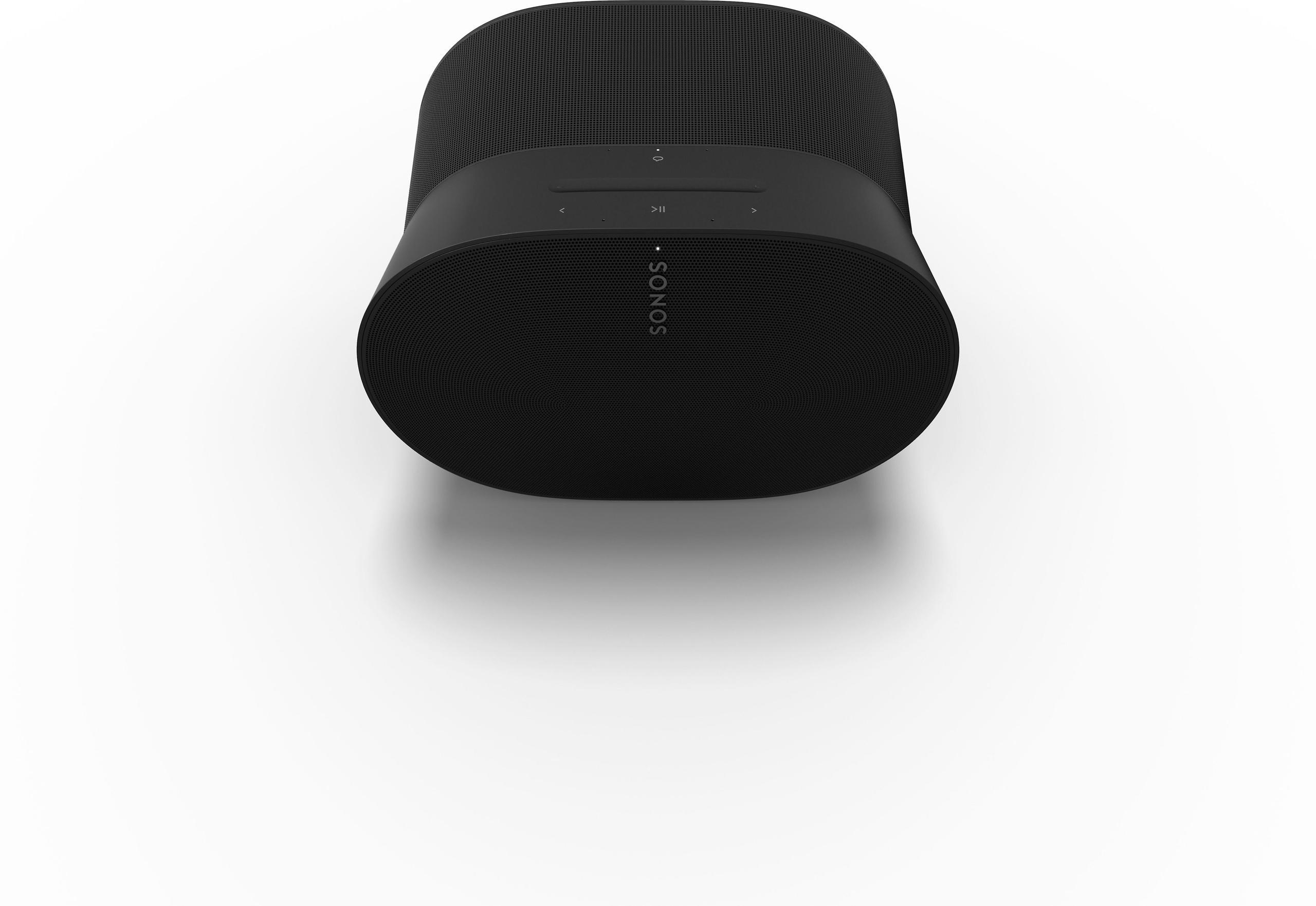
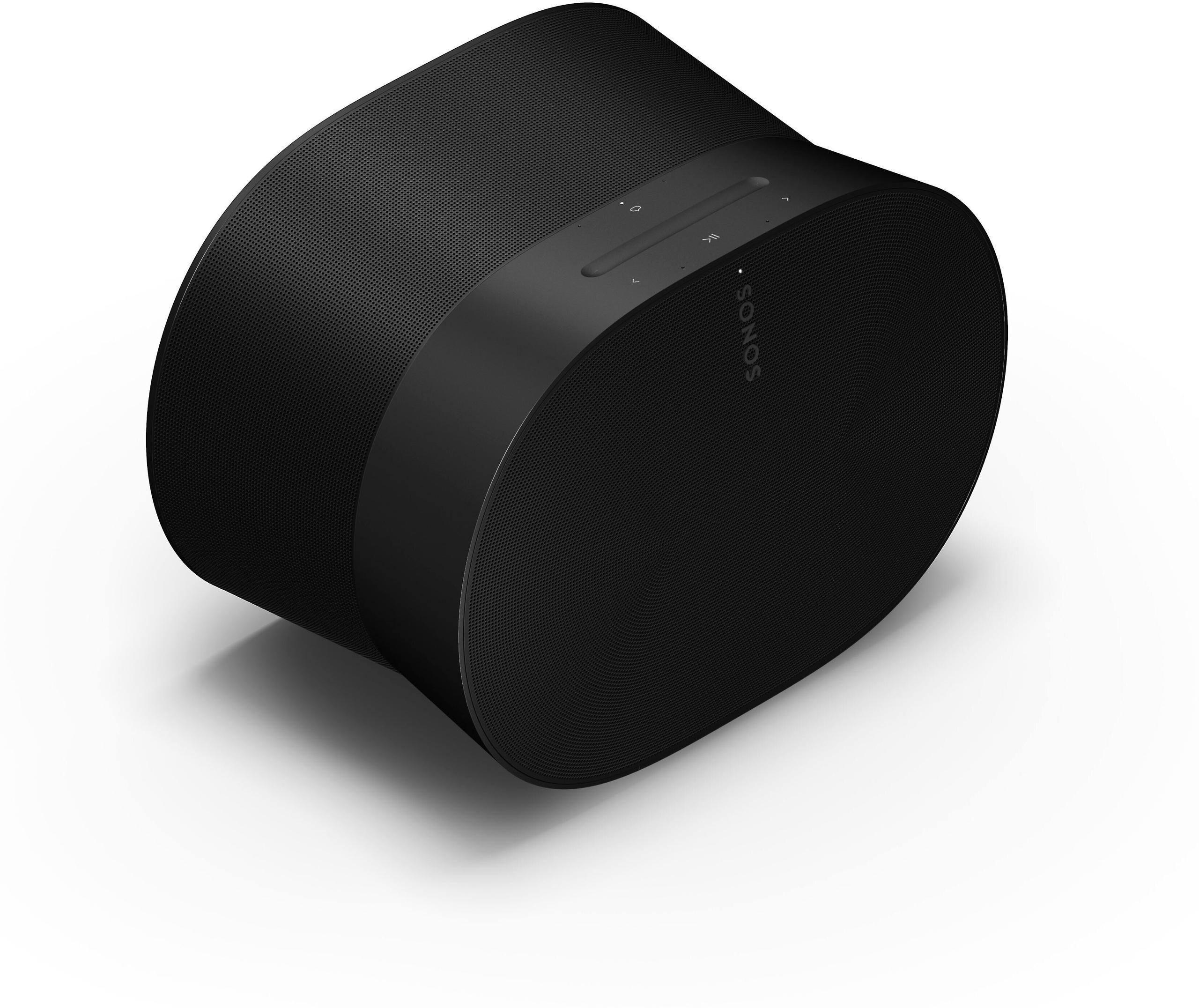
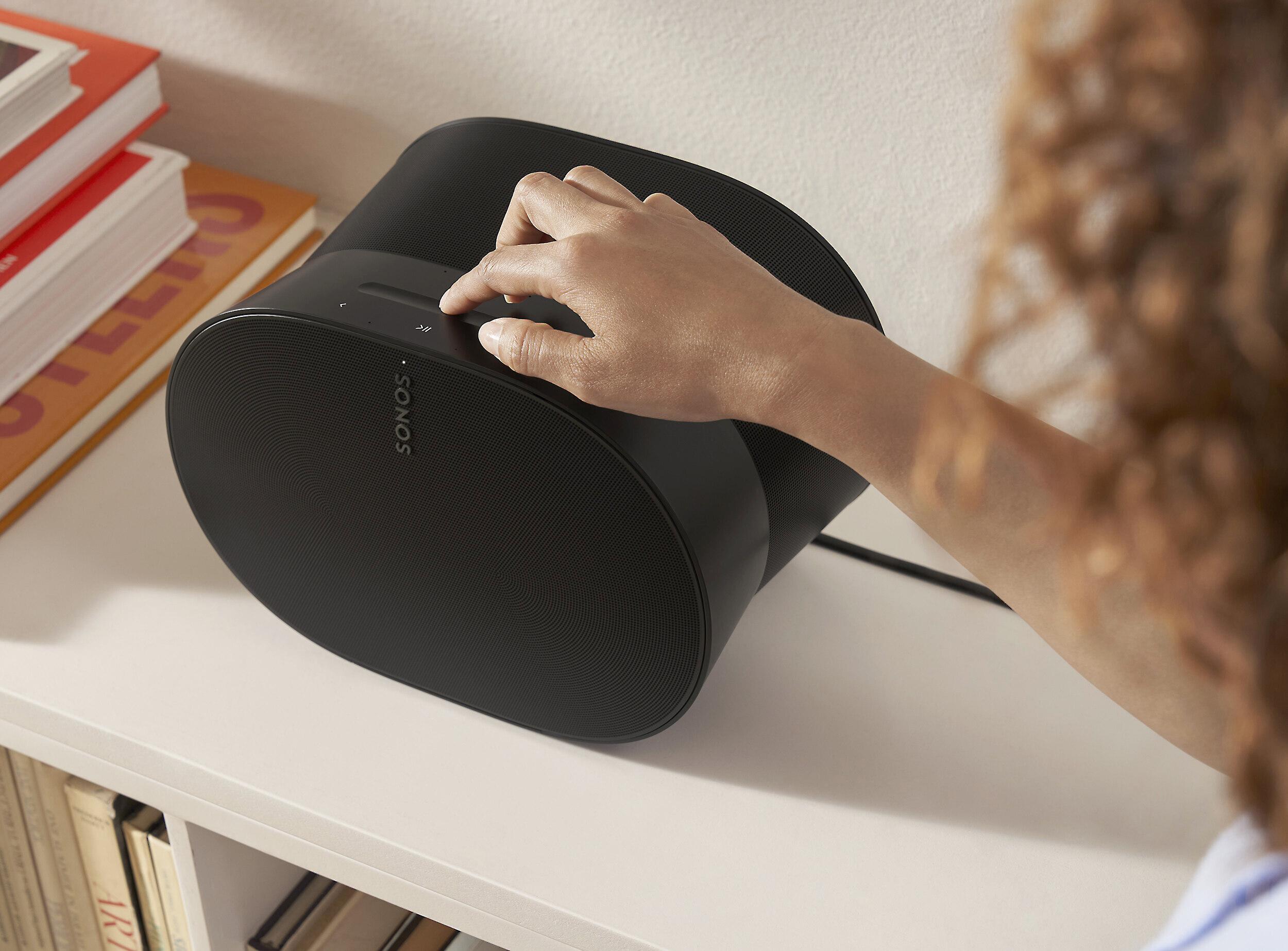
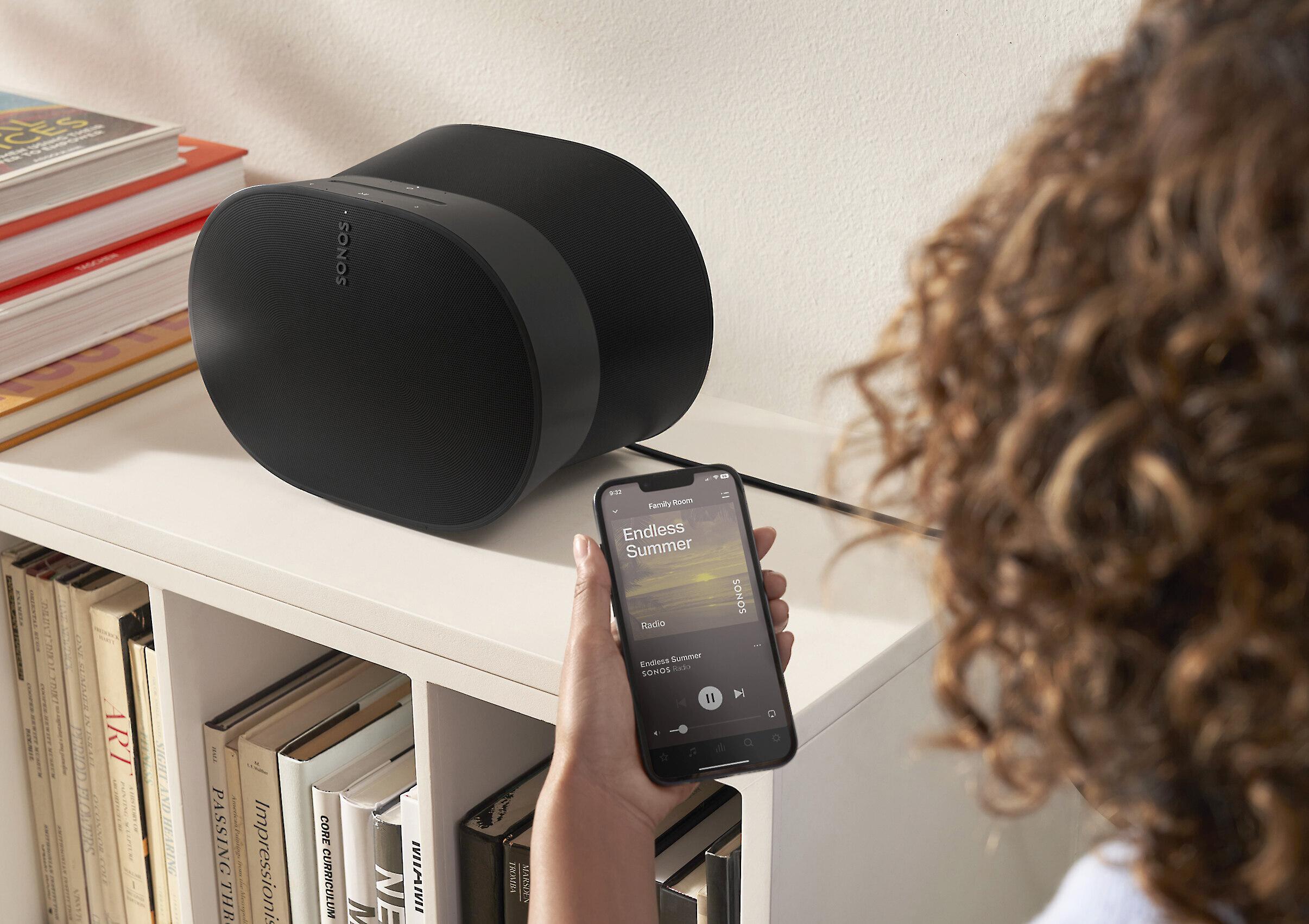
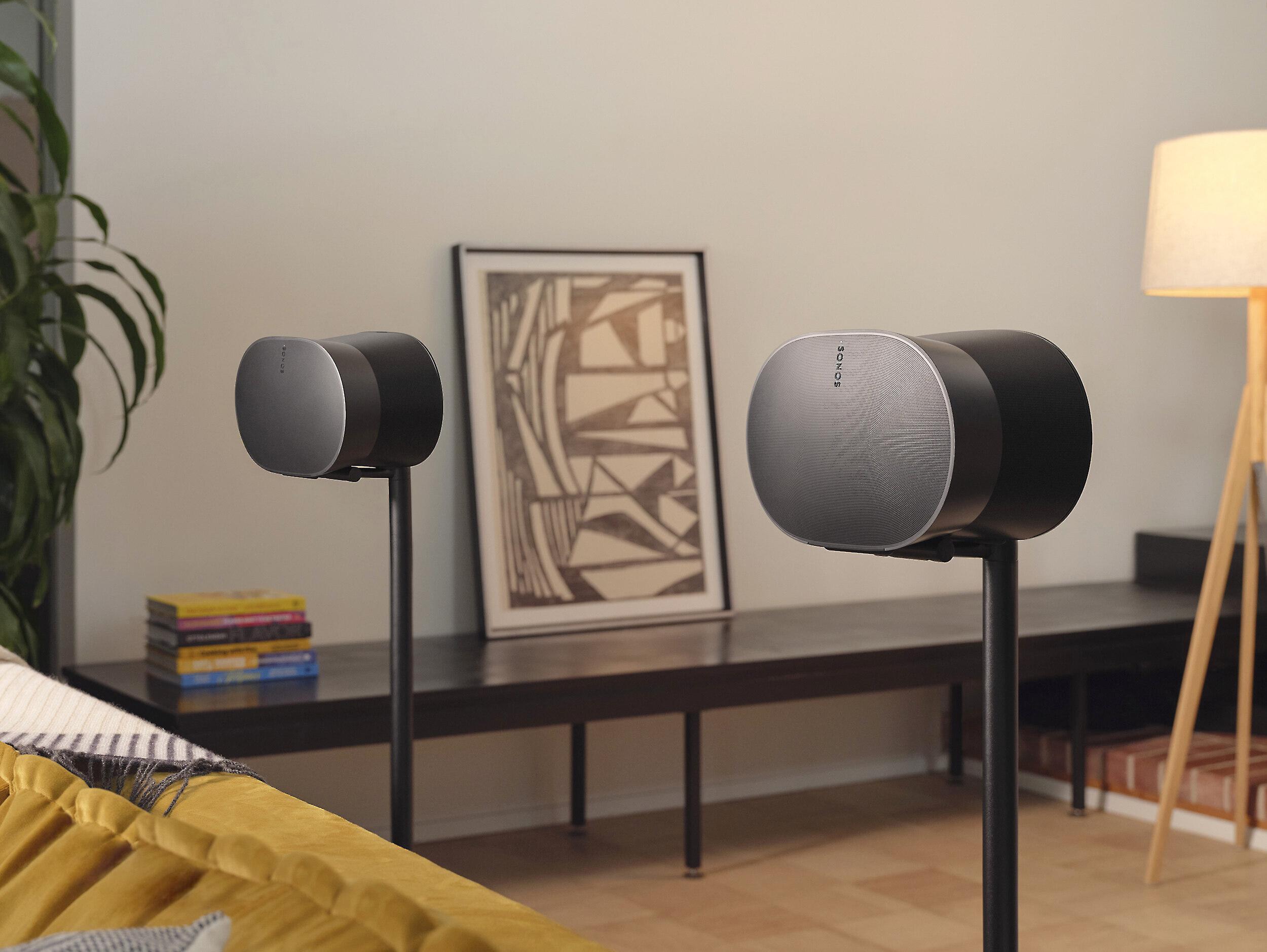

When Sonos released the Era 100 and Era 300 in March 2023, they marked a significant evolution in wireless speaker technology. As someone who's tested dozens of speakers, I was particularly intrigued by how these two models approach different user needs while sharing core Sonos DNA. Let's dive into what makes each speaker special and help you decide which one best fits your needs.
Modern wireless speakers have evolved far beyond simple Bluetooth devices. They're now sophisticated audio systems that combine streaming capabilities, smart features, and high-end sound processing. The Era series represents Sonos's latest thinking on what modern speakers should offer, with both models featuring WiFi 6, Bluetooth 5.0, and USB-C connectivity - a significant upgrade from previous Sonos speakers.
The key difference between these speakers lies in their intended use cases. The $249 Era 100 aims to be your everyday music speaker, while the $449 Era 300 targets audiophiles and home theater enthusiasts who want spatial audio capabilities.
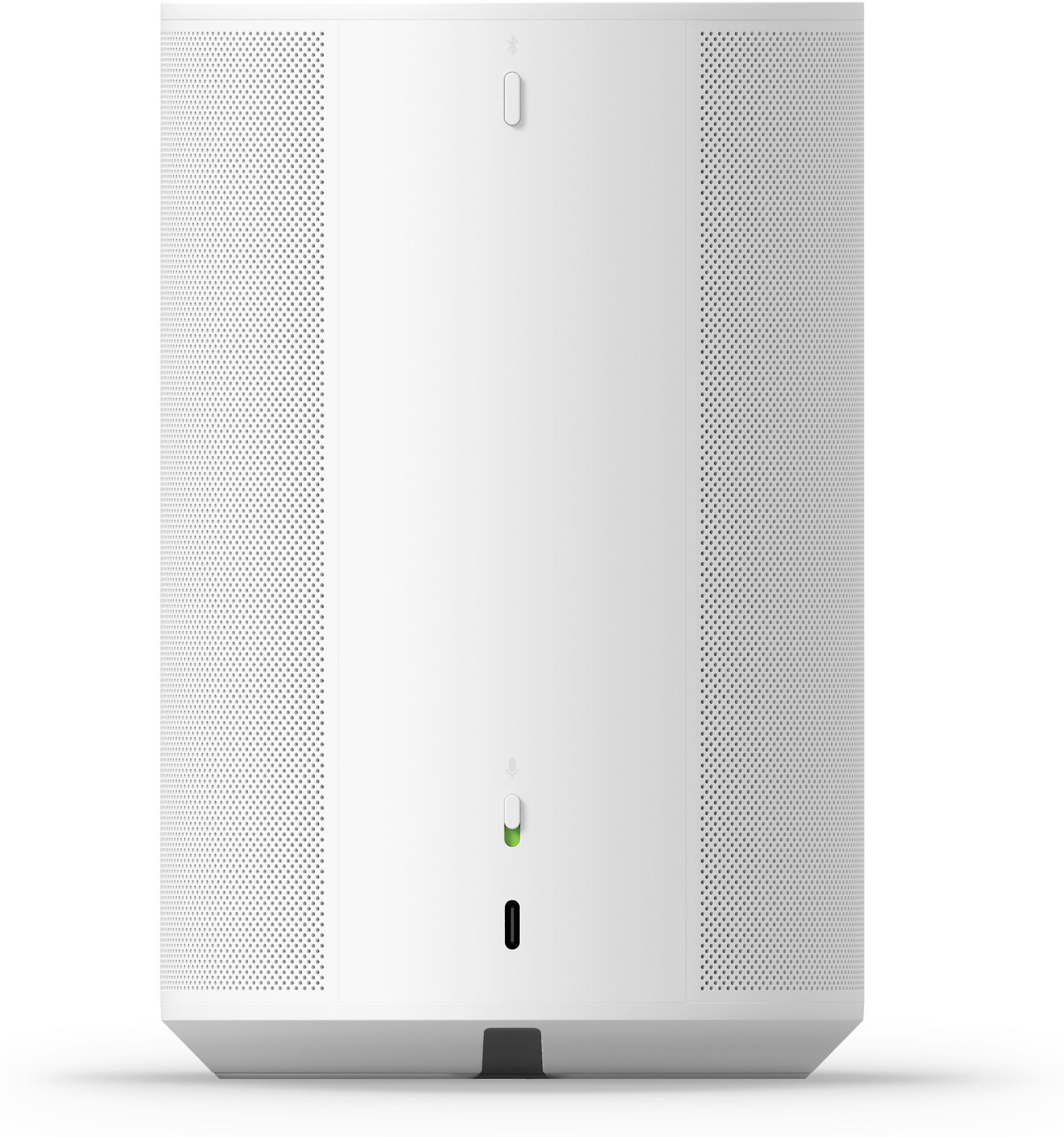
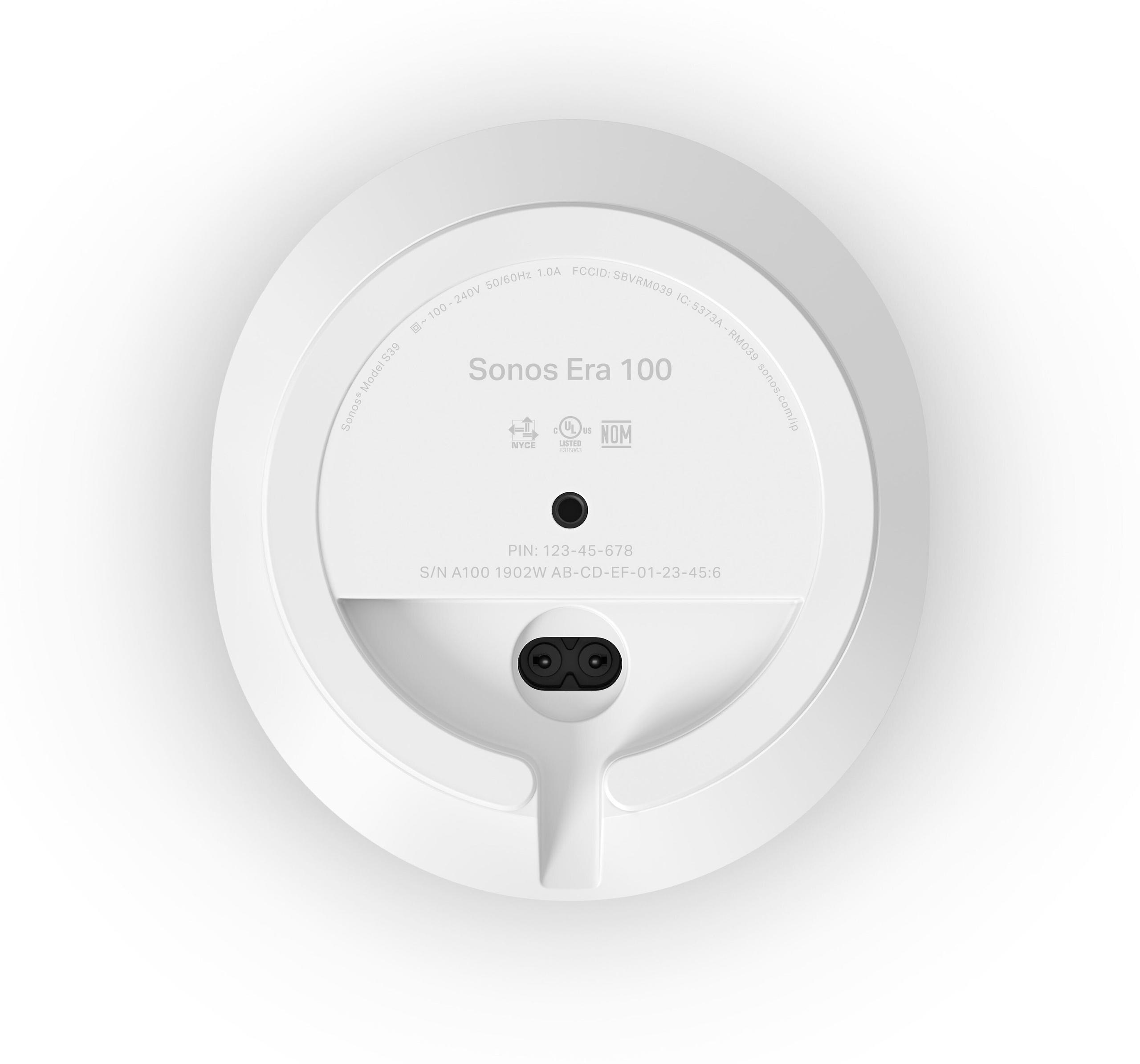
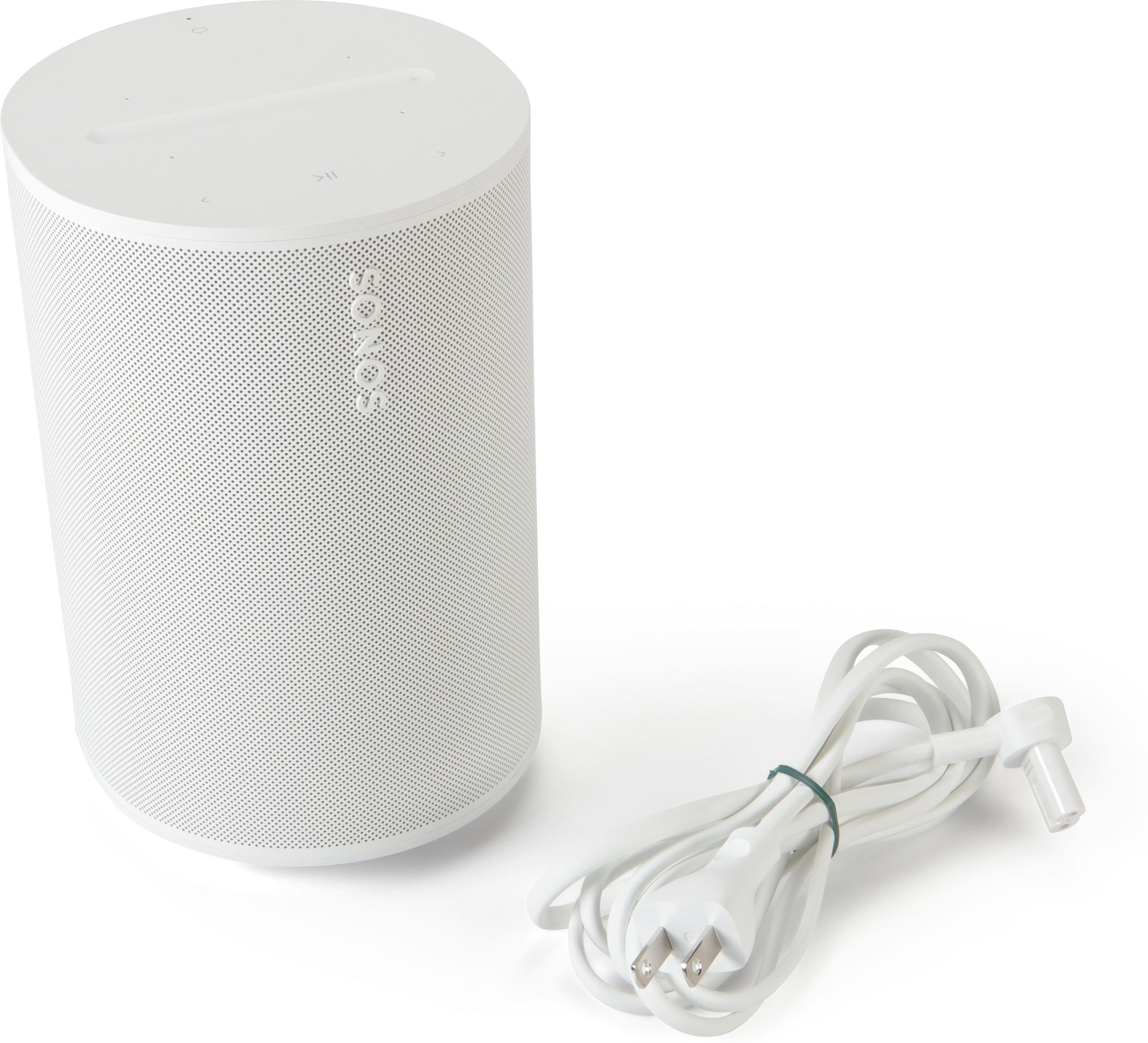
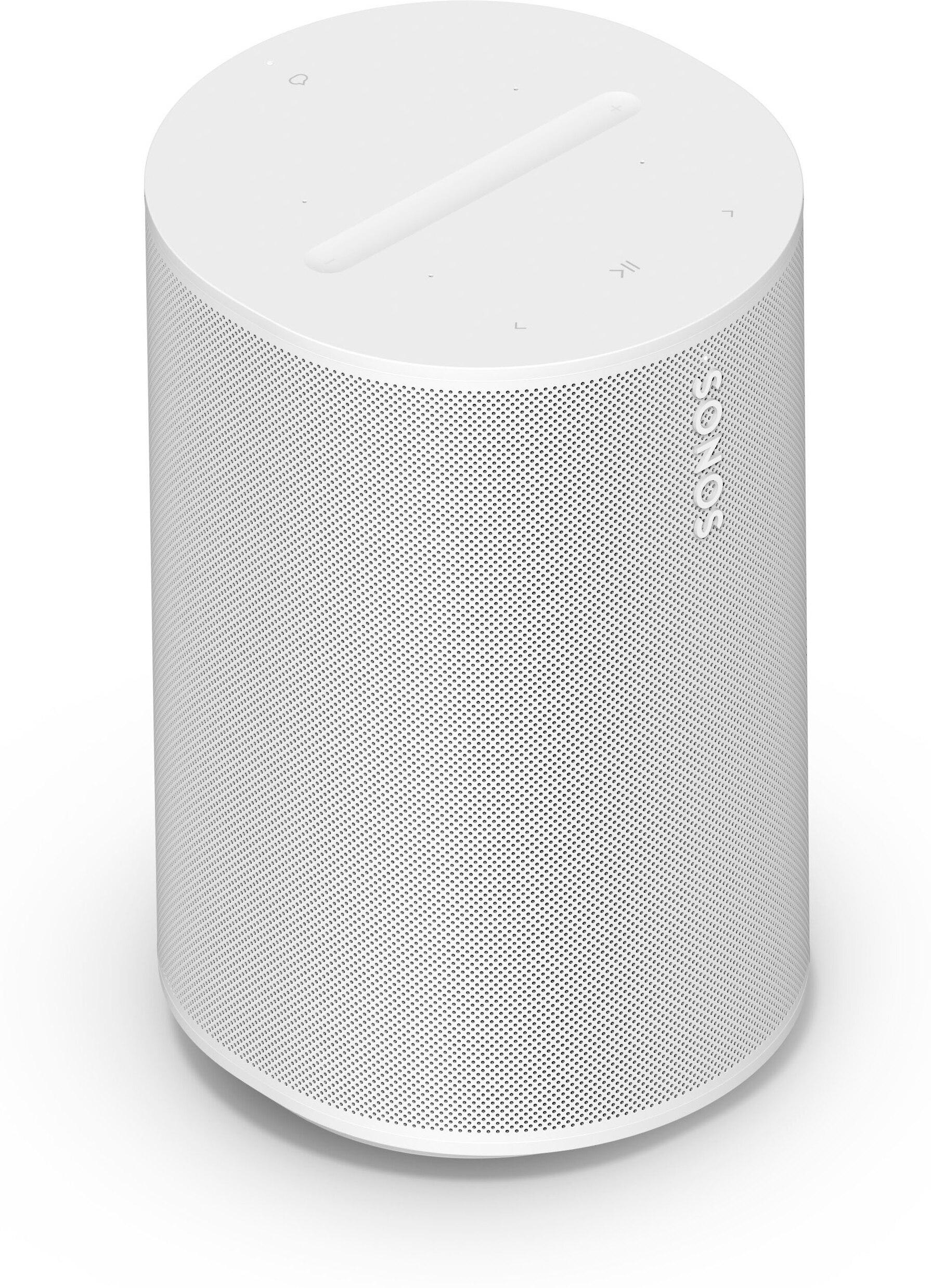
The Era 100 uses a clever three-driver system: two angled tweeters (the speakers that handle high frequencies) and one midwoofer (handling mid-range and bass). This configuration creates true stereo sound from a single speaker - something its predecessor, the Sonos One, couldn't do. In testing, the stereo separation is surprisingly effective, though naturally not as dramatic as having two separate speakers.
The bass response is notably improved over the Sonos One, thanks to a larger midwoofer. While testing jazz and classical music, I found the Era 100 delivers clean, detailed sound with good instrument separation. However, when playing bass-heavy electronic music, you can tell it's working within the limitations of its size.
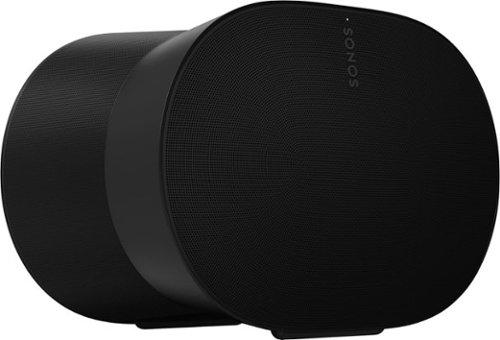
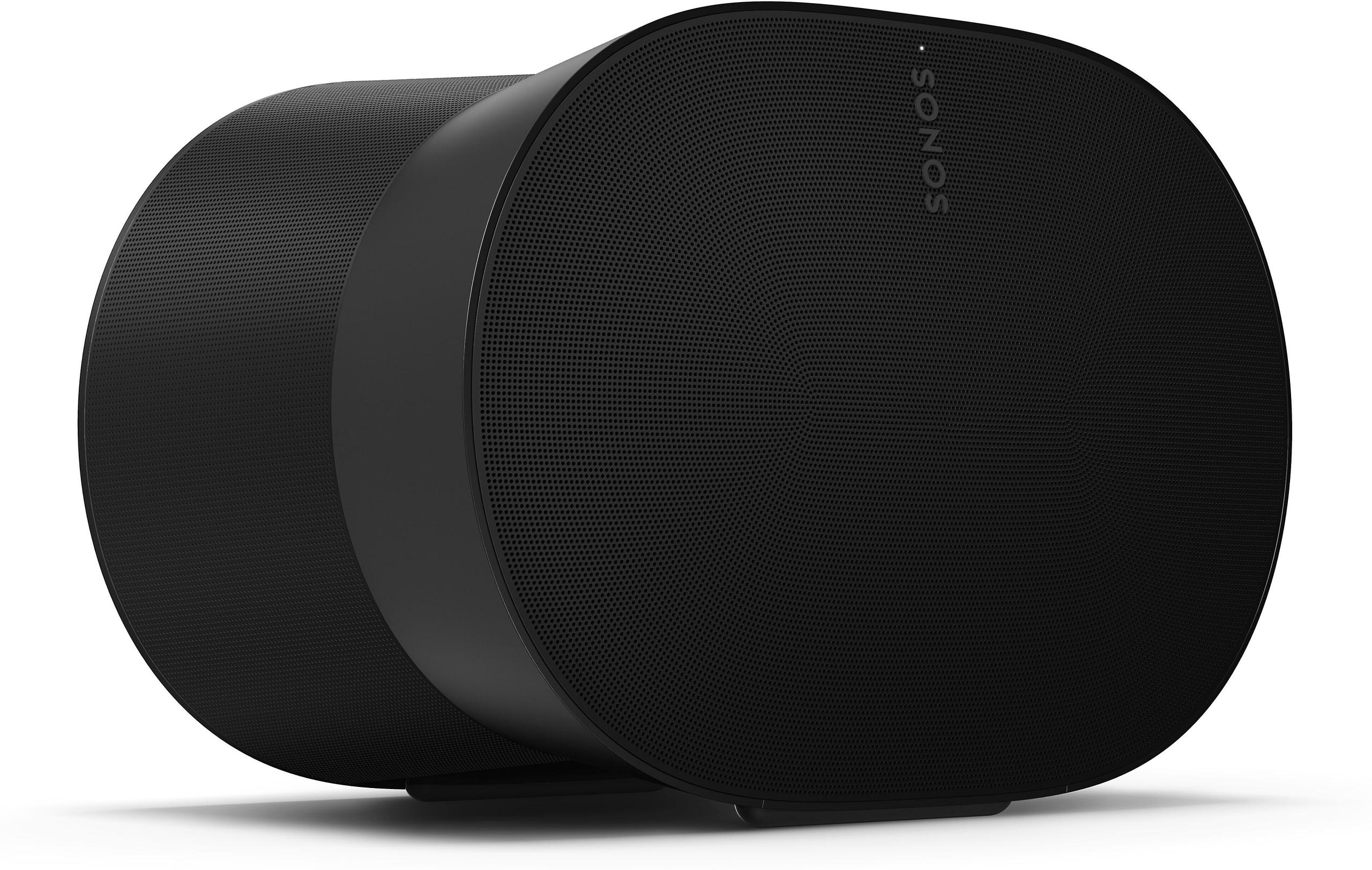
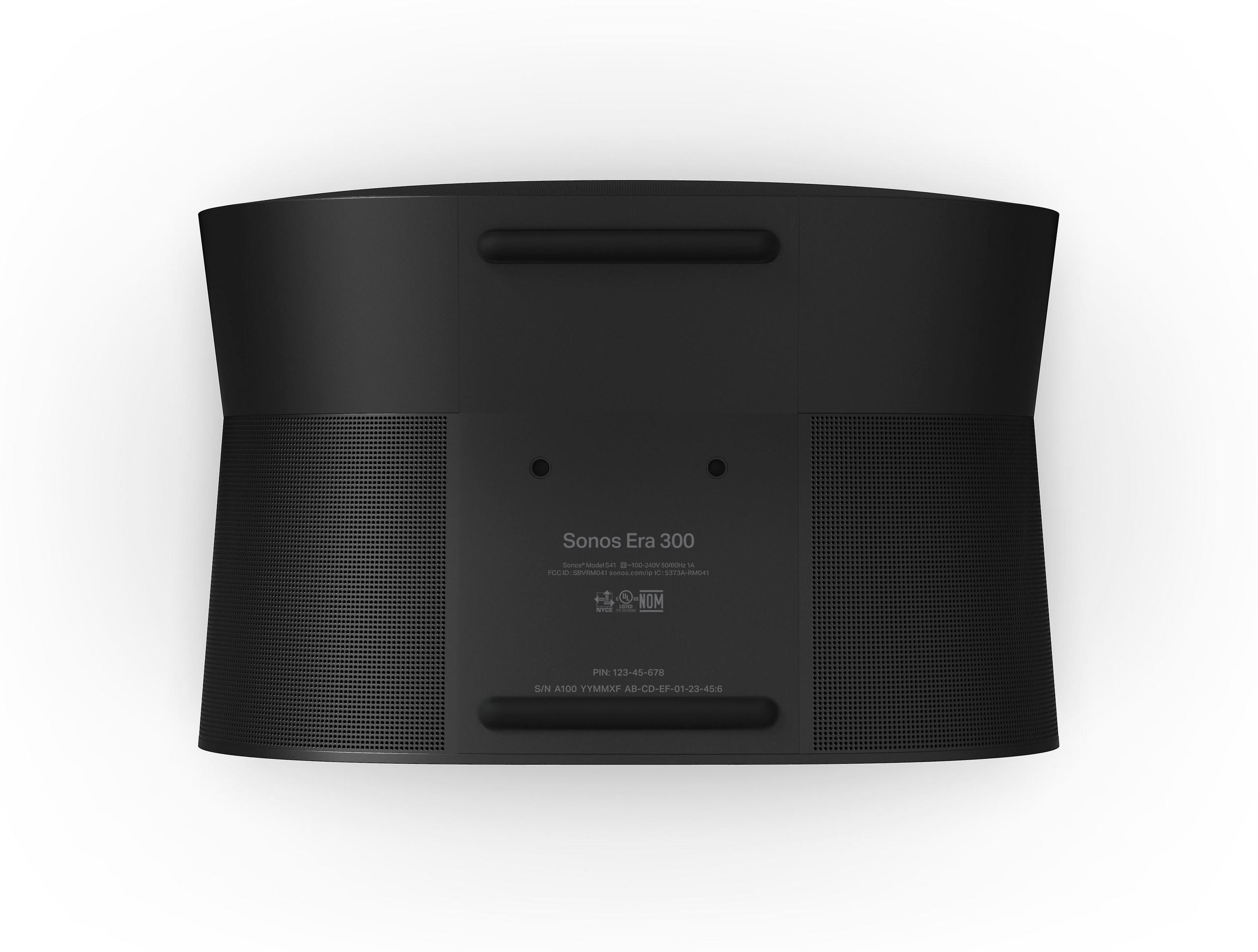
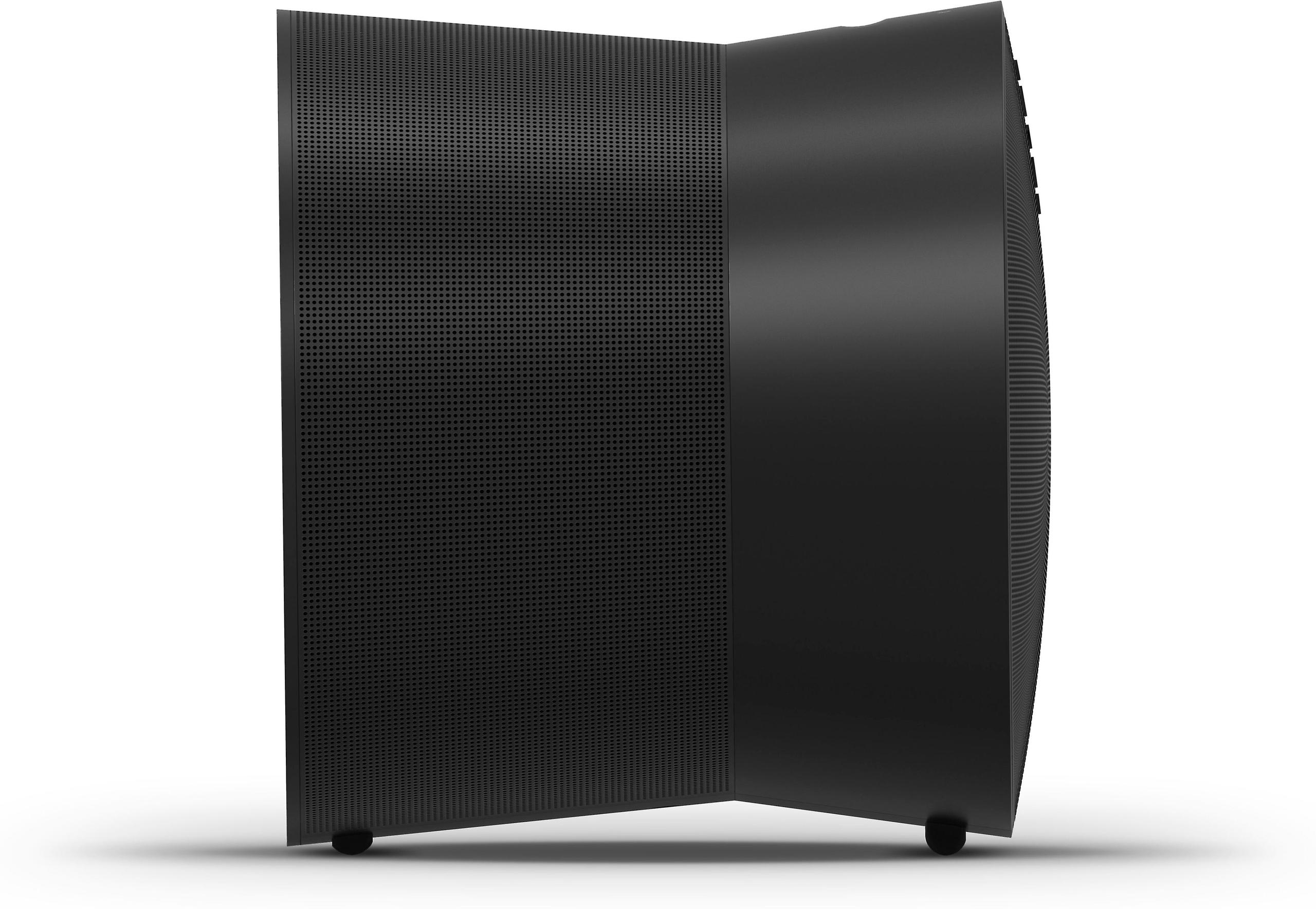
The Era 300 is in a different league altogether. Its six-driver system includes four tweeters and two woofers, positioned to create a three-dimensional soundstage. The speaker's unique hourglass design isn't just for looks - it's engineered to direct sound in multiple directions, including upward for Dolby Atmos effects.
Dolby Atmos, if you're not familiar, is a technology that creates immersive 3D sound by precisely placing audio elements in space, including above you. While testing the Era 300 with Atmos-enabled music on Amazon Music and Apple Music, the difference is immediately noticeable. Vocals seem to float in front of you, while instruments spread out in a wider, taller soundstage.
The size of your room and where you'll place the speaker should heavily influence your choice. The Era 100 works brilliantly in smaller spaces like bedrooms or offices. Its more focused sound dispersion means it can be placed on a bookshelf or desk without much concern for acoustic reflections.
The Era 300 needs more room to breathe. Its multi-directional sound design means it benefits from having some space around it, ideally at least a foot from walls. In larger rooms, however, the Era 300's additional power and wider sound dispersion create a more enveloping listening experience.
Both speakers can serve as rear surrounds in a Sonos home theater setup, but there's a crucial difference. The Era 100s work as traditional surround speakers, handling standard rear channel duties effectively. They're a solid choice if you're building a basic surround sound system.
The Era 300s, however, add Dolby Atmos capability when used as surrounds. When paired with a Sonos Arc or Beam (Gen 2) soundbar, they can reproduce height channels, creating a more immersive dome of sound. During testing with movies like "Dune" and "Top Gun: Maverick," the difference was substantial - overhead effects like helicopters and rainfall were notably more precise and realistic with the Era 300s.
Both speakers introduce several technical improvements over previous Sonos models:
The Era 300 adds more processing power (quad-core 1.9 GHz vs 1.4 GHz) and memory (2GB vs 1GB) compared to the Era 100, necessary for handling complex Atmos decoding.
The Era 100 offers significant value at $249, especially considering its improved features over the Sonos One. It's a versatile speaker that handles most music listening scenarios well, and its compact size makes it ideal for multi-room setups.
The Era 300 at $449 requires a bigger investment, but its premium features justify the cost for the right user. If you're into spatial audio, building a high-end home theater, or want the absolute best sound quality from a single speaker, it's worth the extra expense.
Choose the Era 100 if:
Choose the Era 300 if:
Both speakers represent significant advances in wireless audio technology, but they serve different purposes. The Era 100 is a fantastic everyday speaker that will satisfy most users, while the Era 300 pushes the boundaries of what's possible in a single-speaker system. Your choice should ultimately depend on your listening habits, space considerations, and how the speaker will fit into your broader audio setup.
| Sonos Era 100 | Sonos Era 300 |
|---|---|
| Price - Base investment required | |
| $249 - More affordable entry point | $449 - Premium pricing for advanced features |
| Speaker Configuration - Determines sound quality and capabilities | |
| 3 drivers: 2 tweeters + 1 midwoofer | 6 drivers: 4 tweeters + 2 woofers |
| Sound Stage - How audio spreads through the room | |
| Basic stereo separation from single unit | Full spatial audio with Dolby Atmos support |
| Room Size Suitability - Where it performs best | |
| Small to medium rooms (bedrooms, offices) | Medium to large rooms (living rooms, open spaces) |
| Dimensions - Consider your available space | |
| 7.2" H × 4.7" W × 5.1" D (compact) | 6.3" H × 10.2" W × 7.3" D (larger footprint) |
| Weight - Affects placement options | |
| 4.4 lbs - Easy to move and position | 9.85 lbs - More substantial presence |
| Processing Power - Impacts audio processing capabilities | |
| 1.4 GHz Quad Core processor, 1GB RAM | 1.9 GHz Quad Core processor, 2GB RAM |
| Home Theater Use - Surround sound potential | |
| Basic rear surround capabilities | Dolby Atmos-enabled rear surrounds |
| Power Output - Affects maximum volume and clarity | |
| 3 Class-D amplifiers | 6 Class-D amplifiers |
| Bass Response - Important for music enjoyment | |
| Good for size, but limited by single woofer | Deeper, fuller bass from dual woofers |
| Connectivity Options - How you can play audio | |
| WiFi 6, Bluetooth 5.0, USB-C (adapter needed) | WiFi 6, Bluetooth 5.0, USB-C (adapter needed) |
| Voice Control - Hands-free operation | |
| Alexa and Sonos Voice Control | Alexa and Sonos Voice Control |
| Multi-Room Capability - Whole-home audio potential | |
| Excellent for distributed audio setup | Better as main room/theater speaker |
| Power Consumption - Energy efficiency | |
| Under 2W idle | Under 2W idle, higher during Atmos playback |
The Sonos Era 300 offers superior sound quality and Dolby Atmos support, while the Era 100 is more compact and affordable. The Era 300 is better if you want premium audio features, while the Era 100 is better for basic music listening and smaller spaces.
The Sonos Era 100 costs $249, while the Era 300 costs $449, a $200 difference.
We've done our best to create useful and informative comparisons to help you decide what product to buy. Our research uses advanced automated methods to create this comparison and perfection is not possible - please contact us for corrections or questions. These are the sites we've researched in the creation of this article: goodhousekeeping.com - tomsguide.com - techradar.com - youtube.com - whathifi.com - dxomark.com - rtings.com - abt.com - sonos.com - bhphotovideo.com - sonos.com - sonos.com - audiolab.com - en.community.sonos.com - rtings.com - notebookcheck.net - audiosciencereview.com - whathifi.com - digitaltrends.com - sonos.com - sonos.com - youtube.com - soundguys.com - schaeferstv.com - en.community.sonos.com - bestbuy.com - youtube.com - sonos.com

Privacy Policy
Terms and Conditions - Affiliate Policy
Home Security
© Copyright 2008-2026.
11816 Inwood Rd #1211, Dallas, TX 75244