Original price was: $2,099.00.$1,899.00Current price is: $1,899.00.
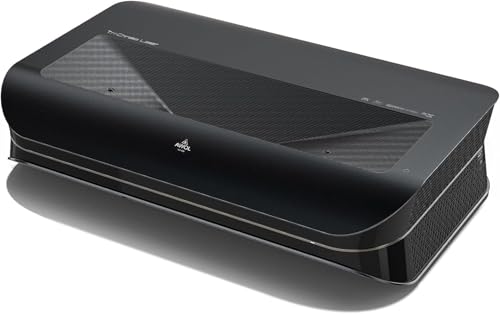
Ultra short throw projectors have become the go-to solution for anyone wanting a massive screen without the hassle of ceiling mounts or dealing with people walking through the light beam. The AWOL Vision LTV-3000 Pro sits in the premium tier of this market, promising 4K visuals with some genuinely unique features that set it apart from the pack.
Before diving into this specific model, it's worth understanding why UST projectors matter. Unlike traditional projectors that need 8-12 feet of space to create a large image, these units sit just inches from your wall or screen. The AWOL Vision LTV-3000 Pro can throw a 100-inch image from less than two feet away—that's transformative if you're working with limited space.
The magic happens through specialized optics that bend and focus light at extreme angles. Think of it like a periscope in reverse, taking the image and spreading it out dramatically over a very short distance. This design eliminates shadows when people walk by and makes the whole setup much more living-room friendly.
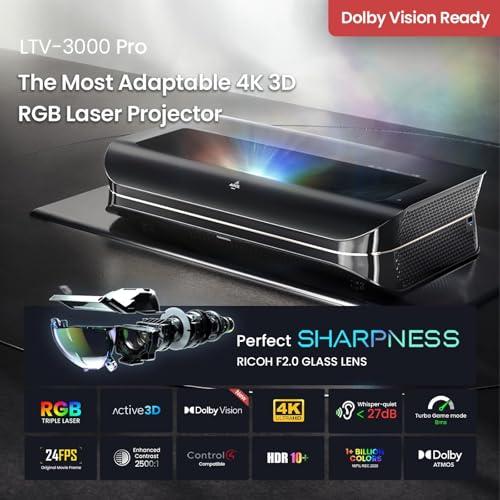
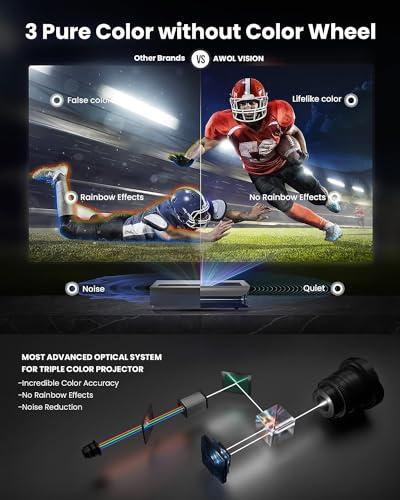
Here's where things get interesting technically. Most projectors use either lamps (which burn out) or single-color lasers with color wheels (spinning filters that create different colors). The AWOL Vision LTV-3000 Pro uses something called RGB laser technology—essentially three separate lasers for red, green, and blue light that work together without any spinning parts.
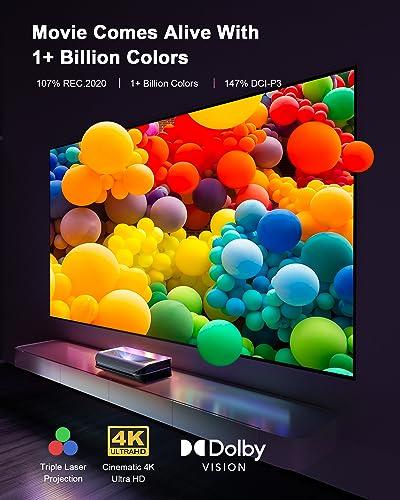
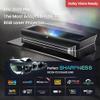
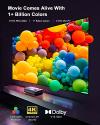
This approach delivers several real-world benefits that researchers consistently highlight. First, you get much more accurate colors because you're working with pure light sources rather than filtered white light. The projector covers 107% of the BT.2020 color space, which is technical speak for "it can show more colors than most displays." In practical terms, this means reds look redder, greens more vibrant, and the overall image appears more lifelike.
The laser system is also rated for 25,000 hours of use—roughly 10-15 years of normal viewing—without needing replacement. Compare that to traditional lamp projectors that might need new bulbs every 2-3 years, and the long-term value becomes clear.
One of the most impressive aspects of this unit is its brightness output. At 2,000 ISO lumens (the honest measurement standard), it significantly outperforms many competitors in the UST space. Our research found that many users can comfortably watch during the day with some ambient light, especially when paired with an ALR (ambient light rejecting) screen.
These special screens work by having tiny ridges that reflect light from the projector toward your eyes while absorbing light coming from above—like room lights or windows. The combination of the projector's high brightness and an ALR screen creates viewing experiences that approach what you'd get from a premium TV, even in moderately lit rooms.
Testers consistently report that the brightness advantage becomes most apparent when comparing side-by-side with dimmer UST models. While a 1,500-lumen projector might wash out in daylight, the AWOL Vision LTV-3000 Pro maintains good contrast and color saturation.
Perhaps the most unique aspect of this projector is its Dolby Vision support. This is genuinely rare in the ultra short throw category—most competitors stop at standard HDR10. Dolby Vision is essentially a smarter version of HDR (high dynamic range) that adjusts brightness and color on a scene-by-scene basis, rather than using fixed settings for an entire movie.
When watching Dolby Vision content from Netflix or Disney+, the difference becomes apparent in scenes with mixed lighting. A sunset scene might have the sky properly bright while keeping facial details visible in shadows—something that basic HDR can struggle with. Researchers note that this feature helps the projector compete more directly with premium TVs rather than just other projectors.
The 4K resolution uses a 0.47-inch DLP chip, which is the same technology found in many premium projectors and even some movie theater systems. DLP (Digital Light Processing) works by using millions of tiny mirrors that tilt to create light and dark pixels. This results in sharp, detailed images that hold up well even at the 150-inch maximum screen size.
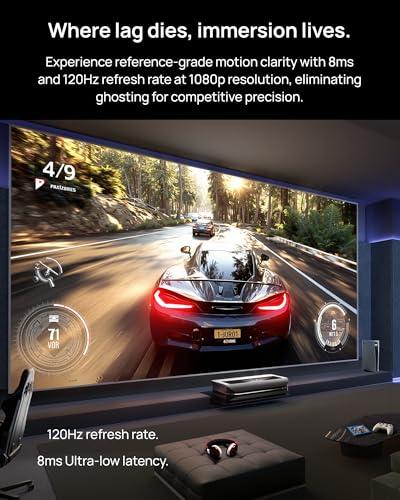
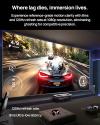
For gaming enthusiasts, the input lag measurements are particularly impressive. At 15 milliseconds for 4K/60Hz content and just 8ms for 1080p/120Hz, it's responsive enough for competitive gaming. Many users report smooth experiences with everything from fast-paced shooters to racing games on massive screens.
The projector also includes MEMC (Motion Estimation, Motion Compensation) processing, which creates additional frames between the original ones to smooth out motion. This works particularly well for sports content, where fast camera pans can look jerky on some displays.
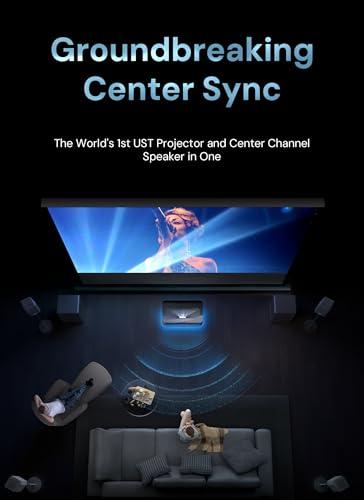
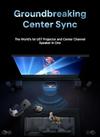
Most projector reviews skip over audio, but the AWOL Vision LTV-3000 Pro deserves attention here. The 36-watt stereo system with Dolby Atmos support produces genuinely room-filling sound. While it won't replace a dedicated surround system, testers found it more than adequate for casual viewing and even some movie nights.
The Atmos processing creates a sense of height and space that's unusual for projector speakers. Overhead effects in action movies come through clearly, and dialogue remains intelligible even during complex scenes. For many users, this eliminates the immediate need for additional audio equipment.
The projector runs Android 9.0 and includes a Fire TV Stick 4K Max, which creates an interesting dual-interface situation. You'll navigate through the projector's settings for image adjustments, then switch to the Fire TV interface for streaming apps. While this takes some getting used to, it ensures access to all major streaming platforms with regular updates.
Setup proves surprisingly straightforward thanks to powered focus and 8-point keystone correction. The keystone feature lets you adjust the image shape if the projector isn't perfectly aligned with your screen—useful for coffee table placement or slightly angled installations.
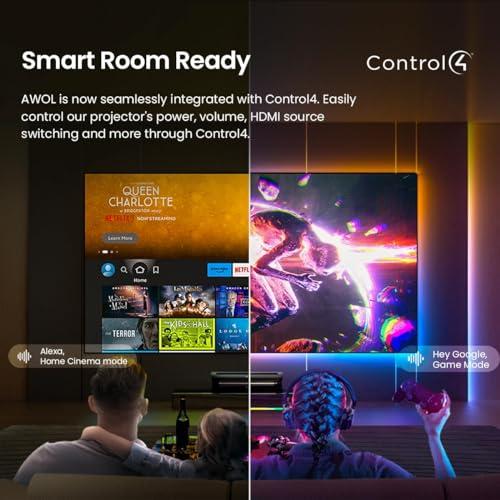
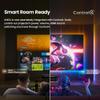
For serious home theater enthusiasts, the AWOL Vision LTV-3000 Pro includes professional control system compatibility with platforms like Control4 and Crestron. This means it can integrate seamlessly into sophisticated smart home setups where everything from lights to audio systems works together.
The projector also supports 3D content through DLP-Link active glasses, which adds another dimension for movie enthusiasts with 3D Blu-ray collections.
No projector is perfect, and research reveals some areas where the AWOL Vision LTV-3000 Pro shows its limitations. Black levels, while good for the UST category, don't match what you'd get from an OLED TV or premium long-throw projector. Dark movie scenes can appear slightly grayish rather than truly black, particularly noticeable in darker viewing environments.
Color accuracy out of the box receives mixed reviews from testers. While the wide color gamut impresses, some users find the default settings oversaturated, requiring manual adjustment or professional calibration for critical viewing. The calibration process itself can be complex, sometimes requiring multiple attempts to achieve optimal results.
Fan noise, while rated at a reasonable 27 decibels, is audible in very quiet rooms. Most users adapt quickly, but it's worth considering if you're sensitive to background noise.
At the time of writing, the AWOL Vision LTV-3000 Pro positions itself in the premium UST segment where features like Dolby Vision and professional integration justify higher investment levels. The combination of high brightness, wide color gamut, and unique feature set creates compelling value for users prioritizing performance and flexibility.
Compared to budget UST options, you're paying for genuinely better brightness, color accuracy, and features. Against premium alternatives, the Dolby Vision support and professional integration capabilities help justify the positioning.
The AWOL Vision LTV-3000 Pro succeeds as a premium ultra short throw projector that doesn't make major compromises. Its combination of bright output, wide color gamut, and unique Dolby Vision support creates viewing experiences that genuinely compete with large-screen TVs while offering the flexibility that only UST projectors provide.
The technical sophistication—from RGB laser technology to professional control integration—makes it particularly appealing for users who want both immediate usability and room to grow into more sophisticated setups. While perfect color accuracy might require professional calibration and black levels could be deeper, the overall package delivers impressive performance that justifies its premium positioning in the competitive UST market.
For anyone considering the jump to projection-based entertainment, this model represents a compelling entry point that balances cutting-edge features with practical usability.
The AWOL Vision LTV-3000 Pro offers excellent value for home theater enthusiasts seeking a premium ultra short throw experience. With 2,000 ISO lumens brightness, unique Dolby Vision support, and RGB laser technology, it delivers performance that competes with much more expensive models. The 25,000-hour laser lifespan and professional smart home integration make it particularly worthwhile for long-term home theater setups.
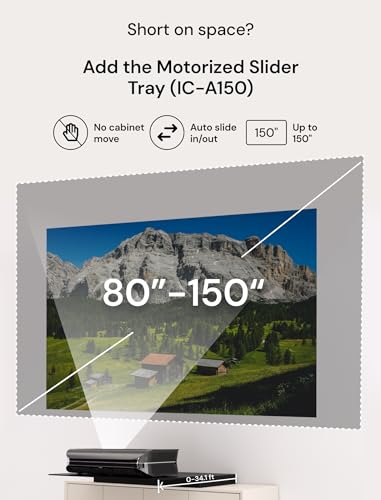
The AWOL Vision LTV-3000 Pro uses a 0.25:1 throw ratio, meaning it can project a 100-inch image from approximately 22 inches away from the wall or screen. For an 80-inch image, you'll need about 18 inches of distance, while the maximum 150-inch image requires roughly 32 inches. This ultra-short throw design is perfect for home theaters where space is limited.
Yes, the AWOL Vision LTV-3000 Pro performs well in moderately bright rooms thanks to its 2,000 ISO lumens output. For optimal daytime viewing in your home theater, pair it with an ambient light rejecting (ALR) screen, which helps maintain contrast and color accuracy even with some ambient lighting present.
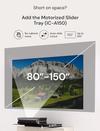
The AWOL Vision LTV-3000 Pro supports screen sizes from 80 to 150 inches diagonal. For most home theaters, 100-120 inches provides the best balance of immersion and image quality. The projector maintains excellent sharpness and uniformity even at maximum screen sizes thanks to its high-quality optics.
Absolutely. The AWOL Vision LTV-3000 Pro features low input lag of just 15ms at 4K/60Hz and 8ms at 1080p/120Hz, making it excellent for gaming on large screens. The bright output and responsive performance create an immersive gaming experience that's perfect for home theater gaming setups.
The RGB laser system in the AWOL Vision LTV-3000 Pro is rated for 25,000 hours of operation, which translates to roughly 10-15 years of normal home theater use. Unlike traditional lamp projectors, there are no bulbs to replace, significantly reducing long-term maintenance costs.
The AWOL Vision LTV-3000 Pro supports Dolby Vision, HDR10+, HDR10, and HLG formats. The Dolby Vision support is particularly noteworthy, as it's rare among ultra short throw projectors and provides superior contrast and color accuracy for premium home theater experiences with compatible streaming content.
While the AWOL Vision LTV-3000 Pro includes impressive built-in 36W Dolby Atmos speakers, it also offers multiple audio output options including HDMI eARC, optical, and analog connections. This flexibility allows you to integrate it seamlessly with existing home theater audio systems or soundbars.
The AWOL Vision LTV-3000 Pro is designed for easy setup with powered focus and 8-point keystone correction. Most home theater enthusiasts can install it themselves by simply placing it on a media console or coffee table. However, it does support professional control systems like Control4 and Crestron for custom home theater installations.
The AWOL Vision LTV-3000 Pro includes a Fire TV Stick 4K Max, providing access to all major streaming platforms including Netflix, Prime Video, Disney+, HBO Max, and more. The Android 9.0 operating system also supports additional apps, making it a complete home theater entertainment solution.
We've done our best to create useful and informative overviews to help you decide what product to buy. Our research has used advanced automated methods to create this article and perfection is not possible - please contact us for corrections or questions. These are the sites we've researched in the creation of this article: bestbuy.com - projectorcentral.com - rtings.com - techaeris.com - hometechnologyreview.com - awolvision.de - androidcentral.com - awolvision.com - projectorreviews.com - dreamediaav.com - bestbuy.com - youtube.com - youtube.com - awolvisionpro.com - awolvision.com - awolvision.com
| AWOL Vision LTV-3000 Pro |
|---|
| Brightness - Most critical spec for daytime viewing: 2,000 ISO lumens (3,000 peak) |
| Throw Ratio - Determines placement flexibility: 0.25:1 (100" image from ~22" away) |
| Resolution: 4K UHD (3840 x 2160) |
| HDR Support - Enhanced contrast and color in compatible content: Dolby Vision, HDR10+, HDR10, HLG |
| Light Source - No bulb replacements needed: RGB Triple Laser (25,000 hour lifespan) |
| Color Gamut - More vibrant, accurate colors: 107% BT.2020 coverage |
| Input Lag - Critical for responsive gaming: 15ms (4K/60Hz), 8ms (1080p/120Hz) |
| Screen Size Range: 80" to 150" diagonal |
| Contrast Ratio: 2,500:1 |
| 3D Support: Active 3D with DLP-Link compatibility |
| Built-in Audio - Eliminates need for separate speakers: 36W stereo with Dolby Atmos |
| Smart Features: Android 9.0 + Fire TV Stick 4K Max included |
| Professional Integration - Works with home automation systems: Control4, Crestron, PJLink compatible |
| HDMI Ports: 3 (including 1 with eARC) |
| Focus System: Powered focus with 8-point keystone correction |
| Operating Noise: ≤27 dB |
| Dimensions: 5.7" × 23.6" × 13.9" |
| Weight: 21 lbs |
| Power Consumption: 185W |
The Epson QS100 stands out primarily for its exceptional 4,500-lumen brightness output—more than double the AWOL's 2,000 ISO lumens. This massive brightness advantage makes the Epson a completely different beast for daytime viewing and bright room performance, where the AWOL would struggle to maintain vibrant colors and contrast. The QS100's 3LCD technology eliminates any possibility of rainbow artifacts while delivering consistent color and white brightness, plus it can project slightly larger images up to 160 inches. For professional installations, the Epson QS100 offers comprehensive IP control, eARC support for high-end audio systems, and compatibility with major home automation platforms like Crestron and Control4—features that make it ideal for custom theater builds.
However, the Epson QS100 comes with significant trade-offs that impact overall value. It lacks any built-in smart features, speakers, or streaming capabilities, requiring additional purchases for a complete system. While it supports HDR10 and HLG with advanced dynamic tone mapping, it notably omits Dolby Vision support—a surprising limitation given its premium positioning. The street price difference is substantial, with the Epson commanding nearly double the AWOL's cost at the time of writing. Unless you specifically need the QS100's brightness for challenging lighting conditions or professional integration features, the AWOL delivers a more complete entertainment package with better gaming performance, comprehensive HDR support, and immediate usability straight out of the box.
🤖 Read Detailed Comparison
👌Epson QS100 4K PRO-UHD Ultra Short Throw Projector Details
💵 See Epson QS100 4K PRO-UHD Ultra Short Throw Projector Price
The Yaber K300s takes a fundamentally different approach to ultra-short throw projection, prioritizing portability and accessibility over absolute performance. At just 4 pounds compared to the AWOL's 21-pound heft, the Yaber transforms into a truly portable big-screen solution that you can easily move between rooms or take outdoors for backyard movie nights. Its ultra-compact 0.18:1 throw ratio means it needs only 9 inches from the wall versus the AWOL's 21 inches, making it incredibly space-efficient for apartments or smaller rooms. The Yaber K300s also simplifies the user experience with automatic focus and keystone correction that gets you up and running in minutes, plus JBL-tuned speakers that deliver surprisingly deep bass for casual viewing without external audio equipment.
However, this accessibility comes with meaningful performance trade-offs that become apparent in direct comparison. The Yaber K300s delivers native 1080p resolution rather than true 4K, which limits fine detail reproduction on screens over 100 inches where the AWOL excels. Its 1,000 ANSI lumens of brightness also requires more careful lighting control compared to the AWOL's superior 2,000 ISO lumens, making daytime viewing more challenging. Gaming enthusiasts will notice the difference in responsiveness, as the Yaber's ~40ms input lag makes it suitable only for casual gaming versus the AWOL's competitive-grade 15ms performance. At roughly half the AWOL's cost at time of writing, the Yaber K300s represents exceptional value for mainstream buyers who prioritize convenience and portability over absolute image quality, but serious home theater enthusiasts will likely find its limitations too restrictive for their needs.
🤖 Read Detailed Comparison
👌Yaber K300s Triple Laser Ultra Short Throw Projector Details
💵 See Yaber K300s Triple Laser Ultra Short Throw Projector Price
The NOMVDIC P2000 stands out primarily for its superior brightness at 2,500 ANSI lumens – a 25% advantage that translates to noticeably better performance in bright rooms and daytime viewing scenarios. This extra brightness, combined with its 100% BT.2020 color space coverage, delivers more vibrant and saturated colors that pop off the screen, especially for HDR content. The NOMVDIC P2000 also features a significantly more powerful 50W Harman Kardon audio system that often eliminates the need for external speakers, providing room-filling sound with better bass response than most integrated projector audio. Its distinctive industrial design and slightly shorter 0.22:1 throw ratio allow for more flexible placement in tight spaces.
However, the NOMVDIC P2000 requires external streaming devices since it lacks built-in smart TV features, and its 16ms gaming input lag, while adequate for casual play, can't match the AWOL's exceptional gaming performance. The trade-off comes down to core projection capabilities versus integrated features – the NOMVDIC P2000 typically costs less while delivering superior brightness and audio that benefit daily TV replacement use, making it an excellent value for users who prioritize daytime viewing performance and don't need premium gaming specs or integrated smart features. For bright living rooms or multi-purpose spaces where ambient light is unavoidable, the NOMVDIC P2000's brightness advantage often proves more valuable than the AWOL's smart integration and gaming optimization.
🤖 Read Detailed Comparison
👌NOMVDIC P2000 UST-RGB 4K Triple Laser Projector Details
💵 See NOMVDIC P2000 UST-RGB 4K Triple Laser Projector Price
The BenQ V5000i takes a markedly different approach with superior out-of-box color accuracy and comprehensive gaming optimizations. While it produces slightly less peak brightness at 2,500 ANSI lumens, the BenQ delivers exceptionally natural colors immediately without requiring professional calibration—a significant advantage for users who want great performance without the setup complexity. Its native Android TV 11 integration provides a seamless streaming experience compared to the AWOL's dual-interface approach, and the 40W Trevolo sound system offers noticeably better built-in audio quality. For gamers, the BenQ V5000i stands out with Auto Low Latency Mode, support for 1080p at 240Hz, and HDMI 2.1 connectivity that makes it more future-proof for next-generation console gaming.
However, the BenQ V5000i typically commands a several-hundred-dollar premium over the AWOL, lacks Dolby Vision support, and offers less raw brightness for challenging lighting conditions. The value proposition ultimately depends on your priorities: if you want maximum brightness and don't mind calibration work, the AWOL offers better bang for your buck. But if you prioritize convenience, gaming performance, and refined user experience, the BenQ V5000i justifies its higher price with superior practical performance and modern features that work excellently right out of the box.
🤖 Read Detailed Comparison
👌BenQ V5000i Ultra Short Throw 4K Laser Projector Details
💵 See BenQ V5000i Ultra Short Throw 4K Laser Projector Price
The Epson EpiqVision Ultra LS650 takes a fundamentally different approach with its 3LCD technology and laser-phosphor light source, delivering a significantly brighter 3,600 lumens that makes it much more versatile in rooms with ambient light. Where the AWOL Vision excels in pixel-perfect detail, the Epson prioritizes real-world usability with its superior brightness allowing for daytime viewing without blackout curtains. The Epson's dynamic contrast ratio of 2,500,000:1 dramatically outperforms the AWOL's 2,500:1, resulting in much deeper blacks and more dramatic image depth that's immediately noticeable in dark movie scenes. While it uses pixel-shifting "4K PRO-UHD" rather than true native 4K, the difference is less apparent in typical viewing distances, and the Epson's 3LCD system ensures consistently vibrant colors without the color brightness limitations that can affect single-chip DLP projectors.
From a value perspective, the Epson LS650 typically costs significantly less while delivering better performance in the areas that matter most for everyday use—brightness, contrast, and color consistency. The trade-offs include higher input lag that makes it less suitable for serious gaming, a smaller maximum screen size of 120 inches versus 150 inches, and lack of Dolby Vision support. However, for most users watching streaming content, sports, and movies in typical living room environments, the Epson's superior brightness and contrast performance, combined with its lower price point, often translates to better overall satisfaction. The Yamaha-designed audio system and simpler Android TV interface add to its mainstream appeal, making it the more practical choice for families prioritizing reliable performance over cutting-edge specifications.
🤖 Read Detailed Comparison
👌Epson EpiqVision Ultra LS650 4K Ultra Short Throw Laser Projector Details
💵 See Epson EpiqVision Ultra LS650 4K Ultra Short Throw Laser Projector Price
The Hisense PL2 presents a compelling alternative with several practical advantages, most notably its superior brightness at 2,700 ANSI lumens compared to the AWOL's 2,000 ISO lumens. This higher light output translates to noticeably better performance in rooms with ambient light, making it more versatile for family rooms where you can't always control lighting conditions. The Hisense PL2 also offers a more streamlined smart TV experience with fully integrated Google TV, eliminating the need to switch between different interfaces that the AWOL requires with its Fire TV Stick setup. Additionally, its more compact design and lighter weight make installation easier, while the slightly better throw ratio allows placement even closer to the wall – valuable advantages in space-constrained rooms.
From a value perspective, the Hisense PL2 delivers about 90% of the AWOL's performance at roughly 75% of the cost, making it an excellent choice for users who prioritize practical benefits over absolute color perfection. While it can't match the AWOL's exceptional color accuracy or gaming performance, the Hisense PL2 still produces vibrant, engaging images with solid HDR support and adequate gaming capabilities for casual use. The trade-off becomes clear: if you're building a dedicated home theater where color accuracy and low input lag are paramount, the AWOL justifies its premium. However, if you want excellent large-screen entertainment in a multi-purpose room without the premium price tag, the Hisense PL2 offers superior real-world versatility and represents better value for most households.
🤖 Read Detailed Comparison
👌Hisense PL2 4K Ultra Short Throw Projector Details
💵 See Hisense PL2 4K Ultra Short Throw Projector Price
The BenQ V5010i stands out primarily through its superior brightness and color accuracy, delivering 2,500 ANSI lumens compared to the AWOL's 2,000 ISO lumens—a meaningful 25% advantage that translates to better performance in rooms with ambient light. This brightness difference becomes particularly noticeable during daytime viewing or in living rooms where you can't completely control lighting conditions. The BenQ also excels in color reproduction with exceptional 95% BT.2020 and 98% DCI-P3 coverage that delivers more accurate, lifelike colors straight out of the box without requiring manual calibration. Its dedicated 40W audio system with separate tweeters and woofers provides cleaner sound separation compared to stereo designs, while the more energy-efficient 150W power consumption reduces long-term operating costs by about 23%.
However, the BenQ V5010i makes notable trade-offs for these strengths. Gaming enthusiasts will notice the higher 17.9ms input lag at 4K/60Hz, which while still good, falls behind the AWOL's exceptional 15ms performance and lacks support for high refresh rate gaming. The BenQ's maximum 120-inch screen size also limits installation flexibility compared to the AWOL's 150+ inch capability, and its more restrictive throw distance range reduces placement options in challenging rooms. Most significantly, the BenQ lacks Dolby Vision HDR support and comprehensive smart home integration features, positioning it as a more traditional cinema-focused projector rather than the versatile entertainment hub that the AWOL provides. For users prioritizing fundamental image quality and energy efficiency over gaming performance and smart features, the BenQ represents a compelling alternative, though it comes with a longer 3-year warranty to offset some of these limitations.
🤖 Read Detailed Comparison
👌BenQ V5010i 4K Ultra Short Throw Projector Details
💵 See BenQ V5010i 4K Ultra Short Throw Projector Price
The Formovie C3 presents a compelling alternative that prioritizes raw brightness and value over premium features. With 2,250 ANSI lumens, it delivers noticeably higher peak brightness than the LTV-3000 Pro, making it more forgiving in rooms with ambient light or windows. The projector's compact 17-pound design also makes it significantly more portable and less imposing in multi-purpose living spaces. At its price point, the Formovie C3 delivers approximately 85-90% of the premium projector experience while costing substantially less, making it an excellent entry point into ultra short throw projection for budget-conscious buyers who still want that massive screen experience.
However, the trade-offs become apparent in critical performance areas. The Formovie C3's 40ms input lag makes it unsuitable for serious gaming, where the LTV-3000 Pro's sub-20ms performance provides a genuinely responsive experience. Color accuracy also takes a step back with the single laser plus color wheel design covering only 110% Rec.709 compared to the LTV-3000 Pro's cinema-grade 107% BT.2020 coverage. The Formovie C3 also lacks Dolby Vision support and runs FengOS with limited English optimization, often requiring external streaming devices for the best smart TV experience. While it represents excellent value for casual entertainment and movie watching, enthusiasts who prioritize gaming performance, color accuracy, or premium HDR content will find the LTV-3000 Pro's advanced features worth the price premium.
🤖 Read Detailed Comparison
👌Formovie C3 Ultra Short Throw Laser Projector Details
💵 See Formovie C3 Ultra Short Throw Laser Projector Price
The Ultimea Thor T60 represents a different philosophy in UST projector design, prioritizing raw performance over comprehensive features. Its standout characteristic is exceptional brightness at 4,000 ANSI lumens—double what the AWOL delivers—making it genuinely usable in bright living rooms where the LTV-3000 Pro would struggle. This brightness advantage extends to superior contrast performance with a 4,000:1 ratio that produces deeper blacks and better shadow detail. The Thor T60 also covers 120% of the BT.2020 color space with proprietary BrightMX technology, delivering more vibrant and accurate colors straight out of the box. Its 0.21:1 throw ratio allows closer wall placement, and HDMI 2.1 ports provide better future-proofing for next-generation gaming consoles and devices.
From a value perspective, the Thor T60 typically costs less while delivering significantly superior core projection specifications, making it compelling for buyers who prioritize picture quality over features. However, this performance focus comes with trade-offs: only two HDMI ports instead of three, weaker built-in audio at 30W versus the AWOL's 36W Dolby Atmos system, higher power consumption at 265W, and gaming input lag around 25ms rather than the AWOL's exceptional 8-15ms performance. The Thor T60 excels as a TV replacement in challenging lighting conditions and offers outstanding value for brightness-focused users, but the AWOL provides a more complete home theater package with superior connectivity, audio, gaming performance, and smart home integration capabilities that justify its positioning for dedicated theater environments.
🤖 Read Detailed Comparison
👌Ultimea Thor T60 4K Ultra Short Throw Laser Projector Details
💵 See Ultimea Thor T60 4K Ultra Short Throw Laser Projector Price
The Formovie 4K Max stands out primarily through its exceptional 4,500 ANSI lumens brightness—more than double the AWOL's output—making it a powerhouse for daytime viewing and bright living rooms where the AWOL would struggle. This brightness advantage translates directly to better HDR impact in real-world conditions, with vivid colors and contrast that remain impressive even with curtains open during the day. The Formovie 4K Max also features Bowers & Wilkins-engineered audio with dedicated tweeters, offering premium sound quality that matches its visual performance, and supports larger screen sizes up to 200 inches compared to the AWOL's 150-inch maximum. Its more compact form factor, particularly the reduced height profile, makes it easier to integrate into existing entertainment setups without requiring furniture changes.
However, the Formovie 4K Max makes some trade-offs for its brightness advantage. While it achieves similar color gamut coverage through ALPD 4.0 technology, it lacks the pure RGB laser implementation that eliminates rainbow artifacts entirely, and Dolby Vision support remains unconfirmed—a significant disadvantage for premium streaming content. The AWOL's verified gaming specifications and full 3D support also give it clear advantages in those specific use cases. From a value perspective, the Formovie 4K Max typically commands premium pricing that reflects its maximum brightness capabilities, making it most worthwhile for users who genuinely need that extra brightness for challenging lighting conditions or very large screens. For dedicated home theater rooms with controlled lighting, the AWOL's superior color accuracy and confirmed Dolby Vision support often provide better cinematic value, while the Formovie 4K Max excels in multi-purpose living spaces where versatility and brightness trump absolute color precision.
🤖 Read Detailed Comparison
👌Formovie 4K Max Ultra Short Throw Laser Projector Details
💵 See Formovie 4K Max Ultra Short Throw Laser Projector Price
The Hisense PX3-PRO delivers a commanding 50% brightness advantage with 3,000 ANSI lumens that fundamentally changes how you can use an ultra short throw projector, making it genuinely usable in normal living room lighting conditions without requiring expensive ambient light rejecting screens or blackout curtains. Its gaming credentials are exceptional, featuring 240Hz support at 1080p, 4K@120Hz capability, and Microsoft "Designed for Xbox" certification that puts it in a league typically reserved for dedicated gaming monitors. The built-in 50-watt Harman Kardon audio system produces room-filling sound with deeper bass and higher volume capabilities that often eliminate the need for additional speakers, while the native Google TV integration provides seamless access to all major streaming services without juggling multiple interfaces.
However, the Hisense PX3-PRO sacrifices the LTV-3000 Pro's elegant design aesthetics with a bulkier 25.6-pound build that requires more robust media console support and takes up significantly more visual space in your room. While it offers better out-of-the-box color accuracy, it lacks the professional integration capabilities that make the AWOL Vision ideal for custom installations with Control4 or Crestron systems. The Hisense also uses pixel-shifting XPR technology rather than true 4K processing, though this difference is largely academic in real-world viewing. Despite these trade-offs, the Hisense PX3-PRO provides superior practical performance for most users, delivering better brightness for varied lighting conditions, advanced gaming features for modern consoles, and typically better overall value at a lower price point, making it the more versatile choice for mainstream home theater applications.
🤖 Read Detailed Comparison
👌Hisense PX3-PRO Projector Details
💵 See Hisense PX3-PRO Projector Price
The XGIMI Aura 2 presents compelling competition with its 15% brighter output at 2,300 ISO lumens and innovative Dual Light 2.0 technology that combines laser and LED sources to reduce common laser artifacts like speckle. Most notably, its 60W Harman Kardon quad-speaker system with built-in Dolby Atmos processing significantly outclasses the AWOL's audio capabilities, often eliminating the need for external speakers entirely. The XGIMI Aura 2 also excels in user convenience with its shorter 0.18:1 throw ratio for tighter spaces, automatic calibration systems, and integrated Google TV interface that provides seamless streaming without juggling multiple devices or interfaces.
However, these advantages come with trade-offs that favor the AWOL Vision in specific scenarios. The XGIMI Aura 2 processes color at 8-bit depth versus the AWOL's 10-bit processing, and its 20,000-hour light source lifespan falls short of the AWOL's 25,000-hour pure laser system. Gaming enthusiasts will find the AWOL's documented low input lag performance superior to the XGIMI's unspecified gaming capabilities. At the time of writing, the XGIMI Aura 2 typically costs less while delivering better real-world performance for casual users, making it the better value proposition for living room installations where brightness, audio quality, and ease of use matter most. The AWOL Vision justifies its premium primarily for users who need professional-grade color accuracy, competitive gaming performance, or extensive smart home integration capabilities.
🤖 Read Detailed Comparison
👌XGIMI Aura 2 Ultra Short Throw Laser Projector Details
💵 See XGIMI Aura 2 Ultra Short Throw Laser Projector Price
The Hisense PX2-PRO takes a notably different approach, prioritizing brightness and user convenience over specialized performance metrics. Its standout advantage is the significantly higher 2,400 ANSI lumens output compared to the AWOL's 2,000 lumens, making it substantially more versatile in rooms with ambient light and daytime viewing scenarios. The native Google TV platform provides a seamless, integrated streaming experience that eliminates the dual-interface complexity of the AWOL's Android TV plus Fire TV Stick setup. Out-of-box color accuracy is also superior on the Hisense model, delivering impressive picture quality immediately without requiring the professional calibration investment that the AWOL demands for optimal performance.
However, the Hisense makes significant compromises in gaming performance with 30-35ms input lag—more than double the AWOL's exceptional 8-15ms response times—effectively ruling it out for serious gaming applications. The maximum screen size is also limited to 130 inches versus the AWOL's 150-inch capability, and the 30W audio system, while adequate, lacks the fuller sound and bass response of the AWOL's 36W speakers. For mainstream home theater users who prioritize brightness, convenience, and immediate satisfaction over peak performance potential, the Hisense PX2-PRO offers compelling value at a similar price point. But for gaming enthusiasts or those building dedicated home theaters where professional calibration makes sense, the AWOL's specialized strengths justify its more complex setup requirements.
🤖 Read Detailed Comparison
👌Hisense PX2-PRO TriChroma 4K Ultra Short Throw Laser Cinema Projector with Dolby Vision, Dolby Atmos, & Google TV Details
💵 See Hisense PX2-PRO TriChroma 4K Ultra Short Throw Laser Cinema Projector with Dolby Vision, Dolby Atmos, & Google TV Price
The Hisense PL1 stands out primarily for its exceptional value proposition and user-friendly design. At roughly half the cost of the AWOL Vision LTV-3000 Pro, it delivers impressive 2,200 ANSI lumens brightness and solid 4K image quality through its single blue laser and phosphor system. The PL1's integrated Google TV platform provides a seamless smart experience that eliminates the dual-interface navigation required with external streaming devices, while its auto geometric correction via mobile app makes installation significantly easier than manual adjustment systems. The projector's more compact 17-pound design also offers better portability and fits more easily into existing entertainment center setups.
However, the Hisense PL1 makes notable compromises that impact real-world performance. Its 46.6ms input lag makes it unsuitable for serious gaming, particularly competitive multiplayer titles where the AWOL's 15ms response time provides a clear advantage. The PL1's color gamut covers 85% of DCI-P3 compared to the AWOL's 107% Rec.2020 coverage, resulting in less vibrant HDR content and reduced color accuracy in demanding scenes. The 120-inch maximum screen size limitation also restricts its home theater potential compared to the AWOL's 150-inch capability. For families prioritizing streaming content over gaming and seeking an affordable entry into large-screen projection, the PL1 offers compelling value, but enthusiasts wanting maximum performance will find the AWOL's premium justified through measurably superior gaming response, color reproduction, and installation flexibility.
🤖 Read Detailed Comparison
👌Hisense PL1 Laser Cinema Projector Details
💵 See Hisense PL1 Laser Cinema Projector Price
The Epson EpiqVision Ultra LS800 stands out primarily for its exceptional 4,000-lumen brightness – double that of the AWOL Vision – making it far more versatile in rooms with ambient light or for daytime viewing. This brightness advantage translates to real-world benefits like being able to watch sports during the day with curtains open or enjoying movies in multi-purpose living rooms without needing blackout conditions. The Epson also offers superior out-of-box color accuracy thanks to its mature 3LCD technology, eliminating the calibration headaches that plague the AWOL. Additionally, its shorter 0.17:1 throw ratio allows placement even closer to the wall, and the built-in Android TV 11 provides a seamless smart experience without juggling multiple interfaces.
From a value perspective, while the Epson LS800 typically costs more upfront, it delivers better practical performance for most home installations. The combination of room-filling brightness, plug-and-play setup, and proven reliability makes it the more sensible choice for buyers who want excellent results without technical complexity. The AWOL Vision offers cutting-edge RGB laser technology and true 4K resolution, but these advantages primarily shine in dedicated theater rooms with controlled lighting – a scenario that applies to fewer buyers. For the majority of users setting up in living rooms or multi-purpose spaces, the Epson's superior brightness and ease of use provide more tangible daily benefits than the AWOL's technical specifications, despite the higher initial investment.
🤖 Read Detailed Comparison
👌Epson EpiqVision Ultra LS800 3LCD Laser Projector Details
💵 See Epson EpiqVision Ultra LS800 3LCD Laser Projector Price
The Formovie Theater Ultra Short Throw stands out primarily for its exceptional out-of-box color accuracy and superior contrast performance. While it produces 200 fewer ISO lumens than the LTV-3000 Pro, the Formovie delivers a notable 3,000:1 contrast ratio compared to AWOL's 2,500:1, resulting in deeper blacks and more cinematic image depth. The ALPD 4.0 RGB+ laser technology covers 107% of the BT.2020 color space with remarkably accurate pre-calibration - professional reviewers consistently praise its natural skin tones and proper gamma tracking in Movie mode, eliminating the calibration headaches that plague the AWOL Vision. The integrated 30W Bowers & Wilkins audio system, while lower in wattage, brings premium brand tuning that many users find more refined than typical projector speakers.
However, the Formovie Theater's strengths come with trade-offs that limit its versatility compared to the LTV-3000 Pro. The lower brightness output makes it more dependent on controlled lighting conditions, reducing its effectiveness as a primary TV replacement in typical family rooms. Gaming performance is notably inferior with a 60fps limitation and higher input lag, making it unsuitable for serious console gaming. At a higher price point, the Formovie represents a more specialized solution - excellent for dedicated home theater environments where its superior contrast and color accuracy shine, but less practical for users who need the brightness flexibility and gaming capabilities that make the AWOL Vision a more versatile daily-use projector.
🤖 Read Detailed Comparison
👌Formovie Theater Ultra Short Throw Triple Laser Projector Details
💵 See Formovie Theater Ultra Short Throw Triple Laser Projector Price
The VAVA Chroma Triple Laser Projector stands out primarily for its exceptional out-of-the-box color accuracy and superior built-in audio system. Where the AWOL Vision requires professional calibration to achieve optimal colors, the VAVA Chroma delivers impressive color reproduction immediately upon setup thanks to its mature ALPD 4.0 phosphor laser technology. Its 60-watt Harman Kardon speaker system significantly outperforms the AWOL's audio capabilities, potentially eliminating the need for external speakers in many setups. The VAVA also excels in contrast performance with its dynamic contrast ratio delivering deeper blacks and more convincing dark scenes, making it particularly appealing for movie watching in dim environments.
However, the VAVA Chroma represents older 2021 technology and shows its age in several key areas. It consumes nearly twice the power at 300 watts versus the AWOL's efficient 185-watt operation, leading to higher electricity costs over time. The VAVA also runs noticeably louder and lacks the gaming optimization that makes the AWOL Vision appealing to a broader audience. While the VAVA often appears at promotional pricing that can make it attractive from a value standpoint, users sacrifice the latest technological improvements, energy efficiency, and gaming capabilities. For buyers prioritizing immediate plug-and-play performance and superior audio without the hassle of calibration, the VAVA Chroma remains compelling, but the AWOL Vision represents the more future-forward choice with better overall versatility.
🤖 Read Detailed Comparison
👌VAVA Chroma Triple Laser Projector Details
💵 See VAVA Chroma Triple Laser Projector Price
The Hisense L9Q dominates with its exceptional 5,000 ANSI lumen brightness—nearly double the AWOL's output—enabling impressive performance in bright living rooms and supporting massive screen sizes up to 200 inches without image washout. Its standout feature is the integrated 116W 6.2.2-channel Devialet audio system with true surround sound capabilities, eliminating the need for separate speakers that would typically cost $1,000 or more. The Hisense L9Q also offers superior connectivity with Wi-Fi 6E, Bluetooth 5.3, built-in ATSC 3.0 tuners for over-the-air TV, and four HDMI ports including two HDMI 2.1 connections for next-gen gaming consoles.
In real-world usage, the Hisense L9Q provides significantly more flexibility and convenience than the AWOL model. Its exceptional brightness means you can enjoy movies during daytime with curtains open, while its closer throw ratio (0.18:1 vs 0.25:1) allows placement in tighter spaces. The color accuracy comes Pantone-validated out of the box, avoiding the calibration challenges often required with the AWOL. However, this flagship performance comes at a premium price point—roughly double the AWOL's cost at the time of writing. For buyers who want maximum brightness, integrated premium audio, and the largest possible screens without compromise, the Hisense L9Q justifies its higher investment, though the AWOL remains the better value choice for controlled lighting environments and moderate screen sizes.
🤖 Read Detailed Comparison
👌Hisense L9Q Triple Laser Ultra Short Throw Projector Details
💵 See Hisense L9Q Triple Laser Ultra Short Throw Projector Price
Original price was: $1,498.00.$1,298.00Current price is: $1,298.00.
Original price was: $499.99.$369.99Current price is: $369.99.
Original price was: $579.99.$318.99Current price is: $318.99.

Privacy Policy
Terms and Conditions - Affiliate Policy
Home Security
© Copyright 2008-2026.
11816 Inwood Rd #1211, Dallas, TX 75244