

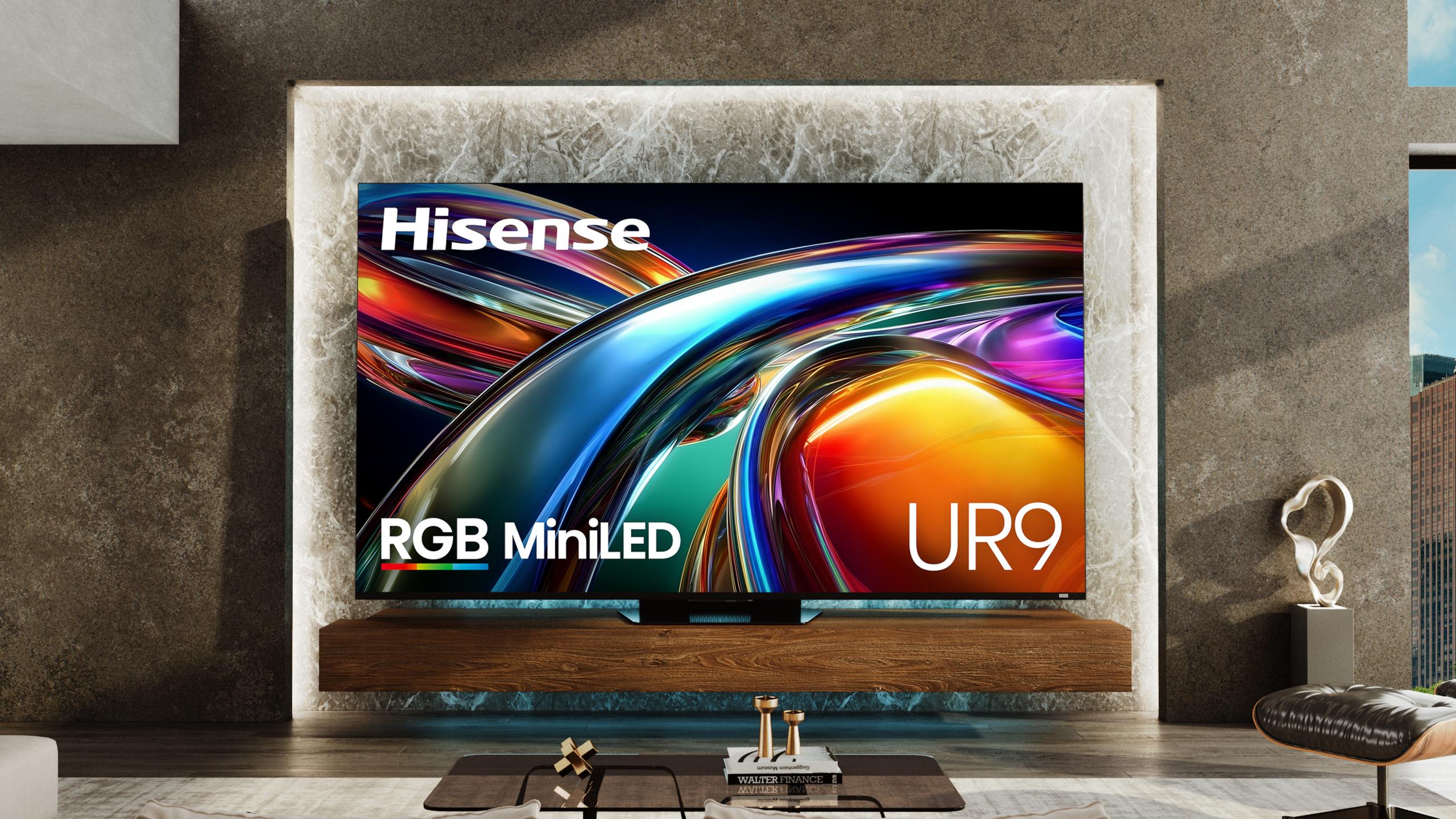
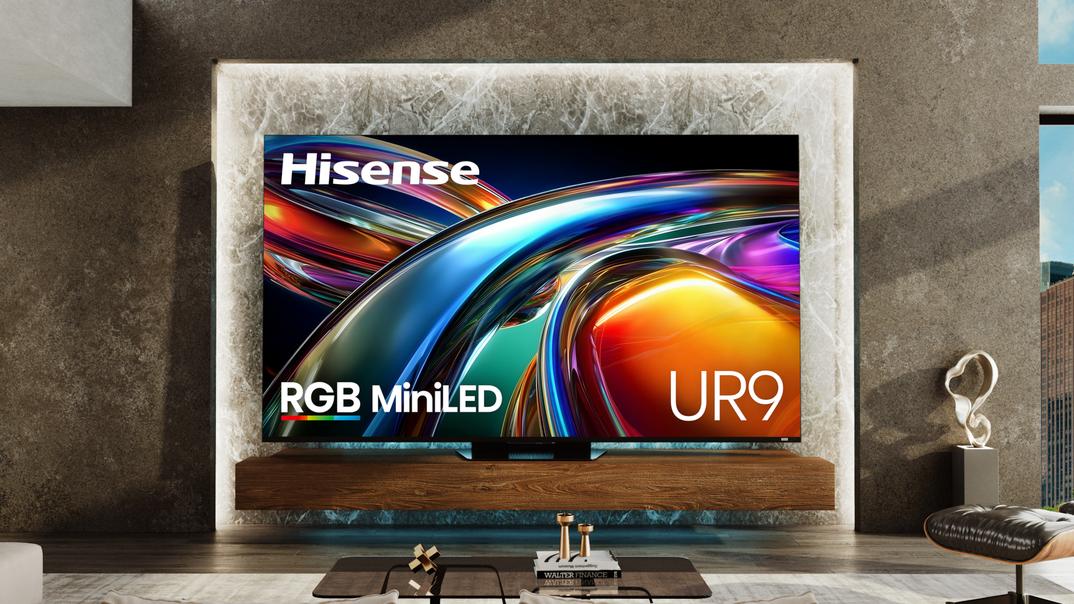
Hisense is opening pre-orders for its new UR9 series, a 4K TV lineup built around RGB MiniLED backlighting instead of the white or blue-based light systems used in most LED and MiniLED TVs. That shift matters because the UR9 is not just another brighter LCD with a few extra gaming specs attached. Hisense is using red, green, and blue LEDs directly in the backlight, which changes how the TV creates color in the first place.
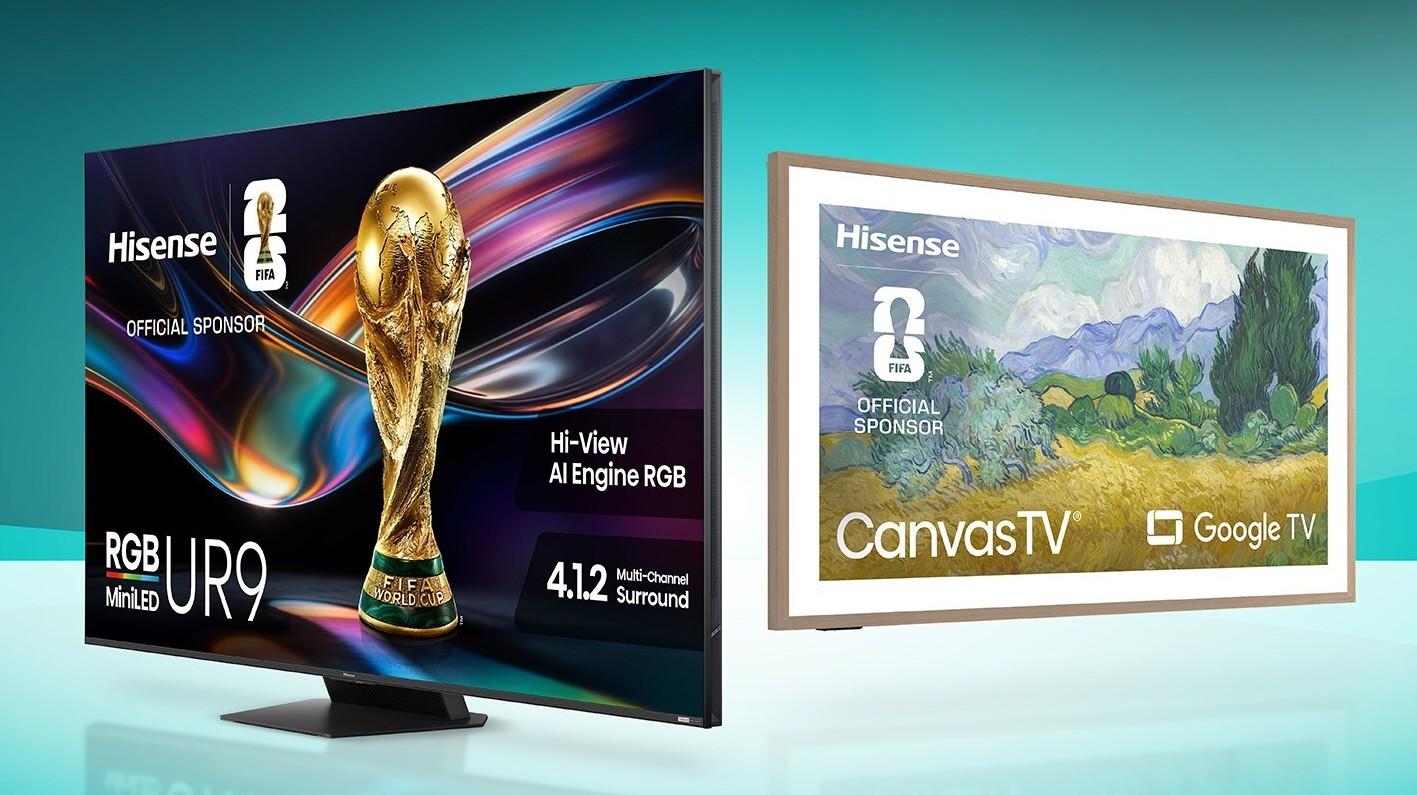
The UR9 arrives in 65-, 75-, 85-, and 100-inch sizes, with pricing starting at $3,499.99 for the 65-inch model and topping out at $8,999.99 for the 100-inch version. Pre-orders are open now, and Hisense says the TVs will go on sale more broadly starting April 23. To get early buyers interested, the company is also bundling in a 55-inch Hisense CanvasTV for qualifying pre-orders placed between March 26 and April 22.
That free-TV offer is not nothing. We reviewed the Hisense CanvasTV last year and gave it an Editor’s Choice award, so the bundle adds some real value beyond a throwaway promotional extra.
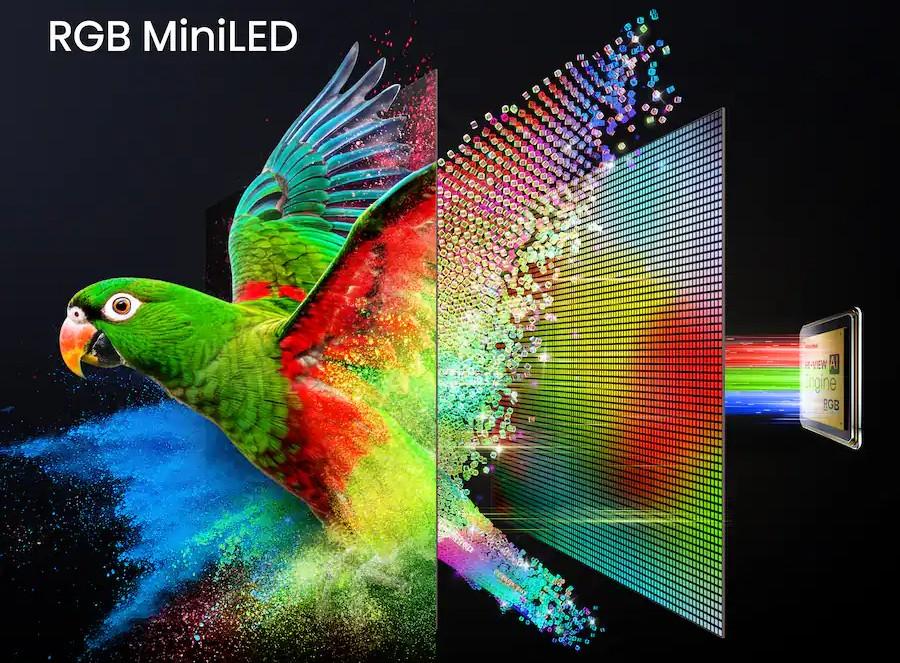
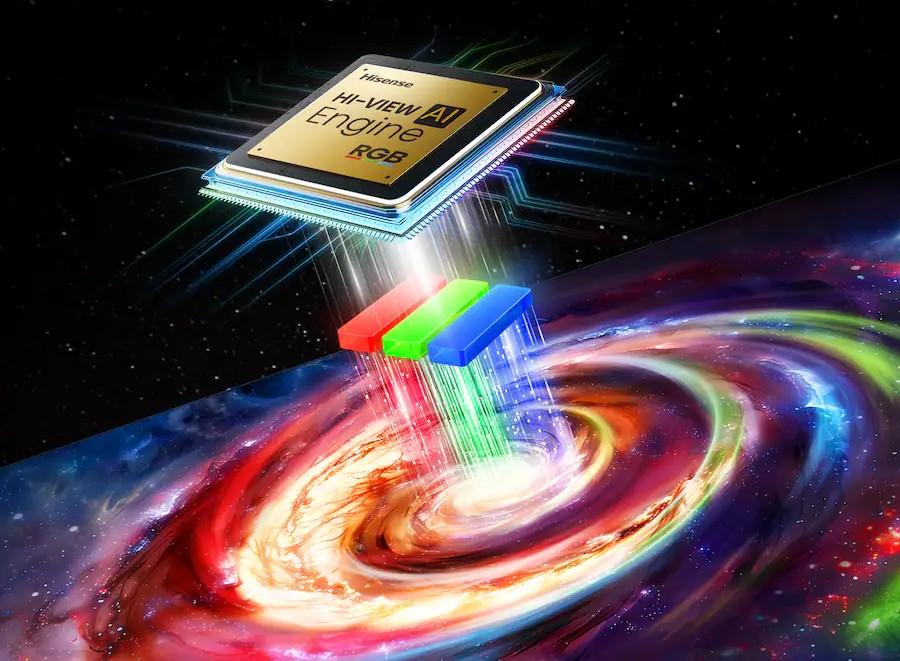
So, what exactly is an RGB MiniLED? Well, most LED TVs still rely on a white or blue backlight, then use filters, quantum dots, or other layers to create the final red, green, and blue image you see on screen. Hisense’s pitch with the UR9 is that it skips part of that process by generating red, green, and blue light directly at the source.
The idea is pretty simple: instead of starting with white light and reshaping it, the TV starts closer to the final colors it wants to produce. The claimed benefit is better color accuracy, a wider color range, and more precise control over brightness and contrast.
Hisense says the UR9 reaches 100% of the BT.2020 color gamut, which is a very ambitious number for a consumer TV. That does not automatically tell us how the set will look in a real living room, but it does tell us what Hisense is aiming for: a wider color envelope than you typically get from conventional MiniLED sets.
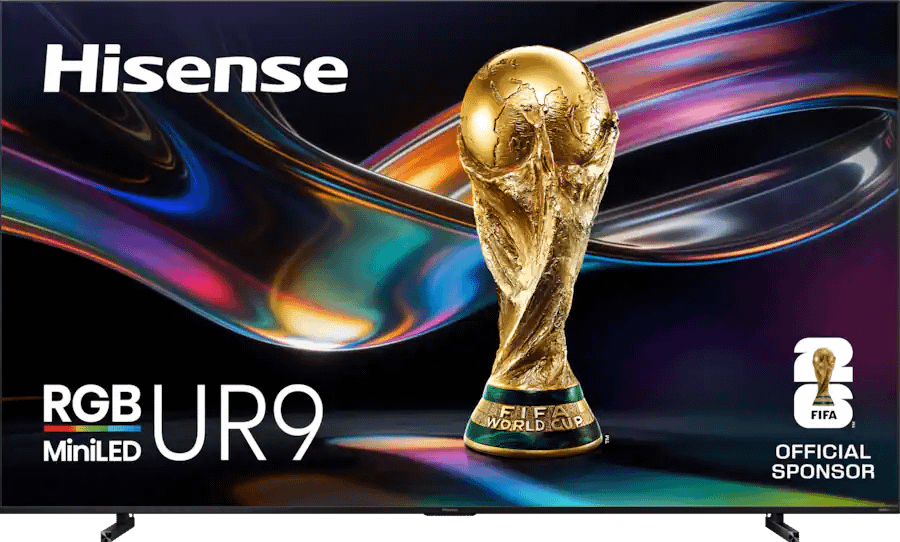
A few of the headline claims tied to the UR9 include:
That is a serious feature list, though it also raises a few questions that Hisense has not fully answered yet, including how many dimming zones each screen size will have.
"The living room has become the social centerpiece of the home, with your screen starring at the center of it all," said James Fishler, Chief Commercial Officer at Hisense USA. "Nearly 90% of Americans say bold, vibrant color makes them more interested in what they're watching — and that's exactly why we built the UR9. As the first to bring RGB MiniLED to market, we're setting a new standard for color performance in home viewing experiences."
The bigger story here is not only the UR9 itself, but where it lands in the 2026 TV market.
RGB MiniLED has quickly become one of the more interesting battlegrounds in TV tech. Brands are looking for ways to squeeze more performance out of LCD-based displays without moving everyone into OLED price territory. Hisense got to market early with RGB MiniLED in more limited form, and the UR9 looks like its attempt to bring that technology into a broader consumer lineup.
That matters because large-screen TV buying has changed fast. A 65-inch TV used to feel big. Now it is basically normal, and 75-, 85-, and even 100-inch models are no longer reserved for ultra-luxury installs. Hisense clearly sees that shift and is using the UR9 to target buyers who want a very large screen with more advanced backlighting than a standard MiniLED can offer.
Hisense is also leaning hard into brightness and daytime usability. The UR9 is rated for up to 5,000 nits of peak brightness, positioning it as a TV designed to stay punchy even in bright rooms.
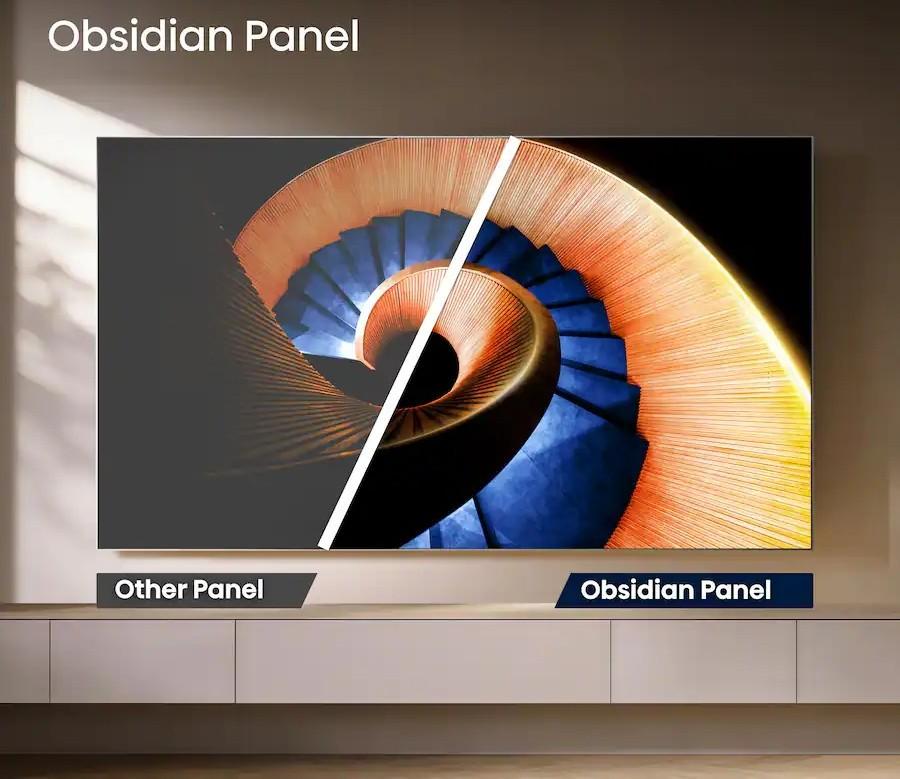
The company is pairing that brightness with an anti-reflection surface, referred to as an Obsidian Panel, designed to reduce glare from lamps and windows. That combination could be especially important for sports and daytime viewing, where even a good TV can get dragged down by room reflections.
There is also an AI RGB Light Sensor that adjusts brightness and color temperature based on ambient room conditions. That kind of feature can be useful when done well, though most enthusiasts will probably still want to spend a little time dialing in picture settings manually.
Hisense is not treating the UR9 as a movie-only display. Gaming is clearly a big part of the sales pitch here, and the spec sheet reflects that.
The UR9 includes:
A native 180Hz refresh rate is still unusual on TVs, especially at 4K, and it gives the UR9 something different to talk about in a market where a lot of premium TVs are clustered around similar gaming checklists. The DisplayPort 2.1 input is another detail that stands out, since that is far more common in monitors than televisions.
For movie watchers, some of the extra motion processing will likely be something to use carefully. Smooth-motion features can help with sports and fast gameplay, but they can also make films look overly processed. The UR9 supports Filmmaker Mode, which should help rein that in for people who want a more natural presentation.
Built-in TV sound is usually an afterthought, but Hisense is trying to make it part of the UR9 story. The set includes a 4.1.2-channel speaker system with Dolby Atmos support and tuning by Devialet. Hisense also includes Hi-Concerto, which lets the TV work together with compatible Hisense soundbars rather than handing off all audio duties to the external system.
On the software side, the UR9 runs Google TV and includes Gemini integration, which Hisense says should allow for more conversational voice interaction. Wi-Fi 6E is also onboard for high-bandwidth streaming and gaming use.
Other listed features include IMAX Enhanced, Dolby Vision IQ, HDR10+ Adaptive, AI 4K upscaling, and a backlit remote with a customizable shortcut key and Find My Remote support.
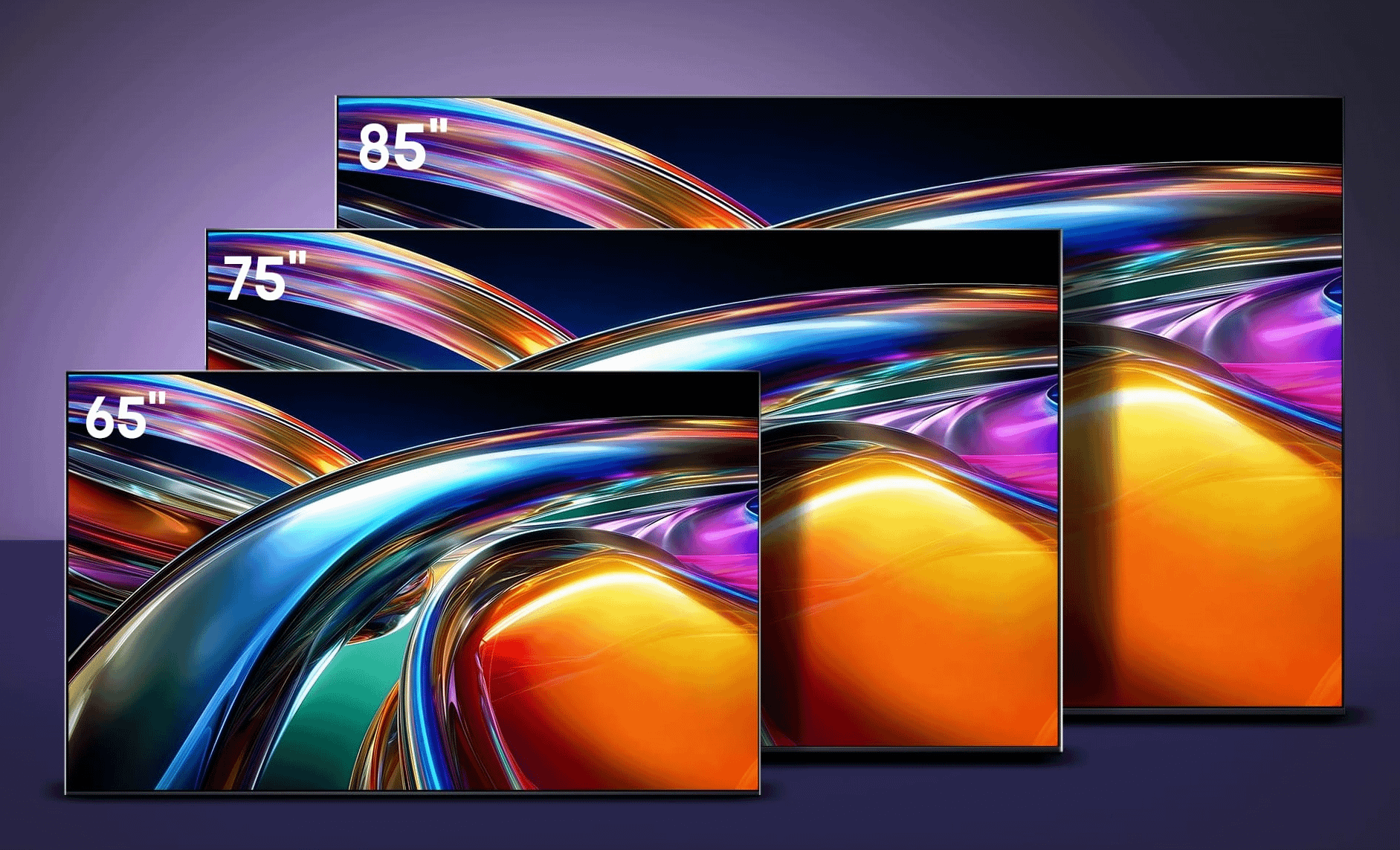
Hisense’s UR9 lineup will be sold in four sizes:
Customers who place a qualifying pre-order between March 26 and April 22 can receive a redemption code for a free 55-inch Hisense CanvasTV. Wider retail availability starts April 23, including through Best Buy.
Hisense is launching the UR9 alongside its “Out Host with Hisense” campaign, which ties the new set to at-home group viewing ahead of the FIFA World Cup 2026, where the company is serving as an official sponsor. That marketing angle is expected enough, but the actual product story is more interesting than the campaign language around it.
The real question is whether RGB MiniLED can deliver enough visible improvement to justify the step up in price. On paper, the UR9 looks like one of the first serious attempts to make this technology more widely available instead of keeping it confined to halo products. That alone makes it worth watching, especially in a year when TV makers are all looking for the next big LCD upgrade path.
Related Reading:




Privacy Policy
Terms and Conditions - Affiliate Policy
Home Security
© Copyright 2008-2026.
11816 Inwood Rd #1211, Dallas, TX 75244