


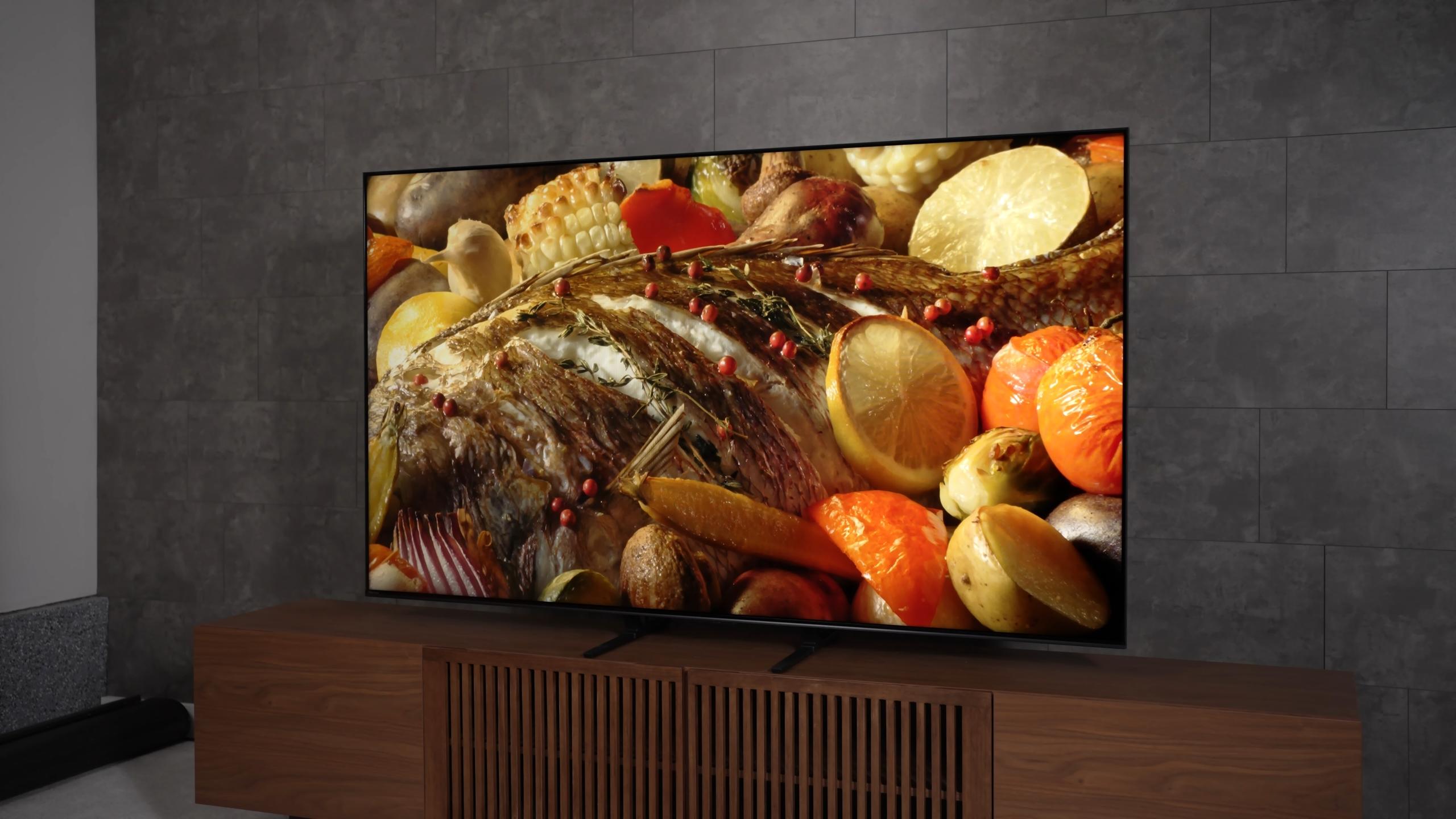
If you want a TV that looks amazing without making your wallet cry, the Hisense U75QG might be your answer. This 75-inch Mini-LED delivers surprisingly good image quality for a shockingly low price. With HDR support, a 165Hz refresh rate, and over 2,340 dimming zones, it promises a premium experience on a budget. After spending extensive time with this unit, and here’s what I found.
The Hisense U75QG is an exceptionally strong value Mini-LED TV that delivers very high peak brightness, solid contrast performance, and surprisingly accurate SDR color for the price.
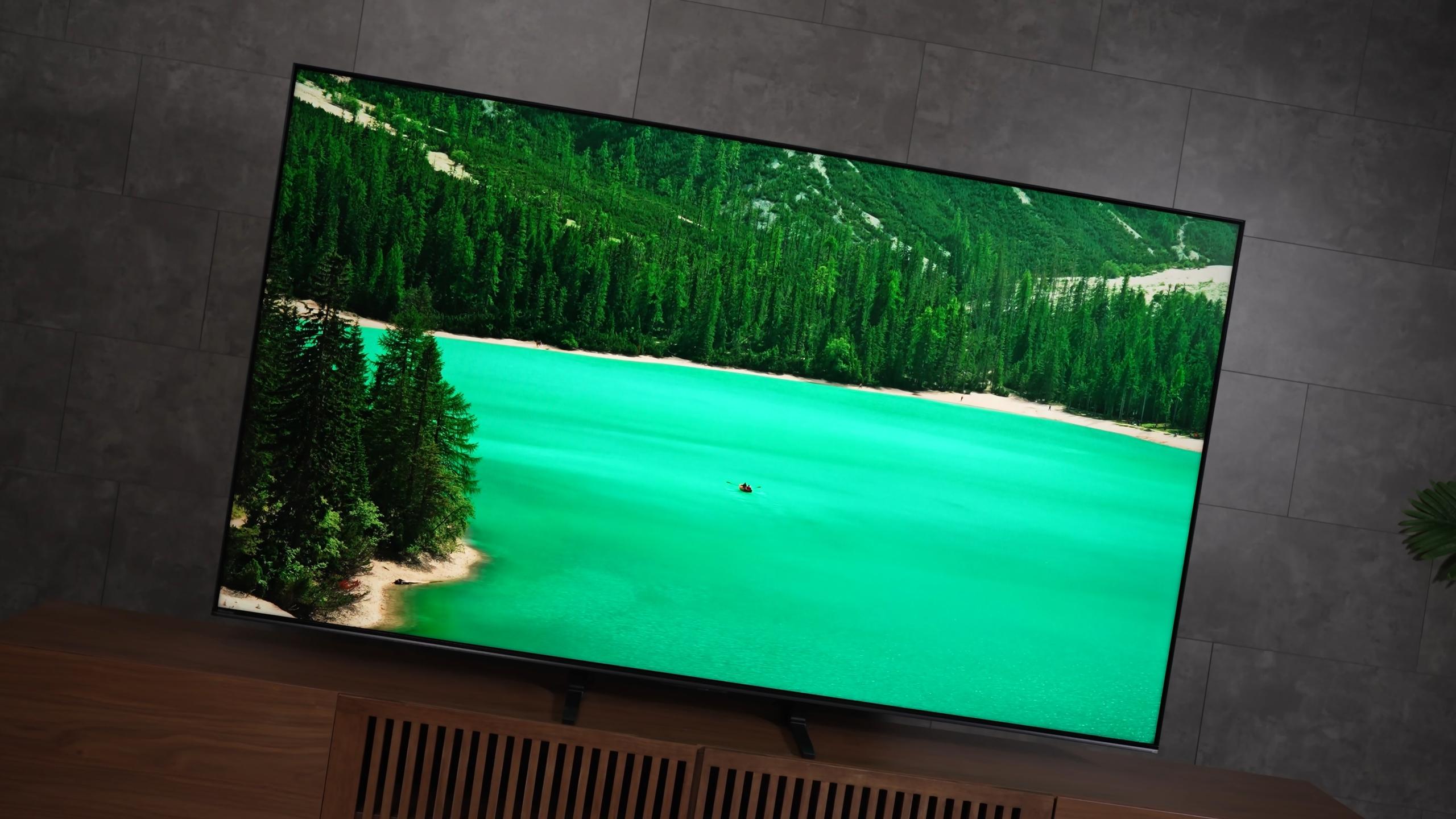
While it doesn't compete with OLED in black level control, viewing angles, or motion clarity, it offers an impactful HDR experience, strong gaming features including 165Hz support, and respectable overall image quality for under $1,000.
| Pros | Cons |
| Excellent overall value | Limited viewing angles |
| Bright and punchy HDR | Noticeable motion trailing |
| Deep and rich contrast | Slight screen uniformity issues |
Disclaimer: This TV was sent to me by Hisense for review, but all opinions are my own. Additionally Home Theater Review may run advertising campaigns with various manufacturers including Hisense.
For this review I used an X-Rite i1 Pro spectrophotometer, Color Checker Display Plus colorimeter, Calman Ultimate, Portrait Displays Video Forge Pro 8K pattern generator, a Sony RX100 VII 1000fps camera, an SM208 Screen Luminance Meter, and a Sony Cinema Line FX3 mirrorless video camera. Plus years of display testing experience.
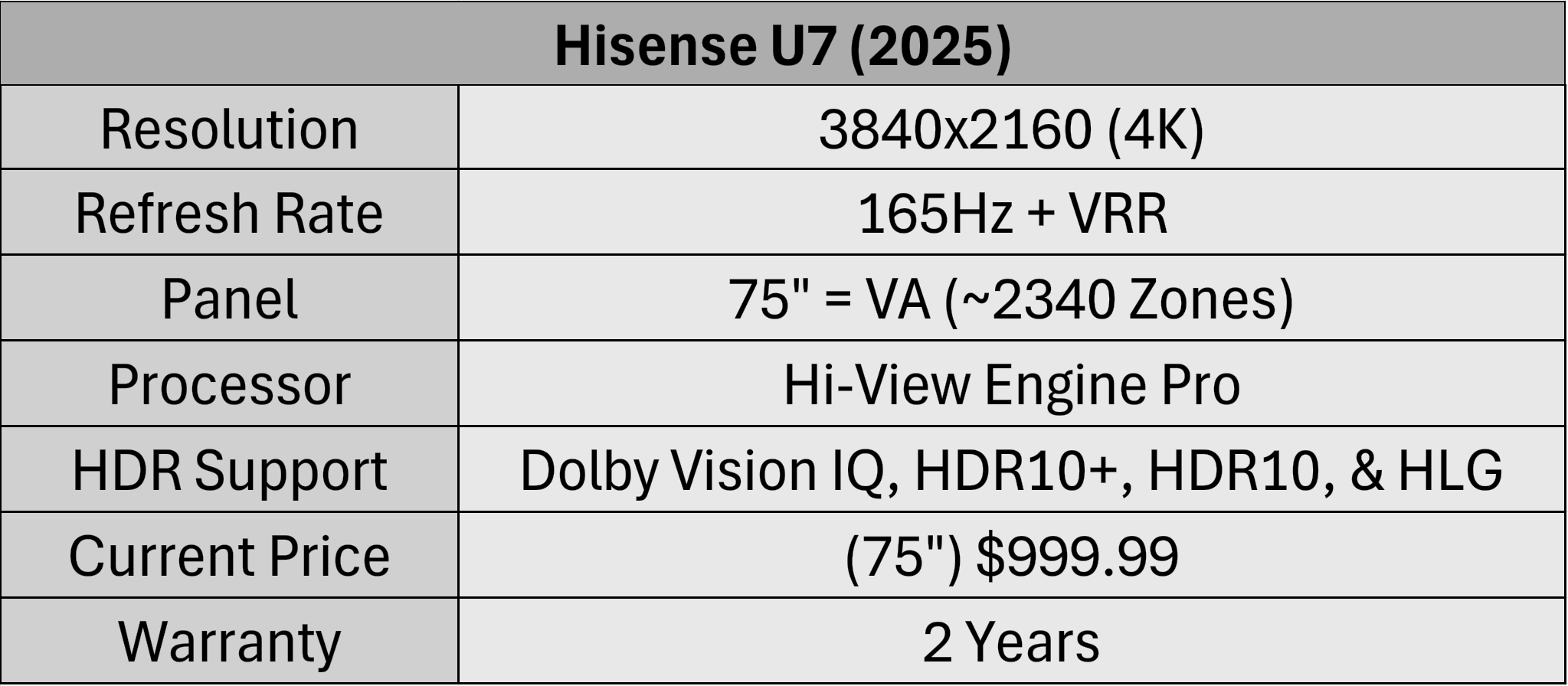
Overall specs are impressive for such an affordable Mini LED TV, and it's great to see Hisense offer a 2 year warranty
The Hisense U75QG arrives packaged as you would expect for a large Mini-LED television. Setup is straightforward and uncomplicated, with no unusual assembly steps or configuration hurdles. Once powered on, the TV defaults to a power-saving picture mode, which is worth noting because it significantly limits brightness and accuracy out of the box.
Fortunately, this is easily corrected with basic picture mode adjustments. After switching to a more appropriate viewing mode, the display immediately opens up and begins to show what it is capable of
From a color perspective, the Hisense U75QG performs better than its price suggests, though it doesn’t match the most advanced displays on the market. As a Mini-LED LCD, it can’t fully rival QD-OLEDs and may lean closer to older WOLED panels in some content.
That said, its brightness allows colors to appear vibrant and impactful, especially for those upgrading from older LCDs. Bright scenes retain punch, making the overall image feel lively and engaging.
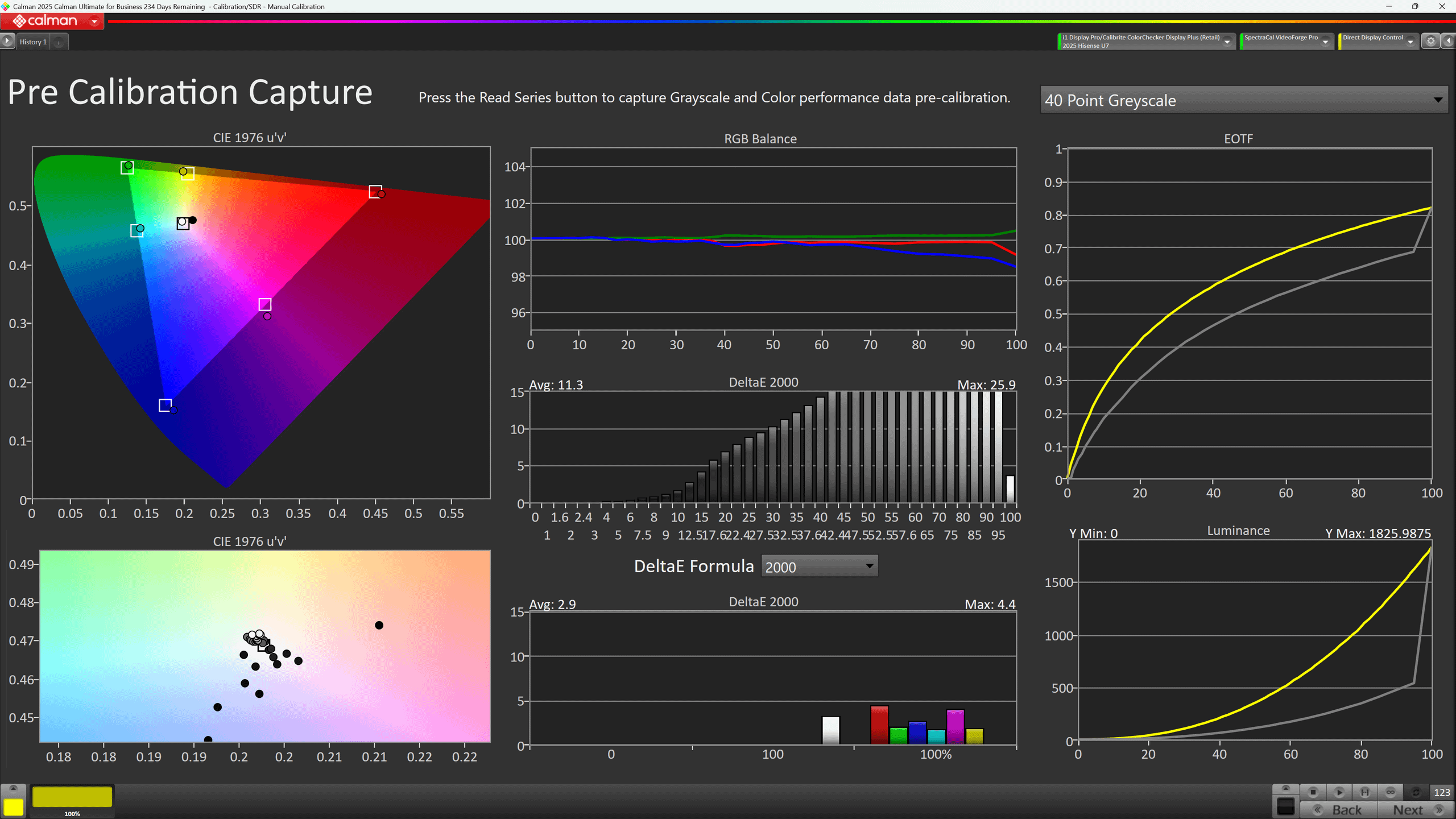
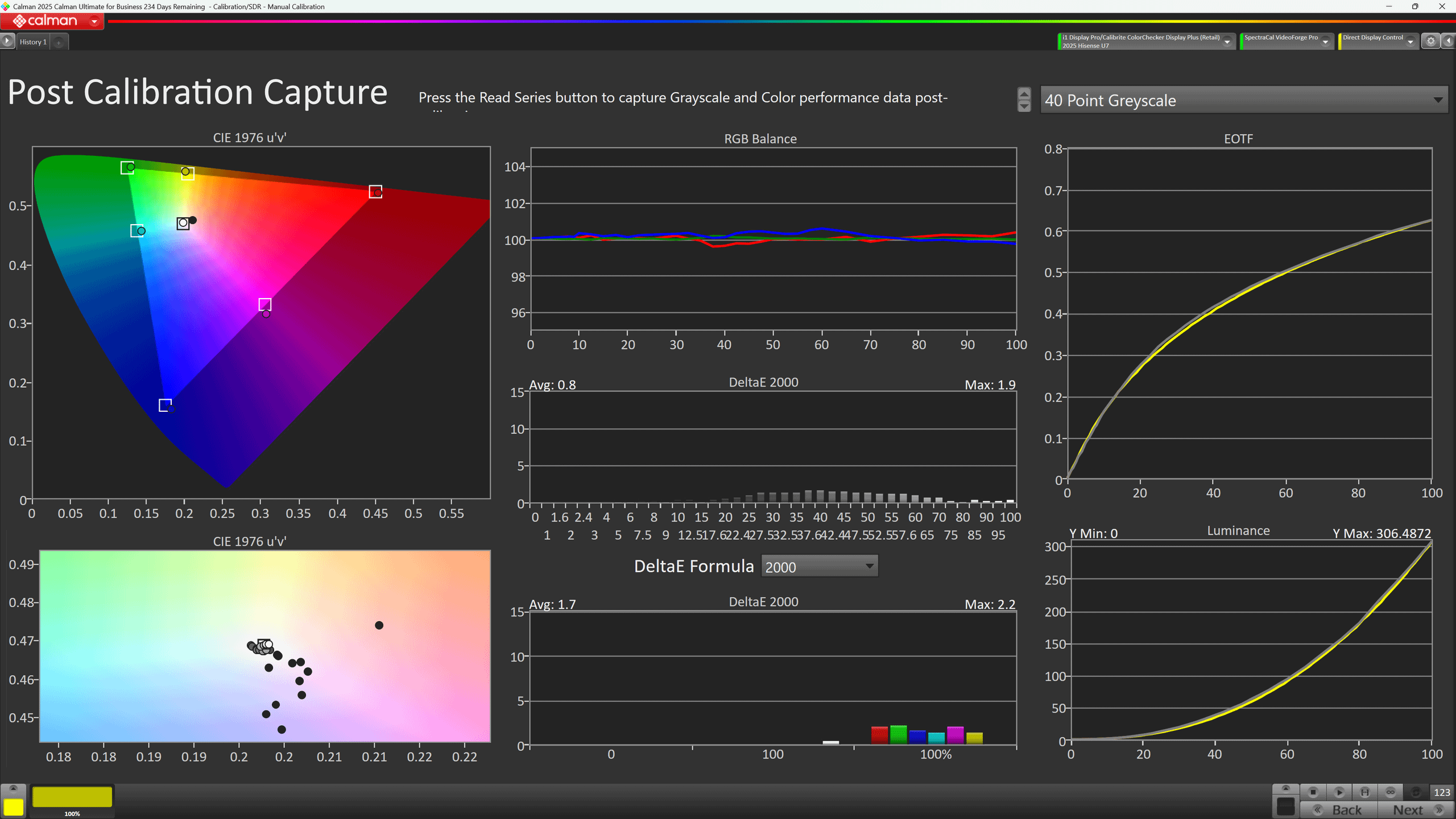
2025 Hisense U7 SDR (FMM Default)
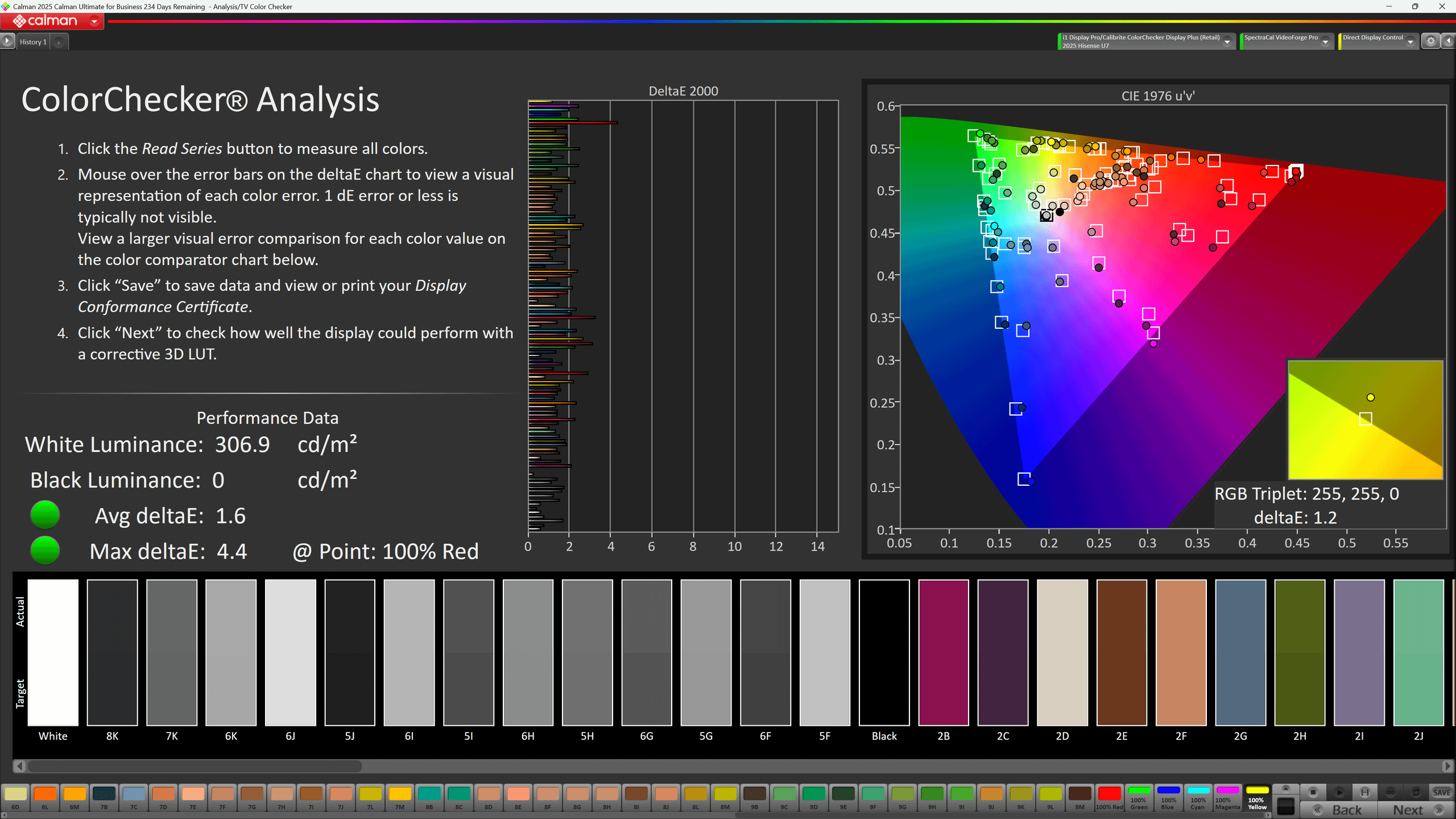
SDR Color Checker
2025 Hisense U7 HDR (FMM Default)
2025 Hisense U7 HDR (FMM Default Gamut)
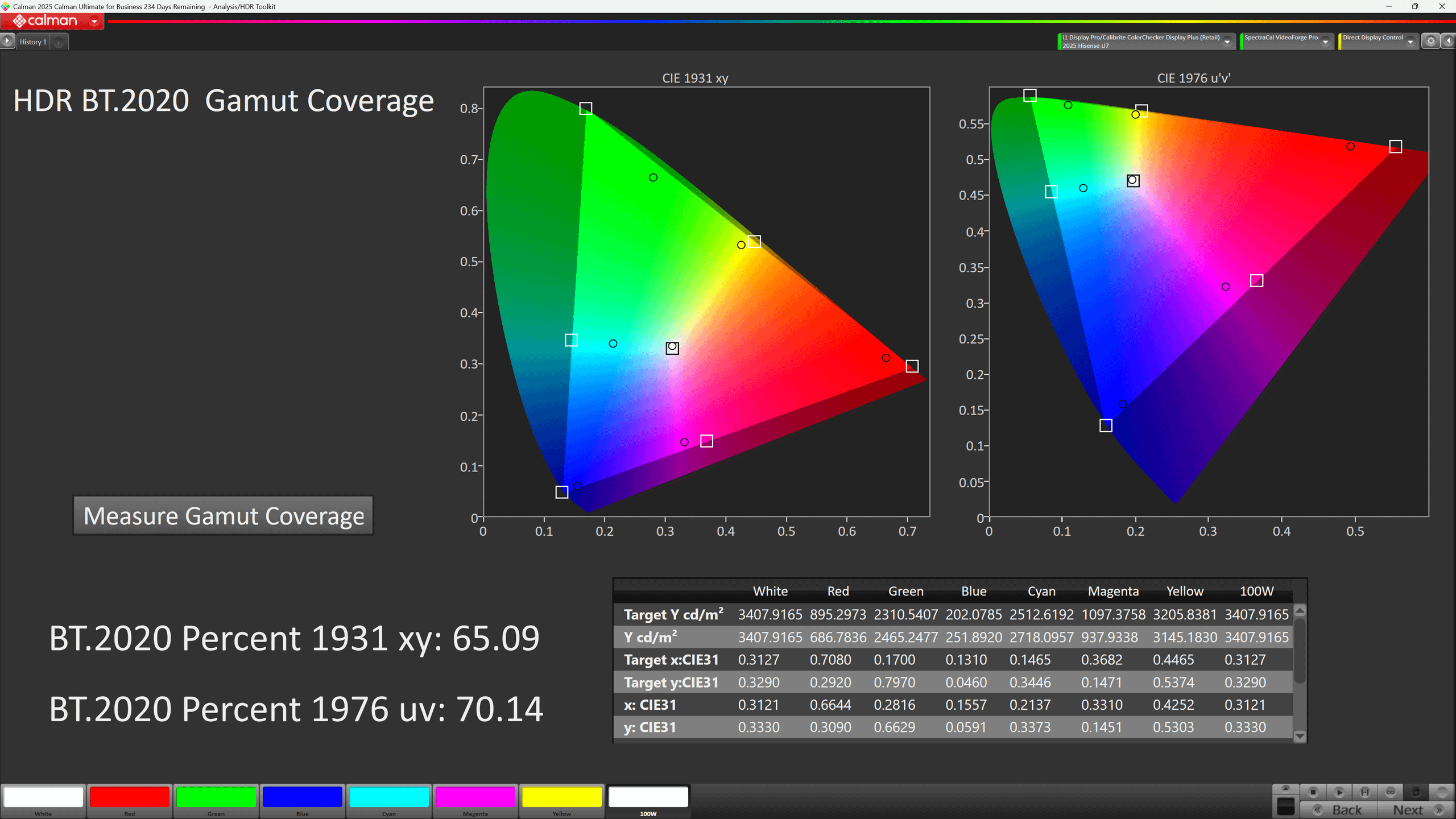
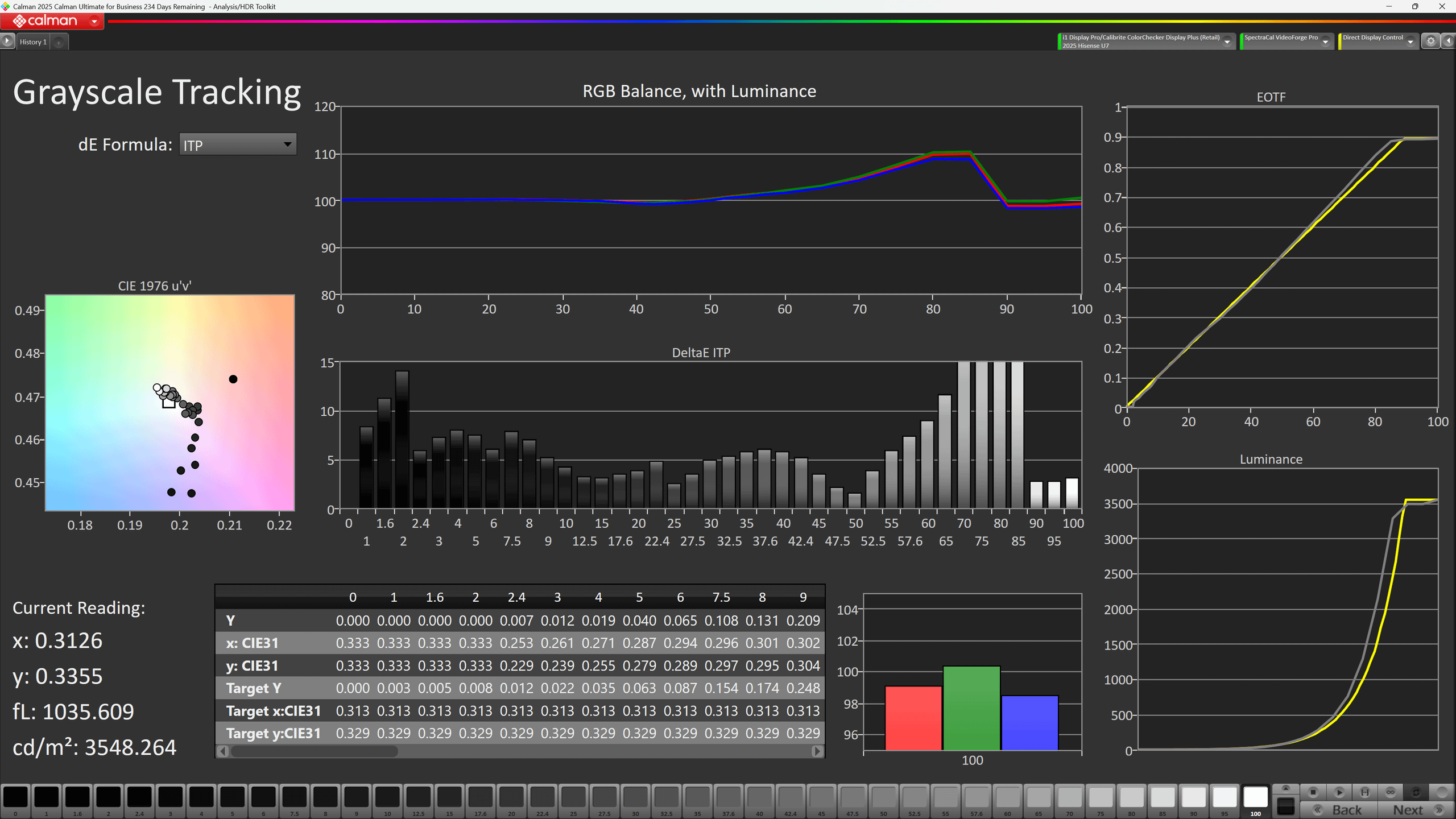
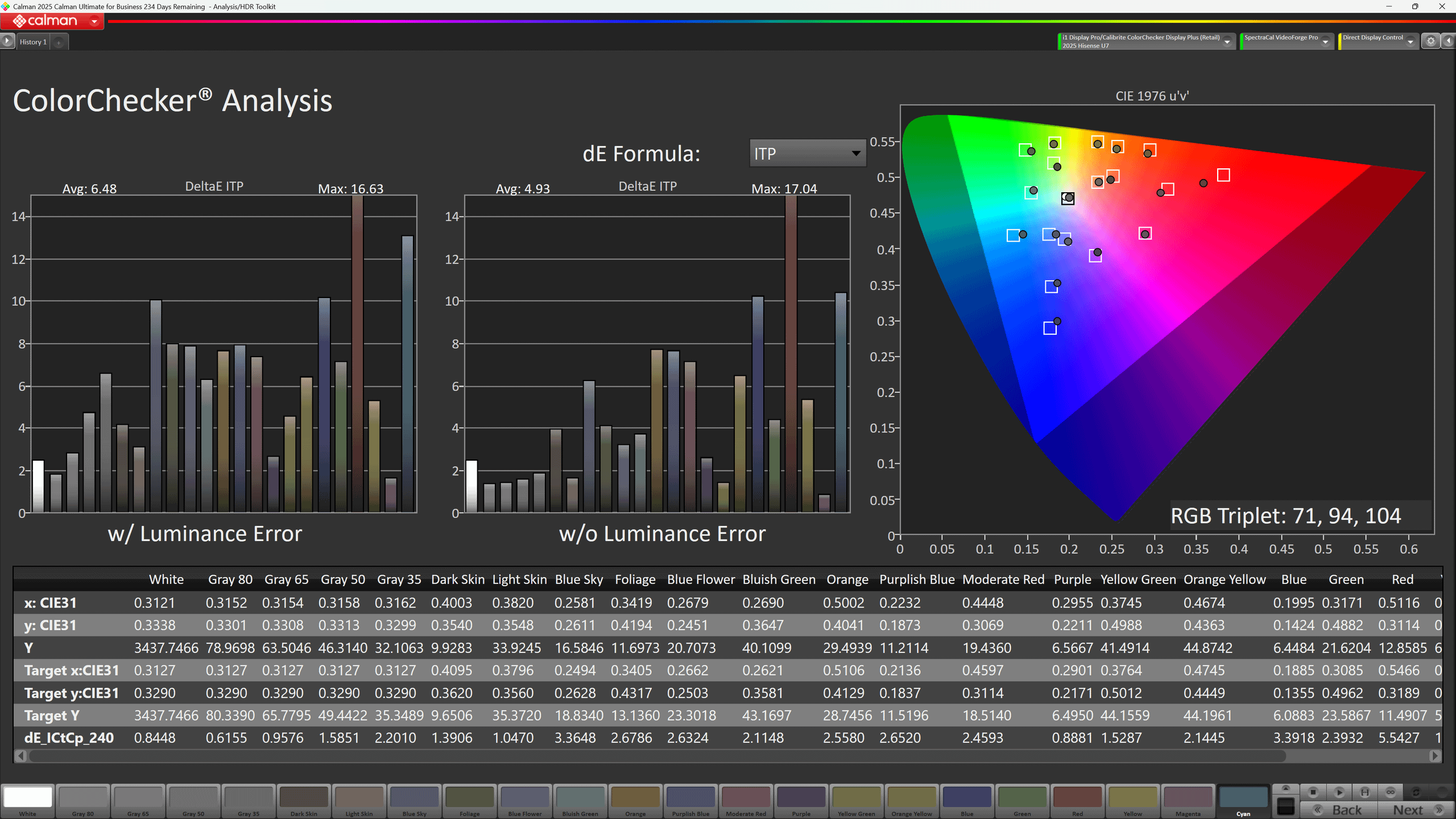
SDR accuracy is excellent once properly configured, with strong grayscale tracking and minimal color error, averaging around a Delta E of 1.6. HDR accuracy is slightly less precise due to some highlight over-brightening, but remains solid overall. Color gamut coverage measures roughly 70% of the BT.2020 space, which is limited compared to premium displays but acceptable for the price
Brightness is arguably one of the most important aspects of an HDR TV, and this is where the Hisense U75QG truly stands out.
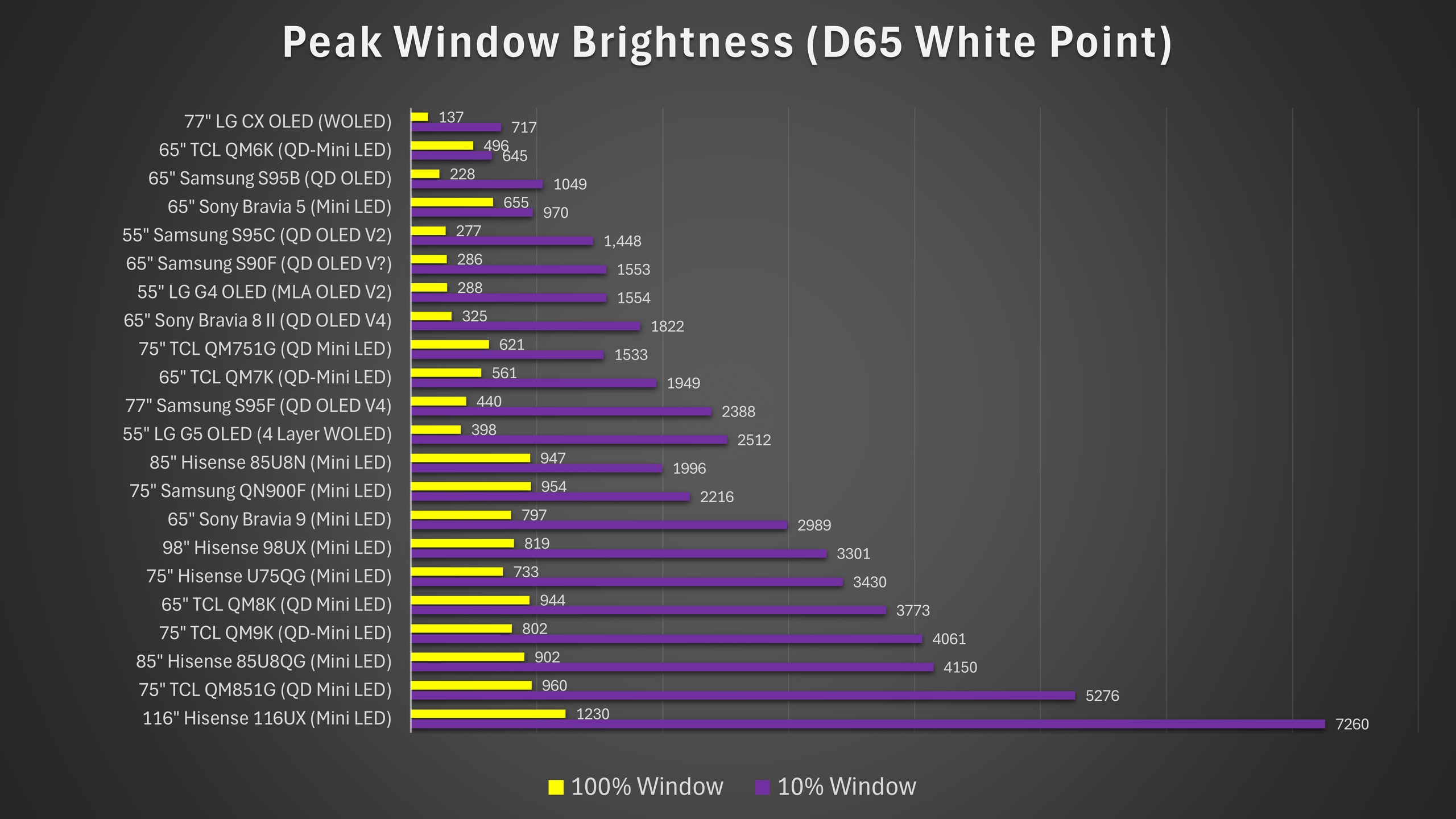
During peak window testing at a D65 white point, the results were so high that I initially reran the tests to confirm them. The TV delivered over 700 nits in a full-field 100% window and exceeded 3,400 nits in a 10% window. These are numbers that rival, and in some cases exceed, far more expensive televisions.
In theory, this level of brightness allows the TV to display HDR content without clipping or crushing highlights, and in many scenes, that holds true. Bright highlights pop aggressively, giving HDR content a very impactful and dynamic look.
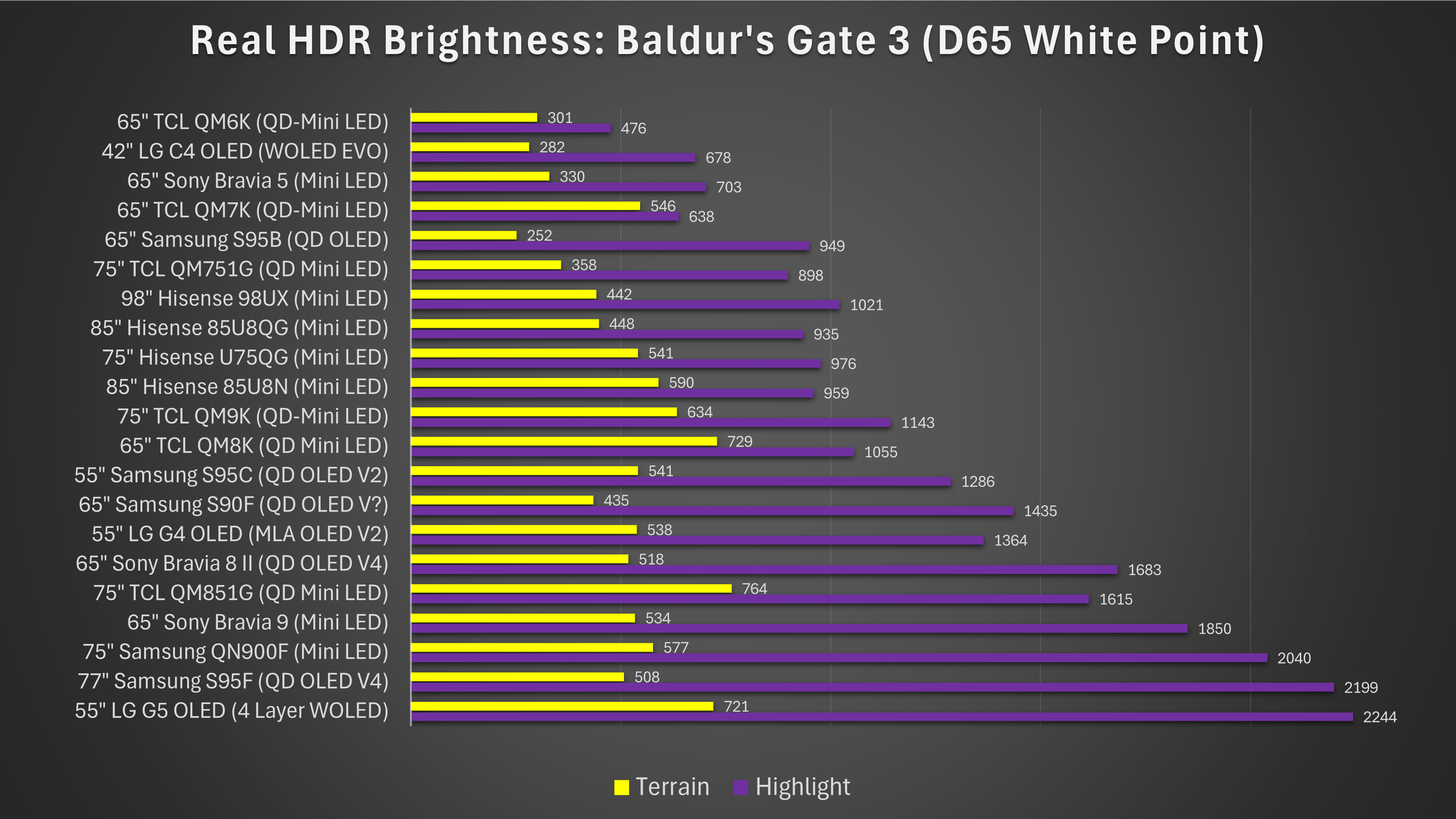
However, real-world HDR performance depends heavily on scene composition and picture mode. In certain content, such as gaming scenarios tested in Filmmaker Mode, brightness can fall behind other displays depending on tone mapping behavior. This results in a mixed HDR presentation where some scenes look exceptionally bright and others appear more restrained.
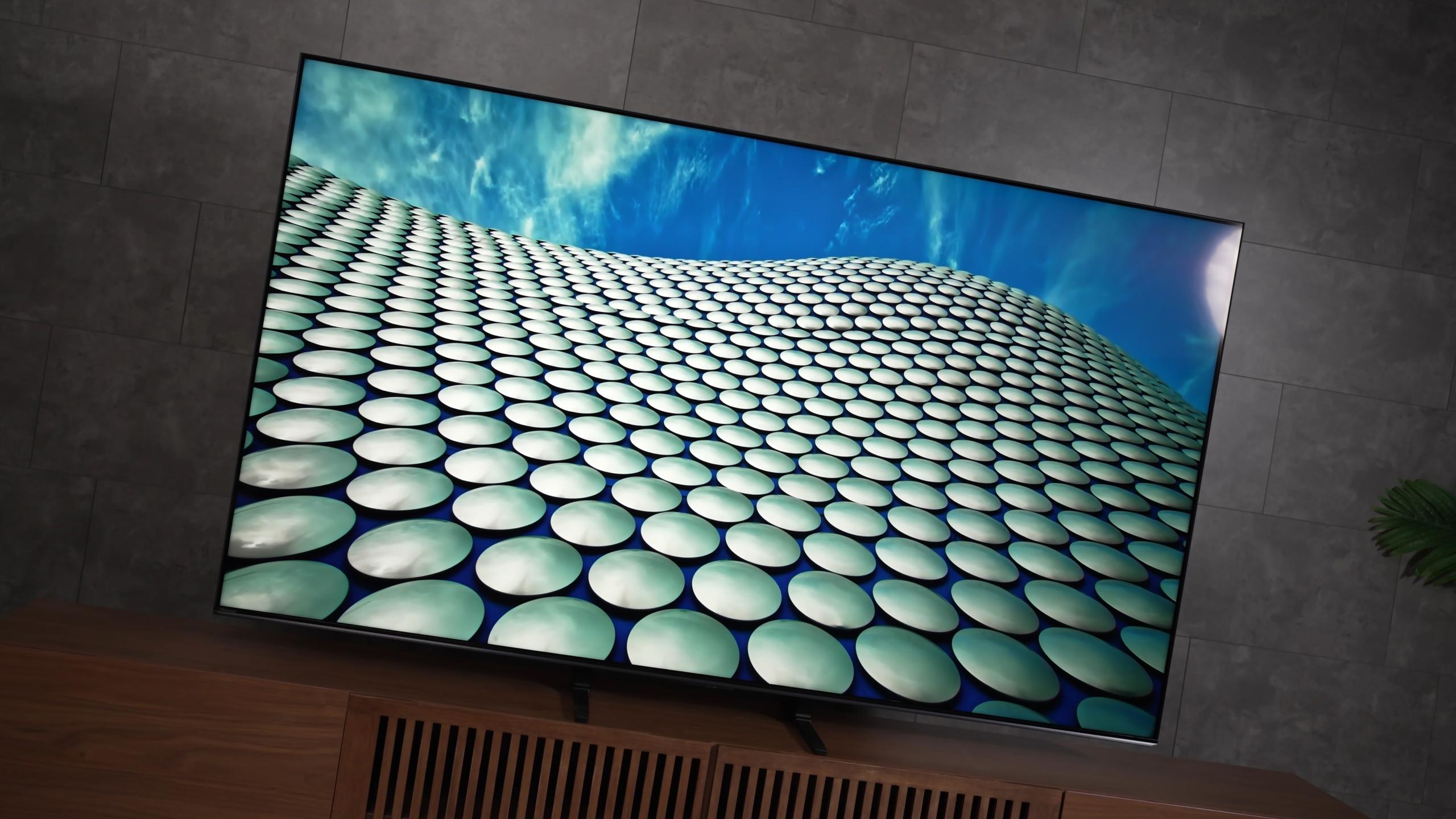
Overall, the TV leans heavily toward high brightness and impactful HDR, especially in well-lit environments. It may not deliver perfectly consistent HDR tone mapping across all content, but for most viewers, the sheer luminance capability will be a major selling point.
Contrast has long been a weakness of LCD based TVs, and for a Mini-LED display at this price, contrast performance is genuinely impressive.
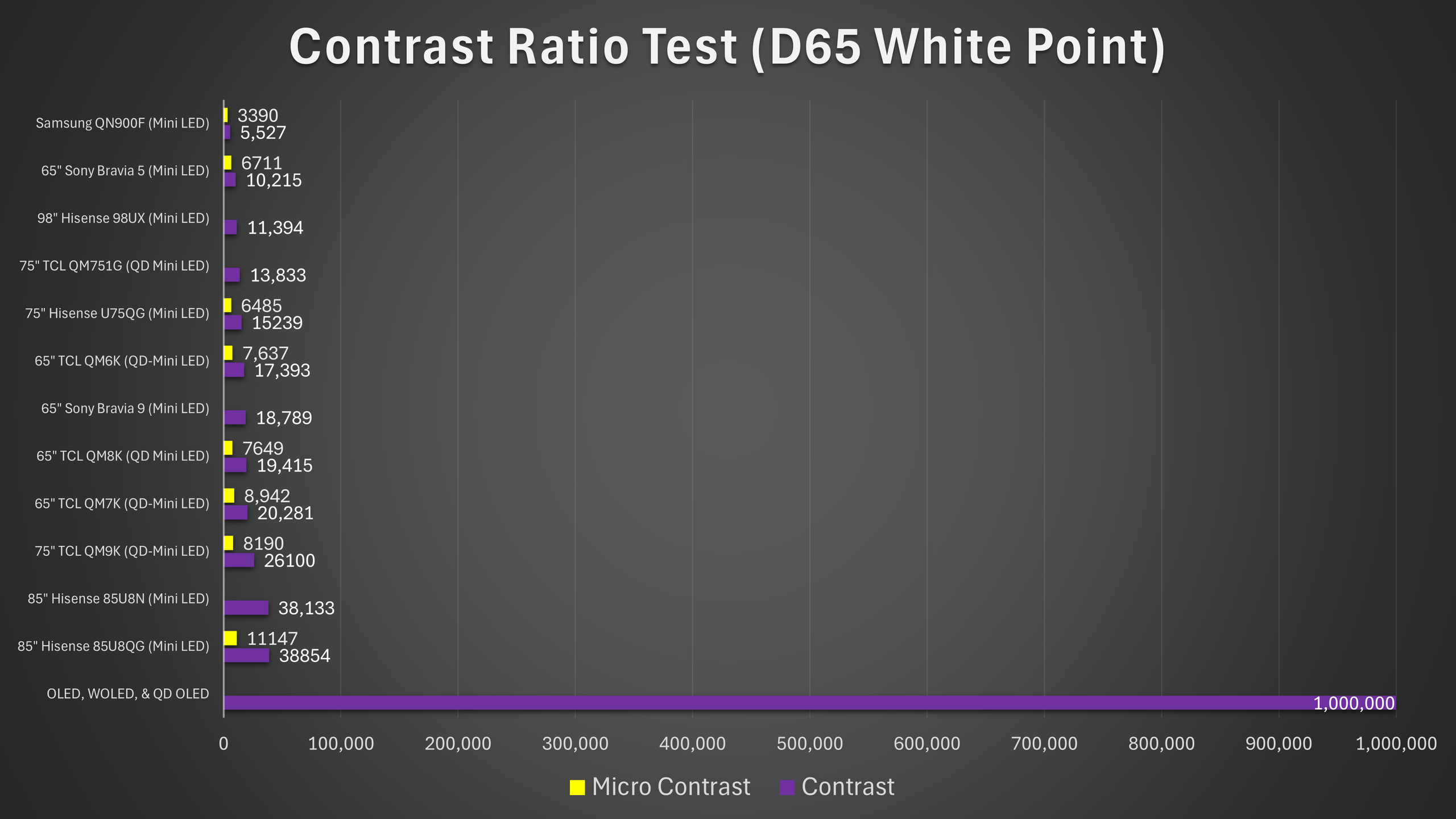
Measured native contrast exceeded 15,000:1, with micro-contrast measurements reaching over 6,400:1. These numbers translate into a strong sense of depth and separation in most content, particularly when viewed straight on.
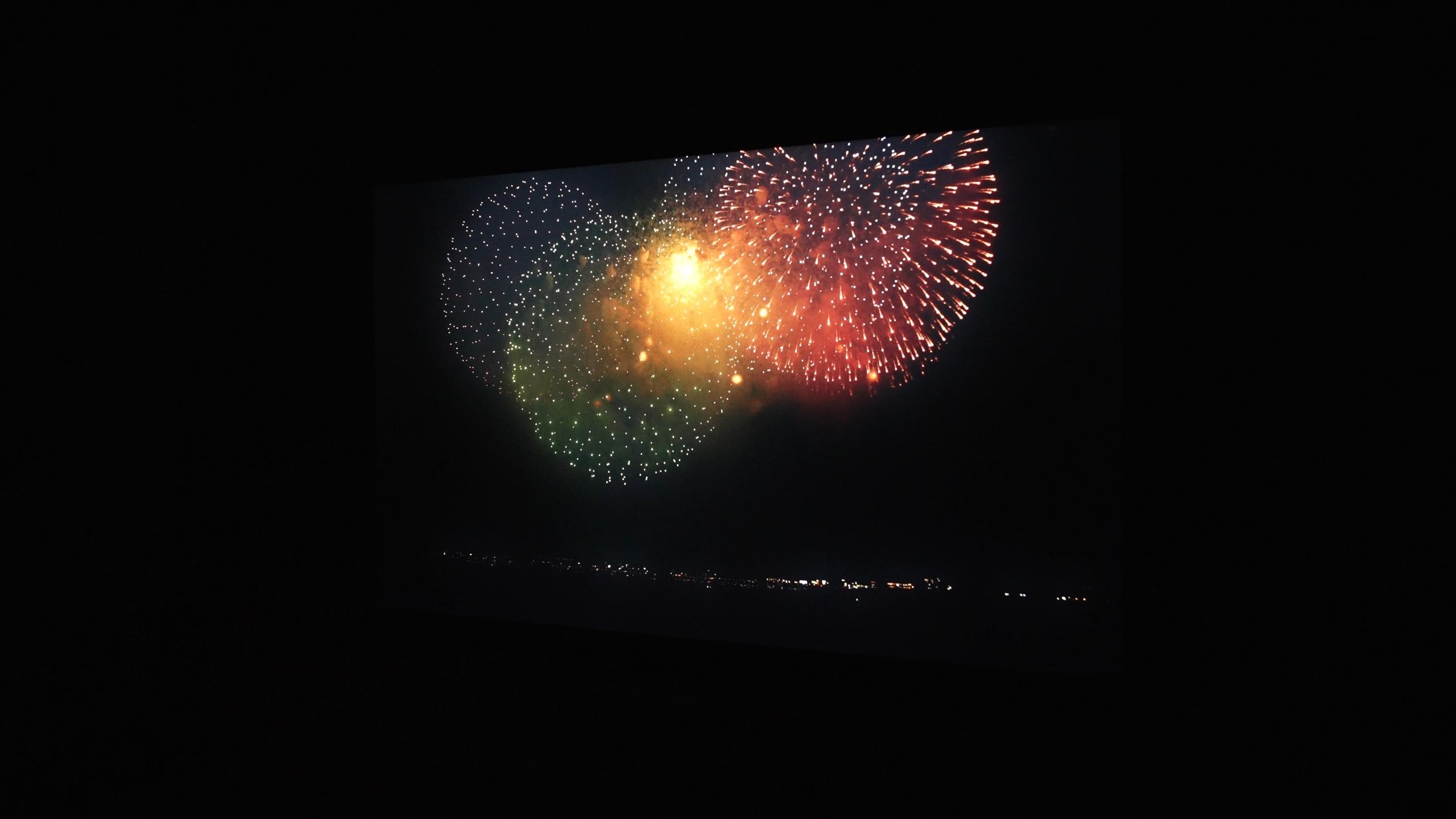
Local dimming performance is solid but not flawless. With over 2,300 zones, the TV is capable of delivering deep blacks in many scenes, but blooming is still present, especially in dark rooms and high-contrast content. Off-angle viewing exaggerates this effect significantly.
Compared to OLED, which effectively has millions of “zones,” the difference is obvious in challenging scenes. Fireworks, star fields, and subtitles on black backgrounds can reveal haloing. However, when viewed head-on and in moderate ambient light, contrast performance is more than sufficient for most viewers.
This TV is best suited for brighter rooms where blooming is naturally less noticeable. In those conditions, the perceived contrast can be very impressive.
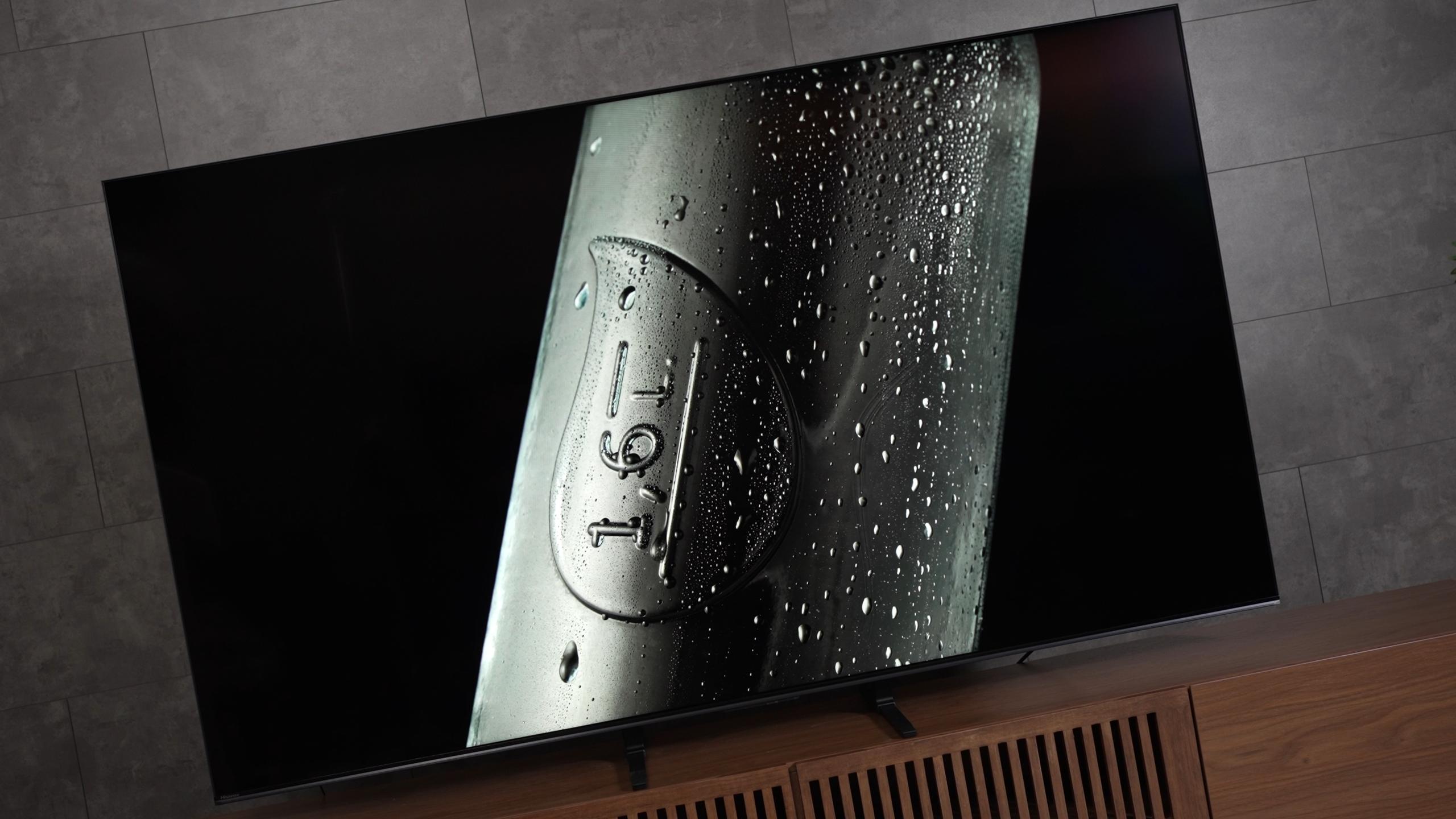
The Hisense U75QG uses a semi-gloss screen finish that provides fairly good clarity for the price. It avoids the matte haze that can reduce perceived sharpness, although it isn't quite as sharp as a full glossy coating that's featured on Hisense's more expensive TVs.
That said, ambient light handling is quite impressive on this unit.
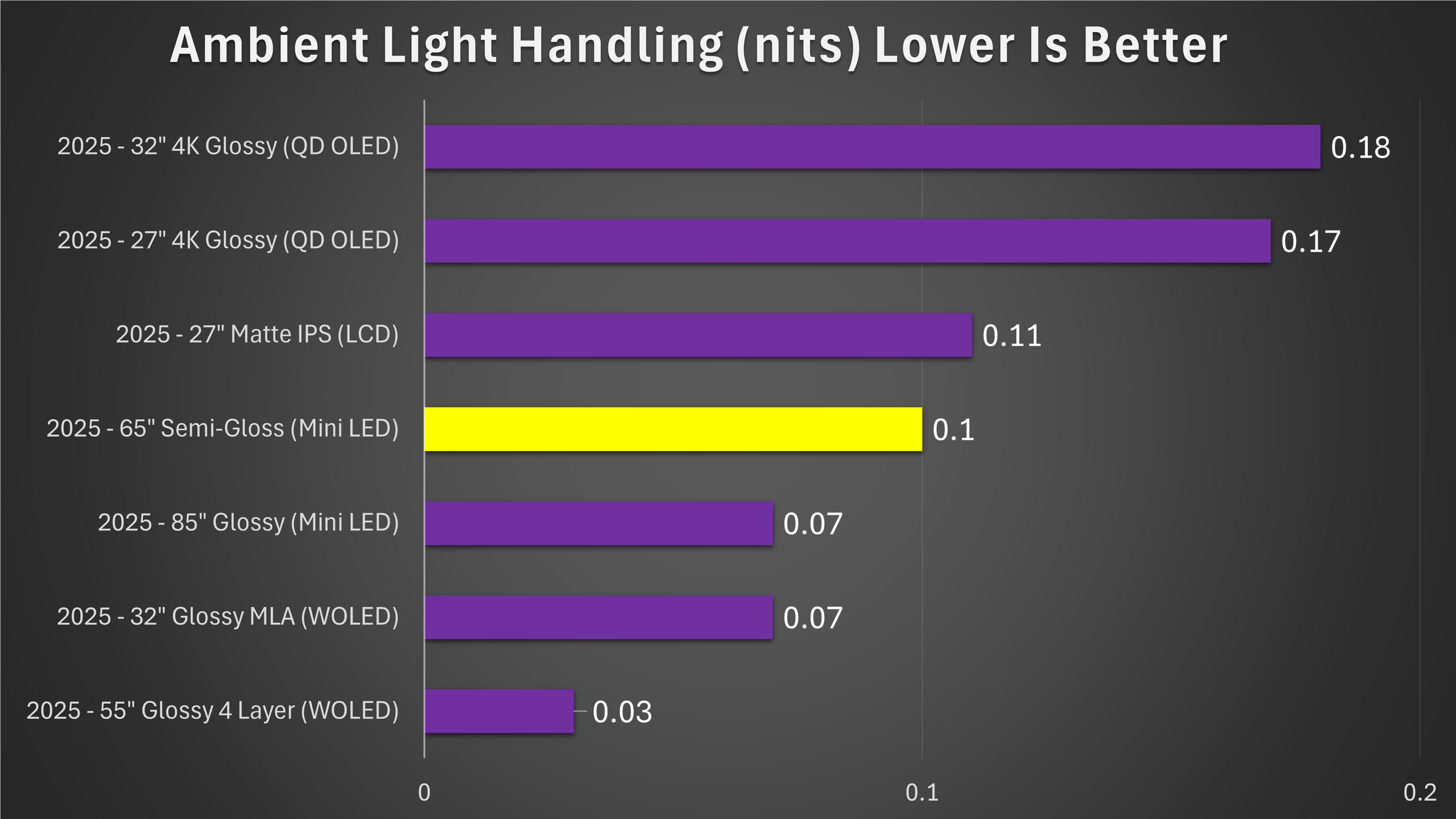
Ambient light handling measures around 0.1, which helps explain why this TV performs so well in bright rooms. Importantly, it also avoids the magenta tinting that can affect some OLED panels under strong lighting, making it well-suited for daytime viewing or spaces with uncontrolled light.
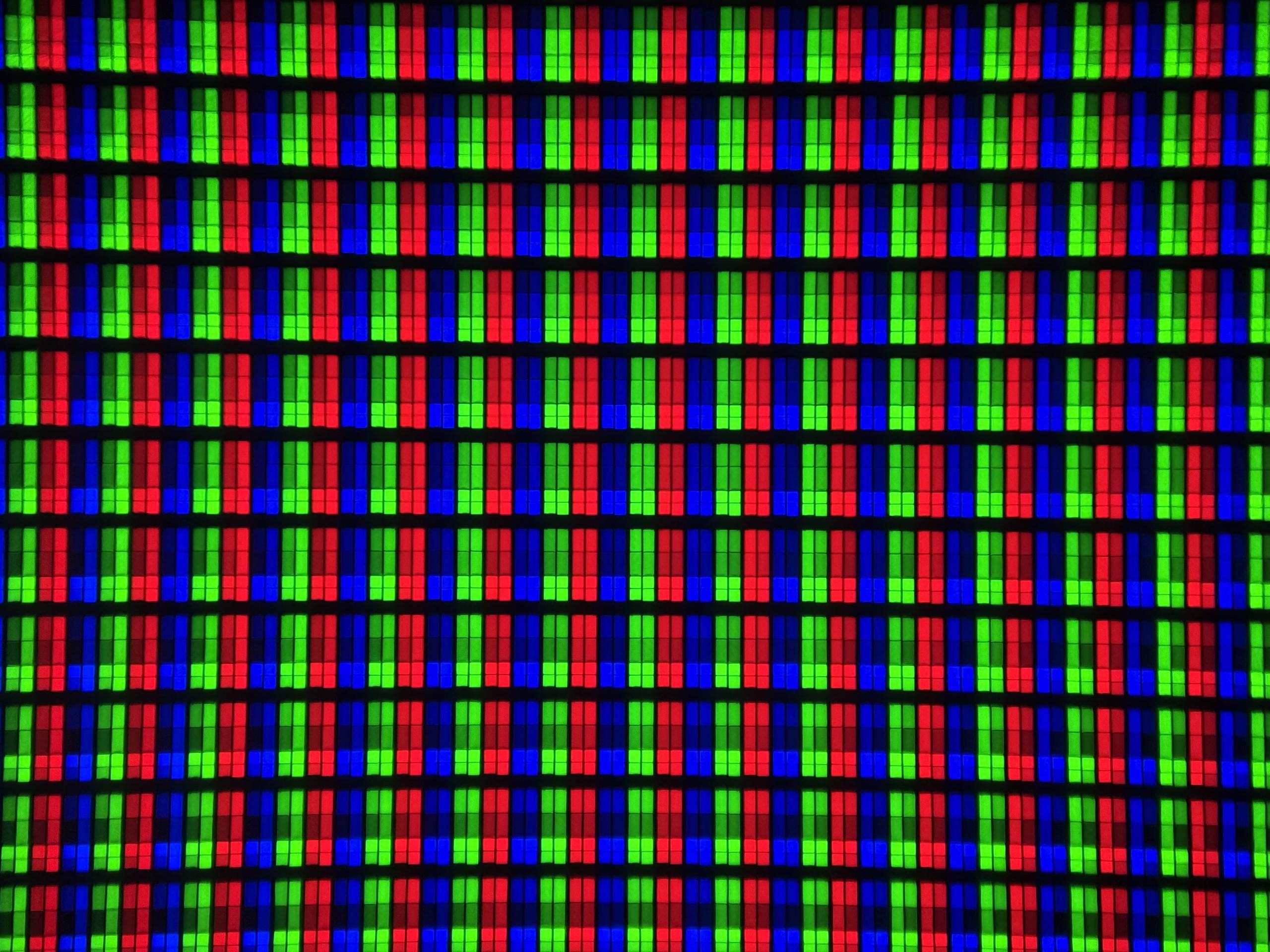
Text clarity is slightly affected by the sub-pixel layout, which is not a perfect RGB configuration. While this introduces a small reduction in fine text sharpness, it remains very usable for PC connections and general productivity.
Overall, clarity and ambient light handling are strong and align well with the TV’s intended role as a bright-room performer.
From a gaming perspective, the Hisense U75QG delivers a feature-rich but imperfect experience.
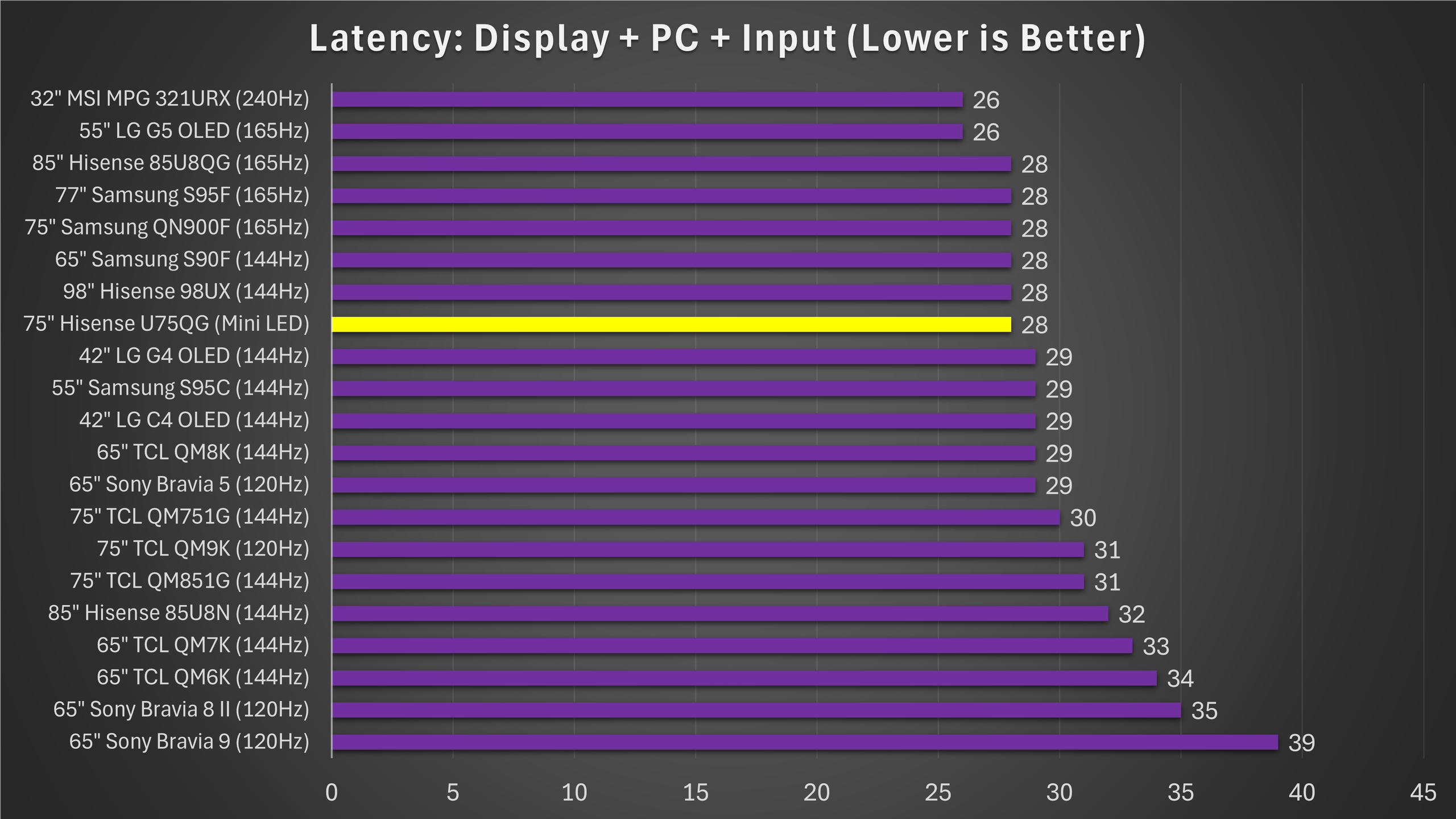
Input latency measured at approximately 28 milliseconds, which is very respectable and competitive with many gaming-focused TVs. Support for up to 165Hz refresh rates is particularly appealing for PC gamers, even though most console gaming will top out at 120Hz.
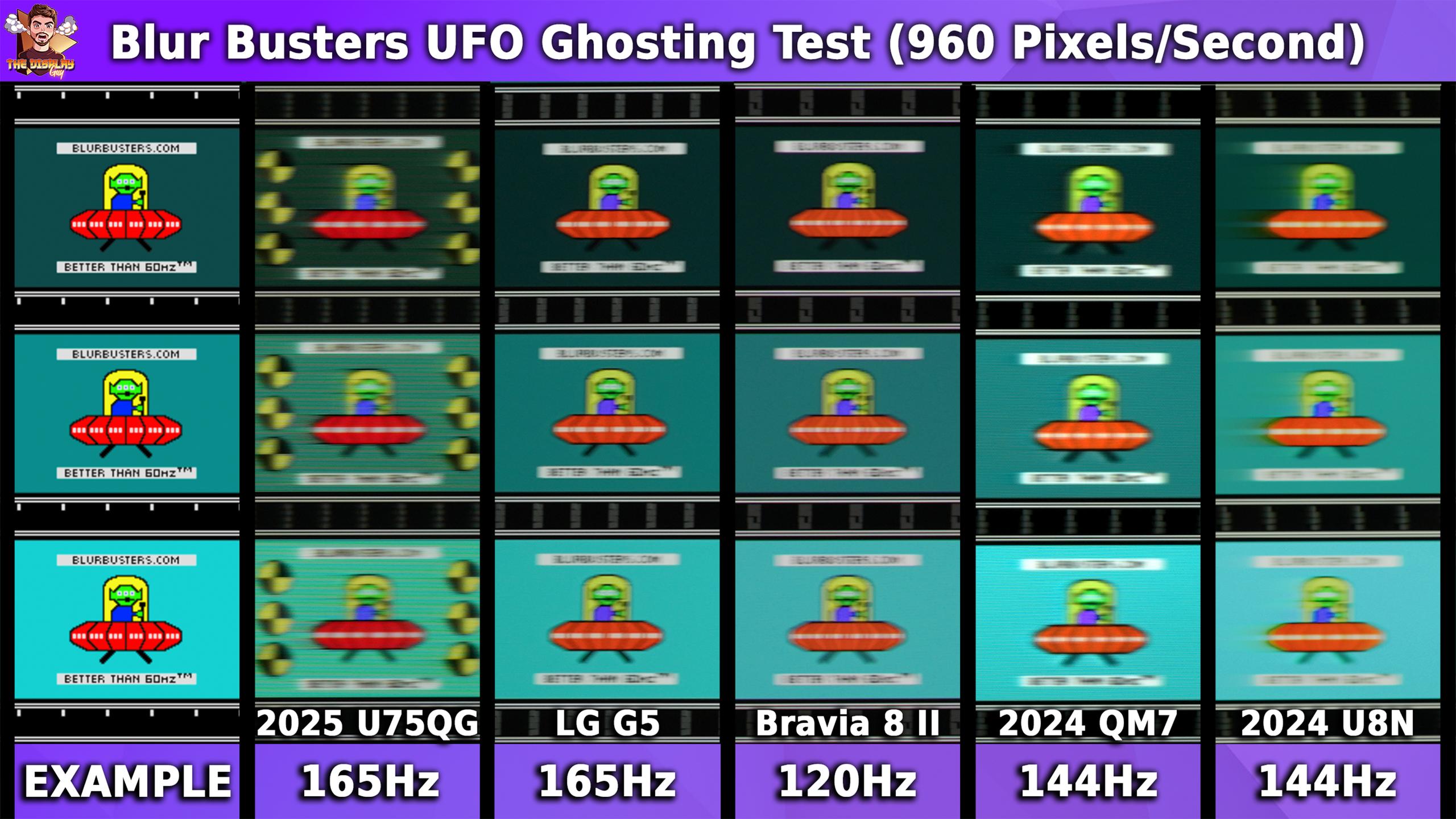
Motion clarity, however, does not fully capitalize on the high refresh rate. UFO ghosting tests revealed noticeable trailing, indicating slower pixel response times compared to OLED and some higher-end Mini-LED displays. While not severe, it is visible in fast-moving content.
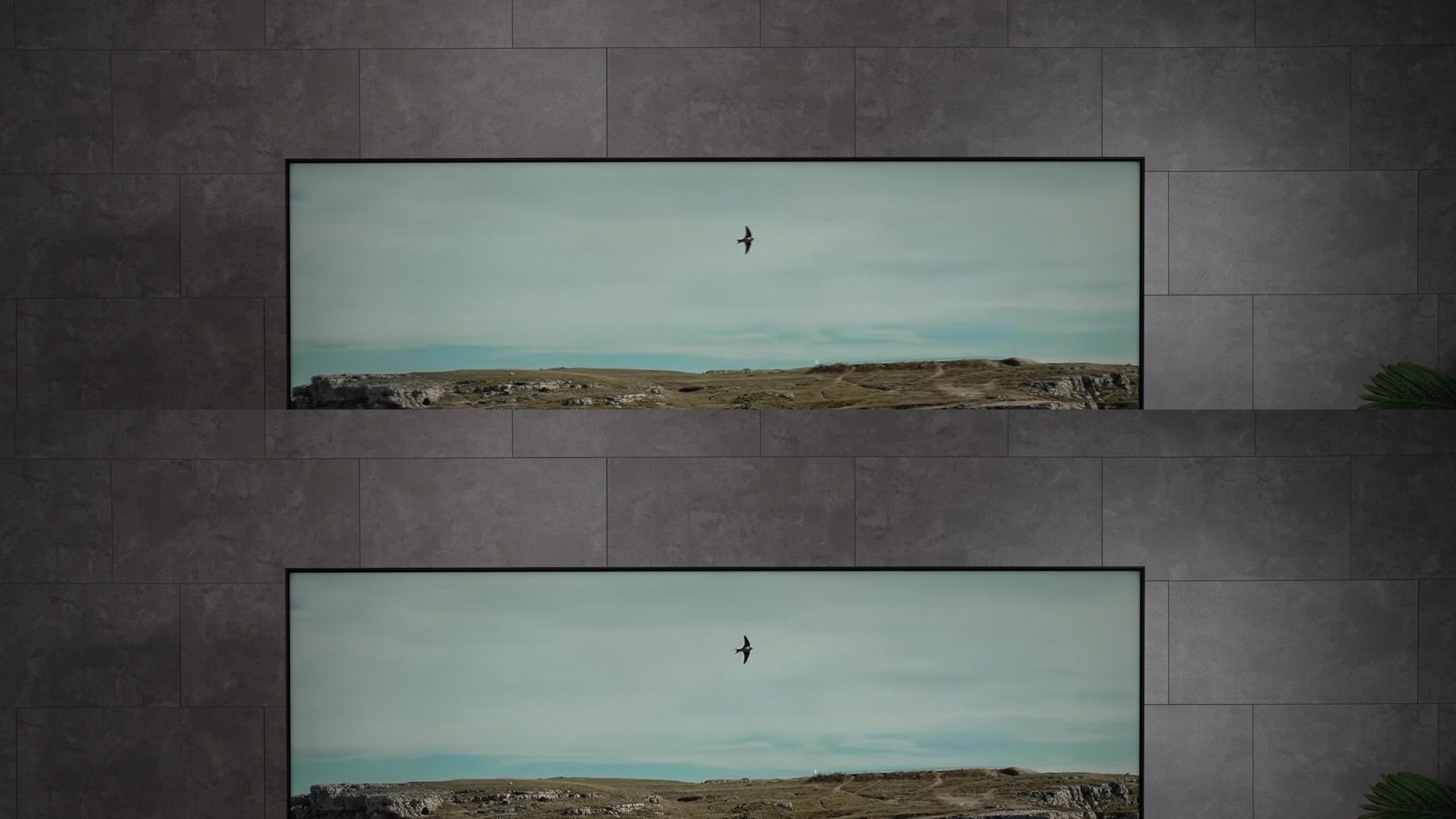
Motion interpolation performance is also limited. Lower settings around two to four provide modest smoothing, but pushing higher introduces artifacts and frame skipping. This is less refined than what I have seen on Hisense’s higher-end models.
VRR support works but introduces occasional flicker in certain scenes, particularly when connected to a PC. This is worth noting for competitive gamers.
As expected from a VA-based Mini-LED panel, the Hisense U75QG is best viewed straight on. Once you begin moving off-axis, contrast drops fairly quickly, and colors lose some of their punch. This is not unusual for a high-contrast VA display, but it does mean that wider seating arrangements will see a noticeable reduction in image impact.
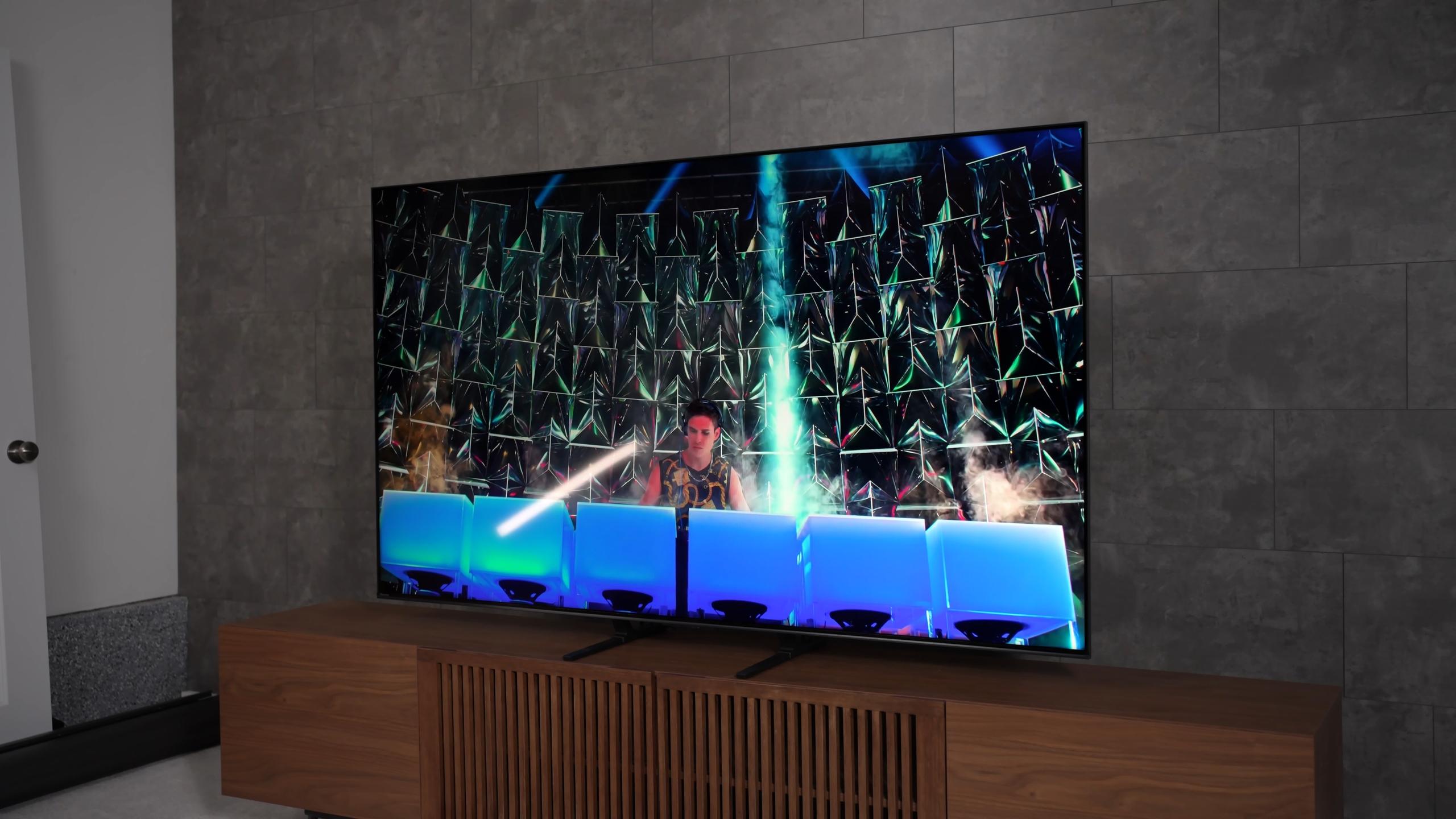
Blooming is also more apparent from the side, and I intentionally captured this off-angle to better expose the behavior. In high-contrast scenes—such as bright objects against dark backgrounds—the haloing becomes easier to spot when viewed at an angle. However, when viewed head-on, blooming is far less noticeable and generally well-controlled for a Mini-LED at this price.
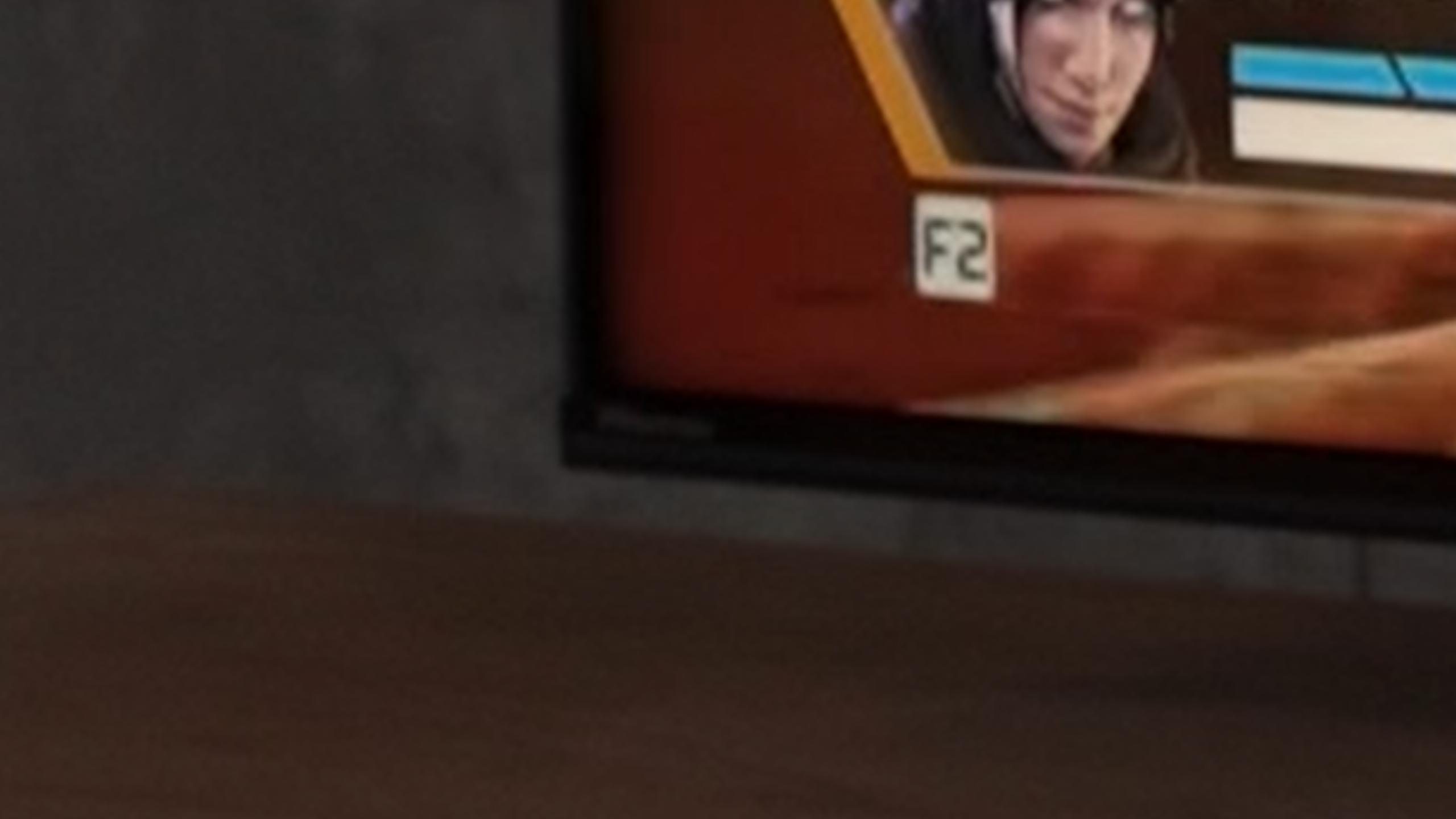
Uniformity in my unit was decent overall, though not perfect. I did notice some mild screen dirtiness in certain scenes, along with slight darkening toward the corners. These issues are fairly typical for budget Mini-LED displays and will vary from unit to unit, but they are worth noting for viewers who are particularly sensitive to uniformity.
In normal viewing conditions, especially in brighter rooms and when seated straight on, the U75QG delivers a strong and high-contrast image. The viewing angle and uniformity limitations are present, but they are not deal-breakers given the price and the overall performance this TV delivers.
Built-in audio performance is better than average. Treble and bass are reasonably balanced, though midrange is slightly recessed. While it does not replace a dedicated sound system, it is good enough for casual viewing.
The TV includes a wide range of picture adjustment features, including AI contrast enhancement and SDR-to-HDR conversion. These can increase perceived impact but reduce accuracy. Personal preference will determine whether they are useful.
The Hisense U75QG is not a perfect television, and it does not pretend to be one. It has clear limitations in motion handling, viewing angles, uniformity consistency, and blooming control. It also cannot match OLED when it comes to black levels or gaming motion clarity.
However, what makes this TV impressive is how strong it performs compared to other Mini LED competitors near and above its price.
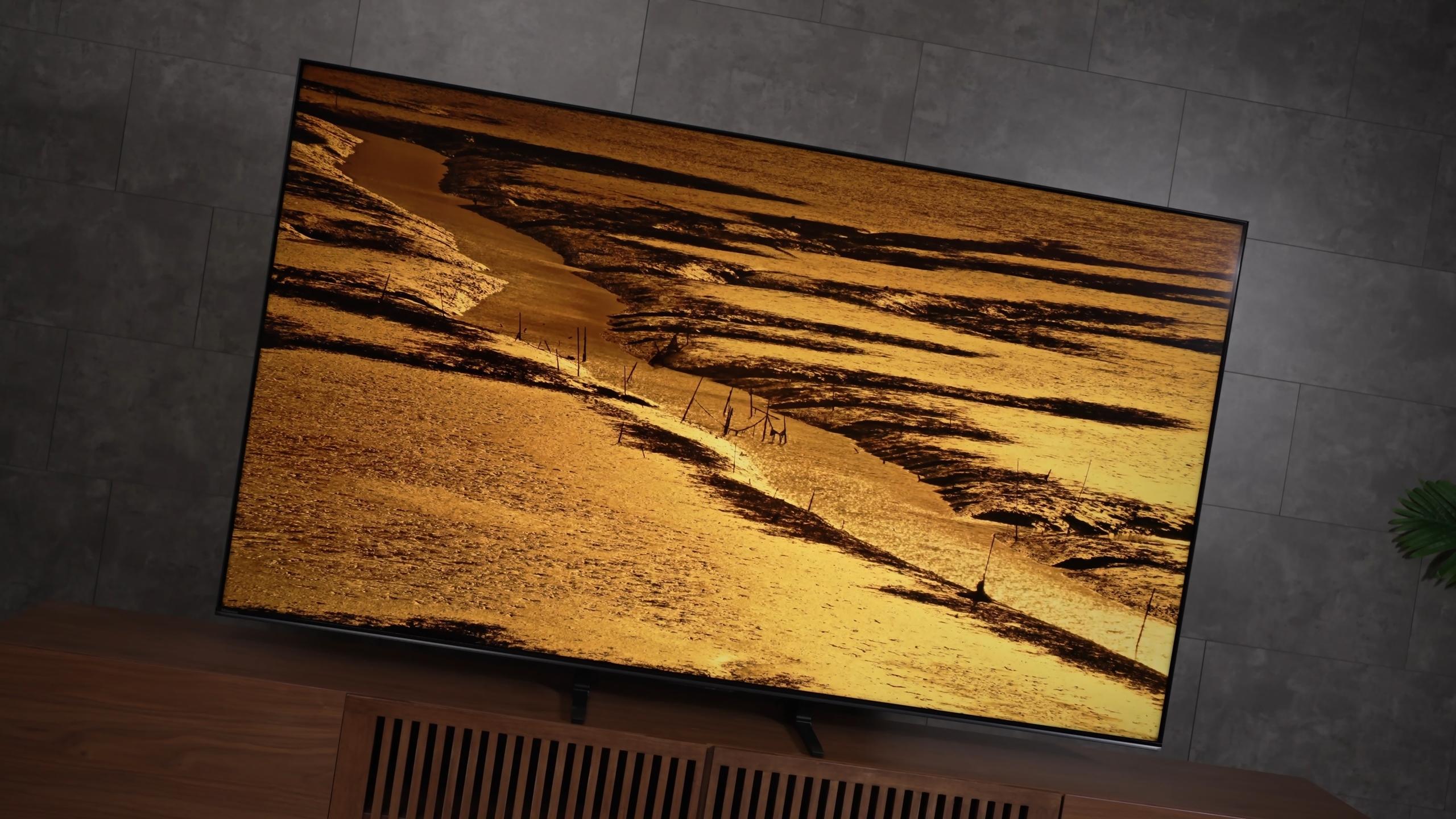
For under $1,000, you are getting a massive 75-inch Mini-LED display with over 2,300 local dimming zones, extremely high peak brightness, strong SDR accuracy, and a feature set that includes 165Hz refresh rates and full HDR format support. That combination is genuinely rare.
In many ways, it comes surprisingly close to much more expensive Mini-LED TVs, especially in HDR impact. While it may not be the best at any single thing, it does almost everything well enough to satisfy the vast majority of viewers.
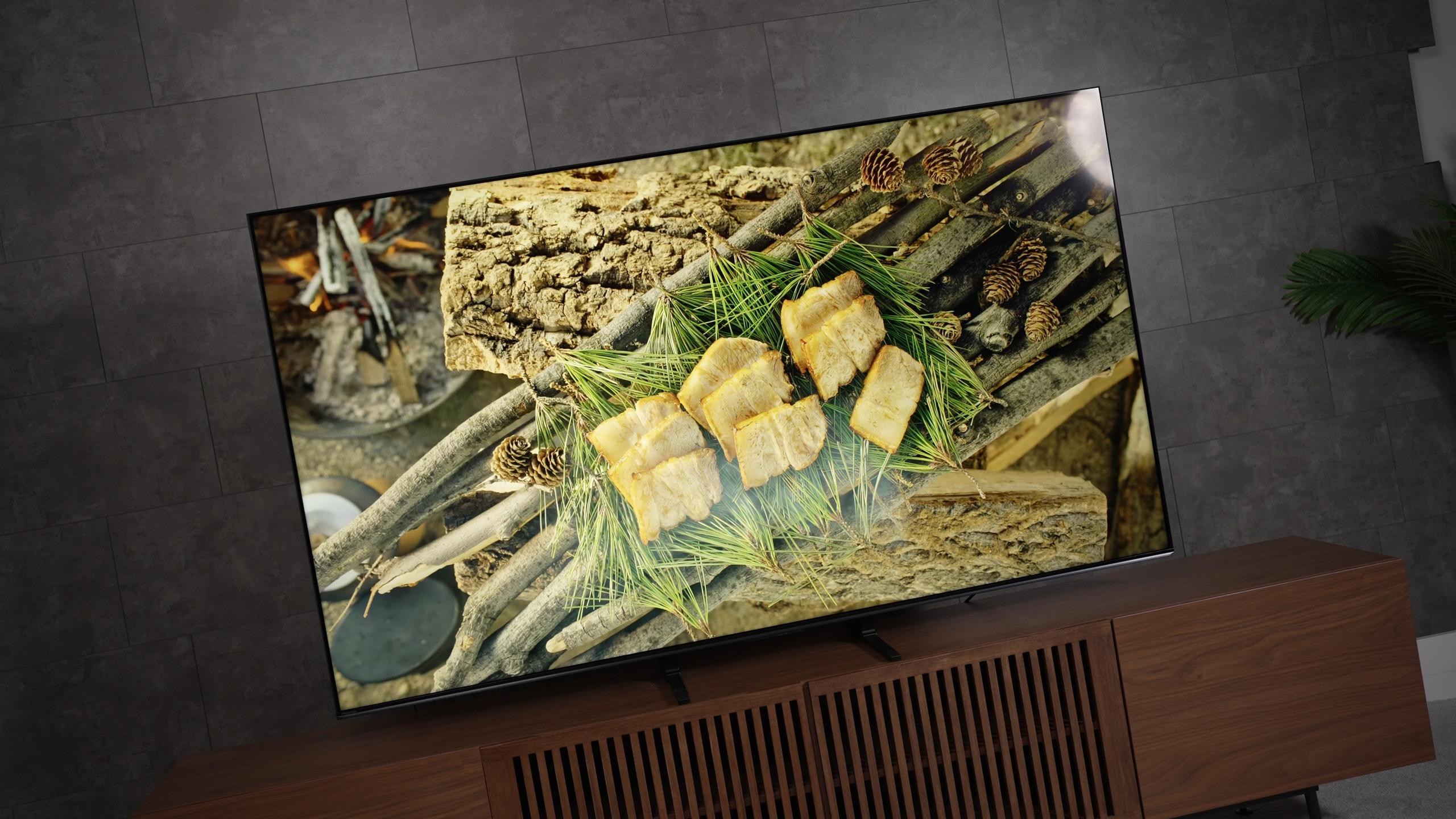
It represents excellent value and is easy to recommend for anyone shopping in this price range, particularly those who prioritize brightness and HDR punch over absolute black levels.
If your budget caps at around $1,000, the Hisense U75QG deserves serious consideration. It delivers far more than its price suggests, and I am genuinely interested to see how Hisense improves on this formula in their 2026 follow-up.



Privacy Policy
Terms and Conditions - Affiliate Policy
Home Security
© Copyright 2008-2026.
11816 Inwood Rd #1211, Dallas, TX 75244