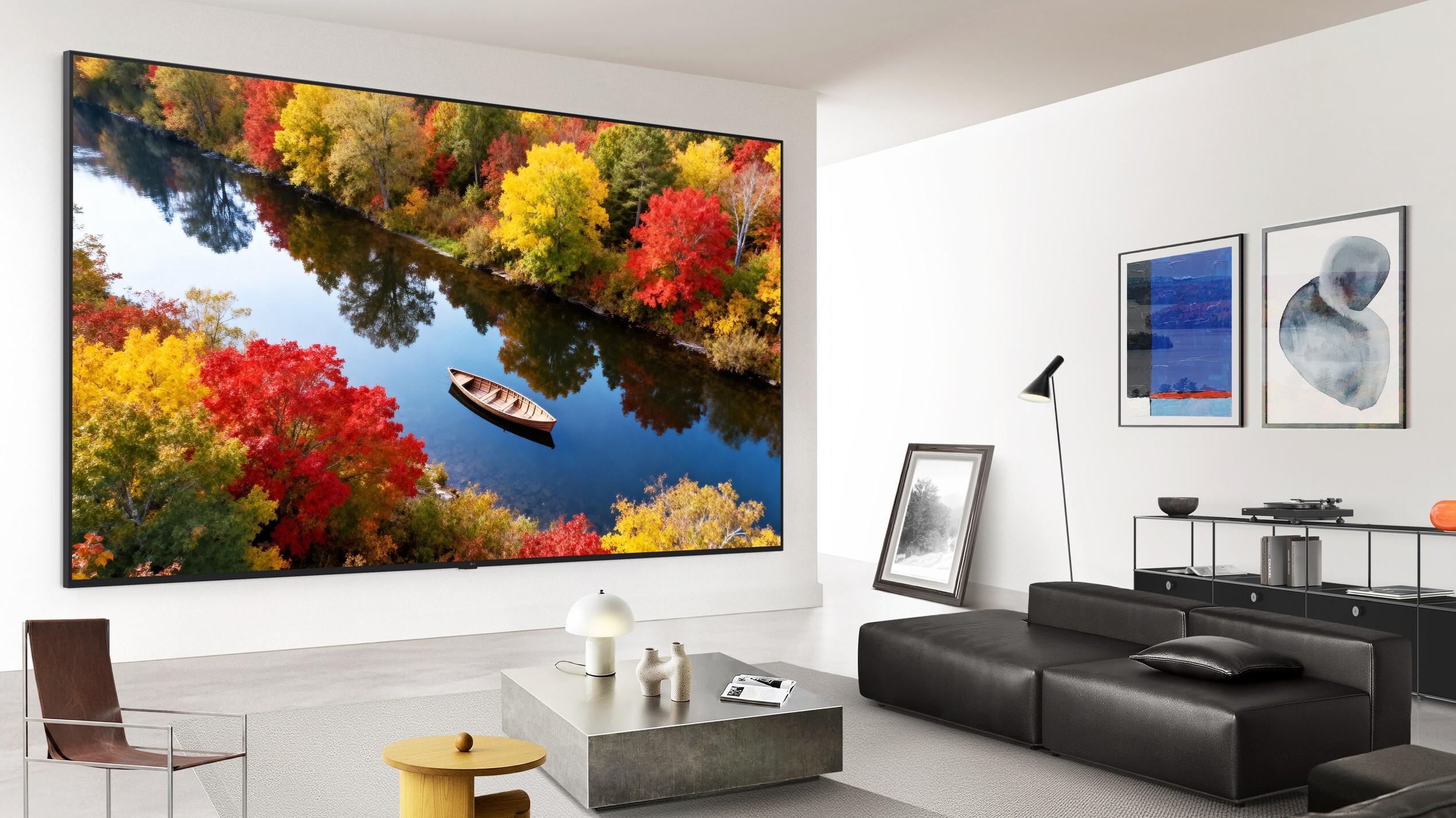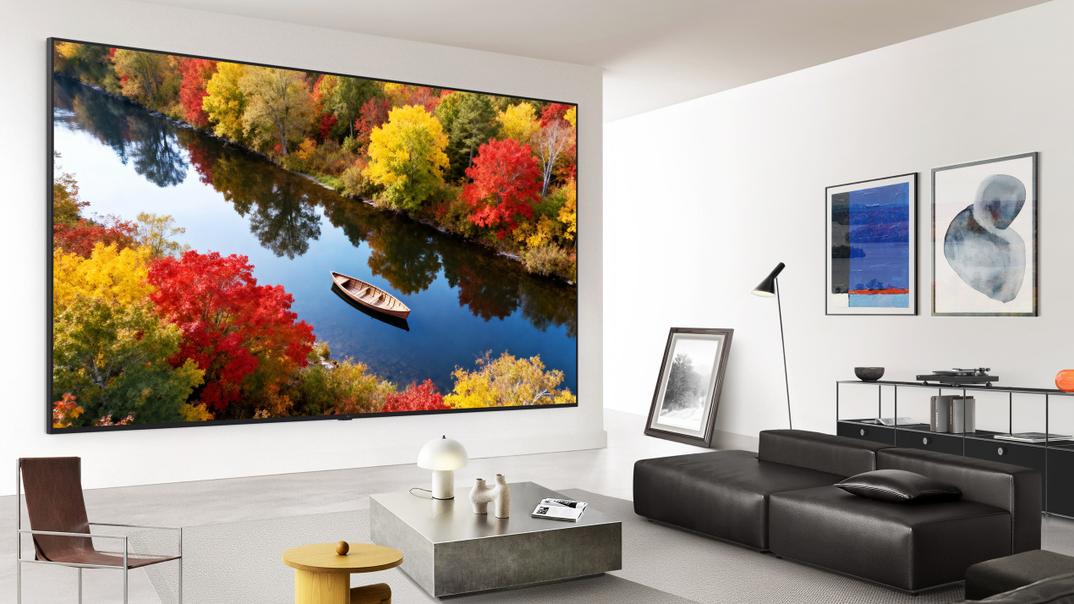
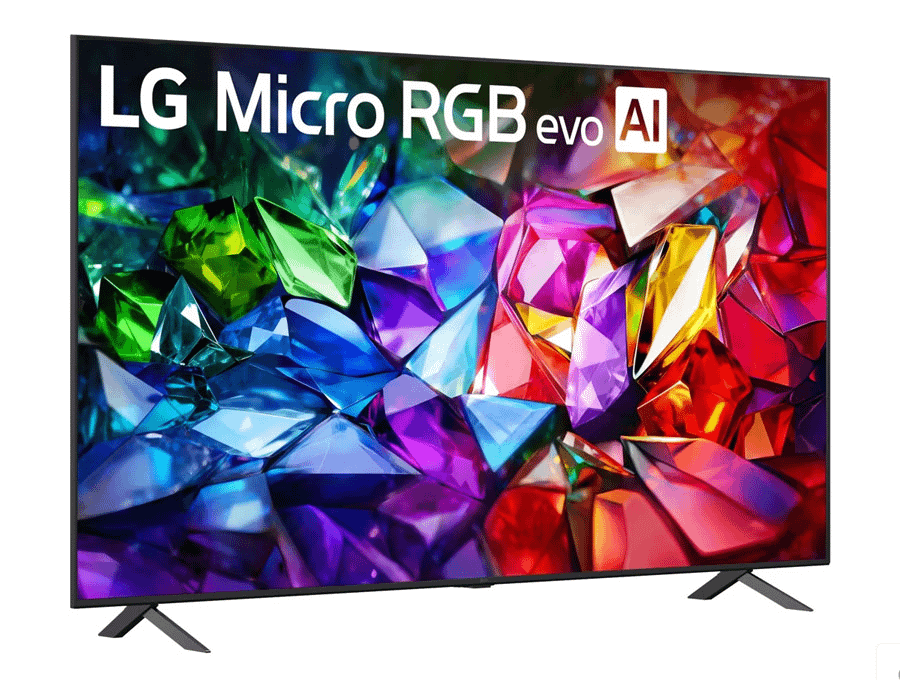
LG is adding something new to its premium TV lineup for 2026, and it’s not another OLED. First shown at CES 2026, the company has now officially announced pricing and availability for its first Micro RGB evo TV series, a new flagship line built around RGB backlighting and aimed at buyers shopping for very large screens.
Pre-orders are now live, with pricing starting at $4,999.99 for a 75-inch model. That alone tells you where this series sits: firmly in the high-end category, alongside other new RGB-based TVs from Samsung and Hisense.
The Micro RGB evo (MRGB95 series) will be available in 75-, 86-, and 100-inch sizes, which makes LG’s focus pretty clear—this is about big screens and premium positioning, not mainstream living-room TVs.
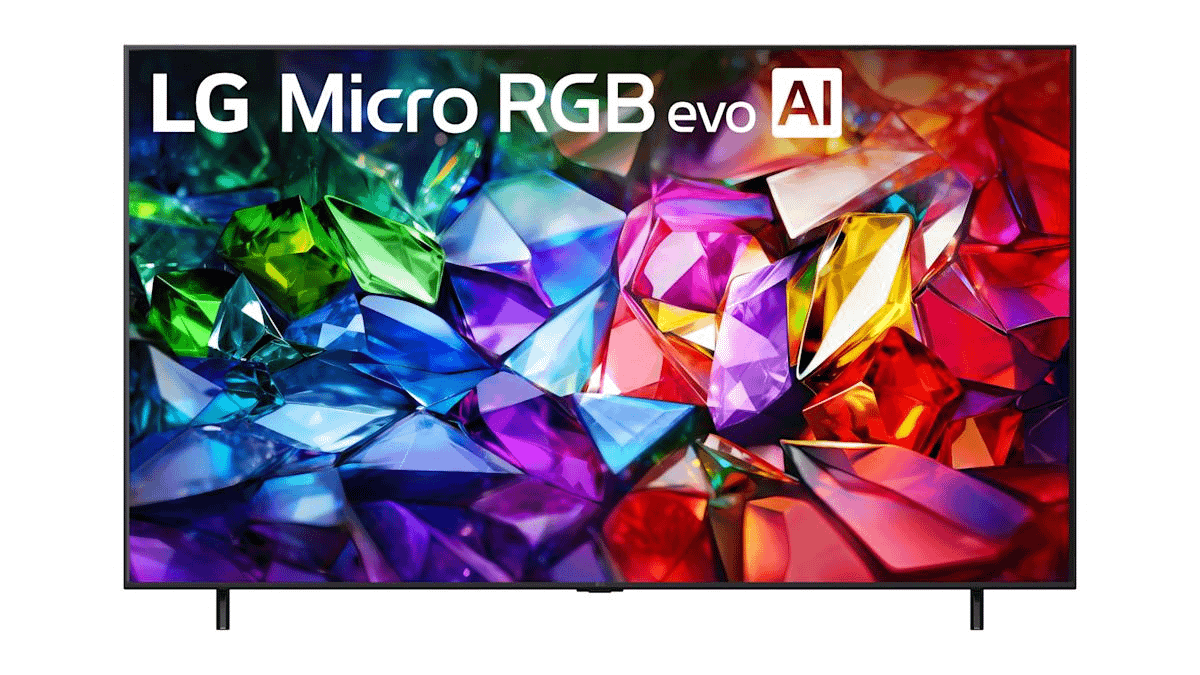
RGB TVs are starting to show up everywhere in 2026, but the idea behind them is fairly straightforward.
Instead of using a white or blue LED backlight filtered into color, LG’s Micro RGB evo uses separate red, green, and blue lighting elements behind an LCD panel. That shift is meant to improve color range, color brightness, and overall efficiency, while also helping the TV hit higher brightness levels than OLED in many cases.
It’s important to be clear about what this is, and what it isn’t. This isn’t LG replacing OLED. The company is still treating OLED evo as its top self-lit display technology. Micro RGB evo sits alongside it as a different kind of premium option, especially for buyers who want:
Because this is still an LCD-based design, LG also has an easier path to scaling up to 100-inch sizes without the same production challenges OLED faces.
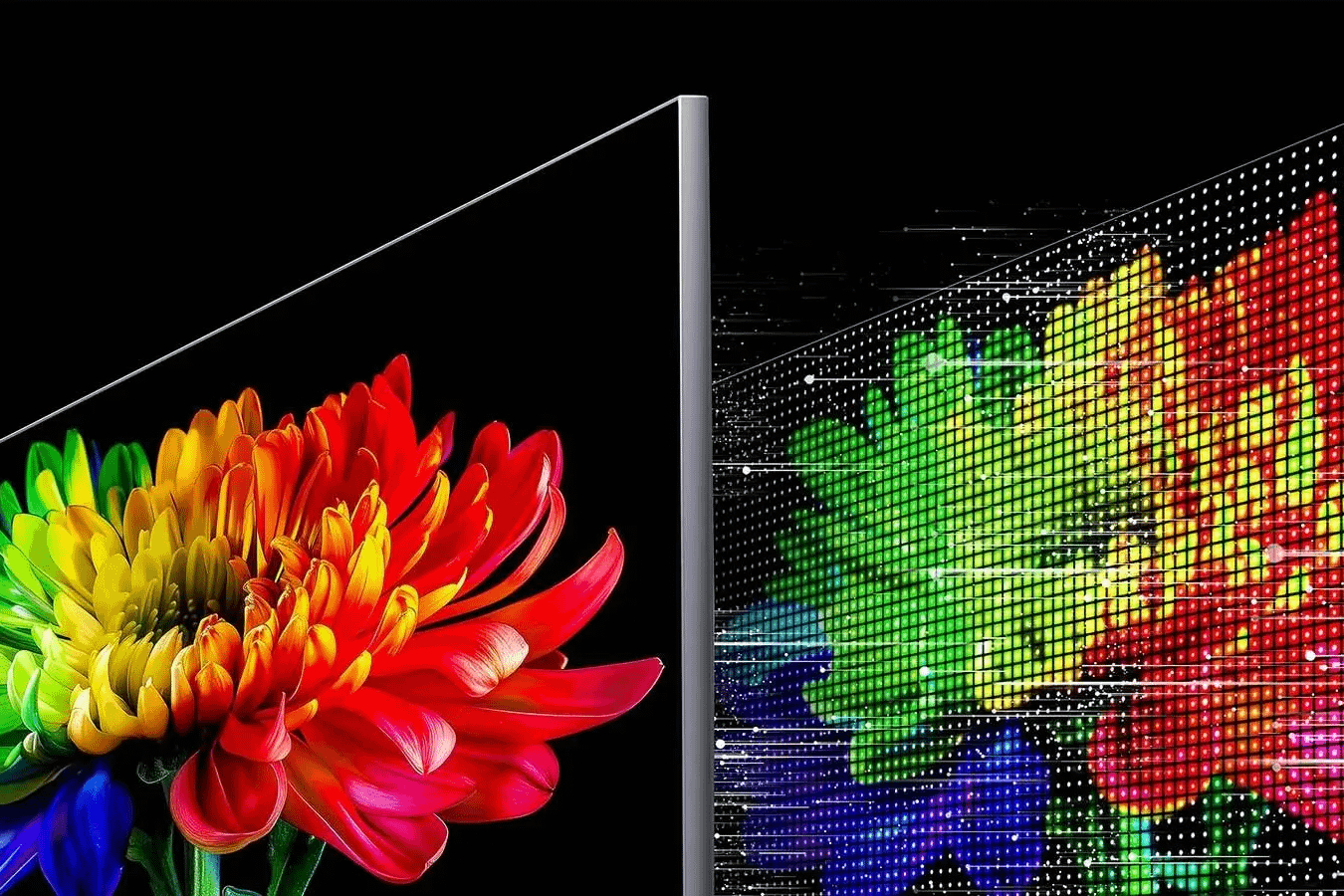
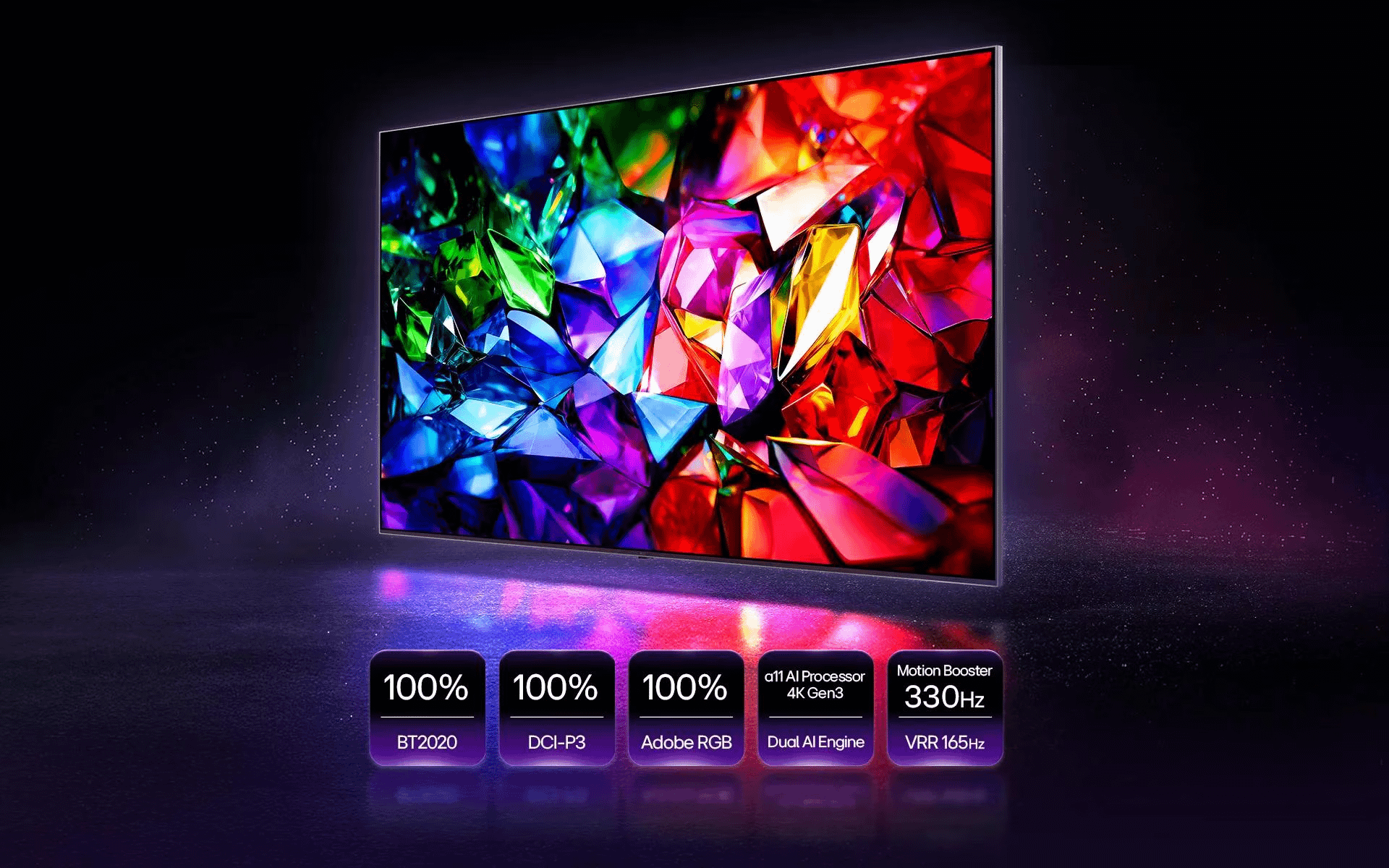
LG is putting most of its attention on color and processing with this lineup. The company says the Micro RGB evo achieves 100% color coverage across BT.2020, DCI-P3, and Adobe RGB, which covers a wide range of modern video and imaging standards. That’s paired with the Alpha 11 AI Processor Gen 3, which handles picture processing, motion, and upscaling.
On the contrast side, LG is using Micro Dimming Ultra, coordinating more than a thousand dimming zones to improve detail in darker scenes and reduce haloing.
Here’s the quick breakdown of what’s driving the picture:
That said, expectations should stay realistic. OLED is still the reference point for perfect blacks and per-pixel contrast. What LG is doing here is aiming for a different balance: more brightness, more size options, and wider color capability.
LG’s Micro RGB evo lineup breaks down like this:
There’s one notable omission: no 65-inch model. That’s still one of the most popular screen sizes, and it’s something competitors like Hisense and Samsung are already offering.
LG is jumping into a category that’s already getting crowded. At the 75-inch level, the competition is pretty straightforward:
The positioning is pretty clear. LG and Hisense are aligned on price, Samsung slightly undercuts both with the R95H, and the R85H sits in a different, more affordable tier.
Where LG tries to stand out is color performance and processing, with its full-spectrum color claims and Alpha 11 chip. Samsung’s advantage is flexibility and pricing, especially since it’s also offering smaller sizes. Hisense continues to compete on value, while the R85H is more about bringing RGB tech to a lower price point, with expected trade-offs.
On the software side, this is still very much an LG TV.
The Micro RGB evo runs the latest version of webOS and includes features like:
For anyone who’s used a recent LG TV, this will feel familiar, just with more AI layered into the experience.
The Micro RGB evo isn’t trying to replace OLED. It’s LG expanding its lineup into a new category that’s quickly becoming a battleground for premium TVs.
RGB backlighting promises better brightness and wider color than traditional LED TVs, while still allowing for very large screen sizes. That combination is clearly what LG is targeting here.
The bigger question is how it performs outside of a spec sheet. On paper, the Micro RGB evo sits somewhere between OLED and Mini-LED in terms of what it’s trying to deliver. Whether that translates into a meaningful upgrade for buyers will come down to real-world performance, especially around contrast, blooming control, and everyday viewing, and we will learn more once we test it.
Related Reading:



Privacy Policy
Terms and Conditions - Affiliate Policy
Home Security
© Copyright 2008-2026.
11816 Inwood Rd #1211, Dallas, TX 75244