


We'd like to thank ProjectorScreen.com for their assistance with our projector evaluations and testing. Their yearly shoot-out, extensive selection and helpful attitude makes our life easier when we need to dig in a little more.
For years, XGIMI has been the undisputed king of the “lifestyle” projector market. Want a portable unit for a camping trip? Grab a MoGo. Need a bright, fuss-free 4K box for your living room? The Horizon series was the default recommendation. XGIMI democratized projection with plug-and-play simplicity, and they did it better than anyone.
The Titan is not that. This is not a cute grey cube you toss in a backpack. At 25.3 lbs of serious hardware, the Titan is XGIMI’s opening salvo into the power-user, commercial, and high-end home theater space, a market historically gatekept by Epson, JVC, and Sony. It signals that XGIMI is done just playing in the living room. They want a permanent seat in your dedicated theater.
And having spent extensive time with the unit, I can say this: the combination of its motorized optical engine, staggering brightness, and a price tag that undercuts the establishment makes it arguably the most compelling projector at the $4,000 mark today. It isn’t perfect—no projector is—but its strengths are so commanding that its weaknesses feel like fair trade-offs rather than dealbreakers.
Measured and verified specifications compiled from multiple professional reviews:
| Claimed Brightness | 5,000 ISO Lumens |
| Measured (Calibrated) | 4,458–5,553 ANSI Lumens |
| Measured (Performance) | 6,616–7,894 ANSI Lumens |
| Resolution | 3840 × 2160 (XPR pixel-shift) |
| DMD Chip | 0.78" HEP (High Efficiency Pixel) |
| Light Engine | Dual Laser (Laser + Phosphor) |
| Color Gamut | ~98% DCI-P3 / ~75% BT.2020 |
| Native Contrast | ~1,800:1 |
| Dynamic Contrast | 5,000,000:1 |
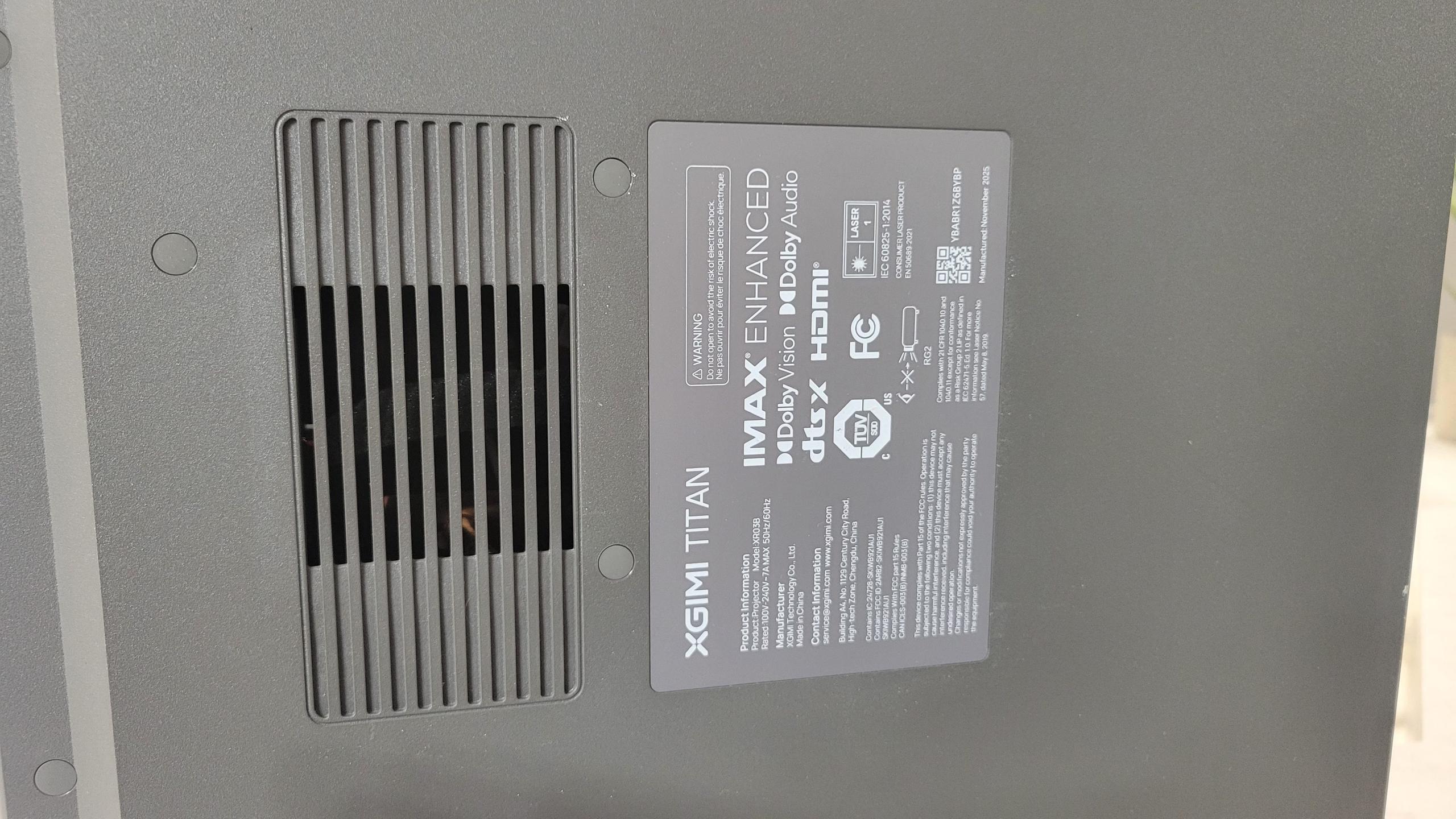
| HDR Formats | Dolby Vision, HDR10+, HLG, IMAX Enhanced |
| Throw Ratio | 1.2–1.8:1 |
| Lens Shift | V±120% / H±45% (motorized) |
| Refresh Rate | 4K/60Hz, 1080p/240Hz |
| Input Lag (Game Mode) | ~32–33 ms |
| Fan Noise | <32 dB (standard mode) |
| Weight | 25.3 lbs (11.5 kg) |
| Price | $3,999 |
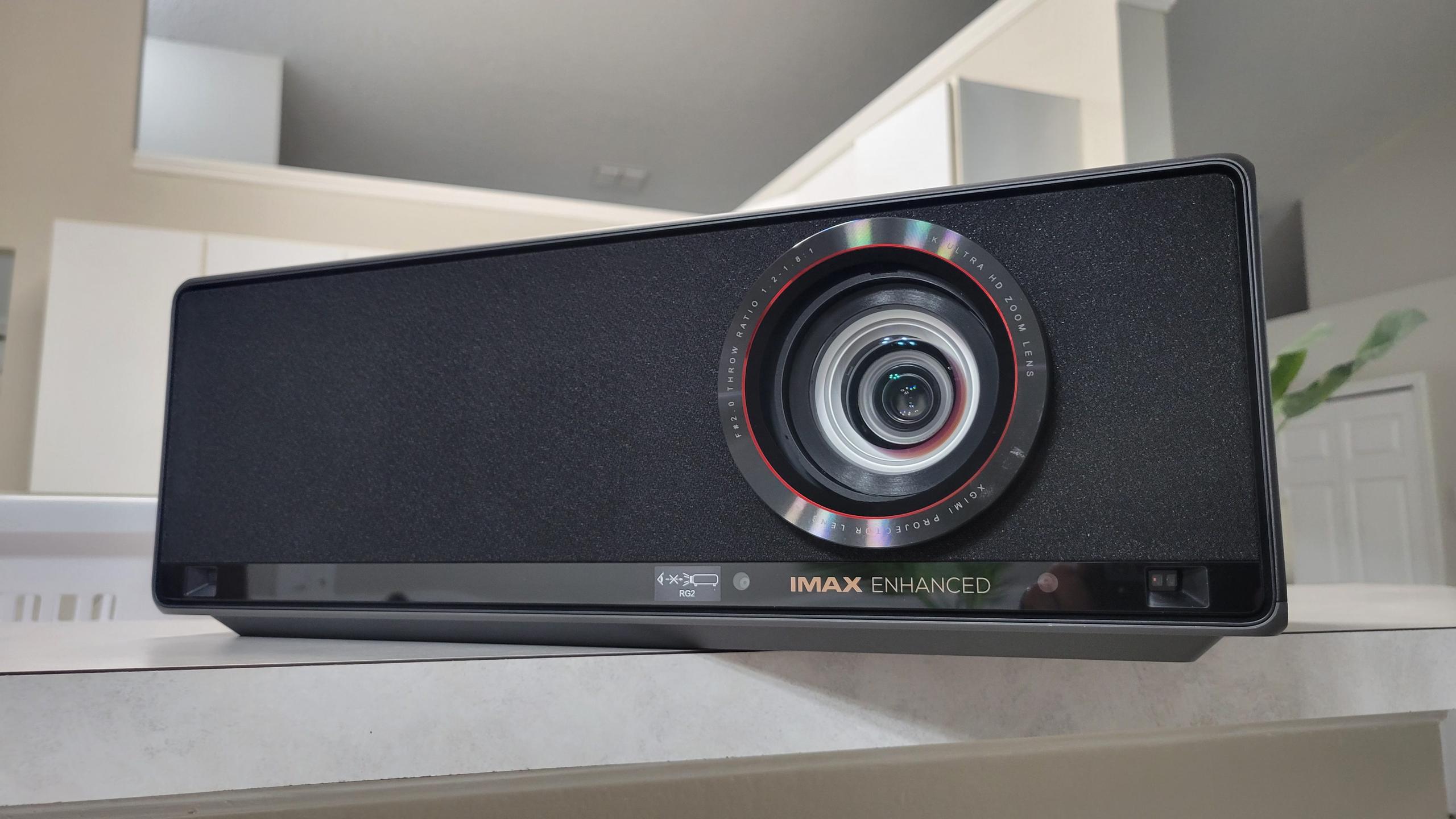
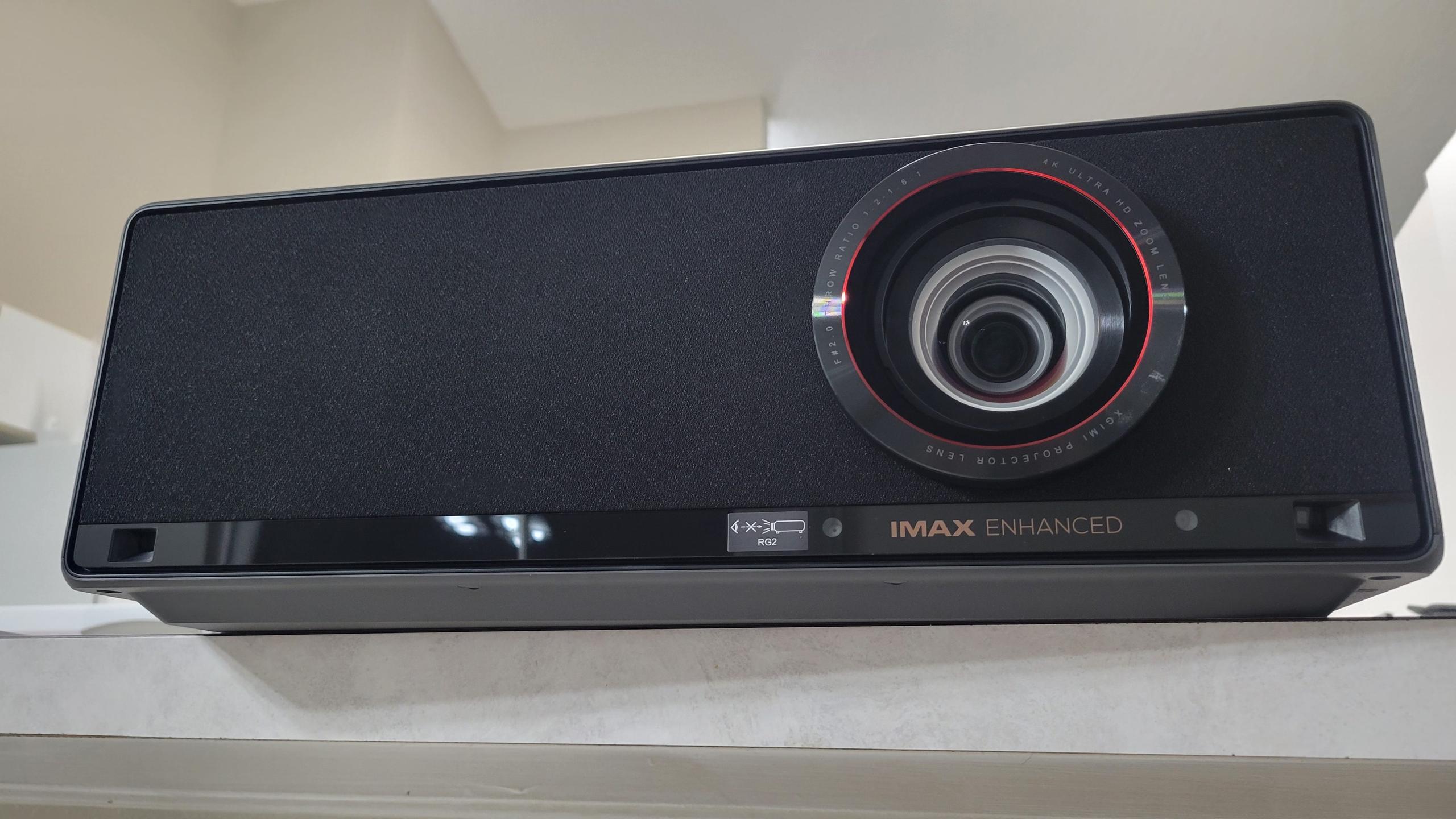
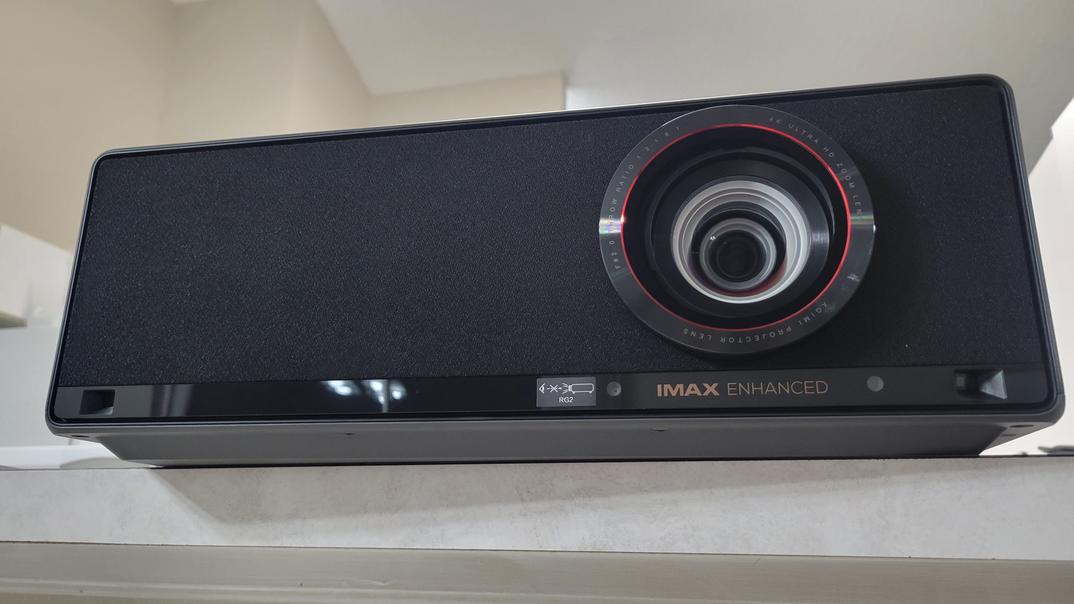
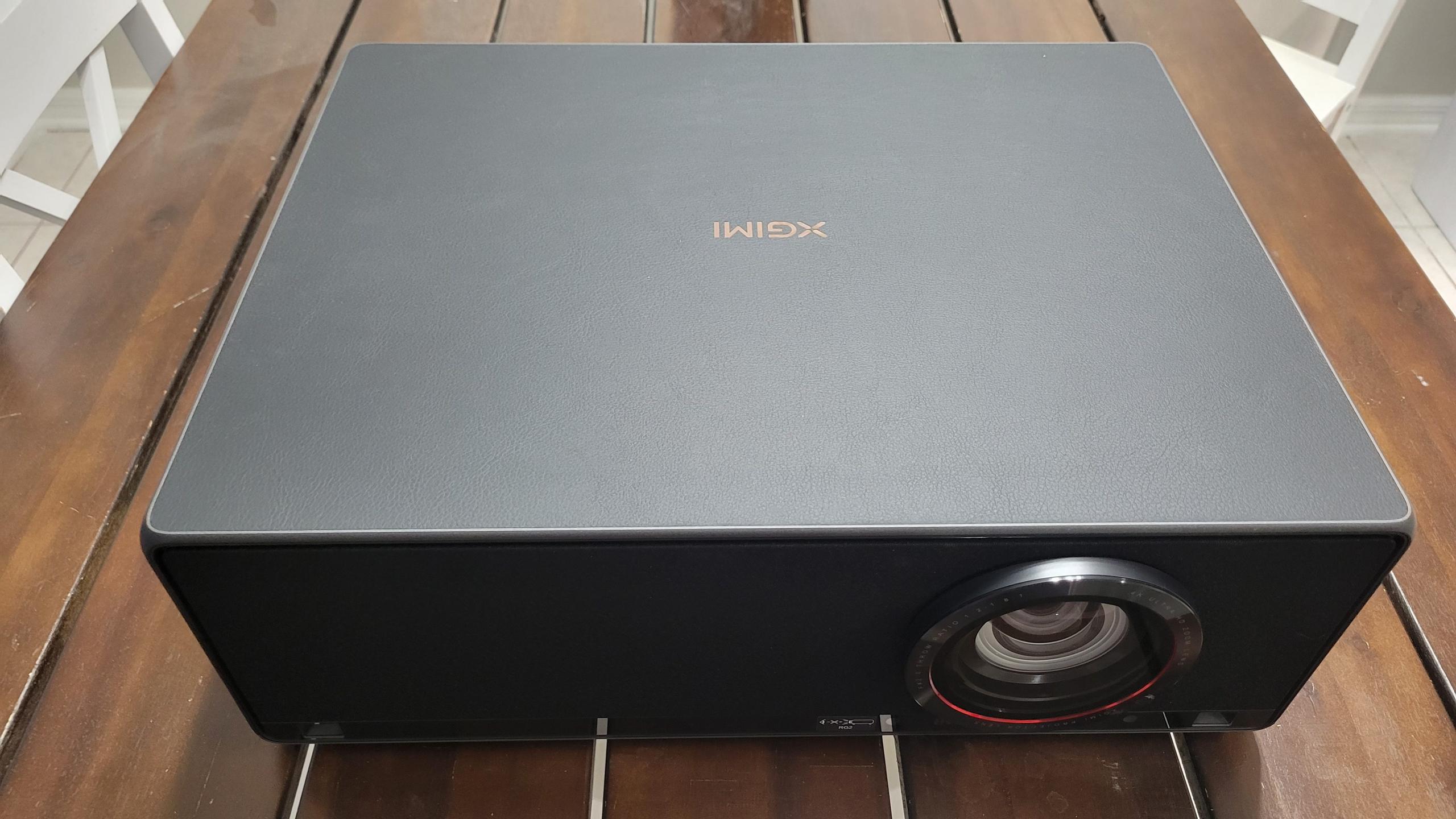
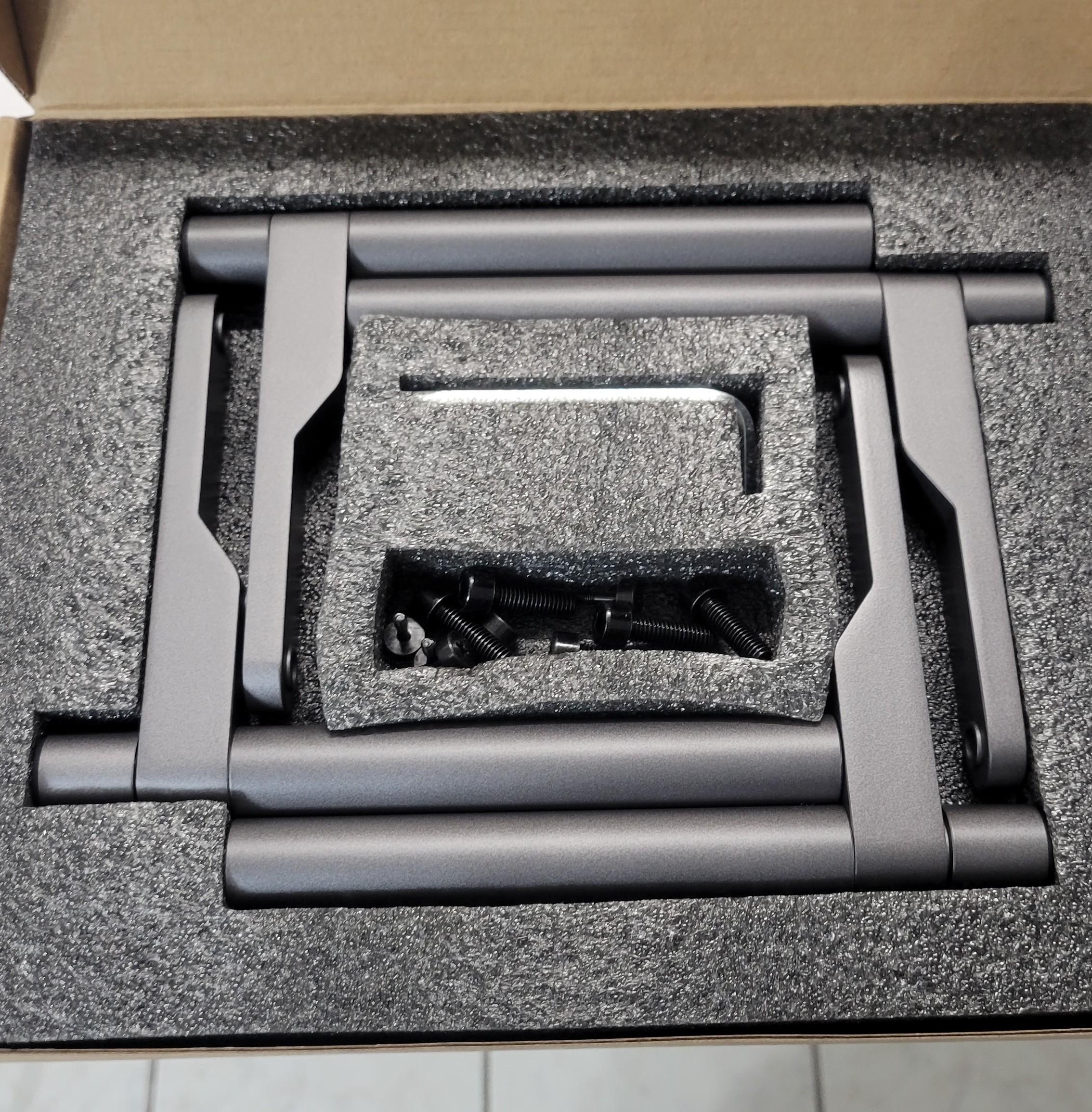
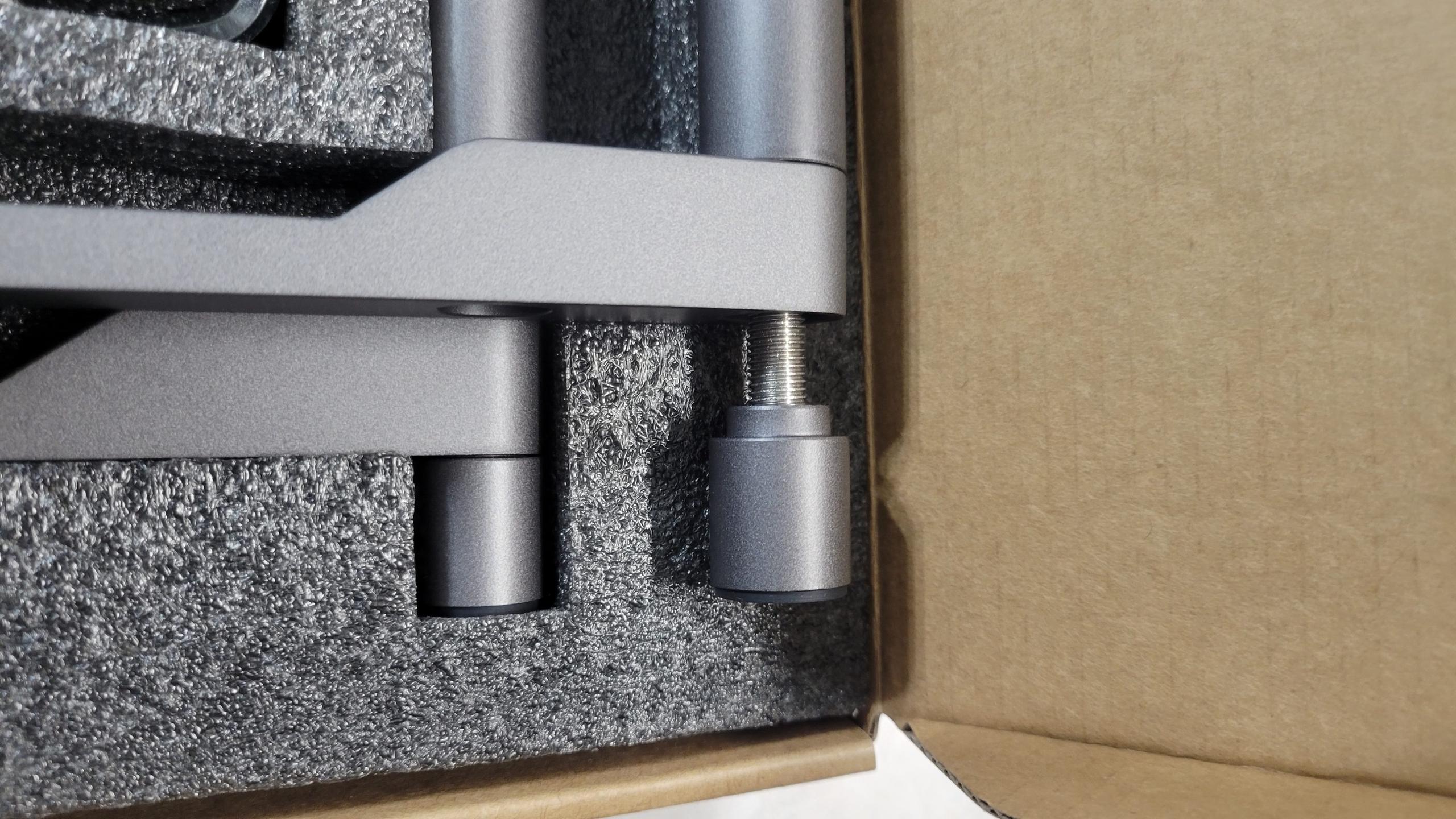
The Titan screams “commercial grade” from every angle. Gone are the fabric grilles and rounded, friendly corners of the Horizon Ultra (priced at $1,699 at ProjectorScreen). In their place is a large, rectangular chassis clad in dark surfaces with faux leather accents that manage to look purposeful rather than decorative. The four sturdy metal feet elevate the unit slightly off the surface, ensuring excellent stability on a shelf, though they’re removable for ceiling installations. At 25.3 lbs, you’ll want a partner for the install—this is a two-person lift onto any serious mount.
A feature increasingly absent on modern “smart” projectors is physical buttons, but the Titan includes a full rear control panel with a tactile D-pad, OK/Return/Home keys, dual-function Focus/Volume keys, and even a dedicated Air Mouse toggle that hints at the unit’s presentation pedigree. If you’ve ever fumbled for a lost remote during setup inside a projection closet, you’ll appreciate this more than any spec on a sheet.
The recessed rear panel reads like a wishlist for both home theater enthusiasts and commercial integrators. Two HDMI inputs (HDMI 1 with eARC for lossless Dolby Atmos passthrough), USB 3.0 and 2.0 for media playback, optical Toslink and 3.5mm analog out for legacy audio, a hardwired RJ45 Ethernet jack, RS232 for home automation systems like Control4, Savant, and Crestron, and a 3.5mm wired remote input for IR extension if the unit is hidden away. It’s the kind of port selection that custom installers dream about.
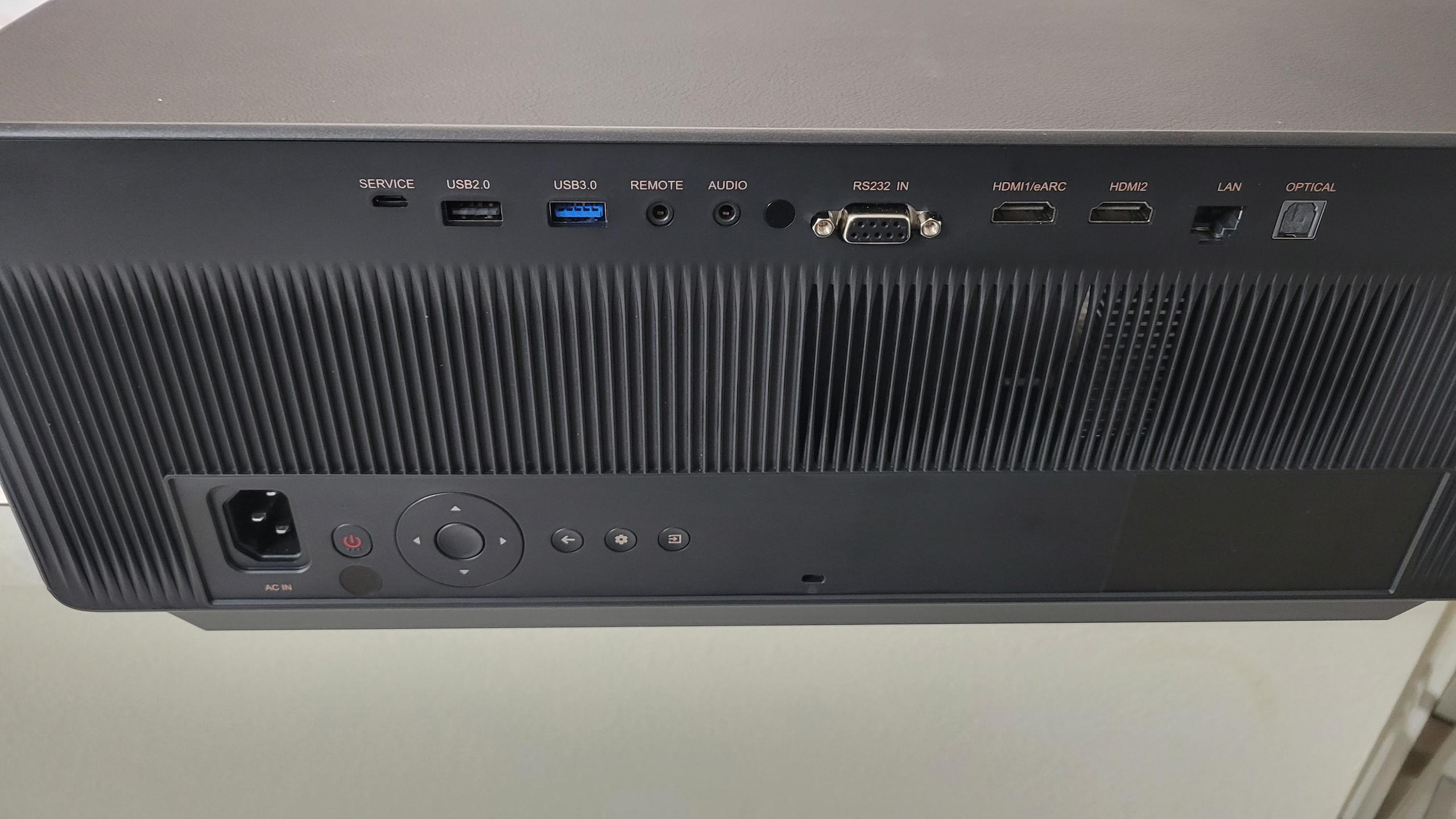
One limitation to note: the HDMI ports are capped at 4K/60Hz. Gamers wanting 4K/120Hz won’t find it here, though 1080p/240Hz support does soften the blow for competitive PC players.
If there is a single reason the Titan justifies its existence at this price point, it’s the motorized optical engine. This is where the Titan decisively separates itself from the lifestyle projectors that built XGIMI’s reputation.
Most consumer 4K projectors, even good ones, rely on a 0.47” DMD chip. The Titan steps up to a 0.78” High Efficiency Pixel chip, offering roughly 2.8 times more reflective surface area. The practical effects are immediate and significant: higher light throughput without thermal throttling, improved pixel separation that lends the image a crispness you feel before you analyze, and a dramatic reduction in the grey border (light leakage) that plagues smaller-chip DLPs. On the Titan, that border is reduced to roughly 1cm—genuinely negligible in real-world viewing.
The throw ratio of 1.2–1.8:1 gives the Titan excellent placement flexibility. In my testing, I placed the projector 15 feet back from the wall and, using the motorized zoom to minimize the image, hit a 120” screen size exactly. This kind of range is a godsend for deeper rooms where you want to mount behind the seating area.
But the real showpiece is the motorized lens shift: V±120% vertical and H±45% horizontal. I was able to move the image over 4 feet horizontally without touching the chassis. Crucially, this is optical, lossless shift—you aren’t degrading image quality with digital keystone corrections. For installers who’ve ever cursed the constraints of a projector that needs to be dead-center, this is a revelation.
This is where my original review felt thin, so I’ve supplemented my first-hand impressions with measurement data from several professional reviews that had the calibration equipment I lack. The results paint a consistent and frankly remarkable picture.
XGIMI claims 5,000 ISO Lumens. In practice, every professional review I’ve found has measured the Titan exceeding that claim. ProjectorCentral measured 6,616 ANSI lumens in Performance mode and 4,458 lumens in the more color-accurate Movie mode. Heimkinowelten recorded 5,553 ANSI lumens in a balanced Filmmaker mode. The ProjectorScreen.com deep-dive measured the calibrated output at over 4,600 lumens—a figure the reviewer noted was unprecedented for a home cinema projector.
What does this mean in practice? Even in Film mode, with colors dialed in for accuracy, the Titan is pumping out nearly double the light of an Epson LS12000 (priced at $5,999 at ProjectorScreen) and roughly triple that of a JVC NZ500 (priced at $6,999 at ProjectorScreen). It cuts through ambient light with authority, making it fully usable in mixed-use media rooms—not just pitch-black caves. If you’ve ever been frustrated by a washed-out HDR image on a projector, the Titan’s sheer luminance fundamentally changes that equation.
The Titan uses a Laser + Phosphor dual-laser engine rather than the RGB triple-laser approach used by competitors like the Valerion VisionMaster Max. This is a deliberate and, in my view, shrewd engineering choice.
The benefit is immediately visible: zero laser speckle. Pure RGB triple-laser projectors often suffer from a shimmering, oily grain that’s particularly noticeable on bright, uniform surfaces. The Titan’s image is perfectly clean and uniform. XGIMI’s approach covers roughly 98% of the DCI-P3 color space—the standard used for virtually all HDR mastered content today—while reaching about 75% of the wider BT.2020 gamut. You’re not missing anything you can actually watch right now.
Native contrast measures around 1,800:1 per multiple review sources. Let’s be honest: this is not JVC territory. JVC’s LCoS technology still rules the kingdom of inky blacks. But context matters here. First, 1,800:1 is a meaningful jump over the ~1,000:1 typical of consumer-grade DLP projectors. Second, and this is critical, the Titan maintains this contrast at full brightness output. Many projectors achieve their best contrast numbers only at reduced light levels. The Titan gives you both, simultaneously.
XGIMI also includes a “Dynamic Black Level Correction” slider—a thoughtful pro feature that lets you dial in deeper blacks through dynamic contrast processing while compensating for the color shifts that typically accompany it. It’s the kind of fine-grained control you expect from a calibration suite, not a consumer remote.
The Titan supports the full modern HDR stack: Dolby Vision, HDR10+, HLG, and IMAX Enhanced content with Filmmaker Mode. The combination of 4,600+ calibrated lumens and decent contrast gives HDR content real visual weight—highlights like explosions, flashlight beams, and reflections are genuinely bright, creating a sense of dynamic range that feels closer to a flat-panel TV than a traditional projector.
As noted in the deep-dive from ProjectorScreen.com, this level of brightness means the Titan can deliver approximately 600 nits on screen—a threshold that places it in a rare category for home projection and enables an HDR rendering that doesn’t collapse with increasing screen size.
Most pro-grade projectors in this class ship with terrible speakers or none at all, assuming you have a dedicated sound system. The Titan’s built-in dual 12W speakers are shockingly good. They play clear and loud, filling a medium-sized room without distortion. Dialogue stays crisp even at higher volumes, and there’s a surprising amount of body to the low end. Will they replace your Atmos setup? No. But for a backyard movie night, a temporary presentation, or a bedroom setup, you genuinely do not need a soundbar.
Out of the box, 24p film content shows some visible judder—an acknowledged weakness that XGIMI may address via firmware (as they did for the Horizon 20 series). The motion interpolation system is robust, though. Setting it to “Medium” smooths pans convincingly without tipping into the dreaded Soap Opera Effect.
For gaming, the Titan is more agile than its size suggests. It supports 1080p/240Hz for competitive PC players, and engaging Game Boost mode drops input lag to a measured ~32ms at 4K/60Hz—perfectly playable for console gaming, if not tournament-tier.
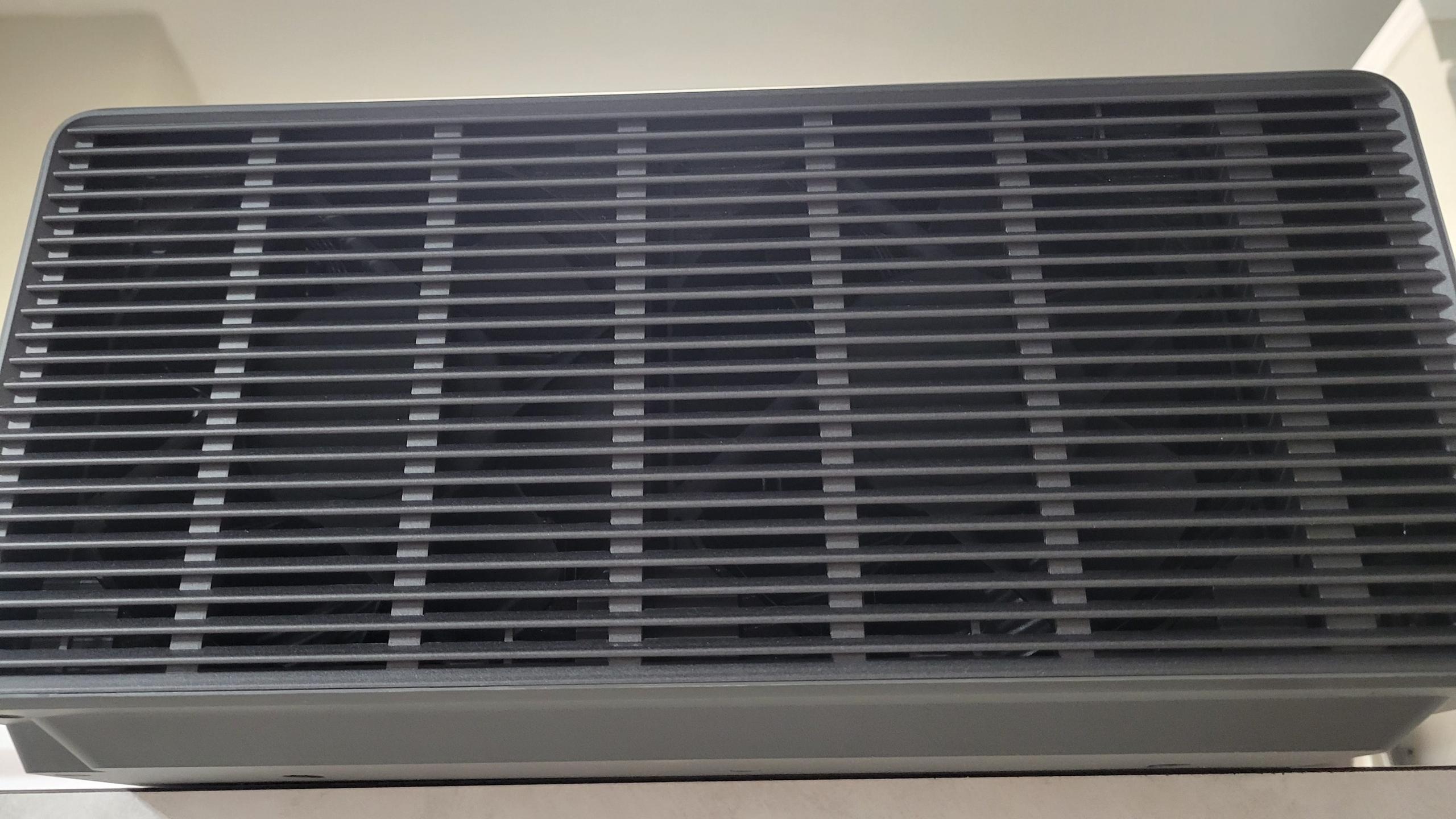
There’s no free lunch. Pushing this much light through a projector generates heat, and heat requires cooling. In standard mode, XGIMI rates the Titan at under 32 dB, which is quiet enough. But in Performance mode at full brightness, the fans ramp up noticeably—ProjectorCentral called it one of the louder projectors in its class. The unit even displays an on-screen warning about room temperature and ventilation clearance (20 inches on back and sides, 12 inches in front). For a closed projection closet, you’ll want to plan ventilation.
A feature rarely highlighted: the Titan supports full HD 3D with a built-in adapter, which is increasingly uncommon at this brightness level. Thanks to its massive light output, 3D content remains noticeably brighter through the glasses than on dimmer projectors, where 3D typically looks like watching a movie through sunglasses. It’s a nice bonus for anyone with a 3D Blu-ray collection gathering dust.
I want to be upfront: I don’t have professional calibration equipment, and this review reflects first-hand viewing impressions supplemented by published measurements. Out of the box, the Titan’s “Performance” mode is aggressively bright with a color temperature north of 13,000K, essentially a demo mode, not a viewing mode. Stick to Film or Filmmaker Mode for immediate improvements.
However, for anyone investing $4,000 in a projector of this caliber, I strongly recommend a professional ISF or THX calibration. XGIMI has obtained SGS certification for factory color accuracy (ΔE < 1) in their high-accuracy mode, which is a promising starting point. But professional calibration will unlock the Titan’s full potential, especially for HDR tone mapping and grayscale tracking. The hardware clearly has the headroom; it just needs someone with a colorimeter to finish the job. Budget an extra $300–$500 for a professional calibrator and consider it the best accessory you’ll buy.
At $3,999, the Titan enters a brutal arena. Here’s how it stacks up:
| XGIMI Titan | Epson LS12000 | JVC NZ500 | Valerion VM Max | |
|---|---|---|---|---|
| Price | $3,999 | $5,999 | $6,999 | $3,999 |
| Measured Brightness | 4,600–6,600+ lm | ~2,700 lm | ~1,800 lm | ~3,000 lm |
| DCI-P3 Coverage | ~98% | ~90% | ~85% | ~95% (claimed) |
| Native Contrast | ~1,800:1 | ~2,500:1 | ~4,000:1+ | ~1,200:1 |
| Chip / Tech | 0.78" DLP | 3-chip LCD | Native 4K LCoS | Single-chip DLP |
| Lens Shift | V±120% / H±45% | V±96% / H±47% | V±80% / H±34% | Limited |
| Laser Speckle | None | N/A (LCD) | N/A (LCoS) | Noticeable |
| Best For | Bright rooms, large screens | Pitch-black theaters | Black level purists | Budget spec-chasers |
The long-standing benchmark. The Titan is dramatically brighter (nearly double the measured output) and benefits from the inherent convergence advantage of single-chip DLP over 3-chip LCD. The Epson holds a slight edge in deep blacks and offers an even wider lens shift range. If your room is pitch-black and you prioritize shadow detail, the Epson remains formidable. For everything else, especially ambient light rooms and larger screens, the Titan wins while costing $2,000 less.
The JVC is native 4K LCoS with black levels in a completely different league. For purists with light-controlled theaters, it’s still the contrast king. But the Titan delivers more than double the brightness at $3,000 less. For sports with the lights on, mixed-use rooms, or screens over 150”, the math favors the Titan decisively.
The Valerion is the spec-sheet darling with its triple-laser engine. On paper, it’s competitive. In practice, the Titan feels markedly more polished. The Valerion struggles with laser speckle, less mature software, and notably inferior lens quality—the Titan delivers more uniform focus across the entire projected image. Sometimes the execution matters more than the specs.
XGIMI’s own consumer flagship is a wonderful projector, but it’s a different tool. It lacks the throw distance flexibility and optical muscle of the Titan. If you need to place a projector 15 feet back, the Horizon 20 Max can’t throw a tight 120” image—it would overshoot significantly. The Titan’s zoom lens and larger DMD chip give it the optical authority the Horizon series was never designed to have.
The XGIMI Titan is a successful graduation for the brand, and more than that, it’s a genuine market disruptor at $3,999. It bridges the gap between “easy to use” and “professional performance” with a conviction that competitors at this price point simply can’t match. The brightness is staggering. The optics are serious. The connectivity checks every professional box.
Is it perfect? No. The out-of-box color accuracy needs work (use Film mode immediately), the native contrast won’t keep JVC owners up at night, and the fan noise at full tilt is a real consideration. But these are known trade-offs, not surprises, and the things the Titan does well, it does extraordinarily well.
Highly Recommended Award: If you have a dedicated theater or a media room with ambient light, and you refuse to sacrifice modern conveniences like smart streaming and autofocus, the XGIMI Titan is a powerhouse recommendation, and at $3,999, it’s the one to beat.
Related Reading:



Privacy Policy
Terms and Conditions - Affiliate Policy
Home Security
© Copyright 2008-2026.
11816 Inwood Rd #1211, Dallas, TX 75244