


If you’ve been overlooking Hisense TVs, the 2025 Hisense U8QG deserves your attention. I tested the massive 85 inch model, a Mini LED TV packed with premium features like a 165Hz panel, over 4,000 dimming zones, and Dolby Vision support. At $2,249.99, it aims to rival high end OLEDs for less. On paper it’s powerful, but does it actually deliver? Keep reading to find out.
The Hisense U8 (2025) is an extremely bright, contrast-driven Mini-LED TV that performs way better than expected for its cost. Color accuracy in SDR mode is solid after basic adjustments, and HDR looks stunning with powerful brightness and thousands of local dimming zones. It’s fast, gaming-ready, and runs Google TV smoothly.
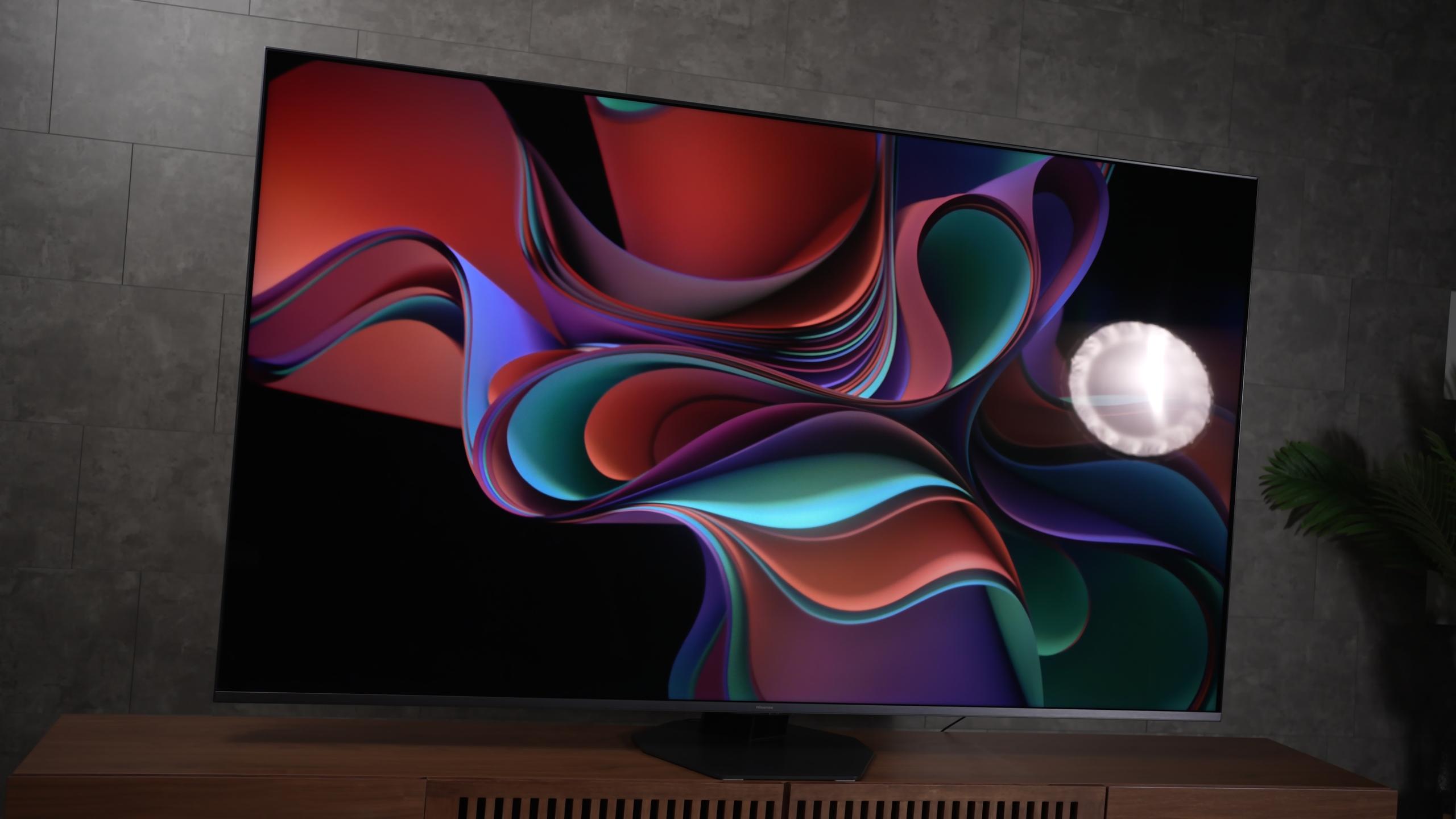
Its weak spots are the usual Mini-LED challenges: some visible blooming in dark rooms, slightly limited viewing angles, and minor motion trails compared to top-tier OLEDs. Still, if you want big size, intense brightness, and cinematic HDR for bright rooms, the U8QG is a fantastic option. OLEDs are better for perfect blacks, but for everyday real-world use, this TV makes a strong case for itself.
Pros
Cons
For this review I used an X-Rite i1 Pro spectrophotometer, Color Checker Display Plus colorimeter, Calman Ultimate, Portrait Displays Video Forge Pro 8K pattern generator, a Sony RX100 VII 1000fps camera, an SM208 Screen Luminance Meter, and a Sony Cinema Line FX3 mirrorless video camera. Plus years of display testing experience.
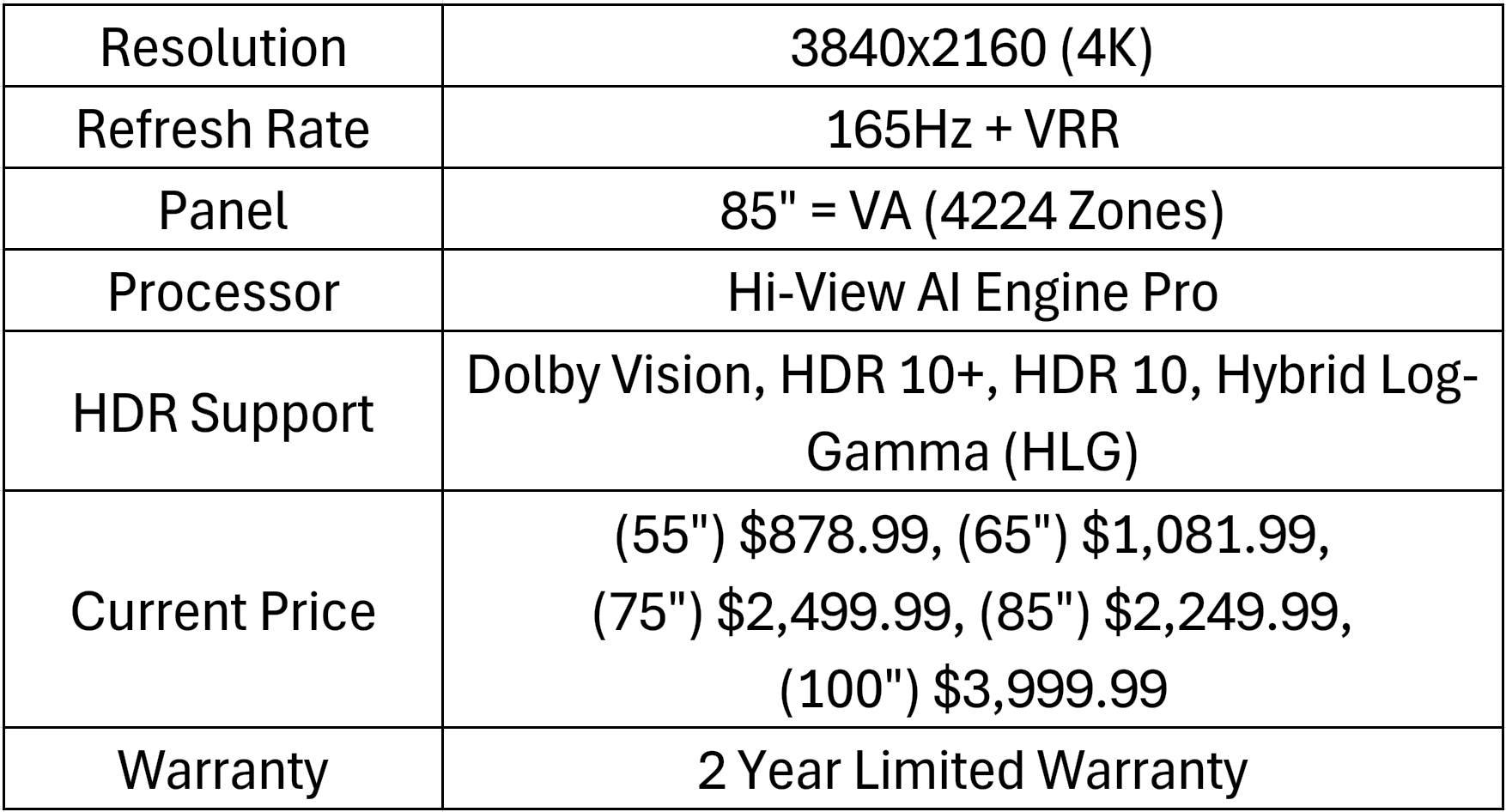
Disclaimer: This TV was sent to me by Hisense for review, but all opinions are my own. Additionally Home Theater Review may run advertising campaigns with various manufacturers including Hisense. Finally I have joined Portrait Displays’ Calman color calibration software reviewer program to get free licensing going forward.
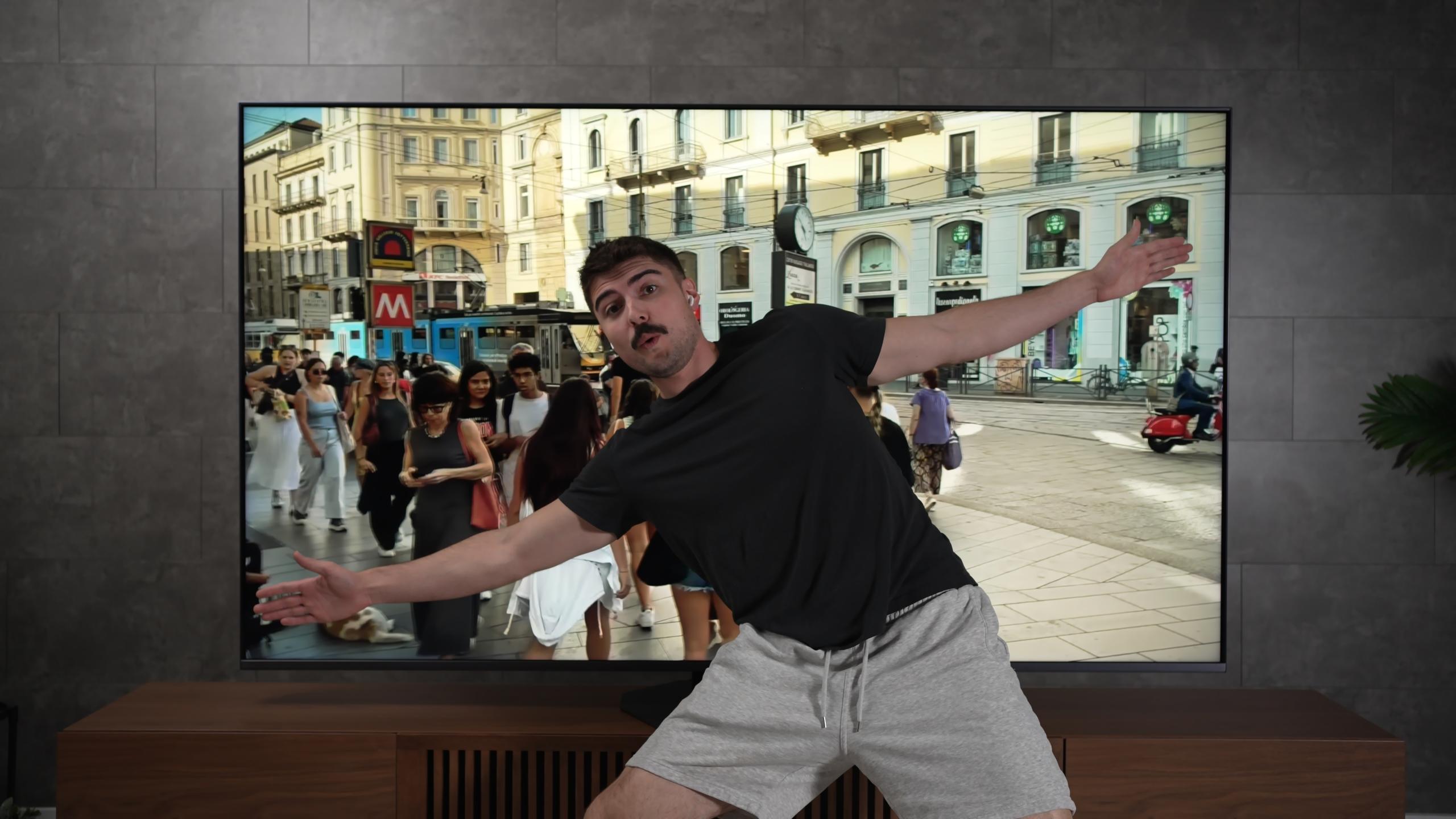
The 85-inch Hisense U8 immediately impresses with its size and sleek design. Slim bezels surround the screen, and the solid stand feels sturdy and premium right out of the box. The modern look makes it feel like a high-end TV from the first glance.
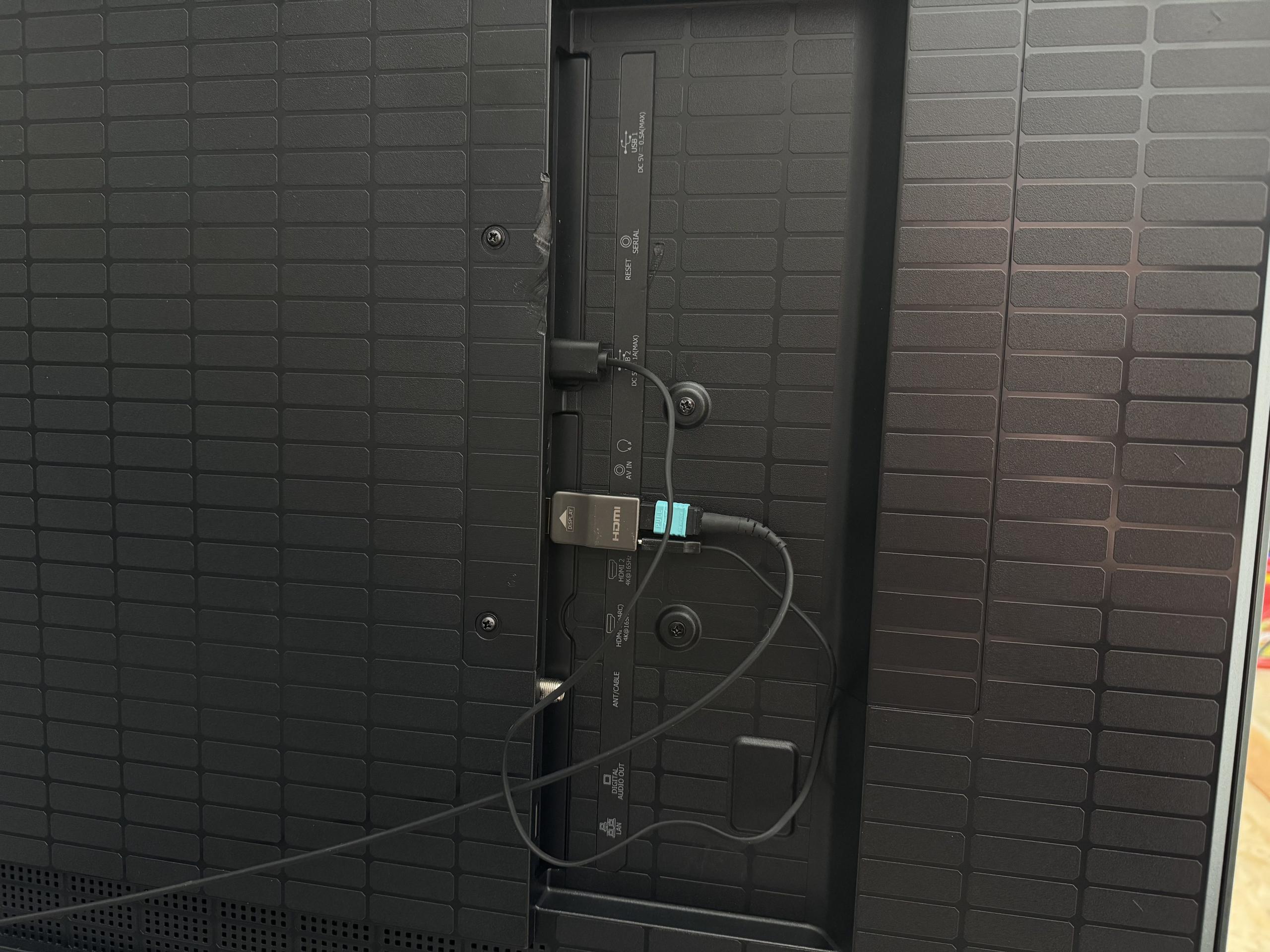
The back panel includes thoughtfully placed cable management slots, making it easy to connect multiple devices without clutter. This design keeps everything neat and ensures a tidy setup, even with several HDMI or other connections.
Colors on the Hisense U8QG are bold and dynamic, yet they still manage to look natural and balanced. In Filmmaker Mode, the picture closely matches creator intent, giving movies and shows a realistic, cinematic look. HDR scenes can lean a bit bright at times, but calibration smooths everything out, bringing better control and precision to the image.
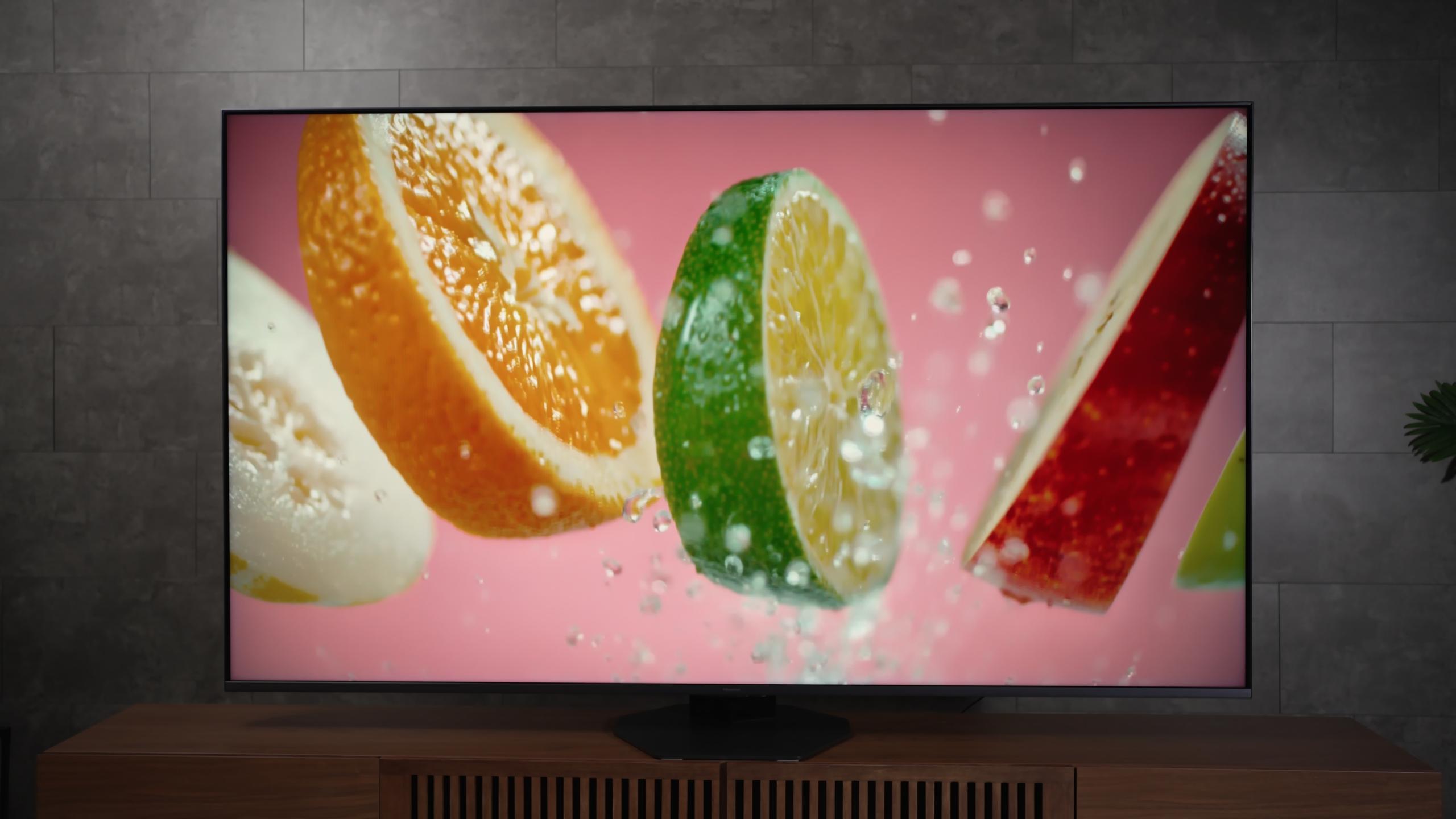
Once tuned, the U8QG produces beautifully accurate colors with impressive depth and contrast. Skin tones look lifelike, shadows stay clean, and highlights pop just enough to make the image feel vibrant without going overboard. It’s a confident, refined color performance that makes both movies and games stand out.
For home theater enthusiasts below are all my Portrait Displays’ Calman color calibration software results measuring the accuracy of the display. For everyone else, feel free to skip to the TLDR.
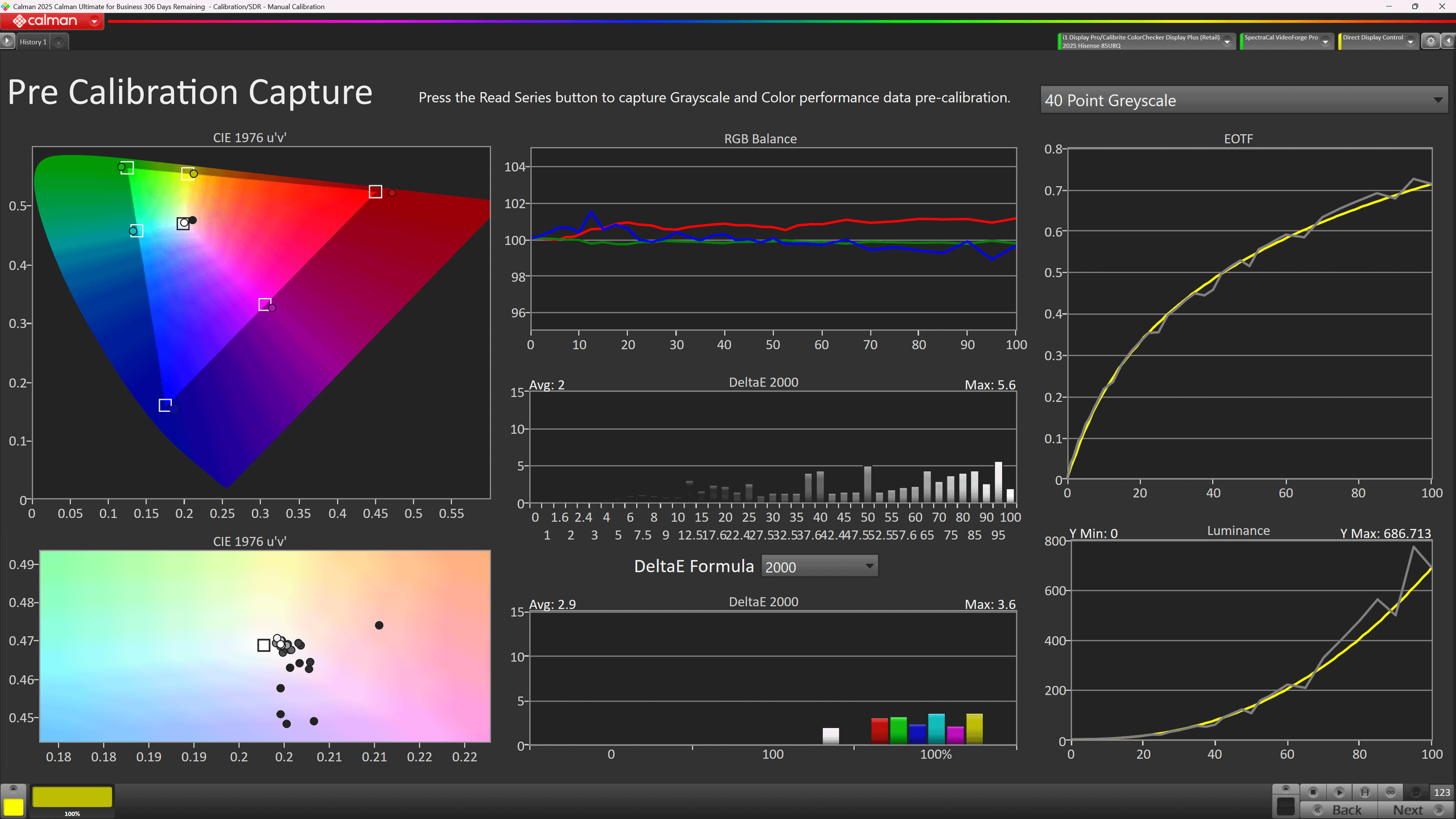
SDR FMM out of the box: Looks decent, but has some EOTF tracking issues on my unit.
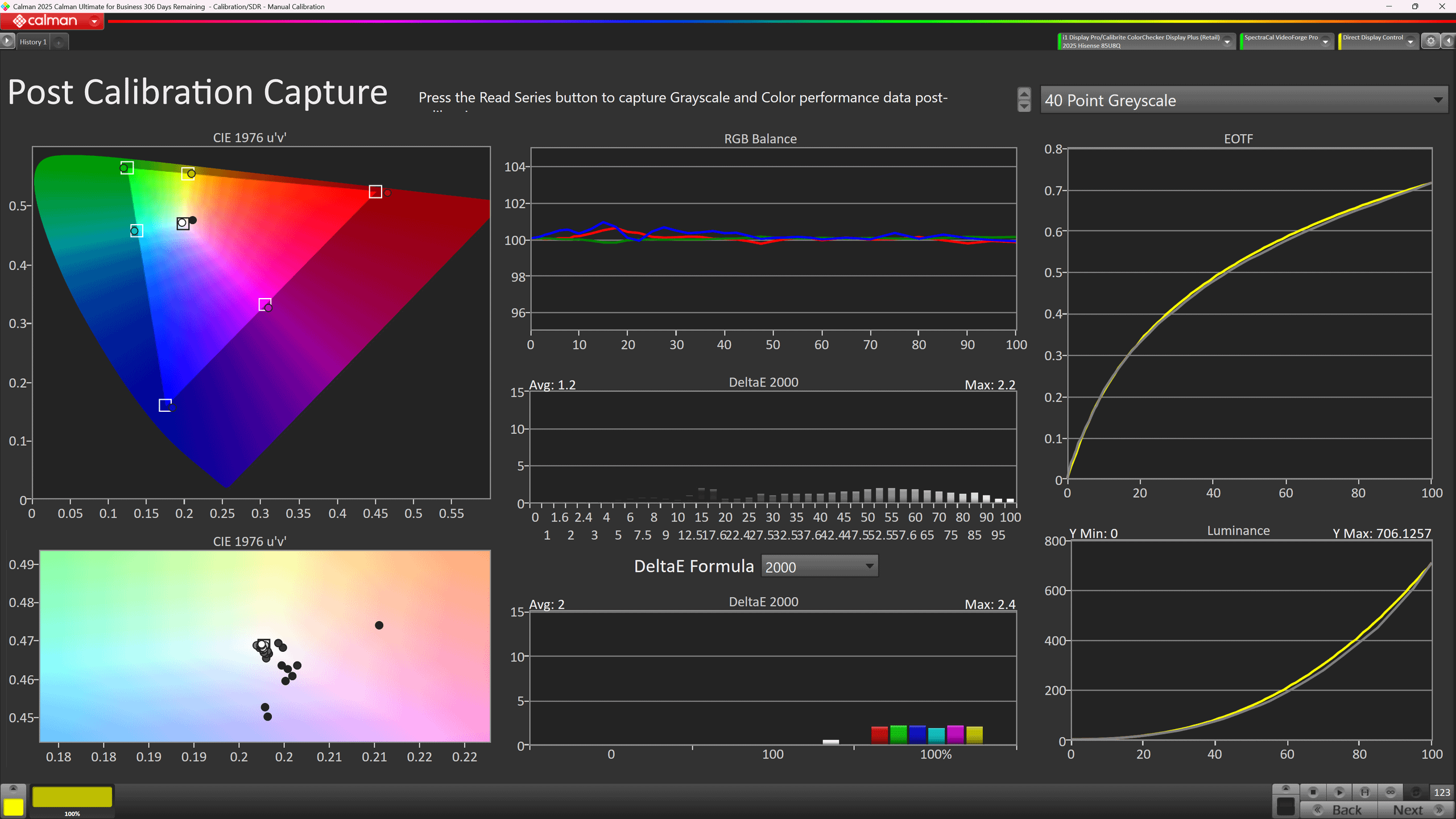
SDR FMM fixed: Calibration quickly improves overall tracking and grayscale for a more refined picture.
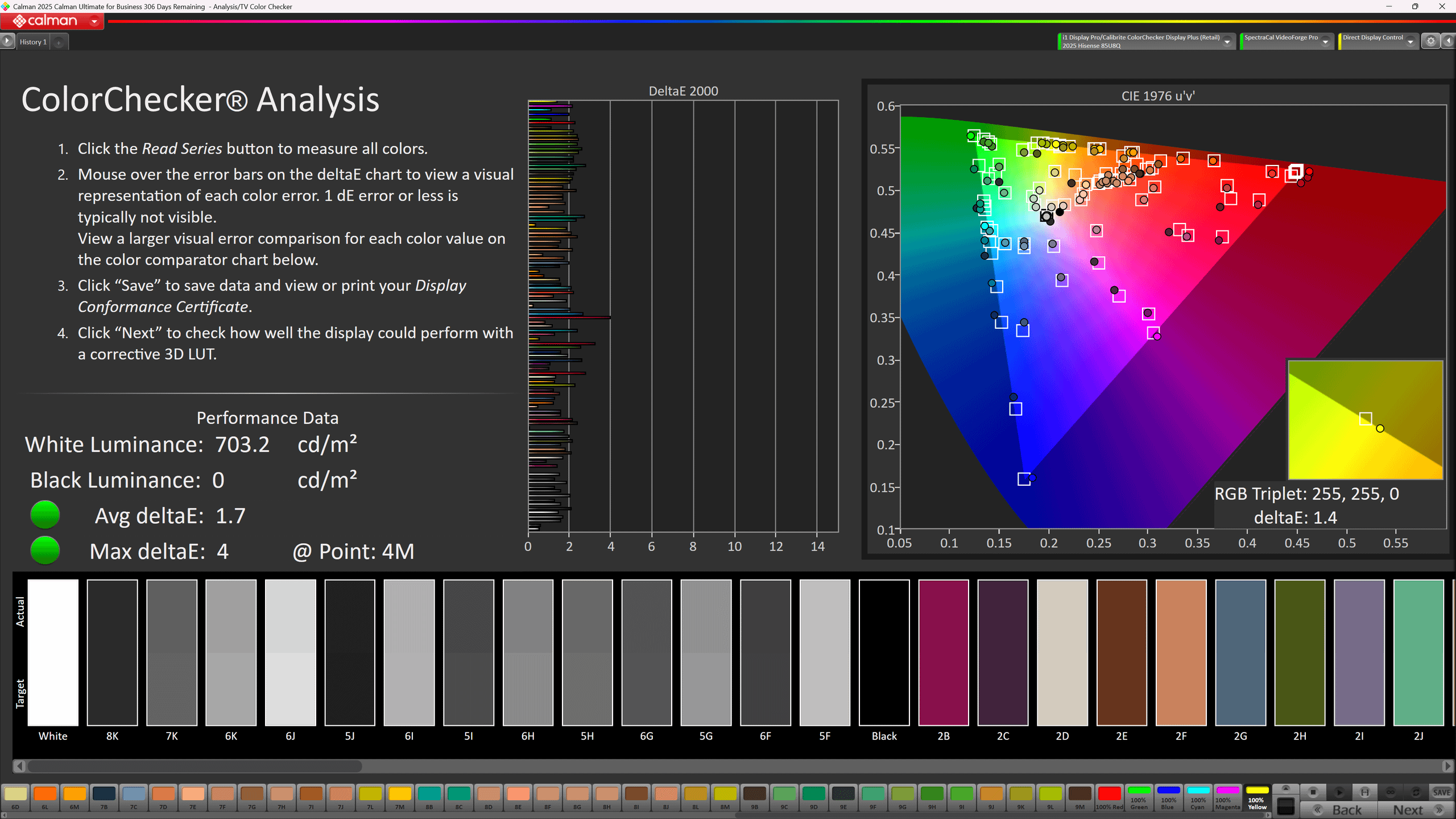
SDR FMM color checker: Comes out excellent after tuning, landing around a 1.7 Delta E average for precise color accuracy.
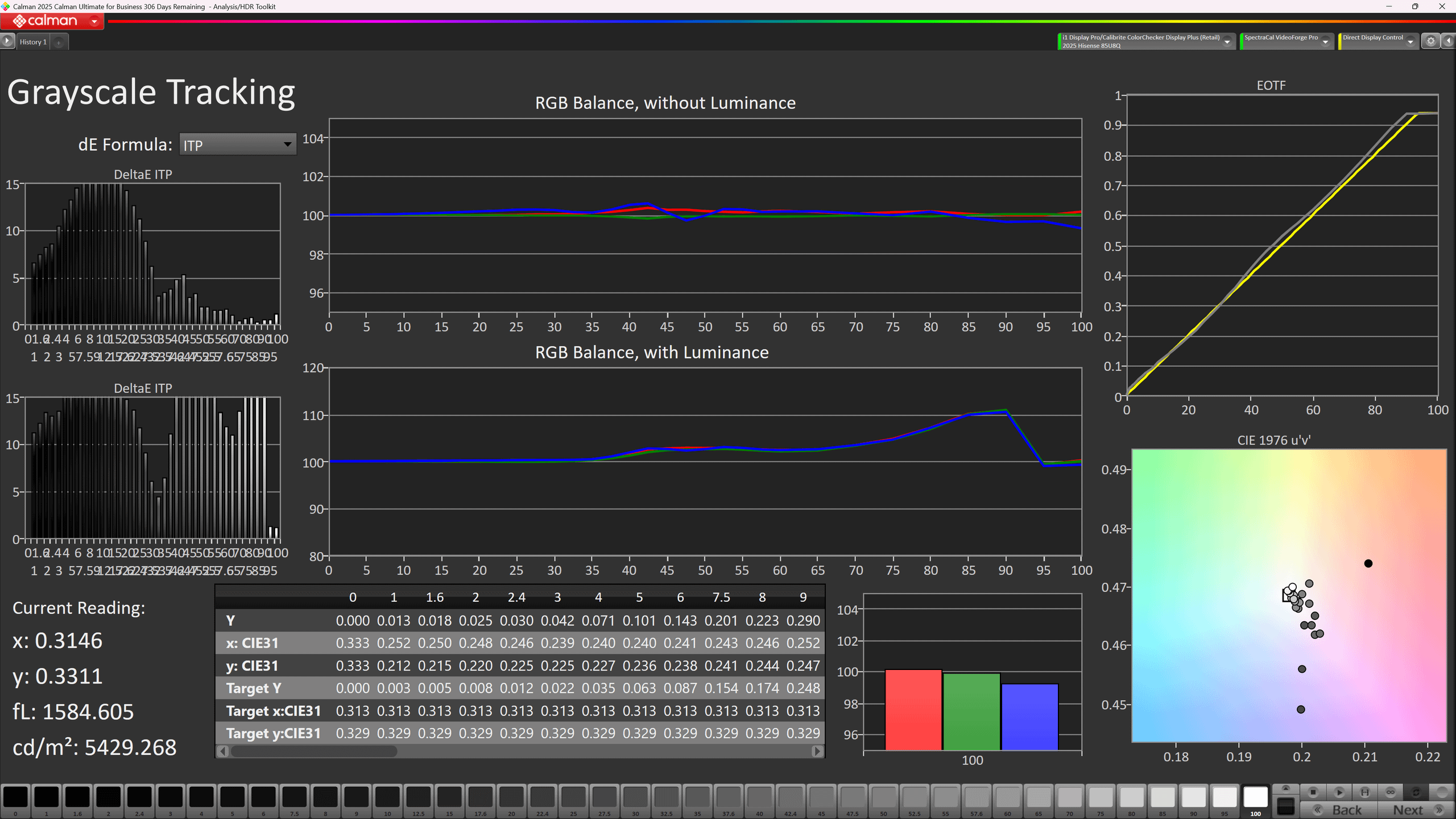
HDR FMM out of the box: Extremely bright but slightly lifted in highlights, giving a more intense look than intended.
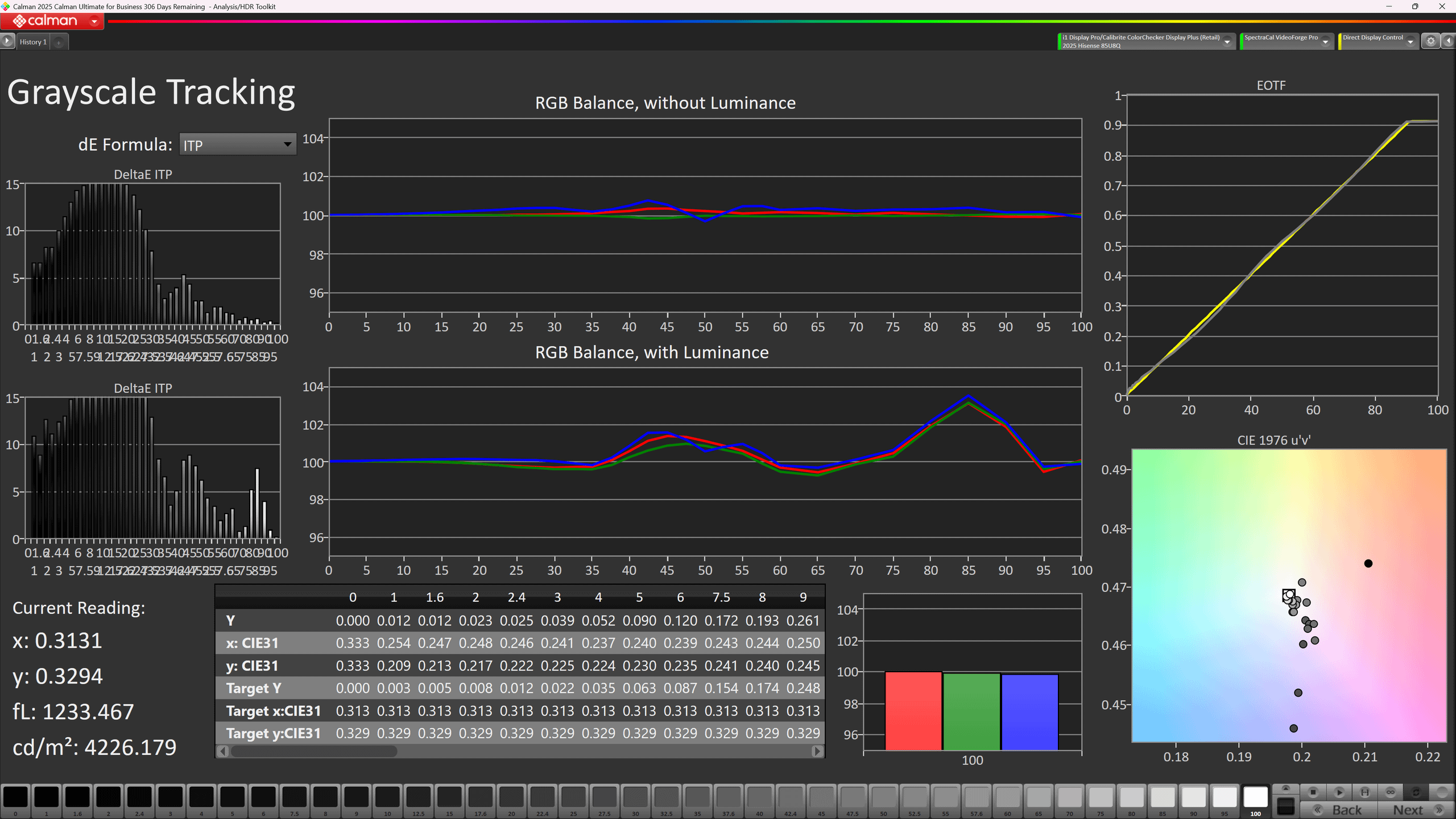
HDR FMM fixed: Calibration brings HDR highlights under control while keeping strong dynamic range.
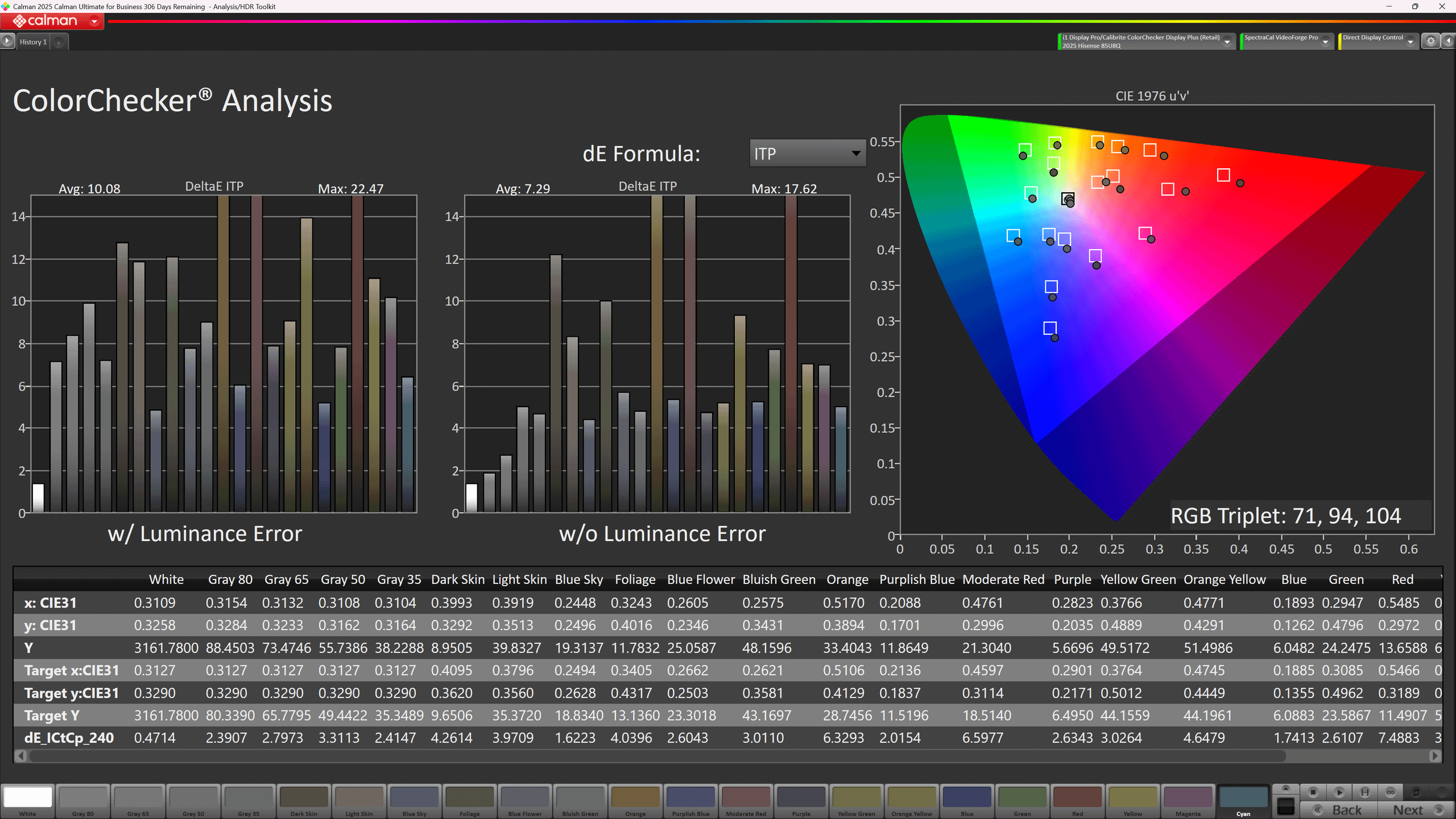
HDR FMM color checker: Accuracy is good, but not perfect.
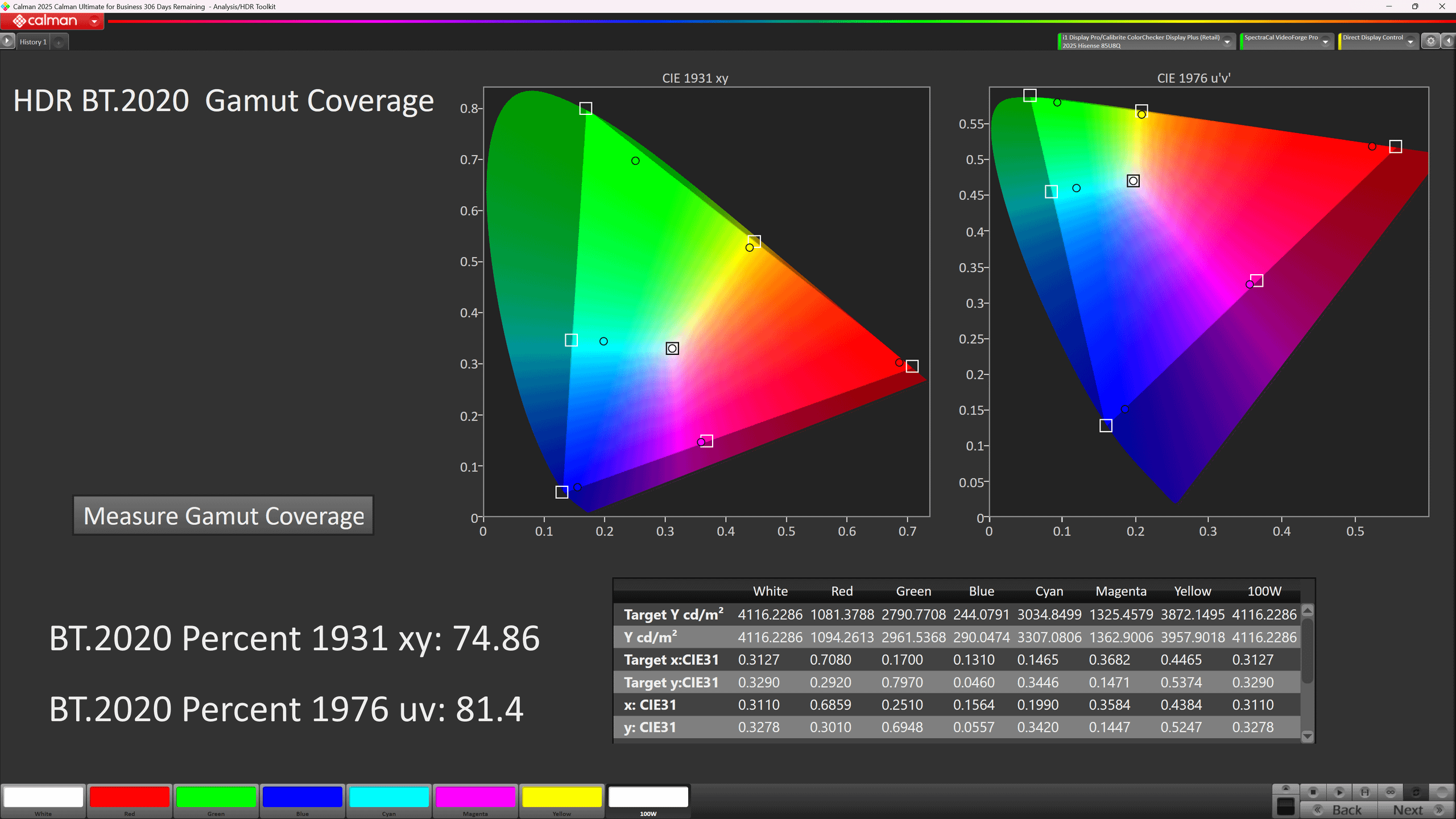
HDR color gamut: Measured at roughly 81.4% Rec. 2020 coverage, producing wide, vivid HDR color.
The short version: Out of the box, SDR looks quite good — bright, colorful, and balanced enough for most people, but it did have some slight brightness tracking issues. After light calibration, SDR becomes excellent, with extremely accurate color and stable brightness tracking.
HDR is also mostly good out of the box, but once again a few small changes can make it overall quite impressive. Speaking of impressive, the BT.2020 color gamut showed exceptionally wide color performance for a Mini LED based display.
Buyers will be satisfied with color.
Brightness is where the Hisense U8QG truly flexes its power. It’s one of the brightest consumer Mini LED TVs you can buy right now, and that intensity transforms HDR content into something genuinely spectacular. The level of luminance it produces gives movies, games, and shows a level of realism that feels alive — sunlight glints, reflections sparkle, and highlights look almost three-dimensional.
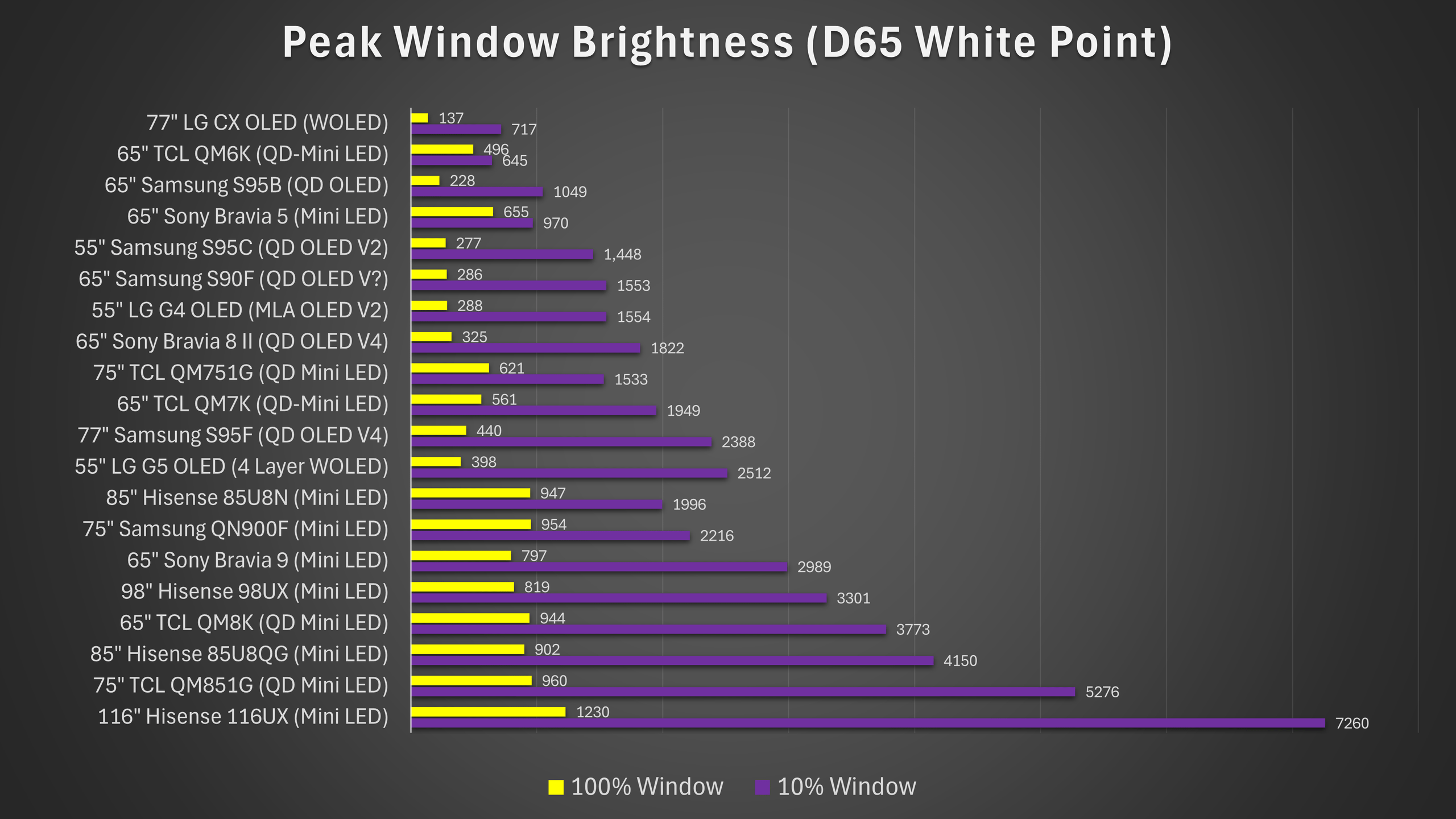
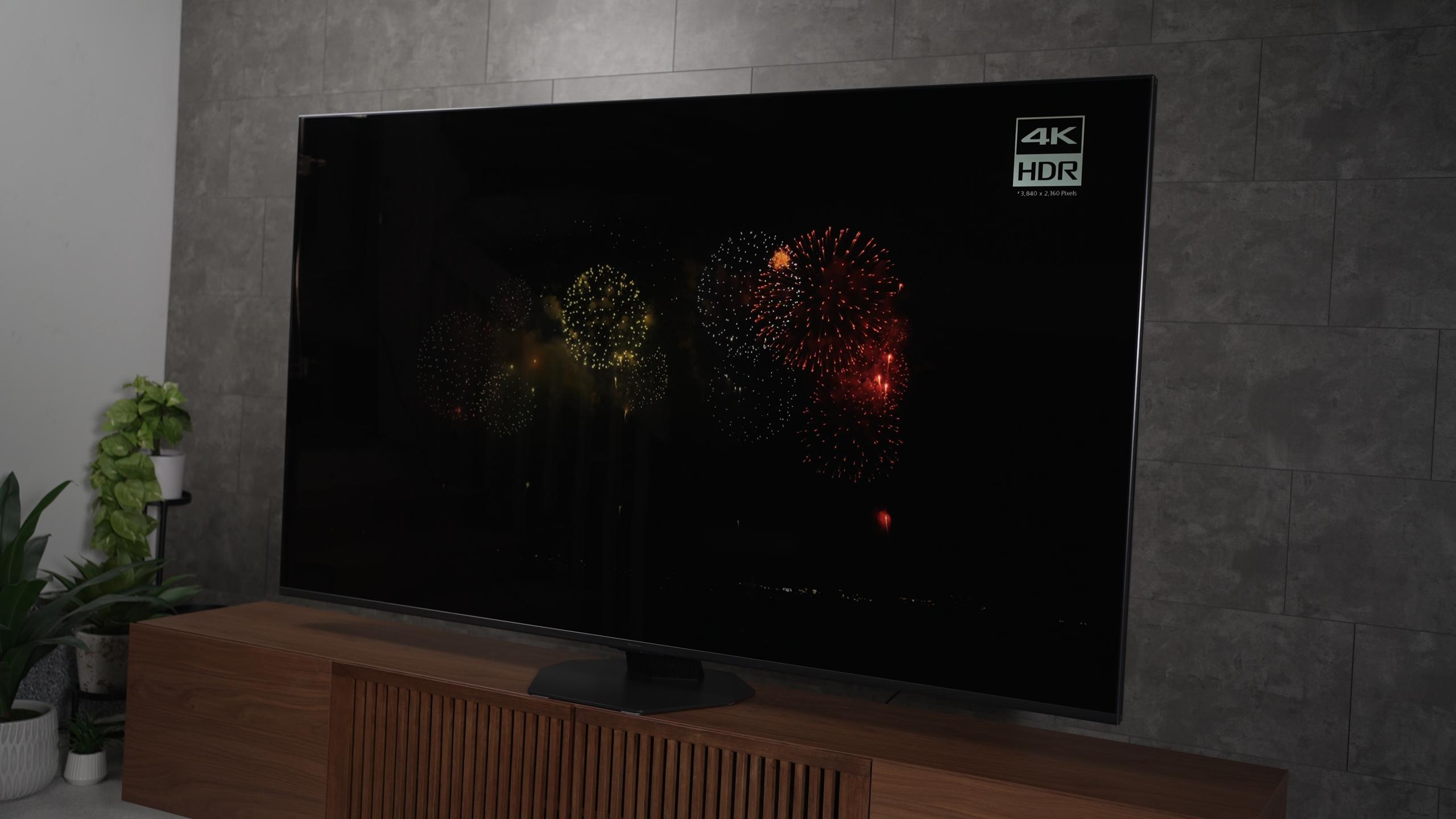
The U8QG reaches extreme brightness peaks, surpassing most midrange TVs and rivaling some flagship Sony and Samsung models. Small highlights — reflections on metal, fireworks, or neon signs — remain dazzling without clipping or losing color accuracy.
Tone mapping is key. The HiView AI Engine Pro dynamically analyzes each frame, controlling brightness to prevent overexposure while keeping the image punchy. HDR10+ and Dolby Vision content benefit most, and I was impressed by the improvements Hisense has made to their dynamic tone mapping this year.
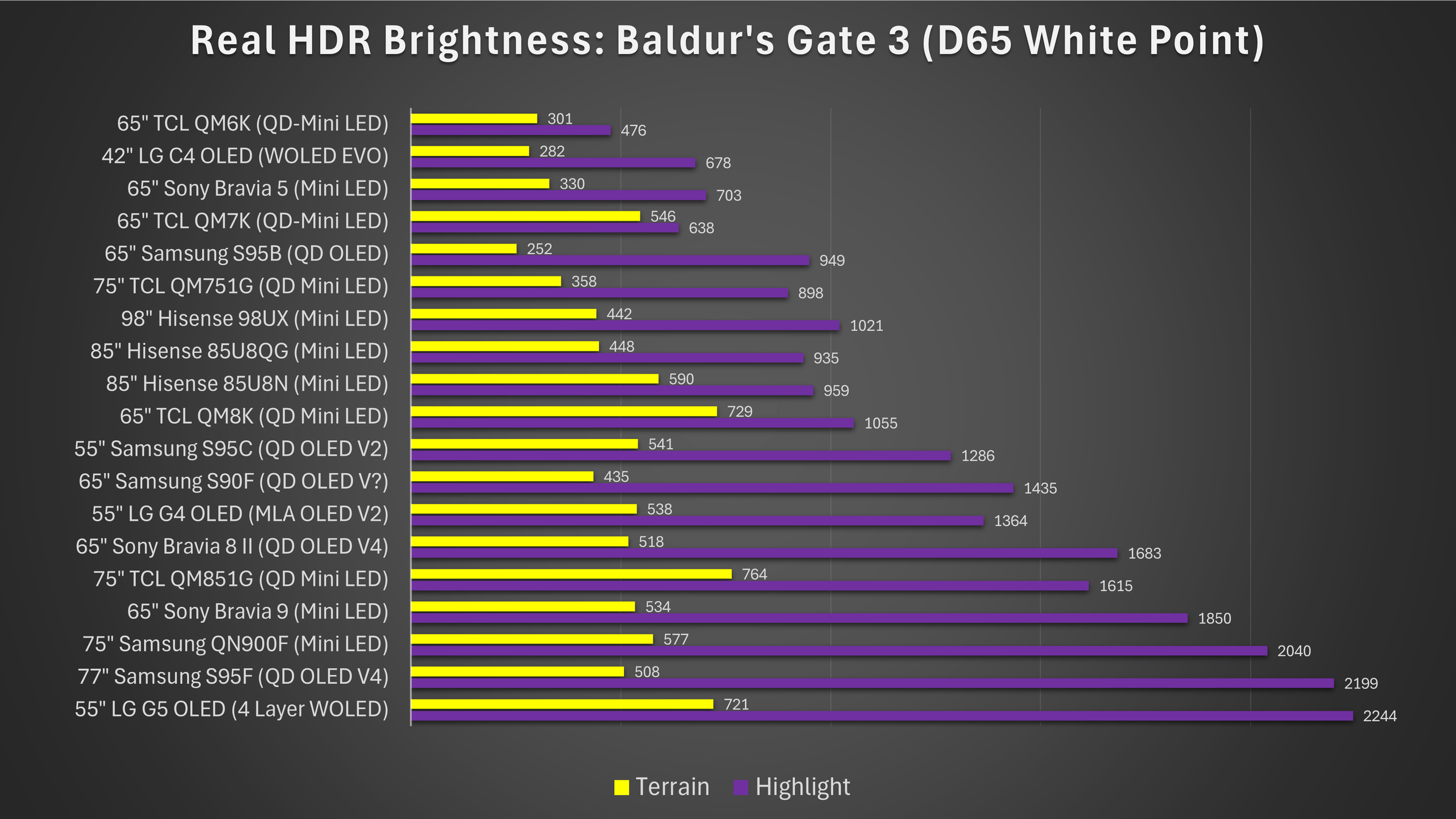
Unfortunately in real content your mileage may vary. In soem casese the U8QG remains one of the brightest I've seen, but in challenging scenes like this BG3 beach, unfortunately the U8QG falls far behind the best OLDs.
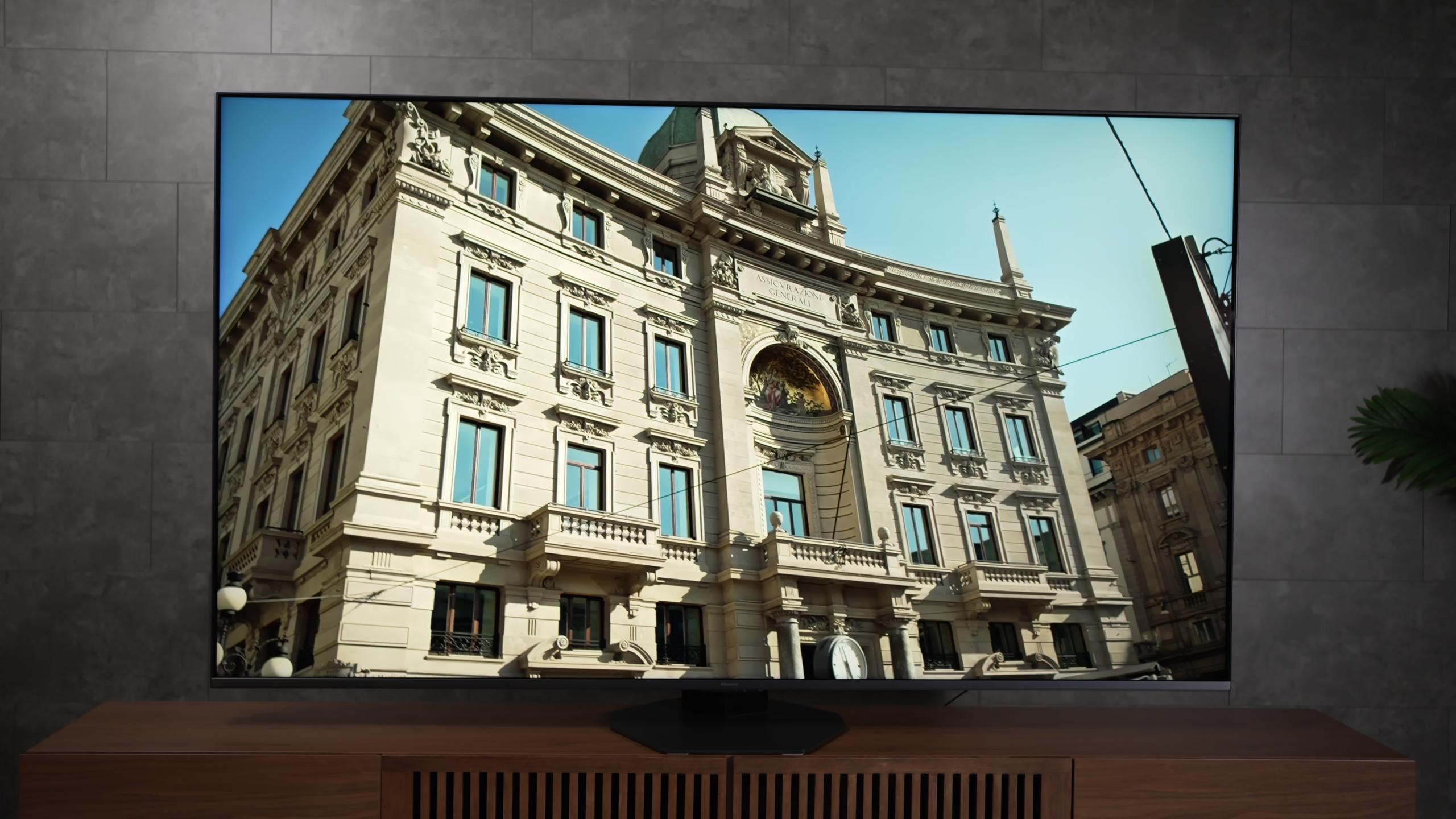
Overall, the Hisense U8QG’s HDR performance is a major strength. It combines massive peak brightness with precise tone mapping and vibrant color handling to create a picture that feels cinematic, alive, and consistently impressive in most lighting conditions.
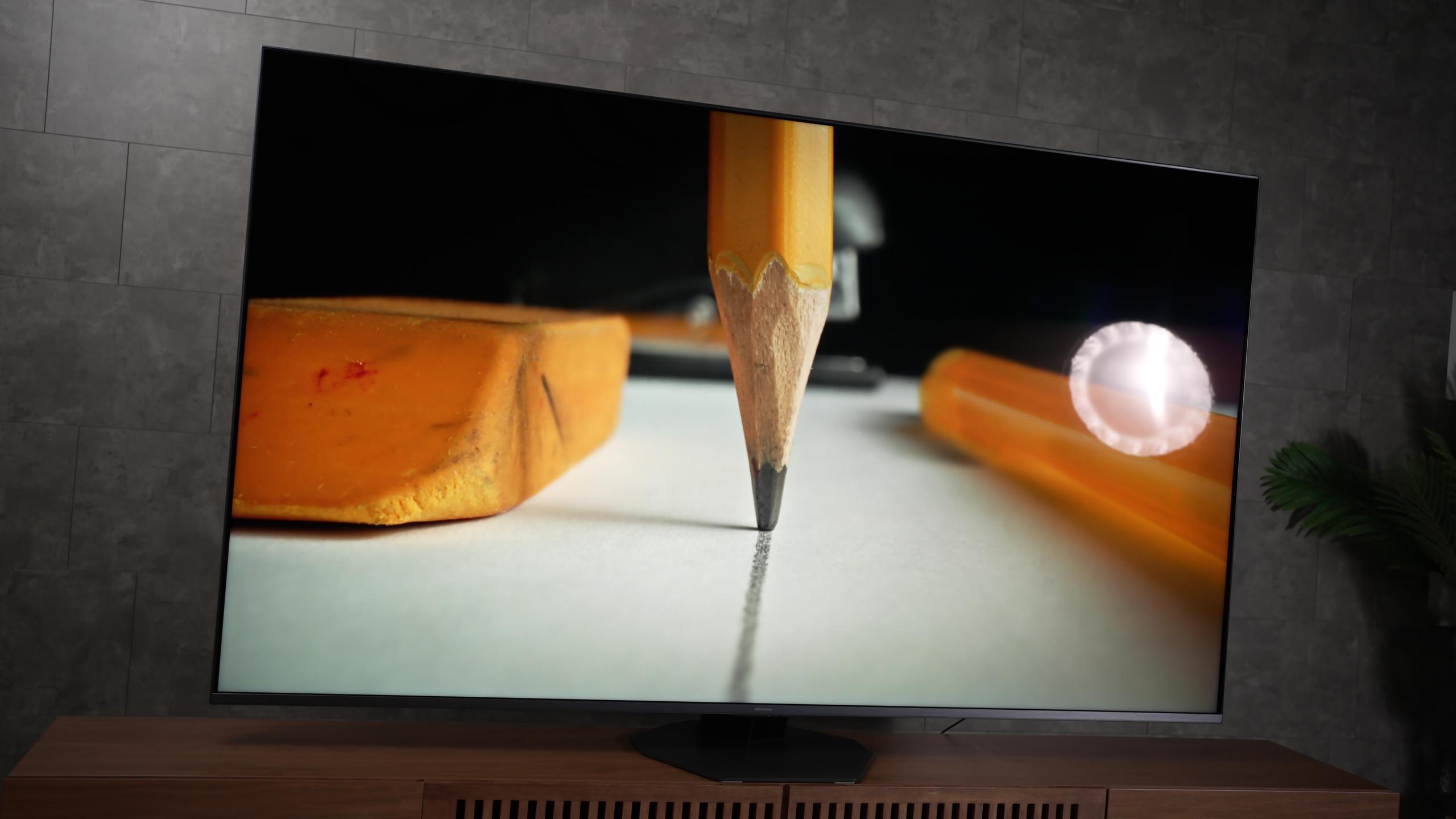
Contrast is one of the U8’s major strengths and a key reason Mini-LED technology exists. With over 4,100 local dimming zones, the TV can adjust brightness with precision. Each zone brightens or darkens independently, allowing deep black levels and bright highlights to coexist without interfering with each other. This control provides a sense of depth and clarity that is a big step above standard LED TVs.
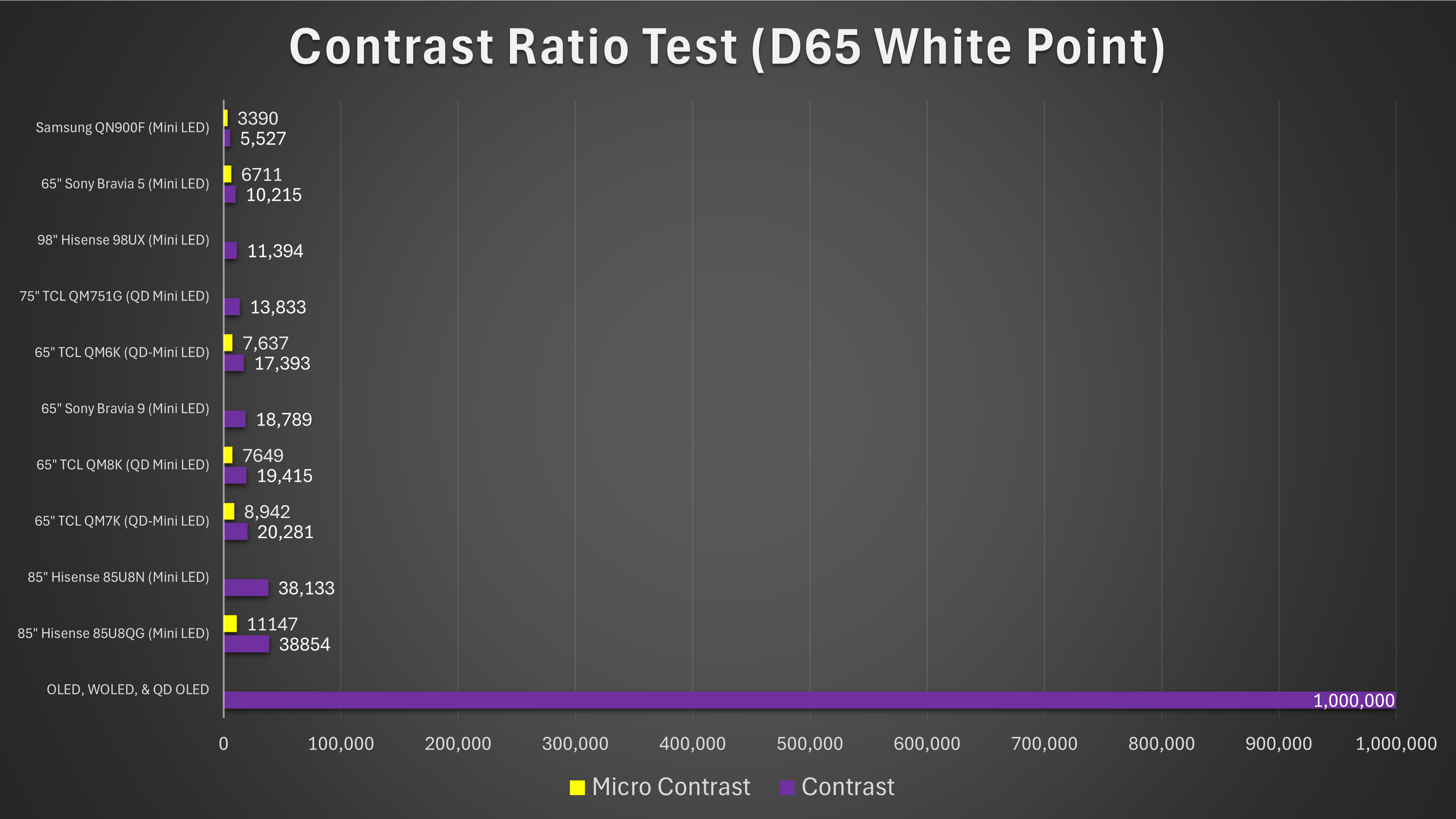
Here is a comparison of the U8 against other TVs, illustrating its performance in large-area contrast and shadow detail. Side-by-side testing confirms the U8 outperforms most LCDs in its price range, and even some higher-end models. In fact these are the best results I've ever seen. The local dimming system reacts quickly, adjusting zones smoothly without much flicker or visible pumping. Fine details in shadows remain clear, and bright elements retain their intensity.
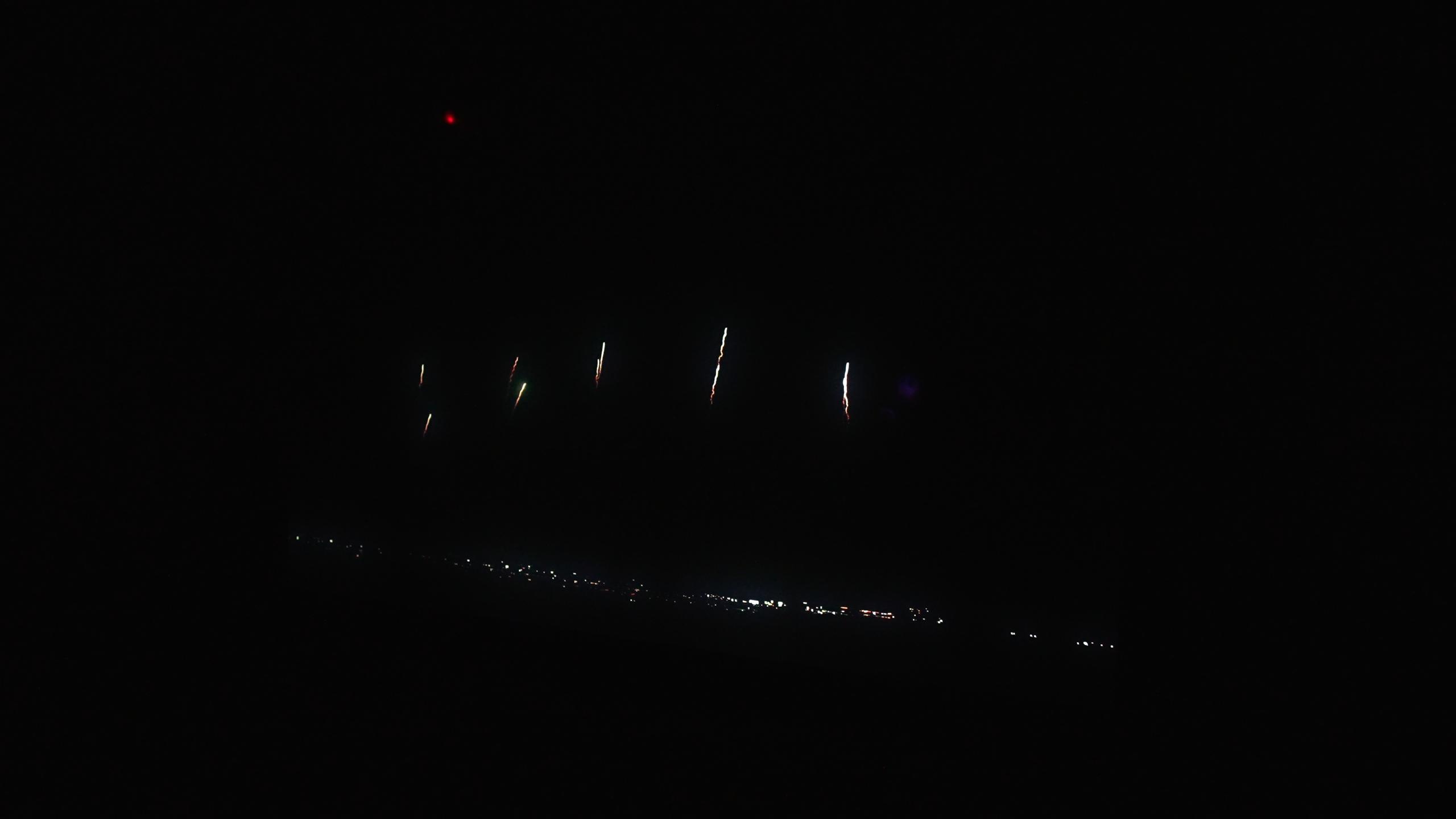
That said blooming is still anoticeable issue off angle especially. Even straight on in a pitch black room you may notice it from time to time. Hopefully Hisense can continue to improve in this area.
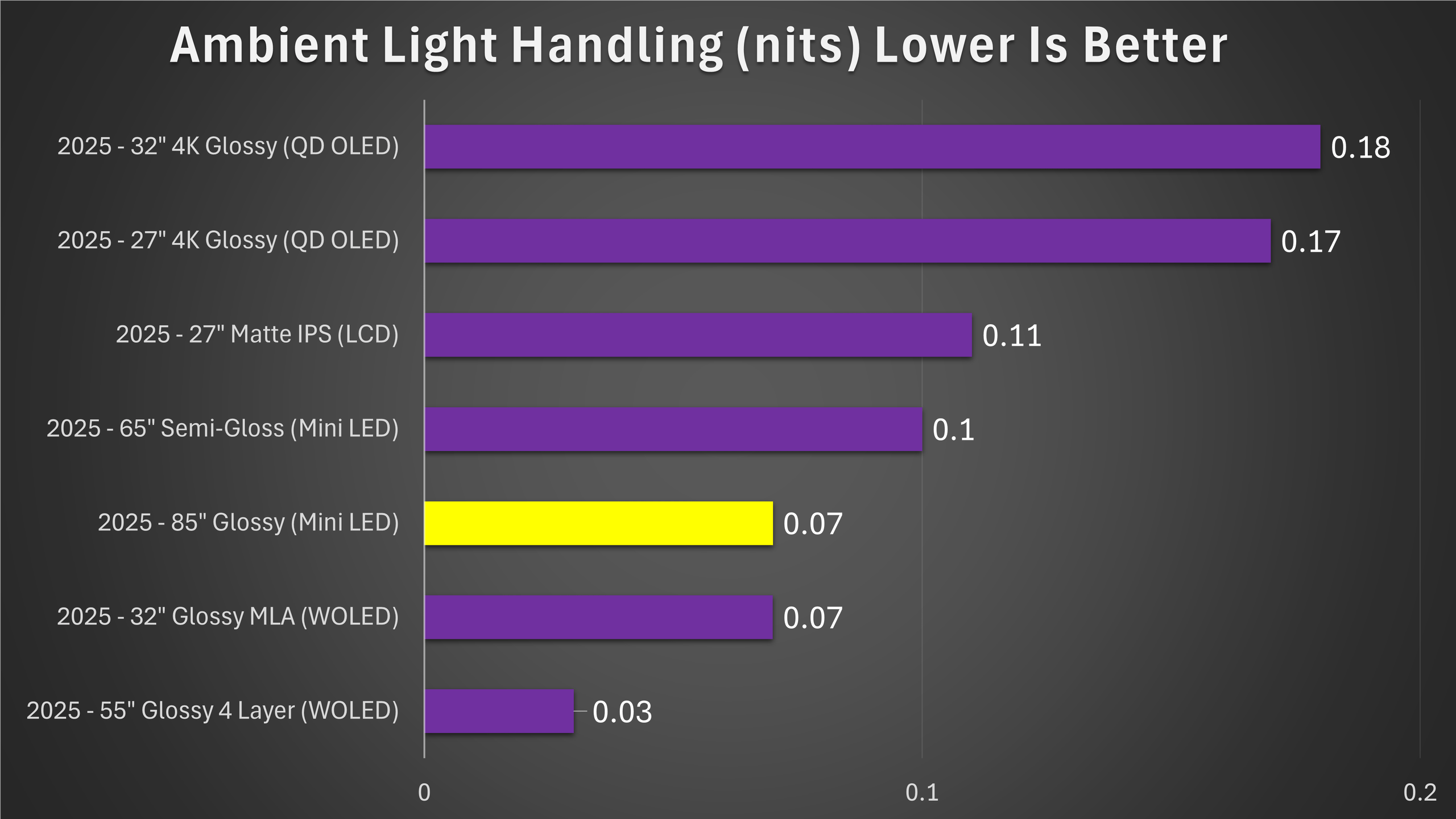
The U8 also handles bright-room viewing extremely well. Unlike QD OLEDs, which can struggle, the U8 maintains strong contrast even with ambient light present. This makes it ideal for living rooms or spaces with natural light, as highlights remain visible and shadow detail does not wash out. The combination of deep black levels, controlled blooming, and robust ambient light handling makes the U8 a versatile choice for bright lighting conditions.
Hisense has refined its dimming algorithms compared to previous models, producing smoother transitions and more consistent performance across different scenes. The picture often approaches OLED depth, particularly in well-lit environments. Overall, the U8 delivers the best contrast performance in a Mini-LED TV I've tested.
The screen uses a glossy coating that helps fine details look sharper and more vivid. Text, edges, and small patterns all appear crisp. Reflections can be seen in very bright rooms, but because the TV is so powerful, it easily overcomes them.
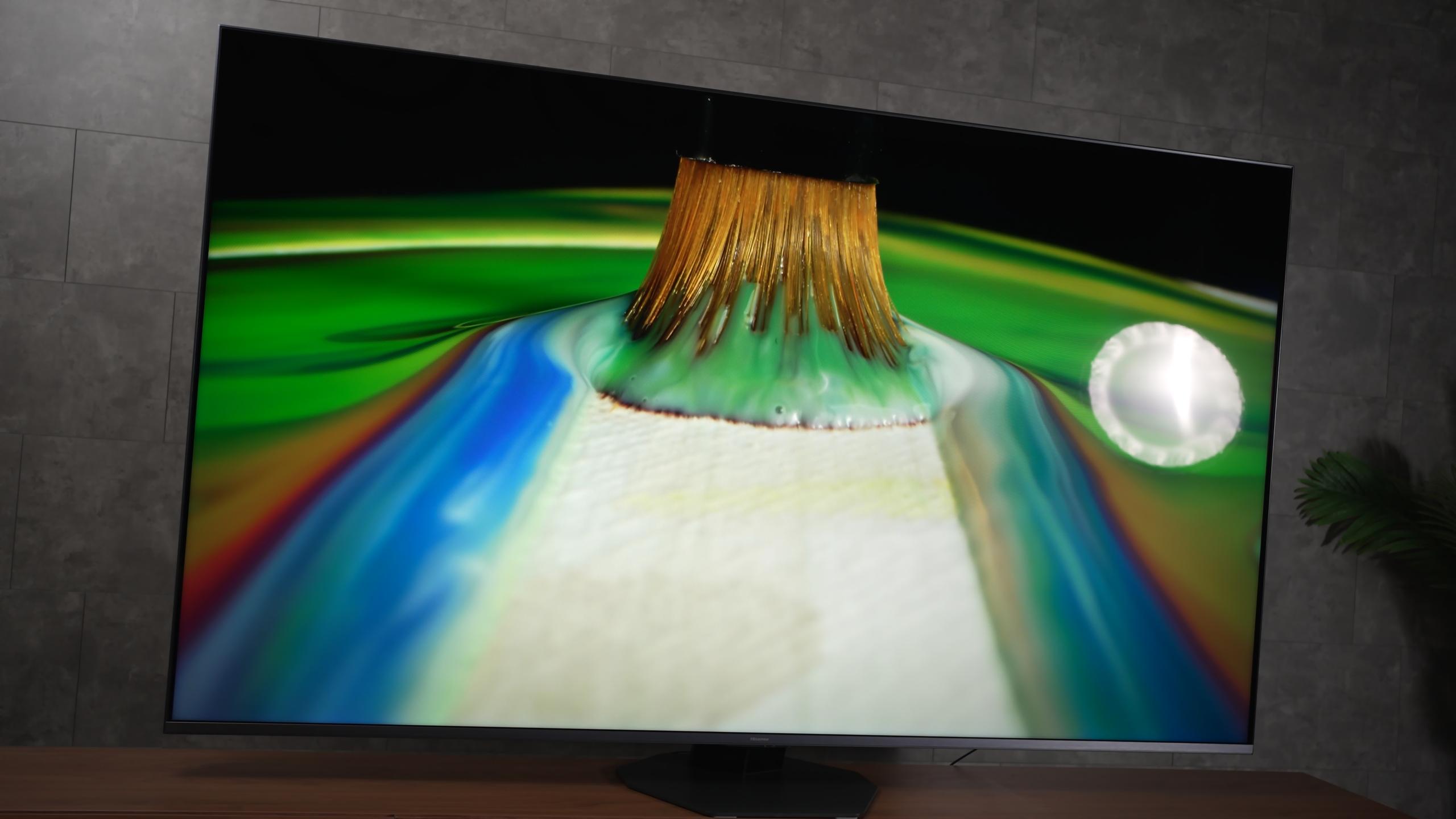
It does use a BGR subpixel arrangement which can slightly harm clarity, but overall Hisense continues to deliver excellent clarity when compared to some other brands.
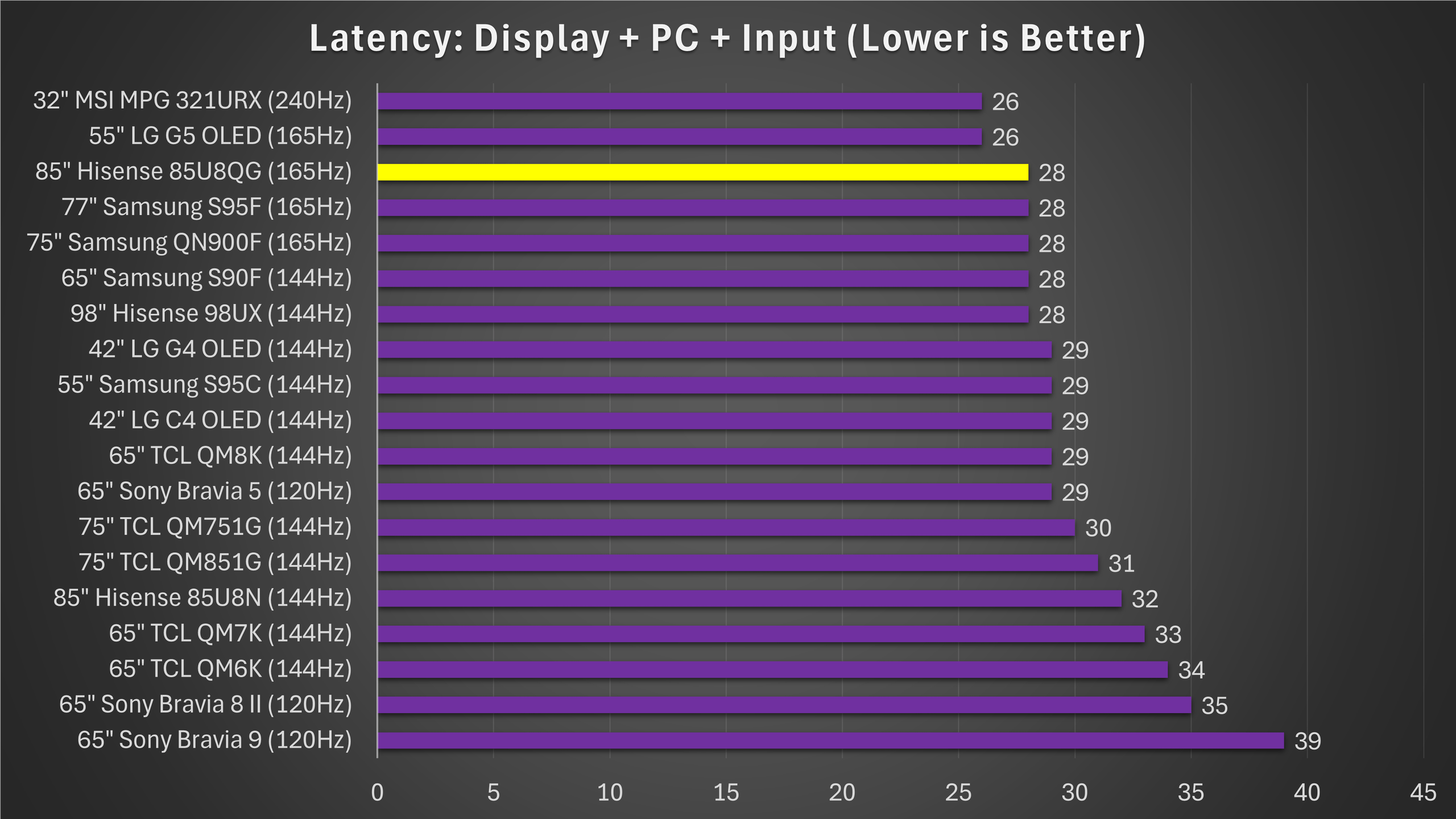
For gamers, the Hisense U8 performs extremely well, especially in terms of input lag. According to my testing, this is one of the fastest results I’ve seen on any Hisense TV to date, nearly matching the quickest OLEDs on the market, including the LG G5. Low latency ensures responsive gameplay for both consoles and PC, making fast-paced games feel immediate and smooth.
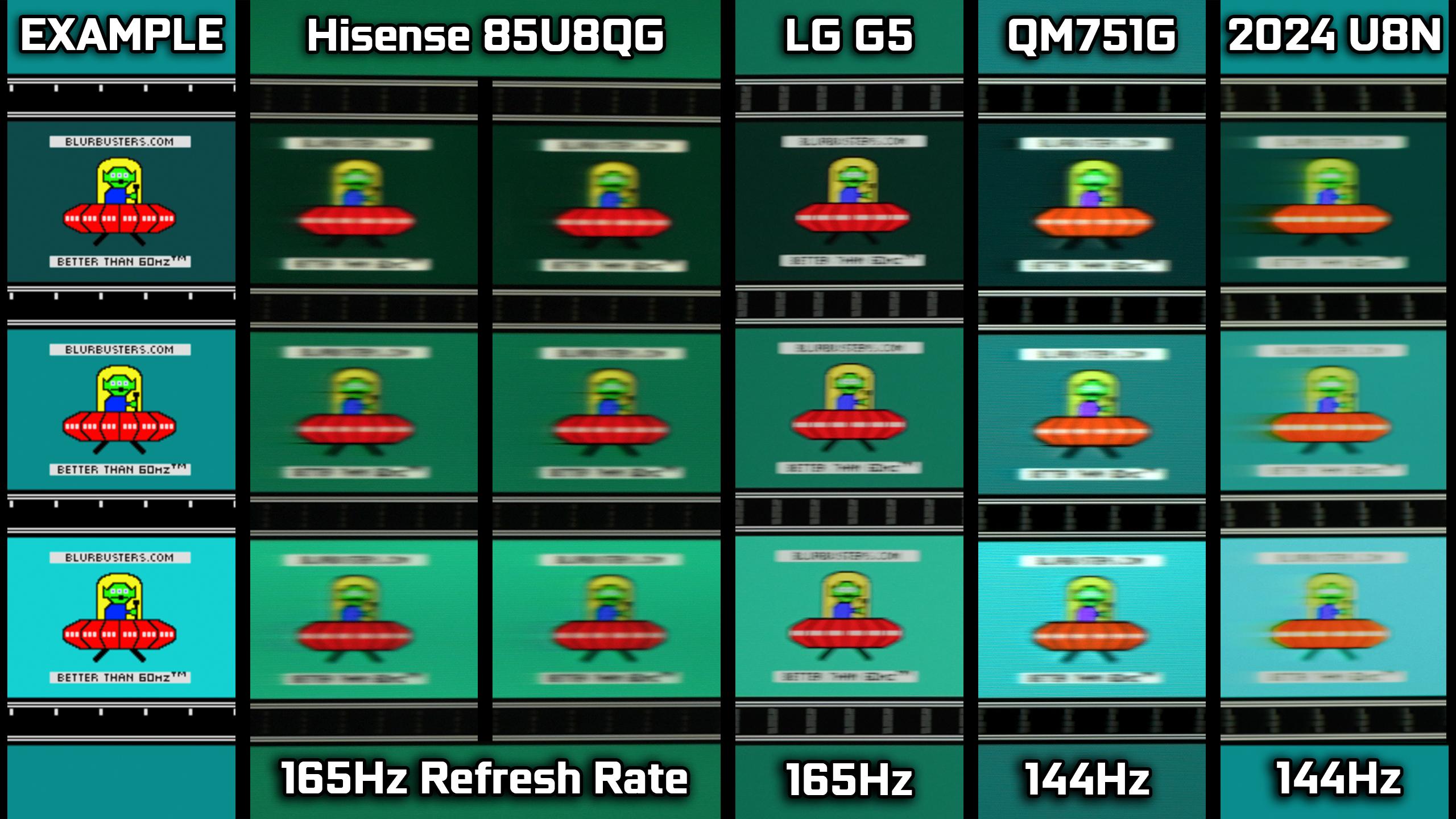
Motion performance is a mixed bag. The 165Hz panel makes movement smooth, but in fast-action sequences, trailing can appear behind moving objects. The optional 288Hz mode at lower resolutions did not provide noticeable improvements in motion clarity, so it isn’t critical for most users.
Hisense’s motion interpolation is excellent for movies and TV content. At moderate settings, it effectively reduces judder and keeps motion smooth without introducing noticeable artifacts.
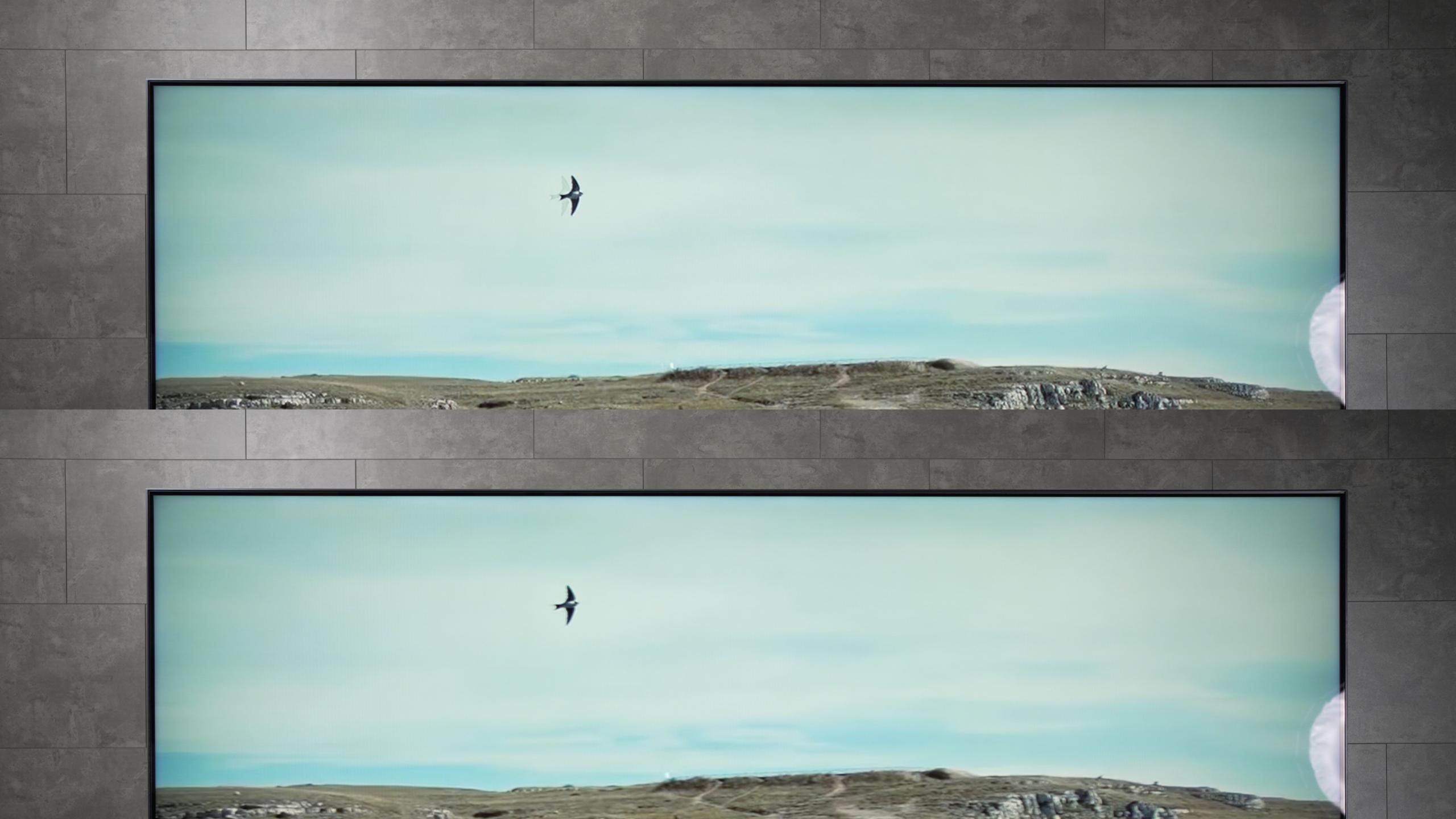
Sports, animated content, and low-frame-rate footage, like anime, look fluid and natural. This system continues to improve year over year, making it one of the strongest implementations on the market.
Like most VA panels, the U8 looks best when viewed from the center. Colors and contrast drop slightly when you move too far to the sides. However, the 85-inch VA panel performs a little better than previous versions, holding color accuracy longer before fading.
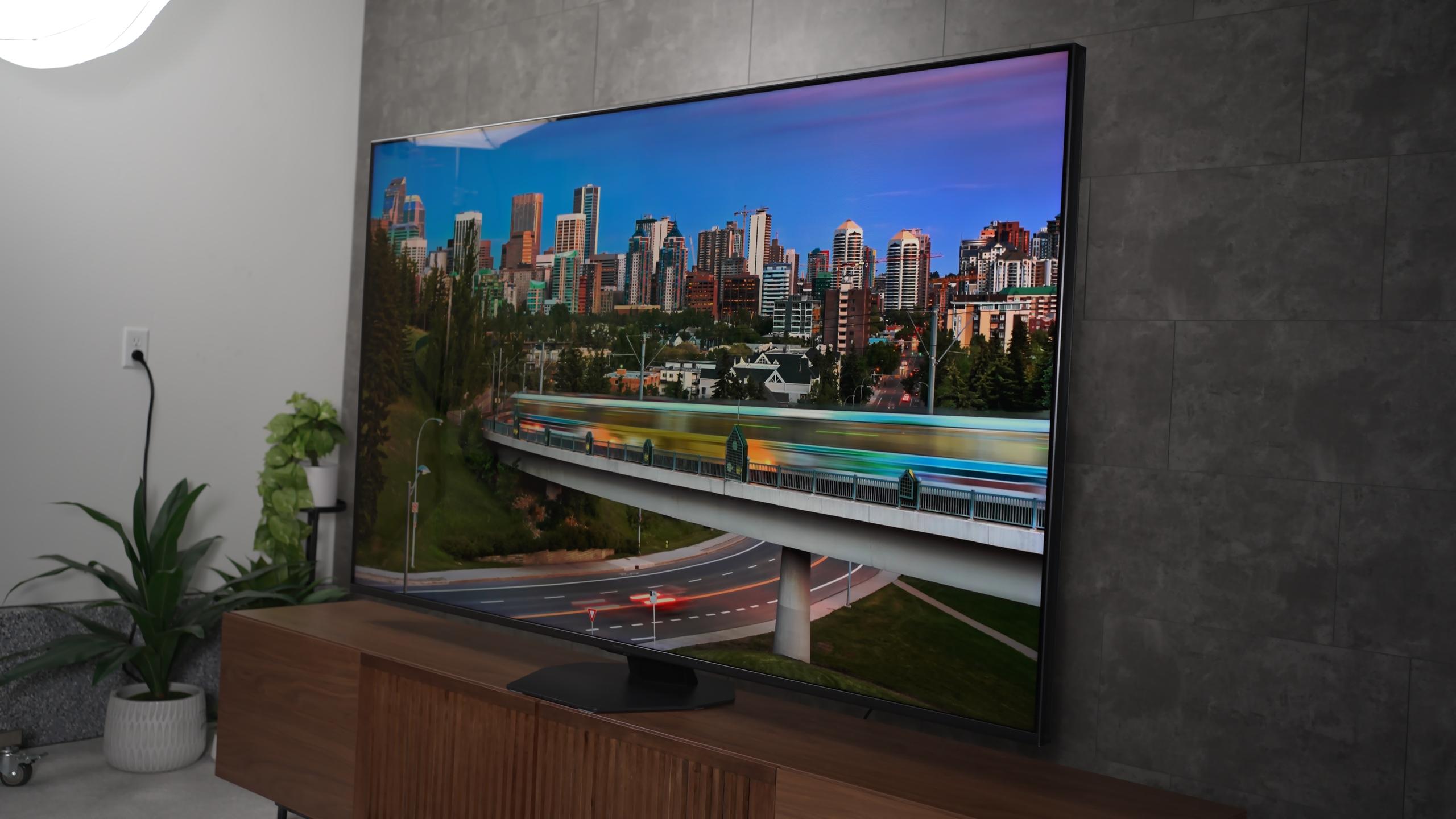
Panel uniformity is very good overall. There’s minimal dirty-screen effect, and the backlight looks even across large bright areas. Only in completely dark rooms can you notice slight unevenness due to blooming, which is typical for Mini-LEDs. For regular mixed content, it looks excellent.
The built-in sound is decent but not immersive. It’s loud enough for casual TV or streaming and keeps dialogue clear, but it lacks punch in the low end and detail in the mids. Movies sound fine, but for the full cinematic effect, a soundbar or speaker setup is definitely worth adding.
The Hisense U8 runs on Google TV, and it’s one of the smoothest versions I’ve tested. Apps load quickly, switching between inputs is instant, and the interface rarely lags. The HiView AI Engine Pro keeps everything responsive, making the overall experience feel high-end.
During testing, the firmware was stable and bug-free. Navigation is straightforward, and customization options are deep enough for both casual viewers and enthusiasts. Combined with the fast processor, the software experience feels polished and premium.
After testing the Hisense U8 (2025), I can say it’s one of the most impressive Mini-LED TVs in its class. It delivers performance that often rivals models costing much more, focusing on what really matters — brightness, contrast, and smooth everyday usability.
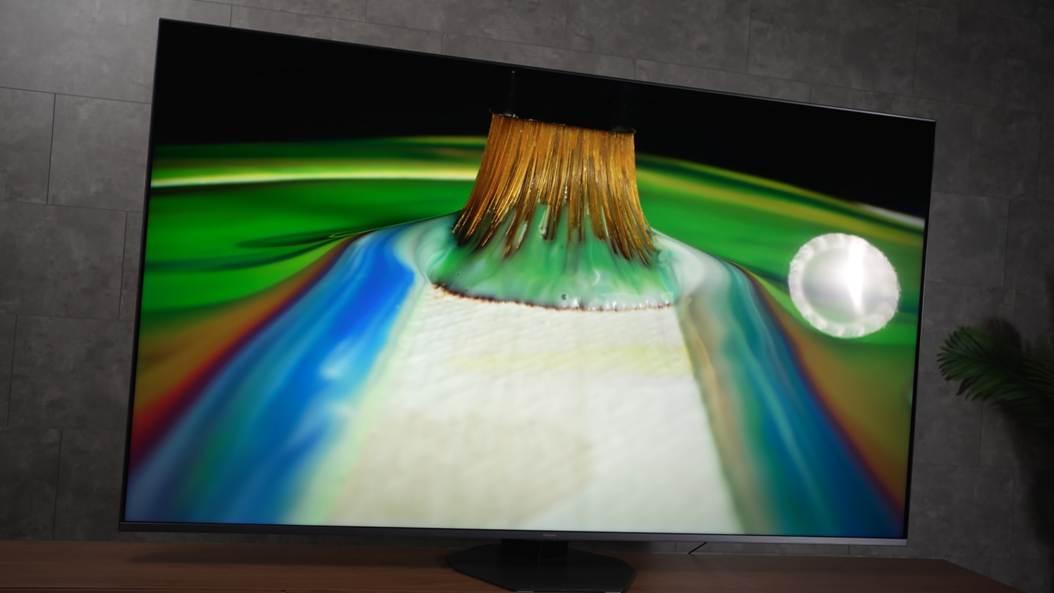
Its biggest strengths are outstanding brightness, powerful HDR, deep contrast, responsive gaming performance, and the fast, smooth Google TV interface. Together they make it a pleasure to use daily.
Its downsides are the usual Mini-LED trade-offs: some blooming in dark scenes, motion trails in extreme cases, and limited side viewing. The audio is fine but not theater-level.
Still, for most people, the Hisense U8 hits the perfect balance between price and performance. If you want a large, bright TV that shines in any room, delivers eye-popping HDR, and runs fast for both movies and gaming, this one is highly recommended. It’s not for purists chasing OLED black perfection, but for real-world viewing, it’s one of the best values in the premium midrange segment.


Privacy Policy
Terms and Conditions - Affiliate Policy
Home Security
© Copyright 2008-2026.
11816 Inwood Rd #1211, Dallas, TX 75244