

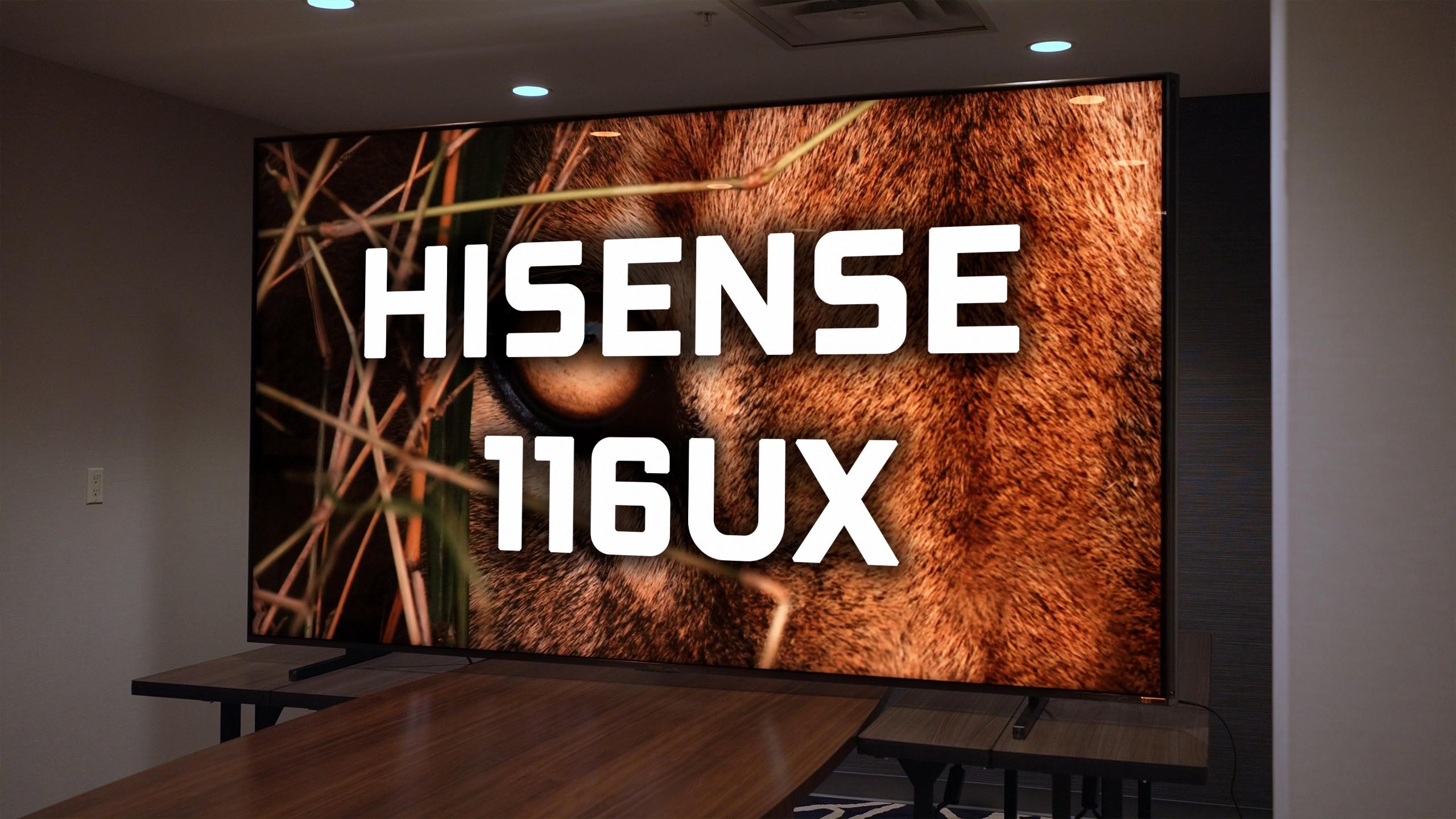

The Hisense 116 UX is not only the most expensive TV I’ve ever tested, it’s also the largest at an absolutely absurd 116 inches, but the main event is no doubt their brand new RGB Mini LED backlight system.
This new cutting edge technology promises to deliver drastically better color, and improvements to blooming while retaining all the benefits Mini LED TVs currently offer, but will it be enough to sway buyers, or should you wait for better prices and more mature tech? Let’s find out.
If you want the biggest, brightest, most color-capable LCD I’ve laid eyes on, the Hisense 116 UX delivers. Its RGB Mini-LED backlight substantially reduces perceptual blooming while pushing color in ways traditional white-LED arrays can’t. Additionally measured window brightness is record-setting. HDR impact in real content is excellent—though not always perceptually greater than elite OLEDs in mixed scenes—and the set’s clarity and finish make it a killer bright-room option.
That said, as always there are compromises: VA motion trails behind the best ADS/OLED options, viewing angles are only “pretty good,” and today’s content rarely exploits the panel’s full BT.2020 reach. At $24,999.99, that mix will be breathtaking for some buyers and tough to swallow for others.
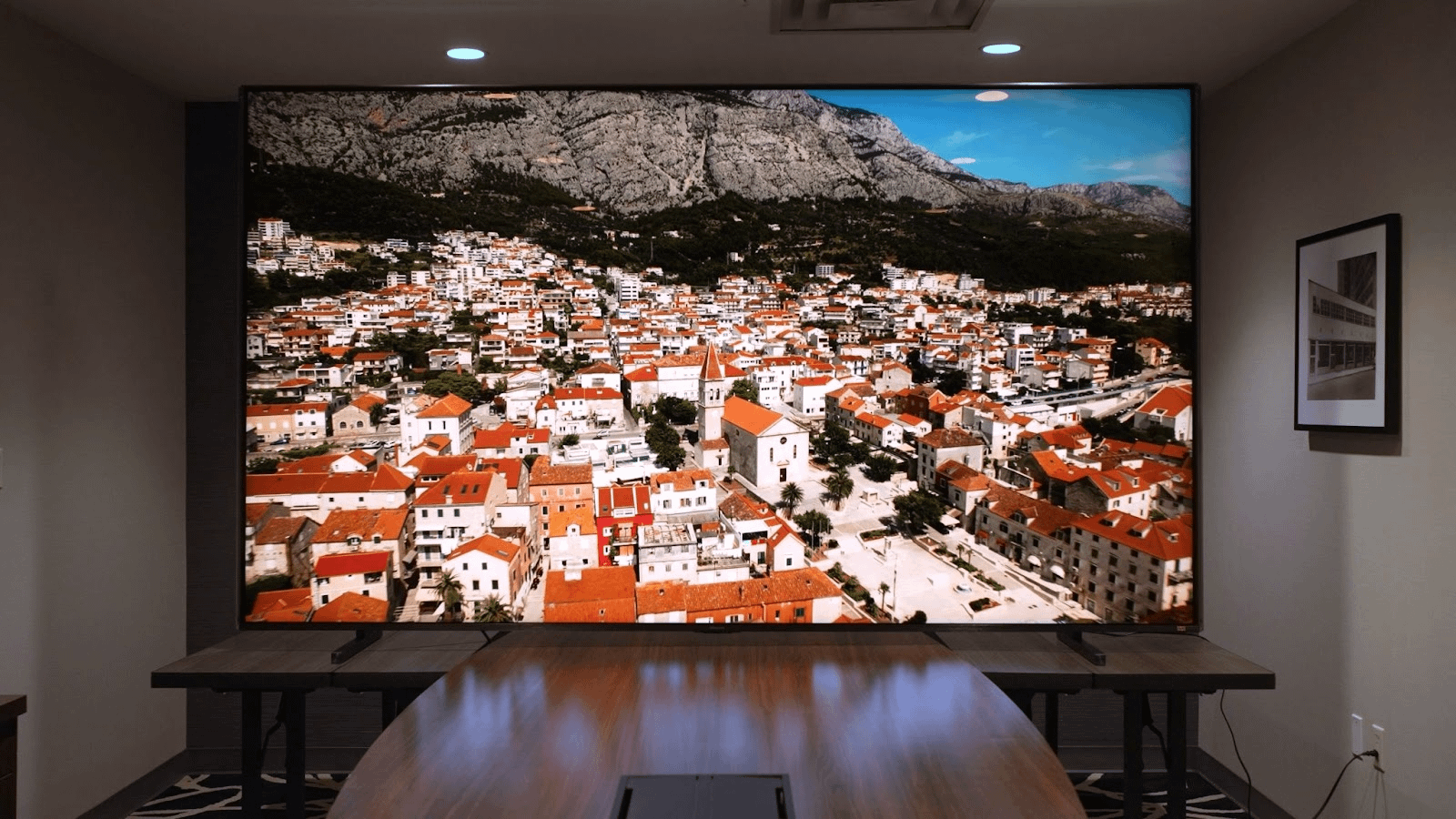
Disclaimer: Hisense flew me to New York to spend a day with the 116UX. I brought as many tools as I could fit in a carry-on, and stayed on the set long enough that they literally had to kick me out. That said all opinions are my own.
Additionally Home Theater Review may run advertising campaigns with various manufacturers including Hisense.
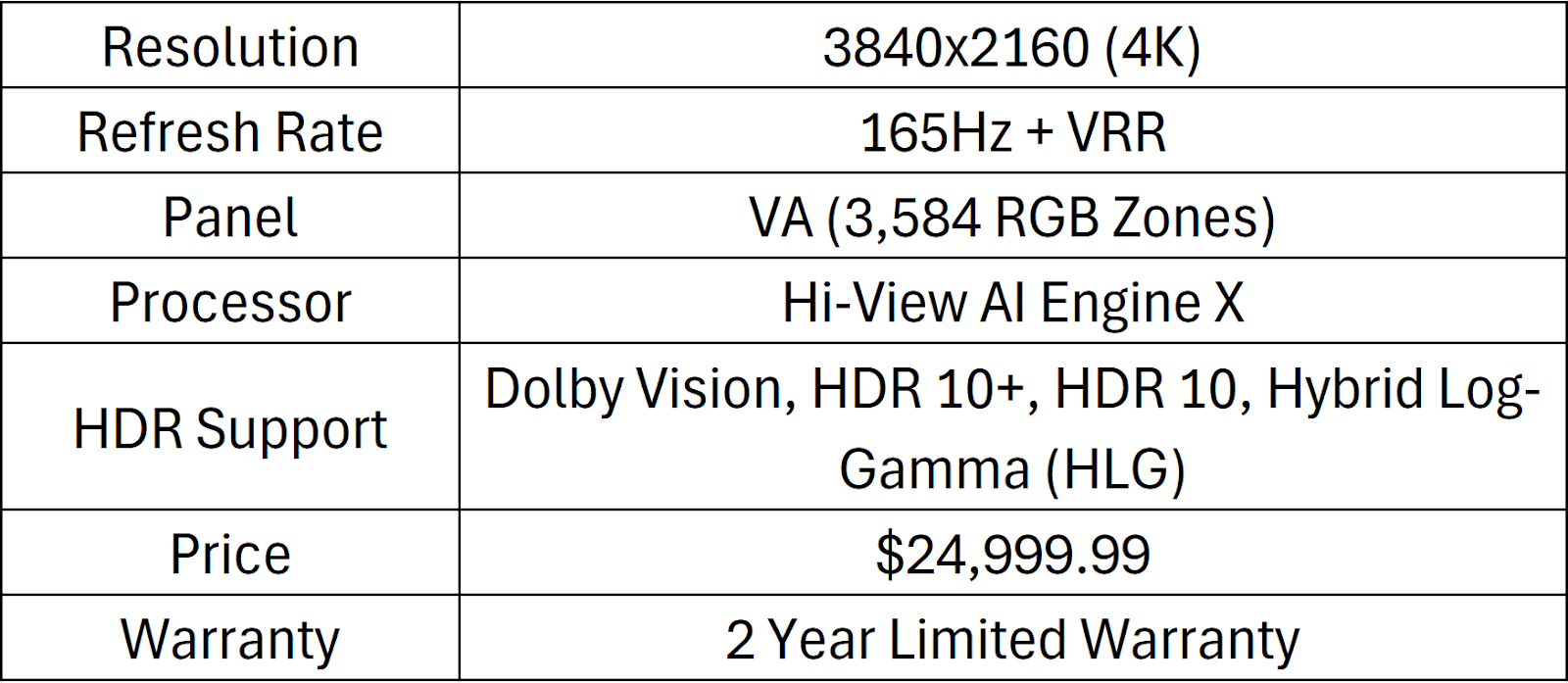
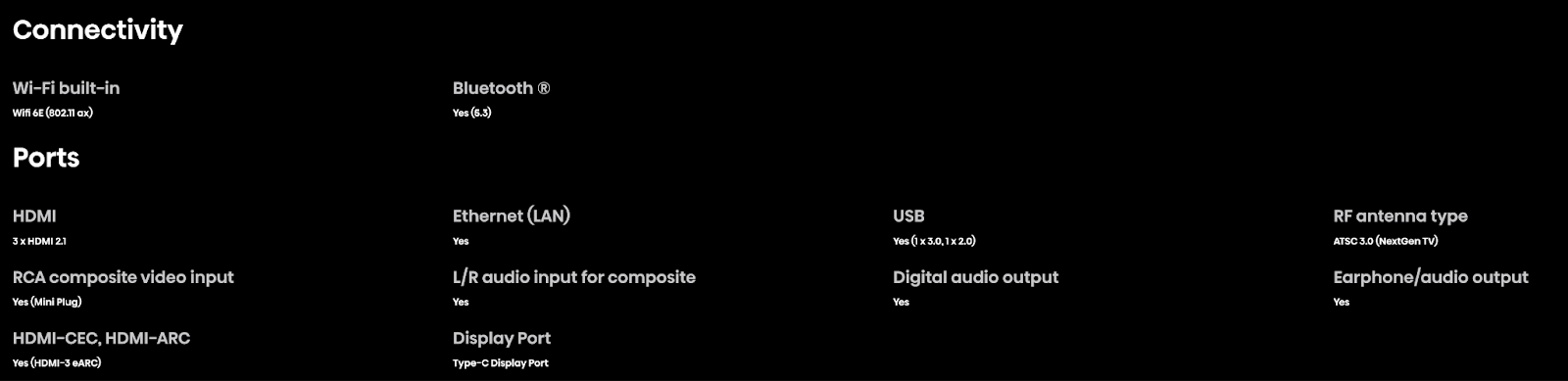
Above is the Connectivity for this TV. Most importantly it does come with three HDMI 2.1 ports capable of 4K 165Hz.
The big story is the RGB Mini-LED backlight. Unlike traditional white LEDs, these zones emit color, which can materially increase color volume and reduce the “white halo” effect that can desaturate highlights. Hisense claims ~95% BT.2020 coverage for the 116UX, but in practice, the improvement is content-dependent. Much of what I could quickly access (even on YouTube in HDR) was mastered to DCI-P3, not BT.2020.
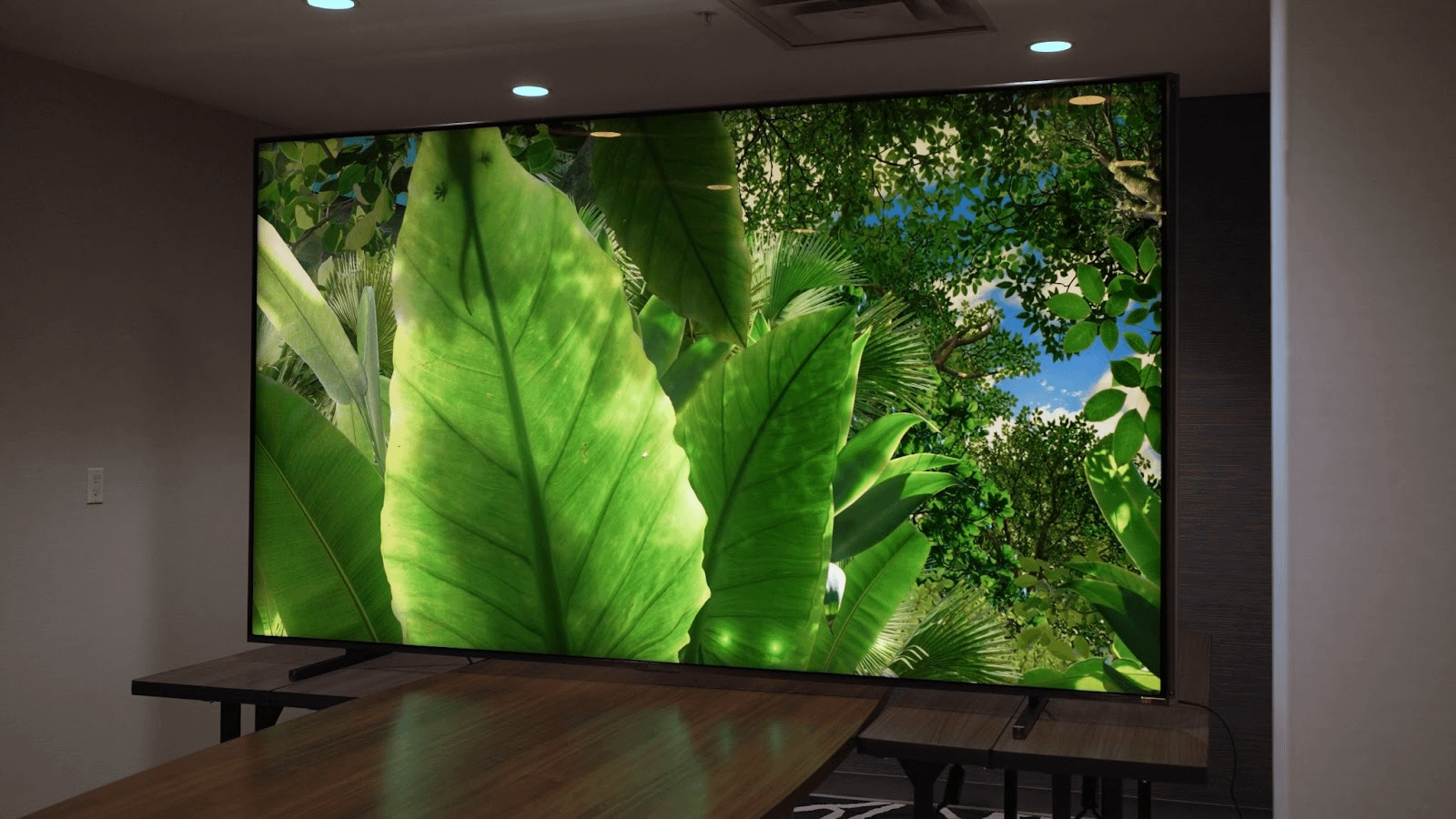
When I did find clips that genuinely pushed BT.2020 primaries and bright spectral highlights, the delta versus traditional Mini-LED (like Hisense’s 98 UX) was certainly visible. It displayed a more saturated, more “pure” colors with fewer perceptual compromises.
Unfortunately I wasn’t able to run my full Calman sweep on-site, but in Filmmaker Mode the set looked appropriately restrained. Nothing screamed “blown out” and tracking looked sensible to the eye. This is consistent with Hisense’s recent track record. Additionally my unit did not show noticeable banding or other issues, but your mileage may vary.
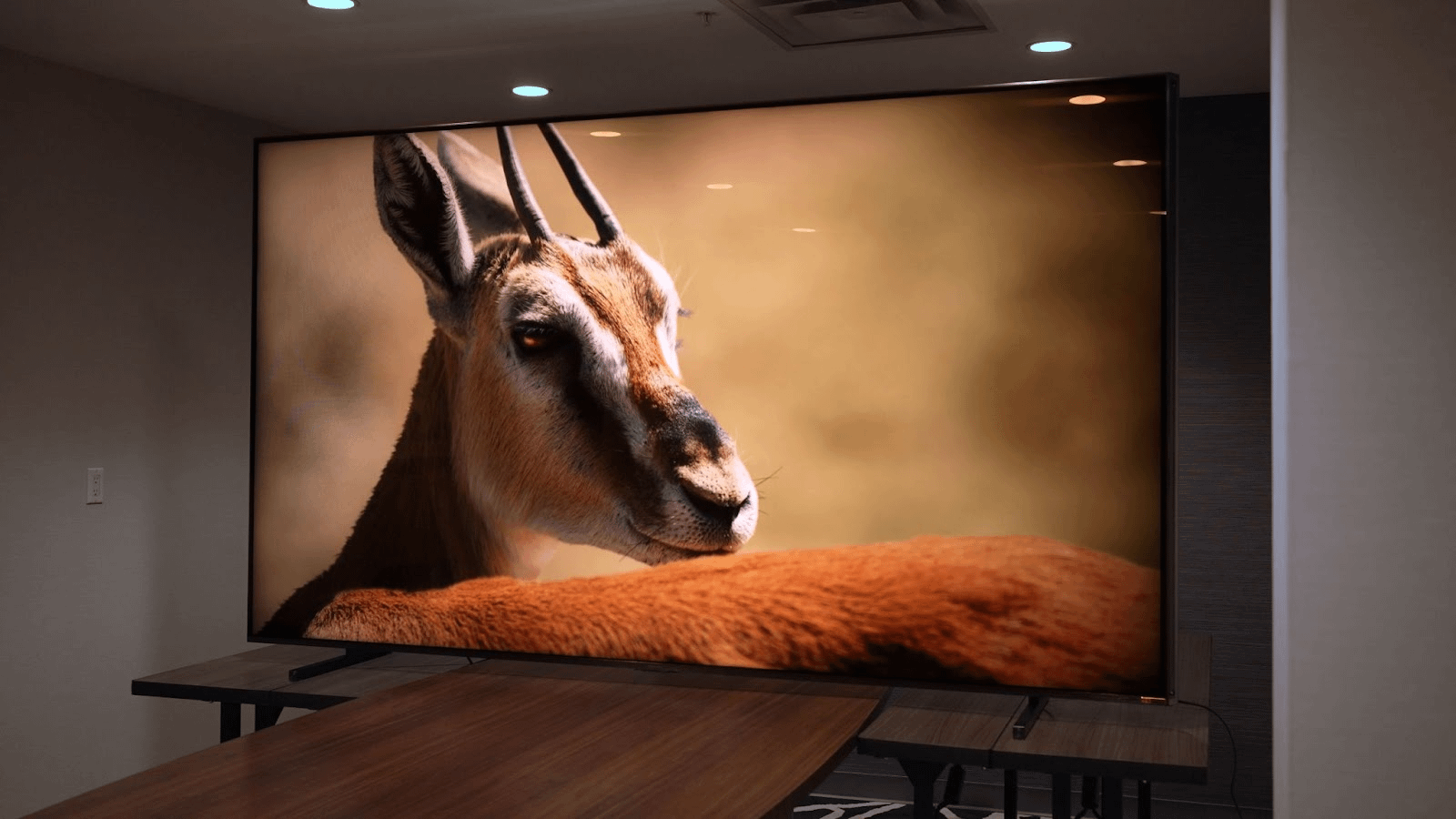
Based on Filmmaker Mode observations, EOTF and color tracking looked good, and peak windows measured extraordinarily high at D65. If this unit behaves like recent Hisense flagships I’ve reviewed, I’d expect post-calibration SDR to land squarely in spec and HDR to track well with restrained tone mapping.
This is where the 116UX plants a flag. At D65, I measured over 7,000 nits in a 10% window and over 1,200 nits full screen. Those are the best highest D65 window numbers I’ve personally recorded. In windowed torture tests, it stomps previous champs like TCL’s QM851G.
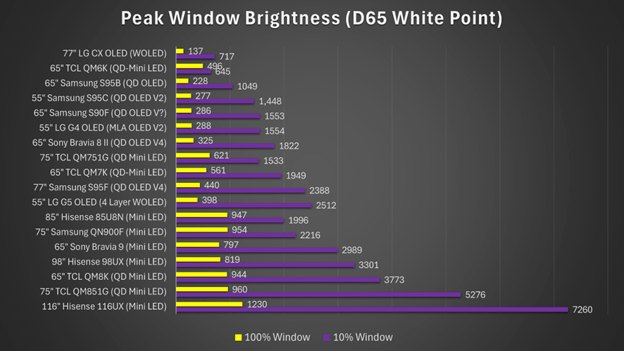
The Hisense 116UX is the brightest TV I have ever measured (so far).
That matters for highlight impact and, crucially, for scenes with large bright areas—think snowy landscapes, sun-blasted deserts, or the all too famouse white room scene from The Matrix. In those scenarios, the Hisense simply has horsepower most TVs can’t muster.
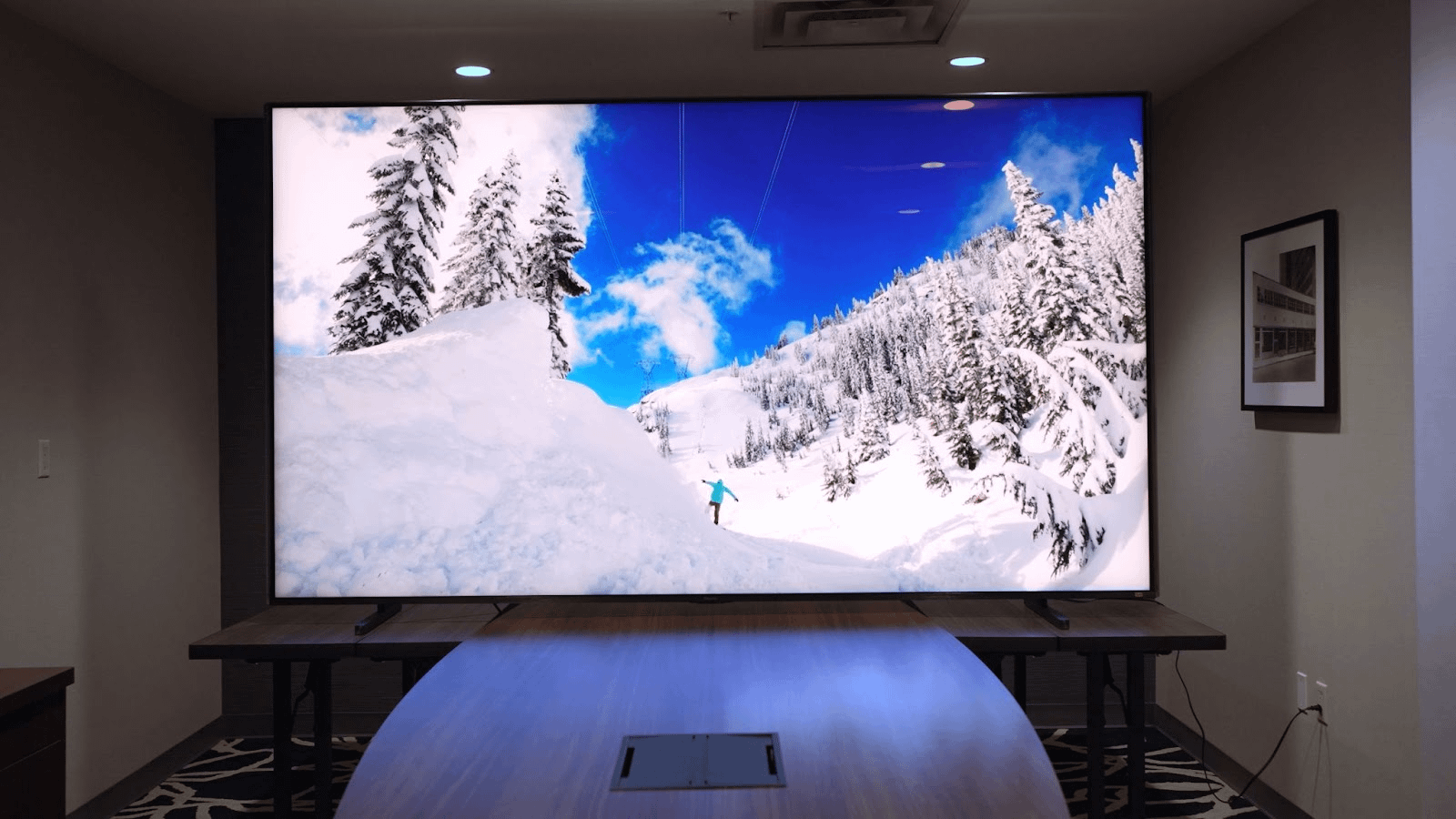
But there’s an important nuance: in most real HDR content, Hisense reins things in a bit to protect contrast. The result is measured leadership in alrge, bright windows, while perceived “punch” sometimes feels closer to the best OLEDs, but not always better. In some titles and scenes, OLEDs like the LG G5 still deliver a more immediate, eye-grabbing pop due to pixel-level light control and very different tone-mapping philosophies. That said, give the 116UX a full-screen bright scene and it will steamroll any OLED—there’s just no contest when you push APL high.
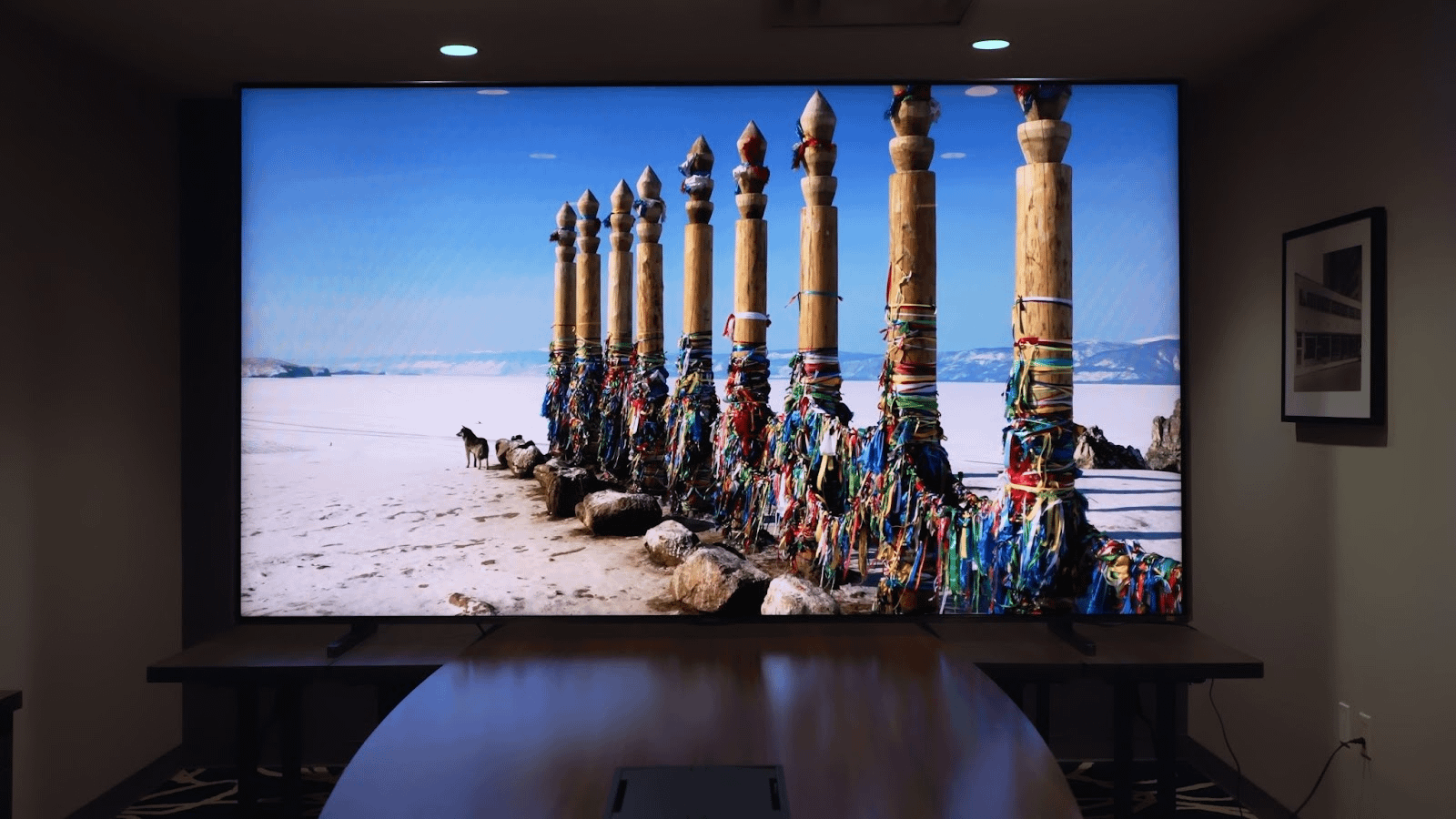
If you watch a lot of bright-room content or love HDR titles with substantial full-field luminance, the 116 UX has a unique, undeniable advantage. There’s simply nothing else out there today that can deliver such a massive image at these brightness levels. This is as good as it gets.
This section is the heart of any Mini-LED review—and the 116 UX is much different than any Mini LED I’ve tested previously. Traditional Mini-LED arrays use white LEDs as the light source, and color is produced by the LCD stack and filters. The 116UX’s RGB Mini-LED zones emit color themselves. This leads to two key improvements.
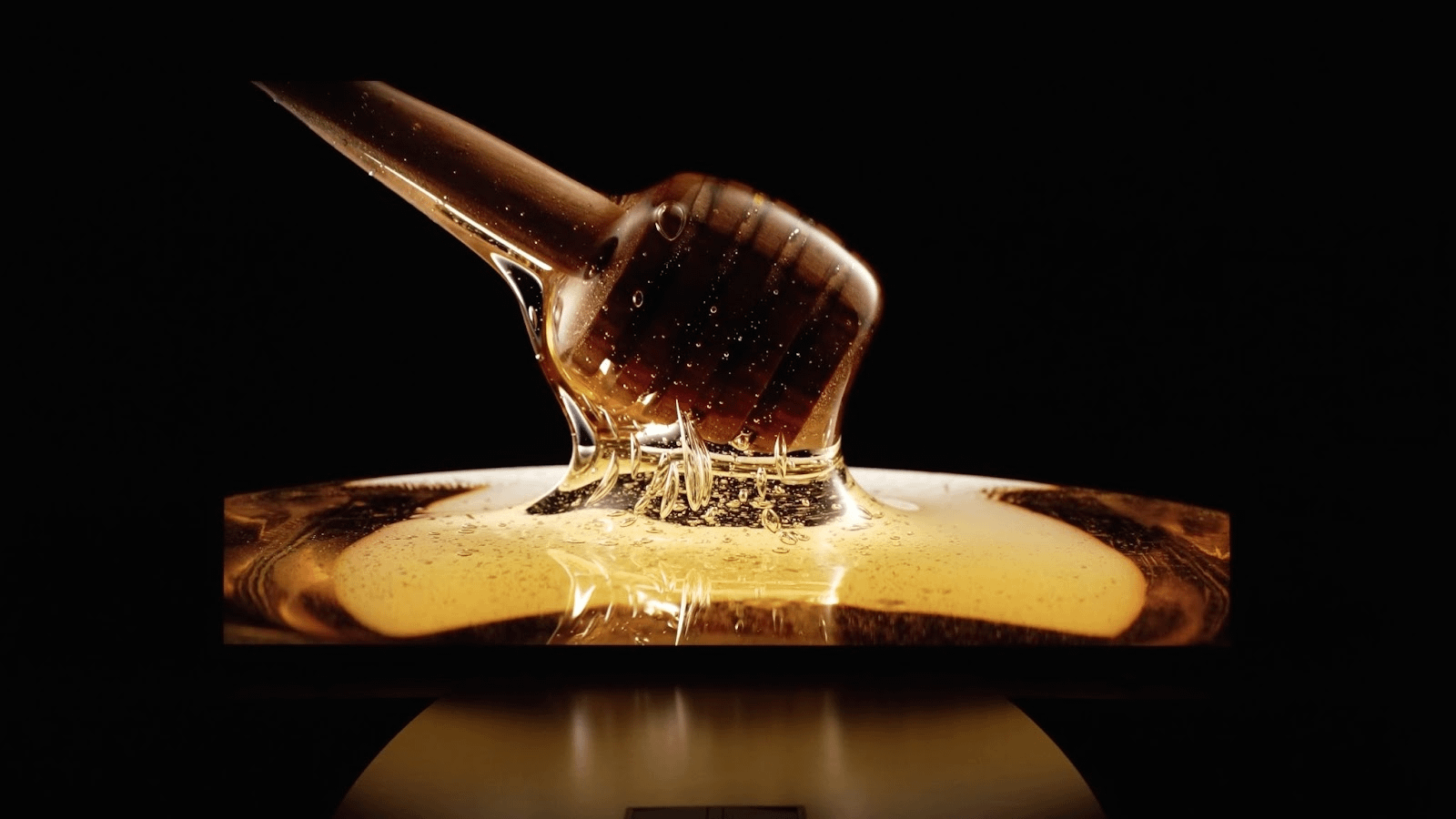
Because the 116UX’s zones are color-emitting, the light beside a saturated object is less “white,” making any halo read as less intrusive. Next to something like the Hisense 98UX (traditional Mini-LED), this difference can certainly stand out in specific HDR clips.
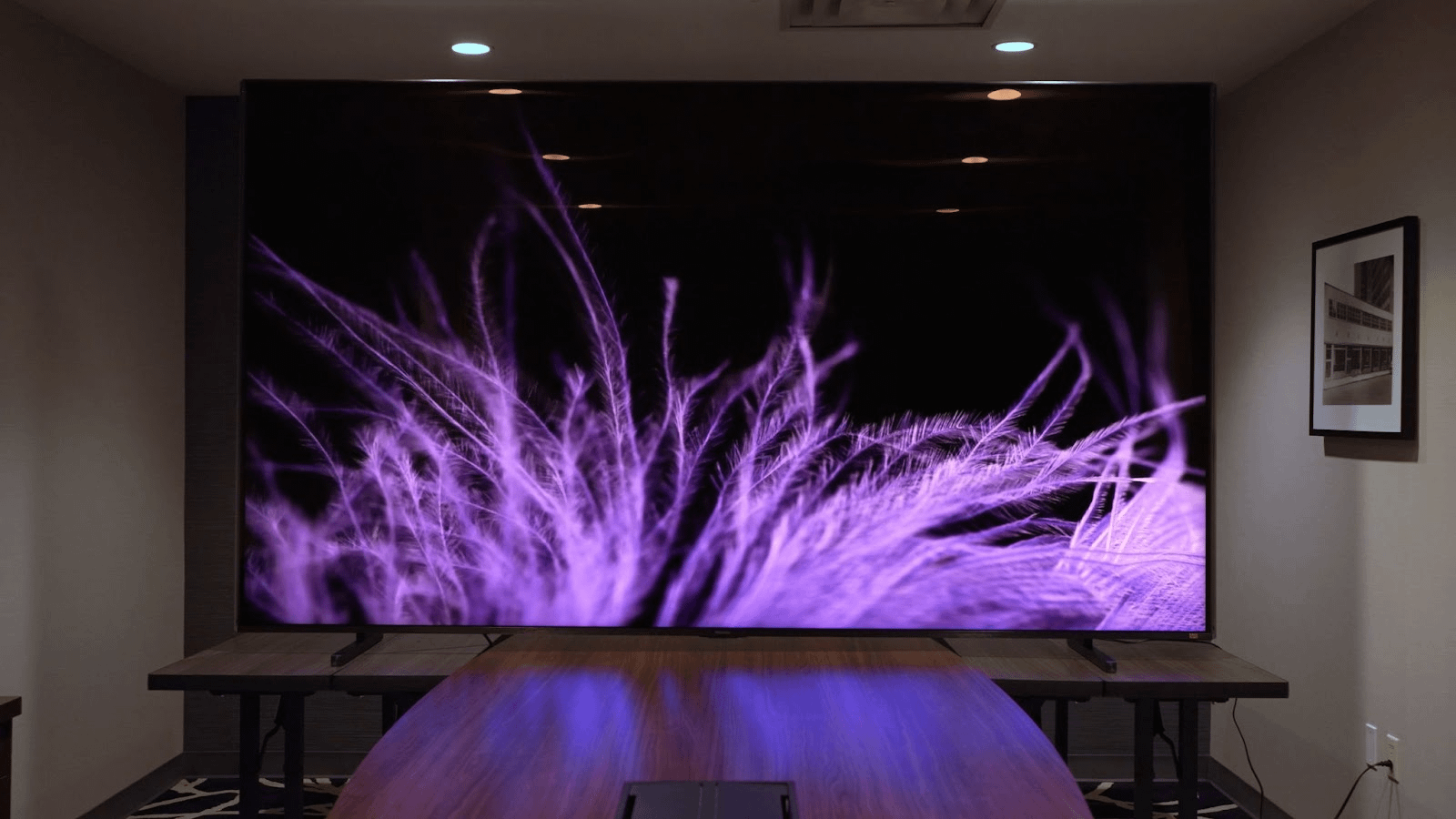
This leads to incredibly bright and deep colors the likes of which I have not seen replicated on any display technology to this day.
To make matters even better, the panel being used is VA, which helps native contrast straight on. Hisense’s tone-mapping strategy is conservative in real content, and when paired with VA, it keeps dark scenes looking convincingly deep without crushing visibility. The net impact is a bright, high-contrast image with less obvious blooming than I’m used to on large-zone arrays.
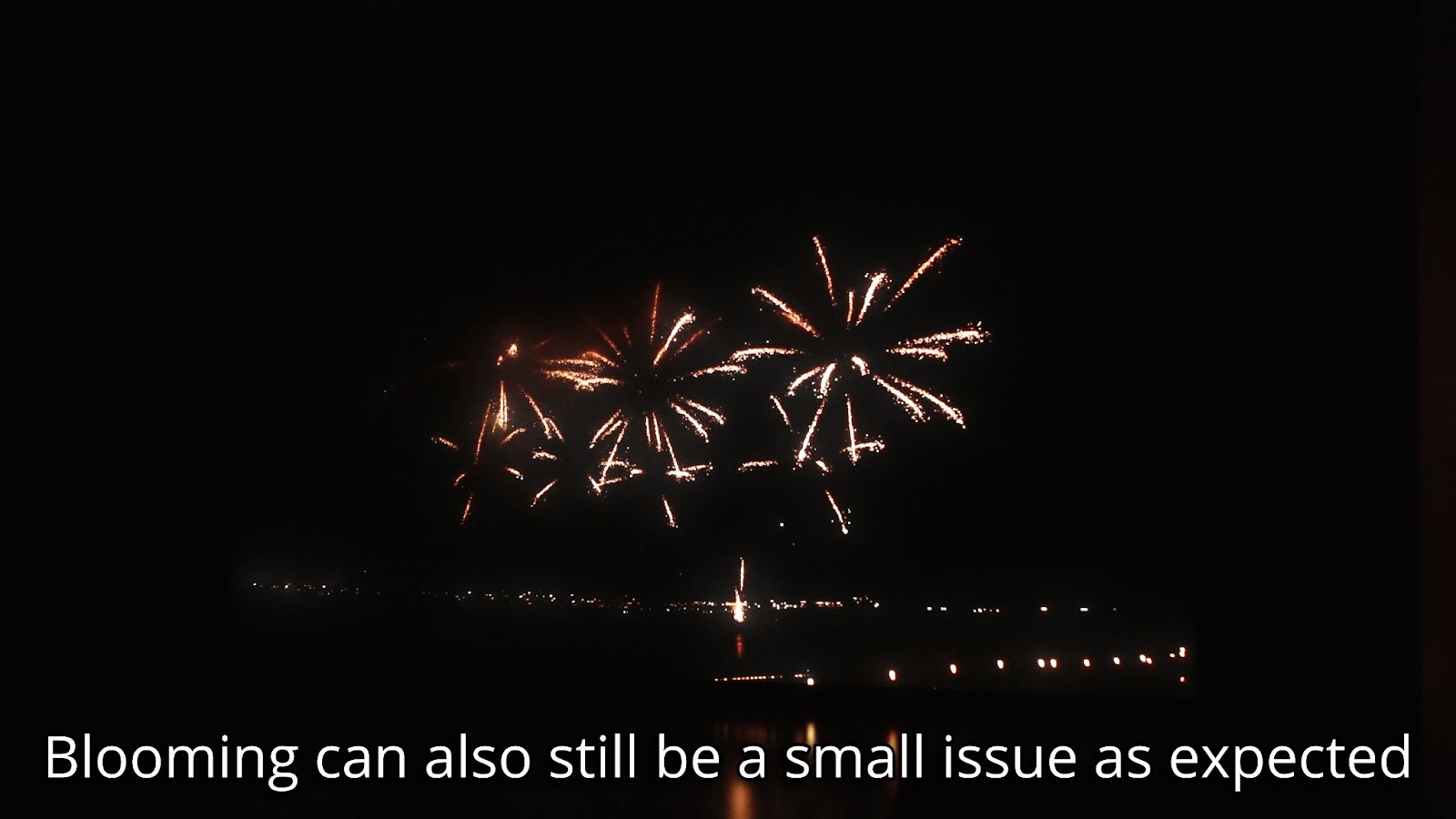
Hisense 116UX Blooming Issues.
That said, blooming can still be spotted in the most challenging scenes, and there are other compromises that can be an issue when choosing a VA panel over an ADS Pro panel to maximize contrast.
This display is a clarity fiend. The glossy coating makes 4K detail pop with a crispness matte screens simply can’t match. Edges look cut with a razor and high-contrast UI elements are tack sharp.
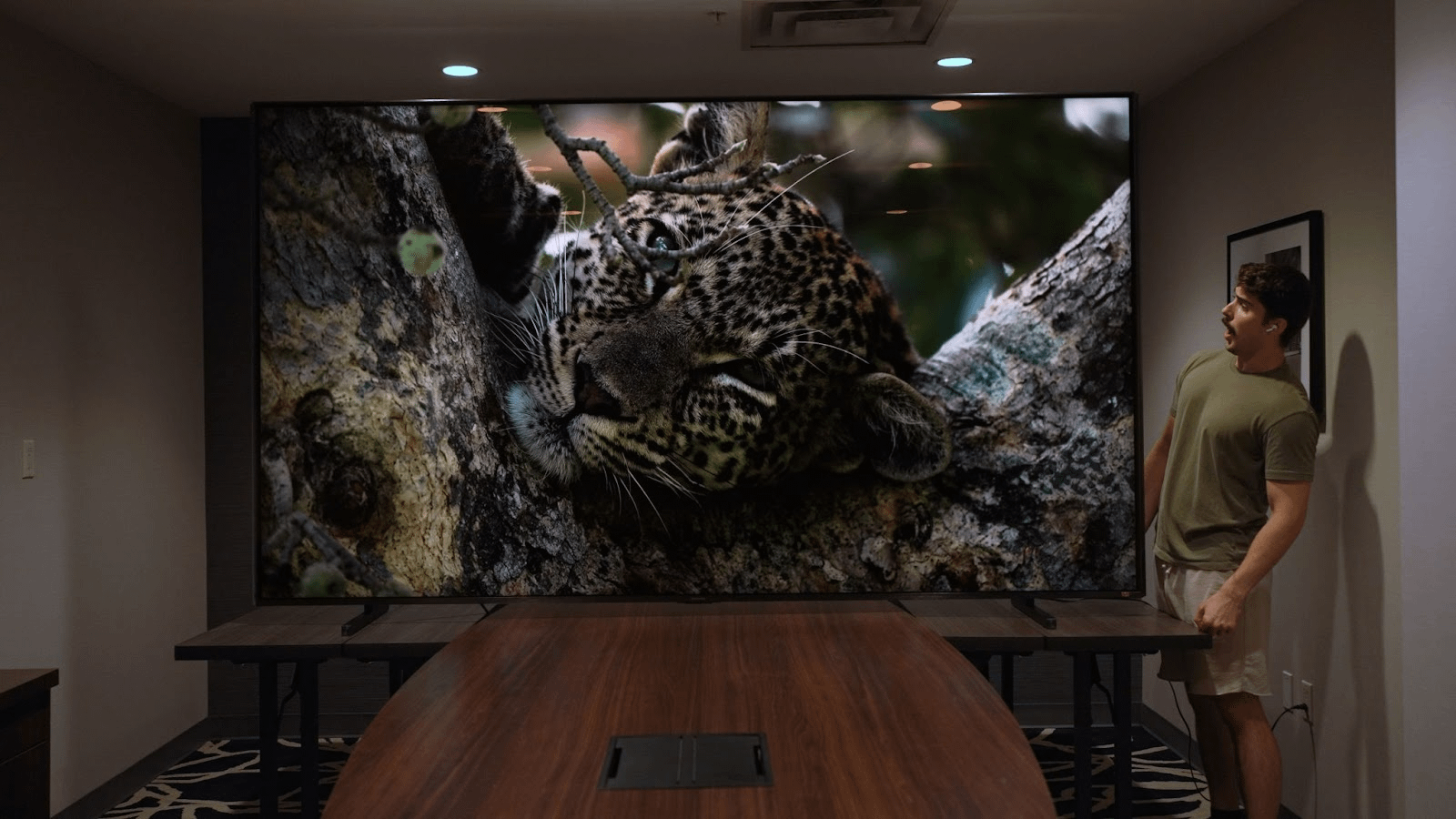
This paired with an ambient light rejecting filter leads to incredibly crisp and high contrast imagery in any environment making it especially well suited for use in bright living rooms. In fact the 116UX can even put some tech like QD OLED to shame in well lit environments as it has no issues with any magenta tint or raised shadow detail making it appear to actually have even higher contrast than some OLEDs in these environments depending on the content.
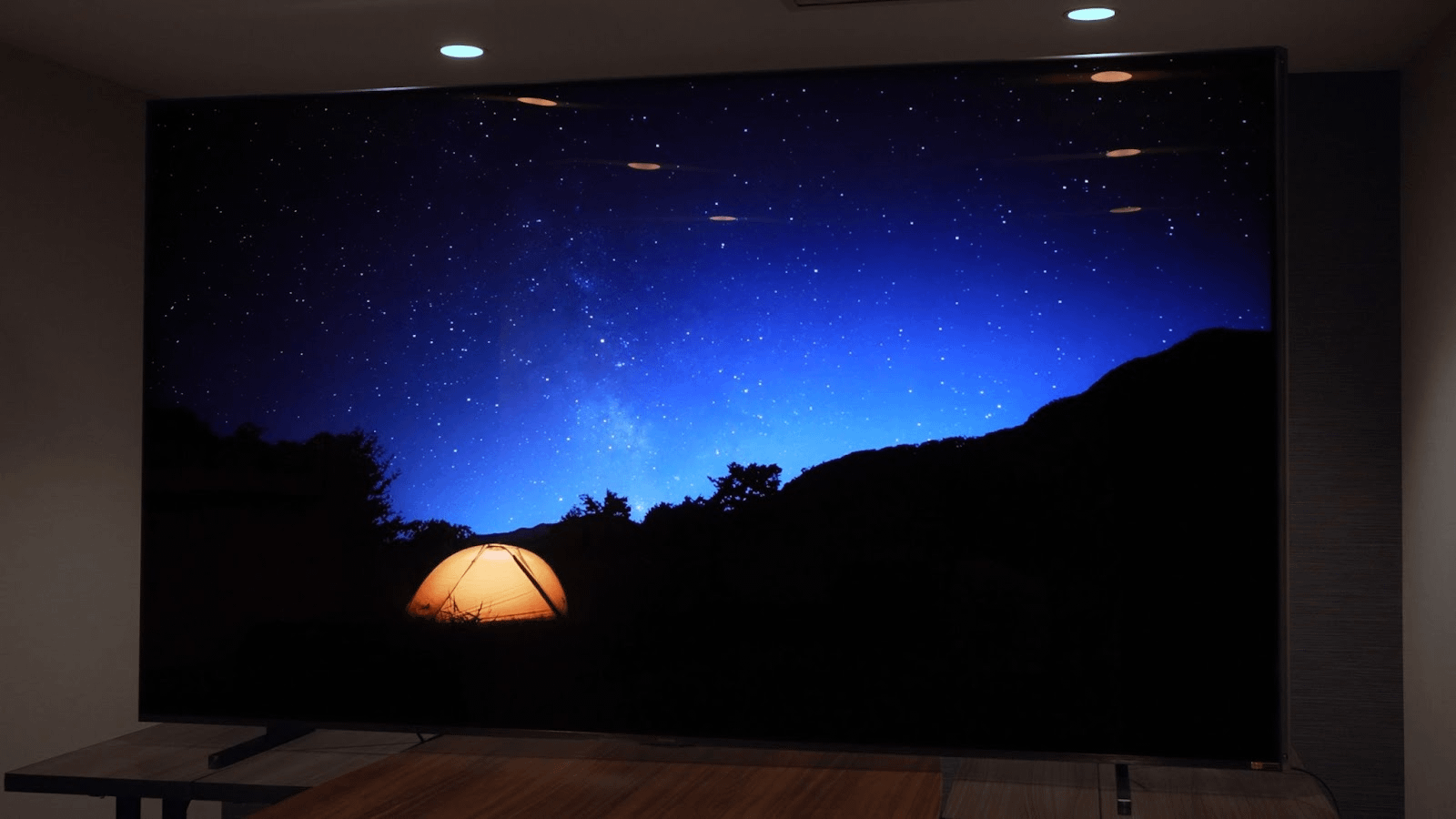
Do note: physics still applies. You will see direct reflections from strong light sources. The coating mitigates general washout more than it “kills” reflections entirely. Choose your placement thoughtfully.
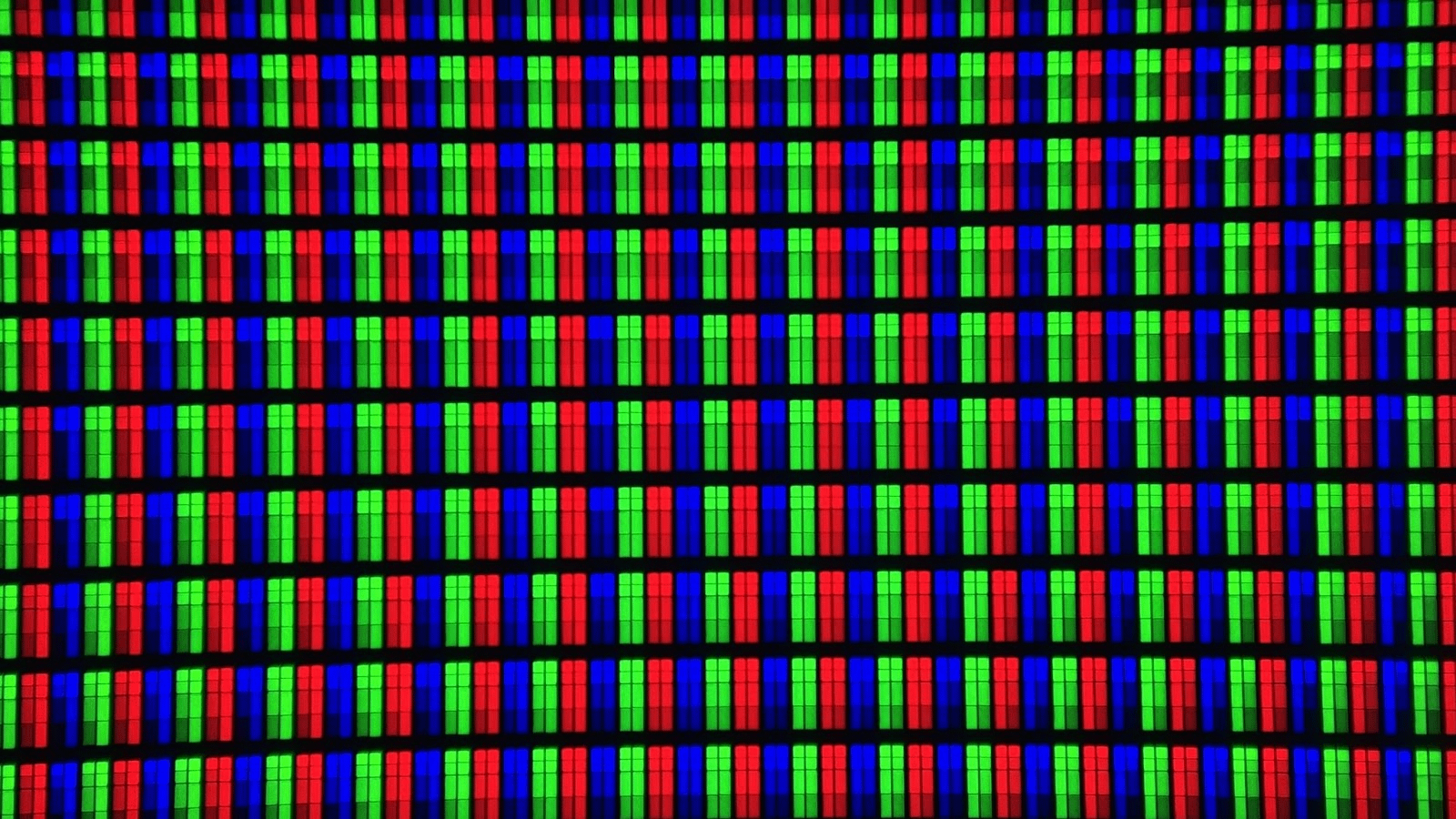
BGR subpixel layout.
Text clarity is also strong. The set uses a BGR (blue-green-red) vertical stripe. Most viewers won’t notice much difference on a TV between this and traditional RGB, and overall clarity is excellent.
At 165Hz with VRR, the set feels snappy. Response is tight, and navigating menus feels instant. For large-screen living-room or theater gaming, the 116UX’s input behavior is right where it should be for a “flagship” experience.
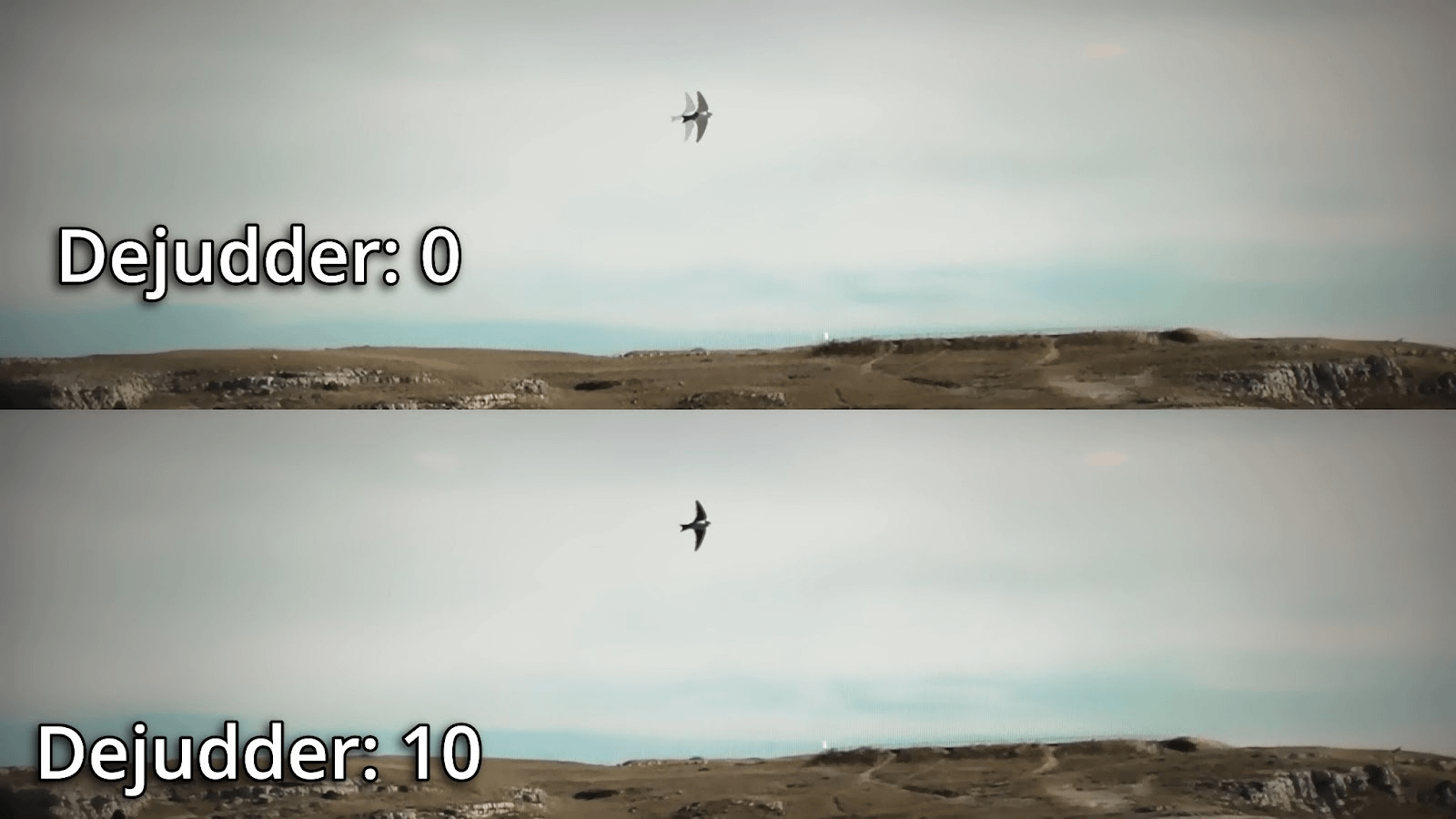
Hisense 116UX judder control on vs off.
Additionally Hisense has clearly iterated on motion interpolation (thanks in part to prior reviewer feedback). On the 116UX, I saw effective judder reduction with fewer artifacts and less “overcooked” soap opera effect than earlier firmwares on other models. This is a big improvement over the 98UX, which had some problems at launch that eventually appeared to have been ironed out.
Motion Clarity: This is the tradeoff. Because Hisense selected a VA panel at this size (ADS/IPS wasn’t realistic in 116"), pixel response behind fast objects shows visible trailing in my UFO tests.
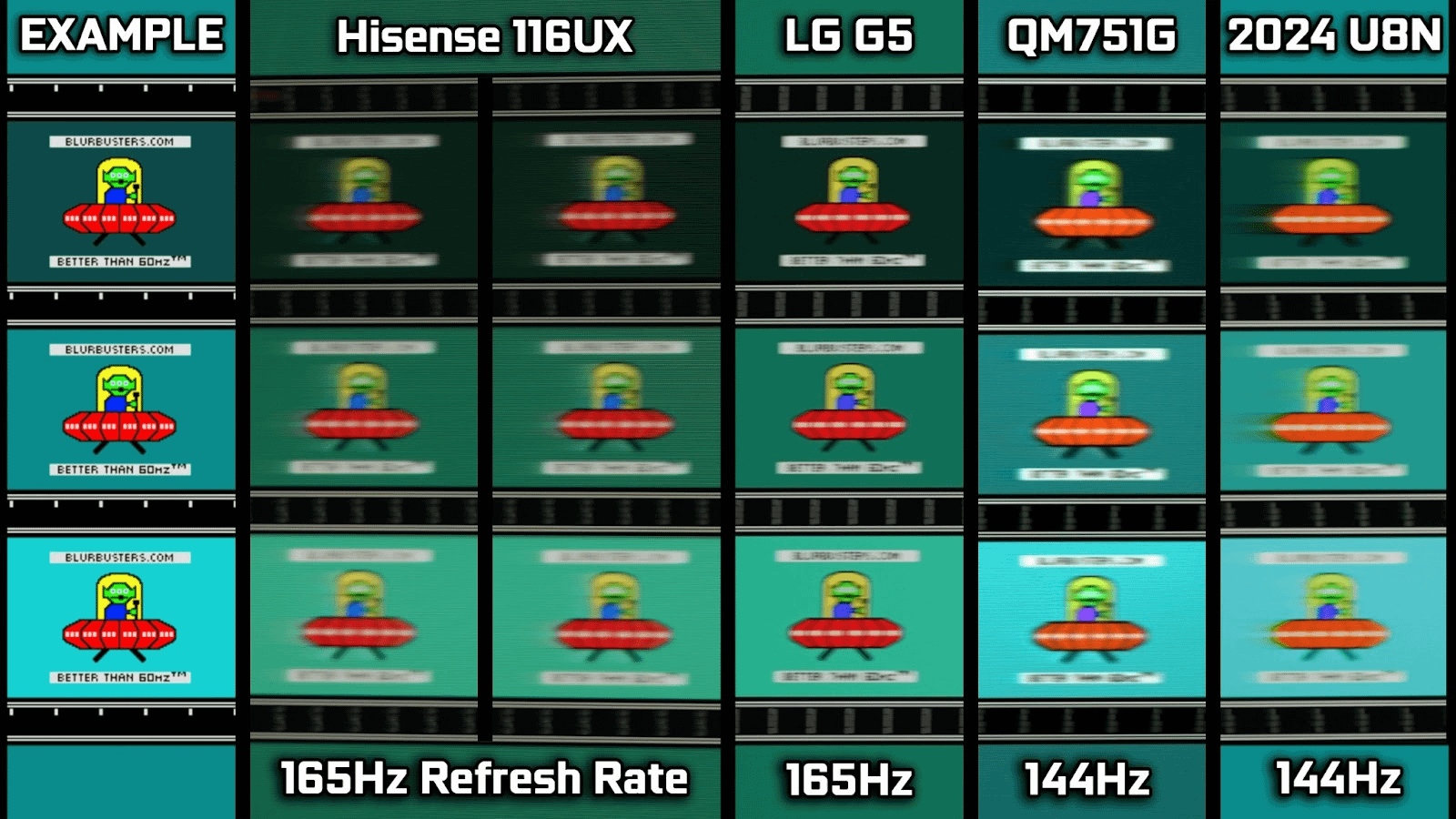
Motion Performance is a downgrade compared to the 98UX.
Compared head-to-head, an OLED like the LG G5 at 165Hz keeps motion cleaner, and even TCL’s last-gen QM751G displays less blur. That doesn’t mean the 116UX is “bad” for gaming—far from it. At 165Hz, it’s engaging and playable. But if your top priority is the cleanest motion at 120–165Hz, OLED still wears the crown.
Unfortunately I did not get a chance to do a full latency test, however based on previous testing of Hisense flagship displays as well as my hands on time with it, I would expect solid input latency that should go unnoticed by the vast majority of buyers.
Big-Screen Factor: At 116 inches, seated appropriately, 4K detail and the sense of speed at 120–165Hz are intoxicating. For split-screen console nights the sheer scale changes how games feel. If you’ve been waiting for a massive, bright, VRR-capable canvas, this is finally it, and it's probably the best super large screen gaming experience you can get today.
Here again, the VA choice drives the story. Hisense applies a film to improve off-axis behavior, and it helps—viewing angles are “pretty decent” overall—but they’re not at the level of ADS Pro panels. Move off-center and you’ll see a modest drop in perceived contrast and some color shift. In a big sectional or wide seating plan, the premium seats are still in front.
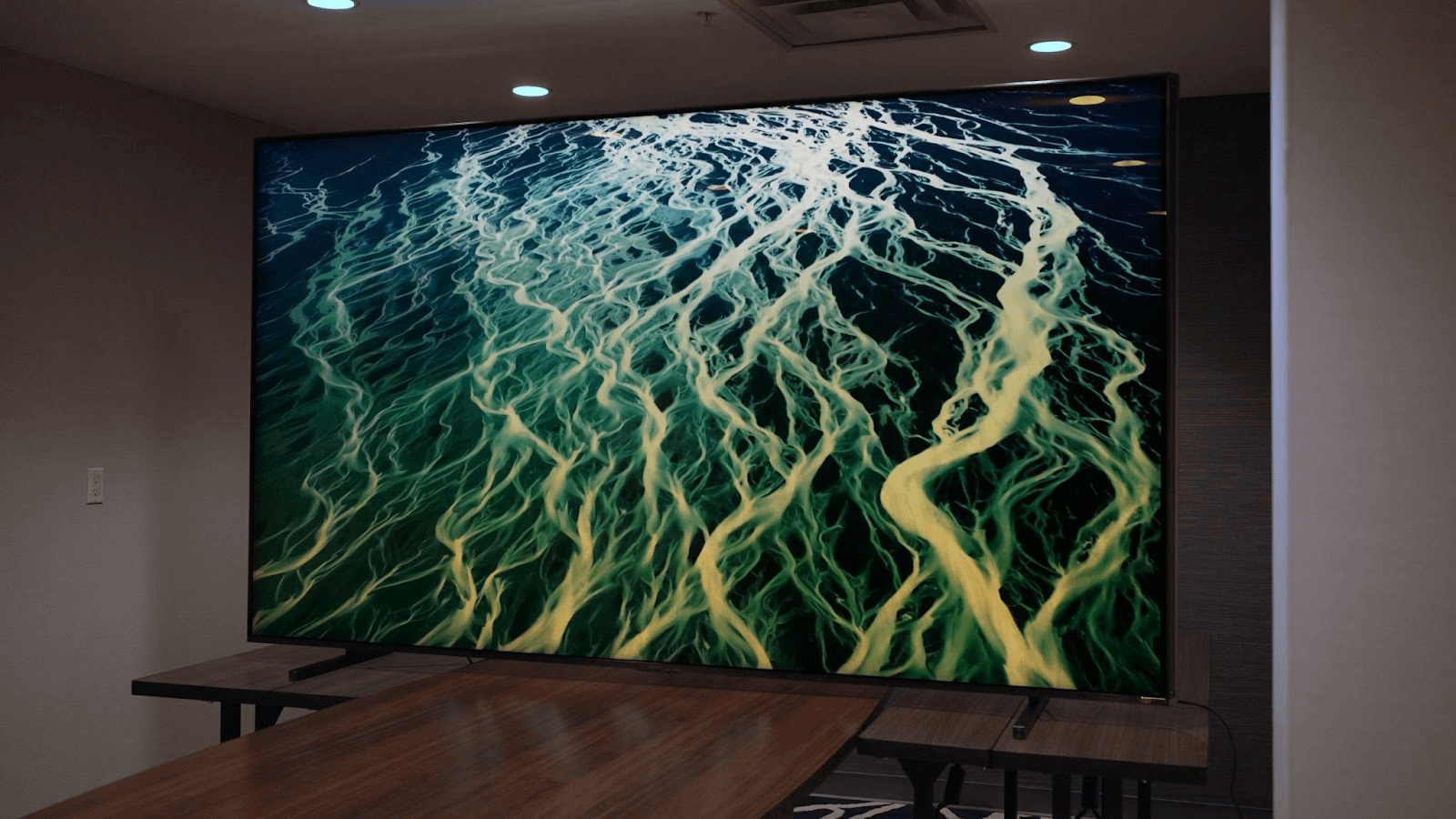
Hisense 116UX viewing angle issues.
Uniformity: I didn’t conduct a full panel uniformity evaluation during this session. I can only report that nothing egregious jumped out in my time with the set.
Better than most TVs I’ve heard. The tuning is vastly improved compared to the 98UX I reviewed from last year. It still lacks the last bit of clarity and separation you get from a quality soundbar, but out-of-box it's pretty solid.
The new HyView AI Engine X processor makes this the fastest TV UI I’ve used. Menus snap open, settings apply immediately, and I didn’t run into the random lag or flicker hiccups that sometimes plague flagship sets. Day-to-day usability feels premium.
Firmware Stability: In my time with the unit, I didn’t hit show-stopping bugs. Interpolation behavior looked tuned from the start, and I didn’t see the flicker artifacts I’ve called out on other brands.
The Hisense 116UX isn’t just big; it’s a glimpse at how Mini-LED evolves from here. By shifting to RGB Mini-LED zones, Hisense addresses two longstanding LCD pain points at once: perceived blooming and color purity.
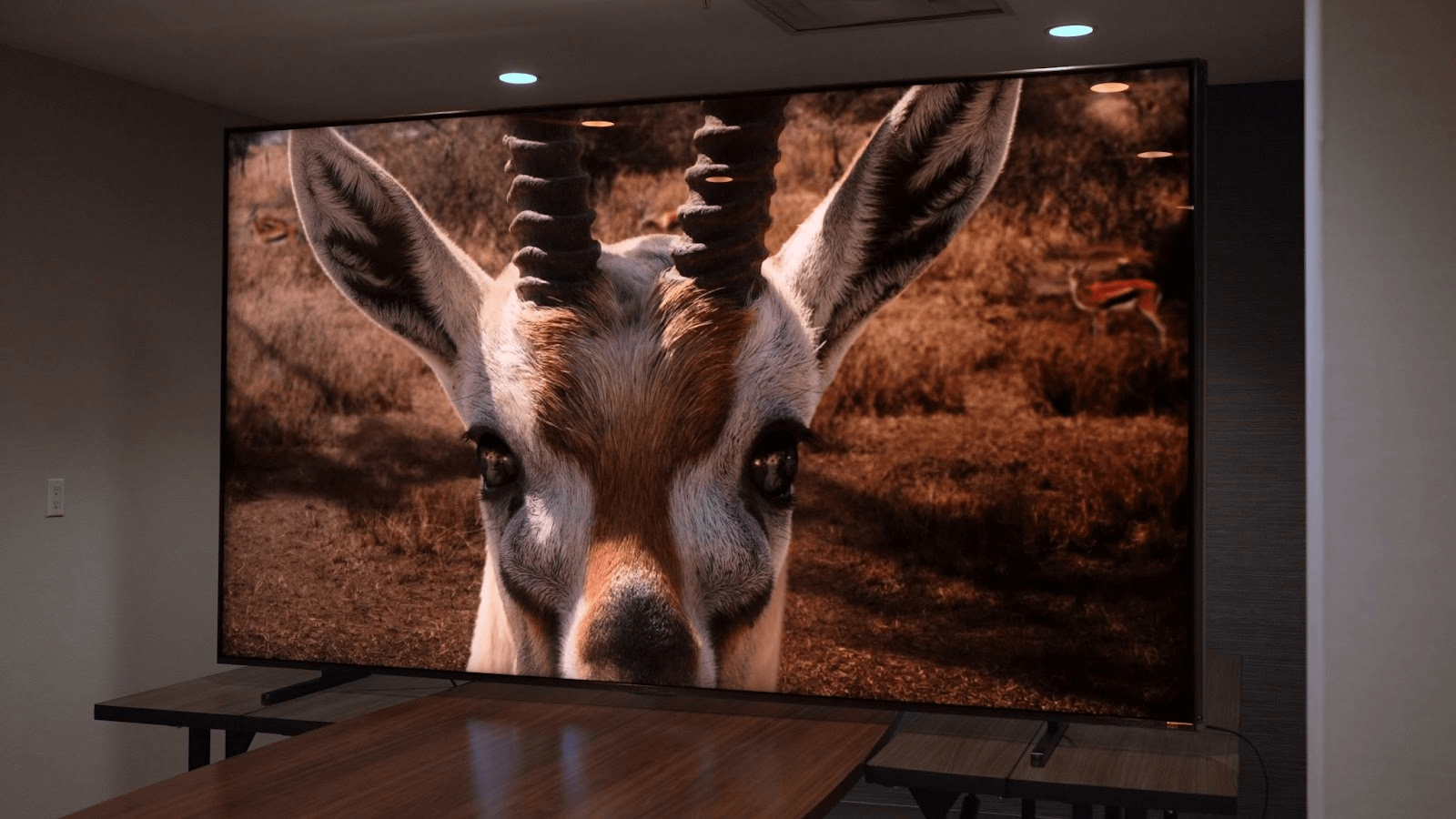
When the content takes advantage of BT.2020, the difference is real and, at times, striking. Pair that with the highest D65 window brightness I’ve measured and sustained full-field muscle, and you have a display that devours bright rooms and high-APL scenes like few others.
But it’s not a clean sweep. In real content, the tone-mapping is conservative to preserve contrast, which means the 116UX doesn’t always feel “way brighter” than the very best OLEDs in every shot. In dim, cinematic material where OLED’s pixel contrast dominates, the perceptual pop can still favor an OLED like the LG G5. For gaming, input feel is great, but VA response time shows its hand with trailing at 165Hz—OLED remains cleaner in motion. Viewing angles are good but not class-leading; if your seating fans out wide, plan accordingly.
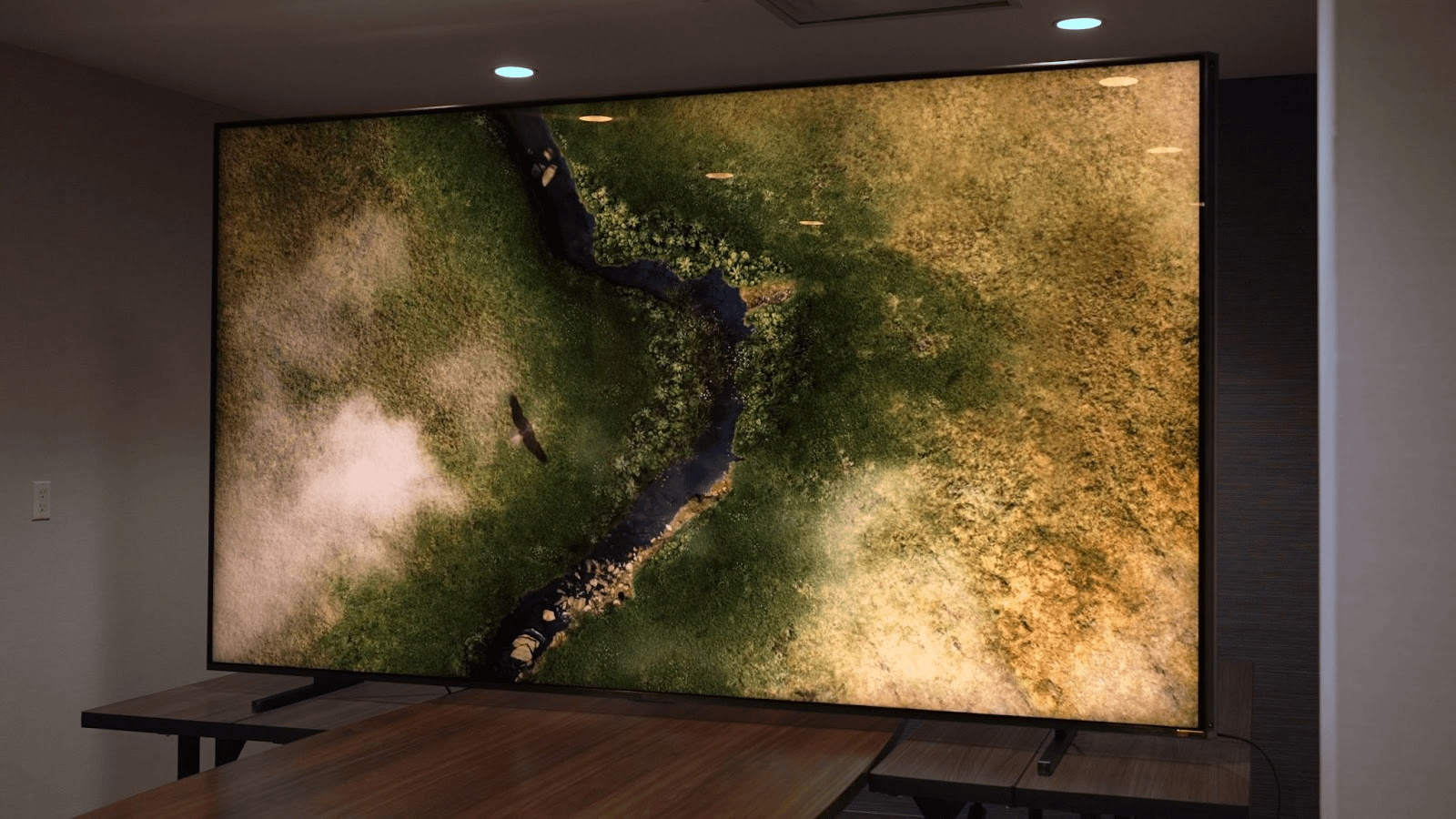
Hisense 116UX Viewing Angle
And then there’s the price. At $24,999.99, this isn’t an upgrade—it’s an investment. That price also runs into an awkward reality: a lot of the content is still DCI-P3, so the 116UX’s BT.2020 capabilities aren’t always fully realized. If you’re expecting every show or game to suddenly explode with new colors, you’ll only see that when the grading actually targets that gamut.
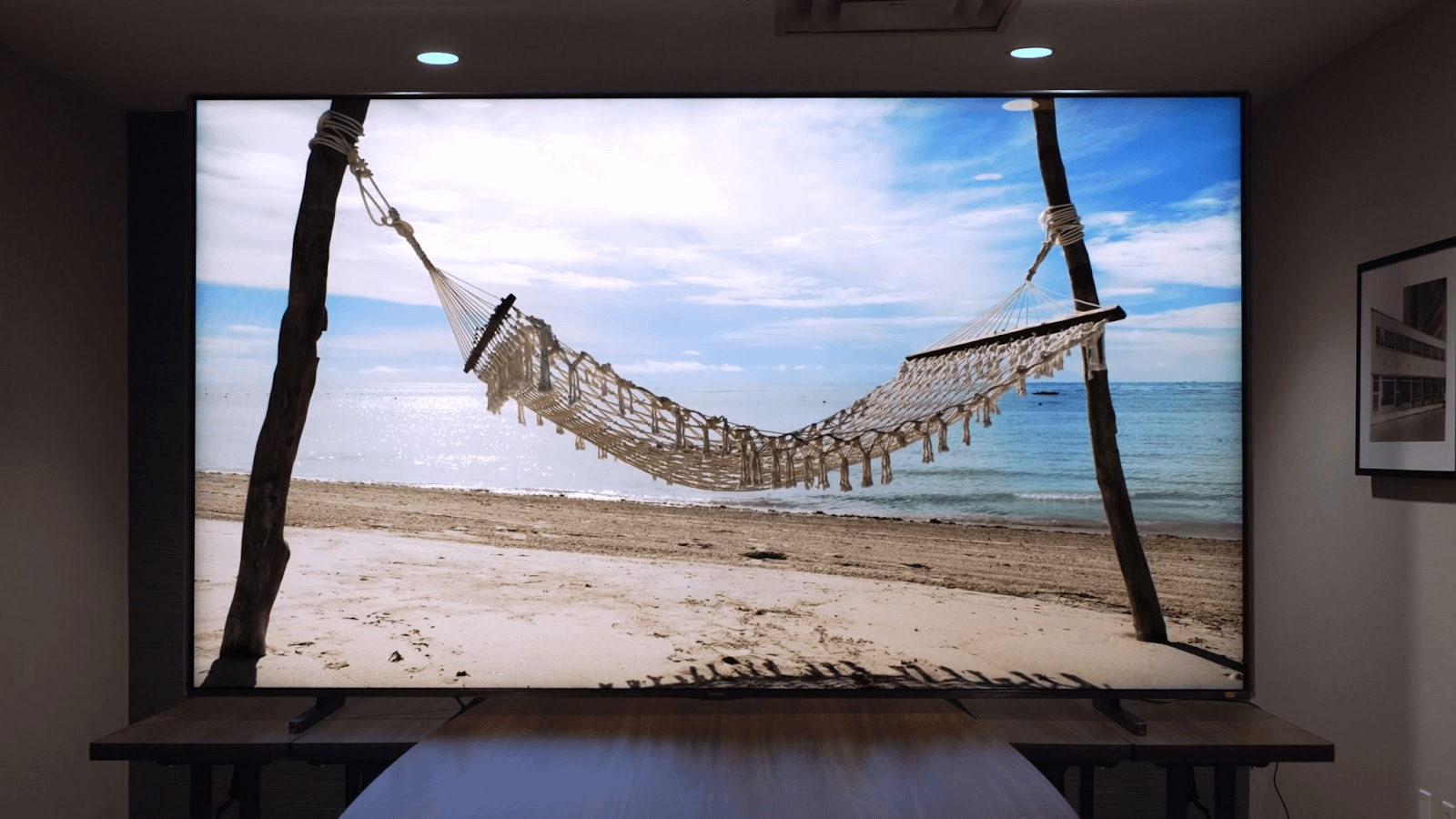
Hisense 116UX Brightness.
So who is this for? If you want the largest theater-class TV with insane brightness, reduced blooming, huge color headroom, and a fast, polished user experience, the 116UX may well be the Mini-LED to beat—and in some ways, the best TV money can buy right now.
However, If you play a lot of fast paced games, sit off-axis, or watch mostly dim, cinematic content, the top OLEDs remain formidable rivals at far smaller sizes and prices. But nothing else combines 116 inches, window-record HDR brightness, RGB Mini-LED color, and this level of day-to-day polish.
It’s a monster. A refined one—but a monster all the same.



Privacy Policy
Terms and Conditions - Affiliate Policy
Home Security
© Copyright 2008-2026.
11816 Inwood Rd #1211, Dallas, TX 75244