

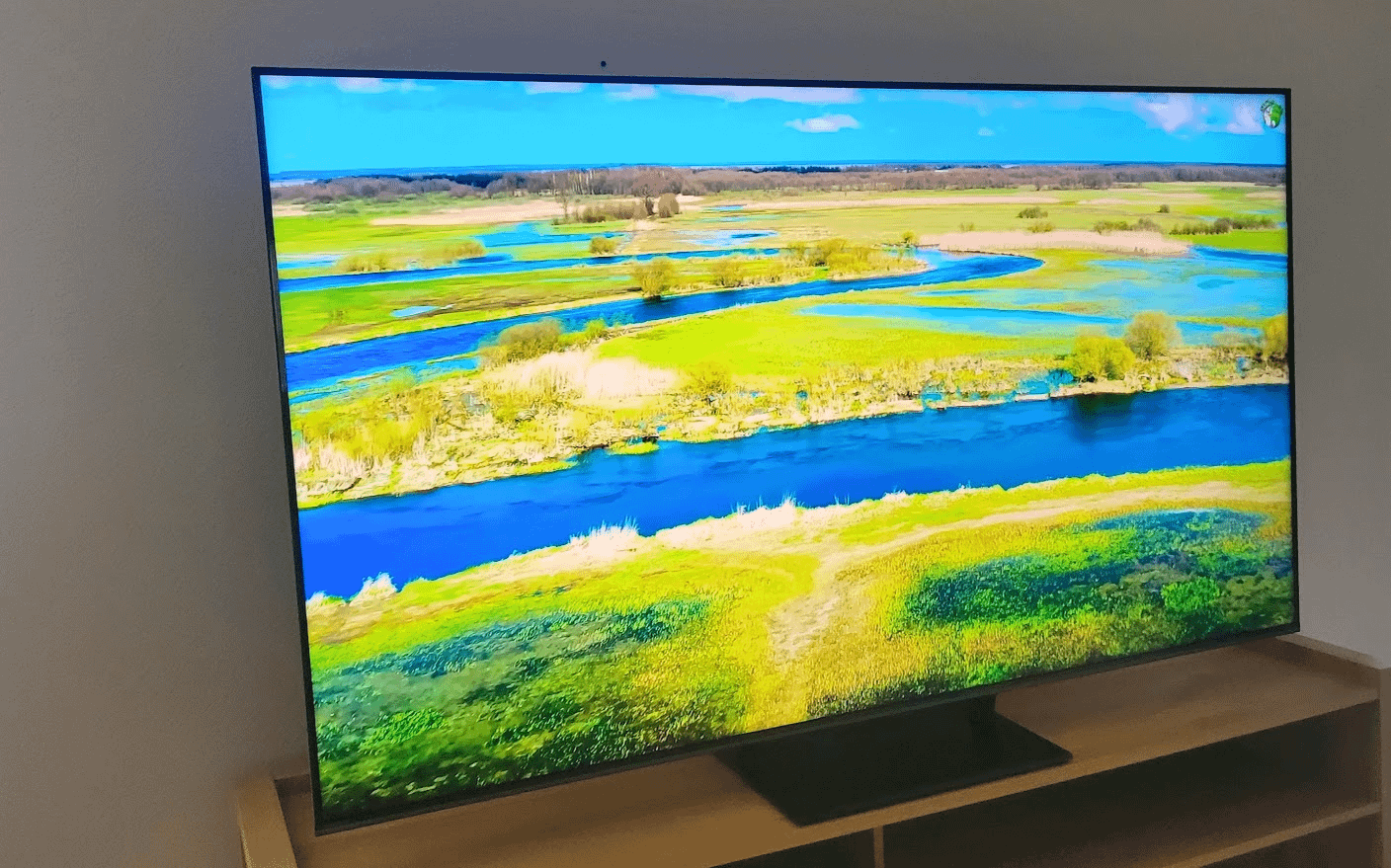

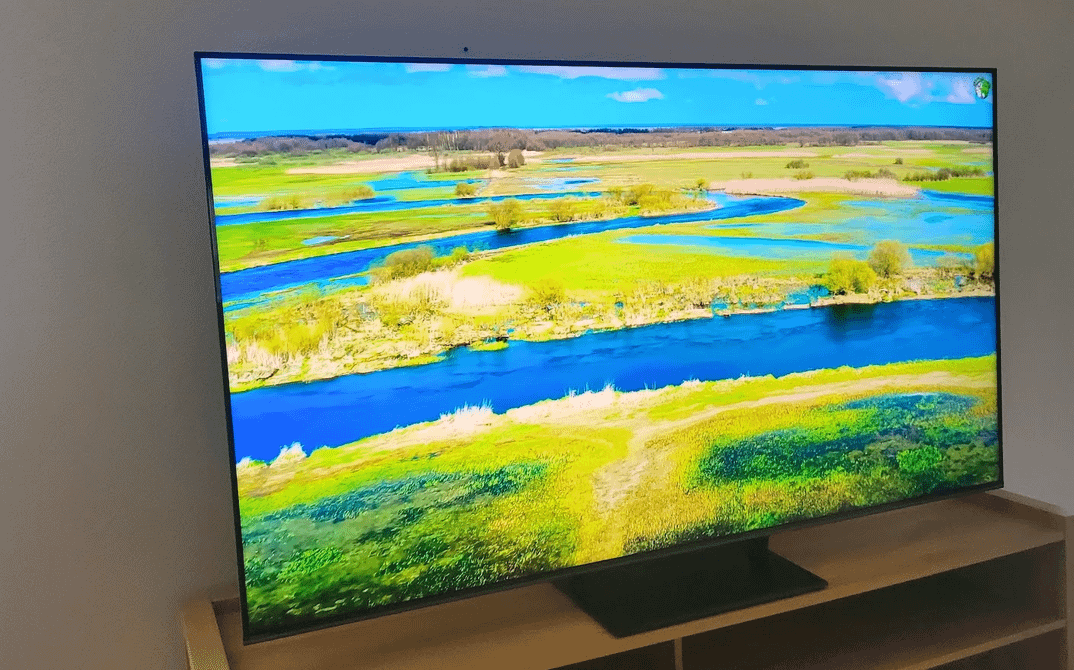
After spending quality time with the 2025 Hisense U75QG in my sun-drenched Florida living room, I'm genuinely impressed by what this mid-tier TV brings to the table. While tech reviewers love to nitpick every measurement and specification, sometimes you just need a TV that performs brilliantly in real-world conditions – and that's exactly what the U75QG delivers.
At around $878 for the 65-inch model (though I've seen it dip to $797 during sales), this Mini-LED TV sits comfortably in the sweet spot between budget and premium. It's the middle child in Hisense's 2025 ULED lineup, positioned between the more affordable U6 and the flagship U8 series. But don't let that "middle child" status fool you – this TV has some serious tricks up its sleeve.
On paper, the U75QG's headline features are its blazing 3,000-nit peak brightness and comprehensive gaming support with that 165Hz native refresh rate. And yes, both absolutely delivered – the HDR impact in my bright Florida living room was genuinely jaw-dropping, with highlights that practically leap off the screen. Mini-LED technology is clearly hitting its stride, and this TV proves you don't need OLED to get a stunning picture.
But here's what actually stopped me in my tracks: the sound. I've tested dozens of TVs over the years, and I always have a soundbar ready to hook up because built-in TV speakers are universally terrible, right? Wrong. When I fired up my usual audio test tracks, I literally did a double-take. This TV doesn't just have "good speakers for a TV" – it has legitimately good speakers, period. The 2.1.2 system with dedicated subwoofer and upfiring Atmos speakers creates sound with genuine weight and dimension. For the first time in my reviewing experience, I found myself thinking, "You know what? Most people could actually live with just this." That's not something I ever expected to say about any TV, much less a mid-priced one.
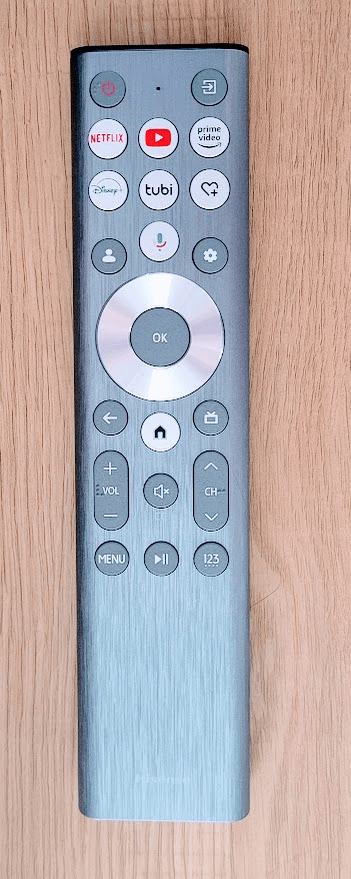
Can we talk about remotes for a second? I'm pretty tired of this industry trend toward tiny, minimalist remotes that seem designed more for display cases than human hands. You know the type – those credit card-thin slabs that Apple popularized, which every manufacturer now seems to think we want. They slide between couch cushions, require you to look down to find any button, and generally make watching TV more frustrating than it needs to be.
Thankfully, Hisense didn't get that memo. The U75QG's remote is refreshingly normal – solid, comfortable to hold, with actual buttons you can feel and identify by touch. The backlighting is a thoughtful touch for late-night viewing sessions. It's not trying to win design awards; it's trying to be useful. What a concept!
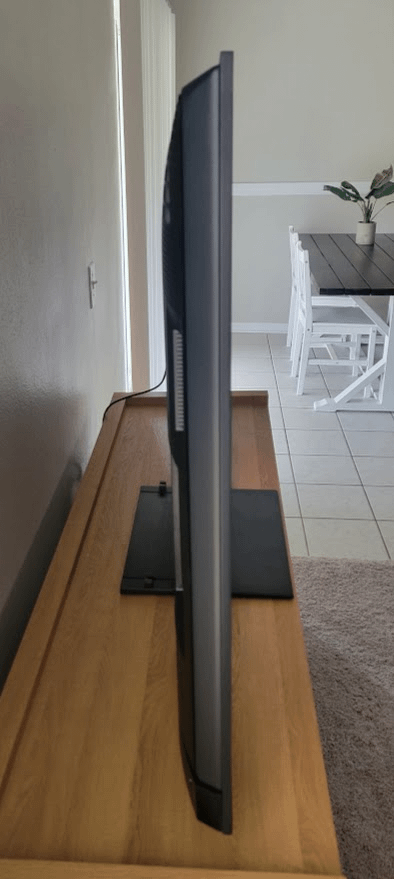
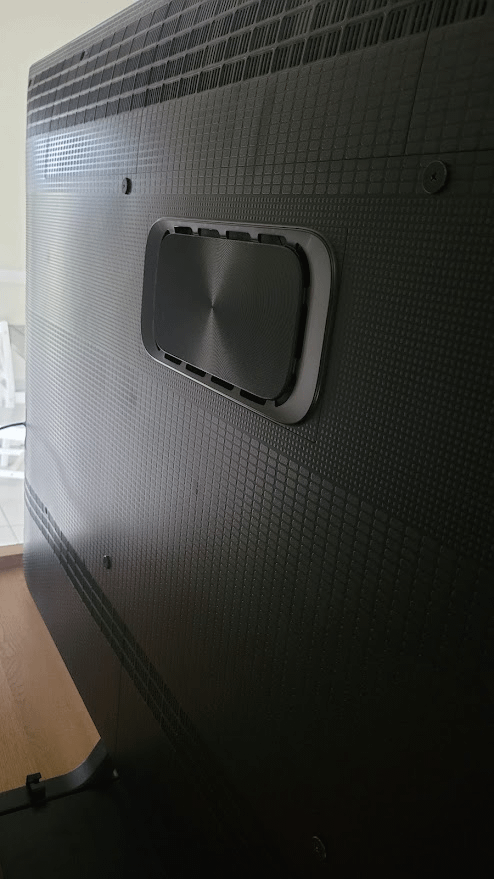
The TV itself has a purposeful, no-nonsense design. Yes, it's thicker than the wafer-thin OLEDs that grace high-end showrooms, but there's good reason for that bulk. Not only does it house the Mini-LED backlighting system, but it also accommodates that surprisingly capable speaker system. The center-mounted stand provides rock-solid stability without eating up your entire TV console – it's wide enough to be stable but narrow enough to fit on most furniture. The brushed metal finish looks premium enough without being flashy.
Speaking of what's inside, the 65-inch and up models use a VA panel, which is the sweet spot for this type of TV. VA panels deliver superior contrast ratios and deeper blacks compared to IPS panels, making them ideal for HDR content and dark room viewing. You get those inky blacks that make space scenes and night shots really pop. Interestingly, the 55-inch model reportedly use an ADS Pro panel instead. These ADS Pro panels typically sacrifice some contrast and peak HDR brightness but offer better viewing angles and color consistency across the screen – a trade-off that might actually benefit those with wider seating arrangements.
Let's talk about what makes this TV tick. The star of the show is Mini-LED technology with quantum dots (QLED). Here's the deal: instead of having maybe a hundred LED lights behind your screen like a regular LED TV, Mini-LED uses thousands of tiny LEDs – we're talking lights smaller than a grain of rice. The U75QG packs these into up to 1,800 local dimming zones on the 65-inch model (even more on larger sizes).
What does this mean for you? Each zone can brighten or dim independently, so when you're watching a scene with bright stars against a dark sky, the TV can blast light just where the stars are while keeping the space around them properly black. No more gray, washed-out "black" bars during movies or that annoying glow around bright objects. Combined with quantum dots that produce incredibly pure colors, you get a picture that can hit up to 3,000 nits of peak brightness – bright enough to make HDR content truly pop, even with sunlight streaming into your room.
For connectivity, Hisense doesn't skimp. You get four HDMI ports, and here's the crucial part – all four are HDMI 2.1 with full 48Gbps bandwidth. Many competitors cheap out and give you maybe one or two HDMI 2.1 ports, forcing you to constantly swap cables. Not here. Each port can handle 4K at 120Hz, and you can push 165Hz at 4K or even 288Hz if you drop to 1080p. There's also two USB ports for media playback or powering streaming sticks, an ethernet port for stable streaming, and both optical and headphone outputs for audio.
For the gamers out there, let me break down why these specs matter. That 165Hz native refresh rate means the TV can display 165 frames per second – crucial for competitive gaming where every millisecond counts. Variable Refresh Rate (VRR) through AMD FreeSync Premium Pro eliminates screen tearing when your console or PC can't maintain a steady framerate. Auto Low Latency Mode (ALLM) automatically switches the TV to game mode when it detects you're gaming, cutting input lag to under 10ms.
The new Game Bar is genuinely useful – hit a button and you get an overlay showing your current framerate, VRR status, and HDR format, plus quick access to picture adjustments without leaving your game. It's like having a gaming monitor's OSD in your living room TV.
Now, about that ATSC 3.0 tuner – this is actually a bigger deal than most people realize. ATSC 3.0 is the new broadcast standard that's rolling out across the US. It enables 4K over-the-air broadcasts (yes, free 4K TV with an antenna), better sound quality, more reliable reception, and even interactive features. While most areas only have a few ATSC 3.0 channels today, having this tuner means your TV is ready for the next decade of broadcast improvements. You might actually find yourself hooking up an antenna again.
The TV supports every HDR format that matters – Dolby Vision IQ (which adjusts HDR based on room lighting), HDR10+ (Samsung's dynamic HDR), regular HDR10, and HLG for broadcast content. It's also IMAX Enhanced certified, though honestly, there's not much IMAX content available for home viewing yet. More practical is Filmmaker Mode, which disables motion smoothing and preserves the original framerate and color grading – perfect for movie purists who want to see films as the directors intended.
Picture Quality
Here's where my experience diverges from some of the measurement-obsessed reviews out there. Yes, if you pull out calibration equipment, you might find the HDR tracking isn't perfectly accurate. Hisense has clearly made a design choice to boost the HDR effect, creating more pop and impact. You know what? I'm totally fine with that, especially for daytime viewing.
The Mini-LED backlighting delivers impressively deep blacks with minimal blooming around bright objects – though it's not completely eliminated. During a nighttime scene with streetlights, I noticed some haloing, but it wasn't distracting enough to pull me out of the experience.
As for viewing angles, I have to disagree with critics who obsess here. Sure, you lose some contrast when viewing from extreme angles, but for normal living room seating arrangements, everyone gets a great picture. Unless you're planning to watch like an 80 degree angle, you'll be fine.
Motion handling is where Mini-LED technology shows its typical limitations. Fast-moving objects can exhibit some blur, and pixel response times aren't as snappy as OLED or high-end LED TVs. But unless you're a competitive gamer counting every millisecond, this isn't the deal-breaker some make it out to be.
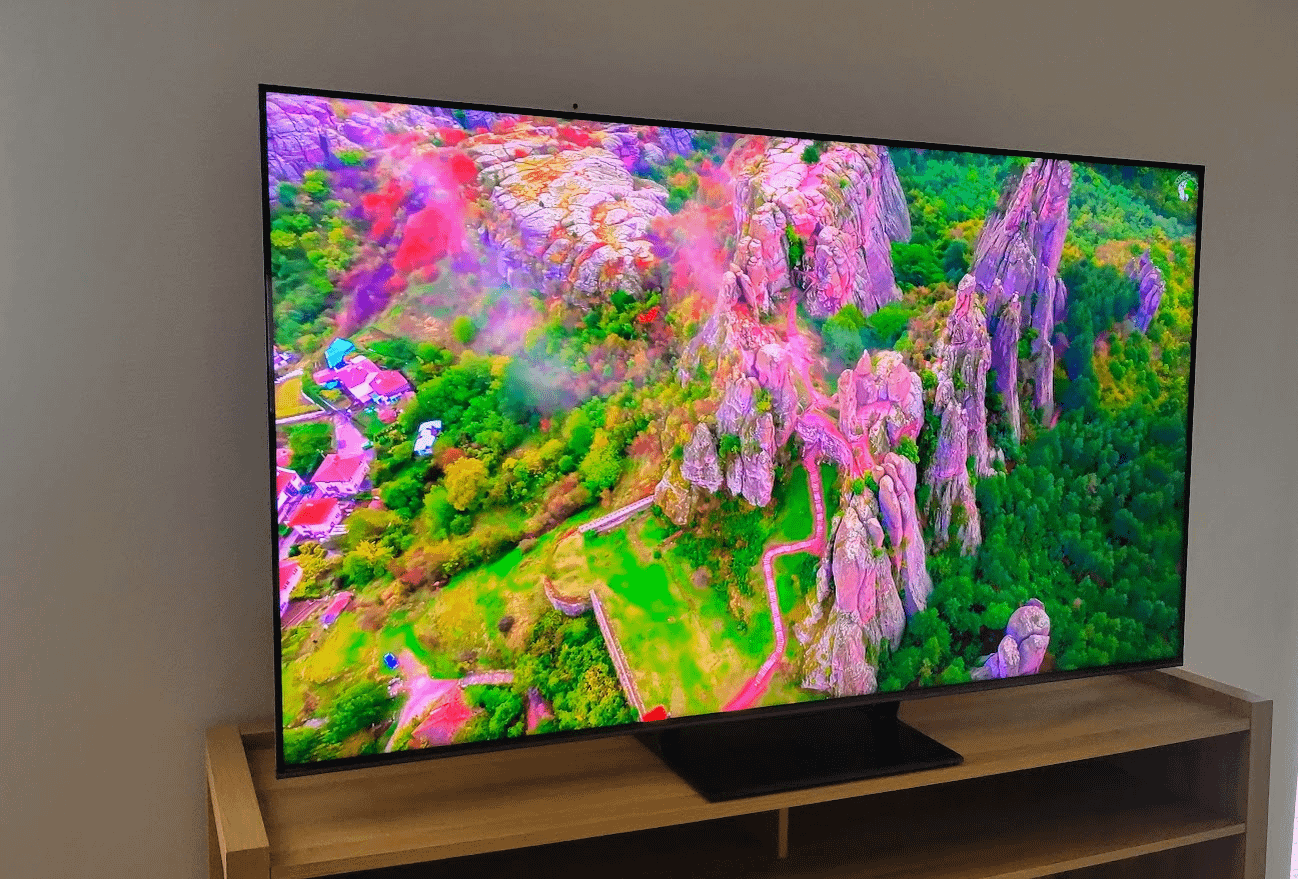
Let me emphasize what really shines here though – the color reproduction and brightness performance are genuinely outstanding. The quantum dot technology delivers colors that are not just accurate (the display is Pantone validated), but genuinely vibrant and lifelike. Reds are rich without being oversaturated, greens pop with natural vibrancy, and skin tones look remarkably realistic. Even technical reviewers acknowledge the HDR colors are "vibrant, lifelike, and bright" – and that's putting it mildly.
The brightness capabilities deserve special praise. We're not just talking about hitting high numbers on a test pattern – this TV maintains outstanding brightness across all types of content. Whether it's a full-screen snow scene or small highlights like sun glinting off water, the U75QG delivers consistent, punchy brightness that makes HDR content truly spectacular. In my sunny Florida living room, this TV actually competes with daylight rather than surrendering to it. Those 1,800 dimming zones work overtime to keep blacks deep while letting highlights absolutely soar. The result is an HDR presentation with genuine impact – explosions feel explosive, sunsets glow with warmth, and neon signs in night scenes have that electric intensity they should.
Yes, there's some reflection handling that could be better, particularly noticeable with dark scenes in bright rooms. But when you're getting blacks this deep with brightness this impressive, it's a trade-off worth making. This is Mini-LED technology showing what it can really do when properly implemented.
User Interface
Google TV runs like a dream on this set. Setup was painless – I was streaming within minutes of unboxing. The interface is very snappy and responsive, something that definitely can't be taken for granted at this price point. No frustrating lag when navigating menus or launching apps. All the major streaming services are present and accounted for, and the voice control actually works reliably.
Sound Quality
Let me elaborate on what makes this TV's audio so special, because it really deserves its own spotlight. The 2.1.2 channel configuration isn't just marketing speak – there's real engineering here. You've got dedicated left and right channels, a legitimate subwoofer (not just a "bass port"), and two upfiring speakers for Atmos effects.
My White Stripes test was revelatory. That opening bass line of "Seven Nation Army" didn't just play; it had physical presence. The entertainment stand actually vibrated – not in a distorted, blown-speaker way, but with clean, controlled bass extension. When Jack White's guitar riff kicked in, the separation and clarity made it feel like a proper rock performance. The TV manages usable bass response down to around 50Hz, which is frankly unheard of for integrated TV speakers.
To put this in perspective, the Sony Bravia 8 OLED – a TV that costs significantly more – has been praised for its audio quality. And yes, it sounds good, with clear dialogue and decent overall performance. But it doesn't have anywhere near the bass impact of the U75QG. Hisense has somehow crammed what amounts to a soundbar system inside the TV chassis.
For movies, the Dolby Atmos implementation actually does something. Those upfiring speakers create genuine height effects – helicopters flying overhead, rain falling from above. In a small to medium room, this is genuinely all the sound system many people will need. I'm not saying audiophiles should cancel their speaker orders, but for the average family watching movies, sports, and TV shows? This absolutely does the job.
The Hisense U75QG is what I'd call a "lifestyle winner." While measurement enthusiasts might find things to criticize – the HDR accuracy isn't perfect, motion handling could be better – this TV excels where it matters most: living with it day to day.
The combination of eye-searing brightness for daytime viewing, genuinely impressive built-in audio that rivals soundbars, snappy Google TV interface, comprehensive gaming features, and a remote you can actually use makes this a TV that's actually great to live with, not just impressive on paper. It's well-rounded in all the ways that matter for real-world use.
The VA panel delivers the contrast and black levels that make HDR content sing, while Mini-LED backlighting provides the brightness to combat any lighting condition. Yes, Hisense has boosted the HDR effect beyond reference standards, but in practice, this gives you more dramatic, impactful images – especially beneficial during daytime viewing when you need that extra punch to overcome ambient light.
At its regular price of $878, it's a strong value proposition. If you can snag it during a sale for under $800, it becomes an absolute steal. The step-up U8 model at $1,100 is also excellent, and at equal prices I'd lean toward the U8. But the U75QG holds its own and delivers far more than its price suggests.
If you're upgrading from a TV that's more than two years old, prepare to be amazed. The advances in Mini-LED brightness and local dimming will genuinely transform your viewing experience. But more than that, you might find yourself canceling that soundbar order – and that's something I never thought I'd say about a mid-range TV.
The Bottom Line: The Hisense U75QG proves that you don't need to spend flagship money to get a TV that performs brilliantly in real-world conditions. With outstanding brightness, surprisingly exceptional sound, and a feature set that covers all the bases, it easily earns our Highly Recommended award. This isn't just a good TV for the price – it's a great TV, period.




Privacy Policy
Terms and Conditions - Affiliate Policy
Home Security
© Copyright 2008-2026.
11816 Inwood Rd #1211, Dallas, TX 75244