

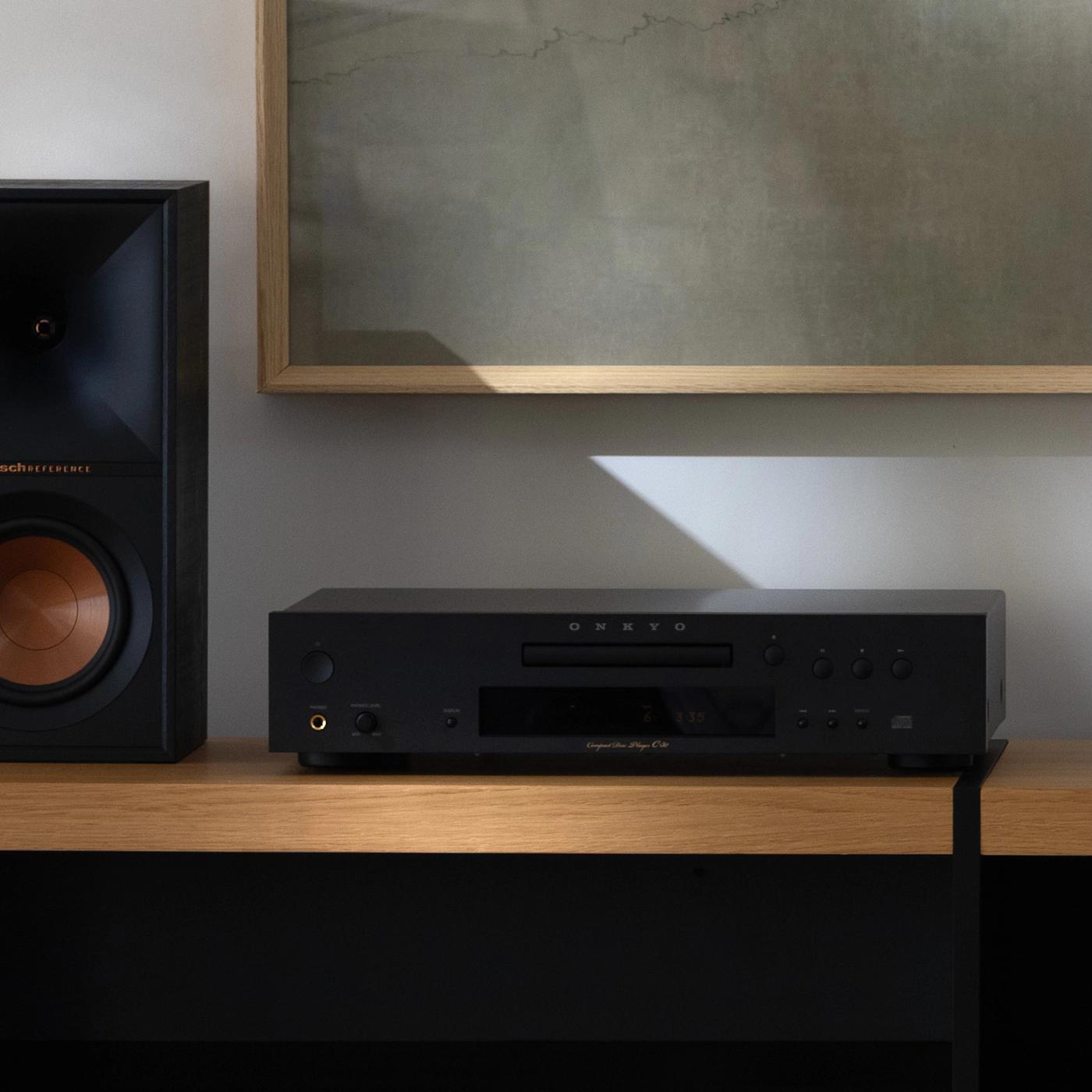

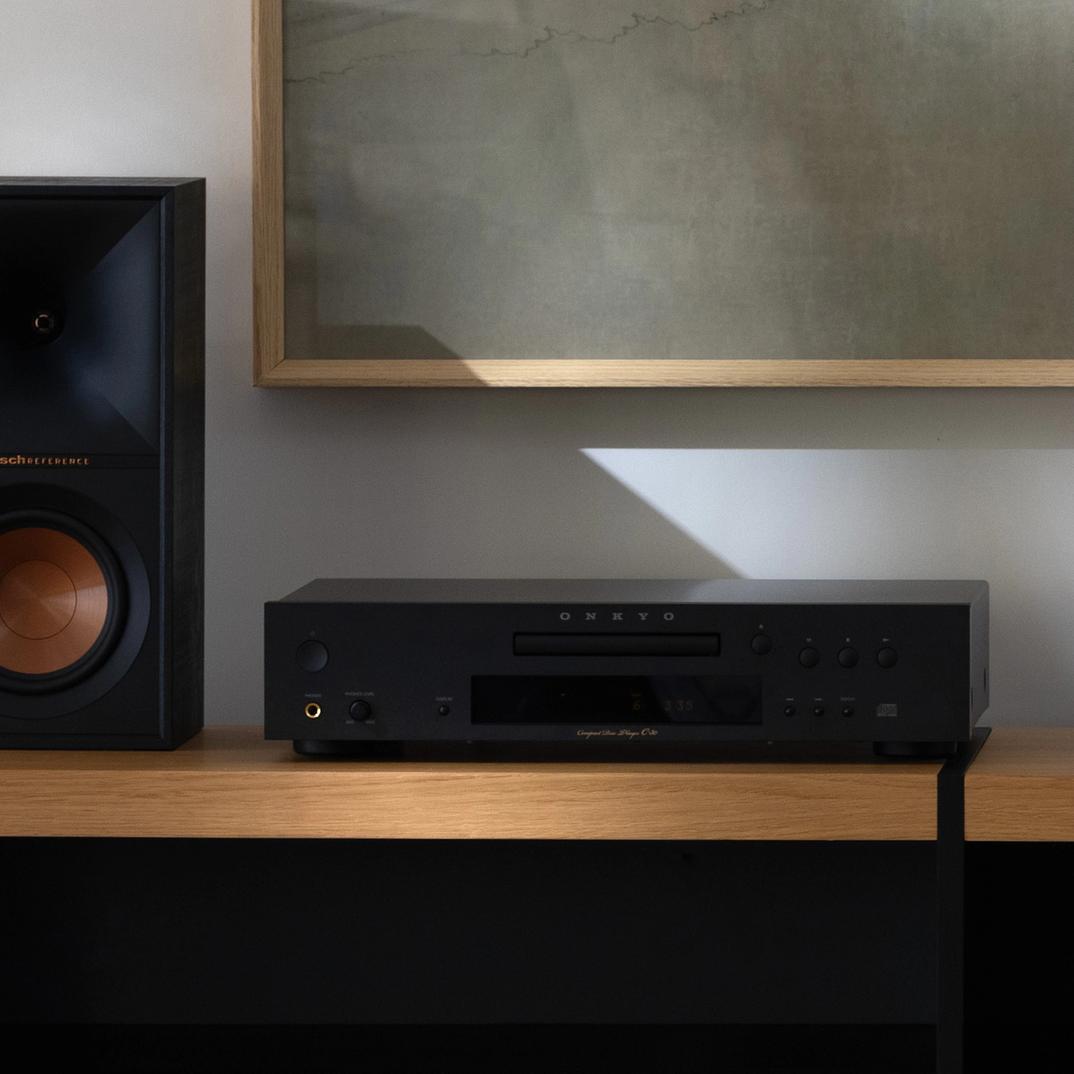
A CD Player in 2026… and Somehow It Makes Sense
If this isn’t the weirdest thing I’ve reviewed in years, I genuinely don’t know what is. A dedicated CD player. Not a Blu-ray deck with CD playback bolted on. Not a multi-format spinner dressed up to justify the shelf space. A CD player. One job. One format. One shiny silver disc at a time.
Before I could even start, I had to track down actual CDs to test it with. I ended up texting my father-in-law to see if he still had any(he did). That’s the world we’re living in. Nobody under 45 just has a stack of discs sitting around anymore. My generation grew up in the iTunes-and-LimeWire era—we never burned discs ourselves, we just had files on our Ipods. Reviewing the C-30 meant hunting down a format I’ve never actually owned.
Which made the whole thing a little surreal.
The closest I’d come to this territory was back around 2018, when I was selling Oppo and Sony Blu-ray players as a workaround CD solution. Those were the go-to recommendations for anyone who still had a disc collection—not because they were ideal, but because a dedicated CD player felt like a relic nobody was making anymore. A Blu-ray machine that could also spin CDs was the sensible compromise, but they also sounded pretty good.
The C-30 pushes back on that logic entirely. It’s not a compromise. It’s not a workaround. It’s a machine built to do exactly one thing and nothing else—and Onkyo is betting there’s still a market for that kind of conviction.
Based on what I experienced, they might not be wrong.
(Also: yes, you can still buy CDs on Amazon. I checked. There’s an entire ecosystem out there that just quietly kept going while the rest of us moved to Spotify.)
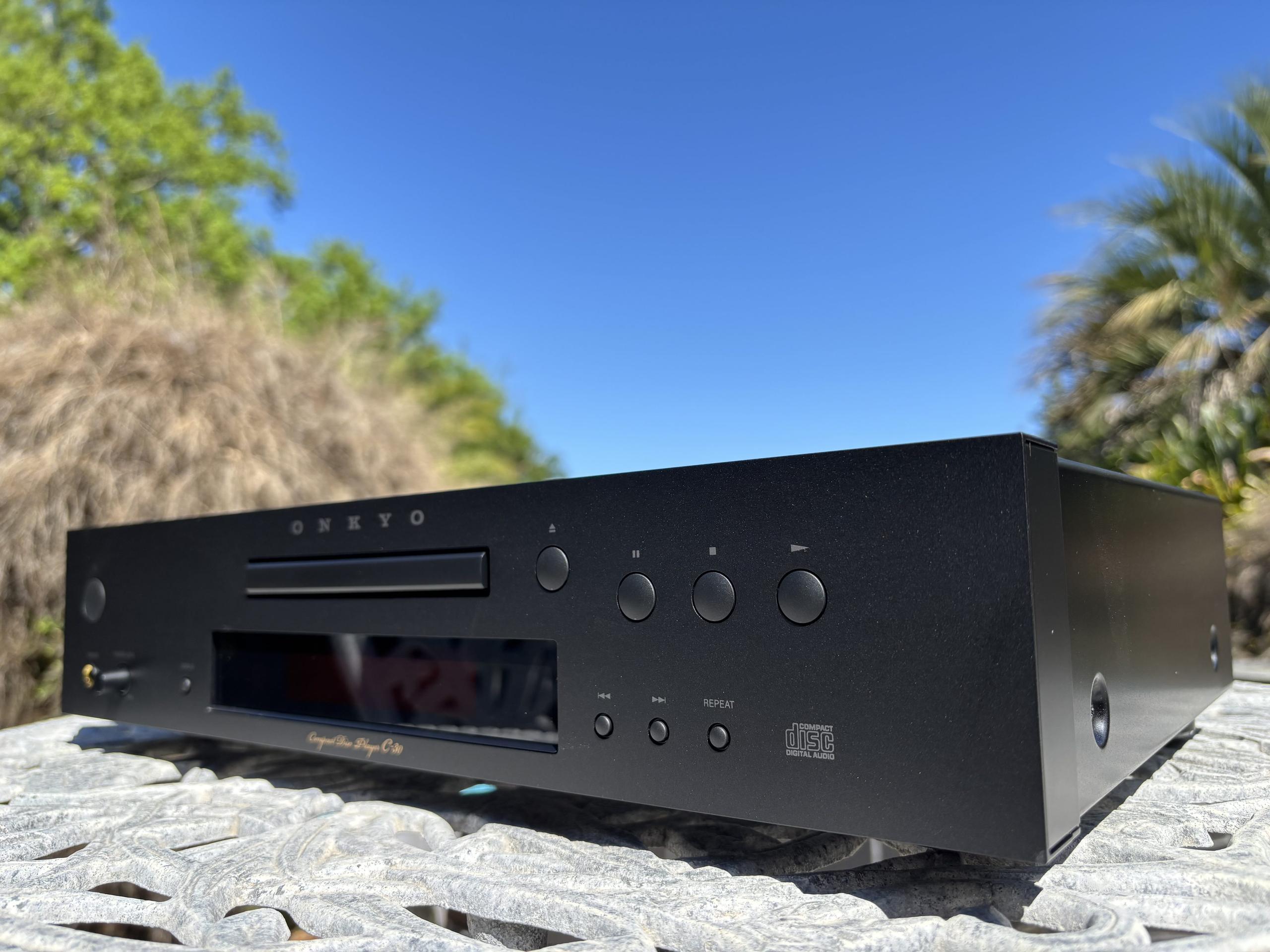
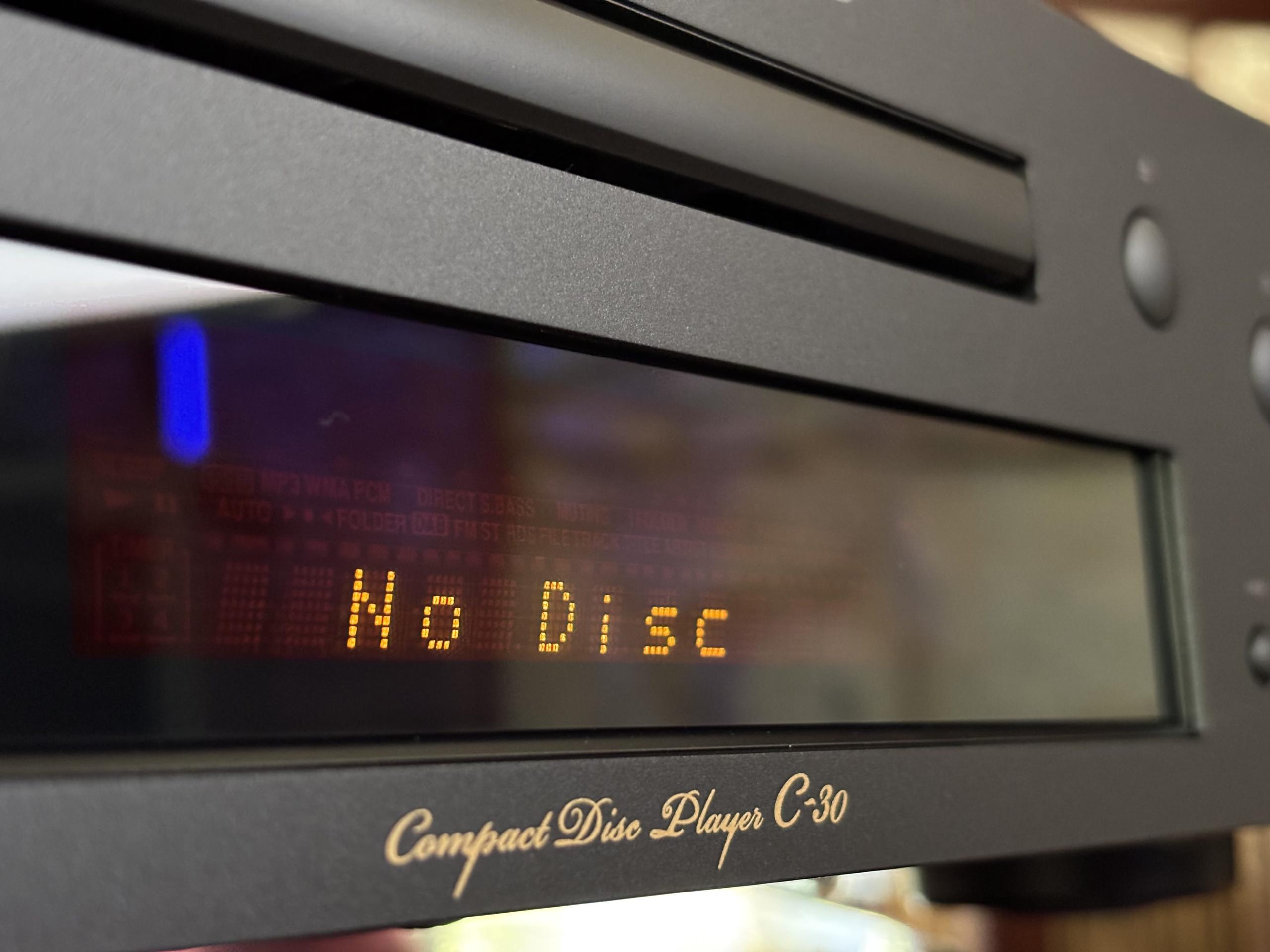
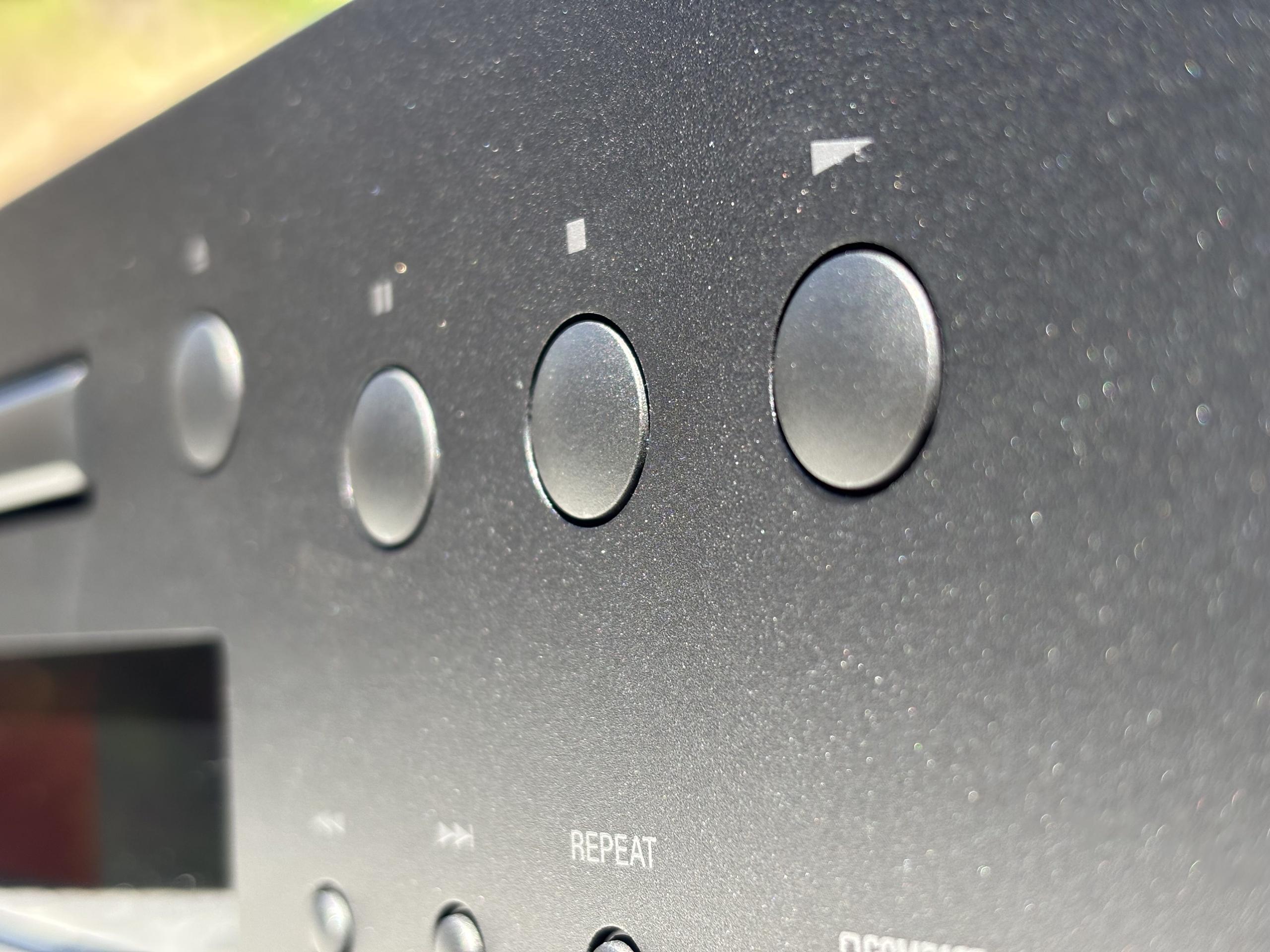
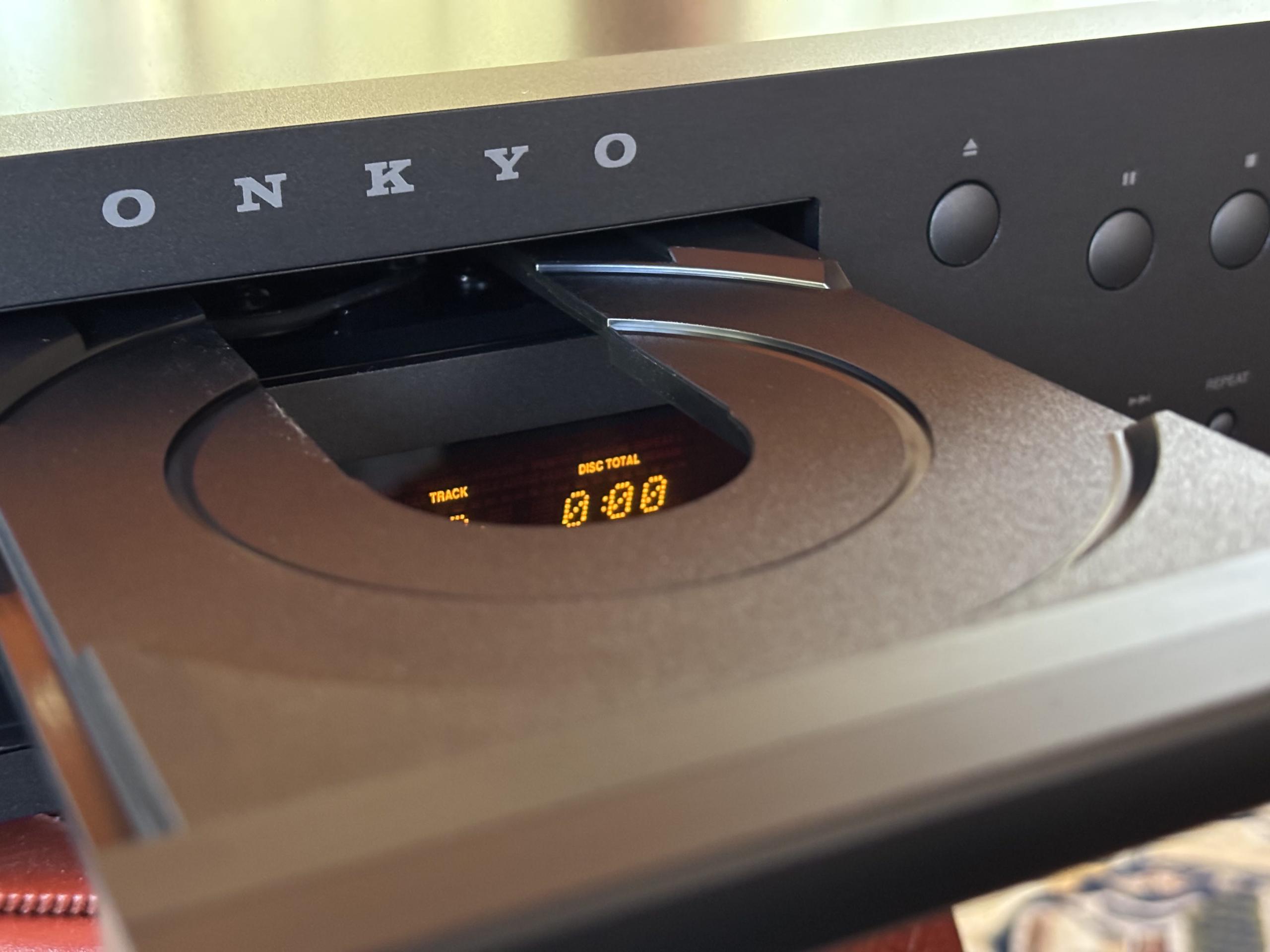
The second I pulled the C-30 out of the box, something clicked. Not literally—the build quality is actually quite solid—but there was an immediate sense of recognition. This thing looks like hi-fi gear from the early 2000s, and it does not apologize for that. The front panel is clean and symmetrical, the buttons are physical and tactile, the disc tray slides out with that satisfying low-resistance glide that used to be standard. The display is small and functional.
I’m not going to complain about that aesthetic. Some reviewers would. I won’t. The people buying a CD player in 2026 are not buying it because they want something that looks like it came out of CES last month. They want something that looks and feels like proper hi-fi—because that’s what it is. Onkyo understood the assignment.
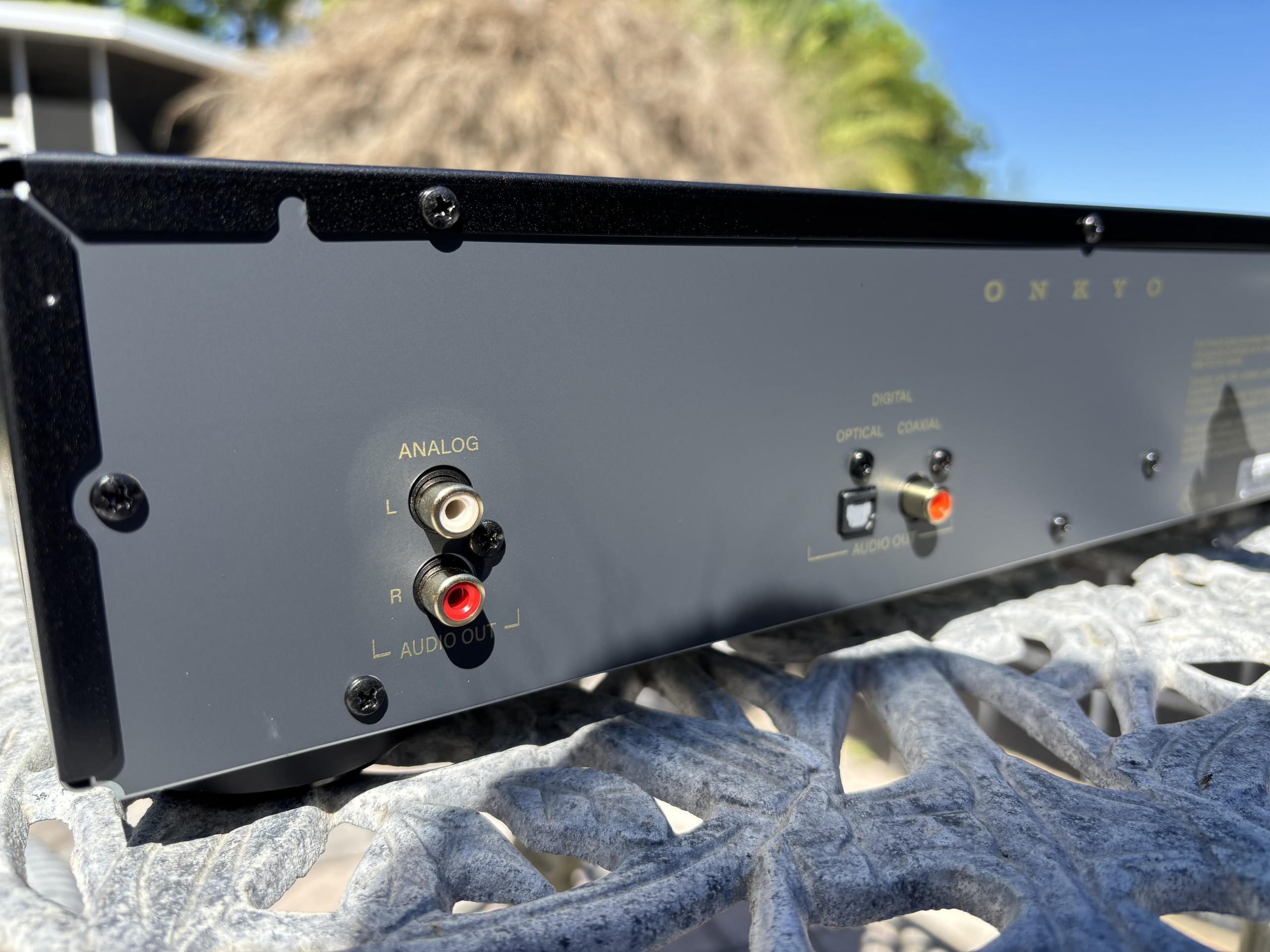
The chassis feels genuinely solid—no flex, no rattling plastic panels. The aluminum front panel gives it a premium look that photographs well and holds up in person too. The controls don’t feel luxury-tier, and I wouldn’t call them exceptional, but they’re well above cheap. There’s weight behind every button press. The disc tray is smooth and consistent—no hesitation, no mechanical drama.
What’s notable is what’s missing. No touchscreen. No capacitive controls that require a precise finger angle to register. No glossy black plastic that shows every fingerprint. No breathing LED that tells you the unit is “alive.” It just sits there, looking like a piece of audio equipment, because that’s exactly what it is.
In a world where every piece of hardware seems to be in an identity crisis about whether it’s a speaker, a smart home hub, or a lifestyle object, there’s something genuinely refreshing about gear that knows what it is.
The C-30 supports:
It does not support:
That list of absences is not a bug. It’s the product and I applaud it.
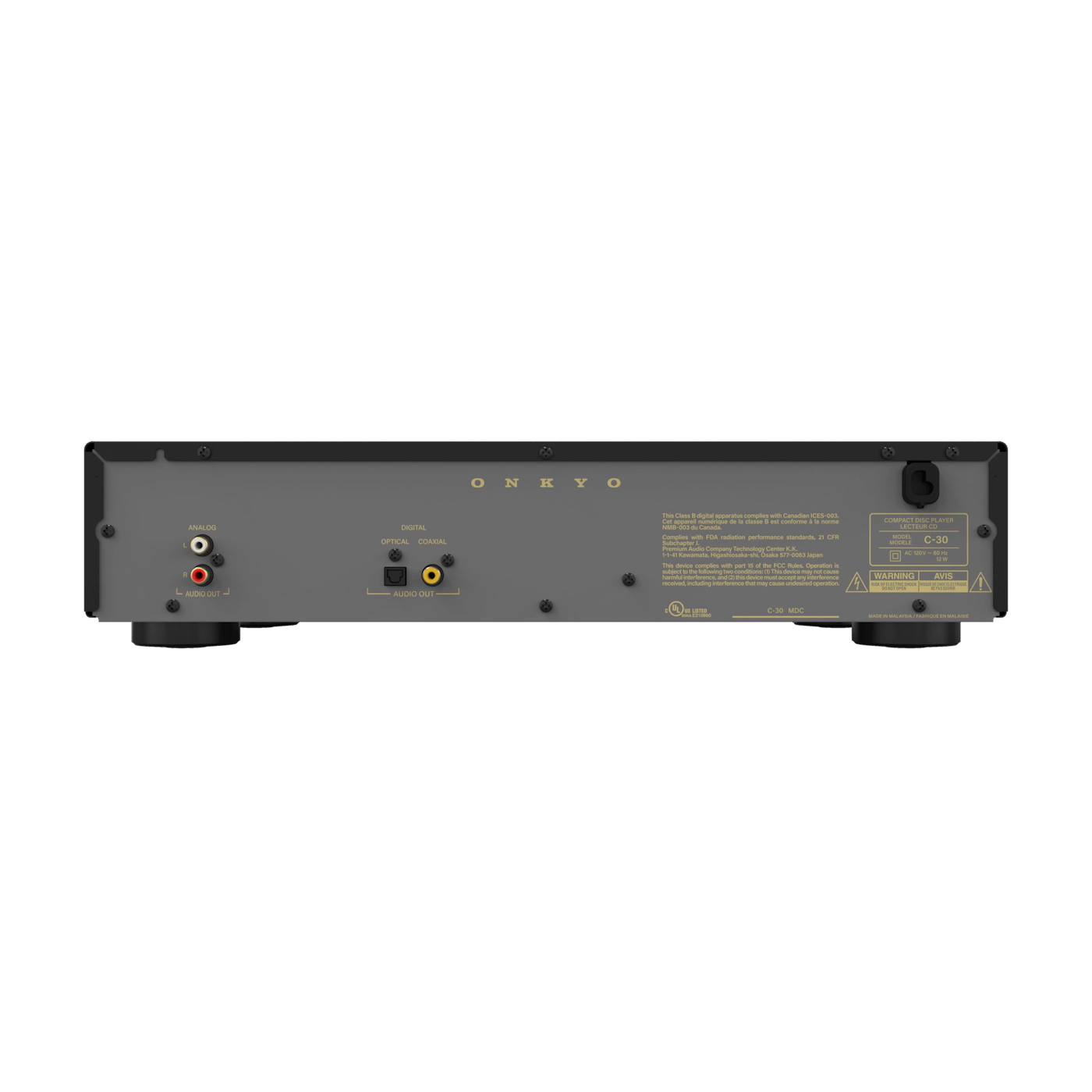
The dual digital outputs are worth highlighting specifically. Having both optical and coaxial means you’re not locked into one connection type based on whatever DAC or receiver you’re running. That flexibility matters, especially for anyone upgrading a system incrementally. The headphone output is a genuine convenience too—useful for late-night listening without routing through an amplifier.
The MP3/WMA disc support is an underrated practical touch. Anyone with a collection of burned data discs from 2004 suddenly has a player for them again. It’s a small thing, but it’s thoughtful.
The C-30 doesn’t have a personality, and I mean that as a compliment.
A lot of audio gear is designed to flatter—to add a little warmth, or a little air, or a little excitement in the first ten seconds so you go “wow” in the store. The C-30 doesn’t do that. It just plays the music. What you hear is clean, stable, and correct—not corrected in some artificial way, but in the sense that the presentation doesn’t feel pushed or massaged. The frequency response sits flat. Nothing is being exaggerated.
The noise floor is impressively low. Background silence in quiet passages is genuinely quiet—no hiss, no hum, nothing creeping up between notes. That matters more than most people realize until they’ve heard gear that doesn’t do it well.
Imaging is solid and well-defined without being artificially wide. Instruments sit where they’re supposed to sit in the mix. Vocals have weight and natural tonality—not pushed forward, not recessed. There’s a quality to the sound that I’d describe as settled—like the machine isn’t working hard to impress you, it’s just doing the job.
There’s a calmness to it that reminds me of older dedicated CD transport designs—gear built before everything became about the feature count. The difference is that the C-30’s presentation is cleaner and more controlled than most of that older equipment. It doesn’t have the warmth of vintage gear, but it’s also not clinical. It sits in a sensible middle ground.
If your system has character—a warm tube amplifier, speakers with a particular voicing—the C-30 will get out of the way and let those elements do their thing. It doesn’t compete. That’s the right call for a source component at this price.
I should note: using the digital outputs into a better external DAC does lift things noticeably. The analog stage is good, but the C-30’s real value in a higher-end system is probably as a transport feeding a dedicated converter. Either way, it holds its own.
This section might be the most underrated part of the whole conversation, and it’s something that’s hard to appreciate until you’ve spent a few weeks reviewing products that make you want to throw your router out the window.
You put a CD in. You press play. Music plays.
That’s the entire experience. There is no app. There is no firmware update waiting when you first boot it. There’s no account to create, no Wi-Fi network to configure, no service agreement to accept, no notification asking if you want to connect to a smarter ecosystem. You press play. Music plays.
After reviewing so much gear that requires three separate apps to function at a basic level, this felt almost disorienting. It took me an embarrassingly long time to just accept that it worked without any setup beyond plugging it in and choosing an output.
The outputs give you genuine flexibility for different setups. If you have a simple stereo system—a receiver, a pair of speakers, done—the RCA analog out plugs straight in and you’re running. If you’ve got a better DAC in your chain, the optical or coaxial digital outputs let the C-30 serve as a pure transport and hand off the conversion to a better component. That’s a smart way to build a budget-to-mid-range system over time.
The headphone output means you can also use it completely standalone. No amp required for personal listening. Late nights, headphones, a CD you actually own. There’s something to be said for that.
Disc reading has been reliable across everything I’ve thrown at it—commercial pressings, CD-Rs burned over a decade ago with varying quality, even a few discs that are scuffed enough that I expected problems. No skips, no long search times, no mechanical complaints.
At around $400, the C-30 is cheaper than a lot of streamers that will be obsolete the moment the company’s servers go dark or the app stops receiving updates. That’s not a hypothetical anymore—it’s happened to enough products that it’s worth factoring into any buying decision.
A CD player has no server dependency. No subscription. No cloud. The music you own works as long as the hardware works—and dedicated disc mechanisms, when they’re built properly, tend to last a long time. There’s no software layer to go wrong.
For anyone who has a CD collection already—and plenty of people do, whether they’ve been collecting vinyl-era stuff pressed to disc, or just held onto what they bought in the 90s and early 2000s—this is a low-friction way to actually use those discs with decent sound quality. The alternative is a secondhand Blu-ray player from a thrift store or paying significantly more for a proper transport. The C-30 fits a gap between those options in a sensible way.
It also makes a quiet argument for physical ownership that I found more persuasive than I expected. Streaming libraries change. Licensing deals end. Albums disappear from platforms without notice. A CD you own is a CD you own—permanently, in full quality, without any ongoing relationship with a service.
Whether that argument matters to you depends entirely on how you think about music ownership. But it’s a real argument, and the C-30 makes it better than it has any right to.
Keeping it honest:
None of those are dealbreakers at this price, but they’re worth knowing going in.
The Onkyo Icon C-30 is one of those products that shouldn’t make sense in 2026 but quietly, stubbornly does.
It’s not trying to compete with streaming. It’s not pretending the last 20 years of digital audio didn’t happen. It’s just a well-built, well-measured CD player that handles its one job with a composure that a lot of more ambitious gear can’t match. If you have CDs, this is the honest answer. If you’re curious about getting back into physical media—or getting into it for the first time—it’s an accessible, low-drama entry point with enough output flexibility to grow with a system. It sounds good. It’s built well. It does what it says and nothing more.
And right now, in a market full of gear that overpromises and underdelivers, that feels like it deserves more credit than it gets. 9/10, its a perfect as it could get at this price point.
For advertising please contact the editor at [email protected]



Privacy Policy
Terms and Conditions - Affiliate Policy
Home Security
© Copyright 2008-2026.
11816 Inwood Rd #1211, Dallas, TX 75244