

We'd like to thank ProjectorScreen.com for their assistance with our projector evaluations and testing. Their yearly shoot-out, extensive selection and helpful attitude makes our life easier when we need to dig in a little more.
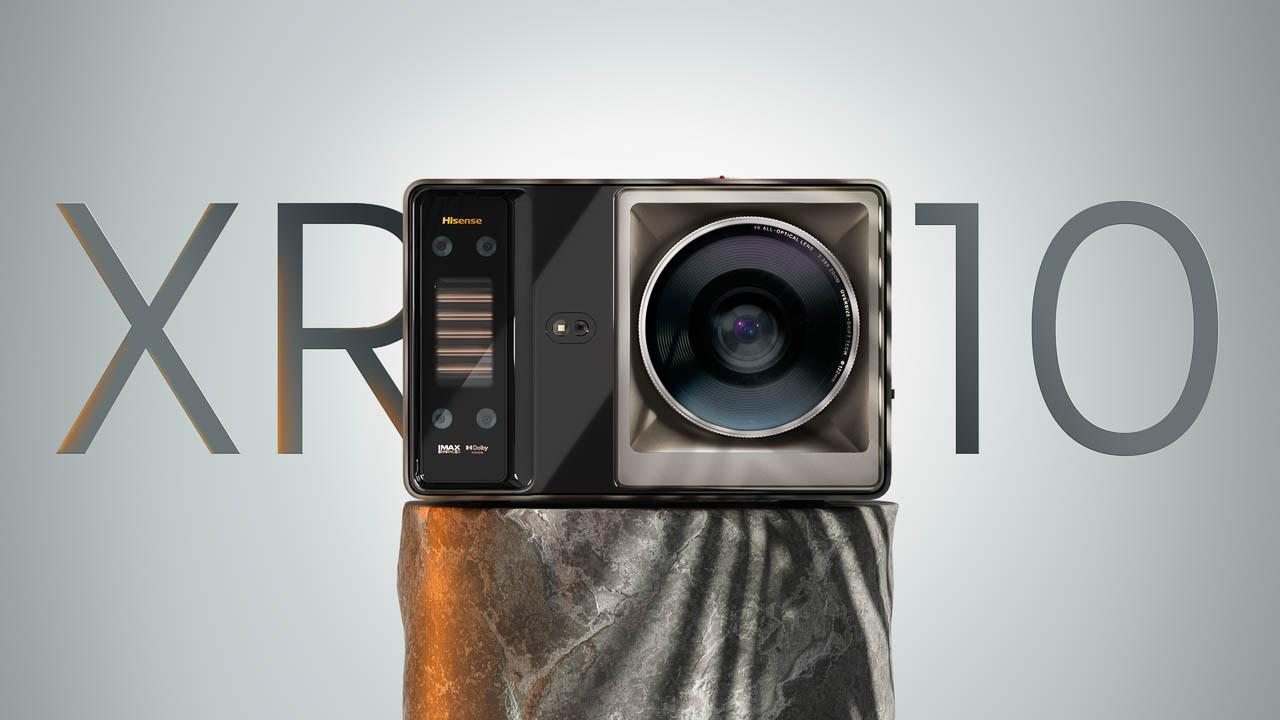
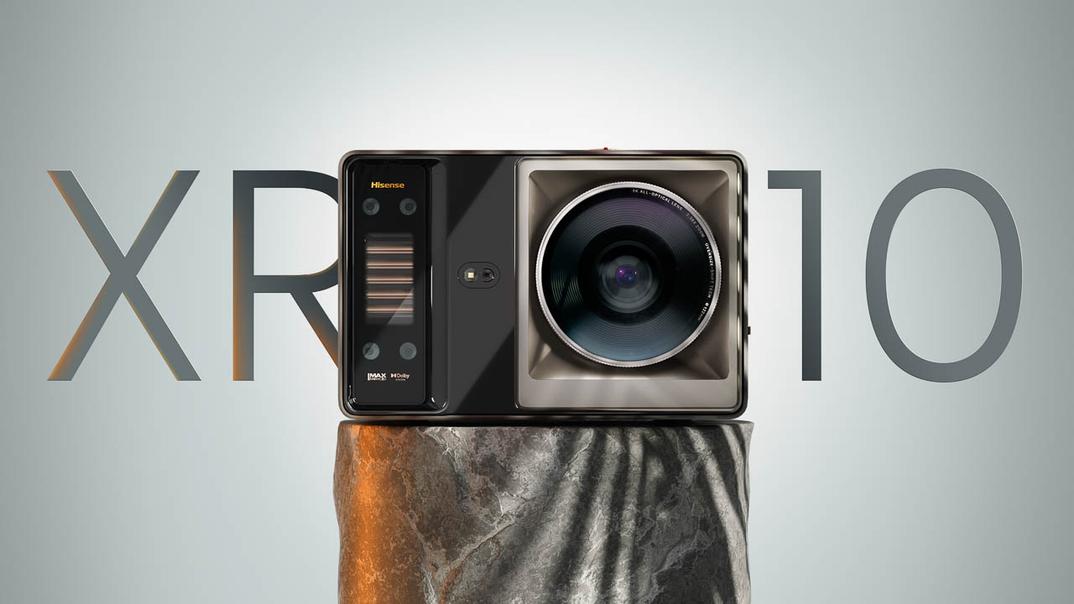
If you’ve ever looked at a 100-inch TV and thought, “That’s cute”, Hisense has a projector that might speak to you. Ahead of CES 2026, the company is previewing its new XR10 laser projector—a compact, long-throw model that can beam images up to a massive 300 inches and packs 6,000 ANSI lumens of brightness.
Unlike Hisense’s popular ultra-short throw (UST) projectors that sit inches from your wall or screen, the XR10 sticks with a more traditional projection style. That means it needs a little more distance, but in return you get more flexibility with screen size, better placement options, and—at least in this case—some serious hardware.
Let’s start with the headliner: the XR10 is rated for 6,000 ANSI lumens, 1,000 lumens more than Hisense's own L9Q that recently dominated the 2025 UST Showdown. That’s a lot of light—enough for large spaces or rooms that aren’t fully darkened. Whether you’re watching a movie at night or trying to host a sports watch party on a Sunday afternoon, this level of brightness gives you a fighting chance to see a crisp, punchy image.
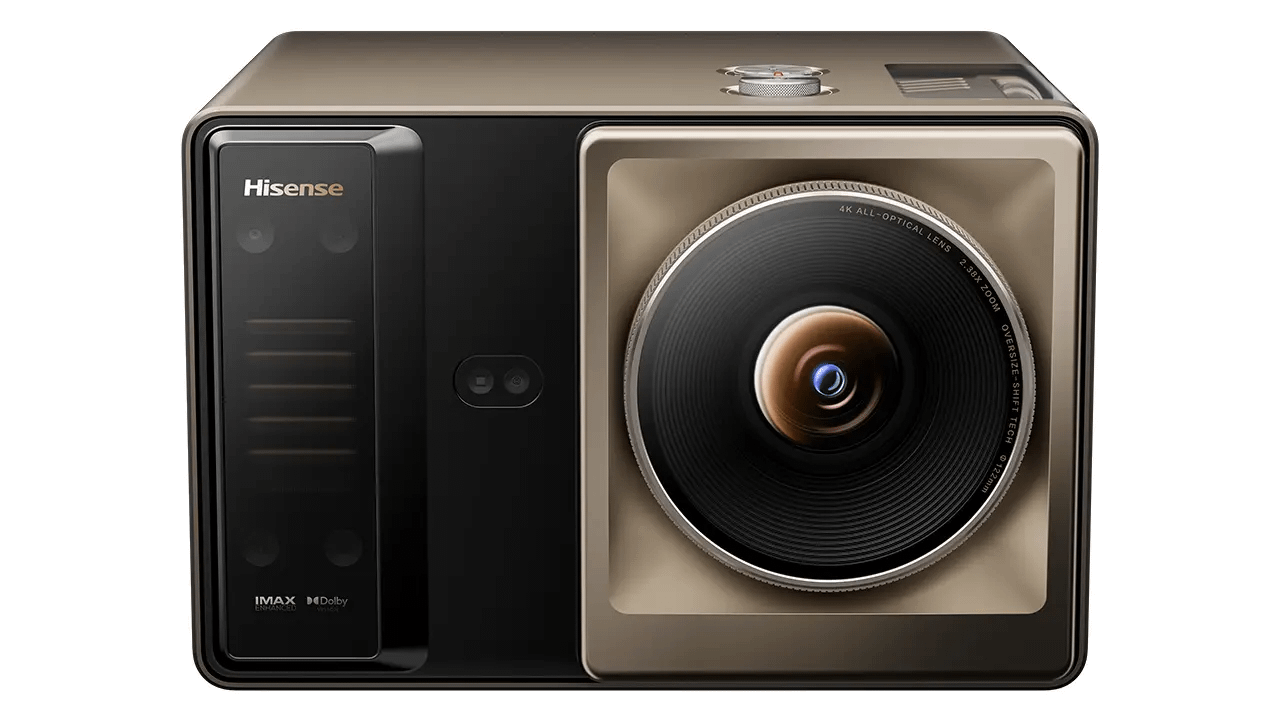
The projector uses a TriChroma RGB laser light source, which means it has separate lasers for red, green, and blue. That helps with color accuracy and range, and Hisense says the XR10 can reproduce 110% of the BT.2020 color gamut—a much wider color space than most consumer displays currently use. Even if you’re not working with content that takes full advantage of it yet, this sets the stage for more color-rich formats down the road.
Hisense also added a speckle suppression system, which should help reduce those little grainy artifacts you sometimes see with laser projection. The goal is a smoother, cleaner image without distracting shimmer, especially noticeable in bright or solid color areas.
One of the more surprising things about the XR10 is how it stays cool: liquid cooling. That’s right, this projector uses a sealed microchannel liquid cooling system, rather than the traditional fans you’ll find in most high-brightness models.
The advantage here? Less fan noise and more consistent thermal performance, even under heavy use. Hisense says the design is leak-resistant and helps maintain long-term stability—two important factors when you’re projecting for hours at a time.
Even though the XR10 isn’t a UST projector, it still tries to make your life easier when it comes to setup. You get:
That keystone system is powered by an AI adjustment tool that combines four cameras and dual Time-of-Flight (TOF) sensors to correct distortion automatically—even if you’re projecting from the side or slightly off-axis. For anyone who’s moved a projector and spent 30 minutes trying to get the corners square again, that’s a big help.
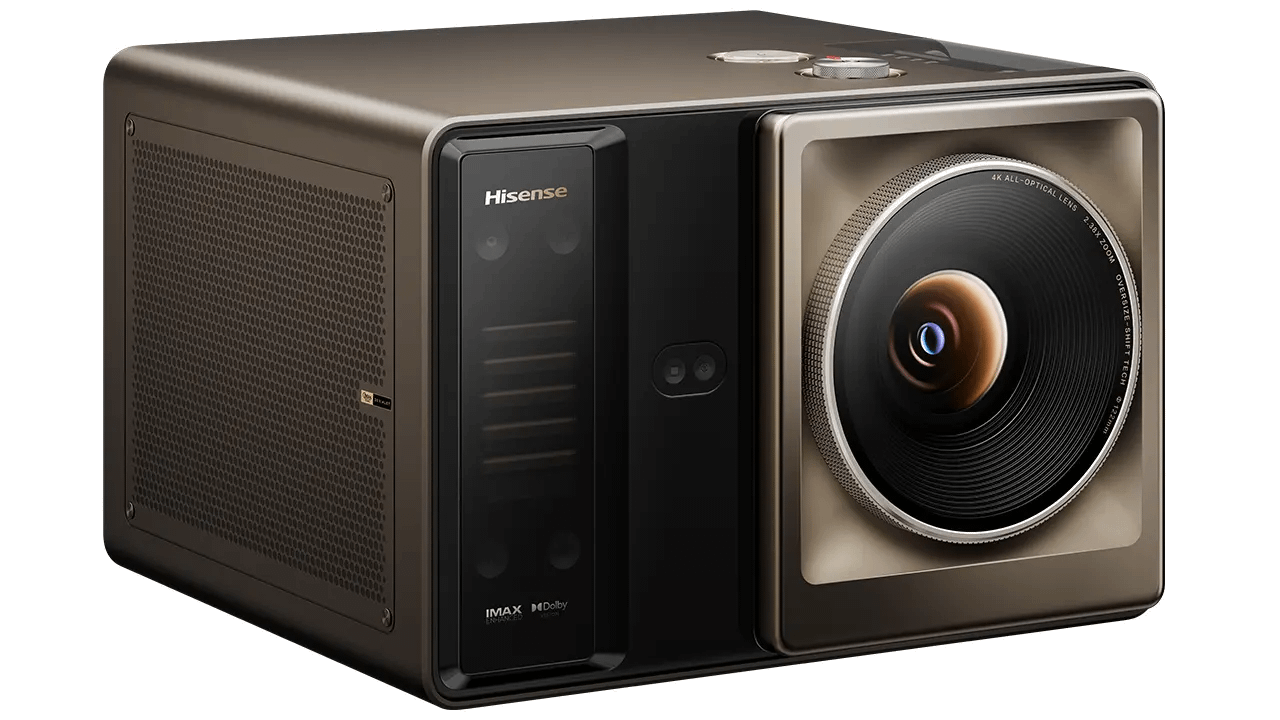
And thanks to the compact chassis and built-in streaming apps via Hisense’s VIDAA platform, the XR10 is also a decent option for portable setups. You won’t need a separate streaming stick or media box to start watching.
In a break from the usual black-box projector design, the XR10 features a transparent outer shell that lets you peek at the tech inside. It’s a bit of a style flex, and it might appeal to users who like their gear to be conversation starters, not just tools.
Connectivity should be what you’d expect from a premium projector, including Wi-Fi, HDMI ports, and support for most major streaming services through the onboard VIDAA smart system. Hisense hasn’t released the full list of I/O ports yet, but we expect that to come with the CES reveal.
The XR10 uses a 16-element all-glass IRIS lens system, which helps with light transmission and heat stability. More importantly, it automatically adjusts the lens aperture and exposure based on ambient lighting. That’s how it hits a claimed 6000:1 native contrast ratio—which means the contrast isn’t faked with dynamic dimming. You’re getting deep blacks and bright whites at the same time, even in scenes with mixed lighting.
That can make a big difference with HDR content, or even just regular viewing where you want to preserve details in both shadows and highlights.
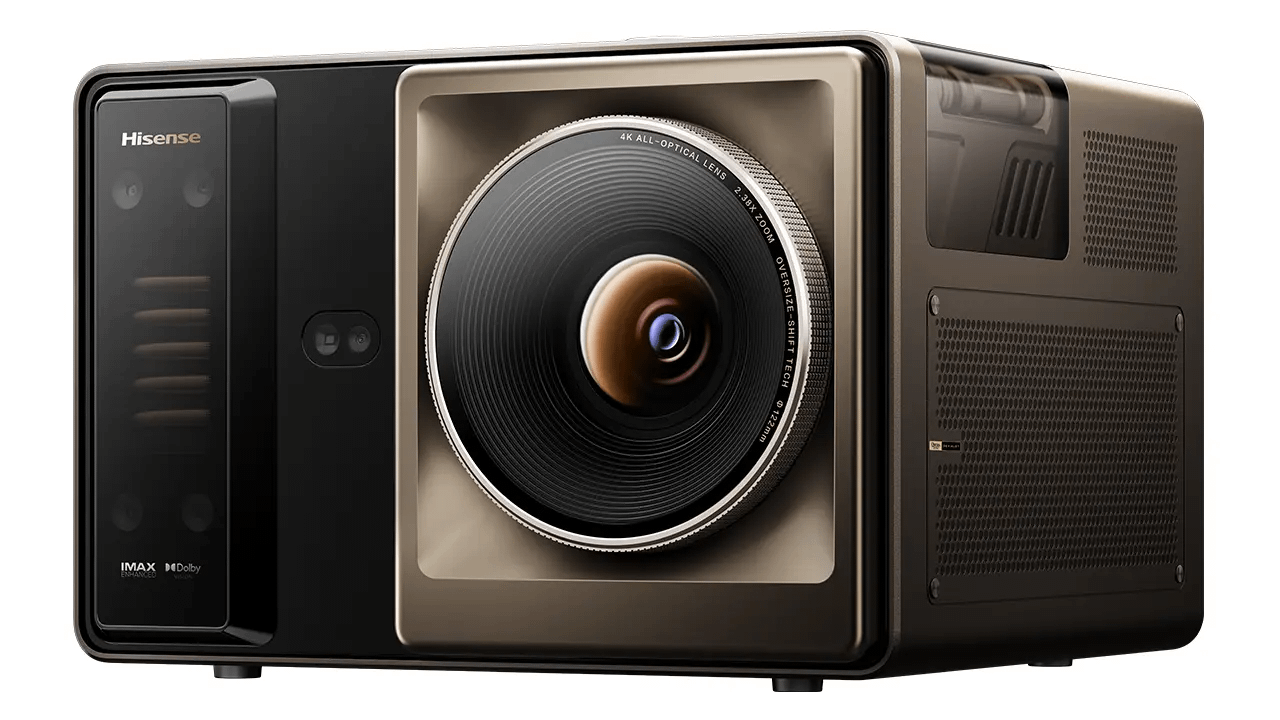
Right now, Hisense hasn’t announced pricing or a release date for the XR10. It’s expected to be showcased at CES 2026 in January, and based on prior release timelines, it will likely hit shelves in late 2026.
Alongside the XR10, Hisense is also launching the PX4-PRO, an upgraded ultra-short throw projector that offers 3,500 ANSI lumens and a 200-inch image size and builds on the earlier PX3‑PRO model. But if you’re looking for a more traditional projection setup with bigger screen potential, the XR10 is the one to keep an eye on.
Hisense XR10 Specifications:
| Feature | Hisense XR10 |
|---|---|
| Brightness | 6,000 ANSI Lumens |
| Laser Type | TriChroma RGB (LPU 3.0 Engine) |
| Color Gamut | 110% BT.2020 |
| Contrast Ratio | 6000:1 native |
| Screen Size Range | 65–300 inches |
| Cooling System | Liquid microchannel cooling |
| Lens Adjustment | Vertical/Horizontal Shift, Zoom |
| Keystone Correction | ±15° with AI + 4-camera system |
| Smart Platform | VIDAA |
| Design | Transparent case, compact body |
| Availability | CES 2026 debut; launch TBD |
The Hisense XR10 is shaping up to be a projector for people who want cinema-size viewing without the footprint of a giant TV or the constraints of UST placement. Between its raw brightness, water cooling, and flexible install features, it could carve out a niche for long-throw projection in living rooms, basements, and beyond. We’ll know more once it takes the stage at CES in January.
Related Reading:



Privacy Policy
Terms and Conditions - Affiliate Policy
Home Security
© Copyright 2008-2026.
11816 Inwood Rd #1211, Dallas, TX 75244