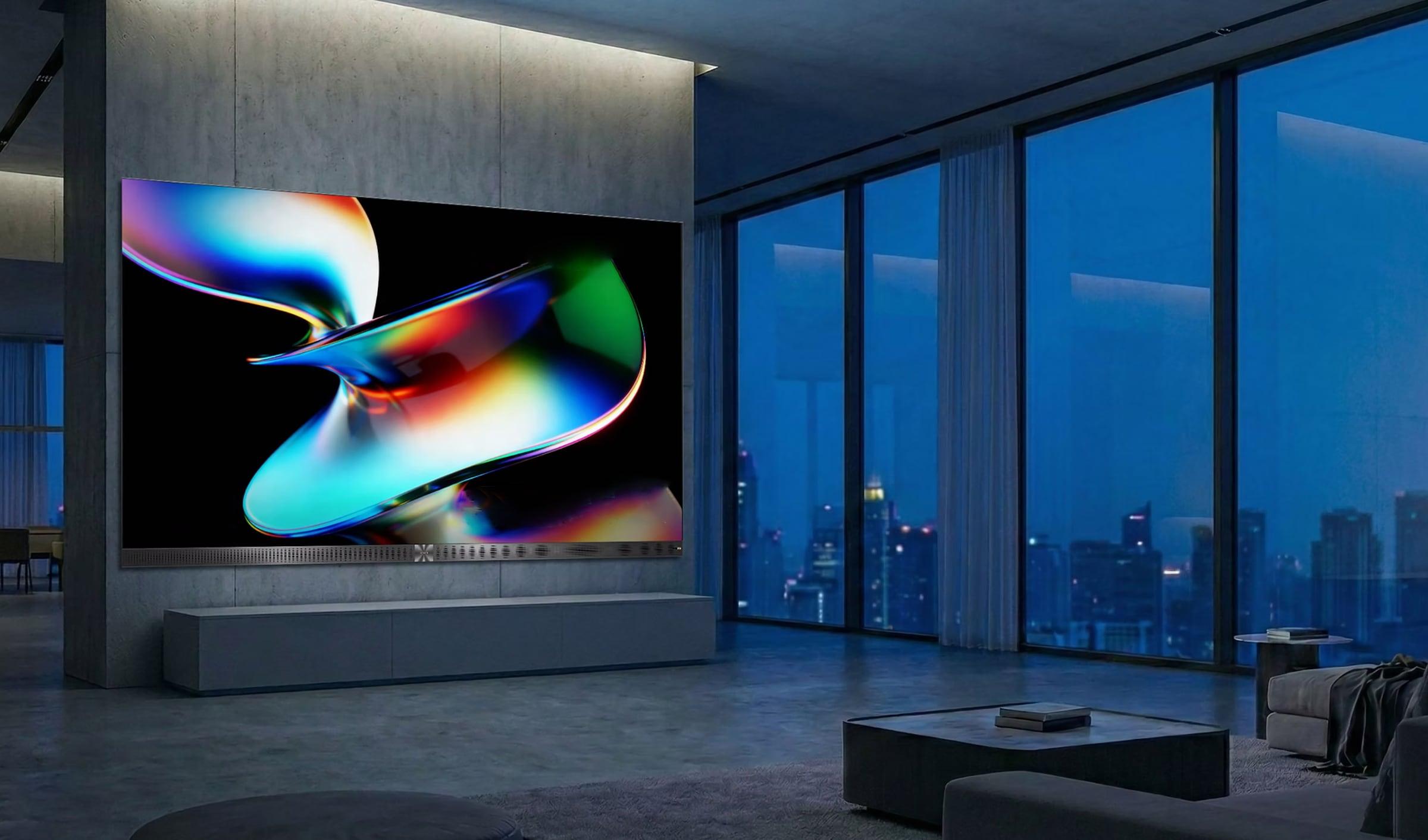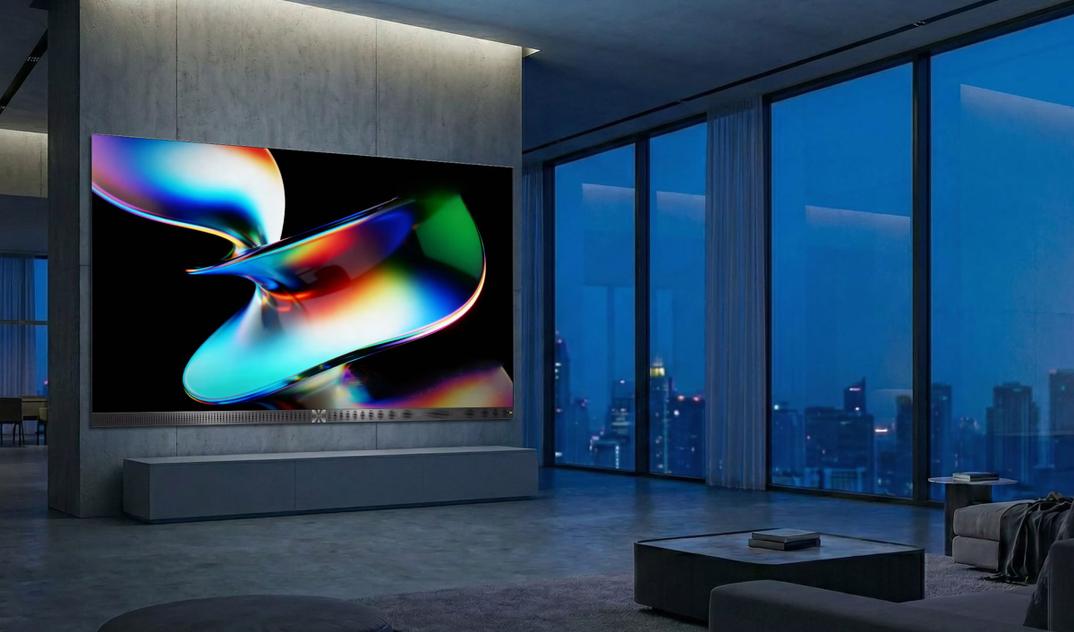
At CES 2026, Hisense had a clear message: color matters — maybe more than we realized. Instead of chasing brightness or flashy designs, the company used its time at the show to highlight something a little more fundamental: how TVs actually reproduce color, and how adding just one more shade can make a big difference.
By reworking how colors are built at the hardware level, Hisense is trying to make everything from movies to games look more natural, more consistent, and more engaging — whether you’re watching on a giant screen in a high-end home theater or a 65-inch TV in your living room.
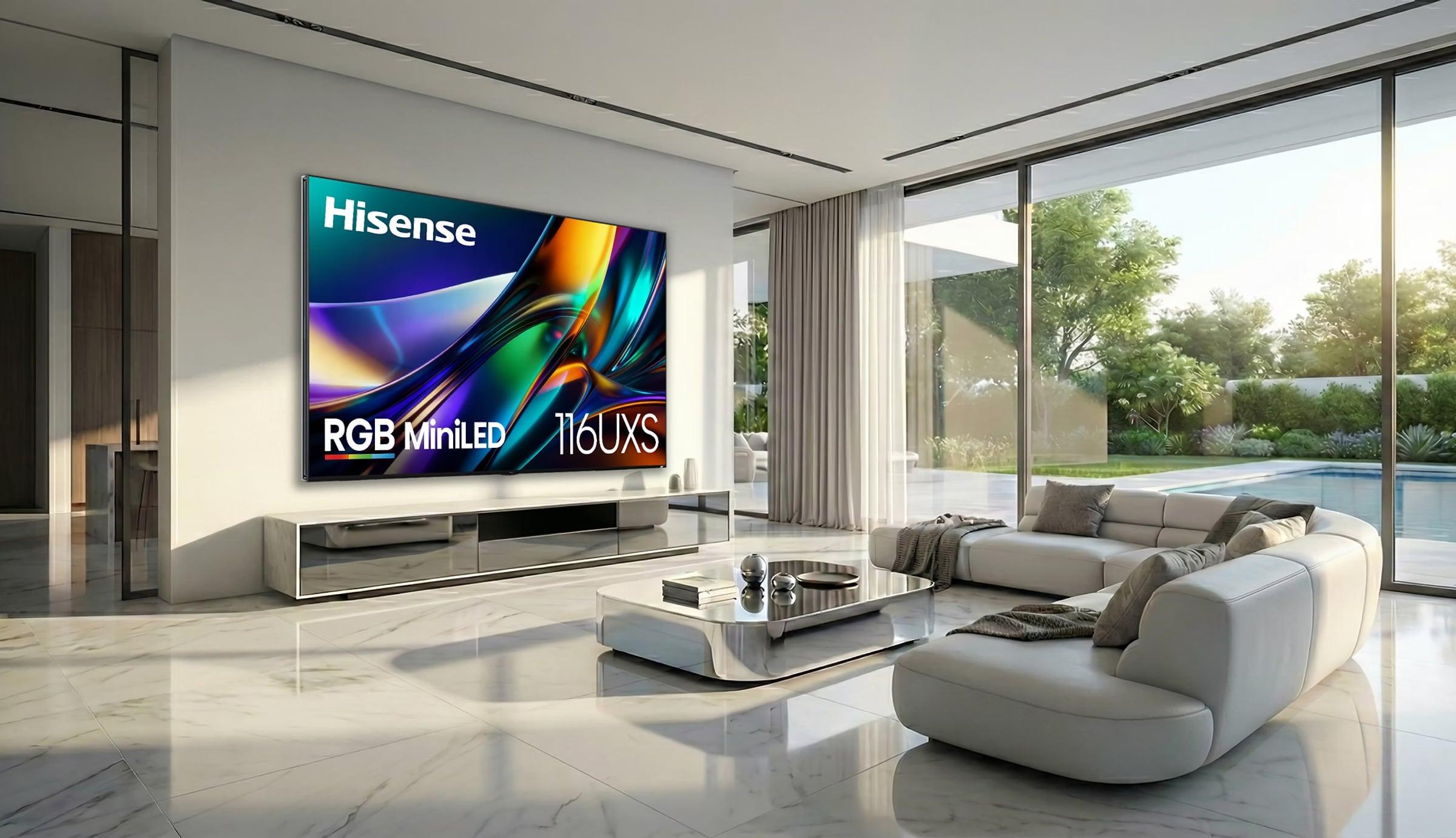
Last year, Hisense rolled out its first RGB MiniLED TV, the 116UX — a massive 116-inch display with red, green, and blue LEDs working together to improve color accuracy and contrast. We reviewed the 116UX at Home Theater Review and gave it our Editor’s Choice award for its impressive performance and color fidelity. This year, the company is going even further with the launch of the 116UXS, which adds a fourth color: cyan.
Why cyan? According to Hisense, human vision is especially sensitive to this part of the color spectrum. By introducing cyan into the mix, the TV can display smoother transitions between colors, better midtone detail, and more natural-looking skin tones. It’s not about making the image more saturated — it’s about refining how colors blend together on screen.
This new approach, which Hisense is calling RGB MiniLED evo, also comes with some serious processing power. The 116UXS uses the Hi-View AI Engine RGB, a chip that analyzes the content you're watching in real time to fine-tune color, contrast, and local dimming across what Hisense claims are tens of thousands of dimming zones.
The result? Hisense says the TV can cover up to 110% of the BT.2020 color space — a very wide color gamut that’s usually reserved for high-end projectors. It’s also designed to cut down on harsh blue light and use less energy than some competing technologies.
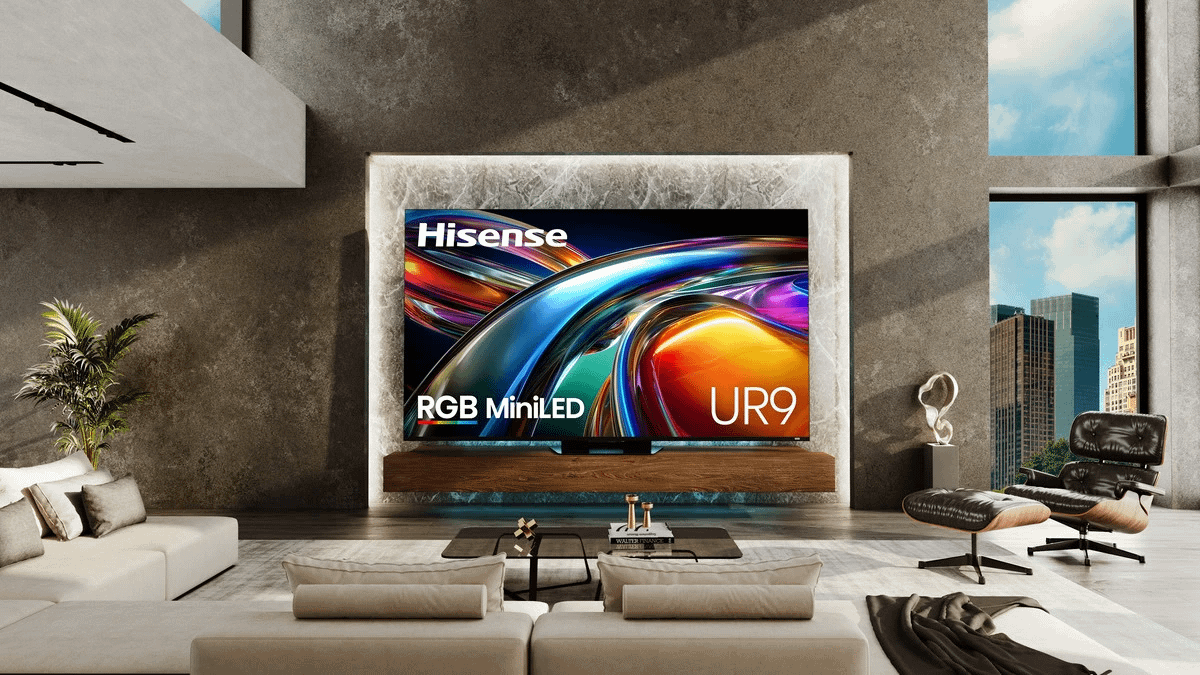
While the 116UXS is clearly built for premium spaces (and premium budgets), Hisense isn’t keeping this technology locked behind massive panels. At CES, the company also introduced two new series — the UR9 and UR8 — that bring RGB MiniLED tech to more common screen sizes, from 55 to 100 inches.
These TVs skip the cyan subpixel for now, but they still benefit from the core RGB MiniLED approach: using red, green, and blue LEDs directly, instead of relying on a white backlight and color filters. This means richer, cleaner colors — even in brightly lit rooms.
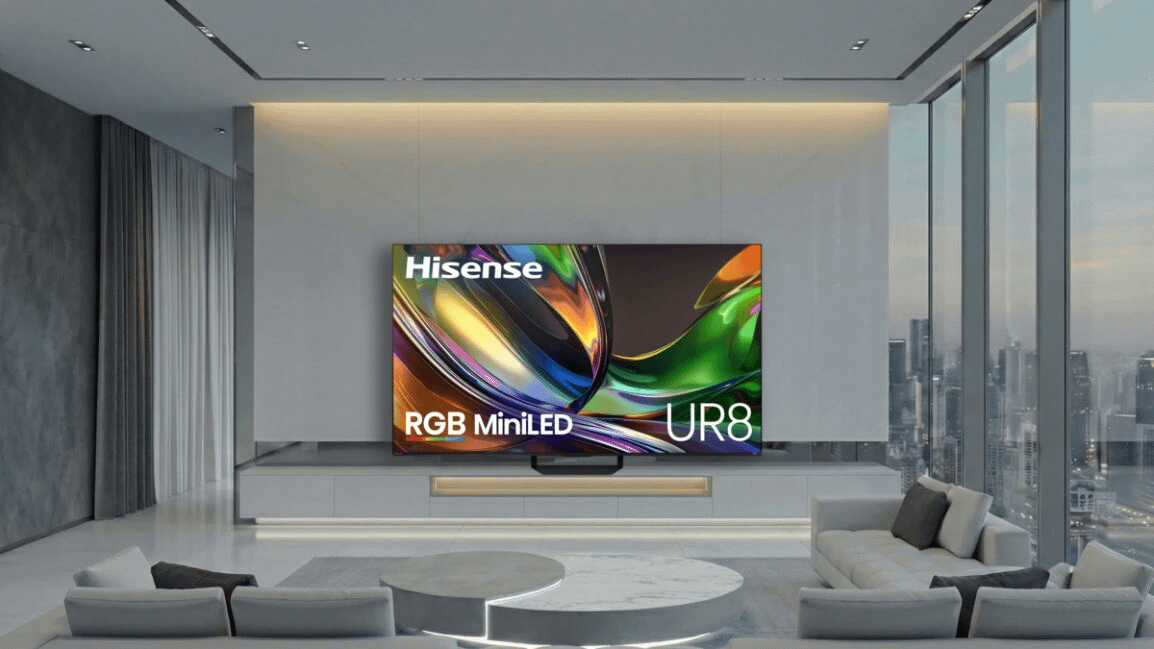
Both the UR9 and UR8 models also come with sound systems tuned by Devialet, a French audio brand known for its high-end speakers. That means these TVs are being positioned as all-in-one entertainment hubs, with premium sound built right in — which could be a welcome feature for anyone who doesn’t want to spring for a separate soundbar right away.
Hisense also took the wraps off a 163-inch MicroLED display called the 163MX (or 163MXS), and this one adds a different fourth color: yellow. MicroLED panels already use self-emissive pixels for better contrast and longer lifespan, but adding a yellow subpixel helps fill a part of the spectrum (between 500 and 600 nanometers) that’s often missing in standard RGB setups.
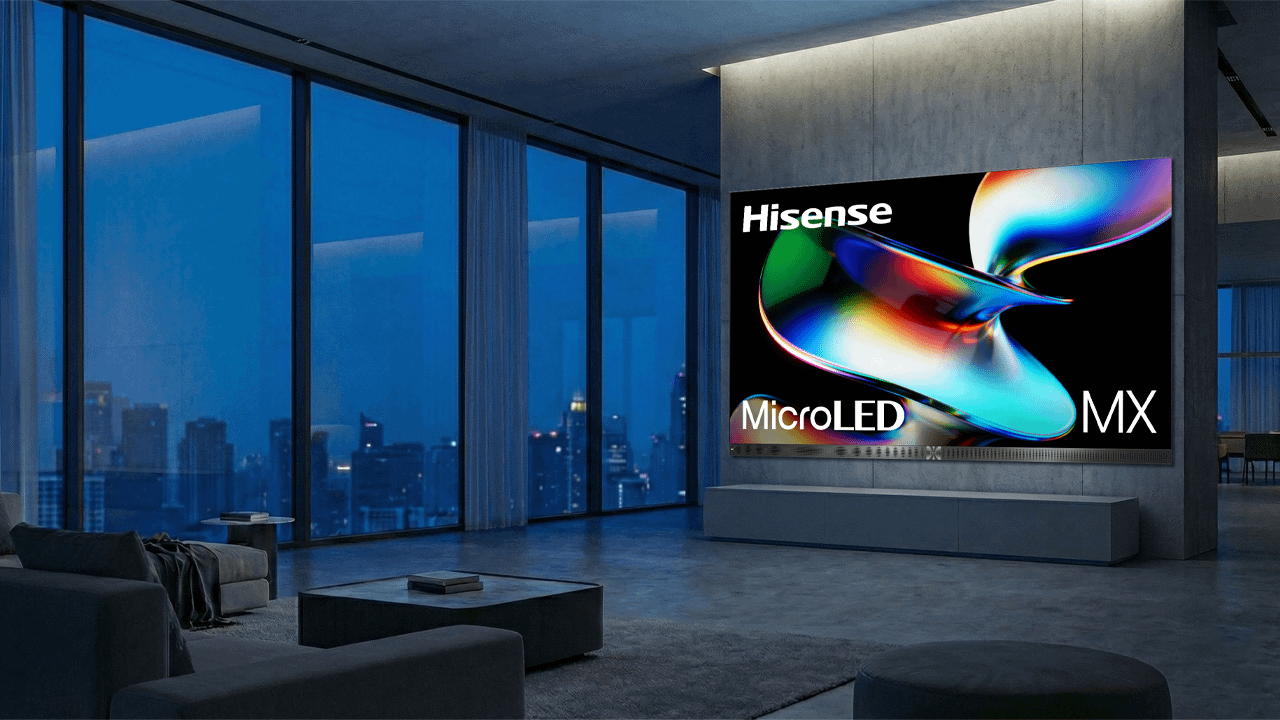
Why does that matter? This gap can make warm tones — think golden sunsets or amber-colored lighting — look a little washed out. Adding yellow helps bring those tones back to life. According to Hisense, the 163MX can hit 100% of the BT.2020 color space, all while maintaining image consistency across the entire panel.
Even with its massive screen size, the 163MX keeps a slim profile (just 32mm thick) and mounts flush to the wall with zero gap. It’s clearly aimed at luxury spaces or large-scale installations — but the technology behind it could eventually trickle down into more accessible products in the future.
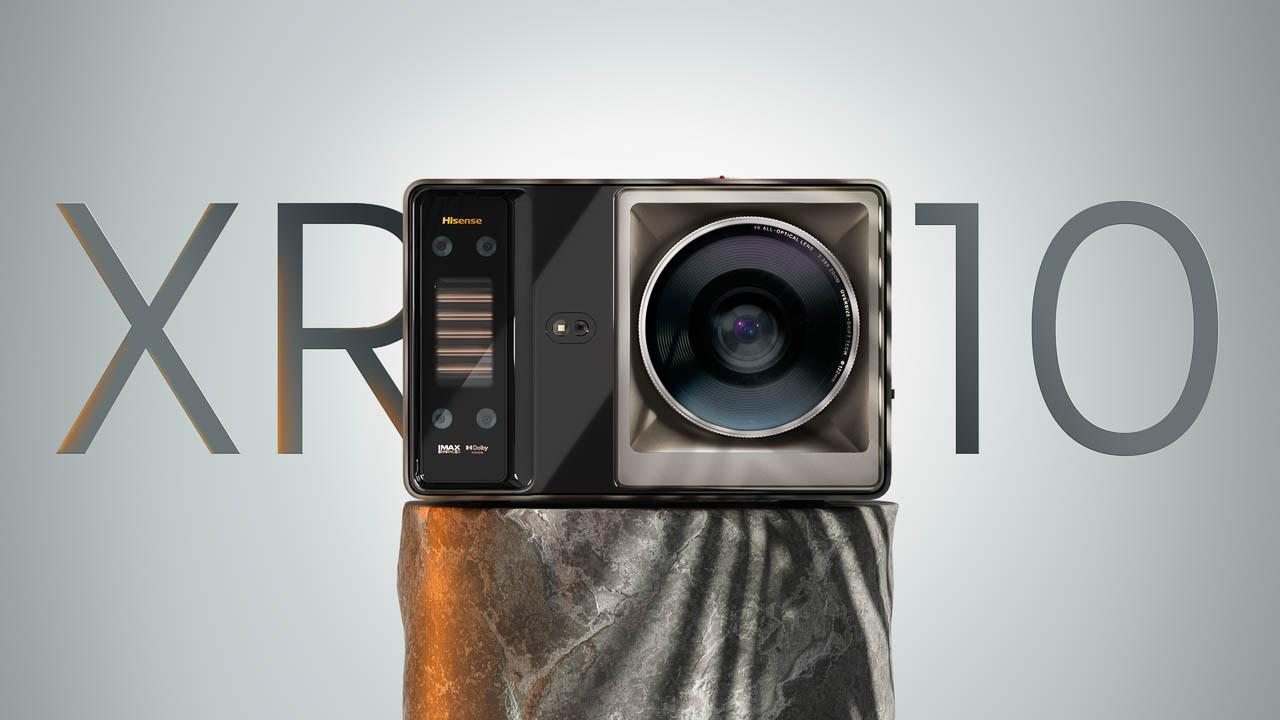
Alongside the TVs, Hisense is continuing to expand its lineup of ultra-short-throw laser projectors. The new XR10 and PX4-PRO both use triple-laser systems to project images up to 300 inches in size. They also come with AI-based image correction, so you can place the projector off to the side of the room and still get a square, focused image without manual tweaking. Read the full story.
Audio is still a big part of the story too. The 116UXS comes with a Devialet-designed 6.2.2-channel audio system, while the UR series gets tuned speaker setups as well. It’s clear that Hisense is trying to offer full-system experiences — not just a pretty picture.
The big theme from Hisense this year is pretty simple: more color = better picture. But instead of boosting saturation or turning up the brightness, the company is tackling color accuracy at the source — by literally changing the kinds of LEDs that make up the display.
Adding a fourth primary color (cyan or yellow, depending on the model) might sound like a small tweak, but it opens the door to more accurate, natural, and comfortable viewing — especially when paired with better processing and fine-tuned dimming zones.
If you’ve ever felt like your TV makes faces look too orange or sunsets look too red, this kind of update could help fix that. Whether or not that improvement is worth a premium price is something only shoppers can decide — but at least now, there’s a bit more choice.
It’s too early to tell when (or if) the RGBY MicroLED or RGB MiniLED evo models will hit the mainstream. But with the UR8 and UR9 already scaling some of the core tech to smaller, more affordable TVs, it’s likely we’ll start seeing more multi-color systems popping up across the market in the near future.
Related Reading:




Privacy Policy
Terms and Conditions - Affiliate Policy
Home Security
© Copyright 2008-2026.
11816 Inwood Rd #1211, Dallas, TX 75244