

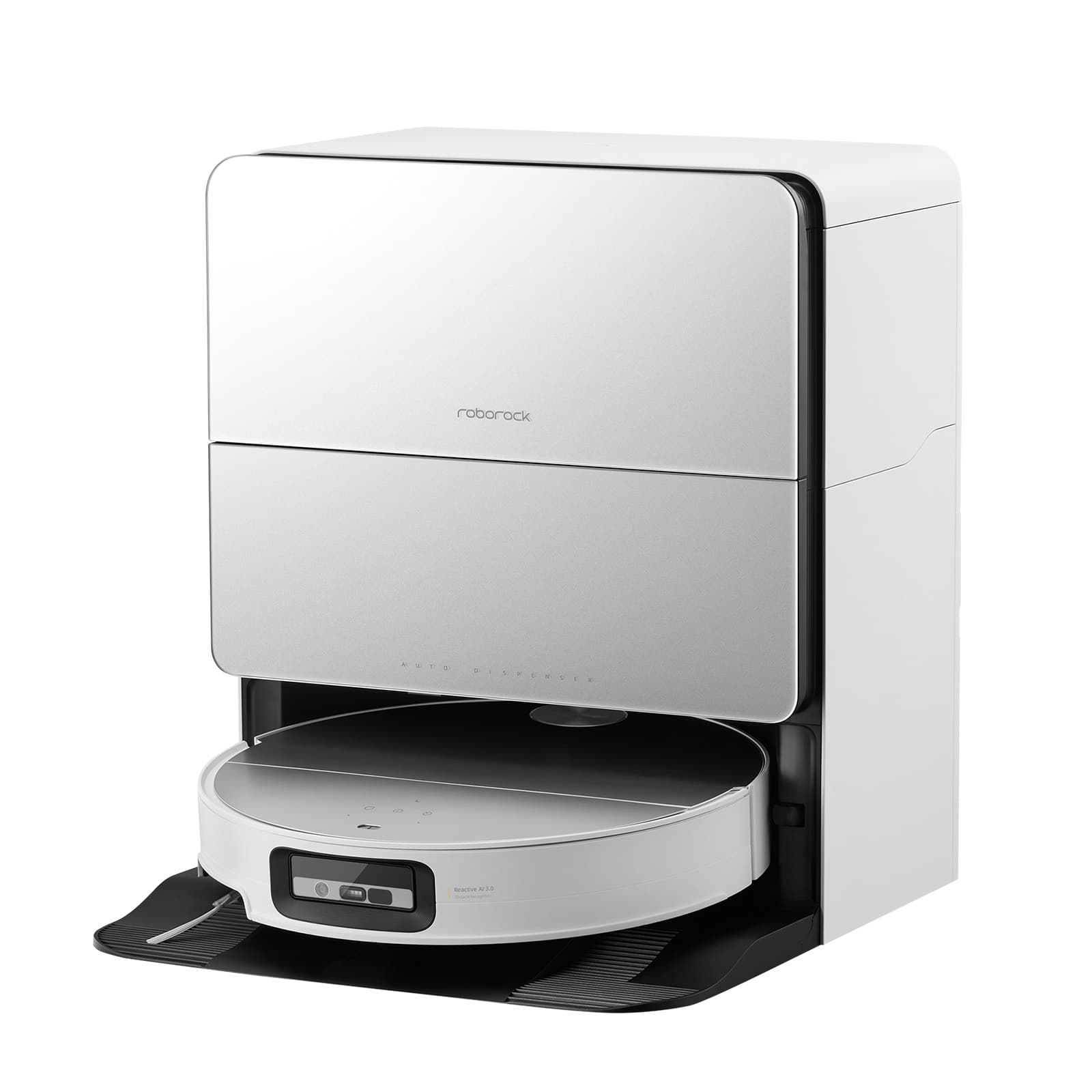

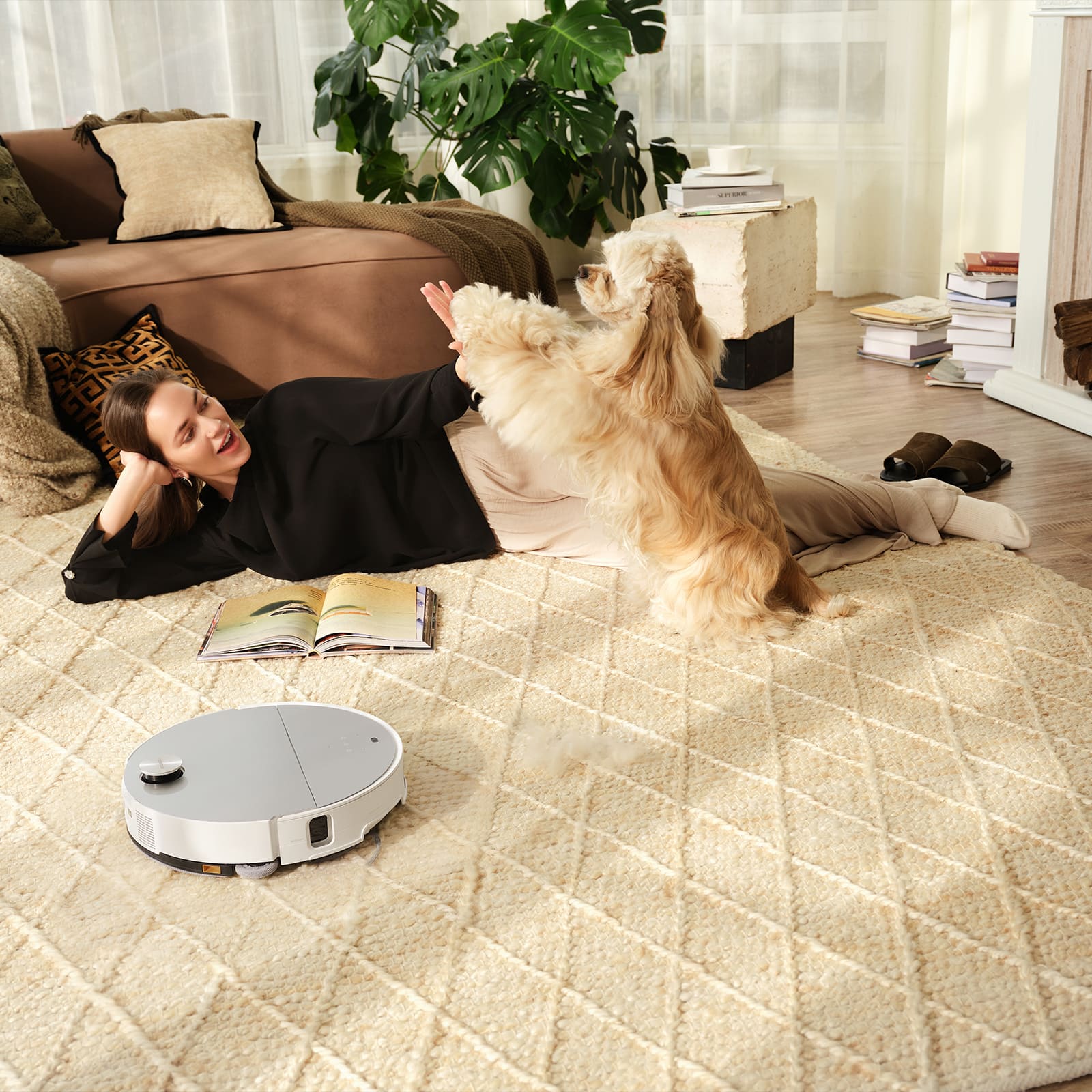
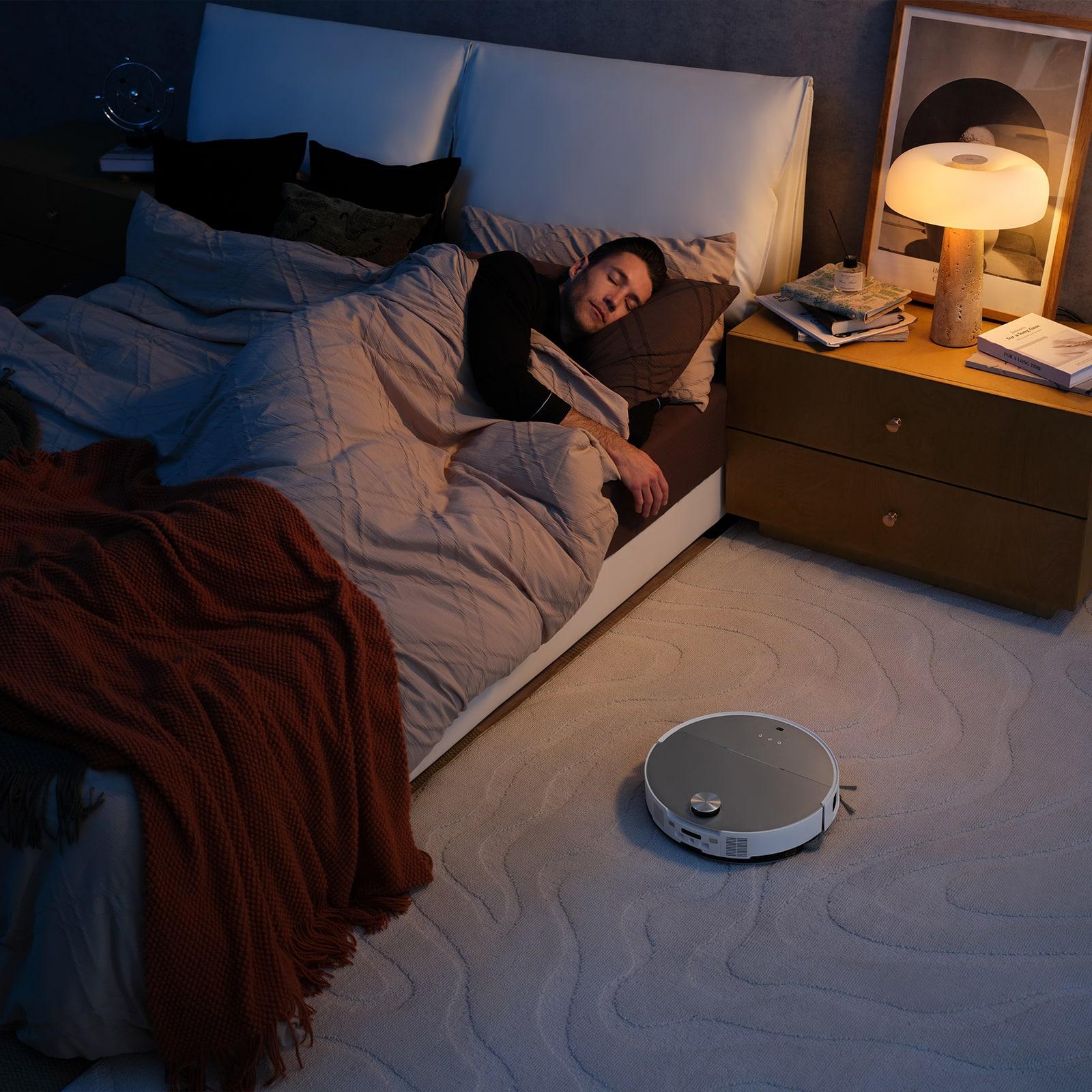
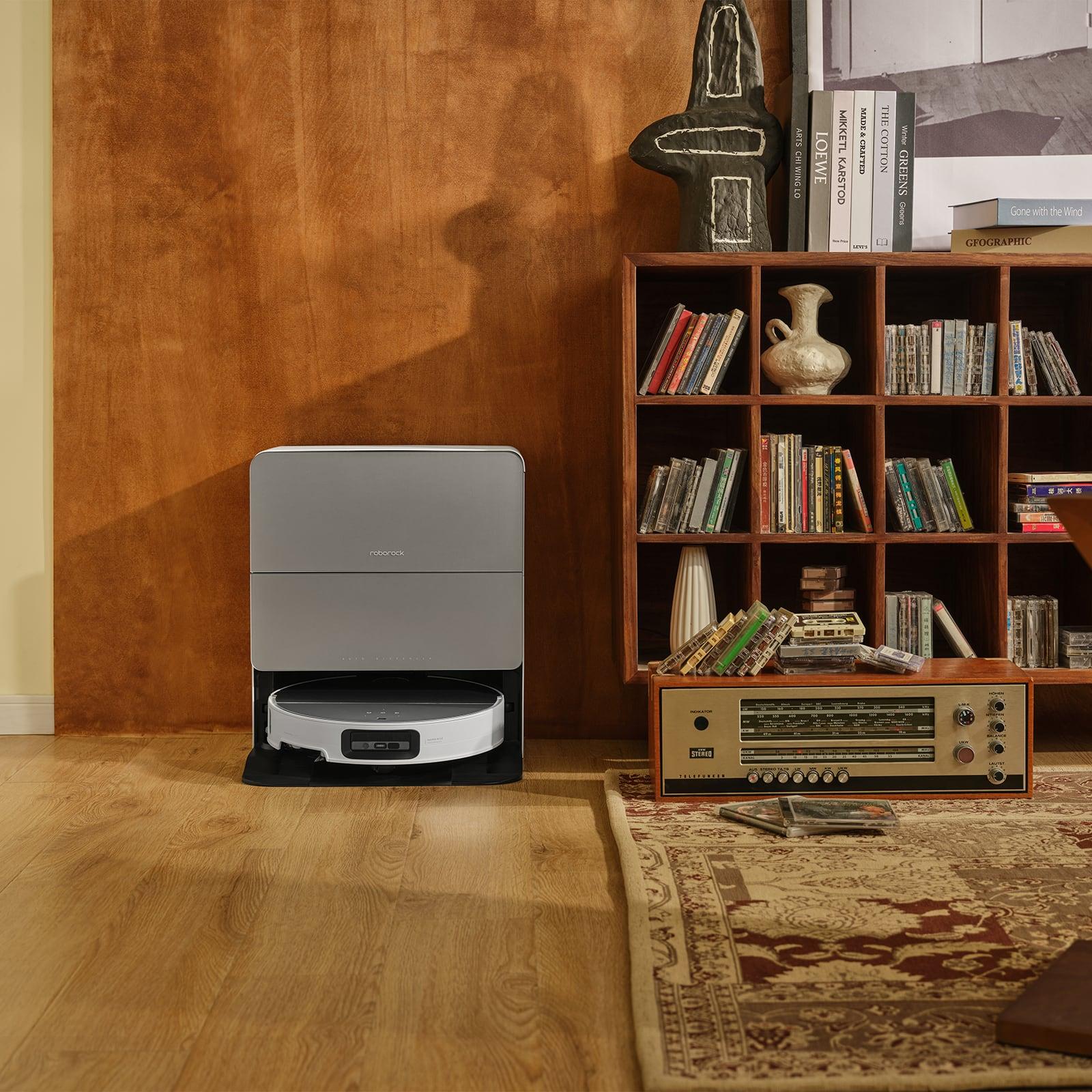
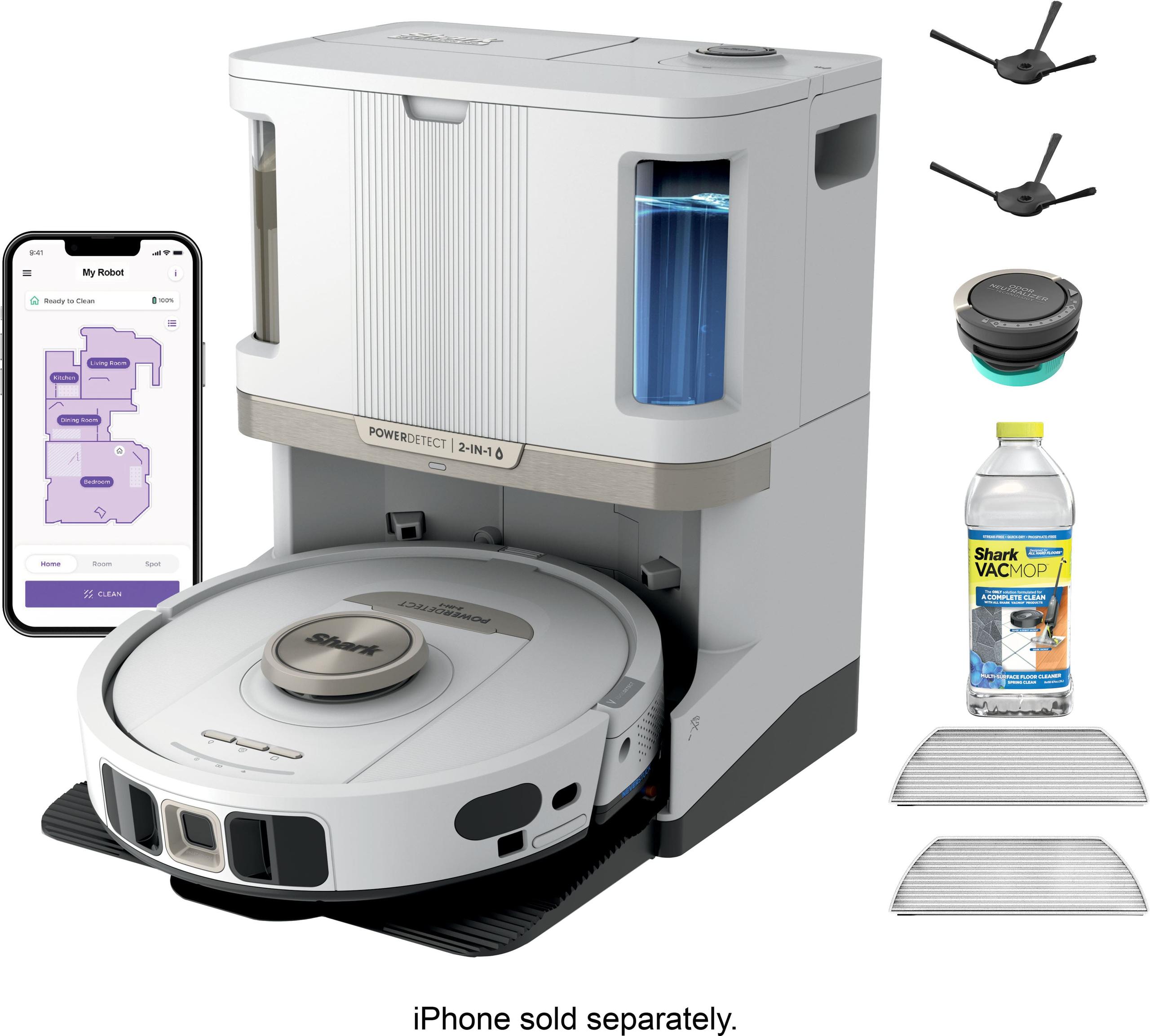
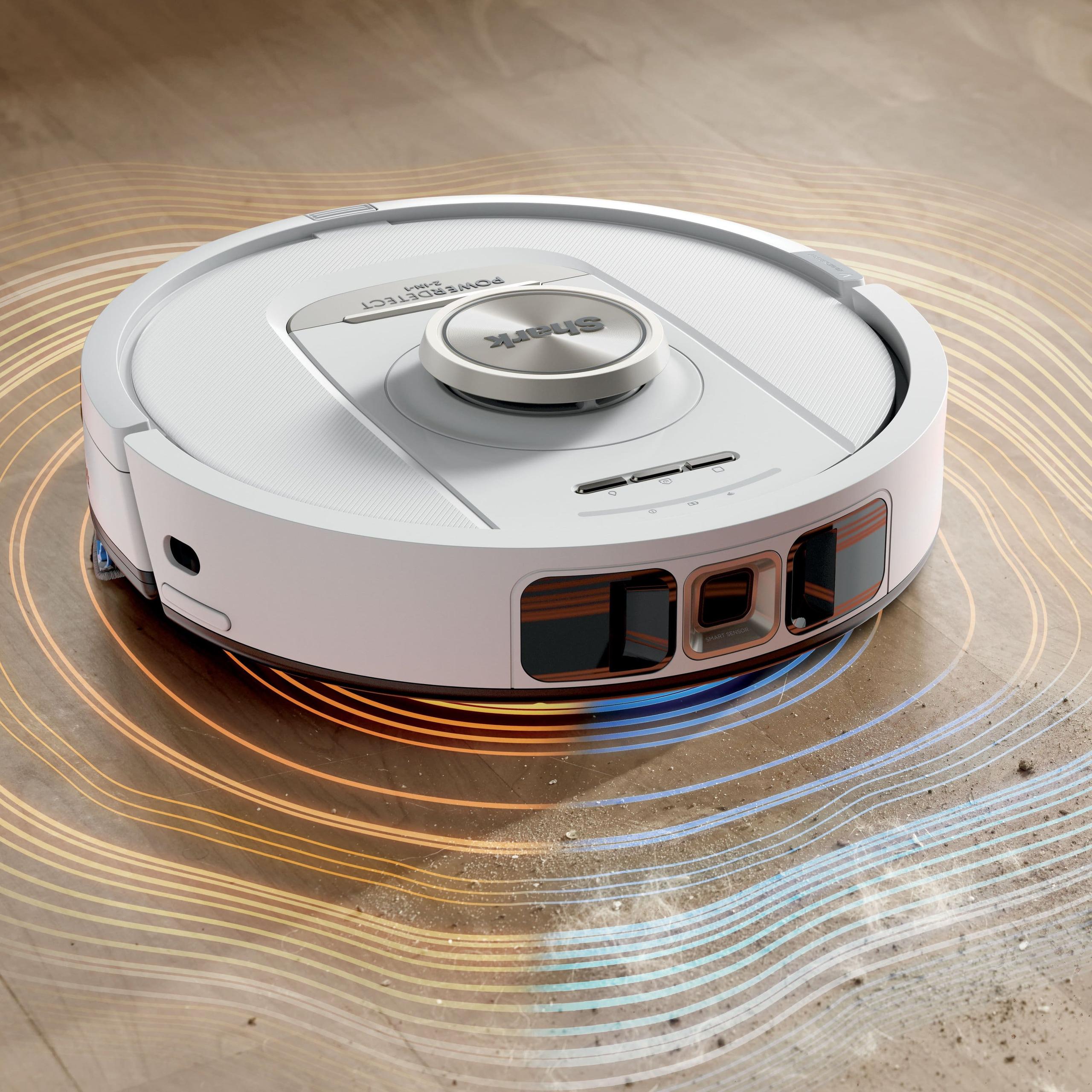
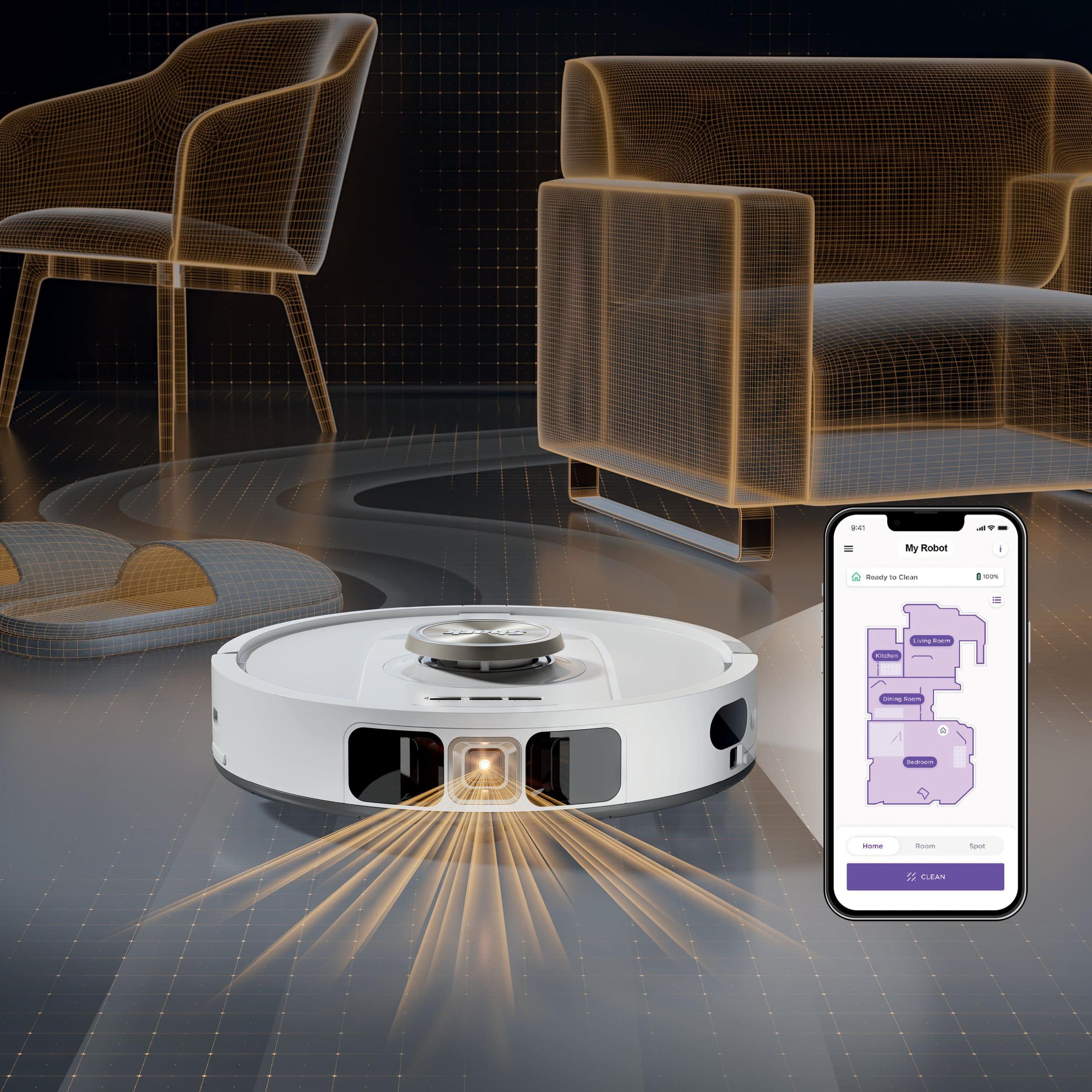
The world of robot vacuums has evolved dramatically since the first Roomba wobbled around living rooms in 2002. Today's premium models aren't just spinning brushes with basic sensors—they're sophisticated cleaning machines equipped with laser navigation, intelligent mopping systems, and base stations that handle weeks of maintenance automatically. Two standout models from 2025 represent different philosophies in this competitive space: the Roborock Saros 10 with its revolutionary ultra-thin design and the Shark PowerDetect RV2805ZE with its adaptive cleaning intelligence.
Understanding what separates these machines requires diving into the technical details that matter most for real-world performance. Both promise to vacuum and mop your floors autonomously, but their approaches to navigation, cleaning power, and maintenance automation differ significantly. Let's explore how these differences translate into daily cleaning performance and long-term value.
The most crucial aspect of any robot vacuum is how it moves through your home. Poor navigation leads to missed spots, repeated cleaning of the same areas, and the dreaded "robot trapped under the couch" rescue mission. Both the Roborock Saros 10 and Shark PowerDetect RV2805ZE use LiDAR (Light Detection and Ranging) technology, which works like radar but with laser light to create detailed 3D maps of your home.
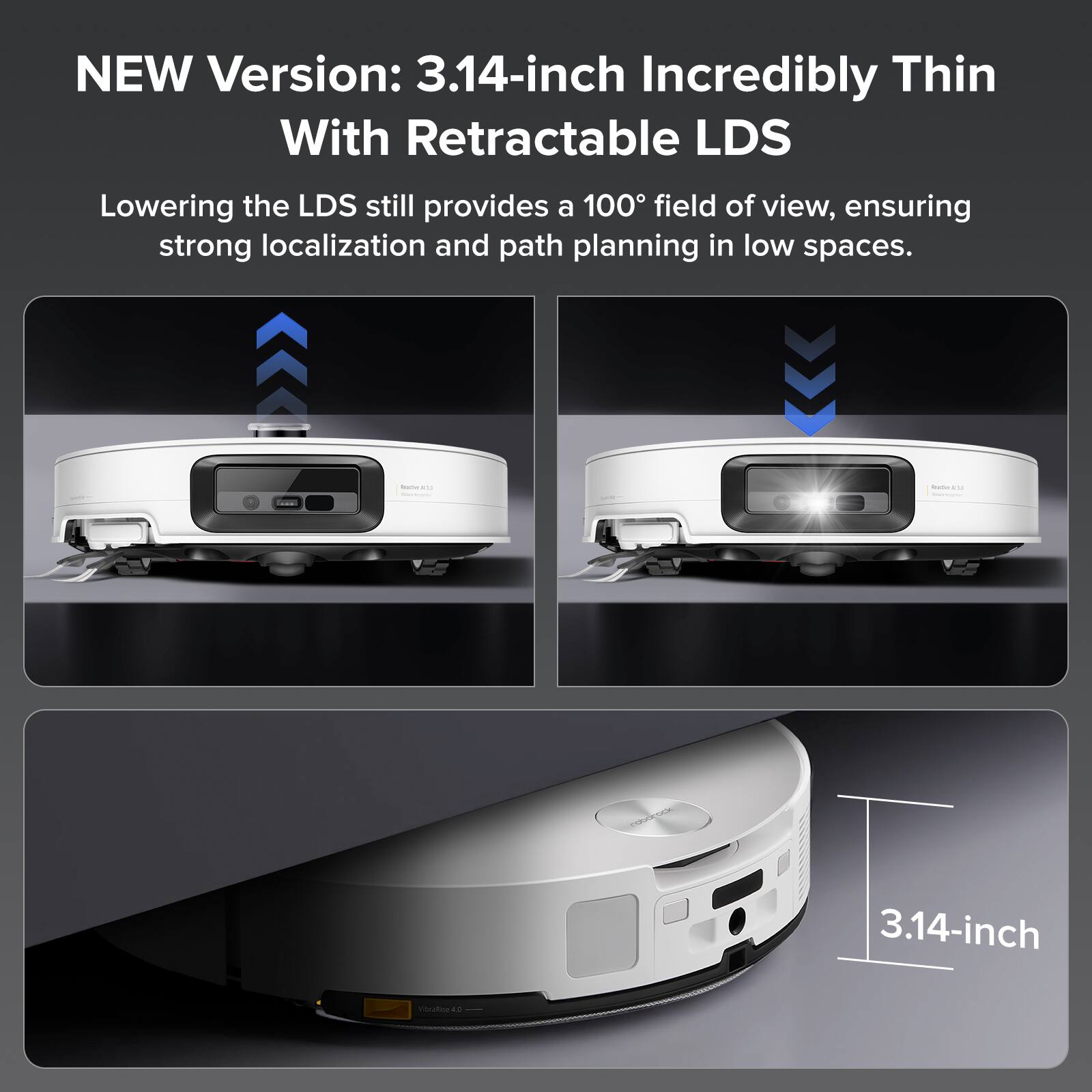
The Roborock Saros 10 introduces something genuinely innovative: a retractable LiDAR turret. Traditional robot vacuums have their laser navigation dome permanently fixed on top, making them tall and limiting where they can clean. Roborock's RetractSense system solves this by automatically retracting the LiDAR sensor when the robot encounters low furniture. The sensor drops into the body, allowing the robot to slide under beds and couches where dust bunnies love to hide, then pops back up when needed for full 360-degree mapping.
This retractable system works alongside an upward-facing ToF (Time of Flight) sensor that measures distances to objects above the robot, automatically adjusting the LiDAR height. A top contact sensor prevents the robot from forcing itself into spaces that might cause damage. It's engineering elegance that solves a fundamental problem—most robot vacuums simply can't reach the spaces where dirt accumulates most.
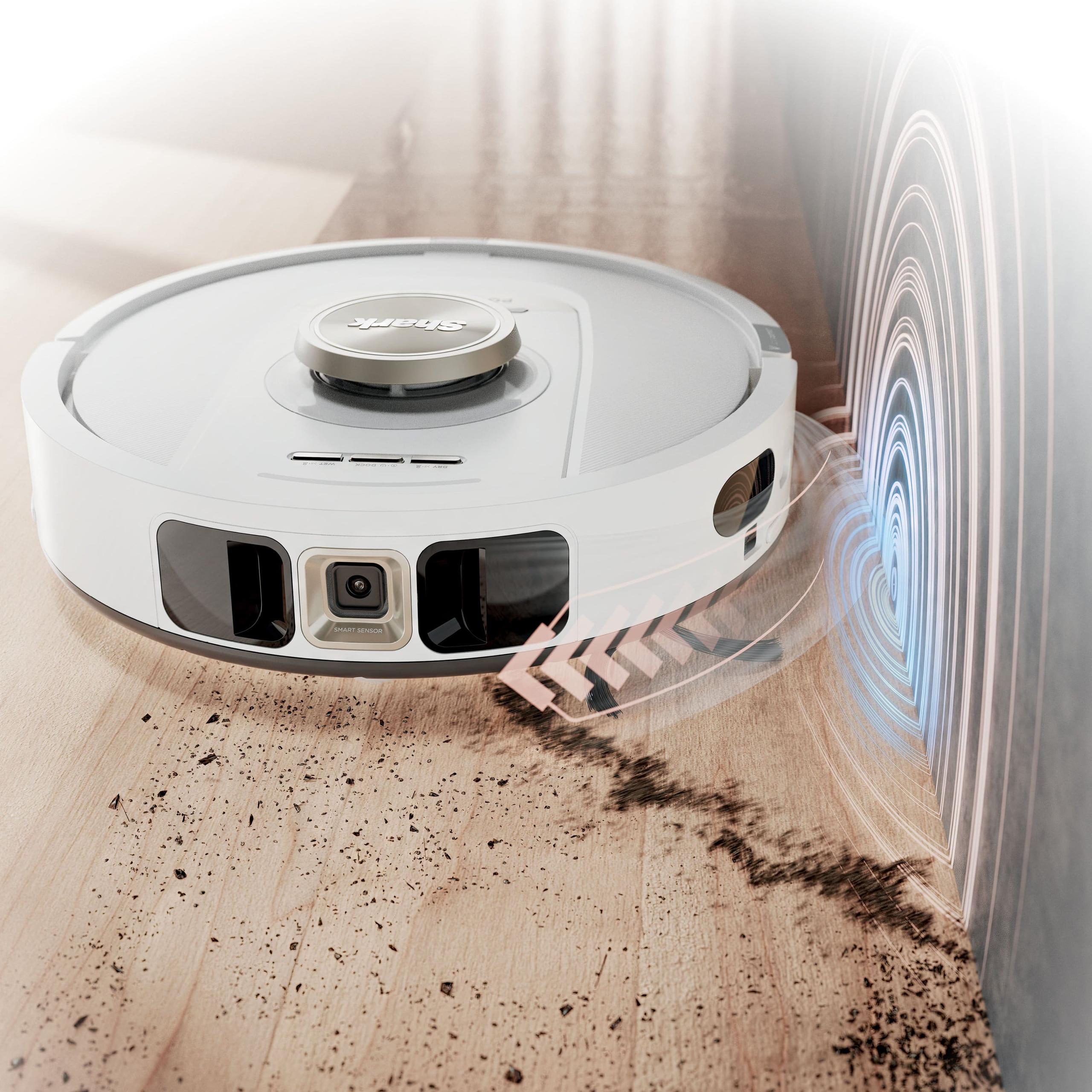
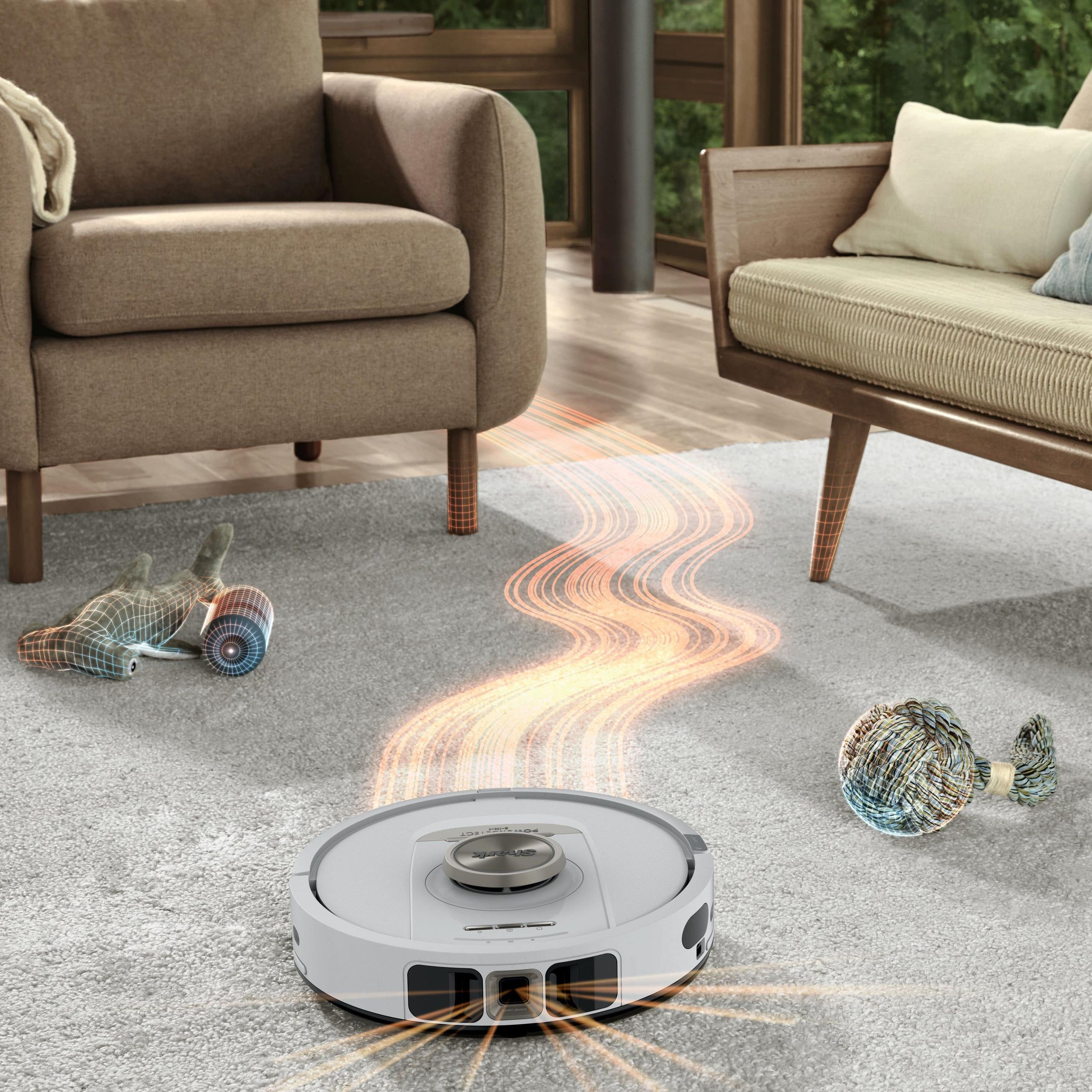
The Shark PowerDetect takes a more conventional approach with fixed 360-degree LiDAR paired with 3D structured light sensors for obstacle detection. While this setup creates accurate initial maps quickly, our research into user experiences reveals that navigation efficiency lags behind the Roborock. The Shark tends to take longer paths to cover the same area and can be overly cautious around obstacles, sometimes preventing it from getting close enough to walls and furniture for thorough edge cleaning.
What makes navigation particularly important is how it affects cleaning coverage. A robot that maps efficiently and moves logically will finish faster, use less battery, and ensure no areas are missed. The Saros 10's combination of retractable LiDAR, RGB cameras, and triple structured light sensors creates what amounts to the most sophisticated spatial awareness system available in a consumer robot vacuum.
At just 3.14 inches tall, the Roborock Saros 10 is the thinnest robot vacuum ever made by the company, and possibly the thinnest premium model on the market. This isn't just a marketing gimmick—it's a fundamental game-changer for cleaning coverage.
Think about your own home: how much space exists under beds, sofas, entertainment centers, and kitchen appliances? Traditional robot vacuums, typically 3.6 to 4 inches tall, can't access most of these areas. The Saros 10's ultra-slim profile means it can clean spaces that have been vacuum-free for years, potentially decades.
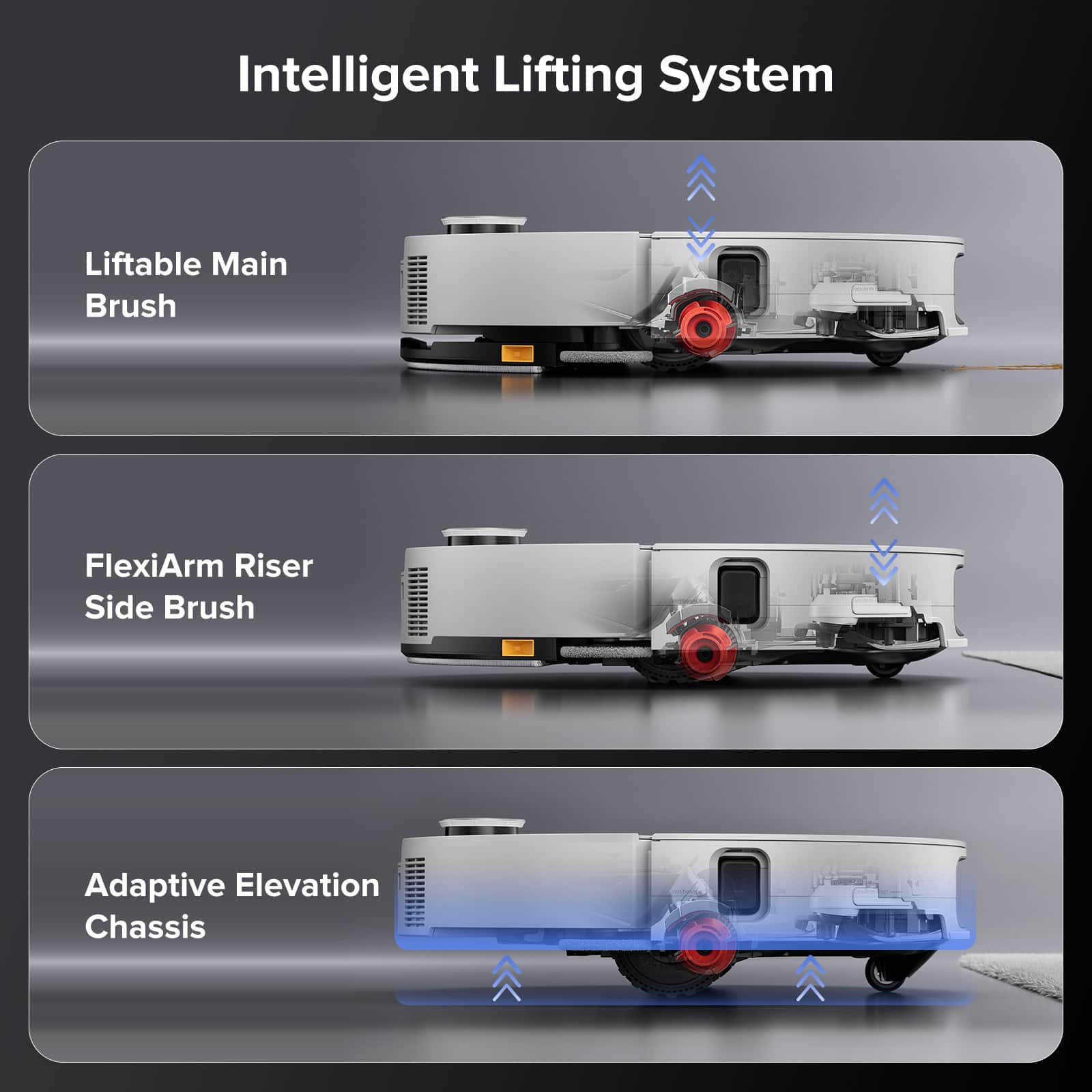
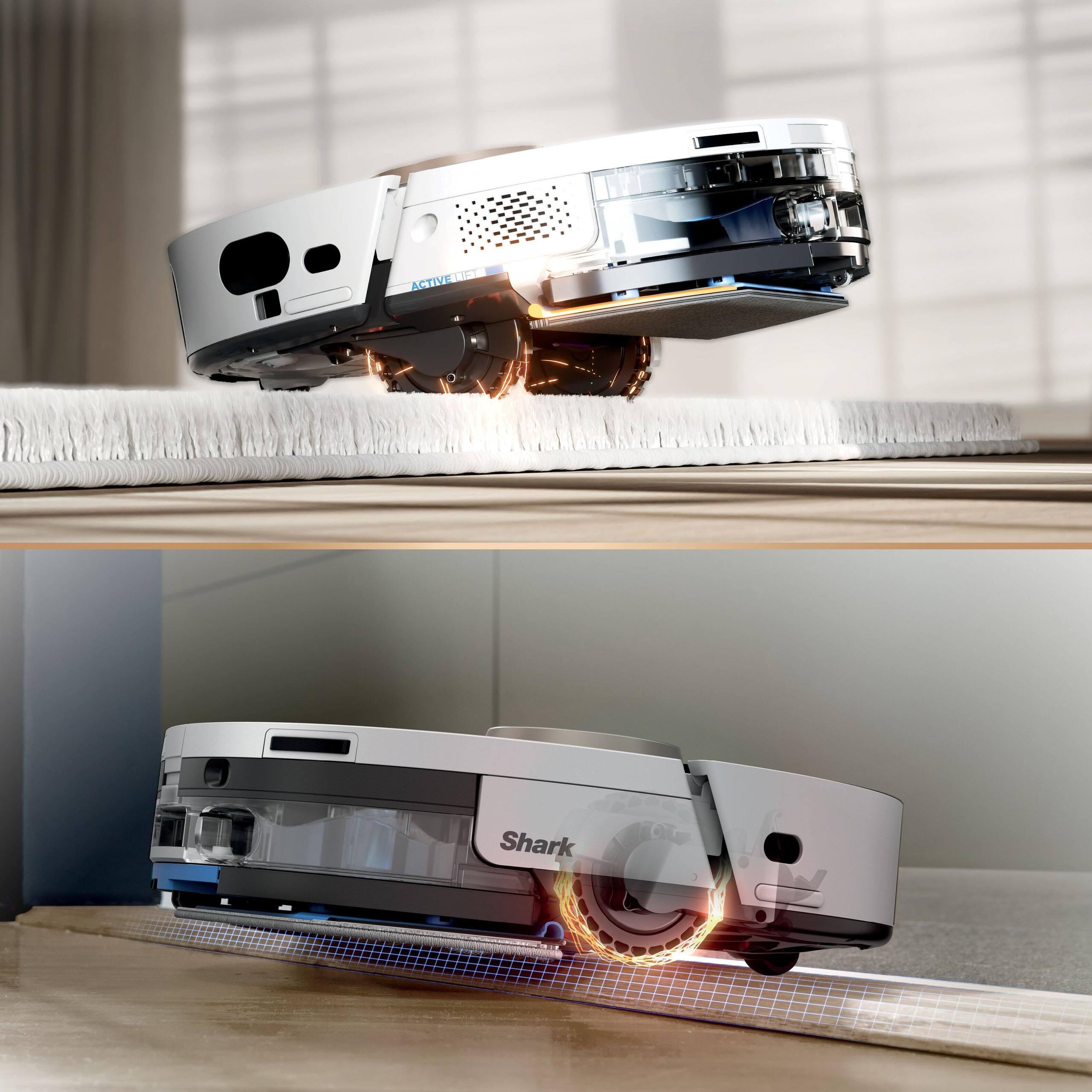
This slim design works with the AdaptiLift Chassis, an industry-first system that allows the robot to climb over obstacles up to 1.57 inches high. This means seamless transitions between rooms, over threshold strips, and onto area rugs without getting stuck. The chassis can also raise itself on thick carpets to prevent the mop from dragging, showing thoughtful engineering throughout.
The Shark PowerDetect uses more conventional dimensions but compensates with NeverStuck technology for climbing thresholds. While effective for room-to-room transitions, it can't match the Saros 10's ability to access tight spaces where significant dirt accumulation occurs.
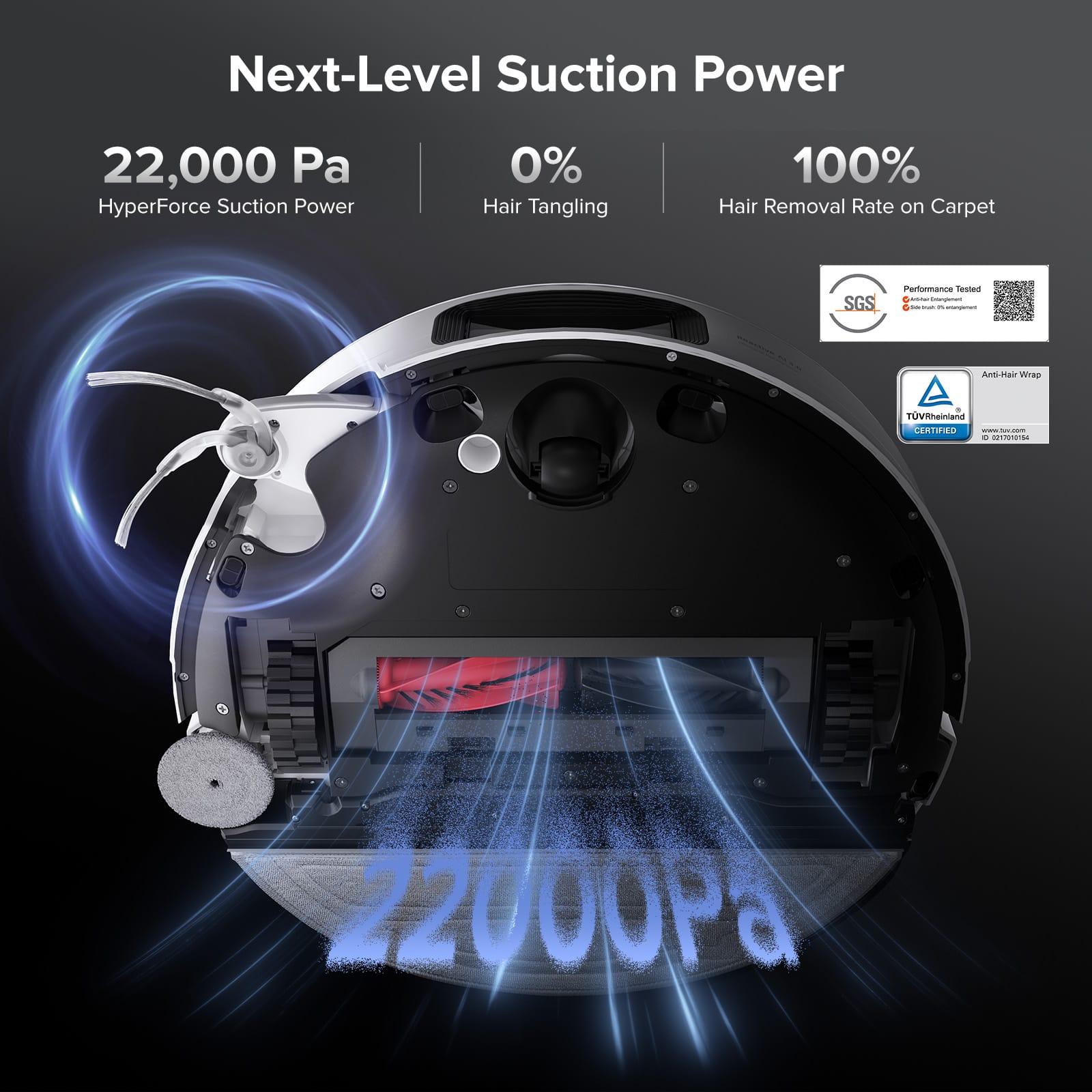
Raw suction power remains the most important factor for debris pickup, especially on carpets. The Roborock Saros 10 delivers 22,000 Pa (Pascals) of suction, among the highest available in any robot vacuum. To put this in perspective, most mid-range models offer 2,000-4,000 Pa, while premium competitors typically max out around 15,000-20,000 Pa.
This extreme suction power works with a DuoDivide main brush designed specifically to prevent hair tangling. The system is TUV SGS certified for zero percent hair tangling, meaning pet owners and anyone with long hair can expect maintenance-free operation. This certification isn't marketing speak—it represents rigorous third-party testing that validates the anti-tangle claims.
The Shark PowerDetect takes a different approach with adaptive suction through its PowerDetect system. Instead of maximum power all the time, it uses DirtDetect sensors to identify heavily soiled areas and automatically increases suction while making additional cleaning passes. This smart approach can be more energy-efficient and potentially just as effective for normal household dirt levels.
FloorDetect technology in the Shark automatically adjusts brush roll engagement based on surface type, optimizing cleaning for both hard floors and carpets. When combined with the adaptive suction, this creates a more nuanced cleaning approach that responds to actual conditions rather than applying maximum power everywhere.
However, our analysis of expert reviews and user feedback consistently shows the Roborock's brute-force approach delivers superior results on heavily soiled carpets and for embedded debris. The Shark performs well for daily maintenance cleaning but may struggle with deeper carpet cleaning tasks that the Saros 10 handles effortlessly.
Modern robot mopping has evolved far beyond simply dragging a damp pad across the floor. Both machines offer sophisticated mopping systems, but with fundamentally different approaches.
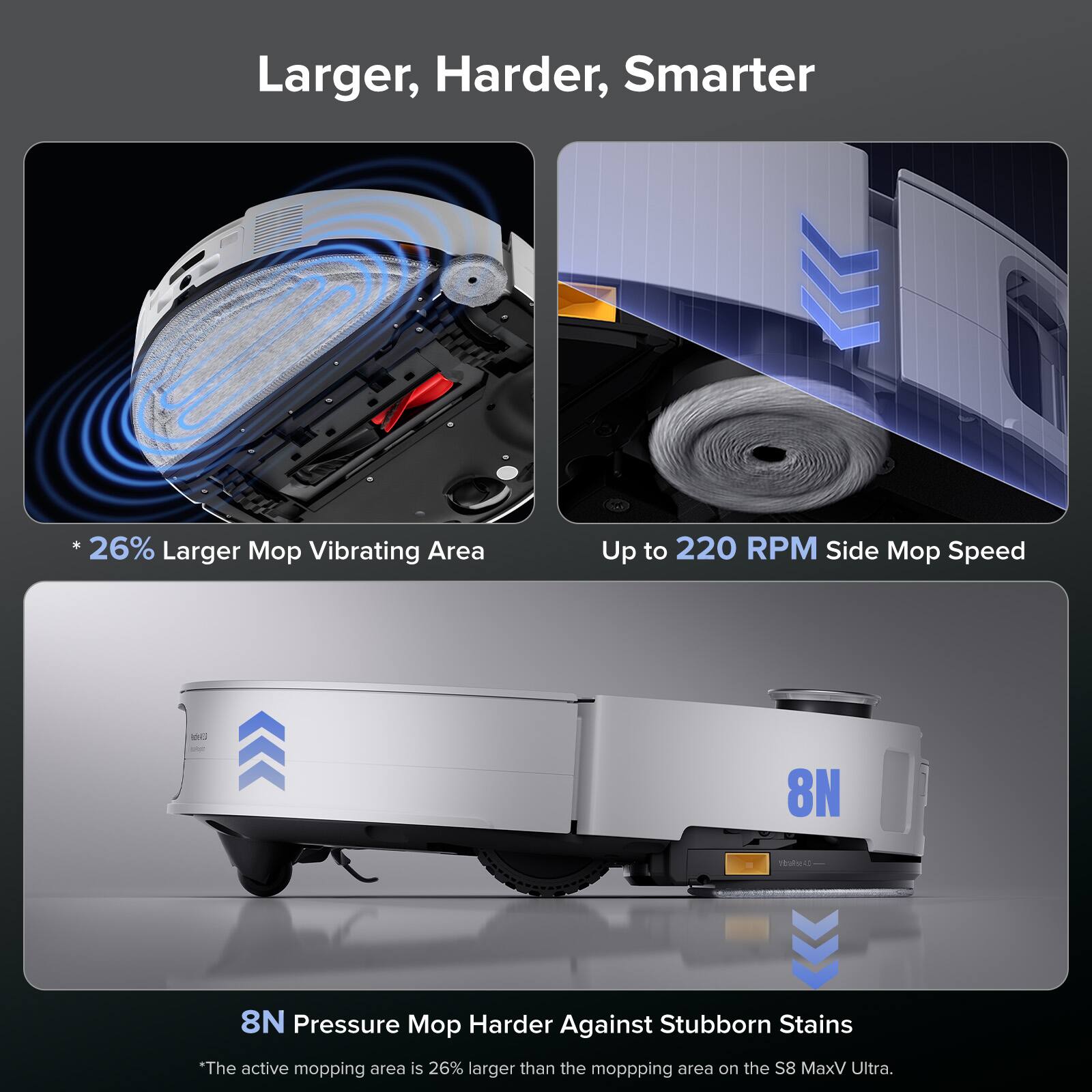
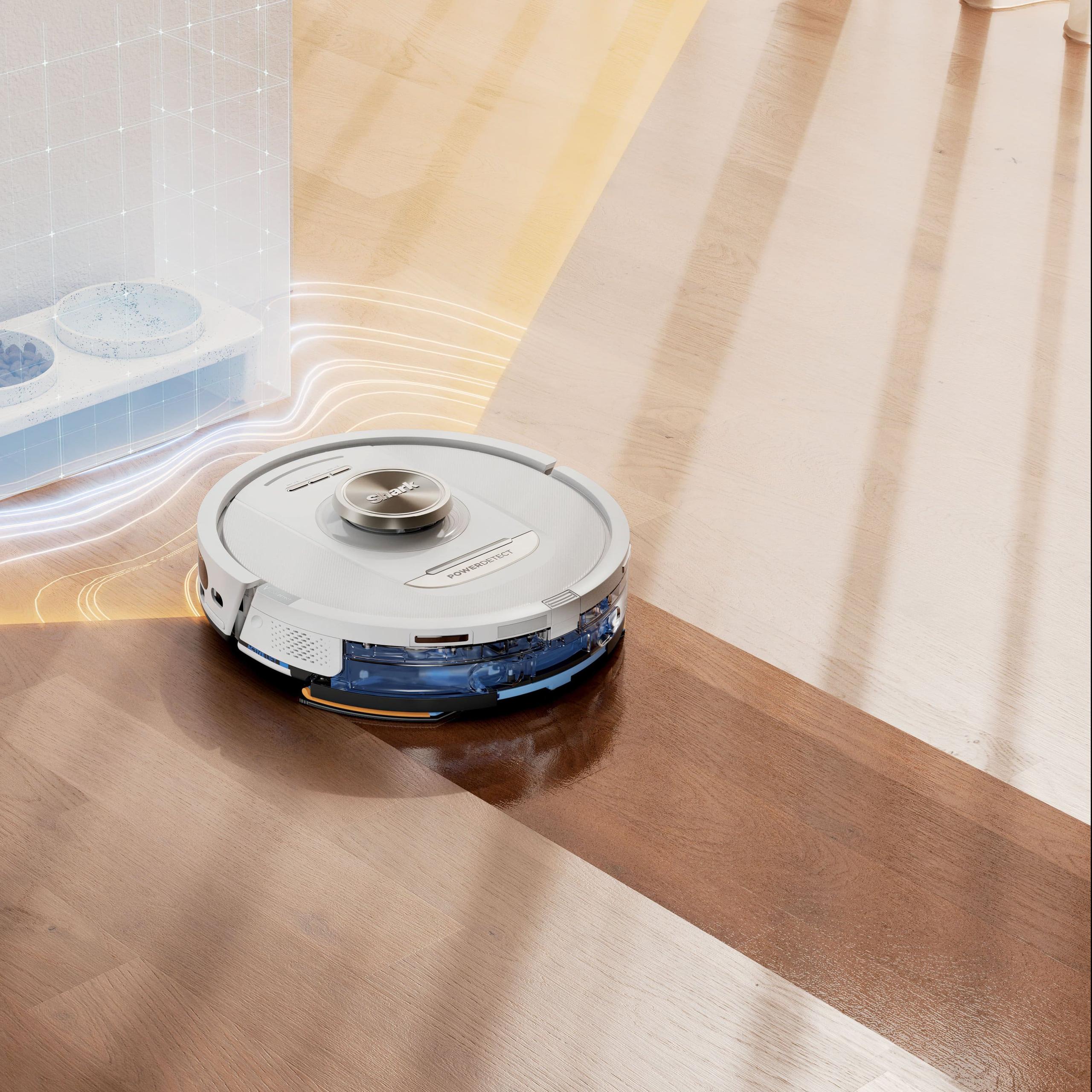
The Roborock Saros 10 uses VibraRise 4.0 technology, which vibrates the mop pad up to 4,000 times per minute while applying up to 8 Newtons of downward pressure. This sonic vibration combined with consistent pressure effectively scrubs stuck-on spills and stains rather than just wiping over them. The mop pad is 26% larger than previous Roborock models and can automatically lift 18mm to avoid carpets during combined vacuum-mop cycles.
The edge mopping capability stands out particularly. An independent side mop uses RGB camera guidance to extend cleaning right to wall edges, addressing one of the biggest weaknesses in robot mopping—the tendency to leave dirty strips along baseboards.
The Shark PowerDetect focuses more on automation than deep cleaning intensity. Its EdgeDetect system uses targeted air blasts to push debris away from walls into the cleaning path, while the mop follows behind. The robot automatically decides when to vacuum, mop, or both, based on floor type and dirt detection.
While the Shark's approach is more hands-off, it lacks the scrubbing intensity for stubborn stains that the Saros 10 can handle. User reports suggest the Shark can leave floors wetter than desired and doesn't provide manual control over vacuum-only or mop-only operation.
For homes with significant mopping needs—think pet accidents, spilled drinks, or tracked-in mud—the Roborock's aggressive vibrating action proves more effective. For light daily maintenance mopping, both systems work adequately, though the Shark's automation reduces decision-making burden.
The base station represents where your robot goes to "sleep" and maintain itself. Both models offer comprehensive automation, but with different priorities and technologies.
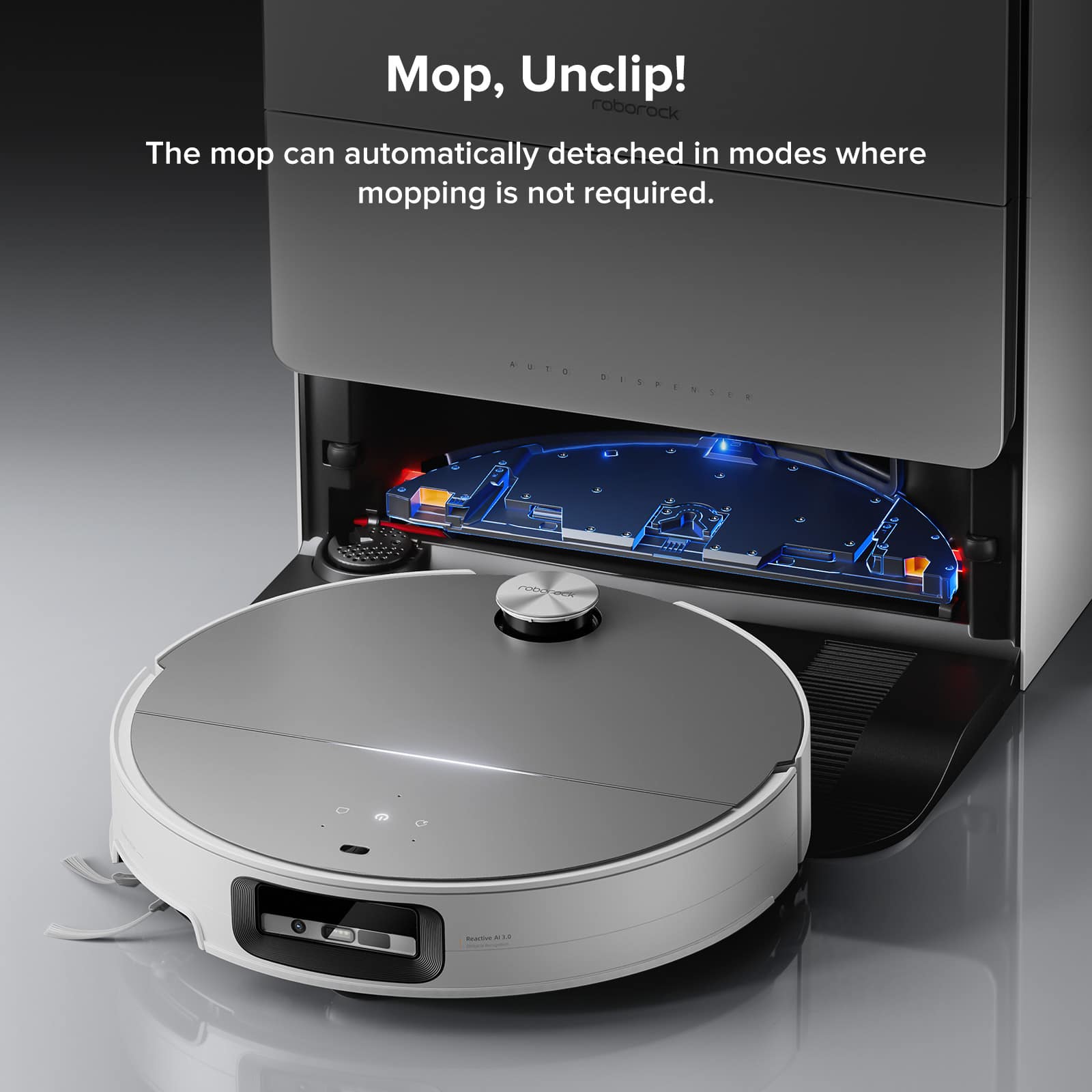
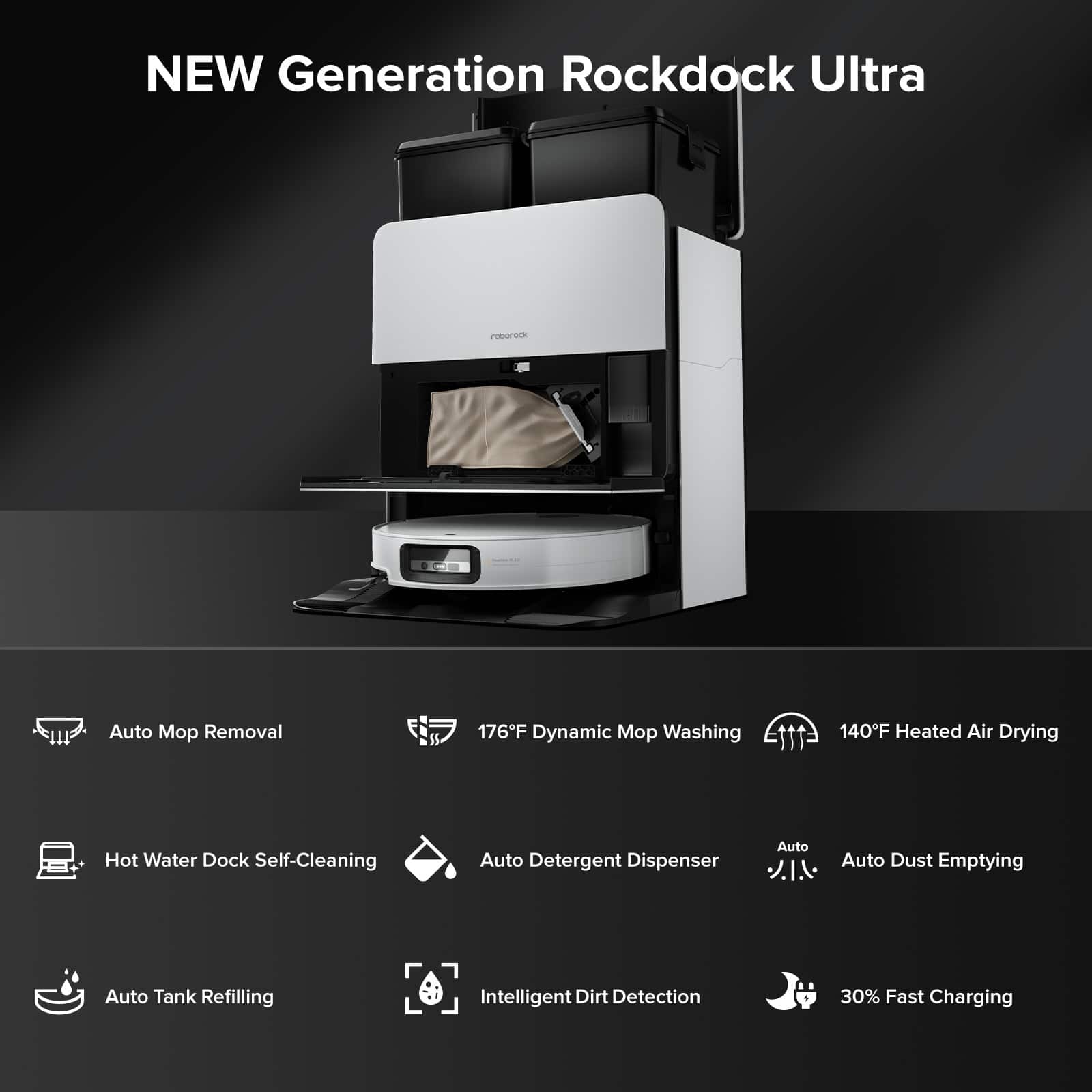
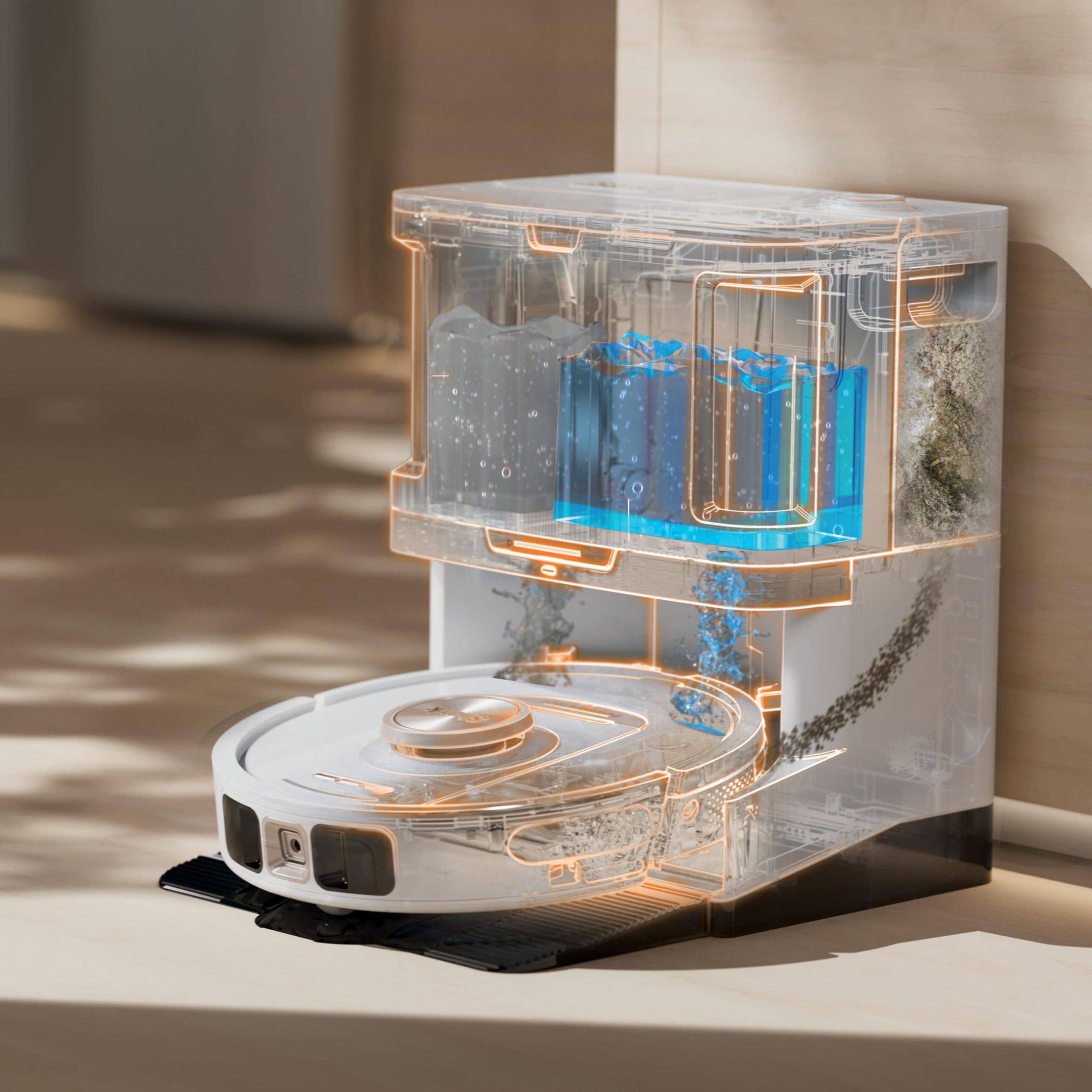
The Roborock Saros 10 pairs with the RockDock Ultra 2.0, a 10-in-1 maintenance station that handles virtually every aspect of robot upkeep. After each cleaning cycle, the robot returns to have its dustbin emptied, water tanks refilled and emptied, and mop pad washed with hot water at 176°F. The heated washing helps break down grime and kills bacteria more effectively than cold water systems.
Perhaps most impressively, the base uses 140°F heated air to dry the mop pad completely, preventing the mold and mildew growth that plagues many robot mops. Automatic detergent dispensing means even the cleaning solution is handled without user intervention. The base also self-cleans its internal components, maintaining hygiene standards that would be impossible with manual maintenance.
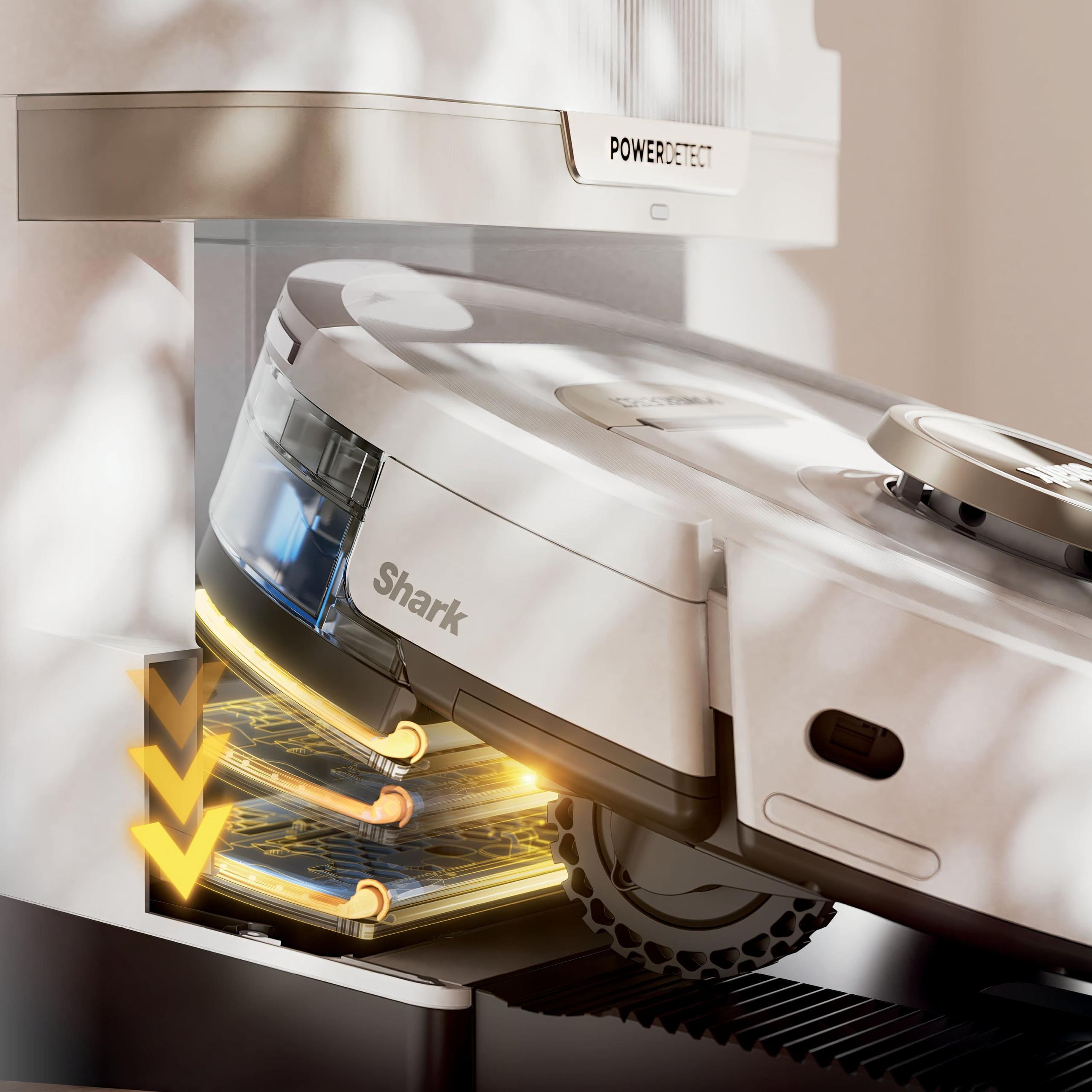
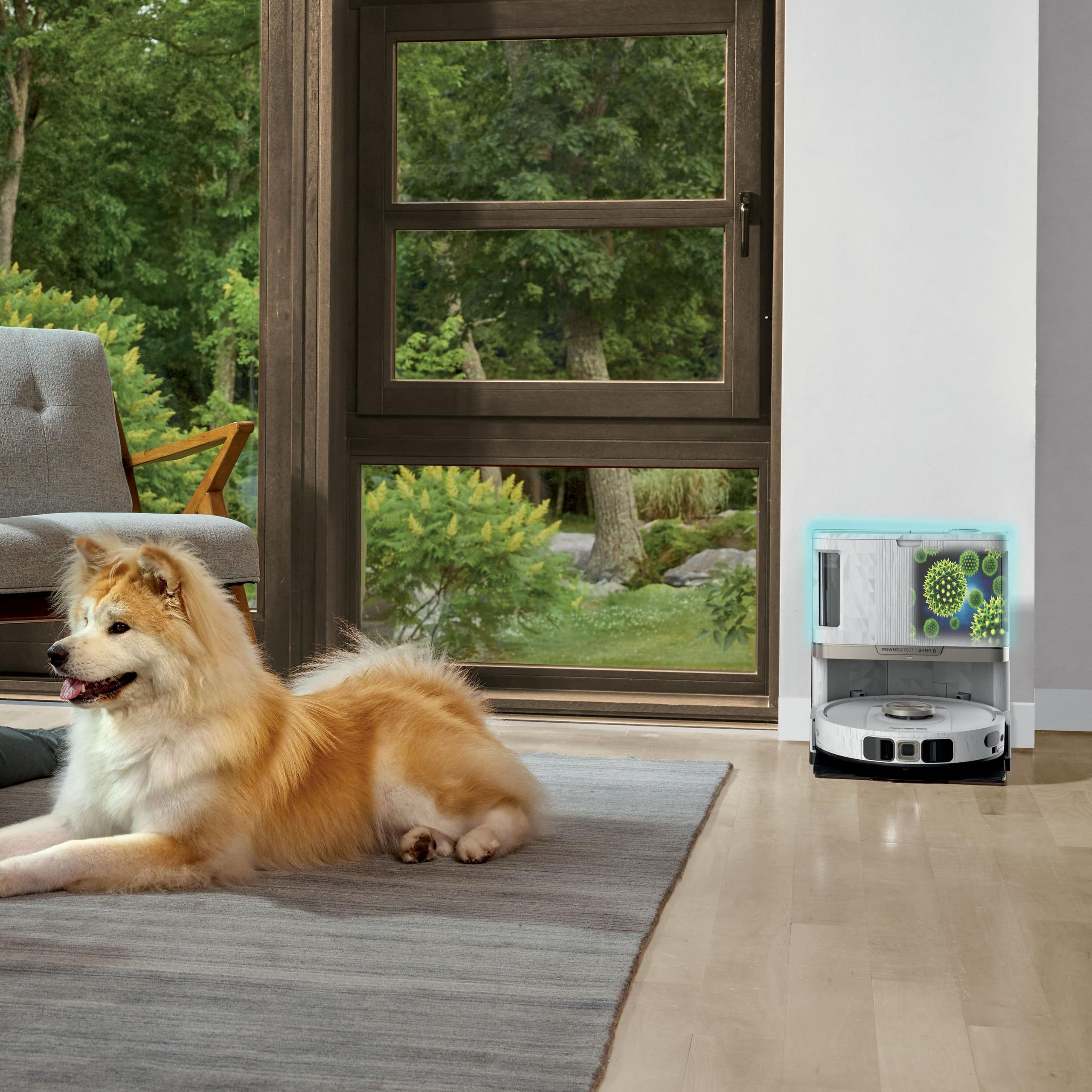
The Shark PowerDetect's NeverTouch Pro base offers something unique in the robot vacuum world: a bagless auto-empty system. Most robot vacuums empty into disposable bags that cost $3-5 each and need replacement every 1-2 months. The Shark's bagless design eliminates this ongoing expense while providing 60 days of debris storage capacity.
The base includes HEPA filtration to capture 99.97% of allergens and dust particles down to 0.3 microns, along with an odor neutralization system. For water management, it can refill the robot's water tank for up to 30 days of mopping, though it uses cold water for mop washing and basic air drying without heat.
The choice between these systems comes down to cleaning effectiveness versus ongoing costs. The Roborock's hot water washing and heated drying provide superior hygiene but require occasional replacement of cleaning supplies. The Shark's bagless system saves money long-term but offers less thorough maintenance automation.
Battery performance directly affects how much area a robot can clean in one cycle, particularly important for larger homes or when deep cleaning is needed.
The Roborock Saros 10 includes a substantial 6,400 mAh battery providing up to 220 minutes of runtime. In real-world testing analysis, this translates to approximately 1,333 square feet of coverage per charge with an efficiency of 1.63 minutes per battery percentage point. This means most homes can be cleaned in a single cycle, even with both vacuuming and mopping enabled.
The Shark PowerDetect uses a smaller 3,200 mAh battery—exactly half the capacity of the Roborock. This limitation becomes apparent in larger homes where the robot may need to recharge and resume cleaning multiple times to complete a full cycle. While the robot does return to base, recharge, and continue where it left off, these interruptions extend total cleaning time significantly.
Battery capacity particularly matters for mopping, which consumes more power than vacuuming alone. The Saros 10's extended runtime means it can vacuum and mop large areas without interruption, maintaining consistent cleaning quality. The Shark's shorter battery life may force it to complete mopping in segments, potentially leading to inconsistent results where some areas dry before others are cleaned.
For homes under 1,000 square feet, the Shark's battery limitation is less critical. For larger spaces, the Roborock's superior endurance becomes a significant practical advantage.
Modern robot vacuums aren't standalone appliances—they're part of broader smart home ecosystems. Both models offer app control and scheduling, but with different levels of sophistication.
The Roborock Saros 10 supports comprehensive smart home integration including Alexa, Siri, Google Home, and Matter 2.0 compatibility. Matter support is particularly important as it represents the industry standard for smart home interoperability, ensuring the robot will work with future smart home developments.
Unique features include Pet Snaps and Video Call & Cruise capabilities, allowing remote monitoring of pets and home security through the robot's cameras. The app supports manual map editing, letting users adjust room boundaries and create custom cleaning zones with precision.
The Shark PowerDetect offers essential smart features like scheduling, spot cleaning, and no-go zones, but lacks advanced capabilities. The app can be buggy according to user reports, sometimes requiring frequent restarts. Missing features include voice control integration, live camera feeds, individual room cleaning preferences, and multi-floor mapping for homes with multiple levels.
For smart home enthusiasts, the Roborock's comprehensive integration and advanced features provide significantly more value. For users wanting basic scheduled cleaning without complex smart home integration, the Shark's simpler approach may suffice.
In home theater environments, robot vacuum noise levels become critical. Both models offer relatively quiet operation compared to traditional upright vacuums, but noise characteristics differ.
The Roborock Saros 10 operates with consistent, low-frequency noise that's less intrusive during movie watching. Its efficient navigation means shorter cleaning cycles, reducing total noise exposure. The powerful suction allows for effective cleaning at lower speeds when maximum quiet operation is needed.
The Shark PowerDetect includes voice announcements to communicate status, which can be disruptive during quiet movie scenes. However, its adaptive suction means it often operates at lower power levels during light cleaning, potentially reducing average noise output.
For dedicated home theater spaces, the Roborock's combination of efficient cleaning and consistent noise profile makes it less disruptive to entertainment experiences.
At the time of writing, these robots occupy different positions in the premium market, with the Roborock Saros 10 positioned as a flagship model and the Shark PowerDetect targeting value-conscious premium buyers.
The Saros 10 justifies its premium positioning through revolutionary ultra-thin design, superior cleaning performance across all categories, and comprehensive automation. It represents the current pinnacle of robot vacuum technology, with innovations that solve real-world problems like under-furniture cleaning and zero-maintenance operation.
The Shark PowerDetect offers thoughtful innovation at a more accessible price point, with unique features like bagless auto-empty and adaptive cleaning intelligence. However, compromises in battery life, app functionality, and navigation efficiency limit its appeal for demanding users.
Choose the Roborock Saros 10 if you want the absolute best cleaning performance and have furniture that benefits from ultra-thin access. It's ideal for pet owners, larger homes, and anyone who values cutting-edge technology and comprehensive automation.
Choose the Shark PowerDetect if you want premium features without flagship pricing, prefer the cost savings of bagless operation, and have a smaller home where battery limitations won't impact performance.
The Roborock represents the future of robot vacuums with genuine innovation that changes what's possible in home cleaning. The Shark offers solid performance with smart cost-saving features for buyers who want premium capabilities without premium prices. Your choice depends on whether you prioritize absolute performance or smart value in your automated cleaning solution.
| Roborock Saros 10 | Shark PowerDetect RV2805ZE |
|---|---|
| Height - Critical for cleaning under furniture where dust accumulates | |
| 3.14 inches (ultra-thin design reaches spaces other robots can't) | Standard height (cannot access low-clearance areas) |
| Suction Power - Determines deep cleaning effectiveness on carpets | |
| 22,000 Pa (class-leading power for embedded dirt and pet hair) | Adaptive suction with PowerDetect (efficient but lower maximum power) |
| Navigation System - Affects cleaning coverage and efficiency | |
| RetractSense with retractable LiDAR (revolutionary accessibility) | 360° LiDAR + 3D sensors (conventional but reliable) |
| Battery Capacity - Impacts coverage area and cleaning completion | |
| 6,400 mAh (up to 220 minutes, covers ~1,333 sq ft per charge) | 3,200 mAh (shorter runtime, may require multiple charges for large homes) |
| Mopping Technology - Determines stain removal effectiveness | |
| VibraRise 4.0 with 4,000 vibrations/min (aggressive scrubbing action) | EdgeDetect with air blasts (basic mopping, good for maintenance) |
| Hair Tangle Prevention - Critical for pet owners and long hair | |
| TUV SGS certified 0% tangling with DuoDivide brush | Good for short pet hair, struggles with longer hair (7+ inches) |
| Base Station Water System - Affects mop cleanliness and hygiene | |
| Hot water washing at 176°F with heated 140°F air drying | Cold water washing with basic air drying |
| Auto-Empty System - Impacts ongoing maintenance costs | |
| Traditional with replacement bags/supplies | Bagless system (eliminates ongoing bag costs) |
| Obstacle Climbing - Determines room-to-room navigation success | |
| AdaptiLift Chassis climbs up to 1.57" obstacles | NeverStuck technology for threshold climbing |
| Smart Home Integration - Important for connected home users | |
| Comprehensive: Alexa, Siri, Google Home, Matter 2.0 | Basic app control (lacks voice integration and advanced features) |
| Edge Cleaning Capability - Affects thoroughness along walls | |
| RGB camera-guided side mop for precise edge cleaning | EdgeDetect air blasts (effective on hard floors, limited on carpets) |
| Special Features - Unique capabilities that differentiate the products | |
| Pet monitoring, video calls, manual map editing | Adaptive cleaning with DirtDetect and FloorDetect sensors |
The Roborock Saros 10 is significantly better for cleaning under furniture due to its ultra-thin 3.14-inch profile with retractable LiDAR technology. This revolutionary design allows it to access spaces under beds, couches, and low entertainment centers where traditional robot vacuums can't reach. The Shark PowerDetect RV2805ZE has a conventional height that limits access to these dust-collecting areas.
The Roborock Saros 10 delivers 22,000 Pa of suction power, which is among the highest available in robot vacuums and provides superior deep cleaning on carpets. The Shark PowerDetect RV2805ZE uses adaptive suction through its PowerDetect system, automatically adjusting power based on debris detection rather than maintaining maximum suction constantly.
The Roborock Saros 10 has significantly better battery life with a 6,400 mAh battery providing up to 220 minutes of runtime and covering approximately 1,333 square feet per charge. The Shark PowerDetect RV2805ZE has a smaller 3,200 mAh battery that may require multiple recharge cycles to clean larger homes completely.
The Roborock Saros 10 features VibraRise 4.0 technology with up to 4,000 vibrations per minute for aggressive scrubbing action, making it more effective for stubborn stains. The Shark PowerDetect RV2805ZE uses EdgeDetect technology with air blasts to push debris into the cleaning path, providing basic mopping that's better suited for daily maintenance rather than deep stain removal.
The Roborock Saros 10 is superior for pet hair with its TUV SGS certified zero-tangle system and DuoDivide brush design. This certification guarantees no hair tangling issues. The Shark PowerDetect RV2805ZE handles short pet hair well but struggles with longer hair over 7 inches, which may require manual cleaning of the brush roll.
The Roborock Saros 10 uses the RockDock Ultra 2.0 with hot water mop washing at 176°F and heated air drying at 140°F for superior hygiene. The Shark PowerDetect RV2805ZE features a unique bagless auto-empty system that eliminates ongoing bag replacement costs but uses cold water washing and basic air drying.
The Roborock Saros 10 offers comprehensive smart home integration with Alexa, Siri, Google Home, and Matter 2.0 support, plus advanced features like pet monitoring and video calls. The Shark PowerDetect RV2805ZE provides basic app control with scheduling and no-go zones but lacks voice assistant integration and advanced smart features.
The Roborock Saros 10 uses advanced RetractSense navigation with retractable LiDAR, RGB cameras, and triple structured light sensors for superior accuracy and efficiency. The Shark PowerDetect RV2805ZE employs 360° LiDAR with 3D sensors that creates accurate maps but has below-average navigation efficiency, often taking longer paths to cover the same area.
The Roborock Saros 10 is better suited for large homes due to its superior battery life, efficient navigation, and ability to complete cleaning cycles without interruption. The Shark PowerDetect RV2805ZE may struggle in larger homes due to its shorter battery life requiring multiple recharge cycles to complete cleaning.
The Shark PowerDetect RV2805ZE has lower ongoing costs due to its bagless auto-empty system, eliminating the need for replacement bags. The Roborock Saros 10 may require occasional replacement of cleaning supplies and filters for its advanced maintenance systems, but offers superior cleaning performance and automation.
Both models operate relatively quietly compared to traditional vacuums, but the Roborock Saros 10 offers more consistent, low-frequency noise and efficient navigation that reduces total cleaning time. The Shark PowerDetect RV2805ZE includes voice announcements that may be disruptive, though its adaptive suction often runs at lower power levels.
The Roborock Saros 10 offers premium value through revolutionary ultra-thin design, superior cleaning performance, and comprehensive automation, justifying its flagship positioning. The Shark PowerDetect RV2805ZE provides good value for buyers wanting premium features at a more accessible price point, especially with its cost-saving bagless system, though with some performance compromises.
We've done our best to create useful and informative comparisons to help you decide what product to buy. Our research uses advanced automated methods to create this comparison and perfection is not possible - please contact us for corrections or questions. These are the sites we've researched in the creation of this article: bestbuy.com - androidauthority.com - rtings.com - vacuumwars.com - vacuumwars.com - youtube.com - forums.macrumors.com - youtube.com - youtube.com - rtings.com - youtube.com - us.roborock.com - target.com - galaxus.at - vacuumwars.com - youtube.com - vacuumwars.com - techtongbo.com - us.roborock.com - us.roborock.com - youtube.com - roboselector.com - support.roborock.com - youtube.com - vacuumwars.com - youtube.com - vacuumwars.com - youtube.com - techradar.com - youtube.com - youtube.com - techradar.com - youtube.com - youtube.com - homedepot.com - moderncastle.com - youtube.com - rtings.com - youtube.com - target.com - sharkninja.com - sharkninja.com - sharkninja.com - sharkninja.com - bestbuy.com - bestbuy.com - youtube.com - homedepot.com - ebay.com - homedepot.com - brickseek.com - vacuumwars.com - techradar.com - nfm.com - bestbuy.com - walmart.com - businessinsider.com

Privacy Policy
Terms and Conditions - Affiliate Policy
Home Security
© Copyright 2008-2026.
11816 Inwood Rd #1211, Dallas, TX 75244