

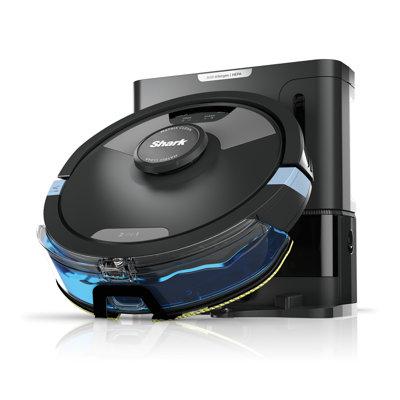

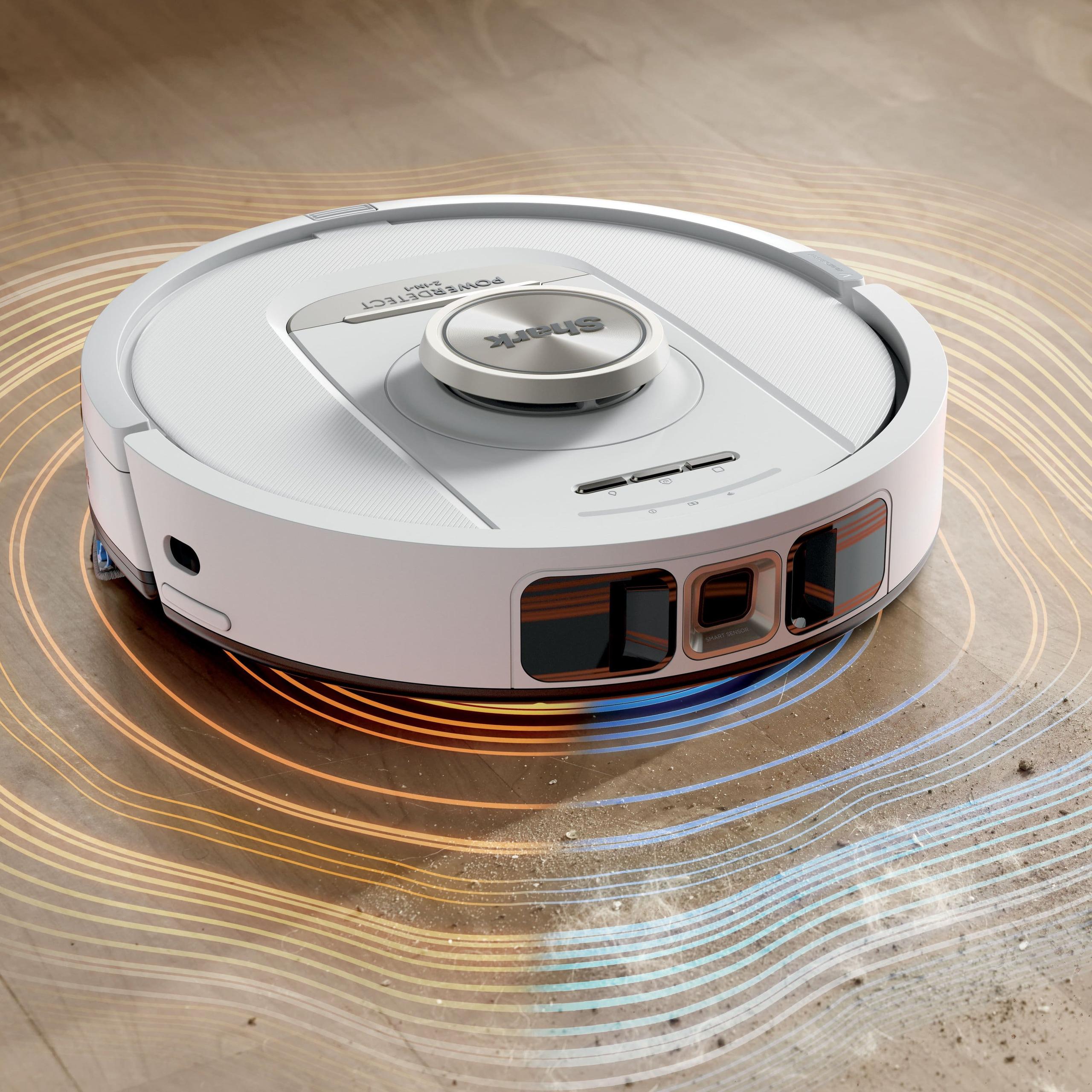
When it comes to robot vacuums that can both sweep and mop, Shark has become a major player with two standout models that take very different approaches to automated cleaning. The Matrix Plus 2-in-1 RV2610WA, released in 2022, and the newer PowerDetect RV2805ZE from 2025 represent different generations of cleaning technology, each with distinct advantages depending on your home and priorities.
Both devices belong to the premium 2-in-1 robot vacuum category—machines designed to handle the dual task of vacuuming debris and mopping floors without you having to switch between different tools. But understanding which one fits your needs requires diving into how each approaches cleaning, automation, and the inevitable trade-offs between performance and convenience.
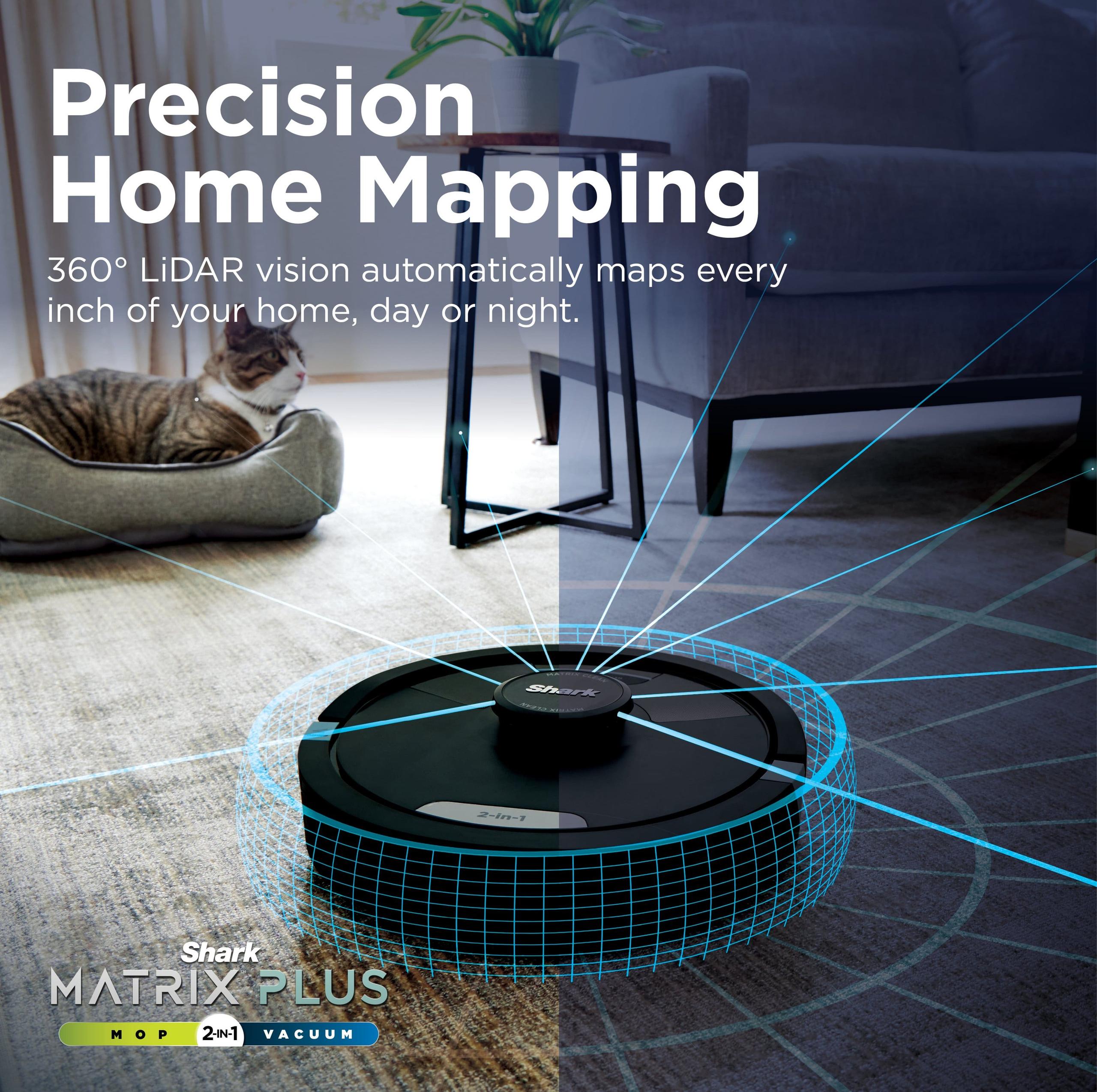
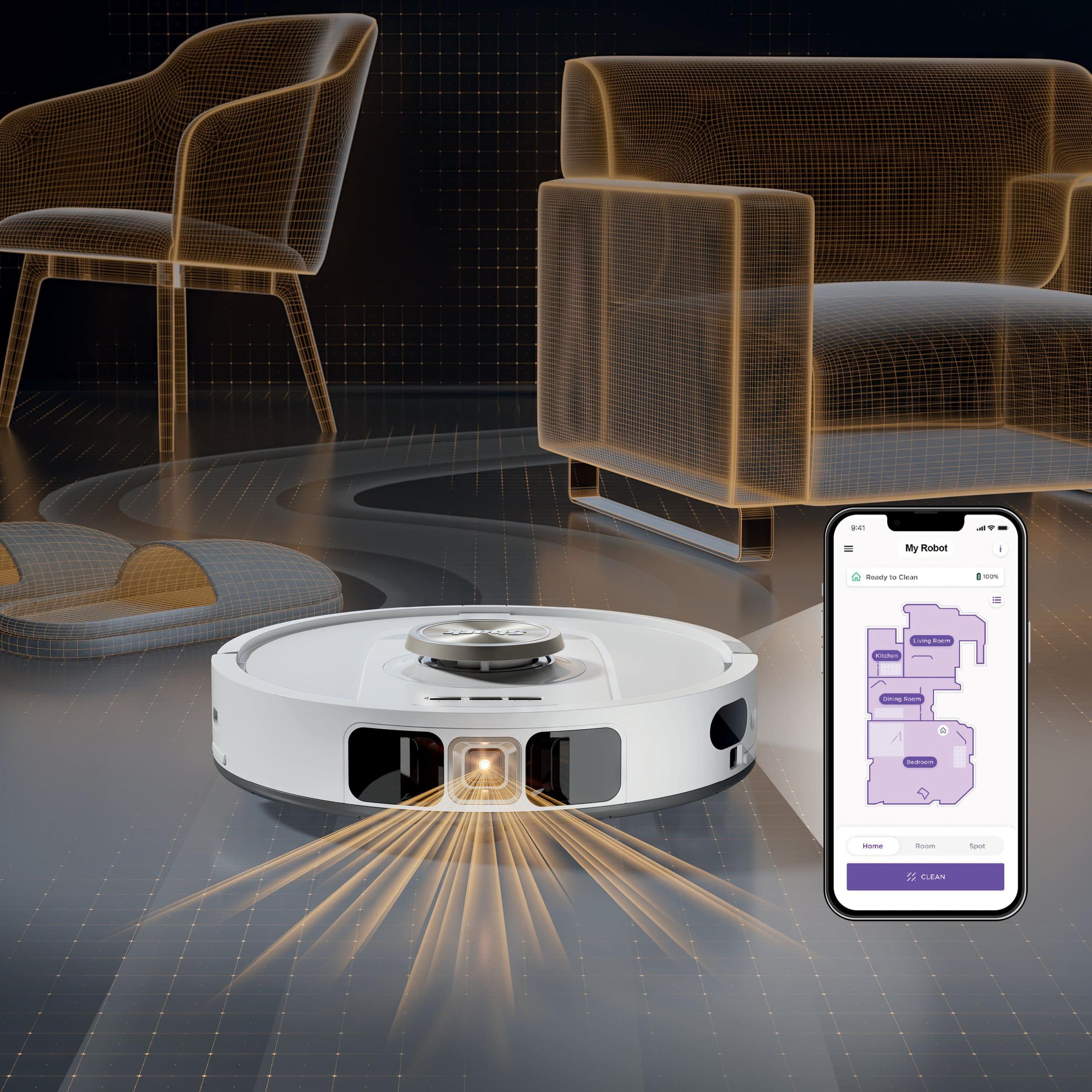
The robot vacuum landscape has evolved dramatically since the early days of random-pattern bumper bots. Today's premium models use sophisticated navigation systems, typically LiDAR (Light Detection and Ranging)—essentially laser-based radar that creates detailed maps of your home by bouncing light beams off walls and furniture. This allows them to clean in systematic patterns rather than wandering randomly until the battery dies.
Both the Matrix Plus and PowerDetect use LiDAR navigation, but they differ significantly in how they process that information and adapt their cleaning behavior. The key considerations when evaluating these systems include cleaning effectiveness across different surfaces, how much daily maintenance they require, their intelligence in handling obstacles and varying debris loads, and ultimately, whether their performance justifies their cost.
For most households, the primary performance metrics that matter are debris pickup efficiency (how much dirt they actually remove), edge cleaning capability (since corners tend to collect the most debris), carpet versus hard floor performance, and how well they handle the transition between vacuuming and mopping modes.
The three-year gap between these models represents significant advancement in robot vacuum intelligence. When the Matrix Plus launched in 2022, self-emptying bases were still relatively new technology, and most robots followed predetermined cleaning patterns regardless of actual floor conditions. By 2025, when the PowerDetect arrived, manufacturers had begun incorporating adaptive AI systems that can analyze debris loads, floor types, and cleaning requirements in real-time.
This evolution mirrors broader trends in smart home technology, where devices have shifted from simple automation to intelligent adaptation. The PowerDetect represents this newer philosophy—it doesn't just follow a programmed routine, but actively adjusts its behavior based on what it encounters during cleaning.
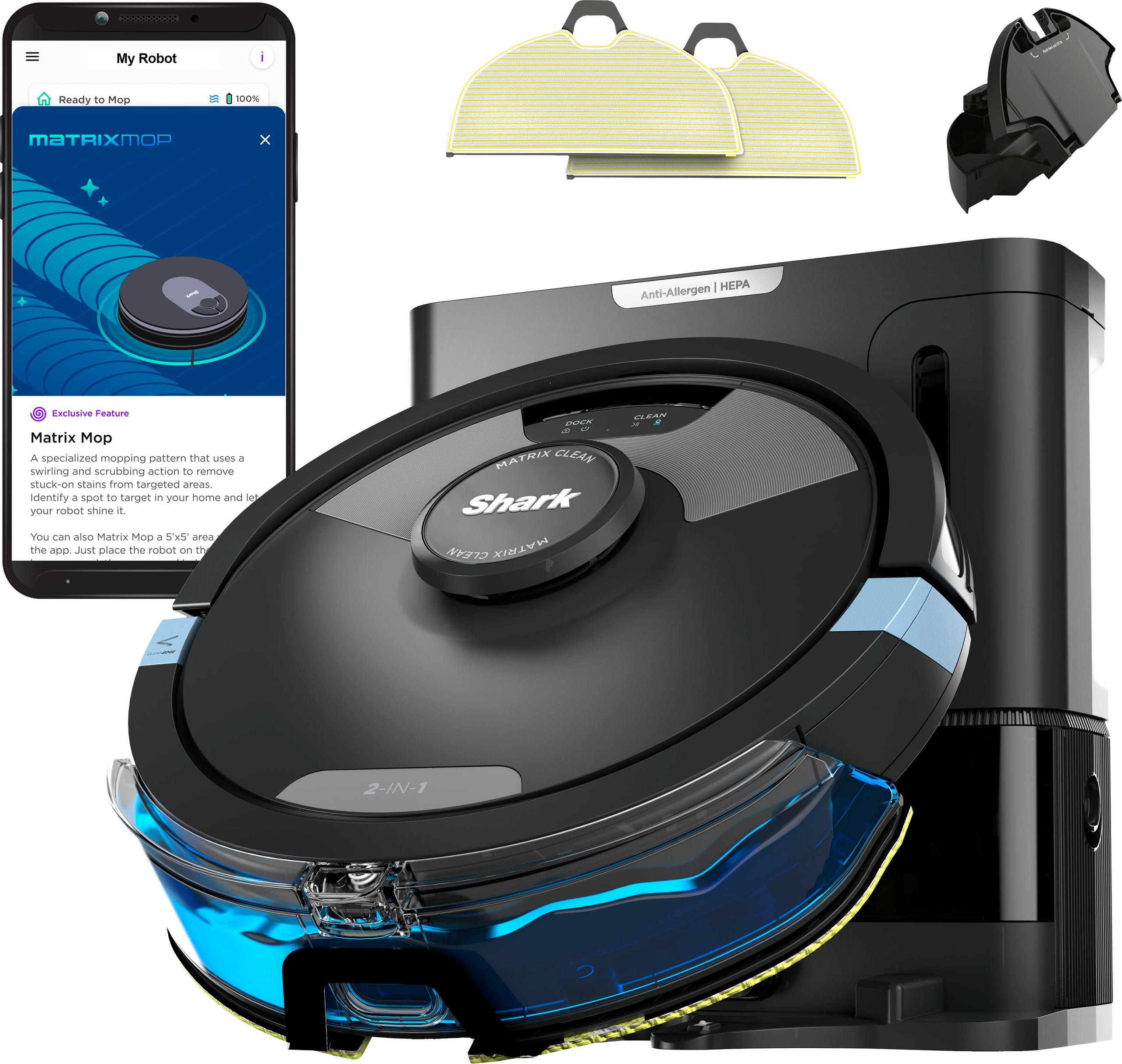
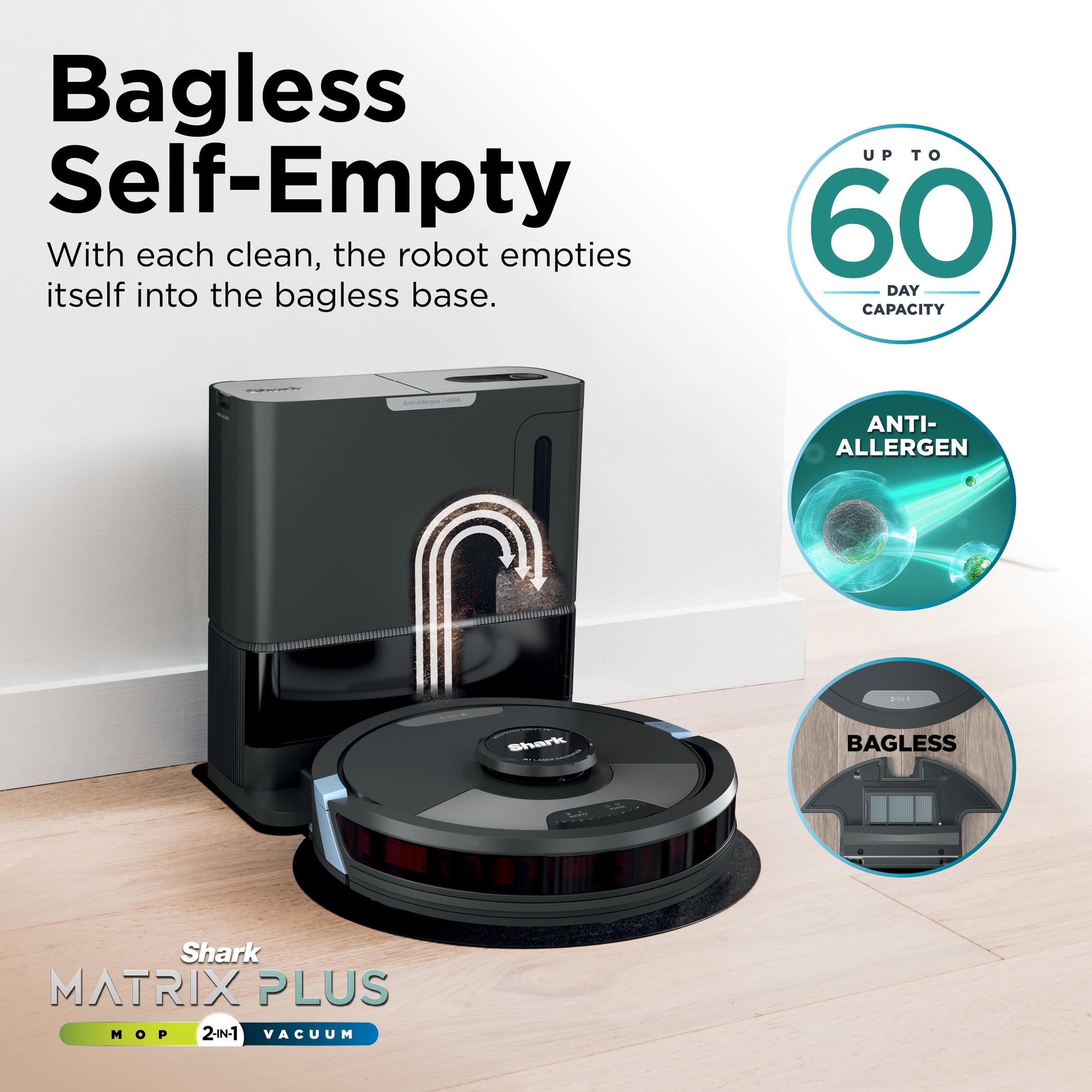
Perhaps the most significant difference between these models lies in their base stations, which determine how much daily involvement you'll have in maintaining the robot. The Matrix Plus features a straightforward self-emptying base that can hold up to 60 days of debris in a bagless system. After each cleaning cycle, the robot returns to dock and transfers collected dirt into the larger base container, eliminating the need to empty the small onboard dustbin after every use.
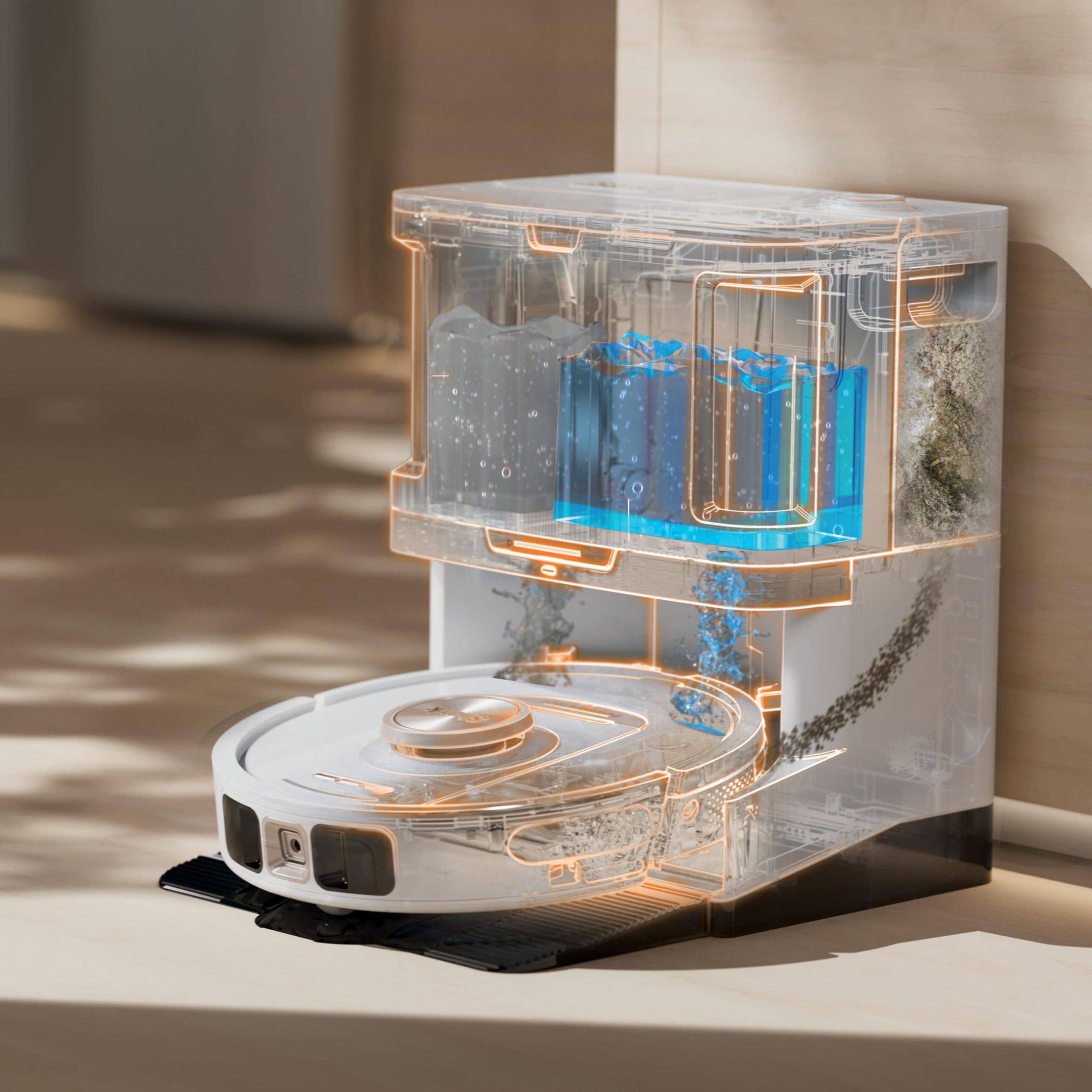
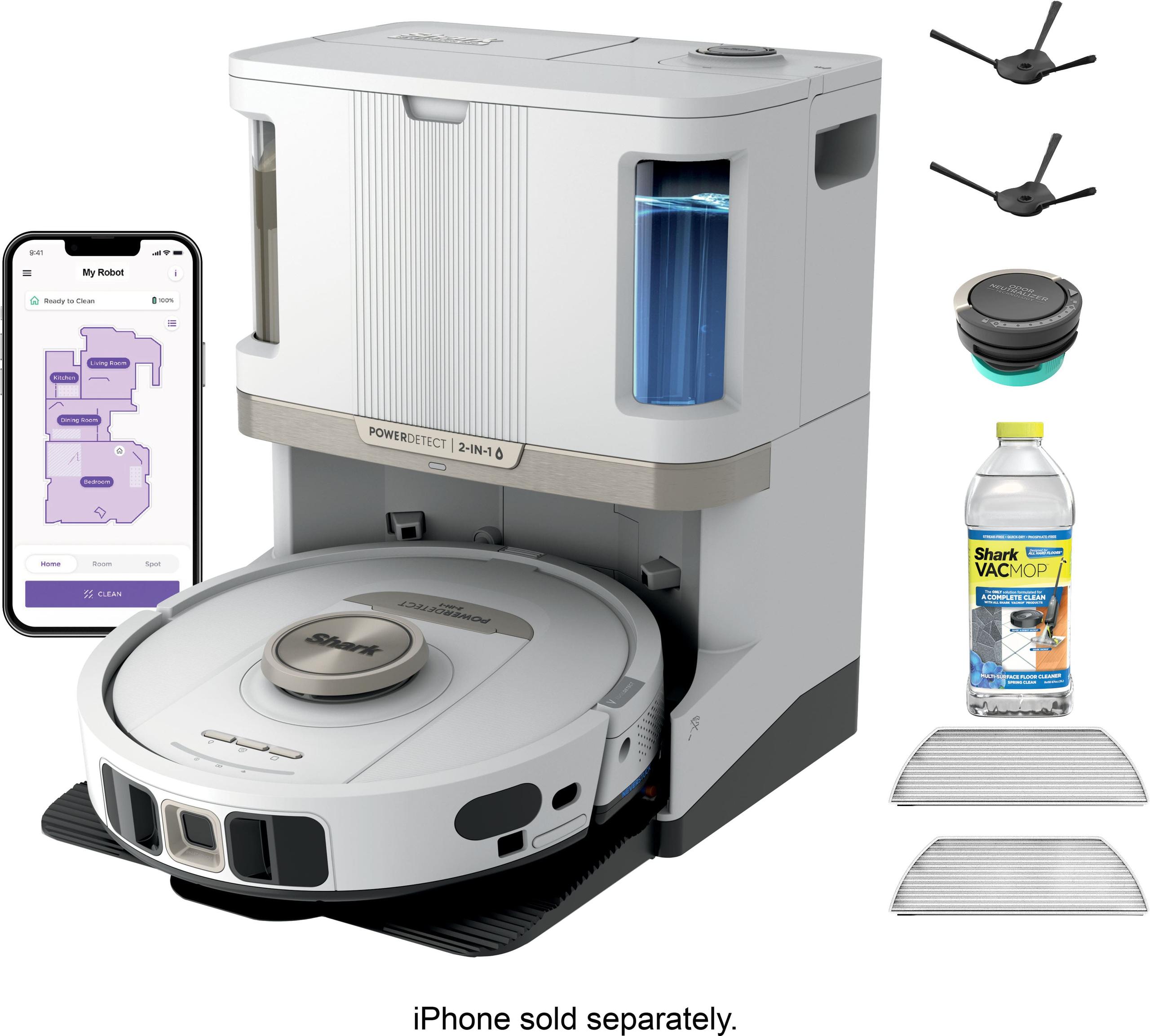
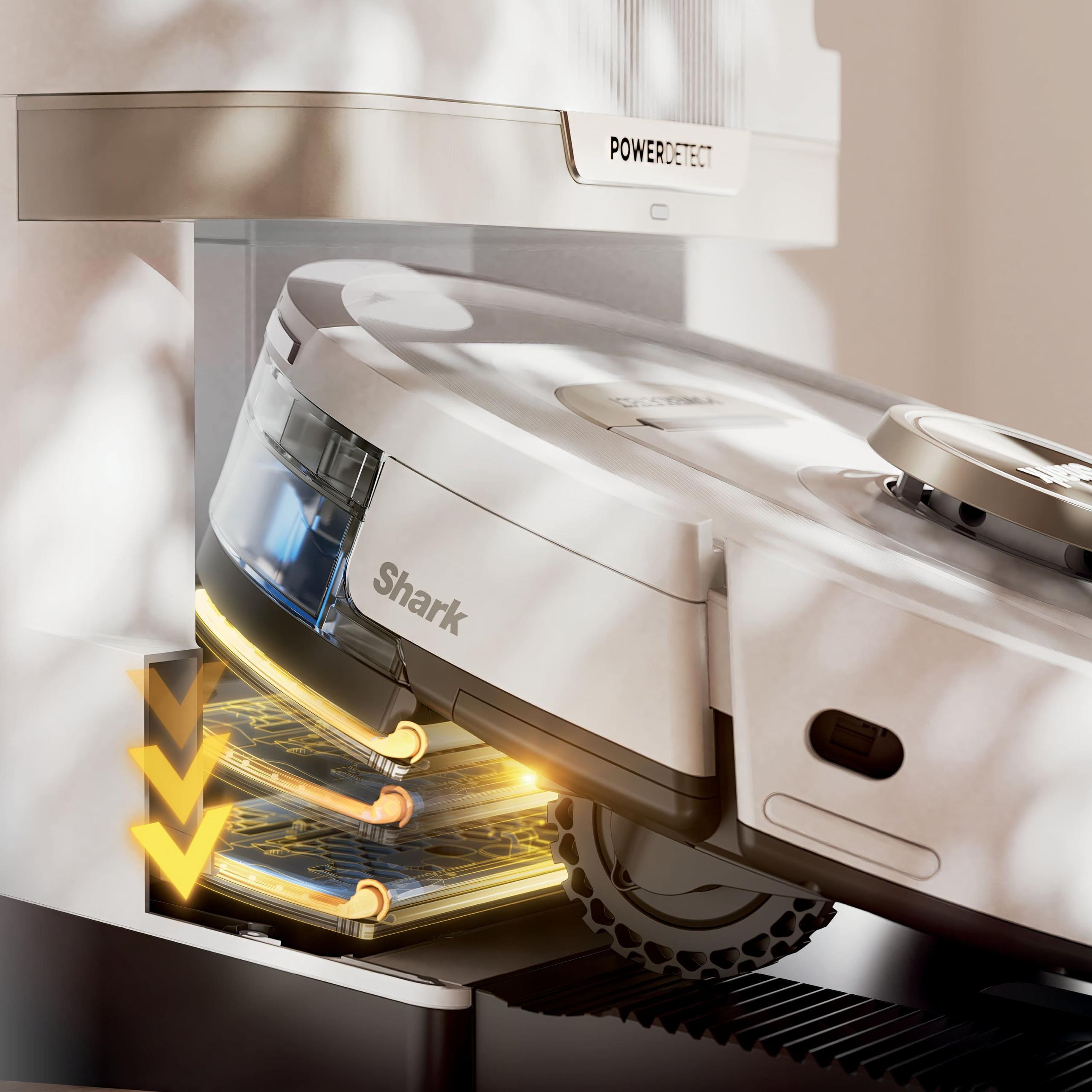
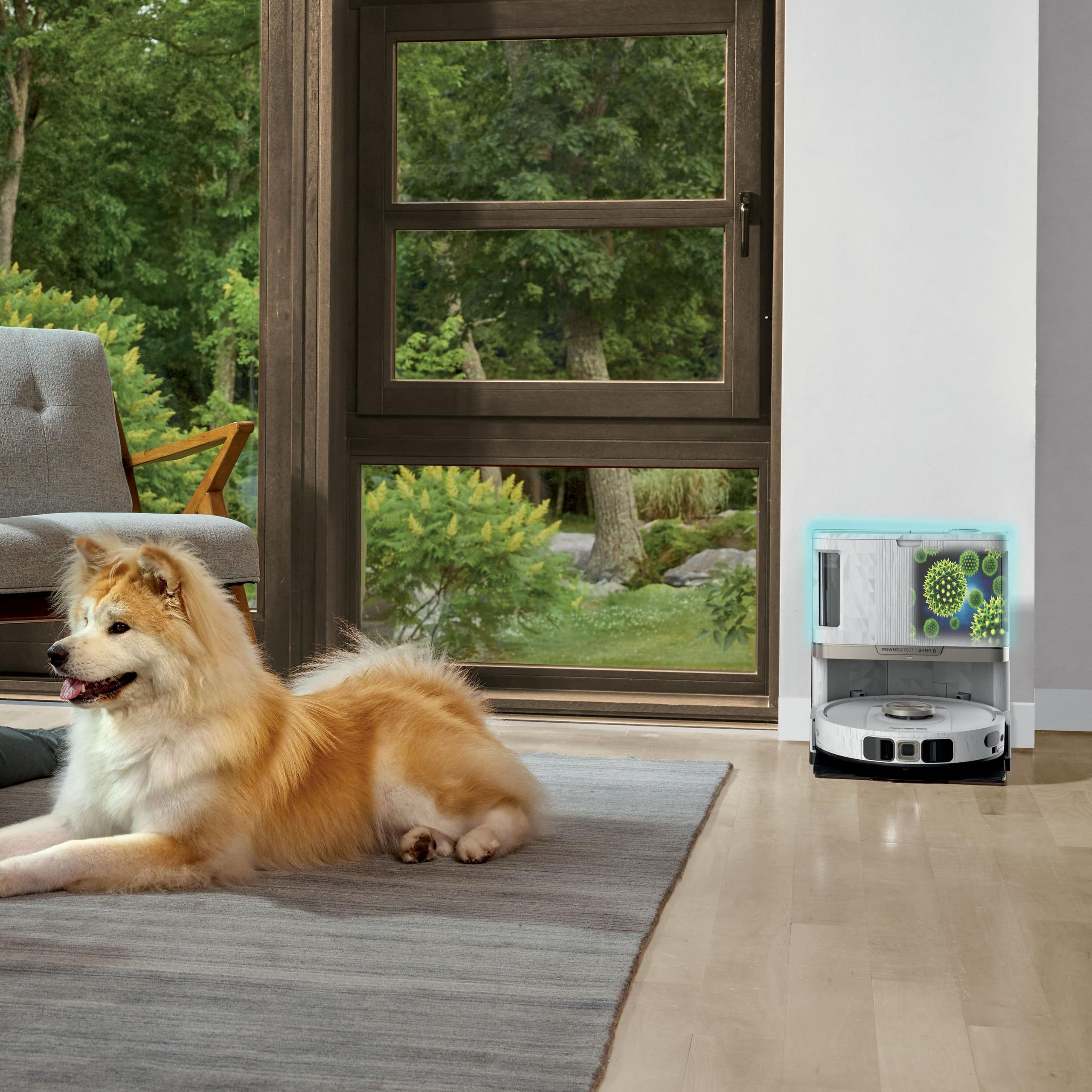
The PowerDetect takes this concept several steps further with its NeverTouch Pro Base. This comprehensive maintenance station not only empties debris but also handles the entire mopping maintenance cycle. After cleaning, the base automatically washes the mop pad with clean water, air-dries it to prevent mold and odors, and refills the robot's water tank for the next cleaning session. For users who want truly hands-off operation, this represents a significant advancement.
The practical impact of this difference is substantial. With the Matrix Plus, you'll still need to manually remove and wash mop pads, refill water tanks, and occasionally clean the base station. The PowerDetect can theoretically operate for weeks with minimal intervention, making it appealing for busy households or anyone who simply wants to set-and-forget their floor cleaning routine.
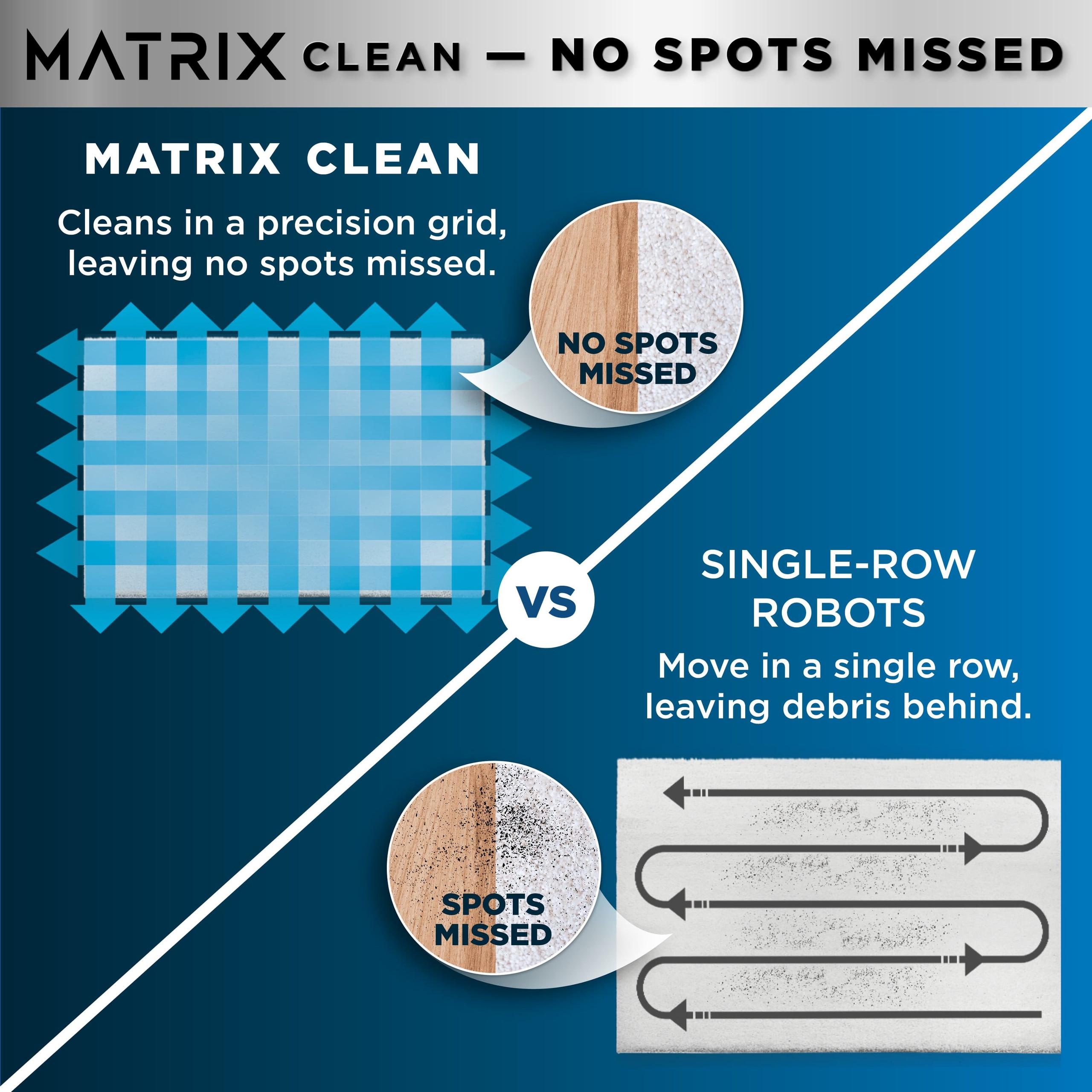
The cleaning approaches of these two models reflect different philosophies about how robots should tackle floor maintenance. The Matrix Plus uses Shark's Matrix Clean system, which moves in a precision grid pattern and makes multiple passes over each area. This methodical approach ensures thorough coverage and can improve carpet cleaning effectiveness by up to 30% compared to single-pass systems.
However, the Matrix Plus applies this same pattern regardless of what it encounters. Whether it's cleaning a lightly dusty hardwood floor or a heavily trafficked carpet area, the robot follows the same systematic approach with the same suction power and number of passes.
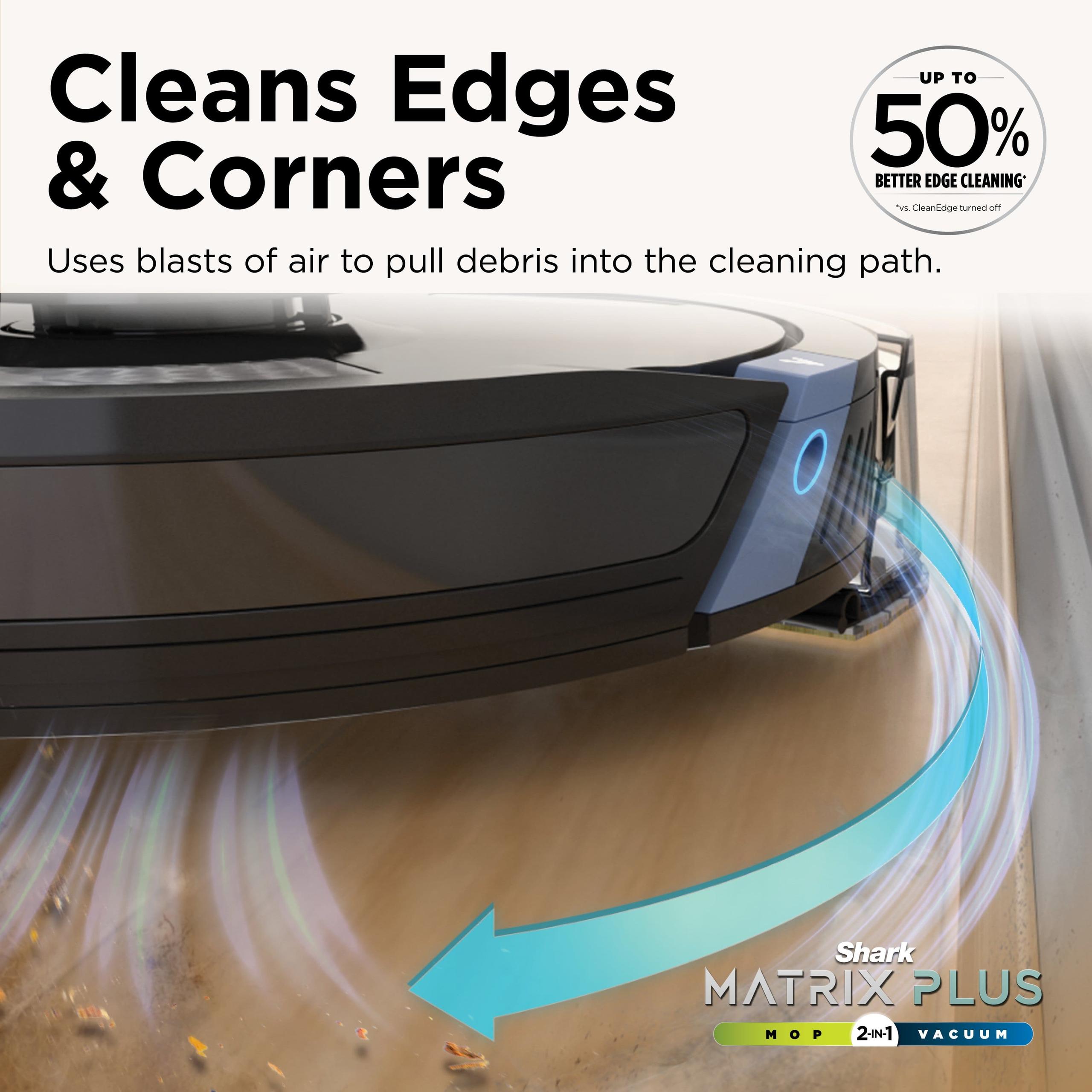
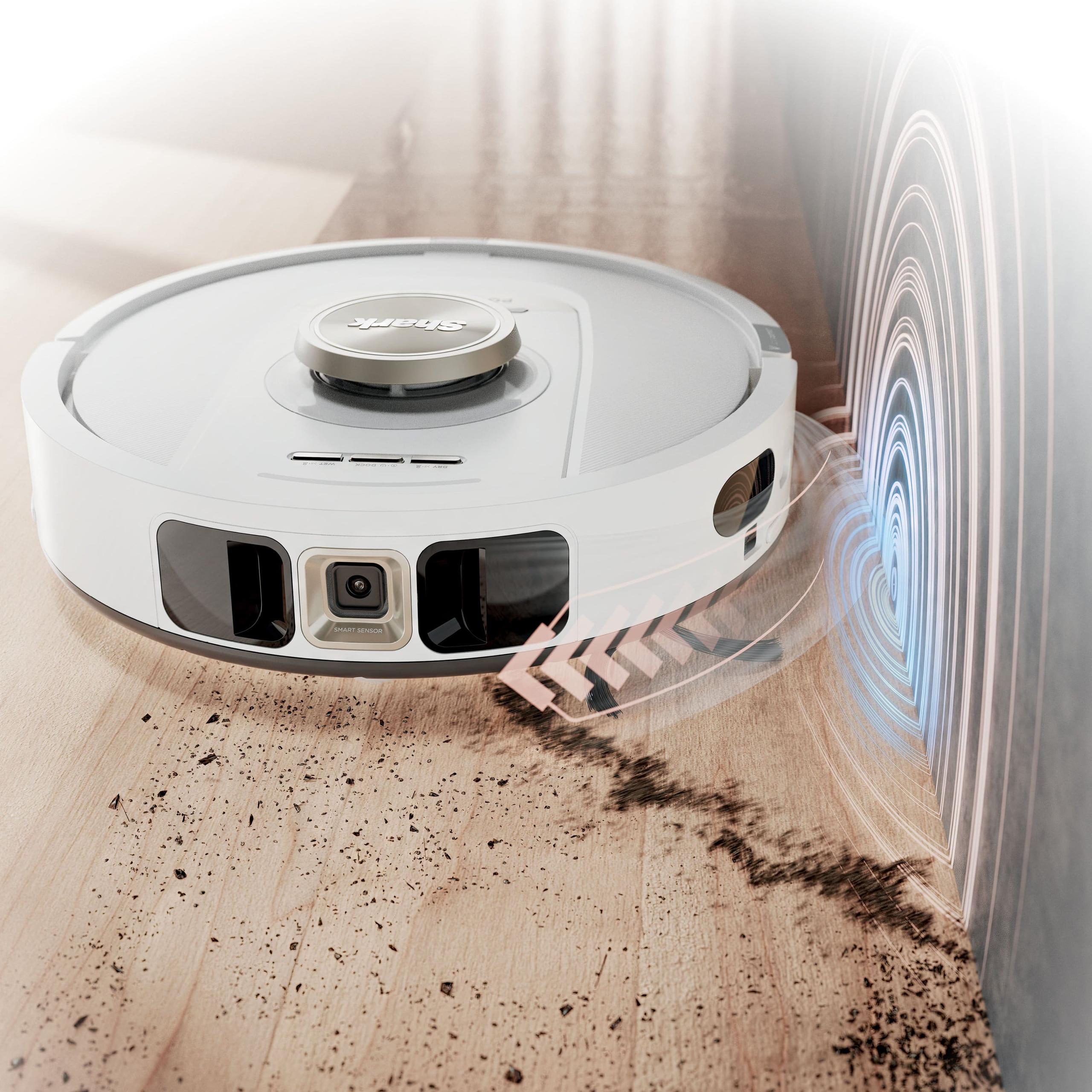
The PowerDetect introduces several "Detect" technologies that fundamentally change this approach. DirtDetect uses sensors to identify areas with higher debris concentration, automatically increasing suction power and making additional cleaning passes in those zones. FloorDetect identifies whether the robot is on hard floors or carpet and adjusts brush roll engagement accordingly. EdgeDetect uses targeted air blasts to dislodge debris from corners and wall edges, pushing it into the cleaning path.
This adaptive intelligence means the PowerDetect can provide more efficient cleaning by focusing extra attention where it's needed most, while potentially saving battery life in cleaner areas. For households with high-traffic zones, pet areas, or varying debris loads throughout the home, this targeted approach can deliver noticeably better results.
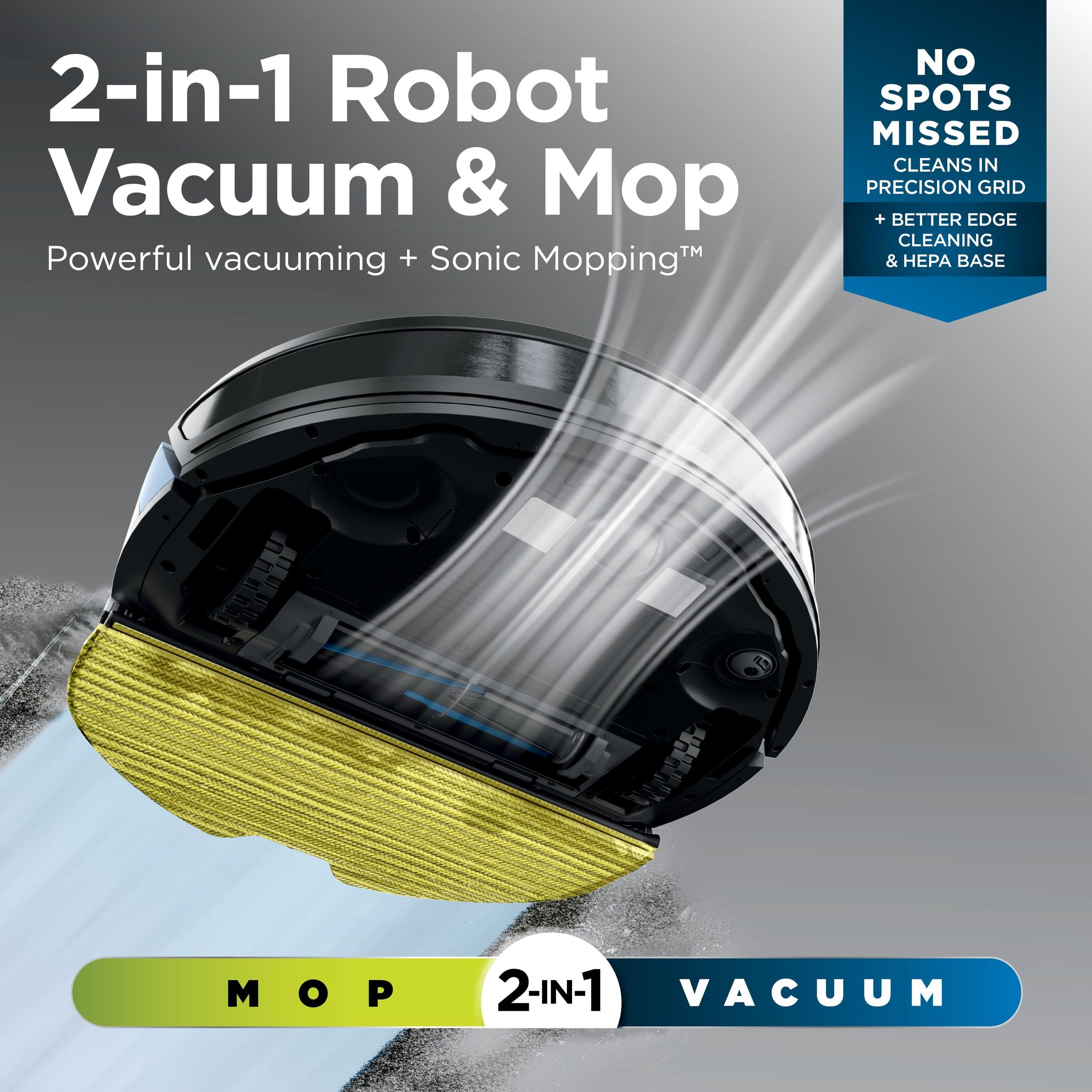
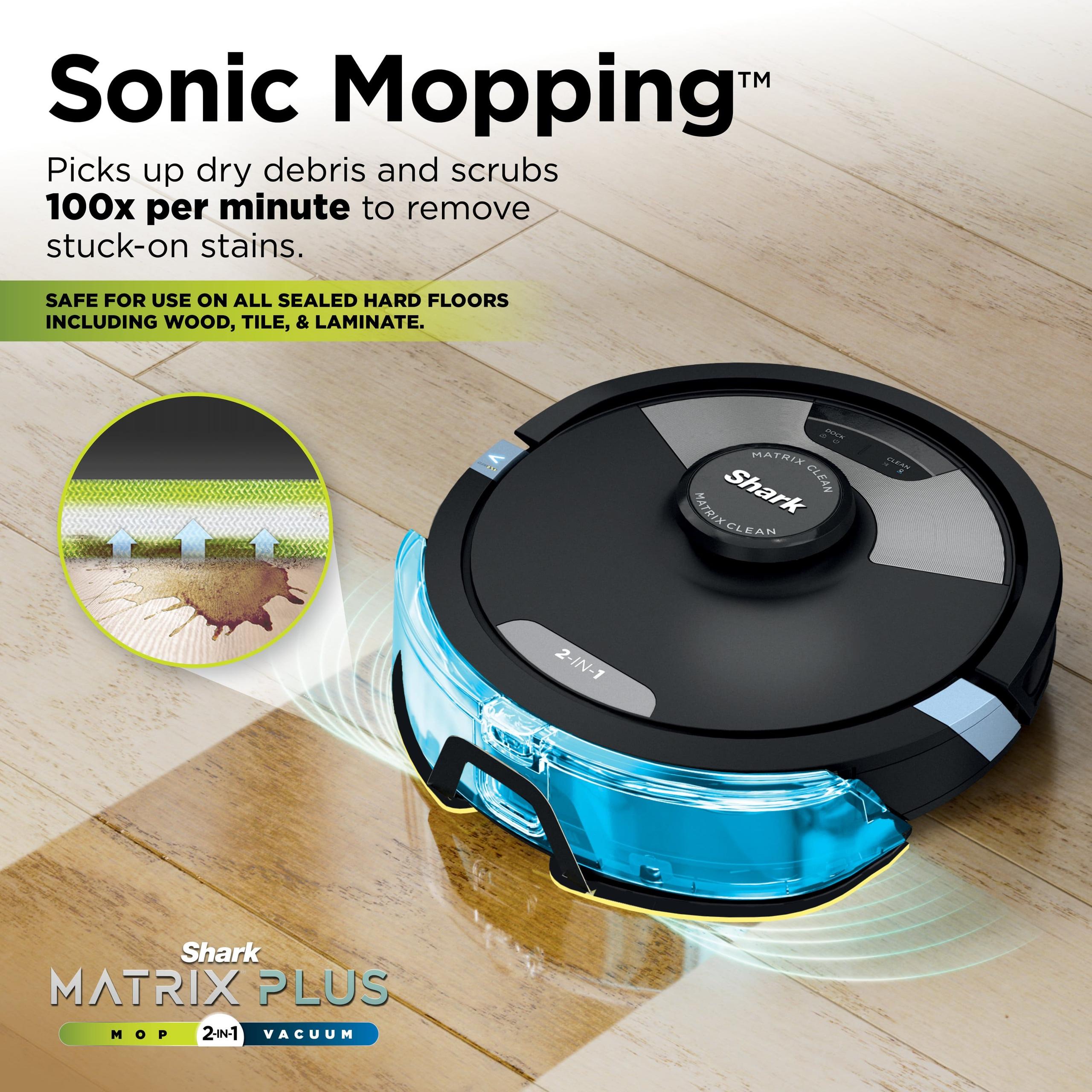
Both robots perform well on hard floors, but with different strengths. The Matrix Plus uses Sonic Mopping technology, vibrating the mop pad at 100 times per minute to help break up stuck-on dirt and stains. This mechanical scrubbing action can be quite effective for dried spills and general floor grime, particularly when combined with the robot's systematic cleaning pattern.
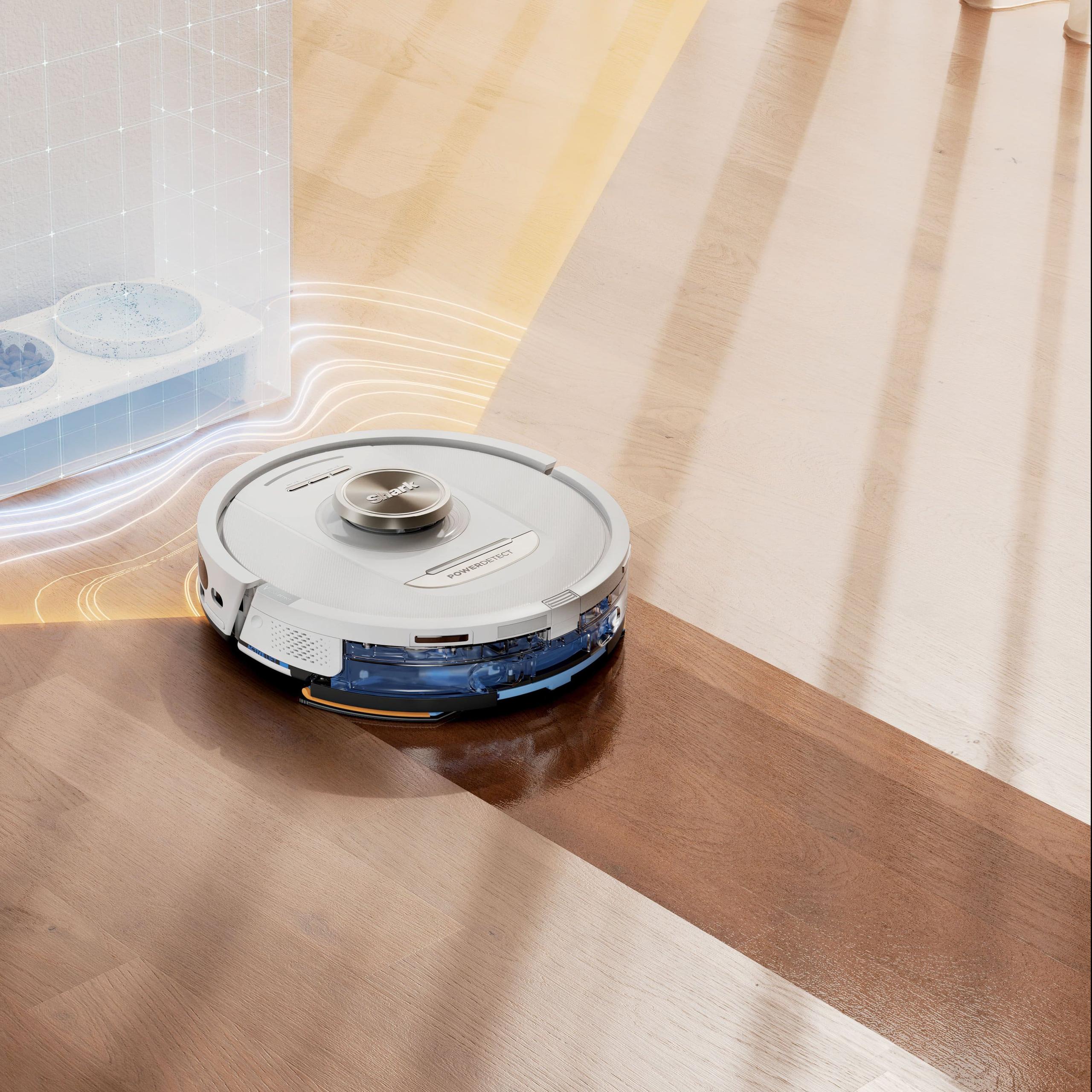
The PowerDetect takes a more intelligent approach to mopping, with sensors that can detect stain intensity and automatically adjust the mopping pressure and dwell time accordingly. Its EdgeDetect system also extends the mop pad closer to walls and corners, addressing one of the common weak points in robot mopping—the inability to clean right up to edges where dirt typically accumulates.
For homes with mostly hard floors, both models can handle regular maintenance mopping effectively. However, the PowerDetect's ability to adapt its mopping intensity based on actual floor conditions makes it better suited for homes with varying cleanliness levels or different types of hard flooring that might require different cleaning approaches.
In home theater environments, where dust control is particularly important for equipment longevity, both models' HEPA filtration systems (trapping 99.97% of particles down to 0.3 microns) make them suitable choices. The PowerDetect's more thorough edge cleaning might provide slight advantages in corners where AV equipment is often located.
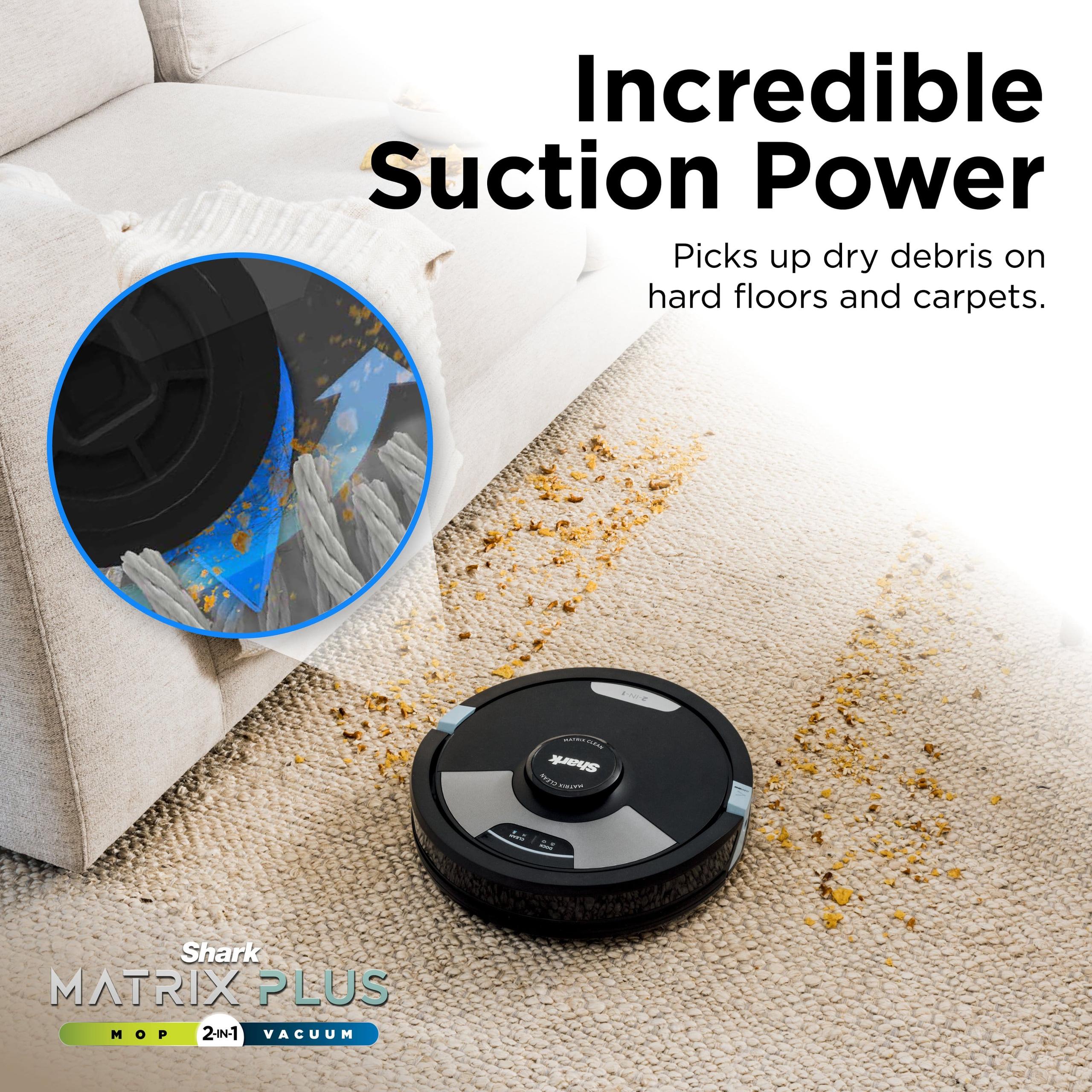
Carpet performance represents one of the most significant differences between these models. Based on comprehensive testing data, the Matrix Plus struggles with carpet cleaning effectiveness, typically removing only about 7.7 grams of debris per cleaning cycle—below the 10-gram threshold that cleaning experts consider necessary for proper maintenance between manual vacuuming sessions.
The PowerDetect shows substantially better carpet performance, with testing indicating "significantly above average" deep-cleaning scores. This improvement stems from its adaptive suction system, which can boost power when it detects carpet surfaces, and its DirtDetect technology, which identifies high-debris areas and provides extra cleaning attention.
For households with significant carpeted areas, this performance gap is meaningful. While neither robot can fully replace occasional deep cleaning with an upright vacuum, the PowerDetect is much more likely to maintain carpet cleanliness between those deeper cleaning sessions.
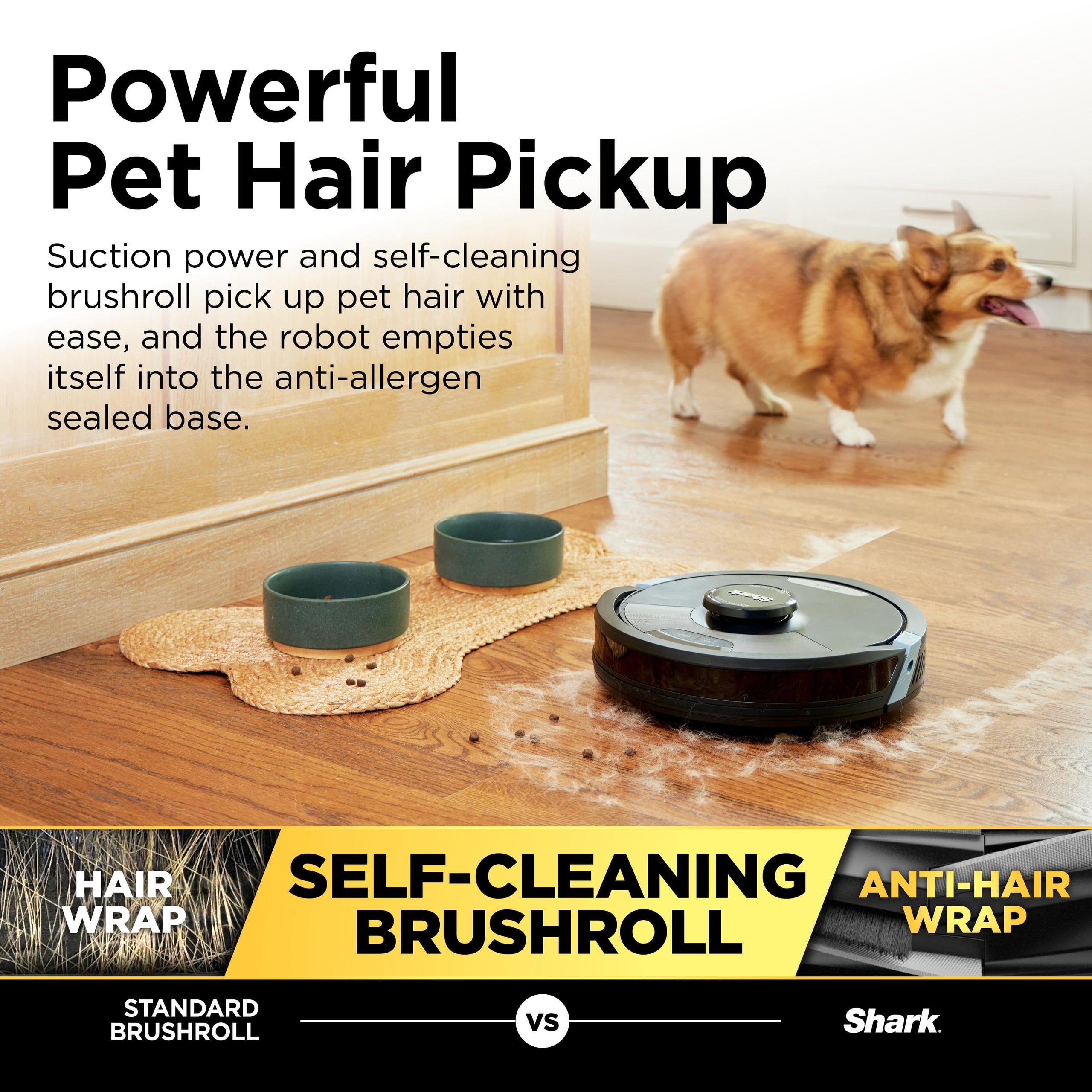
Pet owners should pay particular attention to this difference. Both models handle short pet hair reasonably well on hard floors, but the PowerDetect's superior carpet performance makes it better suited for homes with shedding pets who spend time on carpeted areas.
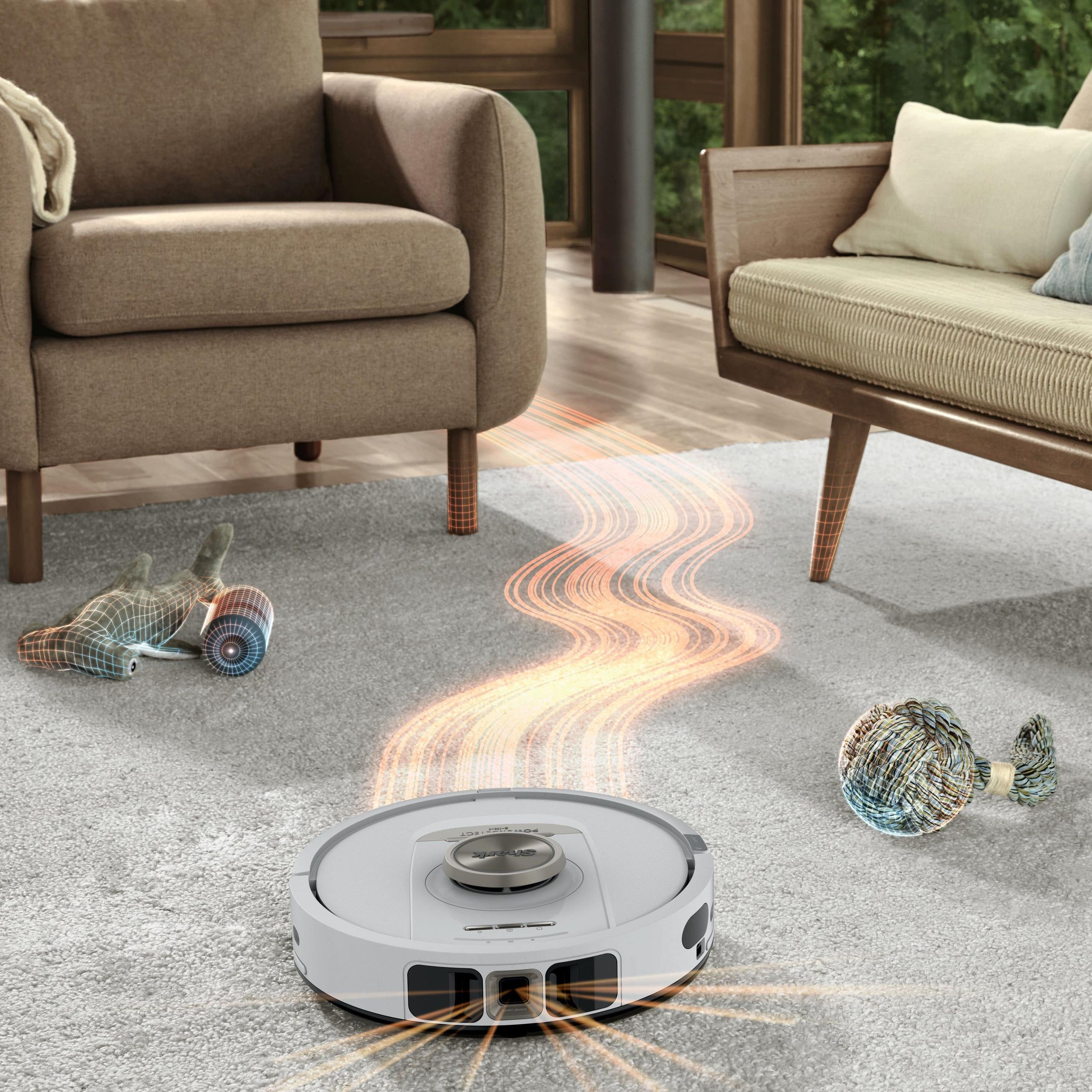
Modern robot vacuums need to handle complex home environments with furniture, cables, pet toys, and varying floor heights. Both models use LiDAR for basic navigation and mapping, but they differ in their obstacle management sophistication.
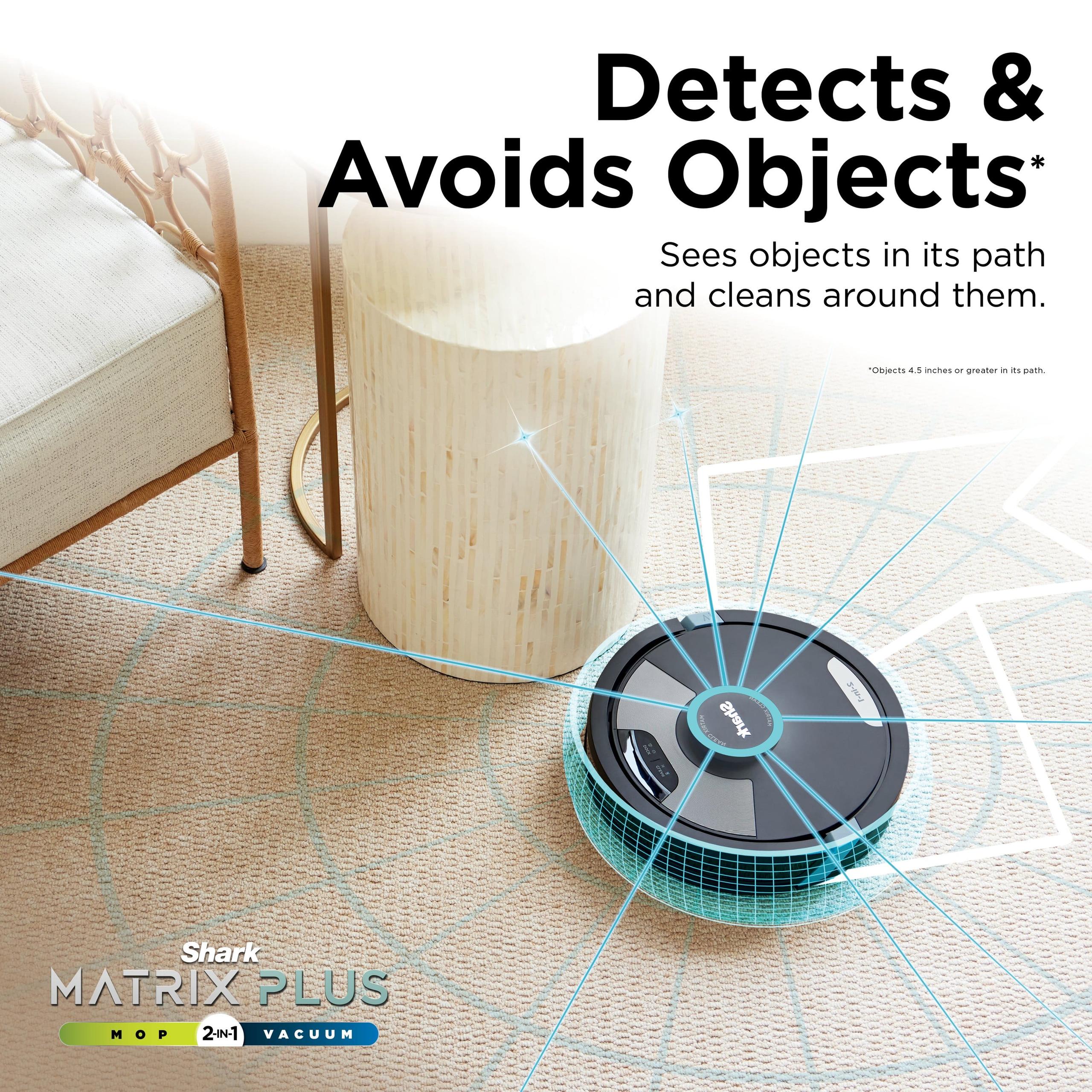
The Matrix Plus provides reliable navigation with smooth obstacle avoidance, successfully mapping homes accurately and cleaning in systematic patterns. However, it uses relatively basic sensors for obstacle detection and can sometimes get stuck on complex obstacles or high thresholds between rooms.
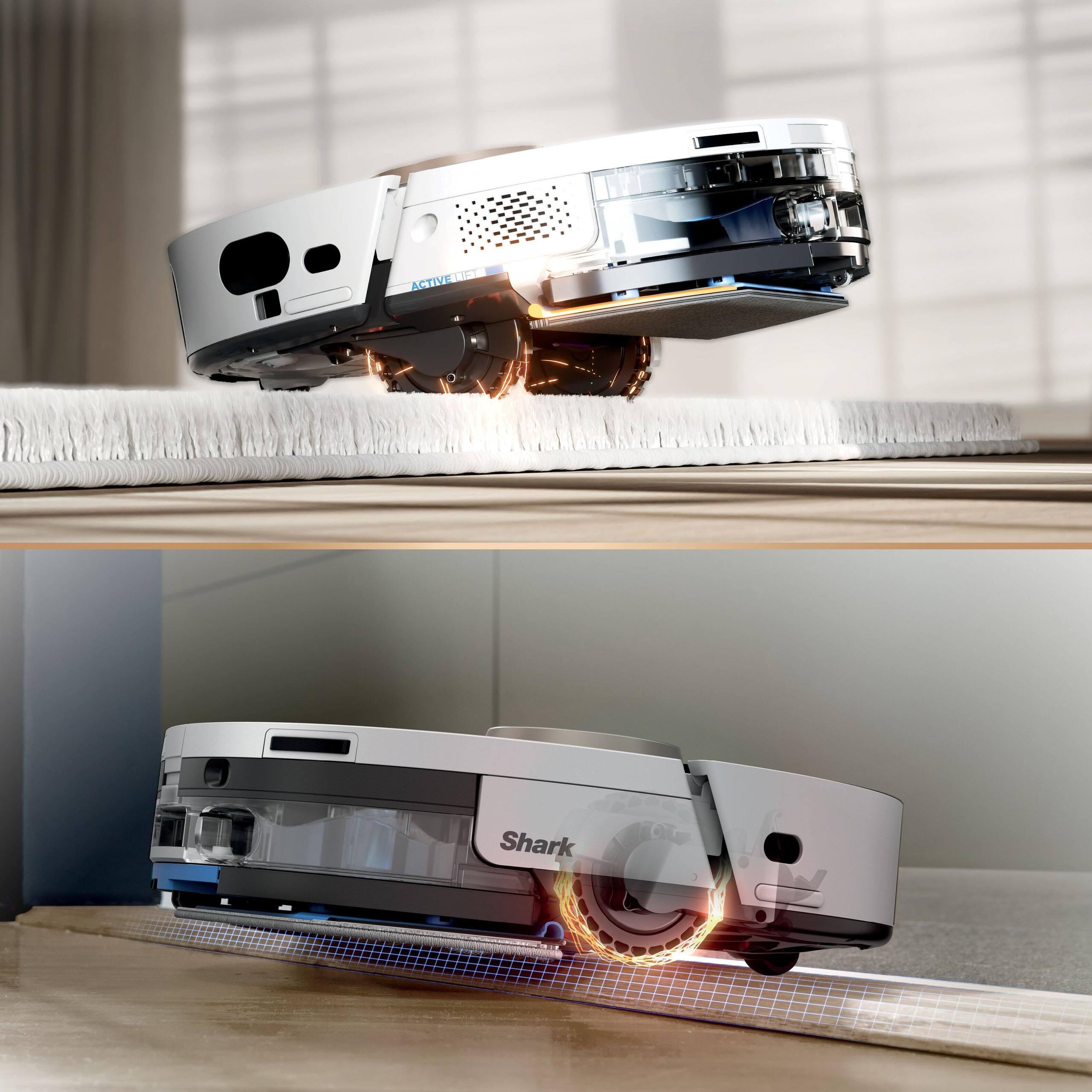
The PowerDetect incorporates NeverStuck technology, which actively lifts the robot over obstacles and thresholds rather than simply trying to navigate around them. This system uses advanced 3D sensors and dual lasers to better identify and classify obstacles, determining whether they can be crossed, pushed aside, or need to be avoided entirely.
In practice, this means the PowerDetect is more likely to complete cleaning cycles without getting stuck, particularly in homes with varying floor levels, thick rugs, or furniture arrangements that create challenging navigation scenarios.
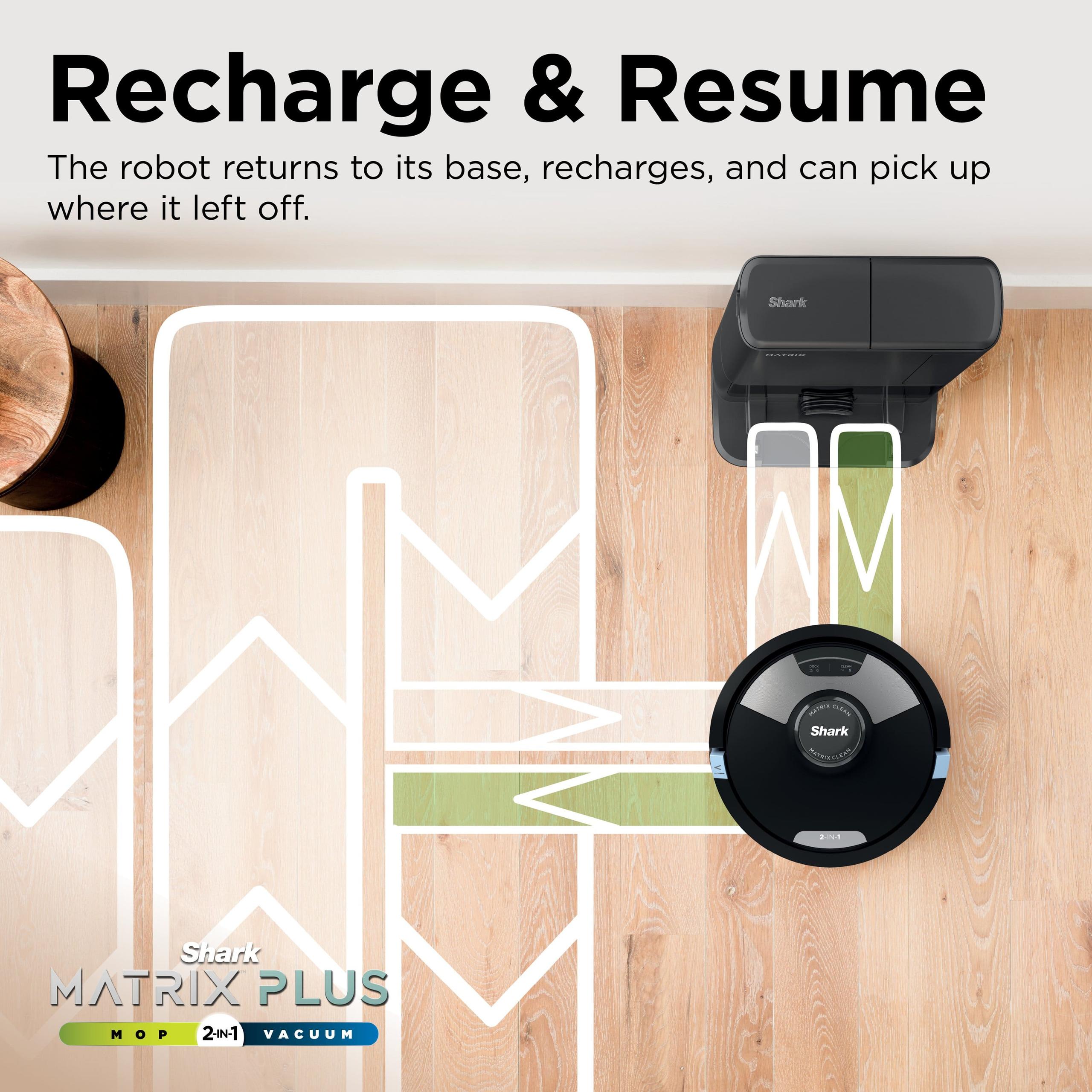
One area where the Matrix Plus maintains an advantage is battery longevity. With up to 110 minutes of runtime, it can typically clean larger homes in a single cycle. The robot includes recharge-and-resume functionality, so if the battery does run low, it will return to base, recharge, and continue cleaning where it left off.
The PowerDetect has a smaller 3,200 mAh battery—about half the capacity of many competitors—which can limit its coverage in larger homes. While it also includes recharge-and-resume capability, users with homes over 2,000 square feet may find the cleaning process interrupted more frequently.
However, the PowerDetect's more efficient cleaning intelligence may partially offset this limitation by focusing extra attention only where needed, potentially reducing overall cleaning time even with a smaller battery.
Both models offer smartphone app control, but with different levels of sophistication. The Matrix Plus provides basic functionality including scheduling, zone cleaning, and no-go zone creation. However, the app can be slow to connect and sometimes loses maps or fails to recognize the robot, creating frustration during setup or when trying to initiate cleaning sessions.
The SharkClean app for the Matrix Plus also lacks some features found in competing brands, such as individual room scheduling, multiple daily cleaning sessions, or power level adjustments during cleaning. For users who want extensive customization and control, this can be limiting.
The PowerDetect includes more advanced app integration, though specific details about enhanced features reflect the general trend toward more sophisticated smart home connectivity in newer robot vacuum models.
At the time of writing, the Matrix Plus typically costs several hundred dollars less than the PowerDetect, making it an attractive entry point into self-emptying robot vacuum technology. Its bagless design also eliminates ongoing costs for replacement bags, though users will need to replace filters periodically.
The PowerDetect commands a premium price but potentially offers better value for users who prioritize comprehensive automation and superior cleaning performance. The full-service base station could justify higher upfront costs for households that value convenience and time savings.
When considering long-term ownership, the Matrix Plus's simpler design may prove more reliable over time, while the PowerDetect's more complex systems offer greater capability but potentially more points of failure.
The decision between these models should align closely with your specific household needs and priorities. The Matrix Plus makes sense for budget-conscious buyers with primarily hard floors who don't mind some manual maintenance. It's particularly appealing for smaller homes under 2,000 square feet with relatively simple layouts where its longer battery life and systematic cleaning approach can be most effective.
Choose the PowerDetect if you have significant carpeted areas, want comprehensive automation with minimal daily involvement, or have complex floor plans with varying debris loads that would benefit from adaptive cleaning intelligence. Pet owners and busy households that prioritize convenience over cost savings will likely find its premium features worthwhile.
For home theater environments specifically, both models' HEPA filtration makes them suitable, but the PowerDetect's superior edge cleaning and adaptive dust detection might provide slight advantages for keeping AV equipment areas cleaner.
Neither model is perfect—the Matrix Plus requires more hands-on maintenance and struggles with carpets, while the PowerDetect costs more and has shorter battery life. However, both represent solid options within their respective price ranges, with the choice ultimately depending on whether you prioritize proven simplicity and value, or cutting-edge automation and cleaning performance.
The robot vacuum market continues evolving rapidly, but these Shark models demonstrate how manufacturers are balancing different approaches to automated cleaning. Whether you choose the methodical reliability of the Matrix Plus or the intelligent adaptation of the PowerDetect, either can significantly reduce your daily floor cleaning workload while maintaining cleaner home environments.
| Shark Matrix Plus 2-in-1 Robot Vacuum & Mop RV2610WA | Shark PowerDetect RV2805ZE Robot Vacuum and Mop |
|---|---|
| Release Year - Technology generation matters for features and longevity | |
| 2022 (established self-emptying technology) | 2025 (latest adaptive AI cleaning technology) |
| Cleaning Intelligence - Determines how efficiently the robot adapts to different messes | |
| Fixed Matrix Clean pattern with manual mode selection | PowerDetect™ system automatically adjusts suction and mopping based on debris, floor type, and edges |
| Base Station Automation - Critical for daily maintenance convenience | |
| Self-emptying only (60-day bagless capacity) | NeverTouch™ Pro Base: empties, washes mop, refills water, dries mop pad |
| Carpet Cleaning Performance - Essential for homes with mixed flooring | |
| Poor performance (7.7g debris pickup, below 10g standard) | Significantly above average deep-cleaning scores |
| Edge and Corner Cleaning - Where most dirt accumulates | |
| CleanEdge with air blasts (50% better than basic models) | EdgeDetect™ with targeted air blasts plus mop pad extension |
| Battery Runtime - Affects coverage area and cleaning completion | |
| Up to 110 minutes (excellent for larger homes) | Shorter runtime with 3,200 mAh battery (may require multiple cycles) |
| Navigation Technology - Impacts obstacle handling and cleaning efficiency | |
| 360° LiDAR with basic obstacle avoidance | Advanced 3D sensors with NeverStuck™ lifting technology |
| Mopping Capability - Important for hard floor maintenance | |
| Sonic mopping at 100x per minute (manual pad maintenance) | Adaptive mopping intensity with automated pad washing and drying |
| App Features - Determines scheduling and customization options | |
| Basic SharkClean app (can be slow and buggy) | Enhanced app integration with more advanced controls |
| Pet Hair Performance - Crucial for pet owners | |
| Struggles on carpets, adequate on hard floors | Superior pickup on all surfaces with adaptive suction |
| Filtration System - Important for allergen control | |
| HEPA filter in base (99.97% particle capture) | HEPA filtration plus odor neutralizer technology |
| Value Proposition - Cost versus features delivered | |
| Budget-friendly entry to self-emptying technology | Premium pricing for comprehensive automation and superior performance |
The Shark PowerDetect RV2805ZE is significantly better for carpet cleaning. It features adaptive suction that automatically increases power on carpets and scores "significantly above average" in deep-cleaning tests. The Shark Matrix Plus RV2610WA struggles on carpets, picking up only 7.7 grams of debris per run, which is below the 10-gram standard for proper maintenance.
The biggest difference is cleaning intelligence. The Shark PowerDetect RV2805ZE uses adaptive AI technology that automatically adjusts suction and mopping based on debris levels, floor type, and cleaning needs. The Shark Matrix Plus RV2610WA follows a fixed cleaning pattern regardless of conditions. The PowerDetect also has a fully automated base station that washes mop pads, while the Matrix Plus requires manual mop maintenance.
The Shark PowerDetect RV2805ZE has superior edge cleaning with its EdgeDetect™ technology that uses targeted air blasts and extends the mop pad for edge-to-edge cleaning. While the Shark Matrix Plus RV2610WA also has CleanEdge technology with air blasts, it's less sophisticated and doesn't extend the mop pad to walls.
The Shark PowerDetect RV2805ZE is better for pet hair pickup due to its adaptive suction system that provides more consistent debris removal across all surfaces. The Shark Matrix Plus RV2610WA handles short pet hair adequately on hard floors but struggles with pet hair on carpets. Both models have difficulty with very long hair (over 7 inches).
The Shark PowerDetect RV2805ZE requires virtually no daily maintenance thanks to its NeverTouch™ Pro Base that automatically empties debris, washes and dries mop pads, and refills the water tank. The Shark Matrix Plus RV2610WA only self-empties debris, so you'll need to manually wash mop pads and refill water tanks regularly.
The Shark Matrix Plus RV2610WA has better battery life with up to 110 minutes of runtime, making it better for larger homes. The Shark PowerDetect RV2605ZE has a smaller 3,200 mAh battery that may require multiple recharge cycles for bigger homes, though both models have recharge-and-resume functionality.
Both models perform well on hardwood floors, but the Shark PowerDetect RV2805ZE has the edge with its adaptive mopping system that adjusts intensity based on stain detection and better edge cleaning. The Shark Matrix Plus RV2610WA uses effective Sonic mopping at 100x per minute, making both suitable for hardwood maintenance.
Yes, both models work well in home theater rooms due to their HEPA filtration systems that capture 99.97% of dust particles down to 0.3 microns, helping protect AV equipment. The Shark PowerDetect RV2805ZE might have a slight advantage with its superior edge cleaning around entertainment centers where dust typically accumulates.
The Shark Matrix Plus RV2610WA offers better value for budget-conscious buyers, providing self-emptying convenience at a lower price point with no ongoing bag costs. The Shark PowerDetect RV2805ZE costs more but delivers superior cleaning performance and comprehensive automation that may justify the premium for users prioritizing convenience.
The Shark PowerDetect RV2805ZE is significantly better at obstacle handling with its NeverStuck™ technology that actively lifts the robot over thresholds and obstacles using advanced 3D sensors. The Shark Matrix Plus RV2610WA has reliable LiDAR navigation but uses more basic obstacle avoidance that can sometimes result in the robot getting stuck.
Both models use the SharkClean app, but the Shark PowerDetect RV2805ZE has more advanced app integration reflecting newer technology. The Shark Matrix Plus RV2610WA app can be slow to connect and sometimes loses maps or fails to recognize the robot, with more limited customization options compared to competing brands.
For large houses, the choice depends on priorities. The Shark Matrix Plus RV2610WA has longer battery life (110 minutes) making it better for covering large areas in one cycle. However, the Shark PowerDetect RV2805ZE provides much better cleaning performance and automation, which may be more important than single-cycle coverage, especially since both models have recharge-and-resume functionality.
We've done our best to create useful and informative comparisons to help you decide what product to buy. Our research uses advanced automated methods to create this comparison and perfection is not possible - please contact us for corrections or questions. These are the sites we've researched in the creation of this article: bestbuy.com - vacuumwars.com - techradar.com - versus.com - reviewed.com - youtube.com - youtube.com - youtube.com - moderncastle.com - sharkninja.com - businessinsider.com - techradar.com - sharkninja.com - youtube.com - target.com - kohls.com - youtube.com - bestbuy.com - youtube.com - reebelo.com - youtube.com - youtube.com - vacuumwars.com - youtube.com - vacuumwars.com - youtube.com - techradar.com - youtube.com - youtube.com - techradar.com - youtube.com - youtube.com - homedepot.com - moderncastle.com - youtube.com - rtings.com - youtube.com - target.com - sharkninja.com - sharkninja.com - sharkninja.com - sharkninja.com - bestbuy.com - bestbuy.com - youtube.com - homedepot.com - ebay.com - homedepot.com - brickseek.com - vacuumwars.com - techradar.com - nfm.com - bestbuy.com - walmart.com - businessinsider.com

Privacy Policy
Terms and Conditions - Affiliate Policy
Home Security
© Copyright 2008-2026.
11816 Inwood Rd #1211, Dallas, TX 75244