


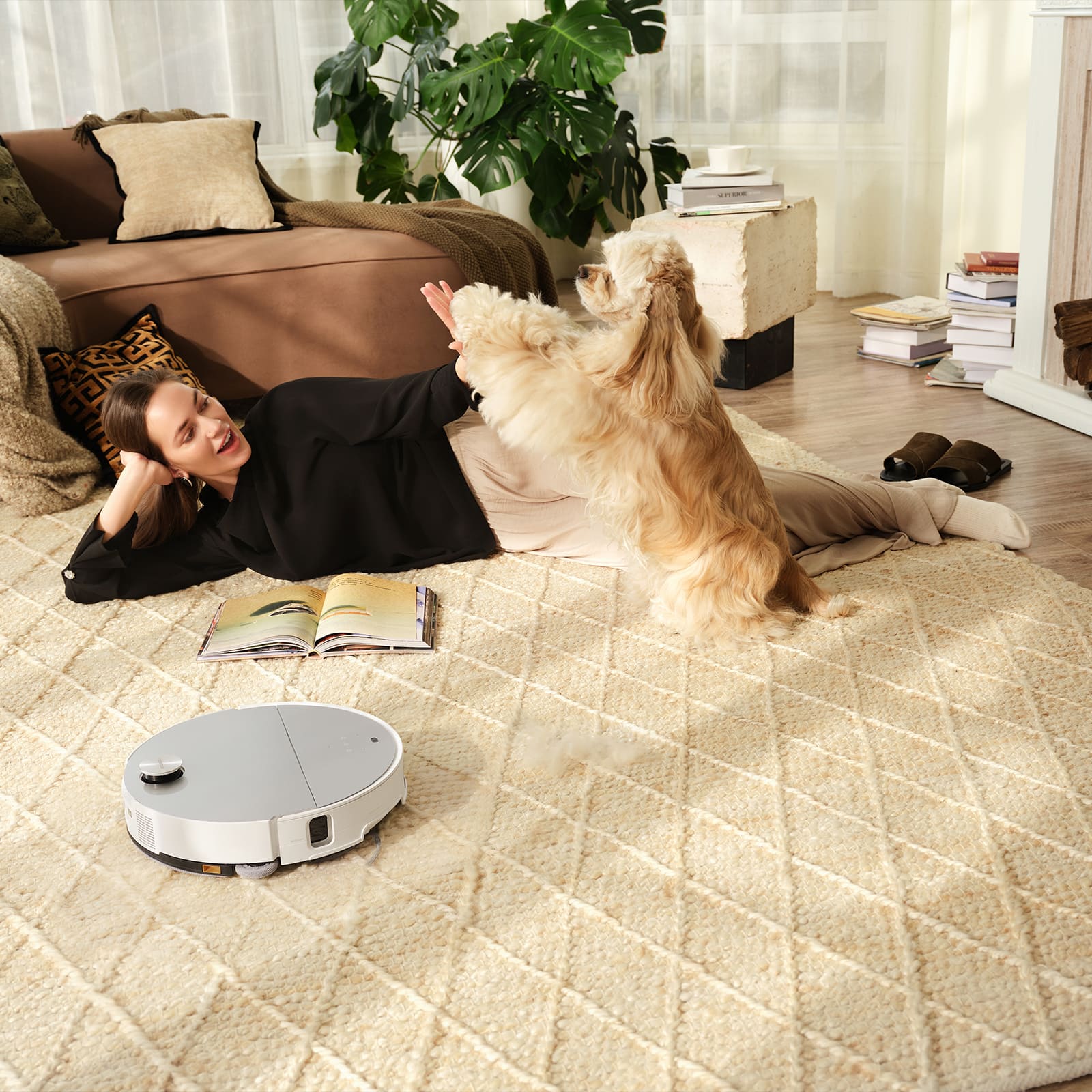
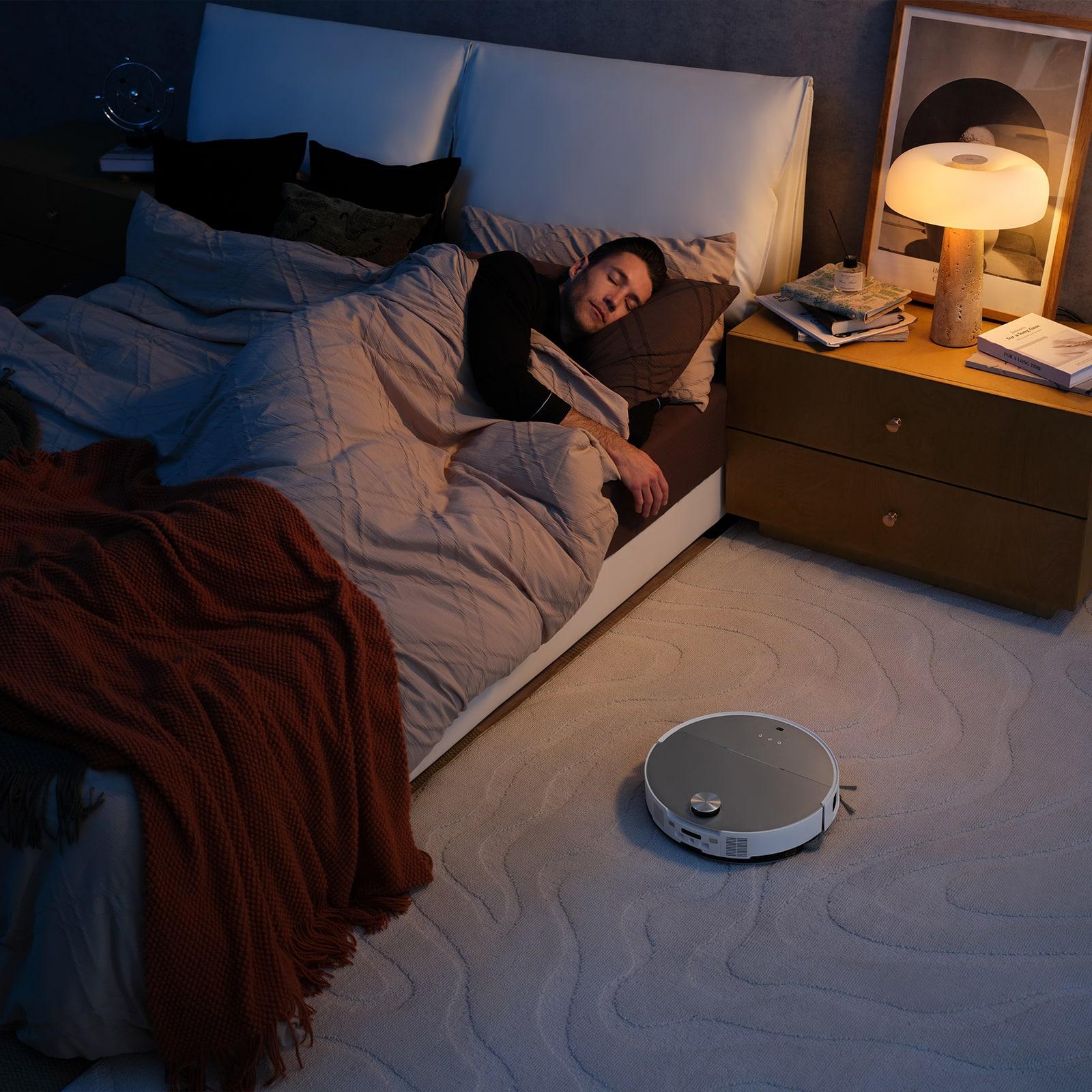
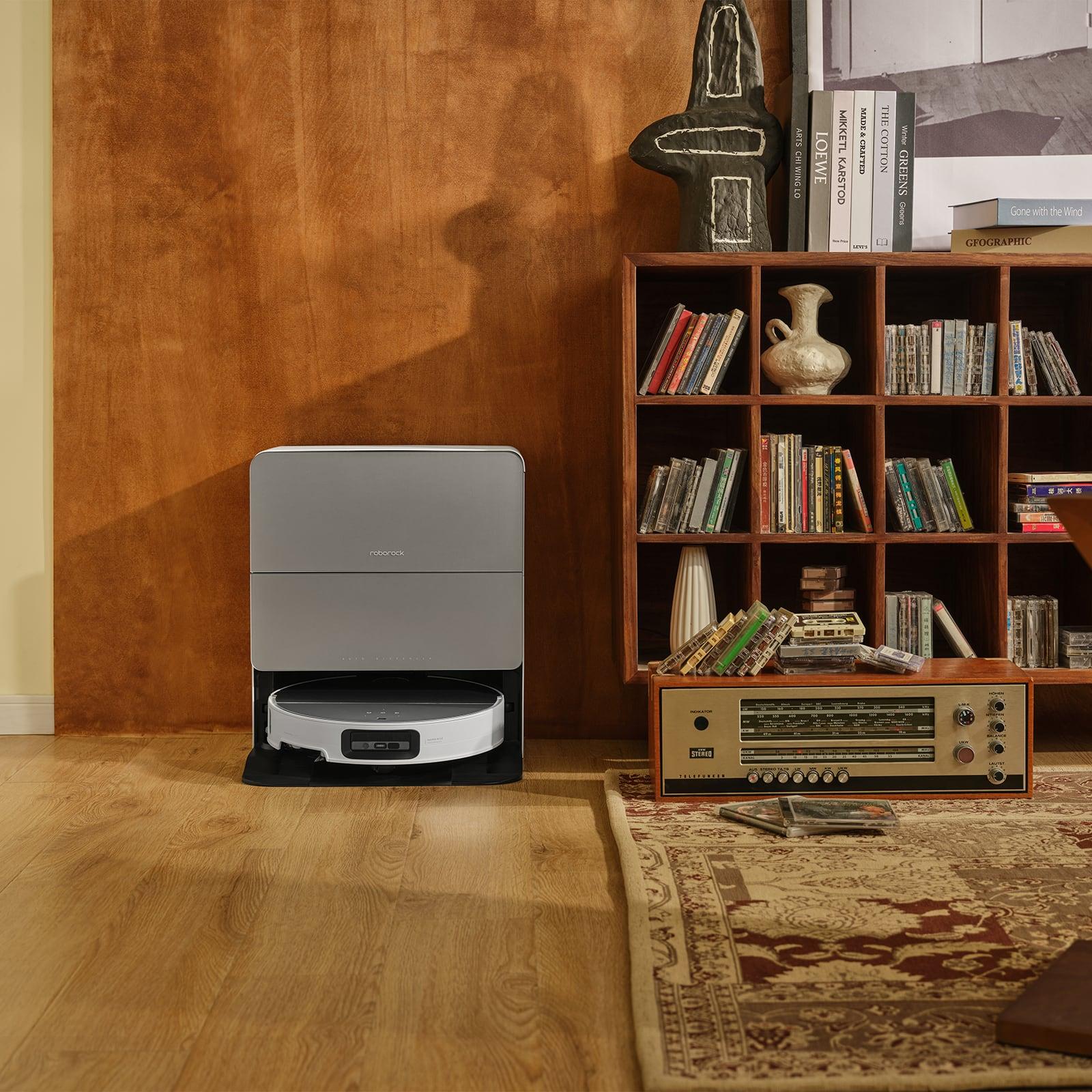
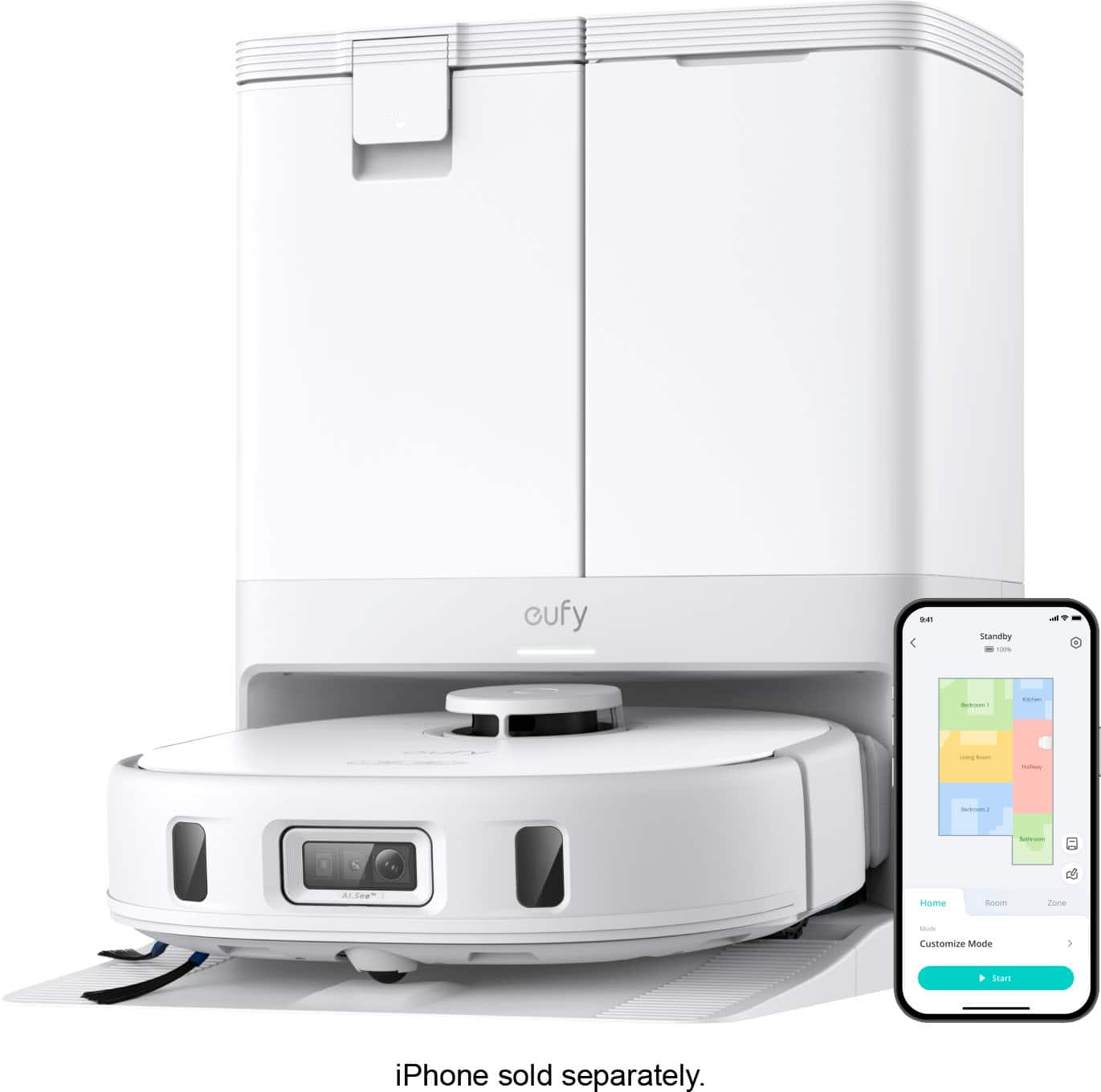
Robot vacuums have evolved dramatically since their early days of bumping around randomly and getting stuck under couches. Today's models are sophisticated cleaning machines that can map your home, avoid obstacles with near-human intelligence, and maintain themselves with minimal intervention. Two standout models released in 2025 showcase just how far this technology has come: the premium Roborock Saros 10 and the value-focused Eufy X10 Pro Omni.
At the time of writing, these robots sit at opposite ends of the price spectrum—the Roborock commands a premium price that's more than triple what you'll pay for the Eufy. This dramatic price difference raises an important question: does the expensive robot actually clean three times better, or is the budget option the smarter choice?
Before diving into the comparison, it's worth understanding what makes these devices tick. Modern robot vacuums combine several key technologies:
LiDAR (Light Detection and Ranging) creates detailed maps by spinning a laser and measuring how long it takes light to bounce back from walls and furniture. Think of it like echolocation for bats, but with light instead of sound. This creates incredibly precise floor plans that help robots clean efficiently rather than wandering aimlessly.
Obstacle avoidance systems use cameras and sensors to identify and avoid common household items like shoes, cables, or pet waste in real-time. Early robots would push through or get tangled in everything—modern systems are smart enough to recognize a charging cable and navigate around it.
Self-emptying base stations have revolutionized the hands-off experience. These docking stations automatically suck debris from the robot's small internal dustbin into a larger bag, meaning you might only empty the system once every month or two instead of after every cleaning session.
The cleaning performance depends on several factors beyond just raw suction power. Brush design, airflow patterns, and how the robot navigates all play crucial roles in real-world results.
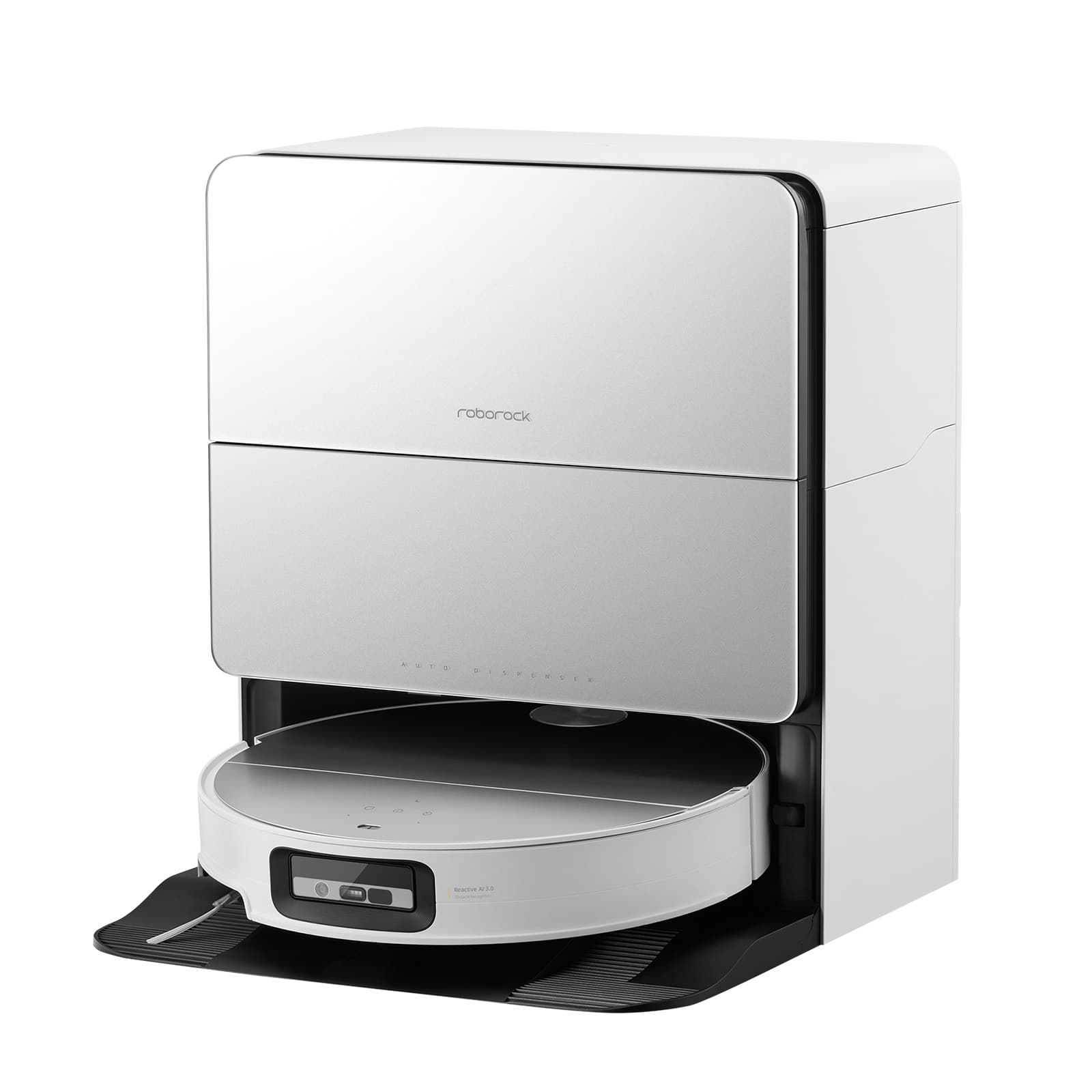
The Roborock Saros 10 represents the company's 2025 flagship, and Roborock has built a reputation for engineering excellence over the past few years. Their focus has always been on pushing technical boundaries, and the Saros 10 continues this tradition with some genuinely innovative features.
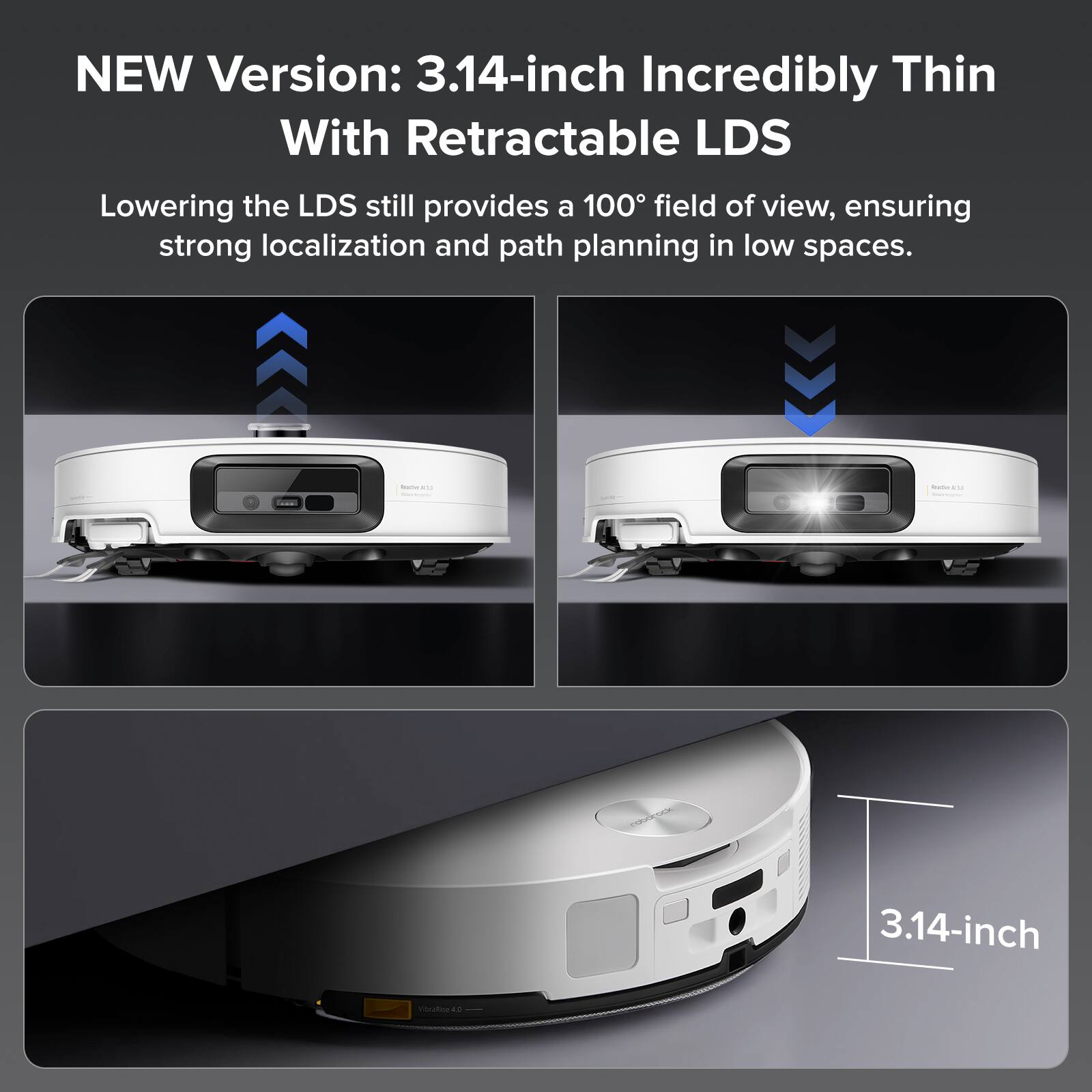
The most immediately striking feature is the robot's impossibly thin 3.14-inch profile—making it the slimmest Roborock ever produced. This isn't just a design flourish; it's genuinely functional. Most robot vacuums stand around 3.5 to 4 inches tall, which means they can't fit under many couches, beds, or low furniture. The Saros 10's ultra-slim design opens up cleaning areas that other robots simply cannot reach.
The engineering challenge here was maintaining all the internal components—motor, battery, dustbin, sensors—while shrinking the overall height. Roborock solved this with their RetractSense Navigation System, where the LiDAR turret actually retracts into the body when the robot encounters low-clearance furniture. It's like a periscope in reverse—when space gets tight, the sensor tower disappears, and the robot continues cleaning using other navigation methods.
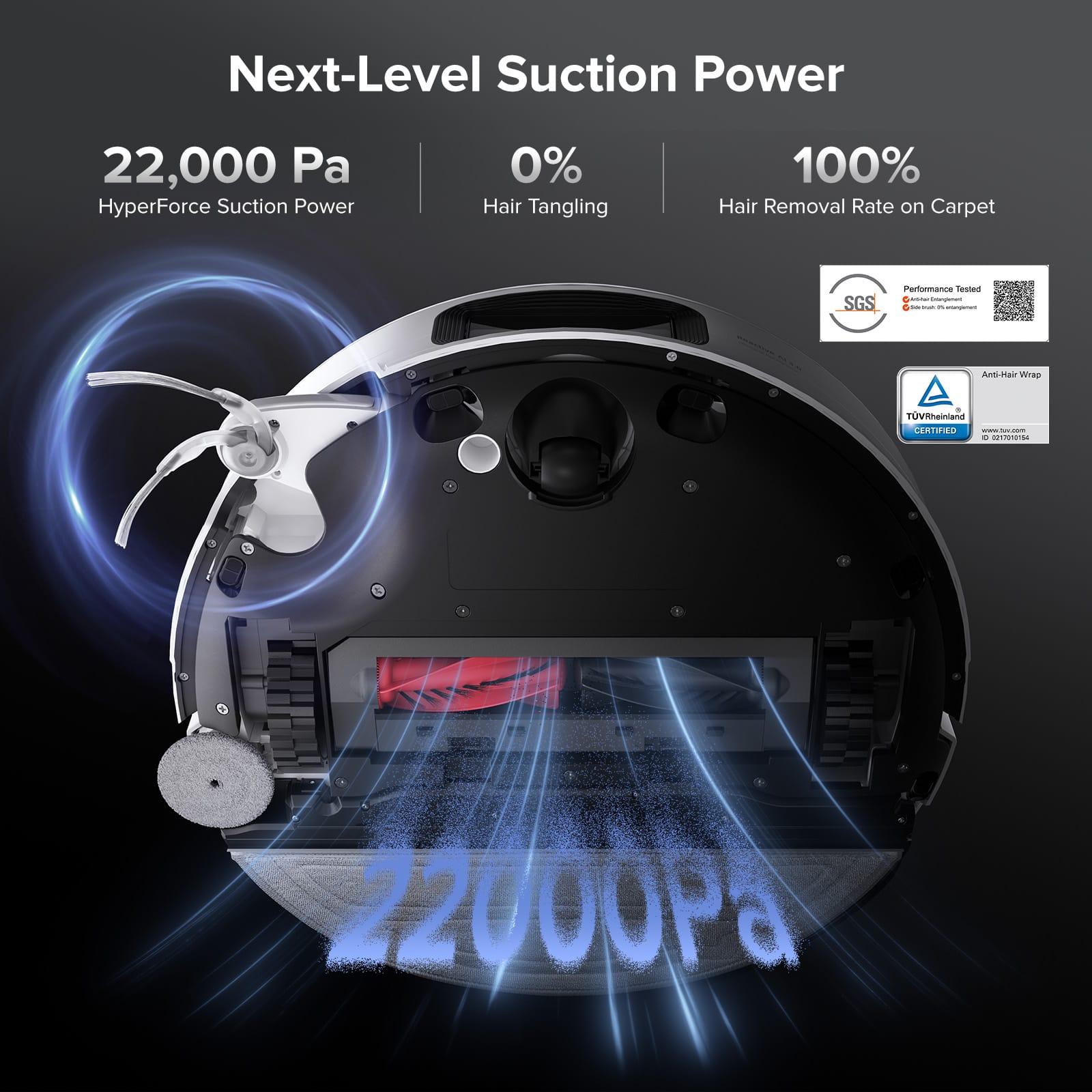
Where the Roborock truly flexes its premium positioning is in raw cleaning power. The 22,000 Pa suction rating is genuinely impressive—that's roughly equivalent to a decent handheld vacuum. To put this in perspective, most robot vacuums operate between 2,000-4,000 Pa, with premium models reaching 6,000-8,000 Pa. The Saros 10's suction is nearly three times stronger than many competitors.
This massive suction power particularly benefits homes with thick carpets or heavy pet shedding. The difference becomes apparent when tackling embedded debris like sand tracked in from outside, or when trying to pull pet hair from carpet fibers. However, more suction isn't always better—it can actually scatter lightweight debris if not properly managed, which is where Roborock's engineering experience shows.
The Certified Dual Anti-Tangle System addresses one of the most frustrating aspects of robot vacuum ownership: hair wrapped around brush rolls. Pet owners and anyone with long hair knows the pain of manually cutting tangled hair from brushes. Roborock's system virtually eliminates this maintenance headache, which alone could justify the premium for many users.
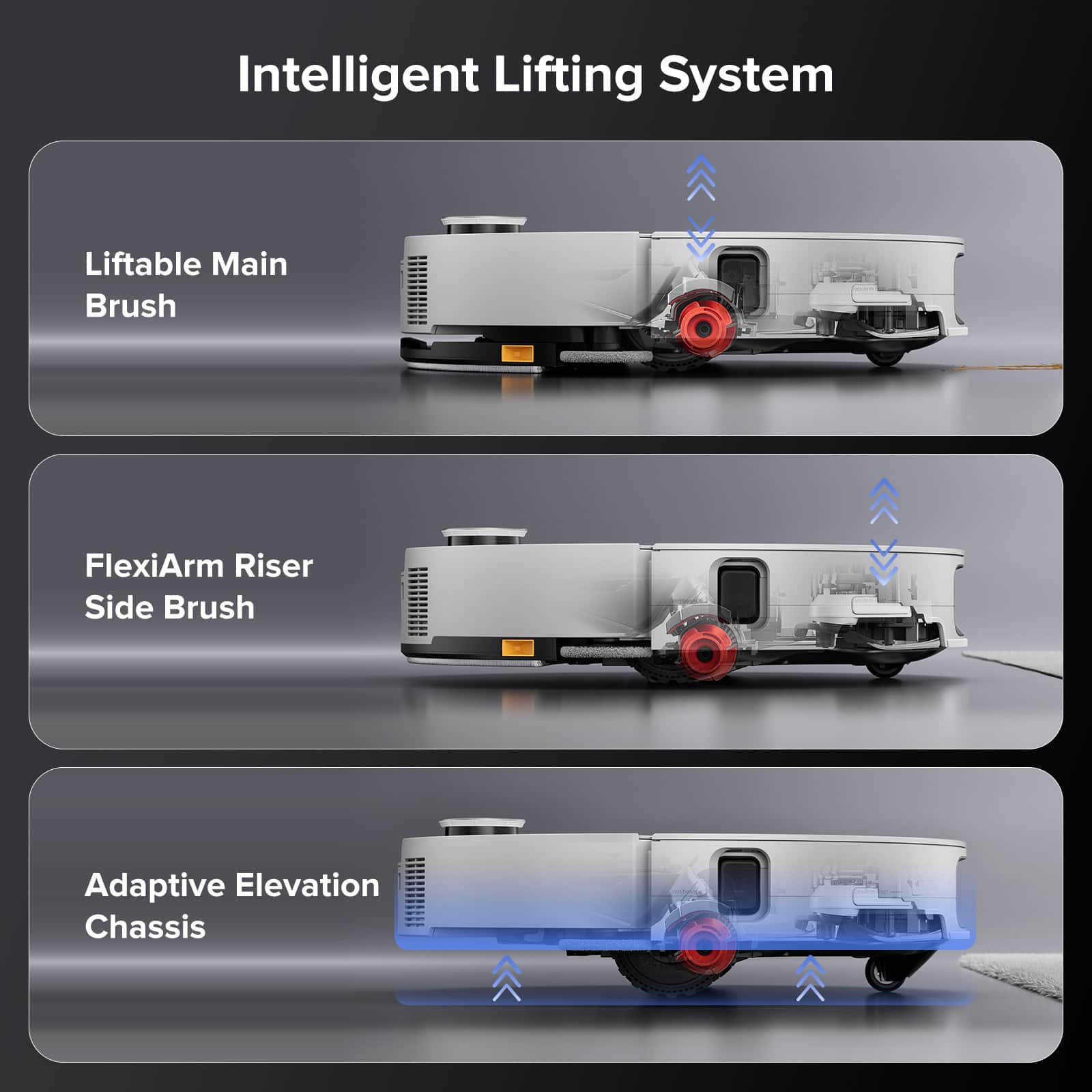
The Saros 10 combines its retractable LiDAR with Reactive AI 3.0 obstacle recognition. This dual-system approach means the robot can both map efficiently and avoid obstacles intelligently. The AdaptiLift Chassis can actually raise the entire robot to climb over obstacles up to 1.57 inches high—think thick rugs, door thresholds, or charging cables.
For homes with home theater setups, this navigation sophistication matters significantly. Entertainment centers often have complex cable management, various height transitions between rugs and hard floors, and tight spaces around equipment stands. The Roborock's ability to map precisely while avoiding delicate cables and climbing over speaker bases makes it particularly well-suited for these environments.
The Eufy X10 Pro Omni takes a fundamentally different approach: deliver flagship-level features at a fraction of the premium price. Released in 2025, this model represents Eufy's commitment to democratizing advanced cleaning technology.
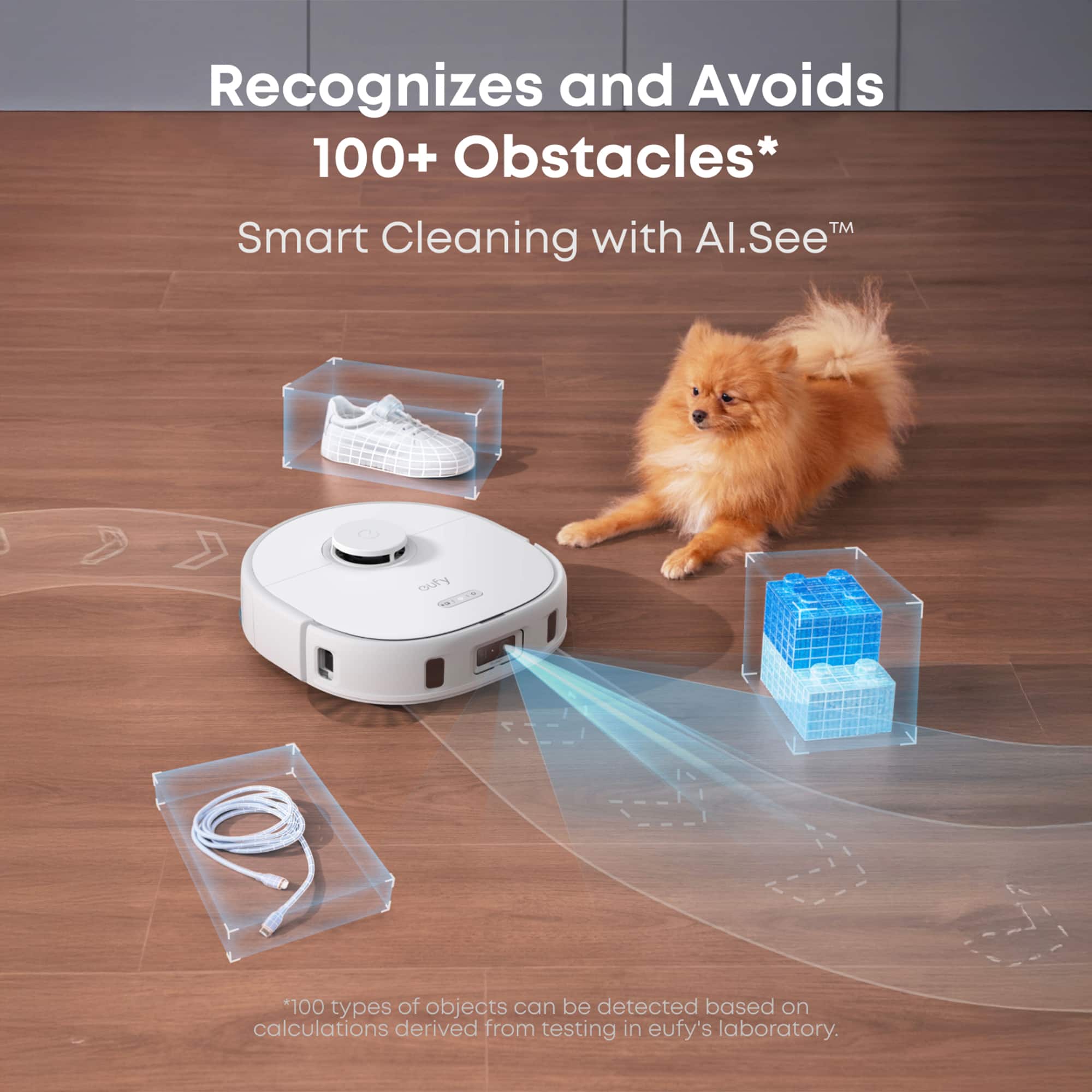
Where the Eufy truly shines is in obstacle avoidance. The AI.See system combines an RGB camera, LED sensors, and structured light technology to recognize over 100 different objects. Based on extensive user feedback and expert reviews, this system consistently outperforms competitors in real-world scenarios.
The practical difference is significant: while premium robots might avoid obvious obstacles like furniture, the Eufy can distinguish between a sock (which it can push aside) and a charging cable (which it should navigate around carefully). This intelligence means fewer stuck situations and less pre-cleaning pickup required.
For home theater environments, this obstacle recognition is particularly valuable. The X10 Pro Omni can identify and carefully navigate around speaker cables, subwoofer power cords, and equipment without getting tangled or causing damage. The system works effectively even in low-light conditions, which is common in dedicated media rooms.
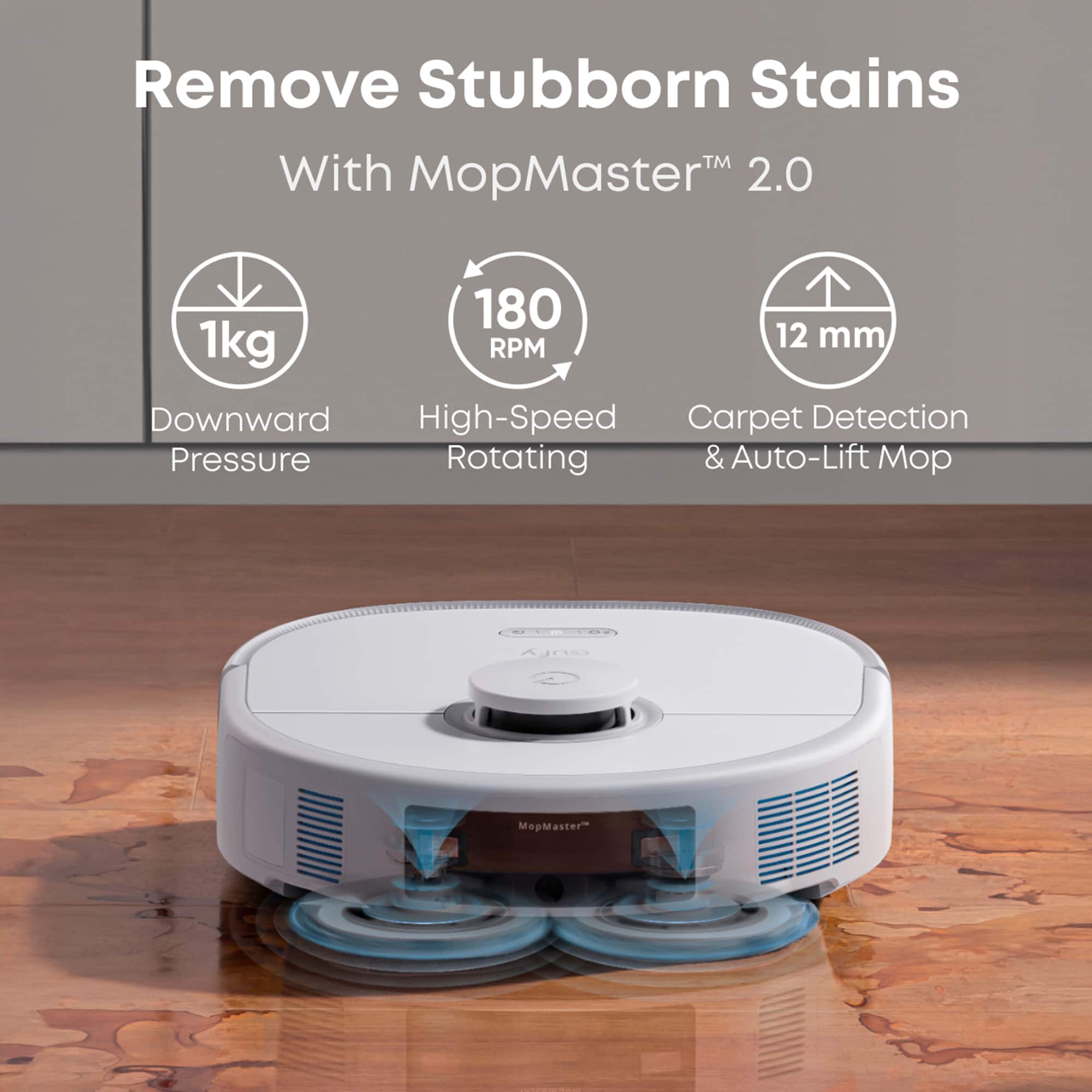
The Eufy's MopMaster 2.0 system demonstrates that smart engineering can sometimes trump raw specifications. The dual spinning mop pads rotate at 180 RPM while applying 1 kg (about 2.2 pounds) of downward pressure. This combination creates a scrubbing action that's genuinely effective at removing dried stains.
User reviews consistently praise the X10 Pro Omni's ability to remove stubborn marks like dried coffee spills or juice stains—tasks that many robot mops struggle with. The mop pads automatically lift 12mm when carpet is detected, preventing wet carpets while still allowing thorough hard floor cleaning.
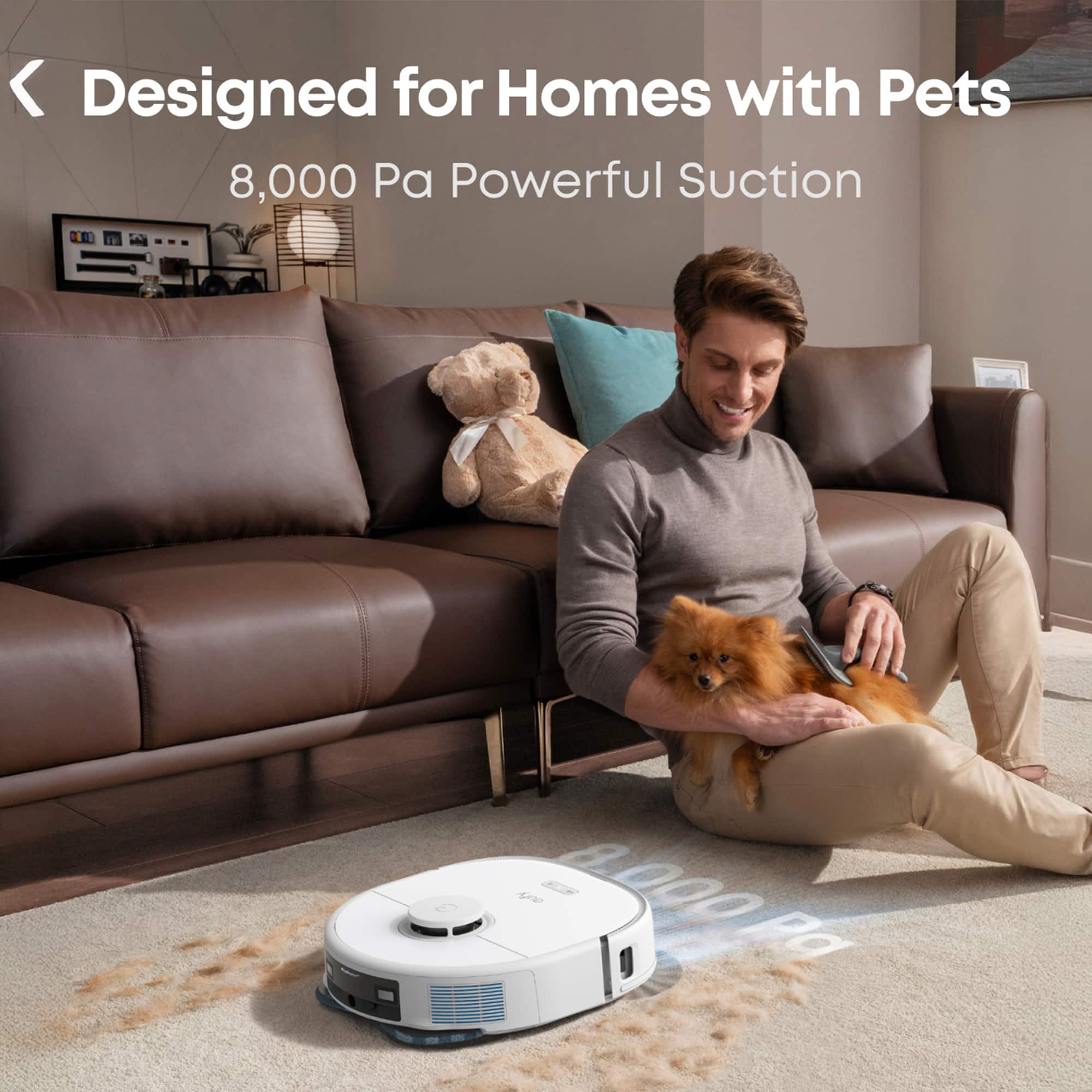
While the Eufy operates with 8,000 Pa suction—significantly less than the Roborock's 22,000 Pa—real-world cleaning results tell a more nuanced story. Expert testing reveals that the Eufy excels at carpet deep cleaning, effectively removing embedded sand and debris despite its lower suction rating. This demonstrates that effective cleaning depends on more than just raw power—brush design, airflow patterns, and cleaning algorithms all contribute to results.
The quieter operation at 57 dB versus the Roborock's 68 dB makes a noticeable difference in daily use. That 11-decibel difference means the Eufy is roughly half as loud to human ears, making it more suitable for cleaning while watching movies or during quiet activities.
Raw suction numbers make for impressive marketing, but real-world performance is more complex. The Roborock Saros 10's 22,000 Pa rating suggests overwhelming power, and for certain tasks—particularly thick carpets with embedded debris—this advantage is real and measurable.
However, excessive suction can actually hurt performance with lightweight debris. Too much airflow can scatter cereal pieces or paper scraps instead of picking them up. The engineering challenge is managing airflow to optimize pickup without creating mess, which both manufacturers handle differently.
The Eufy X10 Pro Omni's 8,000 Pa rating might seem modest by comparison, but expert testing shows it handles most common cleaning tasks effectively. The difference becomes apparent mainly with thick carpets or when dealing with particularly stubborn embedded debris.
Navigation intelligence often matters more than raw cleaning power for user satisfaction. A robot that gets stuck frequently or misses areas will frustrate users regardless of its suction capability.
The Roborock's RetractSense system is genuinely innovative, allowing it to clean spaces other robots cannot reach. However, user feedback suggests the Eufy's AI.See obstacle avoidance might be more consistently reliable in complex environments.
For home theater applications, both systems offer advantages. The Roborock can clean under low entertainment centers that other robots cannot reach, while the Eufy navigates complex cable setups with fewer stuck incidents.
The Roborock Saros 10's 220-minute runtime significantly exceeds the Eufy's 120-minute capacity. This difference matters primarily for larger homes or when running multiple cleaning passes.
For homes under 2,000 square feet, the Eufy's runtime proves sufficient for complete cleaning cycles. Larger homes or those wanting daily deep cleaning might benefit from the Roborock's extended endurance.
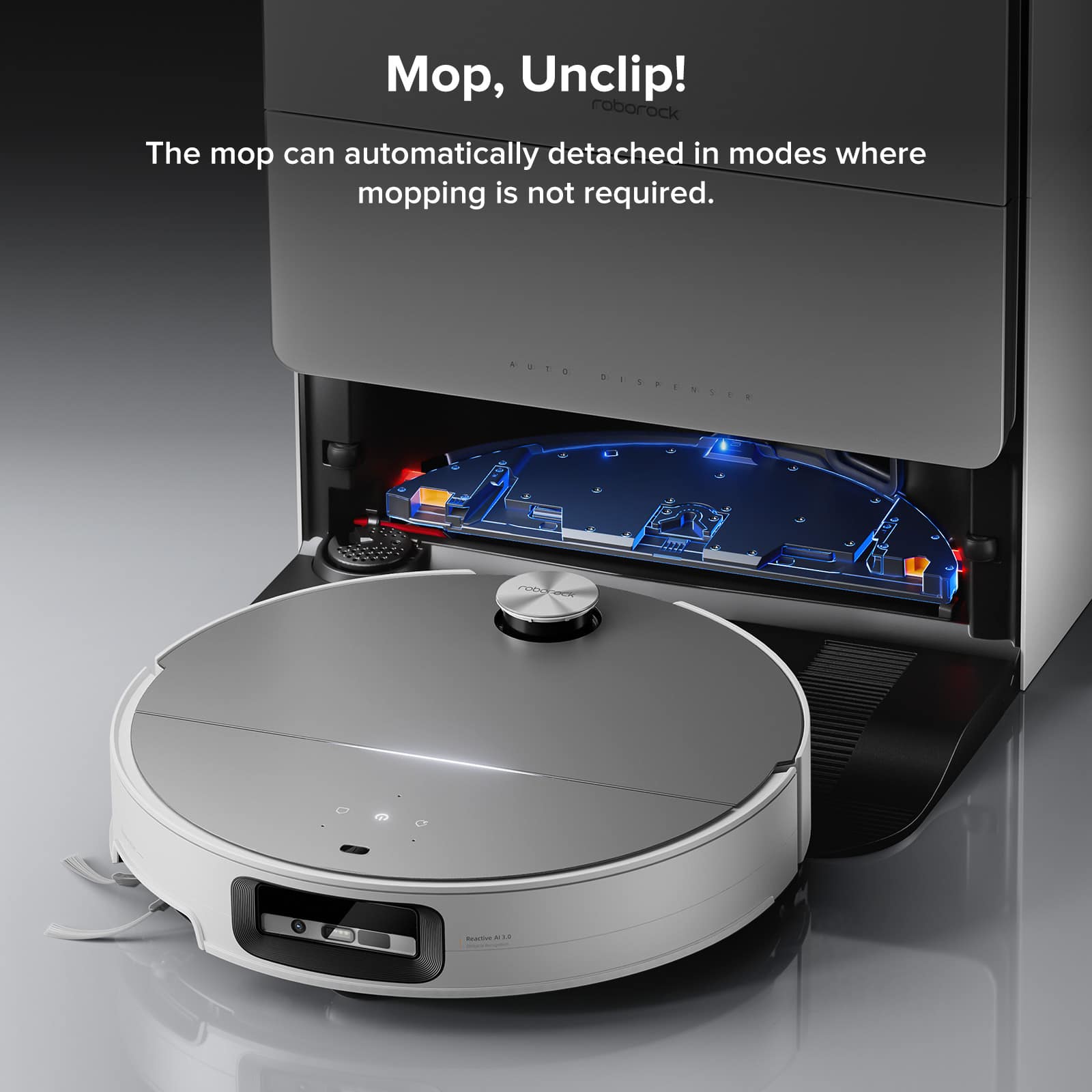
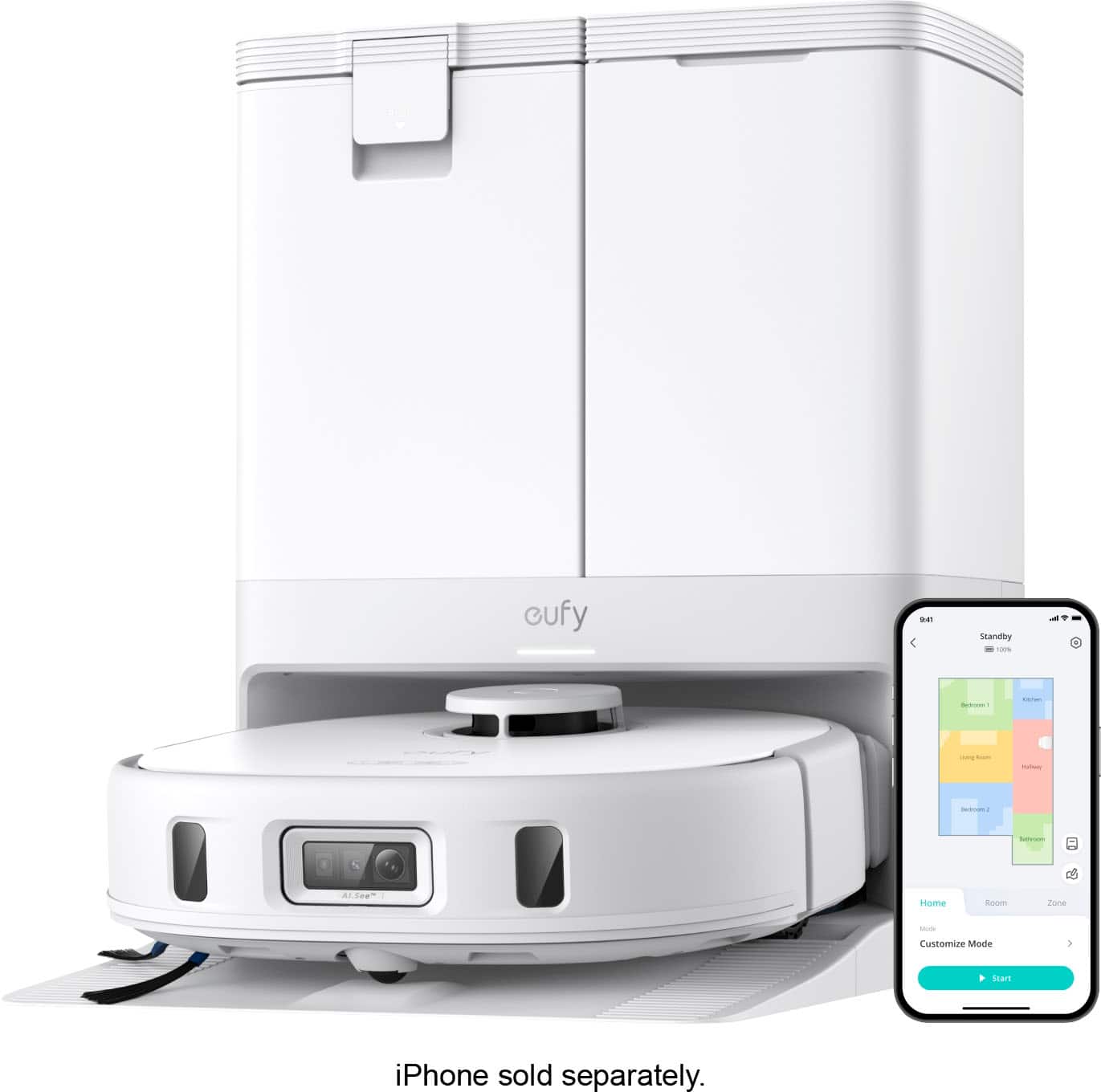
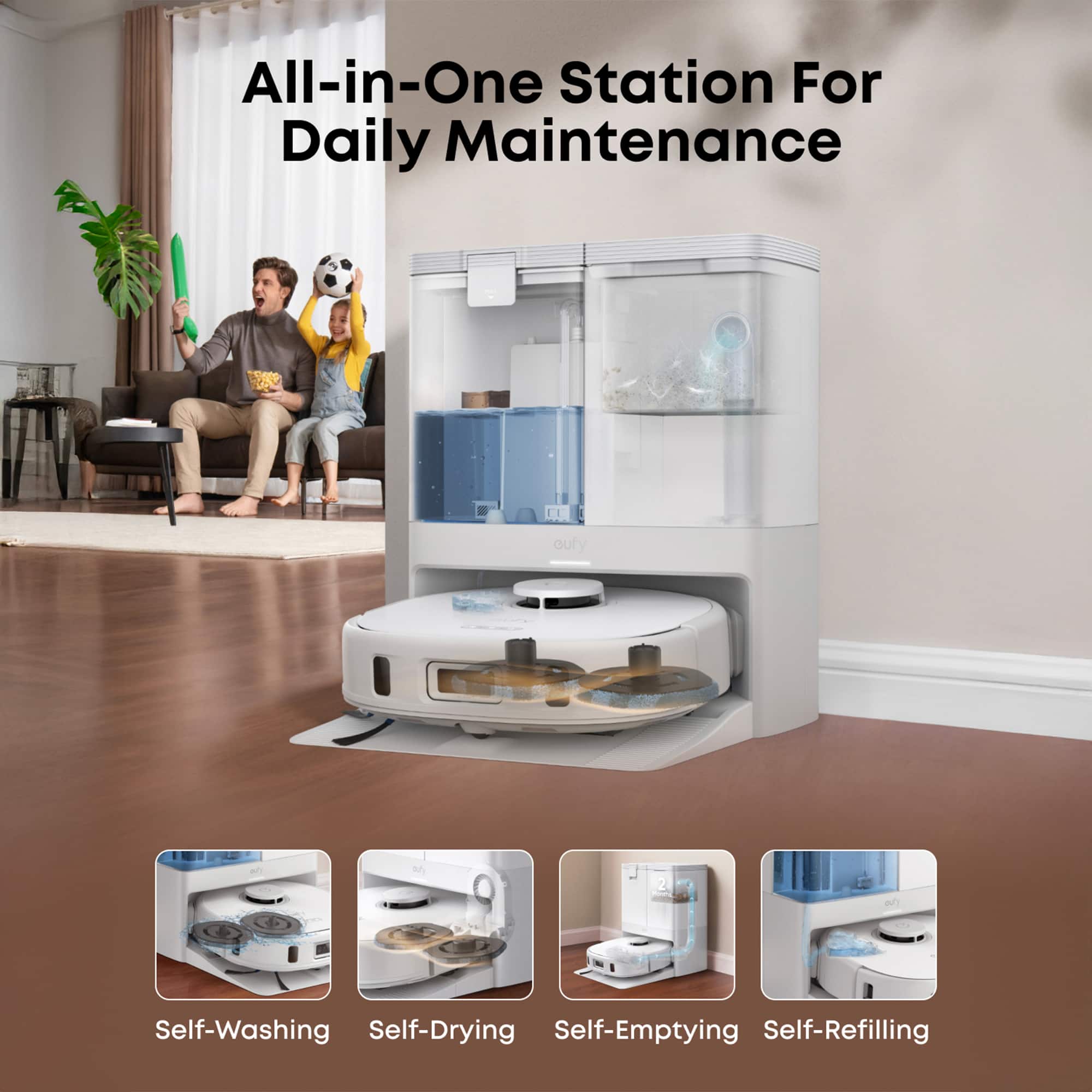
Both robots include comprehensive base stations that handle emptying, mop washing, and maintenance. These systems transform robot vacuums from daily-maintenance devices into truly hands-off cleaning solutions.
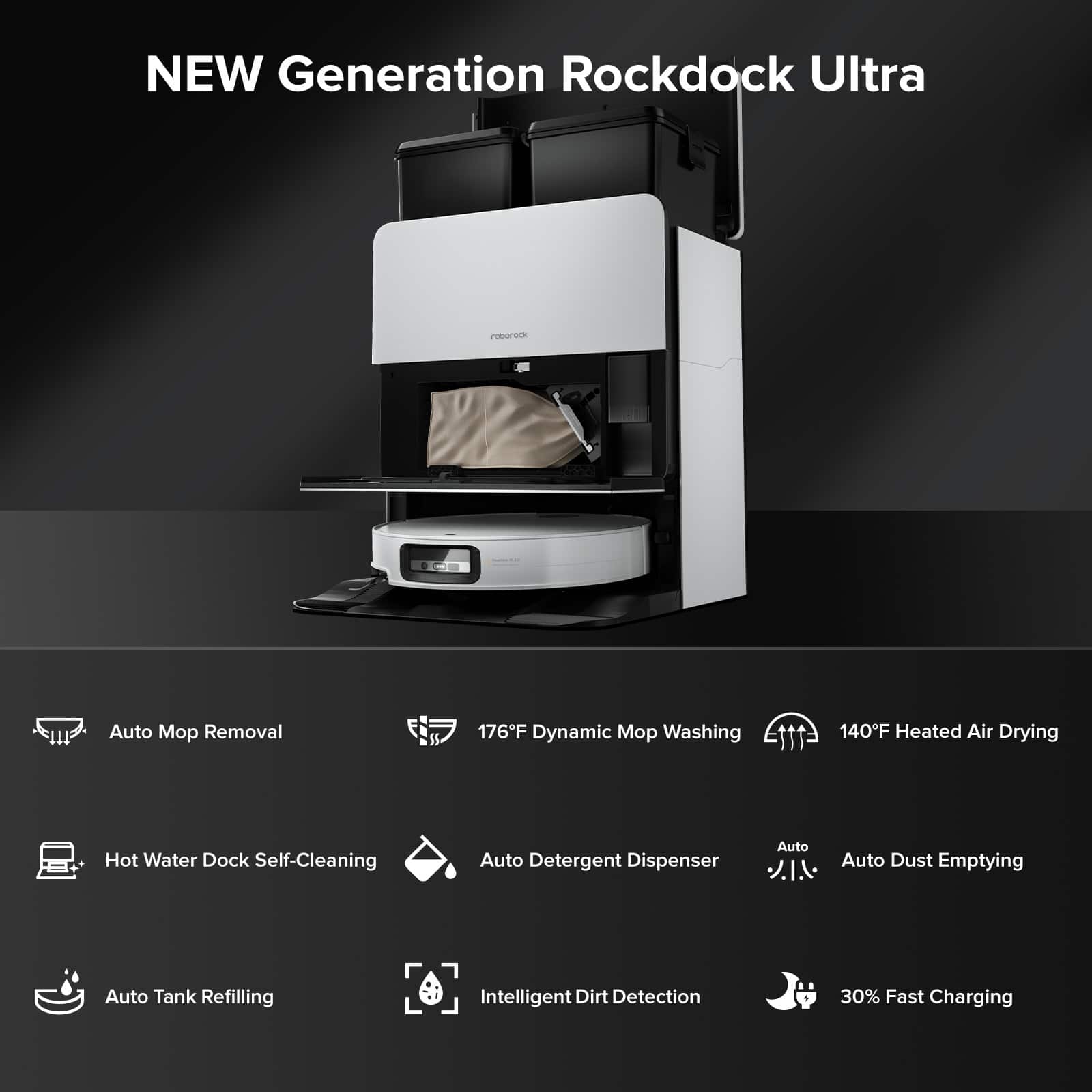
The Roborock's RockDock Ultra 2.0 and Eufy's All-in-One Omni Station offer similar functionality, though with different approaches. Both heat-dry mop pads to prevent odors, automatically empty dustbins, and refill water tanks.
The practical difference comes in reliability and refinement. Premium systems typically offer more consistent performance and better long-term durability, though the Eufy receives positive reviews for its automation reliability despite the lower price point.
You have a large home exceeding 2,000 square feet where extended runtime matters. The premium makes sense if you have thick carpets requiring maximum suction power, or if you have substantial pet hair where the anti-tangle system provides daily value.
The ultra-thin profile offers unique value if your home has low-clearance furniture that other robots cannot clean under. If you prioritize cutting-edge technology and don't mind paying for incremental performance improvements, the Saros 10 delivers.
For dedicated home theater rooms with low equipment stands and complex layouts, the combination of slim profile and powerful cleaning can justify the premium.
You want flagship features without flagship pricing. The X10 Pro Omni delivers excellent performance for most homes at a fraction of the premium cost.
If obstacle avoidance and navigation intelligence are priorities—particularly important in homes with children's toys, pet items, or complex layouts—the Eufy's AI.See system consistently outperforms more expensive alternatives.
The superior mopping performance makes it ideal for homes prioritizing hard floor maintenance. If you live in a noise-sensitive environment or prefer quieter operation, the Eufy's lower operating volume is genuinely beneficial.
For home theater setups with extensive cable management, the exceptional obstacle avoidance often proves more valuable than raw suction power.
The robot vacuum market in 2025 offers genuinely impressive technology at both ends of the price spectrum. The Roborock Saros 10 justifies its premium positioning with innovative engineering, maximum cleaning power, and unique capabilities like ultra-thin design and advanced anti-tangle systems.
However, the Eufy X10 Pro Omni demonstrates that excellent performance doesn't require premium pricing. Its outstanding obstacle avoidance, effective mopping, and comprehensive automation deliver most users everything they need for automated floor maintenance.
For most homes, the Eufy represents exceptional value, delivering perhaps 85% of flagship performance at roughly 30% of the cost. The Roborock makes sense only if you specifically need its unique advantages and can justify the substantial price premium.
The choice ultimately depends on your specific needs, home layout, and budget priorities. Both robots represent the impressive state of modern cleaning automation—you really can't go wrong with either, though your wallet will certainly notice the difference.
| Roborock Saros 10 | Eufy X10 Pro Omni |
|---|---|
| Suction Power - Higher numbers mean better carpet cleaning and pet hair pickup | |
| 22,000 Pa (exceptional for thick carpets) | 8,000 Pa (adequate for most homes) |
| Height Profile - Determines ability to clean under furniture | |
| 3.14 inches (ultra-thin, reaches under most furniture) | 4.47 inches (standard height, limited under-furniture access) |
| Battery Runtime - Affects how much area can be cleaned per cycle | |
| 220 minutes (excellent for large homes) | 120 minutes (sufficient for most homes under 2,000 sq ft) |
| Noise Level - Important for cleaning during daily activities | |
| 68 dB (noticeably louder operation) | 57 dB (significantly quieter, better for noise-sensitive environments) |
| Obstacle Avoidance System - Prevents getting stuck and protects your belongings | |
| Reactive AI 3.0 with retractable LiDAR (good performance) | AI.See with 100+ object recognition (exceptional performance, best-in-class) |
| Anti-Tangle Technology - Critical for homes with pets or long hair | |
| Certified Dual Anti-Tangle System (0% hair tangling guarantee) | Pro-Detangle Comb in base station (good but not comprehensive) |
| Mopping System - Effectiveness at removing stains and scrubbing floors | |
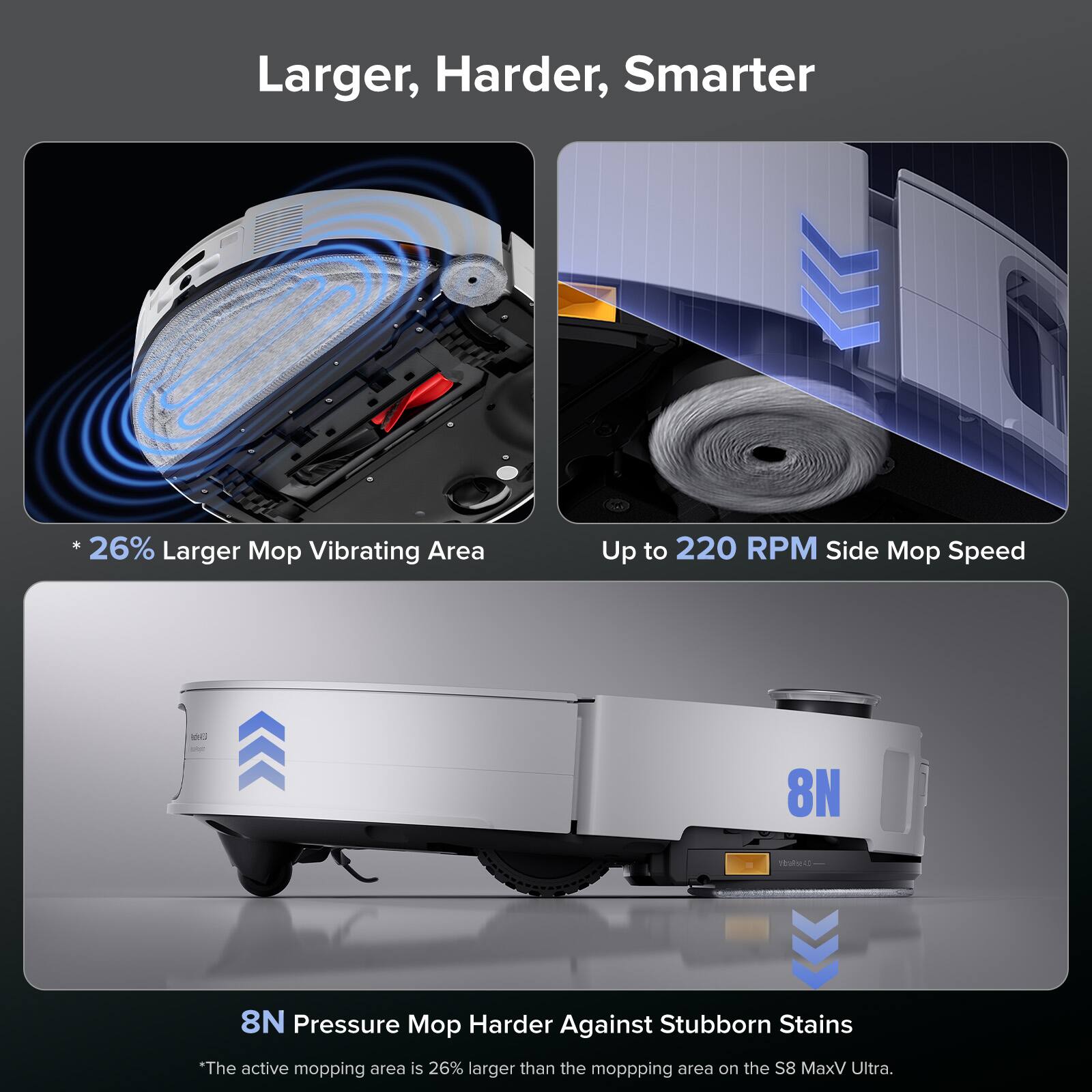
| VibraRise 4.0 vibrating pads (4,000 vibrations/min) | MopMaster 2.0 dual spinning pads (1kg pressure, excellent stain removal) |
| Navigation Technology - Affects cleaning efficiency and coverage | |
| RetractSense with LiDAR + cameras (innovative retractable turret) | iPath LiDAR + AI mapping (reliable and efficient) |
| Base Station Features - Determines how hands-off the experience is | |
| RockDock Ultra 2.0 (10-in-1 functions, heated washing/drying) | All-in-One Omni Station (self-emptying, mop wash/dry, refilling) |
| Dustbin Capacity - Affects how often you need to empty manually | |
| 270ml (slightly smaller) | 330ml (60ml larger capacity) |
| Carpet Detection - Automatically adjusts cleaning based on surface type | |
| Auto-lifts mop 18mm, boosts suction on carpets | Auto-lifts mop 12mm, moderate suction boost |
| Smart Home Integration - Compatibility with voice assistants and automation | |
| Matter 2.0, Alexa, Google, Siri (cutting-edge compatibility) | Standard smart home support (Alexa, Google compatibility) |
| Value Proposition - Performance delivered relative to cost | |
| Premium features with flagship pricing | Flagship performance at budget-friendly pricing |
The Roborock Saros 10 delivers significantly stronger suction at 22,000 Pa compared to the Eufy X10 Pro Omni's 8,000 Pa. This means the Roborock excels at deep carpet cleaning and embedded debris removal, while the Eufy provides adequate suction for most homes with hard floors and low-pile carpets.
The Roborock Saros 10 is superior for pet owners thanks to its Certified Dual Anti-Tangle System that guarantees 0% hair tangling and its powerful 22,000 Pa suction for pet hair pickup. While the Eufy X10 Pro Omni includes a Pro-Detangle Comb, it's not as comprehensive as the Roborock's advanced anti-tangle technology.
The Roborock Saros 10 is the clear winner with its ultra-thin 3.14-inch profile, making it the slimmest robot vacuum available. This allows it to clean under furniture that the standard-height Eufy X10 Pro Omni at 4.47 inches simply cannot reach.
The Eufy X10 Pro Omni excels in obstacle avoidance with its AI.See system that recognizes over 100 objects and consistently receives praise for avoiding cables, shoes, and pet waste. While the Roborock Saros 10 has good obstacle avoidance with Reactive AI 3.0, the Eufy is considered best-in-class for navigation around household items.
The Eufy X10 Pro Omni operates significantly quieter at 57 dB compared to the Roborock Saros 10's 68 dB. This 11-decibel difference makes the Eufy noticeably less disruptive during cleaning cycles, making it better for noise-sensitive environments or cleaning while watching TV.
The Eufy X10 Pro Omni generally performs better at mopping with its dual spinning MopMaster 2.0 pads that apply 1kg of pressure and excel at removing dried stains. The Roborock Saros 10 uses vibrating VibraRise 4.0 pads with 4,000 vibrations per minute, which is effective but may not match the Eufy's stain removal capabilities.
The Roborock Saros 10 offers superior battery life with 220 minutes of runtime compared to the Eufy X10 Pro Omni's 120 minutes. This makes the Roborock better suited for large homes or multiple cleaning passes, while the Eufy is adequate for most homes under 2,000 square feet.
The Eufy X10 Pro Omni provides exceptional value by delivering flagship-level features at a fraction of premium pricing. While the Roborock Saros 10 offers superior specs and innovative features, the Eufy delivers most of the same functionality for significantly less money, making it the better value choice for most buyers.
The Roborock Saros 10 is better suited for large homes due to its 220-minute battery life and powerful 22,000 Pa suction that can handle extensive cleaning sessions. The Eufy X10 Pro Omni's 120-minute runtime may require recharging during cleaning cycles in very large spaces, though it's sufficient for most average-sized homes.
Both robots work well in home theater environments, but for different reasons. The Eufy X10 Pro Omni excels with superior obstacle avoidance around complex cable setups and quieter operation that won't disturb viewing. The Roborock Saros 10 can clean under low entertainment centers that other robots cannot reach with its ultra-thin profile.
The Roborock Saros 10 requires less ongoing maintenance thanks to its Certified Dual Anti-Tangle System that eliminates hair wrapping around brushes. Both the Roborock and Eufy X10 Pro Omni feature comprehensive base stations that handle emptying and mop maintenance, but the Roborock's anti-tangle technology reduces manual brush cleaning.
For first-time buyers, the Eufy X10 Pro Omni is often the better choice due to its exceptional obstacle avoidance that reduces stuck situations, quieter operation, and excellent value proposition. The Roborock Saros 10 is ideal if you have specific needs like ultra-low furniture clearance, thick carpets requiring maximum suction, or heavy pet hair that benefits from premium anti-tangle technology.
We've done our best to create useful and informative comparisons to help you decide what product to buy. Our research uses advanced automated methods to create this comparison and perfection is not possible - please contact us for corrections or questions. These are the sites we've researched in the creation of this article: bestbuy.com - androidauthority.com - rtings.com - vacuumwars.com - vacuumwars.com - youtube.com - forums.macrumors.com - youtube.com - youtube.com - rtings.com - youtube.com - us.roborock.com - target.com - galaxus.at - vacuumwars.com - youtube.com - vacuumwars.com - techtongbo.com - us.roborock.com - us.roborock.com - youtube.com - roboselector.com - support.roborock.com - youtube.com - vacuumwars.com - crutchfield.com - rtings.com - service.eufy.com - youtube.com - eufy.com - gadgetoid.com - eufy.com - thecarpentersdaughter.co.uk - bestbuy.com - youtube.com - homedepot.com - eufy.com - ausdroid.net - eufy.com - bestbuy.com - service.eufy.com - newegg.com

Privacy Policy
Terms and Conditions - Affiliate Policy
Home Security
© Copyright 2008-2026.
11816 Inwood Rd #1211, Dallas, TX 75244