


Robot vacuums have evolved dramatically since their early days of bumping randomly around rooms. Today's premium models are sophisticated cleaning machines that combine powerful suction with intelligent mopping systems, all managed by AI-powered navigation that can recognize your pet's toys and avoid your charging cables. But with flagship models now costing well over a thousand dollars, the big question isn't just which robot vacuum is best—it's whether you actually need all those premium features.
The ECOVACS Deebot T80 Omni and Roborock Saros 10 represent two compelling but very different approaches to this question. Released in 2025, both models showcase the latest advances in robot vacuum technology, from self-cleaning mop systems to AI-powered obstacle detection. However, they target distinctly different buyers: the T80 Omni delivers flagship features at a more accessible price point, while the Saros 10 pushes performance boundaries regardless of cost.
Before diving into specifics, it's worth understanding what makes these machines tick. Modern robot vacuum and mop combinations are essentially mobile cleaning stations with three core systems working together. The navigation system uses sensors like LiDAR (Light Detection and Ranging—essentially laser-based radar) and cameras to map your home and plan efficient cleaning paths. The cleaning system combines powerful suction motors with brush designs optimized for different debris types, plus mopping mechanisms for wet cleaning. Finally, the base station handles maintenance tasks that would otherwise require constant human intervention.
The magic happens when these systems work seamlessly together. A top-tier robot vacuum should map your home accurately, clean thoroughly without getting stuck, and return to its base for automatic maintenance—emptying its dustbin, washing its mop, and refilling water tanks without any input from you.
What's particularly exciting about 2025's models is how much the technology has matured. Early robot vacuums were notorious for getting stuck under furniture, missing obvious dirt, or leaving streaky mop trails. Today's best models have largely solved these problems through better sensors, more powerful motors, and smarter software algorithms.
When evaluating robot vacuums, raw suction power matters more than marketing materials might suggest. Measured in Pascals (Pa)—a unit of pressure that indicates how much force the vacuum can generate—higher numbers generally translate to better debris pickup, especially on carpets where particles get embedded in fibers.
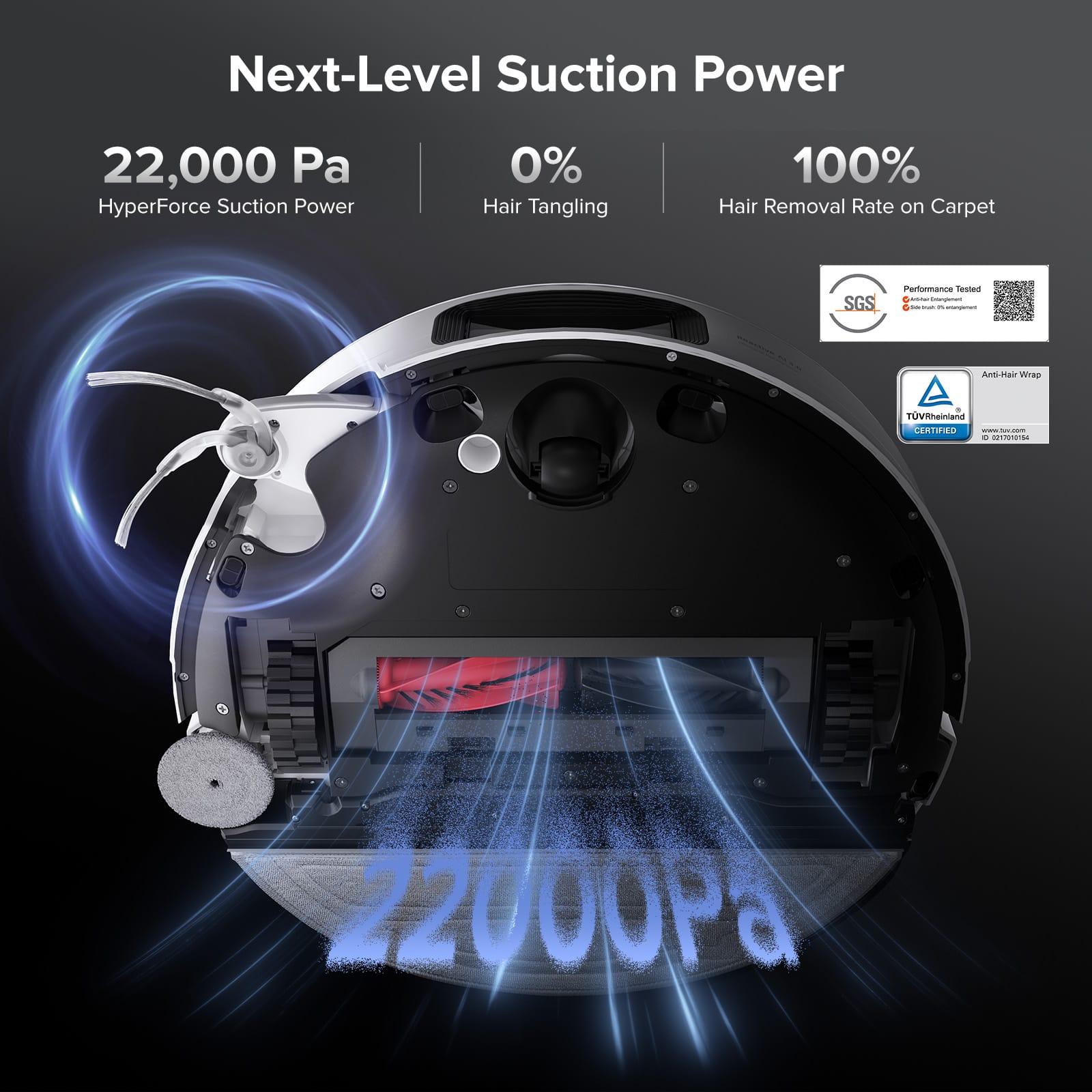
The Roborock Saros 10 delivers 22,000 Pa of suction, while the ECOVACS T80 Omni provides 18,000 Pa. That 22% difference might seem modest on paper, but it creates meaningful performance gaps in real-world use. Based on standardized testing data from multiple review sources, the Saros 10 achieved perfect 100% pickup rates on hardwood floors and 80% on challenging scattered debris carpet tests. The T80 Omni, while still capable, struggles more with deep-pile carpets where its lower suction becomes a limiting factor.
This performance difference becomes particularly noticeable with fine particles like flour or sand, which require sustained airflow to lift from carpet fibers. The Saros 10's additional suction power also means it can maintain cleaning effectiveness even as its filter accumulates dust—something that becomes important during longer cleaning sessions.
However, suction power alone doesn't tell the whole story. Brush design plays a crucial role in how effectively that suction translates to actual debris removal. Both models use sophisticated anti-tangle brush systems, but they take different approaches. The T80 Omni employs its ZeroTangle 3.0 system with a triple-V bristle pattern that guides hair away from the brush assembly, while the Saros 10 uses a DuoDivide brush design that actively prevents hair wrapping through geometric engineering.
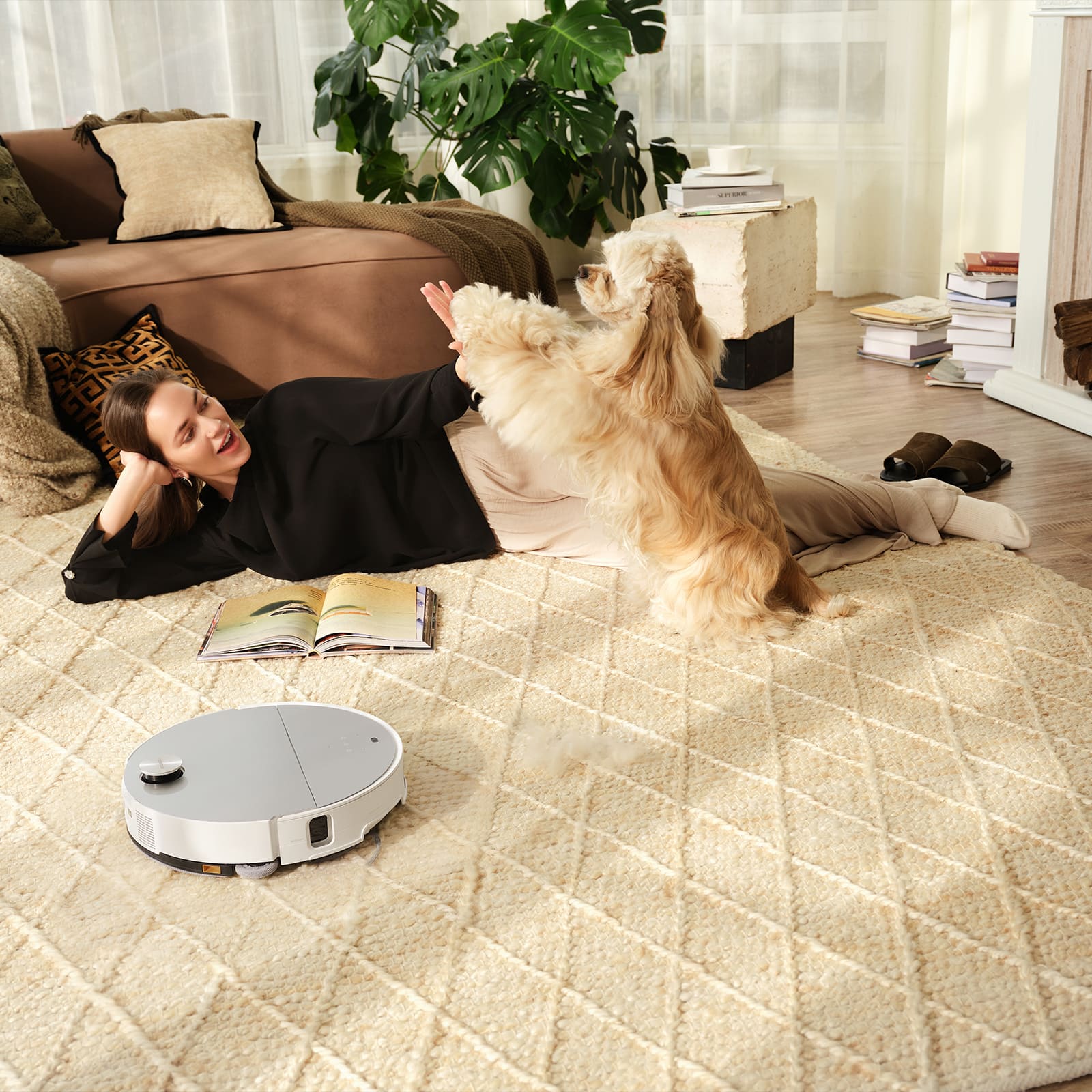
In comprehensive testing evaluations, the Saros 10 achieved literally zero tangles with various hair types, while the T80 Omni, despite its effective anti-tangle design, occasionally required minor maintenance. For households with pets or family members with long hair, this difference in hair management can significantly impact daily usability.
Modern robot vacuum navigation has become surprisingly sophisticated, combining multiple sensor types to create detailed mental maps of your home. Both the Saros 10 and T80 Omni use LiDAR as their primary navigation tool, but they implement it very differently.
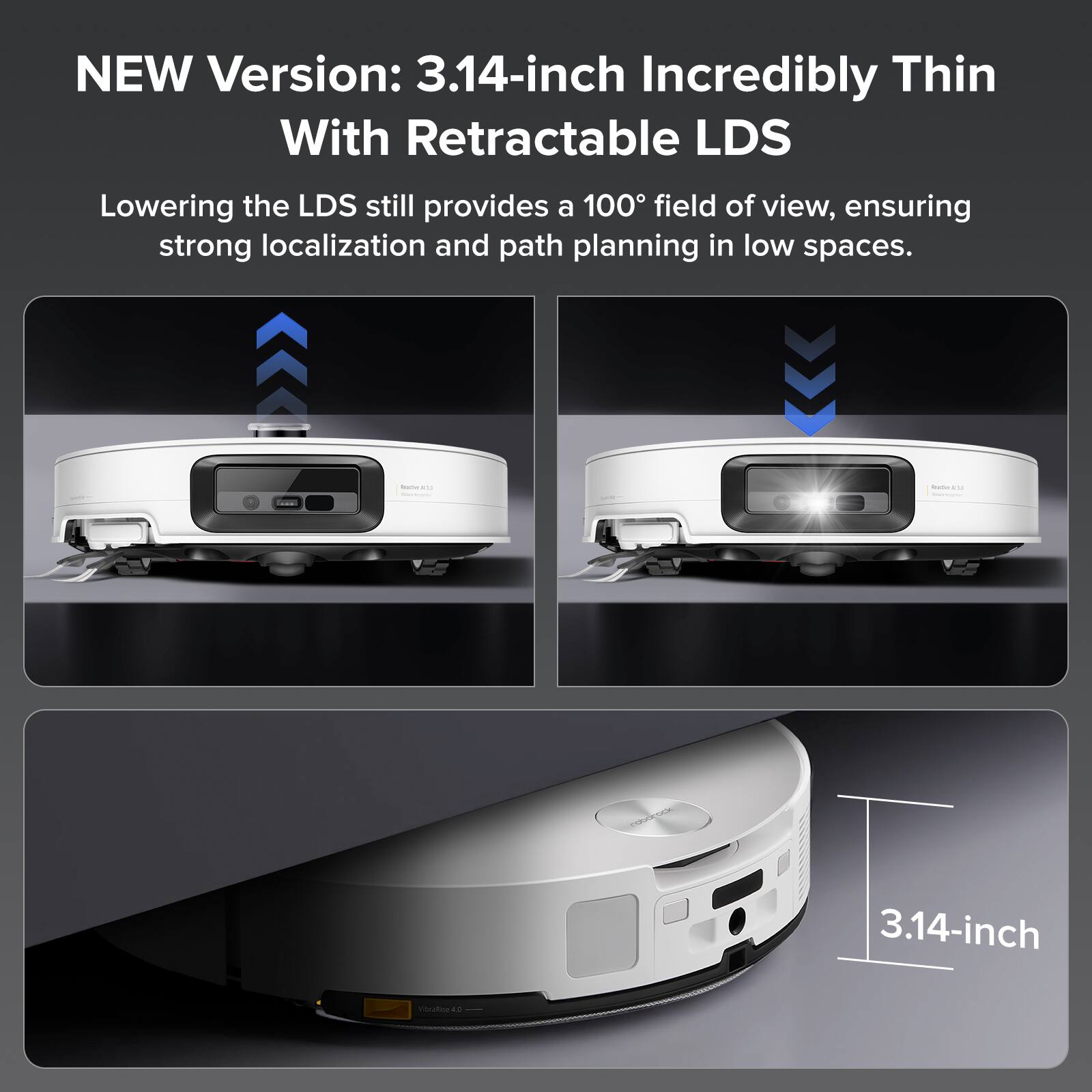
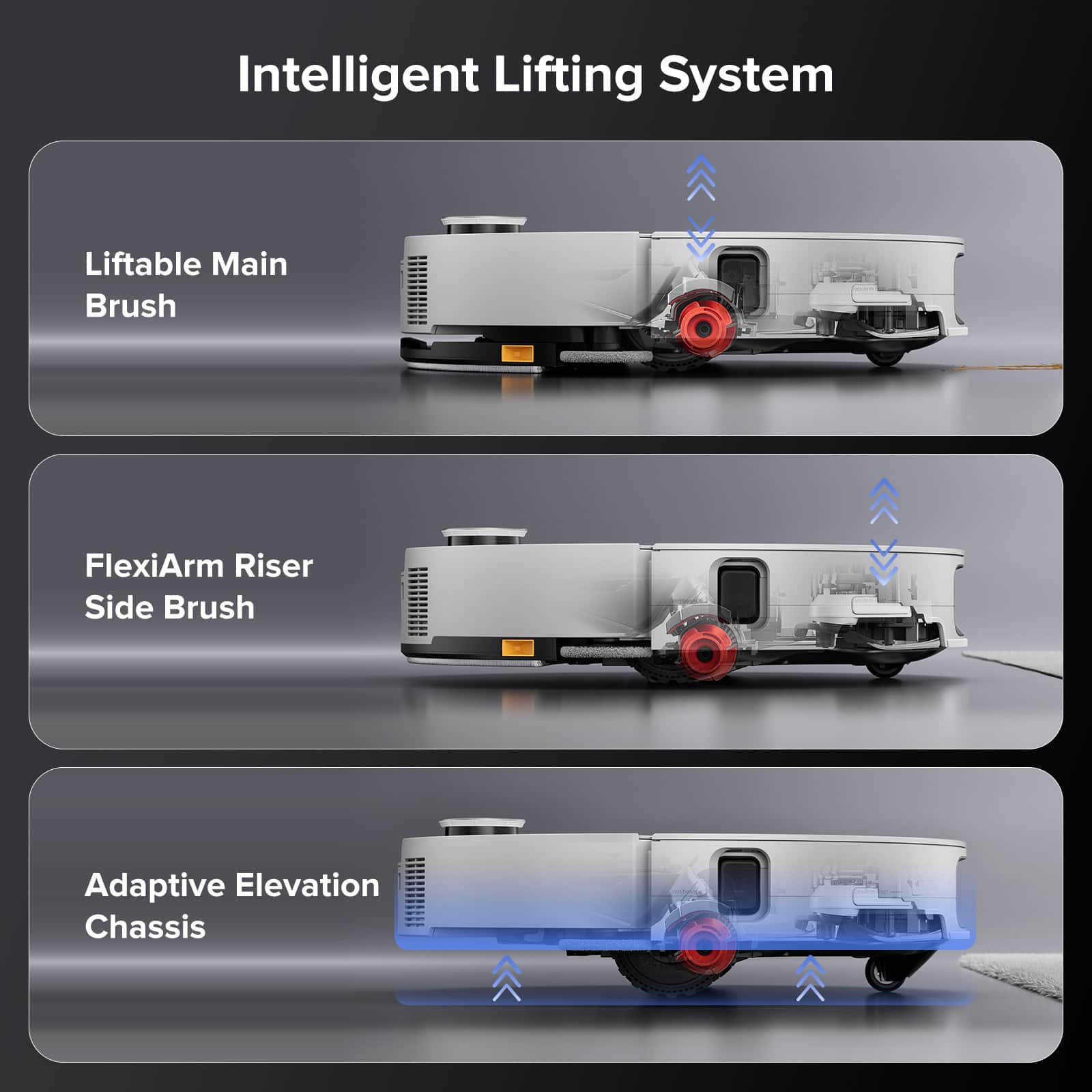
The Saros 10's most impressive innovation is its RetractSense Navigation System. Traditional robot vacuums have fixed LiDAR sensors that stick up from the top, limiting their ability to clean under low furniture. Roborock solved this by engineering a LiDAR turret that automatically retracts into the robot's body when it encounters low-clearance areas. An upward-facing sensor detects when the robot approaches tight spaces, the LiDAR lowers itself, and navigation continues through a combination of cameras and other sensors until the robot emerges and the LiDAR pops back up.
This might sound like a minor convenience feature, but it's transformative for real-world cleaning. At just 3.14 inches tall, the Saros 10 can access spaces under beds, sofas, and entertainment centers that most robot vacuums simply skip. For home theater setups with low-profile TV stands and equipment racks, this capability is particularly valuable—those spaces tend to accumulate dust and pet hair precisely because they're difficult to reach with traditional cleaning tools.
The T80 Omni uses more conventional embedded dToF LiDAR (direct Time-of-Flight, which measures distance by timing laser pulses) combined with its AIVI 3D recognition system. While effective for most cleaning scenarios, it lacks the Saros 10's low-clearance capabilities and gets stuck more frequently in cluttered environments.
Where the navigation differences really matter is in obstacle avoidance. The Saros 10 earned perfect scores in professional obstacle avoidance testing, successfully identifying and navigating around hundreds of object types through its StarSight Autonomous System 2.0. This system combines time-of-flight sensors with RGB cameras to recognize everything from pet bowls to charging cables, shoes to children's toys.
The T80 Omni handles obstacle avoidance competently but not at the same elite level. It recognizes up to 100 object types through its AIVI 3D system—impressive in its own right, but the difference becomes apparent in homes with dynamic layouts or active families where objects frequently move around.
Perhaps nowhere is the philosophical difference between these robots more apparent than in their mopping systems. Both deliver effective floor cleaning, but through completely different mechanical approaches that each have distinct advantages.
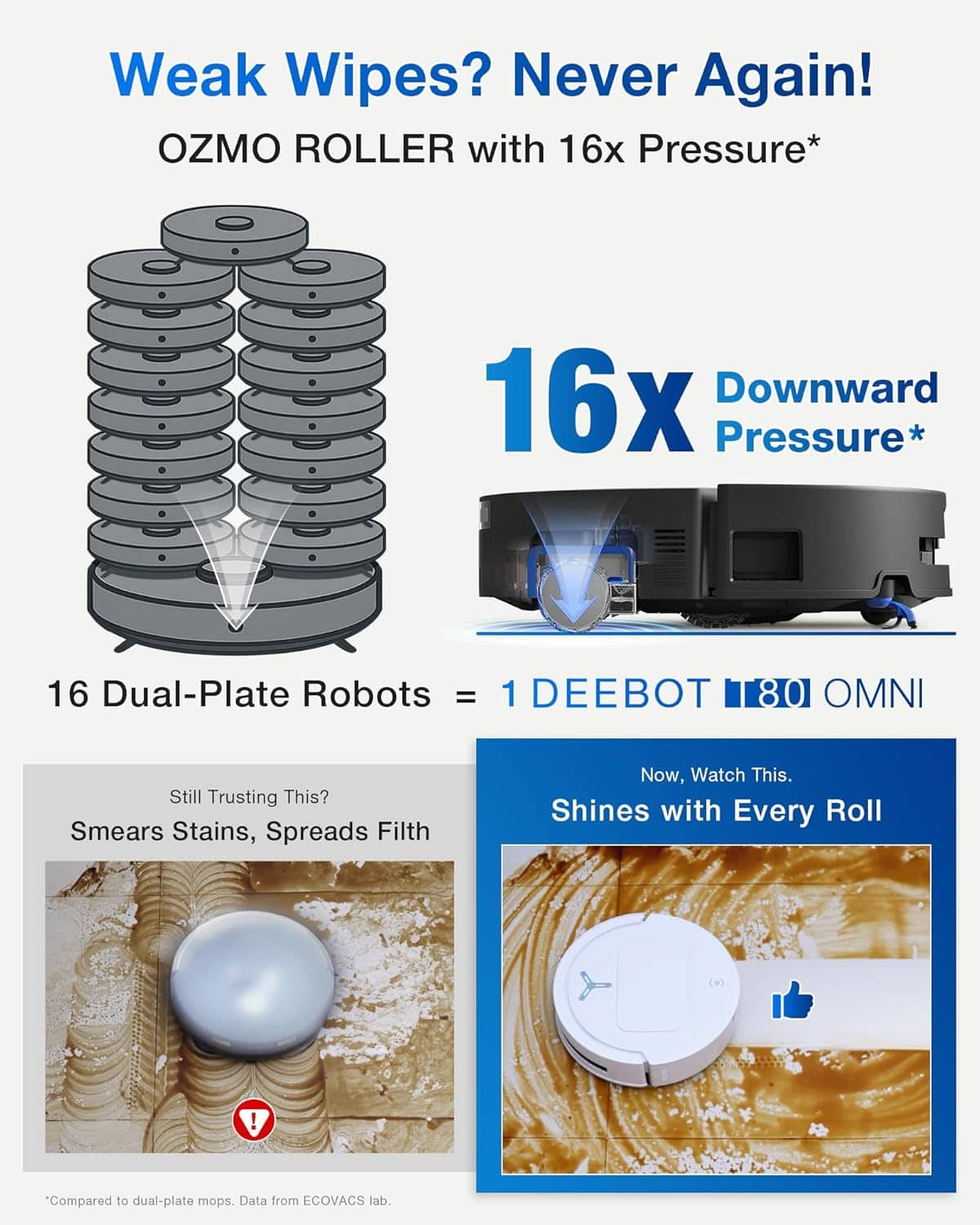
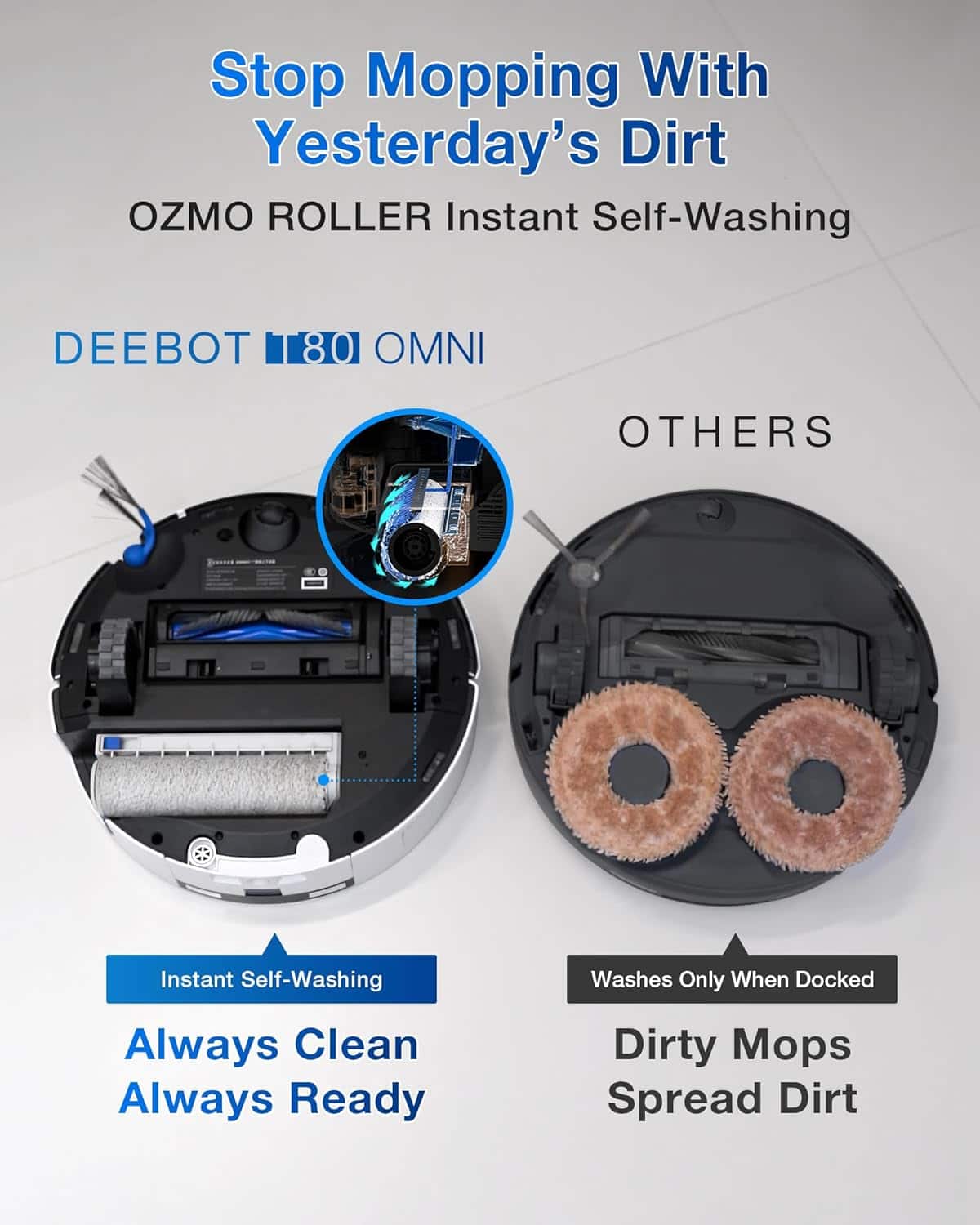
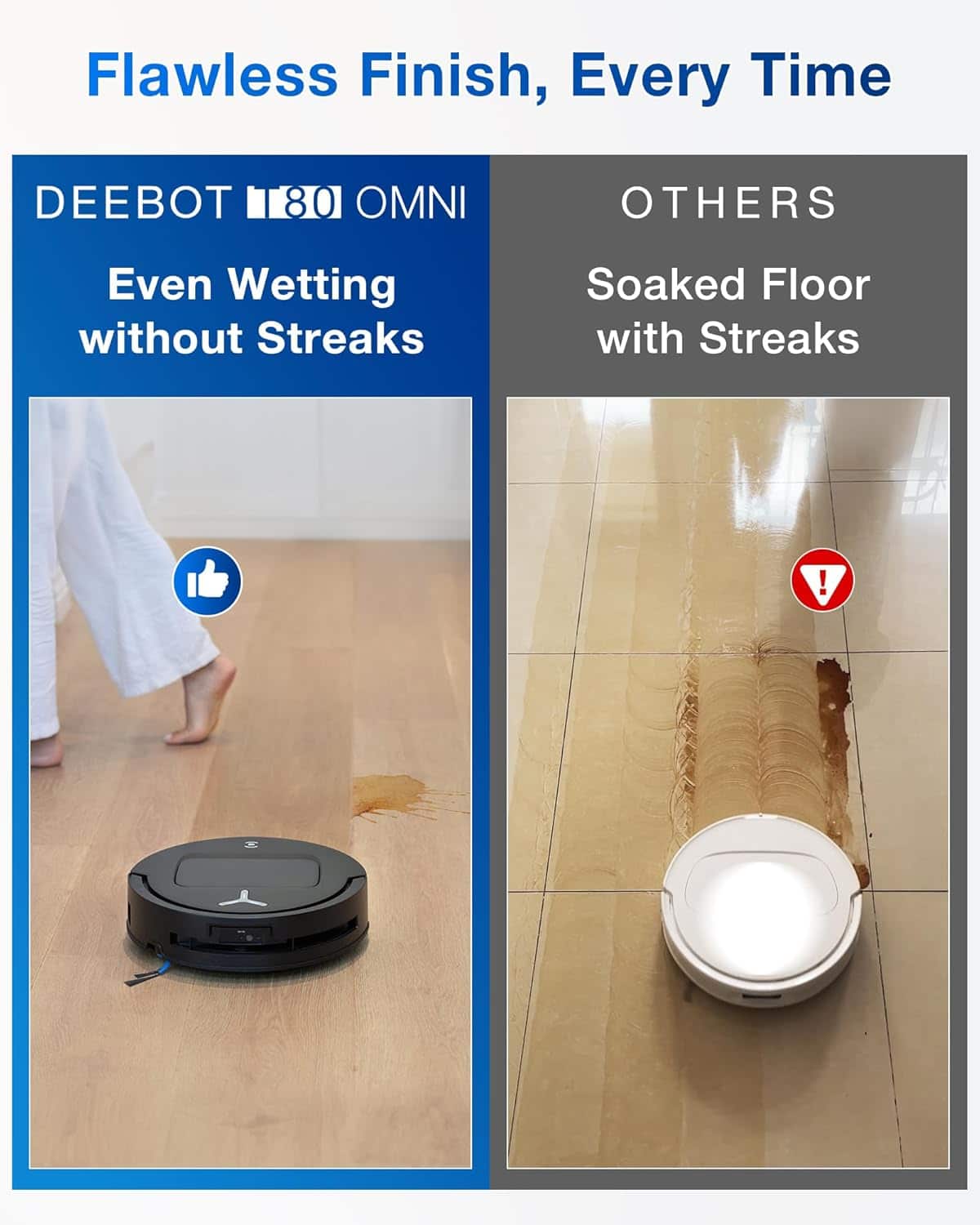
The T80 Omni's OZMO Roller system represents an innovative departure from traditional flat mop pads. Instead of dragging a damp cloth across floors, it uses a continuous roller that spins at 200 RPM while applying 3,700 Pa of downward pressure. Fresh water continuously wets one side of the roller while a scraper mechanism removes dirty water from the other side, preventing the cross-contamination that plagues many robot mops.
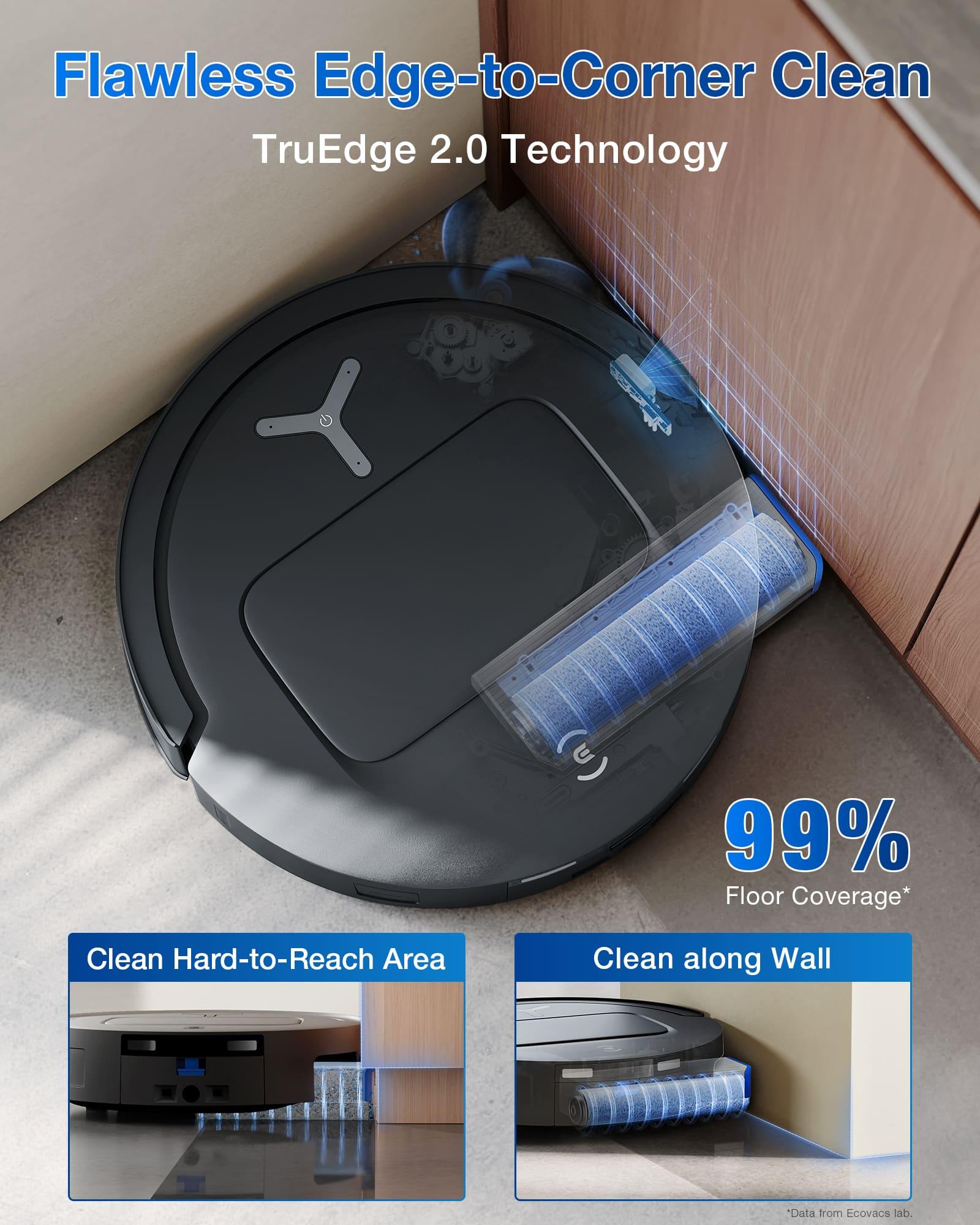
This roller approach excels at general maintenance mopping and produces remarkably streak-free results. The continuous clean-water supply means the mop never gets progressively dirtier as it works, while the TruEdge 2.0 system allows the roller to extend dynamically for better edge cleaning. For daily maintenance of sealed hardwood, tile, or laminate floors, this system is genuinely impressive.
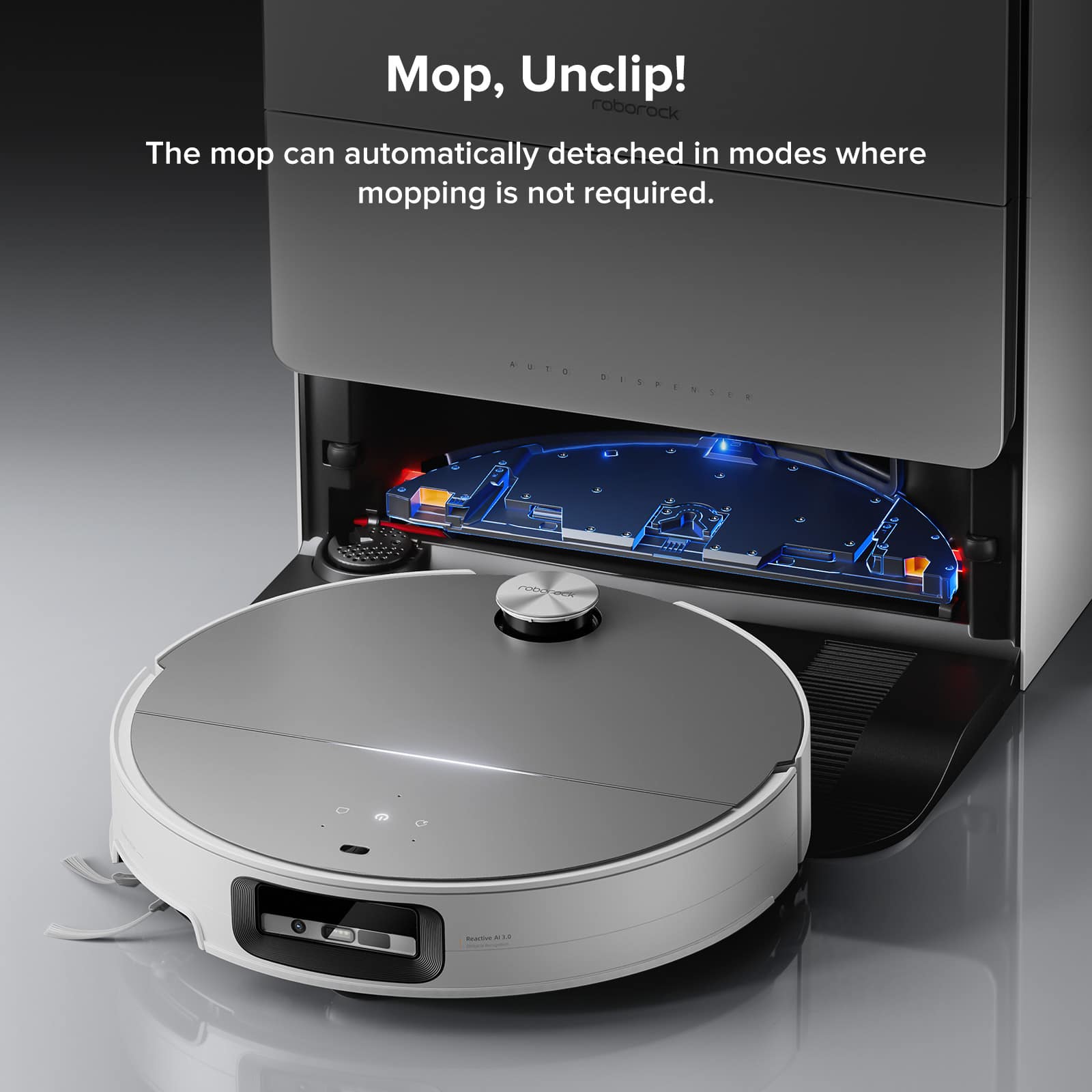
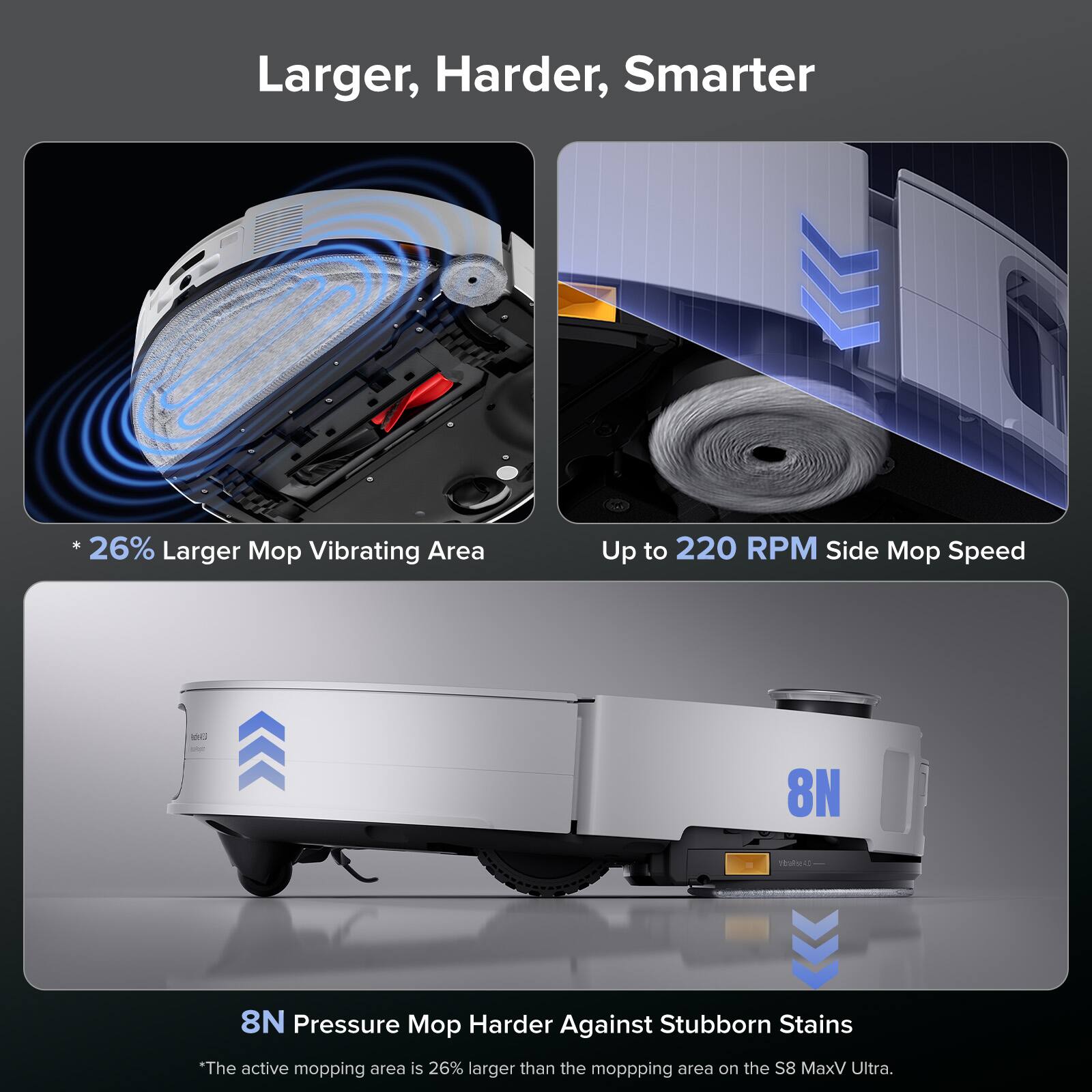
The Saros 10 takes a more aggressive approach with its VibraRise 4.0 system. Rather than continuous scrubbing, it uses sonic vibrations—up to 4,000 oscillations per minute—combined with 8N of downward force to tackle stubborn stains. The mop pad is 26% larger than previous generations and can lift 18mm to completely avoid carpets during vacuum-only operation.
For dealing with dried-on spills, pet accidents, or ground-in dirt, the Saros 10's vibrating approach is more effective. However, it requires multiple passes for optimal results and doesn't provide the same buffed, streak-free finish as the T80 Omni's roller system.
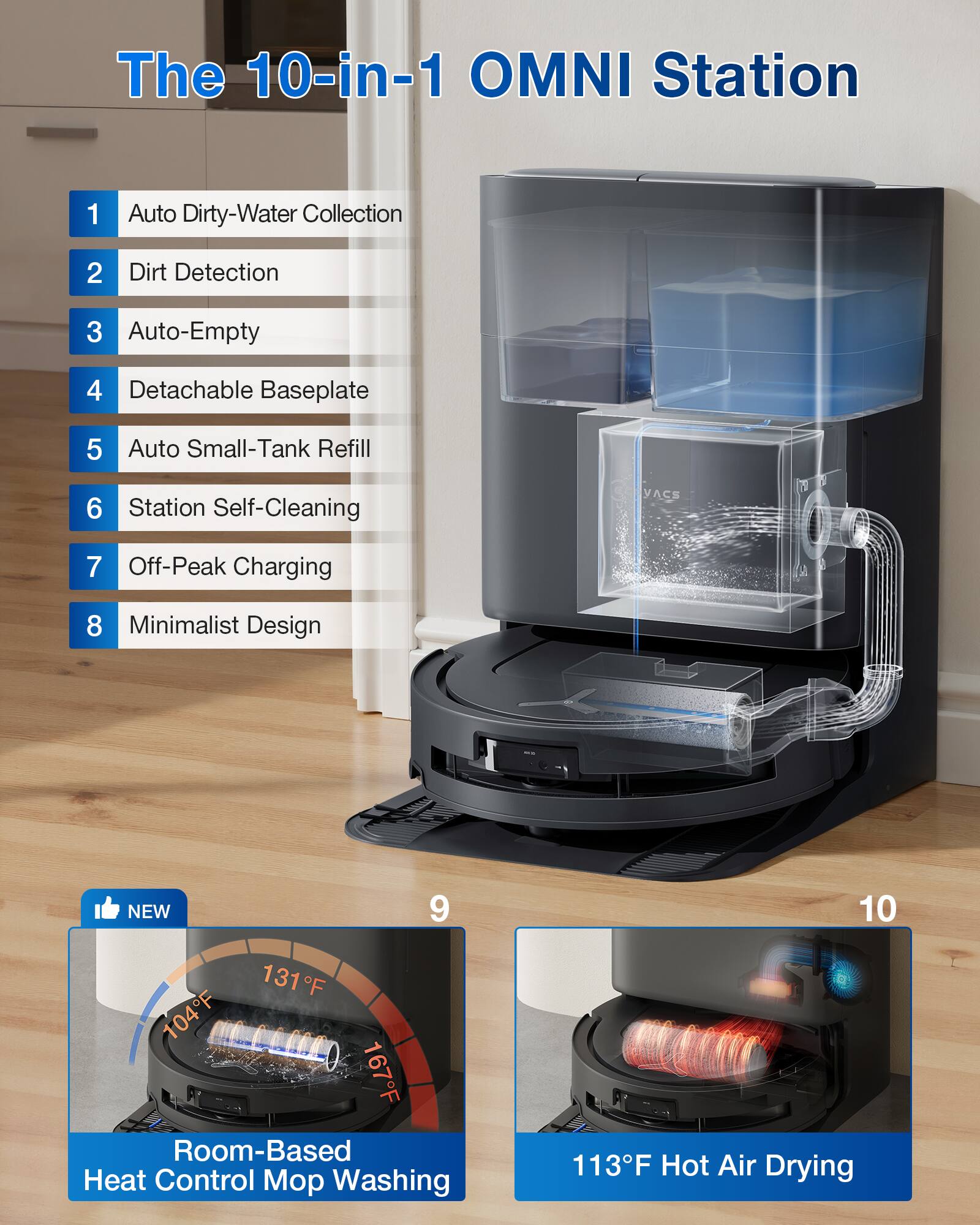
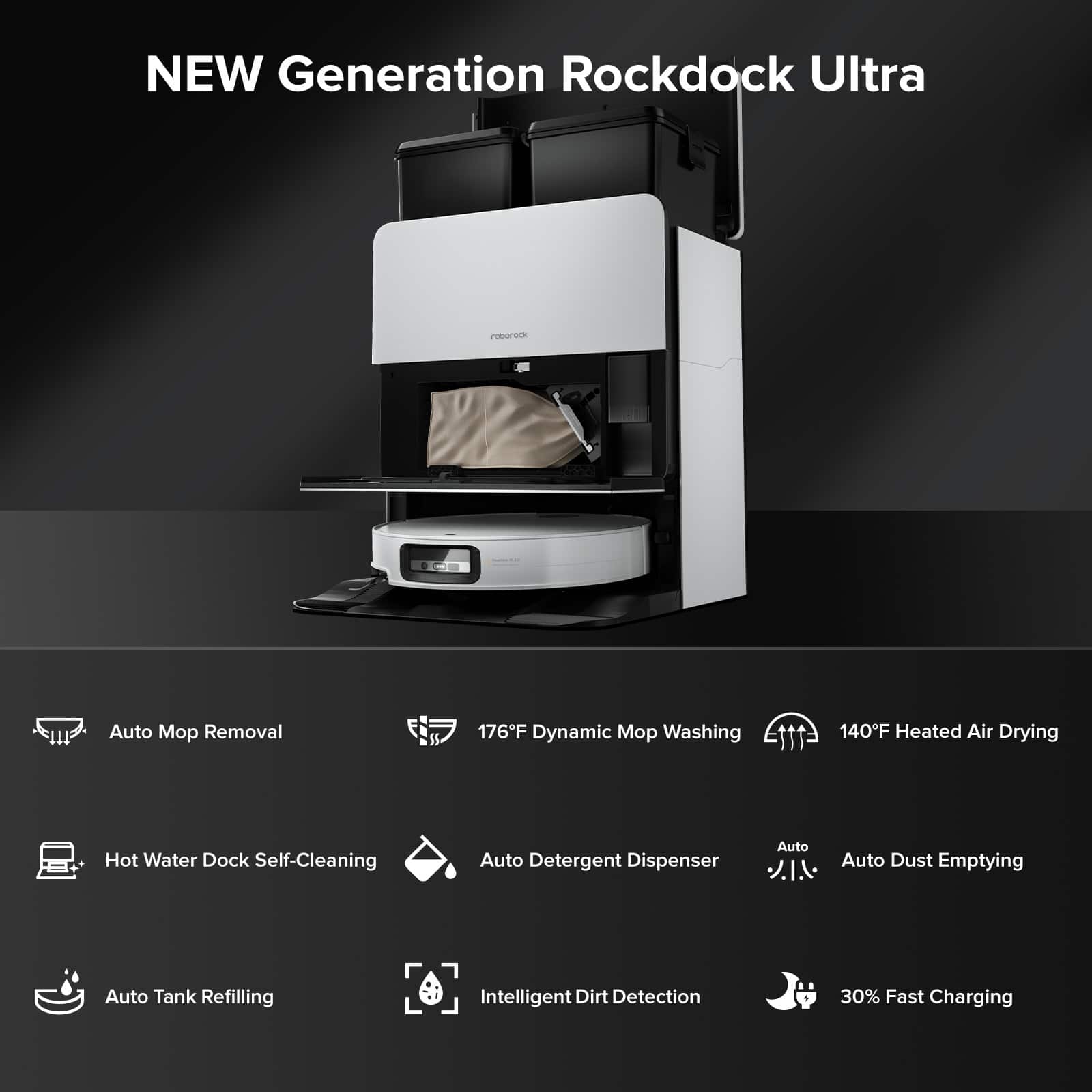
Both systems feature hot water washing at their base stations, but with different approaches. The T80 Omni uses hot water up to 167°F for mop cleaning, while the Saros 10 can reach 176°F. More importantly, both systems include heated air drying to prevent mildew and odors—a crucial feature that separates premium models from basic robot mops.
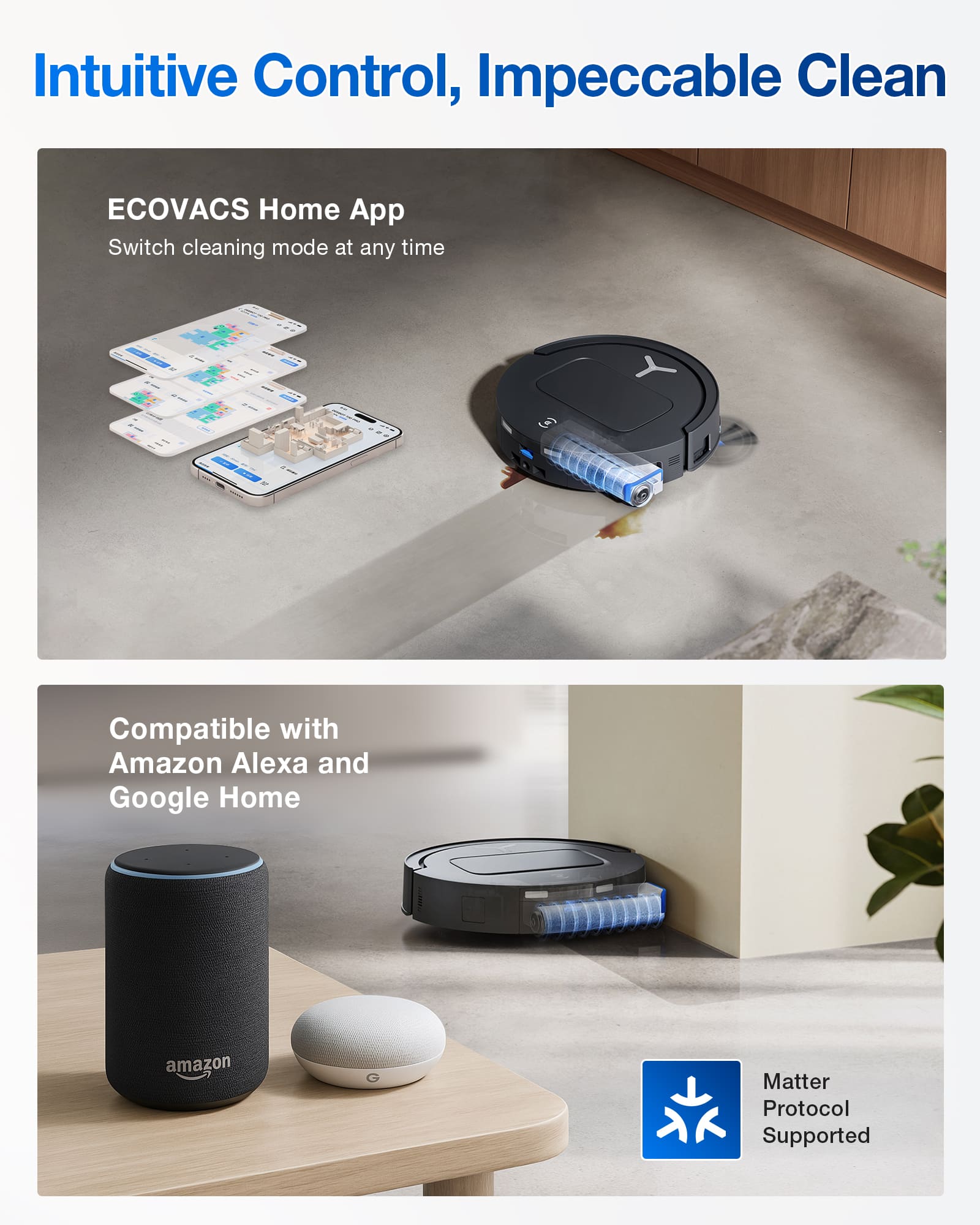
The intelligence of modern robot vacuums extends far beyond navigation and cleaning. Both models integrate with smart home ecosystems, but they offer different capabilities for users who want their cleaning to be truly automated.
The Saros 10 supports Matter 2.0, which is significant for smart home enthusiasts. Matter is an industry-standard protocol that allows devices from different manufacturers to work together seamlessly. This means your Roborock can integrate with Apple HomeKit, Google Home, Amazon Alexa, and other platforms simultaneously, rather than being locked into one ecosystem.
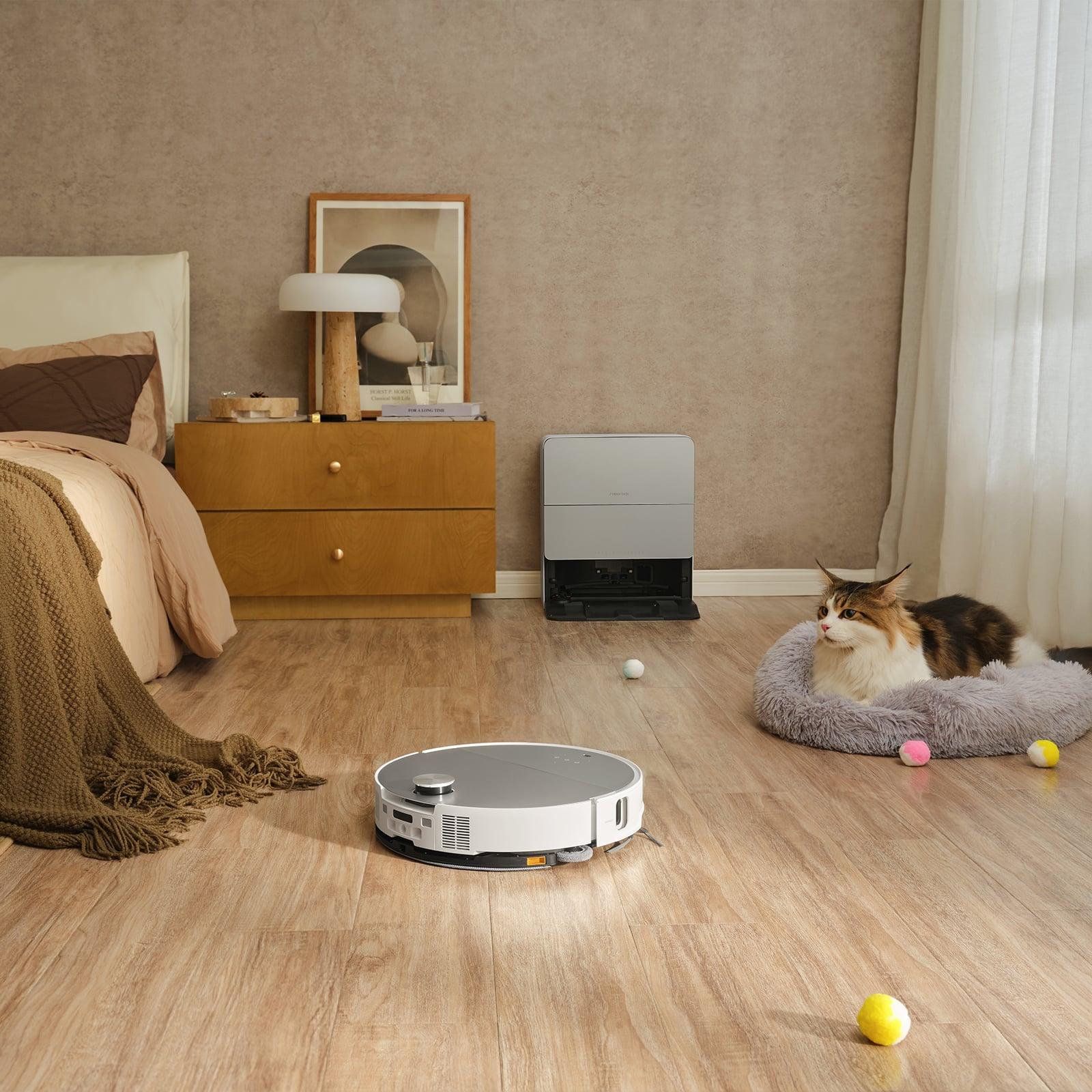
Pet owners will appreciate the Saros 10's Pet Snaps feature, which can automatically photograph your pets during cleaning sessions, and the Video Call functionality that lets you check in on your home remotely. These features might seem gimmicky, but they're genuinely useful for pet monitoring and home security.
The T80 Omni includes YIKO voice assistant and live video monitoring, plus comprehensive app controls for scheduling and zone management. While not quite as advanced as the Saros 10's smart features, it covers the essentials well and integrates smoothly with most smart home setups.
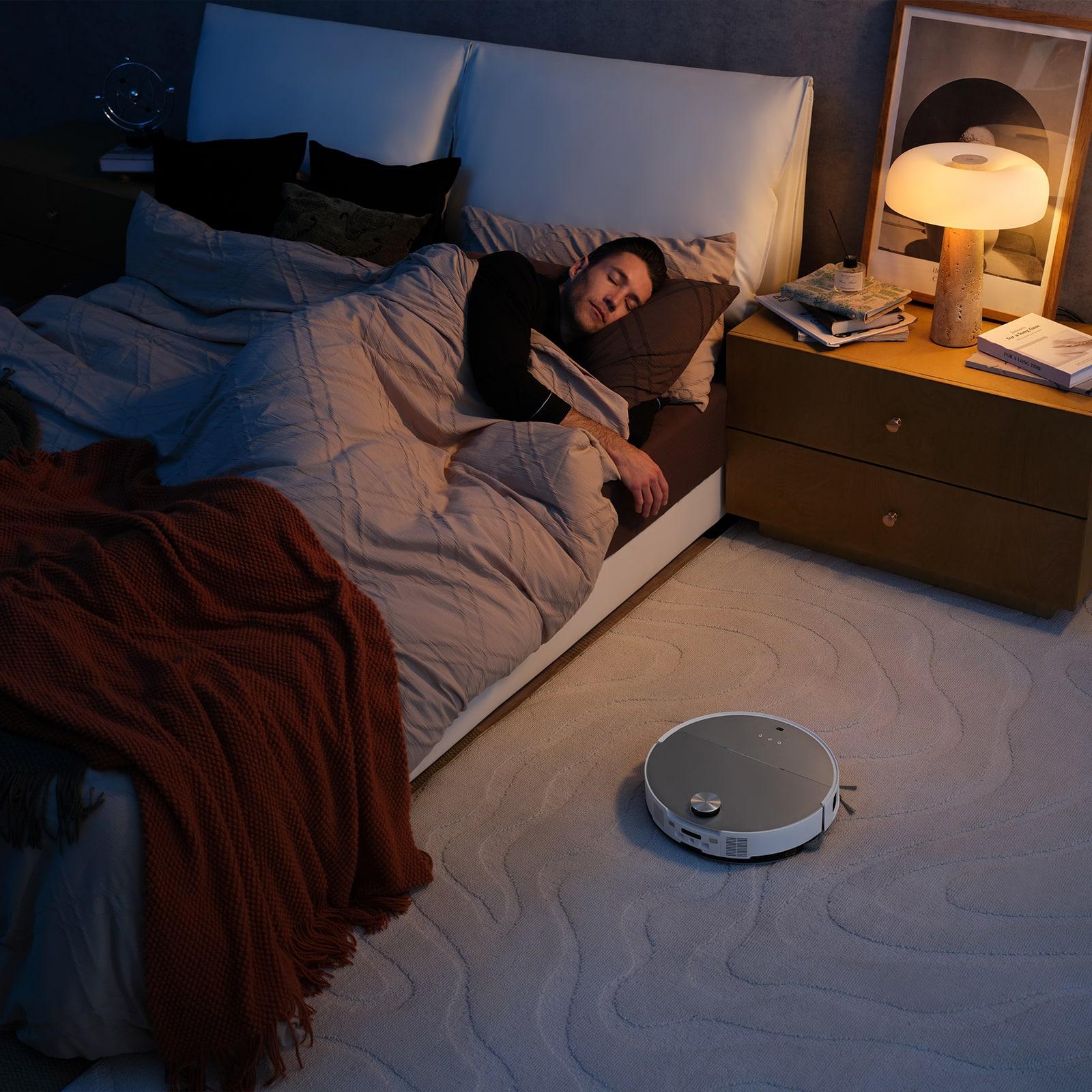
For home theater environments, both robots offer quiet operation modes, though the T80 Omni runs slightly quieter at 63.4 dB versus the Saros 10's 68 dB. Neither is whisper-quiet during operation, but both are reasonable enough for daytime cleaning while watching TV.
The self-maintaining base stations might be the most impressive aspect of both systems. These aren't just charging docks—they're full-service cleaning stations that handle tasks you'd otherwise need to do manually every few days.
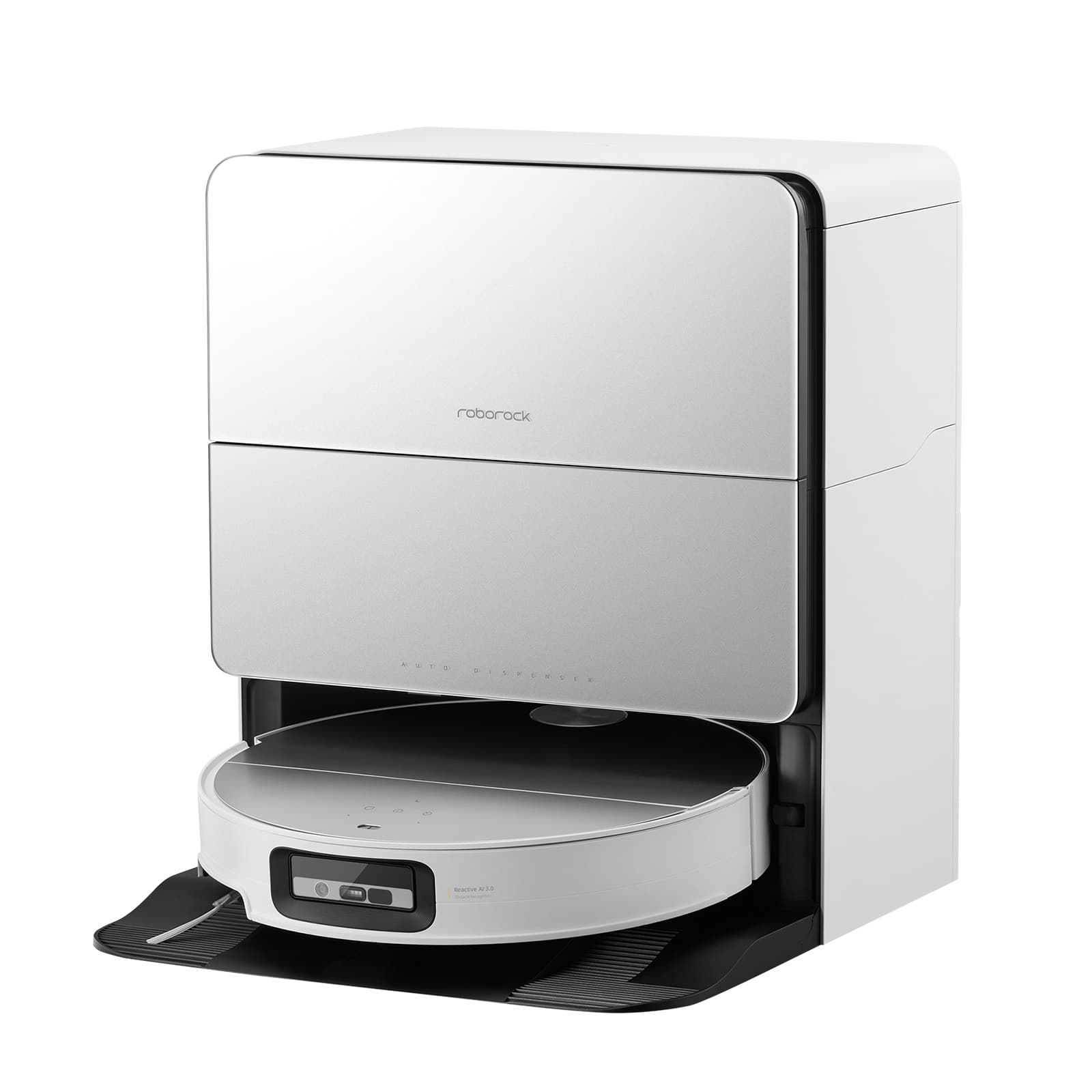
Both the T80 Omni and Saros 10 feature comprehensive base stations that empty dustbins, wash mop pads, dry components, and refill water tanks. The differences lie in execution details and maintenance intervals.
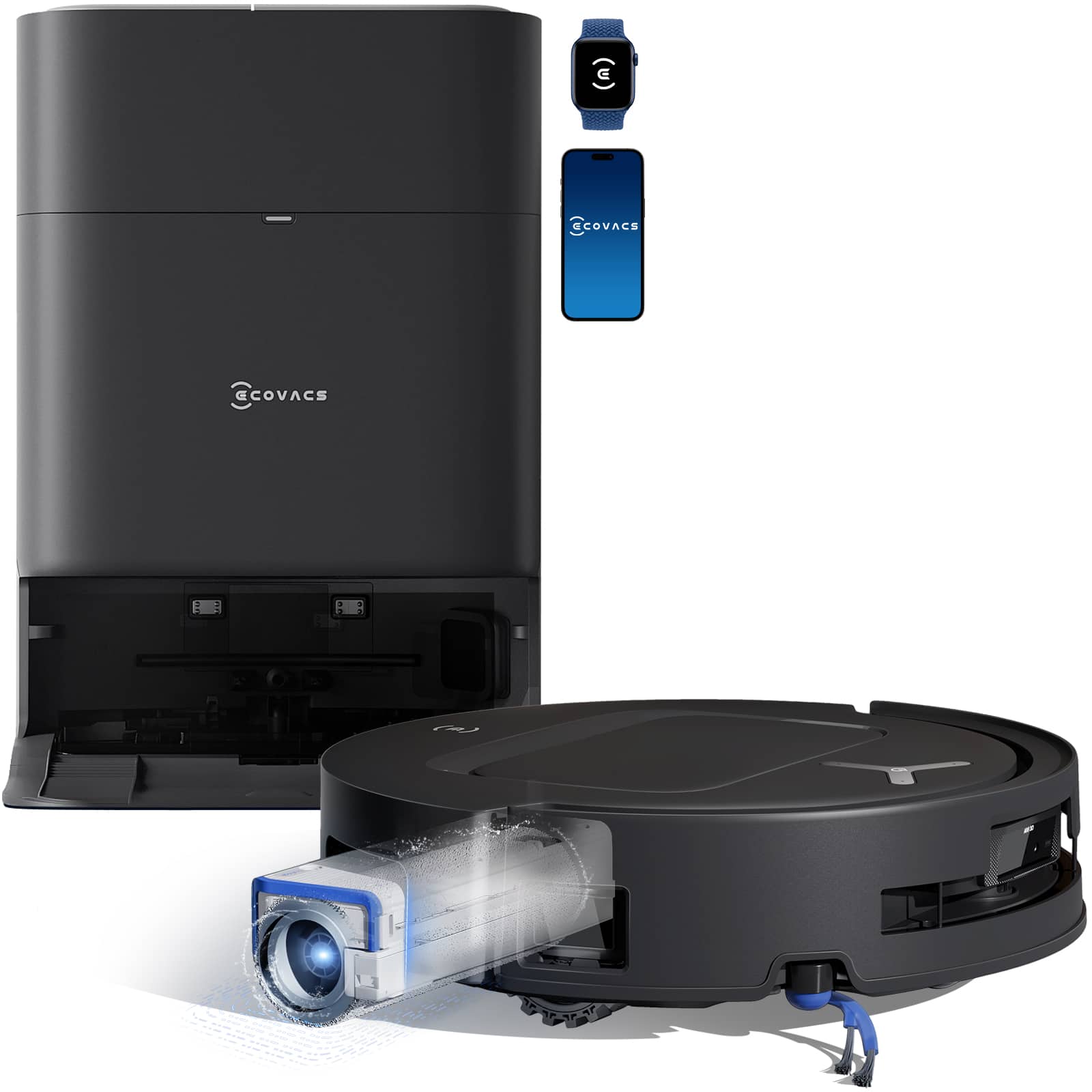
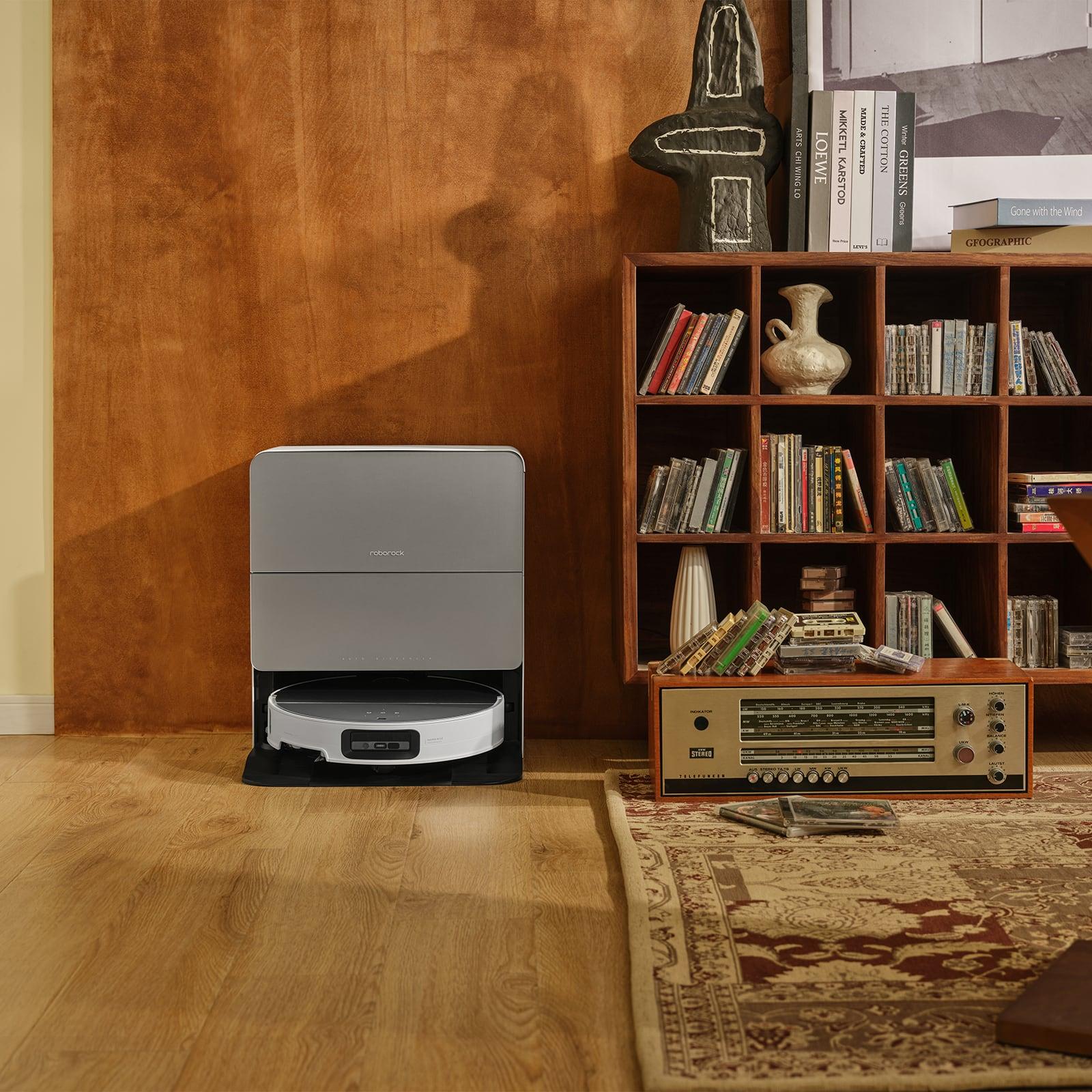
The T80 Omni's OMNI station supports up to 150 days of maintenance-free operation with its 3-liter sealed dust bag, while also providing hot water mop washing and heated air drying. The station includes an eight-nozzle self-cleaning tray, so even the base station cleans itself.
The Saros 10's RockDock Ultra 2.0 offers similar functionality but with some refinements: faster 2.5-hour charging versus the T80 Omni's 3.25-hour charge time, plus automatic detergent dispensing for enhanced mop cleaning. The adaptive water temperature system can optimize cleaning based on floor type and soil level.
For busy households, these automation features transform robot vacuum ownership from a gadget that requires regular maintenance to an appliance that genuinely handles floor cleaning independently for months at a time.
At the time of writing, the ECOVACS T80 Omni is positioned as a value-oriented flagship alternative, typically priced around 50-60% of what you'd pay for the most premium robot vacuums. The Roborock Saros 10, meanwhile, commands flagship pricing that reflects its premium positioning and advanced feature set.
The T80 Omni represents perhaps the sweet spot for most households: it delivers automated maintenance, solid cleaning performance, and advanced features without the premium price tag. You get genuine flagship capabilities—self-emptying, mop washing, intelligent navigation, and effective cleaning—at a price point that makes the technology accessible to more buyers.
The Saros 10 justifies its premium pricing through measurably superior performance across almost every category. The higher suction power, advanced navigation, zero-tangle brush system, and ultra-thin design create a robot vacuum that simply works better in challenging real-world conditions.
The decision between these robots ultimately depends on your priorities, budget, and home environment.
Choose the ECOVACS T80 Omni if you want flagship robot vacuum capabilities without flagship pricing. It's ideal for homes with relatively straightforward layouts, where the excellent mopping system and solid cleaning performance will handle daily maintenance effectively. The T80 Omni makes particular sense for budget-conscious buyers who still want the convenience of automated maintenance and smart features.
The T80 Omni is also the better choice if mopping performance is your top priority. Its OZMO Roller system delivers superior streak-free cleaning for daily floor maintenance, making it excellent for homes with large areas of sealed hardwood or tile.
Choose the Roborock Saros 10 if maximum cleaning performance and reliability are worth paying extra for. It's particularly valuable in complex homes with lots of furniture, pet hair challenges, or areas that other robot vacuums struggle to clean effectively.
The Saros 10 is essential if your home has low-clearance furniture where its 3.14-inch profile provides access that other robots simply cannot match. For home theater setups with equipment racks, low TV stands, or under-sofa spaces that collect dust, this capability alone can justify the premium price.
Pet owners with significant hair challenges should strongly consider the Saros 10's zero-tangle performance, which eliminates the maintenance headaches that can make robot vacuum ownership frustrating with other models.
Both robots represent the current state-of-the-art in automated floor cleaning, just targeted at different buyers. The T80 Omni proves you don't need to spend premium prices for genuinely effective robot cleaning, while the Saros 10 demonstrates what's possible when engineering priorities focus on maximum performance over cost optimization.
In the rapidly evolving world of robot vacuums, both approaches have merit. The key is honestly assessing your cleaning needs, home layout, and budget to choose the robot that will genuinely improve your daily life rather than becoming an expensive gadget that under-delivers on its promises.
| ECOVACS Deebot T80 Omni | Roborock Saros 10 |
|---|---|
| Suction Power - Higher numbers mean better carpet cleaning and debris pickup | |
| 18,000 Pa (strong performance, some struggles with deep carpets) | 22,000 Pa (excellent performance across all surface types) |
| Robot Height - Lower profiles access more cleaning areas | |
| 3.85 inches (standard height, limited under-furniture access) | 3.14 inches (ultra-thin design, reaches spaces other robots cannot) |
| Mopping Technology - Different approaches for floor care needs | |
| OZMO Roller at 200 RPM (continuous clean water, streak-free results) | VibraRise 4.0 at 4,000 vibrations/min (better for stubborn stains) |
| Navigation System - Affects cleaning coverage and getting stuck | |
| Embedded dToF LiDAR + AIVI 3D (recognizes 100 objects, occasional stuck issues) | RetractSense with retractable LiDAR (recognizes 200+ objects, rarely gets stuck) |
| Hair Tangle Prevention - Critical for pet owners and long hair households | |
| ZeroTangle 3.0 system (very good anti-tangle performance) | Certified Dual Anti-Tangle (achieved literally zero tangles in testing) |
| Battery Runtime - Determines cleaning area coverage per charge | |
| 220 minutes (covers approximately 1,200 sq ft) | 220 minutes (covers approximately 1,333 sq ft due to efficiency) |
| Charging Time - How long between cleaning sessions | |
| 3.25 hours (longer wait between cleanings) | 2.5 hours (faster turnaround for multiple daily sessions) |
| Base Station Features - Automation level affects maintenance needs | |
| Hot water wash (167°F), heated air dry, 150-day maintenance-free | Hot water wash (176°F), heated air dry, auto detergent dispensing |
| Smart Home Integration - Compatibility with existing setups | |
| YIKO voice assistant, live video monitoring, standard integrations | Matter 2.0 support, Pet Snaps, Video Call features, broader compatibility |
| Obstacle Crossing Ability - Handles thresholds and rug transitions | |
| 20mm with mop attached (good for most homes) | 40mm with AdaptiLift Chassis (excellent for complex floor layouts) |
| Noise Level - Important for daytime operation and home theaters | |
| 63.4 dB (quieter operation during cleaning cycles) | 68 dB (slightly louder but still reasonable for most situations) |
| Value Positioning - Performance relative to typical pricing | |
| Premium features at accessible pricing (excellent value for most buyers) | Flagship performance at premium pricing (worth it for demanding users) |
The Roborock Saros 10 delivers superior suction with 22,000 Pa compared to the ECOVACS Deebot T80 Omni's 18,000 Pa. This 22% difference translates to noticeably better performance on carpets and embedded debris. The Saros 10 achieved 100% pickup on hardwood floors and 80% on carpet tests, while the T80 Omni struggles more with deep-pile carpets due to its lower suction power.
The Roborock Saros 10 excels at cleaning under low furniture with its ultra-thin 3.14-inch profile and retractable LiDAR system. It can access spaces that the ECOVACS T80 Omni at 3.85 inches cannot reach. For home theater setups with low entertainment centers and equipment racks, the Saros 10's design provides a significant advantage in reaching dust-collecting areas.
Both models feature anti-tangle systems, but the Roborock Saros 10 performs better with its certified dual anti-tangle design that achieved zero tangles in comprehensive testing. The ECOVACS T80 Omni uses ZeroTangle 3.0 technology that's very effective but occasionally requires minor maintenance. Pet owners will find the Saros 10 more reliable for long-term hair management.
The ECOVACS T80 Omni uses an innovative OZMO Roller that spins at 200 RPM with continuous clean water supply, delivering streak-free results ideal for daily maintenance. The Roborock Saros 10 employs VibraRise 4.0 with 4,000 vibrations per minute, better for tackling stubborn stains. The T80 Omni excels at general mopping, while the Saros 10 handles tough dried-on spills more effectively.
The Roborock Saros 10 rarely gets stuck thanks to its advanced StarSight Autonomous System that recognizes over 200 object types with perfect obstacle avoidance scores. The ECOVACS T80 Omni handles navigation well but gets stuck more frequently in cluttered environments, recognizing up to 100 objects through its AIVI 3D system.
Both the Roborock Saros 10 and ECOVACS T80 Omni offer 220 minutes of runtime on a single charge. However, the Saros 10 charges faster at 2.5 hours compared to the T80 Omni's 3.25-hour charging time, allowing for quicker turnaround between cleaning sessions.
Yes, both the ECOVACS T80 Omni and Roborock Saros 10 feature comprehensive base stations that automatically empty dustbins, wash mop pads with hot water, and dry components with heated air. The T80 Omni supports 150 days of maintenance-free operation, while the Saros 10 adds automatic detergent dispensing for enhanced cleaning.
The ECOVACS T80 Omni provides excellent value by delivering flagship features at a more accessible price point, typically around half the cost of premium competitors. The Roborock Saros 10 commands premium pricing but justifies it with superior performance across all categories. The T80 Omni is ideal for budget-conscious buyers wanting advanced features.
The ECOVACS T80 Omni operates at 63.4 dB, making it slightly quieter than the Roborock Saros 10 at 68 dB. Both are reasonable for daytime operation, though the T80 Omni is better suited for homes where quiet operation during TV viewing or work-from-home scenarios is important.
The Roborock Saros 10 offers superior smart home compatibility with Matter 2.0 support, allowing seamless integration across multiple platforms simultaneously. It also includes Pet Snaps and Video Call features. The ECOVACS T80 Omni provides solid integration with YIKO voice assistant and live video monitoring, covering essential smart home needs effectively.
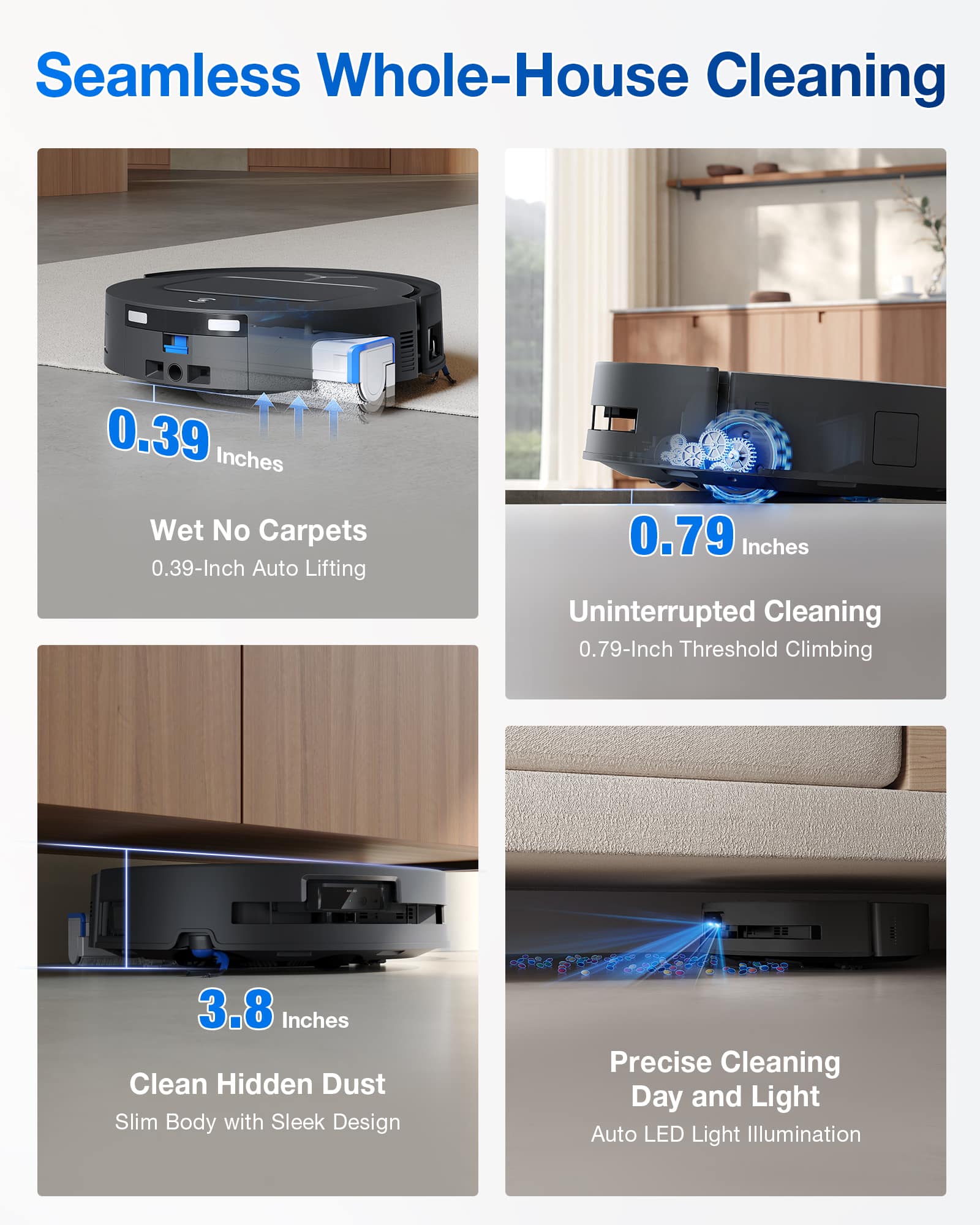
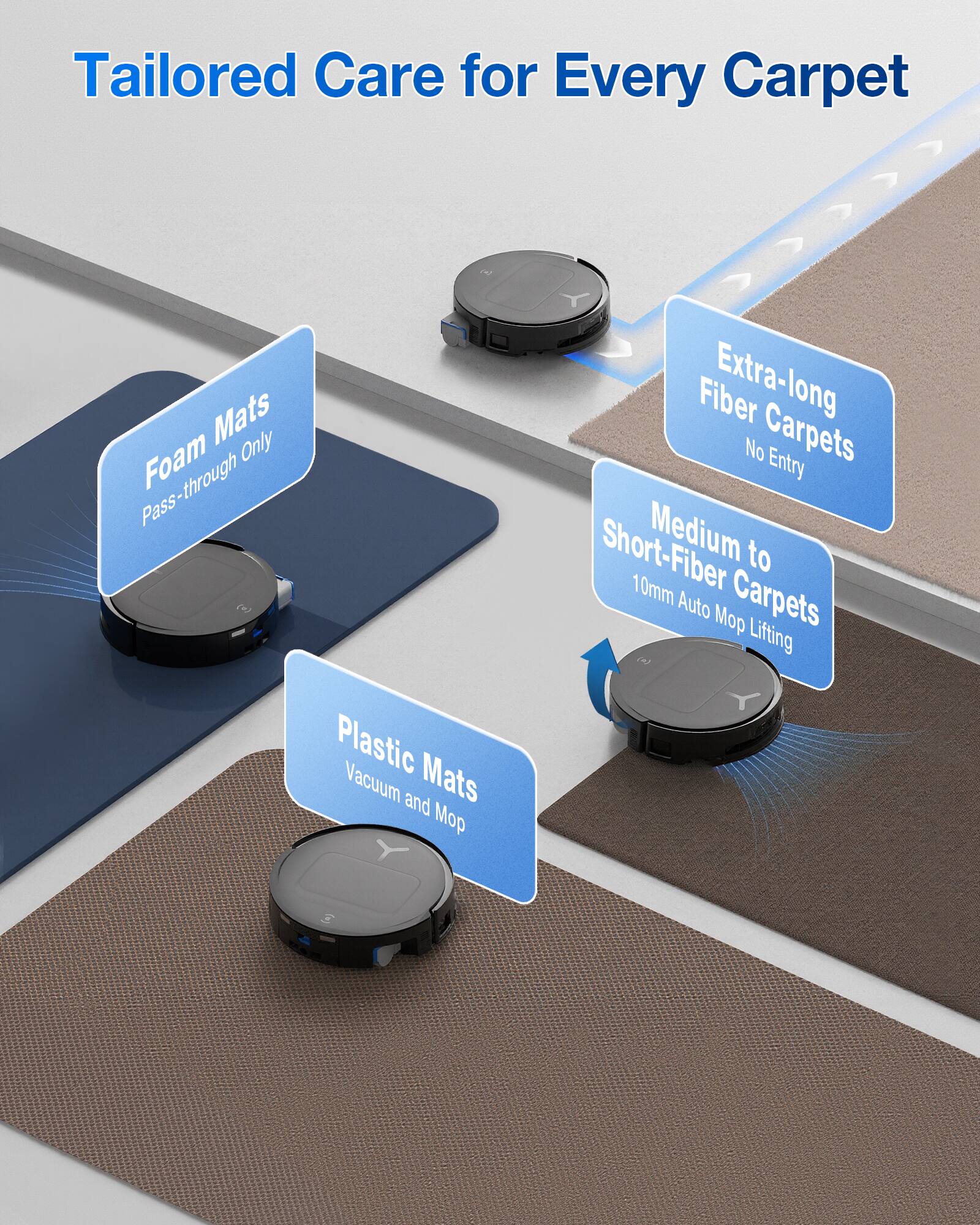
Both models handle floor transitions well, but the Roborock Saros 10 excels with its AdaptiLift Chassis that crosses obstacles up to 40mm high. The ECOVACS T80 Omni handles 20mm transitions when mopping. Both feature mop lifting to avoid carpets during vacuum-only operation, with the Saros 10 lifting 18mm compared to the T80 Omni's 10mm.
Choose the ECOVACS T80 Omni if you want flagship features at accessible pricing, have simpler home layouts, and prioritize excellent mopping performance. Select the Roborock Saros 10 if you need maximum cleaning power, have complex layouts with low furniture, significant pet hair challenges, or want the most advanced navigation available. The Saros 10 is worth the premium for demanding cleaning situations.
We've done our best to create useful and informative comparisons to help you decide what product to buy. Our research uses advanced automated methods to create this comparison and perfection is not possible - please contact us for corrections or questions. These are the sites we've researched in the creation of this article: howtogeek.com - vacuumwars.com - vacuumadvice.com - vacuumadvice.com - vacuumwars.com - youtube.com - androidheadlines.com - youtube.com - youtube.com - youtube.com - vacuumwars.com - storehk.ecovacs.com - youtube.com - ecovacs.com - originofbots.com - ecovacs.com - bestbuy.com - bikmantech.com - storehk.ecovacs.com - bestbuy.com - versus.com - youtube.com - youtube.com - ecovacs.com - knowtechie.com - thelocalproject.com.au - youtube.com - bestbuy.com - androidauthority.com - rtings.com - vacuumwars.com - vacuumwars.com - youtube.com - forums.macrumors.com - youtube.com - youtube.com - rtings.com - youtube.com - us.roborock.com - target.com - galaxus.at - vacuumwars.com - youtube.com - vacuumwars.com - techtongbo.com - us.roborock.com - us.roborock.com - youtube.com - roboselector.com - support.roborock.com - youtube.com

Privacy Policy
Terms and Conditions - Affiliate Policy
Home Security
© Copyright 2008-2026.
11816 Inwood Rd #1211, Dallas, TX 75244