

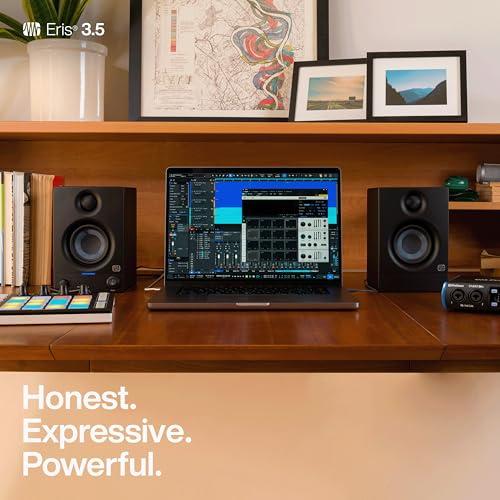
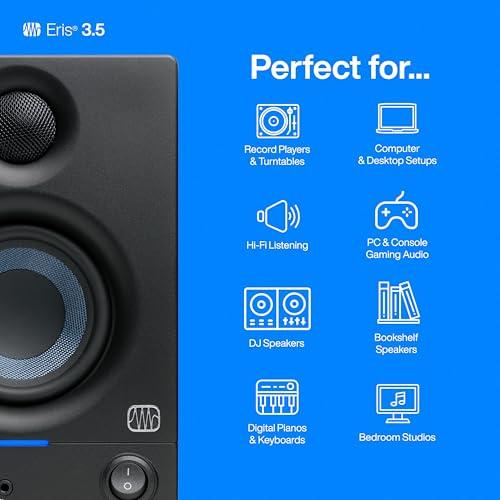
When you're shopping for desktop speakers, you're entering a surprisingly complex world where two different philosophies compete for your attention and money. On one side, you have speakers designed to make everything sound as enjoyable as possible. On the other, you have monitors built to reveal exactly what's in your audio, warts and all. The Edifier R1280T and PreSonus Eris 3.5 perfectly represent these two approaches, and choosing between them comes down to understanding what you actually need from your speakers.
Both products launched around 2015-2017, during a period when desktop audio was experiencing a renaissance. People were finally getting tired of cheap plastic computer speakers and demanding something better. The Edifier R1280T arrived as part of Edifier's push into the North American market, bringing their decades of experience in consumer audio. Meanwhile, the PreSonus Eris 3.5 emerged from PreSonus's professional audio background, offering studio monitor technology at consumer prices.
Desktop speakers serve a unique role in the audio world. They need to sound good in small spaces, often placed close to your ears, while dealing with the acoustic challenges of a typical desk setup. Unlike large bookshelf speakers that fill entire rooms, desktop speakers work in the "nearfield" – meaning you're sitting relatively close to them, usually within three to six feet.
The key considerations when choosing desktop speakers include sound quality, power output, connectivity options, and how they fit into your workspace. But perhaps most importantly, you need to decide whether you want speakers that enhance your music and entertainment (like the Edifier R1280T) or speakers that reproduce audio as accurately as possible (like the PreSonus Eris 3.5).
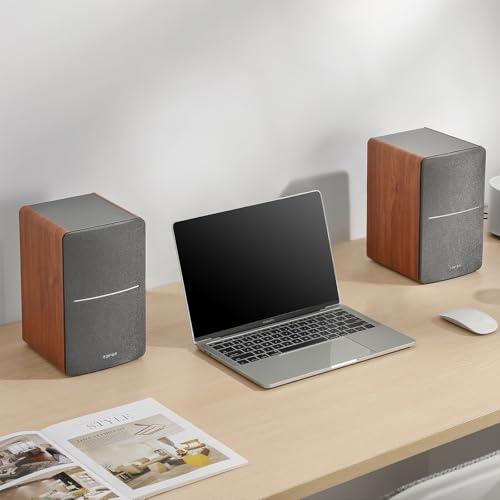
The Edifier R1280T takes what I call the "consumer delight" approach to audio. These speakers are designed to make your music, movies, and games sound more engaging and fun. They achieve this through a combination of larger drivers, strategic frequency tuning, and convenience features that prioritize the listening experience over clinical accuracy.
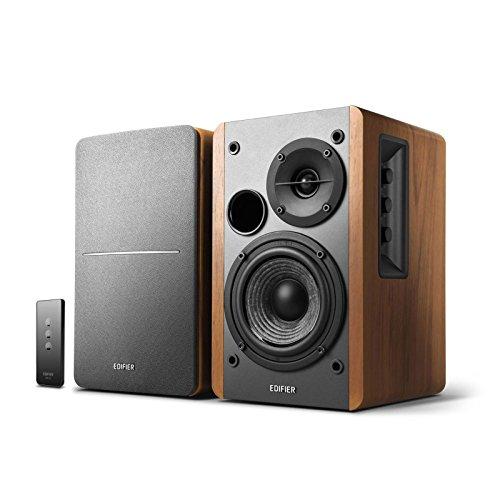
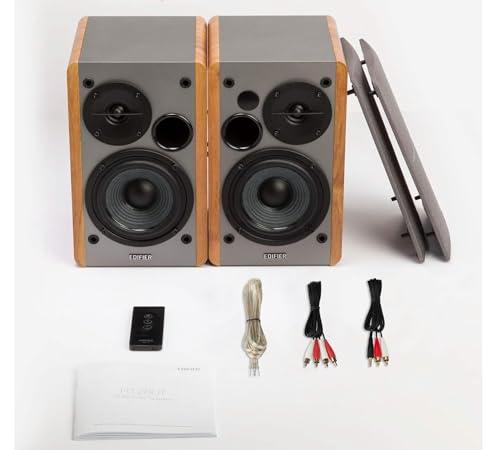
The heart of the R1280T lies in its driver configuration. Each speaker houses a 4-inch woven fiber woofer paired with a 13mm silk dome tweeter. That 4-inch woofer might not sound impressive compared to full-sized bookshelf speakers, but in the desktop category, it's actually quite substantial. This size advantage allows the Edifier R1280T to move more air and produce deeper bass than most compact desktop speakers can manage.
The speakers use a front-ported design, meaning the bass reflex port (a tuned opening that reinforces low frequencies) faces toward you rather than toward the wall. This design choice enhances bass impact and makes the low-end feel more immediate and punchy. When you're listening to hip-hop, electronic music, or action movie soundtracks, this translates to a more visceral, engaging experience.
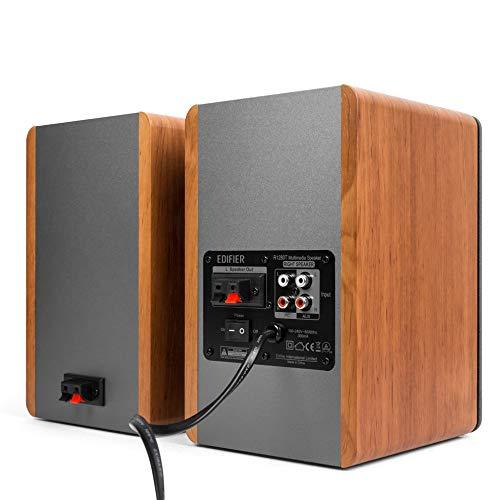
Edifier powers these drivers with a 42-watt RMS amplifier system (21 watts per speaker) using Class-D amplification. Class-D amplifiers are highly efficient and generate less heat than older designs, which is why they've become standard in powered speakers. The amplifier lives in the left speaker, while the right speaker connects via a traditional speaker wire – a configuration called "active/passive" that keeps costs down while maintaining good sound quality.
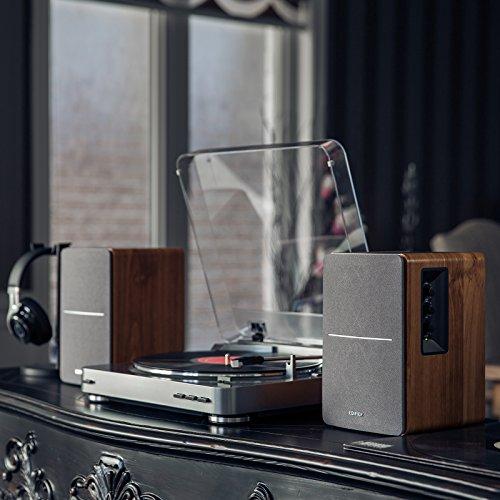
One of the R1280T's most practical features is its dual RCA input system. This means you can connect two different audio sources – say, a turntable and a computer – simultaneously, then switch between them without unplugging cables. For vinyl enthusiasts or anyone with multiple audio sources, this convenience factor is significant.
The frequency response of the Edifier R1280T extends from 52Hz to 20kHz, which is impressive bass extension for speakers this size. To put that in perspective, the lowest note on a bass guitar is around 41Hz, so these speakers can reproduce most of the fundamental frequencies in music, though they might miss the very deepest sub-bass that you feel more than hear.
The PreSonus Eris 3.5 comes from an entirely different philosophical camp. As a company with deep roots in professional audio equipment, PreSonus designed these speakers to be "studio monitors" – tools for accurately reproducing audio rather than enhancing it. This might sound less exciting, but it serves crucial purposes that many users don't initially recognize.
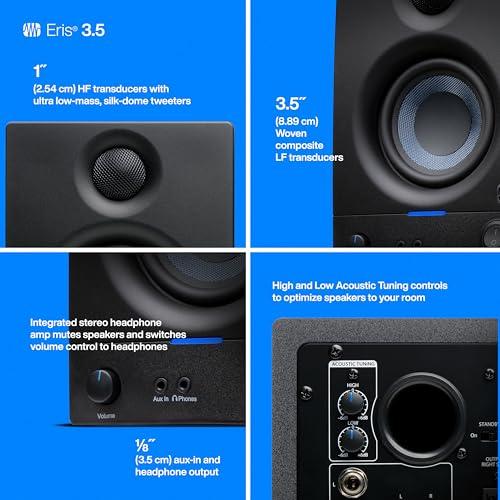
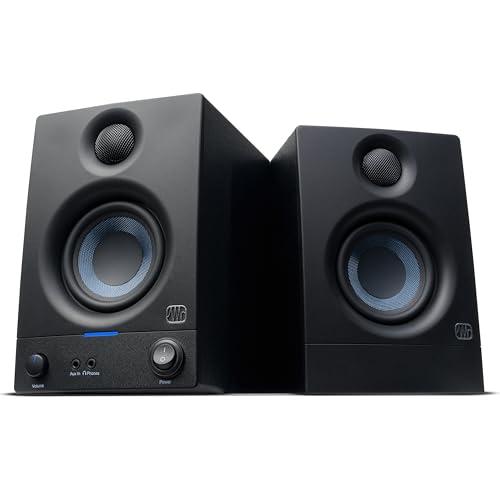
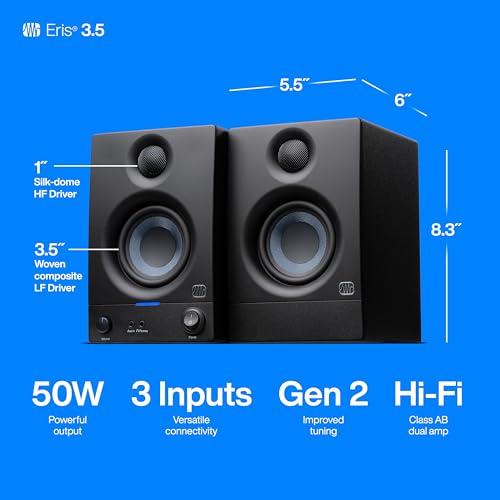
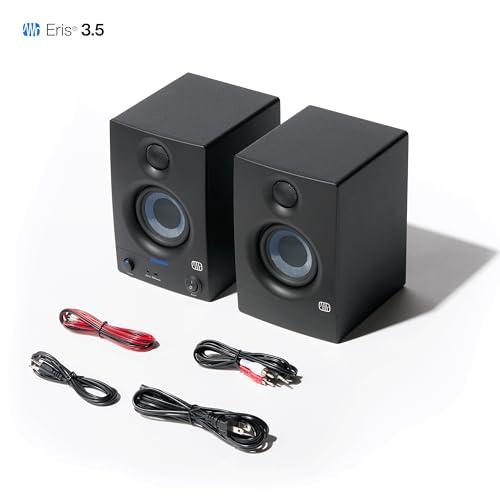
The Eris 3.5 uses smaller 3.5-inch woven composite woofers paired with 1-inch silk dome tweeters. While smaller than the Edifier's drivers, they're driven by more powerful amplification – 50 watts total (25 watts per speaker) using Class AB amplification. Class AB amps typically provide better sound quality than Class-D designs, especially at moderate volumes, though they generate more heat and consume more power.
The smaller drivers and rear-ported design create a different sonic character. The PreSonus Eris 3.5 has a frequency response of 80Hz to 20kHz, meaning it doesn't extend as deep into bass territory as the Edifier. However, the bass it does produce is typically more controlled and accurate, without the artificial boost that makes consumer speakers sound immediately impressive but potentially fatiguing over long listening sessions.
What makes the Eris 3.5 special is its connectivity and professional features. Beyond the standard RCA inputs, you get balanced 1/4-inch TRS inputs (the kind used in professional audio gear), plus a convenient front-panel 1/8-inch input for phones or tablets. The balanced inputs matter because they reject electrical noise and interference – crucial when you're doing any kind of audio production work.
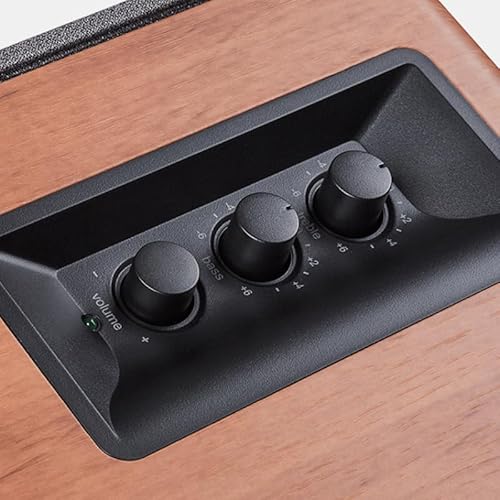
The PreSonus Eris 3.5 also includes acoustic tuning controls that let you adjust the bass and treble response by ±6dB. Unlike the Edifier's front-panel tone controls, these are located on the back of the speaker, discouraging casual adjustment and maintaining the reference quality that studio monitors are known for.
This is where the philosophical differences between these speakers become most apparent. The Edifier R1280T produces notably more bass quantity, extending deeper into the frequency spectrum and delivering more impact. When you play bass-heavy music or watch action movies, the R1280T provides a more visceral, room-filling low-end that many people find immediately satisfying.
However, the PreSonus Eris 3.5 delivers what audio engineers call "tighter" bass. While it doesn't extend as deep, the bass it produces is more controlled and accurate to the original recording. This difference becomes crucial if you're doing any kind of audio work – mixing music, editing videos, or even just wanting to hear your music exactly as the artist intended.
In practical terms, if you're primarily listening to music for enjoyment, the Edifier will likely sound more exciting and engaging. If you're creating content or want to hear subtle details in your audio, the Eris 3.5 will serve you better.
The midrange frequencies (roughly 200Hz to 2kHz) contain most of the fundamental information in human voices and many instruments. This is where the PreSonus Eris 3.5 shows its professional heritage. The speakers reproduce voices with excellent clarity and neutrality, making them ideal for podcast editing, video work, or any situation where speech intelligibility matters.
The Edifier R1280T takes a warmer approach to the midrange, which many people find more pleasing for music listening. Voices might sound slightly richer and more intimate, but this coloration can mask subtle details that matter in professional applications.
Both speakers use silk dome tweeters, which generally produce smoother, less harsh high frequencies compared to metal dome designs. However, they implement them differently. The PreSonus Eris 3.5 aims for extended, linear high-frequency response that reveals every detail in your audio. The Edifier R1280T tends toward a slightly warmer, more forgiving high end that's less likely to reveal flaws in poor recordings.
The soundstage – your perception of how wide and deep the music sounds – differs between these speakers. The Eris 3.5 creates a more precise, defined soundstage that's excellent for identifying the position of instruments in a mix. The R1280T produces a more enveloping, diffuse soundstage that can be more immersive for entertainment content.
Despite having lower total wattage, the Edifier R1280T can actually sound louder in many situations due to its more efficient drivers and frequency tuning. However, the PreSonus Eris 3.5 maintains better composure at high volumes, with less distortion and compression when you really crank them up.
The Eris 3.5 also has better dynamic range – the difference between the quietest and loudest sounds it can reproduce cleanly. This makes a significant difference when listening to well-recorded music or working with audio that has wide dynamic swings.
The connectivity differences between these speakers reveal their intended audiences clearly. The Edifier R1280T keeps things simple with dual RCA inputs and includes handy front-panel controls plus a remote. This setup works perfectly for most consumer applications – connect your computer and maybe a turntable, adjust the sound to taste, and enjoy.
The PreSonus Eris 3.5 offers more professional flexibility with its multiple input types, including those balanced 1/4-inch inputs that can connect directly to audio interfaces, mixing boards, or other professional gear. The front-panel headphone output automatically mutes the speakers when you plug in headphones – a feature that's incredibly useful for content creators who need to switch between speaker and headphone monitoring quickly.
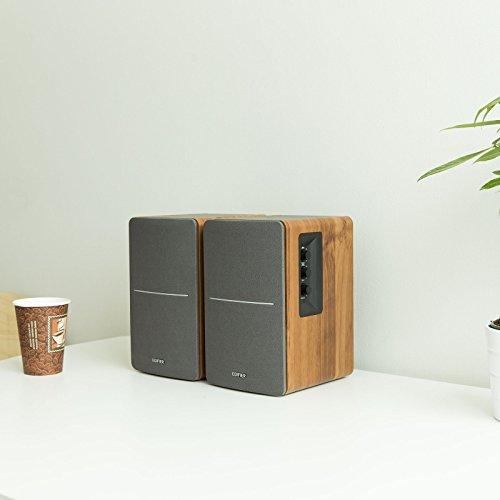
Both speakers use MDF (medium-density fiberboard) construction, which is standard for speakers in this price range. MDF is dense and acoustically inert, meaning it doesn't add unwanted resonances to the sound. The Edifier R1280T uses a wood-grain vinyl finish that looks attractive but shows fingerprints easily. The PreSonus Eris 3.5 opts for a more utilitarian black vinyl that's practical but less decorative.
In terms of long-term reliability, both products have good track records based on user feedback over the years since their release. The PreSonus includes more sophisticated protection circuits for the amplifiers, which could translate to better longevity under demanding use.
For home theater applications, the choice becomes more nuanced. The Edifier R1280T provides more engaging sound for movies and TV shows, with fuller bass and a warmer overall character that makes dialogue sound natural and effects more impactful. The larger drivers also mean these speakers can fill a small room more effectively.
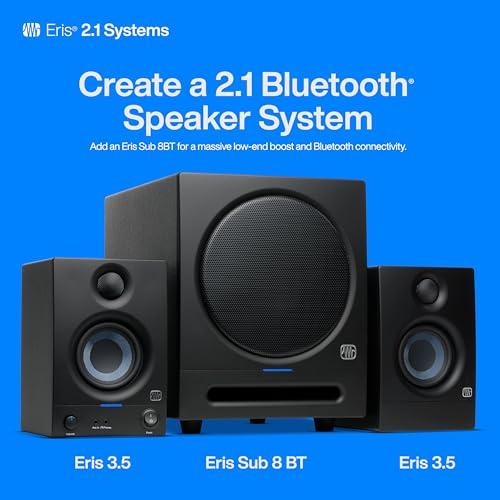
However, the PreSonus Eris 3.5 offers better expandability for home theater use. If you decide to add a subwoofer later, the more neutral character of the Eris speakers will blend better with a dedicated subwoofer. The balanced inputs also make it easier to connect to home theater receivers or processors that have professional-grade outputs.
For most desktop home theater setups, the Edifier R1280T will provide more immediate satisfaction, while the PreSonus Eris 3.5 offers better long-term flexibility and accuracy.
At the time of writing, these speakers typically fall into similar price ranges, though the Edifier R1280T often commands a slight premium due to its larger drivers and consumer-focused features. The value equation depends entirely on your priorities.
If you want the most engaging, full-range sound possible at this price point, the Edifier R1280T delivers excellent value. You're getting substantial bass response, attractive aesthetics, and user-friendly features that enhance the daily experience of using the speakers.
If you prioritize accuracy, professional features, and future flexibility, the PreSonus Eris 3.5 offers outstanding value. You're getting genuine studio monitor performance, professional connectivity, and the ability to grow into more serious audio work without immediately outgrowing your speakers.
Choose the Edifier R1280T if you primarily listen to music for enjoyment, watch movies and TV shows, play games, or want speakers that make everything sound as engaging as possible. These speakers excel when you want to be emotionally drawn into your audio content. They're also the better choice if you have a larger desk or room where their superior bass extension will be most appreciated.
The PreSonus Eris 3.5 is the smart choice if you do any content creation, want to hear your music exactly as intended, need multiple connectivity options, or work in a smaller space where accuracy matters more than impact. They're also the better investment if you think you might get into audio production, podcasting, or any work where faithful sound reproduction is crucial.
Both speakers represent excellent engineering for their respective purposes. The key is understanding which purpose aligns with your actual needs rather than what sounds impressive in a brief demonstration. The Edifier R1280T will likely wow you immediately with its full sound and strong bass, while the PreSonus Eris 3.5 reveals its strengths over time as you notice details and clarity that other speakers miss.
In the end, both speakers succeed brilliantly at what they're designed to do. Your job is to decide whether you want speakers that make everything sound better or speakers that help you hear everything clearly.
| Edifier R1280T | PreSonus Eris 3.5 |
|---|---|
| Driver Size - Larger drivers typically produce fuller bass and can play louder | |
| 4-inch woofer + 13mm tweeter | 3.5-inch woofer + 1-inch tweeter |
| Total Power Output - More watts generally means louder maximum volume | |
| 42W RMS total (21W per speaker) | 50W RMS total (25W per speaker) |
| Frequency Response - How deep the bass goes and how high the treble extends | |
| 52Hz - 20kHz (deeper bass extension) | 80Hz - 20kHz (less deep bass but tighter control) |
| Sound Philosophy - Entertainment vs accuracy affects everything you hear | |
| Consumer-tuned for musical enjoyment | Studio monitor accuracy for professional work |
| Input Connectivity - More options mean easier connection to multiple devices | |
| Dual RCA inputs only | RCA, balanced 1/4" TRS, front 1/8" stereo |
| Controls & Features - Convenience vs professional functionality | |
| Front volume/tone controls + remote | Rear acoustic tuning controls + headphone out |
| Form Factor - Desktop footprint and room compatibility | |
| 5.75" x 9.5" x 7" (larger, needs more space) | 5.6" x 8.3" x 6.4" (compact, desk-friendly) |
| Cabinet Design - Affects bass response and aesthetics | |
| Wood-grain MDF, front-ported | Black vinyl MDF, rear-ported |
| Best Use Cases - Where each speaker truly excels | |
| Music listening, gaming, movies, vinyl playback | Content creation, mixing, critical listening, multi-source setups |
| Amplifier Type - Affects sound quality and efficiency | |
| Class-D (efficient, less heat) | Class AB (better sound quality, more power hungry) |
| Protection Features - Reliability and longevity considerations | |
| Basic protection circuits | Advanced RF filtering, over-temp, power saving |
The Edifier R1280T is generally better for casual music listening thanks to its larger 4-inch drivers that produce deeper, more engaging bass. The speakers are tuned to enhance musical enjoyment with a warmer sound signature. The PreSonus Eris 3.5 offers more accurate reproduction but may sound less immediately exciting for pure entertainment.
The Edifier R1280T extends down to 52Hz and delivers noticeably stronger bass impact due to its larger drivers and front-ported design. The PreSonus Eris 3.5 only reaches 80Hz but provides tighter, more controlled bass that's better for professional audio work and mixing.
For home theater use, the Edifier R1280T typically provides a more engaging experience with fuller bass for movie soundtracks and better overall room-filling sound. However, the PreSonus Eris 3.5 offers clearer dialogue reproduction and better expandability if you plan to add a subwoofer later.
Both the Edifier R1280T and PreSonus Eris 3.5 are powered speakers with built-in amplifiers, so no external amp is needed. Simply connect your audio source and plug into power. The Eris 3.5 actually provides more total power at 50W compared to the R1280T's 42W output.
The PreSonus Eris 3.5 is specifically designed for content creation with studio monitor accuracy, multiple professional inputs including balanced connections, and neutral sound reproduction. The Edifier R1280T is tuned more for entertainment and may color the audio in ways that aren't ideal for professional work.
The Edifier R1280T provides dual RCA inputs for connecting two sources simultaneously. The PreSonus Eris 3.5 offers more versatility with RCA inputs, balanced 1/4-inch TRS connections, and a convenient front-panel 1/8-inch input, plus a headphone output that mutes the speakers.
The PreSonus Eris 3.5 is more compact at 5.6" x 8.3" x 6.4" per speaker, making them better for smaller desks. The Edifier R1280T measures 5.75" x 9.5" x 7" and requires more desktop real estate but provides larger drivers for better bass response.
Both speakers work with turntables, but you'll need a phono preamp if your turntable doesn't have one built-in. The Edifier R1280T is particularly popular for vinyl setups due to its warm sound signature that complements analog sources, while the PreSonus Eris 3.5 provides more accurate reproduction of your records.
Despite lower total wattage, the Edifier R1280T can sound louder in many situations due to more efficient drivers. However, the PreSonus Eris 3.5 maintains better sound quality at high volumes with less distortion when pushed to maximum levels.
Only the Edifier R1280T includes a wireless remote for volume and mute control. The PreSonus Eris 3.5 has front-panel volume control but no remote, as it's designed more for professional use where remote operation is less important.
Value depends on your needs. The Edifier R1280T offers excellent value for entertainment with larger drivers and consumer-friendly features. The PreSonus Eris 3.5 provides outstanding value for professional applications and future flexibility with studio monitor accuracy at an entry-level price point.
Both work well for gaming, but serve different purposes. The Edifier R1280T provides more immersive gaming with stronger bass for explosions and effects. The PreSonus Eris 3.5 offers better positional accuracy for competitive gaming where hearing enemy footsteps and directional audio cues clearly can provide an advantage.
We've done our best to create useful and informative comparisons to help you decide what product to buy. Our research uses advanced automated methods to create this comparison and perfection is not possible - please contact us for corrections or questions. These are the sites we've researched in the creation of this article: bestbuy.com - kbaudio.co.uk - everydaylistening.net - hometechnologyreview.com - soundguys.com - recordbuilds.com - audiosciencereview.com - edifier-online.com - youtube.com - audiosciencereview.com - tomsguide.com - youtube.com - youtube.com - audiosciencereview.com - hometechnologyreview.com - edifier.com - audiostance.com - usa-oss.edifier.com - edifier-online.com - edifier.com - youtube.com - edifier.com - bestbuy.com - audiosciencereview.com - kbaudio.co.uk - officedepot.com - soundref.com - presonus.com - musicradar.com - presonus.com - higherhertz.com - sweetwater.com - erinsaudiocorner.com - gzhls.at - homestudiobasics.com - presonus.com - audiosciencereview.com - youtube.com - audiosciencereview.com - thomannmusic.com - georgesmusic.com - musicalgarage.com - soundonsound.com

Privacy Policy
Terms and Conditions - Affiliate Policy
Home Security
© Copyright 2008-2026.
11816 Inwood Rd #1211, Dallas, TX 75244