

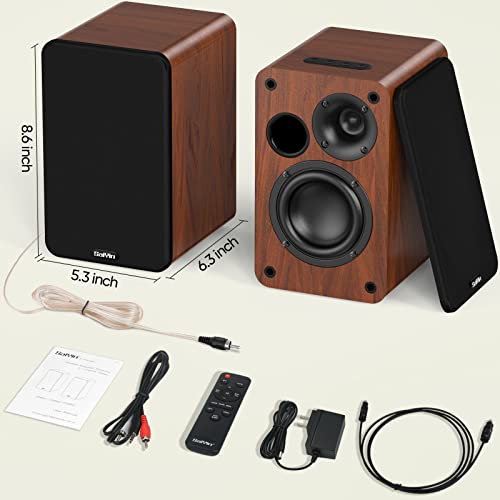
When it comes to upgrading your audio setup, powered bookshelf speakers offer one of the most straightforward paths to significantly better sound. Unlike traditional passive speakers that require separate amplifiers, powered speakers have built-in amplification, making them plug-and-play solutions for everything from desktop setups to living room entertainment systems.
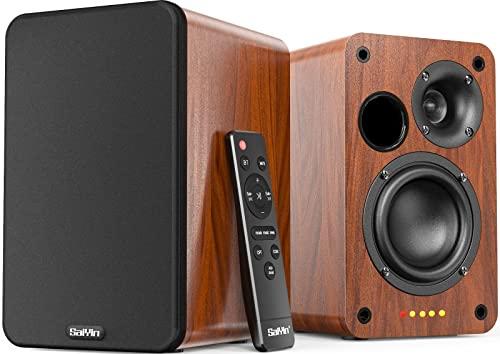
Today, we're comparing two popular options that represent different philosophies in speaker design: the Edifier R1280T, a refined traditional approach, and the Saiyin Bluetooth Bookshelf Speakers, a feature-packed modern alternative. Both aim to deliver quality sound without breaking the bank, but they take distinctly different approaches to get there.
Powered speakers eliminate the guesswork of matching amplifiers to drivers. The built-in amplifier is specifically tuned to work with the speaker's drivers (the individual units that produce sound), creating an optimized system. This integration typically results in better performance than mixing random amplifiers with random speakers.
The key considerations when choosing powered bookshelf speakers center around several factors: sound quality (how accurately they reproduce music), connectivity options (what devices you can connect), build quality (how long they'll last), and value (what you get for your money). Room size matters too – a speaker perfect for a desktop might sound weak in a living room, while a powerful speaker might overwhelm a small space.
Driver configuration is crucial. Most bookshelf speakers use a two-way design with a larger woofer handling bass and midrange frequencies, while a smaller tweeter manages the high frequencies. The crossover network (electronic components that split frequencies between drivers) and cabinet design significantly impact how these elements work together.
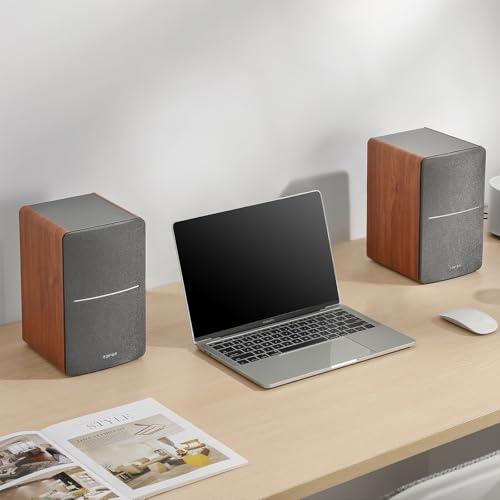
Released around 2016, the Edifier R1280T has become something of a modern classic in budget audio circles. At the time of writing, it typically sells for around $150, positioning it as a premium budget option. Edifier, a Chinese company founded in 1996, has built a solid reputation for producing well-engineered speakers at accessible price points.
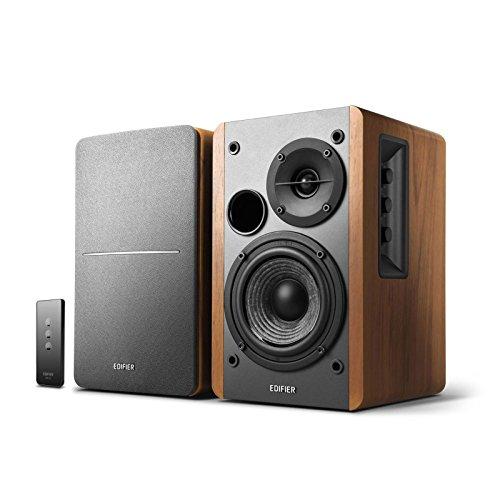
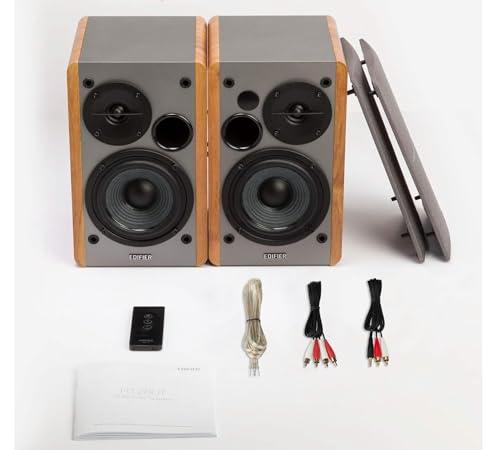
The R1280T takes a deliberately traditional approach. It forgoes trendy features like Bluetooth in favor of focusing resources on sound quality and build construction. The speaker features a 4-inch bass/midrange driver paired with a 13mm silk dome tweeter, powered by a 42W RMS amplifier (21W per speaker). That might not sound like much power, but it's efficiently implemented and more than adequate for near-field listening or small to medium rooms.
The Saiyin Bluetooth speakers represent a newer approach, having emerged in the late 2010s as part of the wave of Chinese manufacturers leveraging modern connectivity and larger drivers to compete on features. At the time of writing, these speakers typically retail for significantly less than the Edifier, making them attractive for budget-conscious buyers who don't want to sacrifice modern conveniences.
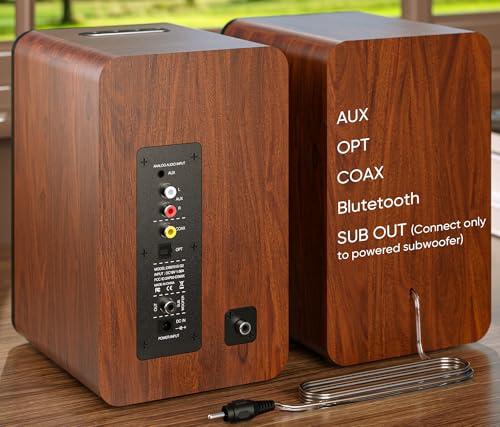
Unlike the R1280T, the Saiyin speakers embrace wireless connectivity with Bluetooth 5.0, while also providing comprehensive wired input options including optical and coaxial digital inputs. Depending on the specific model, they feature larger woofers (up to 5.2 inches) and claim higher power outputs, sometimes reaching 100W total.
Sound quality in bookshelf speakers depends heavily on driver quality, cabinet design, and amplifier implementation. The Edifier R1280T uses a silk dome tweeter, which typically produces smooth, non-fatiguing high frequencies. Silk domes are known for their natural sound reproduction, though they may not extend as high as metal domes or be quite as efficient.
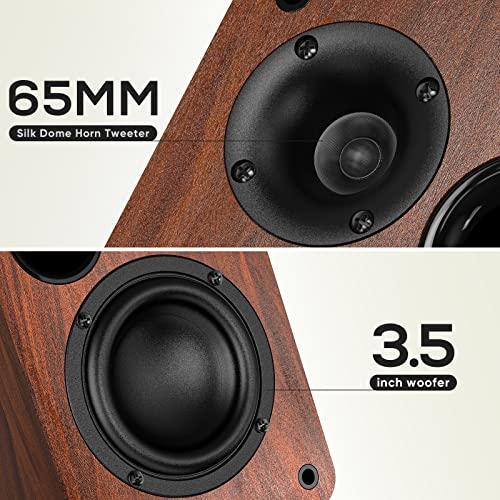
The Saiyin speakers employ what they call silk dome horn tweeters. Horn loading is an acoustic technique that uses a flared tube or cone to improve efficiency and control dispersion. This can result in more dynamic sound and better projection, though implementation quality varies significantly between manufacturers.
Based on our research into user and professional reviews, the Edifier R1280T consistently receives praise for its balanced, refined sound signature. The frequency response reportedly extends from around 52Hz to 20kHz, with a warm, slightly midrange-forward presentation that works well with vocals and acoustic instruments. The bass response is described as punchy and adequate for the speaker size, though it won't shake the room.
The Saiyin speakers, with their larger woofers, appear to deliver more impactful bass response. Reviews consistently mention their ability to produce deeper, more powerful low frequencies, partly due to the larger driver surface area. However, some users report that the overall tonal balance can be less refined, with a more consumer-oriented sound signature that emphasizes bass and treble over midrange accuracy.
The R1280T's 42W RMS output might seem modest, but Class-D amplification (the type typically used in powered speakers) is highly efficient. The amplifier is specifically matched to the drivers, creating a cohesive system that can play surprisingly loud without distortion.
The Saiyin speakers claim higher power outputs, but power ratings can be misleading. What matters more is how cleanly that power translates to actual sound reproduction. Based on user feedback, these speakers can indeed play louder than the Edifier, making them better suited for larger rooms or users who prefer higher volume levels.
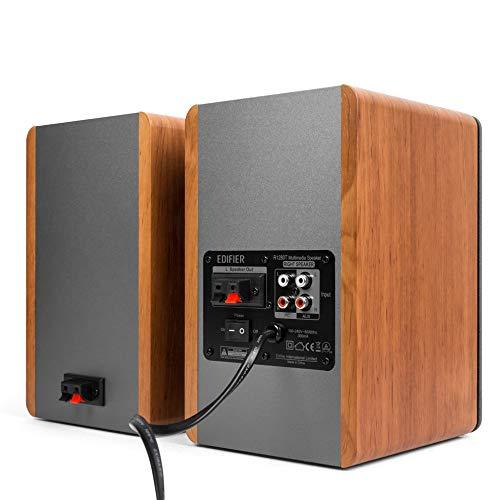
The Edifier R1280T deliberately embraces simplicity with dual RCA inputs. This means you can connect two analog sources simultaneously – perhaps a turntable and a computer – without constantly swapping cables. The signal path remains entirely analog, which some audio enthusiasts prefer for its simplicity and potential for lower noise.
However, this approach has obvious limitations in 2024. No Bluetooth means no direct connection to phones, tablets, or laptops without additional cables. No optical or digital inputs means missing out on potentially cleaner digital signals from TVs, gaming consoles, or streaming devices.
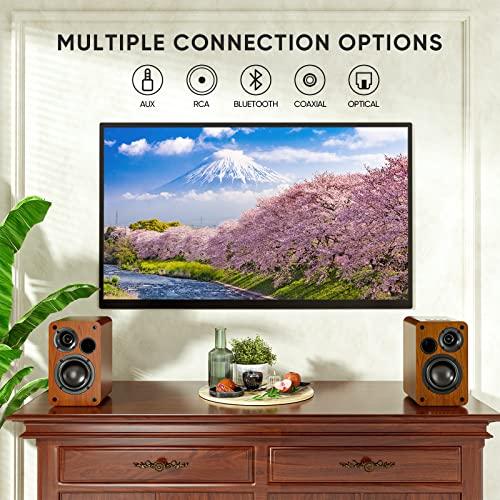
The Saiyin speakers take the opposite approach, offering Bluetooth 5.0 for wireless streaming plus multiple wired inputs including RCA, 3.5mm auxiliary, optical, and coaxial digital connections. This comprehensive connectivity makes them much more versatile for modern usage scenarios.
The Bluetooth 5.0 implementation provides stable connections with improved range and lower latency compared to older Bluetooth versions. The digital inputs (optical and coaxial) can potentially deliver cleaner signals than analog connections, especially when dealing with longer cable runs or electrically noisy environments.
Notably, the Saiyin speakers also include a subwoofer output, allowing system expansion for users who want deeper bass response. This feature is relatively rare at this price point and adds significant flexibility.
Both speakers use MDF (Medium Density Fiberboard) cabinets, which is standard for this price range. MDF is denser than regular wood and provides better acoustic properties than plastic, helping reduce unwanted resonances that can color the sound.
The Edifier R1280T has established a reputation for consistent build quality over its years in the market. The wood-grain vinyl finish is well-applied, and users rarely report significant quality control issues. Edifier's longer market presence and established support infrastructure provide additional peace of mind.
The Saiyin speakers show more variability in build quality, which isn't uncommon for newer brands or products with aggressive pricing. While many users report satisfaction with build quality, some reviews mention minor issues like loose port tubes or inconsistent finishes.
The R1280T benefits from being a mature product with years of real-world use data. Professional reviewers and long-term users consistently report reliable operation, and Edifier provides a two-year warranty with established customer service channels.
The Saiyin speakers, being newer to market, have less long-term reliability data available. However, the more complex electronics (Bluetooth modules, digital processing) potentially introduce more failure points compared to the Edifier's simpler analog design.
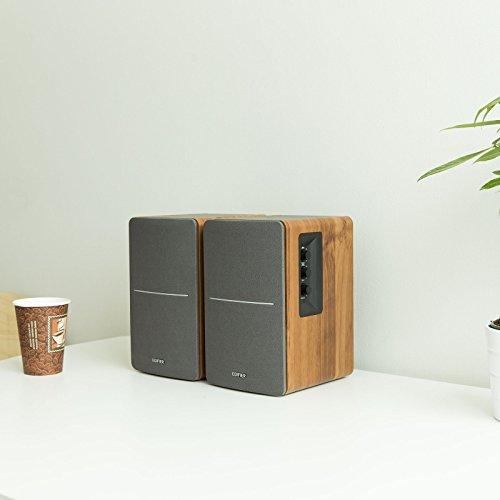
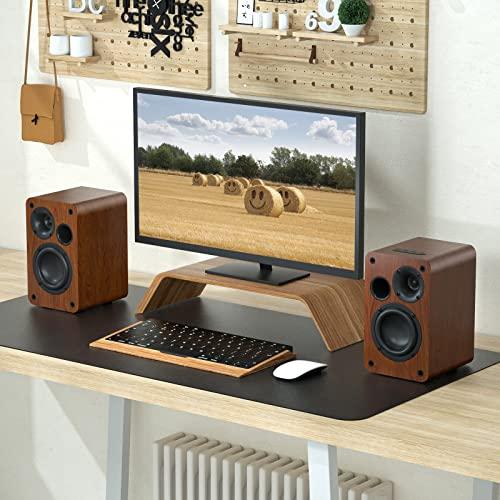
For desktop use, the Edifier R1280T excels with its refined midrange reproduction and controlled bass response. The speaker positioning and dispersion characteristics work well in near-field scenarios, providing clear vocal reproduction and good stereo imaging without overwhelming a small space.
The Saiyin speakers can work well for desktop use, especially if you value the convenience of Bluetooth connectivity for switching between computer audio and phone/tablet streaming. However, their more bass-forward signature might be overwhelming in very close proximity.
This is where the differences become more pronounced. The R1280T works adequately for smaller living rooms but may lack the power and bass extension needed for larger spaces or home theater applications. The lack of optical input also complicates TV connectivity.
The Saiyin speakers are better suited for home theater use, thanks to their optical input compatibility with TVs and higher power output. The ability to add a subwoofer provides a clear upgrade path for users who want more impactful bass for movies and gaming.
For critical music listening, the Edifier R1280T generally receives higher marks from audio enthusiasts. Its more neutral tonal balance and refined treble reproduction work well with a wide variety of musical genres, particularly acoustic music, jazz, and classical.
The Saiyin speakers lean toward a more consumer-friendly sound signature that can be engaging for pop, rock, and electronic music where enhanced bass and treble can add excitement. However, this tuning may be less accurate for classical or acoustic music.
At the time of writing, the Edifier R1280T typically commands a premium over the Saiyin speakers, but that premium reflects different priorities. The Edifier focuses budget allocation on sound quality refinement and build consistency, while accepting limitations in connectivity.
The Saiyin speakers optimize for feature density and modern connectivity, potentially sacrificing some sound quality refinement to achieve aggressive pricing while including Bluetooth and digital inputs.
The R1280T's simpler design and proven reliability suggest lower long-term ownership costs. The lack of complex digital processing and Bluetooth modules means fewer potential failure points.
The Saiyin speakers offer better expandability with their subwoofer output, potentially delaying the need for a complete system upgrade. However, the more complex electronics might require replacement sooner.
The Edifier R1280T makes the most sense for listeners who prioritize sound quality refinement over modern conveniences. If you primarily listen to music from traditional sources (turntables, CD players, computers via cable), appreciate a more neutral sound signature, and value proven reliability, the R1280T delivers excellent performance.
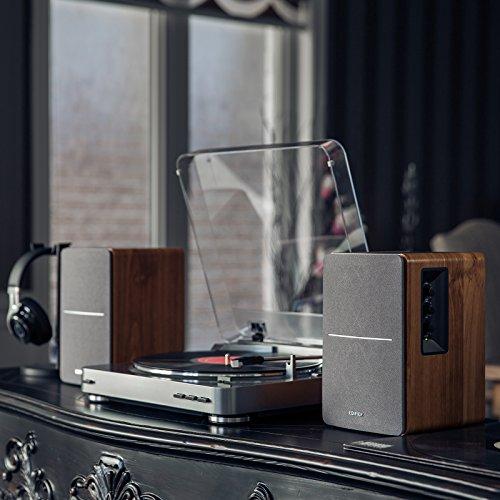
This speaker particularly appeals to vinyl enthusiasts who want the warm, detailed sound reproduction that complements analog sources. Desktop users who can accept wired connections will appreciate the refined midrange and controlled bass that works well in near-field scenarios.
The Saiyin speakers better serve users who need modern connectivity options and don't mind trading some sonic refinement for features. If Bluetooth connectivity is important for your daily usage, if you need optical input for TV connection, or if you plan to eventually add a subwoofer, these speakers provide excellent value.
They're particularly appealing for home theater applications where the optical input and subwoofer output create a more complete solution. Users who prefer more bass impact and can accept less refined midrange reproduction will find them engaging for modern music genres.
Both speakers succeed in their respective approaches, but they serve different users. The Edifier R1280T represents the traditional audiophile approach of maximizing sound quality within constraints, while the Saiyin speakers embrace the modern expectation of comprehensive connectivity and features.
Your choice ultimately depends on whether you prioritize sonic refinement or modern functionality. The R1280T offers a more mature, refined listening experience with proven reliability. The Saiyin speakers provide better versatility and expandability at the cost of some sonic sophistication.
Consider your primary use cases, connectivity needs, and listening preferences. Both speakers deliver solid performance for their respective price points, but they achieve that performance through different compromises that align with different user priorities.
| Edifier R1280T Powered Bookshelf Speakers | Saiyin Bluetooth Bookshelf Speakers |
|---|---|
| Total Power Output - Determines maximum volume and room filling capability | |
| 42W RMS (21W per speaker) - adequate for small-medium rooms | Up to 100W total (50W per speaker) - better for larger spaces |
| Driver Configuration - Affects sound quality and frequency response | |
| 4" woofer + 13mm silk dome tweeter - balanced, refined sound | Up to 5.2" woofer + silk dome horn tweeter - more bass impact |
| Bluetooth Connectivity - Essential for modern wireless streaming | |
| None - wired connections only | Bluetooth 5.0 - seamless wireless streaming from phones/tablets |
| Input Options - Determines what devices you can connect | |
| Dual RCA inputs only - simple but limited | RCA, AUX, Optical, Coaxial, Bluetooth - comprehensive connectivity |
| Frequency Response - Shows bass extension and treble reach | |
| 52Hz - 20kHz - good overall range | 45Hz - 20kHz (varies by model) - typically deeper bass extension |
| Sound Signature - Affects musical genre compatibility | |
| Warm, balanced, midrange-focused - excellent for vocals/acoustic | Bass-forward, consumer-friendly - engaging for pop/rock/electronic |
| Build Quality Reputation - Indicates long-term reliability | |
| Established track record since 2016, consistent quality control | Newer brand with variable quality control, some minor issues reported |
| Subwoofer Output - Allows bass expansion for home theater | |
| None - no upgrade path for deeper bass | Yes - can add powered subwoofer for 2.1 system |
| Control Options - Affects ease of daily use | |
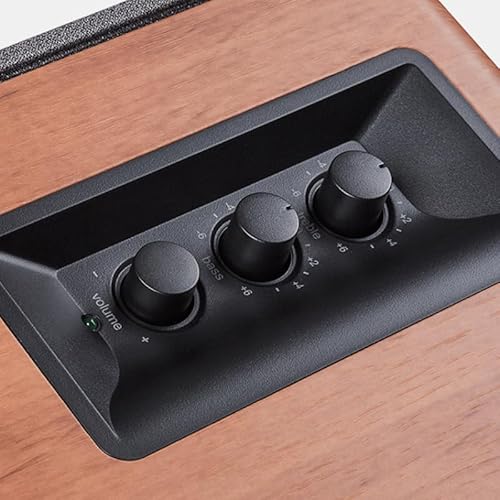
| Physical controls + remote for volume/bass/treble | Remote control + some models have physical buttons |
| Digital Input Support - Important for TV and gaming console connection | |
| None - analog only, requires additional adapters for digital sources | Optical and coaxial inputs - direct TV/console connection |
| Warranty and Support - Indicates manufacturer confidence | |
| 2-year warranty with established customer service | Varies by model, less established support infrastructure |
| Primary Use Case - Where each speaker excels | |
| Desktop listening, vinyl setups, critical music listening | Home theater, wireless streaming, multi-source entertainment systems |
The Edifier R1280T generally offers more refined and balanced sound quality with its silk dome tweeter and carefully tuned frequency response. It provides clearer midrange reproduction and more accurate sound for critical listening. The Saiyin Bluetooth speakers deliver more bass impact due to their larger woofers but may sacrifice some midrange accuracy for a more consumer-friendly sound signature.
If you frequently stream music from phones, tablets, or laptops, Bluetooth is essential. The Saiyin Bluetooth speakers offer Bluetooth 5.0 for seamless wireless streaming, while the Edifier R1280T requires wired connections only. Consider your daily listening habits - if you primarily use wired sources like turntables or computers, the Edifier may be sufficient.
The Saiyin Bluetooth speakers are better suited for home theater applications due to their optical input for direct TV connection, higher power output for larger rooms, and subwoofer output for bass expansion. The Edifier R1280T lacks digital inputs and subwoofer connectivity, making TV integration more challenging.
For small rooms or desktop use, the Edifier R1280T's 42W RMS is adequate and provides clean, controlled sound. For medium to large rooms, the Saiyin speakers' higher power output (up to 100W) offers better room-filling capability and can maintain clarity at higher volumes.
The Saiyin Bluetooth speakers connect directly to TVs via optical cable for digital audio. The Edifier R1280T requires analog connections, so you'll need your TV's headphone output or RCA outputs, which may limit audio quality and require additional cables.
Both offer excellent value in different ways. The Edifier R1280T provides superior sound quality and build reliability for the price. The Saiyin speakers deliver more features including Bluetooth, digital inputs, and subwoofer output at a typically lower price point, making them better for feature-conscious buyers.
The Edifier R1280T excels with vinyl setups due to its warm, balanced sound signature that complements analog sources. Its dual RCA inputs allow connection of both a turntable and another source. The Saiyin speakers work with vinyl but their bass-forward tuning may not be ideal for all record types.
The Edifier R1280T has a proven track record since 2016 with consistent build quality and established customer support. The Saiyin speakers are newer to market with less long-term reliability data, though many users report satisfaction with build quality.
Only the Saiyin Bluetooth speakers include a dedicated subwoofer output for easy 2.1 system expansion. The Edifier R1280T has no subwoofer connectivity, limiting your ability to add deeper bass later without replacing the entire system.
The Edifier R1280T offers simpler setup with just power and audio cable connections, plus physical controls on the speaker. The Saiyin speakers provide more connectivity options but require more complex setup and input switching, though they offer greater flexibility once configured.
Both work excellently for desktop computer use. The Edifier R1280T provides refined sound quality ideal for music and content creation with direct RCA or 3.5mm connection. The Saiyin speakers offer the convenience of Bluetooth for switching between computer and mobile device audio without cable swapping.
For first-time buyers prioritizing sound quality and simplicity, choose the Edifier R1280T. If you need modern connectivity features like Bluetooth and digital inputs, or plan to use them primarily with TV/home theater, the Saiyin Bluetooth speakers provide better versatility and future-proofing for your investment.
We've done our best to create useful and informative comparisons to help you decide what product to buy. Our research uses advanced automated methods to create this comparison and perfection is not possible - please contact us for corrections or questions. These are the sites we've researched in the creation of this article: bestbuy.com - kbaudio.co.uk - everydaylistening.net - hometechnologyreview.com - soundguys.com - recordbuilds.com - audiosciencereview.com - edifier-online.com - youtube.com - audiosciencereview.com - tomsguide.com - youtube.com - youtube.com - audiosciencereview.com - hometechnologyreview.com - edifier.com - audiostance.com - usa-oss.edifier.com - edifier-online.com - edifier.com - youtube.com - edifier.com - bestbuy.com - audiosciencereview.com - kbaudio.co.uk - officedepot.com - newegg.com - manuals.plus - youtube.com - sears.com - youtube.com - walmart.com - youtube.com - device.report - youtube.com - heartwood.church - youtube.com - shopabunda.com - device.report - shopabunda.com - relianthealthcaregroup.com - woodstreetphilly.com - sineaudio.com.cn

Privacy Policy
Terms and Conditions - Affiliate Policy
Home Security
© Copyright 2008-2026.
11816 Inwood Rd #1211, Dallas, TX 75244