

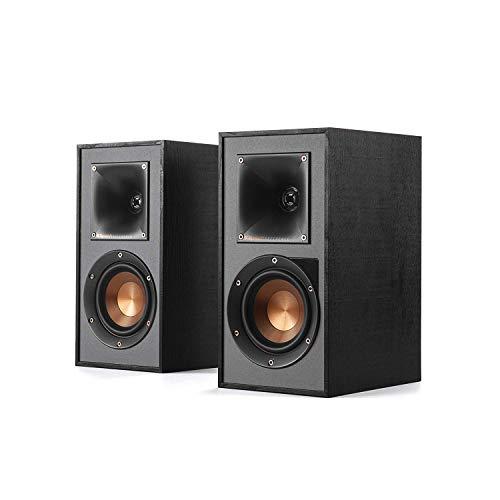
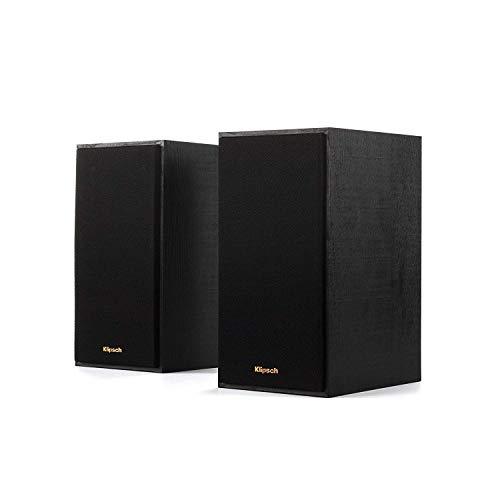
Choosing the right powered bookshelf speakers can transform your listening experience, whether you're setting up a desktop workspace, upgrading a bedroom system, or building a compact home theater. Today, we're diving deep into two speakers that represent very different philosophies in this popular category: the feature-rich Klipsch Reference R-41PM and the value-focused Edifier R1280T.
Powered bookshelf speakers, also called active speakers, have built-in amplifiers that eliminate the need for a separate receiver or amplifier. This design offers several advantages: the amplifier is specifically matched to the drivers (the individual speaker components that produce sound), you get a cleaner setup with fewer cables, and there's no guesswork about whether your amplifier can properly drive the speakers.
The key considerations when shopping in this category include power output (how loud they can play cleanly), connectivity options (what devices you can plug in), sound signature (the tonal character), build quality, and overall value. Unlike passive speakers that require external amplification, powered speakers are largely plug-and-play solutions that appeal to both beginners and experienced listeners who want simplicity.
The Edifier R1280T launched in 2016 during a time when most affordable powered speakers focused on basic functionality. Edifier's approach was refreshingly straightforward: deliver genuinely good sound quality at a budget price point without unnecessary complexity. At the time of writing, these speakers typically sell for well under $150, making them one of the most accessible entry points into quality desktop audio.
The Klipsch Reference R-41PM arrived later as part of Klipsch's expansion into powered speakers, building on their successful passive R-41M model from 2018. Klipsch brought their decades of horn-loading expertise to the powered speaker market, creating something that bridges the gap between simple desktop speakers and more serious hi-fi components. These typically retail for around $300-350 at the time of writing.
Since these speakers launched, the powered speaker market has become increasingly competitive, with more brands offering Bluetooth connectivity, digital inputs, and smartphone app control. However, both models have remained relevant by focusing on their core strengths rather than chasing every new feature trend.
One of the most significant differences between these speakers lies in their amplification capabilities. The Klipsch R-41PM delivers 70 watts RMS total power (35 watts per channel), while the Edifier R1280T provides 42 watts RMS (21 watts per channel).
But watts alone don't tell the complete story. The efficiency of the speakers—how much sound they produce per watt of power—matters enormously. Klipsch's Tractrix horn technology, which we'll discuss in detail later, makes their speakers significantly more efficient than typical designs. This means the Klipsch R-41PM can produce room-filling sound levels that belie its modest power rating.
From our research into user experiences and professional reviews, the power difference becomes most apparent in medium to large rooms. The Klipsch R-41PM can comfortably fill a 15x15 foot room or larger, maintaining clarity and dynamics even at higher volumes. The Edifier R1280T performs admirably in smaller spaces—desktop setups, bedrooms, or near-field listening—but may struggle to provide satisfying volume levels in bigger environments.
For home theater use, this power difference becomes crucial. Movies have significant dynamic range, meaning quiet dialogue scenes followed by explosive action sequences. The Klipsch R-41PM handles these volume swings more gracefully, while the Edifier R1280T might compress the sound or distort during louder passages in larger rooms.
Perhaps the most important difference between these speakers isn't technical—it's philosophical. They represent fundamentally different approaches to reproducing music and movies.
The Klipsch Reference R-41PM embodies what audio enthusiasts call a "bright" or "forward" sound signature. This means the upper frequencies (treble) and presence region (where vocals and most instruments live) are emphasized, creating a sense of immediacy and detail that can be quite addictive.
This character comes largely from Klipsch's signature Tractrix horn technology. The horn is essentially a carefully shaped waveguide that sits in front of the tweeter (the small driver that handles high frequencies). Think of it like a megaphone that controls how sound spreads from the tweeter. This design increases efficiency dramatically—the speakers can play louder with less power—and creates very precise stereo imaging, meaning you can pinpoint exactly where instruments are positioned in the soundstage.
The trade-off is that some listeners find this bright character fatiguing during long listening sessions, especially if they're sensitive to treble frequencies. However, for movie watching, this signature is often ideal because it makes dialogue exceptionally clear and creates an engaging, theatrical presentation.
The Edifier R1280T takes the opposite approach with what's called a "warm" sound signature. The silk dome tweeters produce smooth, non-fatiguing high frequencies, while the midrange has a slight emphasis that makes vocals sound full and natural. This creates a more relaxed listening experience that's forgiving of poorly recorded music and comfortable during extended listening sessions.
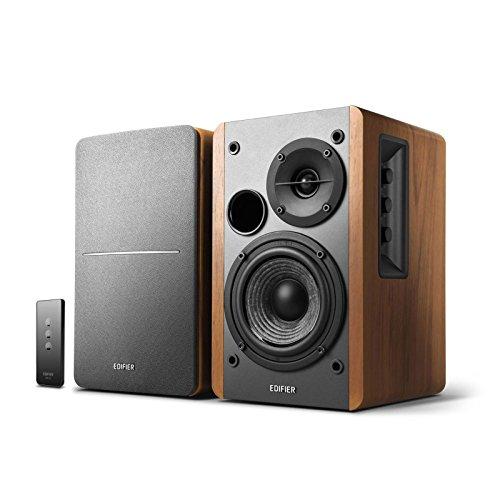
The 13mm silk dome tweeters are key to this character. Silk is a softer material than the aluminum used in many speakers, including the Klipsch R-41PM. This results in a naturally rolled-off treble response that sounds pleasant but sacrifices some detail retrieval compared to metal dome designs.
For casual music listening, background audio, or situations where the speakers will play for hours, this warm signature often proves more enjoyable than brighter alternatives.
Both speakers face the fundamental challenge of producing meaningful bass from relatively small cabinets and 4-inch woofers. However, they handle this limitation differently.
The Klipsch R-41PM uses a rear-firing port (a tuned opening in the back of the cabinet) combined with what they call Dynamic Bass EQ. This feature automatically adjusts the bass response based on volume level, compensating for the way human hearing perceives low frequencies at different volumes. At quiet listening levels, we naturally hear less bass, so the Dynamic Bass EQ boosts these frequencies to maintain a balanced sound. This is a sophisticated feature typically found only in high-end AV receivers.
The rear port design means these speakers are somewhat placement-sensitive. Too close to a wall, and the bass becomes boomy and undefined. Give them some breathing room—at least a foot from the wall—and they produce surprisingly punchy, controlled bass that extends down to 76Hz.
The Edifier R1280T also uses a bass reflex design, but with a flared port that's designed to minimize air turbulence and port noise. While it doesn't have the dynamic bass adjustment of the Klipsch, it produces what most users describe as warm, room-filling bass that's well-integrated with the midrange.
Both speakers benefit from corner placement for maximum bass output, though this can sometimes come at the expense of stereo imaging precision.
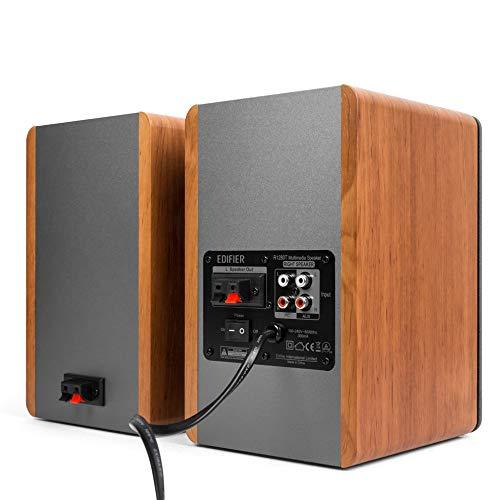
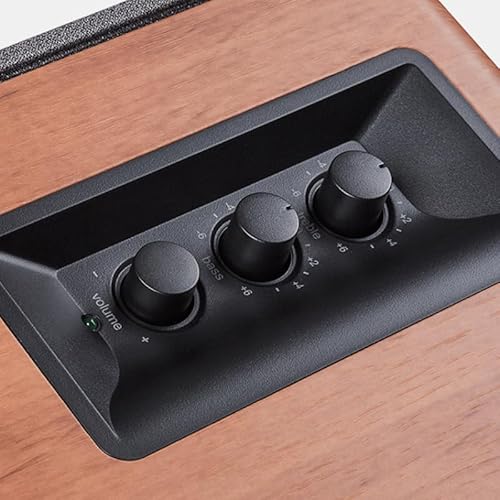
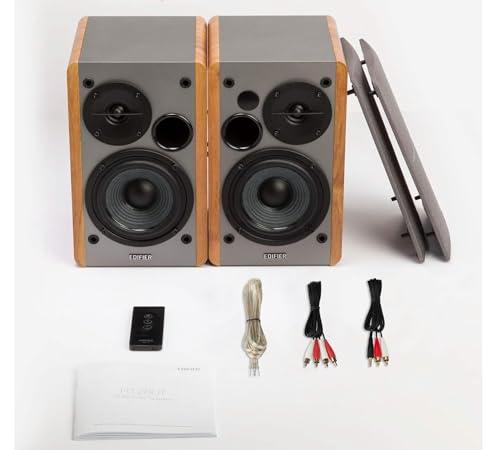
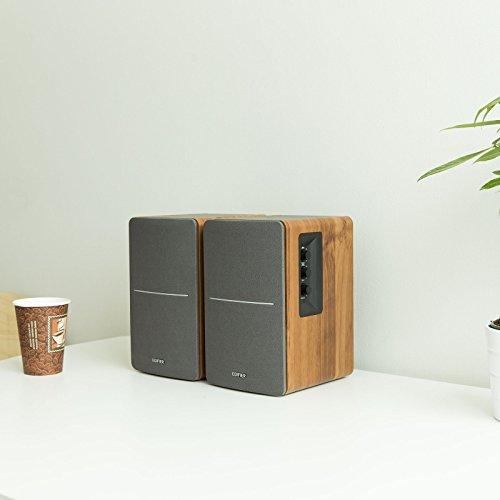
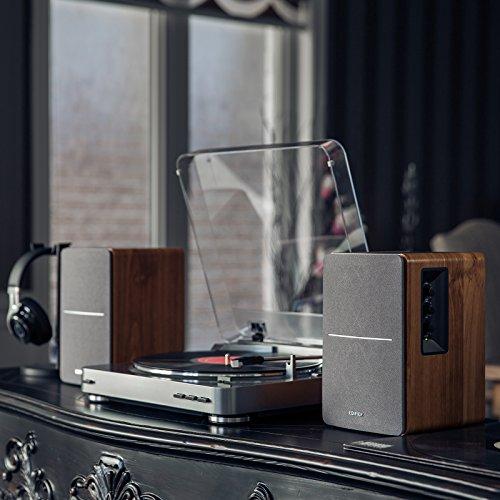
Here's where the philosophical differences between these speakers become most apparent. The Edifier R1280T keeps things beautifully simple with dual RCA analog inputs. This means you can connect two devices simultaneously—perhaps a computer and a turntable—without unplugging cables. The side-mounted volume, bass, and treble controls let you fine-tune the sound without reaching for a remote.
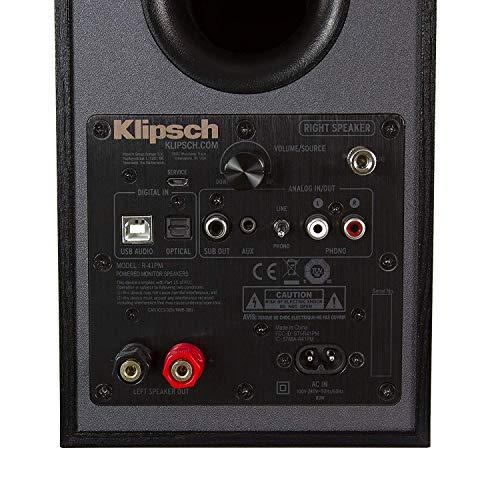
The Klipsch R-41PM takes a kitchen-sink approach to connectivity that reflects modern listening habits. The Bluetooth input supports aptX, a higher-quality wireless codec that reduces compression artifacts. The USB-B input allows direct connection to computers with support for high-resolution audio up to 24-bit/96kHz—significantly better than what you'd get from a standard headphone output.
Perhaps most importantly for vinyl enthusiasts, the Klipsch R-41PM includes a built-in phono preamp. This means you can connect turntables with moving magnet cartridges directly to the speakers without needing a separate phono stage—a feature that can save hundreds of dollars in additional equipment.
The optical digital input opens up connection possibilities with TVs, game consoles, and CD players, while the subwoofer output provides an upgrade path for users who eventually want deeper bass extension.
Both speakers use MDF (Medium Density Fiberboard) cabinets, which is the standard for good-quality speakers because it's dense and doesn't resonate like cheaper materials. However, their aesthetic approaches differ significantly.
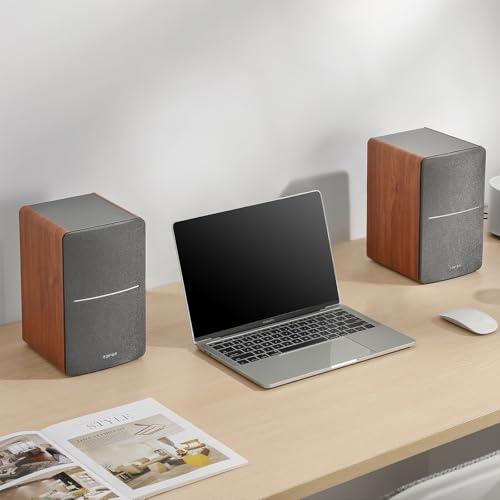
The Edifier R1280T embraces a classic, furniture-friendly design with wood grain vinyl that looks convincing from a distance. At roughly 9.5 inches tall, they're compact enough for most desktop setups while still looking proportional on bookshelves.
The Klipsch R-41PM is noticeably larger at over 11 inches tall and sports the distinctive Klipsch aesthetic with copper-colored drivers and the signature horn. Some find this industrial look appealing, while others prefer the Edifier's more traditional appearance. The magnetic grilles on both models can be removed, though the Klipsch looks more complete with grilles off, while the Edifier looks better with them on.
For home theater use, the differences between these speakers become magnified. The Klipsch R-41PM excels in this application thanks to its higher power output, dynamic range, and especially its horn-loaded tweeter design. Klipsch has been the preferred speaker brand for many movie theaters precisely because their horn design projects dialogue clearly even in large spaces.
The optical digital input becomes crucial here, allowing direct connection to TVs or streaming devices while bypassing potentially inferior built-in TV audio processing. The ability to add a subwoofer later provides a clear upgrade path toward a more complete home theater system.
The Edifier R1280T can certainly handle movie watching, especially in smaller rooms or near-field setups. However, the limited power output means action sequences might lack the dynamic impact that makes movies truly engaging, and the lack of a subwoofer output limits future expansion possibilities.
At the time of writing, the price difference between these speakers is substantial—the Edifier R1280T typically costs less than half what the Klipsch R-41PM commands. This makes the value equation complex and personal.
The Edifier R1280T delivers genuinely impressive sound quality for its price point. In the sub-$150 category, it's hard to find powered speakers that match its combination of build quality, sound refinement, and aesthetic appeal. For desktop use, bedroom systems, or anyone primarily interested in casual music listening, the performance-per-dollar ratio is exceptional.
The Klipsch R-41PM costs significantly more, but provides features and capabilities that justify the premium for the right user. The extensive connectivity alone—Bluetooth, USB, optical, phono preamp, and subwoofer output—would cost hundreds of dollars to replicate with separate components. Add the higher power output and dynamic capabilities, and the value proposition becomes compelling for users who need these features.
Choose the Edifier R1280T if you're setting up a desktop system, secondary listening area, or small room where you primarily want good-sounding, attractive speakers without complexity. The warm, forgiving sound signature makes them excellent for background music, and the simple controls mean anyone in the household can operate them easily. They're also ideal if you're budget-conscious but refuse to compromise on basic sound quality.
The Klipsch R-41PM makes more sense for users who want room-filling sound, extensive connectivity options, or plan to use the speakers for home theater duty. If you have multiple sources—streaming devices, computers, turntables, TVs—the comprehensive input selection eliminates the need for additional switching equipment. The ability to add a subwoofer later provides a clear upgrade path that the Edifier can't match.
For home theater specifically, the Klipsch R-41PM is the clear winner. The higher power output, dynamic range, and dialogue clarity make movies significantly more engaging, while the optical input and subwoofer output provide proper connectivity and expansion options.
Both speakers succeed brilliantly at their intended missions. The Edifier R1280T proves that good sound doesn't require a large investment, while the Klipsch R-41PM demonstrates how thoughtful engineering and comprehensive features can justify a higher price. Your choice ultimately depends on your space, budget, connectivity needs, and whether you value simplicity or flexibility more highly.
| Klipsch Reference R-41PM | Edifier R1280T |
|---|---|
| Total Power Output - Determines maximum volume and room size capability | |
| 70W RMS (35W per channel) - fills medium-large rooms | 42W RMS (21W per channel) - best for desktop/small rooms |
| Frequency Response - Shows bass extension and treble reach | |
| 76Hz - 21kHz (tighter range, better extension) | 75Hz - 18kHz (similar bass, less treble extension) |
| Tweeter Design - Affects sound character and efficiency | |
| 1" aluminum LTS with Tractrix horn (bright, efficient) | 13mm silk dome (warm, smooth, non-fatiguing) |
| Connectivity Options - Modern input flexibility vs simplicity | |
| Bluetooth, USB, optical, RCA, 3.5mm, phono preamp | Dual RCA inputs only (can connect 2 sources) |
| Subwoofer Output - Future bass expansion capability | |
| Yes - mono RCA out for adding powered sub | None - no expansion possible |
| Built-in Controls - Hands-on adjustment convenience | |
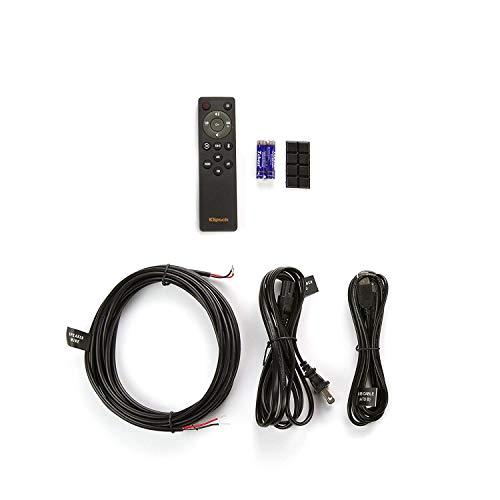
| Remote only (no front panel controls) | Side-mounted volume, bass, treble knobs + remote |
| Cabinet Size - Desktop space and visual impact | |
| 5.88" W × 11.06" H × 7.5" D (larger footprint) | 5.75" W × 9.5" H × 7.7" D (more compact) |
| Digital Audio Support - High-resolution music capability | |
| Up to 24-bit/96kHz via USB (audiophile quality) | Analog inputs only (limited to source quality) |
| Phono Input - Direct turntable connection without external preamp | |
| Built-in switchable phono/line preamp included | Not available - requires separate phono preamp |
| Dynamic Bass EQ - Automatic low-frequency adjustment | |
| Yes - maintains bass fullness at all volume levels | Manual bass control only (±6dB adjustment) |
| Sound Signature - Overall tonal character and listening experience | |
| Bright, forward, detailed (horn-loaded efficiency) | Warm, laid-back, smooth (long-session friendly) |
| Price Category - Value positioning and target market | |
| Premium entry-level (~$300-350 range) | Budget-friendly (~$130-150 range) |
The Edifier R1280T is better suited for small rooms and desktop use due to its compact 9.5-inch height and warm sound signature that works well in near-field listening. While the Klipsch R-41PM can work on desks, its larger 11-inch height and brighter sound signature are better optimized for medium to large rooms where you sit further away from the speakers.
The Klipsch R-41PM is significantly better for home theater use thanks to its 70W power output, optical digital input for direct TV connection, and horn-loaded tweeter design that makes dialogue exceptionally clear. The Edifier R1280T can handle movies in smaller rooms but lacks the power and connectivity options needed for a proper home theater setup.
The Klipsch R-41PM offers extensive connectivity with Bluetooth, USB, optical digital, RCA inputs, and a built-in phono preamp for turntables. The Edifier R1280T keeps it simple with dual RCA inputs that let you connect two analog sources simultaneously, but lacks wireless and digital connection options.
Yes, the Klipsch R-41PM has a built-in switchable phono preamp, allowing direct connection of most turntables without additional equipment. The Edifier R1280T requires a separate phono preamp to connect turntables, adding to the overall system cost.
This depends on your preference: the Klipsch R-41PM delivers bright, detailed sound with excellent imaging that's great for critical listening and revealing musical details. The Edifier R1280T offers a warm, smooth sound that's more forgiving and comfortable for long listening sessions, making it better for casual background music.
Only the Klipsch R-41PM includes a dedicated subwoofer output, making it easy to add a powered subwoofer for deeper bass. The Edifier R1280T has no subwoofer output, so you cannot expand the system for additional bass.
The Klipsch R-41PM is significantly more powerful with 70W RMS total output compared to the Edifier R1280T's 42W RMS. Combined with Klipsch's efficient horn design, the R-41PM can play much louder and fill larger rooms while maintaining sound quality.
The Klipsch R-41PM includes built-in Bluetooth with aptX support for high-quality wireless streaming from phones, tablets, and computers. The Edifier R1280T does not have Bluetooth connectivity and requires wired connections only.
The Edifier R1280T offers exceptional value in its price range, delivering quality sound and attractive design for budget-conscious buyers. The Klipsch R-41PM costs significantly more but justifies the premium with extensive features, higher power output, and professional-grade connectivity options.
The Edifier R1280T has convenient side-mounted knobs for volume, bass, and treble adjustment, plus a simple remote. The Klipsch R-41PM relies entirely on its included remote control for all adjustments, with no physical controls on the speaker cabinet.
The Klipsch R-41PM excels for computer use with its USB-B input supporting high-resolution audio up to 24-bit/96kHz, plus Bluetooth for wireless convenience. The Edifier R1280T works well for basic computer audio through RCA or 3.5mm connections but lacks the advanced digital inputs.
The Klipsch R-41PM produces bright, forward sound with exceptional detail and clarity thanks to its horn-loaded tweeter design, making it ideal for critical listening and home theater. The Edifier R1280T delivers warm, smooth sound that's more relaxed and forgiving, better suited for casual listening and long sessions without fatigue.
We've done our best to create useful and informative comparisons to help you decide what product to buy. Our research uses advanced automated methods to create this comparison and perfection is not possible - please contact us for corrections or questions. These are the sites we've researched in the creation of this article: crutchfield.com - theaudiophileman.com - audioadvice.com - klipsch.com - youtube.com - crutchfield.com - youtube.com - newegg.com - speakerdecision.com - klipsch.com - speakerdecision.com - richersounds.com - bestbuy.com - kbaudio.co.uk - everydaylistening.net - hometechnologyreview.com - soundguys.com - recordbuilds.com - audiosciencereview.com - edifier-online.com - youtube.com - audiosciencereview.com - tomsguide.com - youtube.com - youtube.com - audiosciencereview.com - hometechnologyreview.com - edifier.com - audiostance.com - usa-oss.edifier.com - edifier-online.com - edifier.com - youtube.com - edifier.com - bestbuy.com - audiosciencereview.com - kbaudio.co.uk - officedepot.com

Privacy Policy
Terms and Conditions - Affiliate Policy
Home Security
© Copyright 2008-2026.
11816 Inwood Rd #1211, Dallas, TX 75244