


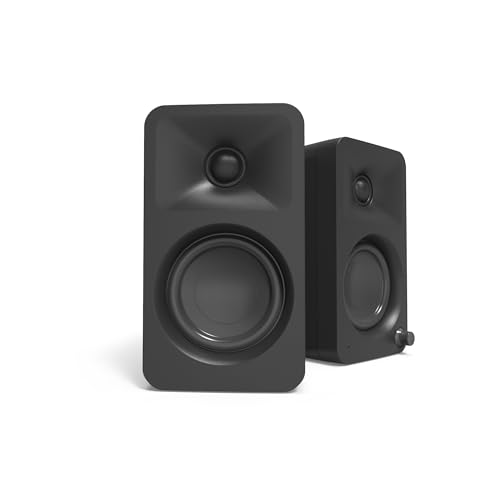
Upgrading from basic computer speakers or laptop audio is one of the most noticeable improvements you can make to your desk setup. But choosing between powered speakers isn't always straightforward, especially when comparing products with different philosophies like the warm, accessible Edifier R1280T and the precision-focused Kanto ORA.
Both speakers entered the market around 2019, representing different approaches to desktop audio. The Edifier R1280T arrived as an affordable gateway into "real" speakers, while the Kanto ORA targeted users seeking professional-grade accuracy in a compact package. Since their release, both have maintained relevance despite rapid changes in audio technology, particularly the shift toward wireless connectivity and high-resolution streaming.
Before diving into specifics, it's worth understanding what makes these speakers special. Both are "powered" or "active" speakers, meaning they have built-in amplifiers. This eliminates the need for a separate amplifier or receiver – you just plug them into your audio source and you're ready to go. This convenience comes with trade-offs: you're stuck with the built-in amplification quality, and upgrading means replacing the entire speaker system rather than just swapping amplifiers.
The key considerations when choosing desktop speakers include sound quality (obviously), size constraints, connectivity options, and how much you're willing to spend. Desktop speakers also need to perform well at relatively close listening distances – typically 2-4 feet – which affects how manufacturers tune their frequency response.
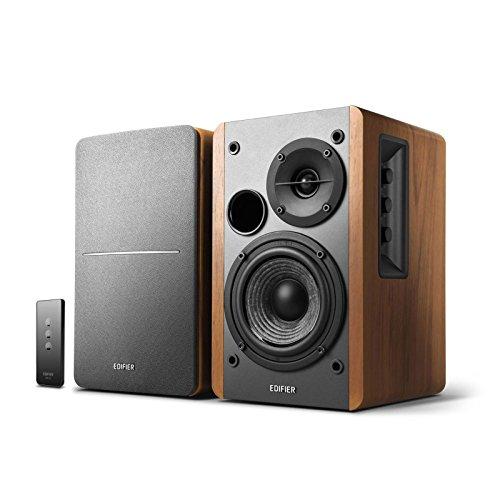
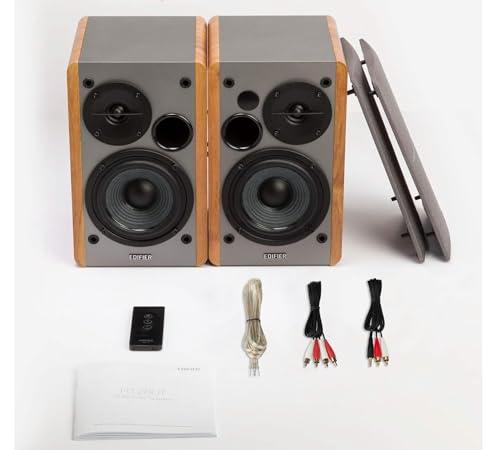
The Edifier R1280T follows what you might call the "consumer-friendly" tuning philosophy. With its 4-inch mid-bass driver and silk dome tweeter, it produces a warm, midrange-focused sound that most people find immediately appealing. The frequency response spans 52Hz to 20kHz, but more importantly, it's tuned to emphasize the frequencies that make music sound full and engaging.
This tuning approach means vocals sound rich, acoustic guitars have body, and there's enough bass presence to make most music genres satisfying without a subwoofer. The silk dome tweeter – a soft fabric material rather than metal – produces smooth highs that won't fatigue your ears during long listening sessions. This is crucial for desktop speakers since you're often listening for hours while working or gaming.
However, this warmth comes at the cost of absolute accuracy. Audio measurements show the Edifier R1280T has some peaks and valleys in its frequency response, particularly brightness in the upper frequencies. For casual listening, these colorations often enhance enjoyment, but they're not ideal if you need to make critical audio decisions.
The Kanto ORA takes the opposite approach, prioritizing accuracy over immediate appeal. Its frequency response measures exceptionally flat – within ±2dB across most of the audible spectrum – which means it reproduces audio exactly as recorded without adding its own character.
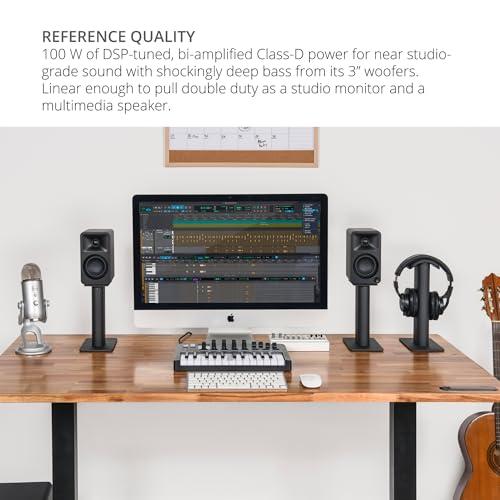
This precision comes from several technical advantages. The bi-amplified design means each driver (the woofer and tweeter) has its own dedicated amplifier, allowing for more precise control and better dynamics. The active crossover – the electronic circuit that splits frequencies between drivers – is implemented digitally rather than with passive components, enabling more sophisticated tuning.
The DSP (Digital Signal Processing) tuning takes this further, using computer-controlled optimization to correct for the acoustic properties of the small cabinet. This is sophisticated stuff typically found in much more expensive studio monitors.
The trade-off is that the Kanto ORA can sound less immediately exciting than the Edifier R1280T. Its 3-inch woofer also means less bass extension, rolling off around 70Hz compared to the Edifier's 52Hz. For many users, this means a subwoofer becomes necessary for full-range music enjoyment.
Both speakers pack respectable power into compact packages, but they achieve it differently. The Edifier R1280T uses a single Class-D amplifier delivering 42W RMS total (21W per channel). Class-D amplification is efficient and runs cool, making it perfect for always-on desktop speakers.
The Kanto ORA also uses Class-D amplification but implements it as a bi-amplified system. This means separate 9W and 16W amplifiers power the tweeter and woofer respectively in each speaker. While the total power is higher at 50W RMS, the real advantage is in control and dynamics. When a bass drum hits, only the woofer amplifier needs to handle that demand, leaving the tweeter amplifier free to reproduce delicate high-frequency details simultaneously.
This technical approach translates to real-world performance differences. The Edifier R1280T provides plenty of clean volume for most desktop scenarios but can show strain when pushed hard. The Kanto ORA maintains composure at higher volumes and delivers better dynamic range – the difference between quiet and loud passages feels more natural and impactful.
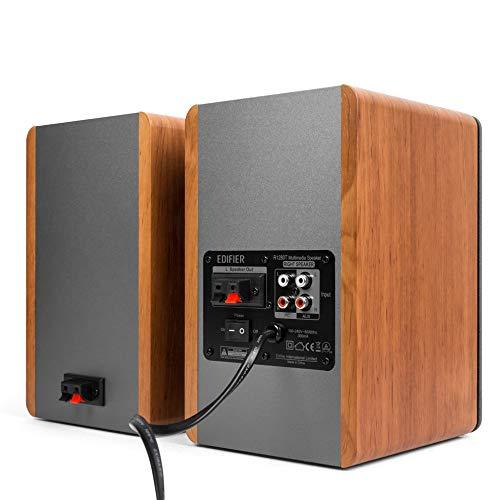
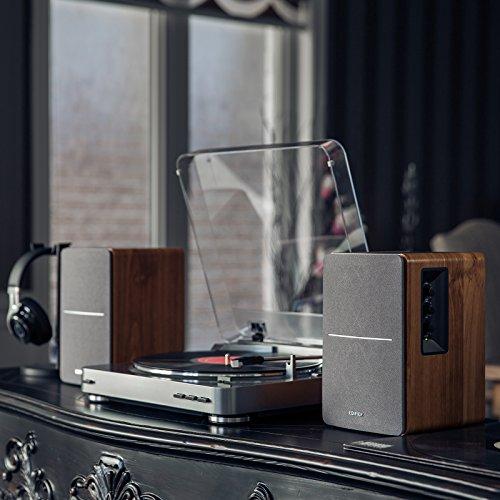
Here's where the two speakers diverge most dramatically. The Edifier R1280T offers only analog inputs – two sets of RCA jacks that let you connect two sources simultaneously. This might seem limiting, but it's actually quite practical. You can connect both your computer and a turntable, switching between them via the included remote.
This analog-only approach reflects the Edifier R1280T's positioning as an affordable upgrade from basic speakers. Most users in this price range at the time of writing are connecting primarily analog sources, and keeping things simple helps maintain the attractive price point.
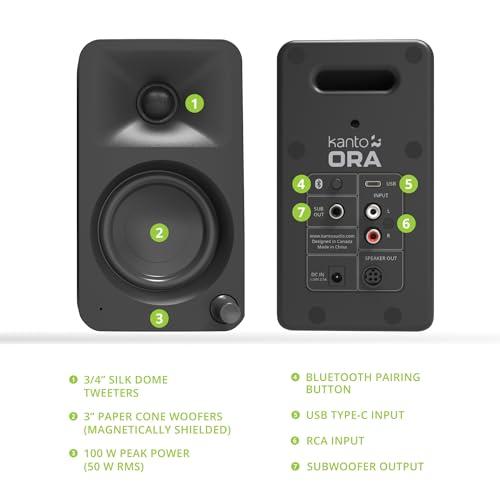
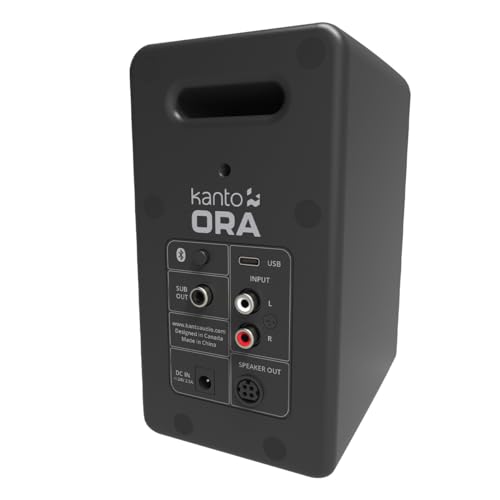
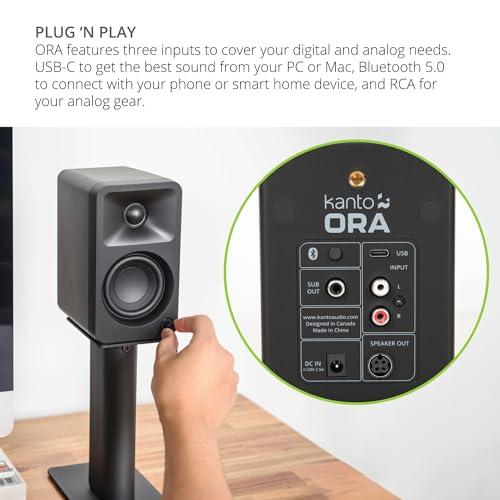
The Kanto ORA embraces modern connectivity with USB-C, Bluetooth 5.0, and traditional RCA inputs. The USB-C connection supports high-resolution audio up to 24-bit/96kHz – significantly better than the 16-bit/44.1kHz quality of standard CDs. This matters if you're streaming high-quality files from services like Tidal or working with professional audio content.
The Bluetooth 5.0 implementation is particularly well-executed, maintaining stable connections and reasonable audio quality for wireless convenience. Having used similar Bluetooth implementations extensively, the convenience factor is substantial – being able to seamlessly switch between your computer and phone audio is genuinely useful in daily use.
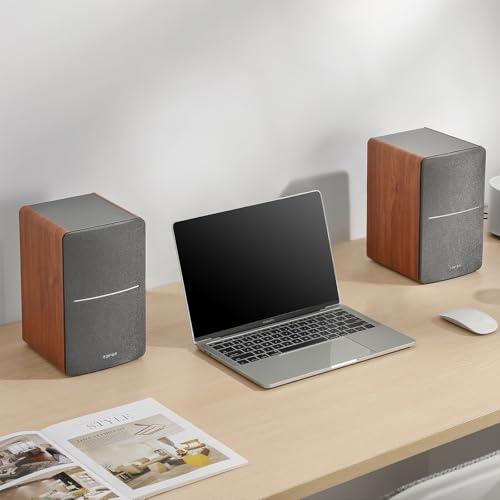
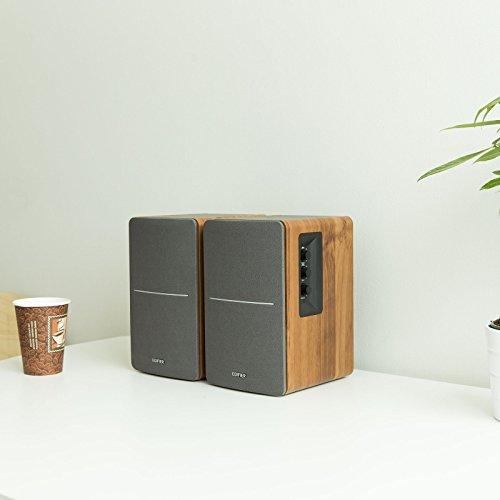
Physical construction reveals different priorities. The Edifier R1280T uses MDF (Medium Density Fiberboard) cabinets with wood-grain vinyl wrapping. MDF is an excellent choice for speaker cabinets because it's dense and acoustically inert, reducing unwanted resonances that can color the sound. The classic bookshelf speaker aesthetic helps these blend into most room décor.
At 5.75" x 9.5" x 7" per speaker, the Edifier R1280T requires significant desk real estate but provides the internal volume necessary for its impressive bass response. The removable grilles protect the drivers while maintaining clean lines.
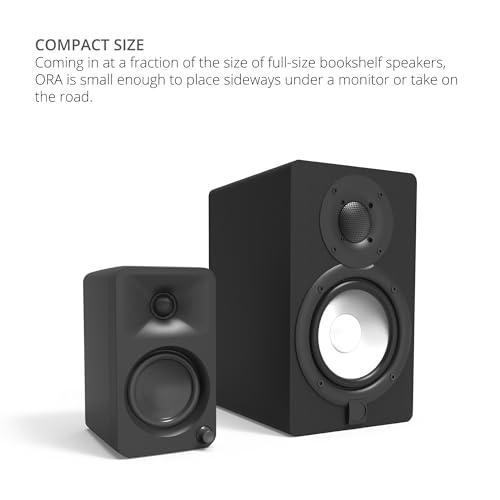
The Kanto ORA prioritizes space efficiency with its compact 3.9" x 6.9" x 5.6" dimensions. The plastic enclosure might seem like a downgrade, but it's specifically chosen for this application. The compact size means less internal air volume, which would normally limit bass response, but the sophisticated DSP tuning compensates for these physical limitations.
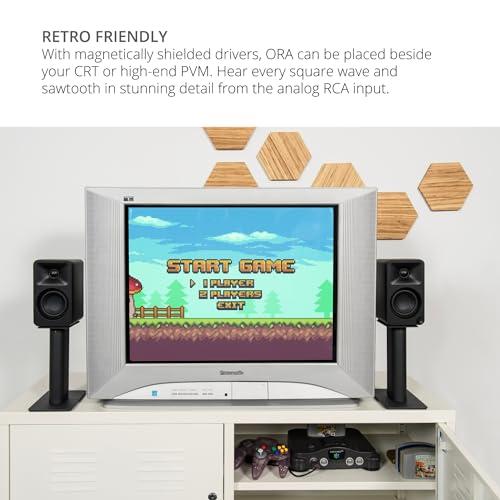
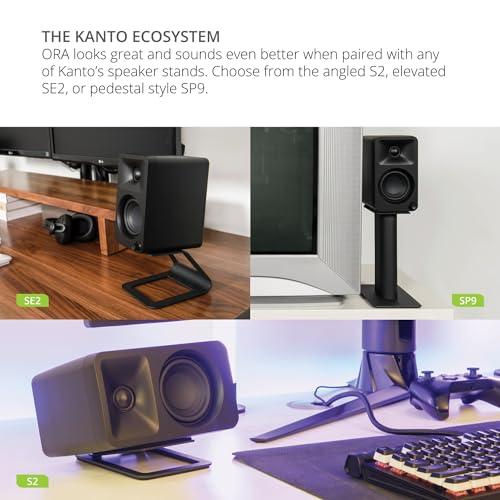
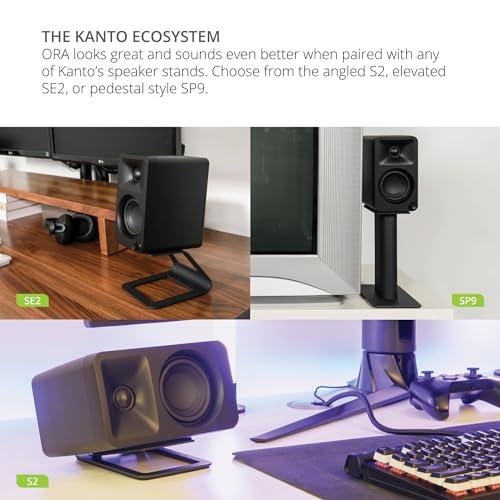
The minimalist aesthetic fits modern workspaces perfectly, and details like the magnetic shielding (which prevents interference with nearby monitors) and threaded mounting holes show thoughtful engineering for desktop use.
For gaming, both speakers excel but in different ways. The Edifier R1280T provides more visceral impact for action games – explosions feel substantial, and the warm tuning makes dialogue intelligible without being harsh. The larger drivers handle sudden dynamic swings well, important for games with rapidly changing audio levels.
The Kanto ORA's precision shines in competitive gaming where accurate positional audio matters. The flat frequency response means you hear footsteps and environmental cues exactly as the game designers intended. The bi-amplified design also handles complex audio scenes better – you can distinguish individual elements in chaotic battle sequences more easily.
Musical preferences play a huge role here. The Edifier R1280T excels with popular music genres like rock, pop, and hip-hop where some bass emphasis and warmth enhance the listening experience. Acoustic music also benefits from the midrange richness, making vocals and instruments sound full and engaging.
The Kanto ORA serves audiophiles and those with eclectic tastes better. Classical music reveals the speaker's exceptional imaging – the ability to precisely locate instruments in space. Jazz recordings showcase the dynamic capabilities, with subtle brush work on drums reproduced alongside powerful bass lines without either overwhelming the other.
This is where the differences become most pronounced. The Edifier R1280T can handle basic content creation tasks, but its colored frequency response makes critical decisions difficult. If you're editing a podcast and the speakers emphasize certain vocal frequencies, you might make EQ decisions that sound wrong on other playback systems.
The Kanto ORA excels in professional scenarios. Video editors can trust that dialogue levels are accurate, musicians can make reliable mixing decisions, and content creators can ensure their work translates well to different playback systems. The flat frequency response acts as an honest reference, revealing flaws in source material that need attention.
Both speakers can serve in smaller home theater setups, though with limitations. The Edifier R1280T works well for casual movie watching in smaller rooms, providing enough bass presence to make action scenes engaging without requiring a subwoofer immediately. The warm tuning makes dialogue natural and easy to understand.
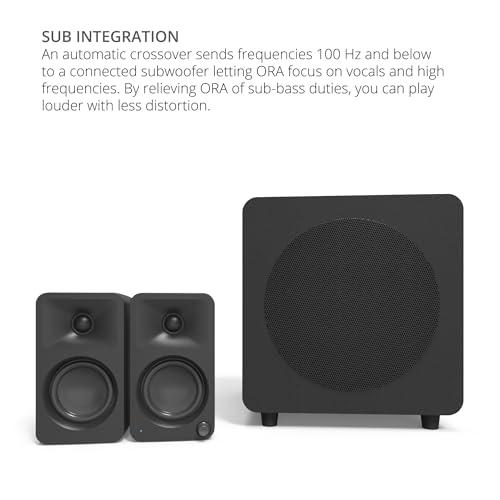
However, neither speaker offers the scale needed for serious home theater use. The Kanto ORA's limited bass extension becomes more noticeable with movie soundtracks, and the compact size limits maximum volume capabilities. Both would benefit from subwoofer addition in home theater scenarios, though only the Kanto ORA provides the dedicated subwoofer output needed for proper integration.
At the time of writing, the Edifier R1280T represents exceptional value in the entry-level powered speaker category. It delivers dramatically better sound quality than typical computer speakers or sound bars in its price range, making it an obvious upgrade for most users. The warm, engaging sound signature means most people will be immediately satisfied without tweaking or additional equipment.
The Kanto ORA operates in a different value category entirely. At roughly twice the price, it's competing with entry-level studio monitors and high-end multimedia speakers. The premium pays for precision engineering, modern connectivity, and professional-grade accuracy. Whether this represents good value depends entirely on your needs and budget.
You're looking for an affordable but significant upgrade from basic speakers, primarily listen to popular music genres, have limited technical requirements, or prefer warm, engaging sound over clinical accuracy. It's also the better choice if you primarily use analog sources like turntables or older equipment, need speakers that sound good immediately without tweaking, or are working with a constrained budget.
The Edifier R1280T particularly suits college students, casual listeners, vinyl enthusiasts, and anyone wanting "real" speakers without complexity or high cost.
You need professional-grade accuracy for content creation, value modern connectivity options like high-res USB and Bluetooth, work in space-constrained environments, plan to integrate a subwoofer eventually, or prioritize technical performance over immediate gratification.
The Kanto ORA serves content creators, audiophiles with limited space, professionals requiring accurate monitoring, and tech enthusiasts who appreciate sophisticated engineering.
Both speakers succeed in their intended roles, but they're solving different problems. The Edifier R1280T democratizes good sound quality, offering performance that was expensive just a few years ago at an accessible price point. The Kanto ORA pushes the boundaries of what's possible in ultra-compact desktop speakers, delivering professional capabilities without compromise.
For most users stepping up from basic computer audio, the Edifier R1280T provides the most immediate satisfaction and represents better value. However, if you're serious about audio quality, work with content creation, or simply want the most technically advanced option, the Kanto ORA's precision and modern features justify the premium.
The beauty of today's speaker market is that both represent significant improvements over what was available even five years ago. Either choice will transform your desktop audio experience – the question is whether you prioritize immediate enjoyment or long-term precision.
| Edifier R1280T | Kanto ORA |
|---|---|
| Power Output - Determines maximum volume and dynamics | |
| 42W RMS total (21W per channel) - adequate for most desktop use | 50W RMS total with bi-amplification - cleaner sound at higher volumes |
| Driver Configuration - Affects sound quality and frequency response | |
| 4" woofer + 0.5" silk dome tweeter - warmer sound with more bass | 3" woofer + 0.75" silk dome tweeter with bi-amplification - more accurate but less bass |
| Frequency Response - Shows how low bass extends and overall balance | |
| 52Hz-20kHz - deeper bass extension, some upper frequency coloration | 70Hz-22kHz - limited bass but exceptionally flat/accurate response |
| Connectivity Options - Modern features vs simplicity | |
| Dual RCA analog inputs only - simple but limits modern device compatibility | USB-C (24-bit/96kHz), Bluetooth 5.0, RCA - comprehensive modern connectivity |
| Size and Footprint - Desktop space requirements | |
| 5.75" x 9.5" x 7" - larger footprint requires more desk space | 3.9" x 6.9" x 5.6" - ultra-compact design fits tight spaces |
| Sound Signature - Tuning philosophy affects music enjoyment | |
| Warm, midrange-focused with bass emphasis - immediately enjoyable for most music | Neutral, reference-grade accuracy - honest reproduction for critical listening |
| Subwoofer Integration - Expandability for full-range sound | |
| No subwoofer output - limited expansion options | Dedicated sub output with automatic 100Hz crossover - seamless integration |
| Build Materials - Affects acoustics and aesthetics | |
| MDF wooden enclosure with classic bookshelf look - better acoustic properties | Plastic enclosure with minimalist design - space-efficient but less premium feel |
| Control Features - User interface and adjustability | |
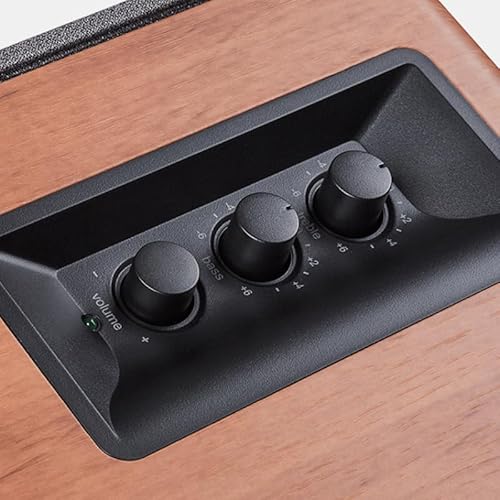
| Side-mounted bass/treble knobs + wireless remote - good tactile control | Single front knob + LED indicators - clean but limited physical controls |
| Magnetic Shielding - Important for placement near monitors | |
| Not specified - may cause interference with CRT displays | Magnetically shielded drivers - safe placement near sensitive electronics |
| Target Use Case - Best application scenarios | |
| Casual listening, gaming, vinyl playback - consumer-focused versatility | Professional monitoring, content creation, audiophile listening - precision-focused |
The Edifier R1280T is more beginner-friendly due to its warm, immediately appealing sound and simple analog connections. It requires no technical knowledge to set up and sounds good right out of the box. The Kanto ORA is better suited for users who understand audio terminology and want reference-grade accuracy.
The Edifier R1280T delivers warm, bass-forward sound that most people find instantly enjoyable, while the Kanto ORA provides neutral, reference-grade accuracy. The Edifier emphasizes musicality, whereas the Kanto prioritizes truthful reproduction of source material.
The Edifier R1280T has stronger bass presence due to its larger 4-inch woofer and consumer-friendly tuning. The Kanto ORA has more accurate but limited bass, requiring a subwoofer for full-range listening. The Kanto does include a subwoofer output for easy expansion.
Only the Kanto ORA offers Bluetooth 5.0 connectivity for wireless phone connection. The Edifier R1280T only has analog RCA inputs, requiring a wired connection through a 3.5mm to RCA cable for phone use.
The Kanto ORA is significantly more compact at 3.9" x 6.9" x 5.6" compared to the Edifier R1280T's 5.75" x 9.5" x 7" dimensions. The Kanto can fit under monitors and includes mounting threads for wall installation.
Both the Edifier R1280T and Kanto ORA are powered speakers with built-in amplifiers, so no external amplifier is needed. Simply connect your audio source and plug into power to start listening.
For casual gaming, the Edifier R1280T provides more impactful explosions and engaging sound. For competitive gaming requiring precise audio cues, the Kanto ORA's accurate sound reproduction helps with positional awareness and detail recognition.
Both can work for smaller home theater setups, but the Edifier R1280T provides better bass presence without a subwoofer. However, the Kanto ORA offers superior expandability with its dedicated subwoofer output for building a proper surround system.
The Edifier R1280T offers exceptional value for casual listeners seeking a significant upgrade from computer speakers. The Kanto ORA provides better value for professionals and audiophiles who need reference-grade accuracy and modern connectivity features.
The Edifier R1280T uses MDF wooden enclosures which provide better acoustic properties and a classic aesthetic. The Kanto ORA uses a plastic enclosure optimized for compact size and includes features like magnetic shielding for placement near monitors.
The Kanto ORA is significantly better for music production due to its flat frequency response, bi-amplified design, and reference-grade accuracy. The Edifier R1280T adds coloration that makes mixing decisions unreliable.
The Edifier R1280T offers dual RCA analog inputs for connecting two sources simultaneously. The Kanto ORA provides modern connectivity with USB-C (high-resolution audio), Bluetooth 5.0, and RCA inputs, plus a subwoofer output for system expansion.
We've done our best to create useful and informative comparisons to help you decide what product to buy. Our research uses advanced automated methods to create this comparison and perfection is not possible - please contact us for corrections or questions. These are the sites we've researched in the creation of this article: bestbuy.com - kbaudio.co.uk - everydaylistening.net - hometechnologyreview.com - soundguys.com - recordbuilds.com - audiosciencereview.com - edifier-online.com - youtube.com - audiosciencereview.com - tomsguide.com - youtube.com - youtube.com - audiosciencereview.com - hometechnologyreview.com - edifier.com - audiostance.com - usa-oss.edifier.com - edifier-online.com - edifier.com - youtube.com - edifier.com - bestbuy.com - audiosciencereview.com - kbaudio.co.uk - officedepot.com - audioholics.com - skybygramophone.com - avu.ca - techaeris.com - hometechnologyreview.com - worldwidestereo.com - techradar.com - kantoaudio.com - listenup.com - kantoaudio.com - youtube.com - iworldonline.com.au - audioadvice.com - kantoaudio.com - microcenter.com

Privacy Policy
Terms and Conditions - Affiliate Policy
Home Security
© Copyright 2008-2026.
11816 Inwood Rd #1211, Dallas, TX 75244