


When shopping for compact desktop speakers, you're essentially choosing between two fundamentally different philosophies: professional audio accuracy or consumer convenience. The PreSonus Eris 3.5 Studio Monitors and Saiyin Bluetooth Bookshelf Speakers perfectly illustrate this divide, each excelling in their respective domains while serving completely different user needs.
Understanding this distinction is crucial because it affects everything from sound quality to daily usability. Studio monitors like the PreSonus Eris 3.5 prioritize accurate sound reproduction—they're designed to reveal exactly what's in your audio without adding their own coloration. Consumer bookshelf speakers like the Saiyin speakers focus on enjoyable listening experiences, often enhancing certain frequencies to make music sound more exciting while adding modern conveniences like Bluetooth connectivity.
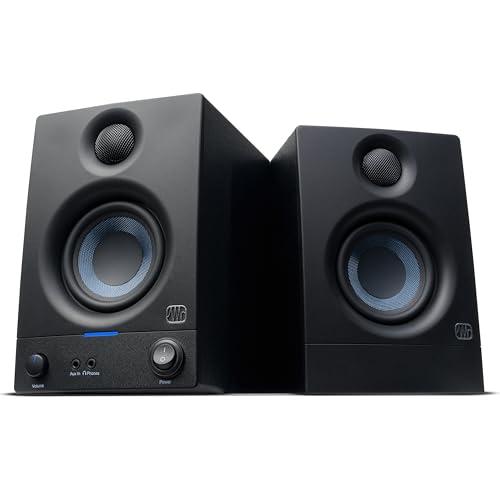
Studio monitors are speakers designed for professional audio work, where accuracy matters more than entertainment value. The PreSonus Eris 3.5, released around 2019 as an updated version of PreSonus's popular entry-level monitor, exemplifies this approach. These speakers use what's called a "flat frequency response"—meaning they reproduce all frequencies as equally as possible without boosting bass or brightening treble.
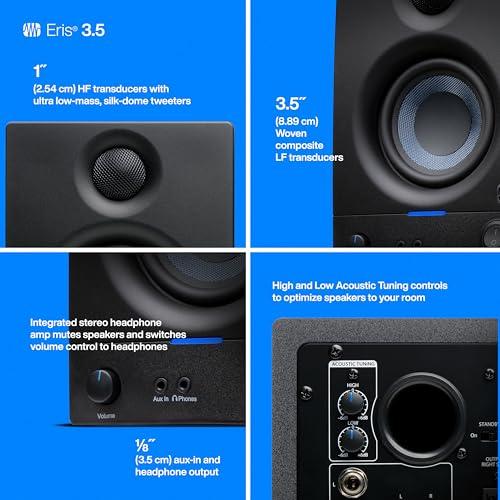
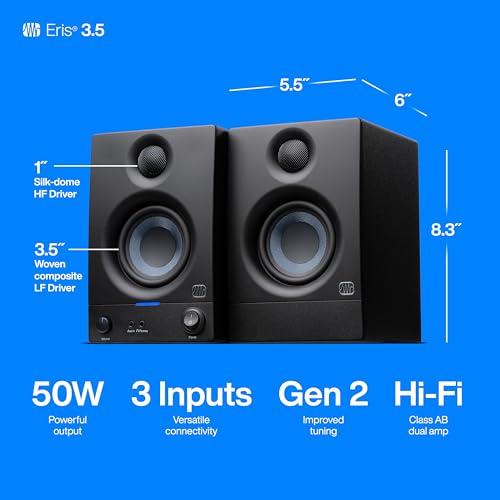
This flat response is achieved through careful driver selection and crossover design. The crossover is an internal circuit that divides audio frequencies between the woofer (handling low frequencies) and tweeter (handling high frequencies). The Eris 3.5 uses a 2.8 kHz crossover point, meaning frequencies below 2,800 Hz go to the 3.5-inch woven composite woofer, while everything above goes to the 1-inch silk dome tweeter.
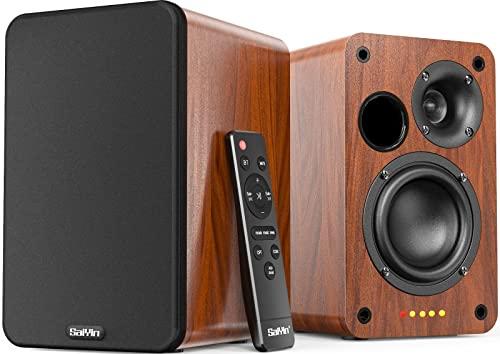
Consumer bookshelf speakers prioritize user experience and often enhance certain frequencies to make music more enjoyable. The Saiyin Bluetooth speakers, representing the modern generation of consumer speakers with wireless capabilities, typically boost bass response and add convenient features like remote controls and multiple connectivity options.
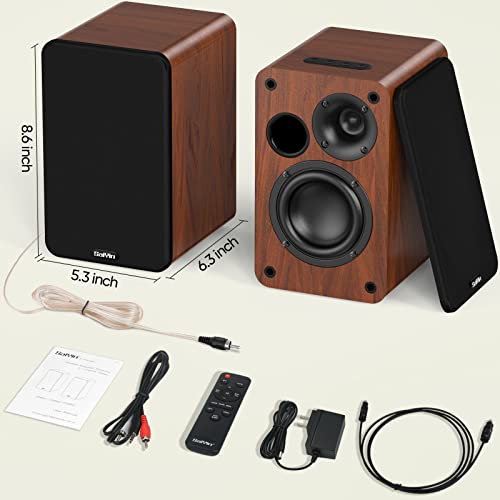
These speakers often use larger woofers—some Saiyin models feature 5.2-inch drivers compared to the Eris 3.5's 3.5-inch units. Larger drivers can move more air, potentially producing deeper bass, though size alone doesn't determine quality. The trade-off usually involves less accurate frequency response in favor of more impactful sound.
The most fundamental difference between these speakers lies in their sound signatures. Our research into professional reviews and user feedback reveals that the PreSonus Eris 3.5 maintains remarkable accuracy for its size and price point. The frequency response spans 80 Hz to 20 kHz with minimal deviation from flat response, meaning a 1 kHz tone sounds as loud as a 5 kHz tone when played at the same level.
This accuracy comes from PreSonus's decades of professional audio experience. The woven composite woofers resist breakup at high volumes—a technical term meaning the driver maintains its shape instead of flexing irregularly, which would cause distortion. The silk dome tweeters provide smooth high-frequency response without the harshness sometimes associated with metal dome designs.
In contrast, the Saiyin speakers appear designed with a more consumer-friendly sound signature. Based on specifications showing larger woofers and horn-loaded tweeters, these speakers likely emphasize bass response and presence, making music sound more exciting but less accurate for critical listening applications.
Power specifications tell an important story about performance capabilities. The Eris 3.5 uses Class AB amplification delivering 25 watts per speaker, totaling 50 watts for the pair. Class AB amplifiers offer a good balance between efficiency and sound quality—they're more efficient than pure Class A designs but maintain better sound quality than Class D switching amplifiers.
More importantly, the Eris 3.5 achieves a maximum SPL (Sound Pressure Level) of 98 dB at one meter distance. SPL measures how loud speakers can play before distortion becomes unacceptable. For reference, 98 dB is quite loud—equivalent to city traffic or a lawn mower. This means these compact monitors can fill a medium-sized room without strain.
The Saiyin speakers claim higher power output in some specifications, but power ratings can be misleading without corresponding distortion measurements. Higher power doesn't always mean louder or better sound—clean power delivery matters more than peak wattage numbers.
Driver design reveals each speaker's priorities. The PreSonus Eris 3.5 uses carefully matched drivers with a precise crossover network. The 3.5-inch woven composite woofers provide controlled bass response without the muddiness that can plague smaller drivers trying to reproduce too much low-end information.
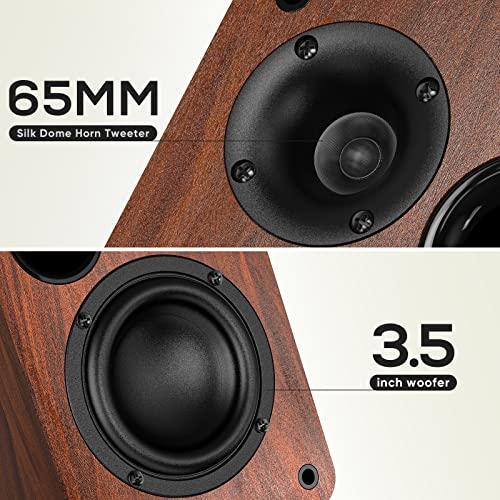
The Saiyin speakers use different approaches across their model variations. Some feature horn-loaded tweeters, which increase efficiency and can provide better dispersion—meaning the sweet spot for optimal listening isn't as narrow. However, horn loading can also introduce its own colorations, potentially making the sound less neutral but more exciting.
The larger woofers in some Saiyin models theoretically provide advantages in bass extension and power handling. A 5.2-inch driver can move more air than a 3.5-inch unit, potentially reaching lower frequencies with less distortion. However, larger drivers in small cabinets can also introduce port noise and cabinet resonances if not properly engineered.
The PreSonus Eris 3.5 emphasizes professional connectivity with balanced ¼-inch TRS inputs. Balanced connections use three conductors instead of two, allowing them to reject electromagnetic interference that can introduce noise into audio signals. This makes them ideal for studio environments with lots of electronic equipment.
The speakers also include unbalanced RCA inputs for consumer devices and a front-panel ⅛-inch input for phones and tablets. The integrated headphone amplifier with automatic speaker muting provides professional convenience—when you plug in headphones, the speakers automatically cut out, allowing for easy A/B comparison between speakers and headphones during mixing or editing work.
The Saiyin speakers take a completely different approach, prioritizing user convenience with Bluetooth 5.0 wireless connectivity. Bluetooth 5.0, introduced around 2016-2017, offers improved range, stability, and lower power consumption compared to earlier Bluetooth versions. The 10-meter range specification means you can control playback from across a typical room without dropouts.
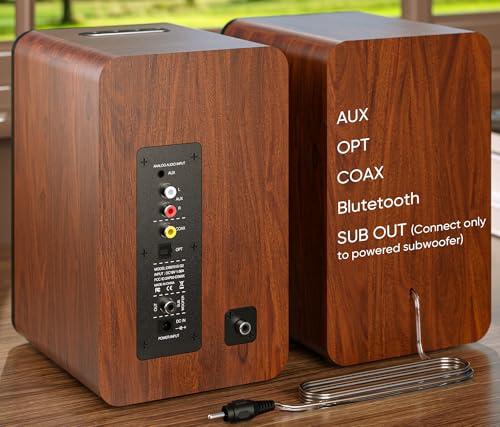
Beyond Bluetooth, these speakers include multiple digital inputs like optical and coaxial connections. Optical connections use light signals instead of electrical ones, providing complete isolation from electrical interference—particularly valuable when connecting to TVs or computer sound cards that might introduce ground loop noise.
The subwoofer output represents another key difference. While the Eris 3.5 focuses on accurate full-range reproduction within its limitations, the Saiyin speakers acknowledge their bass limitations and provide expansion capabilities through dedicated subwoofer outputs.
The PreSonus Eris 3.5 uses vinyl-laminated medium-density fiberboard (MDF) construction. MDF provides excellent acoustic properties because it's dense and relatively non-resonant, meaning the cabinet doesn't add its own sonic signature to the music. The vinyl lamination provides durability in professional environments where speakers might get bumped or moved frequently.
PreSonus includes comprehensive protection circuitry in the Eris 3.5, including RF interference filtering, thermal protection, and current limiting. These features ensure reliable operation in professional environments and protect the speakers from damage due to power surges or overheating.
The Saiyin speakers emphasize aesthetic appeal with wood-grain finishes designed to complement home décor. While this approach might sacrifice some acoustic optimization for visual appeal, it recognizes that many users want speakers that look good in living spaces, not just sound accurate.
For audio production, mixing, or serious music listening, the PreSonus Eris 3.5 provides significant advantages. The acoustic tuning controls allow ±6 dB adjustment at 10 kHz and 100 Hz, enabling users to compensate for room acoustics or personal preferences while maintaining overall accuracy.
These controls address real acoustic problems. Most rooms have bass buildup in corners and high-frequency absorption from furniture and carpeting. The ability to fine-tune these frequencies helps achieve better sound in various room environments—something particularly important for small desktop speakers that might be placed close to walls or in acoustically challenging spaces.
Based on user feedback and professional reviews, the Eris 3.5 excels at revealing details in recordings without fatigue. The term "listener fatigue" describes the tiredness or discomfort that can develop during extended listening sessions with speakers that have harsh or unbalanced frequency responses. Well-designed monitors like the Eris 3.5 allow for hours of comfortable listening.
The Saiyin speakers appear optimized for different priorities. The larger woofers and consumer-friendly tuning likely provide more satisfying bass response for casual music listening, particularly genres like electronic, hip-hop, or rock that benefit from enhanced low-frequency impact.
The Bluetooth connectivity transforms the user experience for casual listening. Being able to stream directly from phones, tablets, or laptops without cables eliminates friction in daily use. For many users, this convenience outweighs any accuracy compromises, especially for background music or multimedia content.
Home theater applications reveal interesting differences between these approaches. The Saiyin speakers include optical and coaxial digital inputs specifically designed for TV connections. These digital connections can handle surround sound formats and provide better audio quality than analog connections from TV headphone outputs.
However, both speakers use 2.0 stereo configurations, meaning they can't truly reproduce surround sound formats. They'll downmix surround content to stereo, which works fine for dialog clarity and music but sacrifices the spatial effects that make action movies more immersive.
The subwoofer output on the Saiyin speakers becomes particularly valuable in home theater applications. Movie soundtracks contain significant low-frequency effects that small speakers simply cannot reproduce effectively. Adding a powered subwoofer can dramatically improve the home theater experience.
Both speakers should provide good dialog clarity due to their focus on midrange reproduction, but they approach dynamic range differently. Dynamic range refers to the difference between the quietest and loudest sounds a system can reproduce. Movies often have wider dynamic range than music, with whispered dialog followed by explosive action sequences.
The PreSonus Eris 3.5 maintains accuracy across different volume levels, meaning quiet dialog remains intelligible while loud scenes don't become harsh or distorted. The professional amplification and protection circuits help maintain clean sound even during demanding passages.
At the time of writing, the PreSonus Eris 3.5 represents exceptional value for anyone needing accurate sound reproduction. The professional features, build quality, and acoustic performance typically found in much more expensive monitors make these speakers compelling for home studios, content creators, and serious listeners on limited budgets.
The inclusion of balanced inputs, acoustic tuning controls, and professional-grade amplification at this price point seems almost unreasonable when compared to higher-end studio monitors costing several times more. For beginners in audio production or experienced professionals needing affordable near-field monitors, the value proposition is outstanding.
The Saiyin speakers compete in a different value equation, where convenience features and aesthetic appeal factor heavily into the decision. Bluetooth connectivity, multiple digital inputs, remote control operation, and attractive finishes address real user needs that professional monitors often ignore.
For casual listeners who prioritize ease of use and modern connectivity over absolute accuracy, the Saiyin speakers likely provide better practical value. The ability to stream wirelessly from any device while maintaining wired options for higher-quality sources offers flexibility that many users will appreciate daily.
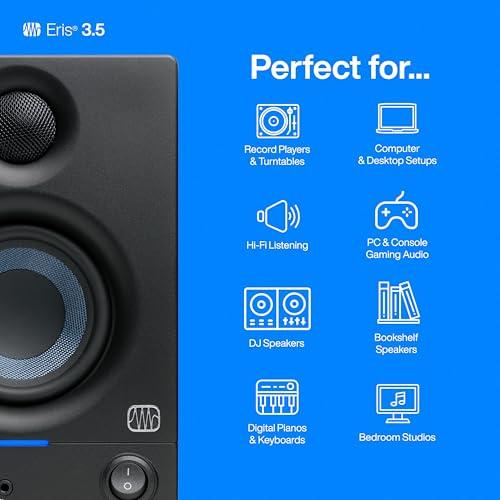
Select the PreSonus Eris 3.5 if you're serious about audio accuracy, whether for professional work or personal enjoyment. These speakers excel for podcast editing, music production, critical listening, or any application where hearing exactly what's in your recordings matters more than convenience features.
The Eris 3.5 also makes sense for users who prefer wired connections for reliability and zero latency. If you're connecting to audio interfaces, mixing consoles, or other professional equipment, the balanced inputs and professional build quality justify the choice even if you never plan to produce music professionally.
The Saiyin speakers better serve users who prioritize modern convenience and casual listening enjoyment. If you primarily stream music from phones or tablets, watch movies from streaming services, or want speakers that disappear into your home décor while providing good sound quality, these speakers address real lifestyle needs.
The multiple digital inputs make the Saiyin speakers particularly attractive for TV or computer use, where you might need to switch between different sources regularly. The subwoofer output provides a clear upgrade path for users who might want to add more bass response later.
The choice between the PreSonus Eris 3.5 and Saiyin Bluetooth speakers ultimately depends on your primary use case and priorities. The Eris 3.5 represents one of the best values in professional monitoring, offering accuracy and build quality that punches well above its price class. For anyone serious about audio—whether professionally or as a hobby—these speakers provide the foundation for good decision-making.
The Saiyin speakers serve the larger market of users who want good sound quality without sacrificing modern conveniences. They acknowledge that most people stream music wirelessly, connect multiple devices, and want speakers that look good in living spaces while providing satisfying sound quality.
Both approaches have merit, but neither tries to be everything to everyone. This focused approach benefits users because it means getting products that excel in their intended applications rather than mediocre compromises trying to satisfy conflicting requirements. Choose based on whether accuracy or convenience better matches your actual usage patterns and priorities.
| PreSonus Eris 3.5 Studio Monitors | Saiyin Bluetooth Bookshelf Speakers |
|---|---|
| Primary Design Philosophy - Determines sound signature and target use | |
| Professional studio monitor with flat frequency response for accurate sound reproduction | Consumer bookshelf speaker with enhanced bass and modern convenience features |
| Driver Configuration - Affects bass response and overall sound character | |
| 3.5" woven composite woofer + 1" silk dome tweeter | 5.2" woofer + silk dome horn tweeter (varies by model) |
| Amplification - Determines clean power delivery and maximum volume | |
| 50W Class AB dual amplification (25W per speaker) with 98 dB peak SPL | 80W maximum output power (specifications vary by model) |
| Frequency Response - Shows how evenly speakers reproduce different tones | |
| 80 Hz - 20 kHz (engineered for flat, accurate response) | Not specified (likely enhanced bass response for consumer appeal) |
| Connectivity Options - Impacts daily usability and device compatibility | |
| Balanced ¼" TRS, RCA, front ⅛" stereo input, headphone output | Bluetooth 5.0, Optical, Coaxial, RCA, AUX inputs with subwoofer output |
| Acoustic Tuning - Allows customization for different room environments | |
| High/low frequency controls (±6 dB at 10 kHz and 100 Hz) | No acoustic tuning controls available |
| Build Construction - Affects durability and acoustic performance | |
| Vinyl-laminated MDF with professional protection circuits | Wood grain finish designed for home aesthetics |
| Wireless Capabilities - Modern convenience for streaming devices | |
| No wireless connectivity (wired connections only) | Bluetooth 5.0 with 10-meter range for wireless streaming |
| User Controls - Daily operation convenience | |
| Front volume control, acoustic tuning knobs, headphone jack | IR remote control, physical buttons, LED display |
| Professional Features - Studio and production work capabilities | |
| Balanced inputs, acoustic room correction, integrated headphone amp | Subwoofer output for system expansion, multiple digital inputs |
| Ideal Use Cases - Best applications for each speaker type | |
| Audio production, critical listening, home studios, accurate monitoring | Casual listening, TV audio, wireless streaming, home entertainment |
The PreSonus Eris 3.5 Studio Monitors are specifically designed for music production and mixing work. They feature a flat frequency response that reproduces audio accurately without coloration, balanced inputs for professional equipment, and acoustic tuning controls to optimize sound for your room. The Saiyin Bluetooth Bookshelf Speakers are consumer-oriented speakers that enhance bass and prioritize enjoyable listening over accuracy, making them less suitable for professional audio work.
Only the Saiyin Bluetooth Bookshelf Speakers offer wireless connectivity through Bluetooth 5.0, allowing you to stream directly from phones, tablets, and other devices. The PreSonus Eris 3.5 requires wired connections only, though they do include a front-panel input for connecting mobile devices with a cable.
The Saiyin Bluetooth Bookshelf Speakers likely provide more pronounced bass due to their larger woofers (up to 5.2 inches in some models) and consumer-friendly tuning that emphasizes low frequencies. The PreSonus Eris 3.5 has more controlled and accurate bass reproduction from their 3.5-inch woofers, but won't deliver the same impact for bass-heavy music genres.
The PreSonus Eris 3.5 Studio Monitors prioritize accuracy and flat frequency response, making them ideal for critical listening and audio work. The Saiyin Bluetooth Bookshelf Speakers are tuned for enjoyable listening with enhanced bass and presence, making music sound more exciting but less accurate for professional applications.
The Saiyin Bluetooth Bookshelf Speakers are better suited for home theater use, featuring optical and coaxial digital inputs for direct TV connection, plus a subwoofer output for adding bass extension. The PreSonus Eris 3.5 can work for TV audio but lack digital inputs and focus more on accurate reproduction than the enhanced dynamics that make movies more engaging.
Both the PreSonus Eris 3.5 and Saiyin Bluetooth Bookshelf Speakers are active (powered) speakers with built-in amplification, so no external amplifier is required. You can connect audio sources directly to either speaker system.
The Saiyin Bluetooth Bookshelf Speakers provide more connectivity options, including Bluetooth wireless, optical, coaxial, RCA, and AUX inputs. The PreSonus Eris 3.5 offers balanced ¼-inch TRS inputs (professional), unbalanced RCA inputs, and a front-panel stereo input, focusing on quality over quantity of connections.
The PreSonus Eris 3.5 Studio Monitors include acoustic tuning controls that let you adjust high and low frequencies to match your room acoustics, plus front-panel volume control. The Saiyin Bluetooth Bookshelf Speakers come with a remote control for volume and input selection but don't offer frequency adjustment capabilities.
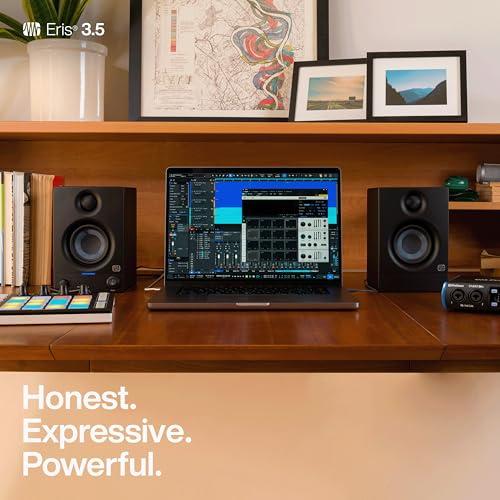
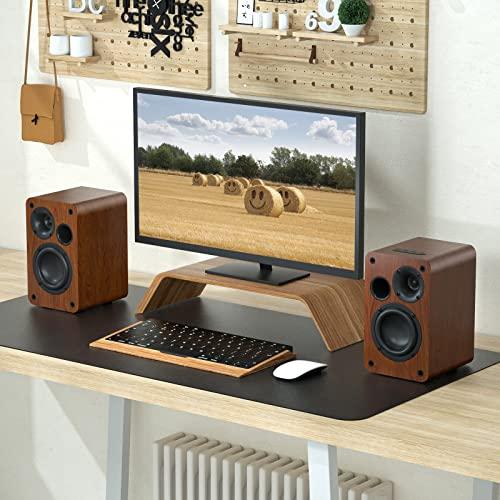
Both speakers work well for desktop use, but the PreSonus Eris 3.5 are specifically designed as near-field monitors for close listening, making them ideal for desktop setups. The Saiyin Bluetooth Bookshelf Speakers can also work on desktops and offer the convenience of wireless streaming from your devices.
The PreSonus Eris 3.5 can achieve 98 dB peak SPL at one meter, which is quite loud for their size and suitable for most rooms. The Saiyin Bluetooth Bookshelf Speakers claim higher power output in some models, potentially offering greater maximum volume, though exact SPL specifications aren't consistently available.
The PreSonus Eris 3.5 Studio Monitors feature professional-grade construction with vinyl-laminated MDF cabinets, comprehensive protection circuits, and components designed for studio use. The Saiyin Bluetooth Bookshelf Speakers emphasize aesthetic appeal with attractive wood finishes but use more consumer-oriented construction methods.
Choose the PreSonus Eris 3.5 Studio Monitors if you prioritize accurate sound reproduction for audio work, critical listening, or want professional-grade performance. Select the Saiyin Bluetooth Bookshelf Speakers if you prefer wireless convenience, multiple input options, enhanced bass for casual listening, and speakers that complement your home décor.
We've done our best to create useful and informative comparisons to help you decide what product to buy. Our research uses advanced automated methods to create this comparison and perfection is not possible - please contact us for corrections or questions. These are the sites we've researched in the creation of this article: soundref.com - presonus.com - musicradar.com - presonus.com - higherhertz.com - sweetwater.com - erinsaudiocorner.com - gzhls.at - homestudiobasics.com - presonus.com - audiosciencereview.com - youtube.com - audiosciencereview.com - thomannmusic.com - georgesmusic.com - musicalgarage.com - soundonsound.com - newegg.com - manuals.plus - youtube.com - sears.com - youtube.com - walmart.com - youtube.com - device.report - youtube.com - heartwood.church - youtube.com - shopabunda.com - device.report - shopabunda.com - relianthealthcaregroup.com - woodstreetphilly.com - sineaudio.com.cn

Privacy Policy
Terms and Conditions - Affiliate Policy
Home Security
© Copyright 2008-2026.
11816 Inwood Rd #1211, Dallas, TX 75244