

When you're tired of your laptop's tinny speakers or those cheap plastic desktop speakers that came with your computer, you face an interesting choice. Do you want something that prioritizes sound quality, or do you care more about modern conveniences like wireless connectivity? The Edifier R1280T and Logitech Z207 represent two completely different philosophies in desktop audio, and understanding these differences will help you make the right choice for your setup.
Desktop speakers have evolved significantly over the past decade. Back in the early 2010s, most people were content with basic 2.1 systems (two small speakers plus a subwoofer) that plugged into their computer's headphone jack. But as streaming music became dominant and people started expecting better audio quality from their devices, the market split into two distinct paths.
On one side, you have what we call "audiophile entry-level" speakers like the Edifier R1280T. These prioritize sound quality above all else, using traditional hi-fi design principles but in a more affordable, powered package. Think of them as baby versions of the expensive bookshelf speakers you'd find in a dedicated stereo system.
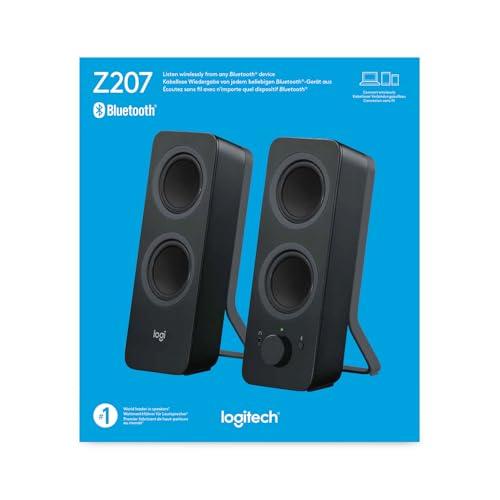
On the other side are modern convenience-focused speakers like the Logitech Z207, which emerged as Bluetooth became standard in the mid-2010s. These speakers sacrifice some audio fidelity in favor of wireless connectivity, compact size, and the ability to easily switch between devices.
The main considerations when choosing between these approaches include audio fidelity versus ease of use, power output and room-filling capability, connectivity options, physical footprint, and whether you want to build toward better audio over time or just need something that works right now.
The Edifier R1280T launched around 2014-2015, during a time when Edifier was establishing itself as a go-to brand for affordable powered speakers that didn't completely compromise on sound quality. The company recognized that many people wanted better audio than typical computer speakers offered, but couldn't justify spending $500+ on studio monitors or traditional hi-fi separates.
The Logitech Z207 arrived later, around 2017-2018, when Bluetooth had matured and people increasingly expected wireless connectivity from their peripherals. Logitech, already dominant in computer peripherals, saw an opportunity to create speakers that integrated seamlessly with modern digital lifestyles.
Since these products launched, we've seen significant improvements in Bluetooth codecs (the technology that compresses audio for wireless transmission), with newer standards like aptX offering better quality. However, neither speaker has received major updates to incorporate these advances, which tells us something about their target markets and price points.
The most dramatic difference between these speakers lies in their audio performance, and this comes down to fundamental physics and engineering priorities.
The Edifier R1280T delivers 42 watts RMS (Root Mean Square - a more honest measurement of continuous power than peak ratings) across both speakers, with 21 watts per speaker. This might not sound like much compared to a home theater receiver, but in the desktop speaker world, it's substantial. RMS ratings tell you how much power a speaker can handle continuously without distortion, making them far more reliable than peak power numbers that only describe brief bursts.
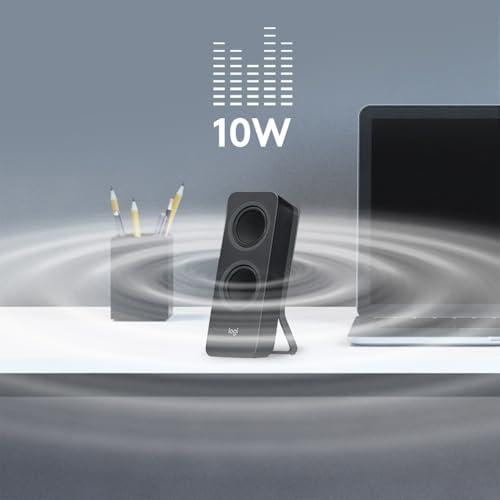
In contrast, the Logitech Z207 provides just 5 watts RMS total, with a 10-watt peak rating. This difference isn't subtle - the Edifier has roughly eight times more continuous power available. In practical terms, this means the Edifier can fill a medium-sized room with sound, while the Logitech works best when you're sitting directly in front of it.
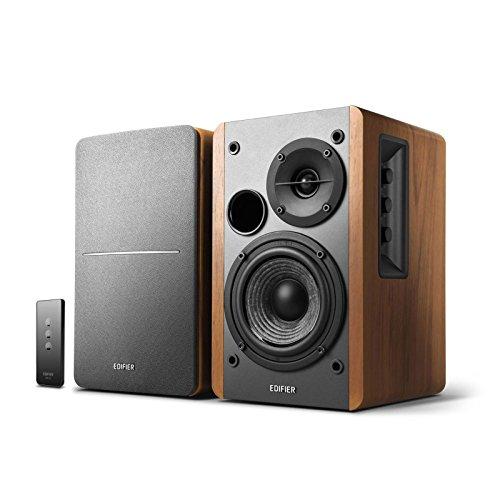
The Edifier R1280T uses a traditional two-way design with 4-inch mid/bass drivers and 13mm silk dome tweeters. Driver size directly impacts how much air a speaker can move, and moving air is how speakers create sound pressure - the physical waves that your ears interpret as music. A 4-inch driver has significantly more surface area than the smaller drivers in compact desktop speakers, allowing it to reproduce lower frequencies more effectively and with less distortion.
The silk dome tweeters (the small drivers that handle high frequencies) are particularly noteworthy. Silk produces a smoother, more natural sound than the metal or plastic tweeters found in cheaper speakers. When you're listening for hours, this difference becomes apparent as reduced fatigue and a more pleasant listening experience.
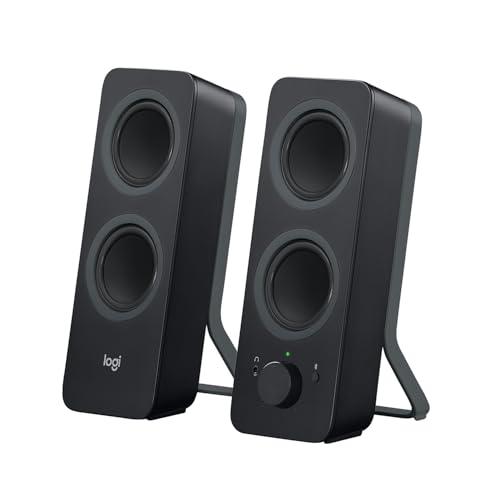
The Logitech Z207 uses what they call a "four-driver design," but this is somewhat misleading. Each speaker has one active driver (powered) and one passive radiator. A passive radiator is essentially a driver without a magnet - it moves in response to air pressure changes inside the speaker cabinet, helping extend bass response. While this design can improve bass compared to a simple sealed cabinet, it can't overcome the fundamental limitations of small drivers and low power.
Frequency response describes the range of pitches a speaker can reproduce, measured in Hertz (Hz). The Edifier R1280T covers 52Hz to 20,000Hz, while the Logitech Z207 handles 120Hz to 20,000Hz. This 68Hz difference in low-end extension is enormous in audio terms.
To put this in perspective, the lowest note on a standard guitar is about 82Hz, and a kick drum's fundamental frequency often sits around 60-80Hz. The Edifier can reproduce these sounds with reasonable accuracy, while the Logitech will miss much of their impact. This is why bass-heavy music genres like electronic, hip-hop, or rock often sound thin through small computer speakers.
The upper frequency range (20,000Hz) is similar for both speakers, which makes sense since most adults can't hear much above 17,000Hz anyway. The real differences lie in how smoothly each speaker transitions between frequencies and how much distortion creeps in at various volume levels.
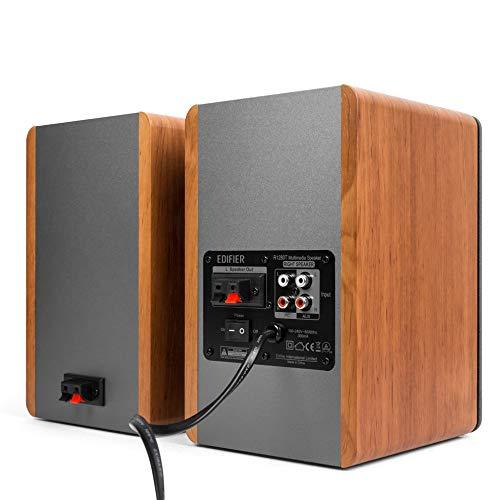
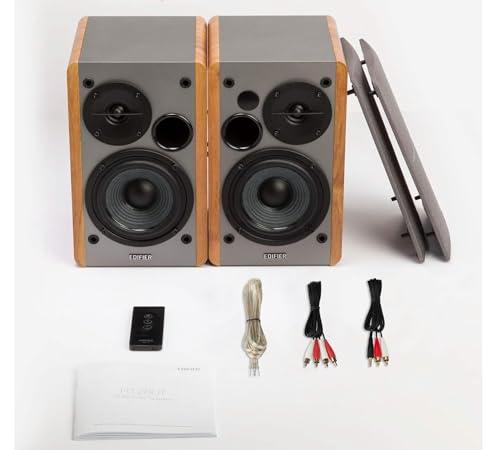
Here's where these speakers reveal their fundamental philosophies most clearly. The Edifier R1280T takes a purely analog approach with dual RCA inputs - those red and white connectors you might remember from older stereo equipment. RCA connections provide a direct, uncompressed signal path that many audio enthusiasts prefer for its reliability and quality.
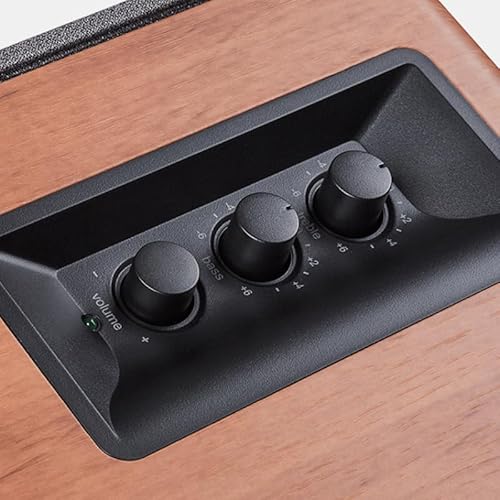
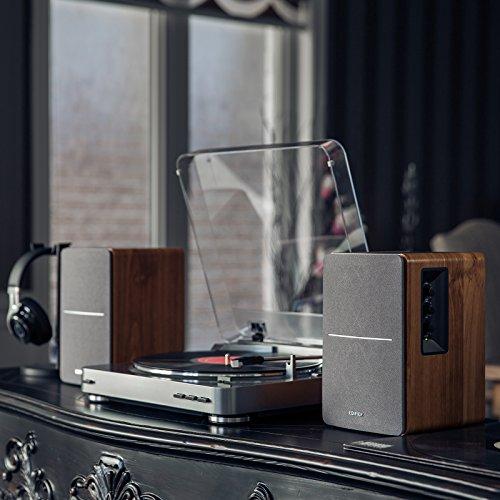
The dual input feature is genuinely useful, allowing you to connect both a computer and a turntable (or any other analog source) simultaneously without unplugging cables. There's a simple switch to choose between inputs, making it easy to go from Spotify on your laptop to vinyl records without any fuss.
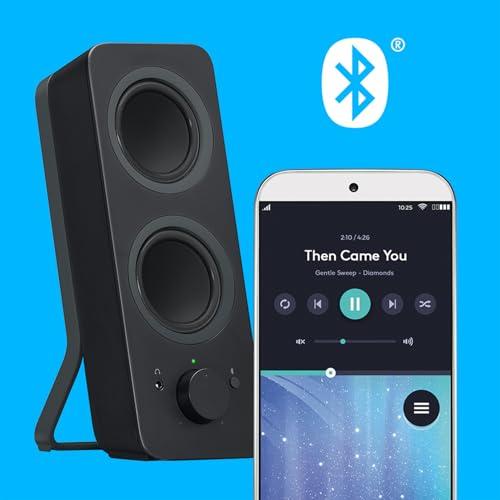
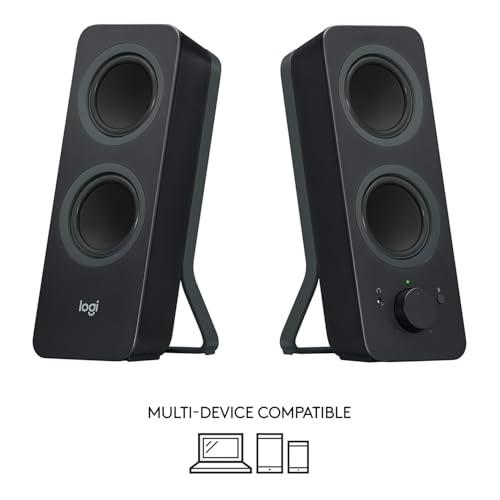
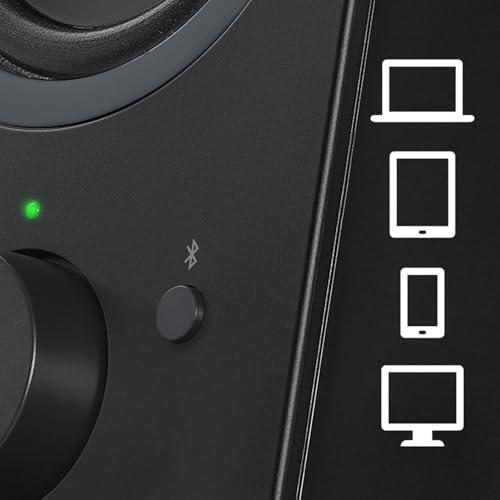
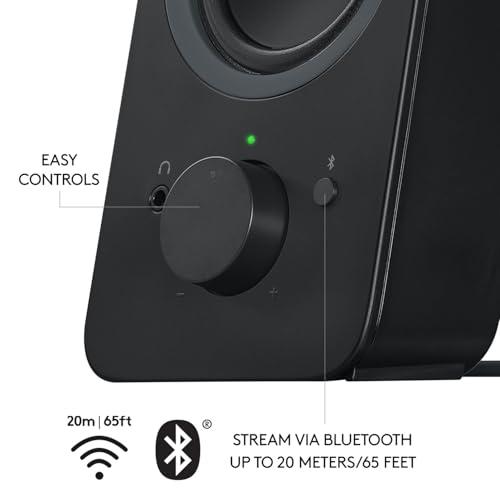
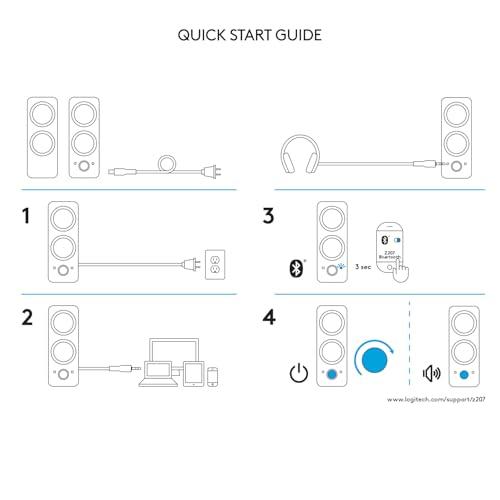
The Logitech Z207 embraces modern connectivity with Bluetooth 4.2 and what Logitech calls "Easy-Switch" technology. This allows you to pair two Bluetooth devices simultaneously and switch between them by simply pressing play on whichever device you want to hear. It's remarkably convenient - you can have your phone and laptop both connected, then seamlessly switch from a Zoom call to Spotify without any manual intervention.
The Logitech also includes a 3.5mm auxiliary input for wired connections, plus a headphone jack built into the speaker. This creates a simple hub for your desktop audio needs.
The construction differences between these speakers tell you everything about their intended use and longevity. The Edifier R1280T uses MDF (Medium Density Fiberboard) cabinets, the same material found in much more expensive speakers. MDF is dense, heavy, and acoustically inert, meaning it doesn't vibrate or resonate in ways that would color the sound. At nearly 11 pounds total, these speakers have serious mass that helps control unwanted vibrations.
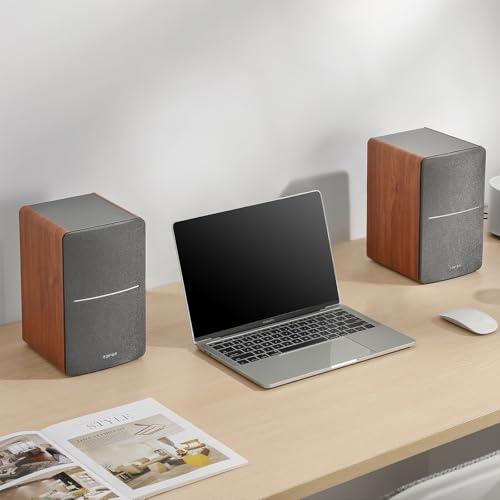
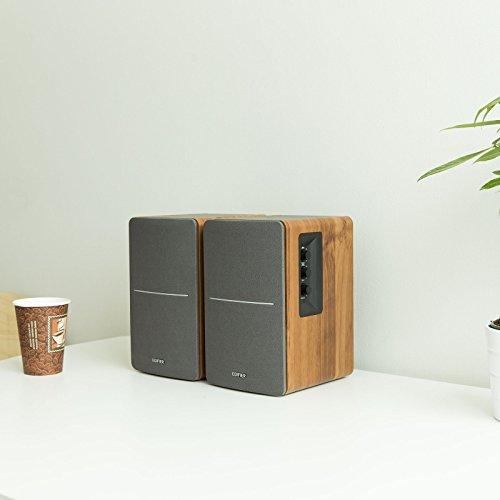
The wood-grain vinyl finish looks more sophisticated than typical computer speakers, and the removable fabric grilles give you the option to show off the drivers or keep them protected. The build quality feels substantial - these are speakers you might keep for a decade or more.
The Logitech Z207, weighing just 2.2 pounds total, prioritizes portability and space efficiency over mass and acoustic isolation. The plastic construction keeps costs down and makes the speakers easy to reposition, but it can't provide the same level of acoustic control as the Edifier's heavier cabinets.
Based on extensive user feedback and professional reviews, these speakers have distinctly different sound signatures. The Edifier R1280T produces what most listeners describe as warm and balanced, with a slight emphasis on the midrange frequencies where most music fundamentals live. The bass is punchy and room-filling for speakers of this size, though it won't satisfy those looking for deep sub-bass extension.
Professional reviewers consistently note that while the Edifier isn't perfectly flat in frequency response (which would be ideal for critical listening), it's tuned in a way that makes most music enjoyable. The silk dome tweeters provide smooth highs that don't become harsh or fatiguing during long listening sessions.
The Logitech Z207 delivers clear mids and highs but struggles with bass depth due to physical limitations. Most users describe the sound as clean but somewhat thin, particularly with bass-heavy music. This actually works well for voice content like podcasts or video calls, where clarity matters more than full-range reproduction.
The Edifier R1280T shines in several specific scenarios. If you're getting into vinyl records, these speakers connect directly to most turntables and provide enough quality to appreciate the analog sound. For desktop music listening, they offer a significant upgrade over typical computer speakers without requiring a separate amplifier or complex setup.
They're also excellent for content creators who need accurate sound monitoring. While they're not studio monitors, they provide enough detail and accuracy for video editing, podcast production, or music creation at the hobbyist level.
The Logitech Z207 excels in modern, multi-device environments. If you frequently switch between your phone, laptop, and tablet throughout the day, the seamless device switching is genuinely useful. They're perfect for small offices, dorm rooms, or any space where you need decent sound but can't accommodate larger speakers.
For video conferencing, the built-in headphone jack provides privacy when needed, and the compact size means they won't dominate your video calls' background.
Neither speaker is designed for home theater use, but they handle different aspects of movie watching differently. The Edifier R1280T provides enough power and frequency range to make movie soundtracks engaging, with dialogue clarity and enough bass impact to feel explosions or music scores.
However, without a center channel or subwoofer, they can't provide true surround sound or the deep bass that makes action movies thrilling. If you're serious about home theater, you'd want to look at larger bookshelf speakers or a proper surround sound system.
The Logitech Z207 works fine for casual movie watching on a laptop or tablet, but the limited bass means you'll miss much of a film's audio impact.
At the time of writing, the Edifier R1280T typically costs roughly twice as much as the Logitech Z207, but this price difference reflects fundamentally different products serving different needs.
The Edifier represents genuine value in the entry-level audiophile market. When you compare them to other powered bookshelf speakers with similar power and driver quality, they're competitively priced. More importantly, they offer a clear upgrade path - as your appreciation for audio quality grows, these speakers will continue to satisfy longer than typical computer speakers.
The Logitech Z207 provides excellent value for users prioritizing convenience and modern features. The Bluetooth connectivity, device switching, and compact design justify the price for users who value these features over audio fidelity.
Choose the Edifier R1280T if you're building a desktop setup where sound quality matters. If you have a turntable, enjoy listening to music for extended periods, or work in audio/video content creation, the superior drivers, power, and build quality will serve you well. You'll need adequate desk space and shouldn't mind the lack of wireless connectivity.
The Logitech Z207 makes more sense if you prioritize modern convenience features and have limited space. If you frequently switch between devices, need wireless connectivity, or simply want something that works well enough for casual listening without dominating your desk, they're an excellent choice.
The fundamental question isn't really about price - it's about what you value more: audio quality or modern convenience. Both speakers succeed in their intended roles, but they're solving different problems for different users. Understanding which problem you're trying to solve will lead you to the right choice.
| Edifier R1280T | Logitech Z207 |
|---|---|
| Power Output - Determines volume capability and sound quality | |
| 42W RMS total (21W per speaker) - fills medium rooms | 5W RMS total - best for near-field desktop use |
| Driver Size - Larger drivers produce better bass and fuller sound | |
| 4-inch mid/bass + 13mm silk dome tweeter | Compact full-range drivers with passive radiators |
| Frequency Response - How much of the audio spectrum you'll hear | |
| 52Hz-20kHz (reproduces guitar and drum fundamentals) | 120Hz-20kHz (limited bass, may sound thin) |
| Connectivity - How you connect your devices | |
| Dual RCA analog inputs (no wireless) | Bluetooth 4.2 + 3.5mm input (wireless convenience) |
| Build Quality - Affects longevity and sound isolation | |
| MDF wooden cabinets, 4.9kg total weight | Lightweight plastic construction, 1kg total |
| Device Switching - How easily you switch between sources | |
| Manual input switch between two wired sources | Easy-Switch™ technology for seamless Bluetooth switching |
| Desktop Footprint - How much space they'll occupy | |
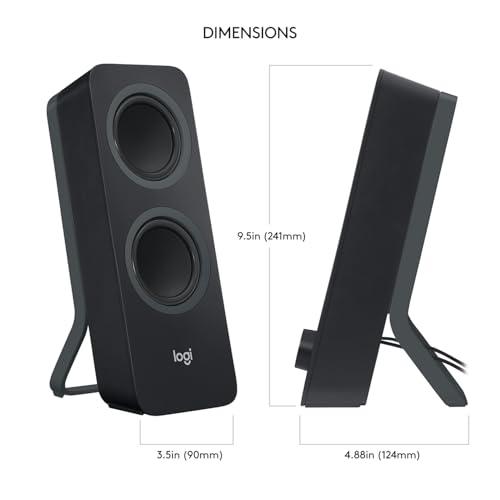
| 5.75" x 9.5" x 7" per speaker (substantial desk presence) | 3.54" x 9.49" x 4.88" per speaker (compact design) |
| Sound Character - What the audio will sound like | |
| Warm, balanced with punchy bass for size | Clear mids/highs but limited bass depth |
| Best Use Case - Where each speaker excels | |
| Music listening, vinyl setups, content creation | Multi-device switching, casual listening, video calls |
| Headphone Integration - Private listening options | |
| None (requires separate headphone connection) | Built-in headphone jack on right speaker |
| Setup Complexity - How easy to get started | |
| Simple analog connections, no pairing required | Bluetooth pairing process, multiple device management |
The Edifier R1280T delivers significantly better sound quality with 42W RMS power, 4-inch drivers, and a frequency response down to 52Hz. The Logitech Z207 offers only 5W RMS power and limited bass response starting at 120Hz, making it suitable for casual listening but not for serious music enjoyment.
The Logitech Z207 includes Bluetooth 4.2 with dual-device pairing, making it convenient for switching between phones, tablets, and computers wirelessly. The Edifier R1280T uses only wired RCA connections, which provide better audio quality but require physical cable connections to each device.
The Logitech Z207 is more compact at 3.54" x 9.49" x 4.88" per speaker and weighs only 2.2 pounds total, making it ideal for space-constrained environments. The Edifier R1280T requires more desk space at 5.75" x 9.5" x 7" per speaker and weighs nearly 11 pounds total.
The Edifier R1280T connects directly to turntables via RCA inputs and provides the audio quality to appreciate vinyl records. The Logitech Z207 lacks RCA inputs and sufficient power for vinyl listening, making it unsuitable for turntable setups.
The Edifier R1280T provides excellent value for users prioritizing sound quality, with genuine bookshelf speaker performance at an accessible price. The Logitech Z207 offers better value for users who prioritize wireless convenience and modern connectivity features over audio fidelity.
The Logitech Z207 excels for video calls with clear mid-range reproduction for voices, built-in headphone jack for privacy, and easy device switching. The Edifier R1280T provides clearer audio but lacks the convenience features that make the Logitech ideal for professional video conferencing.
The Edifier R1280T with its 42W RMS power output can easily fill medium-sized rooms with quality sound. The Logitech Z207 at only 5W RMS works best for near-field listening and cannot provide room-filling volume without significant distortion.
Both speakers work for gaming, but serve different needs. The Edifier R1280T provides immersive sound with better bass for game effects and music. The Logitech Z207 offers convenient wireless connectivity and device switching, making it easier to switch between gaming platforms and voice chat applications.
The Logitech Z207 is easier for daily use with Bluetooth pairing, wireless connectivity, and Easy-Switch technology for seamless device changing. The Edifier R1280T requires wired connections but offers simple analog reliability without pairing or connectivity issues.
The Edifier R1280T provides better movie watching with fuller sound, adequate bass for soundtracks, and enough power for immersive viewing. The Logitech Z207 works for casual video watching but lacks the bass depth and power needed for cinematic audio experiences.
The Edifier R1280T features superior build quality with MDF wooden cabinets and larger drivers that should provide years of reliable service and continued satisfaction as audio needs evolve. The Logitech Z207 offers good short-term value but may require upgrading sooner as listening preferences develop.
The fundamental choice is between audio quality and modern convenience. Choose the Edifier R1280T if sound quality, power, and traditional hi-fi performance matter most. Choose the Logitech Z207 if wireless connectivity, compact size, and device switching convenience are your priorities.
We've done our best to create useful and informative comparisons to help you decide what product to buy. Our research uses advanced automated methods to create this comparison and perfection is not possible - please contact us for corrections or questions. These are the sites we've researched in the creation of this article: bestbuy.com - kbaudio.co.uk - everydaylistening.net - hometechnologyreview.com - soundguys.com - recordbuilds.com - audiosciencereview.com - edifier-online.com - youtube.com - audiosciencereview.com - tomsguide.com - youtube.com - youtube.com - audiosciencereview.com - hometechnologyreview.com - edifier.com - audiostance.com - usa-oss.edifier.com - edifier-online.com - edifier.com - youtube.com - edifier.com - bestbuy.com - audiosciencereview.com - kbaudio.co.uk - officedepot.com - bestbuy.com - kiteandkey.rutgers.edu - logitech.com - bestbuy.com - sonnydickson.com - youtube.com - youtube.com - ontimesupplies.com - youtube.com - reuniontalk.com - staples.com - cdw.com - youtube.com - objects.icecat.biz - nordisco.com - manuals.plus - device.report - zones.com - lenovo.com

Privacy Policy
Terms and Conditions - Affiliate Policy
Home Security
© Copyright 2008-2026.
11816 Inwood Rd #1211, Dallas, TX 75244