


When you're ready to upgrade from basic computer speakers to something that actually makes your music sound good, you'll quickly discover that powered bookshelf speakers offer the sweet spot between convenience and audio quality. These all-in-one systems pack amplifiers directly into the speakers, eliminating the need for separate receivers or amplifiers that traditional hi-fi setups require.
But here's where it gets interesting: not all powered speakers are created equal, and the Klipsch Reference R-41PM and Kanto ORA represent two fundamentally different approaches to desktop audio. Understanding these differences will help you choose the right speakers for your specific needs and space.
Powered speakers solve a real problem in modern audio. Traditional passive speakers need external amplifiers, which means more boxes, more cables, and more complexity. Powered speakers integrate everything into a sleek package that connects directly to your computer, phone, turntable, or streaming device.
The key considerations when shopping in this category revolve around sound quality versus size constraints, connectivity options for your various devices, adequate power output for your listening space, and overall value. The best powered speakers balance all these factors while excelling in their intended use case.
What makes this comparison particularly interesting is that both speakers launched in recent years—the Klipsch R-41PM debuted around 2018 as part of Klipsch's renewed focus on powered speakers, while the Kanto ORA launched in 2021 as a purpose-built desktop monitor. This timing difference reflects evolving user needs, with the Kanto incorporating lessons learned from the rise of remote work and content creation.
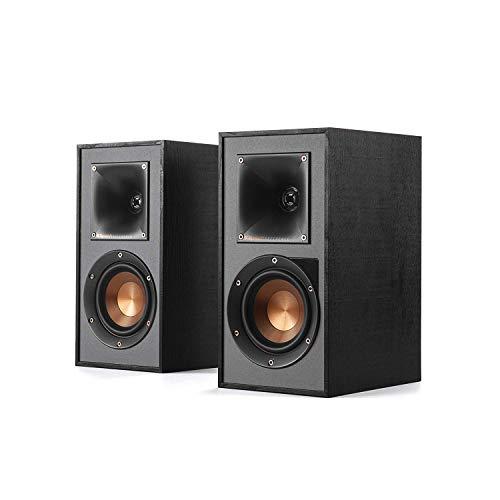
The Klipsch Reference R-41PM follows Klipsch's 75-year tradition of horn-loaded speaker design. This approach uses a horn-shaped waveguide (called a Tractrix horn) to control how sound disperses from the tweeter. Think of it like a megaphone that focuses and directs high frequencies more efficiently than a traditional dome tweeter alone. This design philosophy prioritizes dynamic range—the difference between the quietest and loudest sounds—and efficiency, meaning the speakers can play louder with less power.
The Kanto ORA, conversely, takes a modern studio monitor approach. It uses bi-amplification, where separate amplifiers power the tweeter and woofer independently. This allows for more precise control over each driver and typically results in flatter, more neutral frequency response. The ORA's design prioritizes accuracy over excitement, making it ideal for critical listening or professional work where you need to hear exactly what's in your audio files.
These philosophical differences matter because they affect how music sounds. The Klipsch tends to be more forward and engaging, making rock, pop, and movies sound exciting and punchy. The Kanto aims for neutrality, revealing subtle details in jazz, classical, or acoustic music that more colored speakers might mask.
Size matters significantly in desktop audio, and here's where these speakers diverge dramatically. The Klipsch R-41PM measures nearly 11 inches tall and almost 8 inches deep, placing it firmly in bookshelf speaker territory. While not massive by traditional standards, it's definitely a commitment on a desk. The upside is that larger cabinets allow for better bass response and higher volume levels.
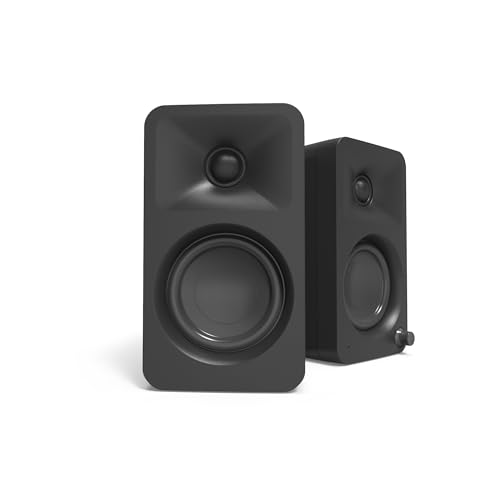
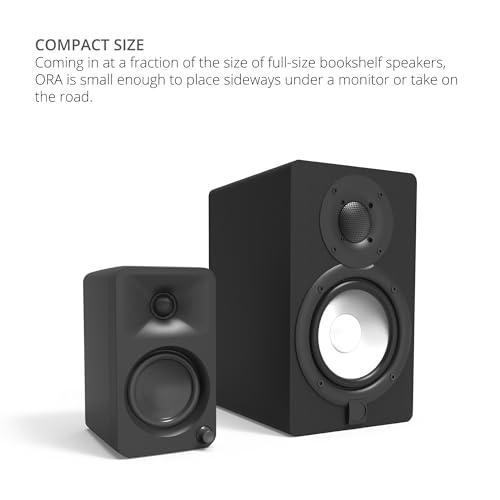
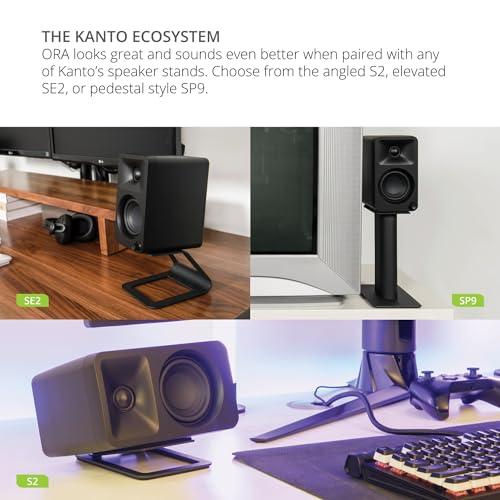
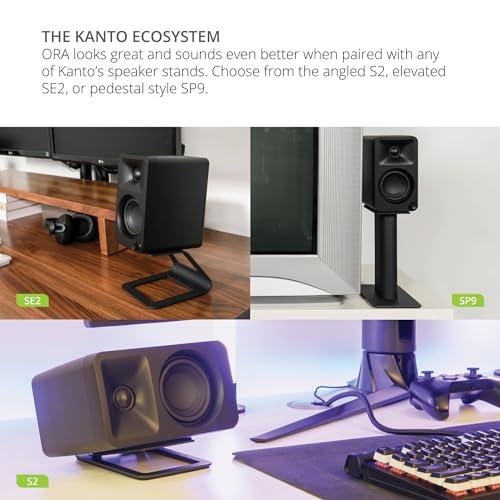
The Kanto ORA is genuinely compact at just under 7 inches tall and 6 inches deep. This size difference isn't just about aesthetics—it fundamentally changes how and where you can use these speakers. The ORA fits comfortably under monitors or in tight spaces, while the Klipsch really needs dedicated shelf space or speaker stands to perform properly.
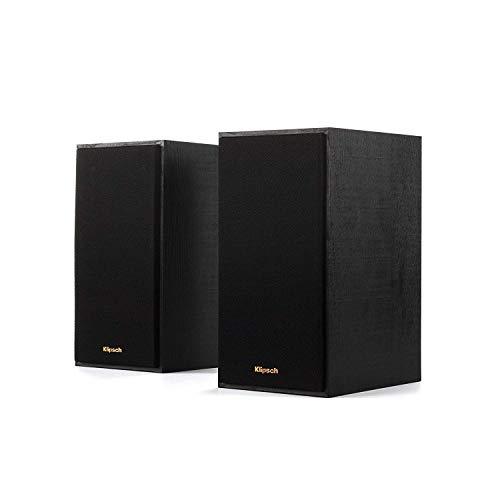
Build quality differs significantly too. The Klipsch R-41PM uses dense MDF (medium-density fiberboard) construction wrapped in textured vinyl. MDF is excellent for speaker cabinets because it's acoustically inert and doesn't resonate like lighter materials. However, some users find the vinyl wrap less premium feeling than wood veneer or painted finishes found on more expensive speakers.
The Kanto ORA uses a plastic enclosure, which might sound cheap but actually makes sense for a compact desktop speaker. The plastic keeps weight down (important for desktop placement) and allows for the sleek, minimalist aesthetic that fits modern workspaces. The matte finish looks professional and doesn't show fingerprints like glossy surfaces.
Understanding driver technology helps explain why these speakers sound different. The Klipsch R-41PM features a 1-inch aluminum tweeter paired with Klipsch's signature Tractrix horn. This horn design dates back to Klipsch's theater speaker heritage and provides controlled directivity—meaning the sound stays focused even when you're not sitting directly in front of the speakers. The 4-inch copper-spun woofer handles midrange and bass frequencies, with copper chosen for its combination of rigidity and damping properties.
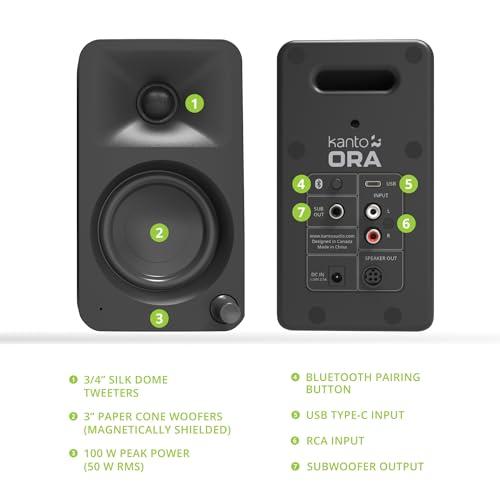
The Kanto ORA takes a different approach with a 3/4-inch silk dome tweeter and 3-inch paper cone woofer. Silk dome tweeters are prized for their smooth, natural sound reproduction, though they typically can't play as loudly as metal domes. The smaller 3-inch woofer limits bass extension but allows for a more compact design.
Here's where bi-amplification becomes important: in the Kanto ORA, each driver gets its own dedicated amplifier (9 watts for the tweeter, 16 watts for the woofer). This separation allows the crossover network—which divides frequencies between drivers—to be implemented digitally with much greater precision than traditional passive crossovers.
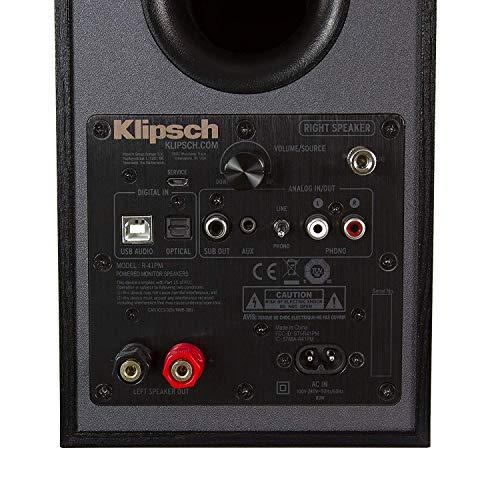
The amplification story reveals fundamental design differences. The Klipsch R-41PM uses a traditional approach with a single 35-watt-per-channel amplifier driving both speakers. This amplifier lives in the right speaker and connects to the left speaker via speaker wire. It's a proven, cost-effective design that works well for most users.
The Kanto ORA's bi-amplified design represents newer thinking in powered speaker design. With separate amplifiers for each driver, crossover frequencies can be set digitally with DSP (digital signal processing). DSP allows manufacturers to tune frequency response, implement room correction, and add features like the ORA's automatic subwoofer crossover that engages when you connect a subwoofer.
In practical terms, the Klipsch's horn-loaded design means it can play louder with less power—a concept called efficiency. The Kanto needs to work harder to achieve similar volume levels, but its bi-amplified design typically provides better control and potentially lower distortion at moderate levels.
Sound quality represents the most critical performance metric, and here's where personal preferences really matter. Based on extensive research of professional reviews and user feedback, these speakers excel in different areas.
The Klipsch R-41PM delivers what reviewers consistently describe as an energetic, forward sound signature. The Tractrix horn design creates excellent stereo imaging—you can pinpoint where instruments are positioned in the soundstage. Bass response extends down to around 76Hz, which means you'll hear most bass guitar and kick drum fundamentals, though the deepest organ notes and movie explosions will be missing without a subwoofer.
Reviewers note that the Klipsch tends to emphasize upper midrange frequencies, which makes vocals and lead instruments cut through the mix but can become fatiguing during long listening sessions. The horn design also means these speakers sound best when you're sitting directly in front of them—move too far off-axis and the tonal balance changes.
The Kanto ORA receives praise for its neutral, reference-grade tuning. Professional reviewers measure its frequency response as remarkably flat, staying within +/-2dB across most of the audible spectrum. This neutrality means the speakers don't color the sound—what you hear is what's actually in your music files. The silk dome tweeter provides smooth high frequencies that don't become harsh at higher volumes.
However, the ORA's 3-inch woofers limit both bass extension (rolling off around 70Hz) and maximum output. These are genuinely nearfield monitors designed for desktop use rather than room-filling sound.
Modern powered speakers need to connect to multiple sources, and here the Klipsch R-41PM shows its versatility advantage. It includes Bluetooth for wireless streaming, USB-B for direct computer connection (supporting up to 24-bit/96kHz high-resolution audio), optical digital input for TVs and game consoles, RCA analog inputs with a built-in phono preamp for turntables, and a 3.5mm input for phones or tablets.
That built-in phono preamp deserves special mention—it allows direct connection to turntables with moving magnet cartridges without needing a separate phono stage. This feature alone can save $100-200 in additional equipment for vinyl enthusiasts.
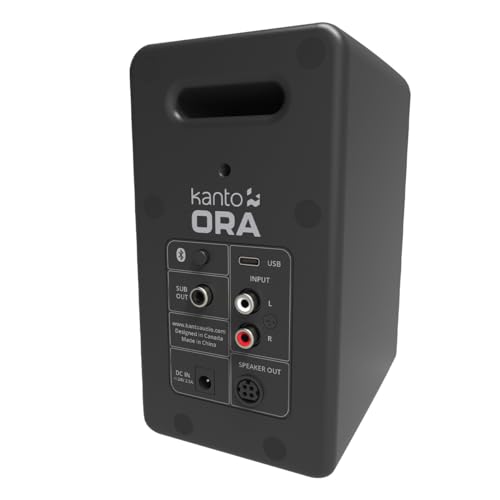
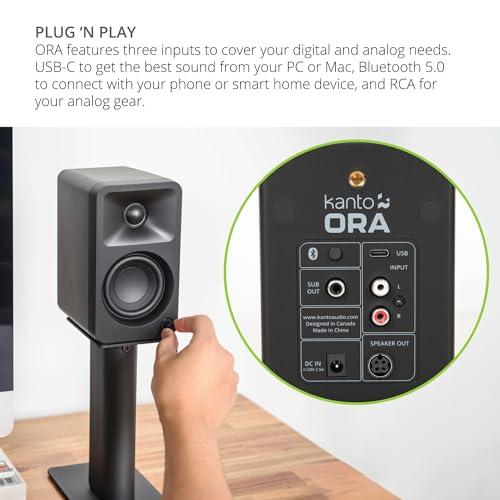
The Kanto ORA focuses on modern connectivity with USB-C (also supporting 24-bit/96kHz), Bluetooth 5.0, and RCA inputs. The USB-C connection is particularly forward-thinking as more devices adopt this standard, and Bluetooth 5.0 offers improved range and audio quality over older Bluetooth versions.
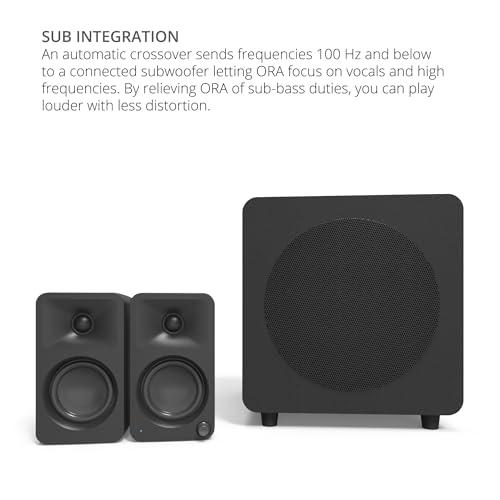
Both speakers include subwoofer outputs, but the Kanto's implementation is more sophisticated. It automatically engages a 100Hz digital crossover when a subwoofer is connected, relieving the main speakers of deep bass duties and allowing them to play louder with less distortion.
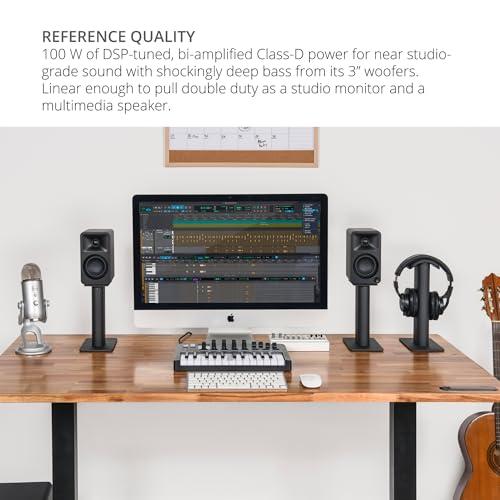
Desktop and computer audio represents the most common use case for both speakers. The Kanto ORA excels here with its compact footprint and accurate sound reproduction. If you're editing videos, producing music, or just want to hear your Spotify playlists as the artist intended, the ORA's neutral tuning and excellent nearfield imaging make it ideal. The USB-C connection integrates seamlessly with modern laptops, and the single-knob control interface is elegantly simple.
The Klipsch R-41PM works well for desktop use if you have adequate space, but its larger size and more dynamic sound signature make it better suited for scenarios where you want more excitement in your audio. Gaming and movies benefit from the Klipsch's forward presentation and higher output capability.
For small room stereo systems, the Klipsch R-41PM clearly wins. Its higher efficiency and larger drivers allow it to fill a bedroom or office with sound in ways the compact Kanto simply cannot match. The comprehensive connectivity options also make it more versatile for a living room setup where you might connect multiple sources.
Professional and semi-professional monitoring favors the Kanto ORA. Its flat frequency response, bi-amplified precision, and compact form factor make it genuinely useful for podcasting, music production, or any application where accurate sound reproduction matters more than excitement.
Vinyl enthusiasts should seriously consider the Klipsch R-41PM for its built-in phono preamp alone. This feature makes it a complete turntable solution without additional components, though the speaker's forward sound signature may not suit all musical genres equally well.
While neither speaker is designed primarily for home theater use, both can serve in compact setups. The Klipsch R-41PM offers optical digital input for direct TV connection and enough output for small to medium rooms. Its dynamic sound signature enhances movie soundtracks and makes dialogue clear and present.
The Kanto ORA's compact size makes it suitable for desktop streaming setups or small bedroom entertainment systems, but its limited output capability restricts its home theater applications. However, its automatic subwoofer crossover makes it excellent for 2.1 systems where accurate midrange reproduction is paired with a dedicated subwoofer for bass.
At the time of writing, both speakers occupy similar price ranges in the $300-400 segment, though street prices often vary with sales and availability. Value assessment depends heavily on your specific needs.
The Klipsch R-41PM offers exceptional value for users wanting maximum versatility. The built-in phono preamp alone justifies much of the cost for vinyl users, and the comprehensive connectivity means it can serve as a complete desktop or small room audio solution. Its higher output capability and established brand reputation add to the value proposition.
The Kanto ORA represents premium value for its intended use case. The bi-amplified design, reference-grade tuning, and compact form factor command a slight premium, but users needing accurate monitoring or ultra-compact desktop speakers will find the investment worthwhile.
Both speakers incorporate relatively modern technology, though their different launch years show evolving priorities. The Klipsch R-41PM represents mature powered speaker technology with proven connectivity options and time-tested driver designs.
The Kanto ORA incorporates newer thinking with its bi-amplified DSP implementation, USB-C connectivity, and Bluetooth 5.0. These features suggest better future compatibility with evolving device ecosystems.
Choose the Klipsch Reference R-41PM if you need versatile connectivity, want room-filling sound, prefer dynamic and engaging audio presentation, have adequate space for larger speakers, or value comprehensive features in a single package. It's particularly compelling for vinyl enthusiasts and users who want one speaker system to handle multiple sources and listening scenarios.
Choose the Kanto ORA if you need ultra-compact desktop speakers, require reference-grade accuracy for professional work, prefer modern minimalist aesthetics, plan to use a subwoofer, or do specialized audio work requiring neutral monitoring. It excels as a specialized tool for desktop users prioritizing accuracy and space efficiency.
Both speakers represent excellent engineering for their intended purposes. The Klipsch R-41PM succeeds as a versatile, feature-rich solution that can adapt to various listening scenarios, while the Kanto ORA excels as a focused tool for users with specific accuracy and space requirements. Your choice should align with your primary use case, space constraints, and sonic preferences.
The beauty of modern powered speakers is that either choice eliminates the complexity of traditional component audio while delivering genuinely high-quality sound reproduction. Whether you choose the versatile Klipsch or the precise Kanto, you'll experience a significant upgrade from basic computer speakers and gain a deeper appreciation for your music, movies, and games.
| Klipsch Reference R-41PM | Kanto ORA |
|---|---|
| Size & Footprint - Critical for desktop placement | |
| 5.88" W × 11.06" H × 7.5" D (larger bookshelf format) | 3.9" W × 6.9" H × 5.6" D (ultra-compact desktop design) |
| Driver Configuration - Affects sound quality and bass response | |
| 1" aluminum tweeter + 4" copper woofer | 0.75" silk dome tweeter + 3" paper woofer |
| Amplification Design - Impacts sound control and clarity | |
| Single 35W/channel amplifier (70W RMS total) | Bi-amplified 50W RMS (9W tweeter, 16W woofer per speaker) |
| Frequency Response - Determines bass extension and treble reach | |
| 76Hz - 21kHz (deeper bass from larger drivers) | 70Hz - 22kHz (limited by compact 3" woofers) |
| Sound Signature - Affects musical enjoyment and accuracy | |
| Forward, dynamic Klipsch house sound with horn efficiency | Neutral, reference-grade tuning for accurate monitoring |
| Connectivity Options - Important for device compatibility | |
| Bluetooth, USB-B, optical, RCA with phono preamp, 3.5mm | USB-C, Bluetooth 5.0, RCA line level |
| Special Features - Added value and convenience | |
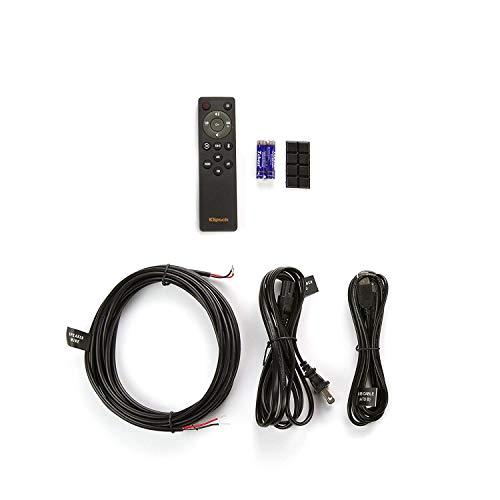
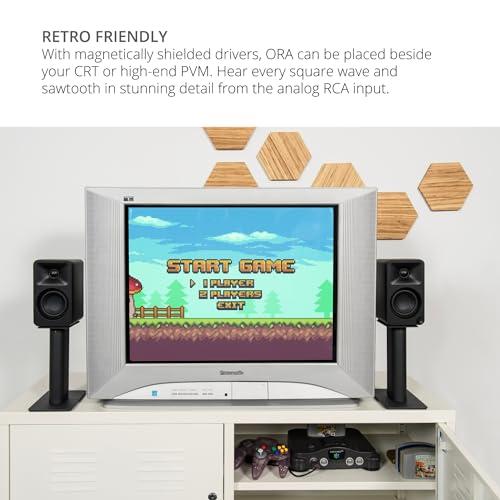
| Built-in phono preamp, Dynamic Bass EQ, comprehensive remote | Automatic subwoofer crossover, magnetically shielded drivers |
| Best Use Case - Where each speaker excels | |
| Versatile desktop/small room system with multiple sources | Compact studio monitoring and professional desktop audio |
| Build Quality - Affects durability and aesthetics | |
| MDF construction with vinyl wrap, removable grilles | Plastic enclosure with matte finish, no grille option |
| Maximum Output - Room-filling capability | |
| Higher output due to horn efficiency and larger drivers | Limited by compact size, designed for nearfield use |
The Kanto ORA is significantly better for small desks due to its ultra-compact design at just 3.9" wide and 6.9" tall. The Klipsch R-41PM measures nearly 11 inches tall and requires much more desk space, making it better suited for dedicated shelves or stands rather than cramped desktop setups.
No, both the Klipsch R-41PM and Kanto ORA are powered speakers with built-in amplifiers. Simply connect them to your audio source and plug into power - no external amplifier or receiver required. This makes both options much more convenient than traditional passive speakers.
The Kanto ORA is specifically designed for studio monitoring with neutral, reference-grade tuning and bi-amplified precision. The Klipsch R-41PM has a more colored, forward sound signature that's entertaining but less accurate for professional audio work where you need to hear exactly what's in your recordings.
Yes to the Klipsch R-41PM, which includes a built-in phono preamp for direct turntable connection. The Kanto ORA requires a separate phono preamp between your turntable and the speakers, adding extra cost and complexity for vinyl enthusiasts.
The Klipsch R-41PM produces significantly higher output levels due to its horn-loaded design efficiency and larger 4-inch drivers. The Kanto ORA is designed for nearfield desktop listening and cannot match the room-filling capability of the larger Klipsch speakers.
The Klipsch R-41PM delivers dynamic, forward sound with emphasized vocals and exciting presentation, while the Kanto ORA offers neutral, accurate reproduction that reveals subtle details. Choose Klipsch for engaging entertainment or Kanto for critical listening and professional monitoring.
The Klipsch R-41PM offers more comprehensive connectivity including Bluetooth, USB, optical, RCA with phono preamp, and 3.5mm inputs. The Kanto ORA focuses on modern connections with USB-C, Bluetooth 5.0, and RCA, but lacks optical input and built-in phono preamp.
Both work well for gaming but serve different needs. The Klipsch R-41PM provides dynamic, exciting sound that enhances action games and movies. The Kanto ORA offers precise audio positioning and neutral sound that's better for competitive gaming where accurate audio cues matter most.
The Kanto ORA has superior subwoofer integration with an automatic 100Hz digital crossover that engages when a subwoofer is connected. While the Klipsch R-41PM includes a subwoofer output, it lacks the automatic crossover feature that optimizes the system for best performance.
The Klipsch R-41PM works better for home theater with its optical input for direct TV connection, higher output for room-filling sound, and dynamic presentation that enhances movie soundtracks. The compact Kanto ORA is limited to very small room or desktop streaming setups.
The Klipsch R-41PM typically offers better overall value with its comprehensive connectivity, built-in phono preamp, higher output capability, and versatile performance across multiple use cases. The Kanto ORA provides premium value specifically for users needing ultra-compact, reference-grade desktop monitoring.
The Klipsch R-41PM is quite large for desktop use, can sound harsh at high volumes, and may be too colored for critical listening. The Kanto ORA has limited bass extension, lower maximum output, fewer connectivity options, and costs more for specialized desktop monitoring rather than general-purpose audio enjoyment.
We've done our best to create useful and informative comparisons to help you decide what product to buy. Our research uses advanced automated methods to create this comparison and perfection is not possible - please contact us for corrections or questions. These are the sites we've researched in the creation of this article: crutchfield.com - theaudiophileman.com - audioadvice.com - klipsch.com - youtube.com - crutchfield.com - youtube.com - newegg.com - speakerdecision.com - klipsch.com - speakerdecision.com - richersounds.com - audioholics.com - skybygramophone.com - avu.ca - techaeris.com - hometechnologyreview.com - worldwidestereo.com - techradar.com - kantoaudio.com - listenup.com - kantoaudio.com - youtube.com - iworldonline.com.au - audioadvice.com - kantoaudio.com - microcenter.com

Privacy Policy
Terms and Conditions - Affiliate Policy
Home Security
© Copyright 2008-2026.
11816 Inwood Rd #1211, Dallas, TX 75244