

When you're spending hours at your computer every day, whether for work, gaming, or entertainment, audio quality becomes surprisingly important. The tinny sound from built-in monitor speakers gets old fast, and that's where dedicated desktop speakers come into play. But the desktop speaker market spans a massive range, from basic $50 stereo pairs to professional-grade monitors costing several hundred dollars.
Today we're comparing two speakers that represent opposite ends of this spectrum: the Kanto ORA Powered Reference Desktop Speakers and the Logitech Z207 Bluetooth Computer Speakers. The Kanto ORA, released in 2023, positions itself as a reference-quality desktop monitor that bridges the gap between computer speakers and studio equipment. Meanwhile, the Logitech Z207 has been a budget favorite since its 2016 release, focusing on convenience features and affordable performance.
Before diving into specifics, let's talk about what actually matters in desktop speakers. Unlike home theater systems that need to fill large rooms, desktop speakers work in the "near-field" - meaning you're sitting relatively close to them. This changes everything about how they're designed and what performance characteristics matter most.
Power output is often misunderstood. More watts doesn't automatically mean better sound, especially at desktop distances. What matters more is how cleanly those watts are delivered and how the drivers (the individual speakers inside each cabinet) handle the power. A well-designed 20-watt system can easily outperform a poorly designed 50-watt setup.
Driver configuration is crucial but rarely explained clearly. Most desktop speakers use a two-way design with a tweeter (small driver for high frequencies like cymbals and vocals) and a woofer (larger driver for mid and low frequencies like bass guitars and drums). Some budget speakers use a single full-range driver plus a passive radiator - essentially a non-powered cone that moves with air pressure to enhance bass response.
Amplification comes in two main types: passive speakers that require an external amplifier, and active speakers with built-in amplification. Active speakers dominate the desktop market because they're more convenient, but the quality of that built-in amplification varies enormously. The best active speakers use bi-amplification, where separate amplifiers power the tweeter and woofer independently, allowing for better control and less distortion.
The Kanto ORA represents what happens when a company applies professional audio engineering to the desktop speaker format. Released in 2023, these speakers incorporate technologies that were previously limited to much more expensive studio monitors.
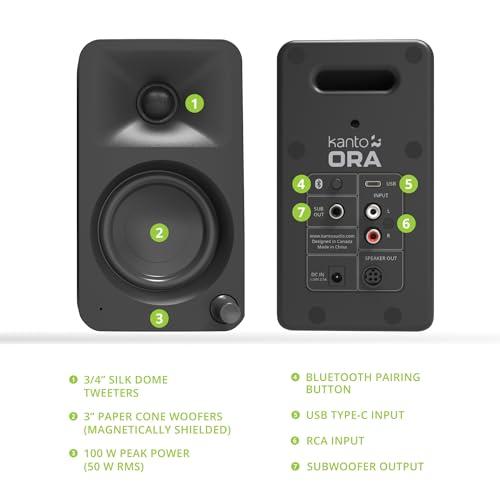
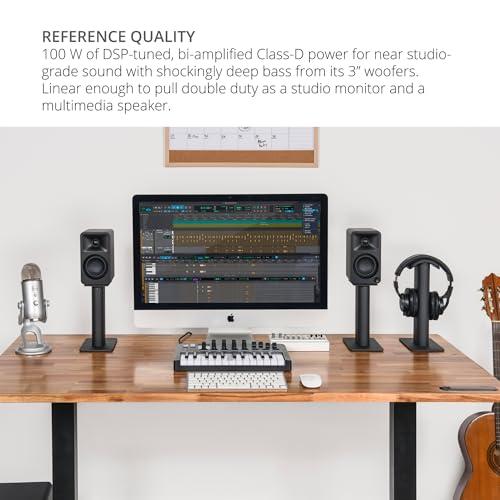
At the heart of the ORA's design is bi-amplified Class D amplification. Class D amplifiers are highly efficient, converting most of their power into sound rather than heat, which allows for more power in a smaller package. Bi-amplification means the tweeter and woofer each get their own dedicated 9W and 16W amplifiers respectively, totaling 50W RMS (the continuous power rating that matters more than peak numbers).
But the real magic happens in the digital signal processing (DSP). The ORA uses DSP to tune the frequency response - essentially acting like a sophisticated equalizer that's been precisely calibrated for these specific drivers. This results in what Kanto calls "reference" sound, meaning the speakers don't color or enhance the audio in ways that might sound impressive initially but become fatiguing over time.
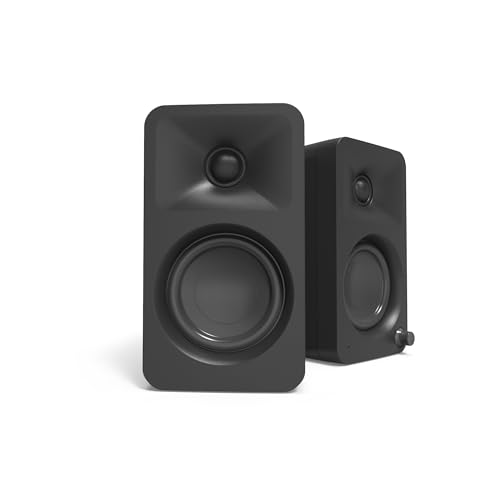
The drivers themselves reflect this professional approach. The 3/4-inch silk dome tweeter uses a material known for smooth, natural-sounding highs without the harsh brightness that cheaper metal tweeters can produce. The 3-inch paper cone woofer might sound old-fashioned compared to exotic materials, but paper remains a favorite in professional circles for its natural midrange reproduction.
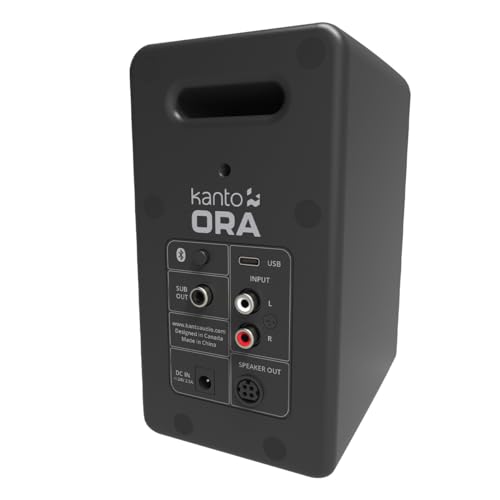
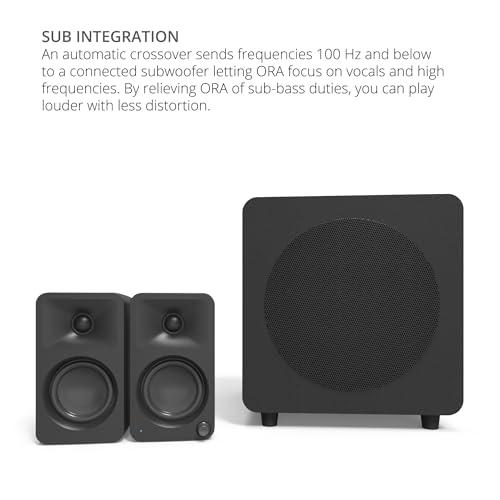
One standout feature is the automatic subwoofer integration. When you connect a subwoofer to the ORA's dedicated output, a 100Hz crossover automatically engages. This means the desktop speakers stop trying to produce deep bass and focus on midrange and treble, where they excel. The result is higher maximum volume with less distortion - exactly how professional studio setups work.
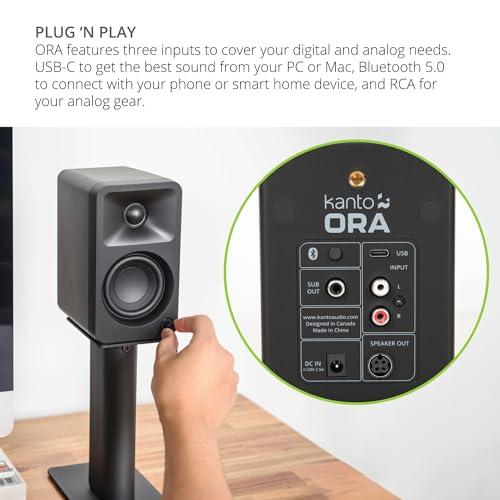
The ORA offers three input types that cover virtually any use case. The USB-C input supports up to 24-bit/96kHz digital audio, which is higher resolution than CD quality and matches what many streaming services now offer. Bluetooth 5.0 provides wireless convenience with better range and stability than older Bluetooth versions. The RCA analog inputs work with everything from turntables to audio interfaces.
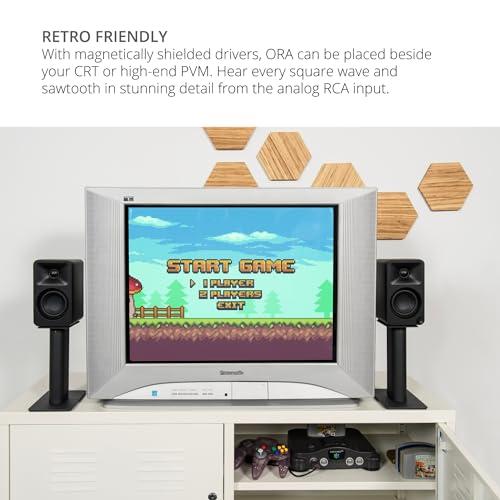
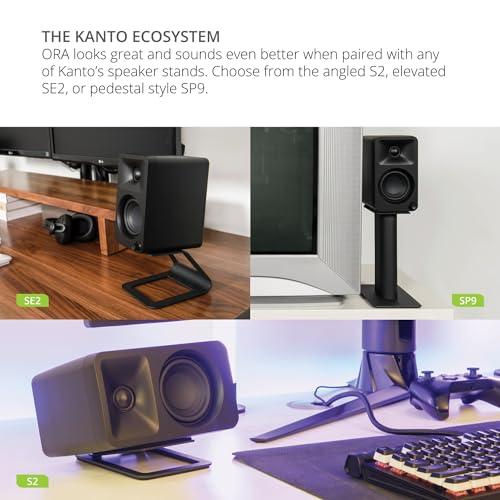
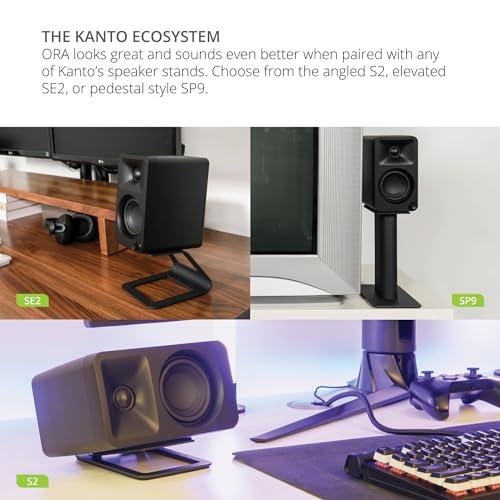
An often-overlooked feature is magnetic shielding. This prevents the speakers from interfering with CRT monitors or other sensitive electronics - crucial if you're into retro gaming or work with vintage equipment. The speakers also include threaded mounting points for wall or ceiling installation, showing Kanto's attention to professional installation needs.
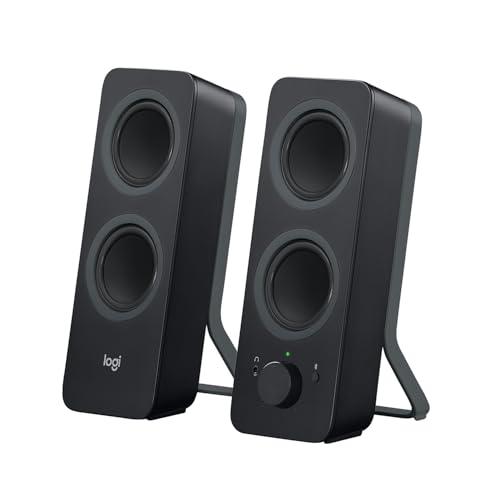
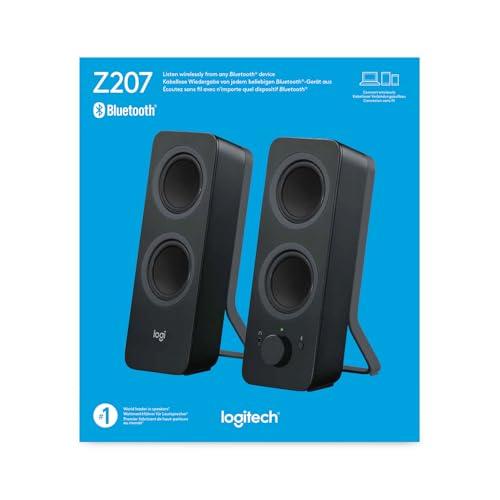
The Logitech Z207 takes a completely different approach, prioritizing convenience and value over ultimate audio quality. Released in 2016, these speakers have remained popular because they solve real everyday problems that more expensive speakers often ignore.
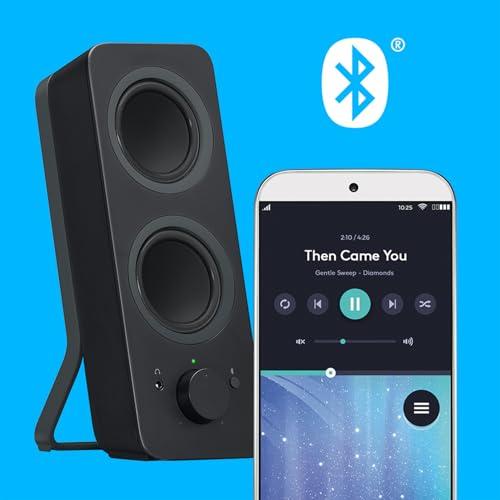
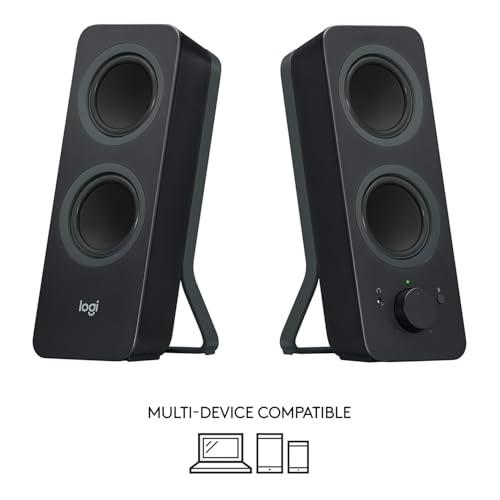
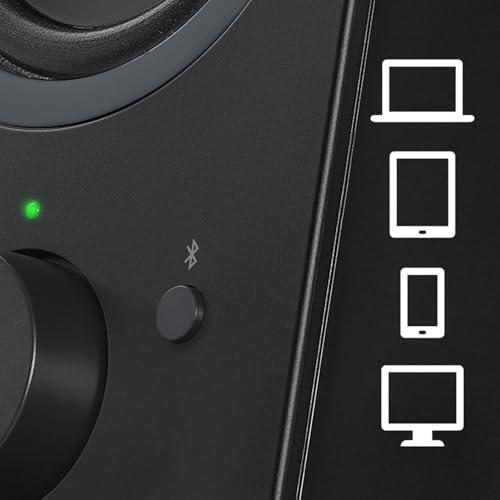
Rather than trying to compete on pure audio quality, Logitech focused on making the Z207 incredibly easy to use. The standout feature is dual-device Bluetooth pairing with Easy-Switch technology. You can have your computer and phone connected simultaneously, and switching between them is as simple as pausing one device and playing on the other. For anyone who regularly takes calls or plays music from their phone while working, this is genuinely useful.
The driver configuration uses one active full-range driver per speaker plus a passive radiator for bass enhancement. This is simpler and cheaper than a true two-way design, but Logitech has tuned it well within the speakers' limitations. The passive radiators help extend bass response without requiring the power and complexity of active woofers.
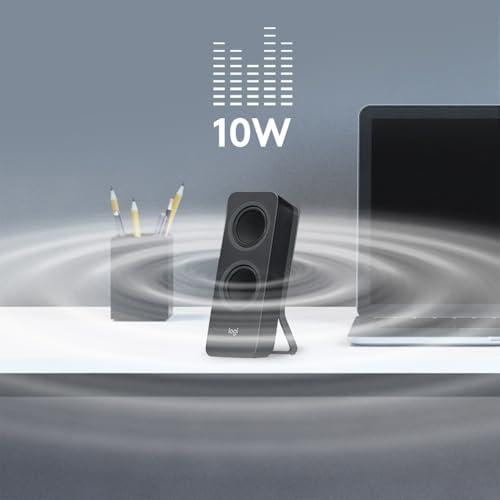
At 5W total RMS power, the Z207 isn't going to fill large rooms, but it's perfectly adequate for desktop use. The frequency response of 120Hz to 20kHz means you'll miss the deepest bass, but most desktop content doesn't require thunderous low-end anyway.
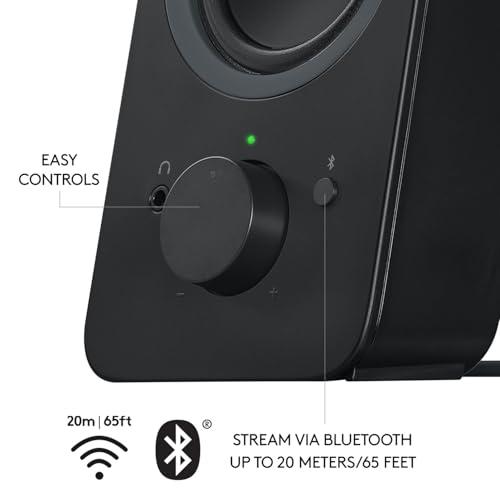
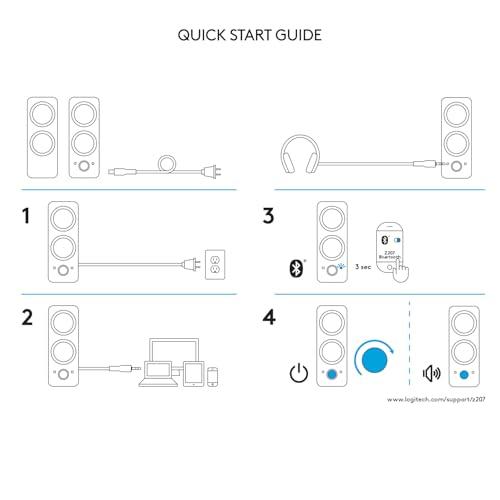
What the Z207 lacks in audiophile credentials, it makes up for in daily usability. All controls are on the front of the right speaker where you can actually reach them. There's a headphone jack for private listening. Setup is genuinely plug-and-play with no drivers to install or complex pairing procedures.
The speakers are also lightweight and compact enough to easily reposition or pack up for travel. While the Kanto ORA demands careful placement for optimal sound, the Z207 sounds reasonably good wherever you put it.
Our research into professional and user reviews reveals a clear hierarchy here. The Kanto ORA delivers audio quality that approaches dedicated studio monitors, with flat frequency response, excellent imaging (the ability to locate sounds in space), and low distortion even at higher volumes. Multiple professional reviews praise its ability to reveal details in recordings that most computer speakers simply can't reproduce.
The Z207, while respectable for its price category, can't match this level of performance. Users consistently describe the sound as "clear" and "good for the price," but note limitations in bass response and maximum volume. The single-driver design also means less precise frequency separation compared to the ORA's dedicated tweeter and woofer.
However, this doesn't mean the Z207 sounds bad. For typical desktop content - video calls, YouTube videos, casual music listening - it provides a significant upgrade over built-in monitor speakers without breaking the budget.
The power difference is substantial: 50W total RMS for the ORA versus 5W for the Z207. In practical terms, this means the Kanto speakers can fill medium-sized rooms with clear, undistorted sound, while the Logitech speakers work best in near-field desktop scenarios.
But here's where understanding your needs matters. If you're sitting 2-3 feet from your speakers in a typical office setup, the Z207's power is actually sufficient for most content. The problems arise when you want to fill a larger space, listen at higher volumes, or reproduce content with wide dynamic range (the difference between quiet and loud passages).
This is where the technical differences become most apparent. The ORA's frequency response extends down to 70Hz, while the Z207 starts rolling off around 120Hz. To put this in perspective, a male speaking voice fundamentals typically occur around 100-120Hz, while a bass guitar's low E string is about 82Hz.
The ORA can reproduce these lower frequencies cleanly, giving more weight and fullness to music and movies. The Z207's passive radiators help somewhat, but they can't overcome the physical limitations of the small drivers and cabinet size.
For users who want full-range sound, the ORA's subwoofer output becomes valuable. Adding a subwoofer creates a proper 2.1 system where each component focuses on what it does best. The Z207 offers no such expansion path.
If you're doing any kind of audio work - music production, video editing, podcasting - the Kanto ORA is the clear choice. Its reference tuning means you're hearing what's actually in your recordings, not what the speakers think sounds good. The multiple inputs also support professional workflows where you might need to switch between a computer, audio interface, and other sources.
The magnetic shielding is genuinely useful if you work with vintage equipment or in environments with sensitive electronics. Many modern content creators are surprised to discover they need this feature when setting up retro gaming streams or working with older professional equipment.
For gaming, both speakers have merits. The ORA provides superior directional audio and detail that can give competitive advantages in shooters and immersive experiences in single-player games. The wide dynamic range means explosions have impact while still letting you hear subtle audio cues.
The Z207 works well for casual gaming, especially if you value the ability to quickly take calls or switch to music between sessions. The Easy-Switch feature is surprisingly handy when you're gaming on PC but want to stay connected to your phone for voice chat or notifications.
While neither speaker is specifically designed for home theater use, they can serve this role in smaller spaces. The ORA makes more sense here due to its higher power output and subwoofer integration. Adding a subwoofer creates a capable 2.1 system for bedroom or office entertainment setups.
The Z207 could work for very casual TV watching in small rooms, but the limited power and bass response make it less suitable for movies or shows with significant dynamic range.
Since the Z207's 2016 release, desktop speaker technology has advanced significantly. Bluetooth has improved from version 4.2 to 5.0+ with better range and reliability. USB-C has become standard for high-quality digital audio, supporting higher resolutions than the 3.5mm analog connections that dominated older speakers.
The ORA represents current best practices: USB-C digital input, modern Bluetooth, DSP tuning, and bi-amplification. These features suggest better longevity as technology continues evolving.
However, the Z207's simplicity is also its strength. Bluetooth 4.2 and 3.5mm inputs will remain compatible with devices for years to come, even if they're not the latest standards.
The choice between these speakers ultimately depends on your priorities and budget. At the time of writing, the Kanto ORA costs roughly six times more than the Logitech Z207, but you're getting significantly more than six times the performance.
Choose the ORA if you're serious about audio quality, do any professional work involving sound, want expansion capabilities, or simply appreciate well-engineered products. The higher cost is justified by genuine performance advantages and build quality that should last for years.
Choose the Z207 if you want a significant upgrade over basic computer speakers without spending serious money, value convenience features like dual-device Bluetooth, or primarily use your speakers for basic computing tasks rather than critical listening.
Both speakers serve their intended markets well, but they're addressing fundamentally different needs. The ORA brings professional audio engineering to the desktop, while the Z207 makes quality desktop audio accessible to everyone. Understanding which category fits your needs and budget will lead you to the right choice.
| Kanto ORA Powered Reference Desktop Speakers | Logitech Z207 Bluetooth Computer Speakers |
|---|---|
| Total Power Output - Determines maximum volume and room-filling capability | |
| 100W peak / 50W RMS (professional-grade power for any desktop setup) | 10W peak / 5W RMS (adequate for near-field desktop use only) |
| Driver Configuration - Affects sound quality and frequency separation | |
| Bi-amplified 3/4" silk dome tweeter + 3" paper woofer (dedicated amps for each driver) | Single active driver + passive radiator per speaker (simpler but less precise) |
| Frequency Response - Range of sound reproduction from bass to treble | |
| 70 Hz – 22 kHz (fuller bass response, extended highs) | 120 Hz – 20 kHz (limited bass, standard treble range) |
| Connectivity Options - Flexibility for different devices and use cases | |
| USB-C (24-bit/96kHz), Bluetooth 5.0, RCA analog inputs | Bluetooth 4.2, 3.5mm analog input |
| Amplification Type - Impacts sound quality and efficiency | |
| Class D bi-amplified with DSP tuning (professional studio approach) | Standard amplification (basic but functional) |
| Subwoofer Integration - Ability to expand system for full-range sound | |
| Dedicated sub output with automatic 100Hz crossover | No subwoofer output or expansion capability |
| Build Quality and Features - Professional vs consumer-focused design | |
| Magnetically shielded, threaded mounting points, reference tuning | Lightweight plastic construction, Easy-Switch dual-device pairing |
| Target Use Case - Who each speaker is designed for | |
| Content creators, audiophiles, professional monitoring, expandable systems | General computing, casual listening, budget-conscious users, convenience features |
| Dimensions (Each Speaker) - Desktop footprint considerations | |
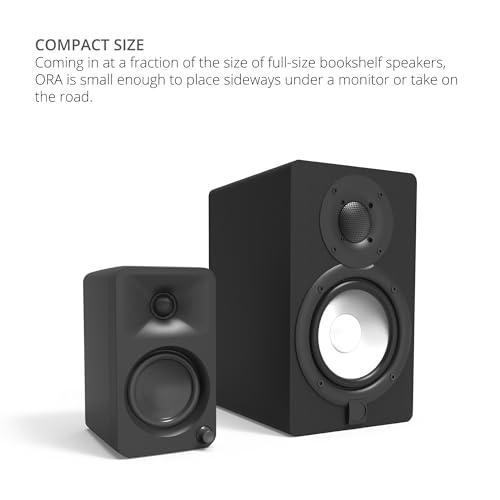
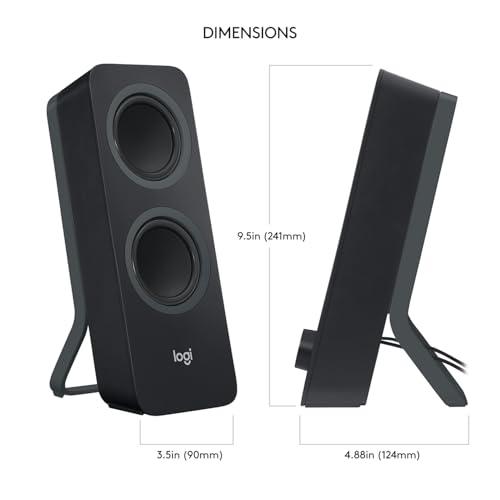
| 3.9" W × 6.9" H × 5.6" D (compact but substantial) | 3.54" W × 9.49" H × 4.88" D (taller but lighter overall) |
| Special Technologies - Unique features that differentiate each product | |
| DSP optimization, magnetic shielding, automatic crossover network | Easy-Switch technology, dual-device Bluetooth pairing, integrated headphone jack |
The Kanto ORA Powered Reference Desktop Speakers are specifically designed for professional use with reference-grade tuning, bi-amplified drivers, and multiple high-quality inputs including USB-C for 24-bit/96kHz audio. The Logitech Z207 Bluetooth Computer Speakers are better suited for general computing tasks rather than professional audio work.
The Kanto ORA delivers studio-monitor quality sound with flat frequency response, dedicated amplifiers for each driver, and DSP tuning for accurate audio reproduction. The Logitech Z207 provides good sound quality for its price range but with limited bass response and simpler single-driver design that can't match the precision of the ORA's bi-amplified system.
For competitive gaming where audio detail matters, the Kanto ORA Powered Reference Desktop Speakers provide superior directional audio and soundstage. For casual gaming, the Logitech Z207 Bluetooth Computer Speakers work well and offer convenient features like Easy-Switch for taking calls or switching to music between gaming sessions.
Only the Kanto ORA has a dedicated subwoofer output with automatic 100Hz crossover that activates when a sub is connected. The Logitech Z207 has no subwoofer output or system expansion capabilities.
The Kanto ORA Powered Reference Desktop Speakers use Bluetooth 5.0 for better range and stability. The Logitech Z207 Bluetooth Computer Speakers use Bluetooth 4.2 but offer unique dual-device pairing with Easy-Switch technology for seamless switching between two connected devices.
The Kanto ORA work well for bedroom or office home theater setups, especially when paired with a subwoofer for full-range sound. The Logitech Z207 have limited power and bass response that make them less suitable for home theater use beyond very casual viewing in small spaces.
The Logitech Z207 Bluetooth Computer Speakers offer excellent value for basic desktop audio needs with convenient Bluetooth features. The Kanto ORA Powered Reference Desktop Speakers provide professional-grade performance that justifies their higher cost for users who need reference-quality sound.
The Kanto ORA deliver 100W peak power (50W RMS) through bi-amplified Class D amplification. The Logitech Z207 provide 10W peak power (5W RMS), which is adequate for near-field desktop use but limited for larger spaces.
The Logitech Z207 Bluetooth Computer Speakers are designed for plug-and-play simplicity with front-panel controls and automatic device switching. The Kanto ORA Powered Reference Desktop Speakers offer more connectivity options but require more consideration for optimal placement and setup.
The Kanto ORA provide USB-C (24-bit/96kHz), Bluetooth 5.0, and RCA analog inputs for maximum flexibility. The Logitech Z207 offer Bluetooth 4.2 with dual-device pairing and a 3.5mm analog input, focusing on convenience over variety.
Both speakers have compact footprints, but the Kanto ORA Powered Reference Desktop Speakers are slightly wider while the Logitech Z207 Bluetooth Computer Speakers are taller but lighter overall. The Z207 are easier to reposition due to their lighter weight.
The Kanto ORA feature magnetically shielded drivers that work safely near CRT monitors and vintage electronics, plus RCA inputs for older equipment. The Logitech Z207 work with any device that has Bluetooth or 3.5mm output but lack magnetic shielding for sensitive vintage equipment.
We've done our best to create useful and informative comparisons to help you decide what product to buy. Our research uses advanced automated methods to create this comparison and perfection is not possible - please contact us for corrections or questions. These are the sites we've researched in the creation of this article: audioholics.com - skybygramophone.com - avu.ca - techaeris.com - hometechnologyreview.com - worldwidestereo.com - techradar.com - kantoaudio.com - listenup.com - kantoaudio.com - youtube.com - iworldonline.com.au - audioadvice.com - kantoaudio.com - microcenter.com - bestbuy.com - kiteandkey.rutgers.edu - logitech.com - bestbuy.com - sonnydickson.com - youtube.com - youtube.com - ontimesupplies.com - youtube.com - reuniontalk.com - staples.com - cdw.com - youtube.com - objects.icecat.biz - nordisco.com - manuals.plus - device.report - zones.com - lenovo.com

Privacy Policy
Terms and Conditions - Affiliate Policy
Home Security
© Copyright 2008-2026.
11816 Inwood Rd #1211, Dallas, TX 75244