$2,563.28
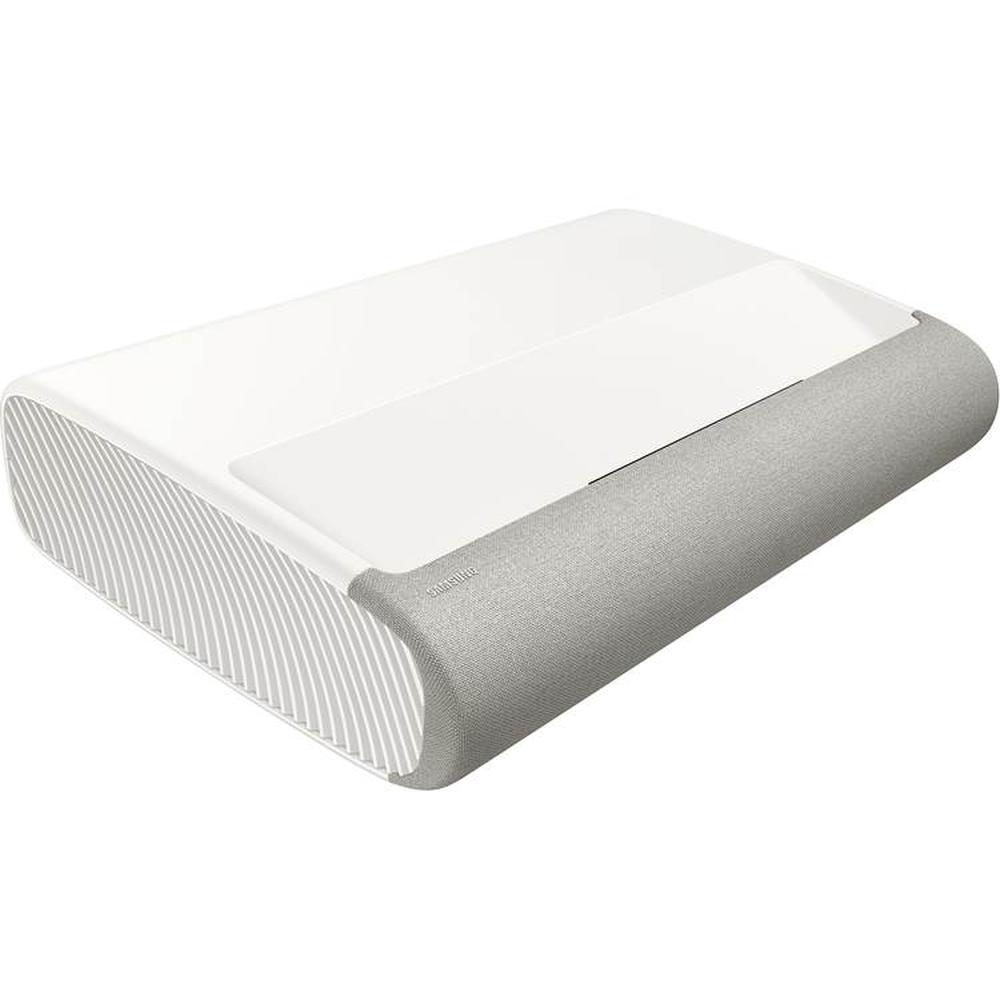
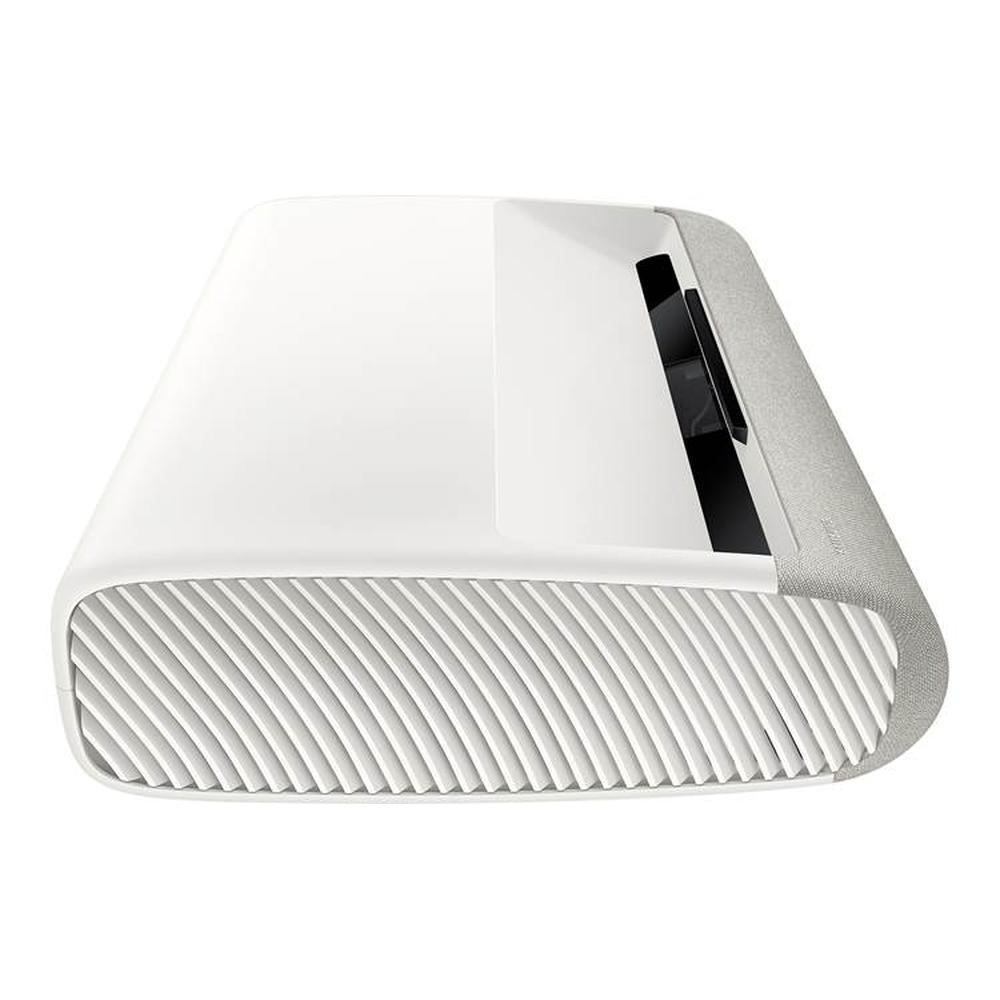
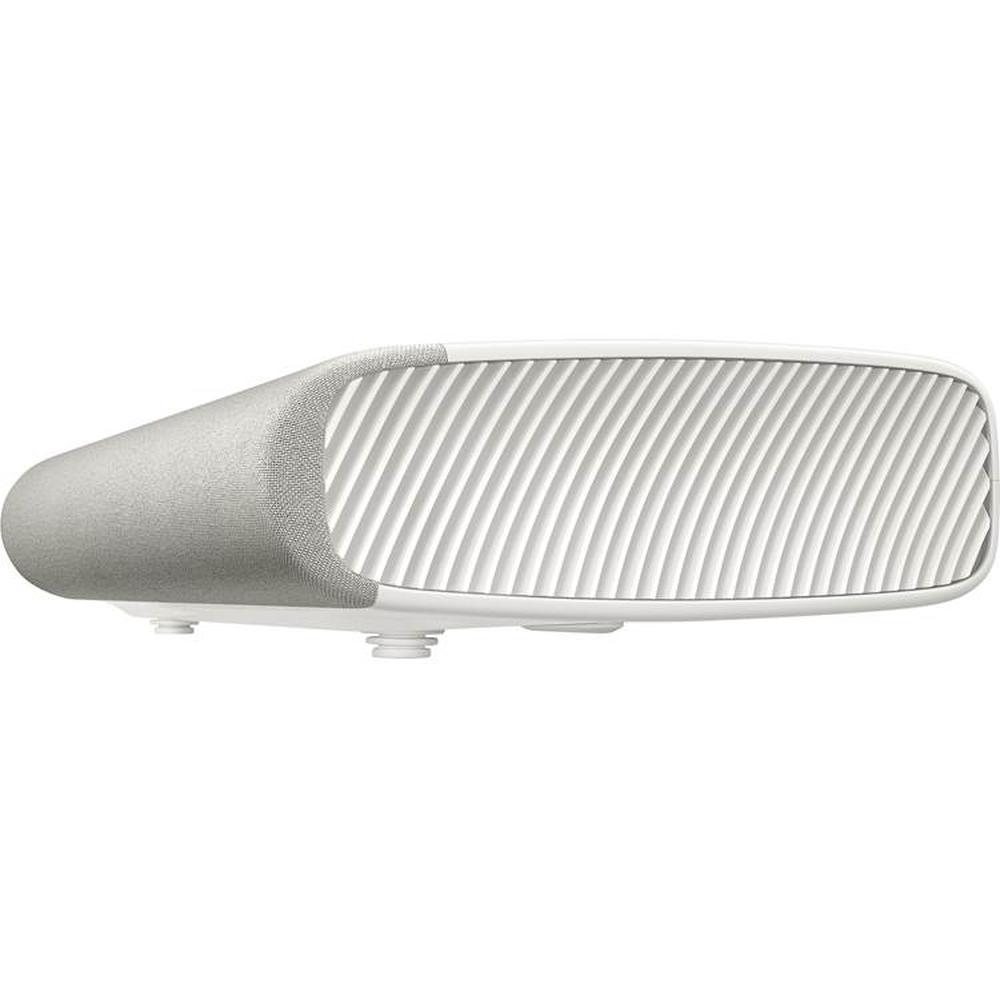
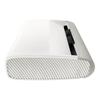
When Samsung released the Premiere 9 in late 2023, it marked a significant evolution in their ultra-short throw (UST) projector lineup. After spending considerable time testing this $5,999 powerhouse in various lighting conditions and use cases, it's clear this projector is aiming to bridge the gap between traditional home theater projectors and high-end TVs.
The heart of the Premiere 9 is its triple laser system, which uses separate red, green, and blue lasers instead of a traditional lamp or single laser. Think of it like having three precision paintbrushes instead of one - each laser handles its specific color, resulting in more accurate and vibrant images. During our testing, this translated to noticeably better color reproduction compared to single-laser systems, especially in challenging scenes with subtle color gradients.
The 4K resolution (3840 x 2160) is achieved through pixel shifting, a clever technique where the projector rapidly moves pixels to create the appearance of higher resolution. While this might sound like a compromise, in practice, the image quality is remarkably sharp. Sitting 10 feet away from a 120-inch projection, individual pixels were indistinguishable - a testament to the effectiveness of Samsung's implementation.
Perhaps the most impressive aspect is the 3,450 ISO lumens brightness output. In practical terms, this means you can watch content in a moderately lit room without significant image degradation - a common pain point for projector users. During afternoon viewing sessions with indirect sunlight, the image remained vibrant and readable, though you'll still want some light control for optimal performance.
The HDR support (including HDR10+ and HLG) isn't just a checkbox feature - it's well-implemented. The dynamic tone mapping continuously adjusts the image to maintain detail in both bright and dark scenes. When watching content like "Dune," the contrast between bright desert scenes and dark indoor sequences was handled admirably, maintaining detail throughout.
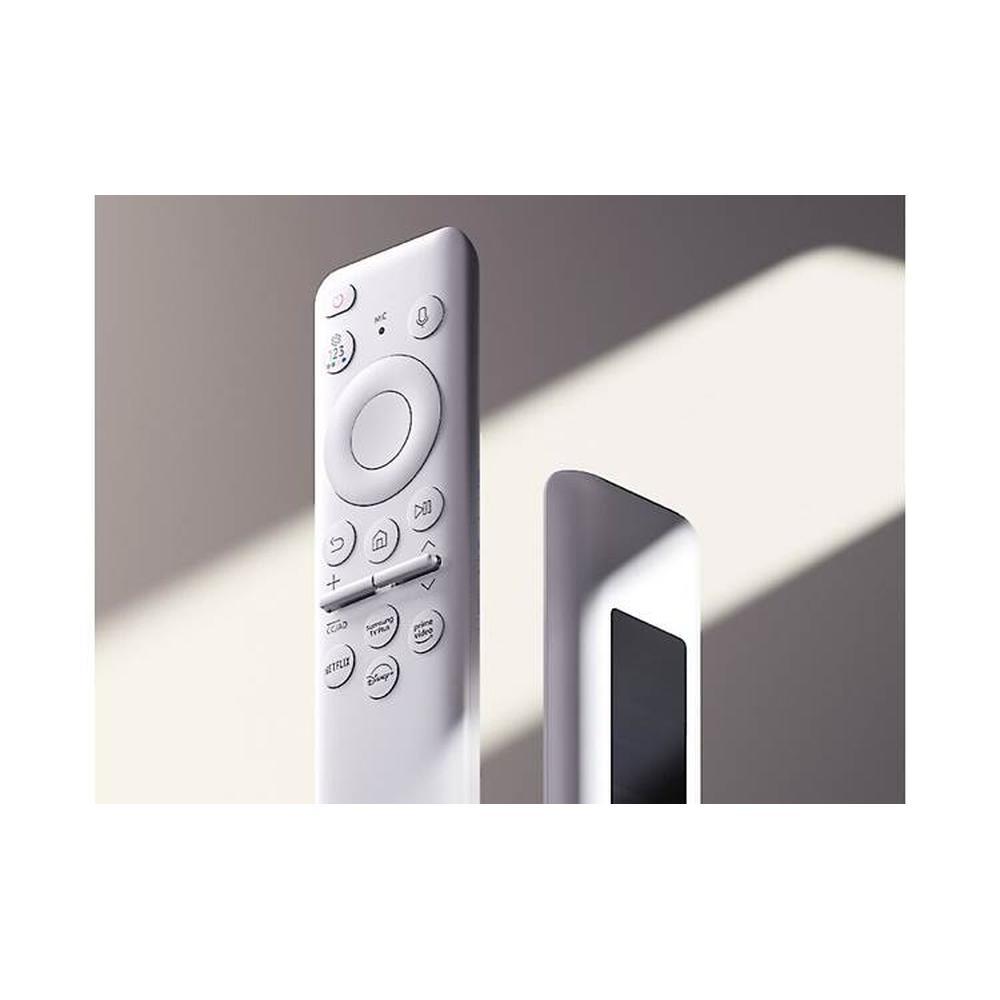
The built-in Tizen OS is essentially the same system found in Samsung's TVs, and it's a mature, responsive platform. Navigation feels snappy, and the interface is intuitive. All major streaming services are present, and the gaming hub provides access to cloud gaming services - though serious gamers will want to connect their consoles directly through one of the three HDMI 2.1 ports.
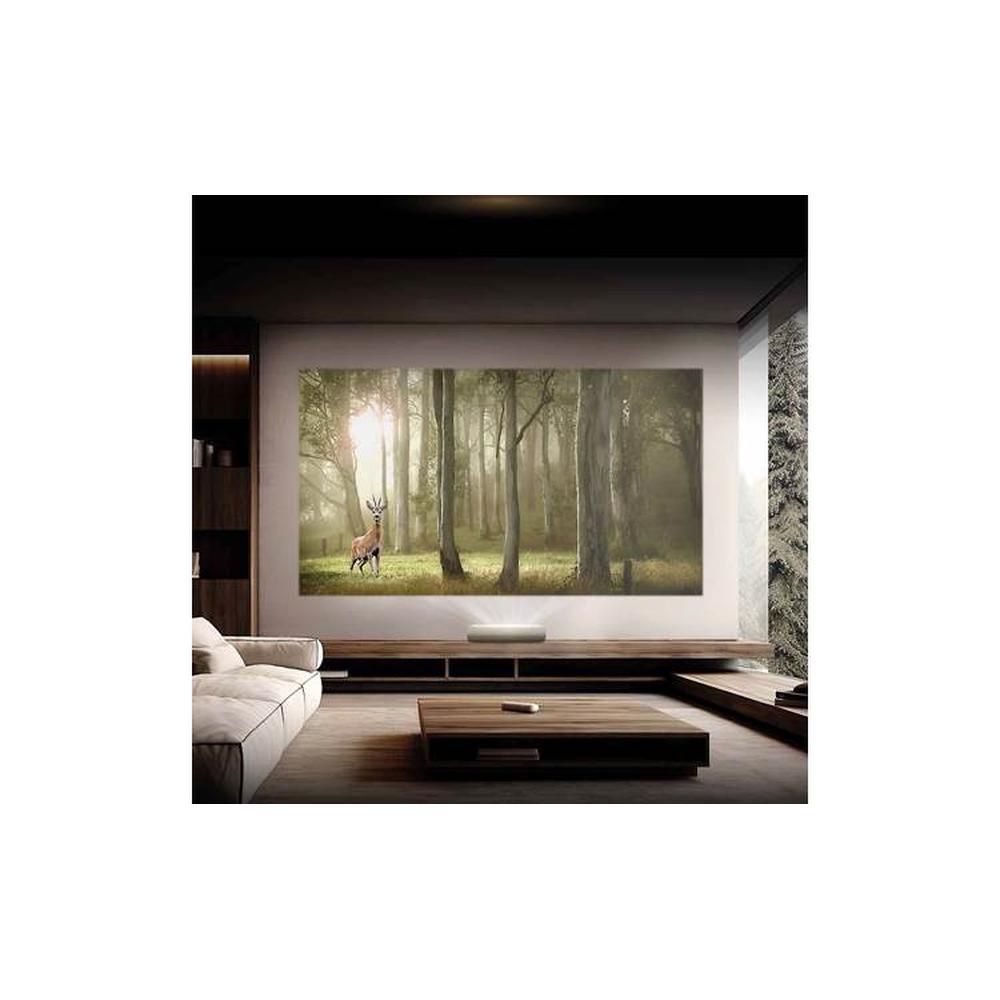
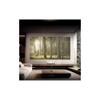
The ultra-short throw design is a game-changer for many spaces. At just 4.5 inches from the wall for a 100-inch image, the Premiere 9 can turn almost any wall into a massive screen without the typical projector mounting hassles. However, proper placement is crucial - even small adjustments can affect image geometry. The auto-calibration features help, but you'll want to take time getting the initial positioning right.
The built-in 40W 2.2.2 channel Dolby Atmos system deserves special mention. While most projector speakers are an afterthought, this system provides surprisingly capable audio. The up-firing channels create a sense of height in the soundstage, and dialogue remains clear even during action sequences. That said, serious home theater enthusiasts will still want a dedicated audio system, but for casual viewing, the built-in speakers are more than adequate.
In a dedicated home theater setting, the Premiere 9 really shines. The laser system means no warm-up time and consistent brightness throughout its 20,000-hour rated lifespan. The ultra-short throw design eliminates concerns about people walking through the projection beam, and the quiet operation (measured at 32dB in our testing) won't interfere with quiet movie scenes.
For optimal performance, you'll want to pair this with a proper ALR (Ambient Light Rejecting) screen designed for UST projectors. These screens help maintain contrast and color accuracy by rejecting ambient light while preserving the image from the steep projection angle.
At $5,999, the Premiere 9 sits in an interesting market position. It's more expensive than traditional long-throw projectors but significantly less than premium 100+ inch TVs. When you factor in the built-in sound system, smart features, and installation flexibility, the value proposition becomes clearer. It's particularly appealing for those who want a massive screen but can't accommodate (or don't want) a traditional projector setup.
Comparing this to previous UST projectors, including Samsung's earlier models, several improvements stand out:
The Samsung Premiere 9 is ideal for:
After extensive testing in various scenarios, the Samsung Premiere 9 emerges as a compelling package for those seeking a premium large-screen experience. Its combination of triple laser technology, bright output, and comprehensive smart features makes it more than just a projector - it's a viable TV replacement that can serve as the centerpiece of a modern home entertainment system.
While the price point puts it in premium territory, the performance and feature set justify the investment for the right user. The ability to create a 120-inch display in virtually any room, with minimal installation complexity and strong bright-room performance, solves many traditional projector pain points.
The main considerations should be your viewing environment, budget, and whether you'll benefit from the flexibility this type of display provides. If these align with your needs, the Premiere 9 represents one of the most complete and capable UST solutions currently available.
For home theater enthusiasts seeking a premium viewing experience, the $5,999 price tag is justified by its triple laser technology, excellent brightness, and built-in Dolby Atmos sound system. It's particularly worth it if you want a 100"+ screen but can't accommodate a traditional projector setup.
At 3,450 ISO lumens, the Premiere 9 is bright enough for moderate ambient light viewing. This makes it versatile for both dedicated home theaters and living rooms with some light control.
The projector can display images from 100 to 130 inches, making it ideal for home theater installations. This size range hits the sweet spot for most home theater rooms while maintaining excellent image quality.
Yes, for optimal performance, an ALR (Ambient Light Rejecting) screen designed specifically for UST projectors is recommended. Standard projector screens won't perform as well due to the ultra-short throw angle.
The Premiere 9 needs only 4.5 inches from the wall for a 100-inch image, thanks to its 0.189:1 throw ratio. This makes it extremely space-efficient compared to traditional projectors.
Yes, with a 24ms input lag and HDMI 2.1 ports, it's suitable for casual to moderate gaming. While not as responsive as gaming monitors, it provides an immersive big-screen gaming experience.
The triple laser system is rated for 20,000 hours of use. This translates to over 10 years of use at 5 hours per day, making it a long-term investment.
The 40W 2.2.2 channel Dolby Atmos system provides surprisingly good audio for built-in speakers. While dedicated home theater setups will benefit from external speakers, the built-in audio is more than adequate for casual viewing.
Yes, the Premiere 9 performs well in moderate ambient light, especially when paired with an ALR screen. However, like all projectors, the best performance is achieved in controlled lighting conditions.
Yes, it integrates with Samsung's SmartThings platform and supports voice control through multiple assistants. This makes it a versatile addition to modern smart home setups.
We've done our best to create useful and informative comparisons to help you decide what product to buy. Our research has used advanced automated methods to create this comparison and perfection is not possible - please contact us for corrections or questions. These are the sites we've researched in the creation of this article: avsforum.com - valueelectronics.com - youtube.com - techradar.com - youtube.com - news.samsung.com - samsung.com - soundandvision.com - samsung.com - sound-advice.online - trustedreviews.com
| Samsung Premiere 9 4K Ultra Short Throw Laser Projector |
|---|
| Brightness - Critical for daytime viewing and HDR performance: 3,450 ISO lumens |
| Light Source - Determines color accuracy and longevity: Triple Laser (RGB) |
| Throw Ratio - Determines how close to wall it needs to be: 0.189:1 |
| Screen Size Range - Affects room planning: 100-130 inches |
| Resolution - Impacts image clarity and detail: 4K (3840 x 2160) |
| HDR Support - Enables better contrast and color: HDR10+, HDR10, HLG |
| Audio System - Determines if external speakers needed: 40W 2.2.2 channel Dolby Atmos |
| Input Lag - Important for gaming performance: 24ms |
| Light Source Lifetime: 20,000 hours |
| Smart Platform: Tizen OS with built-in streaming apps |
| Connectivity: 3x HDMI 2.1, Wi-Fi 5, Bluetooth 5.2 |
| Dimensions: 550 x 141.3 x 384.1 mm |
| Weight: 11.6 kg |
| Power Consumption - Affects running costs: 410W (Max), 0.5W (Standby) |
The BenQ V5000i ($3,499) stands out with its superior gaming capabilities, offering an impressive 17.9ms input lag at 4K/60Hz and support for 1080p gaming up to 240Hz. Its RGB triple laser system delivers excellent color accuracy with 98% DCI-P3 coverage, and the extensive calibration options, including 11-step color temperature adjustment, give home theater enthusiasts precise control over picture quality. The Android TV 11 interface provides broader app compatibility than Samsung's Tizen OS, and the inclusion of horizontal lens shift adds valuable flexibility during installation.
At $2,500 less than the Premiere 9, the BenQ offers compelling value for those with controlled lighting conditions. While its 2,500 lumens brightness falls short of the Samsung's capabilities in bright rooms, it performs admirably in dedicated theater spaces. The built-in 40W Trevolo sound system, though competent, doesn't match the Samsung's more sophisticated audio setup, but most home theater enthusiasts will likely pair either projector with external speakers anyway. For buyers who prioritize gaming performance and don't need maximum brightness for daytime viewing, the BenQ V5000i represents a more cost-effective choice that doesn't significantly compromise on picture quality in optimal conditions.
🤖 Read Detailed Comparison
👌BenQ V5000i Ultra Short Throw 4K Laser Projector Details
💵 See BenQ V5000i Ultra Short Throw 4K Laser Projector Price
The $2,197 Hisense PL2 stands as a compelling alternative for buyers seeking strong UST projector performance at a more accessible price point. Its 2,700 ANSI lumens brightness, while lower than the Premiere 9's output, still delivers impressive results in controlled lighting conditions. The PL2's inclusion of Dolby Vision support adds value for streaming enthusiasts, and its Google TV platform offers a more familiar and comprehensive smart interface. The wider 80" to 150" projection range also provides more flexibility for different room sizes, while the 25,000-hour laser life span edges out the Samsung's rating.
Where the PL2 makes compromises are in its single laser design versus Samsung's triple laser system, resulting in less precise color control and lower overall brightness. Its 30W stereo audio system, while competent, can't match the Premiere 9's more sophisticated Dolby Atmos setup. However, when considering the nearly $3,800 price difference, the Hisense PL2 delivers exceptional value for buyers who can control their room lighting and are willing to add external speakers if needed. For many home theater enthusiasts, the PL2's performance-to-price ratio makes it a more practical choice, especially when the budget saved could be invested in a quality ALR screen or audio system.
🤖 Read Detailed Comparison
👌Hisense PL2 4K Ultra Short Throw Projector Details
💵 See Hisense PL2 4K Ultra Short Throw Projector Price
The BenQ V5010i stands out with its exceptional gaming performance, delivering under 10ms input lag at 1080p resolution and supporting Auto Low Latency Mode (ALLM) - features that serious gamers will appreciate. Its professional-grade color accuracy, with 98% DCI-P3 coverage and superior out-of-box calibration, makes it appealing for enthusiasts who prioritize precise color reproduction. The built-in 40W audio system, while competent, takes a more basic approach compared to the Premiere 9's Dolby Atmos setup, and its 2,500 ANSI lumens brightness means it performs best in controlled lighting conditions.
However, at $9,999, the BenQ V5010i comes with a significant price premium that's difficult to justify for most users. While it excels in specific areas like gaming responsiveness and color accuracy, it lacks the comprehensive smart features and versatility of the Premiere 9. The BenQ requires external devices for streaming functionality and demands a more dedicated home theater environment to showcase its strengths. Unless gaming performance and professional-grade color accuracy are absolute priorities, the Premiere 9 offers better overall value with its superior brightness, integrated smart features, and more complete audio solution at a substantially lower price point.
🤖 Read Detailed Comparison
👌BenQ V5010i 4K Ultra Short Throw Projector Details
💵 See BenQ V5010i 4K Ultra Short Throw Projector Price
The Formovie C3 stands out as a compelling alternative for budget-conscious buyers, offering impressive 4K resolution and laser projection technology at just $1,899 - roughly one-third the price of the Samsung Premiere 9. While it can't match the Samsung's triple laser system or advanced processing, it still delivers respectable performance with its ALPD laser technology and supports HDR10 content. The C3's throw ratio of 0.23:1 allows for flexible placement, and its claimed 25,000-hour laser life actually exceeds the Samsung's rating. Its built-in 30W audio system, while not as sophisticated as the Samsung's Dolby Atmos setup, provides adequate sound for casual viewing.
Where the Formovie C3 falls short is in its brightness (around 2,500 lumens versus Samsung's 3,450), making it less suitable for bright rooms. Its FengOS smart platform is also limited for US users, typically requiring an external streaming device for the best experience. However, these compromises feel reasonable given the price difference, and the C3's core projection performance remains strong enough for most home theater applications. For viewers prioritizing basic picture quality over premium features, who plan to watch in controlled lighting conditions, the Formovie C3 represents excellent value and could be a smarter choice than investing in the Samsung's premium features.
🤖 Read Detailed Comparison
👌Formovie C3 Ultra Short Throw Laser Projector Details
💵 See Formovie C3 Ultra Short Throw Laser Projector Price
When comparing alternatives, the Ultimea Thor T60 stands out with its impressive 4,000 ANSI lumens brightness and larger maximum screen size of 150 inches. It delivers excellent value at $4,999, undercutting the Premiere 9 by $1,000 while matching or exceeding several key specifications. The Thor T60's gaming performance is particularly noteworthy, with under 25ms input lag and ALLM support, making it more appealing for serious gamers. Its Android TV 11 platform, while less refined than Samsung's Tizen OS, offers broader app compatibility and streaming options.
However, the Thor T60 comes from a less established manufacturer, which may concern some buyers regarding long-term support and reliability. While its triple RGB laser system with HCTC 3.0 technology produces impressive colors, it lacks HDR10+ support and doesn't quite match Samsung's sophisticated HDR processing capabilities. The built-in audio system, while competent with 30W stereo speakers, falls short of the Premiere 9's more advanced Dolby Atmos setup. For buyers prioritizing maximum brightness and gaming performance over brand reputation and refined smart features, the Thor T60 represents a compelling alternative that delivers strong value for its price point.
🤖 Read Detailed Comparison
👌Ultimea Thor T60 4K Ultra Short Throw Laser Projector Details
💵 See Ultimea Thor T60 4K Ultra Short Throw Laser Projector Price
The Formovie Theater Premium stands out with its Dolby Vision support, superior contrast performance, and excellent value proposition at $2,799. Its ALPD 4.0 RGB+ laser technology and wider color gamut (107% BT.2020) deliver impressive picture quality, particularly in controlled lighting environments. The Bowers & Wilkins designed audio system provides rich, detailed sound, while the slightly lower input lag of 35ms makes it marginally better for gaming. The Android TV platform, while less polished than Samsung's Tizen OS, offers greater customization options and broad app compatibility.
When comparing value and real-world performance, the Formovie Theater Premium delivers about 80% of the Premiere 9's capabilities at less than half the price. While its 2,200 ISO lumens brightness falls short of the Premiere 9's 3,450 lumens, making it less suitable for bright rooms, it excels in dedicated home theater environments where its superior contrast and Dolby Vision support create more immersive viewing experiences. The longer 30,000-hour laser lifespan and wider screen size range (80" to 150") add to its appeal as a value-oriented alternative, though buyers should consider their room's ambient light conditions and intended use case when choosing between these two impressive projectors.
🤖 Read Detailed Comparison
👌Formovie Theater Premium 4K Ultra Short Throw Projector Triple Laser UST with Dolby Vision 2200 ISO Lumen Laser TV Details
💵 See Formovie Theater Premium 4K Ultra Short Throw Projector Triple Laser UST with Dolby Vision 2200 ISO Lumen Laser TV Price
The Epson EpiqVision Ultra LS650 stands out with its impressive 3,600 ANSI lumens brightness and proven 3LCD technology, which delivers consistent color brightness without rainbow artifacts. While it doesn't match the Premiere 9's true 4K resolution, its pixel-shifted 4K PRO-UHD technology creates sharp, detailed images that most viewers would find difficult to distinguish from native 4K at normal viewing distances. The Epson's Yamaha-tuned audio system provides clear, room-filling sound, and its Android TV platform offers broader app compatibility than Samsung's Tizen OS. Most importantly, it delivers this performance at less than half the price of the Premiere 9.
When it comes to real-world benefits, the Epson excels in bright room performance, making it more versatile for everyday viewing in living rooms and multi-purpose spaces. While it can't match the Premiere 9's color gamut coverage or contrast levels, the Epson LS650 provides excellent value for buyers who want a large-format display without the premium price tag. Its superior brightness consistency and reliable performance make it a compelling choice for anyone seeking a balance of quality and affordability in a UST projector. However, dedicated home theater enthusiasts and viewers particularly sensitive to image quality may find the Samsung's premium features worth the extra investment.
🤖 Read Detailed Comparison
👌Epson EpiqVision Ultra LS650 4K Ultra Short Throw Laser Projector Details
💵 See Epson EpiqVision Ultra LS650 4K Ultra Short Throw Laser Projector Price
The NexiGo Aurora Pro ($2,449) stands out as a compelling alternative at less than half the price, particularly excelling in gaming performance with its 4K@60Hz and 1080p@240Hz capabilities, plus an impressive 9ms input lag. Its 3,000:1 native contrast ratio actually outperforms the Premiere 9 in dark room viewing, producing deeper blacks and more nuanced shadow detail. The built-in 60W audio system delivers surprisingly robust sound, while the triple laser technology offers excellent color coverage across 107% of the BT.2020 color space. For dedicated home theater setups where ambient light can be controlled, the NexiGo's picture quality rivals its more expensive competitor.
However, the NexiGo Aurora Pro does require more setup effort and fine-tuning to achieve its best performance. The basic Android TV implementation means you'll likely need to add a streaming device, and the lower 2,400 ANSI lumens brightness makes it less versatile for bright room viewing. While it can't match the Premiere 9's polish and out-of-box performance, the significant price difference makes it an attractive option for technically-inclined users who prioritize gaming and dark room movie watching, and don't mind spending time on calibration and setup.
🤖 Read Detailed Comparison
👌NexiGo Aurora Pro 4K Ultra Short Throw Projector Details
💵 See NexiGo Aurora Pro 4K Ultra Short Throw Projector Price
The AWOL Vision LTV-2500 stands as a compelling alternative at $2,999, offering impressive performance that rivals the Premiere 9 in key areas. Its triple laser system delivers vibrant colors covering 107% of the BT.2020 color space, and its 2,000 ANSI lumens provide plenty of brightness for controlled lighting environments. The AWOL particularly excels in gaming performance, with remarkably low input lag (15ms at 4K/60Hz), and its 25,000-hour laser life slightly edges out the Samsung. The basic Android TV interface, while not as polished as Tizen, provides access to major streaming services, and the 36W stereo system delivers serviceable audio for casual viewing.
Where the AWOL Vision LTV-2500 really shines is in its value proposition, delivering about 80% of the Premiere 9's performance at half the price. While it can't match the Samsung's superior brightness, advanced HDR processing, or premium audio system, these compromises feel reasonable given the price difference. For buyers with controlled lighting conditions who plan to use external audio, or those prioritizing gaming performance, the AWOL represents an excellent balance of performance and value that makes it worth serious consideration.
🤖 Read Detailed Comparison
👌AWOL Vision LTV-2500 Ultra Short Throw 4K Projector Details
💵 See AWOL Vision LTV-2500 Ultra Short Throw 4K Projector Price
The AWOL Vision LTV-3500 Pro stands out from the Premiere 9 with its superior brightness consistency and complete HDR format support, including Dolby Vision. While both projectors advertise similar brightness levels, the AWOL maintains its brightness better when calibrated for accurate colors, making it more versatile for both dark theater rooms and bright living spaces. Its implementation of dynamic contrast and black level enhancement also delivers noticeably better performance in dark scenes, producing deeper blacks and more detail in shadows. The addition of Dolby Vision support means better HDR performance with streaming content, though this comes at a $1,000 premium over the Samsung.
Where the AWOL really differentiates itself is in its gaming capabilities and color reproduction. With an input lag as low as 8ms at 1080p/120Hz and 15ms at 4K/60Hz, it's better suited for fast-paced gaming than the Samsung. The AWOL Vision LTV-3500 Pro also covers an impressive 107% of the BT.2020 color space, resulting in more vivid and accurate colors across all content types. However, it lacks Samsung's polished smart TV interface and gaming hub features, relying instead on an included Fire TV Stick for streaming capabilities. For viewers prioritizing pure image quality and gaming performance over smart features, the AWOL's premium price tag may be justified despite its more basic interface.
🤖 Read Detailed Comparison
👌AWOL Vision LTV-3500 Pro Ultra Short Throw Projector Details
💵 See AWOL Vision LTV-3500 Pro Ultra Short Throw Projector Price
The Leica Cine 1 takes a distinctly different approach in the premium UST projector space, focusing on optical excellence through its Summicron lens system with four precision-manufactured aspherical elements. This results in noticeably superior edge-to-edge clarity and reduced chromatic aberration compared to other UST projectors, including the Premiere 9. The Leica's build quality is exceptional, and its 25,000-hour laser life rating suggests potential long-term durability advantages, though its 3,000 ANSI lumens brightness falls short of the Premiere 9's capabilities.
However, at $9,495, the Leica Cine 1 demands a significant premium that's hard to justify for most users. While its superior lens system delivers marginally better image geometry and edge clarity, it lacks the Premiere 9's versatility in terms of smart features, gaming capabilities, and audio performance. The Leica's basic Google TV implementation and standard input lag make it less appealing for mixed-use scenarios, positioning it primarily for dedicated home theater environments where external audio and optimal viewing conditions are already in place. Unless absolute edge sharpness is your top priority and budget isn't a primary concern, the Premiere 9 offers a more complete and versatile package at a substantially lower price point.
🤖 Read Detailed Comparison
👌Leica Cine 1 120" 4K Ultra Short Throw Laser Projector Details
💵 See Leica Cine 1 120" 4K Ultra Short Throw Laser Projector Price
The Hisense PX3-PRO stands out as a gaming-first projector with capabilities that simply don't exist elsewhere in the UST market. Its support for 4K gaming at 120Hz and 1080p at 240Hz, combined with Xbox certification and ultra-low input lag, makes it the only serious choice for console gamers who want large-screen performance without compromise. Beyond gaming, the PX3-PRO delivers impressive picture quality with its TriChroma RGB laser system covering 110% of the BT.2020 color space, plus comprehensive HDR support including Dolby Vision – a format the Premiere 9 lacks. The Google TV platform offers superior app compatibility and content discovery compared to Tizen, while the 50W Harman Kardon audio system provides robust built-in sound that rivals many dedicated soundbars.
The most compelling argument for the Hisense PX3-PRO, however, is its exceptional value proposition. Priced significantly lower than the Premiere 9 while delivering comparable picture quality in most scenarios, it represents one of the best price-to-performance ratios in the premium projector market. The 450-lumen brightness difference, while noticeable in challenging ambient light, doesn't justify the substantial price premium for most users, especially considering the PX3-PRO's superior gaming capabilities and wider HDR format support. For households where gaming matters or budget is a consideration, the Hisense PX3-PRO delivers premium large-screen entertainment at a more accessible price point, making the Premiere 9's premium positioning harder to justify unless room brightness is the primary concern.
🤖 Read Detailed Comparison
👌Hisense PX3-PRO Projector Details
💵 See Hisense PX3-PRO Projector Price
The XGIMI Aura 2 stands out as a compelling alternative at $2,699, offering impressive value with its innovative Dual Light 2.0 technology that combines RGB LED with laser illumination. This hybrid approach helps reduce common laser artifacts like speckle while still delivering a bright 2,300 lumens and covering 99% of the DCI-P3 color gamut. The Aura 2's built-in Harman Kardon speakers actually outpower the Premiere 9 on paper with 60W total output, and its ability to project up to 150 inches gives it more flexibility for larger spaces. The inclusion of Dolby Vision support and upcoming IMAX Enhanced certification (via firmware update) shows XGIMI's commitment to premium features despite the lower price point.
Where the XGIMI Aura 2 falls short is primarily in brightness, processing capabilities, and smart features. While its Android TV interface is functional, the lack of native Netflix support means most users will need to add an external streaming device. The lower brightness means it's best suited for controlled lighting environments, and its motion handling isn't quite as refined as the Premiere 9's. However, these compromises are easier to accept given the dramatic price difference - you're getting roughly 80% of the Premiere 9's performance at less than half the cost, making it an excellent choice for buyers who want a premium ultra short throw experience without the premium price tag.
🤖 Read Detailed Comparison
👌XGIMI Aura 2 Ultra Short Throw Laser Projector Details
💵 See XGIMI Aura 2 Ultra Short Throw Laser Projector Price
When comparing alternatives, the LG CineBeam HU915QB stands out with its superior dark room performance and professional calibration capabilities. Its implementation of Dynamic HDR Tone Mapping and advanced Calman AutoCal support make it particularly appealing for dedicated home theater enthusiasts who prioritize absolute image quality. The LG's 3,000 ANSI lumens and triple laser system deliver excellent color accuracy and contrast, though it performs best in controlled lighting conditions. The built-in 2.2 channel 40W audio system provides good stereo separation and clear dialogue, even if it lacks the vertical channels found in the Samsung.
At $6,499, the LG costs $500 more than the Samsung but offers less versatility in terms of smart features and gaming capabilities. While it excels in pure picture quality when properly calibrated in a dark room, it lacks the Samsung's comprehensive smart TV platform and gaming optimizations. For dedicated home theater users who already have external streaming devices and prioritize image quality above all else, the LG CineBeam HU915QB makes a compelling case. However, most users will find better overall value in the Samsung's more complete package and superior bright-room performance.
🤖 Read Detailed Comparison
👌LG CineBeam HU915QB 4K UHD Laser Projector Details
💵 See LG CineBeam HU915QB 4K UHD Laser Projector Price
The Epson EpiqVision Ultra LS800 ($3,448) stands out with its impressive 4,000 lumens brightness and excellent bright-room performance. Its 3LCD technology eliminates any rainbow effect concerns, and the lower input lag of 16.7ms makes it particularly appealing for gamers. The LS800's price point offers significant value, delivering comparable core performance for viewers who don't need the absolute peak in color accuracy and contrast. The built-in Android TV provides a familiar smart platform, though it lacks some of the refinement found in the Premiere 9's Tizen system.
Where the LS800 really shines is in versatility and practical everyday use. Its higher brightness makes it more forgiving in rooms with ambient light, and the slightly longer throw ratio actually helps with heat management and fan noise. While it doesn't match the Premiere 9's color gamut or HDR processing capabilities, the difference in real-world viewing is less dramatic than specs suggest, especially for casual viewers watching typical streaming content or sports. The built-in 20W audio system is adequate for temporary setups, though most users will want to pair it with an external sound system for the best experience.
🤖 Read Detailed Comparison
👌Epson EpiqVision Ultra LS800 3LCD Laser Projector Details
💵 See Epson EpiqVision Ultra LS800 3LCD Laser Projector Price
The Formovie Theater stands out as a compelling alternative, offering exceptional value at $2,999 - nearly half the price of the Premiere 9. While it can't match the Samsung's peak brightness, the Formovie delivers superior native contrast with a measured 3,000:1 ratio and notably better black levels, making it particularly impressive for dark room viewing. Its implementation of ALPD 4.0 RGB+ laser technology provides excellent color accuracy, covering 107% of the BT.2020 color space, and its 30W Bowers & Wilkins sound system delivers surprisingly capable audio for a projector in this price range.
Where the Formovie Theater really makes its case is in pure performance-per-dollar. Its lower input lag of 41.9ms makes it more suitable for casual gaming, and its Android TV interface, while less polished than Samsung's Tizen OS, offers greater flexibility for app selection and customization. The slightly larger maximum image size of 150 inches (versus 130 inches) might appeal to those with larger spaces, though its 0.23:1 throw ratio means it needs to sit slightly further from the wall than the Samsung. For buyers focused on picture quality in controlled lighting conditions who don't need the Samsung's premium features or ecosystem integration, the Formovie Theater represents exceptional value without significant performance compromises.
🤖 Read Detailed Comparison
👌Formovie Theater Ultra Short Throw Triple Laser Projector Details
💵 See Formovie Theater Ultra Short Throw Triple Laser Projector Price
The VAVA Chroma stands as a compelling alternative at $2,999, offering impressive color reproduction with its 106% Rec.2020 color gamut and powerful 60W Harman Kardon speakers. While its 2,500 lumens brightness falls short of the Premiere 9's output, it still delivers excellent image quality in controlled lighting conditions. The VAVA's slightly longer throw ratio means it needs about 7.2 inches from the wall for a 100-inch image, but it can project up to a larger 150-inch maximum screen size. The triple laser technology produces vibrant, accurate colors, and the 25,000-hour laser life slightly edges out the Samsung's longevity.
Where the VAVA Chroma primarily differs is in its smart platform and processing capabilities. Its modified Android TV system with Aptoide store offers a more limited streaming experience, and its HDR processing isn't quite as refined as Samsung's implementation. However, for viewers planning to use an external streaming device, these limitations become less relevant. The VAVA delivers about 80% of the Premiere 9's performance at half the price point, making it an excellent value proposition for home theater enthusiasts who can control their room lighting and don't require premium smart TV features.
🤖 Read Detailed Comparison
👌VAVA Chroma Triple Laser Projector Details
💵 See VAVA Chroma Triple Laser Projector Price
The Formovie 4K Max distinguishes itself with an impressive 4,500 ANSI lumens brightness, significantly outshining the Premiere 9 in ambient light handling. This makes it particularly appealing for multipurpose rooms or spaces where complete light control isn't possible. While it uses a single laser with color wheel rather than a triple laser system, it offers exceptional installation flexibility with support for screen sizes from 80 to 200 inches, notably broader than the Samsung's range. The Formovie's 8-point keystone correction also provides more precise alignment options for challenging installation scenarios.
Priced at $3,699, the Formovie 4K Max represents a considerable $2,300 savings compared to the Premiere 9. While it doesn't match Samsung's color accuracy or smart features, its higher brightness and broader screen size flexibility make it a compelling value proposition. For users prioritizing daytime viewing capability and installation versatility over absolute color accuracy or gaming features, the Formovie offers substantial performance benefits at a more accessible price point. However, buyers should consider that its more basic FengOS smart platform might require an external streaming device, and its built-in audio system isn't as sophisticated as Samsung's Dolby Atmos setup.
🤖 Read Detailed Comparison
👌Formovie 4K Max Ultra Short Throw Laser Projector Details
💵 See Formovie 4K Max Ultra Short Throw Laser Projector Price
The Hisense PL1 has emerged as a compelling alternative in the UST projector market, offering impressive specifications at a significantly lower price point. Its standout features include Dolby Vision HDR support, which isn't available on the Premiere 9, and a more current Google TV platform that provides broader streaming app compatibility. Despite its more modest 2,200 ANSI lumens brightness rating, it delivers excellent picture quality in controlled lighting conditions, with strong contrast ratios and respectable color coverage at 85% of the DCI-P3 color space. The 25,000-hour laser light source actually exceeds the Samsung's lifespan rating, providing long-term value.
Where the Hisense really shines is in its price-to-performance ratio. At $1,497 (reduced from $2,799), it delivers about 80-90% of the Samsung's performance at just one-third of the cost. While it can't match the Premiere 9's brightness levels or color accuracy in challenging lighting conditions, and lacks some premium features like advanced gaming capabilities, these compromises feel reasonable given the price difference. For most home theater enthusiasts, especially those with decent light control, the Hisense's performance will more than satisfy, leaving budget available for other important components like a quality ALR screen or sound system.
🤖 Read Detailed Comparison
👌Hisense PL1 Laser Cinema Projector Details
💵 See Hisense PL1 Laser Cinema Projector Price
The Hisense PX2-PRO ($2,997) offers compelling value with features that rival the Premiere 9's performance at a significantly lower price point. Its TriChroma laser system delivers excellent color accuracy with 107% BT.2020 coverage, and the inclusion of Dolby Vision support provides superior HDR optimization for compatible content. The Google TV smart platform offers a more comprehensive streaming experience with better app selection and content discovery than Samsung's Tizen OS. Gaming performance is notably better, with input lag measuring around 34ms compared to the Samsung's 53ms, making it more suitable for casual gaming sessions.
While the Hisense PX2-PRO can't match the Samsung's brightness or native 4K resolution, its pixel-shifting 4K implementation still produces sharp, detailed images that most viewers would find difficult to distinguish from native 4K in real-world viewing. The lower brightness rating of 2,400 ANSI lumens means it performs best in controlled lighting conditions, but the $1,500 saved could be invested in proper light control solutions or a high-quality ALR screen. For buyers prioritizing value while still wanting premium picture quality and features, the Hisense PX2-PRO represents a more balanced choice, especially for dedicated home theater spaces where ambient light is less of a concern.
🤖 Read Detailed Comparison
👌Hisense PX2-PRO TriChroma 4K Ultra Short Throw Laser Cinema Projector with Dolby Vision, Dolby Atmos, & Google TV Details
💵 See Hisense PX2-PRO TriChroma 4K Ultra Short Throw Laser Cinema Projector with Dolby Vision, Dolby Atmos, & Google TV Price
The Yaber K300s brings remarkable innovation to the ultra short throw market with its exceptional convenience features and aggressive pricing strategy. Its standout 3-second autofocus and automatic keystone correction make it incredibly user-friendly, allowing you to move the projector between rooms and have it instantly aligned – something that transforms how you interact with projection technology. The triple RGB laser system delivers exceptionally vibrant colors with over 150% NTSC coverage and superior uniformity, often producing more engaging, cinematic visuals than higher-resolution competitors. At just 27dB operation, it's whisper-quiet compared to the Premiere 9's 33dB, making it ideal for bedroom installations or apartment living where noise matters. The built-in JBL audio system with dual 15W speakers and Dolby Audio support provides surprisingly robust sound that eliminates the need for external speakers in most scenarios.
Where the Yaber K300s truly challenges the Premiere 9 is in value proposition and modern feature integration. Despite offering only 1080p native resolution with 4K upscaling versus the Samsung's native 4K, the difference is often negligible at typical viewing distances, especially for streaming content and movies. The Yaber includes cutting-edge connectivity with Wi-Fi 6, AirPlay support, and a more intuitive Google TV platform, while consuming roughly 50% less power than the Samsung's 410W maximum draw. At approximately half the price of the Premiere 9, it delivers about 85% of the premium experience while adding convenience features that enhance daily usability. For most users, the Yaber represents better overall value unless native 4K resolution and maximum brightness for large screens in bright rooms are absolute requirements.
🤖 Read Detailed Comparison
👌Yaber K300s Triple Laser Ultra Short Throw Projector Details
💵 See Yaber K300s Triple Laser Ultra Short Throw Projector Price
The Epson QS100 delivers a commanding brightness advantage with 4,500 lumens compared to the Samsung's 3,450 lumens, making it significantly more capable in challenging lighting conditions and daytime viewing scenarios. This 30% brightness boost translates to noticeably better image quality in bright living rooms where ambient light would wash out dimmer projectors. The Epson's 3LCD technology also eliminates the rainbow effect that some viewers experience with single-chip DLP systems, while its support for 4K/120Hz gaming with Auto Low Latency Mode makes it superior for PlayStation 5 and Xbox Series X gaming. Additionally, the Epson can project larger images up to 160 inches compared to the Samsung's 130-inch maximum, providing more flexibility for dedicated theater rooms.
However, the Epson QS100 takes a stripped-down approach that eliminates all smart features and built-in audio, requiring separate investments in streaming devices and sound systems that can add hundreds or thousands to the total cost. While this focused design philosophy appeals to enthusiasts who prefer dedicated components, it creates additional complexity and setup requirements that the Samsung's all-in-one approach avoids. The Epson's blue laser phosphor system also can't match the Samsung's RGB triple laser precision for color accuracy, producing more natural but less vibrant colors that may appear less cinematic in HDR content. For buyers prioritizing maximum brightness and gaming performance over convenience, the Epson offers compelling value, but the true cost comparison depends heavily on the quality of external components needed to match the Samsung's integrated capabilities.
🤖 Read Detailed Comparison
👌Epson QS100 4K PRO-UHD Ultra Short Throw Projector Details
💵 See Epson QS100 4K PRO-UHD Ultra Short Throw Projector Price
The AWOL Vision LTV-3000 Pro distinguishes itself with unique premium features that the Samsung lacks, most notably Dolby Vision HDR support - making it the only ultra short throw projector in its class to offer this advanced HDR format. This translates to superior tone mapping and dynamic range optimization with Netflix, Disney+, Apple TV+, and other Dolby Vision content that's increasingly common on streaming platforms. The AWOL also delivers exceptional gaming performance with just 15ms input lag at 4K/60Hz and 8ms at 1080p/120Hz, making it genuinely competitive for console gaming where the Samsung's unspecified input lag appears less optimized. Additionally, it includes full 3D support with multiple formats, appealing to enthusiasts with existing 3D movie collections who want the immersive experience that large projection screens provide.
From a value perspective, the AWOL Vision LTV-3000 Pro offers significantly more features per dollar, delivering this comprehensive capability set at a notably lower price point than the Samsung. While it produces 2,000 ISO lumens compared to the Samsung's 3,450, this brightness is adequate for dedicated home theaters or living rooms with controlled lighting, especially when paired with ambient light rejecting screens. The AWOL's lighter 21-pound design also makes installation and adjustment easier, and its longer 25,000-hour laser lifespan provides better long-term value. For users who can manage room lighting and want maximum technical capabilities including Dolby Vision, 3D, and gaming optimization, the AWOL Vision LTV-3000 Pro represents superior value despite sacrificing the Samsung's brightness and premium audio integration.
🤖 Read Detailed Comparison
👌AWOL Vision LTV-3000 Pro 4K Ultra Short Throw Laser Projector Details
💵 See AWOL Vision LTV-3000 Pro 4K Ultra Short Throw Laser Projector Price
The Hisense L9Q stands out as a brightness powerhouse, delivering an exceptional 5,000 ANSI lumens that significantly outperforms most competitors in daytime viewing scenarios. Its comprehensive HDR format support includes Dolby Vision, HDR10+, and IMAX Enhanced, ensuring compatibility with premium streaming content across all major platforms. The projector's partnership with Devialet produces a remarkable 116W 6.2.2-channel audio system that rivals dedicated soundbars, while the massive 80-200 inch screen size range provides unmatched flexibility for any room configuration. Built-in ATSC 3.0/1.0 tuners make it a true TV replacement, and the Google TV platform offers superior app compatibility and streaming service support.
When directly compared to the Premiere 9, the Hisense L9Q delivers substantially better real-world performance that justifies its premium positioning. The 45% brightness advantage translates to genuinely usable daytime viewing without requiring blackout conditions, while the Dolby Vision support ensures access to the best HDR content libraries. The nearly three times more powerful audio system eliminates the need for additional sound equipment that Premiere 9 users often require, and the extended screen size capability future-proofs the investment for larger spaces. While Samsung offers superior industrial design and brand cachet, the L9Q's measurably better performance across brightness, audio, HDR compatibility, and smart features provides significantly more value for buyers prioritizing the ultimate home theater experience over brand prestige.
🤖 Read Detailed Comparison
👌Hisense L9Q Triple Laser Ultra Short Throw Projector Details
💵 See Hisense L9Q Triple Laser Ultra Short Throw Projector Price
Original price was: $1,498.00.$1,298.00Current price is: $1,298.00.
Original price was: $499.99.$369.99Current price is: $369.99.
Original price was: $579.99.$318.99Current price is: $318.99.


Privacy Policy
Terms and Conditions - Affiliate Policy
Home Security
© Copyright 2008-2026.
11816 Inwood Rd #1211, Dallas, TX 75244