

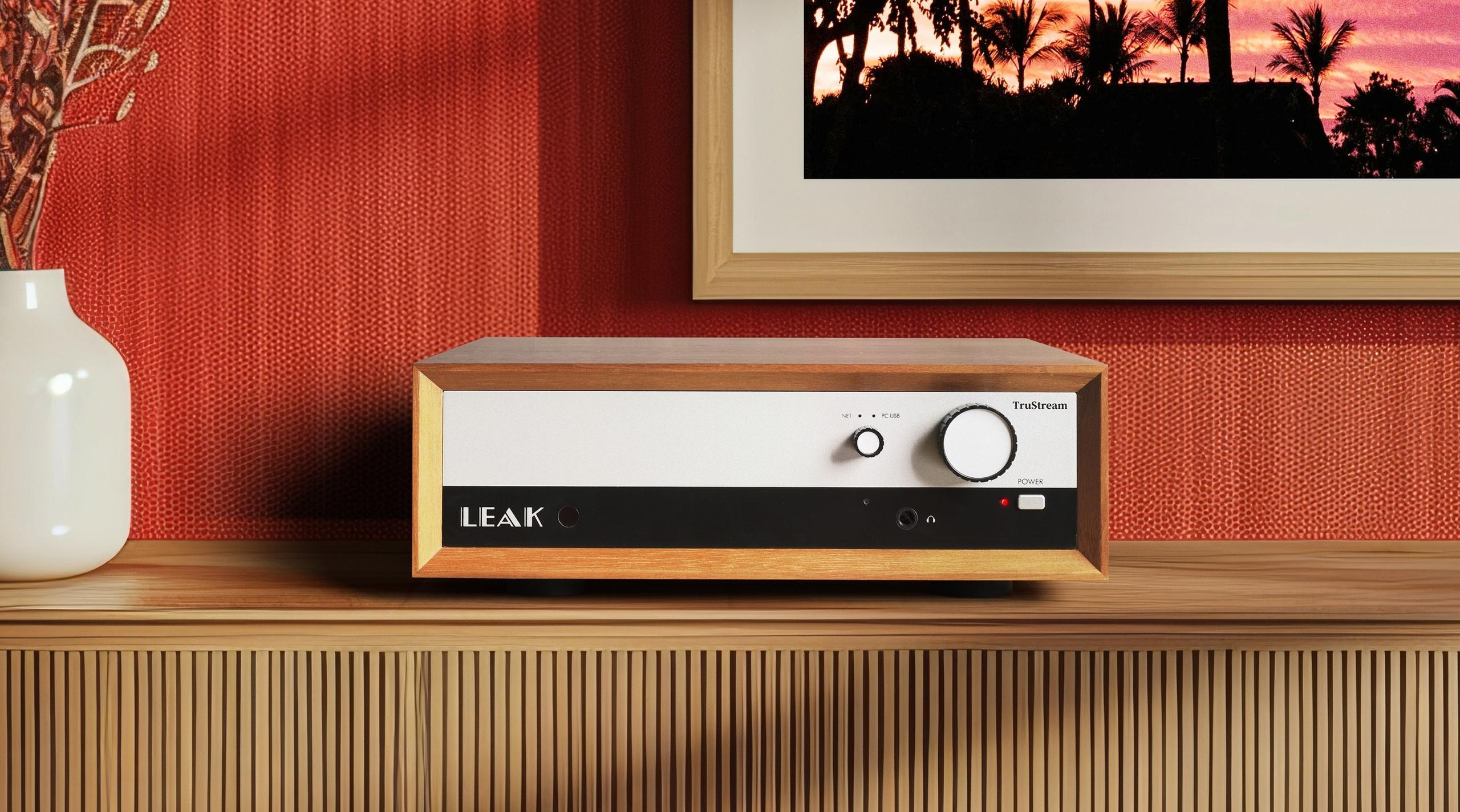
Leak has spent the last few years rebuilding its name around components that look like they came from hi-fi’s golden age but behave like modern gear. Now the company is adding a product that many buyers will see as the missing piece in that lineup: a dedicated music streamer.
The new Leak TruStream is the British brand’s first network audio player, and it is clearly aimed at listeners who want current streaming features without giving up the classic wood-and-metal look that has become part of Leak’s identity. For anyone putting together a two-channel system in 2026, that matters, because streaming has moved from “nice extra” to the way many people actually listen every day.
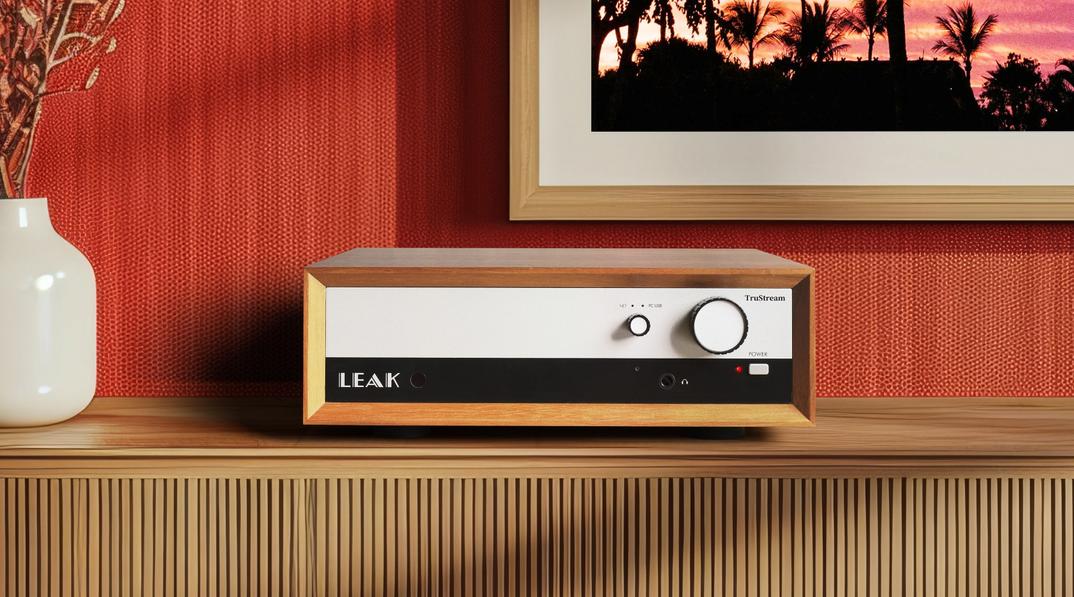
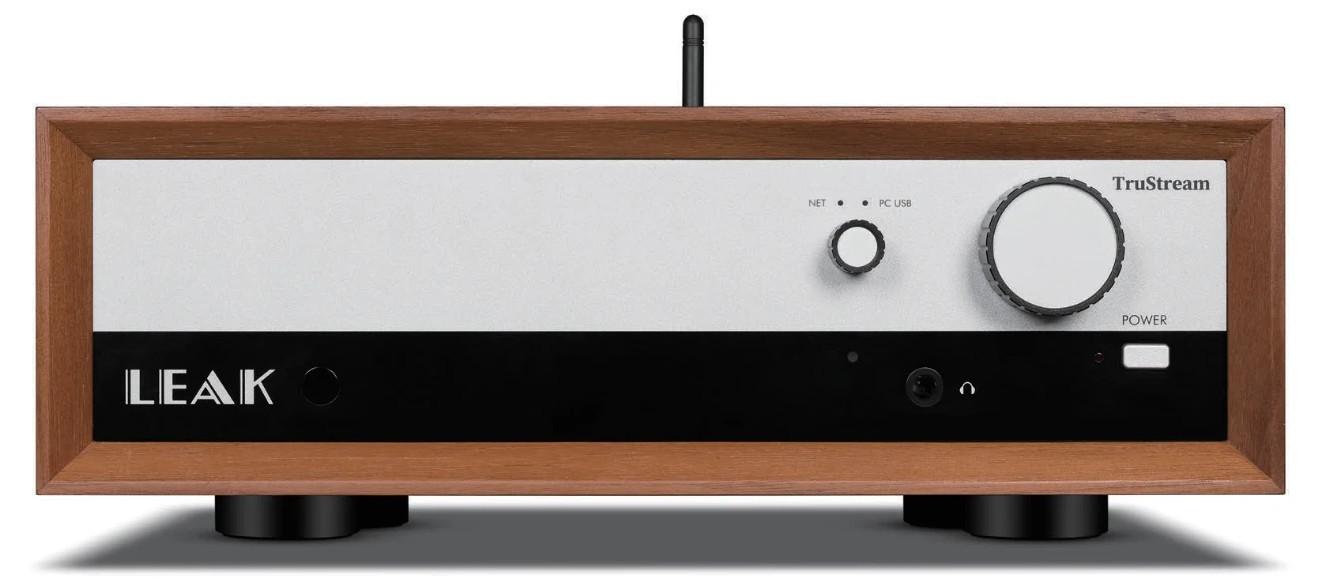
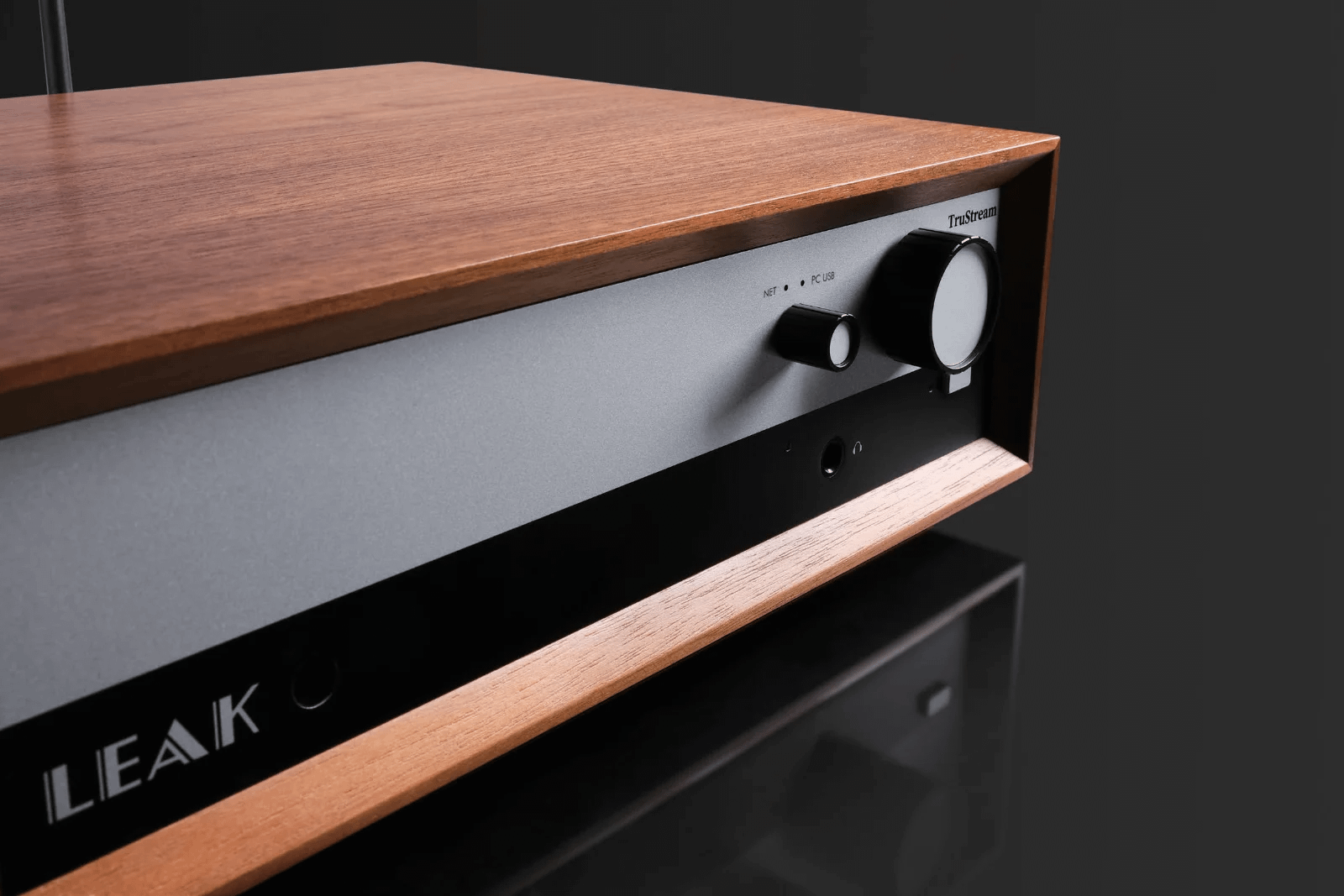
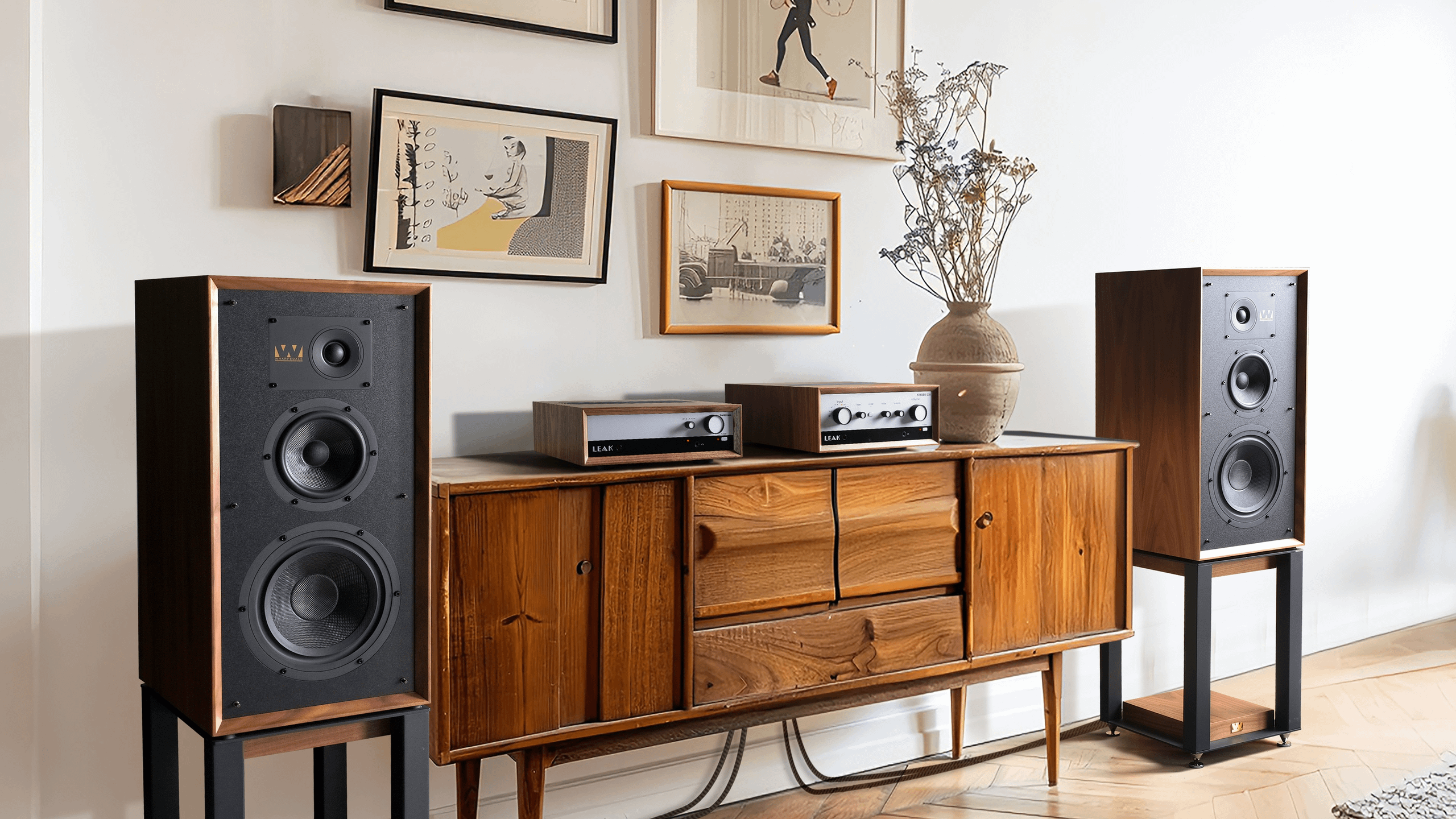
At a glance, the TruStream looks very much like a Leak product. It uses the same retro-inspired design language seen on the Stereo 130 integrated amplifier ($1,495 at Crutchfield), the Stereo 230 ($1,995 at Crutchfield), and the company’s other revived components. You get a walnut wood-veneered cabinet wrapped around an aluminum chassis, which makes it feel more like traditional hi-fi furniture than another anonymous black box.
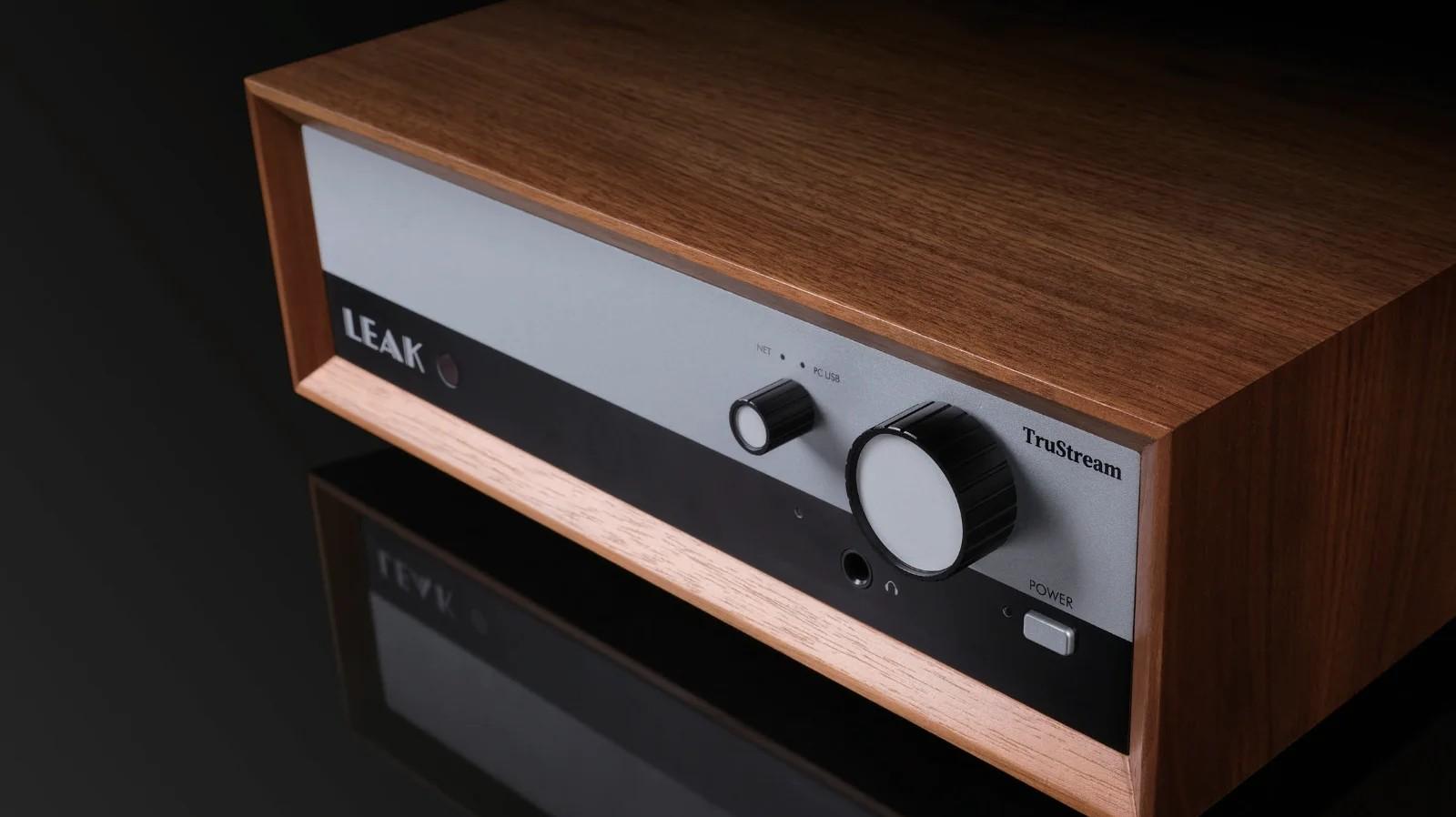
What makes the TruStream more interesting, though, is what Leak has packed inside. This is not just a simple streaming box added to complete the catalog. It combines network streaming, digital-to-analog conversion, and headphone listening into one component, with support for a wide range of wired and wireless playback options.
For streaming duties, Leak partnered with Silent Angel, a company that has built a name around network audio platforms. Silent Angel provides the streaming engine at the core of the TruStream, while Leak says it developed its own surrounding circuit design. Interestingly, the same platform also appears in the recently announced Mission 778S network player, which shares the same parent company as Leak. While the two streamers use a similar streaming foundation, Leak says the TruStream features its own circuit design and power supply architecture.
Inside are ARM Cortex-A72 and Cortex-A53 multi-core processors, which handle the platform’s operating duties and playback tasks. The app experience is based on Silent Angel’s VitOS software and is available for iOS and Android.
That platform brings support for many of the services buyers now expect. The TruStream works with Tidal Connect, Qobuz Connect, Spotify Connect, TuneIn, and AirPlay 2. It is also UPnP/DLNA compliant, which means it can pull music from compatible devices on your home network, such as a NAS drive. Roon users are covered too, because the unit is already certified Roon Ready, allowing it to serve as an endpoint in a Roon-based system.
Leak is also aiming this product at buyers who care about local high-resolution playback, not just streaming subscriptions. The TruStream supports PCM files up to 32-bit/768kHz and native DSD up to DSD512. Supported formats include FLAC, ALAC, WAV, AIFF, APE, DSF, DIFF, and DoP, along with compressed files such as MP3, AAC, WMA, and OGG. In practical terms, that means it is built to handle almost anything you are likely to throw at it, whether your library lives on a server, a USB drive, or a streaming service.
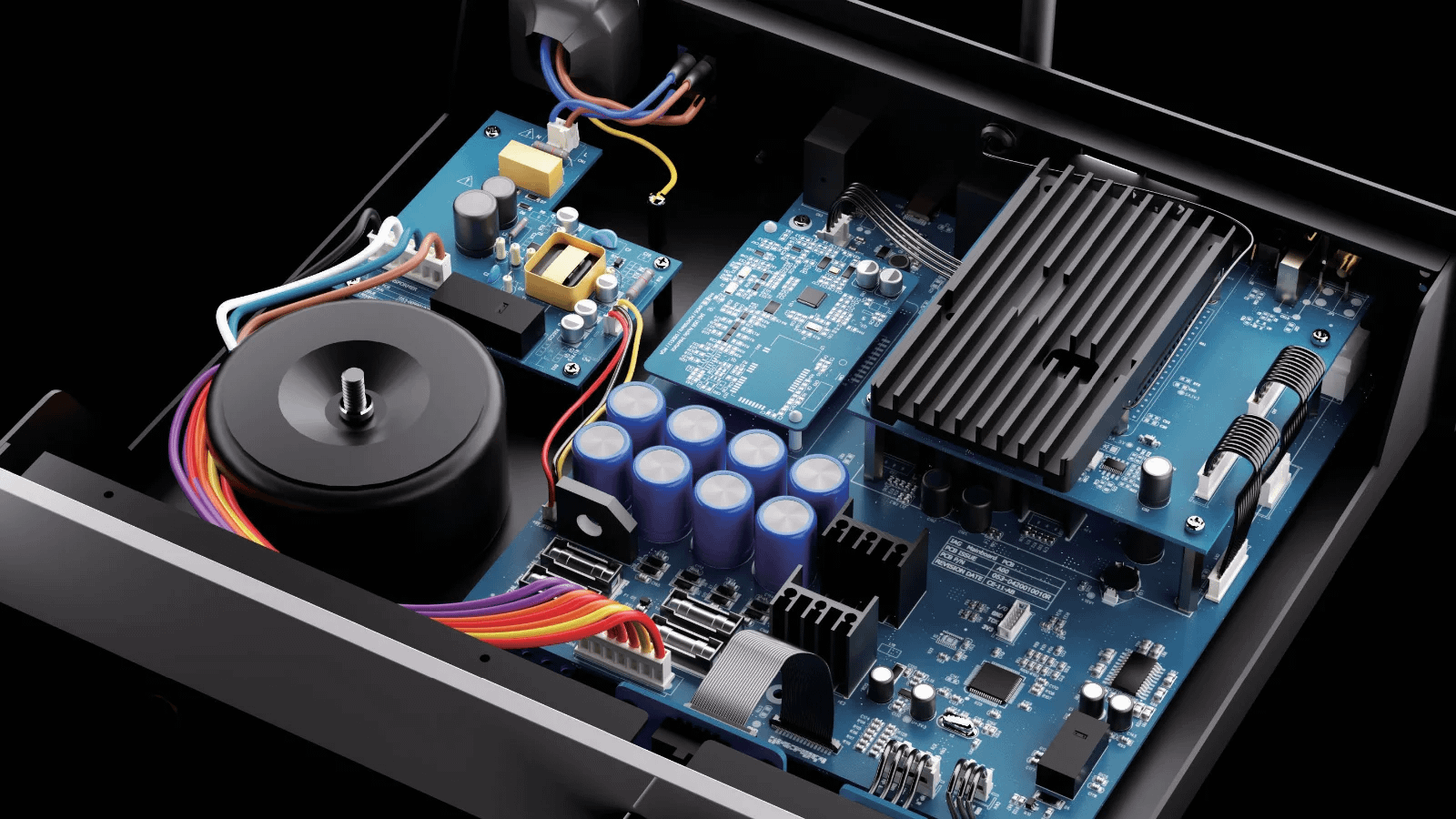
The DAC section centers on ESS Technology’s ES9038Q2M Sabre chip, a familiar name in digital audio. That chip is paired with ESS’s HyperStream II architecture and Time Domain Jitter Eliminator, both intended to reduce timing errors and preserve signal accuracy. Leak also says it paid close attention to the analog side after the DAC stage, using a Class A post-DAC active filter to get better performance from the chip. That matters because DAC chips alone do not tell the whole story; implementation often has just as much impact as the silicon itself.
Power supply design appears to be another area where Leak wants to separate the TruStream from lower-cost streamers. The company says it uses an ultra-low-noise toroidal transformer from Noratel, along with dedicated power supplies for key sections including the XMOS chip, microcontroller, and DAC. The goal here is straightforward: keep digital and analog stages supplied cleanly and separately, which can help reduce unwanted noise.
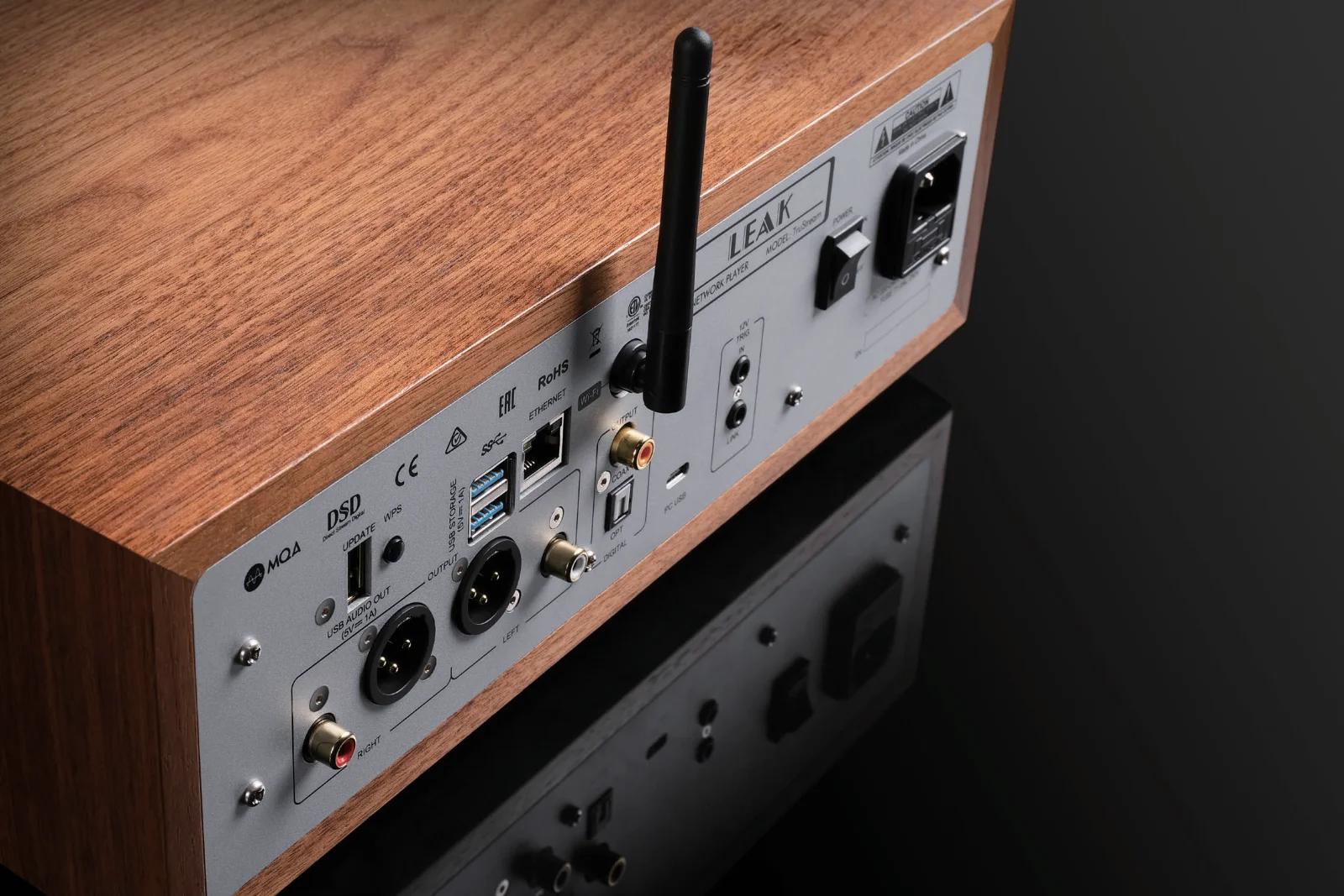
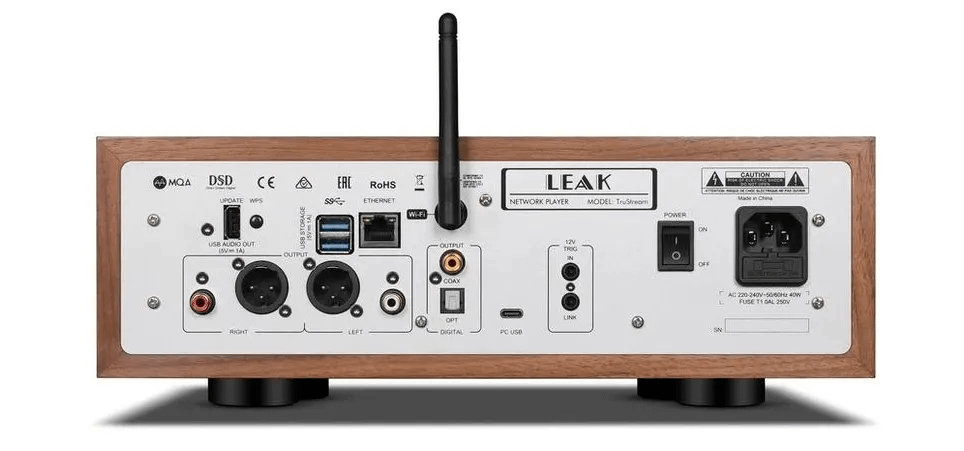
Connections are extensive. For networking, the TruStream includes dual-band Wi-Fi and Gigabit Ethernet. For physical sources, there is a USB-C input for connecting a PC or Mac, plus two USB-A ports for storage devices. Leak also says those USB-A ports can function as digital outputs for connection to an external DAC. Additional digital outputs include optical and coaxial S/PDIF.
On the analog side, you get both balanced XLR and single-ended RCA outputs, giving the streamer flexibility in a stereo system. There is also a built-in headphone amplifier with a front-panel headphone output, so you can use the TruStream on its own for private listening rather than always pairing it with a separate amp.
Technical Specifications:
That wide feature set helps explain where the TruStream sits in the market. At $1,499, the Leak TruStream lands in a part of the market where buyers usually expect more than basic streaming. That means it is up against streamers that each take a slightly different approach to the job.
The Cambridge Audio CXN100 (priced at $1,099 at Crutchfield) is one of the clearest alternatives for readers who care about app experience and everyday usability. Cambridge’s StreamMagic platform supports a broad range of services and features, and the CXN100 also includes a large color display, AirPlay, Roon compatibility, and hi-res support up to 32-bit/384kHz and DSD256. Compared with the Leak, the Cambridge looks more modern and tech-forward, while the TruStream leans harder into classic hi-fi styling and adds its own take on power supply and analog-stage design.
The Bluesound NODE ICON ($1,199 at Amazon) pushes the comparison in a different direction. Bluesound’s main advantage is its well-established BluOS ecosystem, which has made the brand a frequent choice for people who want easy multiroom audio as well as traditional two-channel listening. The NODE ICON also brings in features that some buyers may value more than retro styling, including a 5-inch color display, balanced XLR outputs, AirPlay 2, HDMI eARC, Dirac Live readiness, and a dual-mono DAC design. In that sense, the NODE ICON feels more like a modern control hub, while the Leak presents itself more as a classic stereo component built for listeners who want streaming without changing the look of their system. Read our Bluesound NODE ICON full review.
The Eversolo DMP-A6 Gen 2 ($859 at Amazon) is the value wildcard in this group. It offers PCM support up to 32-bit/768kHz and DSD512, matching the Leak on headline hi-res specs, and it is designed around a feature-rich platform that supports local library management and broad streaming integration. The biggest difference is presentation: where the Leak is styled like a traditional hi-fi component, the Eversolo is aimed more at buyers who want a modern interface and a more visibly digital user experience. For readers comparing purely on features per dollar, the DMP-A6 Gen 2 may look aggressive; for those who care more about industrial design and brand continuity with a classic stereo system, the TruStream may make more visual sense.
| Streamer | Price | DAC | Max Resolution | Key Features |
|---|---|---|---|---|
| Leak TruStream | $1,499 | ESS ES9038Q2M | 32-bit/768kHz PCM, DSD512 | Roon Ready, Tidal/Qobuz/Spotify Connect, AirPlay 2, balanced XLR outputs, built-in headphone amp |
| Cambridge Audio CXN100 | $1,099 | ESS ES9028Q2M | 32-bit/768kHz PCM, DSD512 | StreamMagic platform, large color display, AirPlay 2, Chromecast, Roon Ready |
| Bluesound NODE ICON | $1,199 | Dual ESS Sabre DACs | 24-bit/192kHz PCM, DSD256 | BluOS multiroom ecosystem, HDMI eARC, AirPlay 2, Dirac Live ready |
| Eversolo DMP-A6 Gen 2 | $859 | Dual ESS ES9038Q2M | 32-bit/768kHz PCM, DSD512 | Large touchscreen UI, local library management, optional internal storage |
In other words, the Leak TruStream does not enter this category as the cheapest or the most screen-heavy option. Its pitch is different. It combines broad streaming support, a Sabre-based DAC stage, balanced outputs, headphone listening, and retro Leak styling in a package that is clearly meant to sit alongside the company’s existing amplifiers and source components. That gives it a distinct place in a crowded field, especially for buyers who want modern streaming in a more traditional-looking stereo system.
The Leak TruStream is scheduled to arrive in April 2026. For anyone building a modern stereo system around streaming, it looks like Leak’s clearest attempt yet to connect its vintage image with the way people actually listen now.
Related Reading:






Privacy Policy
Terms and Conditions - Affiliate Policy
Home Security
© Copyright 2008-2026.
11816 Inwood Rd #1211, Dallas, TX 75244