

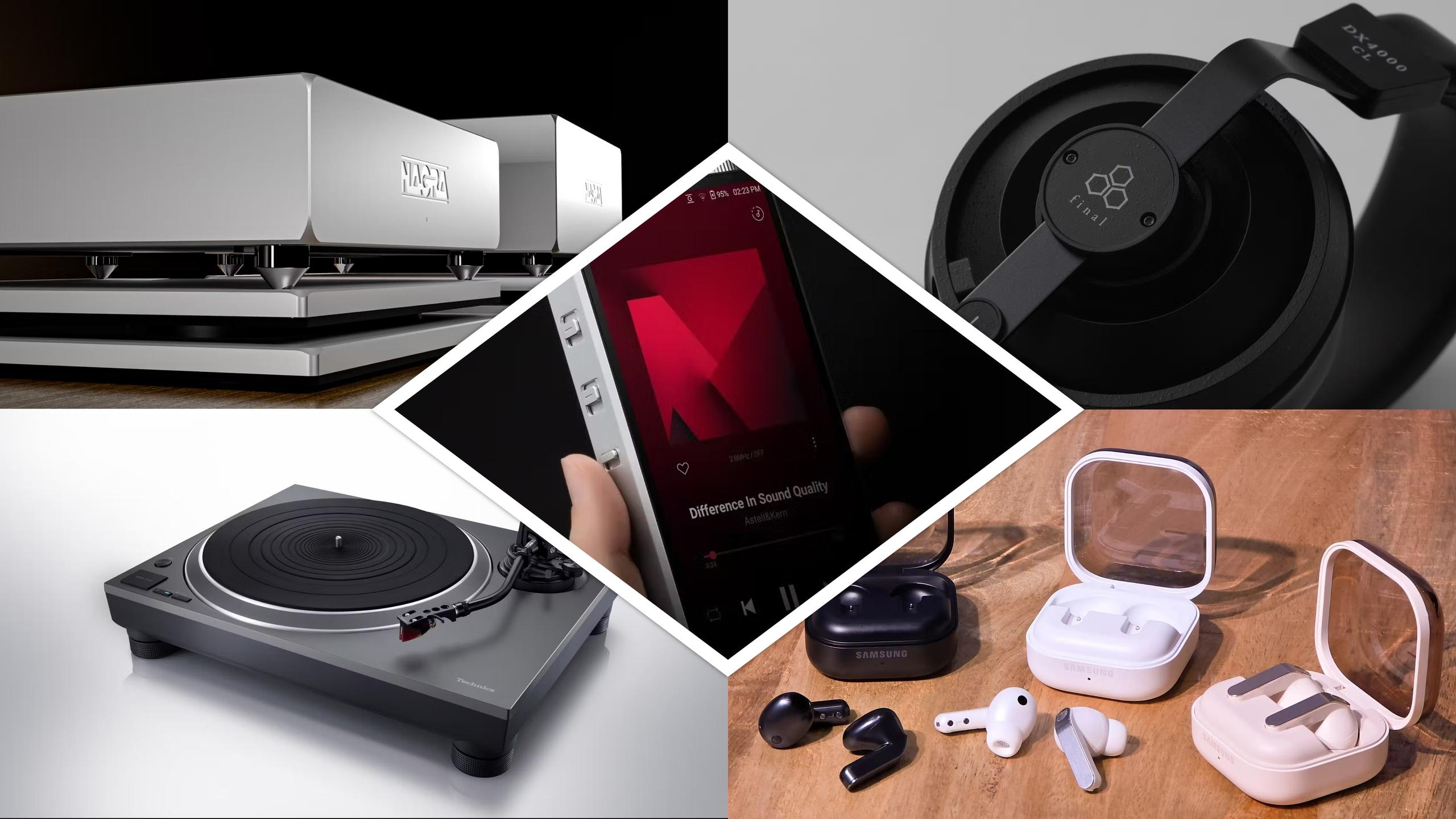
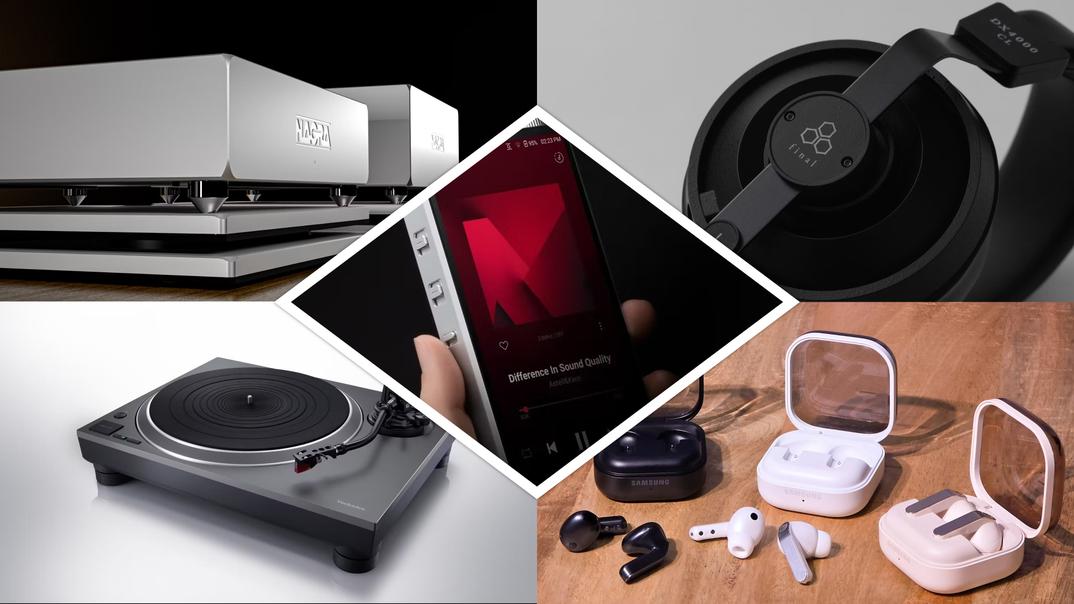
Last week was one of those weeks where “AV” really means everything, from true wireless earbuds you’ll wear all day, to a $7,500 Swiss streamer that’s absolutely not pretending to be budget, to a projector that’s basically telling your living room, “yeah, we can do 300 inches.” Here’s the quick tour of the launches we covered on HomeTheaterReview over the past week.
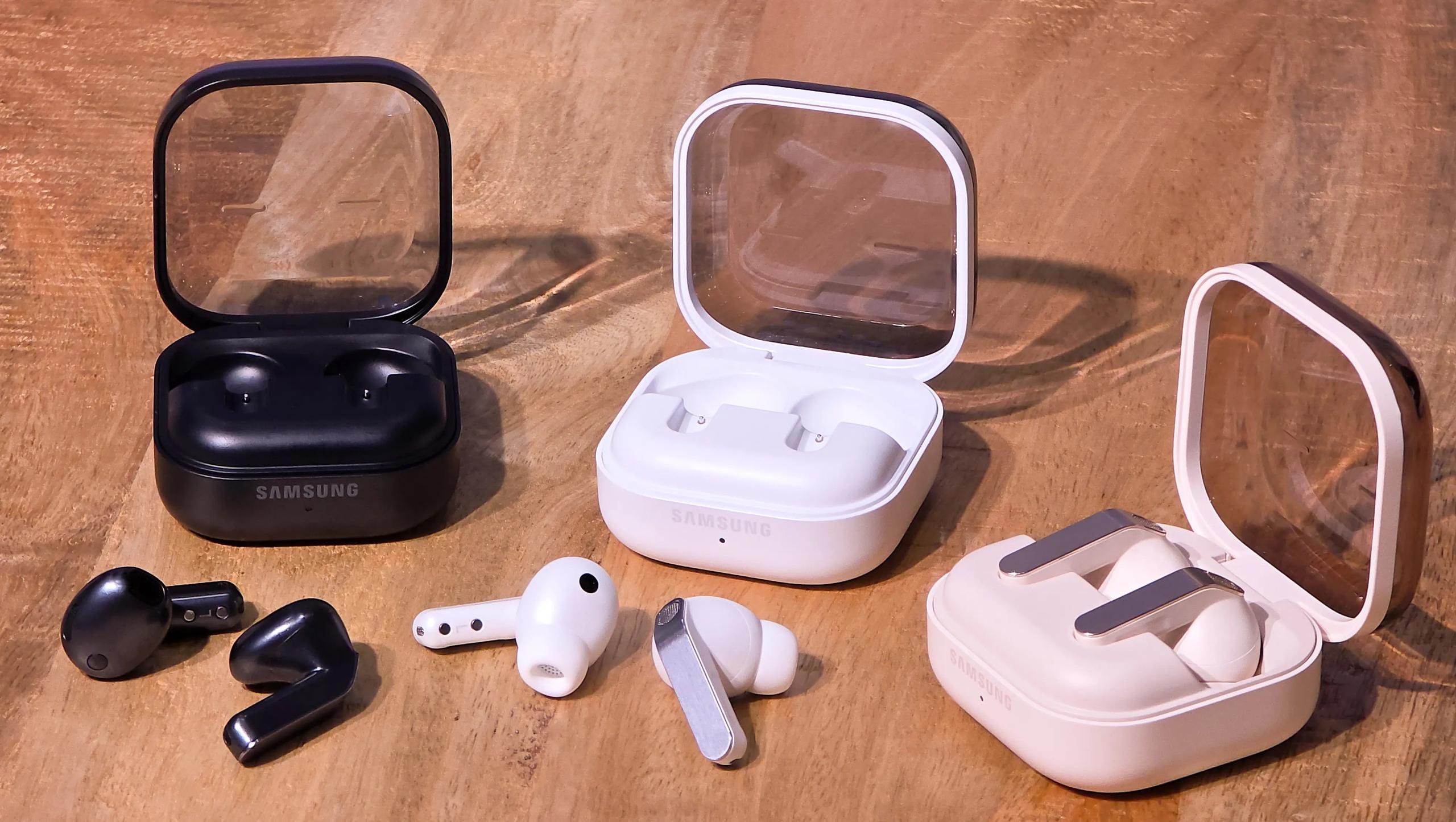
Samsung didn’t just drop “the new Buds.” They dropped two versions that are aimed at two totally different kinds of listeners: an open-fit Buds 4 that sits more casually in your ear, and a sealed in-ear Buds 4 Pro that’s built for isolation and stronger noise canceling.
The easiest way I’ve been framing it is this: if you hate the “plugged up” feeling (or you’re taking a lot of calls and want to stay aware of your surroundings), the open Buds 4 approach makes sense. But if you commute, travel, or just want your music to stay consistent in noisy places, the Pro’s sealed fit is the safer bet.
Specs-wise, Buds 4 use a single 11mm driver, while Buds 4 Pro move to a two-way setup (11mm woofer + tweeter), and both support 24-bit/96kHz playback with Samsung’s hi-res codec on compatible Galaxy phones. ANC is also a big divider: Buds 4 have Adaptive ANC, while Buds 4 Pro use an updated system aimed at handling low-frequency noise more effectively.
Pricing lands at $179.99 for Buds 4 and $249.99 for Buds 4 Pro, with preorder timing pointing toward March 2026 availability. Read more.
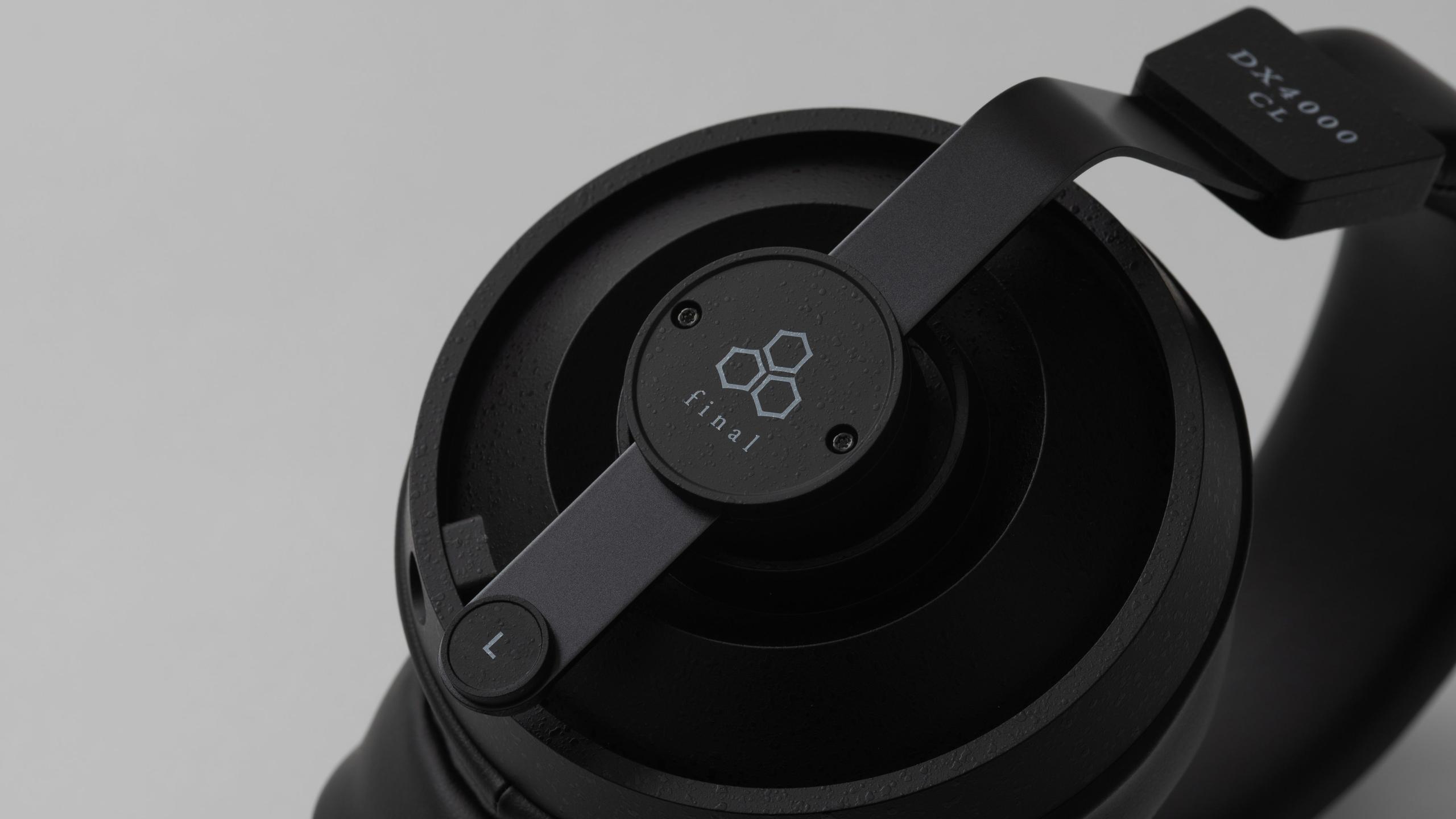
Closed-back headphones are usually the “practical” pick, great for isolation, not always great for that spacious, open feel. Final’s new DX4000CL is basically a direct response to that classic closed-back complaint: it sounds too stuck in your head.
The DX4000CL sits between the DX3000CL and the flagship DX6000CL in Final’s lineup, priced at $999 / £949 / €999, and it’s positioned as the “step up” model with more ambitious engineering.
What’s actually changing? Final points to a newly developed motor system (magnet + coil structure) paired with a 40mm paper-carbon composite dynamic driver, with a lot of attention paid to airflow and resonance control inside the cup—because that’s where boomy bass and smeared detail often come from in closed designs.
You also get a more premium cable situation out of the box: a silver-coated 2m cable terminated in 4.4mm balanced, plus a 6.3mm adapter. Specs include 37Ω impedance, 96dB/mW sensitivity, and 375g weight (without cable). Read more.
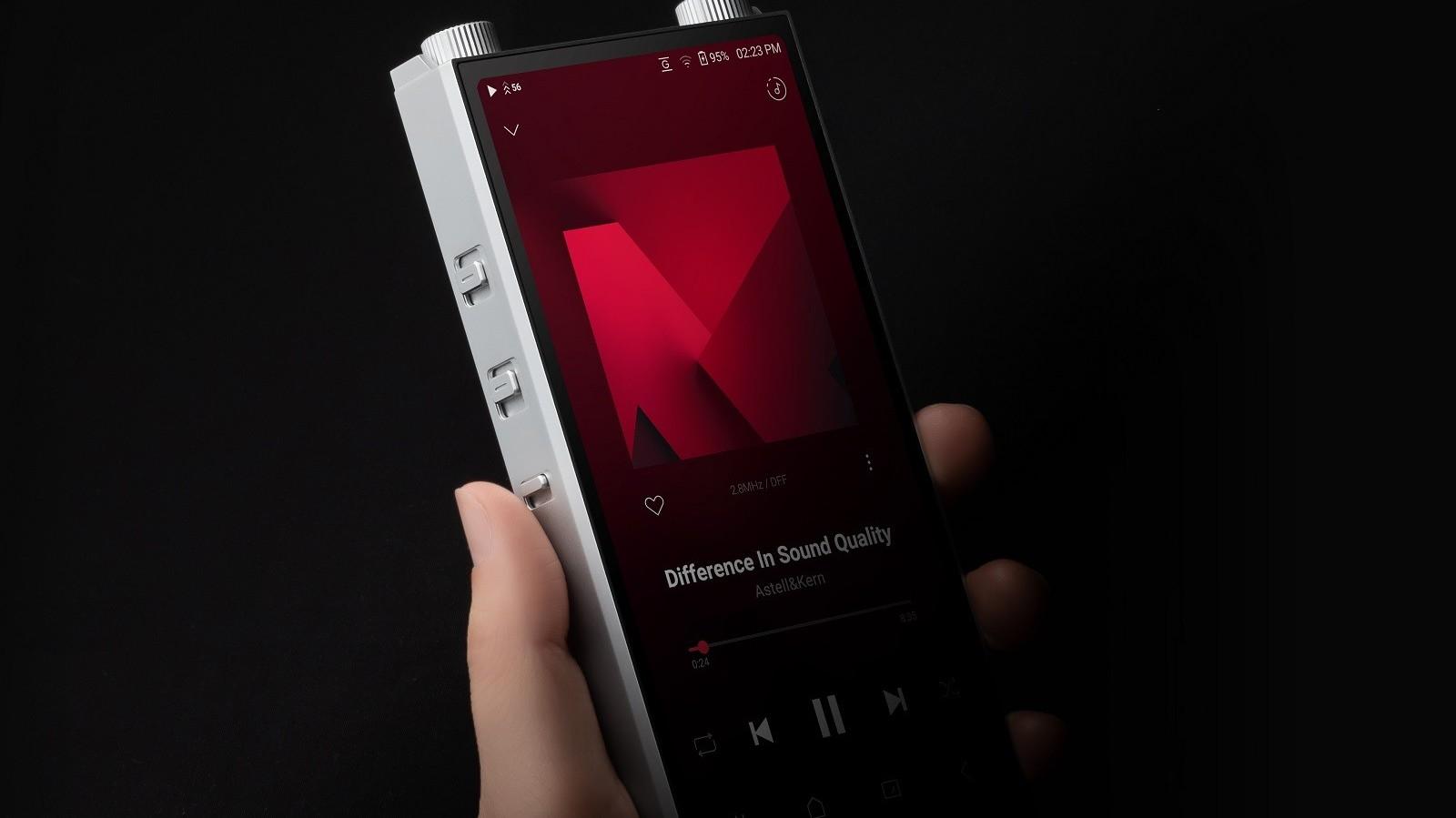
I love when a product has a clear “hook,” and the Astell&Kern PD20 absolutely does: it’s built around the idea that your player should adapt to your hearing, not some generic tuning target. That feature is called Personal Sound, developed with Audiodo, and it works through a listening test (with dedicated included earphones) that builds a left/right hearing profile. If you still want manual control, the PD20 leans into that too, with a “Sound Master Wheel” offering 160 steps of bass/mid/treble adjustment from -8.0 dB to +8.0 dB.
Under the hood, it’s serious hardware: a quad-DAC design using four ESS ES9027PRO chips, plus a triple-amp architecture with Class A, Class AB, and Hybrid modes you can switch between in real time. Storage is 256GB onboard with microSD expansion up to 2TB, and it supports playback up to 32-bit/768kHz PCM and DSD512.
On the connectivity side you get Wi-Fi, Bluetooth with aptX HD and LDAC, USB-C (including USB DAC use with Mac/Windows), and a Bluetooth “Sink” mode so it can act like a high-quality Bluetooth DAC for another device. Battery life is quoted at ~14 hours, with USB PD fast charging. Availability is scheduled for late March, with pricing at $1,970 / £1,799. Read more.
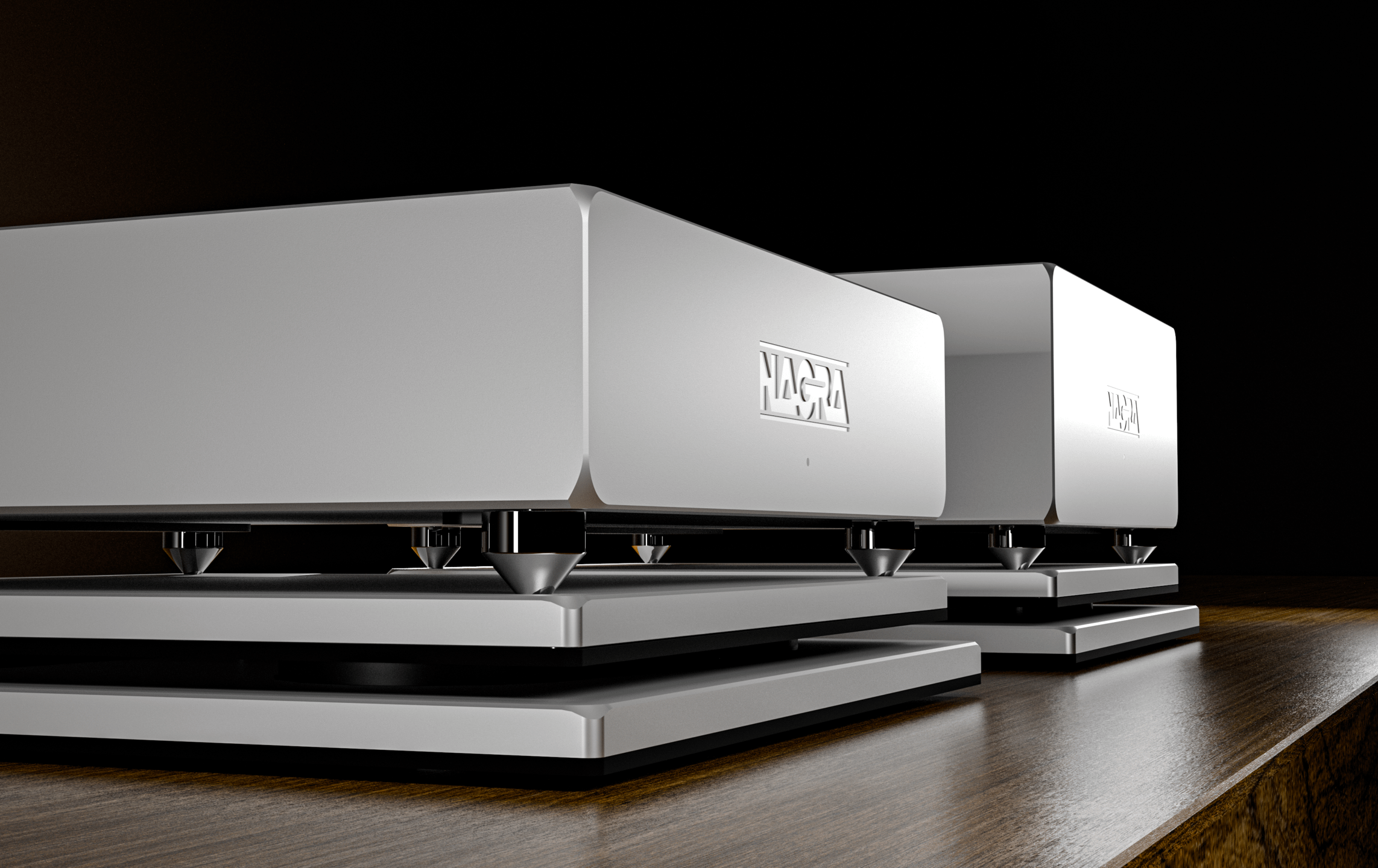
Calling this one “budget” is… funny, but it’s also kind of the point. The Nagra Compact Player is Nagra’s attempt at being more attainable without pretending it’s playing in the same price pool as everyone else. It lands at $7,500, and it’s positioned as a complete digital front end: streamer + DAC + analog output stage in one compact chassis.
A key clarification: the Compact Player is not the same as Nagra’s Compact Streamer. The Streamer needs an external DAC; the Player includes its own DAC and RCA analog outputs, and it can even run straight to a power amp or active speakers thanks to its low 14-ohm output impedance.
Format support is appropriately modern: PCM up to 384kHz/32-bit and DSD256. Streaming/control options include Qobuz Connect, TIDAL Connect, Spotify Connect, AirPlay 2, Roon Ready/Roon Tested, Audirvana, plus internet radio via vTuner and local playback via UPnP/DLNA or USB storage. Control runs through the mConnect app.
Physically, it’s genuinely compact, 185 x 166 x 41 mm, 1.9 kg, and Nagra talks up an upgrade path via its Compact PSU and isolation accessories if you want to build the rest of the “Compact” ecosystem over time. Read more.
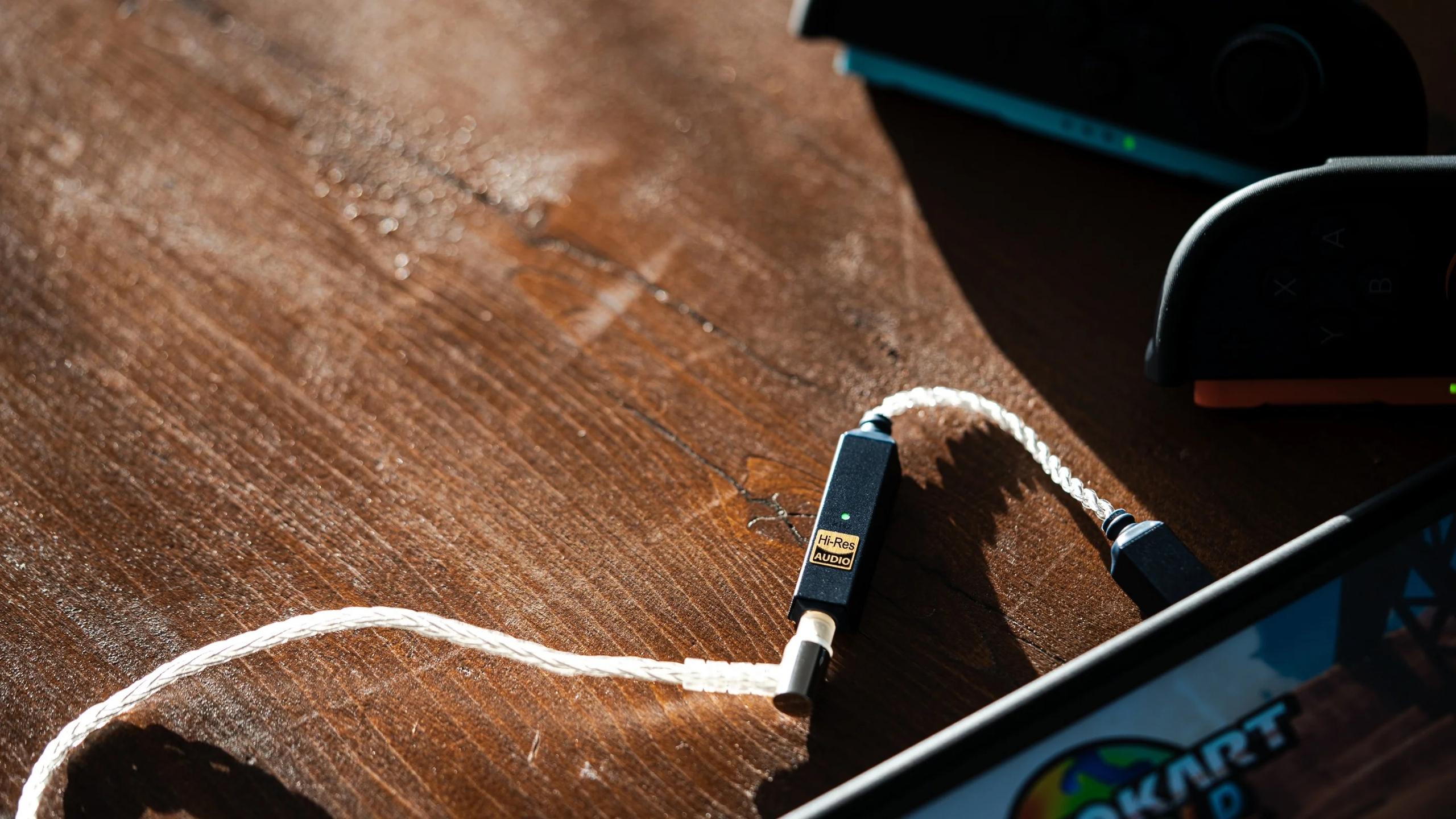
At the complete opposite end of the price spectrum, iFi’s GO link 2 is the kind of product I recommend to friends because it’s so easy to explain: your phone can stream great audio, but the headphone output chain is often the weak link—this bypasses that.
GO link 2 is a tiny USB-C dongle DAC with a 3.5mm output, and iFi includes adapters for USB-A and Lightning in the box. It’s also smaller and lighter than the original GO link (iFi claims 8% smaller and 29% lighter).
Inside is an ESS Sabre DAC, with support for PCM 32-bit/384kHz and DSD256 (no MQA). iFi also highlights changes like reduced distortion and crosstalk, plus their jitter-elimination and clocking approach.
The most practical new twist: it’s the first GO link model with full iFi Nexis app support (Android-only at launch), letting you switch digital filters and handle firmware updates without a computer. Price is $59 at Amazon. Read more.
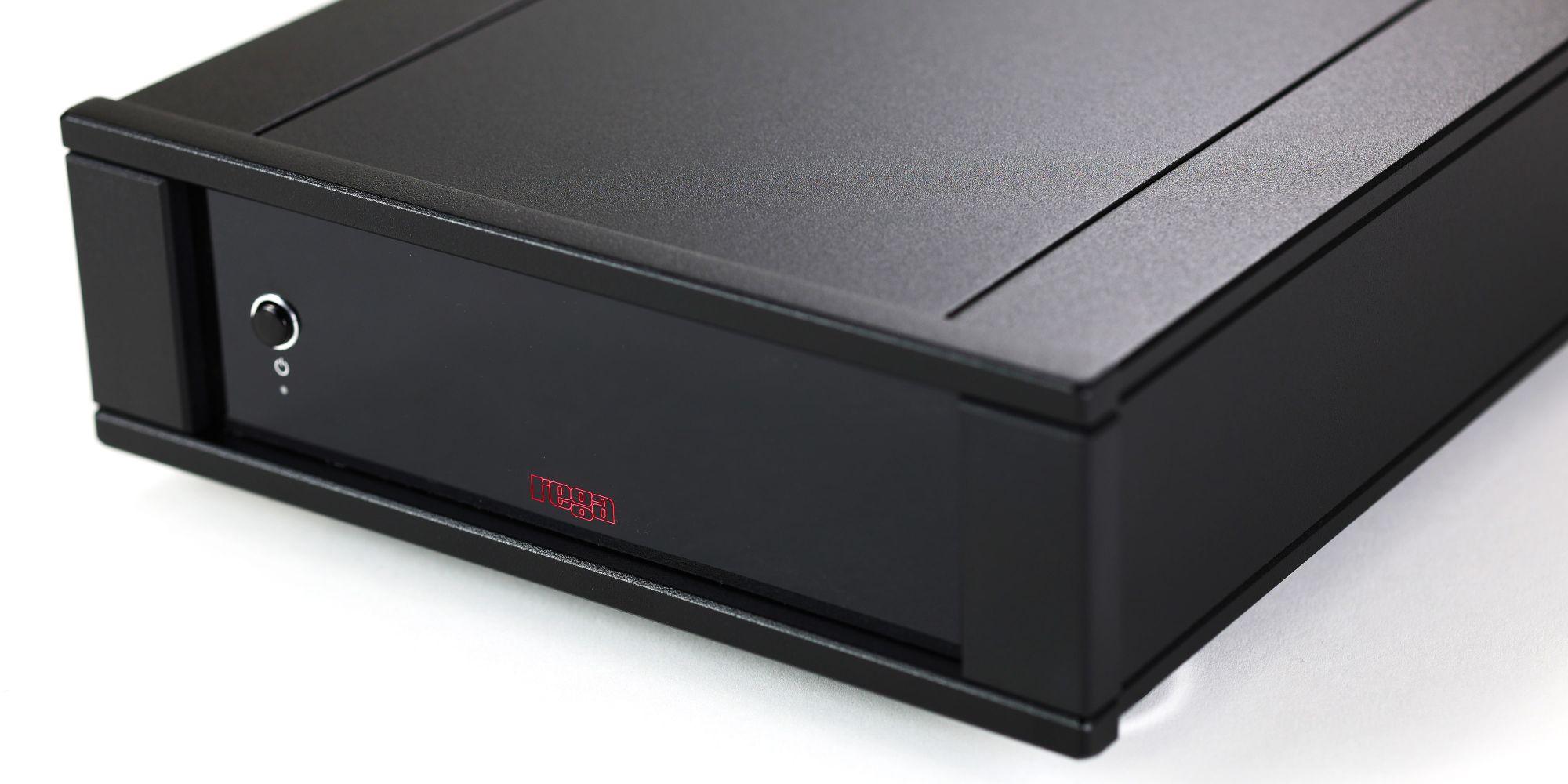
Rega’s Aos MC is for the vinyl people who’ve already crossed the “okay, I’m doing moving coil now” line, and want a phono stage that feels like a serious upgrade without jumping to reference pricing. It borrows key design ideas from Rega’s flagship Aura MC, but lands at £1,500, with U.S. expectations around $2,500.
This is an MC-only, all-analog design (no digital control circuitry in the signal path), built around a two-stage amplifier approach. Rega also leans into real-world cartridge matching via rear-panel settings: resistive loading options at 70/100/150/400 ohms, capacitive loading at 1000 or 4300 pF, and a 6 dB gain toggle (69.3 dB / 63.5 dB).
The vibe here is very “set it up correctly once, then forget about it,” which honestly is what I want from a phono stage. And if you’re a moving magnet listener, Rega says an Aos MM version is on the way. Read more.
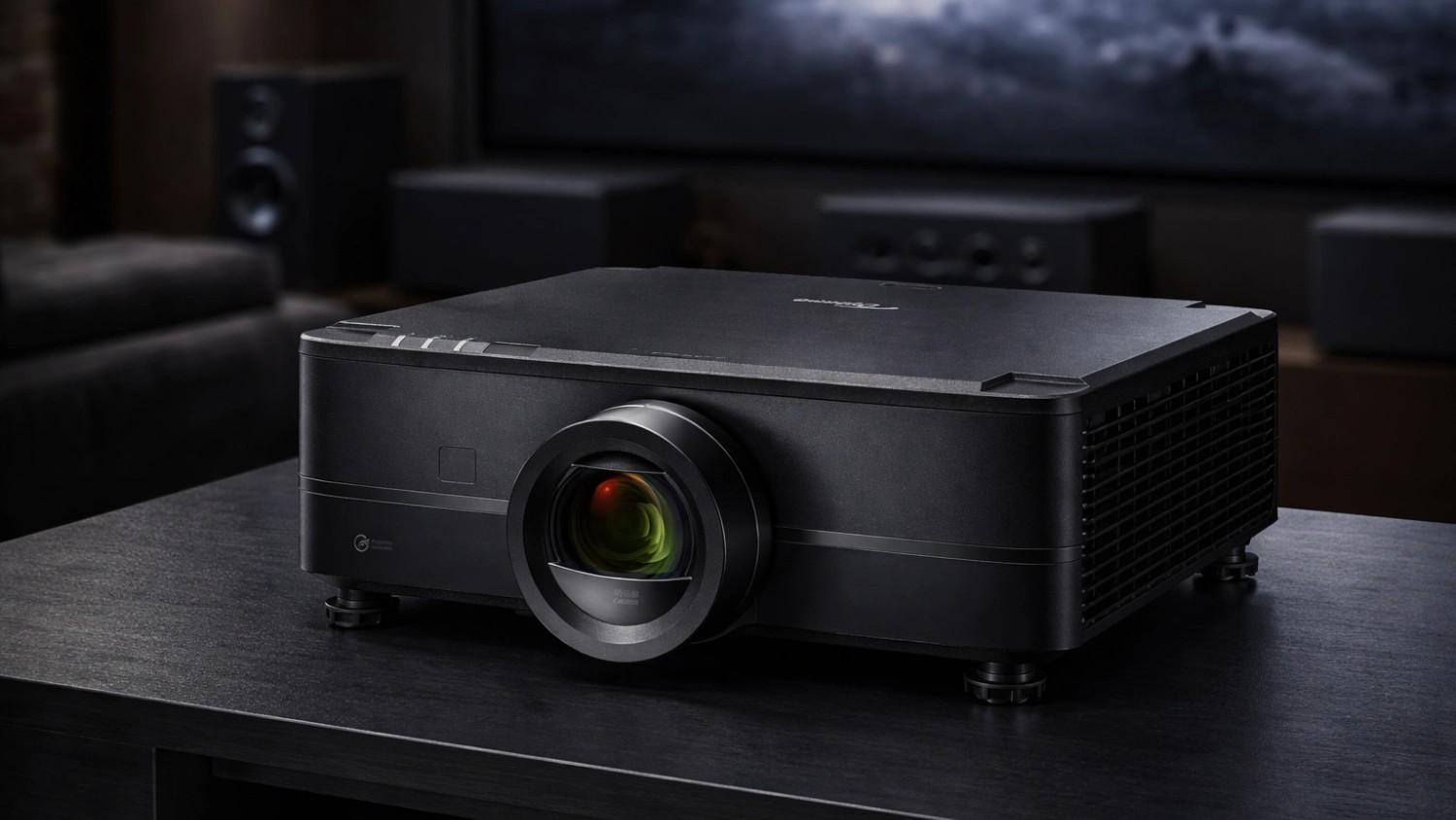
You know a projector is coming in hot when the headline spec is basically the entire pitch: 5,000 lumens. Optoma’s new UHZ78LV is a 4K triple-laser DLP projector that’s clearly aiming at people who want a giant image without turning their room into a permanent cave.
Optoma lists support for Dolby Vision, HDR10+, and IMAX Enhanced, plus wide color claims: up to 98% DCI-P3 and 96% BT.2020, with the laser light source rated for up to 30,000 hours. It’s specced for screen sizes from 80 inches to 300 inches, which is exactly the kind of range that makes you start thinking, “do I actually have a wall that big?”
For gamers, there’s HDMI 2.1 and input lag as low as 8.5ms at 1080p/240Hz, plus install-friendly features like motorized 1.6x zoom, lens shift, and 360-degree projection. It also includes HDMI eARC for sending audio (including Dolby Atmos passthrough) to a receiver or soundbar.
Pricing is listed as just under $6,500 in the U.S., and £5,999.99 in the U.K., with availability expected in March 2026. Read more.
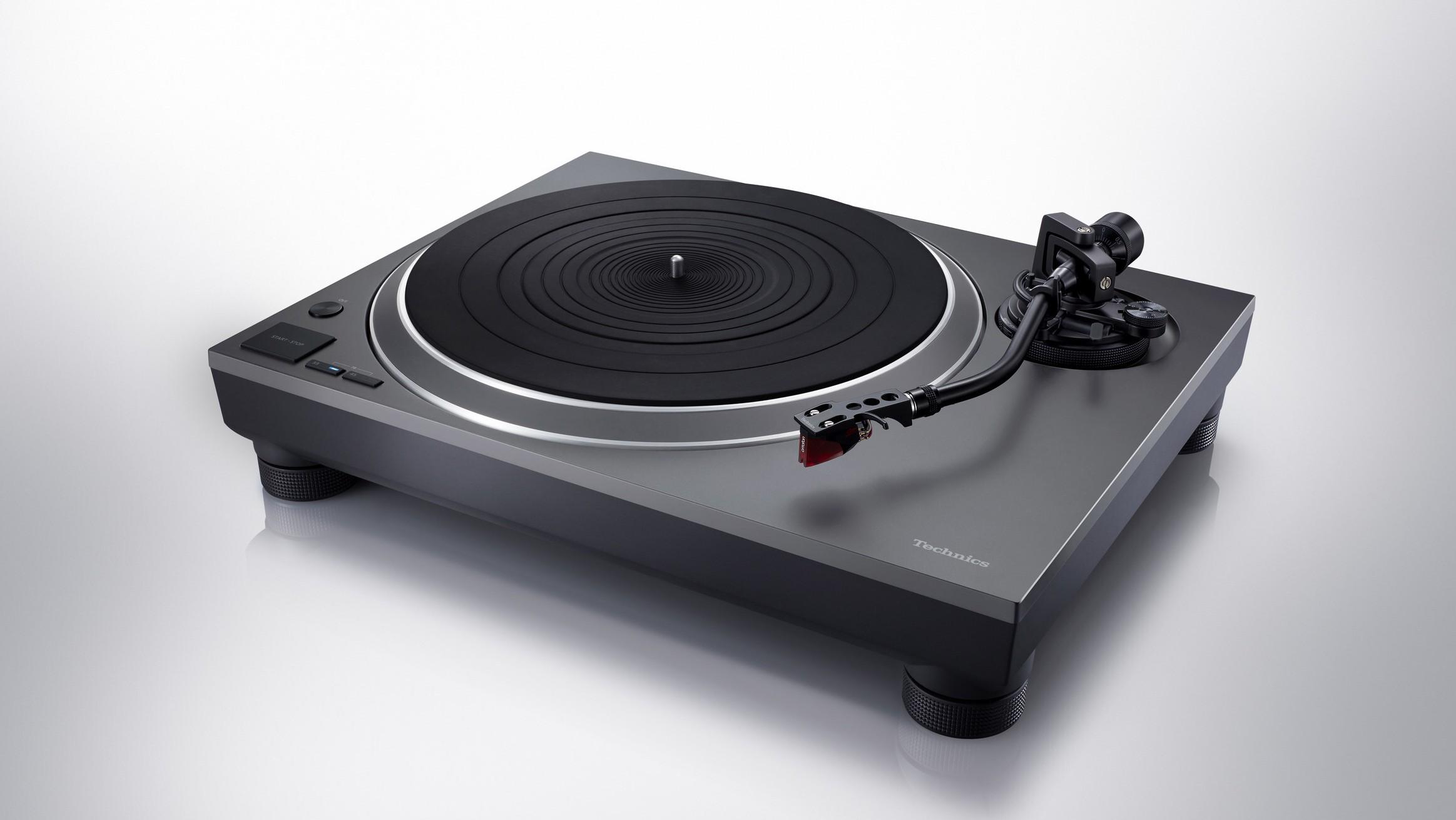
This is the one I was happiest to see added, because it’s a very “Technics” update: keep the proven formula, upgrade the engineering that actually matters. The new SL-1500CS keeps the plug-and-play appeal of the SL-1500C: direct drive, built-in MM phono stage, S-shaped tonearm, and an included Ortofon 2M Red pre-mounted, while adding Technics’ newer ΔΣ (Delta-Sigma) Drive motor control tech that previously lived in pricier models like the SL-1200GR2 and SL-1300G.
In plain language: the job is to spin the record steadily, and ΔΣ-Drive is about shaping the motor drive signal to reduce vibration and keep rotation more stable and quieter in the background. The SL-1500CS also keeps a feature I wish more “real-world” turntables had: automatic tonearm lift at the end of a record (great for reducing stylus/record wear if you get distracted).
It’s scheduled for March 2026 availability, priced at £1,099 in the UK (U.S. pricing TBD), and it comes in a new metallic grey finish. Also worth noting (especially for longtime HTR readers): we reviewed the SL-1500C back in 2019 and gave it 4.5/5 stars, so this refresh is absolutely on the radar. Read more.




Privacy Policy
Terms and Conditions - Affiliate Policy
Home Security
© Copyright 2008-2026.
11816 Inwood Rd #1211, Dallas, TX 75244