

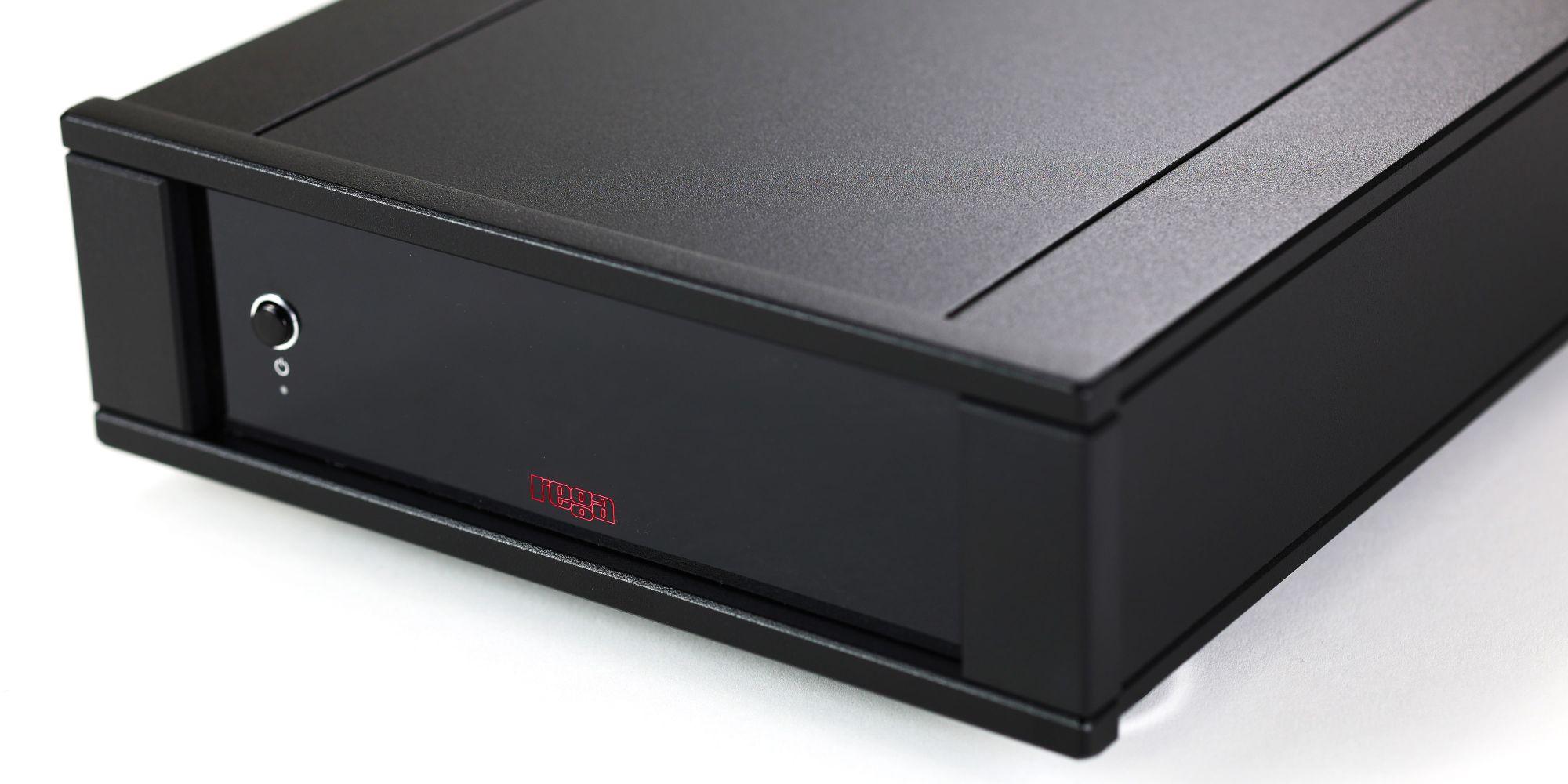
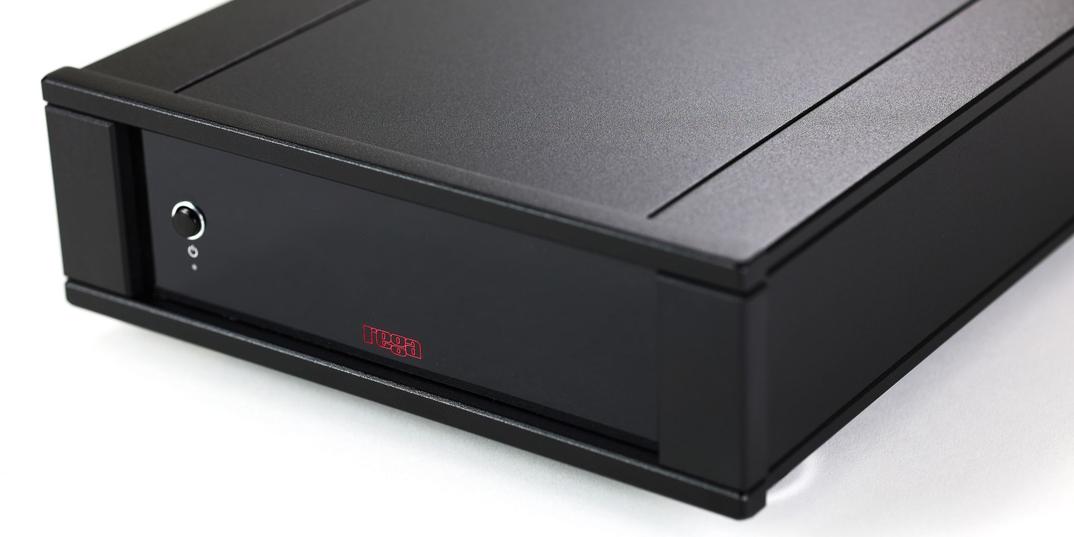
Rega’s new Aos MC phono stage is aimed squarely at vinyl listeners who’ve moved beyond entry-level gear but aren’t ready to pay reference-level money. It’s a moving coil–only design that borrows heavily from the company’s flagship Aura MC stage, but lands around the £1,500 / $2,500 mark instead of Aura territory.
First shown at the Bristol Hi-Fi Show 2026, the Aos MC sits between Rega’s more affordable Fono models and the top-tier Aura. Think of it as a “trickle-down” option: the basic circuit architecture, layout, and design priorities are carried over from the reference product, but packaged in a more compact, realistic price bracket that still targets serious systems.
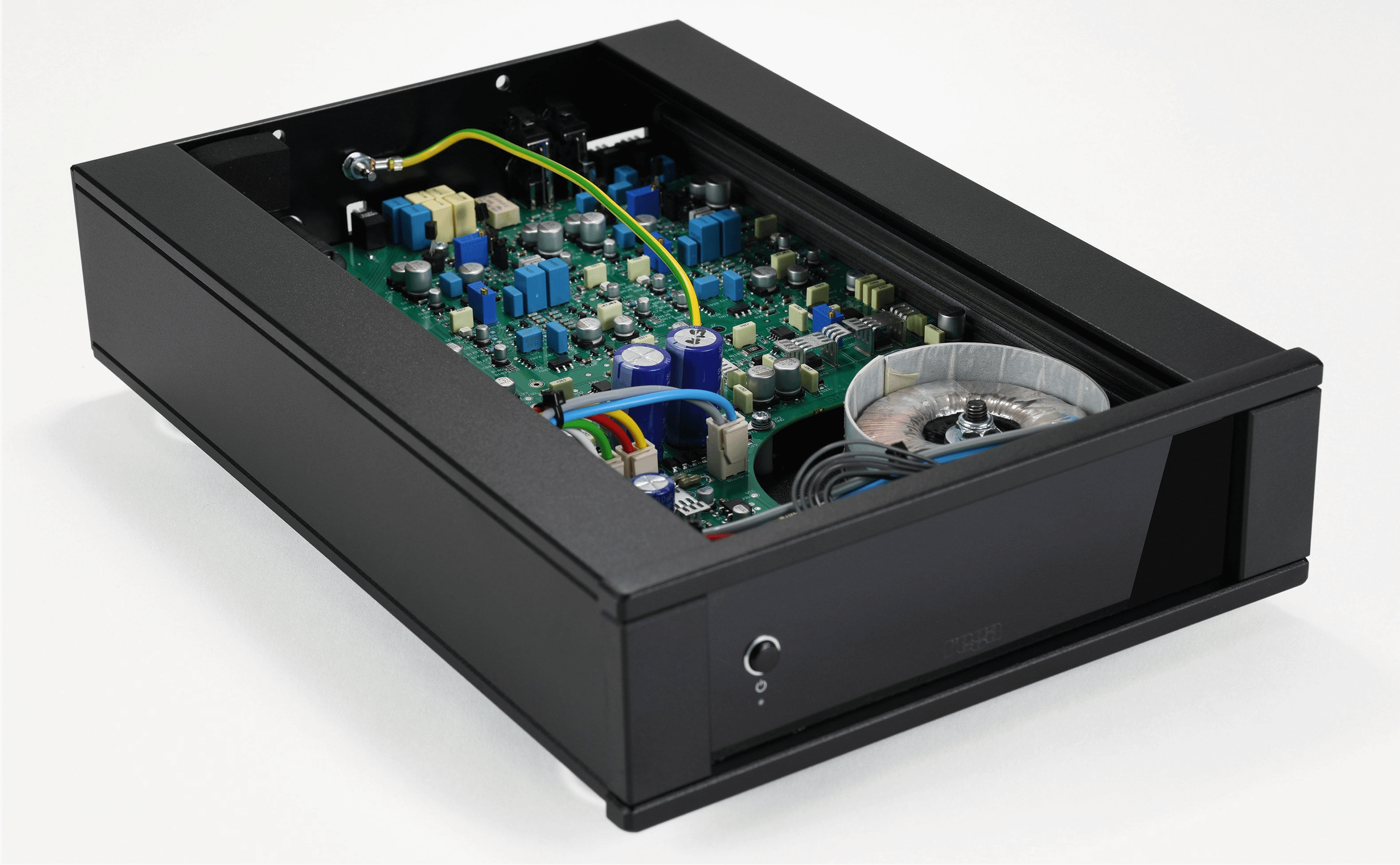
At the heart of the Aos MC is a two-stage, all-analogue amplifier. There’s no digital control circuitry in the signal path at all, which tells you what Rega is trying to do here: keep the route from cartridge to output as direct as possible.
The first gain stage is a symmetrical, complementary Class A amplifier built around parallel, ultra–low-noise FETs configured as compound pairs. Using FETs isn’t just a spec-sheet detail. In this context, it means no bias current flows through the cartridge coil, which helps avoid disturbing the cartridge’s magnetic geometry. The input configuration also minimizes coupling components between the cartridge and that first gain stage, reducing opportunities to smear or alter the tiny signal coming off your records.
The second stage stays in Class A and is set up as a differential amplifier with a common-base driver that handles the low-frequency part of the RIAA equalisation curve. The high-frequency portion is dealt with passively. RIAA accuracy is quoted as better than ±0.2 dB from 65 Hz to 70 kHz, with a frequency response from 17.5 Hz (–3 dB) up to 100 kHz (–0.2 dB), and total harmonic distortion at 0.03 percent. On paper, it’s very much a performance-focused design rather than a feature showcase.
A self-adjusting servo monitors temperature and compensates for changes in operating conditions, aiming to keep the circuit stable over time without adding extra stuff in the actual signal path.
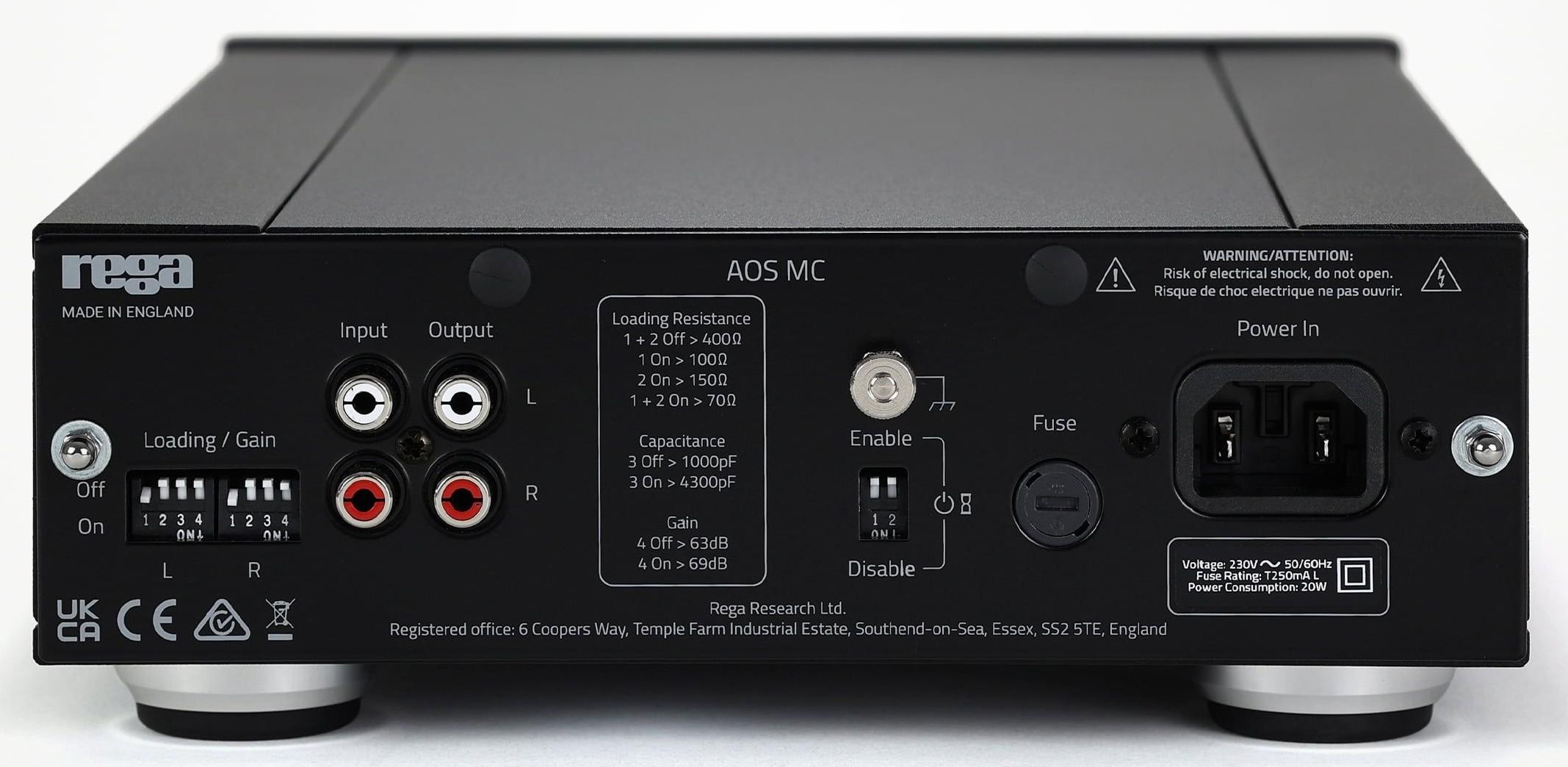
Where the Aos MC gets practical for real-world systems is in its loading and gain options. Around the back, you’ll find:
All of this is handled via rear-panel dip switches and a gain switch, not via menus or screens. The idea is straightforward: once you’ve matched the Aos MC to your cartridge, you largely forget about it.
This range of settings means the unit is designed to work with a wide variety of moving coil cartridges, including low-output designs that need more gain. Connectivity is intentionally simple: RCA inputs and outputs only, in keeping with Rega’s long-standing approach.
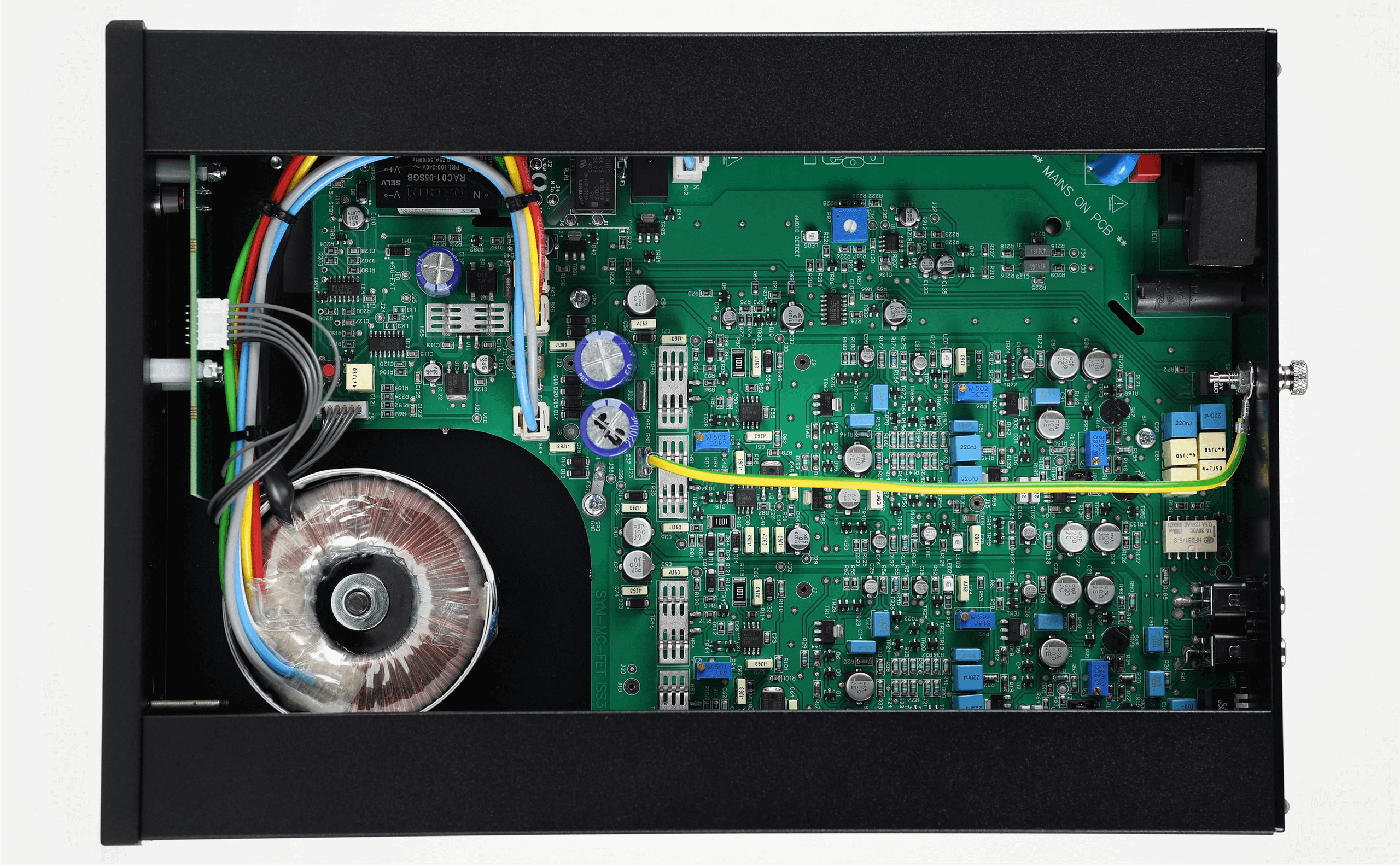
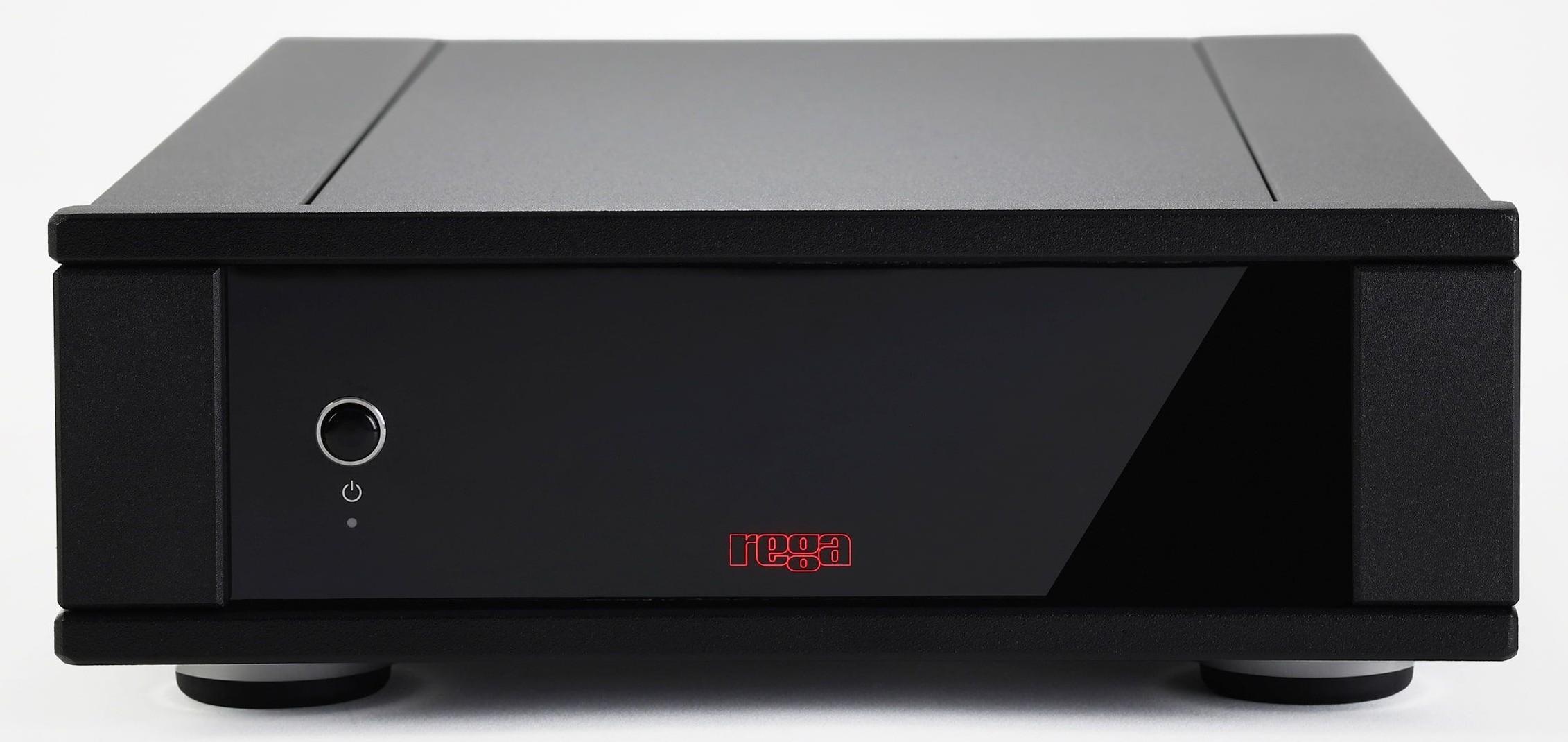
Physically, the Aos MC uses a half-width aluminium enclosure measuring 220 x 80 x 330 mm and weighing 2.9 kg. The casework isn’t just about matching Rega’s current aesthetic; aluminium also helps shield the internal circuitry from stray RFI, which is a real concern when you’re dealing with tiny phono signals.
There’s also an automatic standby mode, which drops power consumption to about 0.4 W when no signal is present. For listeners who prefer to leave their gear powered continuously, this feature can be disabled via rear-panel dip switches.
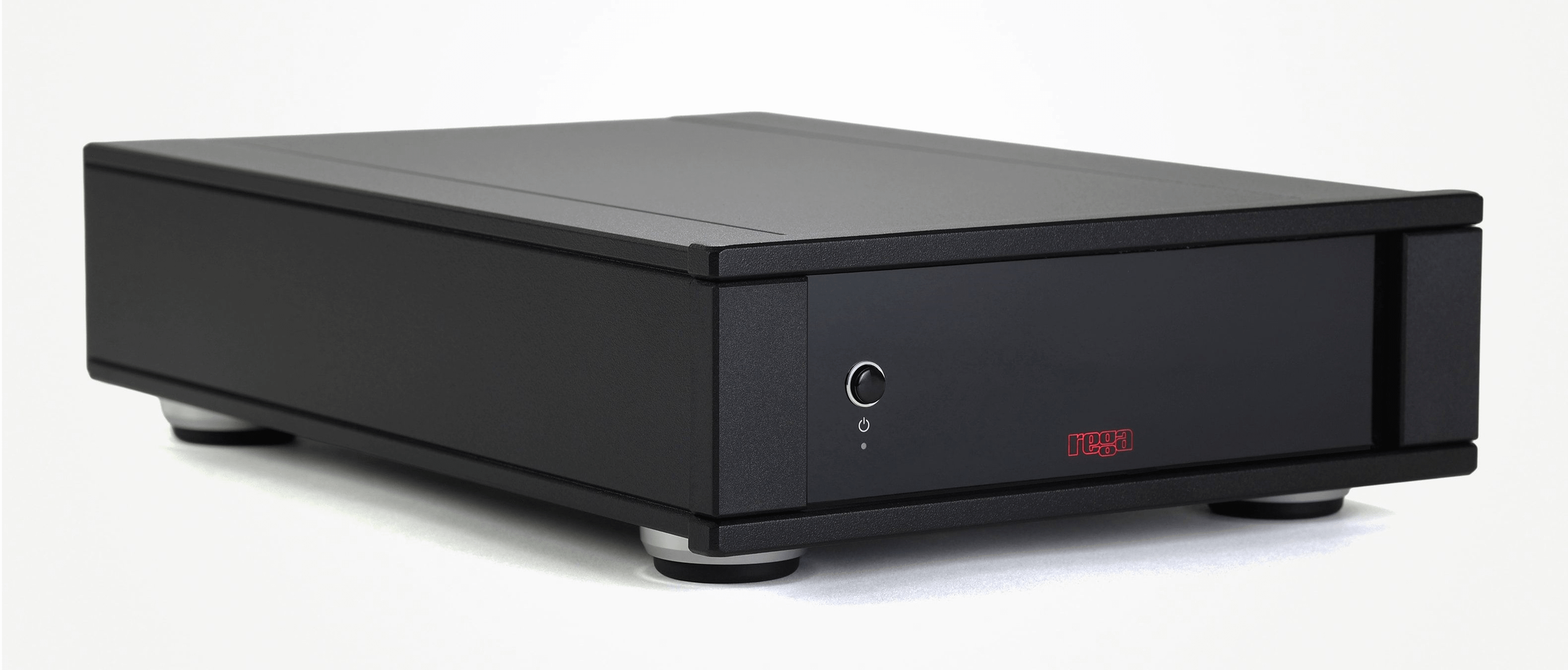
In Rega’s lineup, the Aos MC slots between the Fono MC MK4 and the Aura MC. UK pricing is set at £1,500, with export units and regional pricing rolling out through March and April. In the U.S., expectations place it around $2,500, where it will face competition from other well-spec’d MC stages from brands like Pro-Ject, Musical Fidelity, and MoFi Electronics.
The positioning is clear: the Aos MC is for listeners already using a quality moving coil cartridge who want more adjustability and refinement than entry-level stages offer, but who don’t want to jump all the way to reference pricing. It keeps things deliberately focused: no app control, no digital displays, just an all-analogue MC-only stage with Aura-inspired engineering, configurable loading, and enough gain to handle demanding cartridges.
And if you’re running a moving magnet cartridge and wondering where that leaves you, Rega has already indicated that an Aos MM version is on the way.
Related Reading:






Privacy Policy
Terms and Conditions - Affiliate Policy
Home Security
© Copyright 2008-2026.
11816 Inwood Rd #1211, Dallas, TX 75244