



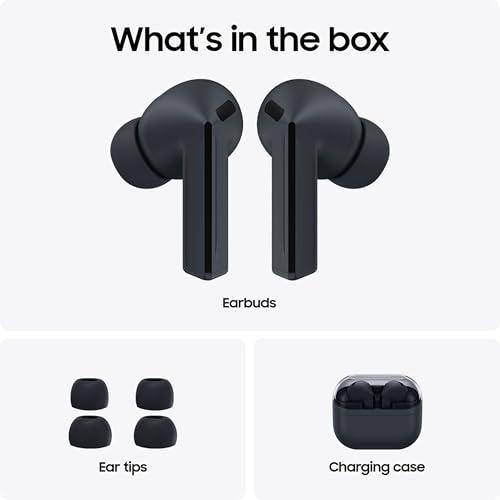
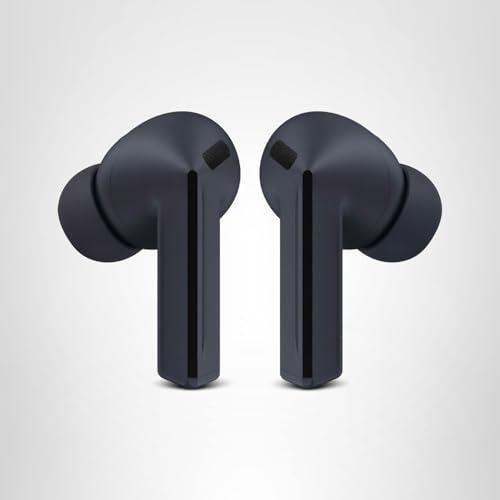
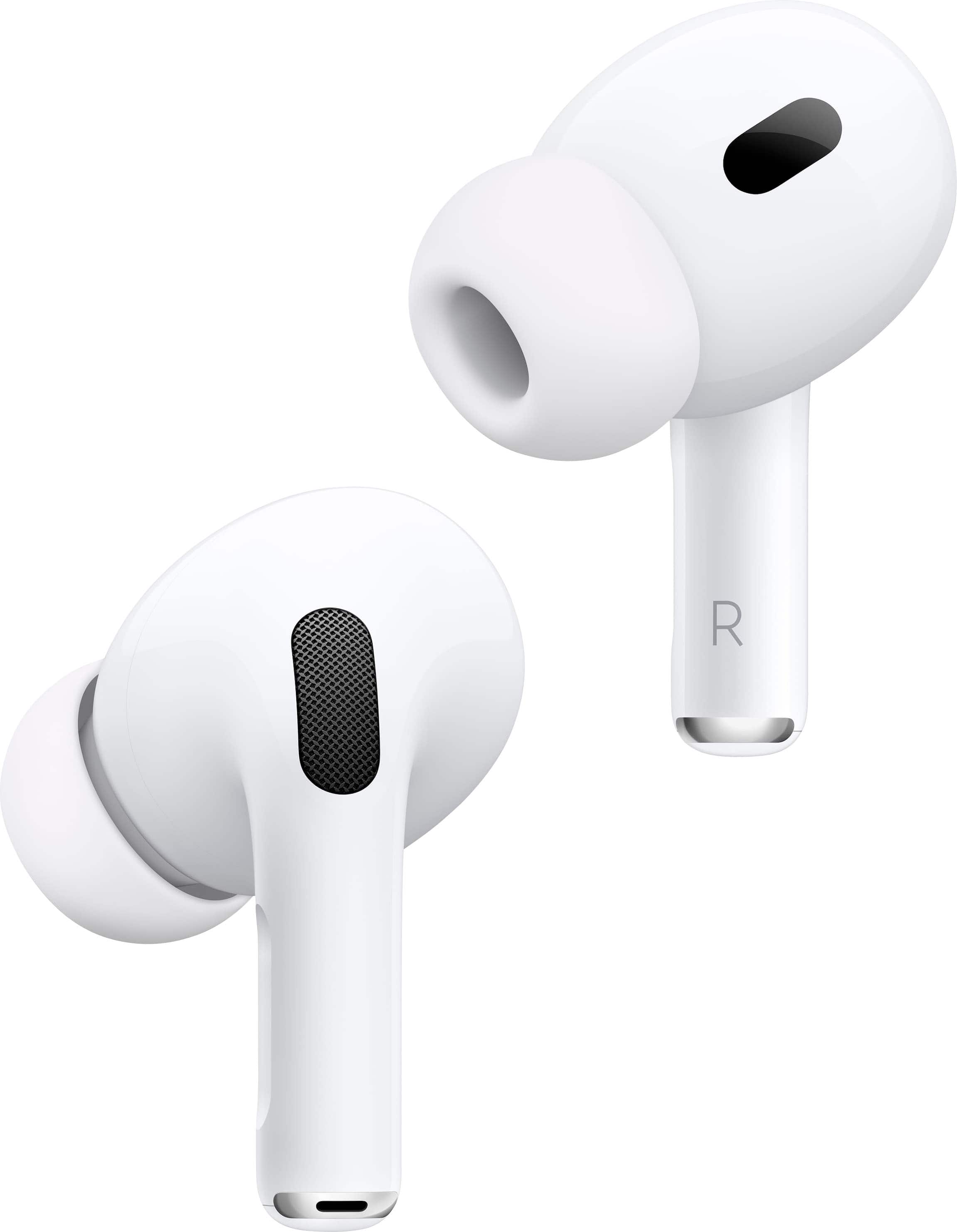
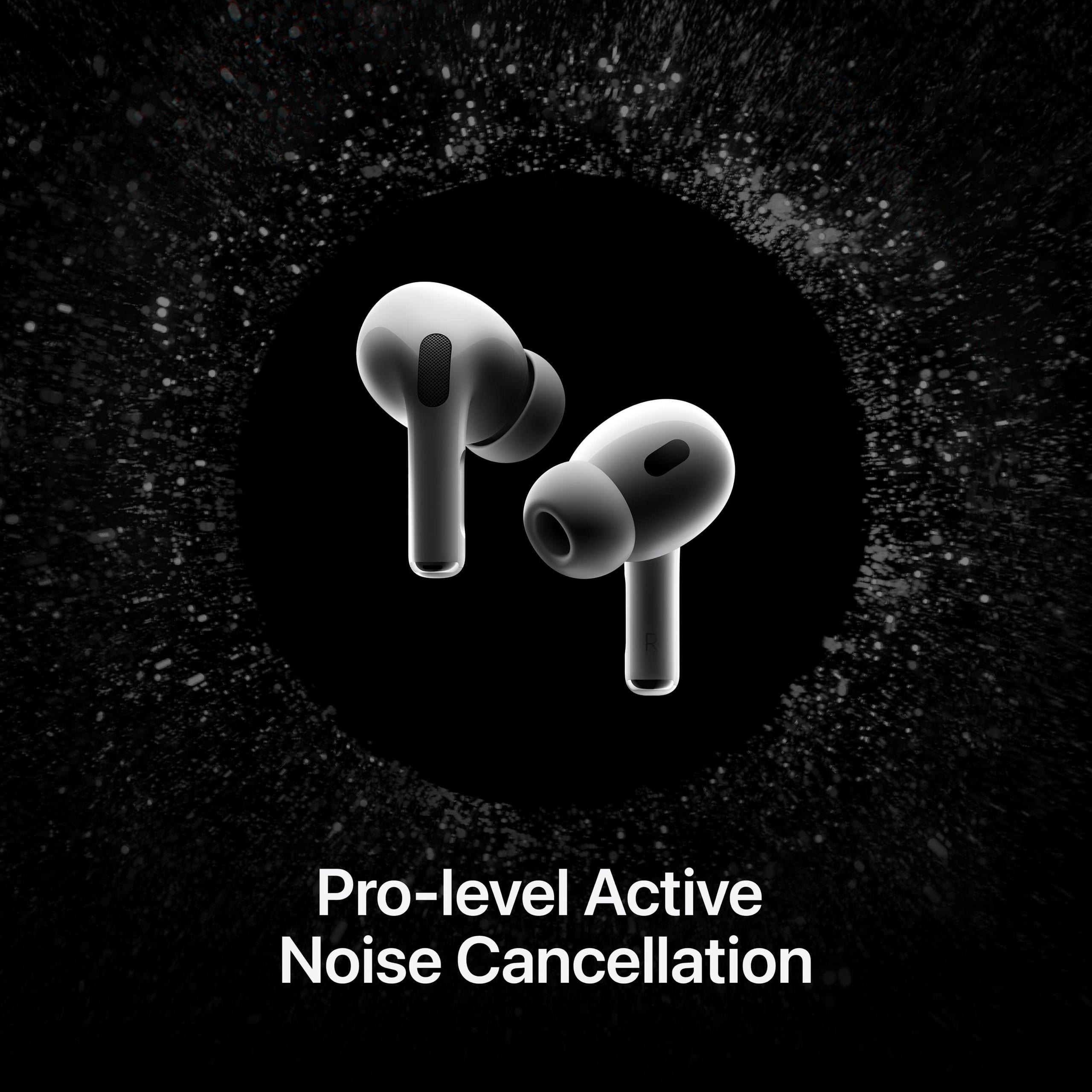
Wireless earbuds have evolved from simple Bluetooth accessories into sophisticated audio devices that can rival traditional headphones. The competition has never been fiercer, and choosing between premium options like the Samsung Galaxy Buds 3 FE and Apple AirPods Pro 2 requires understanding not just their specs, but how they actually perform in real-world scenarios.
At the time of writing, these two earbuds represent different philosophies in wireless audio design. Samsung's approach focuses on delivering premium features at a more accessible price point, while Apple emphasizes cutting-edge audio processing and health integration at a higher cost. The price difference between them—roughly $40-50—reflects these distinct strategies, but the value equation isn't as straightforward as you might expect.
Before diving into the specifics, it's worth understanding what separates good wireless earbuds from great ones. The most critical factors are audio quality, noise cancellation effectiveness, battery life, comfort, and how well they integrate with your existing devices.
Audio quality depends on several technical components working together. The driver (the tiny speaker inside each earbud) needs to accurately reproduce frequencies across the entire hearing range, from deep bass around 20Hz to crisp highs at 20,000Hz. But having good hardware is only part of the equation—the digital signal processing (DSP) that shapes the sound before it reaches your ears can make or break the listening experience.
Active noise cancellation (ANC) represents another complex engineering challenge. These systems use microphones to detect outside noise, then generate "anti-noise" sound waves that cancel out unwanted sounds before they reach your eardrums. The effectiveness varies dramatically based on the frequency of the noise, with low-frequency rumbles generally easier to cancel than higher-pitched sounds like voices.
The Samsung Galaxy Buds 3 FE launched in 2024 as Samsung's answer to users wanting flagship features without flagship prices. The "FE" designation, which stands for "Fan Edition," has become Samsung's way of delivering core premium experiences at reduced costs. These earbuds represent a significant evolution from Samsung's earlier FE offerings, addressing previous concerns about fit, sound quality, and noise cancellation.
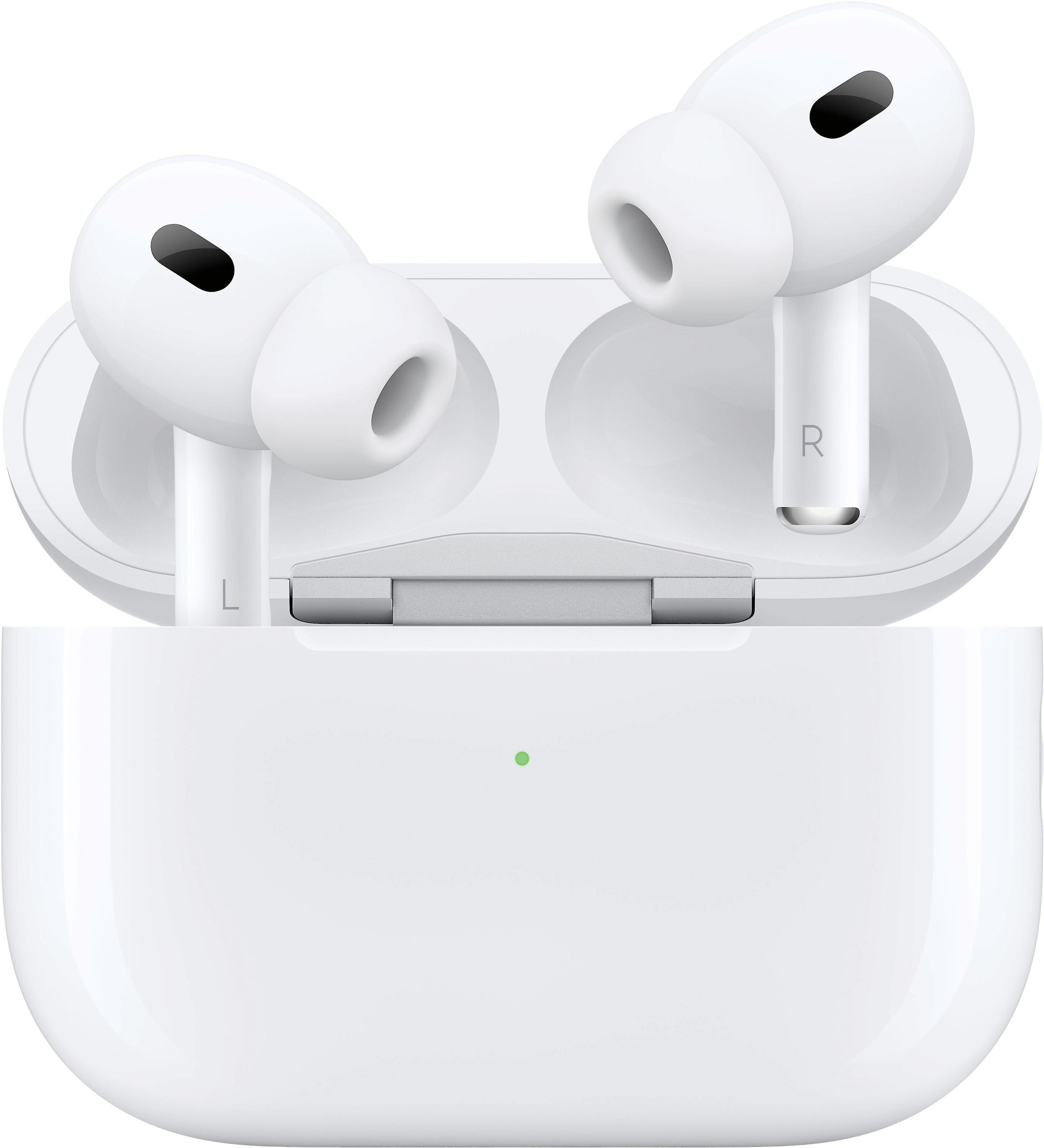
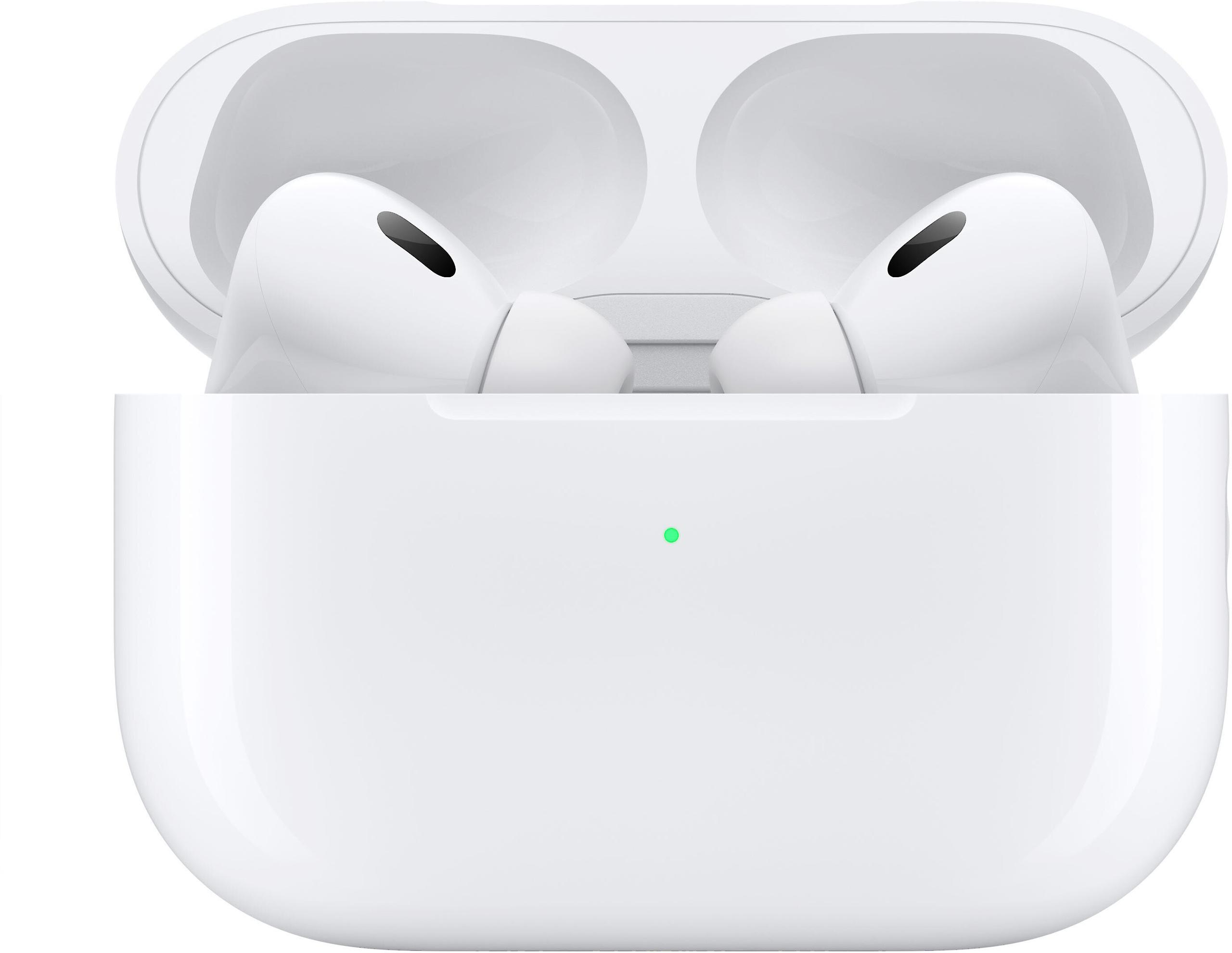
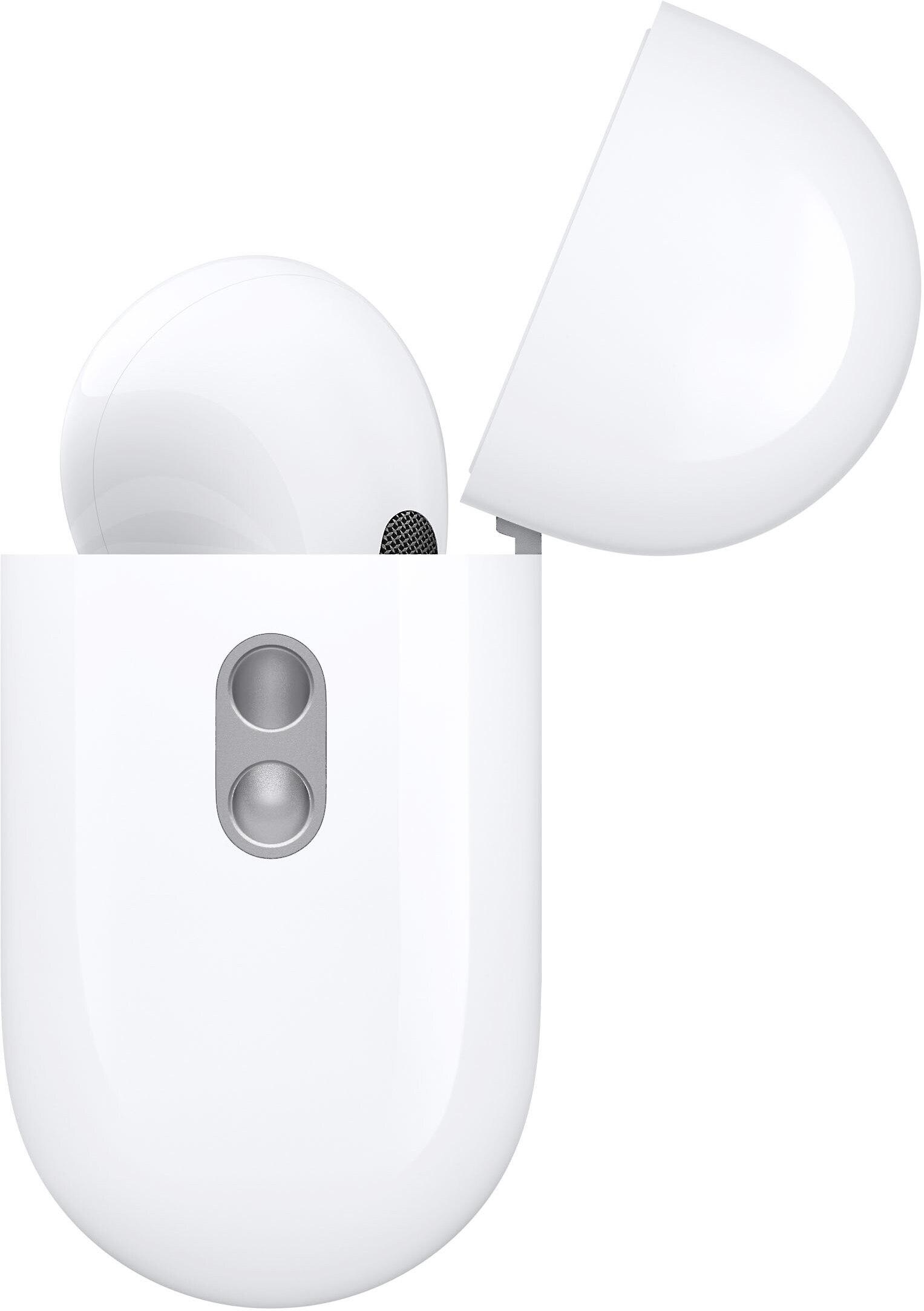
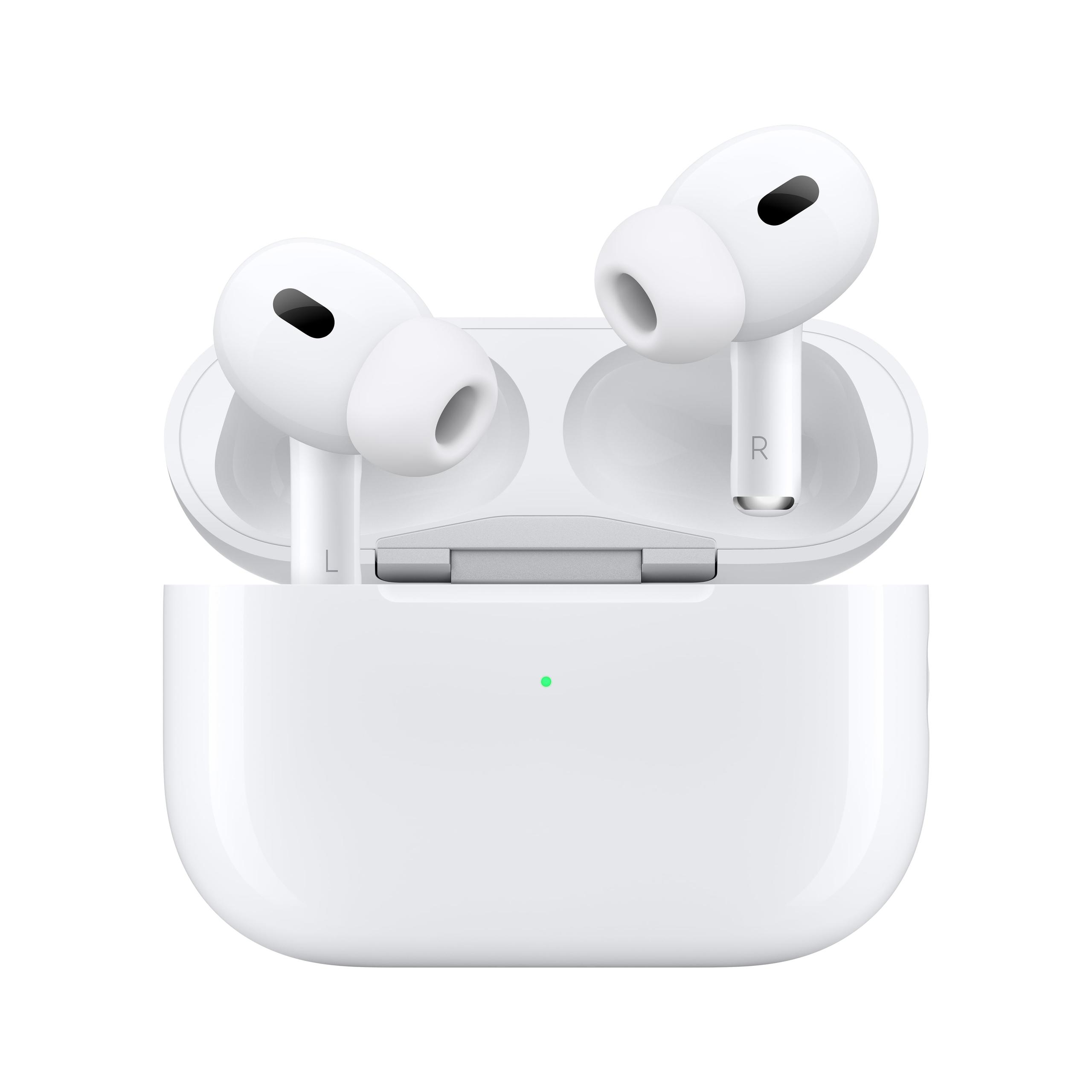
Apple's AirPods Pro 2, released in 2022, marked a major leap forward from the original AirPods Pro. The introduction of Apple's H2 chip brought substantial improvements in audio processing power, enabling features that simply weren't possible with earlier hardware. More recently, Apple has added clinical-grade hearing health features through software updates, transforming these earbuds into potential medical devices.
The timing of these releases is important. Samsung had the advantage of learning from Apple's innovations while addressing specific weaknesses in their own previous models. Meanwhile, Apple's two-year head start with the H2 chip has allowed them to refine their algorithms and add features that leverage that processing power.
When it comes to pure sound quality, both earbuds excel but take notably different approaches. The Galaxy Buds 3 FE uses a 6.5mm dynamic driver—relatively large for an earbud—paired with extensive customization options. Samsung includes six preset EQ modes (Bass boost, Treble boost, Smooth, Dynamic, Clear, and Balanced) plus a full 9-band custom equalizer that lets you fine-tune specific frequency ranges.
This customization flexibility proves particularly valuable because everyone's ears are different, and what sounds perfect to one person might seem too bright or too bass-heavy to another. The ability to adjust individual frequency bands means you can compensate for these differences or simply match the sound to your preferences.
The AirPods Pro 2 takes the opposite approach with their Adaptive EQ system. Rather than giving users manual controls, Apple's H2 chip continuously monitors what you're actually hearing through inward-facing microphones, then automatically adjusts the sound in real-time. This happens thousands of times per second, compensating for how the earbuds fit in your specific ear shape and even accounting for factors like ear wax that might affect frequency response.
From our research into professional reviews and user feedback, both approaches have merit. The Samsung system appeals to audio enthusiasts who enjoy tweaking settings and users who have specific hearing characteristics that benefit from manual adjustment. Apple's automatic system works exceptionally well for most people and eliminates the guesswork, but leaves some users wanting more control.
In terms of raw audio performance, the AirPods Pro 2 generally edge ahead in technical measurements. Professional reviewers consistently note the wider soundstage (the sense of space and instrument placement in music) and better dynamic range. However, the Galaxy Buds 3 FE delivers surprisingly refined sound quality that closely tracks professional audio targets, making them competitive with much more expensive earbuds.
Active noise cancellation represents one of the most technically challenging aspects of wireless earbuds, and it's where we see the clearest performance differences between these models. The Galaxy Buds 3 FE has earned particular praise for delivering ANC performance that actually exceeds Samsung's more expensive Buds 3 Pro—a rare case where the budget option outperforms the flagship.
Testing data shows the Galaxy Buds 3 FE achieving roughly 86% outside noise reduction when ANC is active, compared to about 66% with ANC disabled. This represents excellent performance, particularly in the upper-mid and high-frequency ranges where many competing earbuds struggle. However, the Samsung system shows some inconsistency with low-frequency noise like airplane engines or air conditioning units.
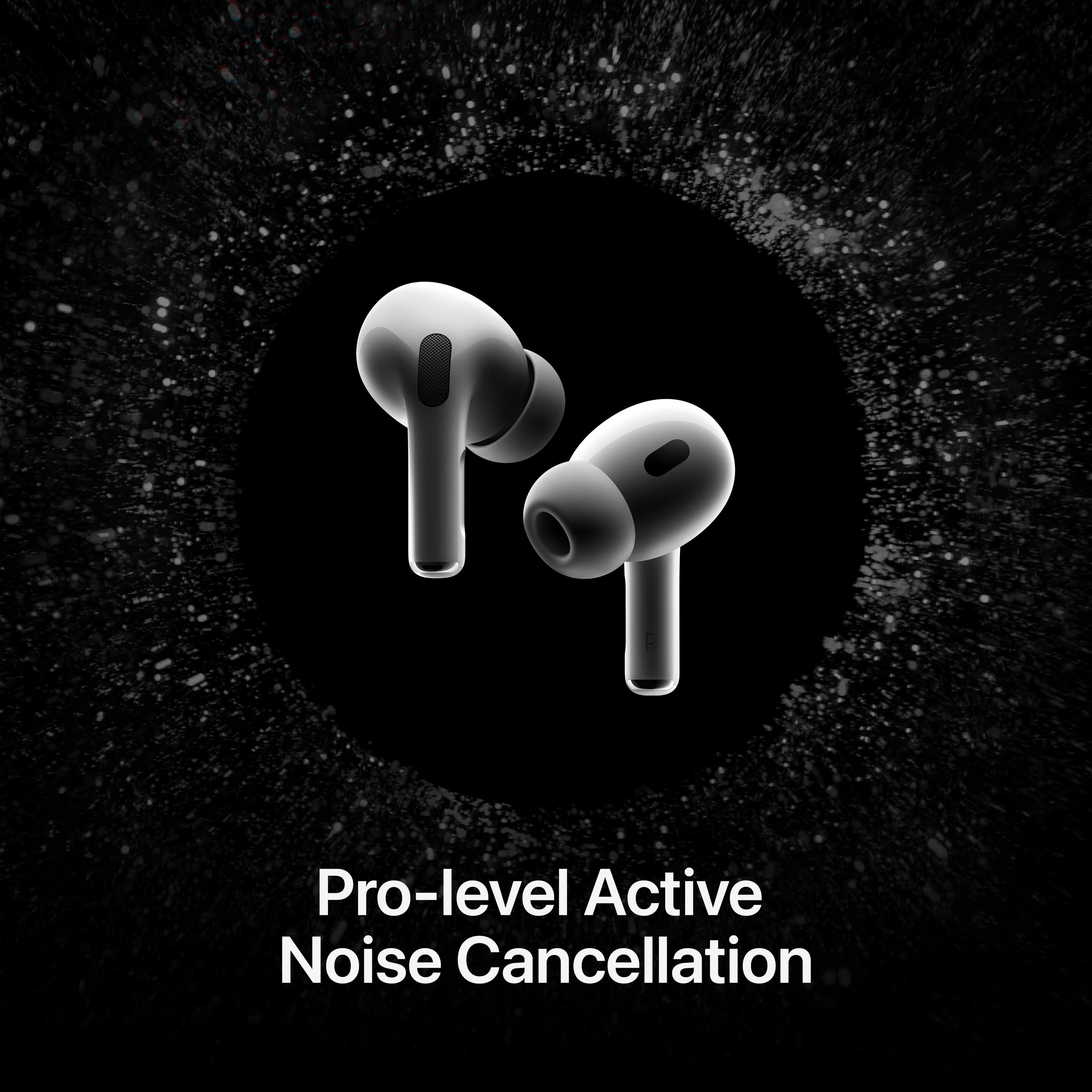
The Apple AirPods Pro 2 provides more consistent noise cancellation across all frequency ranges, achieving around 27 dB of average attenuation (noise reduction) across the spectrum. Apple's H2 chip enables more sophisticated processing, analyzing incoming noise 48,000 times per second and generating precise anti-noise signals. This results in particularly effective cancellation of steady, droning sounds that can be most fatiguing during long listening sessions.
Both earbuds include transparency modes that let you hear your surroundings when needed, but Apple's implementation feels more natural. Their Adaptive Audio feature dynamically blends noise cancellation with transparency based on your environment, automatically reducing harsh sounds like construction noise while still allowing you to hear important sounds like conversations or traffic.
For home theater use, both earbuds' noise cancellation can actually enhance the experience by eliminating background noise from HVAC systems, appliances, or outside traffic. This creates a cleaner audio environment for dialogue and subtle sound effects, though the effect varies significantly based on your specific home environment.
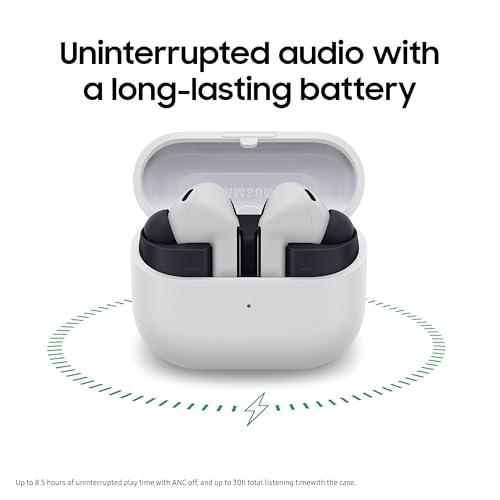
Battery performance represents the most clear-cut advantage for the Samsung Galaxy Buds 3 FE. With ANC disabled, they deliver 8.5 hours of continuous playback per charge, extending to 30 hours total when including the charging case. Even with ANC enabled—which typically reduces battery life significantly—they still manage 6 hours per charge and 24 hours total.
The Apple AirPods Pro 2 provides 6 hours of listening time per charge with ANC enabled, totaling 30 hours with the case. While the total capacity matches Samsung's ANC-enabled performance, the shorter single-charge duration means more frequent charging interruptions throughout the day.
This difference matters more than the raw numbers suggest. If you regularly have long work days, flights, or extended listening sessions, that extra 2.5 hours from the Galaxy Buds 3 FE can mean the difference between making it through your day and needing to find a charging opportunity mid-afternoon.
Both earbuds support fast charging, providing roughly an hour of playback from a 5-minute charge, which helps mitigate battery anxiety. However, the Samsung model's longer single-charge duration reduces how often you'll need to rely on quick charging.
Comfort becomes increasingly important as wireless earbuds replace wired headphones for extended listening. Both models use in-ear designs with silicone tips, but their approaches differ in important ways.
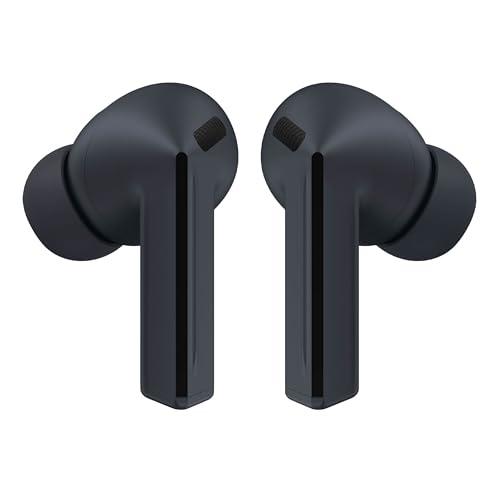
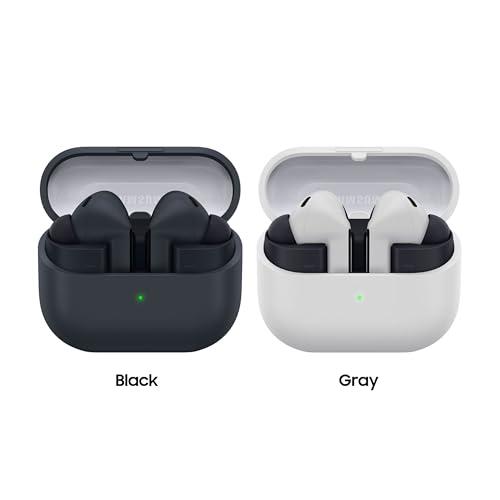
The Galaxy Buds 3 FE features Samsung's distinctive "blade" design with a canal-type fit using sealed silicone tips in three sizes. This design addresses fit issues that plagued Samsung's standard Buds 3, providing better passive noise isolation and more secure placement. The sealed design also improves bass response compared to open-style earbuds.
Apple provides four tip sizes (XS, S, M, L) with their AirPods Pro 2, covering a wider range of ear sizes. Their advanced vent system helps equalize pressure, reducing the "plugged" feeling that some users experience with sealed earbuds. Both models weigh around 5 grams per earbud, making them suitable for extended wear.
The fit testing built into each company's app helps ensure optimal performance. Proper fit affects both sound quality and noise cancellation effectiveness, making this feature more important than it might initially seem.
Modern wireless earbuds increasingly serve as gateways to digital assistants and smart features, and this is where the philosophical differences between Samsung and Apple become most apparent.
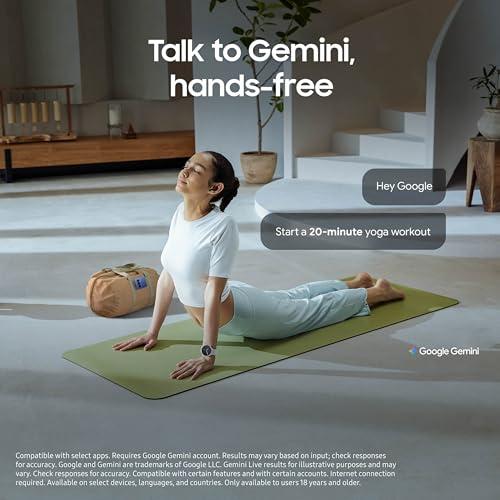
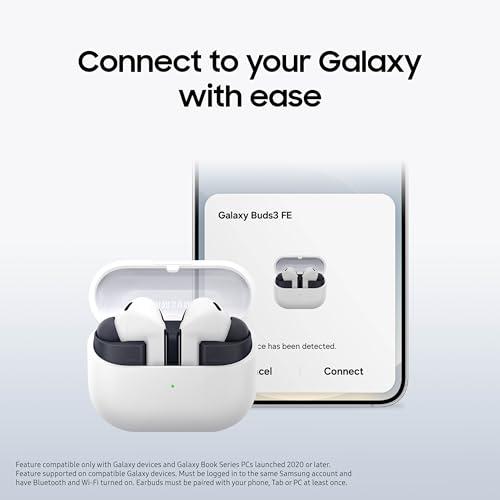
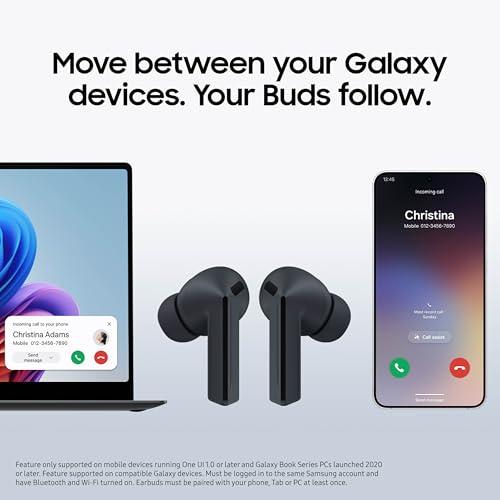
The Samsung Galaxy Buds 3 FE integrates deeply with Samsung's Galaxy ecosystem, offering features like Auto Switch that seamlessly moves your audio connection between Galaxy phones, tablets, and laptops. The Galaxy AI integration includes real-time translation through Samsung's Interpreter app—genuinely useful for travelers or multilingual households. However, these premium features require Samsung devices to function fully.
Apple's AirPods Pro 2 works across the entire Apple ecosystem, switching automatically between iPhones, iPads, Macs, Apple TVs, and even the Vision Pro headset. But their most distinctive feature is Personalized Spatial Audio with dynamic head tracking. This technology creates a three-dimensional soundstage that moves with your head, providing an almost speaker-like listening experience that's particularly effective for movies and immersive content.
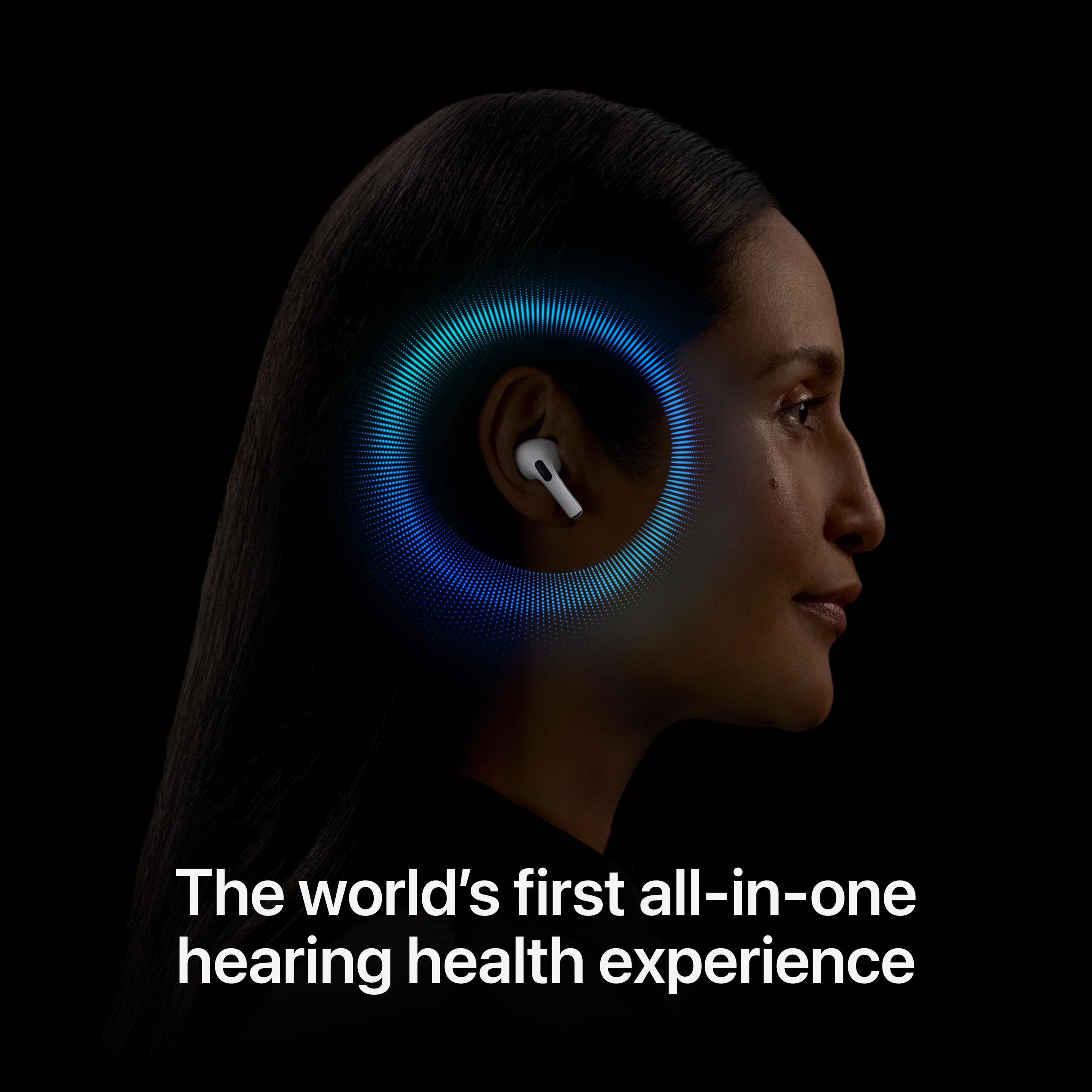
Perhaps more significantly, Apple has transformed the AirPods Pro 2 into a potential medical device through software updates. The built-in hearing test meets clinical standards, while the hearing aid functionality can amplify specific frequencies for users with hearing loss. These features represent a genuine innovation in consumer audio devices.
After extensive research into professional reviews, user feedback, and technical specifications, both earbuds represent excellent values in their respective categories, but they serve different user needs.
Choose the Samsung Galaxy Buds 3 FE if you prioritize battery life, audio customization, and value. The 8.5-hour single-charge battery life addresses one of the most common complaints about wireless earbuds, while the extensive EQ options let you fine-tune the sound to your exact preferences. At the time of writing, they offer flagship-level performance at a more accessible price point, making them particularly appealing for Samsung device users who want deep ecosystem integration.
The Apple AirPods Pro 2 justifies their premium positioning through superior audio processing, more consistent noise cancellation, and unique health features. The H2 chip enables capabilities that simply aren't available elsewhere, particularly the clinical-grade hearing features that could provide genuine medical value for some users. The broader Apple ecosystem integration makes them the clear choice for users invested in multiple Apple devices.
For home theater use, both earbuds can enhance the experience by eliminating background noise and providing clear dialogue reproduction. However, the AirPods Pro 2's Spatial Audio with head tracking creates a more immersive experience when watching movies on compatible Apple devices.
The decision ultimately comes down to your specific priorities and device ecosystem. If you want the longest battery life, extensive customization options, and strong value, the Samsung Galaxy Buds 3 FE delivers. If you prioritize cutting-edge audio processing, health features, and seamless Apple integration, the AirPods Pro 2 represents the current state of the art in wireless earbuds, despite the higher cost.
Both represent significant achievements in wireless audio technology, just optimized for different user priorities and budgets. At the time of writing, either choice will serve most users well—the key is matching the earbuds' strengths to your specific needs and usage patterns.
| Samsung Galaxy Buds 3 FE | Apple AirPods Pro 2 |
|---|---|
| Battery Life - Single Charge - Critical for all-day use without interruption | |
| 8.5 hours (ANC off), 6 hours (ANC on) | 6 hours (ANC on), 4.5 hours talk time |
| Total Battery Life with Case - Determines how many days between charging | |
| 30 hours (ANC off), 24 hours (ANC on) | 30 hours with ANC enabled |
| Active Noise Cancellation - Essential for blocking distracting background noise | |
| Class-leading performance, 86% noise reduction, excels in upper frequencies | 2x better than previous generation, consistent across all frequencies |
| Audio Customization - Important for personalizing sound to your preferences | |
| 6 EQ presets + custom 9-band equalizer | Automatic Adaptive EQ only, no manual controls |
| Audio Processing Power - Affects overall sound quality and smart features | |
| Standard Bluetooth processing with Samsung Seamless Codec | H2 chip with advanced real-time audio processing |
| Smart Audio Features - Adds immersive listening experiences | |
| Galaxy AI integration, real-time translation | Personalized Spatial Audio with dynamic head tracking |
| Health Features - Potential medical and wellness benefits | |
| Basic hearing protection through ANC | Clinical-grade hearing test and hearing aid functionality |
| Ecosystem Integration - Seamless switching between your devices | |
| Auto Switch across Samsung Galaxy devices only | Works across all Apple devices (iPhone, iPad, Mac, Apple TV, Vision Pro) |
| Water Resistance - Protection during workouts and weather | |
| IP54 (earbuds only) - dust and splash resistant | IP54 (earbuds only) - dust and splash resistant |
| Charging Options - Convenience and compatibility | |
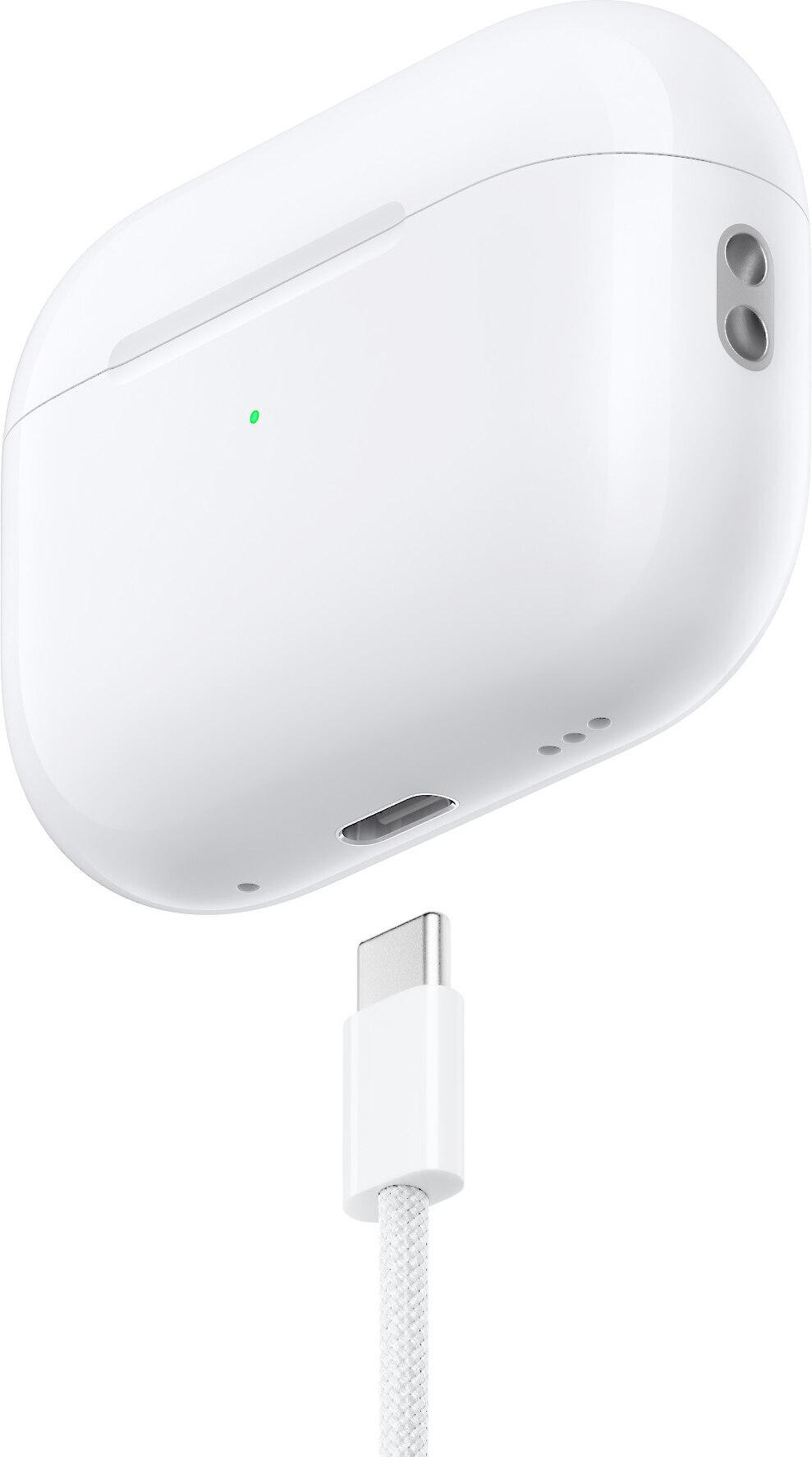
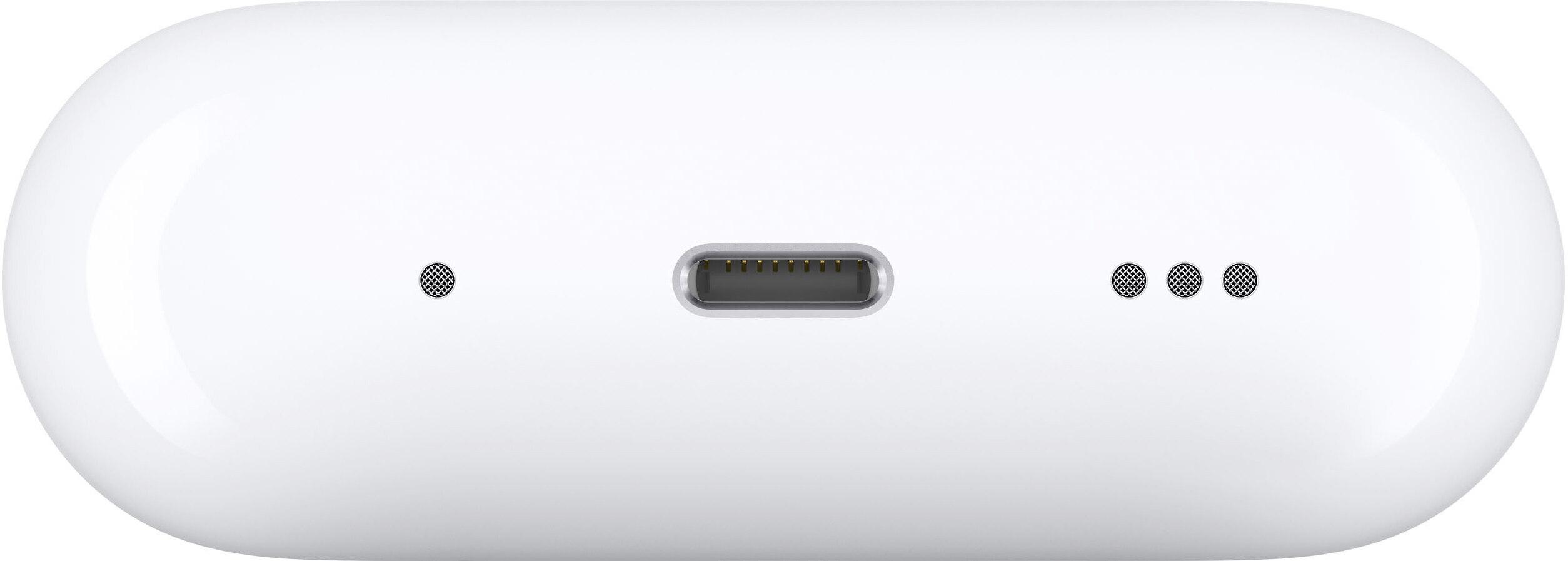
| USB-C only, no wireless charging | USB-C, MagSafe, Qi wireless charging, Apple Watch charger |
| Microphone Count - Affects call quality and noise cancellation | |
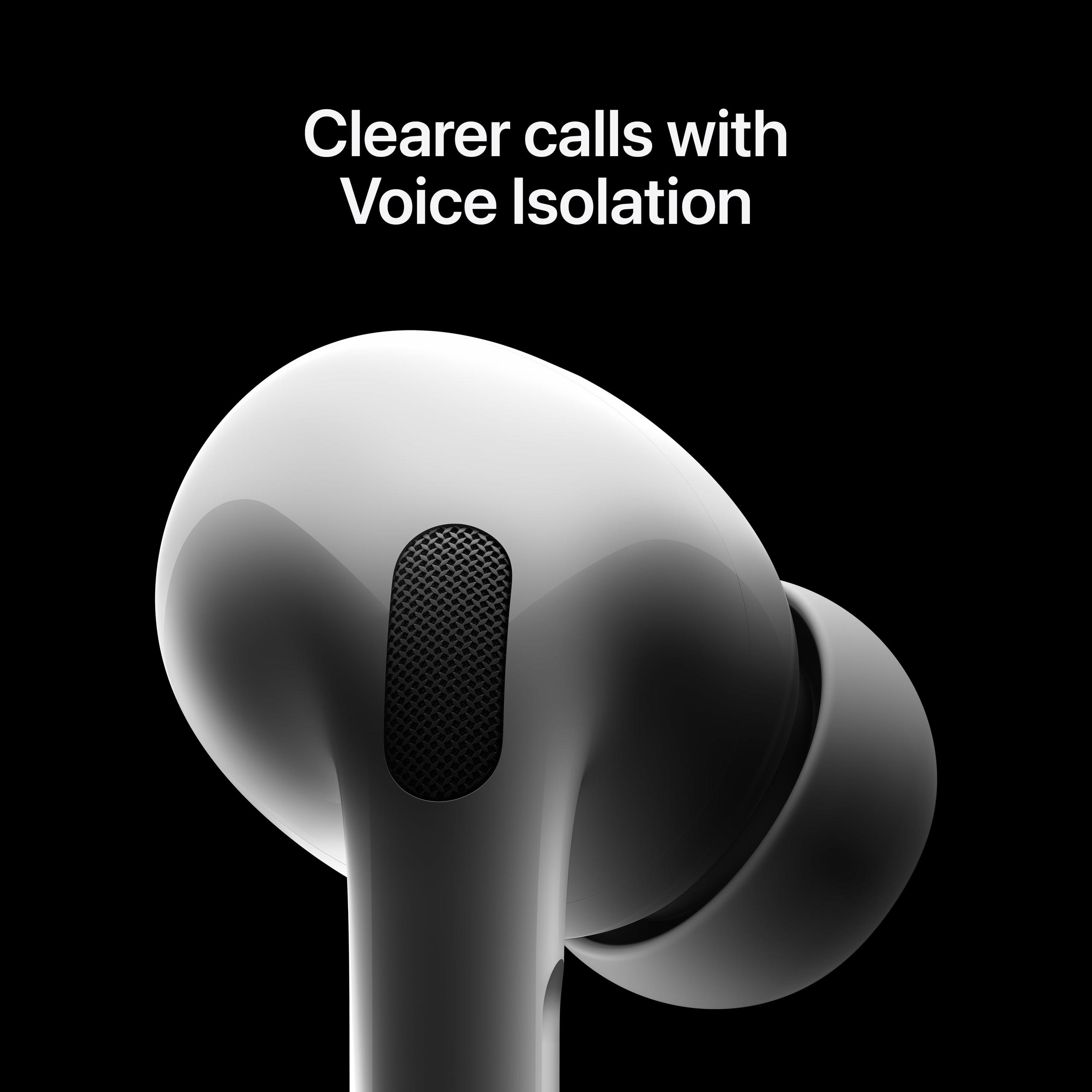
| 6 microphones with Crystal Clear Call technology | 4 microphones with Voice Isolation |
| Weight per Earbud - Comfort during extended wear | |
| 5g each | 5.3g each |
| Driver Size - Affects bass response and overall sound power | |
| 6.5mm dynamic driver | Custom high-excursion Apple driver (size not specified) |
| Bluetooth Version - Connection stability and power efficiency | |
| Bluetooth 5.4 | Bluetooth 5.3 |
| Value Positioning - Best suited for different budgets and priorities | |
| Premium features at budget-friendly price, excellent for Samsung users | Premium positioning justified by advanced processing and health features |
The Samsung Galaxy Buds 3 FE offer significantly better single-charge battery life with 8.5 hours of playback (ANC off) compared to 6 hours from the Apple AirPods Pro 2. With the charging case, both provide around 30 hours total, but the Samsung Galaxy Buds 3 FE require fewer charging breaks throughout the day.
The Apple AirPods Pro 2 provide more consistent active noise cancellation across all frequency ranges, thanks to their H2 chip processing. While the Samsung Galaxy Buds 3 FE deliver excellent ANC performance that even outperforms Samsung's more expensive models, the AirPods Pro 2 handle low-frequency noise like airplane engines more effectively.
Both earbuds deliver excellent sound quality but take different approaches. The Samsung Galaxy Buds 3 FE offer extensive customization with 6 EQ presets and a 9-band custom equalizer, while the Apple AirPods Pro 2 use automatic Adaptive EQ that adjusts sound in real-time. The AirPods Pro 2 generally provide wider soundstage and better technical performance.
Yes, the Samsung Galaxy Buds 3 FE work with iPhone through standard Bluetooth connection. However, you'll miss out on advanced features like Galaxy AI integration and Auto Switch, which require Samsung devices. The Apple AirPods Pro 2 naturally offer deeper integration with iPhone and other Apple devices.
Both the Samsung Galaxy Buds 3 FE and Apple AirPods Pro 2 weigh around 5 grams each and offer multiple ear tip sizes for secure fit. The Galaxy Buds 3 FE use a canal-type sealed design, while the AirPods Pro 2 feature an advanced vent system to reduce pressure buildup during extended wear.
The Apple AirPods Pro 2 can connect to Android phones via Bluetooth, but you'll lose many premium features like Spatial Audio, automatic device switching, and the hearing health features. Android users get better value and functionality from the Samsung Galaxy Buds 3 FE, especially those with Samsung devices.
The Samsung Galaxy Buds 3 FE feature 6 microphones with Crystal Clear Call technology and enhanced background noise reduction. The Apple AirPods Pro 2 use 4 microphones with Voice Isolation. Both deliver clear call quality, but the Galaxy Buds 3 FE show particular improvement in noisy environments compared to previous Samsung models.
Both the Samsung Galaxy Buds 3 FE and Apple AirPods Pro 2 feature IP54 water resistance, making them suitable for workouts and light rain. The secure fit designs of both models help prevent them from falling out during exercise, though individual ear shape compatibility varies.
The Samsung Galaxy Buds 3 FE provide exceptional value by delivering premium features like excellent ANC and long battery life at a lower price point. The Apple AirPods Pro 2 cost more but justify the premium with advanced H2 chip processing, health features, and superior ecosystem integration for Apple users.
Both earbuds work well for entertainment, but the Apple AirPods Pro 2 offer a significant advantage with Personalized Spatial Audio and dynamic head tracking, creating an immersive surround-sound experience. The Samsung Galaxy Buds 3 FE provide good audio quality for movies but lack advanced spatial audio features.
The Apple AirPods Pro 2 include more advanced smart features like clinical-grade hearing tests, hearing aid functionality, and Spatial Audio. The Samsung Galaxy Buds 3 FE offer Galaxy AI integration with real-time translation and Auto Switch between Samsung devices, but these premium features require compatible Samsung hardware.
Choose the Samsung Galaxy Buds 3 FE if you prioritize battery life, audio customization, and value, especially if you use Samsung devices. Select the Apple AirPods Pro 2 if you want the most advanced audio processing, health features, and seamless Apple ecosystem integration, and don't mind paying more for cutting-edge technology.
We've done our best to create useful and informative comparisons to help you decide what product to buy. Our research uses advanced automated methods to create this comparison and perfection is not possible - please contact us for corrections or questions. These are the sites we've researched in the creation of this article: soundguys.com - samsungmobilepress.com - hitechcentury.com - samsung.com - loudnwireless.com - samsung.com - scarbir.com - samsung.com - complyfoam.com - youtube.com - samsung.com - bestbuy.com - architeg-prints.com - samsung.com - recordingnow.com - apple.com - apple.com - cnet.com - hearingreview.com - target.com - support.apple.com - costco.com - cnet.com - quill.com

Privacy Policy
Terms and Conditions - Affiliate Policy
Home Security
© Copyright 2008-2026.
11816 Inwood Rd #1211, Dallas, TX 75244