

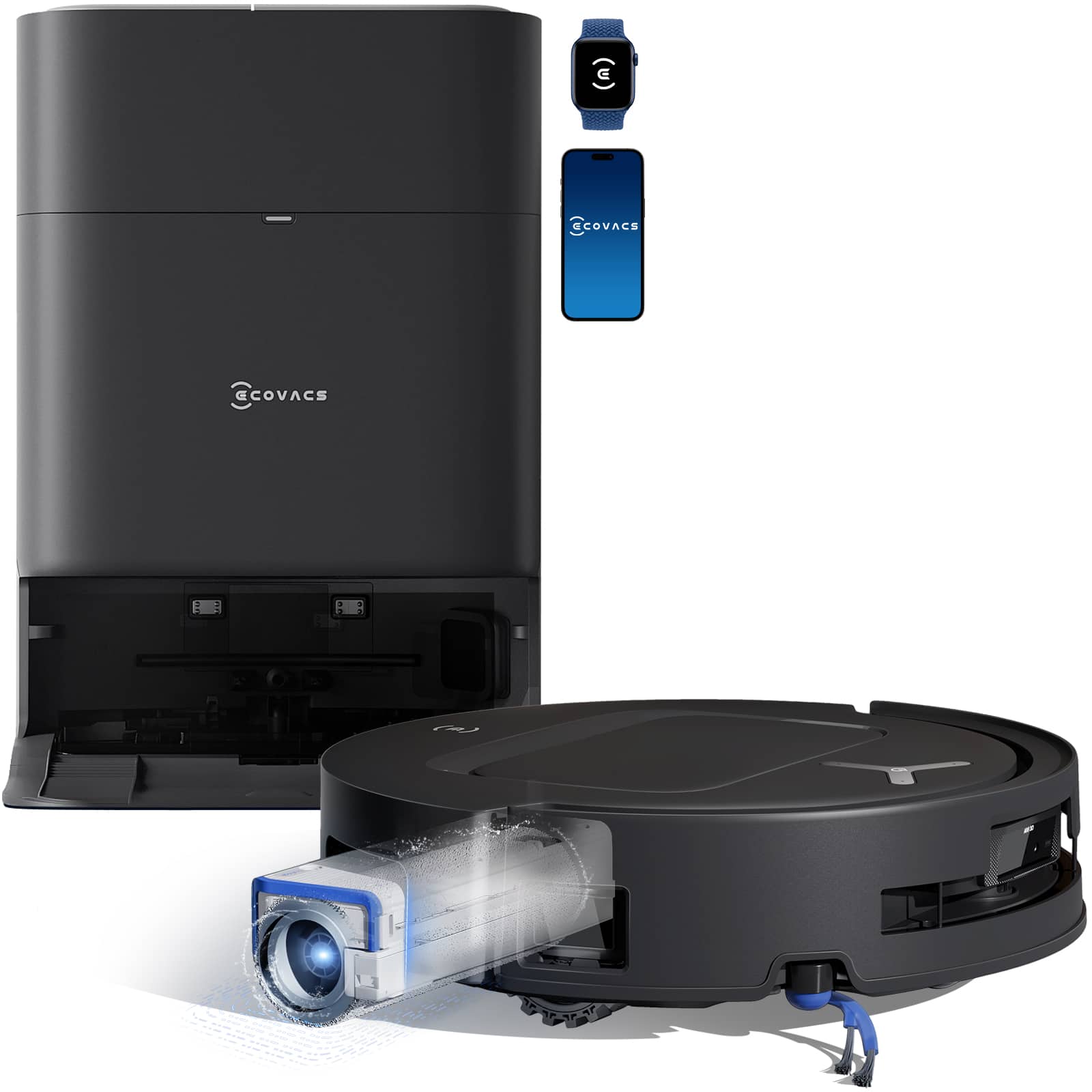




If you've been watching the robot vacuum market evolve, 2024 has been an exciting year. Two standout models have captured attention: the ECOVACS Deebot T80 Omni and the Roborock Qrevo Curv. Both promise to handle your floors with minimal intervention, but they take surprisingly different approaches to get there.
After diving deep into expert reviews and user feedback, it's clear these aren't just incremental upgrades—they represent two distinct philosophies about how robot cleaning should work. Let's break down what makes each unique and help you figure out which fits your home better.
Before we compare specifics, it's worth understanding what sets premium robot vacuum-mops apart from basic models. These aren't just stronger vacuums with a wet cloth attached—they're sophisticated cleaning systems designed to replace most of your floor cleaning routine.
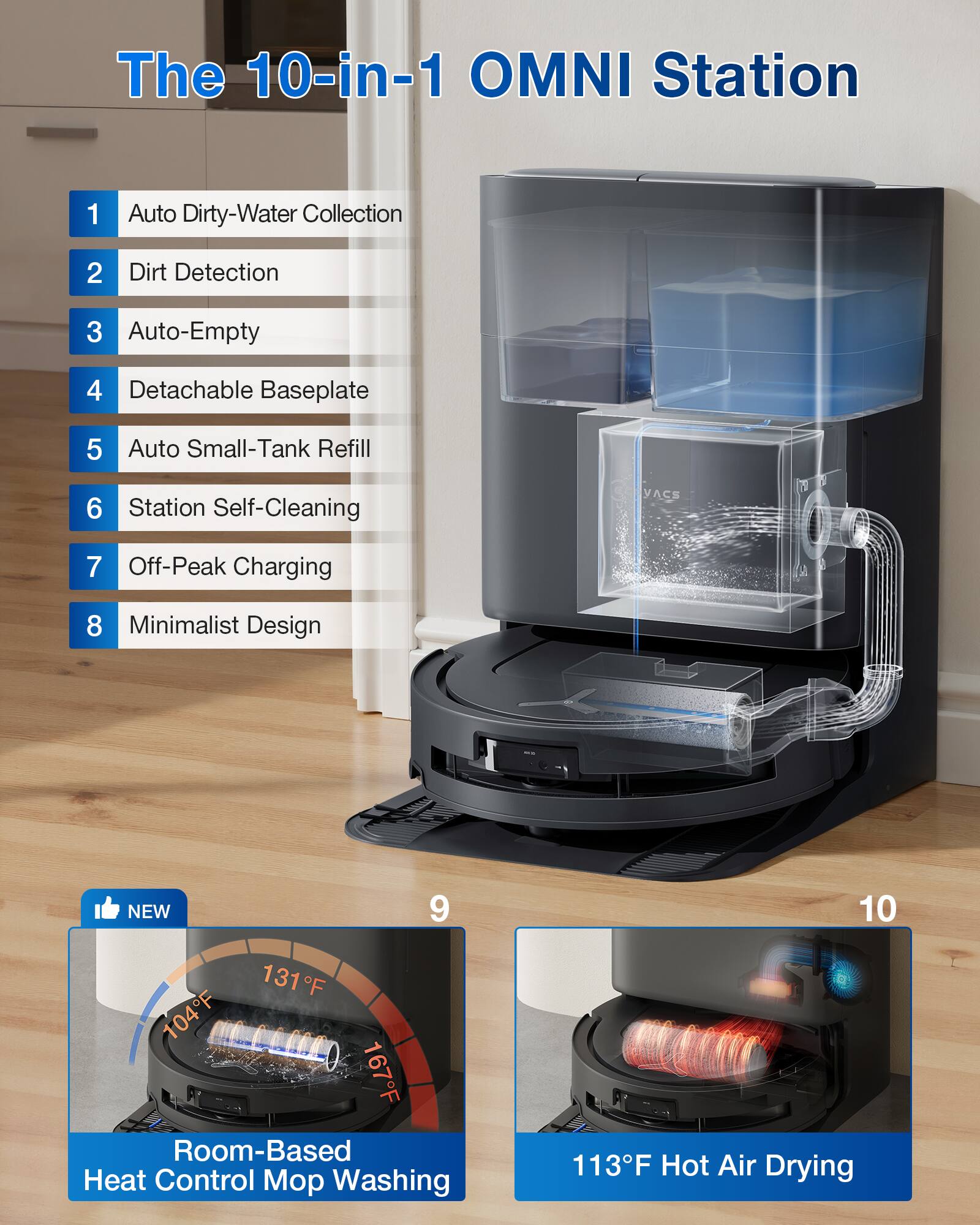
The key difference lies in their base stations, often called "omni stations" or "multifunctional docks." These aren't simple charging pads; they're mini cleaning facilities that automatically empty dust, refill water tanks, wash mop pads, and even dry everything with heated air. Think of them as automated cleaning assistants that handle the messy maintenance work you'd normally do manually.
When evaluating these premium models, performance comes down to several critical factors: how well they actually clean (both vacuuming and mopping), how effectively they navigate your home without getting stuck, and crucially, how much daily maintenance they eliminate. At the time of writing, both the T80 Omni and Qrevo Curv command premium prices that reflect their advanced capabilities, but their value propositions differ significantly.
Here's where things get interesting—and where the biggest practical difference emerges between these two models. The ECOVACS T80 Omni and Roborock Qrevo Curv approach mopping in fundamentally different ways, and this choice impacts everything from cleaning effectiveness to daily operation.
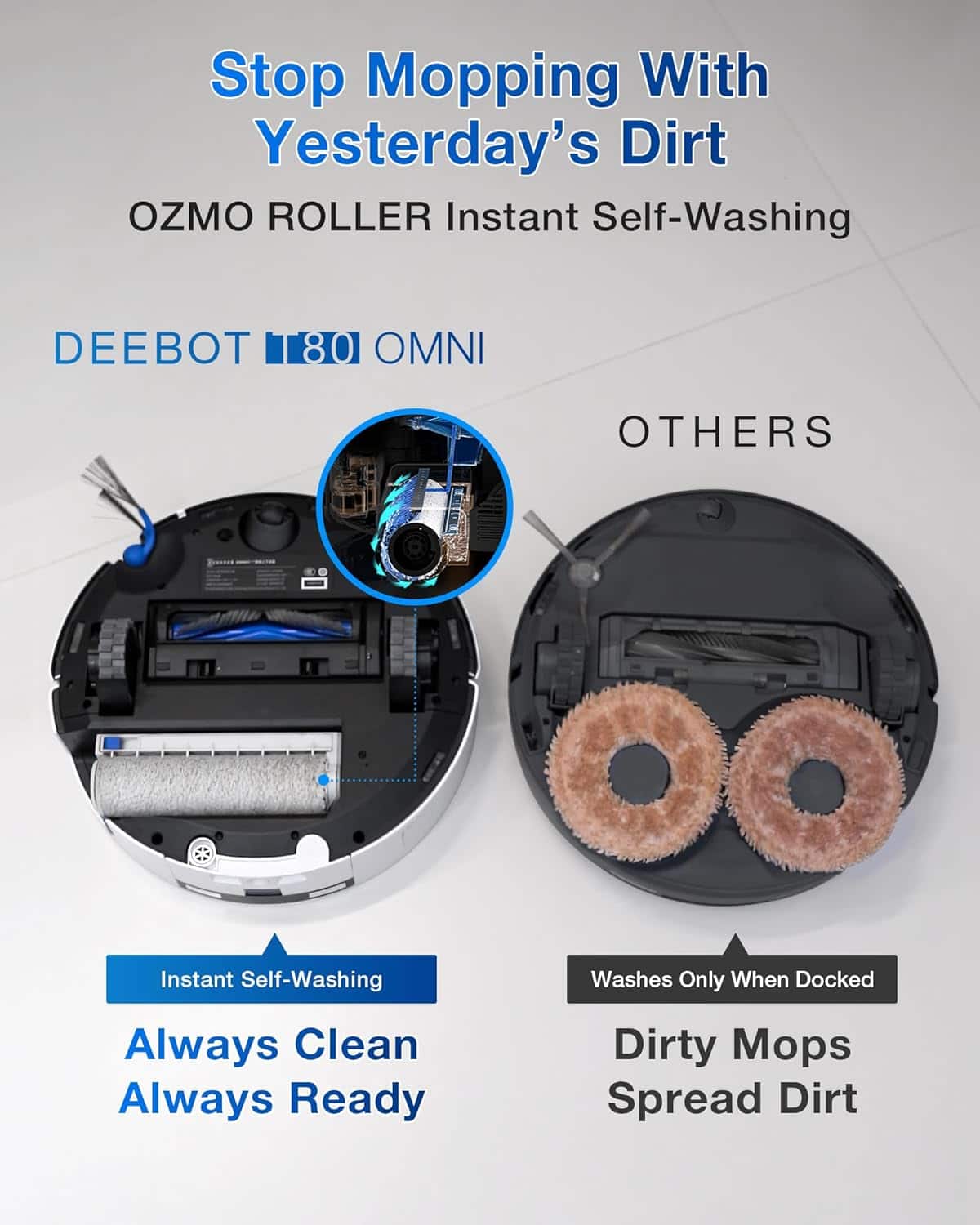
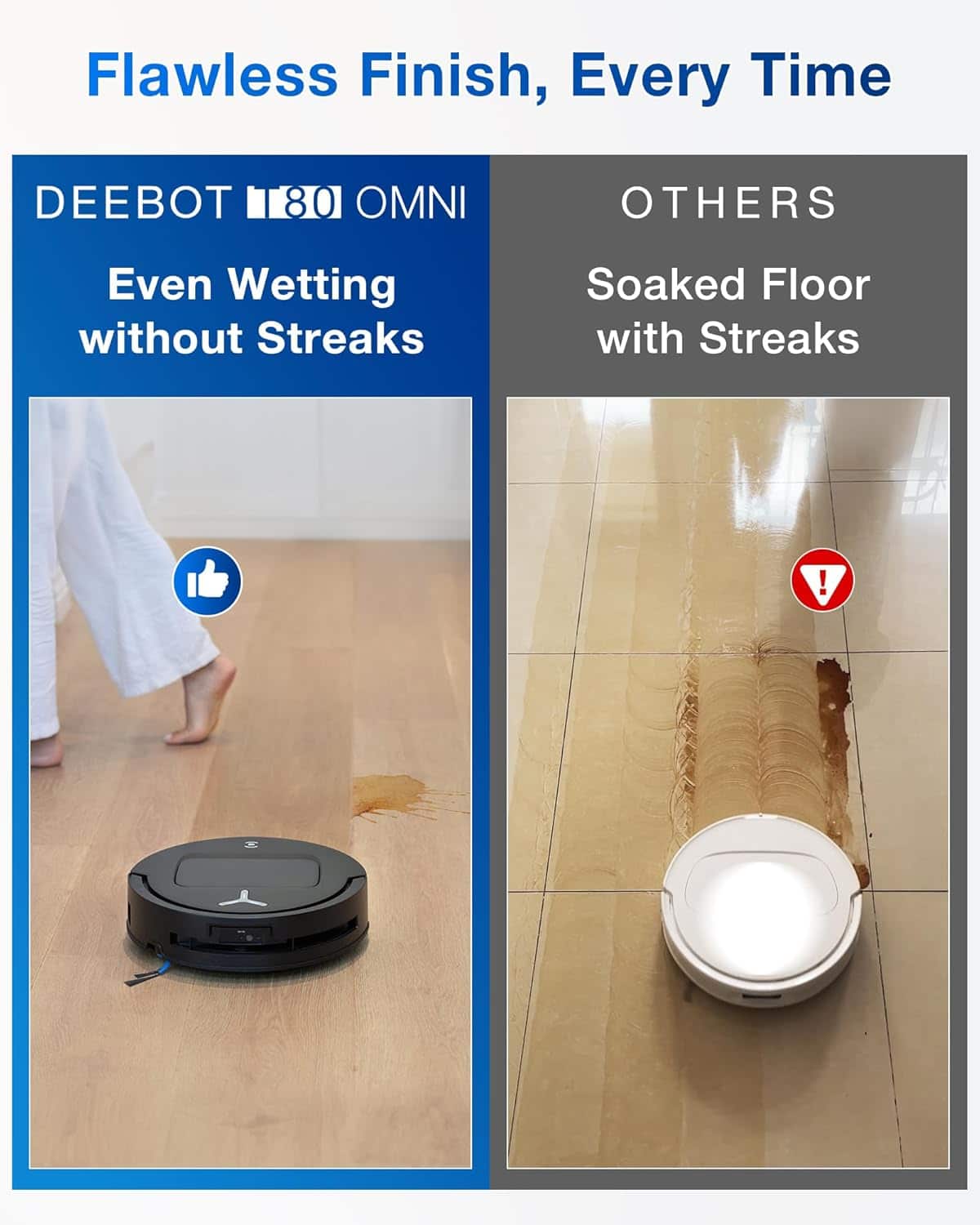
The T80 Omni uses what ECOVACS calls the OZMO roller system. Instead of traditional spinning pads, it features a continuous roller that spins at 200 RPM while applying 3,700 Pa of downward pressure—that's over 16 times more pressure than typical vibrating mop systems. Here's the clever part: clean water continuously feeds the roller from an onboard 110ml tank, while dirty water gets scraped off and collected in a separate 90ml tank. This means the roller stays clean throughout the entire cleaning cycle, preventing the common problem of just pushing dirty water around your floors.
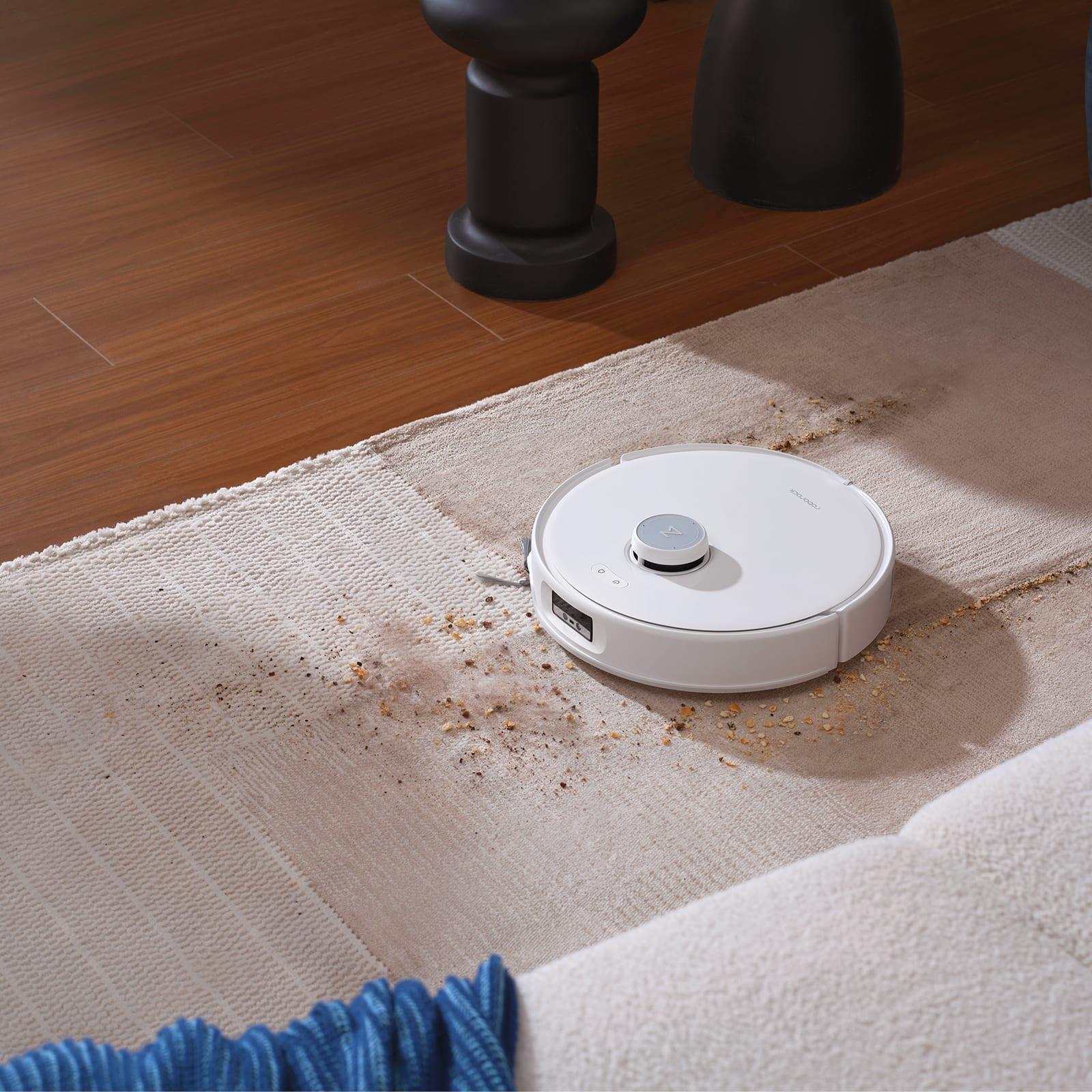
The Qrevo Curv, meanwhile, sticks with dual rotating mop pads that periodically return to the base station for washing during cleaning cycles. When the robot detects heavy soiling or after cleaning a certain area, it automatically returns to its dock, washes the pads with hot water up to 75°C (167°F), and continues cleaning.
From our research into user experiences, the practical difference is significant. The T80 Omni's approach means more consistent mopping throughout the cleaning cycle and less water waste overall. Users report better results on moderately soiled floors without the interruption of dock returns. However, the Qrevo Curv's system handles heavily soiled areas better because it can completely refresh its cleaning pads when needed.
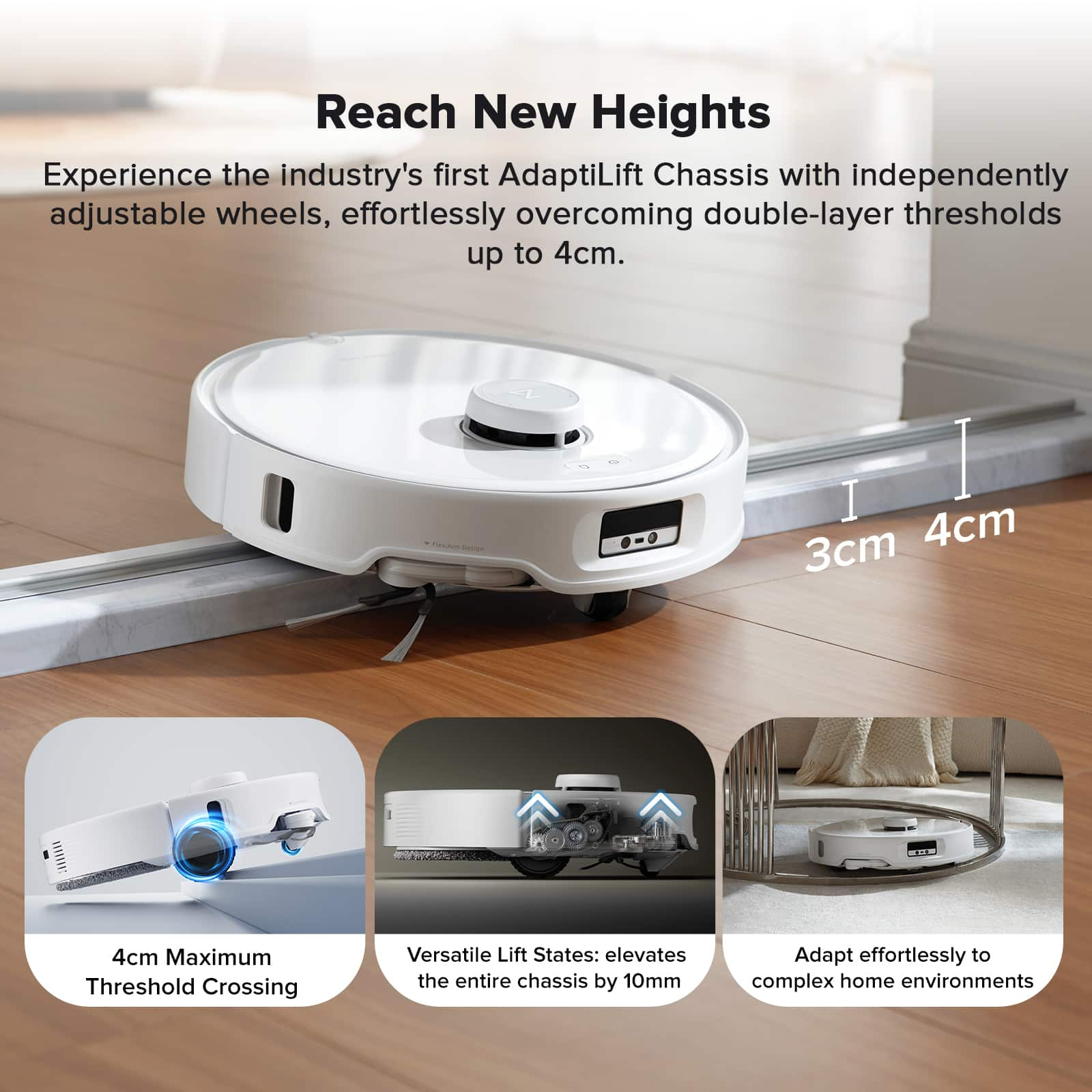
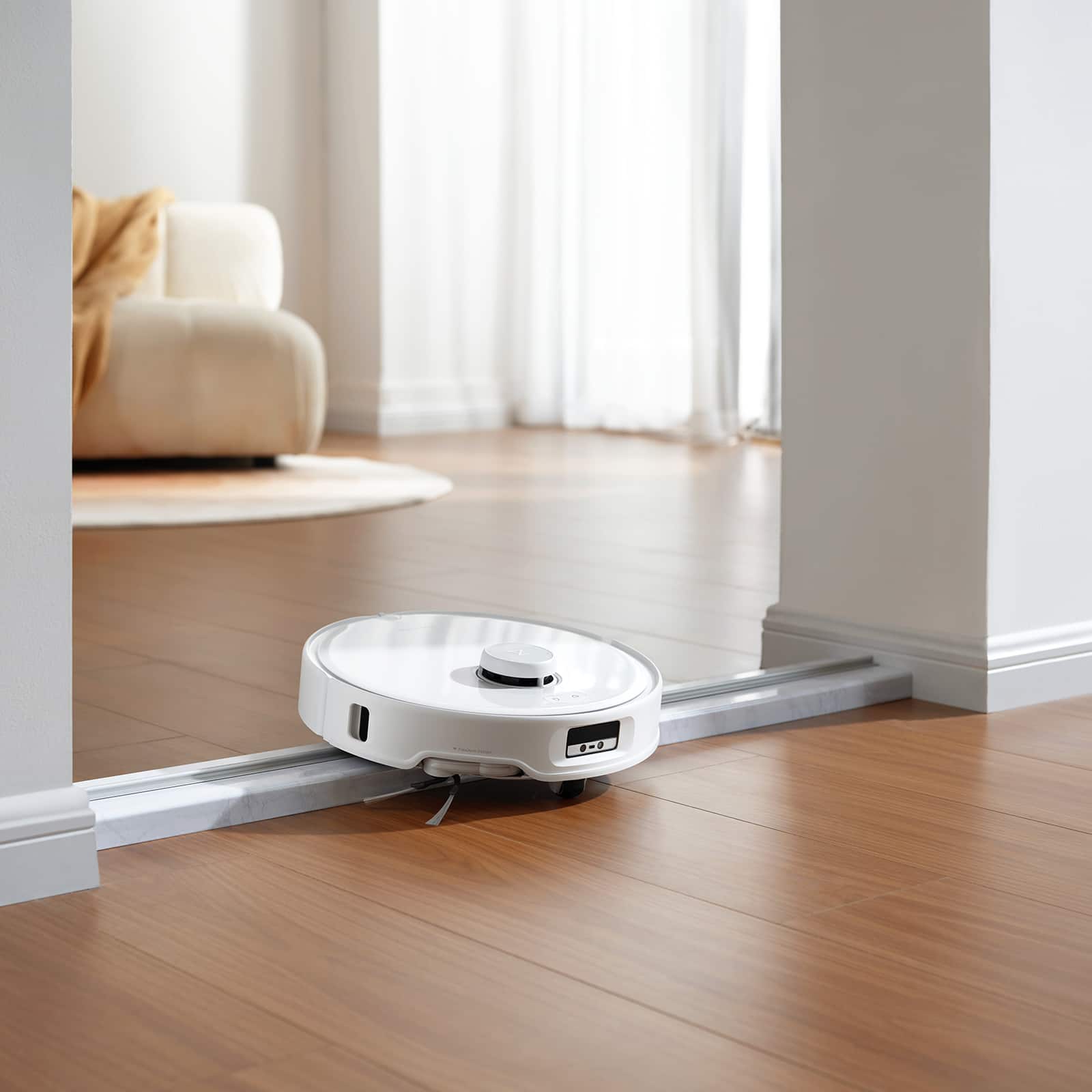
One area where the Roborock Qrevo Curv clearly dominates is threshold climbing. Its AdaptiLift Chassis—a system that independently adjusts the height of all three wheels—allows it to climb obstacles up to 4cm (1.6 inches) high. This isn't just a minor spec improvement; it's a game-changer for many homes.
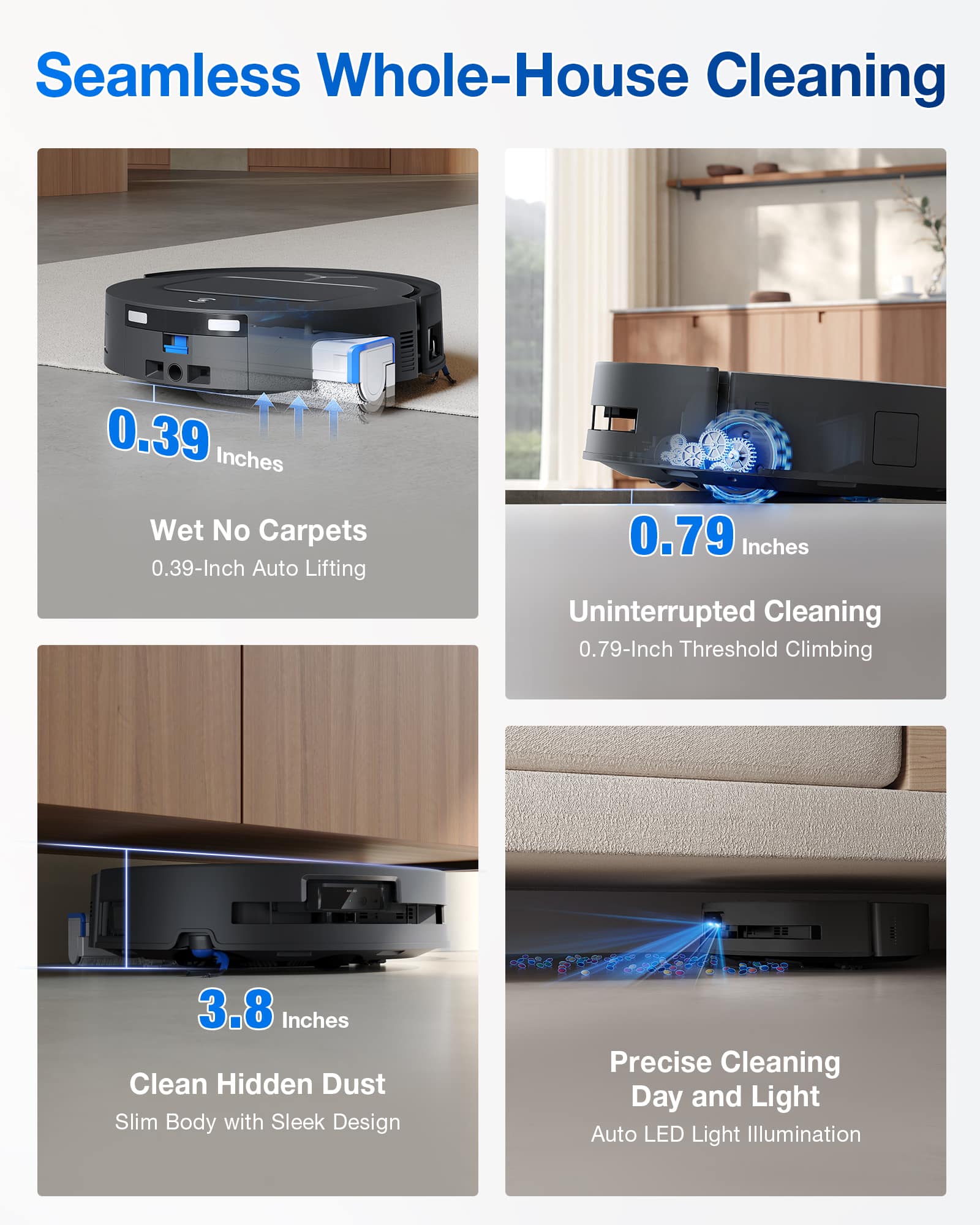
The ECOVACS T80 Omni can handle thresholds up to 2.2cm (0.86 inches), which covers most standard door transitions but falls short for homes with thick area rugs, raised thresholds between rooms, or multi-level flooring. If your home has these features, the difference between accessing 80% versus 95% of your floor area is substantial.
From user feedback, this climbing ability makes the Qrevo Curv particularly appealing for older homes with varied flooring heights or households with thick Persian rugs that create significant barriers for most robots.
Both models pack serious suction power that puts them in flagship territory. The T80 Omni delivers 18,000 Pa while the Qrevo Curv reaches 18,500 Pa. In practical terms, this 500 Pa difference is negligible—both easily handle pet hair, fine dust, and debris on both hard floors and carpets.
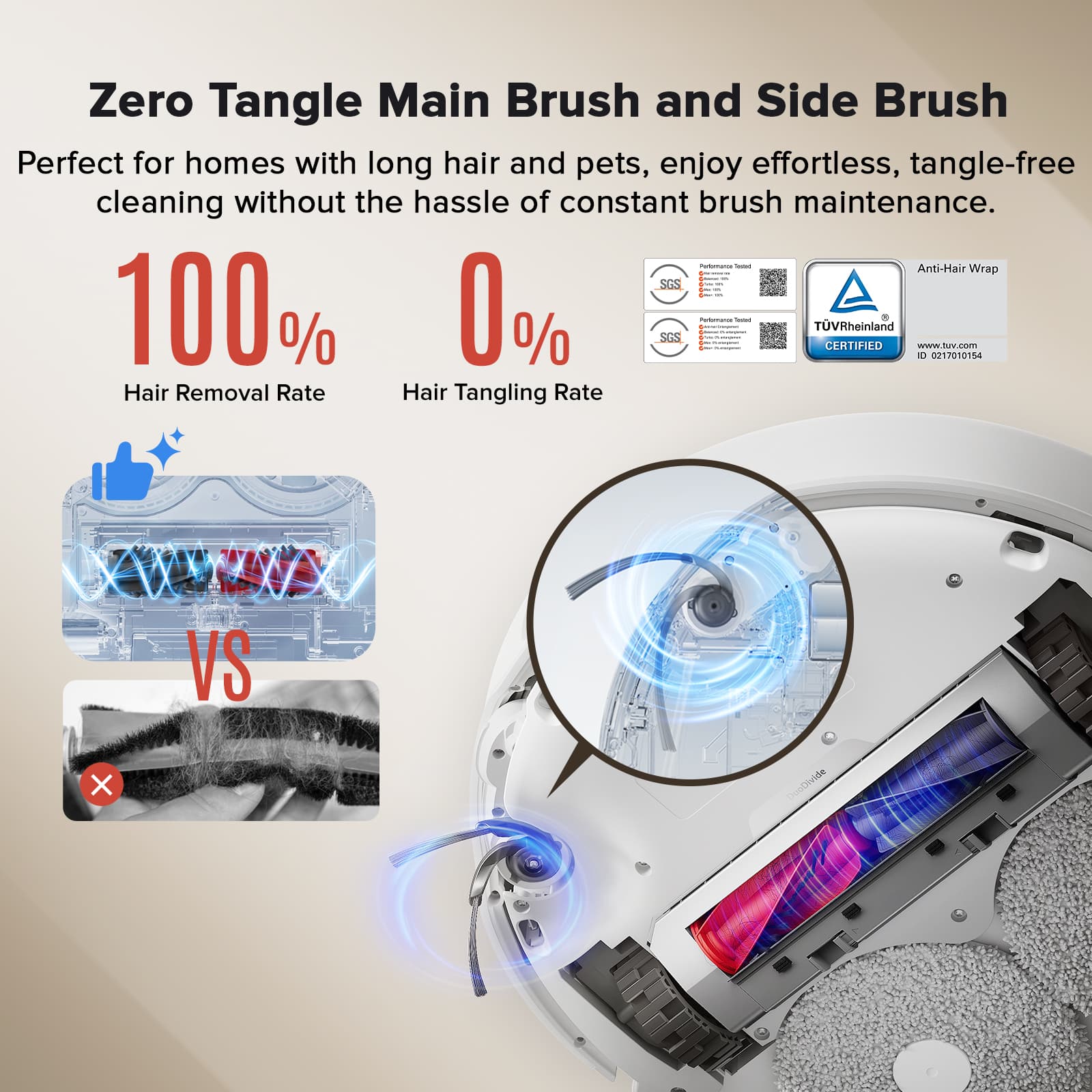
What's more interesting is how they handle hair tangles, a common frustration with robot vacuums. The T80 Omni features ECOVACS' ZeroTangle 3.0 system, which uses a triple-V bristle roller design and anti-tangle side brush specifically engineered to prevent hair wrapping. The Qrevo Curv counters with its DuoDivide main brush—a clever two-part design with a central gap that directs hair away from tangle points.
Based on professional testing data we've reviewed, the Qrevo Curv actually achieves perfect scores in hair tangle resistance tests, slightly outperforming the T80 Omni. For homes with long-haired residents or shedding pets, this translates to less frequent maintenance and fewer frustrating brush cleanings.
Both robots use LiDAR (Light Detection and Ranging) for mapping—essentially laser-based room scanning that creates detailed floor plans. However, their obstacle avoidance systems differ meaningfully.
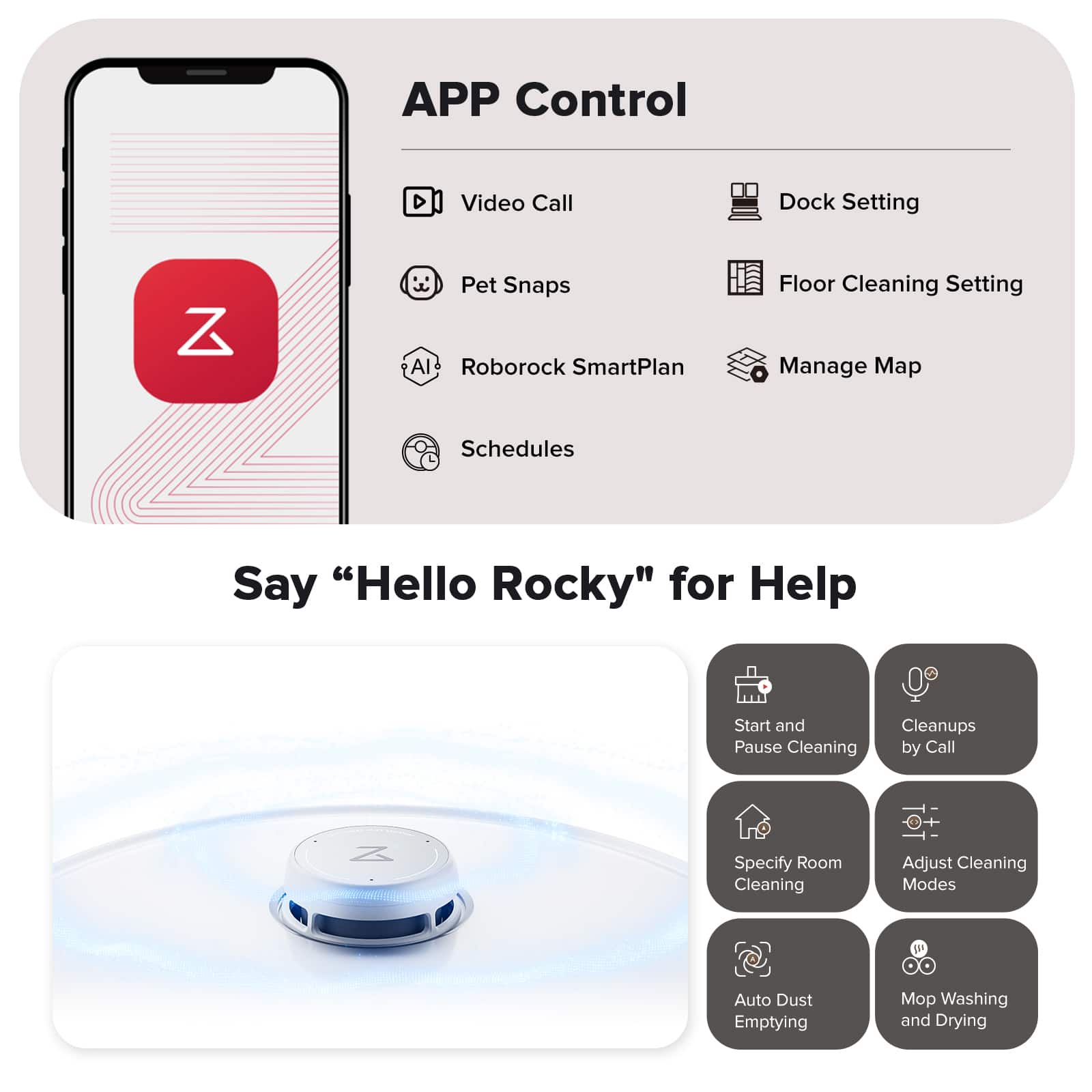
The T80 Omni uses AIVI 3D technology that combines cameras with 3D sensors to recognize up to 100 different object types. This system includes integrated dirt detection, so it can spot stains and automatically increase cleaning intensity or make additional passes. The AI Instant Re-Mop 2.0 feature is particularly clever—it recognizes when areas haven't been cleaned adequately and automatically re-mops them.
The Qrevo Curv employs Reactive AI Obstacle Recognition, which professional testing shows avoids approximately 66% of test objects. While this is above average for the category, it's not class-leading. However, users consistently praise its mapping speed and efficiency—it can map and begin cleaning faster than most competitors.
For navigation reliability, both models perform well, but the T80 Omni edges ahead for households with complex obstacle layouts thanks to its more sophisticated object recognition.
Edge and corner cleaning often separates good robot vacuums from great ones, since these areas collect the most visible dirt and pet hair. Both models address this challenge differently.
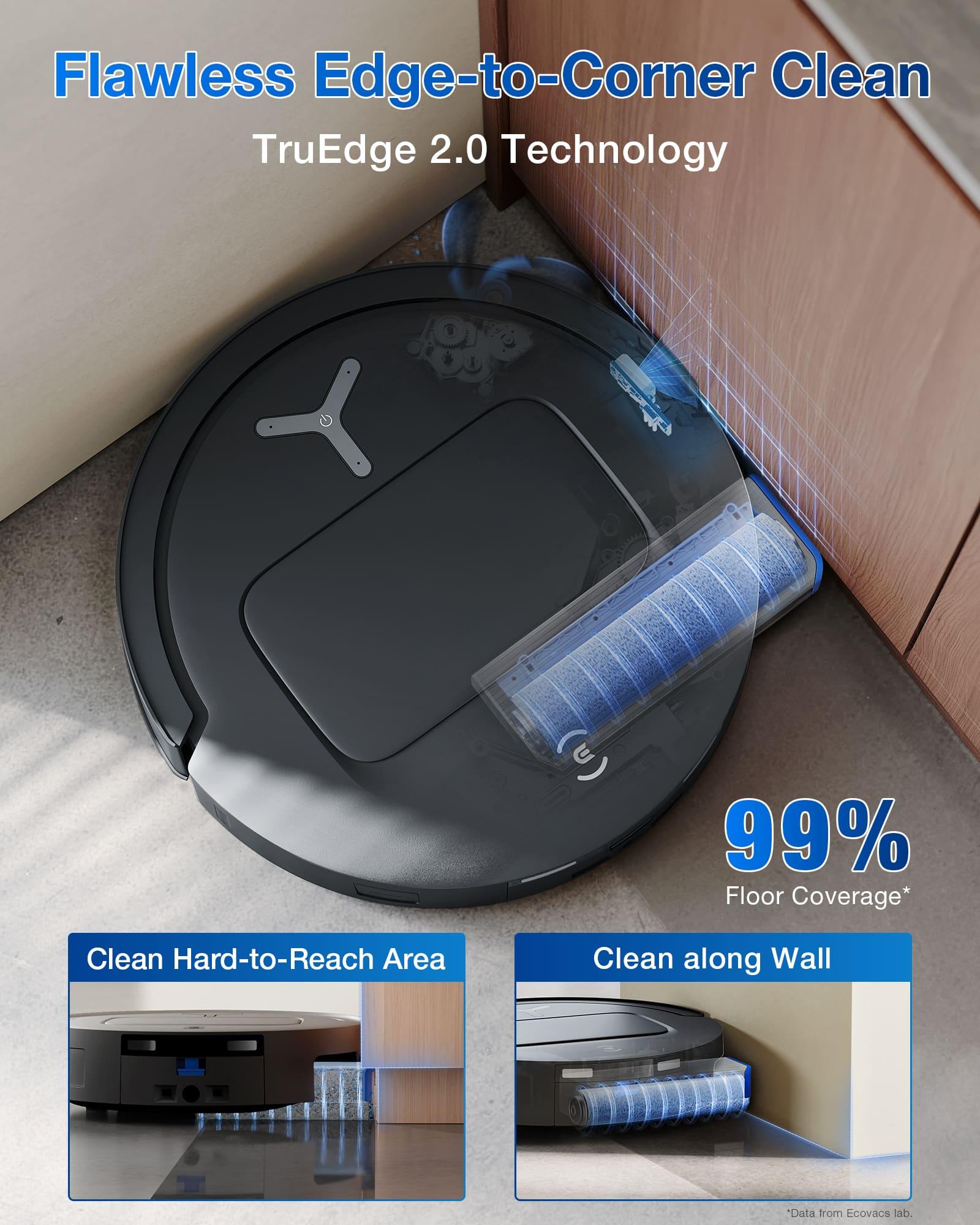
The T80 Omni features TruEdge 2.0 technology, where its roller mop actually extends dynamically to reach closer to walls and into corners. Combined with an enhanced side brush design, ECOVACS claims up to 99% edge coverage—impressive if accurate.
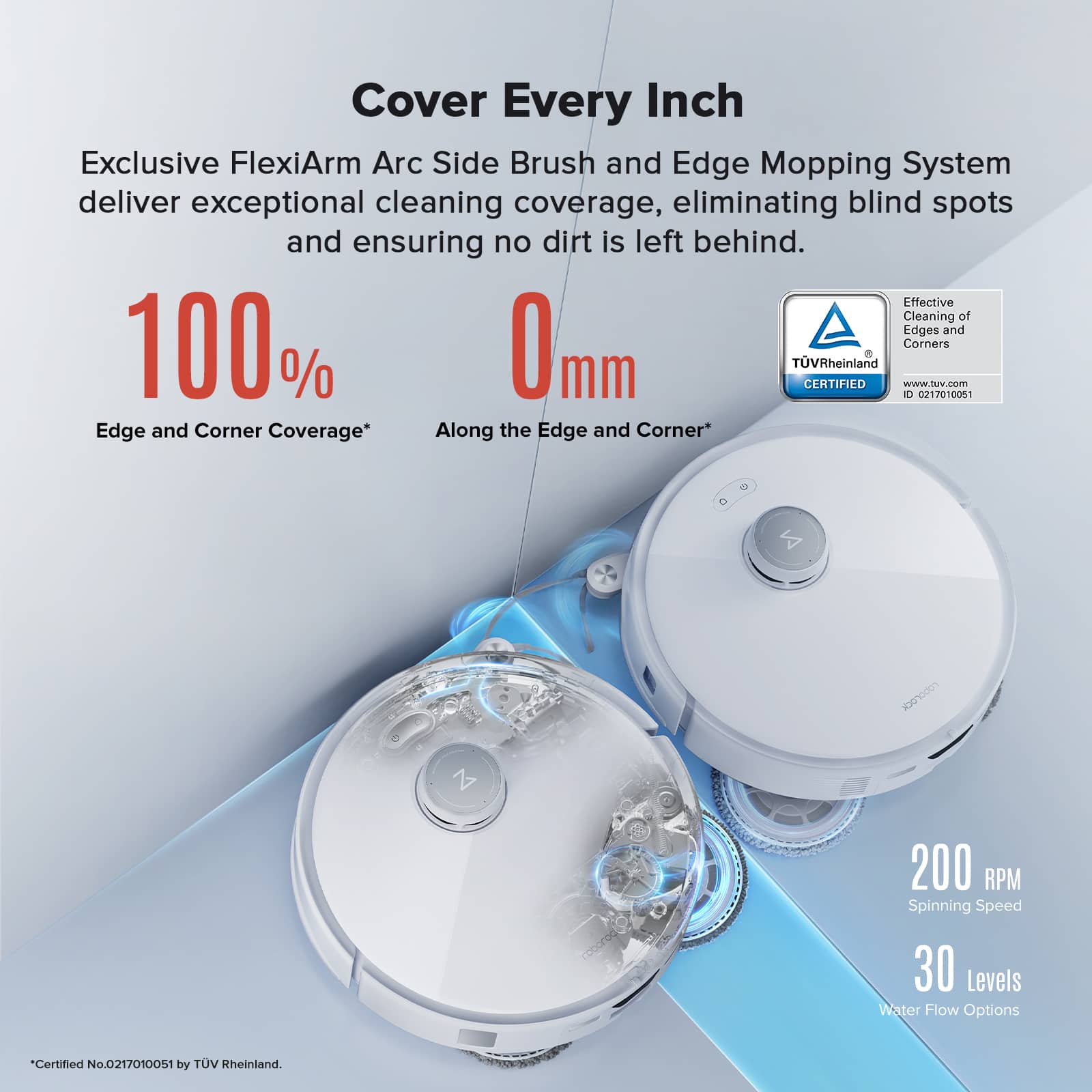
The Qrevo Curv uses FlexiArm technology for both its side brush and mop pads, extending them into corners and along baseboards. User reports suggest this system performs exceptionally well, particularly for collecting pet hair that tends to accumulate along walls.
From the feedback we've analyzed, both systems represent significant improvements over basic robot vacuums, but the Qrevo Curv's approach seems slightly more effective for corner debris pickup, while the T80 Omni excels at continuous edge mopping.
Both base stations handle the core automation features: dust emptying, water refilling, mop washing with hot water, and hot air drying. However, the details matter for long-term convenience.
The T80 Omni's base station holds 4 liters of clean water and features an eight-nozzle self-cleaning system that automatically cleans the station's interior. The 3-liter dust bag capacity means roughly 2-3 months between bag changes for average households.
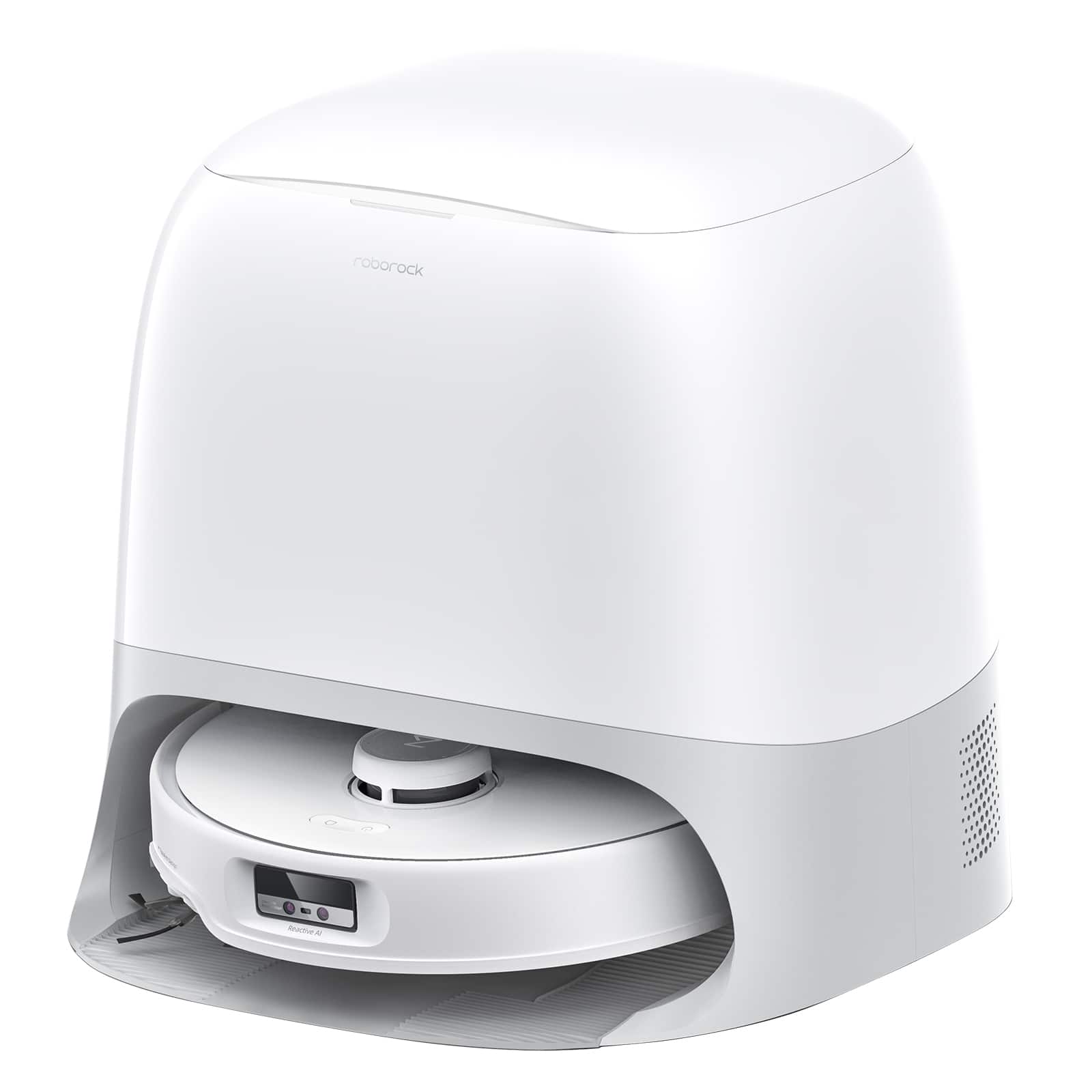
The Qrevo Curv's base station matches the 4-liter clean water capacity but provides a larger 3.5-liter dirty water tank. Its 2.7-liter dust capacity is slightly smaller but still adequate for most homes. The station's "dice-shaped" design is more aesthetically pleasing and completely hides the robot when docked.
From user experiences, both stations perform their automation reliably, but the T80 Omni's self-cleaning feature provides a slight long-term maintenance advantage.
Battery performance reveals another practical difference. The Qrevo Curv runs for up to 240 minutes and can cover approximately 4,300 square feet per charge, while the T80 Omni provides 220 minutes of runtime with coverage around 1,200 square feet.
The Qrevo Curv's superior endurance makes it better suited for larger homes or open floor plans where efficiency matters. However, both models support recharge-and-resume functionality, so this mainly affects cleaning time rather than coverage capability.
For households sensitive to noise—whether due to home theater setups, sleeping babies, or noise-sensitive pets—the Qrevo Curv operates noticeably quieter at 61.5 dB compared to the T80 Omni's 63.4 dB. While seemingly minor, this 2-decibel difference is perceptible and could matter for nighttime or early morning cleaning schedules.
In home theater applications, both models are quiet enough for scheduled cleaning during non-viewing hours, but the Qrevo Curv would be less disruptive if running during low-volume content viewing.
At the time of writing, both models command premium pricing that reflects their advanced capabilities, with the Qrevo Curv typically priced somewhat lower than the T80 Omni. However, value extends beyond initial cost to include ongoing maintenance, replacement parts, and cleaning effectiveness.
The T80 Omni represents ECOVACS' latest technological push, released in 2025 with cutting-edge features that may prove more future-proof. Its roller mopping system and advanced AI represent genuine innovations in the category.
The Qrevo Curv, launching in 2024, offers proven reliability with Roborock's established track record in the premium segment. Its anti-tangle design and climbing capabilities address real-world pain points effectively.
For long-term value, both models require similar ongoing costs for replacement filters, mop pads, and dust bags. The Qrevo Curv's slightly simpler design might edge ahead for maintenance simplicity, while the T80 Omni's advanced features could justify higher ownership costs.
After analyzing extensive user feedback and expert testing, here's how to choose between these two excellent options:
Choose the ECOVACS T80 Omni if:
Your home has standard thresholds and you prioritize mopping performance above all else. The continuous roller system delivers consistently superior mopping results, and the AI stain detection adds genuinely useful intelligence. Pet owners dealing with hair tangles will appreciate the ZeroTangle system, though the Qrevo Curv slightly edges ahead here. If you value cutting-edge technology and don't mind paying a premium for the latest innovations, the T80 Omni represents the state of the art.
Choose the Roborock Qrevo Curv if:
Your home has high thresholds, thick rugs, or multiple floor levels where climbing ability matters. The AdaptiLift chassis could be the difference between a robot that cleans 80% versus 95% of your home. Large households will benefit from the extended 240-minute runtime and quieter operation. The proven anti-tangle performance makes it ideal for homes with long-haired pets or humans. At the time of writing, its typically lower price point offers better value for households where the T80 Omni's specific advantages don't apply.
The Bottom Line
Both represent excellent choices in the premium robot vacuum category, but they serve different priorities. The T80 Omni pushes technological boundaries with innovative mopping and AI features, while the Qrevo Curv delivers superior physical capabilities and operational efficiency.
Your home's layout ultimately matters more than minor specification differences. If you have accessibility challenges that require superior climbing, choose the Qrevo Curv. If consistent mopping performance across moderately challenging floors is your priority, the T80 Omni delivers genuinely innovative solutions.
Either choice will dramatically reduce your floor cleaning workload—the question is which approach better fits your specific home and priorities.
| ECOVACS Deebot T80 Omni | Roborock Qrevo Curv |
|---|---|
| Suction Power - Both deliver flagship-level performance for deep cleaning | |
| 18,000 Pa (excellent for carpets and debris) | 18,500 Pa (marginal advantage, practically identical) |
| Mopping Technology - The biggest practical difference between these models | |
| OZMO roller system with continuous cleaning (more water-efficient, consistent throughout cycle) | Dual rotating pads with dock washing (better for heavy stains, uses more water) |
| Threshold Climbing - Critical for homes with rugs or varied floor heights | |
| 2.2cm/0.86 inches (handles standard transitions) | 4cm/1.6 inches (excellent for thick rugs and multi-level homes) |
| Hair Tangle Resistance - Essential for pet owners and long-haired households | |
| ZeroTangle 3.0 system (very good anti-tangle performance) | DuoDivide brush with perfect tangle test scores (slightly superior) |
| Battery Runtime - Affects cleaning efficiency in larger homes | |
| 220 minutes (~1,200 sq ft coverage) | 240 minutes (~4,300 sq ft coverage, better for large homes) |
| Navigation & Obstacle Avoidance - Impacts cleaning thoroughness and stuck incidents | |
| AIVI 3D recognizes 100+ objects with AI stain detection | Reactive AI avoids 66% of objects, faster mapping speed |
| Base Station Water Capacity - Determines how long between refills | |
| 4L clean water, 4L dirty water (larger dirty water capacity) | 4L clean water, 3.5L dirty water (slightly less dirty water storage) |
| Dust Bag Capacity - Affects maintenance frequency | |
| 3L (2-3 months between changes for average homes) | 2.7L (slightly more frequent bag changes) |
| Noise Level - Important for noise-sensitive households | |
| 63.4 dB (moderately quiet operation) | 61.5 dB (noticeably quieter, better for sleeping areas) |
| Robot Height - Determines under-furniture cleaning ability | |
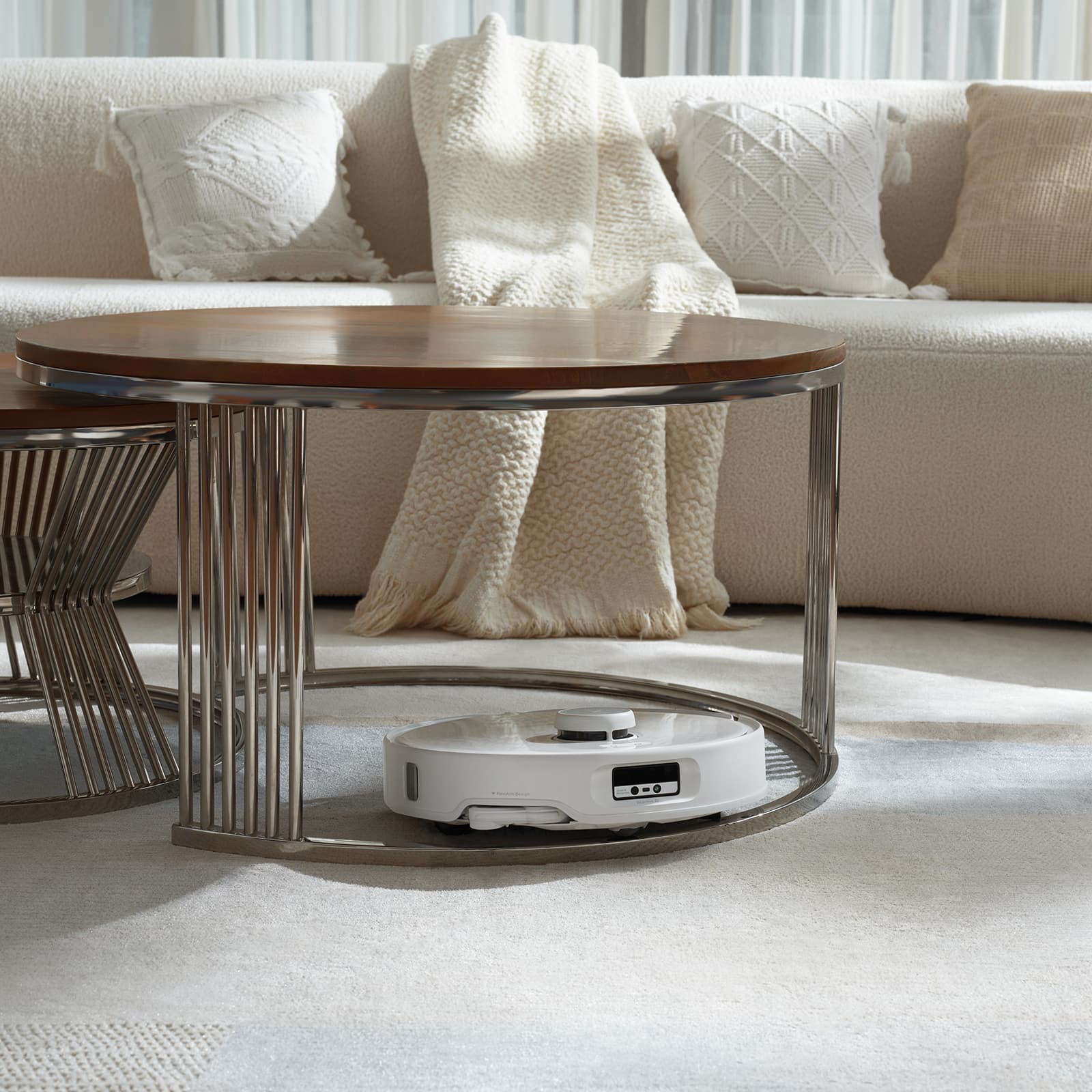
| 9.8cm (cleans under most furniture) | 10.3cm (slightly taller but still fits under most furniture) |
| Mop Lift Height - Prevents carpet wetting during vacuum-only modes | |
| 10mm lift (adequate carpet protection) | 17mm lift (superior carpet avoidance) |
| Edge Cleaning Technology - Crucial for thorough corner and baseboard cleaning | |
| TruEdge 2.0 with extending roller mop (99% claimed coverage) | FlexiArm extending side brush and mop system (excellent corner performance) |
| Release Year & Technology Maturity | |
| 2025 release with cutting-edge roller technology | 2024 release with proven, refined features |
Both the ECOVACS Deebot T80 Omni and Roborock Qrevo Curv deliver flagship-level suction performance. The T80 Omni provides 18,000 Pa while the Qrevo Curv offers 18,500 Pa. This 500 Pa difference is negligible in real-world cleaning—both excel at deep carpet cleaning and debris pickup on hard floors.
The biggest difference lies in their mopping systems. The ECOVACS T80 Omni uses an innovative OZMO roller that continuously cleans itself with onboard water tanks, providing consistent mopping throughout the cycle. The Roborock Qrevo Curv uses dual rotating mop pads that return to the base station for washing when heavily soiled, making it better for extremely dirty floors but less water-efficient.
The Roborock Qrevo Curv significantly outperforms here with its AdaptiLift Chassis that climbs obstacles up to 4cm (1.6 inches) high. The ECOVACS T80 Omni handles standard thresholds up to 2.2cm (0.86 inches). For homes with thick Persian rugs, raised door transitions, or multi-level flooring, the Qrevo Curv is the clear winner.
Both models excel at preventing hair tangles, but with different approaches. The Roborock Qrevo Curv uses a DuoDivide two-part brush design that achieved perfect scores in professional tangle tests. The ECOVACS T80 Omni features ZeroTangle 3.0 technology with a triple-V bristle system. Both are excellent for pet owners, with the Qrevo Curv having a slight edge in anti-tangle performance.
The Roborock Qrevo Curv provides superior battery life with 240 minutes of runtime and coverage up to 4,300 square feet per charge. The ECOVACS T80 Omni offers 220 minutes with approximately 1,200 square feet coverage. For larger homes, the Qrevo Curv reduces the need for mid-cleaning recharging.
Both models operate relatively quietly, but the Roborock Qrevo Curv is noticeably quieter at 61.5 dB compared to the ECOVACS T80 Omni at 63.4 dB. This 2-decibel difference makes the Qrevo Curv better for noise-sensitive households, early morning cleaning, or homes with sleeping babies.
Both base stations automate dust emptying, water refilling, mop washing, and drying. The ECOVACS T80 Omni station features eight self-cleaning nozzles and a slightly larger 3L dust bag versus the Qrevo Curv's 2.7L capacity. The T80 Omni edges ahead for long-term maintenance convenience with its self-cleaning system.
Both models address edge cleaning effectively but differently. The ECOVACS T80 Omni uses TruEdge 2.0 technology with an extending roller mop for continuous edge mopping. The Roborock Qrevo Curv employs FlexiArm technology that extends both side brushes and mop pads into corners. The Qrevo Curv typically performs better for corner debris pickup.
The ECOVACS T80 Omni features more advanced obstacle recognition with AIVI 3D technology that identifies up to 100 object types and includes AI stain detection. The Roborock Qrevo Curv uses Reactive AI that avoids about 66% of test objects—above average but not class-leading. The T80 Omni is better for complex, cluttered environments.
Yes, both the ECOVACS T80 Omni and Roborock Qrevo Curv can vacuum and mop in the same cleaning cycle. However, the T80 Omni maintains consistent mopping performance throughout with its continuous roller system, while the Qrevo Curv may pause to clean its mop pads during heavily soiled cleaning sessions.
Value depends on your specific needs. The Roborock Qrevo Curv typically costs less while offering superior climbing ability, longer runtime, and quieter operation—excellent value for larger homes with accessibility challenges. The ECOVACS T80 Omni costs more but delivers cutting-edge mopping technology and advanced AI features that justify the premium for those prioritizing cleaning innovation.
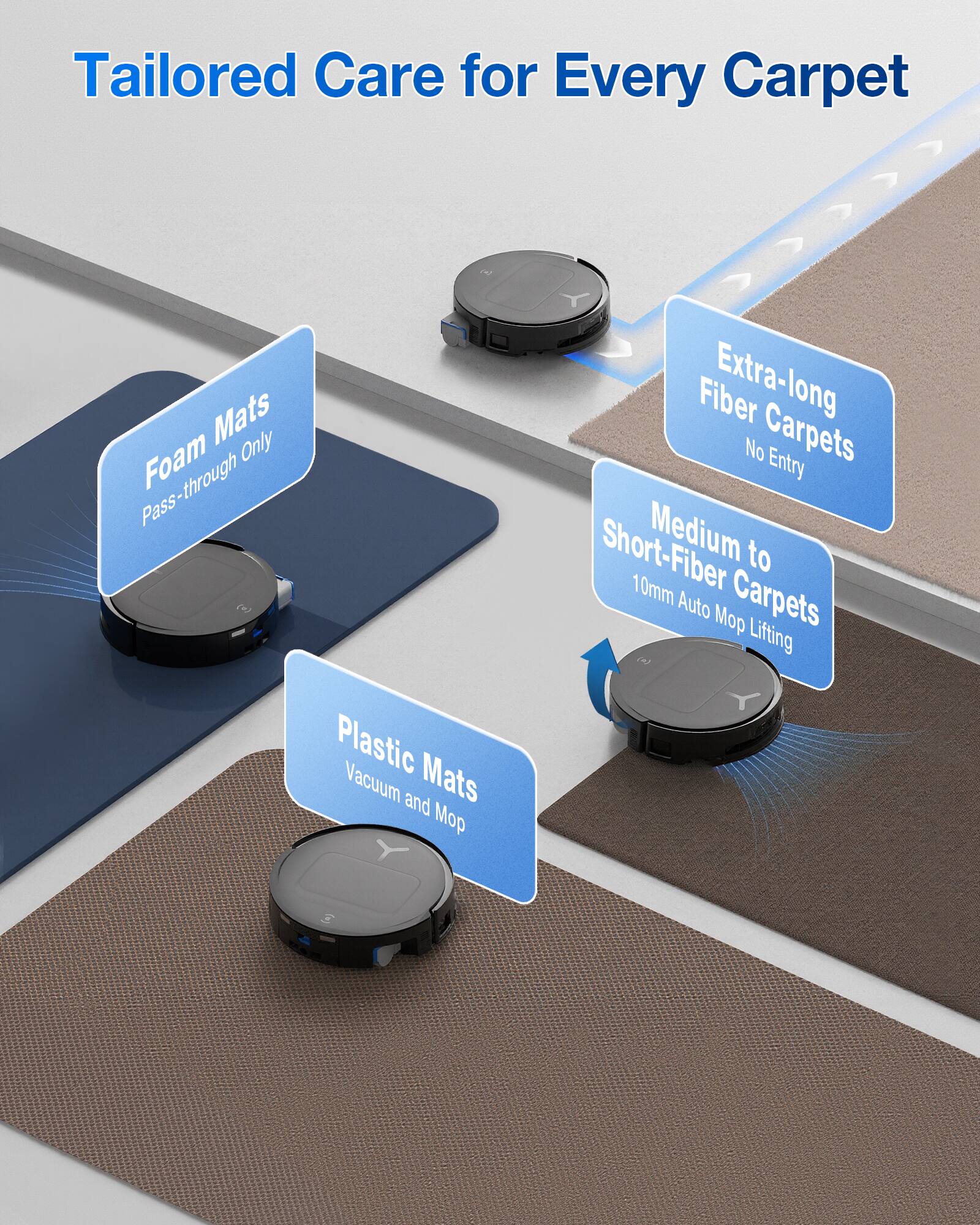
Both models excel on mixed flooring. The ECOVACS T80 Omni automatically lifts its mop 10mm when detecting carpet, while the Roborock Qrevo Curv provides superior 17mm mop lift for better carpet protection. Both use ultrasonic carpet detection and can be programmed with different cleaning modes for various floor types throughout your home.
We've done our best to create useful and informative comparisons to help you decide what product to buy. Our research uses advanced automated methods to create this comparison and perfection is not possible - please contact us for corrections or questions. These are the sites we've researched in the creation of this article: howtogeek.com - vacuumwars.com - vacuumadvice.com - vacuumadvice.com - vacuumwars.com - youtube.com - androidheadlines.com - youtube.com - youtube.com - youtube.com - vacuumwars.com - storehk.ecovacs.com - youtube.com - ecovacs.com - originofbots.com - ecovacs.com - bestbuy.com - bikmantech.com - storehk.ecovacs.com - bestbuy.com - versus.com - youtube.com - youtube.com - ecovacs.com - knowtechie.com - thelocalproject.com.au - youtube.com - vacuumwars.com - vacuumwars.com - rtings.com - youtube.com - youtube.com - youtube.com - techradar.com - redditrecs.com - youtube.com - youtube.com - rtings.com - us.roborock.com - versus.com - robotobzor.com - images.ifun.de - roborock.com.my - global.roborock.com - us.roborock.com - us.roborock.com - digitalreviews.net - romania-insider.com - prnewswire.com - us.roborock.com

Privacy Policy
Terms and Conditions - Affiliate Policy
Home Security
© Copyright 2008-2026.
11816 Inwood Rd #1211, Dallas, TX 75244