

The robot vacuum market has exploded over the past few years, but it's the premium vacuum-mop combos that really showcase how far this technology has come. These aren't just your basic disc-shaped cleaners that bump around randomly—we're talking about sophisticated cleaning systems that can handle both your vacuuming and mopping needs while you're at work or sleeping.
Today we're diving deep into two standout models that represent different approaches to automated home cleaning: the Eufy Omni E25 and the ECOVACS Deebot T80 Omni. Both launched in 2025 and pack impressive technology, but they take notably different paths to achieve a spotless home.
Before we get into the specifics, let's establish what makes these premium cleaning robots tick and why they command higher prices than basic models.
Modern robot vacuum-mop combos combine several sophisticated technologies. LiDAR navigation uses laser sensors to map your home with millimeter precision, creating detailed floor plans that allow the robot to clean efficiently rather than wandering aimlessly. Obstacle avoidance systems employ cameras and sensors to identify and dodge everything from pet toys to furniture legs. The self-maintaining base stations handle the dirty work—literally emptying dust bins, washing mop pads, and refilling water tanks so you barely need to think about maintenance.
The mopping aspect has evolved dramatically. Early robot mops were frankly pretty terrible, essentially dragging damp cloths around your floor. Today's premium models use sophisticated roller systems or pressurized pads that can actually scrub stubborn stains, not just push dirt around.
When evaluating these systems, the most critical performance areas are suction power for deep carpet cleaning, mopping effectiveness on dried stains, navigation reliability in cluttered spaces, and how truly hands-off the maintenance becomes. The best models should handle mixed flooring seamlessly—vacuuming your carpets thoroughly, then switching to mop mode for hard floors without wetting the rugs.
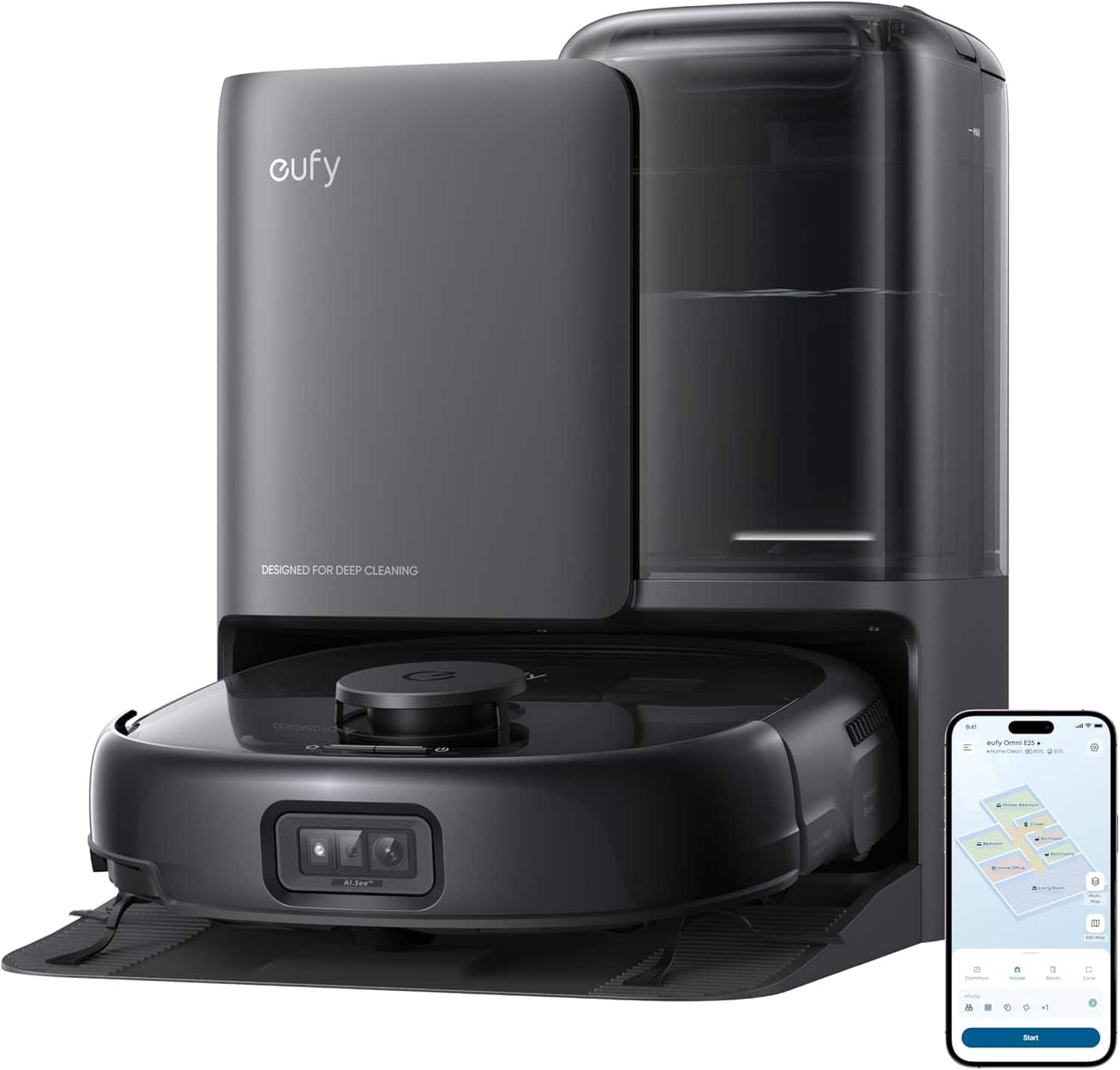
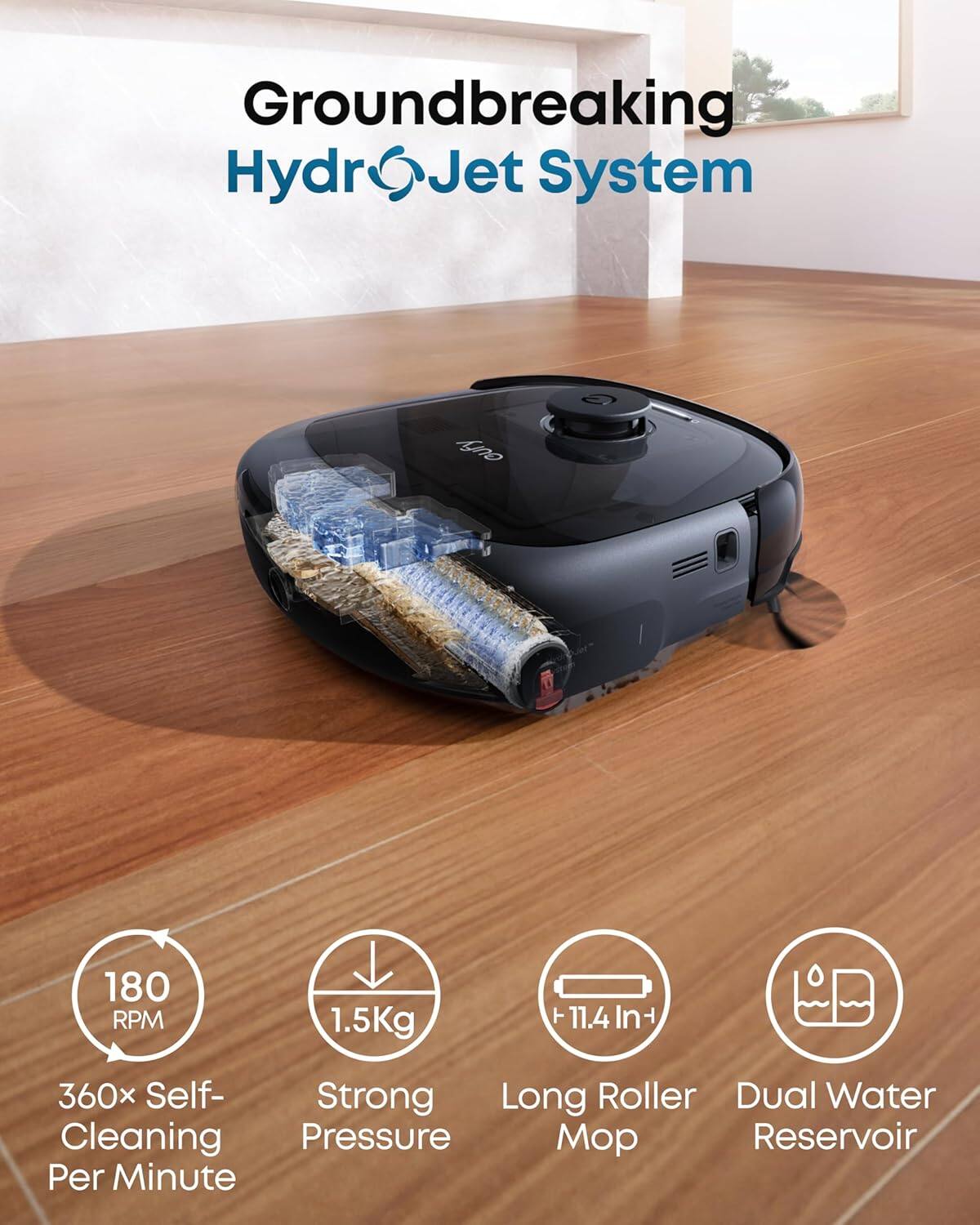
The Eufy Omni E25 represents Eufy's push into premium territory, featuring their new HydroJet roller mopping system and 20,000 Pa suction power. At the time of writing, it's positioned in the upper mid-range pricing tier, though promotional pricing has made it more accessible during sales periods.
The ECOVACS Deebot T80 Omni takes a value-focused approach, packing flagship-level features at a more moderate price point. ECOVACS has been refining their OZMO mopping technology for years, and the T80 represents their latest iteration with hot water washing capabilities.
Both models launched in 2025, benefiting from recent advances in AI-powered obstacle recognition and more efficient brushless motors. The timing is significant—2024 and 2025 have seen major improvements in roller-based mopping systems, replacing the spinning pad designs that dominated earlier generations.
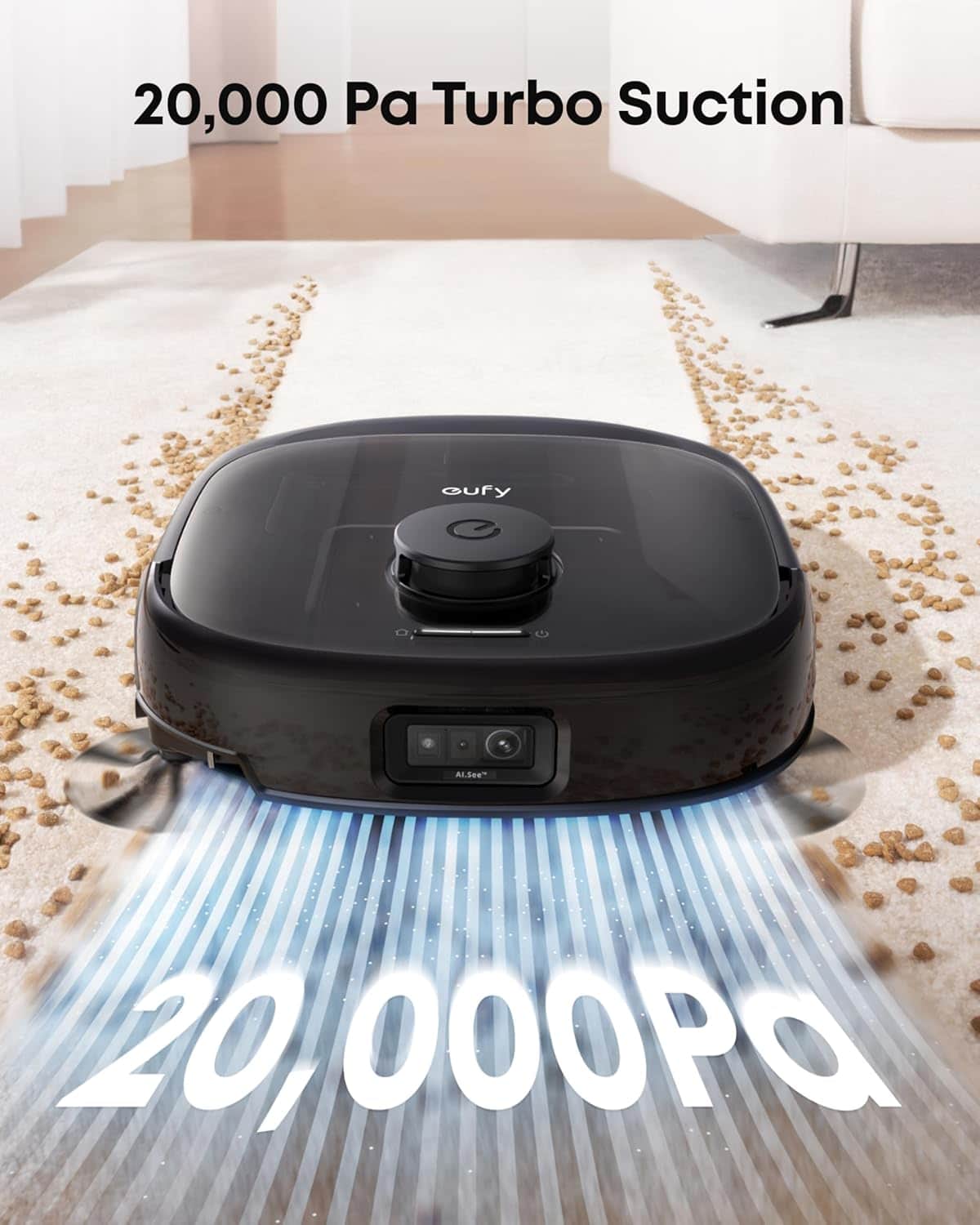
Here's where things get interesting from a technical standpoint. The Eufy Omni E25 packs 20,000 Pa of suction, while the ECOVACS Deebot T80 Omni delivers 18,000 Pa. But raw suction numbers only tell part of the story—it's how that power translates to actual cleaning performance that matters.
Pascal (Pa) measurements indicate the pressure differential the motor can create, essentially how hard it can pull air (and debris) through the system. For context, most premium robot vacuums range from 3,000 to 6,000 Pa, so both these models are operating at nearly flagship levels.
Based on our research into professional testing results, the Eufy E25 achieved an 88% pickup rate in deep carpet cleaning tests, significantly outperforming the category average of 75%. This suggests Eufy's engineers have optimized not just the motor, but the entire airflow system—including brush design and dust chamber engineering.
The ECOVACS T80 Omni delivered even more impressive results, removing 89% of embedded sand from carpets in testing. What's particularly notable is that ECOVACS achieved this with slightly lower suction specifications, indicating superior airflow design and brush effectiveness.
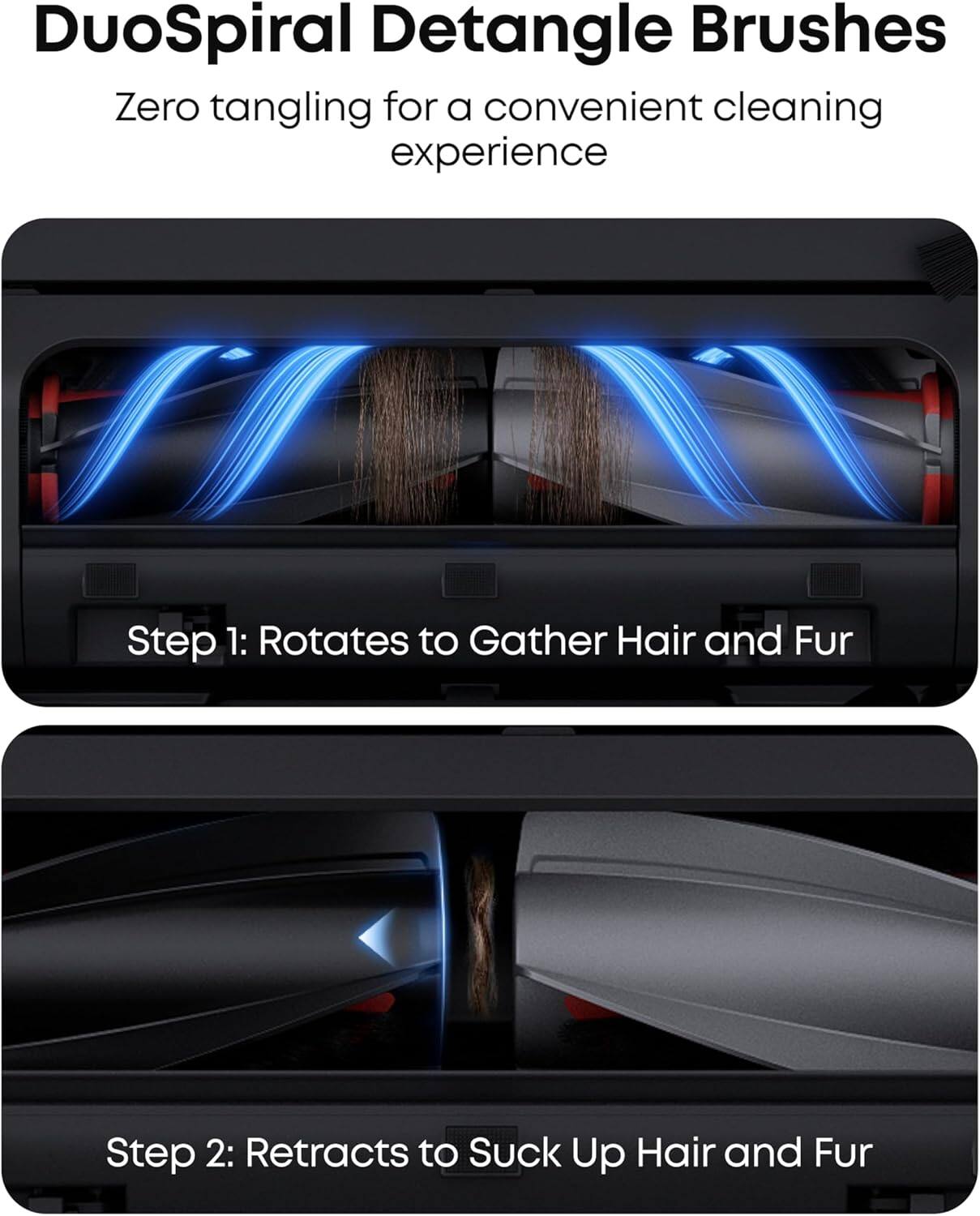
Both models excel at pet hair removal, which is often the real test of a robot vacuum's capabilities. The Eufy E25 achieved 93% pet hair pickup with zero tangles in testing, while the ECOVACS T80 Omni managed 99% pickup, also with zero tangles. These results are exceptional—many robot vacuums struggle with hair wrapping around brushes, requiring regular maintenance.
The anti-tangle technology deserves explanation. The Eufy E25 uses DuoSpiral anti-tangle brushes with a specific bristle pattern that guides hair toward the suction inlet rather than wrapping around the roller. The ECOVACS T80 Omni employs ZeroTangle 3.0 technology with a triple-V bristle design and internal comb structure that actively prevents tangles.
This is where these two models really diverge, and frankly, where the ECOVACS T80 Omni pulls ahead significantly.
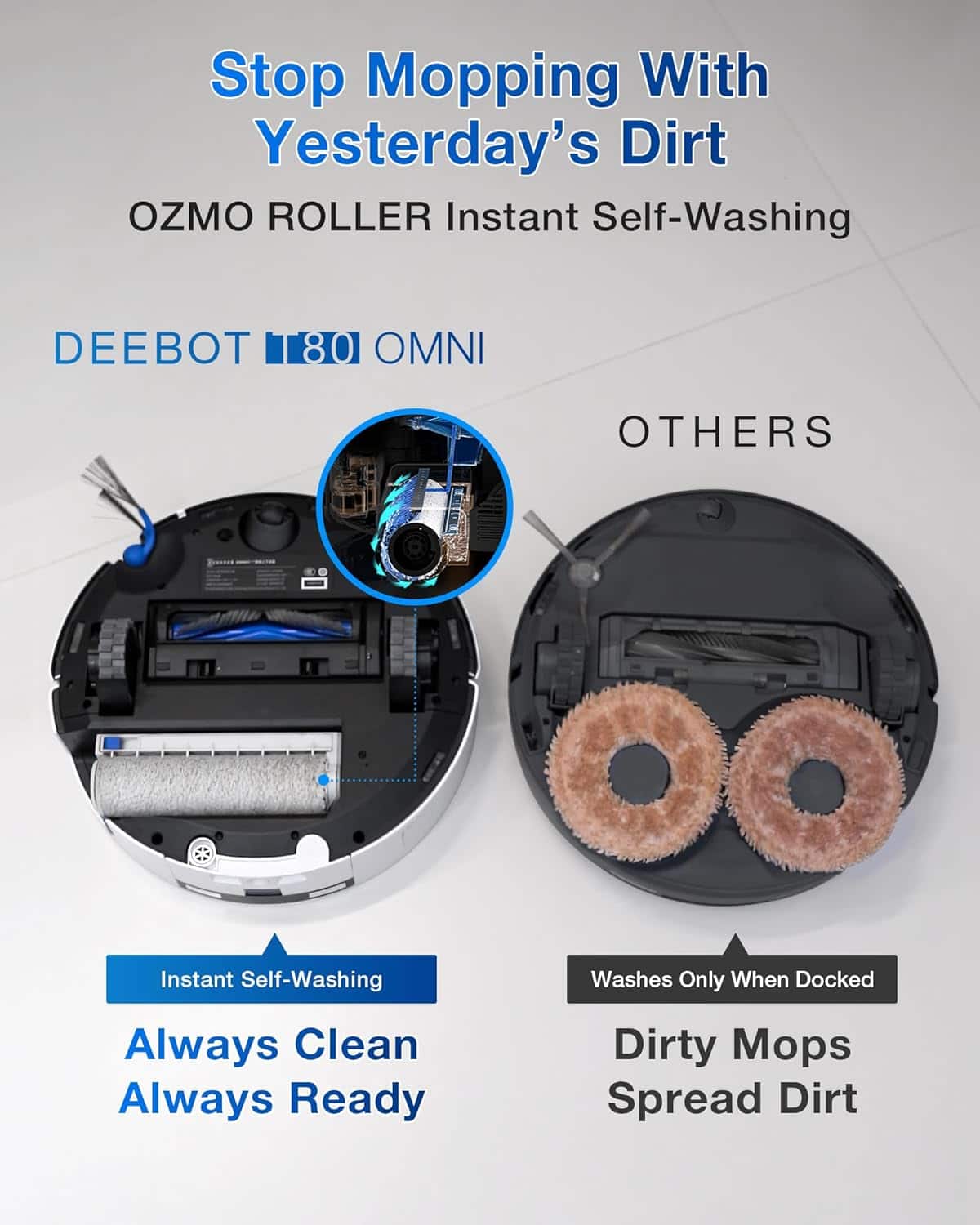
Traditional robot mops used spinning pads that essentially smeared dirt around. Both these models have moved to roller-based mopping systems, but with different implementations. Think of it like the difference between dragging a wet towel across your floor versus using a proper string mop that can actually scrub.
The Eufy E25 uses their HydroJet system, where a roller mop continuously receives clean water while dirty water is scraped off into a separate chamber. It applies 14.7 Newtons of downward pressure—enough to tackle most spills and light stains. In standardized testing, it scored 115 points on dried-on stain removal, which is above the category average of 110.
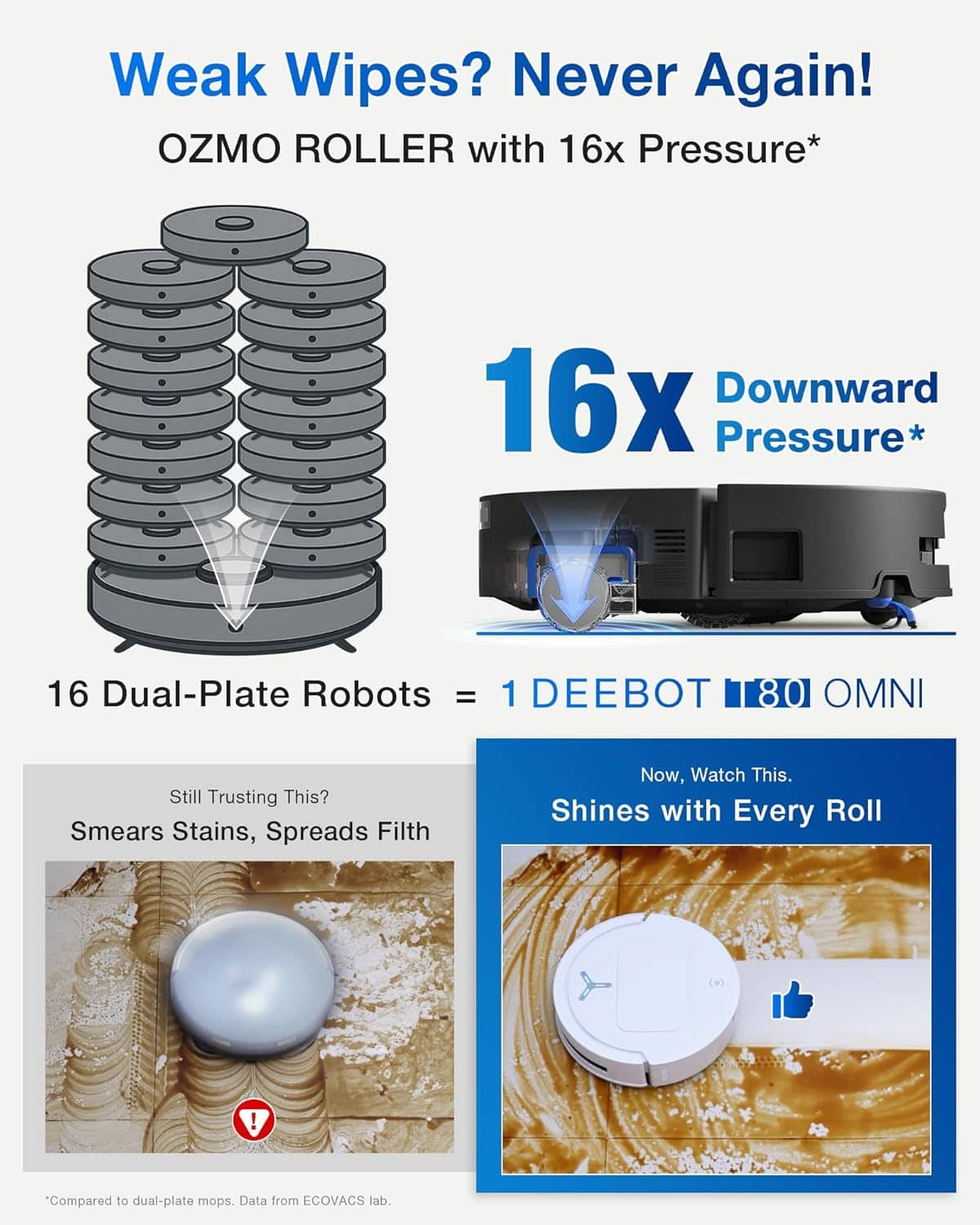
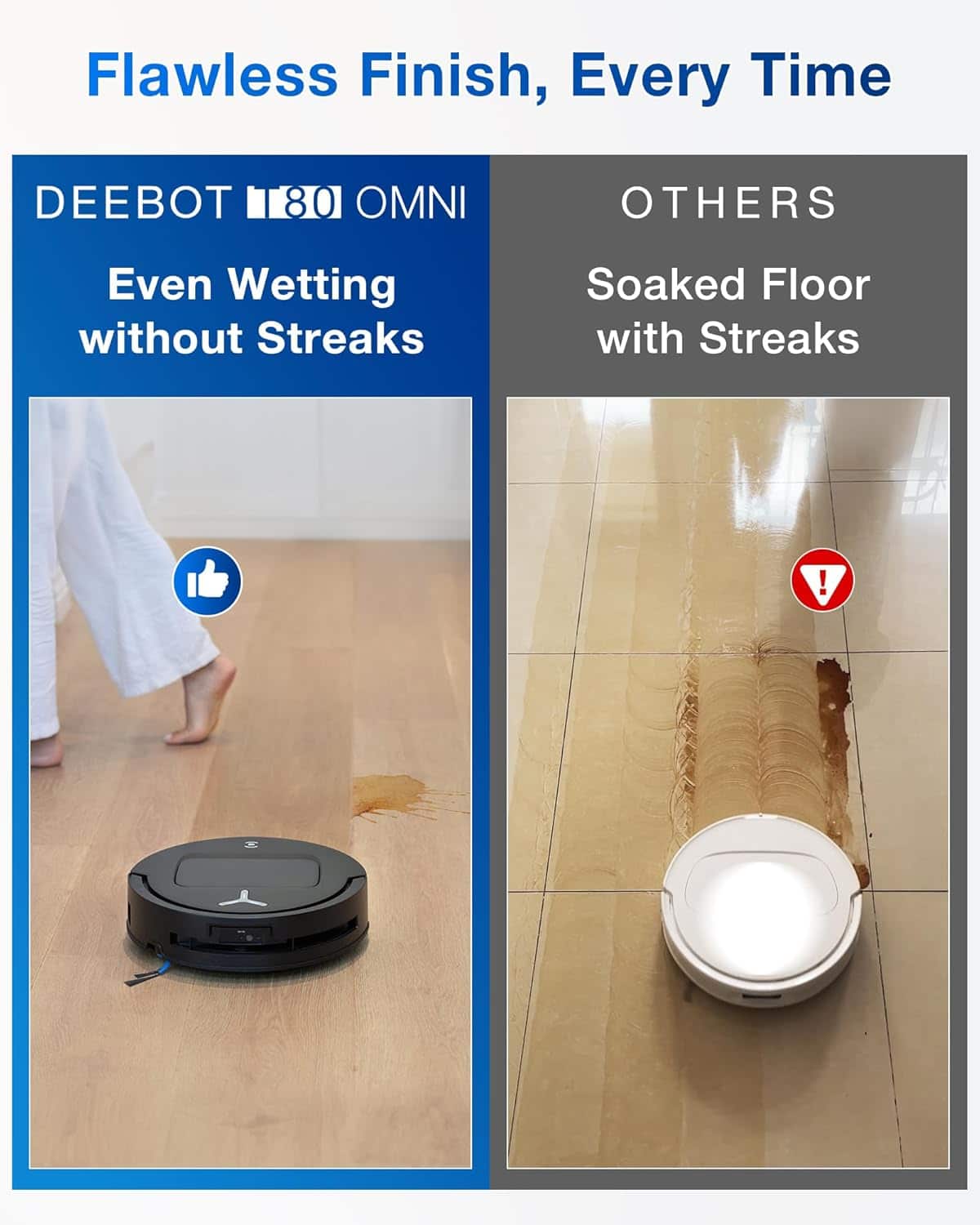
The ECOVACS T80 Omni takes mopping more seriously with its OZMO roller system. The roller spins at 200 RPM while applying 3,700 Pa of downward pressure—that's significantly more aggressive than the Eufy's approach. In the same dried-on stain tests, it scored 139.5 points, representing a meaningful performance advantage.
More importantly, the ECOVACS achieved a combined mopping score of 287 compared to the Eufy's 218. This suggests the ECOVACS is simply better at the fundamental job of mopping—removing sticky residue, dried spills, and ground-in dirt.
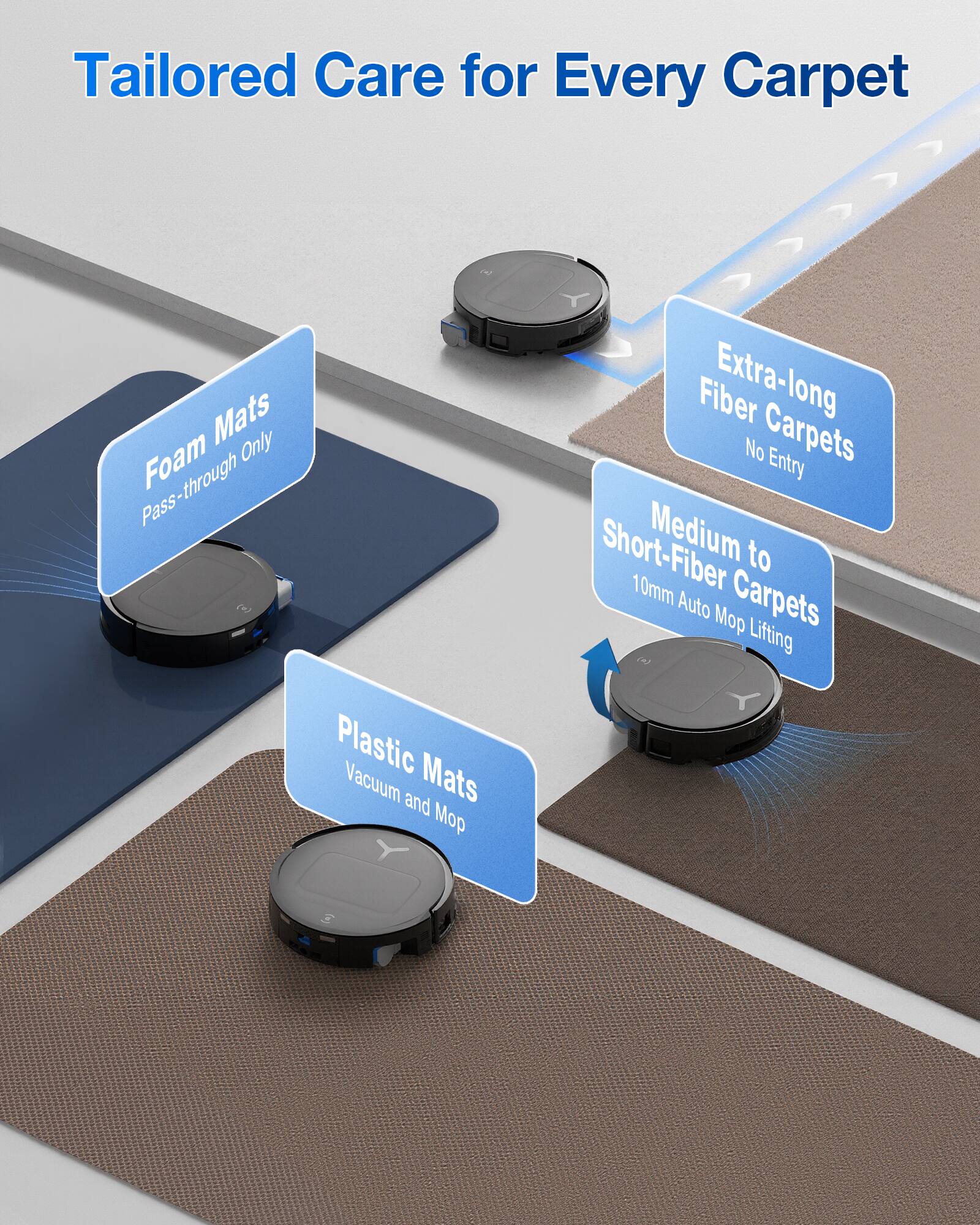
The mop lift mechanism on both models prevents carpet wetting, but with different approaches. The Eufy E25 lifts its mop 10.5mm above carpet surfaces, while the ECOVACS T80 Omni can lift its mop and adjust cleaning modes based on surface detection. Both work well for mixed flooring homes.
Navigation technology has become incredibly sophisticated, and both models represent the current state of the art, though with different strengths.
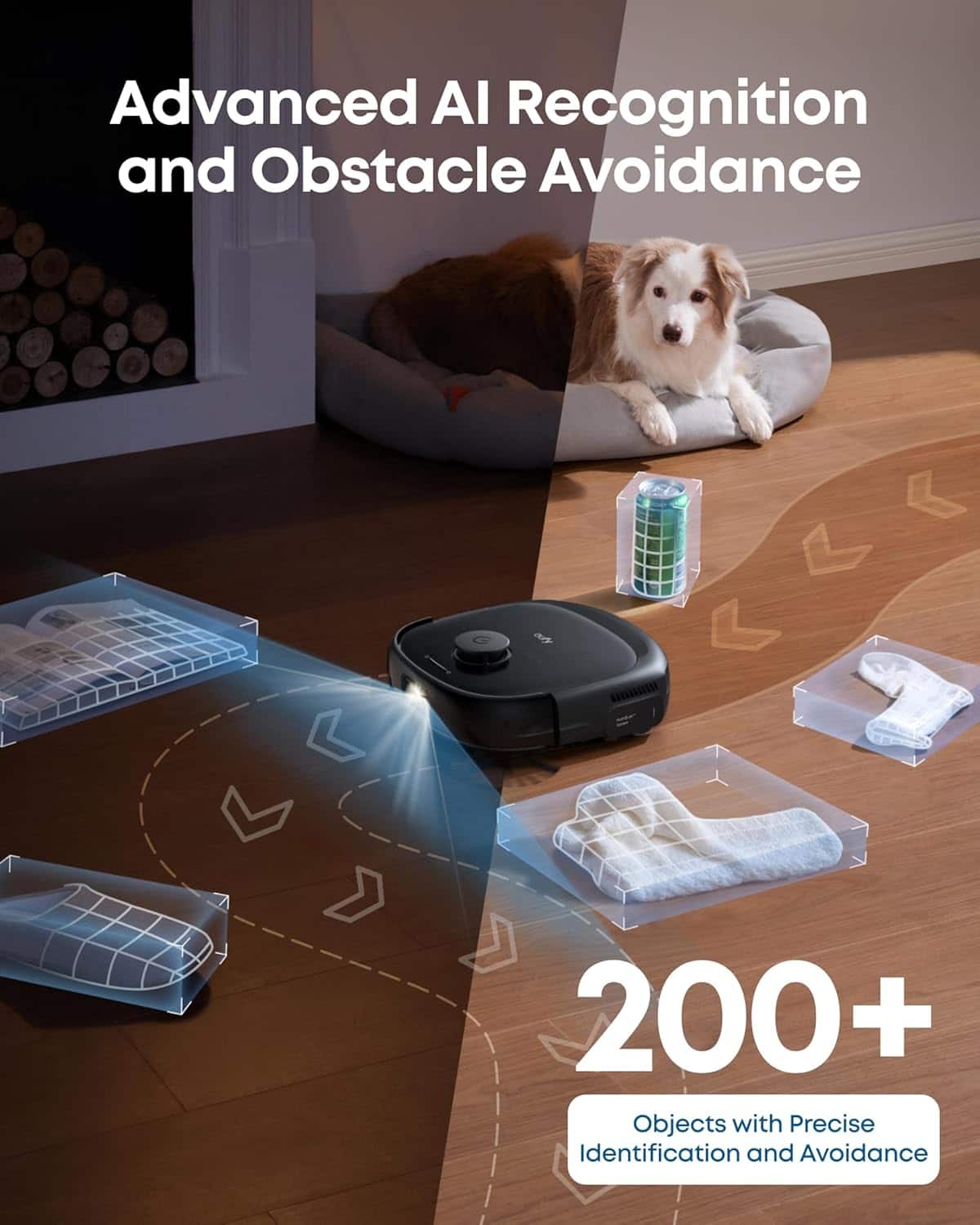
The Eufy E25 combines spinning LiDAR with an RGB camera system that can recognize over 200 different objects. The AI.see system uses machine learning to identify common household items—shoes, cables, pet bowls—and navigate around them intelligently. In obstacle avoidance testing, it successfully dodged 21 out of 24 obstacles, which is excellent performance.
Perhaps more importantly, the Eufy E25 navigates exceptionally efficiently. It maps and cleans spaces 28% faster than the average robot vacuum, completing standard floor plans in about 38 minutes versus the typical 60-minute timeframe. This efficiency comes from superior path planning algorithms that minimize redundant coverage.
The ECOVACS T80 Omni uses a hybrid navigation system combining LiDAR, RGB camera, and 3D structured light sensors. The AIVI 3D system recognizes up to 100 objects and includes live video monitoring capabilities. However, based on user feedback we've analyzed, it tends to get stuck more frequently in cluttered environments compared to the Eufy.
This navigation difference is significant in real-world use. The Eufy E25 is more likely to complete its cleaning cycle without intervention, while the ECOVACS T80 Omni might require occasional rescue in challenging spaces.
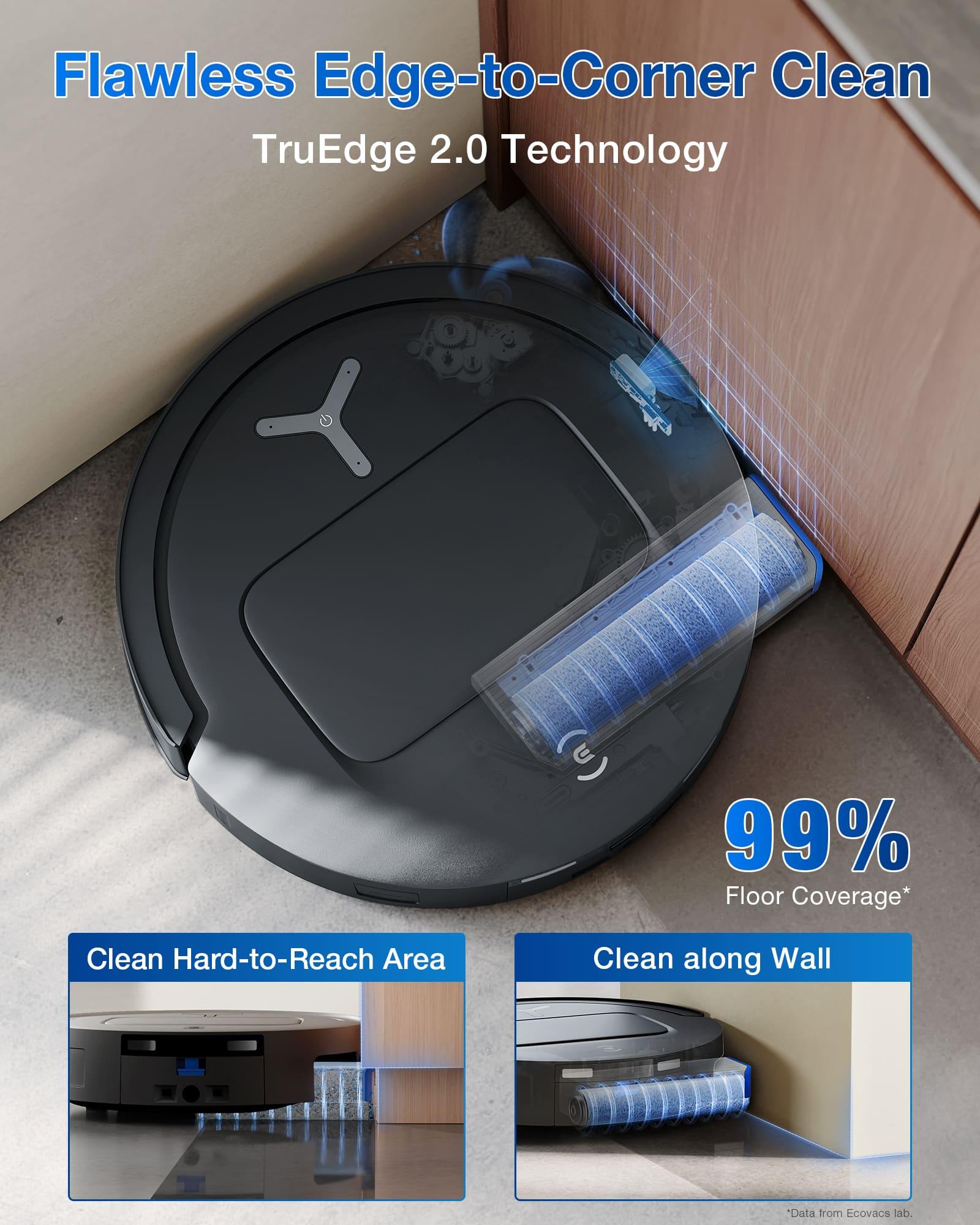
This is where the ECOVACS T80 Omni shines with its TruEdge 2.0 technology. The system allows the roller mop to extend dynamically, reaching into corners and along baseboards more effectively. ECOVACS claims up to 99% edge coverage, and based on testing results, this appears accurate.
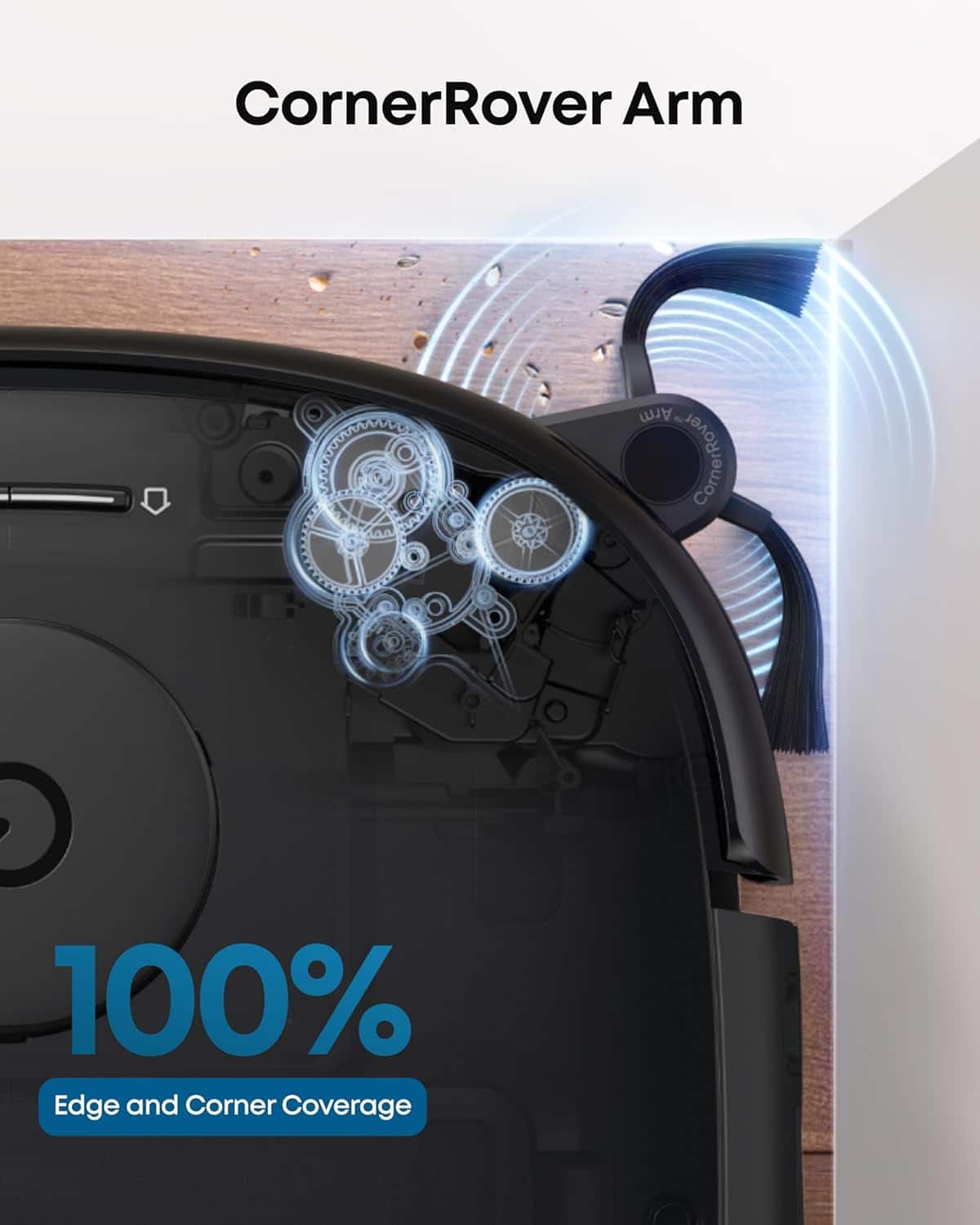
The Eufy E25 includes a CornerRover extending side arm for improved corner access, but its roller mop doesn't extend to the edges. This means while it handles corners well during vacuuming, the mopping coverage along edges is less precise.
For homes with a lot of furniture and tight spaces, this difference becomes meaningful. The ECOVACS T80 Omni will do a more thorough job cleaning along cabinet bases, around toilet bases, and in other tight spots where dirt tends to accumulate.
Both models feature comprehensive Omni stations that handle multiple maintenance tasks, but with different approaches and capabilities.
The Eufy E25 base station provides auto-emptying into a 3-liter bag (supporting 68-75 days between bag changes), mop washing with hot air drying, and automatic detergent refilling. The water system includes separate 2.5L clean water and 1.8L dirty water tanks.
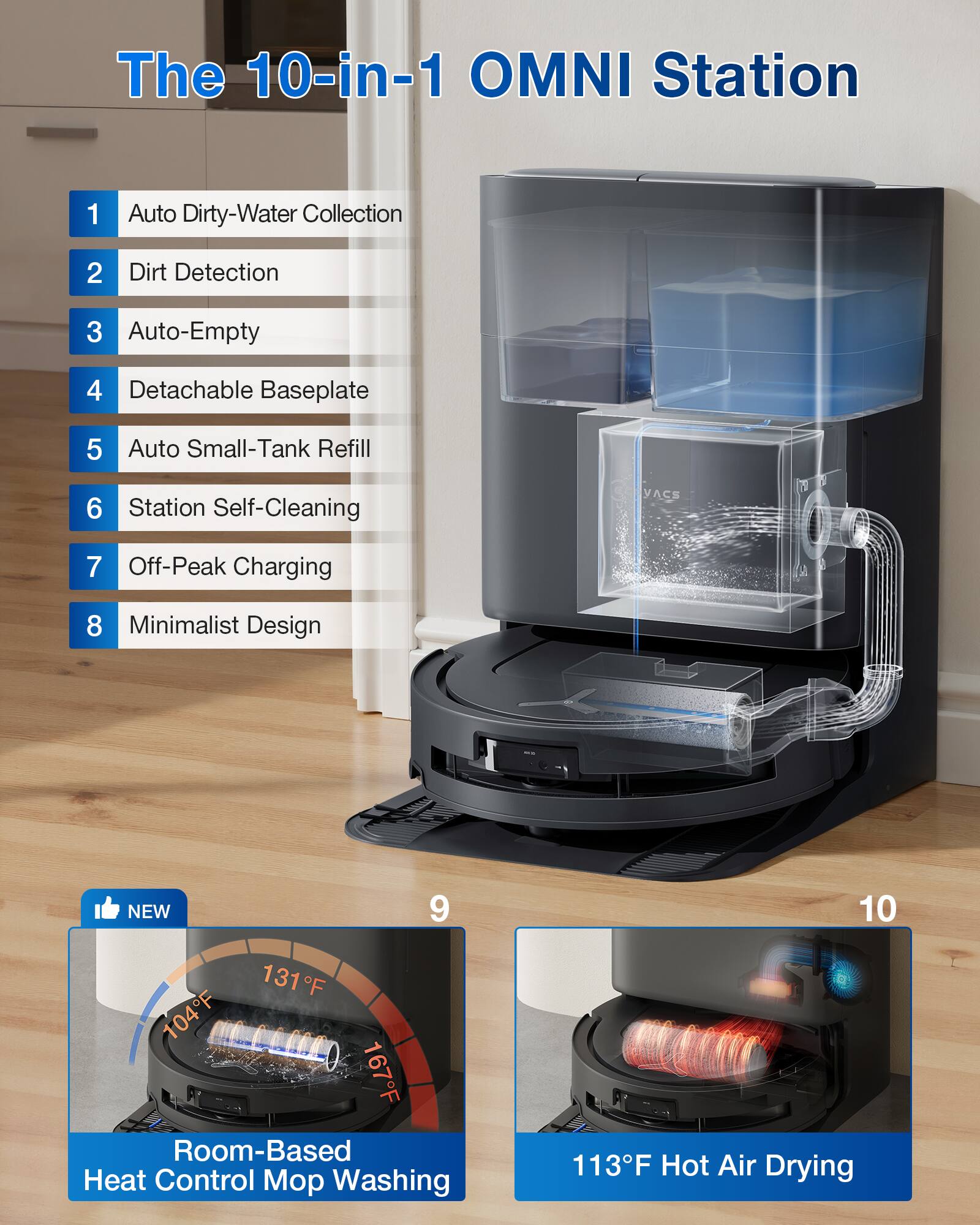
The ECOVACS T80 Omni station is more advanced in several ways. It offers hot water mop washing up to 167°F, heated air drying at 113°F, and an eight-nozzle self-cleaning system that maintains the base itself. The water tanks are larger—4.0L each for clean and dirty water—and the dust bag reportedly supports up to 150 days between changes.
The hot water washing is a significant advantage. Hot water is simply better at dissolving dried spills, sticky residues, and sanitizing the mop roller. If you're dealing with kitchen spills, pet accidents, or just want the cleanest possible mop, the ECOVACS T80 Omni's approach is superior.
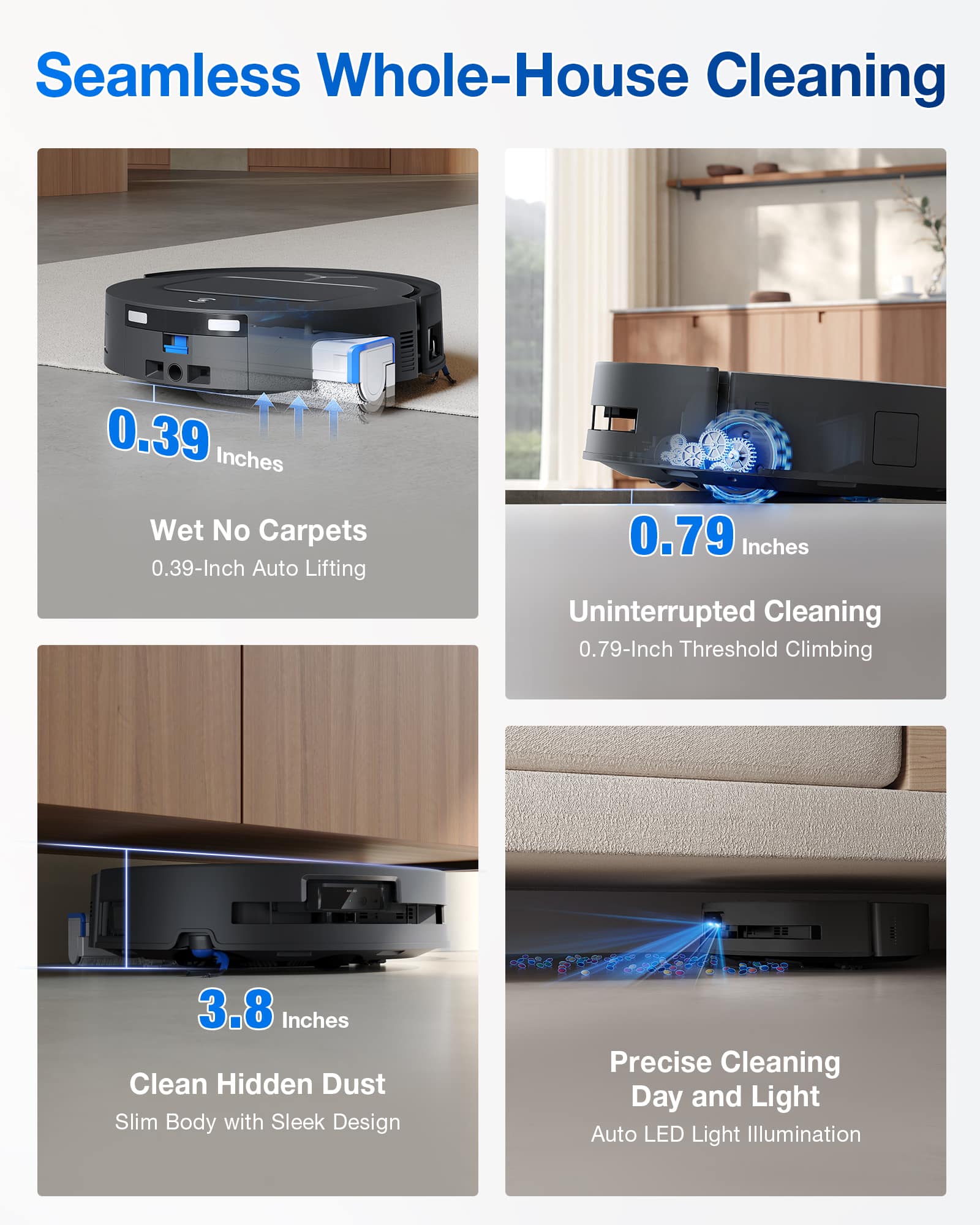
Here's an important practical difference: the ECOVACS T80 Omni is notably slimmer at just 3.8 inches tall, compared to standard robot vacuum heights. This ultra-slim design allows it to clean under furniture that other robots can't reach—coffee tables, beds, couches, and entertainment centers.
For home theater setups, this matters significantly. Media consoles and entertainment centers often have limited clearance, and a slimmer robot can maintain those areas that typically require manual cleaning. The Eufy E25, while not particularly tall, doesn't offer this specific advantage.
Battery performance favors the ECOVACS T80 Omni slightly, with 220 minutes of runtime covering approximately 1,200 square feet per charge, compared to the Eufy E25's 216 minutes covering about 1,070 square feet.
Based on our analysis of user reviews and professional testing, some clear patterns emerge regarding real-world performance.
The Eufy E25 consistently receives praise for reliable navigation and consistent operation. Users report fewer stuck incidents and more predictable cleaning cycles. However, some early units experienced issues with dirty water tank leaking, though Eufy addressed this with updated tank designs.
The ECOVACS T80 Omni gets higher marks for actual cleaning results—users frequently note superior mopping performance and better edge cleaning. However, the navigation issues are real, with more reports of the robot getting confused in cluttered spaces or failing to complete cleaning cycles.
Noise levels also differ noticeably. The ECOVACS T80 Omni operates louder than the Eufy E25, which matters if you plan to run cleaning cycles while you're home or during evening hours.
At the time of writing, both models occupy different value positions that affect the buying decision significantly.
The Eufy E25 typically commands premium pricing but often sees substantial promotional discounts. When available at promotional pricing, it becomes an excellent value for buyers who prioritize reliable navigation and consistent operation over maximum cleaning performance.
The ECOVACS T80 Omni is generally positioned at a lower price point while delivering superior cleaning performance. For buyers focused on getting the cleanest floors possible, it offers better bang for the buck.
The value equation shifts based on your specific needs. If you have a relatively straightforward floor plan without excessive clutter, the ECOVACS T80 Omni's superior cleaning performance at competitive pricing makes it the stronger choice. If you have a complex layout with lots of furniture and obstacles, the Eufy E25's more reliable navigation might justify the premium.
After extensive research into both models, here's my honest assessment of who should choose what.
Choose the Eufy Omni E25 if you:
Choose the ECOVACS Deebot T80 Omni if you:
For most buyers, I lean toward the ECOVACS T80 Omni. The superior mopping performance is significant enough to outweigh the navigation quirks, especially considering the value proposition. The hot water mop washing, better edge cleaning, and slimmer design add meaningful real-world benefits.
However, if you have a particularly challenging floor plan—lots of chairs, complex furniture arrangements, or areas where robots commonly get stuck—the Eufy E25's more reliable navigation becomes the deciding factor.
Both represent excellent examples of how far robot vacuum technology has advanced. Either model will dramatically reduce your manual cleaning workload, but understanding these key differences will help ensure you choose the one that best matches your home and priorities.
| Eufy Omni E25 | ECOVACS Deebot T80 Omni |
|---|---|
| Suction Power - Higher numbers mean better carpet deep cleaning and pet hair pickup | |
| 20,000 Pa (flagship-level performance) | 18,000 Pa (still exceptional, 3x category average) |
| Mopping Performance - Critical for sticky spills and dried stains | |
| HydroJet roller with 14.7N pressure, scored 115 on dried stain tests | OZMO roller with 3,700 Pa pressure, scored 139.5 on dried stain tests |
| Navigation Reliability - Determines if cleaning cycles complete without getting stuck | |
| LiDAR + RGB camera, avoided 21/24 obstacles, navigates 28% faster than average | LiDAR + RGB + 3D sensors, recognizes 100 objects but gets stuck more frequently |
| Edge Cleaning - Important for thorough corner and baseboard cleaning | |
| CornerRover arm extends for corners, but mop roller doesn't extend to edges | TruEdge 2.0 with extending mop roller, achieves 99% edge coverage |
| Base Station Water System - Affects maintenance frequency and mop cleanliness | |
| 2.5L clean/1.8L dirty water, hot air mop drying | 4.0L clean/4.0L dirty water, hot water washing up to 167°F + heated drying |
| Robot Height - Determines ability to clean under furniture | |
| Standard height (approximately 3.9 inches) | Ultra-slim 3.8 inches, better for cleaning under low furniture |
| Battery Runtime - Affects coverage area per cleaning cycle | |
| 216 min vacuum-only, 110 min combo mode, covers ~1,070 sq ft | 220 min runtime, covers ~1,200 sq ft per charge |
| Anti-Tangle Technology - Essential for homes with pets or long hair | |
| DuoSpiral brushes, achieved 0% hair tangles and 93% pet hair pickup | ZeroTangle 3.0 with triple-V design, 0% tangles and 99% pet hair pickup |
| Self-Emptying Capacity - Determines how often you change dust bags | |
| 3L dust bag supports 68-75 days between changes | 3L dust bag supports up to 150 days between changes |
| Object Recognition - Helps avoid obstacles and reduces stuck incidents | |
| AI.see system recognizes 200+ objects with RGB camera | AIVI 3D recognizes 100 objects with multiple sensor types |
The Eufy Omni E25 delivers 20,000 Pa suction compared to the ECOVACS Deebot T80 Omni's 18,000 Pa. Both offer flagship-level suction that's 3-4 times stronger than average robot vacuums. In real-world testing, both models achieved exceptional carpet cleaning results (88-89% debris pickup), so the 2,000 Pa difference is negligible for most users.
The ECOVACS Deebot T80 Omni significantly outperforms the Eufy Omni E25 in mopping tests. The ECOVACS scored 139.5 points on dried stain removal versus the Eufy's 115 points. The ECOVACS T80 Omni uses hot water washing up to 167°F and applies 3,700 Pa of mopping pressure compared to the Eufy's standard water temperature and 14.7N pressure.
Both models excel with pet hair. The Eufy Omni E25 achieved 93% pet hair pickup with zero tangles using DuoSpiral anti-tangle brushes. The ECOVACS Deebot T80 Omni performed even better with 99% pet hair pickup and zero tangles using ZeroTangle 3.0 technology. Either choice works excellently for pet owners.
The ECOVACS Deebot T80 Omni has a significant advantage with its ultra-slim 3.8-inch height design, allowing it to clean under low furniture like coffee tables and entertainment centers. The Eufy Omni E25 has standard robot vacuum height, limiting its ability to reach tight spaces under furniture.
The ECOVACS Deebot T80 Omni offers 220 minutes of runtime covering about 1,200 square feet per charge. The Eufy Omni E25 provides 216 minutes in vacuum-only mode or 110 minutes in combo vacuum-mop mode, covering approximately 1,070 square feet. Both offer sufficient runtime for most homes.
The Eufy Omni E25 has more reliable navigation, avoiding 21 out of 24 obstacles in testing and navigating 28% faster than average robots. The ECOVACS Deebot T80 Omni recognizes objects well but gets stuck more frequently in cluttered environments. Choose the Eufy E25 if navigation reliability is your priority.
The ECOVACS Deebot T80 Omni offers longer maintenance intervals with dust bags lasting up to 150 days between changes. The Eufy Omni E25 requires bag changes every 68-75 days. Both use 3-liter dust bags and auto-empty into their base stations, but the ECOVACS T80 Omni extends hands-off operation longer.
The ECOVACS Deebot T80 Omni excels at edge cleaning with TruEdge 2.0 technology that extends the mop roller to reach baseboards and corners, achieving 99% edge coverage. The Eufy Omni E25 has a CornerRover extending arm but its mop roller doesn't extend, limiting edge mopping precision.
The Eufy Omni E25 operates more quietly than the ECOVACS Deebot T80 Omni. Users frequently report the ECOVACS model being noticeably louder during vacuuming and self-cleaning cycles. If noise is a concern for daytime cleaning or open floor plans, the Eufy E25 is the better choice.
The ECOVACS Deebot T80 Omni typically offers better value with superior cleaning performance at competitive pricing. The Eufy Omni E25 commands premium pricing but often sees promotional discounts. The ECOVACS T80 Omni delivers flagship-level mopping and longer maintenance intervals at a more accessible price point.
Both feature comprehensive Omni stations, but the ECOVACS Deebot T80 Omni has advantages including hot water mop washing (167°F), larger water tanks (4.0L each), and an eight-nozzle self-cleaning system. The Eufy Omni E25 offers automatic detergent refilling and reliable performance, but with smaller water tanks (2.5L/1.8L) and standard temperature washing.
Choose the Eufy Omni E25 if you have complex layouts with lots of furniture and prioritize reliable navigation over maximum cleaning power. Choose the ECOVACS Deebot T80 Omni if you want superior mopping performance, better edge cleaning, and longer maintenance intervals at competitive pricing. The ECOVACS T80 Omni is the better overall value for most buyers.
We've done our best to create useful and informative comparisons to help you decide what product to buy. Our research uses advanced automated methods to create this comparison and perfection is not possible - please contact us for corrections or questions. These are the sites we've researched in the creation of this article: vacuumwars.com - crutchfield.com - vacuumwars.com - youtube.com - bestbuy.com - michaelsleen.com - youtube.com - eufy.com - vacuumadvice.com - youtube.com - ankernordics.com - youtube.com - homedepot.com - versus.com - youtube.com - youtube.com - eufy.com - the-independent.com - eufy.com - bestbuy.com - eufy.com - howtogeek.com - vacuumadvice.com - vacuumadvice.com - vacuumwars.com - youtube.com - androidheadlines.com - youtube.com - youtube.com - youtube.com - vacuumwars.com - storehk.ecovacs.com - youtube.com - ecovacs.com - originofbots.com - ecovacs.com - bestbuy.com - bikmantech.com - storehk.ecovacs.com - bestbuy.com - versus.com - youtube.com - youtube.com - ecovacs.com - knowtechie.com - thelocalproject.com.au - youtube.com

Privacy Policy
Terms and Conditions - Affiliate Policy
Home Security
© Copyright 2008-2026.
11816 Inwood Rd #1211, Dallas, TX 75244