

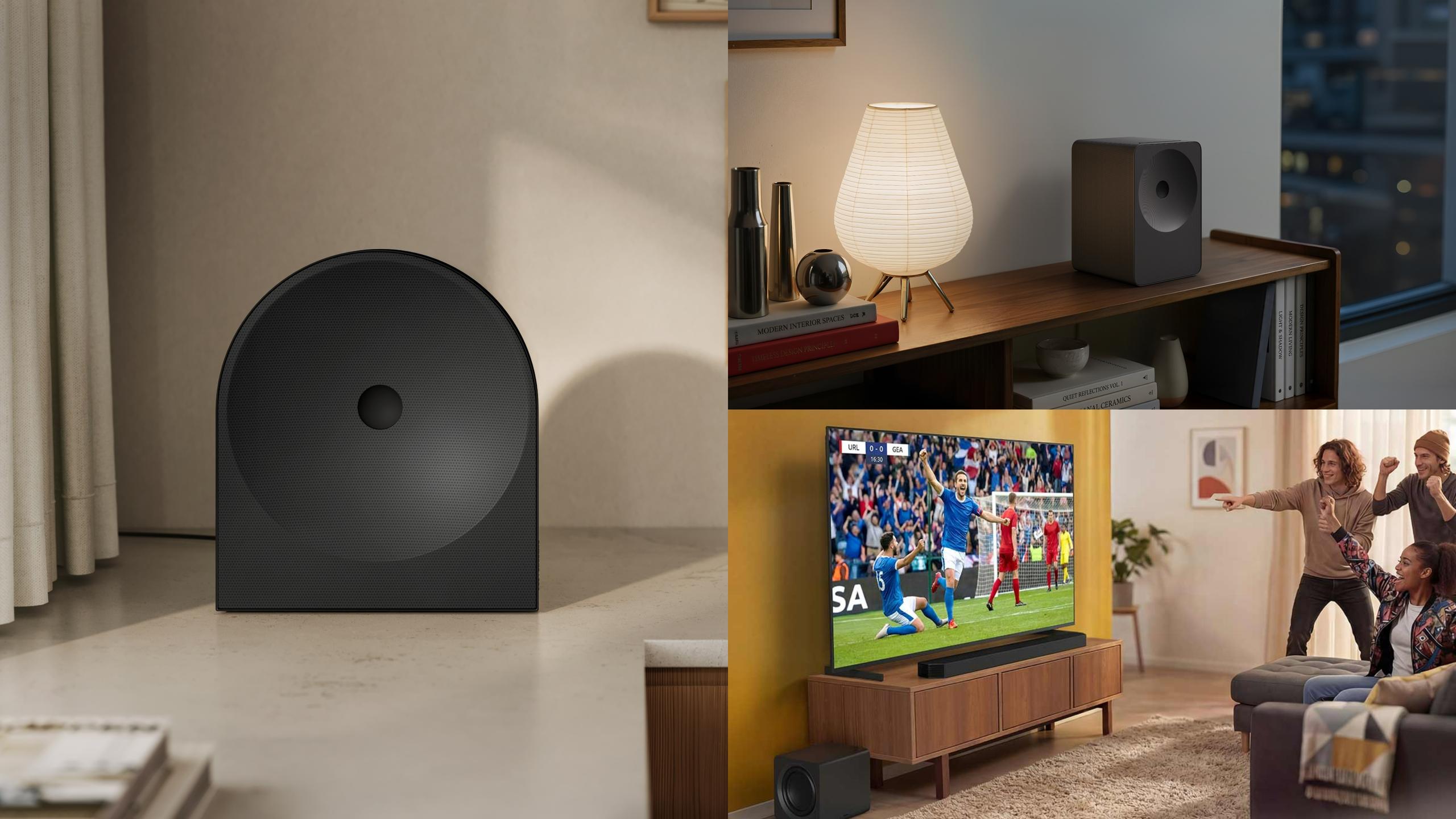
Samsung is rolling out a broader home audio lineup for 2026, building on products it first previewed at CES 2026 earlier this year. The big story is not just another round of premium soundbars, but a more serious move into wireless home speakers with the new Music Studio 7 and Music Studio 5, alongside updated Q-Series models with fresh AI features, more flexible setup options, and a new all-in-one model for people who want fewer boxes in the room.
That matters because Samsung has already spent years building a strong TV-and-soundbar ecosystem, but dedicated Wi-Fi speakers have never really been central to the pitch. The Music Studio models change that. They are designed not only as standalone streaming speakers, but also as part of a wider Samsung setup that can include a TV, a soundbar, and additional wireless speakers working together.
In other words, Samsung is no longer just selling better TV audio. It is trying to build a more complete home audio system around its TVs.
“At Samsung, we know how important it is that our products deliver premium performance for every space. Every home is different and so are the needs and preferences of every shopper,” said Jim Kiczek, Head of Audio at Samsung Electronics America. “That’s why we’re expanding our Samsung audio lineup in 2026. From the aesthetic-forward Music Studio series to sleek, adaptable Q-Series soundbars — all built with signature Samsung sound that’s helped make us the #1 soundbar brand for 12 years running.”
The new Music Studio line includes two models: the $499.99 Music Studio 7 and the $299.99 Music Studio 5. Both are Wi-Fi speakers aimed at people who mainly stream music, podcasts, and TV audio rather than build a traditional hi-fi system around physical media and separate components.
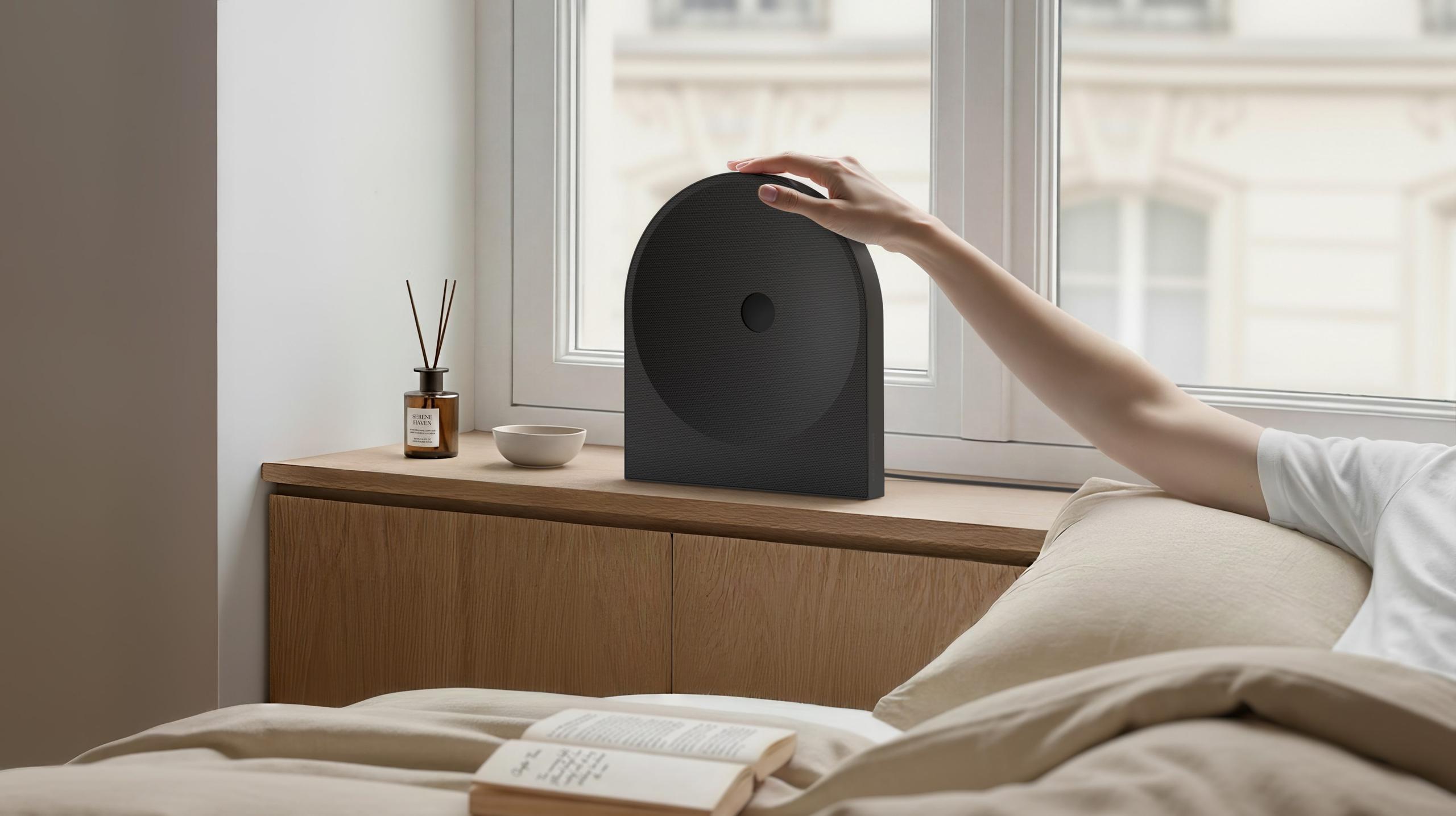
Samsung is also putting a lot of weight behind design here. Both speakers use a “Dot Design” created by Erwan Bouroullec, giving them a more sculptural look than the usual anonymous wireless speaker box. That may sound like marketing fluff, but it does speak to the audience Samsung is chasing. These are speakers meant to sit out in the open on a shelf, console, or mantel, not disappear into a dedicated listening room.
The bigger Music Studio 7 is the more ambitious of the two. It uses a 3.1.1-channel layout with built-in left, center, right, and height drivers, plus an internal subwoofer. Samsung says it supports both wired and wireless Dolby Atmos, and that makes it the more theater-friendly option of the pair. The smaller Music Studio 5 is a simpler 2-channel design with a 4-inch woofer and dual tweeters. It does not have a discrete up-firing driver, but it can still handle virtualized Dolby Atmos playback.
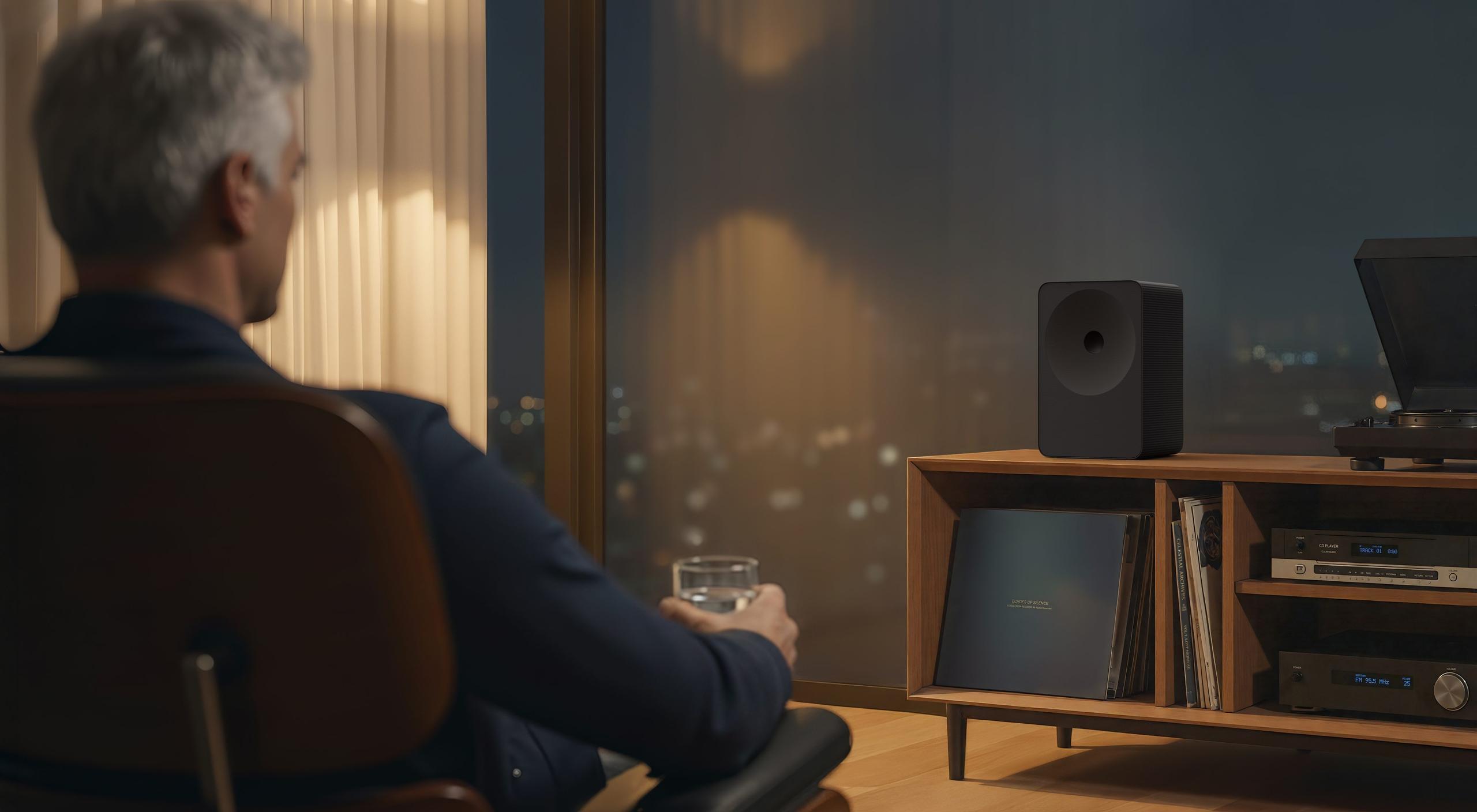
That split is important. The Music Studio 7 looks like the model for people who want one speaker to do a little bit of everything, including TV duty. The Music Studio 5 feels more like the entry point for casual streaming and multi-room audio.
On paper, the feature set is broad. Both Music Studio models support Wi-Fi and Bluetooth streaming, and they work with Google Cast, AirPlay, and Roon Ready systems. Voice control is available through Alexa, Google Assistant, and Bixby, and Samsung is also introducing a new Sound app to manage speaker groups and settings.
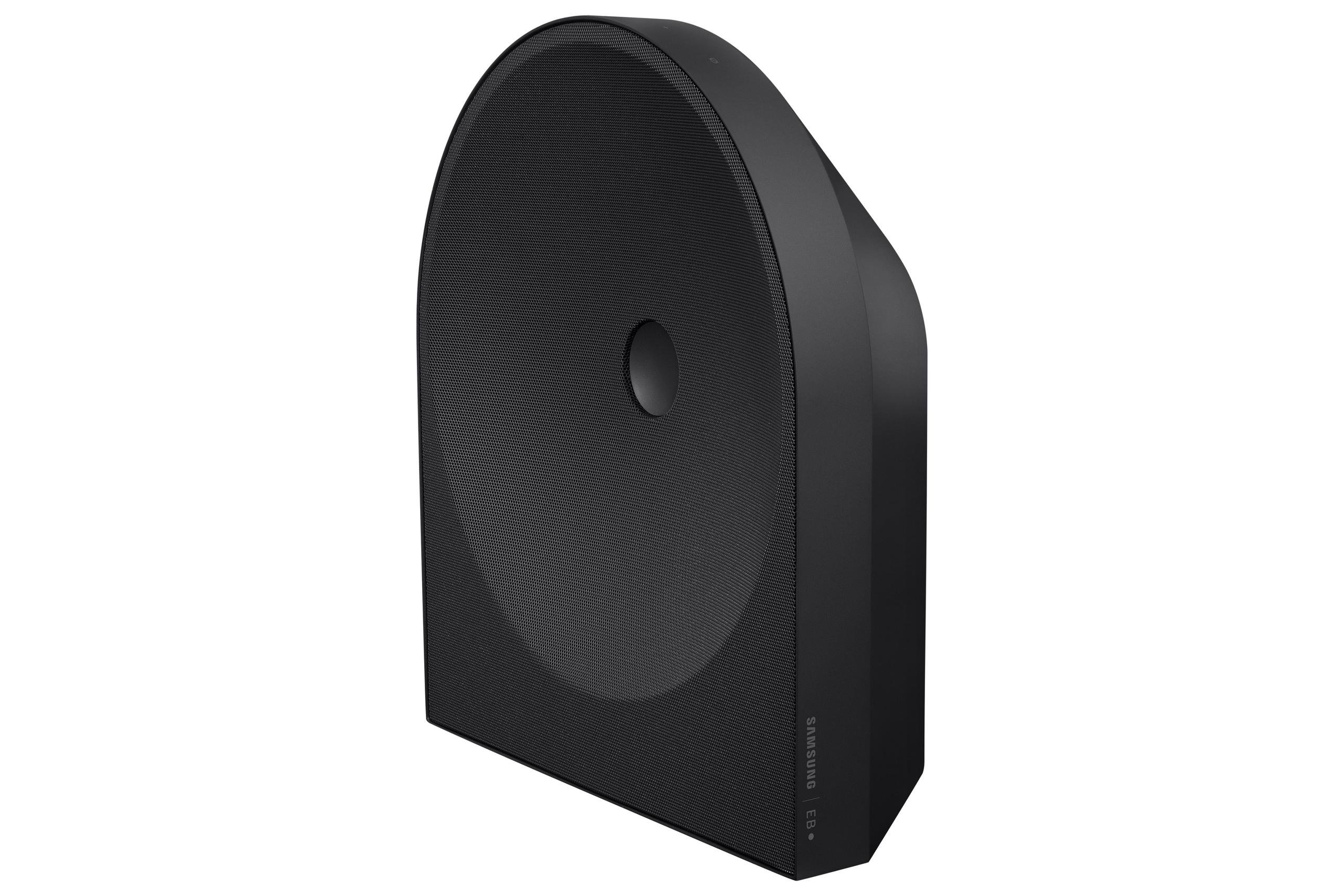
A few of the key shared features include:
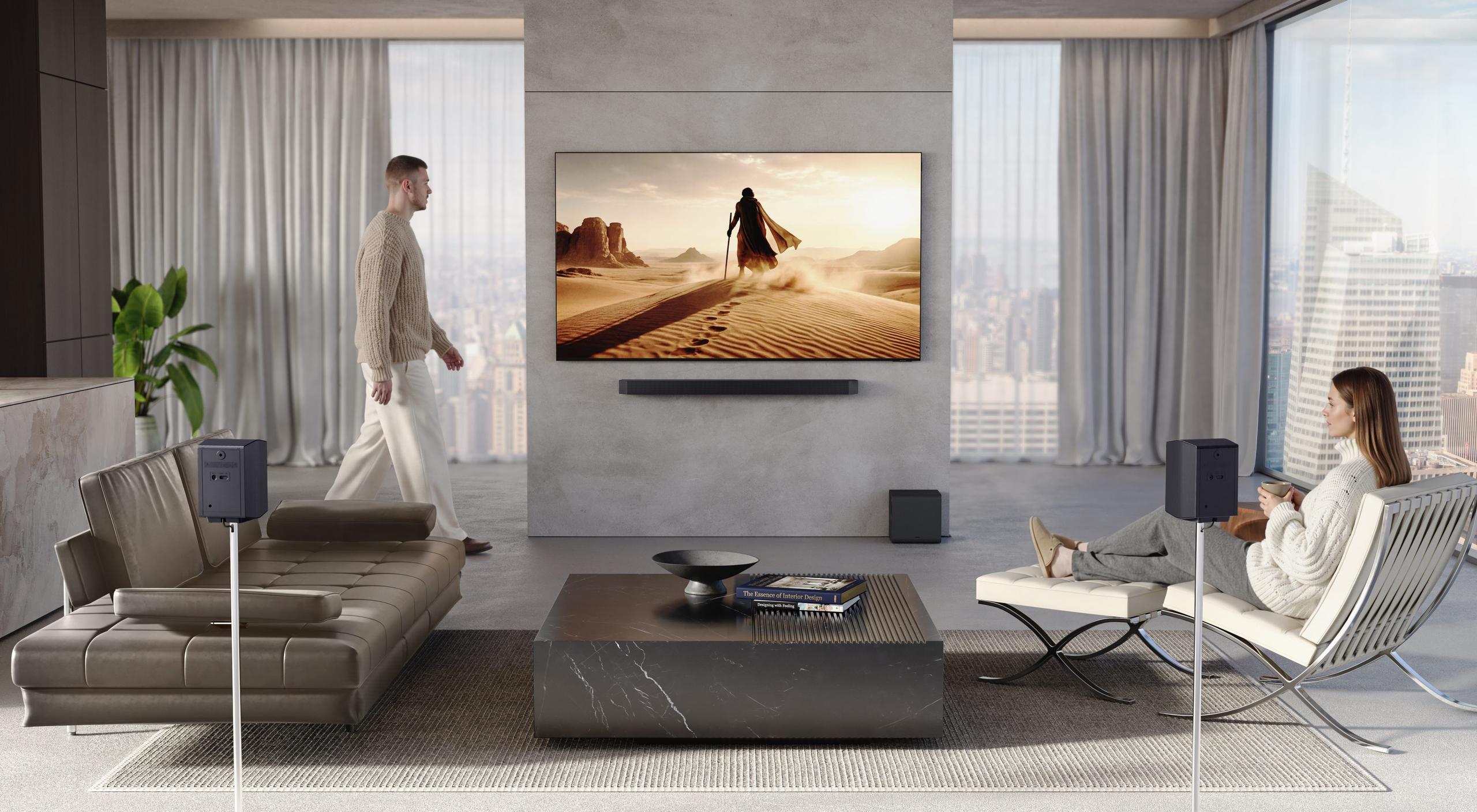
The most interesting part, though, is how these speakers fit into the larger Samsung ecosystem. Samsung says the Music Studio speakers can be used in a whole-home audio setup with up to 10 speakers, or as part of a home theater arrangement with up to five Samsung sound devices. Through Q-Symphony, compatible Samsung TVs, soundbars, and Music Studio speakers can all work together.
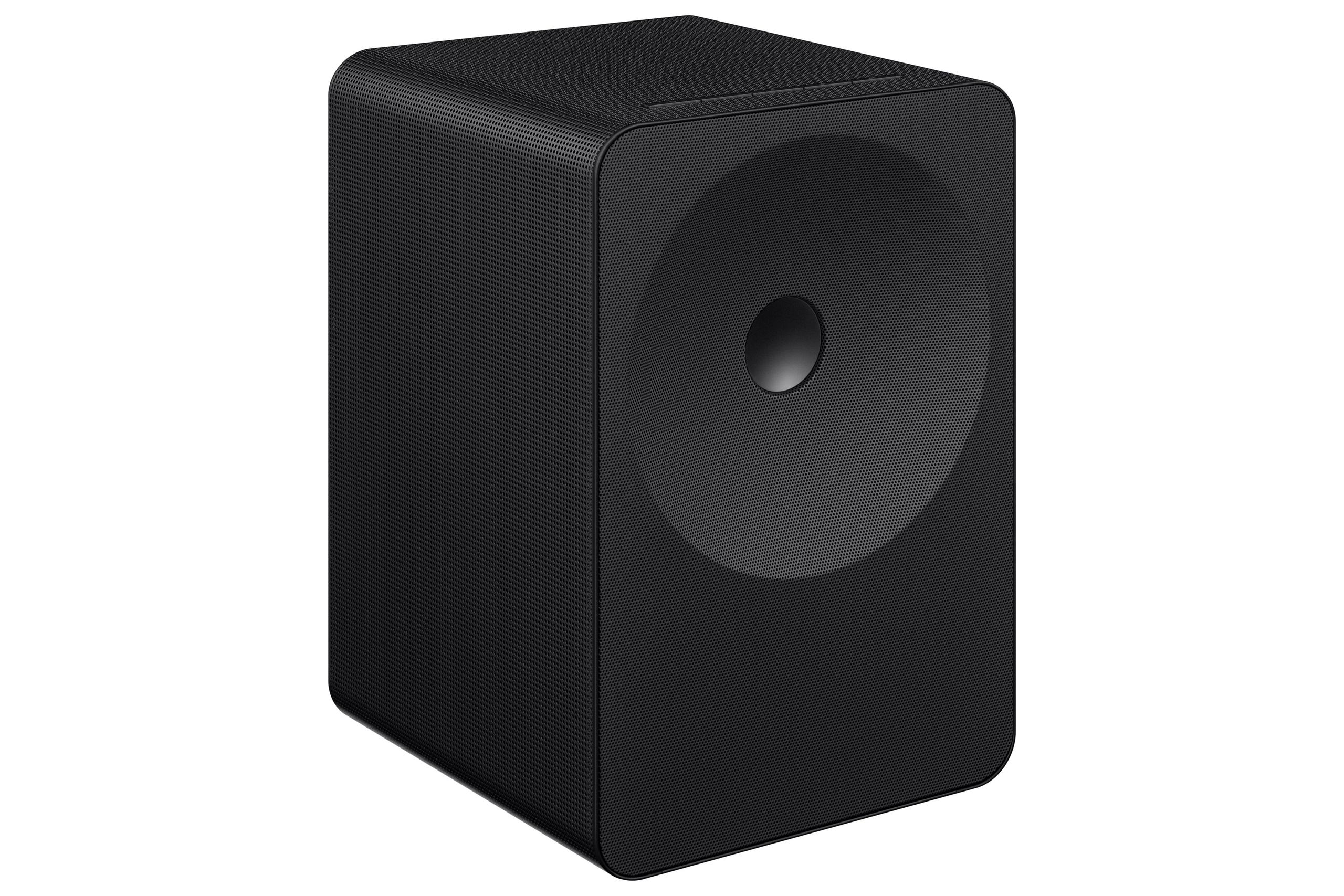
That is where Samsung is trying to separate itself. These are not just wireless music speakers. They are meant to fill multiple roles depending on how much Samsung gear you already own.
There are limits, of course. Buyers with turntables, CD players, or other traditional wired sources may hit a wall quickly. There is no analog input, no USB playback, and no sign that Samsung is trying to cater to listeners who still build systems around physical media. This is a streaming-first product family, and Samsung is not pretending otherwise.
Alongside the Music Studio launch, Samsung is updating its Q-Series soundbars for 2026 with four models: the HW-Q990H, HW-Q900H, HW-Q800H, and HW-QS90H.
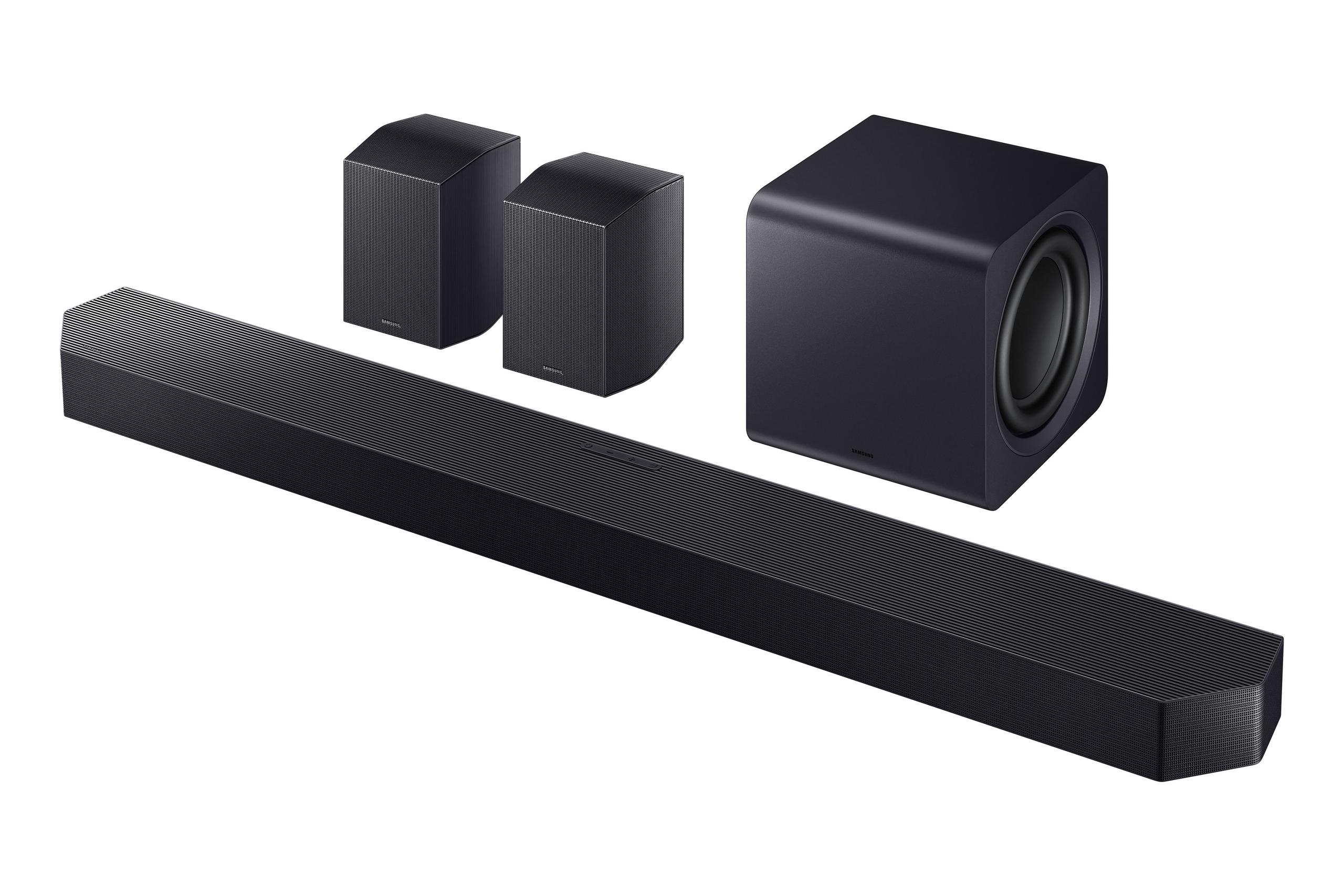
The lineup breaks down like this:
The Q990H remains the big home theater play. It is designed for people who want the most immersive option short of moving to a full AVR-and-speaker package. Samsung is pitching it as a true surround system with 11.1.4 channels, rear speakers, and a compact dual active subwoofer. It supports Dolby Atmos, DTS:X, and Eclipsa Audio.
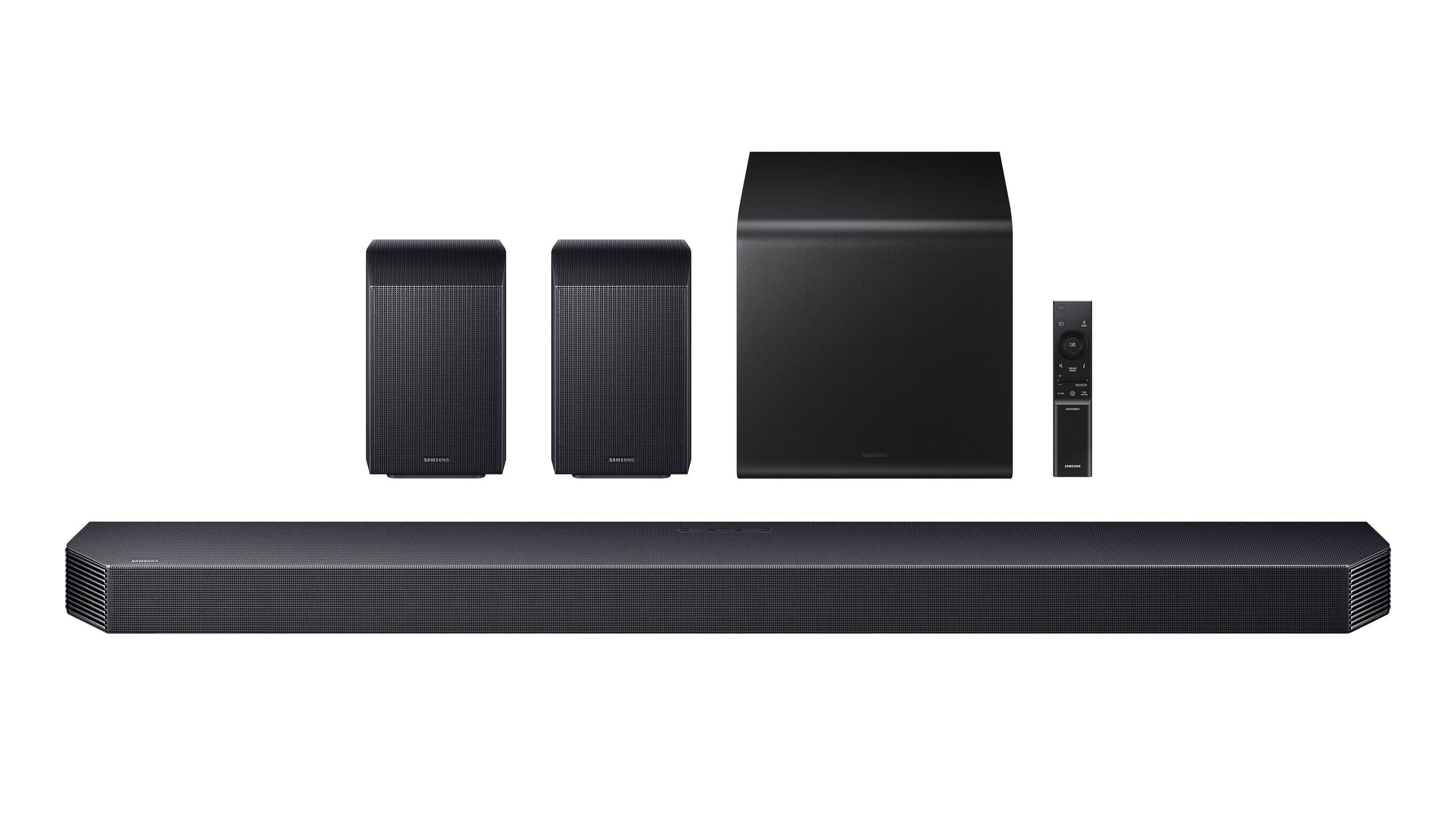
The Q900H and Q800H scale things down for buyers who still want height effects and room-filling sound but may not want the full flagship package. The biggest catch is codec support. While the Q990H and QS90H support both Dolby and DTS formats, the Q900H and Q800H drop DTS support. That will not matter much to people who stream everything, but it is still worth noting for anyone with a Blu-ray collection.
Then there is the QS90H, which may end up being the most interesting model in the lineup. Samsung calls it its first all-in-one soundbar, and it is clearly aimed at people who want better sound without adding a separate subwoofer or rear speakers. It uses a 7.1.2-channel design with 13 drivers and built-in bass drivers, and it includes a gyro sensor that detects whether it is sitting flat on furniture or mounted vertically on a wall. The bar then adjusts its output accordingly.
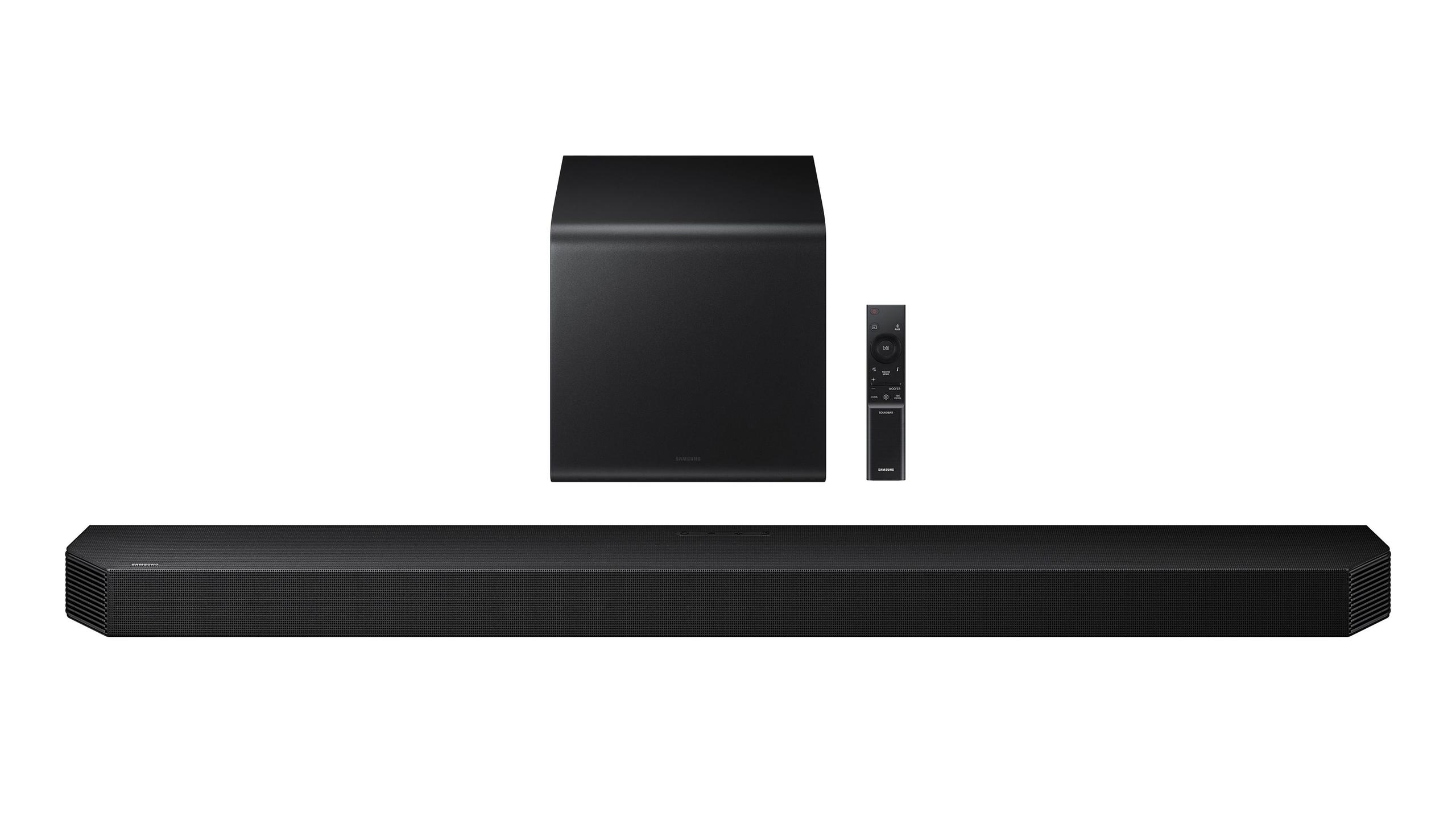
That is a practical feature, not just a spec-sheet flex. A lot of people want cleaner installations, and Samsung seems to understand that not every living room can handle a traditional soundbar-plus-subwoofer-plus-rears arrangement.
Samsung is leaning hard into AI across this lineup, though most of the useful changes are fairly down-to-earth. On the soundbar side, the biggest additions for 2026 include Sound Elevation and Auto Volume.
Sound Elevation is meant to make dialogue feel like it is coming from the screen rather than from the bar sitting underneath it. Auto Volume is exactly what it sounds like: a way to smooth out sudden level changes between channels, streaming apps, and sources.
Those are the kinds of features that make more sense than flashy marketing terms because they target real annoyances people deal with every day.
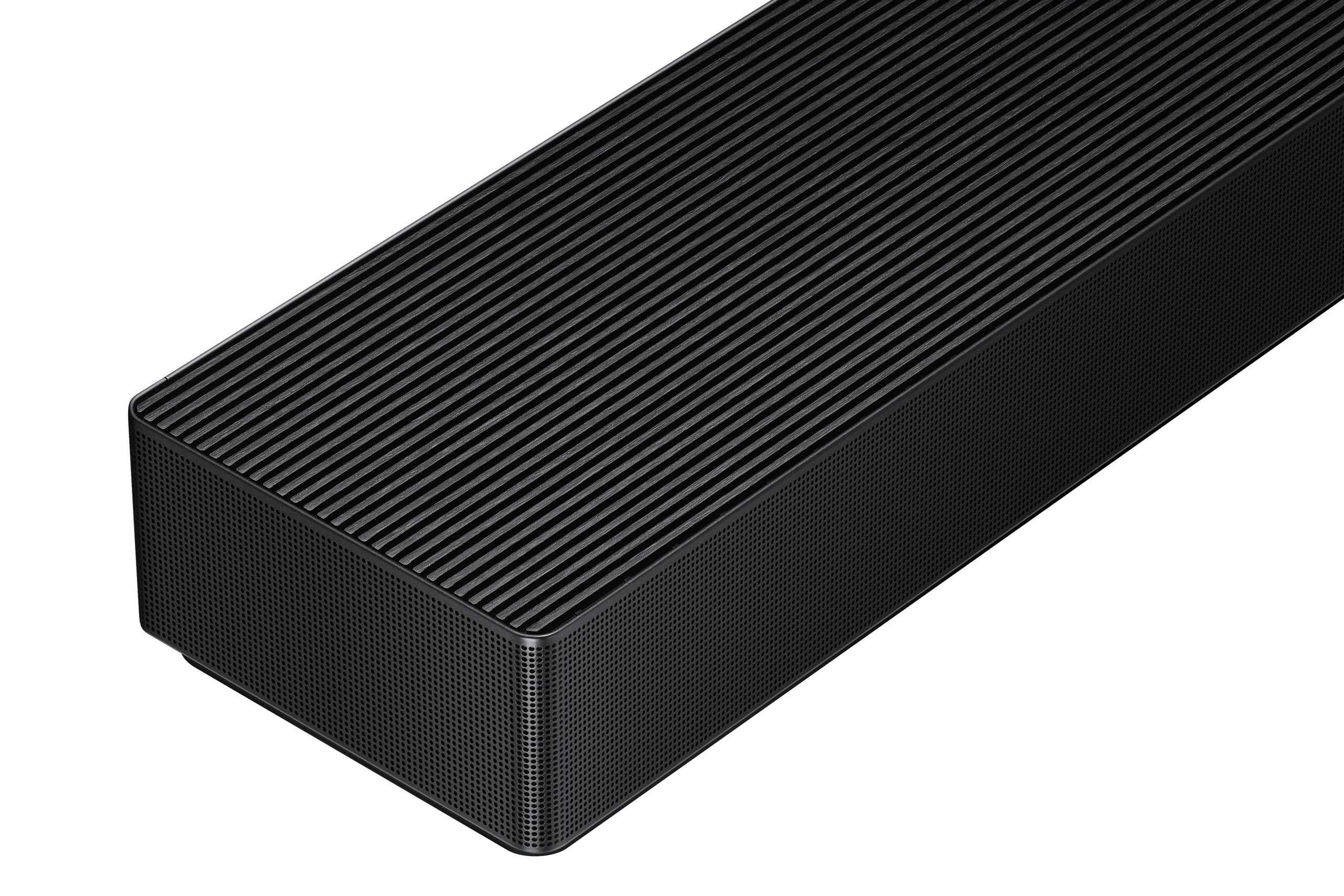
Across the Q-Series soundbars, Samsung is also continuing to push features like:
Eclipsa Audio is worth watching, even if it is not yet a buying decision for most people. It is an open immersive audio format backed by Samsung and Google, and right now its biggest relevance is YouTube, where it is the only immersive audio format currently supported. Whether that grows into something bigger remains to be seen, but Samsung clearly wants to be early rather than late.
Samsung did not reinvent home audio here. What it has done is tighten the connection between its TVs, speakers, and soundbars so that buyers who stay inside its ecosystem have more ways to build a system that fits their room, budget, and tolerance for clutter.
The new Music Studio speakers are the more notable development because they push Samsung further into territory long occupied by Sonos, WiiM, Bluesound, Denon, and other wireless audio platforms. The new soundbars, meanwhile, refine a formula Samsung already knows well.
For Samsung TV owners, that ecosystem story is the main selling point. For everyone else, the products may still be competitive on their own, but some of the best features are clearly designed to work best inside Samsung’s own walled garden.
That makes this 2026 lineup pretty easy to read. Samsung wants to cover more of the home audio stack, from a single streaming speaker on a shelf to a full TV-first surround setup, without asking buyers to learn the language of separates, amps, or AV receivers. For a lot of people, that will be enough. For others, especially those with mixed-brand systems or older wired gear, the appeal may be more limited.
Related Reading:




Privacy Policy
Terms and Conditions - Affiliate Policy
Home Security
© Copyright 2008-2026.
11816 Inwood Rd #1211, Dallas, TX 75244