



The last week or so has been weirdly busy in all the best ways. On my desk (and in my inbox) it’s been nonstop: rugged smartwatches taking swings at the priciest adventure wearables, bookshelf speakers coming back from the dead, a fresh wave of DACs and streamers, a new flagship DAP, Sony shaking up its earbuds again, a Bluetooth turntable for people who still care about cartridges, and a surprisingly serious budget 4K laser projector.
Think of this as a “catch up over coffee” version of the news. Instead of drowning you in spec sheets, I’ll walk you through what each new product is trying to do, who it’s really for, and why it caught my eye in the first place.
Over the past week, here’s what jumped to the top of my radar.

If you’ve ever priced out a high-end outdoor watch from Garmin or Apple and quietly closed the tab, the new T-Rex Ultra 2 from Amazfit is very much aimed at you. It’s built like a proper expedition tool: Grade 5 titanium bezel and case back, sapphire glass, 10 ATM water resistance, dual diving certification, and a 1.5-inch 480×480 AMOLED that can crank up to 3,000 nits so you can actually see it in bright sun.
Battery life is the other big headline: up to 30 days of typical use or around 50 hours of dual-band GPS tracking from an 870mAh battery, plus 64GB of storage for offline maps and music. You get full-color global maps, six-system satellite support, 100 km offline routes, automatic rerouting, detailed climb profiles, and even a built-in flashlight with a Boost mode and low-interference green light for night-vision use.
At $549.99, it’s positioned at about half the price of some Garmin Fenix 8 Pro configurations and still under an Apple Watch Ultra 3, which is exactly the point: “serious outdoor watch” hardware and mapping, without crossing the four-figure line. It’s not for casual step counters; it’s for people who spend long days on steep terrain and care more about routes, climbs, and battery than yet another app notification. Read more.
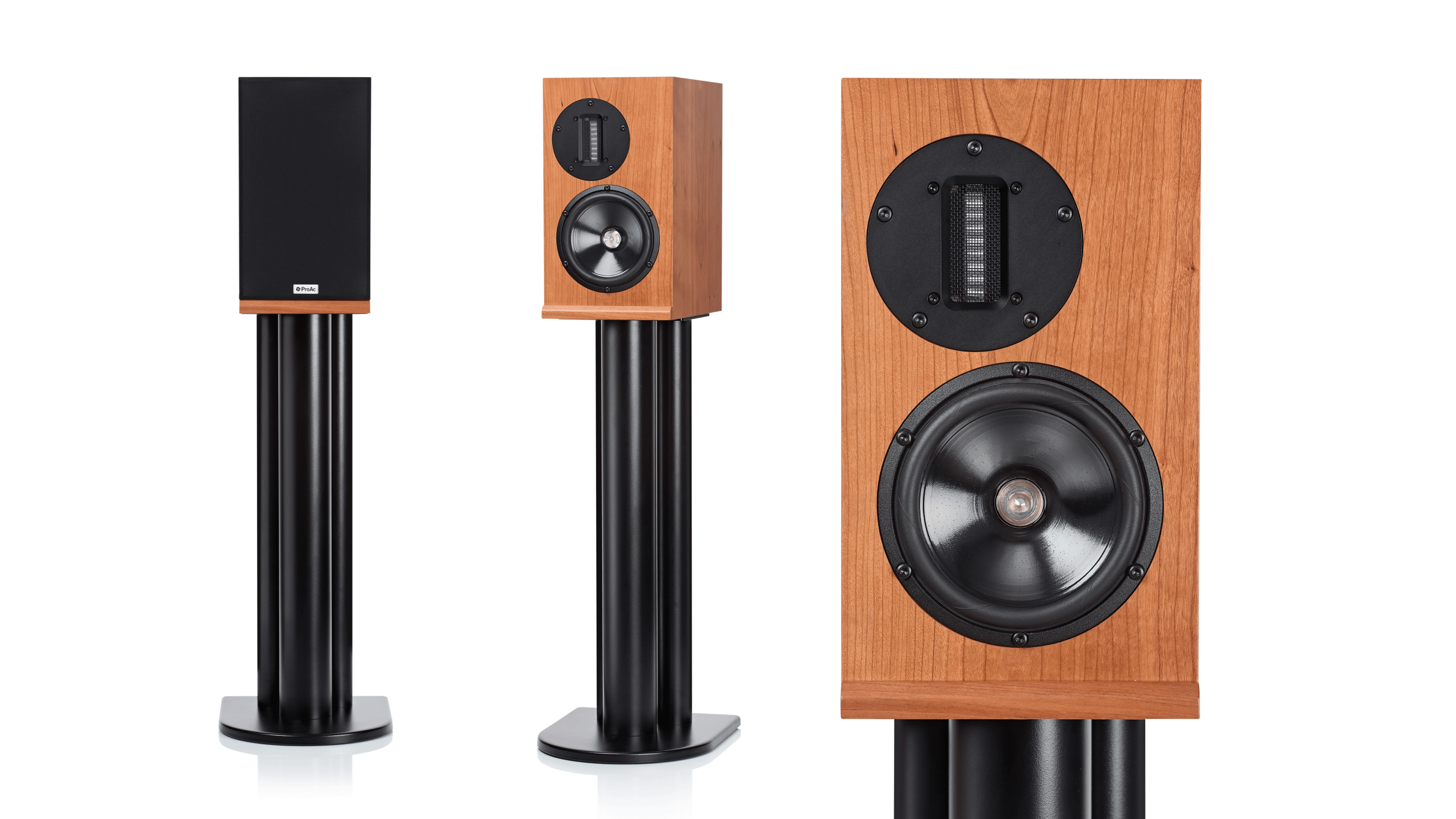
On the hi-fi side, the big “music room” story is that ProAc is bringing back its beloved DB1 stand-mount, but with a twist: the new DB1R adds a ribbon tweeter and nudges the whole design upmarket.
The cabinet is still compact and room-friendly, but the ribbon is there to deliver extra air and refinement up top, while the mid-bass driver and cabinet tuning are aimed at maintaining that punchy, slightly warm character people liked in the original DB1. UK pricing lands at £2,945 in standard finishes and £3,465 in premium veneers, with availability slated to start after its public debut at the Bristol Hi-Fi Show.
If you live in that “serious but not crazy” price band for stand-mounts, DB1R is exactly the kind of speaker you’d cross-shop against Sonus faber, KEF, and other small-room favorites. On paper, it’s very much a “you already know if you’re curious” product, but the ribbon alone makes it interesting if you’ve ever liked ProAc’s voicing. Read more.

Over in desktop and streaming land, iFi Audio just launched a trio that feels like a menu for different kinds of listeners:
The NEO iDSD 3 is the “one box on the desk” option: Burr-Brown DAC with PCM up to 768 kHz and DSD512, serious headphone power (over 2.5 W into 32 ohms, with iEMatch for sensitive IEMs), Bluetooth 5.4 with aptX Lossless/LDAC/LHDC, analog RCA in, and balanced/XLR outs.
The NEO Stream 3 takes that DAC DNA and bolts it to a full streaming front-end with Qobuz Connect, TIDAL Connect, Spotify Connect, and AirPlay 2, plus a long list of digital and analog outputs and a bunch of noise-control tricks (iPurifier, Active Noise Cancellation, and the OptiBox Ethernet isolator).
ZEN Stream 3 is for people who already love their DAC and just need a quiet, flexible network source: no analog outs, just Wi-Fi/Ethernet, USB and coaxial S/PDIF, and the same streaming platform as the NEO Stream 3.
Pricing is straightforward: $999 each for NEO iDSD 3 and NEO Stream 3, $399 for ZEN Stream 3. I like that iFi isn’t trying to sell one magical box to do everything, it’s more “pick the piece your system is actually missing.” Read more.
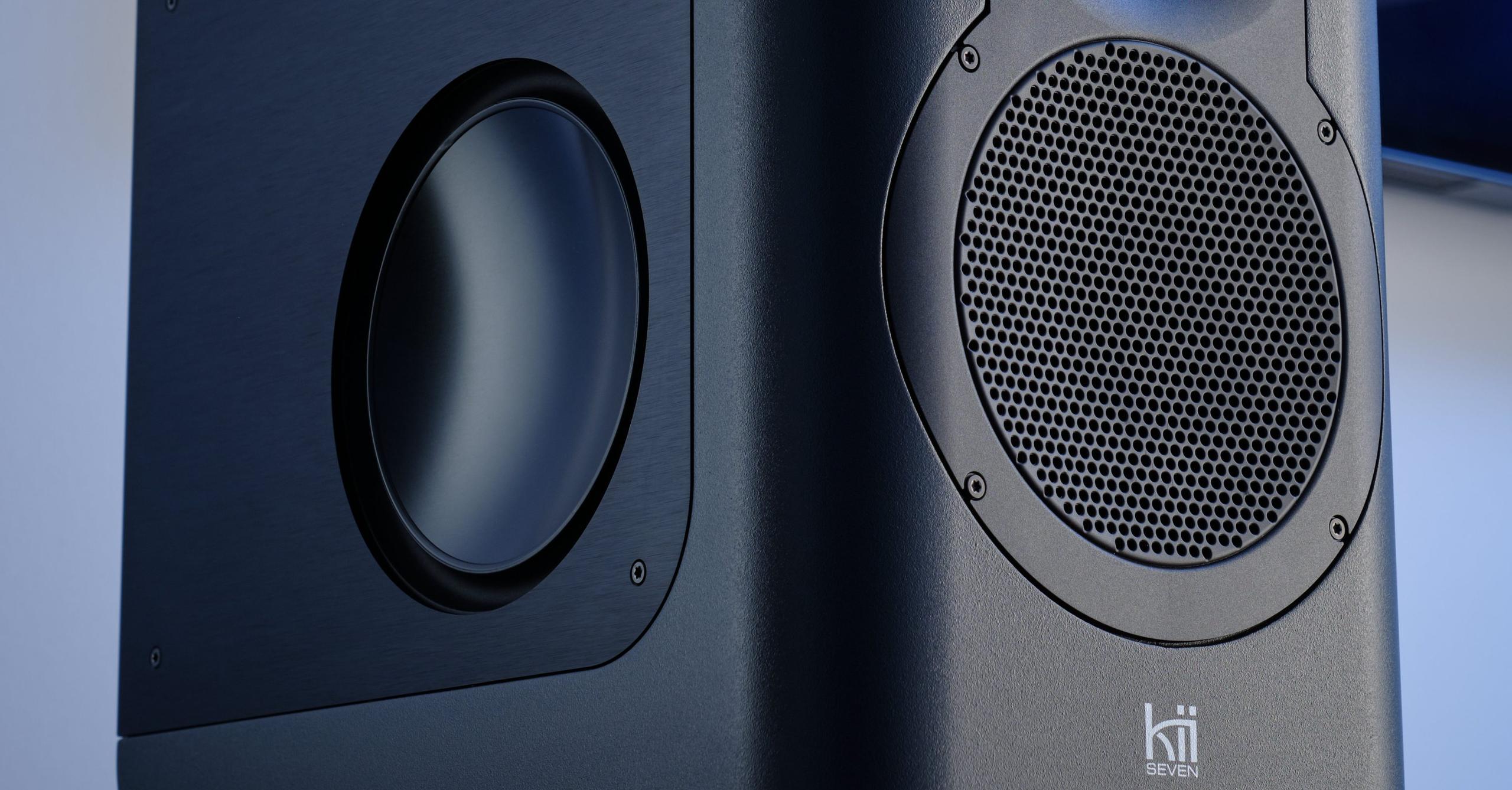
The SEVEN from Kii Audio was already a very “2020s hi-fi” product: a compact, three-way active speaker with 600 watts of built-in amplification per cabinet, cardioid dispersion, and heavy DSP doing the hard work. The 2026 update leans hard into streaming and software.
The big change is native Qobuz Connect support, plus refined TIDAL and Spotify Connect performance (including compatibility with Spotify’s Lossless tier), so the speakers themselves become the endpoint. You also get 24-bit/192 kHz wireless communication between stereo-paired speakers, no physical link required if you want a clean, cable-light setup.
The update is free to existing owners via firmware, which is exactly how I wish more high-end gear worked. Add in the new Fine Touch Titanium finish, and this feels less like “SEVEN Mk II” and more like the same product keeping pace with how people actually stream music now. Pricing remains around $8,990 per pair in the U.S., with optional stands available if you want the full showroom look. Read more.

In the dedicated player world, iBasso’s DX340 reads like it was designed by someone who spends too much time swapping amp modules at 2 a.m. (me, basically). It’s built around a custom 1-bit discrete DAC controlled by iBasso’s FPGA-Master 3.0 system, with support for PCM up to 32-bit/768 kHz and native DSD512.
The fun part is the dual-OS approach: Mango OS if you want a stripped-down, distraction-free player, and full Android 13 when you want the usual streaming apps and EQ tools. Under the hood you get a Snapdragon 665, 8 GB RAM, 256 GB storage plus microSD expansion, and modular amplification via swappable AMP cards (it ships with AMP15 but supports several others).
Connectivity is everything you’d expect: balanced and single-ended outs, coaxial, Bluetooth 5.0, dual-band Wi-Fi, USB-C with OTG, and a 6-inch AMOLED display. The stainless-steel version is $1,999; a limited titanium edition jumps to $2,199.
If you like the idea of a DAP that can be both “serious listening brick” and “Android app machine,” this is very much in that lane, and squarely aimed at players from Astell&Kern and FiiO. Read more.

On the truly wireless side, Sony rolled out its WF-1000XM6 earbuds, and this feels like one of the bigger jumps in the 1000X line rather than the usual small tick-tock.
Sony is claiming around a 25% improvement in noise reduction over the WF-1000XM5, thanks to a new QN3e noise-canceling chip, upgraded Integrated Processor V2 with 32-bit processing, four mics per earbud, and redesigned isolation tips. There’s also a new hybrid driver with a soft surround for bass and a rigid dome for treble, plus those little notches in the diaphragm edge that are tuned to smooth out the frequency response.
Battery life holds at up to 8 hours per charge (24 with the case), but the earbuds themselves are about 11% slimmer and shaped to sit more naturally in the ear, which matters if you wear them for long stretches. LE Audio support, a stronger antenna, and Google Gemini integration round out the “living with them every day” upgrades.
At $329.99, they go up against Bose QC Ultra Earbuds, AirPods Pro 3, and Technics EAH-AZ100, but the pitch here is clear: maximum control and ANC for Android users who like to tweak. Read more.
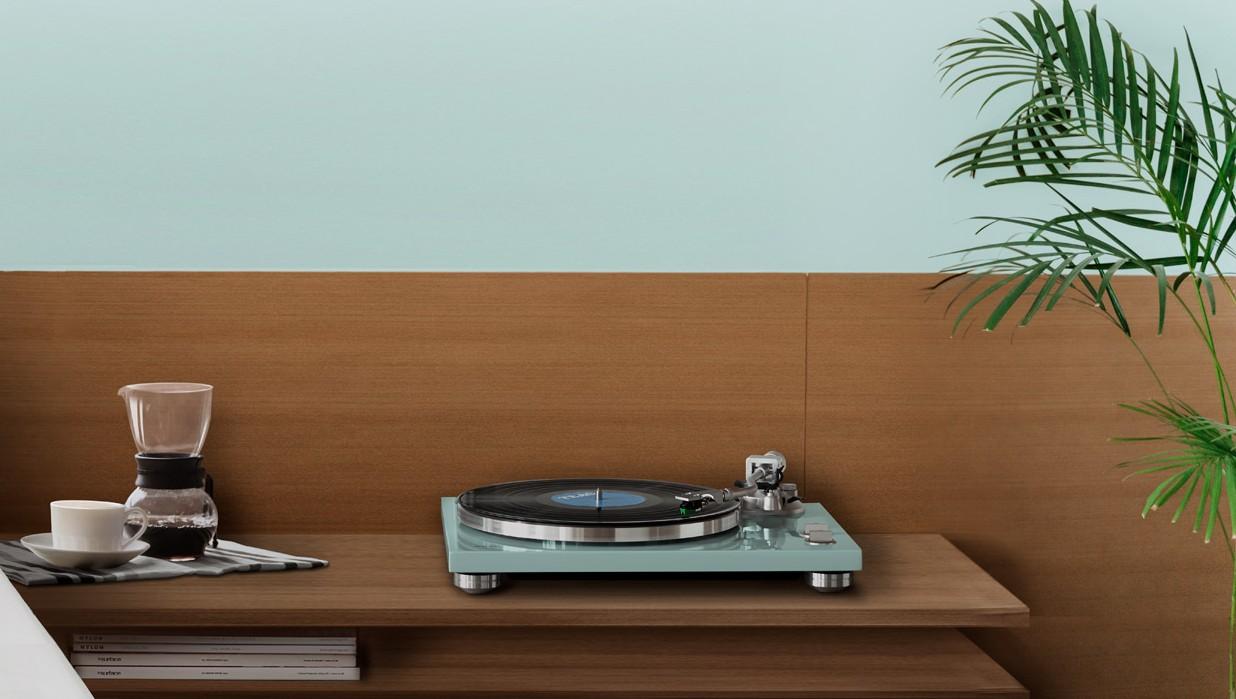
If your record collection lives in the same home as your Bluetooth headphones, the TN-400BT X/TB from TEAC is one of the more practical turntables to land recently. It’s essentially a limited-edition turquoise version of TEAC’s Bluetooth belt-drive platform, priced at $629.99 and arriving in Spring 2026.
Under the fun finish, it’s still a proper deck: belt-drive with a DC motor, aluminum die-cast platter, support for 33⅓/45/78 rpm, wow and flutter at or below 0.2%, and an S-shaped static-balanced tonearm with a universal headshell and pre-installed Audio-Technica AT95E MM cartridge.
On the wireless side you get Bluetooth 5.2 with SBC, aptX, and aptX Adaptive, plus pairing for up to eight devices, so streaming straight to wireless speakers or headphones is trivial. There’s also a built-in phono stage (switchable line/phono) and gold-plated RCA outputs if you want to run it into a more traditional system later.
To me, this is the kind of product that keeps vinyl from turning into a purely decorative hobby. You can start with Bluetooth and powered speakers, then upgrade the rest of the chain as your interest (or budget) grows. Read more.
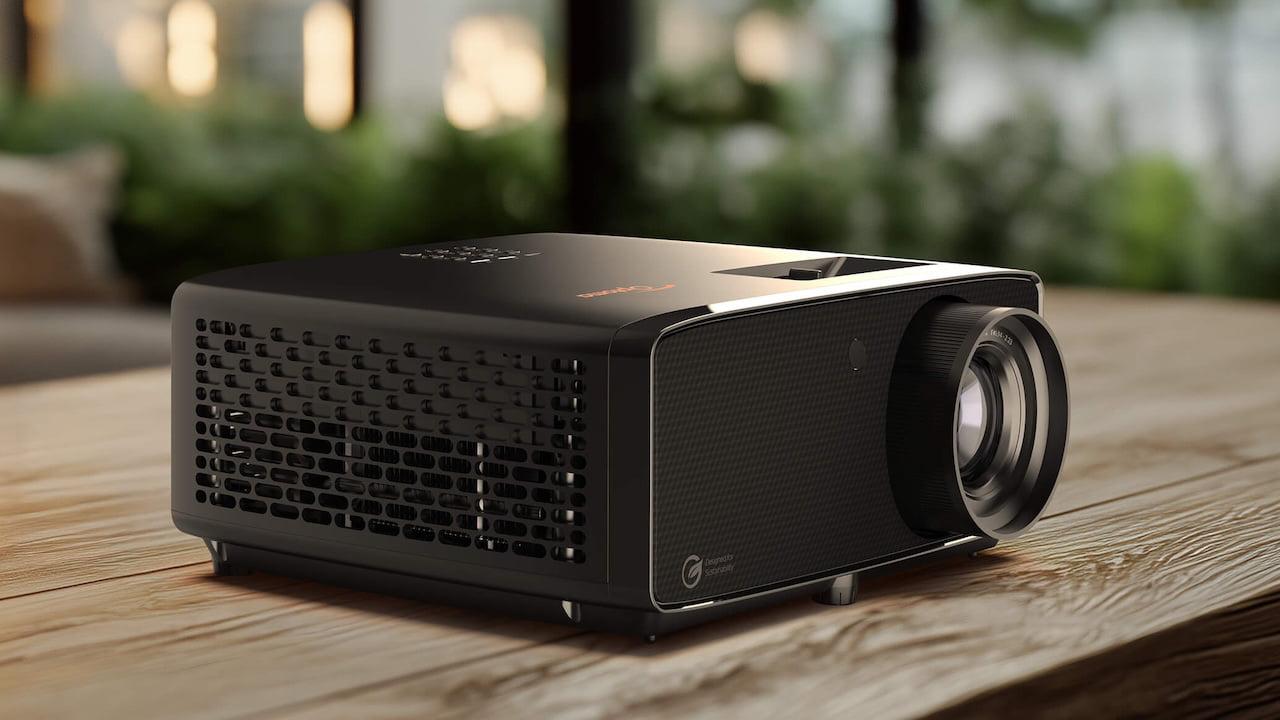
Finally, for big-screen fans, the UHZ36 from Optoma is a 4K laser projector that’s clearly tuned for real homes rather than dedicated bat caves. It uses a 0.47-inch DLP chip with pixel-shifted 4K, paired with a DuraCore laser rated at up to 3,500 lumens, enough to stay usable in a living room that isn’t pitch black.
You also get Filmmaker Mode (to strip away motion smoothing and heavy processing), low-latency gaming performance, and a compact chassis that’s easier to place than some of the bulkier home-theater models. Pricing lands at $1,299, which is very much “step-up TV money” rather than “custom install” territory.
If you’ve been projector-curious but put off by either price or room requirements, this is one of those “maybe this is the year” products: bright enough for mixed use, flexible enough for games and streaming, and still pitched at people who are okay living with a screen instead of a giant flat-panel. Read more.






Privacy Policy
Terms and Conditions - Affiliate Policy
Home Security
© Copyright 2008-2026.
11816 Inwood Rd #1211, Dallas, TX 75244