

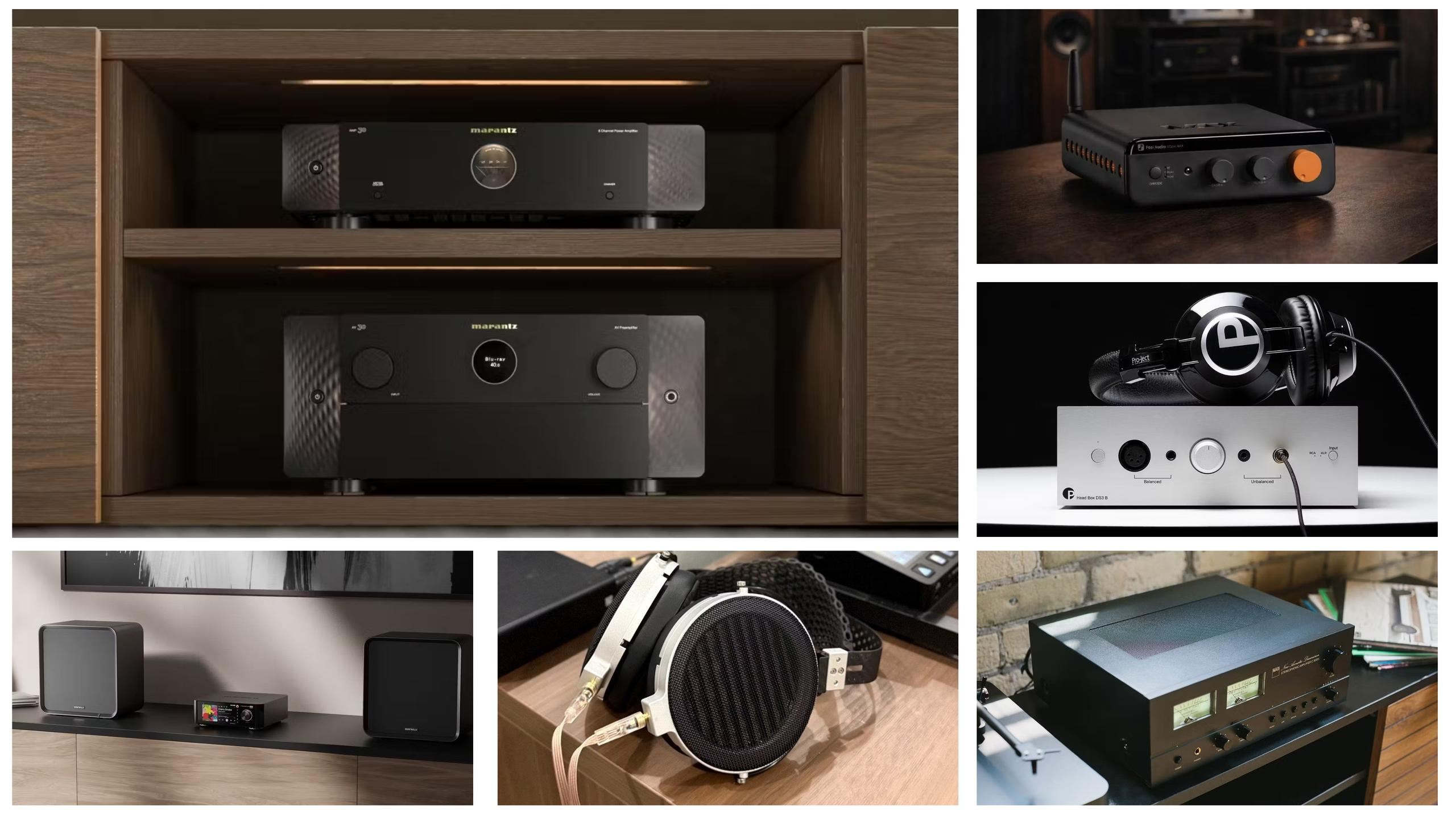
If you felt like the news cycle sped up this week, you’re not imagining it. We had a run of launches that actually matter for real-world setups: stereo amps that finally treat TVs like first-class citizens, headphone amps that make balanced connections feel approachable, a compact Class D amp that keeps getting smarter, and a UST projector that’s trying to be the living-room “one box” answer without the usual compromises.
Here’s a rundown of what hit our radar over the past week and why each product is worth a quick pause before you scroll on.
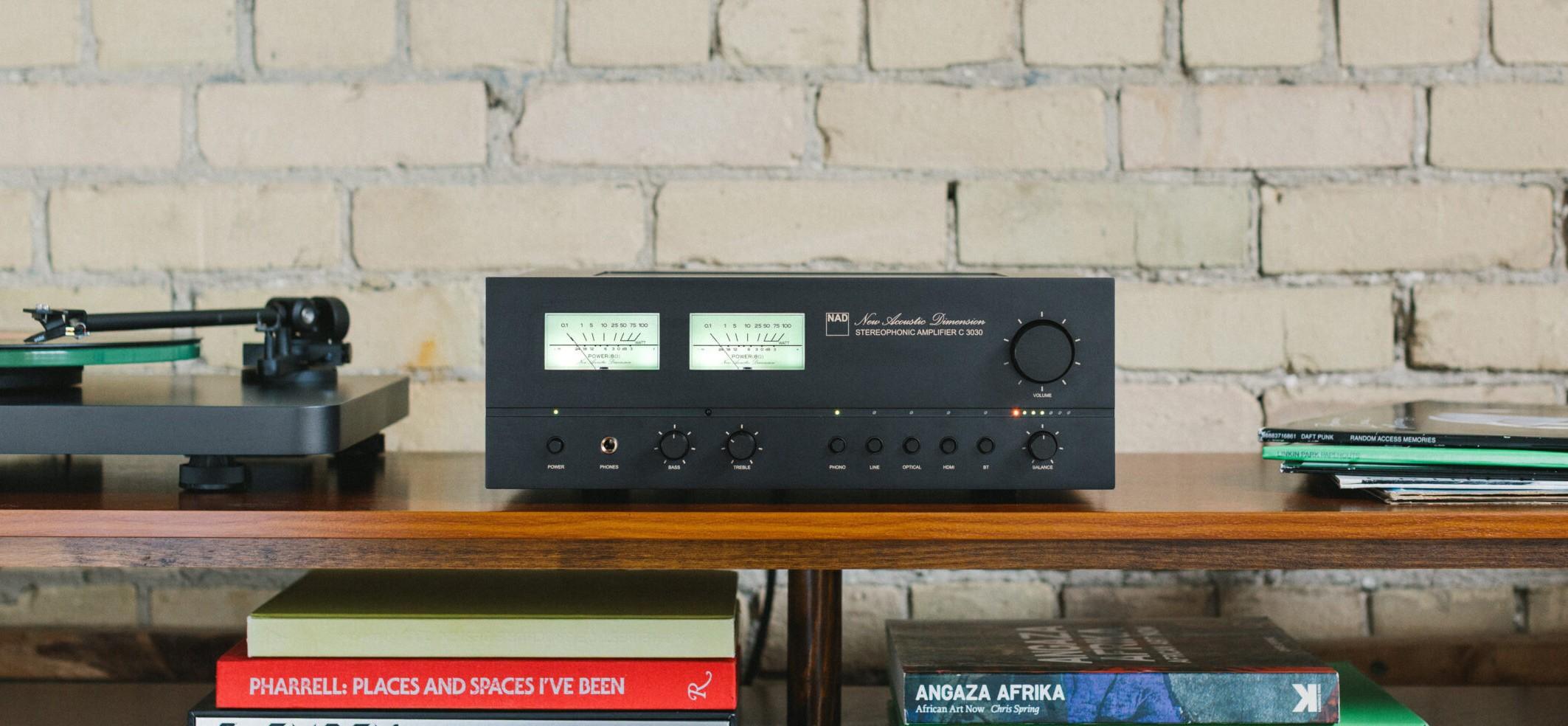
NAD’s C 3030 is basically the brand saying, “Yes, we remember what made the classics cool, but we also live in 2026.” It’s styled like something you’d see in an old hi-fi shop window (those VU meters do a lot of emotional heavy lifting), but the feature set is unapologetically modern.
The headline for me is HDMI eARC. Stereo amps have been weirdly slow to embrace the TV as the main source, even though that’s how most people actually listen day to day. With the C 3030, you can run your TV into the amp properly and let your speakers do the work, without extra adapters or audio-format headaches.
It’s rated at 50 watts per channel, which is plenty for the kinds of speakers people tend to pair with a compact integrated. And I like that NAD didn’t forget the practical stuff: Bluetooth with aptX HD, plus a subwoofer output and the option to use bass management so you can build a clean 2.1 system without getting deep into the weeds. At $1,199 at Crutchfield, it’s positioned as the straightforward “plug it in and enjoy it” model.
If your current TV audio plan is “soundbar now, real speakers later,” amps like this are the bridge that makes “later” feel less complicated. Read more.
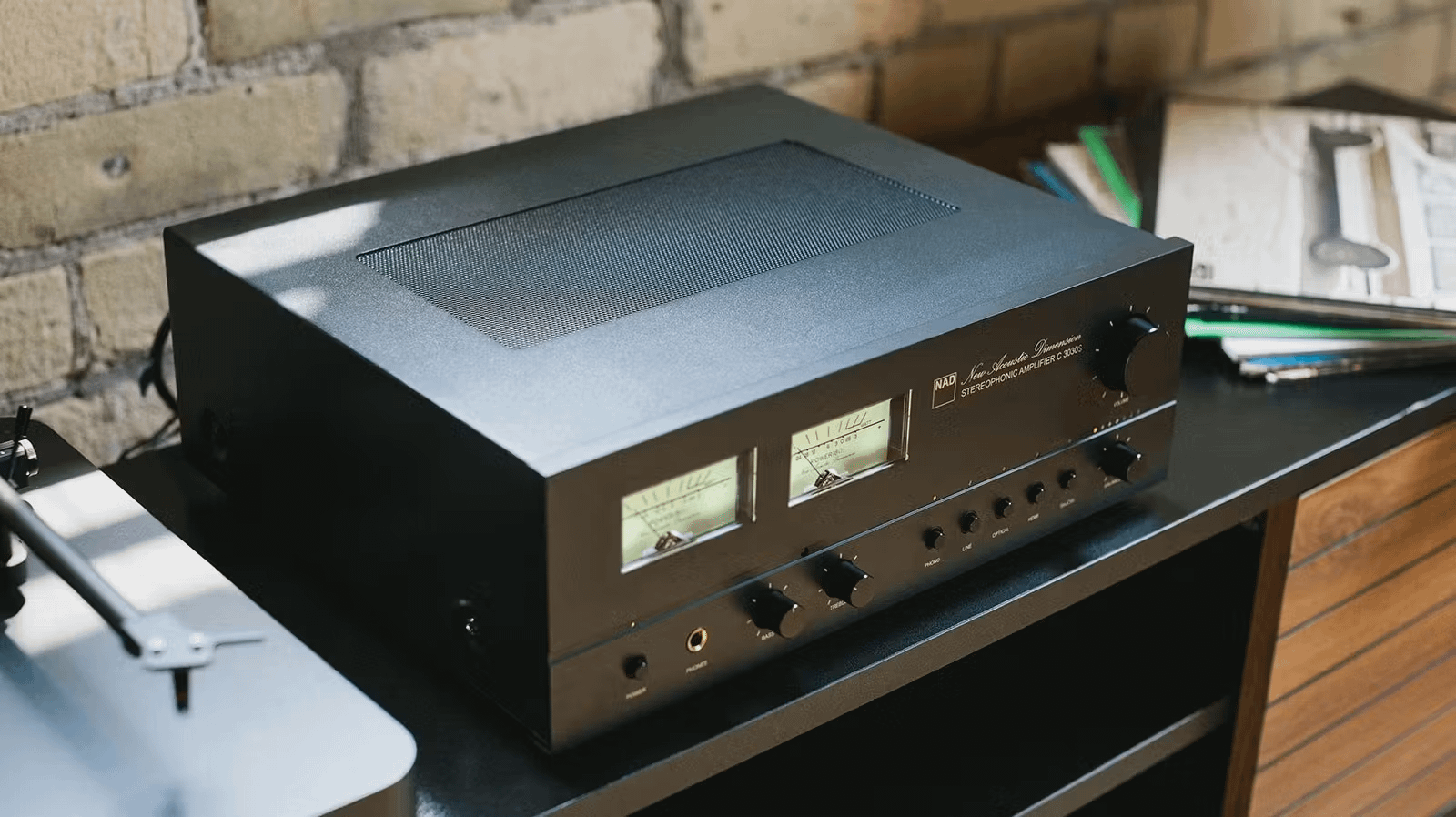
If the C 3030 is the clean and simple version, the C 3030S is the “give me the whole lifestyle stack” version. Same general concept: retro look, compact footprint, HDMI eARC, and the kind of modern connectivity that makes a stereo amp make sense again.
Where it steps up is with two additions that change how you’d actually use it:
That BluOS element matters because it’s not just “it streams.” It’s a bigger ecosystem play, and NAD is clearly aiming this model at listeners who bounce between TV audio, vinyl nights, and hi-res streaming without wanting separate boxes for each. Price is $1,499, and it’s the model that feels most like a “one-and-done” centerpiece for a modern stereo system. Read more.
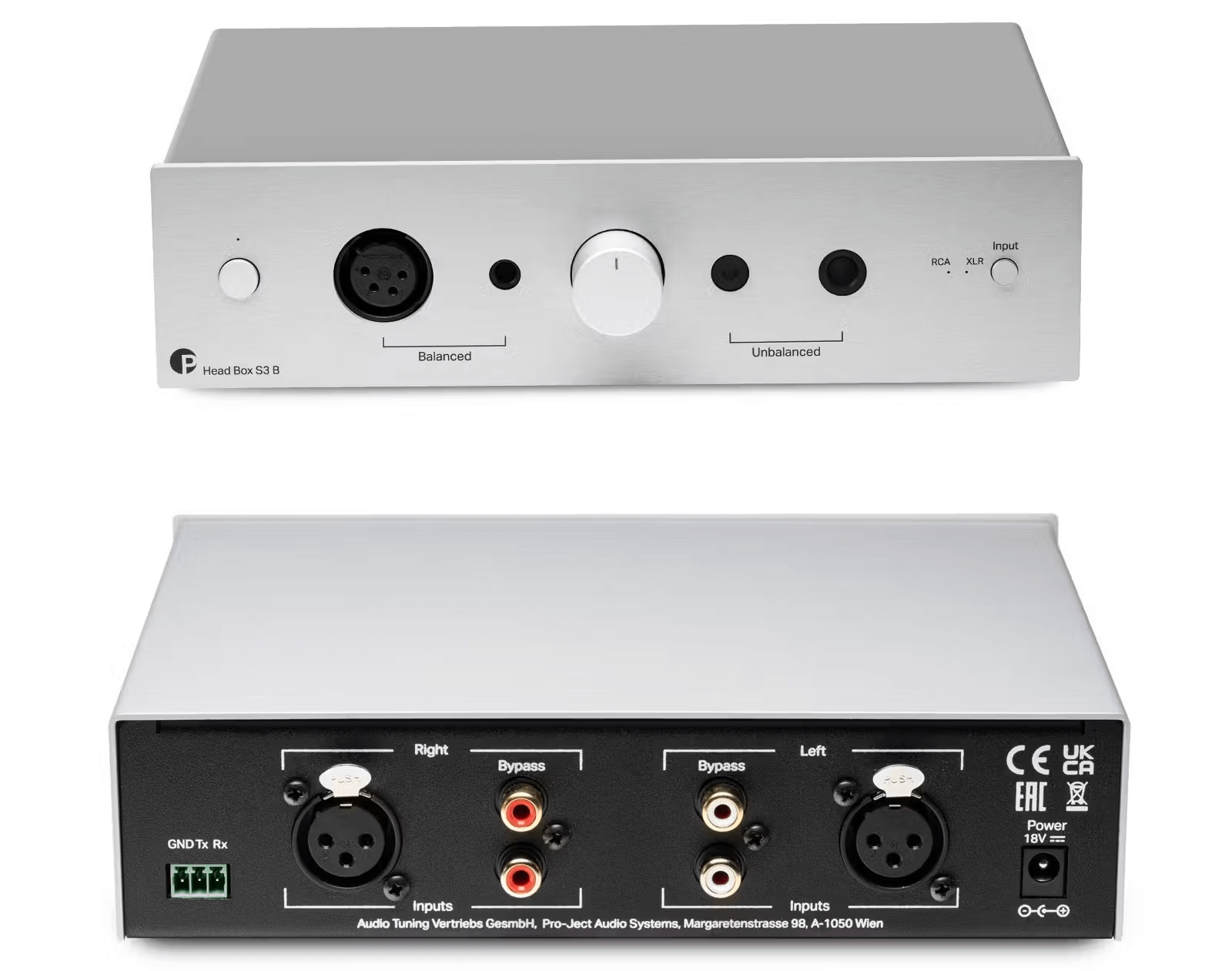
Pro-Ject’s new headphone amps are a reminder that the headphone world is still growing up, in a good way. The Head Box S3 B is the more affordable entry point, and it’s aimed at people who want to hear what dedicated amplification can do, especially in balanced mode, without turning their desk into a science project.
The core pitch is simple: balanced headphone amp, real power, compact size. It uses well-known TI amplifier chips and is rated to deliver up to 820mW into 30 ohms via the balanced output. It also includes both RCA and XLR inputs, so it can play nicely with everything from a basic DAC to a more “serious” source.
This is the kind of product you buy when you’ve hit that moment where your headphones feel like they’re being held back by your laptop, phone, or all-in-one gear. It’s not about “audiophile flex.” It’s about control, headroom, and getting your headphones to sound like they’re awake. Read more.
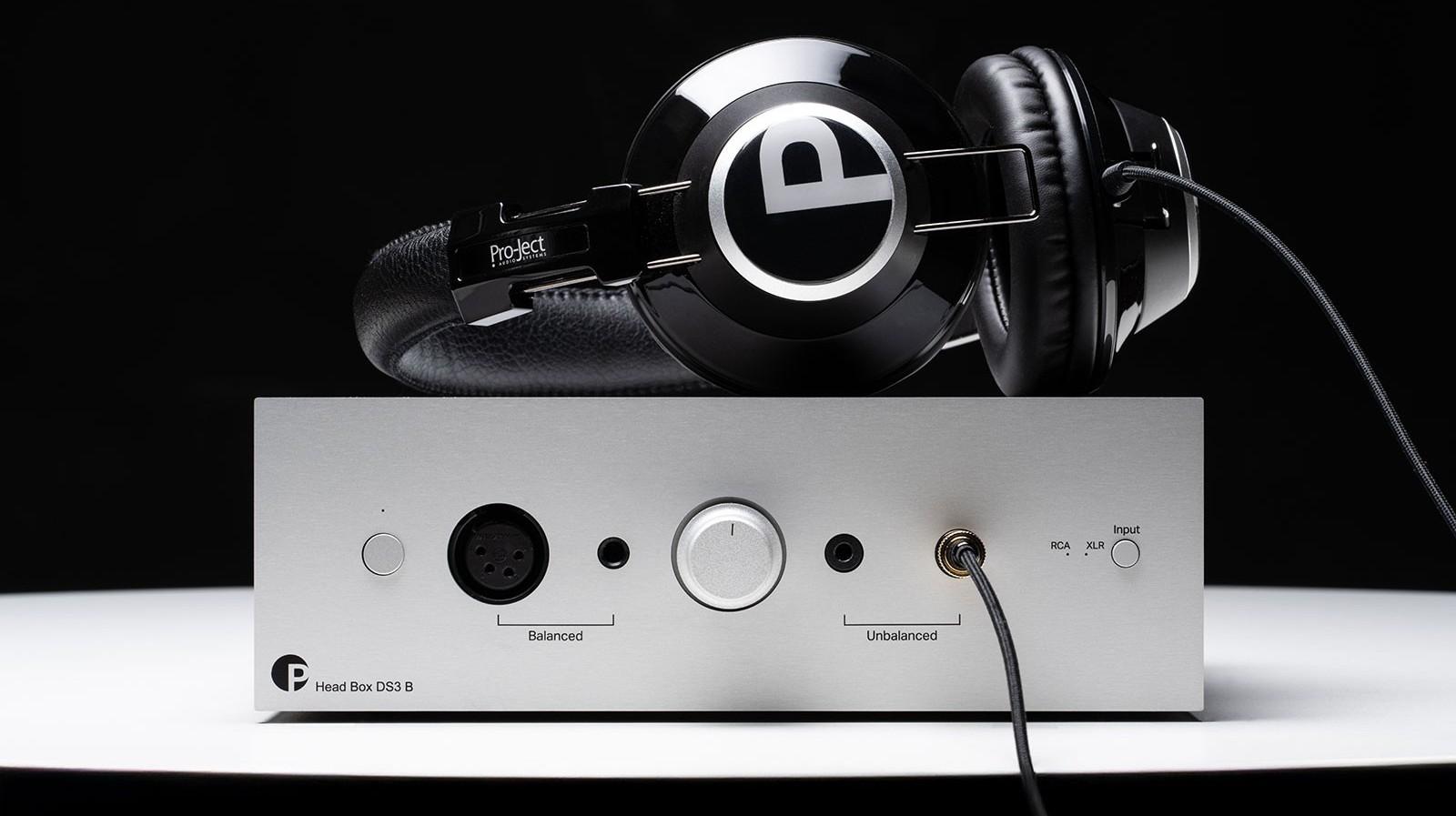
The Head Box DS3 B is the step-up model, and it’s for the crowd that owns (or is shopping for) headphones that actually demand a stronger amp—planars, low-sensitivity designs, anything that needs more current to feel effortless.
Where the S3 B uses integrated amplification, the DS3 B goes with a fully discrete design and bumps output to up to 1.5W into 30 ohms (balanced). That’s a meaningful jump if you’ve ever had a headphone sound “fine” but a little flat or compressed when the music gets busy.
It also keeps the same general practical approach: balanced and unbalanced connections, a footprint that won’t eat your desk, and pricing that’s still anchored to the idea of “affordable balanced.” If you’ve been thinking about a headphone amp upgrade but didn’t want to overspend on something you’ll outgrow in six months, this model is clearly meant to be the “buy once, keep it” option. Read more.
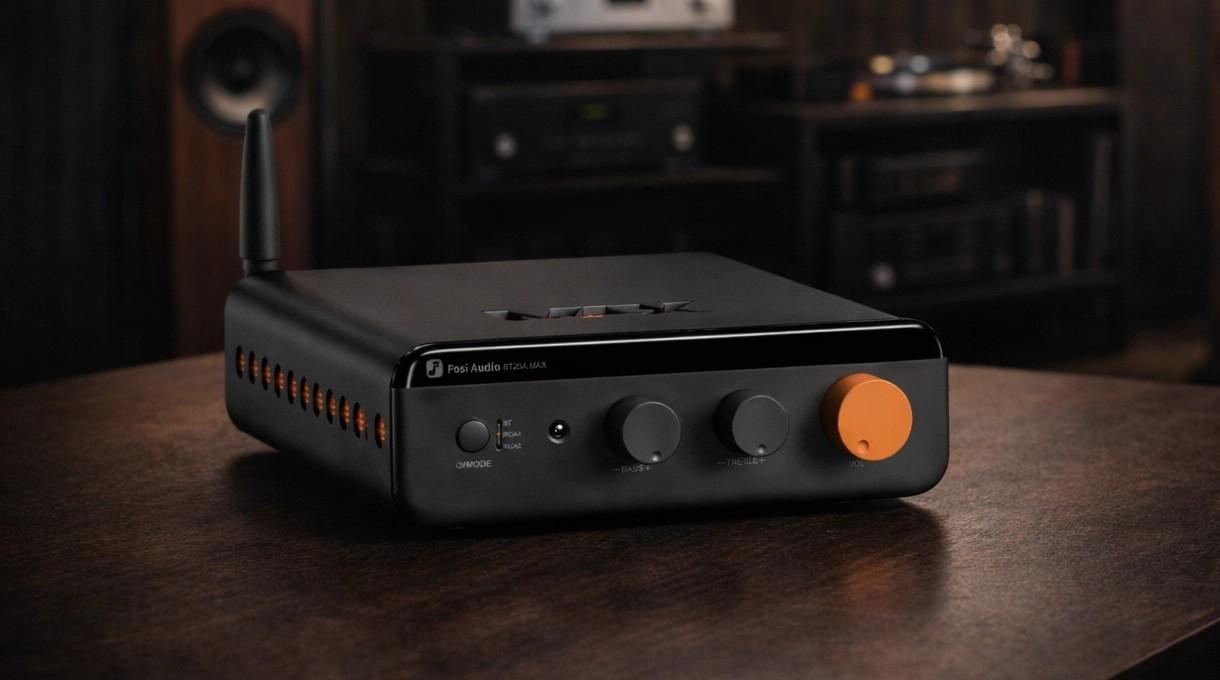
Fosi’s BT20A MAX is another example of compact Class D amps evolving faster than people’s assumptions about them. You can still dismiss these as “little budget amps,” but that gets harder every time Fosi adds features that solve actual system-building problems.
This one is built around a TI TPA3255 Class D chip and is rated with big numbers on paper, but the real story is how it’s designed to work in a small, modern setup. It supports a 2.1 configuration with a dedicated sub output, and it includes options for bass management so you can pair it with a subwoofer without leaving your main speakers flapping around in the low end.
Bluetooth is also a real highlight here, with modern Qualcomm hardware and a codec list that includes LDAC and aptX Lossless. That’s not just spec-sheet decoration—if you actually use Bluetooth day to day, better codec support can be the difference between “this is convenient” and “this sounds good enough that I don’t miss wired.”
At $229.99, it’s positioned like a budget-friendly amp, but functionally it’s creeping into “legit system hub” territory for a desk or small living room. Read more.
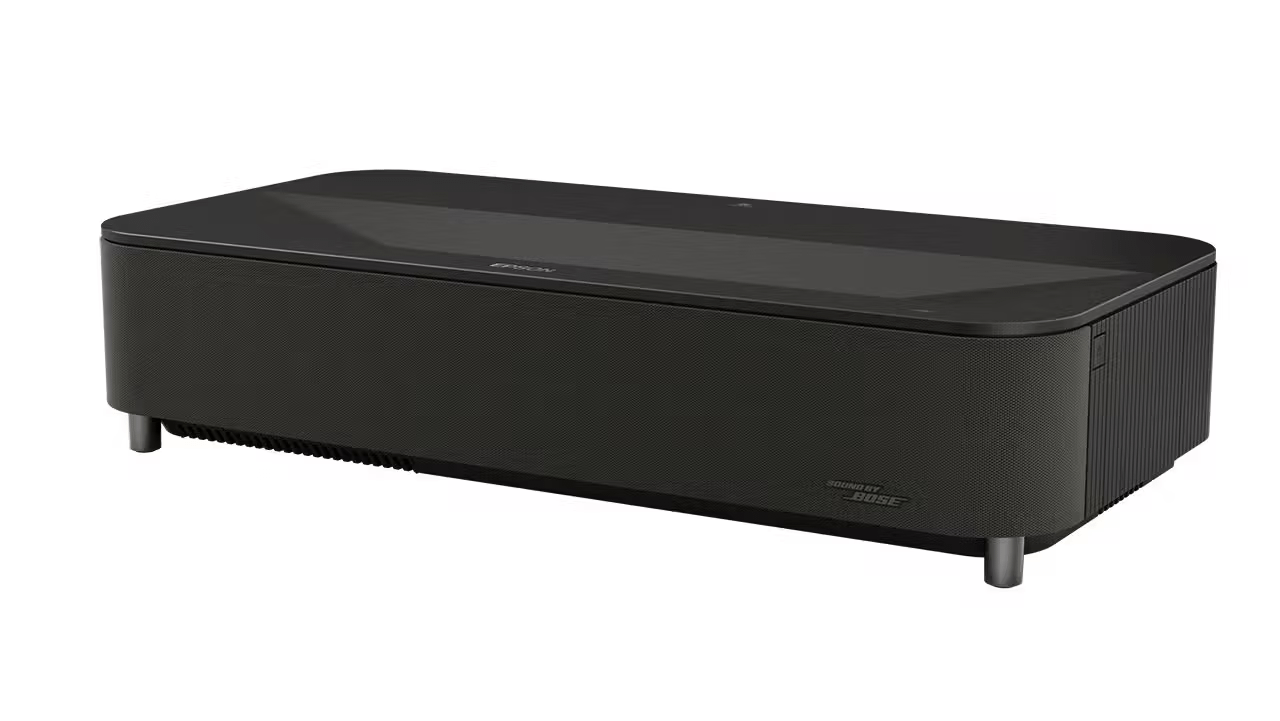
Epson’s EH-LS970 is a UST projector that’s clearly trying to reduce friction. It’s not only about throwing a big image, but it’s also about being the thing you can live with daily, without adding three more boxes and a separate sound system just to make it feel complete.
A few headline points stand out:
That Bose partnership is the most interesting “lifestyle” angle. Built-in projector audio is usually fine for a demo and disappointing at home. Epson is clearly trying to avoid that. Add in gaming-friendly support like ALLM and low input lag, and this feels like a direct shot at the “I want the big screen experience without building a theater room” buyer.
I’m also watching how it lands on price. Expectations are that it’ll sit around the $4,000 range based on what it’s replacing, which makes it a premium product—but also one that has to prove it can replace multiple components, not just a TV. Read more.

Moondrop’s Skyland ($799 at Amazon) is one of those launches that feels like it was made for people who still get excited about the mechanics of headphone design. It’s an open-back planar headphone with a bold approach, big physical presence, distinctive design language, and engineering choices that aren’t trying to blend in.
What makes Skyland notable isn’t just “new headphones exist.” It’s that Moondrop is positioning it as something more ambitious: a statement product, the kind of headphone that sparks debate, measurements, comparisons, and lots of “wait—how did they do that?” conversations.
If you’re the type who enjoys the hobby side of headphones, trying new driver tech, chasing different flavors of staging and detail, and reading impressions for fun, Skyland is exactly the sort of release you’ll want to keep on your shortlist. Read more.
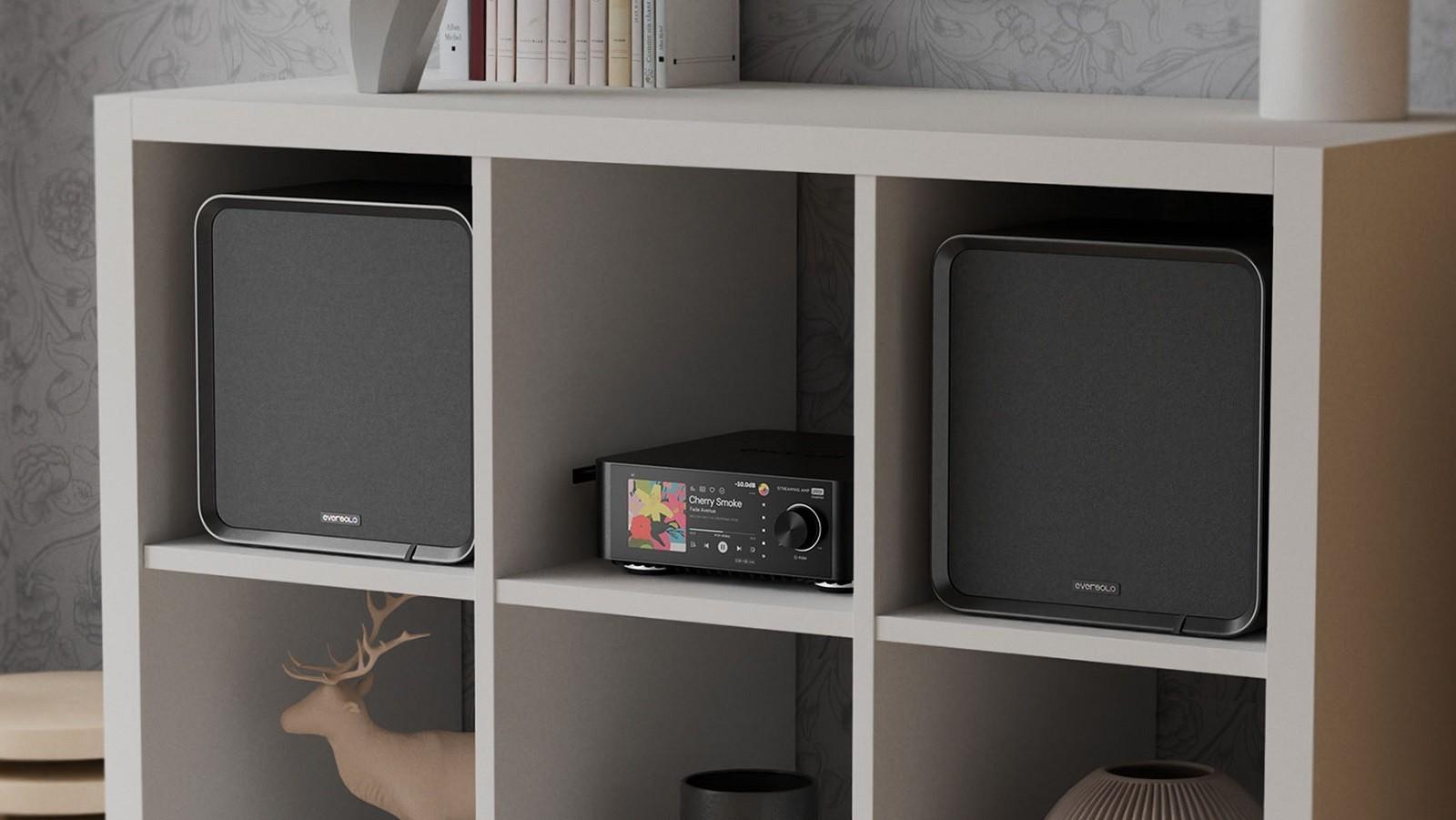
Eversolo jumping into passive speakers is a real pivot, and the SE100 makes a very specific first impression: it’s designed to fit into real homes without the “audio gear takes over the room” problem.
Yes, our coverage points out that it’s sized with IKEA-style shelving in mind, and honestly, I love that. It’s a blunt acknowledgement of how people actually place speakers. These are compact passive bookshelves priced at $499 per pair, and the specs suggest they’re meant to be flexible: reasonable sensitivity, a realistic amp recommendation, and an impedance rating that tells you Eversolo expects people to pair these with everything from compact amps to more traditional integrateds.
The bigger picture is that this could be Eversolo building an ecosystem: source + amplification + speakers, all under one brand, tuned to work well together. Whether you buy into that or not, the SE100 is the kind of “first passive speaker” launch that feels more thought-through than a lot of newcomers manage. Read more.
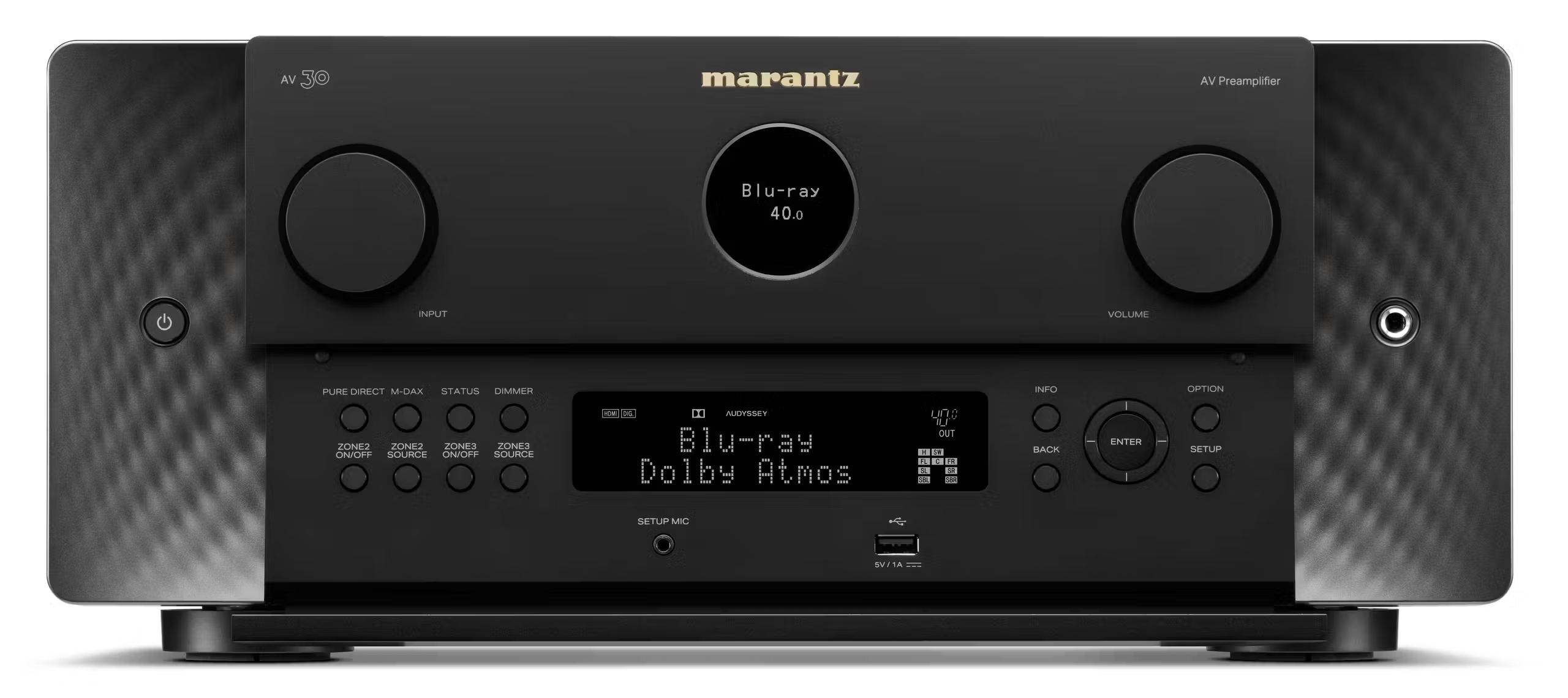
Marantz’s AV 30 ($4,000 at Marantz) is the kind of product that makes separates feel less intimidating. It’s positioned as the more accessible entry point in Marantz’s modern pre-pro lineup, but it’s still packed in the ways that matter.
You’re getting modern surround processing support (Atmos, DTS:X, IMAX Enhanced, Auro-3D), serious DSP horsepower, and 11.4-channel output via RCA and XLR, so it’s built to anchor a genuinely high-performance system, not a compromise setup.
The other thing I’m glad to see: HDMI support that doesn’t treat gaming like an afterthought. Seven HDMI inputs, 8K/60 and 4K/120 pass-through, this is the kind of connectivity that matters if your theater system shares a room with a console and a modern TV.
Room correction is also a big part of the conversation here, with Audyssey on board and optional Dirac upgrades for people who want to go deeper. In short, it’s a modular, modern control center without forcing you into the ultra-premium tier. Read more.
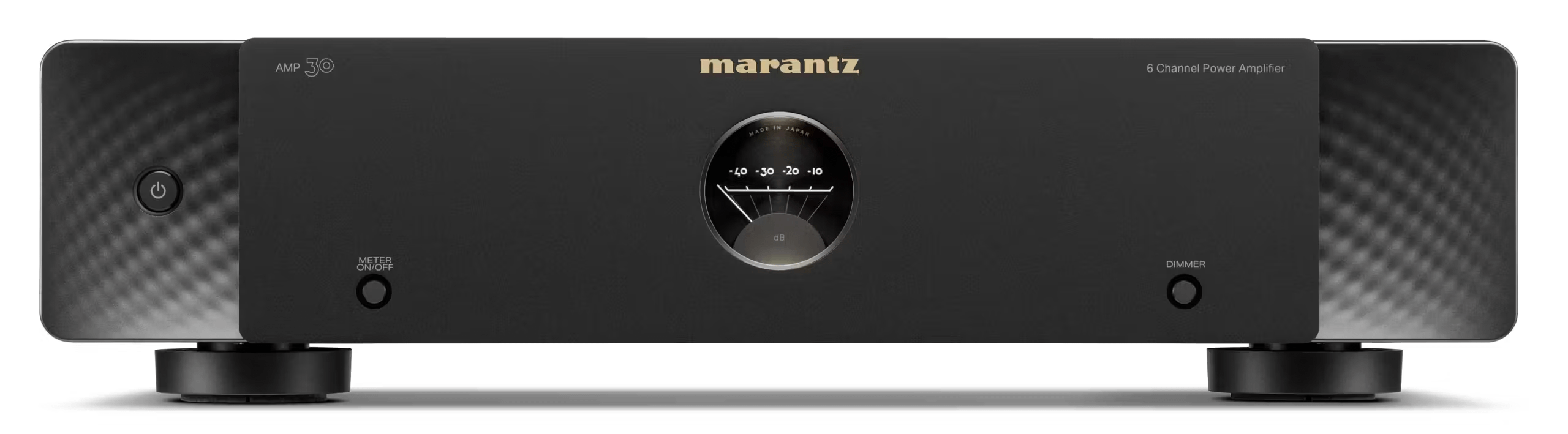
The AMP 30 ($4,000 at Marantz) is the matching muscle, and it’s a six-channel power amp rated at 200 watts per channel into 8 ohms (two channels driven). If you’ve ever priced out a full separates system and immediately backed away, that “six channels in one box” approach is one of the smartest ways to get serious amplification without building a tower of gear.
It also supports bridging, which means you can reconfigure it depending on your system goals—run it as a six-channel amp, or bridge channels for higher power in a three-channel configuration, or use it in a more custom build as your needs change.
That’s the big theme here: flexibility. Marantz clearly wants the AV 30 + AMP 30 combo to be the “I want separates, but I don’t want this to spiral into madness” path. Read more.




Privacy Policy
Terms and Conditions - Affiliate Policy
Home Security
© Copyright 2008-2026.
11816 Inwood Rd #1211, Dallas, TX 75244